Who knows whether it was a smell, or a sound, or what…
This is a story from England. From a town called Tow Law, a few miles to the south-west of Newcastle. As wikipedia explains: Tow Law is a town and civil parish in County Durham, England. It is situated a few miles to the south of Consett and 5 miles to the north west of Crook.
Anyway, the story was published by The Dodo and is reproduced below.
ooOOoo
Dog Out On A Walk Finds Someone Very Stuck In A Stone Wall
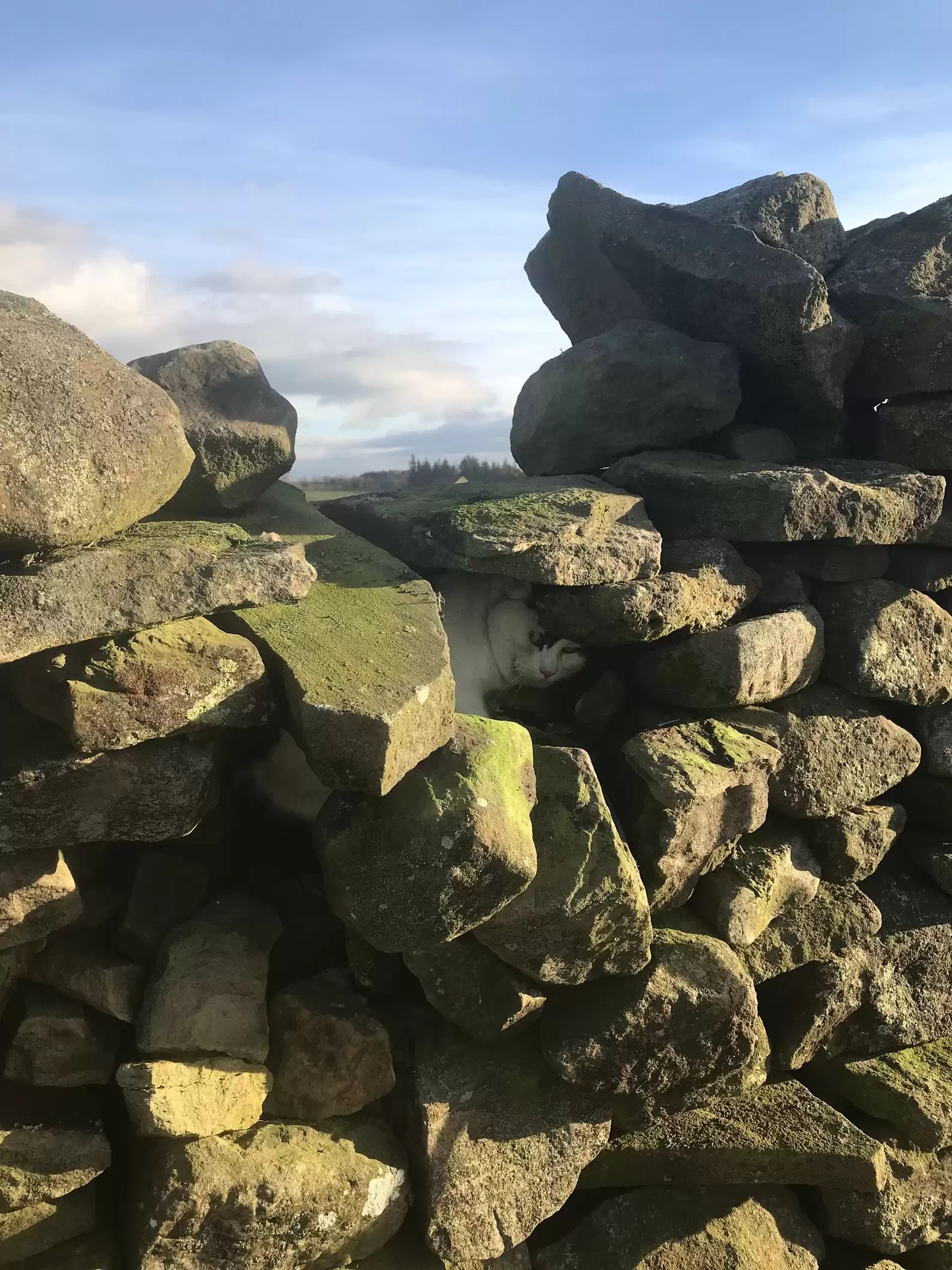
A guy and his dog were out on a walk one day through a field in Tow Law, England, when the dog suddenly became very interested in a nearby stone wall. After looking a little closer, the pair found a cat — who had somehow gotten himself completely stuck in the wall.
The RSPCA was called and Inspector Ruth Thomas-Coxon drove over to try and help. She was hoping that it would be as easy as just gently pulling the cat, later named Freddy, out of the wall, but she quickly discovered that he was much more stuck than that.
“Initially it looked as though he’d chosen to tuck himself inside the gap, but he didn’t try to run away when we got closer,” Thomas-Coxon said in a press release.
Thomas-Coxon weighed all her options and decided the best way to free Freddy would be to take apart the stone wall.
“The owner of the paddocks and wall came out and, between us, we removed some of the stones to dismantle the top part of the wall and free the cat,” Thomas-Coxon said. “He made a dash for it and jumped into another part of the wall, where we were able to catch him.”
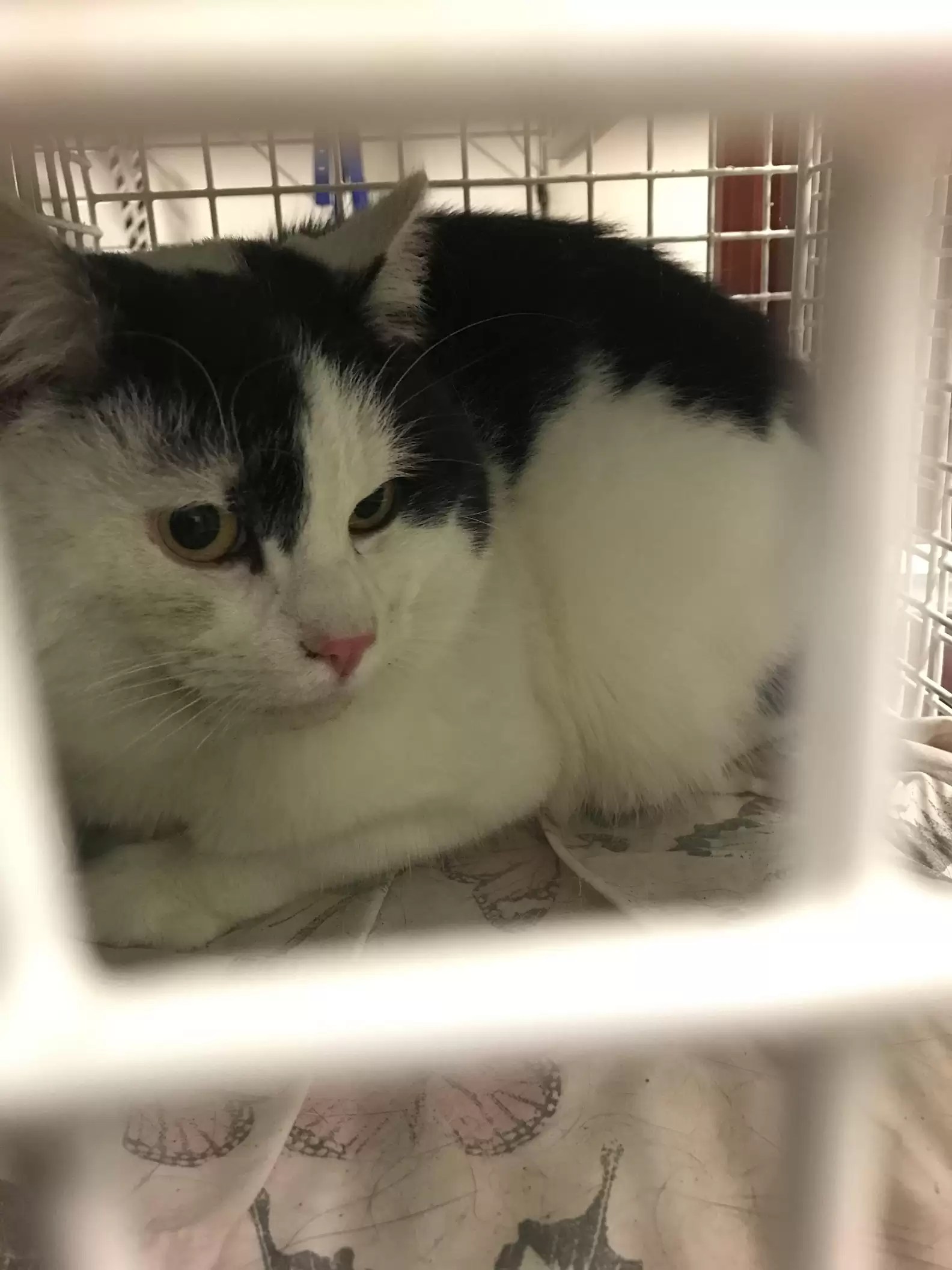
Even though Freddy was definitely stuck and needed help, he was also not super pleased about being rescued by strangers. Once he realized he was safe, though, he calmed down, and Thomas-Coxon took him to the vet to get him checked out.
“Vets found he was in fairly good health, although he had some mats in his coat, which they removed,” Thomas-Coxon said. “He was a sweet, friendly cat, so I wondered if he was a missing pet, but he was not microchipped. I made some inquiries nearby, put up a poster where we rescued him and also put his profile on PetsLocated, but, unfortunately, he’s not yet been claimed.”
Freddy is settling into the shelter well, and if no one comes forward to claim him, he’ll be put up for adoption. From being stuck in a stone wall to a potential forever home — Freddy’s come a long way.
ooOOoo
It’s a strange story in the sense that the cat was not claimed so who knows where he had come from. But his future is much better, thanks to the RSPCA, and if he is adopted it will be to a good, caring home.
A more positive view as to how the future will pan out.
I tend to be rather pessimistic about the future. Maybe it is my age, I don’t know. But a week ago I posted an article by Ophelia Benson called Cruising over the Edge.
For this week I am republishing another climate change article but one that has a positive outlook on where we are going.
Have a read and let me know your thoughts.
ooOOoo
Climate change will transform how we live, but these tech and policy experts see reason for optimism
Authors
Robert Lempert Professor of Policy Analysis, Pardee RAND Graduate School
Elisabeth Gilmore Associate Professor of Climate Change, Technology and Policy, Carleton University
The latest reports from the Intergovernmental Panel on Climate Change discuss changes ahead, but they also describe how existing solutions can reduce greenhouse gas emissions and help people adjust to impacts of climate change that can’t be avoided.
The problem is that these solutions aren’t being deployed fast enough. In addition to push-back from industries, people’s fear of change has helped maintain the status quo.
To slow climate change and adapt to the damage already underway, the world will have to shift how it generates and uses energy, transports people and goods, designs buildings and grows food. That starts with embracing innovation and change.
Fear of change can lead to worsening change
From the industrial revolution to the rise of social media, societies have undergone fundamental changes in how people live and understand their place in the world.
Other transformations have had both good and bad effects. The industrial revolution vastly raised standards of living for many people, but it spawned inequality, social disruption and environmental destruction.
People often resist transformation because their fear of losing what they have is more powerful than knowing they might gain something better. Wanting to retain things as they are – known as status quo bias – explains all sorts of individual decisions, from sticking with incumbent politicians to not enrolling in retirement or health plans even when the alternatives may be rationally better.
This effect may be even more pronounced for larger changes. In the past, delaying inevitable change has led to transformations that are unnecessarily harsh, such as the collapse of some 13th-century civilizations in what is now the U.S. Southwest. As more people experience the harms of climate change firsthand, they may begin to realize that transformation is inevitable and embrace new solutions.
A mix of good and bad
The IPCC reports make clear that the future inevitably involves more and larger climate-related transformations. The question is what the mix of good and bad will be in those transformations.
If countries allow greenhouse gas emissions to continue at a high rate and communities adapt only incrementally to the resulting climate change, the transformations will be mostly forced and mostly bad.
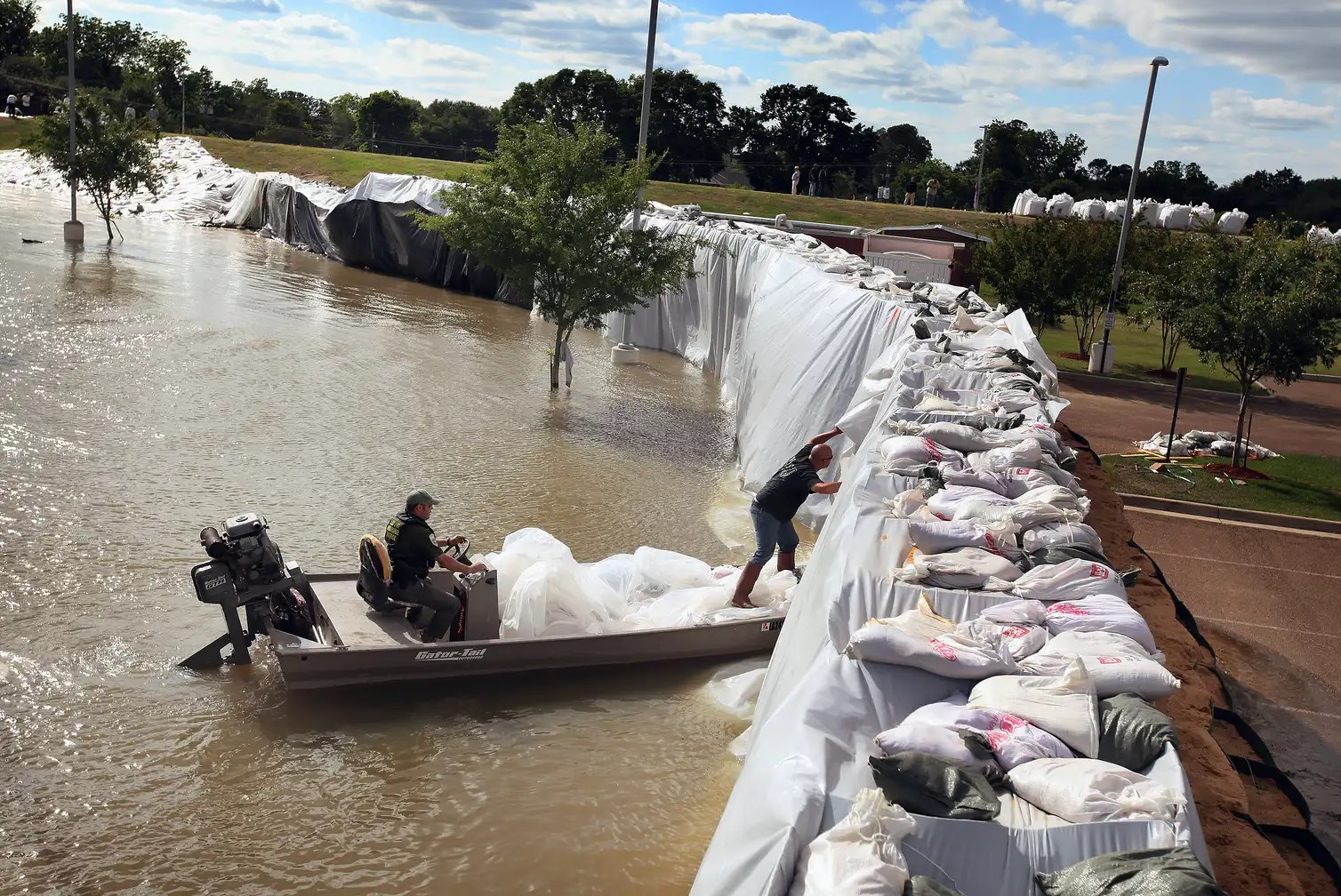
For example, a riverside town might raise its levees as spring flooding worsens. At some point, as the scale of flooding increases, such adaptation hits its limits. The levees necessary to hold back the water may become too expensive or so intrusive that they undermine any benefit of living near the river. The community may wither away.
Riverside communities often scramble to raise levees during floods, like this one in Louisiana. Scott Olson/Getty Images
The riverside community could also take a more deliberate and anticipatory approach to transformation. It might shift to higher ground, turn its riverfront into parkland while developing affordable housing for people who are displaced by the project, and collaborate with upstream communities to expand landscapes that capture floodwaters. Simultaneously, the community can shift to renewable energy and electrified transportation to help slow global warming.
Optimism resides in deliberate action
The IPCC reports include numerous examples that can help steer such positive transformation.
For example, renewable energy is now generally less expensive than fossil fuels, so a shift to clean energy can often save money. Communities can also be redesigned to better survive natural hazards through steps such as maintaining natural wildfire breaks and building homes to be less susceptible to burning.
Costs are falling for key forms of renewable energy and electric vehicle batteries. IPCC Sixth Assessment Report
No one group can enact these changes alone. Everyone must be involved, including governments that can mandate and incentivize changes, businesses that often control decisions about greenhouse gas emissions, and citizens who can turn up the pressure on both.
Doing more to disrupt the status quo with proven solutions can help smooth these transformations and create a better future in the process.
Disclosure statement
Robert Lempert receives funding from the National Science Foundation, U.S. Department of Transportation and Culver City Forward. He was coordinating lead author of the IPCC WGII Sixth Assessment Report, Chapter 1, and is affiliated with RAND Corp.; Harvard; SCoPEx (Stratospheric Controlled Perturbation Experiment) Independent Advisory Committee; National Renewable Energy Laboratory; Decision Science and Analysis Technical Advisory Committee (TAC); Council on Foreign Relations; Evolving Logic; and the City of Santa Monica Commission on Environmental, Sustainability, and Environmental Justice.
Elisabeth Gilmore receives funding from Minerva Research Initiative administered by the Office of Basic Research and the Office of Policy at the U.S. Department of Defense and the National Science Foundation. She is affiliated with Carleton University, Rutgers University, the Peace Research Institute Oslo (PRIO), and was a lead author on the IPCC WGII Sixth Assessment Report.
ooOOoo
The article makes the proposition that fear gets in the way of change. I think this is true because I tend to be a person that goes around saying ‘what can be done’ or ‘it is down to governments to set the changes required’ but not taking action personally.
So this is wakeup call for me and many others to be more positive and to support those changes that are beneficial, and to undertake them ourselves if at all possible.
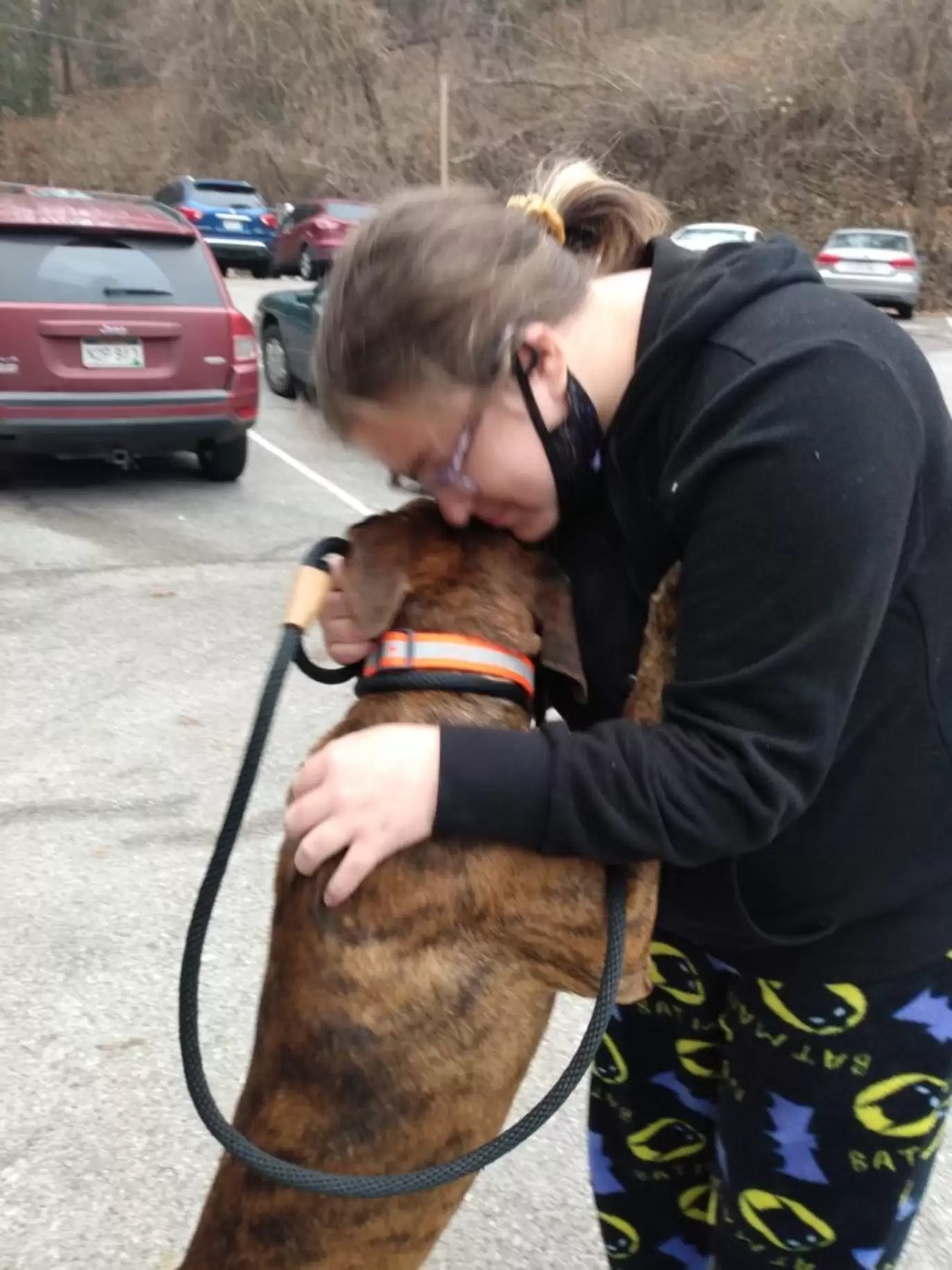
Ukrainian soldiers were inspecting abandoned homes on the frontline near Kyiv, in an area that has been reclaimed from the Russians. The troops came across a lonely dog in an apartment and after finding identification documents, they discovered her name was Bavaria. A volunteer has taken the dog in and hopes to reunite it with its owner.
There was a short film also and I am delighted to find this video on YouTube.
With so much disruption and cruelty going on in Ukraine it is a real delight that compassion and love are still very much alive.
I am very grateful to the Free Inquiry for permission to republish this article!
I am a subscriber to the print edition of Free Inquiry. Have been for quite a while. In the last issue, the April/May magazine, there was an article by Ophelia Benson that just seemed to ‘speak’ to me. I was sure that I was not alone. It was an OP-ED.
I emailed Julia Lavarnway, the Permissions Editor, to enquire what the chances were of me being granted permission to share the story. Frankly, I was not hopeful!
So imagine my surprise when Julia wrote back to say that she had contacted the author, Ophelia, and she had said ‘Yes’.
ooOOoo
Cruising over the Edge
By Ophelia Benson
The trouble with humans is that we never know when to stop. We know how to invent things, but we seem to be completely unable to figure out how to uninvent them—or even just stop using them once we’ve invented them. We can commission like crazy but we can’t decommission.
Like, for instance, cruise ships the size of condo towers. They’re feats of engineering and ship building no doubt, but as examples of sustainable tourism, a small carbon footprint, a sensible approach to global warning, not so much. How many gallons of fuel do you suppose they burn while cruising? Eighty thousand a day, for one ship.
We can’t uninvent, we can’t let go, we can’t stop. We can as individuals, but that’s useless when most people are doing the opposite. It’s useless when cruise ships keep cruising, SUVs keep getting bigger, container ships are so massive they get stuck in canals, more people move to Phoenix as the Colorado River dries up, more people build houses in the Sierras just in time for more wildfires, air travel is almost back to “normal,” and Christmas lights stay up until spring.
So heads of state go to meetings on climate change and sign agreements and pretend they’ve achieved something, but how can they have? Have any of them promised to shut down nonessential enterprises such as the cruise industry? Will they ever? The CEOs and lobbyists and legislatures would eat their lunch if they did. They can’t mess with profitable industries like that unless they’re autocrats like Putin or Xi … and of course Putin and Xi and other autocrats have zero inclination to act in the interests of the planet.
Janos Pasztor wrote in Foreign Policy after COP26, the UN climate change conference in Glasgow this past November:
Even if all Glasgow pledges are fulfilled, we are still facing a temperature overshoot of approximately 2 degrees Celsius. In the more likely scenario of not all pledges being fulfilled, warming will be more: perhaps 3 degrees Celsius. This would be catastrophic in nearly every sense for large parts of humanity, especially the poorest and most vulnerable who are suffering first and worst from escalating climate impacts.
Ironically, the technologies we can’t uninvent aren’t just the material luxuries such as huge cars, they’re also intangibles like democracy and freedom and individual rights. It may be our very best inventions along these lines that are the biggest obstacles to doing anything about the destruction we’ve wrought. We believe in democracy, and a downside of democracy is that governments that do unpopular things, no matter how necessary, are seldom governments for long. Biden and Macron and Trudeau and Johnson probably can’t do anything really serious about global warming and still stay in office to carry the work through.
Pasztor went on to ask a pressing question:
So how do we avoid temperature overshoot? The most urgent and important task is to slash emissions, including in the hard-to-abate sectors (such as air transport, agriculture, and industry), which will require substantial lifestyle changes.
Yes, those substantial lifestyle changes—the ones we show absolutely no sign of making. Maybe the biggest luxury we have, and the one we can least afford to sustain, is democracy.
Democracy at this point is thoroughly entangled with consumerism or, to put it less harshly, with standards of living. We’re used to what we’re used to, and anybody who tries to take it away from us would be stripped of power before the signature dried.
This is why beach condos in Florida aren’t the only kind of luxury we have to give up; we also have to give up the “consent” part of the “consent of the governed” idea when it comes to this issue. Not that I have the faintest idea how that would happen, but it seems all too obvious that democratic governance as we know it can’t do what needs to be done to avoid catastrophe.
We don’t usually think of democracy as a luxury alongside skiing in Gstaad or quick trips into space, but it is. It relies on enough peace and prosperity to be able to afford a few mistakes.
We take it for granted because we’ve always had it, at least notionally (some of us were excluded from it until recently), but it’s not universal in either time or place. To some it’s far more intuitive and natural to have “the best” people in charge, because they are the best. It’s a luxury of time and location to have grown up in a moment when non-aristocrats got a say.
The British experience in the Second World War is an interesting exception to the “take people’s pleasures away and lose the next election” pattern. Hitler’s blockade on shipping created a very real threat of starvation, and the Churchill government had to take almost all remaining pleasures away in pursuit of defeating the Nazis. Rationing, the blackouts, conscription, censorship, evacuation, commandeering of houses and extra bedrooms were all commonplace. Much of the dismal impoverished atmosphere of George Orwell’s 1984 is a picture not of Stalin’s Russia but of Churchill’s Britain. Life was grim and difficult, but Hitler was worse, so people drank their weak tea without sugar and planted root vegetables where the roses had been.
It’s disastrous but not surprising that it doesn’t work that way with a threat that’s unfolding swiftly but not so swiftly that everyone can see how bad it’s going to get. We can see what’s in front of us but not what’s too far down the road, especially if our contemporary pleasures depend on our failure to see. We’re default optimists until we’re forced to be otherwise, Micawbers assuring ourselves that “something will turn up”—until the wildfires or crop failures or mass migrations appear over our horizons.
ooOOoo
I do not know what the answer is? But I do know that we have to change our ways and change in the relatively near future; say, ten years maximum.
Because as Janos wrote, quoted in part above: “This would be catastrophic in nearly every sense for large parts of humanity…”
We are in a war. Not a military one but a war with the reality of where we are, all of us, heading. We have to stop ducking and weaving and come out fighting. Fighting for the very survival of our species. Do I think it will happen? I am afraid I do not. Not soon enough anyway: not without the backing of every government in the free world.
Last Saturday, we went to the local Freethinkers meeting in Grants Pass. It was a fascinating presentation by fellow member, Chas Rogers. Chas teaches Earth Science courses for the Rogue Community College and elsewhere.
Here is a taste of what we saw:
The Rare Earth Hypothesis argues that the development of complex life on Earth, not to mention intelligence, was an incredibly improbable thing in terms of the geological and astronomical variables involved, suggesting that the galaxy is not filled with other intelligent life forms waiting to be found.
One important factor is the Drake Equation. Here it is explained on the SETI website:
How many alien societies exist, and are detectable? This famous formula gives us an idea. The Drake Equation, which was the agenda for a meeting of experts held in West Virginia in 1961, estimates N, the number of transmitting societies in the Milky Way galaxy.
Here is that Drake Equation.
N : The number of civilizations in the Milky Way galaxy whose electromagnetic emissions are detectable.
R* : The rate of formation of stars suitable for the development of intelligent life (number per year).
fp : The fraction of those stars with planetary systems.
ne : The number of planets, per solar system, with an environment suitable for life.
fl : The fraction of suitable planets on which life actually appears.
fi : The fraction of life bearing planets on which intelligent life emerges.
fc : The fraction of civilizations that develop a technology that produces detectable signs of their existence.
L : The average length of time such civilizations produce such signs (years).
There is a great deal of information online for those that want to look into the question in much more detail. But I rather like this YouTube video by Carl Sagan.
(Sorry about the funny ending to that video.)
Carl was speaking of the Milky Way. There are plenty of astronomers who believe that the universe holds many galaxies. Plus, the universe is expanding drawn ever outwards by something that is completely unknown!
This story shows how we are connected to our dogs!
Jesse Lee, the dog, shows how one elderly man somehow connected with her. More later but first the story from The Dodo.
ooOOoo
Man Sees Tiny Speck On Cliff In The Distance And Immediately Knows It’s A Dog In Need
“He was funny because I couldn’t see her without my binoculars, and he said he knew the ‘dot’ was an animal because he’s never seen that dot there before.”
An elderly man was having his morning coffee outside his motorcycle shop one day when he noticed something unusual on a cliff in the distance. He quickly concluded that the tiny speck he was seeing was actually a stuck animal in need of help, so he contacted the Humane Society of the Pikes Peak Region (HSPPR), and they sent two animal law enforcement officers to check it out.
The officers couldn’t see the dog without a little extra help, but the man never had any doubt that she was there and desperately needed help.
“He was funny because I couldn’t see her without my binoculars, and he said he knew the ‘dot’ was an animal because he’s never seen that dot there before,” Officer Kailie Barker told The Dodo.
The dog was stuck on a small ledge about 150 feet above a creek. They weren’t sure how long she’d been there and immediately started coming up with a plan to rescue her.
“It took two and a half hours total to be able to find out exactly where she was, how we were going to get to her, obtaining the equipment and formulating an exact plan,” Barker said.
The officers were able to obtain some climbing gear, and once they were ready, Barker rappelled down to the stuck dog — who was so excited that someone had finally come to help her.
“She was obviously very scared. She had her body pressed into the dirt, she was wagging her tail quickly and was trying to crawl towards us when she very first saw us,” Barker said. “The dirt kept sliding out from under her, but she kept trying. When I was down on the cliffside with her, she tried crawling towards me again. When I finally got to her, she kept licking my hands and face.”
Once the dog had been brought to safety, they read her collar and discovered that her name was Jessie Lee. They took her back to HSPPR, where the staff was able to find her family’s contact information. It turns out she had been missing for two weeks and was found only a few blocks away from her home. Her family had searched for her every single day and was absolutely overjoyed that someone had found her.
Luckily, Jessie Lee wasn’t injured after her ordeal and was able to head home to her family shortly after being rescued. It was the perfect happy ending, all thanks to the officers who rescued her — and the man who knew that tiny speck in the distance was actually a dog.
ooOOoo
(All photographs courtesy of the HUMANE SOCIETY OF THE PIKES PEAK REGION)
Time and time again men and women spot something that they know is a dog. Even though it is a tiny speck or a creature in the darkness.
It is this fundamental relationship that binds us humans to our dogs, whether we know them or not!
Jessie Lee was alright and, to repeat the closing sentence above: ‘It was the perfect happy ending, all thanks to the officers who rescued her — and the man who knew that tiny speck in the distance was actually a dog.‘
p.s. I was reading the draft article out to Jeannie yesterday evening and she said that I had previously published it, and not so long ago! Whoops!
Wednesday was such a hectic day that I didn’t have time for a blog post and Thursday was almost as bad. As I say all too frequently, how did I ever have time to hold down a full-time job!
I saw this article on The Dodo back in late January and wanted to share it with you. It is yet another story about the ways that dogs come to the aid of us humans.
Here it is!
ooOOoo
Shelter Dog Spots Girl Having An Anxiety Attack And Rushes To Help
“I felt his nose against mine, and I started to pet him. I felt safe.”
Was the moment Picaso raced over to help a girl having an anxiety attack a case of being in the right place at the right time? Or was it straight-up fate?
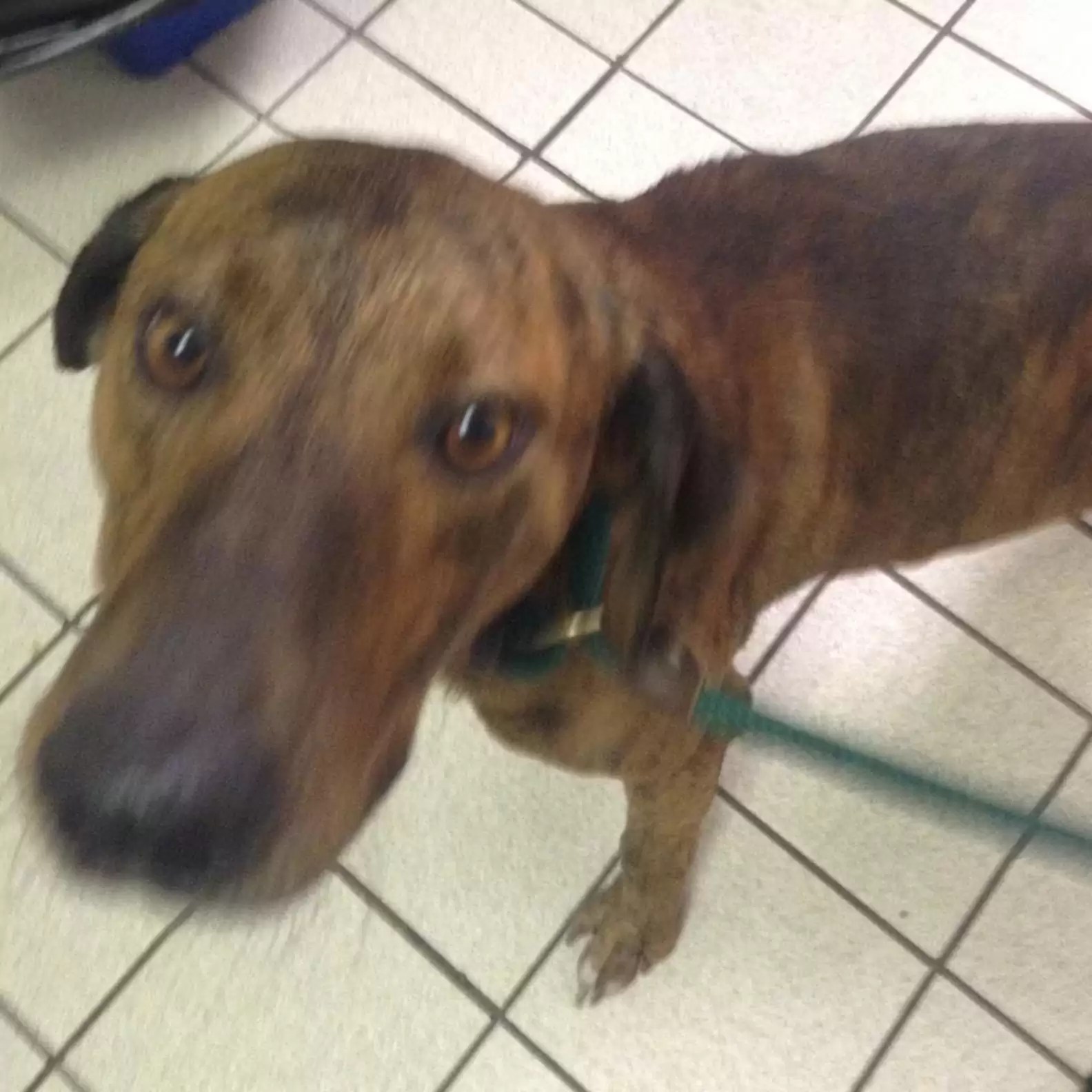
Last November, a Good Samaritan found the Plott hound mix running down a street in Charleston, West Virginia. He picked up the dog and dropped him off at the Kanawha-Charleston Humane Association.
KANAWHA-CHARLESTON HUMANE ASSOCIATION
The staff originally named the dog Picasso after the artist. But a typo resulted in his name missing one “s” in the shelter’s computer system — so he became Picaso. He was not wearing a collar, did not have a microchip and no one claimed him.
KANAWHA-CHARLESTON HUMANE ASSOCIATION
Picaso spent 19 days in the shelter, waiting for someone to adopt him.
Everyone noticed his kind and well-behaved nature. That’s what earned him a spot walking with other dogs who needed homes in a local holiday parade.
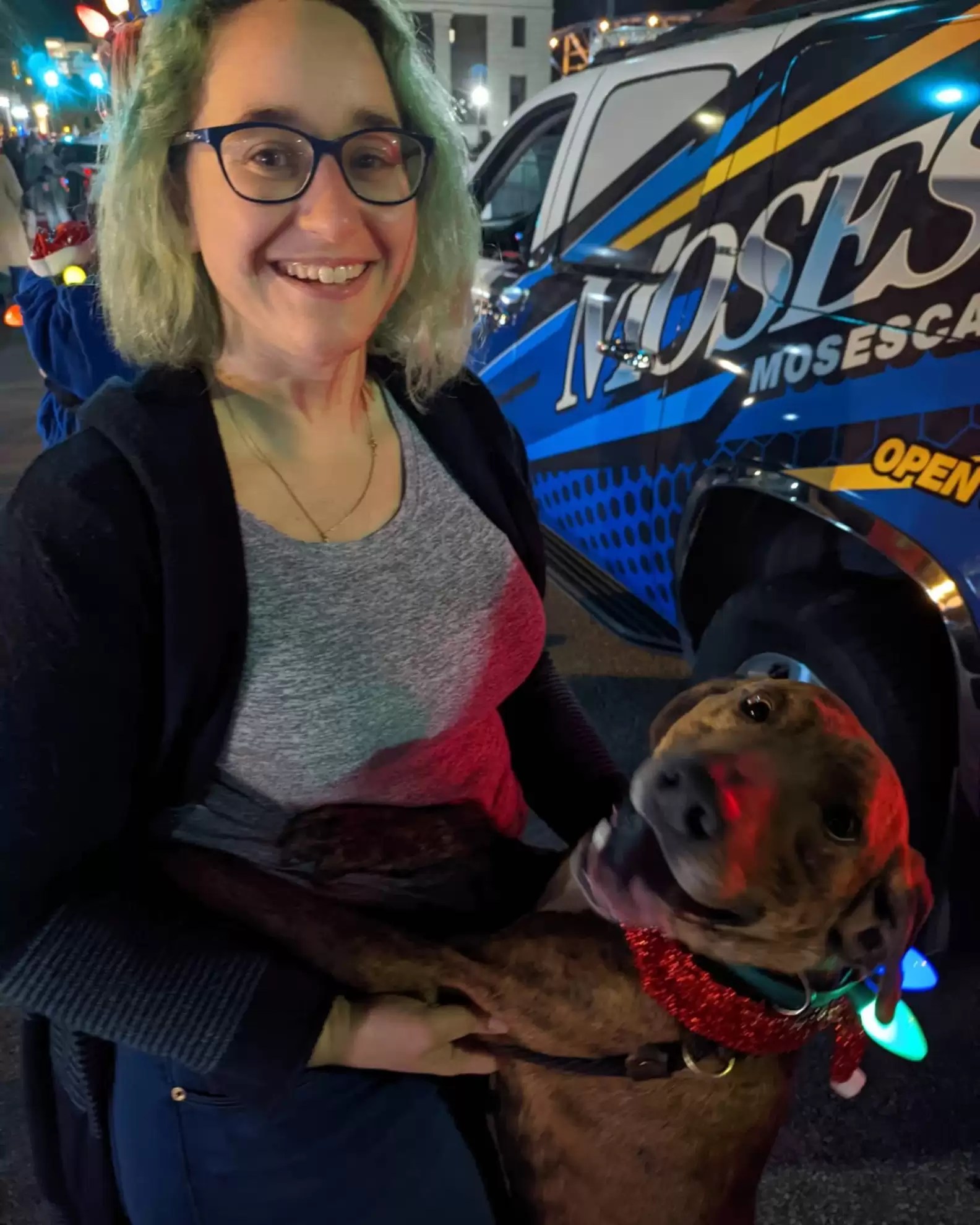
Kim Vigneau, a shelter volunteer, walked Picaso in the event. “When I first met him, he immediately hugged me,” Vigneau told The Dodo. “He loves to give hugs. He was so sweet. My goal that night was to get him adopted.”
Picaso with Kim Vigneau | KANAWHA-CHARLESTON HUMANE ASSOCIATION
As Vigneau and Picaso wove their way past hundreds of parade-goers lining the streets, suddenly he was drawn to just one. “We were walking in the center of the road,” Vigneau said. “A girl was sitting on the curb. She looked like she was upset. Picaso took the initiative and pulled me right over to her. He put his head against hers and was physically supportive with his face. Then the girl smiled. I could tell by her body language he was helping her.”
The girl was 16-year-old Abby Ellis. Ellis battles postural orthostatic tachycardia syndrome (POTS), a health condition that impacts her blood flow and can cause her to faint. It also makes her nervous at times. The night of the parade, she had an anxiety attack. Her mother, Melissa Smoot, was trying to help Ellis when Picaso ran over.
“Abby’s head was down on her legs, and she was falling forward,” Smoot told The Dodo. “He managed to get his body underneath her and pushed her back. Then she started to come around. All I could think was Abby would have face-planted into the ground if that dog had not been there.”
MELISSA SMOOT
Ellis told The Dodo she remembers exactly when Picaso found her. “I felt his nose against mine,” she said. “I started to pet him. I felt safe. My mom asked his name.”
Smoot got the dog’s name, but at that moment, her goal was to get her daughter home. They left while Vigneau and Picaso stepped back into the parade. But Smoot could not get the dog out of her mind. The next day, Ellis went to the shelter, and there was no doubt Picaso remembered her.
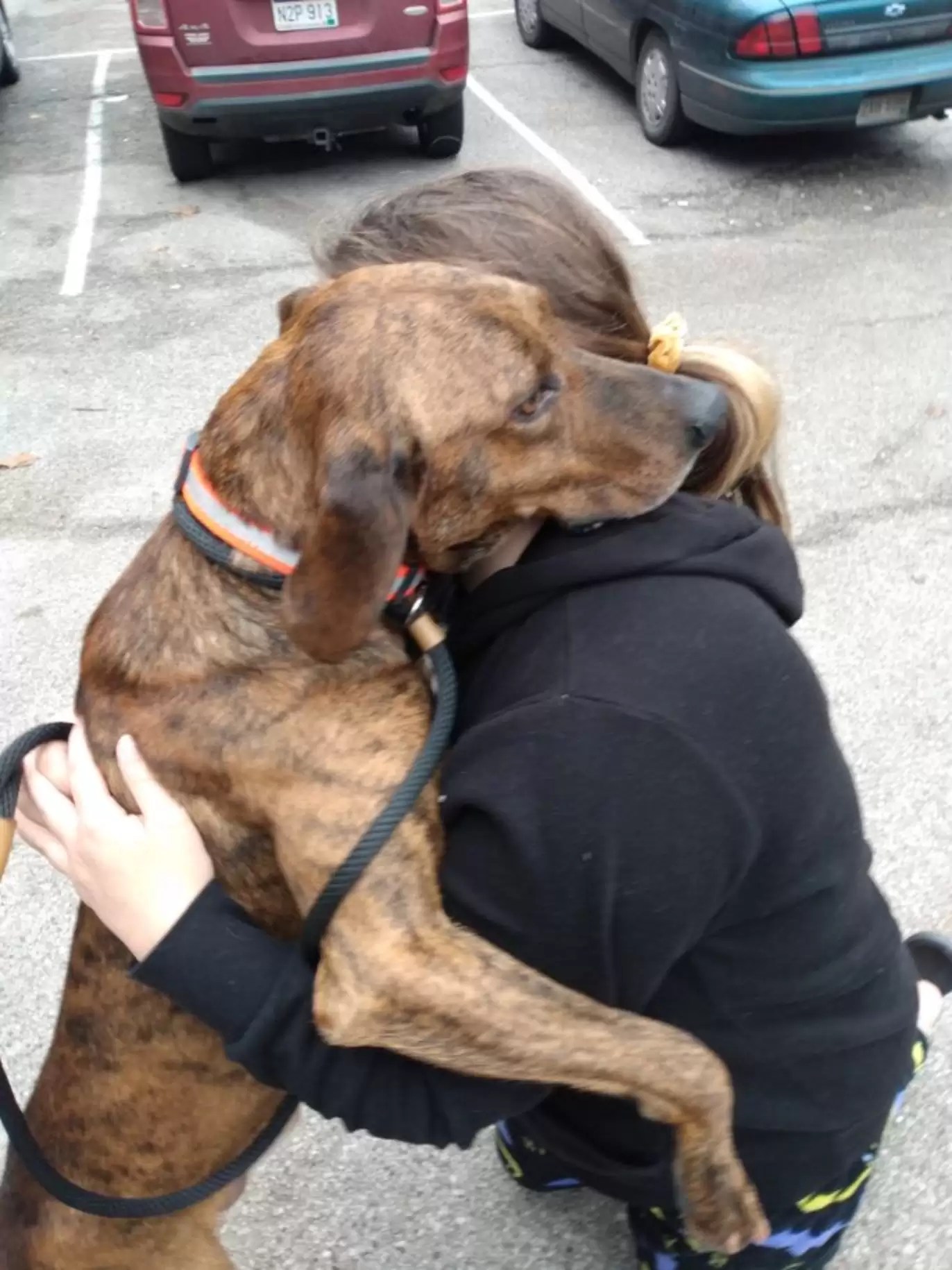
Picaso ran right up to her. “He hugged me. I was really excited,” Ellis said.
That instant, Smoot knew Picaso was coming home with them. “Abby had been asking for a dog for over a year now,” Smoot said. “I kept praying, ‘Lord, just send me a sign that Abby is ready for a dog.’ Someone called this a God wink. It sure was. God winked at us and answered our prayers.”
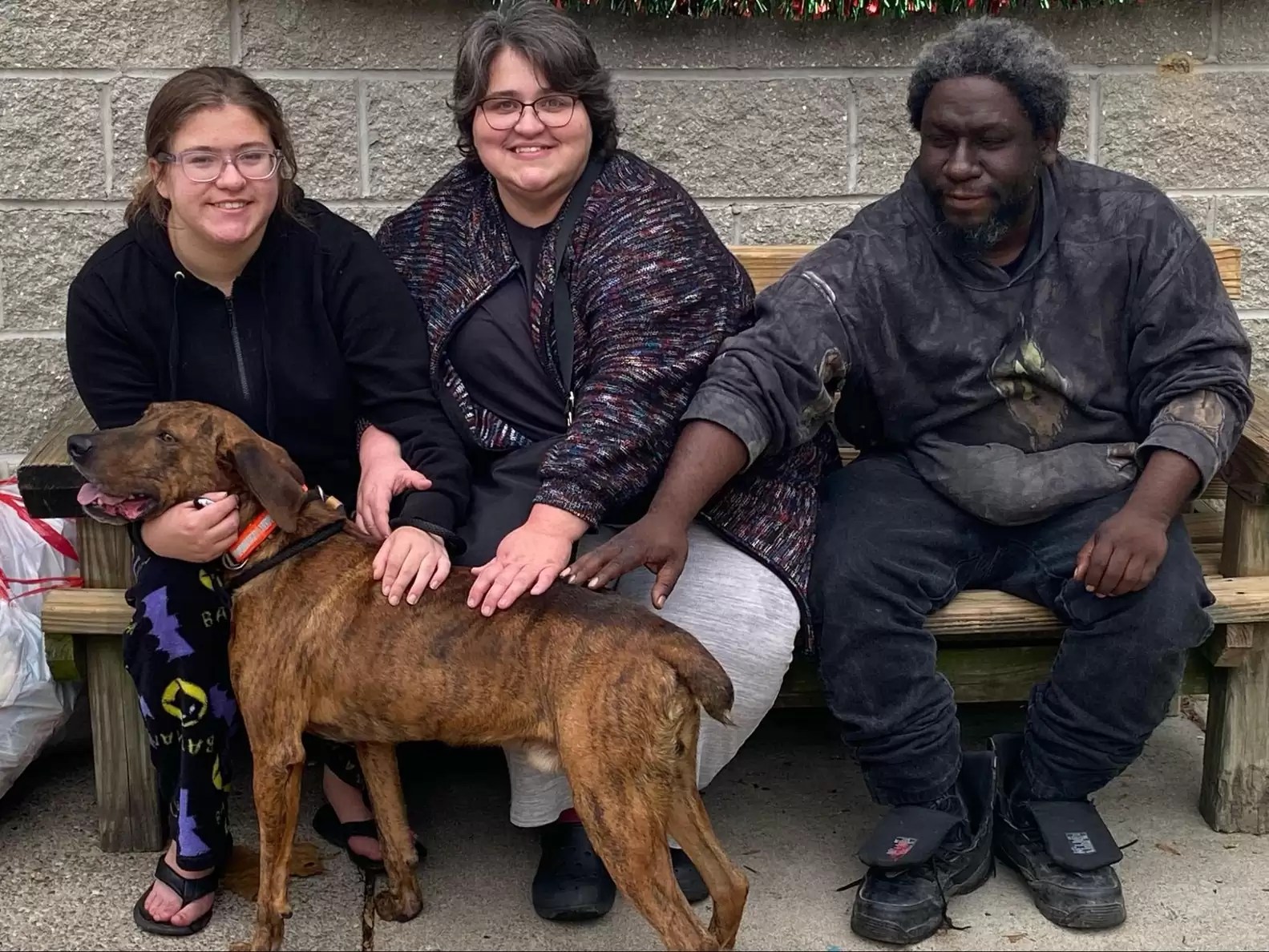
And on his 20th day in the shelter, Picaso got adopted by Ellis and her family.
Vigneau succeeded in helping Picaso get a new home, but clearly, he picked his family. “It was amazing. I also have anxiety and know what it’s like to have an anxiety attack. I think it’s great everyone is talking about the topic,” Vigneau said.
Picaso with his new family | KANAWHA-CHARLESTON HUMANE ASSOCIATION
Smoot does not think they met Picaso simply by chance. Ellis doesn’t like crowds. But that night, she insisted on going to the parade.
“It was meant to be,” Smoot said.
Melissa Smoot
Ellis is thrilled she finally has a dog who not only loves her but appears to know exactly when she needs help.
“I’m just really happy he chose me,” she said.
ooOOoo
With so much in the world going pear shaped it is glorious to find that dogs never forget their caring humans.
Suzanne Simard’s compelling book, and compelling life.
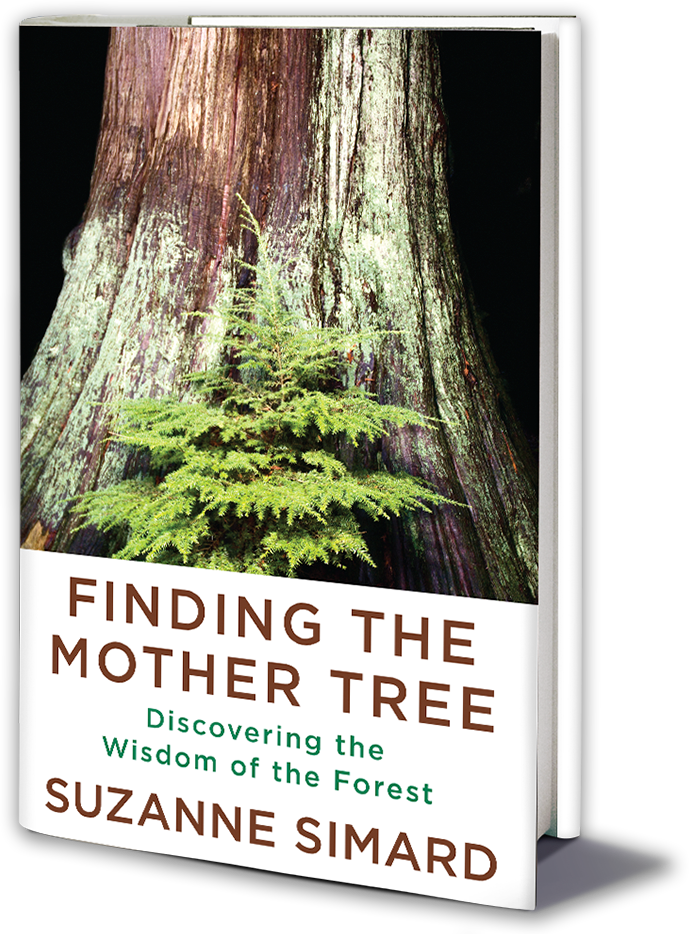
I have just finished reading Suzanne’s book. It is Finding the Mother Tree.
The subtitle might be: This is not a book about how we can save the trees. This is a book about how the trees might save us.
In her first book, Simard brings us into her world, the intimate world of the trees, in which she brilliantly illuminates the fascinating and vital truths – that trees are not simply the source of timber or pulp, but are a complex, interdependent circle of life; that forests are social, cooperative creatures connected through underground networks by which trees communicate their vitality and vulnerabilities with communal lives not that different from our own. Simard writes – in inspiring, illuminating, and accessible ways – how trees, living side by side for hundreds of years, have evolved, how they perceive one another, learn and adapt their behaviors, recognize neighbors, and remember the past; how they have agency about the future; elicit warnings and mount defenses, compete and cooperate with one another with sophistication, characteristics ascribed to human intelligence, traits that are the essence of civil societies – and at the center of it all, the Mother Trees: the mysterious, powerful forces that connect and sustain the others that surround them.
From Suzanne’s website
Luckily, you don’t have to wait for the book, you can learn about Suzanne and her precious scientific work by watching the following TED Talk.
Here are a couple of excerpts.
The first from page 277:
Our modern societies have made the assumption that trees don’t have the same capacities as humans. They don’t have nurturing instincts. They don’t cure one another, don’t administer care. But now we know Mother Trees can truly nurture their offspring. Douglas firs, it turns out, recognize their kin and distinguish them from other members of the community.
And the second from page 283:
I have come full circle to stumble onto some of the indigenous ideals: Diversity matters. And everything in the universe is connected – between the forests and the prairies, the land and the water, the sky and the soil, the spirits and the living, the people and all other creatures.
To say that I was amazed is an understatement. It is a book that will appeal to nature lovers all over the world. But more than that, the trees of the world have the ability to save humankind from accelerating climate change, if only enough people sign up to protecting trees, and soon. If you haven’t read it yet I implore you to read it now.
Finally, in Suzanne’s own words: Turning to the intelligence of nature itself is the key.
First, Ricky Gervais, then Ella Henderson singing her latest release.
There are many videos on YouTube that are worth watching.
These two are well-worth sharing with you.
The first is Ricky Gervais, a well-known atheist, as are we, presenting an eleven-minute debate on religion.
Though it must be said that my old country has God Save The Queen and my new country has In GodWe Trust and I cannot see those changing in what is left of my lifetime!
The second is a fabulous rendition of Brave by Ella Henderson. Ella is a British singer and this performance is when she was invited to the UK TV programme The Graham Norton Show earlier on in the New Year.
Among the many dog-related blogs that I read is Treehugger. It covers a wide range of sustainable actions and habits and not infrequently writes about dogs. That is the main reason I follow the blog.
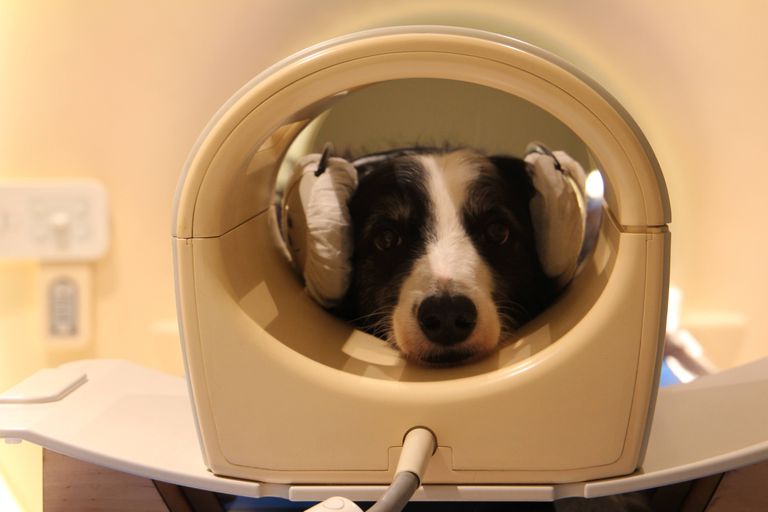
Kun-kun the border collie listens to language in an MRI machine. EnikÅ Kubinyi
You talk to your dog, and of course, you’re convinced your pup understands you. But what if a dog is plopped down in a place where suddenly everyone is speaking a different language?
In a new study, researchers have used brain imaging techniques to find that dogs can differentiate between familiar and unfamiliar languages. Researchers say the findings, from the Department of Ethology at Eötvös Loránd University in Hungary, are the first evidence that shows a non-human brain can distinguish between languages.1
A few years ago, first author Laura V. Cuaya moved from Mexico to Hungary for her postdoctoral research. Before the move, Cuaya’s border collie Kun-kun had only heard Spanish. She was curious whether he would notice that people in Budapest spoke a different language, Hungarian.2
“Like many dogs, Kun-kun tends to pay attention to humans, trying to predict their social environment,” Cuaya tells Treehugger.
“When we moved to Hungary, it was a whole new world for everyone. In Budapest, people are very friendly with dogs. When people talked to Kun-kun, I wondered if he picked up the language difference. And happily, this question fitted with the goals of the Neuroethology of Communication Lab.”
For their study, researchers recruited Kun-kun and 17 other dogs, who had been previously trained to lie still in a brain scanner for functional magnetic resonance imaging (fMRI).1
The dogs were played speech excerpts from “The Little Prince” in Spanish and Hungarian. Each of the dogs had heard only one of the two languages: Hungarian was the familiar language of 16 dogs, Spanish of the other two dogs. That allowed them to compare a very familiar language with a completely unfamiliar one.1
Researchers also played scrambled versions of the excerpts to the dogs. These were nonsensical and completely unnatural. This was to test whether they could tell the difference between speech and nonspeech.1
They compared the brain responses to the two different languages and to speech and nonspeech.
“We found distinct cerebral regions for both processes: for speech detection (speech vs. non-speech), the primary auditory cortex, and for language recognition (familiar language vs. unfamiliar language), the secondary auditory cortex,” Cuaya says.
“Our results may suggest a hierarchy processing in the dog’s brain to process speech. In the first stage, their brain would detect whether a sound is speech or not. Then, in the second stage, their brain would identify whether the speech is a familiar language or not.”
The results were published in the journal NeuroImage.
Exposure and Age
Researchers found that no matter which language the dogs were listening to, the primary auditory cortex of the dogs’ brains could distinguish between speech and scrambled, nonspeech.1
“Dog brains, like human brains, can distinguish between speech and nonspeech. But the mechanism underlying this speech detection ability may be different from speech sensitivity in humans: whereas human brains are specially tuned to speech, dog brains may simply detect the naturalness of the sound,” says Raúl Hernández-Pérez, coauthor of the study.
They also determined that dog brains could differentiate between Spanish and Hungarian. Those patterns were found in a different region of the brain called the secondary auditory cortex.1
Researchers found that the older the dog was, the better their brain was able to tell the difference between a familiar and unfamiliar language. That suggests that the longer dogs live with their people and are exposed to a language, the more they understand how their language sounds.1
“As we could not control the amount of exposure to language in our study, we used the dog age as an indirect measure of the time dogs have been exposed to a given language,” Cuaya says. “I hypothesize that dogs with a closer relationship with humans will better distinguish languages. It could be great if future studies test puppies to control the exposure to a language better.”
Dogs as Models
Researchers are curious whether this language differentiation is unique to dogs or whether other non-human animals may also be able to distinguish between languages.2
“A variety of auditory regularities characterizes each language. For example, sometimes, we cannot identify what language we are listening to. However, we can likely recognize its general origin (e.g., an Asian or Romance language) because of its auditory regularities,” Cuaya explains.
“Detecting regularities is something that brains do very well, not only humans or dogs’ brains. It is highly likely that other species can be trained to differentiate between languages successfully.”
But Cuaya points out that in their study, dogs weren’t “trained.”
“Their brains detected the difference spontaneously, perhaps due to the domestication process,” she says. “While it is likely that other species can differentiate between complex sounds, it is possible that just a few species are interested in the human language.”
Researchers believe the findings are important because by studying dogs, they can have a broader picture of the evolution of speech perception.2
“Dogs are an excellent model because they have been living—and cooperating—with humans for thousands of years. When we wonder if another species cares about what humans do, it is inevitable to think of dogs. In the case of language perception, we can learn, for example, that different brains—with different evolutive paths—can carry out a similar process,” Cuaya says.
“Also, as someone with dogs in my family, it is lovely to know that dogs are picking up subtle cues of their social environment all the time.”
2. first author Laura V. Cuaya from the Department of Ethology at Eötvös Loránd University in Hungary
ooOOoo
Time after time I learn new things about dogs. This is another example of the mystery of a dog’s brain. Thank goodness there is scientific study into our lovely animals.




 Learning from Dogs