You all know that Jeannie has Parkinson’s Disease but it is not without its shocks.
Yesterday, at about 3.30 am there was a crash in the kitchen. Jeannie had tripped up and fallen down. She was laying very awkwardly all crumpled up. I came into the kitchen immediately, saw her on the floor, saw that she was in agony but couldn’t lift her up without hurting her more. So I called an ambulance.
I followed the ambulance in our car shortly thereafter. Jean was admitted to the emergency room.
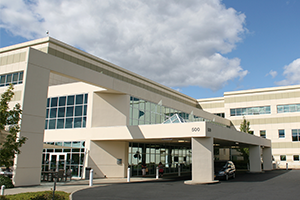
After Jean had been given an x-ray and pain meds later on she was transferred to Room 350 in the main hospital. I was told that she needed surgery on her right hip, maybe a hip replacement, and she will be in overnight.
I had returned home before noon to let the dogs out and to have some breakfast! Then I went back to Jeannie.
I stayed with her until nearly 3pm. Jean was due to have surgery at 4:45 pm.
What the longer term implications are I do not know. I sincerely hope the surgery is successful and Jean returns home.
Another day with this terrible disease!
P.S. In the early evening it felt so lonely. I cuddled the three dogs many times but it still felt as though my world had been turned upside down. I am writing this before 6pm so do not even want to think of being on my own in bed. The dogs are acutely aware of Jean’s absence and are doing their best to comfort me. Wonderful Brandy, Oliver and Cleo!
I follow the website The Conversation and read most of their posts on a very regular basis. Back in May they published the following. It caught my eye because my own mental health is drifting downwards, or so it seems, due to age, I shall be 80 in November, 2024, plus a couple of brain bleedings that occurred in 2017 that were attended to by the Regional Trauma Center in Eugene.
I then had two sub-durnal (sp?) operations overnight before being put onto the ICU ward. The lead surgeon explained that I was within 24 hours of dying! As in if I had not gone back to hospital.
I find that difficult to realise that it was 6 years ago! Anyway, to the post published by The Conversation.
ooOOoo
Mindfulness, meditation and self-compassion – a clinical psychologist explains how these science-backed practices can improve mental health
Mindfulness and self-compassion are now buzzwords for self-improvement. But in fact, a growing body of research shows these practices can lead to real mental health benefits. This research – ongoing, voluminous and worldwide – clearly shows how and why these two practices work.
One effective way to cultivate mindfulness and self-compassion is through meditation.
For more than 20 years, as a clinical psychologist, research scientist and educator, I taught meditation to students and clinical patients and took a deep dive into the research literature. My recent book, “The Self-Talk Workout: Six Science-Backed Strategies to Dissolve Self-Criticism and Transform the Voice in Your Head,” highlights much of that research.
Could mindfulness meditation be the next public health revolution?
Be patient when starting a meditation practice
I didn’t like meditation – the specific practice sessions that train mindfulness and self-compassion – the first time I tried it as a college student in the late ‘90s. I felt like a failure when my mind wandered, and I interpreted that as a sign that I couldn’t do it.
In both my own and others’ meditation practices, I’ve noticed that the beginning is often rocky and full of doubt, resistance and distraction.
But what seem like impediments can actually enhance meditation practice, because the mental work of handling them builds strength.
For the first six months I meditated, my body and mind were restless. I wanted to get up and do other tasks. But I didn’t. Eventually it became easier to notice my urges and thoughts without acting upon them. I didn’t get as upset with myself.
After about a year of consistent meditation, my mind seemed more organized and controllable; it no longer got stuck in self-critical loops. I felt a sense of kindness or friendliness toward myself in everyday moments, as well as during joyful or difficult experiences. I enjoyed ordinary activities more, such as walking or cleaning.
It took a while to understand that anytime you sit down and try to meditate, that’s meditation. It is a mental process, rather than a destination.
How meditation works on the mind
Just having a general intention to be more mindful or self-compassionate is unlikely to work.
Don’t be discouraged if your mind wanders as you meditate.
Establishing the formal practice
A common misconception about mindfulness is that it’s simply a way to relax or clear the mind. Rather, it means intentionally paying attention to your experiences in a nonjudgmental way.
Consider meditation the formal part of your practice – that is, setting aside a time to work on specific mindfulness and self-compassion techniques.
Cultivating mindfulness with meditation often involves focusing on paying attention to the breath. A common way to start practice is to sit in a comfortable place and bring attention to your breathing, wherever you feel it most strongly.
At some point, probably after a breath or two, your mind will wander to another thought or feeling. As soon as you notice that, you can bring your attention back to the breath and try not to judge yourself for losing focus for five to 10 minutes.
When I was just getting started meditating, I would have to redirect my attention dozens or hundreds of times in a 20-to-30-minute session. Counting 10 breaths, and then another 10, and so on, helped me link my mind to the task of paying attention to my breathing.
The most well-established technique for cultivating self-compassion is called loving-kindness meditation. To practice, you can find a comfortable position, and for at least five minutes, internally repeat phrases such as, “May I be safe. May I be happy. May I be healthy. May I live with ease.”
When your attention wanders, you can bring it back with as little self-judgment as possible and continue repeating the phrases. Then, if you like, offer the same well wishes to other people or to all beings.
Every time you return your focus to your practice without judging, you’re flexing your mental awareness, because you noticed your mind wandered. You also improve your capacity to shift attention, a valuable anti-rumination skill, and your nonjudgment, an antidote to self-criticism.
Mindfulness also occurs when you tune into present-moment sensations, such as tasting your food or washing the dishes.
An ongoing routine of formal and informal practice can transform your thinking. And again, doing it once in a while won’t help as much. It’s like situps: A single situp isn’t likely to strengthen your abdominal muscles, but doing several sets each day will.
When thoughts pop up during meditation, no worries. Just start again … and again … and again.
One final point: Beginning meditators may find that self-criticism gets worse before it gets better.
After years or decades of habitual self-judgment, people often judge themselves harshly about losing focus during meditation. But once students get through the first few weeks of practice, the self-judgment begins to abate, both about meditation and about oneself in general.
As one of my students recently said after several weeks of mindfulness meditation: “I am more stable, more able to detach from unhelpful thoughts and can do all of this while being a little more compassionate and loving toward myself.”
In reading this article I think I should try and find a way to start the process. There are a great number of articles and websites. I will share my journey with you.
It is one of many things that deteriorate with age!
Jeannie and I go to the Club Northwest locally in Grants Pass twice a week. It is a local gym. Jean goes to her Rock Steady class and I see a coach. Both of us spend time ensuring our balance is as good as it can be. For me that consists primarily of spending a minute standing on each leg on a vibrating platform; it is not easy.
So for all the more elderly people out there, here is an article that was recently published on The Conversation.
ooOOoo
Balance declines with age, but exercise can help stave off some of the risk of falling
My wife and I were in the grocery store recently when we noticed an older woman reaching above her head for some produce. As she stretched out her hand, she lost her balance and began falling forward. Fortunately, she leaned into her grocery cart, which prevented her from falling to the ground.
Aging is a process that affects the systems and tissues of every person. The rate and magnitude of aging may be different for each person, but overall physical decline is an inevitable part of life. Most people think aging starts in their 60s, but in fact we spend most of our life span undergoing the process of decline, typically beginning in our 30s.
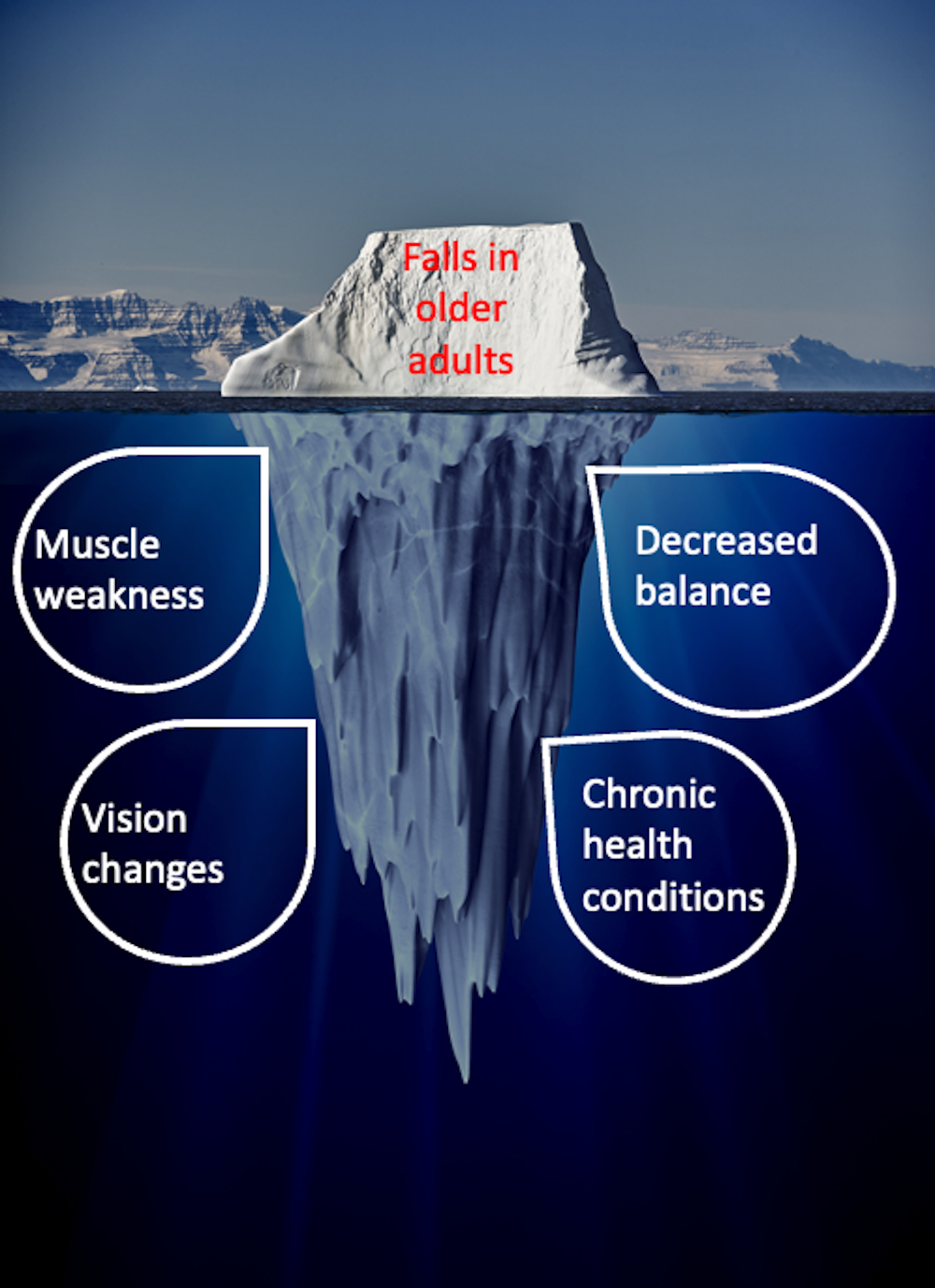
Older adults are more prone to falling for various reasons, including age-related changes in their bodies and vision changes that leave them vulnerable to environmental factors such as curbs, stairs and carpet folds.
Some straightforward measures to improve the safety of the home environment for older adults can significantly lower the risk of falls.
Based on my experience, here are some common reasons older adults may experience falls:
First, aging leads to a natural loss of muscle strength and flexibility, making it more challenging to maintain balance and stability. The loss of strength and poor balance are two of the most common causes of falls.
Second, older adults often have chronic conditions such as arthritis, Parkinson’s disease or diabetes that can affect their mobility, coordination and overall stability.
In addition, certain medications commonly taken by older adults, such as sedatives or blood pressure drugs, can cause dizziness, drowsiness or a drop in blood pressure, leading to an increased risk of falls.
Age-related vision changes, such as reduced depth perception and peripheral vision and difficulty in differentiating colors or contrasts, can make it harder to navigate and identify potential hazards. Hazards in the environment, such as uneven surfaces, slippery floors, inadequate lighting, loose rugs or carpets or cluttered pathways, can significantly contribute to falls among older adults.
Older adults who lead a sedentary lifestyle or have limited physical activity may also experience reduced strength, flexibility and balance.
And finally, such conditions as dementia or Alzheimer’s disease can affect judgment, attention and spatial awareness, leading to increased fall risk.
There are numerous theories about why we age but there is no one unifying notion that explains all the changes in our bodies. A large portion of aging-related decline is caused by our genes, which determine the structure and function of bones, muscle growth and repair and visual depth perception, among other things. But there are also numerous lifestyle-related factors that influence our rate of aging including diet, exercise, stress and exposure to environmental toxins.
A recent advance in scientific understanding of aging is that there is a difference between your chronological age and your biological age. Chronological age is simply the number of years you’ve been on the Earth. Biological age, however, refers to how old your cells and tissues are. It is based on physiological evidence from a blood test and is related to your physical and functional ability. Thus, if you’re healthy and fit, your biological age may be lower than your chronological age. However, the reverse can also be true.
I encourage patients to focus on their biological age because it empowers them to take control over the aging process. We obviously have no control over when we are born. By focusing on the age of our cells, we can avoid long-held beliefs that our bodies are destined to develop cancer, diabetes or other conditions that have historically been tied to how long we live.
And by taking control of diet, exercise, sleep and other lifestyle factors you can actually decrease your biological age and improve your quality of life. As one example, our team’s research has shown that moderate amounts of aerobic exercise can slow down motor decline even when a person begins exercise in the latter half of the life span.
Fall prevention
Adopting lifestyle changes such as regular, long-term exercise can reduce the consequences of aging, including falls and injuries. Following a healthy diet, managing chronic conditions, reviewing medications with health care professionals, maintaining a safe home environment and getting regular vision checkups can also help reduce the risk of falls in older adults.
There are several exercises that physical therapists use to improve balance for patients. It is important to note however, that before starting any exercise program, everyone should consult with a health care professional or a qualified physical therapist to determine the most appropriate exercises for their specific needs. Here are five forms of exercise I commonly recommend to my patients to improve balance:
Balance training can help improve coordination and proprioception, which is the body’s ability to sense where it is in space. By practicing movements that challenge the body’s balance, such as standing on one leg or walking heel-to-toe, the nervous system becomes better at coordinating movement and maintaining balance. A large research study analyzing nearly 8,000 older adults found that balance and functional exercises reduce the rate of falls by 24%.
Strength training exercises involve lifting weights or using resistance bands to increase muscle strength and power. By strengthening the muscles in the legs, hips and core, older adults can improve their ability to maintain balance and stability. Our research has shown that strength training can also lead to improvements in walking speed and a reduction in fall risk.
Tai chi is a gentle martial art that focuses on slow, controlled movements and shifting body weight. Research shows that it can improve balance, strength and flexibility in older adults. Several combined studies in tai chi have demonstrated a 20% reduction in the number of people who experience falls.
Certain yoga poses can enhance balance and stability. Tree pose, warrior pose and mountain pose are examples of poses that can help improve balance. It’s best to practice yoga under the guidance of a qualified instructor who can adapt the poses to individual abilities.
Flexibility training involves stretching the muscles and joints, which can improve range of motion and reduce stiffness. By improving range of motion, older adults can improve their ability to move safely and avoid falls caused by limitations in mobility.
Use of assistive devices can be helpful when strength or balance impairments are present. Research studies involving the evaluation of canes and walkers used by older adults confirm that these devices can improve balance and mobility. Training from a physical or occupational therapist in the proper use of assistive devices is an important part of improving safety.
When I think back about the woman who nearly fell in the grocery store, I wish I could share everything we have learned about healthy aging with her. There’s no way to know if she was already putting these tips into practice, but I’m comforted by the thought that she may have avoided the fall by being in the right place at the right time. After all, she was standing in the produce aisle.
Reading this article reminds me that Bruce, my coach at the Club Northwest, also has me walking toe-to-heel; with my eyes fully open, then blinking rapidly and then with my eyes closed. Plus I go bike riding as often as I can.
It is under 14 minutes in length so, please, watch it until the end. You will be pleased you did!
It’s normal to feel anxious or overwhelmed by climate change, says psychologist Renée Lertzman. Can we turn those feelings into something productive? In an affirming talk, Lertzman discusses the emotional effects of climate change and offers insights on how psychology can help us discover both the creativity and resilience needed to act on environmental issues.
Dr. Renée Lertzman is a researcher, educator and engagement strategist who uses psychological insights to unlock action on global climate and environmental crises.
Why you should listen
Dr. Renée Lertzman is a pioneer and leader at the intersection of psychology, climate and environment. She applies psychosocial insights to drive engagement and action on ecological issues.
Lertzman translates psychology and social science best practices into tools, resources and guidance that unleash the potential for creativity and courage. She guides companies and organizations in strengthening engagement campaigns and boosting their ability to connect with stakeholders to inspire action, ingenuity and resilience in facing one of the biggest challenges of our time.
A start to a fascinating programme on BBC Radio 4.
Yesterday morning (Oregon time) had me listening to a new series on BBC Sounds. It was Frontlines of Journalism. Here is what the Beeb had to say about it:
Released On: 27 Feb 2023
Available for over a year
In the spring of 2023, twenty years after the Americans, the British and their allies invaded to overthrow Saddam Hussein, BBC International Editor Jeremy Bowen was reporting from Iraq for the BBC. He described the invasion as ‘a catastrophe’. Taking you to some of the most difficult stories Jeremy and other journalists have covered; in this episode – why impartiality is not about trying to get perfect balance, the truth lying somewhere in the middle. Often it does not. Jeremy speaks with: journalist Rana Rahimpour who was born in Iran but left when she was 25 to work for the BBC; former BBC bureau chief Milton Nkosi, who grew up under apartheid in Soweto, South Africa; journalist and environmentalist George Monbiot, and CNN’s Chief International Anchor Christiane Amanpour.
Presenter: Jeremy Bowen Producer: Georgia Catt Assistant Producer: Sam Peach Additional research: Rob Byrne Series mixing: Jackie Margerum Series Editor: Philip Sellars.
But in wanting to present a little more to you readers, I did some research on the topic and came across this article published by the Reuters Institute at the University of Oxford. I cannot see a warning about not sharing this with you.
ooOOoo
Impartiality is still key for news audiences. Here’s how to rethink it for the digital age
Our research shows people still value the ideal of impartial news. A new report offer suggestions to adapt it to a challenging environment.
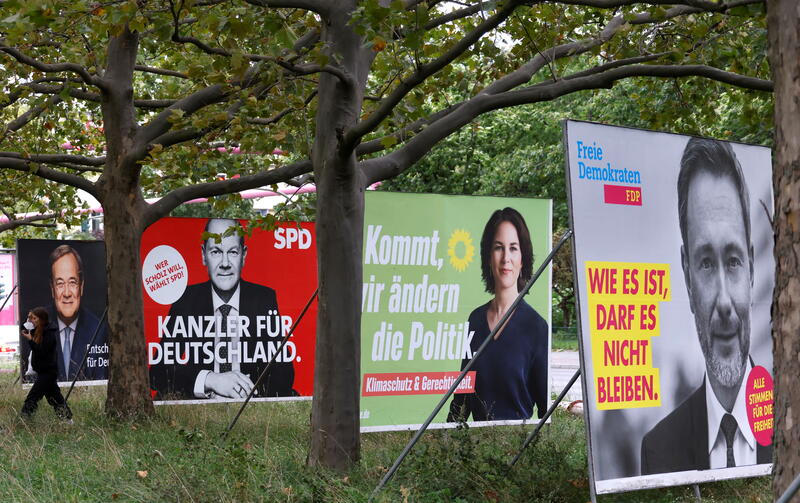
Election posters of Germany’s top candidates for chancellor. September 16, 2021. REUTERS/Fabrizio Bensch
Most people agree that news organisations and journalists should reflect all sides of an issue and not push a particular agenda – at least when asked about it in surveys. Our 2021 Digital News Report finds this to be true across countries and age groups.
However, many people feel that the media often fail to live up to this ideal. Our surveys consistently show that committed partisans believe that traditional media coverage is unfair, especially in countries where debates about politics or social justice have become deeply polarised. In recent years we’ve also seen an increase in opinion-led television formats such as Fox News/MSNBC in the United States, GB News in the UK and CNews in France, while many traditional print publications have focussed on distinctive and robust opinion as a way of standing out online.
Together with the growth of partisan websites, YouTubers and podcasters, audiences now have access to a wider range of views than ever before. Against this background, some have questioned traditional approaches to impartiality that try to represent all points of view within a single broadcast or publication. Other critics go further – arguing that impartiality has given extreme or unrepresentative views undue prominence, through its focus on balance, helping to legitimise climate change deniers and anti-vaxxers amongst others.
This all raises the question: how relevant is impartial and objective journalism to audiences today? The Reuters Institute commissioned market research company JV Consulting to carry out qualitative research in four countries – Brazil, Germany, the UK, and the US – with different news markets, traditions of public broadcasting, and systems of media regulation. They conducted a series of focus groups and in-depth interviews on our behalf in February and March 2021 with politically and ethnically diverse groups of older and younger people interested in and engaged with news (52 people in total).
These are some of the key findings of the report:
Engaged audiences in the four countries researched still care about impartiality and say it helps define news, even if some consider it an impossible ideal. They want journalists to focus on facts, objectivity and fairness, and to steer clear of opinions and bias in reporting, leaving them to decide for themselves how they feel about the news. Alongside accuracy, impartiality is a foundational value of news that underpins audiences’ trust.
People recognise the risk of giving exposure to extreme views or one side in the name of balance. However, evidence from this group of engaged users is that they are even more concerned about the suppression and silencing of viewpoints. There are particular misgivings about this in Brazil and Germany, where twentieth century history frames some people’s views.
Most participants recognise that there were some topics (e.g., science stories, natural disasters, and questions of social justice) where there were not always two or more sides to represent. Here, many felt there should be more latitude for journalists to present just one perspective or an established point of view. There are also expectations that journalists will show greater empathy and connection in their reporting than perhaps traditional interpretations of impartiality have allowed in the past.
Across countries, newer digital formats such as social media are perceived as carrying more risk of bias along with the growth of more informal and entertaining broadcast formats such as chat shows and podcasts. Impartiality is more vulnerable in these contexts, as well as when the news is emotive or controversial, because journalists’ personal views risk slipping out in the impulse to engage, although the subject and intention have a bearing on how audiences feel about this.
Younger people, who have grown up using more informal and digital sources, tend to have different expectations of impartiality, often looking for journalism that aligns with their values. But overall, their underlying attitudes and desires are remarkably similar to older people’s.
Different countries’ news traditions shape people’s experiences and expectations. Audiences in the US cannot envisage a world without partisan news outlets, but in the UK and Germany, with their public service traditions, most audiences still laud the upholding of impartiality.
Respondents also delineate between news reporting (where impartiality is expected) and opinion/commentary (where people expect that views are argued for). Importantly, many told us that they often find it difficult to distinguish between the two, especially online. Interviewees like news and they like opinion, but want them very clearly separated.
It is important to recognise that not all news organisations are committed to impartiality: indeed, some make a virtue of creating news and opinion with a clear point of view. But most will want to take note of audience desires for a range of views to be represented and to see clearer labelling of news and opinion. For news organisations that are committed to impartiality, the report highlights the increased dangers in areas where journalism is more informal or accessed in distributed environments. Public media like the BBC have already embarked on updated training and issued new guidelines on these issues. Audiences have also sent a clear signal in this report that they would like much greater transparency over why certain perspectives are included or excluded, however difficult this may be in practice.
Finally, the report notes that given the importance of social media, search and other access points, technology platforms such as Facebook, Google and Apple, will also need to develop clearer guidelines on impartiality – as their own trust levels will depend on fair implementation of policies around inclusion and exclusion, whether by algorithm or human intervention.
Now this isn’t everyone’s cup of tea but when one thinks of the enormous amount of news and information one gathers from the television, the radio, the press and a wide variety of online sources then thinking a little more about the truth of what we are being told is crucial to us making wise decisions. including voting where appropriate.
People still value the ideal of impartial news; there is no question about that!
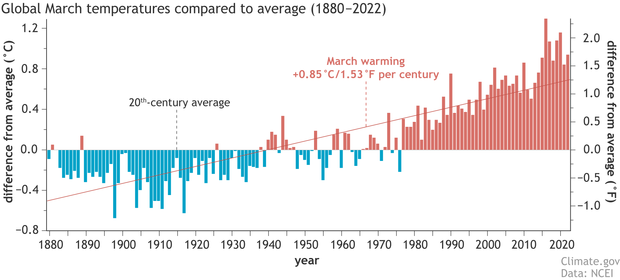
There is no question that we are warming the world, and in my mind, there’s very little doubt that it is us older persons who are the cause. Take this chart, for example, where the effects of populations in the 1980’s – 2000’s had a dramatic impact on the worsening trend:
The reason for today’s post is to share an article that writes of the science of precipitation.
ooOOoo
THE PHYSICS OF PRECIPITATION IN A WARMING CLIMATE
WRITTEN BY DR ASHLEIGH MASSAM
The scientific consensus on climate change is that atmospheric temperatures are rising and will continue to rise. Mean global temperatures are already 1˚C warmer than preindustrial times (relative to 1850–1900), predominantly due to human activity increasing the amount of greenhouse gases in the atmosphere (IPCC, 2018a). The 2020 Paris Conference of Parties (COP) agreed on the aim of a 1.5˚C cap on climate change-induced warming, although without rapidly introducing measures to reduce carbon and greenhouse gas emissions, global warming could easily go beyond this limit.
In fact, the Intergovernmental Panel on Climate Change (IPCC) warns that even a mean global temperature increase of 1.5˚C will lead to an increase in the frequency and intensity of rainfall events. But what links a warmer climate to an increase in intense rainfall events? This blog post will explain the physics behind the changes to precipitation rates in a warming climate.
A SIMPLE OVERVIEW OF THE PHYSICS
Climate projections simultaneously warn of higher annual mean surface temperatures, higher rates of intense rainfall and more frequent intense rainfall events. The atmospheric moisture content increases with respect to a change in temperature – essentially, the warmer the atmosphere, the more water is held in the atmosphere, and therefore higher rates of precipitation can be expected.
This is explained by the Clausius-Clapeyron relationship between surface temperature and water vapour. According to the Clausius-Clapeyron relationship, atmospheric water content increases by between 6 and 7% per 1 °C. Therefore, even just an increase of 1.5°C could result in ~9% more water in the atmosphere, which could have a major impact on storm systems and subsequent rainfall.
Storm systems travelling across oceans will have an increased moisture content from water evaporated from the sea surface, forming a larger storm system and therefore more precipitation. JBA has recently discussed the risk of flooding from intensifying rainfall due to climate change and this will be explored in respect to storm systems later in this blog.
HOW PRECIPITATION IS FORMED
In meteorology, precipitation can be liquid or solid water that falls from the atmosphere and reaches the Earth’s surface. Types of precipitation include rain, sleet, or snow, depending on the temperature of the atmosphere. During the water cycle (fig. 1), water evaporates from the surface into the atmosphere, and changes state from liquid to vapour. The water vapour forms cloud droplets, which join together until the heavy droplets fall from the clouds as precipitation. Several processes affect this simple view of the journey from evaporation to precipitation.
Figure 1: A diagram of the water cycle showing the connections between water masses, the atmosphere and the transpiration and condensation of water vapour.
THE SURFACE TEMPERATURE – PRECIPITATION RELATIONSHIP IN MORE DEPTH
The connection between precipitation and surface temperature is defined by the Clausius-Clapeyron equations. The Clausius-Clapeyron equations calculate the energy required to cause a chemical reaction at a given pressure. In terms of precipitation, the Clausius-Clapeyron equations can be used to calculate the thermal energy required to condense water vapour into droplets when the atmospheric pressure is known.
When water droplets are evaporated into the atmosphere, they travel upwards. As the Clausius-Clapeyron relationship is dependent on atmospheric pressure, the thermal energy requirement for a phase change is lower at a lower pressure. As the water droplets travel upwards, two things happen:
The atmospheric pressure decreases, and
The atmospheric temperature cools (this is known as the temperature lapse rate and is typically estimated at -6.5°C per kilometre).
When the water vapour reaches an elevation where the atmospheric pressure and temperature satisfy the Clausius-Clapeyron relationship, the water vapour condenses into cloud droplets.
IMPACTS OF A WARMING CLIMATE ON THE SURFACE TEMPERATURE – PRECIPITATION RELATIONSHIP
The release of carbon dioxide, and other greenhouse gases, into the atmosphere by humans has already led to climate change in the form of atmospheric warming. Long-term measurements show that the atmosphere has already warmed by 1°C since 1900. IPCC projections suggest that additional warming is inevitable, and attempts are being made to keep global atmospheric warming to under 1.5°C. Although, as previously mentioned, this could still increase the frequency and intensity of rainfall (IPCC, 2018b). To understand how an increase in annual mean surface temperature will influence rainfall events, we can apply the Clausius-Clapeyron relationship in a geographical context.
As the Clausius-Clapeyron equations define the relationship between vapour and pressure, they can also be used to define the saturation vapour pressure with respect to temperature. In meteorology, the saturation vapour pressure is the maximum pressure of water vapour, at a given temperature, before it condenses. Therefore, the pressure required to condense a water droplet increases exponentially with respect to a change in temperature.
This means that the Clausius-Clapeyron relationship can be used to determine the moisture content of the atmosphere. Warmer atmospheric temperatures will increase the atmospheric moisture content before condensation because the atmospheric pressure will not be affected by climate change in the same way as temperature. This results in the previously mentioned calculation that moisture content will increase by ~6.5% in the atmosphere per 1°C increase in temperature and means that atmospheric warming of 1.5°C will yield an increase in atmospheric moisture content of ~9%.
THE EFFECT ON STORMS AND PRECIPITATION
This ~9% increase has an impact on storm systems and therefore rainfall. Hurricane Harvey made landfall on the coast of Texas in August 2017. Over seven days, areas of Texas including Galveston and Houston experienced nearly 1.5 metres of rainfall.
Research published since the event suggests that the intensity of Hurricane Harvey is attributable to a combination of the storm stalling over one location and climate change. The Gulf of Mexico, the source of moisture for Hurricane Harvey, has experienced anthropogenic-induced sea-surface temperature warming of 1°C since preindustrial times (Pall et al., 2017; Trenberth et al., 2018). Comparing Hurricane Harvey’s precipitation records with an equivalent event from 1950, extreme value analysis concluded that climate change contributed to a 5-7% increase in rainfall rates covering the full region affected by the hurricane (Risser and Wehner, 2017).
With an increase in rainfall events and the wider impacts of climate change, it’s important for organisations to think about the potential risk to their business. JBA’s UK Climate Change Flood Model assesses and quantifies future flood risk in the UK under a warming climate and complements our range of global Climate Change Analytics, helping clients to understand and manage the effects of climate change on their assets and to enable long-term planning.
IPCC, 2018a: Summary for Policymakers. In: Global warming of 1.5°C. An IPCC Special Report on the impacts of global warming of 1.5°C above pre-industrial levels and related global greenhouse gas emission pathways, in the context of strengthening the global response to the threat of climate change, sustainable development, and efforts to eradicate poverty [Masson-Delmotte, V., P. Zhai, H.-O. Pörtner, D. Roberts, J. Skea, P.R. Shukla, A. Pirani, W. Moufouma-Okia, C. Péan, R. Pidcock, S. Connors, J.B.R. Matthews, Y. Chen, X. Zhou, M.I.Gomis, E. Lonnoy, T.Maycock, M.Tignor, and T. Waterfield (eds.)].]. World Meteorological Organization, Geneva, Switzerland.
IPCC, 2018b. Impacts of 1.5ºC Global Warming on Natural and Human Systems. In: Global Warming of 1.5°C. An IPCC Special Report on the impacts of global warming of 1.5°C above pre-industrial levels and related global greenhouse gas emission pathways, in the context of strengthening the global response to the threat of climate change, sustainable development, and efforts to eradicate poverty [Masson-Delmotte, V., P. Zhai, H.-O. Pörtner, D. Roberts, J. Skea, P.R. Shukla, A. Pirani, W. Moufouma-Okia, C. Péan, R. Pidcock, S. Connors, J.B.R. Matthews, Y. Chen, X. Zhou, M.I.Gomis, E. Lonnoy, T.Maycock, M.Tignor, and T. Waterfield (eds.)]. World Meteorological Organization, Geneva, Switzerland.
Pall, P., Patricola, C.M., Wehner, M.F., Stone, D.A., Paciorek, C.J., Collins, W.D. 2017. Diagnosing conditional anthropogenic contributions to heavy Colorado rainfall in September 2013. Weather and Climate Extremes, 17, pp 1-6.
Risser, M.D., Wehner, MF. 2017. Attributable human-induced changes in the likelihood and magnitude of the observed extreme precipitation during Hurricane Harvey. Geophysical Research Letters¸ 44(24), doi: 10.1002/2017GL075888.
Trenberth, K.E., Cheng, L., Jacobs, P., Zhang, Y., Fasullo, J. 2018. Hurricane Harvey links to ocean heat content and climate change adaptation. Earth’s Future, 6(5), doi: 10.1029/2018EF000825
ooOOoo
The IPCC states what is clearly known in science circles; a warmer atmosphere equals more moisture in the air and that translates into more rainfall.
It comes down to warmer atmospheric temperatures increasing the atmospheric moisture content before condensation, simply because the atmospheric pressure will not be affected by climate change in the same way as temperature, as was described earlier in the paper. The reference to Hurricane Harvey was very powerful.
The world has to focus on climate change in an urgent manner. Because there isn’t a great deal of time, something like 10 years, at most, to bring about huge changes in the way we consume energy.
The last day of April, 2023, brings a change in the Picture Parades.
My son, Alex, is a very keen photographer and has taken many beautiful photos of birds. He wants to build his following especially on Instagram (that is a link to Alex’s page) and I was very willing to assist him in his endeavour.
So starting today I will be posting the photographs taken by Alex and repeating this every other Sunday. In other words, I shall now be alternating between birds and dogs for as long as is possible.
But first of all here is Alex’s QR code.
oooo
oooo
oooo
oooo
oooo
oooo
oooo
oooo
oooo
Alex uses an Olympus camera, an OM-1, and his lens is an Olympus M zuiko 150-400TC pro. A feature of the camera is the continuous shooting rate of 130 frames per second that Alex uses to good effect; as you can see.
So if you are interested in photography, please go across to this Instagram link and revel in the wonderful pictures featuring wildlife from the UK🇬🇧, mainly in the counties of Somerset, Gloucestershire and Bristol.
Gordon Earle Moore (January 3, 1929 – March 24, 2023) was an American businessman, engineer, and the co-founder and emeritus chairman of Intel Corporation.
It was in 1965 that Gordon Moore suggested that every year there would be a doubling of the number of components per integrated circuit. In 1975 he revised his forecast to a doubling every two years; that prediction has become a reliable outcome and became known as Moore’s Law.
Just look at the left-hand scale of that graph above and ponder on the figures. From less than 10,000 in 1971 to more than 10 billion in 2021!
Incredible!
Gordon Earle Moore in 1978. He died on March 24th, 2023 aged 94 years.
This is the company that my daughter helps to run. She is Maija and together with Polly and Chloe they run Sound UK. I want to promote a recent item that appeared on their website.
ooOOoo
WHAT IS SOUND GENERATOR?
Now in its third year, Sound Generator is Sound UK’s research and development (R & D) programme that supports artists and seeds the development of an ambitious new project.
Each year six early career music and sound artists spend six months developing and testing their project, supported by mentoring from a range of experts.
By the end of the programme artists will have thoroughly explored their initial idea and tested that they can make it work, ready for the next stage of full commissioning and public engagement.
During the process artists will be able to try out new approaches, learn from others, increase their network and develop their practice.
Projects can be: • For indoors or outdoors • Suitable for venue touring or site specific • Digital, installation or live • Music, sound or multi-disciplinary • Designed to reach a new audience, work with a specific community or respond to the world we live in.
Following an open call, six artists will each receive an award of £2200 to research and develop their idea across six months (June to November 2023).
In addition to £2200, the programme includes access to the Sound Generator Network with support sessions from a range of exceptional mentors, plus opportunities to connect with other artists on the programme.
The R & D will culminate in the creation of a short audio or video sample of the project, and a proposal for its delivery. These will be presented by each artist at a sharing event at the end of the programme and sent out to a wide network of industry contacts.
WHO IS IT FOR?
• UK* creators that reflect the full cultural diversity and gender spectrum of the UK • Creators with 5 – 10 years professional experience • Creators who want to develop a new idea that extends their practice, with public interaction in mind. • Artists pushing the boundaries of contemporary music. Working within, but not exclusively, jazz, sound, folk, classical and electronic music, plus all points in between.
*we define a UK artist as someone who has been based and working in the UK for more than 5 years.
“We learnt so much and mentoring + support was very helpful in furthering our ideas. I think it also puts us in a better position to get further funding and for potential future collaborations.” Daphnellc & Ambra, Sound Generator 2022
ooOOoo
Hopefully this is read by some people who either want to help share the message or want to apply.






















 Learning from Dogs