Heavier rainfall, fiercer storms and intensifying droughts are likely to strike the world in the coming decades as climate change takes effect, the world’s leading climate scientists said on Friday.
Rising sea levels will increase the vulnerability of coastal areas, and the increase in “extreme weather events” will wipe billions off national economies and destroy lives, according to the Intergovernmental Panel on Climate Change (IPCC), the body of the world’s leading climate scientists convened by the United Nations.
Later on the article includes this,
Simon Brown, climate extremes research manager at theHadley Centre, the climate research unit of the UK’s Met Office, said: “This focus of the IPCC on extremes is very welcome as less emphasis has traditionally been given to these phenomena which are very likely to be the means by which ordinary people first experience climate change. Human susceptibility to weather mainly arises through extreme weather events so it is appropriate that we focus on these which, should they change for the worse, would have wide-ranging and significant consequences. This review will be very helpful in progressing the science by bringing together a wide range of studies – not just on the physical weather aspects of climate extremes but also on how we might adapt and respond to their changes in the future.”
The latest UN climate summit says much about why the world is failing to tackle global warming
Dec 3rd 2011 | from the print edition
IN HARD times governments are consumed by short-term problems. But this does not mean the archetypal long-term problem, climate change, has gone away. Science continues to support the case for curbing greenhouse-gas emissions so as to minimise the risks of catastrophe. Meanwhile it is clear how wretchedly the world is failing to do so. Even if countries honour their promises, the UN reckons that by 2020 emissions will exceed the trajectory for keeping warming under 2°C by up to 11 gigatonnes. That is equivalent to more than double the emissions of every car, bus and truck in 2005.
The concluding paragraph reads,
No one should imagine such a deal would turn the tide on climate change. That tide will rise, and countries will need to adapt to a lot of warming. But by acknowledging that everybody has a responsibility to act, it would represent progress.
‘Countries will need to adapt to a lot of warming.’ Tomorrow, I will publish a recent essay on TomDispatch. As a taster the opening paragraph is,
The good news? While 2010 tied for the warmest year on record, 2011 — according to the U.N.’s World Meteorological Organization (WMO) — is likely to come in 10th once November and December temperatures are tallied. In part, this is evidently due to an especially strong La Niña cooling event in the Pacific. On the other hand, with 2011 in the top ten despite La Niña, 13 of the warmest years since such record-keeping began have occurred in the last 15 years. Think of that as an uncomfortably hot cluster.
Continuing the advice you might offer to the next generation?
On the 1st December I published the first message. It had been inspired by a conversation with Peter McCarthy, who lives and works in Bristol, England. Here’s a little of what I wrote,
Anyway, Peter and I were talking about the sorts of qualities that enable some young people to take a risk-based entrepreneurial approach to life. Peter gave me the links to three videos that he thought were especially relevant to the notion of achieving success in life. So over the next few days I want to share those videos with you, dear reader. To me, these videos are, indeed, the essence of the messages that any person, especially those the wrong side of 60, would wish to leave in a bottle floating down the river of life.
So to the second message which is a recording of the talk that Sir Ken Robinson gave to the TED Talks conference in Monterey in February, 2006. It has been widely seen for all the right reasons; Sir Ken offers some powerful common-sense and a wonderful message for all the young people out there. As Sir Ken’s website says,
Sir Ken Robinson, PhD is an internationally recognized leader in the development of education, creativity and innovation. He is also one of the world’s leading speakers with a profound impact on audiences everywhere. The videos of his famous 2006 and 2010 talks to the prestigious TED Conference have been seen by an estimated 200 million people in over 150 countries.
Last Friday I published a Post under the title of The power of truth. Just 5 minutes long, the YouTube video was powerful, starkly so. I wrote at the end of that article, “The principal source for the footage was Yann Arthus-Bertrand’s incredible film HOME.”
Jean and I watched Yann Arthus-Bertrand’s film last Friday night and to say that we were moved would be pitiful compared to the emotional impact it really had. Take a look at the film trailer; it’s a little over 3 1/2 minutes long. (But please don’t use that as a substitute for watching the full film, see below!)
Home is a 2009 documentary by Yann Arthus-Bertrand. The film is entirely composed of aerial shots of various places around Earth. It shows the diversity of life on Earth and how humanity is threatening the ecological balance of the planet. The movie was released simultaneously on June 5th in cinemas all over the world, on DVD and on YouTube. Released on the same date in 50 countries is a world record for any film release in history. The film is 100% free, and no profits will be made from its release or future showings.
I wasn’t going to add anything other than a brief introduction to the main film. However, an article in The Economist The World in 2012 caught my eye and seemed especially relevant to promoting the message carried by the film. Sheryl Sandberg, chief operating officer of Facebook, wrote about the power of social media and how it would be even more evident in 2012. This is the paragraph that caught my eye,
Expressing our authentic identity will become even more pervasive in the coming year. Profiles will no longer be outlines, but detailed self-portraits of who we really are, including the books we read, the music we listen to, the distances we run, the places we travel, the causes we support, the videos of cats we laugh at, our likes and our links. And, yes, this shift to authenticity will take getting used to and will elicit cries about lost privacy. But people will increasingly recognise the benefits of such expression. Because the strength of social media is that it empowers individuals to amplify and broadcast their voices. The truer that voice, the louder it will sound and the farther it will reach.
That last sentence jumped out at me, “The truer that voice, the louder it will sound and the farther it will reach.” Mull on that as you watch the film and, please, please, please if you support the need to return to a harmonious relationship with the planet spread the word as far and wide as you can.
Please promise yourself to sit down quietly and watch it uninterrupted. And if you feel so minded to add comments to this Post please do – would be delighted to have your feedback.
We are living in exceptional times. Scientists tell us that we have 10 years to change the way we live, avert the depletion of natural resources and the catastrophic evolution of the Earth’s climate.
The stakes are high for us and our children. Everyone should take part in the effort, and HOME has been conceived to take a message of mobilization out to every human being.
For this purpose, HOME needs to be free. A patron, the PPR Group, made this possible. EuropaCorp, the distributor, also pledged not to make any profit because Home is a non-profit film.
HOME has been made for you : share it! And act for the planet.
A remarkably simple explanation, courtesy of a Greek Hotel, about financial bailouts!
Last week-end I was indebted to Neil Kelly for supplying a more humorous look at life for Learning from Dogs. This week-end I turn to friend, Bob D., a corporate airliner Captain out in the Middle East. Here is Bob’s contribution for today. (Editor’s note: at the time of posting this, 1 euro = 1.3405 US dollars, ergo €100 = $134 – read on, this will make sense.)
No connection with the hotel in the story!
For those interested in world events….
How the Greek bailout package works.
It is a slow day in a damp little Greek town. The rain is beating down and the streets are deserted. Times are tough, everybody is in debt, and everybody lives on credit.
On this particular day a rich German tourist is driving through the town, stops at the local hotel and lays a €100 note on the desk, telling the hotel owner he wants to inspect the rooms upstairs in order to pick one to spend the night.
The owner gives him some keys and, as soon as the visitor has walked upstairs, the hotelier grabs the €100 note and runs next door to pay his debt to the butcher. The butcher takes the €100 note and runs down the street to repay his debt to the pig farmer.
The pig farmer takes the €100 note and heads off to pay his bill at the supplier of feed and fuel. The guy at the Farmers’ Co-op takes the €100 note and runs to pay his drinks bill at the pub. The publican slips the money along to the local prostitute drinking at the bar, who has also been facing hard times and has had to offer him “services” on credit. The hooker then rushes to the hotel and pays off her room bill to the hotel owner with the €100 note.
The hotel proprietor then places the €100 note back on the counter so the rich traveler will not suspect anything. At that moment the traveler comes down the stairs, picks up the €100 note, states that the rooms are not satisfactory, pockets the money, and leaves town.
No one produced anything. No one earned anything. However, the whole town is now out of debt and looking to the future with a lot more optimism.
And that, Ladies and Gentlemen, is how the bailout package works.
Three things cannot be long hidden: the sun, the moon, and the truth.
The above is a quote attributed to the Buddha. It is perfect as an introduction to today’s piece.
When I sat down at my PC yesterday afternoon I was planning to finish off a Post about the BBC’s fabulous Frozen Planet TV series. But a check of my email changed all that. Because there was an email from Merci O., someone in Payson that Jean and I know well. Merci had sent me an email with a link to the following YouYube video.
Watch and be moved.
This is a non-commercial attempt to highlight the fact that world leaders, irresponsible corporates and mindless ‘consumers’ are combining to destroy life on earth. It is dedicated to all who died fighting for the planet and those whose lives are on the line today. The cut was put together by Vivek Chauhan, a young film maker, together with naturalists working with the Sanctuary Asia network (www.sanctuaryasia.com).
Content credit: The principal source for the footage was Yann Arthus-Bertrand’s incredible film HOME http://www.homethemovie.org/. The music was by Armand Amar. Thank you too Greenpeace and http://timescapes.org/
So what advice would you offer to the next generation?
One of the biggest differences between Homo sapiens and Canis lupus familiaris is that the latter is such a master of living in the present that, one assumes, the issue of worrying about the next generation is largely irrelevant. Definitely not so with us humans.
A few weeks back I was chatting to a good friend of mine, Peter McCarthy, whom I first met when I undertook a sales and marketing project for one his companies. That was many years ago but Peter and I have stayed in touch. One of the many attributes about Peter that I have admired over the years is his instinctive and thoughtful approach to entrepreneurism. Peter is still an active entrepreneur.
Anyway, Peter and I were talking about the sorts of qualities that enable some young people to take a risk-based entrepreneurial approach to life. Peter gave me the links to three videos that he thought were especially relevant to the notion of achieving success in life. So over the next few days I want to share those videos with you, dear reader. To me, these videos are, indeed, the essence of the messages that any person, especially those the wrong side of 60, would wish to leave in a bottle floating down the river of life.
So to the first. The address by Steve Jobs to the University of Stanford’s 114th Commencement on June 12, 2005. Already watched at the time of writing this by 12,690,731 persons!
The story that could run for an awfully long time!
I rather revealed my newness as a US resident by posting my review of David Kauders’ book The Greatest Crash over 2 days last week, one of them being Thanksgiving Day. Despite that 1,895 people viewed my review which was entitled The end of an era.
A week has now passed since that review. I was curious to see what sorts of headlines had been making the news in the last 7 days. It’s just a random trawl through those items that have captured my attention.
The eurozone really has only days to avoid collapse
By Wolfgang Münchau
In virtually all the debates about the eurozone I have been engaged in, someone usually makes the point that it is only when things get bad enough, the politicians finally act – eurobond, debt monetisation, quantitative easing, whatever. I am not so sure. The argument ignores the problem of acute collective action.
Last week, the crisis reached a new qualitative stage. With the spectacular flop of the German bond auction and the alarming rise in short-term rates in Spain and Italy, the government bond market across the eurozone has ceased to function.
Wolfgang concludes his article thus,
Italy’s disastrous bond auction on Friday tells us time is running out. The eurozone has 10 days at most.
Then my print copy of The Economist that arrived on the 26th had this lurid cover page,
Unless Germany and the ECB move quickly, the single currency’s collapse is looming
Past financial crises show that this downward spiral can be arrested only by bold policies to regain market confidence. But Europe’s policymakers seem unable or unwilling to be bold enough. The much-ballyhooed leveraging of the euro-zone rescue fund agreed on in October is going nowhere. Euro-zone leaders have become adept at talking up grand long-term plans to safeguard their currency—more intrusive fiscal supervision, new treaties to advance political integration. But they offer almost no ideas for containing today’s conflagration.
and a few paragraphs later, this,
This cannot go on for much longer. Without a dramatic change of heart by the ECB and by European leaders, the single currency could break up within weeks. Any number of events, from the failure of a big bank to the collapse of a government to more dud bond auctions, could cause its demise. In the last week of January, Italy must refinance more than €30 billion ($40 billion) of bonds. If the markets balk, and the ECB refuses to blink, the world’s third-biggest sovereign borrower could be pushed into default.
ICAP Plc is preparing its electronic trading platforms for Greece’s potential exit from the euro and a return to the drachma, senior executives at the inter-dealer broker said Sunday.
ICAP is the latest firm to disclose such preparations, joining the growing ranks of banks, governments and other key players in the global financial system whose officials are worried enough about the stability of the common currency to be making contingency plans for a possible break-up.
Investors sent Europe’s politicians a painful message last week whenGermany had a seriously disappointing government bond auction. It was unable to sell more than a third of the benchmark 10-year bonds it had sought to auction off on Nov. 23, and interest rates on 30-year German debt rose from 2.61 percent to 2.83 percent. The message? Germany is no longer a safe haven.
and concluded,
Ultimately, an integrated currency area may remain in Europe, albeit with fewer countries and more fiscal centralization. The Germans will force the weaker countries out of the euro area or, more likely, Germany and some others will leave the euro to form their own currency. The euro zone could be expanded again later, but only after much deeper political, economic and fiscal integration.
Tragedy awaits. European politicians are likely to stall until markets force a chaotic end upon them. Let’s hope they are planning quietly to keep disorder from turning into chaos.
Finally, on the 29th the BBC News website carried details of the Autumn Statement made by British Chancellor, George Osborne, to Parliament.
Osborne confirms pay and jobs pain as growth slows
Chancellor George Osborne has said public sector pay rises will be capped at 1% for two years, as he lowered growth forecasts for the UK economy.
The number of public sector jobs set to be lost by 2017 has also been revised up from 400,000 to 710,000.
Borrowing and unemployment are set to be higher than forecast and spending cuts to carry on to 2017, he admitted.
Just look at that figure of public sector job losses – 710,000!
Well that’s more than enough from me but it does surely endorse the opening views that David Kauders expounded in his book, as carried in my review, and reproduced here,
Starting with the first sentence, David sets out the core problem;
This book argues that it is impossible to expand the financial system much further.
expanding this a few paragraphs later,
This is the financial system limit: lack of new borrowing plus excessive weight of debt obligations from past borrowing combine to slow economies down. This is the barrier whichever way policy makers turn. It is like the lid on a boiling kettle. Enough steam can lift it for a while but it always snaps back into place. The financial system limit is a roadblock preventing growth.
A few pages later in this opening chapter ‘The roadblock preventing growth‘ this limit is explained thus,
Policy contradictions also show us that the financial system has reached a roadblock. The glaring conflict between bailout and austerity is at the core. Each bailout or stimulus requires creation of more credit, leading to false financial speculation, and for a short while markets recover their poise. The threat of inflation returns. Later, bad debts rise, the markets tumble again and a new crisis emerges. Austerity, the alternative policy, cuts spending thereby cutting the immediate level of economic activity and bringing economic decline more quickly than the stimulus alternative. Whichever way they turn, the authorities are damned.
You can understand why I called this Post a ‘footnote’ not an endnote.
Let me offer thanks to Resurgence Magazine for the written permission to reproduce this article in full, see terms at the end of the article. More background information about Robert Holden may be obtained from his own website and, finally, the Happiness Project website is here.
Robert Holden was at the forefront of ‘Happiness’ research. Here, he reflects on how that topic – initially laughed off the agenda – has gained credibility and explains why happiness is important
When I set up The Happiness Project, in 1994, the original goal was simple: talk happiness. In my training in psychology, philosophy and psychotherapy my teachers didn’t talk about happiness. We focused solely on the causes of unhappiness. This didn’t feel right to me. After all, how can you know what the causes are if you do not know what happiness is?
My goal, then, was to stimulate a conversation, so as to deepen our appreciation of what happiness is, its benefits, what enables it, and what blocks it. One conversation I focused on was the question of whether happiness is learned and whether it can be taught. To investigate this further, I created an eight-week happiness programme (which still runs today) called Be Happy.
Today happiness is a much more popular conversation than when The Happiness Project began. We are all talking more about happiness than ever before. The conversation is alive and well. Universities, hospitals, economists and governments publish new studies on happiness every week. So, what we have learned? And where does this conversation about happiness need to go next?
Let’s start with what happiness researchers refer to as ‘static happiness’. In a recent US study, it was found that when people in the 1940s were asked, “How happy are you?” the average score was 7.5 out of 10, whereas today the average score is 7.4 out of 10. In other words, in spite of all the ‘progress’ we appear to have made in the last 50 years or so, our happiness levels have remained mostly static. This tells me we need more conversations to clarify what real happiness is. For instance, we need to discern between pleasure, satisfaction and joy; and on my eight-week happiness programme we always begin by asking people, “What is your definition of a happy life?” and, “Are you living it?”
Happiness researchers have also found that most of us are only semi-happy. In 2006, I participated in a BBC documentary called The Happiness Formula. It reported, “the proportion of people saying they are ‘very happy’ has fallen from 52% in 1957 to just 36% today.” Clearly, research like this is questioning our most basic assumptions about what happiness is, and what we think will make us happy. That’s a good thing. An honest inquiry into happiness is an opportunity to rethink your life. It is one of the gifts of happiness.
Do you really know what makes you happy? This is the question both psychologists and economists are asking now. The evidence suggests we do not know. For instance, many of us believe that more money will make us happier. Some money does help, especially to cover the basics of food, rent, clothing, etc. After that, the correlation between more money and greater happiness is vague. Martin Seligman, former president of the American Psychology Association, and one of the founders of the Positive Psychology movement, concludes most forcibly: “The change in purchasing power over the last half century in the wealthy nations carries the same message: real purchasing power has more than doubled in the United States, France and Japan, but life satisfaction has changed not a whit.”
An inquiry into happiness challenges you to rethink everything. For example, almost everyone agrees with the idea that if their life circumstances improve, their levels of happiness will increase. This is the basis for almost every political and economic strategy the world over. And yet scientific research into happiness tells us this is wrong. New Zealand researcher Richard Kammann reports, “Objective life circumstances have a negligible role to play in a theory of happiness.” The same research concludes that your attitude and personal choices have a far greater influence on your happiness levels.
Another popular theory is that a better education will make our children happier. This has resulted in more tests for preschool children, more focus on regular exams, and more money spent on private education. Surely this increases happiness? “Sorry, Mom and Dad, neither education nor, for that matter, a high IQ paves the road to happiness,” states Claudia Wallis, who compiled a report called The New Science of Happiness for TIME magazine.
Happiness challenges us to rethink what is a “better education” for our children. I support the idea of happiness lessons for children at school, as pioneered at Wellington College by psychologist Nick Baylis and college Master Anthony Seldon [read his thoughts on this important topic in his article Stillness in Schools]. One opposing argument for happiness lessons at school is that children should not be “taught” happiness, but that they should be allowed to think about happiness for themselves. However, this is precisely the aim of these happiness lessons. The approach is inquiry, not dictation.
People who attend my happiness programme are always telling me, “I wish I’d learned this at school.” It’s time then for more conversations about happiness in school, and at home with our children. I encourage all my students and clients to talk more about happiness with their families. Why? Because one of the ways we evolve is through conversation. Drawing happiness with our children or talking about happiness with our partner helps us to clarify things, to heal, to come together, and ultimately to live a happier life.
And now, even governments and politicians want to talk about happiness. In Britain, David Cameron has commissioned a new survey called Measuring National Well-being. A new organisation called Action for Happiness [see what founder Richard Layard says about this new movement in his article A Better Way of Life] is working closely with the government to help create better social change in society. Again, some people are concerned that governments should not “tell us” how to be happy. I agree with this, but I don’t think governments are trying to tell us. Like us, they are simply trying to understand what happiness is, and how we can be happier.
In my latest book, Be Happy, I have written: “Your definition of happiness will influence every significant decision in your life.” It is essential, therefore, that individuals and governments alike keep happiness on the agenda because, more than ever before, humanity needs a better understanding of happiness. We have learned so much, about atoms and galaxies and other things, but we still do not understand ourselves very well; we still go to war too often, and there is still too much suffering.
I remain deeply committed to talking about happiness. Why? Because I believe that happiness is our true nature (it is the natural state of our Unconditioned Self), and for that reason happiness brings out the best in us, both individually and collectively. Happiness research has found a strong link between happiness and altruism, for instance. In a recent study by a Charities Commission, it was reported that the highest predictor of generous giving is not your income level: it’s your happiness level.
Good things come from real happiness. Happier people make better choices, which is good for society and the planet. Your happiness is a gift to the world. I believe this with all my heart.
—————————–
Robert Holden is director of The Happiness Project. His latest book, Be Happy;, is published by Hay House. For more about the eight-week happiness programme visit: http://www.happiness.co.uk
The Gift of Happiness features in Resurgence issue 269, November/December 2011.
This article is reprinted courtesy of Resurgence magazine – at the heart of earth, art and spirit. To buy Resurgence, read further articles online or find out about The Resurgence Trust, visit: http://www.resurgence.org
All rights to this article are reserved to Resurgence, if you wish to republish or make use of this work you must contact the copyright owner to obtain permission
—————————–
One final note from yours truly. Perhaps the art of happiness is yet another thing we can learn from dogs!
In a sense this piece today connects with the conclusions from my review of David Kauders’ new book The Greatest Crash; that we are transitioning into a new era.
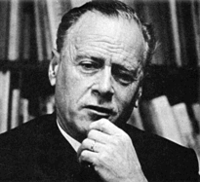
That’s why I was fascinated to come across a long essay about Herbert Marshall McLuhan written by Michael Valpy and published in the The Globe and Mail last July.
Let me quote some extracts from that article to illustrate why I made the connection with my book review.
The University of Toronto professor of English credited with foreseeing the Internet 30 years before it was invented and broadcasting scores of ideas about how electronic communications media was changing the way humans think has been redeemed from labels of McLuhanacy and psuedo-scientific charlatanism.
His work no longer is described, as it was in one erudite journal of the 1970s, as “a hoax so gigantic that it shows every sign of becoming an international intellectual scandal.”
Later on in the article,
Deciding recently to pay a visit to the McLuhan coach house, she wrote: “To be perfectly honest, I had never heard of McLuhan until I moved into residence at SMC, and accidentally stumbled into the book and media studies program. But as I quickly learned, Marshall McLuhan is kind of a big deal. You know that phrase that you hear everywhere: ‘The medium is the message?’ Yeah, that was McLuhan.”
And McLuhan’s problem – one of his problems – is that his message couldn’t escape his medium. As Douglas Coupland points out in a 2009 McLuhan biography, the wonderful, whimsical, boundlessly optimistic and imaginative sixties society that embraced him and lapped up his ideas morphed into the gloom of a change-fatigued seventies society that tired of hearing from him. Yet the brand remained strong. “You know that phrase that you hear everywhere: ‘The medium is the message?’” Ms. Kellogg asks us. “Yeah, that was McLuhan.”
Think of his intellectual history as a journey between two mountain peaks passing through a shadowed valley.
When one thinks of the power of the many new tools we lump under the title ‘social media’ then it’s easy to think that the way that humans are now communicating will have profound implications. Even this humble Blog was read by over 31,000 in the month of October. Back to the article,
McLuhan believed that each new technology created a new human environment and thus a new way of thinking. The medium-is-the-message meant that the content of electronic media is insignificant; it is the medium itself that has the greater impact on the environment. In other words, it wasn’t what we were seeing on TV that was important; it was the fact that we were watching TV (and not doing other things) that altered our brains.
And because, as Prof. Francis points out, McLuhan saw humans as essentially communicative animals, he believed it was the technologies of communication that were primary in shaping who we were, what we thought, and how we acted, with effects that often were subliminal and therefore not recognized.
Finally, the article concludes thus,
To truly understand McLuhan and his ideas, says Prof. Scheffel-Dunand, students have to read him.
Most students of McLuhan today, she says, read scholars who write about McLuhan rather than read McLuhan himself. Which is a mistake, she says, because McLuhan wrote as a poet: he wrote metaphorically, aphoristically, he wrote in what he called “mosaics.”
Biographer Philip Marchand agrees. “My suggestion for students is to begin with the articles written by McLuhan – ‘Acoustic Space’ and ‘The Effect of the Printed Book on the language of the 16th century’ and a couple others that appear in the anthology entitled Explorations in Communication. These articles are lucid, comprehensible introductions to McLuhan’s thought.”
To rejoin UpbeaT blogger Emily Kellogg on her coach house tour: “I don’t want to bore you, dear readers, but I just can’t help gushing. I dig this stuff. These kind of conversations, are the things that make an undergraduate degree worth pursuing. They’re the ones that give you an adrenalin rush because you’re thinking so quickly – and your brain kind of feels like a trapeze artist jumping from idea to idea.
There’s also something innately cool about having an intellectual conversation that ranges from iPhones to Heidegger in five seconds flat in the place that housed Marshall McLuhan as he wrote the books that revolutionized the field of media research.”
Ms. Kellogg: 2011 medium of McLuhan’s message.
Michael Valpy is a freelance writer based in Toronto.
A review of David Kauder’s recently published book, The Greatest Crash.
Details of the availability of the book are included at the end of the review.
Extracts from the book included are with grateful thanks to Sparkling Books.
Part One of this review was published yesterday which needs to be read before Part Two.
——————-
Chapter 5 continues by examining the over-bearing consequences of excessive public spending, excessive Government regulations, substitute taxation, weakness of Treasury forecasts, and so on. While these are UK issues, there is no doubt that similar restraints of free enterprise exist in many other western nations.
In Chapter 6, ‘Group Think‘, David looks at the strange ways in which we form opinions. It’s a topic that has been discussed and written about widely but the point behind this chapter is that people have in great part lost the ability to discern truth from fiction, with terrible implications when it comes to understanding how individuals are affected by government and bureaucratic institutions.
The chapter closes;
One of the remarkable points that I have found in writing this book is that many of the detailed errors, incorrect policies et al, have already been amply documented by others. But we never learn. The delegated society, the strength of lobby groups and vulnerability of our political system to pressure, the sheer volume of noise in the media and on the Internet, the immediacy of the demands of daily life, all combine to make our collective memory rather short.
Amen to that!
Chapter 7, ‘Academic differences of opinion‘, was surprisingly short at just 6 1/2 pages. One would have thought the subject worthy of a much longer review especially as David was exploring the fundamental differences between Keynesian and Ricardian economic theories and opportunities for alternative theories. Must say that that I laughed out loud (David’s book is a little short on humour!) at the sentence on p.127 that ran, “One correspondent writing to the Financial Times proposed that economics should be declared a failing discipline, economists as not fit for purpose, and a physicist put in charge of sorting their theories out.”
Chapter 8, ‘The dark side of capital markets‘, is the penultimate chapter and quite a technical one at that. But David manages to trip through esoteric aspects, well esoteric to the lay reader, in a manner that keeps one involved. Here’s an example from early on in the chapter.
Capital markets follow a long cycle beyond the experience of most practitioners, detectable only by understanding history and then applying this understanding to contemporary conditions.
It didn’t mean much to me. Then the next sentence;
The principles are identical for any market where prices depend on the supply of credit: equities, bonds, property and commodities are all markets where the prices must relate to the availability of credit.
That, at least, was understood but still the penny hadn’t dropped. Then came;
Bond prices prosper when credit is lacking while the other three prosper when credit is abundant.
That then made sense to me but still only at some academic level. David then followed those sentences with these two paragraphs;
The whole market cycle consists of bull market followed by bear market, as surely as night follows day. The bull market in assets is driven by an increasing supply of credit and economic expansion, since more credit leads to higher prices. The bear market in assets is driven by less credit and economic contraction; there is no purchasing power to keep asset prices high. Only fixed interest bonds are contra-cyclical, declining in price as credit expands and rising in price as credit sinks.
There are two useful theories for analysing the whole market cycle: conversion flow and Dow theory.
So in half-a-page of text, the book effectively educated me and then showed the relevance of that learning to the world I was living in. Cleverly done!
Chapter 9, ‘The attitude change‘, is, without doubt, a clincher of a close to this fascinating book. The sentiments conveyed in this chapter are so unexpected that, forgive me, it would be wrong to explicitly refer to them. Buy the book!
Let me just say that the last chapter fully endorsed me calling this review The End of an Era.
Overall conclusions
This is an important book from a writer who has both the academic and professional experience to enable him to form the views that he expresses. Only time will tell if the whole scenario that is envisaged by Mr. Kauders will play out as he expects. My personal view is that it will.
For individuals and business alike, reading The Greatest Crash will inform you in a manner that I would argue is critical when one notes the precarious and potentially unstable period we are living through. The decisions readers make after reading the book are beyond the remit of this review and, of course, David Kauders, but, at least, read the book!
Prof. Myddelton in the book’s introduction wrote, “But one of the things we need now is new thinking on the fundamentals.” Perhaps not new thinking on fundamentals, as the Prof. puts it, but a reinstatement of core fundamental values.
I am not alone from sensing that the world, especially the western world, is transitioning from an era of greed and materialism, seeing a world of unlimited resources, to a different societal relationship with planet Earth, the only planet we have. A transition across all layers of society towards the values of truth, integrity and compassion; values whose day has come.
The Greatest Crash reinforces immensely my notion that this truly is the end of an era.
——————
Want to buy The Greatest Crash? The ebook was published in October worldwide, the paperback published in the UK on the 1st November UK, the hardcover being released any day now in the UK. For North America both the paperback and hardcover versions are being published on 1st February, 2012.
Full details from the Sparkling Books webpage here.




 Learning from Dogs