I first met Richard Maugham when we were being treated to a private jet flight to the Hannover International Fair in 1982, some 43 years ago. We were both English and I was living in Tollesbury, Essex, near Colchester and Richard living near Ealing, West London.
The common thread was that all the passengers were major sellers of the Commodore ‘PET’.
Richard and I hit it off straight away. Richard was a fellow salesman. I was ex-IBM Office Products Division and Richard was ex-Olivetti.
Both of us also volunteered for the Prince’s Youth Business Trust, a charity headed by Prince of Wales, as he was then, helping young people start their own business.
The Prince of Wales, me, and Richard Maugham
Gillie and Colin, a couple who know Richard, recently sent me the following email:
Dear Paul,
I write to inform you that Richard passed away today at 2.50 GMT.
Both Colin and I were at his hospital bedside.
Our thoughts and condolences are with you.
Gillie and Colin.
The ‘today’ in the above email was Sunday, 9th February, 2025.
Since then, information overload continues unabated, and many people are rightfully confused by an onslaught of conflicting health information. Even expert advice is often contradictory.
On top of that, people sometimes deliberately distort research findings to promote a certain agenda. For example, trisodium phosphate is a common food additive in cakes and cookies that is used to improve texture and prevent spoilage, but wellness influencers exploit the fact that a similarly named substance is used in paint and cleaning products to suggest it’s dangerous to your health.
Such claims can proliferate quickly, creating widespread misconceptions and undermining trust in legitimate scientific research and medical advice. Social media’s rise as a news and information source further fuels the spread of pseudoscientific views.
Misinformation is rampant in the realm of health and nutrition. Findings from nutrition research is rarely clear-cut because diet is just one of many behaviors and lifestyle factors affecting health, but the simplicity of using food and supplements as a cure-all is especially seductive.
I am an assistant professor specializing in medical education and science communication. I also train scientists and future health care professionals how to communicate their science to the general public.
In my view, countering the voices of social media influencers and health activists promoting pseudoscientific health claims requires leaning into the science of disease prevention. Extensive research has produced a body of evidence-based practices and public health measures that have consistently been shown to improve the health of millions of people around the world. Evaluating popular health claims against the yardstick of this work can help distinguish which ones are based on sound science.
To parse pseudoscientific claims from sound advice about health and nutrition, it’s crucial to evaluate the information’s source. tadamichi/Getty Images
Navigating the terrain of tangled information
Conflicting information can be found on just about everything we eat and drink.
That’s because a food or beverage is rarely just good or bad. Instead, its health effects can depend on everything from the quantity a person consumes to their genetic makeup. Hundreds of scientific studies describe coffee’s health benefits and, on the flip side, its health risks. A bird’s-eye view can point in one direction or another, but news articles and social media posts often make claims based on a single study.
Things can get even more confusing with dietary supplements because people who promote them often make big claims about their health benefits. Take apple cider vinegar, for example – or ACV, if you’re in the know.
Apple cider vinegar has been touted as an all-natural remedy for a variety of ailments, including digestive issues, urinary health and weight management. Indeed, some studies have shown that it might help lower cholesterol, in addition to having other health benefits, but overall those studies have small sample sizes and are inconclusive.
Advocates of this substance often claim that one particular component of it – the cloudy sediment at the bottom of the bottle termed “the mother” – is especially beneficial because of the bacteria and yeast it contains. But there is no research that backs the claim that it offers any health benefits.
It’s also important to keep in mind that the global dietary supplements industry is worth more than US$150 billion per year, so companies – and wellness influencers – selling supplements have a financial stake in convincing the public of their value.
Misinformation about nutrition is nothing new, but that doesn’t make it any less confusing.
How nutrition science gets twisted
There’s no doubt that good nutrition is fundamental for your health. Studies consistently show that a balanced diet containing a variety of essential nutrients can help prevent chronic diseases and promote overall well-being.
However, pseudoscientific claims often twist such basic facts to promote the idea that specific diets or supplements can prevent or treat illness. For example, vitamin C is known to play a role in supporting the immune system and can help reduce the duration and severity of colds.
Some companies overstate the benefits while underplaying the hazards.
For example, wellness influencers have promoted raw milk over pasteurized milk as a more natural and nutritious choice, but consuming it is risky. Unpasteurized milk can contain harmful bacteria that leads to gastrointestinal illness and, in some cases, much more serious and potentially life-threatening diseases such as avian influenza, or bird flu.
The lure of dietary myths has led people with cancer to replace proven science-backed treatments, such as chemotherapy or radiation, with unproven and misleading nutrition programs.
How to spot less-than-solid science
Pseudoscience exploits your insecurities and emotions, taking advantage of your desire to live the healthiest life possible.
While the world around you may be uncertain and out of your control, you want to believe that at the very least, you have control over your own health. This is where the wellness industry steps in.
What makes pseudoscientific claims so confusing is that they use just enough scientific jargon to sound believable. Supplements or powders that claim to “boost immunity” often list ingredients such as adaptogens and superfoods. While these words sound real and convincing, they actually don’t mean anything in science. They are terms created by the wellness industry to sell products.
I’ve researched and written about reliable ways to distinguish science facts from false health claims. To stay alert and find credible information, I’d suggest you follow a few key steps.
First, check your emotions – strong emotional reactions, such as fear and anger, can be a red flag.
Next, check that the author has experience or expertise in the field of the topic. If they’re not an expert, they might not know what they are talking about. It’s always a good idea to make sure the source is reputable – ask yourself, would this source be trusted by scientists?
Finally, search for references that back up the information. If very little or nothing else exists in the science world to back up the claims, you may want to put your trust in a different source.
Following these steps will separate the facts from fake news and empower you to make evidence-based decisions.
A hundred years ago, astronomer Edwin Hubble dramatically expanded the size of the known universe. At a meeting of the American Astronomical Society in January 1925, a paper read by one of his colleagues on his behalf reported that the Andromeda nebula, also called M31, was nearly a million light years away – too remote to be a part of the Milky Way.
Hubble’s work opened the door to the study of the universe beyond our galaxy. In the century since Hubble’s pioneering work, astronomers like me have learned that the universe is vast and contains trillions of galaxies.
Nature of the nebulae
In 1610, astronomer Galileo Galilei used the newly invented telescope to show that the Milky Way was composed of a huge number of faint stars. For the next 300 years, astronomers assumed that the Milky Way was the entire universe.
Charles Messier also produced a catalog of over 100 prominent nebulae in 1781. Messier was interested in comets, so his list was a set of fuzzy objects that might be mistaken for comets. He intended for comet hunters to avoid them since they did not move across the sky.
As more data piled up, 19th century astronomers started to see that the nebulae were a mixed bag. Some were gaseous, star-forming regions, such as the Orion nebula, or M42 – the 42nd object in Messier’s catalog – while others were star clusters such as the Pleiades, or M45.
A third category – nebulae with spiral structure – particularly intrigued astronomers. The Andromeda nebula, M31, was a prominent example. It’s visible to the naked eye from a dark site.
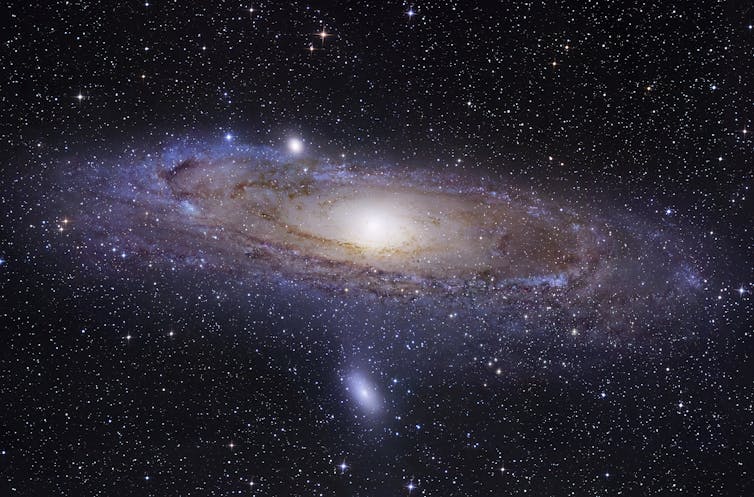
The Andromeda galaxy, then known as the Andromeda nebula, is a bright spot in the sky that intrigued early astronomers.
Astronomers as far back as the mid-18th century had speculated that some nebulae might be remote systems of stars or “island universes,” but there was no data to support this hypothesis. Island universes referred to the idea that there could be enormous stellar systems outside the Milky Way – but astronomers now just call these systems galaxies.
In 1920, astronomers Harlow Shapley and Heber Curtis held a Great Debate. Shapley argued that the spiral nebulae were small and in the Milky Way, while Curtis took a more radical position that they were independent galaxies, extremely large and distant.
At the time, the debate was inconclusive. Astronomers now know that galaxies are isolated systems of stars, much smaller than the space between them.
Hubble makes his mark
Edwin Hubble was young and ambitious. At the of age 30, he arrived at Mount Wilson Observatory in Southern California just in time to use the new Hooker 100-inch telescope, at the time the largest in the world.
He began taking photographic plates of the spiral nebulae. These glass plates recorded images of the night sky using a light-sensitive emulsion covering their surface. The telescope’s size let it make images of very faint objects, and its high-quality mirror allowed it to distinguish individual stars in some of the nebulae.
Estimating distances in astronomy is challenging. Think of how hard it is to estimate the distance of someone pointing a flashlight at you on a dark night. Galaxies come in a very wide range of sizes and masses. Measuring a galaxy’s brightness or apparent size is not a good guide to its distance.
Hubble leveraged a discovery made by Henrietta Swan Leavitt 10 years earlier. She worked at the Harvard College Observatory as a “human computer,” laboriously measuring the positions and brightness of thousands of stars on photographic plates.
She was particularly interested in Cepheid variables, which are stars whose brightness pulses regularly, so they get brighter and dimmer with a particular period. She found a relationship between their variation period, or pulse, and their intrinsic brightness or luminosity.
Once you measure a Cepheid’s period, you can calculate its distance from how bright it appears using the inverse square law. The more distant the star is, the fainter it appears.
Hubble worked hard, taking images of spiral nebulae every clear night and looking for the telltale variations of Cepheid variables. By the end of 1924, he had found 12 Cepheids in M31. He calculated M31’s distance as a prodigious 900,000 light years away, though he underestimated its true distance – about 2.5 million light years – by not realizing there were two different types of Cepheid variables.
His measurements marked the end of the Great Debate about the Milky Way’s size and the nature of the nebulae. Hubble wrote about his discovery to Harlow Shapley, who had argued that the Milky Way encompassed the entire universe.
“Here is the letter that destroyed my universe,” Shapley remarked.
Always eager for publicity, Hubble leaked his discovery to The New York Times five weeks before a colleague presented his paper at the astronomers’ annual meeting in Washington, D.C.
An expanding universe of galaxies
But Hubble wasn’t done. His second major discovery also transformed astronomers’ understanding of the universe. As he dispersed the light from dozens of galaxies into a spectrum, which recorded the amount of light at each wavelength, he noticed that the light was always shifted to longer or redder wavelengths.
Light from the galaxy passes through a prism or reflects off a diffraction grating in a telescope, which captures the intensity of light from blue to red.
It seemed that these redshifted galaxies were all moving away from the Milky Way.
Hubble’s results suggested the farther away a galaxy was, the faster it was moving away from Earth. Hubble got the lion’s share of the credit for this discovery, but Lowell Observatory astronomer Vesto Slipher, who noticed the same phenomenon but didn’t publish his data, also anticipated that result.
Hubble referred to galaxies having recession velocities, or speeds of moving away from the Earth, but he never figured out that they were moving away from Earth because the universe is getting bigger.
Belgian cosmologist and Catholic priest Georges Lemaitre made that connection by realizing that the theory of general relativity described an expanding universe. He recognized that space expanding in between the galaxies could cause the redshifts, making it seem like they were moving farther away from each other and from Earth.
Lemaitre was the first to argue that the expansion must have begun during the big bang.
Edwin Hubble is the namesake for NASA’s Hubble Space Telescope, which has spent decades observing faraway galaxies. NASA via AP
NASA named its flagship space observatory after Hubble, and it has been used to study galaxies for 35 years. Astronomers routinely observe galaxies that are thousands of times fainter and more distant than galaxies observed in the 1920s. The James Webb Space Telescope has pushed the envelope even farther.
The current record holder is a galaxy a staggering 34 billion light years away, seen just 200 million years after the big bang, when the universe was 20 times smaller than it is now. Edwin Hubble would be amazed to see such progress.
I had a blackout while driving back from the shops last Saturday week, the 17th, swerved and hit an oak tree. Jean and I were both taken to hospital but I was discharged at the end of the day; Jean is still in hospital, the Asante Regional at Medford. Plus the DMV cancelled my driver’s license and the car was declared written off.
Jean is getting better all the time but until she is back home and we can put our heads together about a variety of things I shall not be blogging.
I’m very sorry but that is the way it is at the moment.
Thinking it through thanks to a recent issue of Skeptical Inquirer.
Melanie Trecer-King is the creator of Thinking is Power and the associate professor of biology at the Massasoit Community College, where she teaches a science course designed to equip her students with essential critical thinking, information literacy, and science literacy skills.
The article was published in the November/December, 2024 issue of the magazine. I believe it is free to share.
ooOOoo
Most people agree that critical thinking is an important skill that should be taught in schools. And most educators think they teach critical thinking. I know I did. After all, I was a science educator, and science is critical thinking. Isn’t it?
For years, I taught general-education biology, a course commonly taken by undergraduates who aren’t science majors. And while I love biology, I grew more and more frustrated with the content. I asked myself: If I had one semester to teach the average student what they need to know about the process of science and critical thinking, what would it look like?
Thankfully, my college allowed me to replace my traditional introductory biology course with a course titled Science for Life, designed to teach critical thinking, information literacy, and science literacy skills (Trecek-King 2022). Since my conversion, I’ve been sharing my new path with anyone who will listen about the value of teaching critical thinking.
Yet conversations with Bertha Vazquez, director of education for the Center for Inquiry, gave me pause. In a recent podcast conversation with the two of us and Daniel Reed (of the West Virginia Skeptics Society), Vazquez was adamant. Educators do teach critical thinking: the Next Generation Science Standards (NGSS) require students to ask questions, plan and carry out investigations, analyze and interpret data, construct explanations, and engage in arguments from evidence.
As a science communicator, I constantly fight misconceptions around certain terms. Theory and skepticism are prime examples. So imagine my surprise (and embarrassment) when I realized that, as a critical thinking educator, I had overlooked an important first step in critical thinking: defining terms. The irony.
What Is Critical Thinking?
While we can all agree that it’s important to teach critical thinking, there’s not always agreement on what we mean by the term.
In his book Critical Thinking, Jonathan Haber (2020) explains how the concept emerged and some of the ways it’s currently defined. John Dewey, in his 1910 work How We Think, proposed one of the first modern definitions of reflective thinking, describing it as an “active, persistent, and careful consideration of any belief” (Dewey 1910, 6).
In his 1941 dissertation, Edward Glaser identified three components of critical thinking: “(1) an attitude of being disposed to consider in a thoughtful way the problems and subjects that come within the range of one’s experiences, (2) knowledge of the methods of logical inquiry and reasoning, and (3) some skill in applying those methods” (Glaser 1941, 5–6). That same year, Glaser and Goodwin Watson published the Watson-Glaser Tests of Critical Thinking (now the Watson-Glaser Critical Thinking Appraisal), a widely used standardized test for assessing critical thinking skills.
Critical thinking’s “big bang” moment, according to Haber, came in the early 1980s when the state of California (Harmon 1980, 3) mandated that all students in its university system complete a course that teaches “an understanding of the relationship of language to logic, leading to the ability to analyze, criticize and advocate ideas, reason inductively and deductively, and reach factual or judgmental conclusions based on sound inferences drawn from unambiguous statements of knowledge or belief.”
And the Delphi Report (Facione 1990, 2), in which Peter Facione worked with critical thinking experts to create a consensus definition, concludes that critical thinking is a “purposeful, self-regulatory judgment which results in interpretation, analysis, evaluation, and inference, as well as explanation of the evidential, conceptual, methodological, criteriological, or contextual considerations upon which that judgment is based.”
From these (and many other) definitions, Haber identifies three interconnected parts of critical thinking: knowledge of critical thinking components, such as logic and argumentation; the skills to put the knowledge to use in real-world situations; and the dispositions needed to prioritize critical thinking honestly and ethically.
This problem-solving view of critical thinking forms the basis of many of the current educational standards, including the NGSS and Common Core, which ask students to think deeply within a specific domain. And it is one scientists themselves use when trying to understand issues.
These are worthy educational goals to be sure. However, in my experience teaching general-education biology, I’ve come to realize that this approach is incomplete.
If critical thinking requires deep knowledge, then our ability to analyze topics is limited to areas in which we possess sufficient expertise. Pedagogy that encourages “independent” thinking outside these areas can have the unintended consequence of teaching students to overestimate their abilities. The best minds know they can’t know everything. Even experts rely on other experts and sources.
Additionally, in the classroom, students are provided with reliable content from which to critically analyze. In the “real world,” these guardrails are nonexistent. Not only is misinformation ubiquitous, disinformation purveyors exploit our biases and emotions to manipulate our reasoning.
And finally, we can’t address science misinformation, from evolution to vaccines to climate change, by giving students more content knowledge. We don’t fall for science denial and pseudoscience because we don’t have the facts but because of our emotions, desires, identities, and biases.
I now have a better understanding of what my colleague and friend Andy Norman means when he says that critical thinking suffers from a branding problem.
Yes, And …?
Using the above definition(s), I was teaching my biology students how to think critically. For example, I didn’t just ask them to memorize the stages of mitosis but to explore the mutations that could disrupt the cell cycle and lead to cancer. But to what end? If (or when) my former students are touched by cancer, will they remember how proto-oncogenes and tumor suppressor genes can lead to unregulated cell growth? Is that even what they need to know? I argue that, especially for students who aren’t going to be scientists, it’s far more important to teach students how and why the process of science results in reliable knowledge … and how to find it.
My Science for Life course and my Thinking Is Power resource are both based on the same premise. Knowledge may be power, but there’s too much to know. Even more, knowledge is a process; it’s not just what we know but how we know. It’s not just a noun but a verb. When we need reliable knowledge, can we find it and use it to make wiser decisions? And how do we know what information to ignore?
As a science educator, I want my students to understand how the process of science produces knowledge and why it’s reliable. Why aren’t comments such as “it worked for me” or “I know what I saw” sufficient evidence? I’ve come to realize that an essential—and often overlooked—ingredient is why we need science in the first place.
Richard Feynman famously said, “The first principle is that you must not fool yourself, and you are the easiest person to fool.” Science is how we correct for this tendency toward self-deception. That’s why I spend the first third of the semester exploring how we come to our beliefs, the limits of our perception and memory, the importance of skepticism, the cognitive biases that can lead our thinking astray, and the logical fallacies we use to convince ourselves (and others) that our conclusions are justified.
Influential voices in the skeptical community played a crucial role in shaping the ingredients of critical thinking I use in Science for Life and Thinking Is Power, which include the following:
Being aware of our limitations: Understanding that our perception and memory are flawed, and the biases and heuristics our brains rely on to make fast and easy decisions can lead us astray.
Arguing with evidence and logic: Using arguments that are well-structured and supported by evidence. This includes understanding how the different types of arguments work (i.e., deductive, inductive, and abductive) and avoiding logical fallacies.
Thinking about our thinking (metacognition): Actively examining and questioning our own thought processes—including the source of our knowledge, assumptions, intuitions, motivations, emotions, and biases—and how they might influence our judgments.
Embracing nuance and uncertainty: Avoiding the black-or-white thinking that can lead to oversimplified conclusions and accepting that our knowledge is never perfect or complete.
Seeking objectivity: Actively working to counter the limitations that prevent us from accurately understanding the world. This includes seeking diverse perspectives, separating our identity from our beliefs, and prioritizing accuracy over ego.
Having curiosity and open-mindedness: Possessing a desire to learn and understand by asking questions and seeking out information, even if it contradicts what we want to believe.
Maintaining healthy skepticism: Balancing gullibility and doubt and proportioning our beliefs to the available evidence. And remembering that claims made without evidence can be dismissed without evidence and extraordinary claims require extraordinary evidence.
Exhibiting intellectual humility: Recognizing the limitations of our knowledge, being open to the expertise of others, and being willing to change our minds with evidence.
In my experience, giving students this foundation is essential for helping them become better consumers of information and science. Without an awareness that our emotions and existing beliefs can drive our reasoning, search engines and low-quality sources become tools to confirm our biases. And without an understanding of how our identities and worldviews can alter our standards of evidence, pseudoscience and science denial provide cover for what we want or don’t want to believe.
The logic of science’s practices, from carefully controlling experimental variables to making the findings available to other experts for scrutiny and replication, falls into place once students understand the problems it’s addressing. Simply put, science is our shield against self-deception.
Now instead of asking students to think critically about the biology of cancer, I teach them how to evaluate sources to find reliable information, how to recognize pseudoscientific “treatments,” and how their need for hope and answers makes them vulnerable to misinformation.
The Take-Home Message
I have no doubt that most educators teach critical thinking. But for pedagogical and communication purposes, it would be beneficial to clarify what we mean—and just as importantly to ask ourselves what we want our students to learn.
The dominant view of critical thinking in education is problem-solving in specific domains, which is absolutely a valuable skill. However, many skeptics view critical thinking as good thinking in a broader sense. My own teaching shifted toward this latter framework after I realized that problem-solving skills are insufficient without a foundation in better thinking. We may be born with the ability to think, but we must be taught to think well, and our primate brains aren’t adapted to today’s tidal wave of misinformation.
I’m grateful to the skeptical community for challenging my assumptions about critical thinking and my friend Bertha Vazquez for encouraging me to think more deeply about the good work science educators do in their classrooms every day. This article is the result of my attempt to reconcile what critical thinking means to educators and what it means to skeptics, and my hope is that it opens a conversation about how we can better serve our students. Maybe it will even start a critical thinking revolution, especially in science education.
Let the critical thinking revolution begin!
Acknowledgments
My thanks go to those on this brief list of skeptical thinkers/authors who’ve influenced my understanding of critical thinking: James Alcock, Timothy Caulfield, John Cook, Brian Dunning, Julia Galef, Adam Grant, David Robert Grimes, Jon Guy, Harriet Hall, Guy Harrison, Daniel Kahneman, David McRaney, Steven Novella, Carl Sagan, Michael Shermer, and Carol Tavris.
Special thanks to Bertha Vazquez, Daniel Pimentel, Andy Norman, Daniel Reed, and Jon Guy for their helpful feedback on this article.
References
Dewey, John. 1910. How We Think. Lexington, MA: D.C. Heath and Company.
Facione, Peter A. 1990. Critical Thinking: A Statement of Expert Consensus for Purposes of Educational Assessment and Instruction—The Delphi Report. Millbrae, CA: California Academic Press.
Glaser, Edward M. 1941. An Experiment in the Development of Critical Thinking. New York, NY: Teachers College, Columbia University.
Haber, Jonathan. 2020. Critical Thinking. Cambridge, MA: The MIT Press.
Harmon, Harry. 1980. Executive Order No. 338: General Education-Breadth Requirements. The California State University and Colleges.
I hope others have read this fascinating article and repeat the statement: ‘While we can all agree that it’s important to teach critical thinking, there’s not always agreement on what we mean by the term.’
Back in the late 1950s when my mother remarried after my father’s death, ‘Dad’, as he was called when he came to live at Toley Avenue, Preston Road, London, taught me how to construct a radio receiver made from a crystal, a crystal set. I have this memory of listening to Quincy Jones on my crystal set and loving the rhythm.
“Music is sacred to me,” Quincy Jones once said. “Melody is God’s voice.”
He certainly had the divine touch.
Jones, who had died at the age of 91, was the right-hand man to both Frank Sinatra and Michael Jackson, and helped to shape the sound of jazz and pop over more than 60 years.
His recordings revolutionised music by crossing genres, promoting unlikely collaborations and shaping modern production techniques.
Global efforts to tackle climate change are wildly off track, says the UN, as new data shows that warming gases are accumulating faster than at any time in human existence.
Current national plans to limit carbon emissions would barely cut pollution by 2030, the UN analysis shows, leaving efforts to keep warming under 1.5C this century in tatters.
The update comes as a separate report shows that greenhouse gases have risen by over 11% in the last two decades, with atmospheric concentrations surging in 2023.
ooOOoo
What the jet stream and climate change had to do with the hottest summer on record − remember all those heat domes?
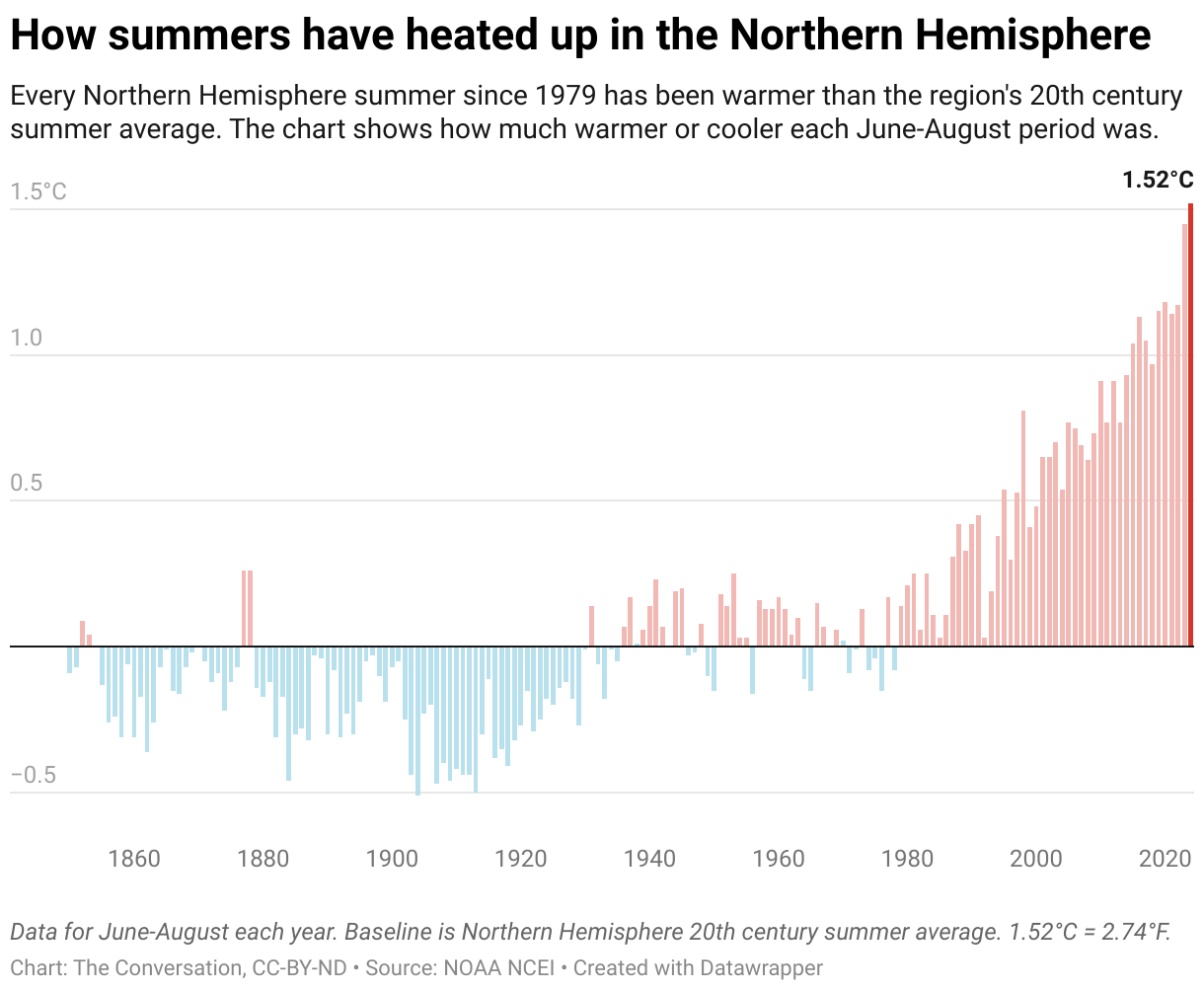
Summer 2024 was officially the Northern Hemisphere’s hottest on record. In the United States, fierce heat waves seemed to hit somewhere almost every day.
That might seem small, but temperature increases associated with human-induced climate change do not manifest as small, even increases everywhere on the planet. Rather, they result in more frequent and severe episodes of heat waves, as the world saw in 2024.
The most severe and persistent heat waves are often associated with an atmospheric pattern called a heat dome. As an atmospheric scientist, I study weather patterns and the changing climate. Here’s how heat domes, the jet stream and climate change influence summer heat waves and the record-hot summer of 2024.
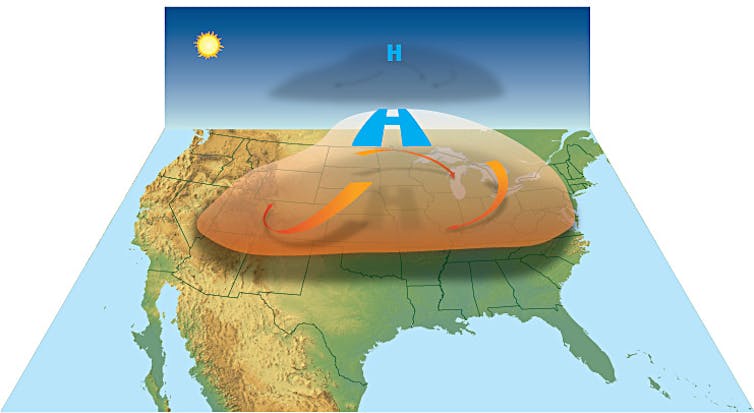
A heat dome is a persistent high-pressure system over a large area. A high-pressure system is created by sinking air. As air sinks, it warms up, decreasing relative humidity and leaving sunny weather. The high pressure also serves as a lid that keeps hot air on the surface from rising and dissipating. The resulting heat dome can persist for days or even weeks.
The longer a heat dome lingers, the more heat will build up, creating sweltering conditions for the people on the ground.
High pressure in the middle layers of the atmosphere acts as a dome or cap, allowing heat to build up at the Earth’s surface. NOAA
How long these heat domes stick around has a lot to do with the jet stream.
The jet stream is a narrow band of strong winds in the upper atmosphere, about 30,000 feet above sea level. It moves from west to east due to the Earth’s rotation. The strong winds are a result of the sharp temperature difference where the warm tropical air meets the cold polar air from the north in the mid-latitudes.
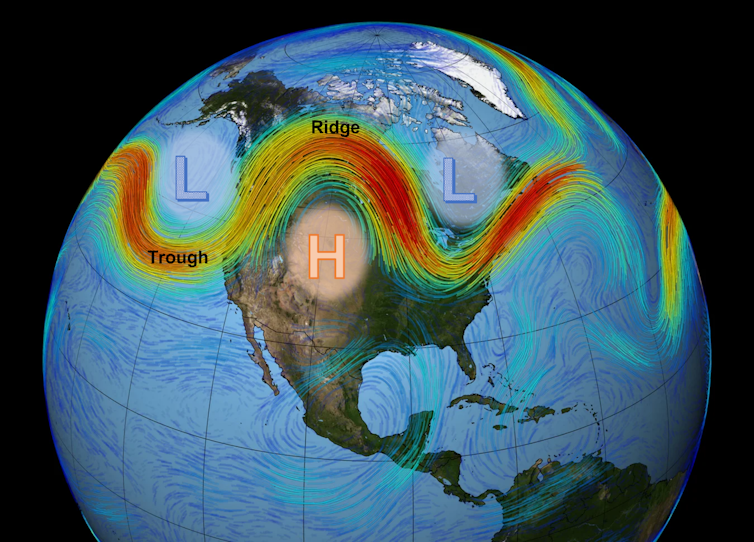
The jet stream does not flow along a straight path. Rather, it meanders to the north and south in a wavy pattern. These giant meanders are known as the Rossby waves, and they have a major influence on weather.
Where the jet stream arcs northward, forming a ridge, it creates a high-pressure system south of the wave. Where the jet stream dips southward, forming a trough, it creates a low-pressure system north of the jet stream. A low-pressure system contains rising air in the center, which cools and tends to generate precipitation and storms.
Most of our weather is modulated by the position and characteristics of the jet stream.
How climate change affects the jet stream
The jet stream, or any wind, is the result of differences in surface temperature.
In simple terms, warm air rises, creating low pressure, and cold air sinks, creating high pressure. Wind is the movement of the air from high to low pressure. Greater differences in temperature produce stronger winds.
For the Earth as a whole, warm air rises near the equator, and cold air sinks near the poles. The temperature difference between the equator and the pole determines the strength of the jet stream in each hemisphere.
However, that temperature difference has been changing, particularly in the Northern Hemisphere. The Arctic region has been warming about three times faster than the global average. This phenomenon, known as Arctic amplification, is largely caused by the melting of Arctic sea ice, which allows the exposed dark water to absorb more of the Sun’s radiation and heat up faster.
Because the Arctic is warming faster than the tropics, the temperature difference between the two regions is lessened. And that slows the jet stream.
As the jet stream slows, it tends to meander more, causing bigger waves. The bigger waves create larger high-pressure systems. These can often be blocked by the deep low-pressure systems on both sides, causing the high-pressure system to sit over a large area for a long period of time.
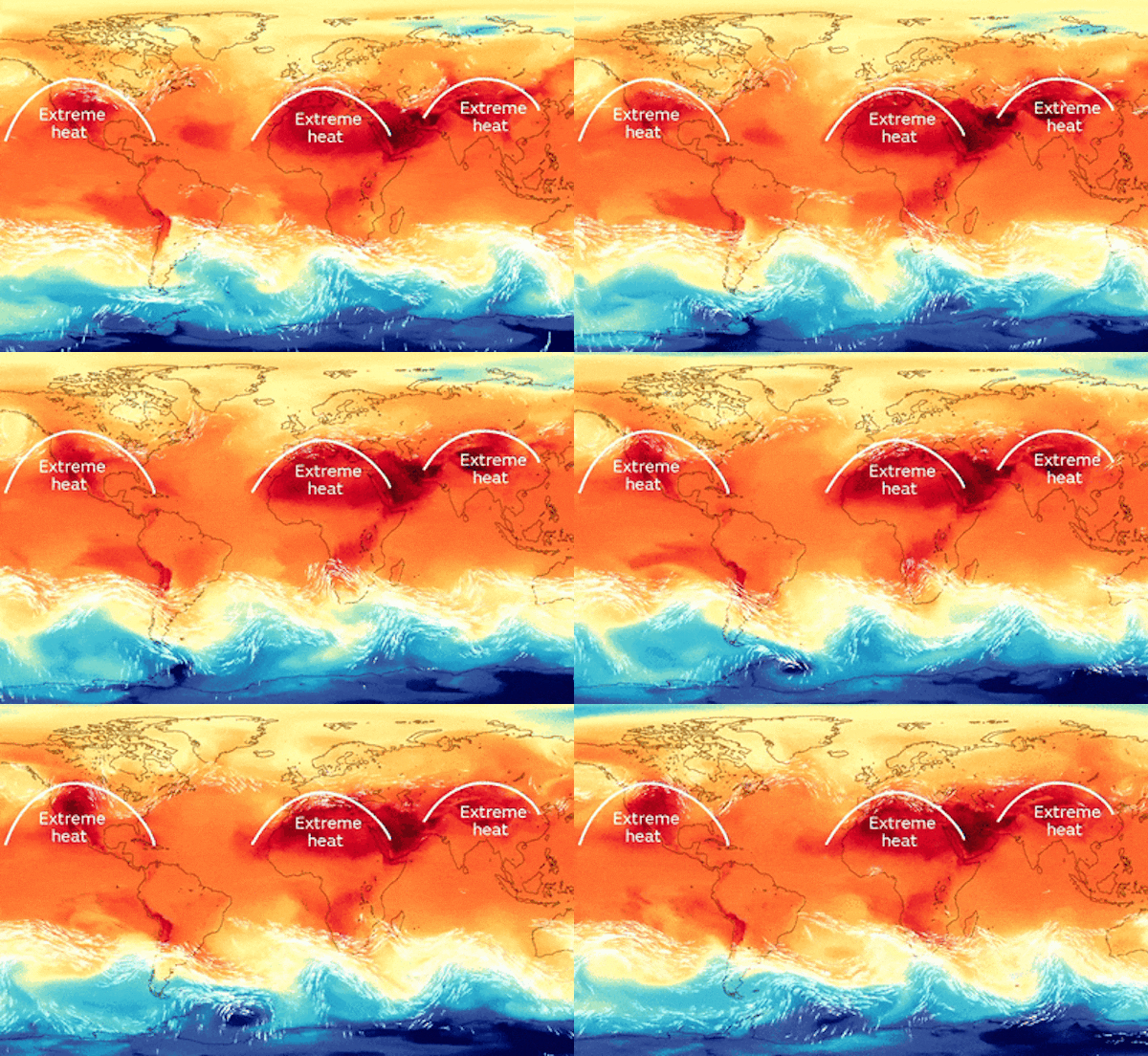
A stagnant polar jet stream can trapped heat over parts of North America, Europe and Asia at the same time. This example happened in July 2023. UK Met Office
Typically, waves in the jet stream pass through the continental United States in around three to five days. When blocking occurs, however, the high-pressure system could stagnate for days to weeks. This allows the heat to build up underneath, leading to blistering heat waves.
Since the jet stream circles around the globe, stagnating waves could occur in multiple places, leading to simultaneous heat waves at the mid-latitude around the world. That happened in 2024, with long-lasting heat waves in Europe, North America, Central Asia and China.
Jet stream behavior affects winter, too
The same meandering behavior of the jet stream also plays a role in extreme winter weather. That includes the southward intrusion of frigid polar air from the polar vortex and conditions for severe winter storms.
Many of these atmospheric changes, driven by human-caused global warming, have significant impacts on people’s health, property and ecosystems around the world.
I maybe approaching my own end of life but millions of others are younger than me. When I see a woman with a young baby in her arms I cannot stop myself from wondering what that generation is going to do.
I have been a follower of Ugly Hedgehog for some years.
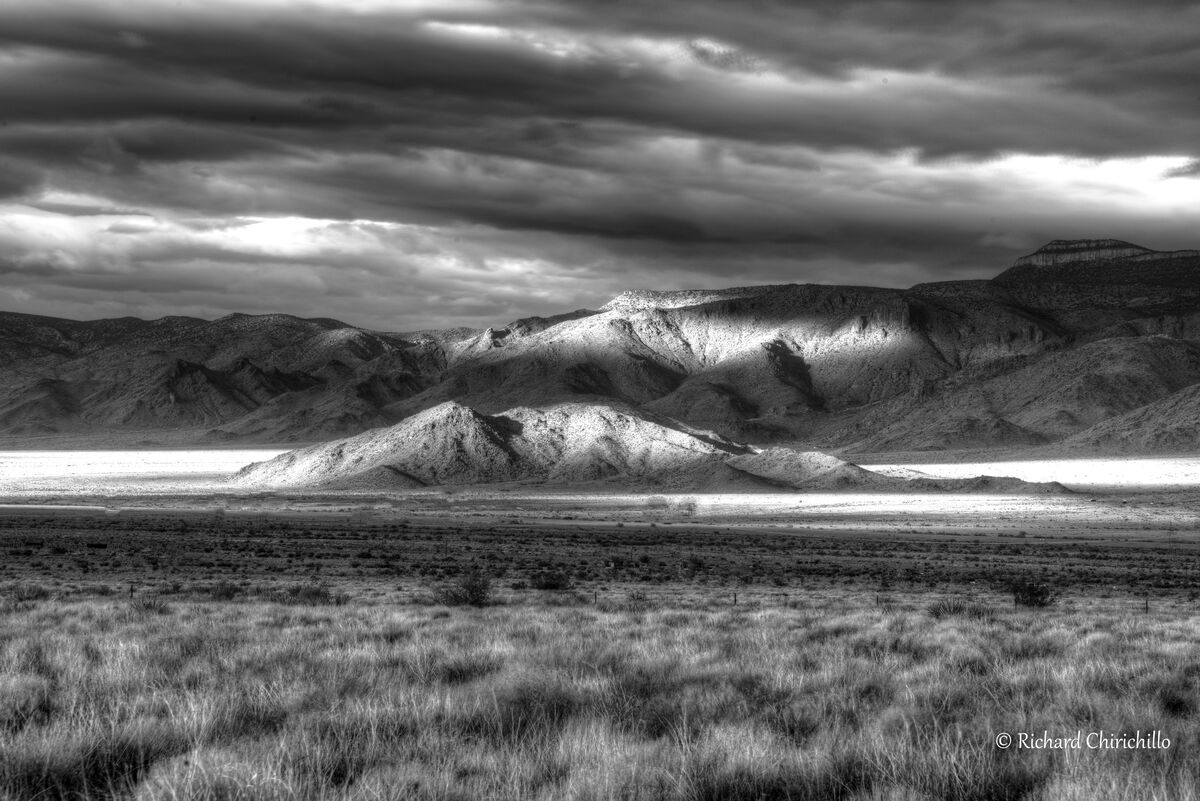
Last Sunday ‘Alphadog’ posted this photograph taken on Route 66, the Antares Road, in Kingman, Arizona. It is reproduced here with Richard’s full permission.
There is no question the world’s weather systems are changing. However, for folk who are not trained in this science it is all a bit mysterious. So thank goodness that The Conversation have not only got a scientist who does know what he is talking about but also they are very happy for it to be republished.
ooOOoo
Atmospheric rivers are shifting poleward, reshaping global weather patterns
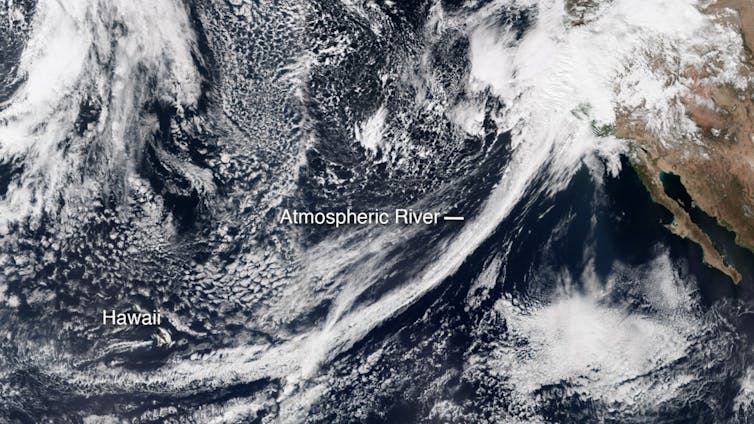
Atmospheric rivers are long filaments of moisture that curve poleward. Several are visible in this satellite image. Bin Guan, NASA/JPL-Caltech and UCLA
Atmospheric rivers – those long, narrow bands of water vapor in the sky that bring heavy rain and storms to the U.S. West Coast and many other regions – are shifting toward higher latitudes, and that’s changing weather patterns around the world.
The shift is worsening droughts in some regions, intensifying flooding in others, and putting water resources that many communities rely on at risk. When atmospheric rivers reach far northward into the Arctic, they can also melt sea ice, affecting the global climate.
In a new study published in Science Advances, University of California, Santa Barbara, climate scientist Qinghua Dingand I show that atmospheric rivers have shifted about 6 to 10 degrees toward the two poles over the past four decades.
California relies on atmospheric rivers for up to 50% of its yearly rainfall. A series of winter atmospheric rivers there can bring enough rain and snow to end a drought, as parts of the region saw in 2023.
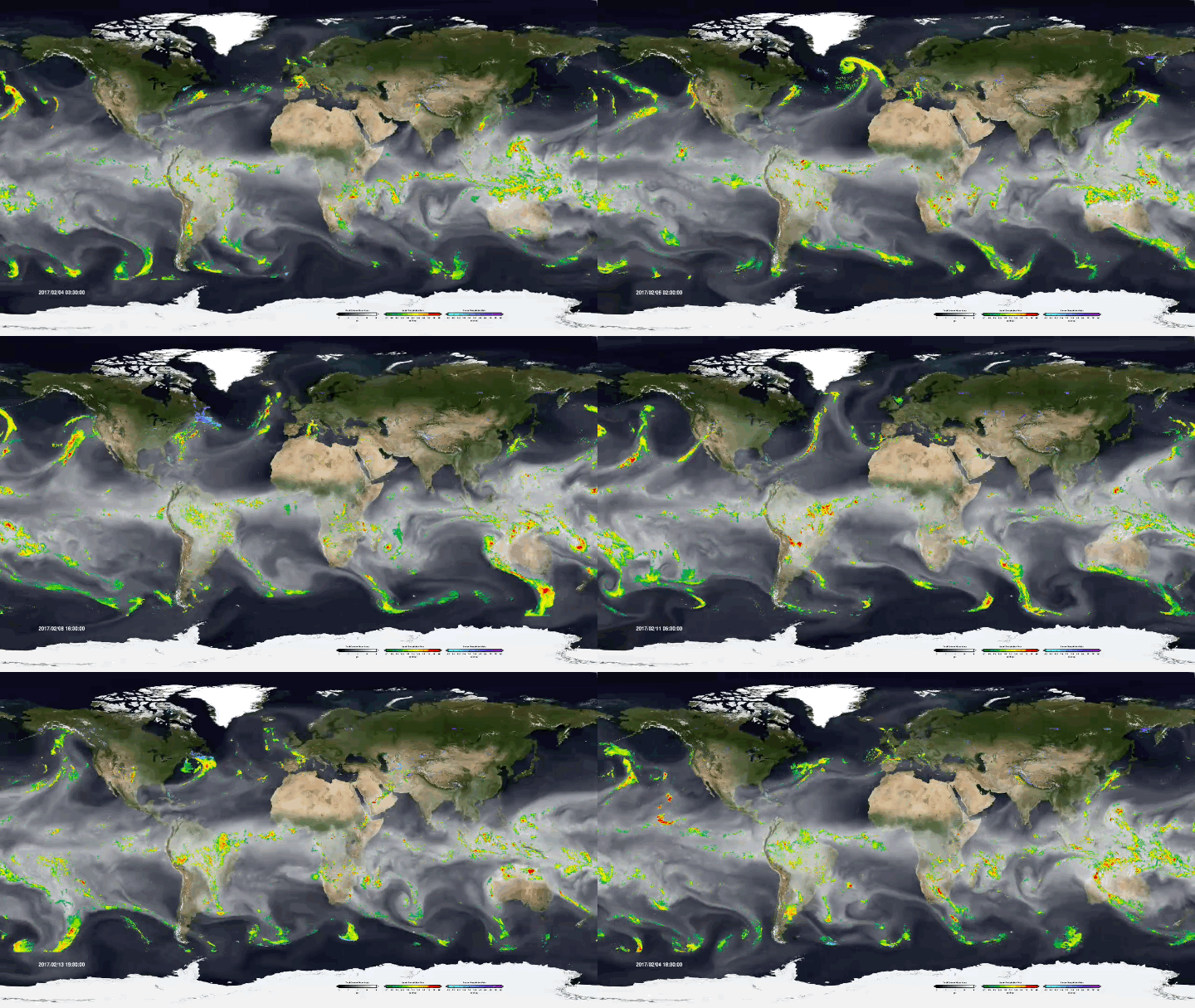
Atmospheric rivers occur all over the world, as this animation of global satellite data from February 2017 shows. NASA/Goddard Space Flight Center Scientific Visualization Studio
While atmospheric rivers share a similar origin – moisture supply from the tropics – atmospheric instability of the jet stream allows them to curve poleward in different ways. No two atmospheric rivers are exactly alike.
What particularly interests climate scientists, including us, is the collective behavior of atmospheric rivers. Atmospheric rivers are commonly seen in the extratropics, a region between the latitudes of 30 and 50 degrees in both hemispheres that includes most of the continental U.S., southern Australia and Chile.
Our study shows that atmospheric rivers have been shifting poleward over the past four decades. In both hemispheres, activity has increased along 50 degrees north and 50 degrees south, while it has decreased along 30 degrees north and 30 degrees south since 1979. In North America, that means more atmospheric rivers drenching British Columbia and Alaska.
The poleward movement of atmospheric rivers can be explained as a chain of interconnected processes.
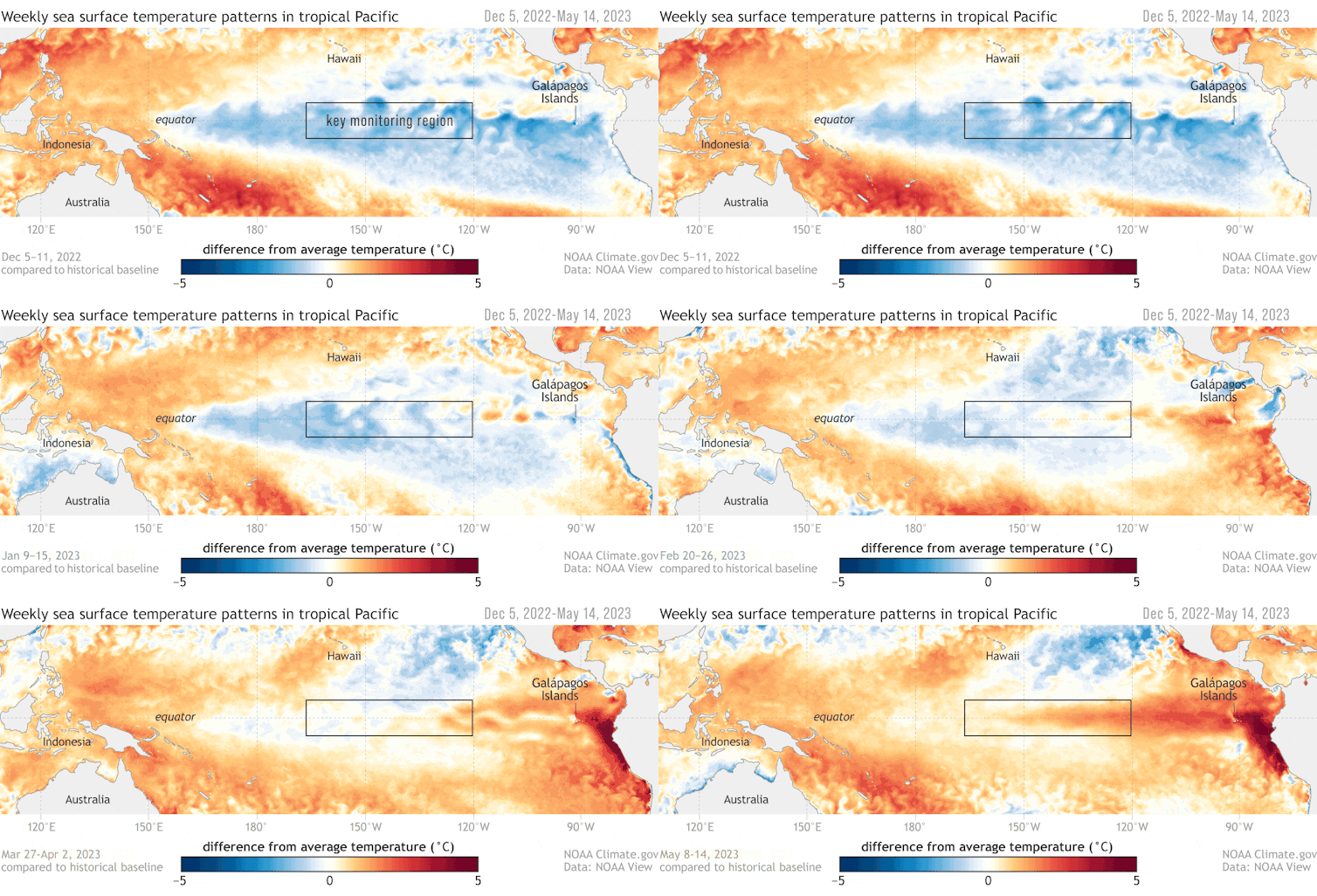
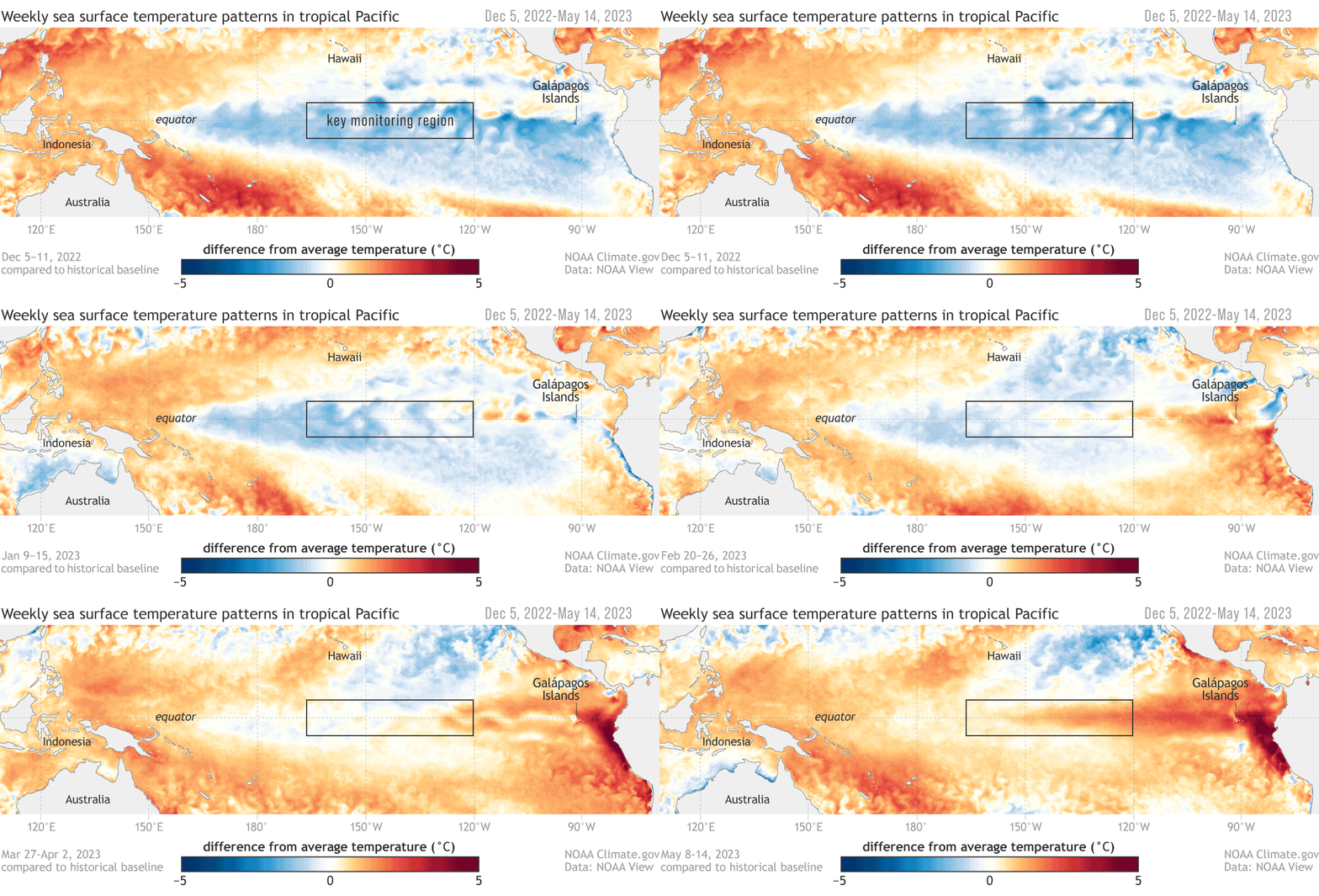
During La Niña conditions, when sea surface temperatures cool in the eastern tropical Pacific, the Walker circulation – giant loops of air that affect precipitation as they rise and fall over different parts of the tropics – strengthens over the western Pacific. This stronger circulation causes the tropical rainfall belt to expand. The expanded tropical rainfall, combined with changes in atmospheric eddy patterns, results in high-pressure anomalies and wind patterns that steer atmospheric rivers farther poleward.
La Niña, with cooler water in the eastern Pacific, fades, and El Niño, with warmer water, starts to form in the tropical Pacific Ocean in 2023. NOAA Climate.gov
Conversely, during El Niño conditions, with warmer sea surface temperatures, the mechanism operates in the opposite direction, shifting atmospheric rivers so they don’t travel as far from the equator.
The shifts raise important questions about how climate models predict future changes in atmospheric rivers. Current models might underestimate natural variability, such as changes in the tropical Pacific, which can significantly affect atmospheric rivers. Understanding this connection can help forecasters make better predictions about future rainfall patterns and water availability.
Why does this poleward shift matter?
A shift in atmospheric rivers can have big effects on local climates.
In the subtropics, where atmospheric rivers are becoming less common, the result could be longer droughts and less water. Many areas, such as California and southern Brazil, depend on atmospheric rivers for rainfall to fill reservoirs and support farming. Without this moisture, these areas could face more water shortages, putting stress on communities, farms and ecosystems.
In higher latitudes, atmospheric rivers moving poleward could lead to more extreme rainfall, flooding and landslides in places such as the U.S. Pacific Northwest, Europe, and even in polar regions.
A satellite image on Feb. 20, 2017, shows an atmospheric river stretching from Hawaii to California, where it brought drenching rain. NASA/Earth Observatory/Jesse Allen
In the Arctic, more atmospheric rivers could speed up sea ice melting, adding to global warming and affecting animals that rely on the ice. An earlier study I was involved in found that the trend in summertime atmospheric river activity may contribute 36% of the increasing trend in summer moisture over the entire Arctic since 1979.
What it means for the future
So far, the shifts we have seen still mainly reflect changes due to natural processes, but human-induced global warming also plays a role. Global warming is expected to increase the overall frequency and intensity of atmospheric rivers because a warmer atmosphere can hold more moisture.
How that might change as the planet continues to warm is less clear. Predicting future changes remains uncertain due largely to the difficulty in predicting thenatural swings between El Niño and La Niña, which play an important role in atmospheric river shifts.
As the world gets warmer, atmospheric rivers – and the critical rains they bring – will keep changing course. We need to understand and adapt to these changes so communities can keep thriving in a changing climate.
Those last two paragraphs of the above article show the difficulty in coming up with clear predictions of the future. As was said: ‘How that might change as the planet continues to warm is less clear. Predicting future changes remains uncertain due largely to the difficulty in predicting thenatural swings between El Niño and La Niña, which play an important role in atmospheric river shifts.‘