Category: People

The book! Part Two: Understanding the dog’s world

Mankind, Nature and Dogs

Understanding the dog’s world

A Dog is Man’s Best friend, but is Man a Dog’s Best Friend?

In the Prologue I offered a fictional, dreamlike story of how early man and wolf came together and from that special place in our history did flow the everlasting relationship between man and dog. I will return to that but first let’s get an idea of just how many dogs there are.

In 2012, the American Veterinary Medical Association reported that there were over 43 million [ 43,346,000] dog-owning households in the USA. That translated to over 36% of the total households in America. With an average of 1.6 dogs per household that came to the astonishing total of 62,926,000 dogs. In just one country!

It is therefore beyond doubt that millions and millions of people, of all ages, all around the world, understand what it is like to have a dog close to them. Likewise, those millions of dogs know what us humans are capable of. But of those millions of humans who have dogs in their lives, how many understand, really understand, the world of the dog?

In the next chapter after my Prologue, the Puppyhood chapter, I spoke of the circumstances that brought me into contact with Angela Stockdale of The Dog Partnership in Devon and how from that association I became aware of the three roles that dogs could be born into: mentor, monitor and nanny. How, generally speaking, out of every 50 dogs born there were just three carrying those roles, if ‘carrying’ is the correct description, and that the bulk of dogs born were straightforward pack members. Irrespective of the fact that we don’t normally own anything like the number that would constitute a natural pack of dogs in the wild, around 50 animals, that doesn’t alter the fact that when a puppy is born it’s social place, from a pack perspective, is hard-wired into the puppy.

I am indebted to Angela Stockdale for granting me permission to republish her descriptions of the mentor, monitor and nanny that are available on her website. In terms of man understanding the world of the dog, these descriptions are invaluable.

What is a Teaching Dog?

A Teaching Dog is a dog who has an instinctive desire to guide and support dogs in their learning canine communication.

A Teaching Dog helps other dogs develop their canine communication skills by displaying different body language to convey different messages. Such as lowering their heads and curving on approach as a polite way to introduce themselves. These essential etiquette skills are invaluable in preventing social issues.

A Teaching Dog teaches dogs canine etiquette to other dogs so they develop their communication skills as they go through the natural ageing process i.e. the transition from puppyhood to adolescence and from adolescence to adulthood. At these essential times, their pupils develop their skills in canine communication to a high level, hence again preventing social issues.

A Teaching Dog has an instinctive desire to guide and support dogs who find communicating difficult. If a dog has an established social issue, a Teaching Dog will actively incite interaction with them in order to teach them how to relax and communicate with them. They will assess how the other dog feels and react accordingly. Keeping their distance if the dog is concerned and approaching thoughtfully when the dog relaxes. I say thoughtfully because that is really important to understand; they think about how to work with a dog.

When a Teaching Dog works, whilst there are some elements of instinctive body language, in the main they will consciously use appropriate body language for the specific situation. They will always maintain control of an interaction but will change their posture from assertive to more inviting in accordance to the other dog’s behaviour.

On sighting the dog they are working with, they will first watch and assess them. This can be done from quite a distance with an experienced Teaching Dog. Eye contact is made but the eyes are averted intermittently whilst the Teaching Dog decides how assertive they need to be, or not as the case may be, with that particular dog. What follows from thereon is purely dependent on the other dog and that particular Teaching Dog’s way of working.

Do all Teaching Dogs teach in the same way?

No. Different Teaching Dogs have different teaching skills and different preferred roles. It is essential to recognise the role each particular Teaching Dog prefers to take. There are three primary Teaching Dog roles – Mentor, Minder and Nanny.

Mentor

A Mentor is normally quietly assertive by nature. They rarely play unless flirting with the opposite sex. However, they generally build the strongest bonds with high ranking dogs of the same sex.

As a Teaching Dog they are passively dominant. They always meet a dog with assertiveness but never hostility. They tend not to use body language to relax a dog as such but often just their presence has a calming effect on most dogs anyway.

If working in a group, they watch from the sidelines and only become involved if absolutely necessary. Mentors can be quite lazy! They will support other Teaching Dogs where needed, showing by example what to do in difficult situations if the other Teaching Dog is not coping.

Other dogs reaction to Mentors vary. Some dogs take great confidence in a Mentor and whilst not necessarily submissive towards them, they are very respectful. Some dogs find a Mentor intimidating and will avoid making contact with them.

Minder

A Minder is totally different to a Mentor in their interaction with dogs they are teaching. When a Minder meets another dog, they actively approach with the intent of interacting with them. A Minder is also naturally assertive but not as strong as a Mentor. When they meet another dog, in the Teaching Situation, they assess the new dog as they approach and use appropriate body language in accordance to the other dog’s reaction to them.

They are more generally more demonstrative than a Mentor and will actively seek interaction within a few minutes of meeting a new dog. This does not necessarily mean that they invite play. If they feel the dog is not ready for that level of interaction, they will converse with them in a more subtle manner.

If the other dog is worried but shows signs of being ready to rush at them, the Minder will stand firmly with their head side on to the dog. Eye contact is made intermittently as the Minder ascertains whether the other dog is calming down or intending to rush at them.

They can stand firm and openly display assertiveness if they need to. Once ‘control’ of the situation has been achieved, a Minder will generally incite status based activities from the other dog. These can be by marking then walking away allowing them to investigate their scent. Or they may invite the other dog into a status game, often instigating a chase.

If the other dog shows signs at trying to drive them away, the Minder will turn their head towards them and eye contact becomes stronger. They do not reposition the rest of their body. If the other dog shows signs of moving away, the Minder will totally drop their body language and move away. They will then reassess the other dog from a distance, before approaching again.

In a group situation, a Minder will monitor the group closely and interrupt any unsociable or unruly behaviour. They interrupt unacceptable behaviour by physically placing themselves between the dogs and will remain there until the tension has reduced. When the dogs in question have calmed down, the Minder will usually walk away and monitor them from a distance. They tend not to interact with the other dogs after harmony has been restored. In effect, they police a group.

Other dog’s reaction to a Minder is either respectful or challenging. Most dogs recognise a Minder as a strong dog and usually respect them. Sometimes polite status games may be played when they first meet.

As the Minder does not naturally command respect in the way a Mentor does, some dogs who have limited canine communication skills and/or adolescents can challenge them. Once the dogs have learned how to ascertain status in a polite manner from the Minder, they will usually then settle and look to the Minder for guidance in future situations.

Nanny

The Nanny is the most amazing of all the Teaching Dogs. Although not their preferred choice, a strong Nanny can take the role of a Minder or Mentor if they need to. They are unique.

They are extremely generous dogs and are at their happiest when everyone else is happy, including other Teaching Dogs. They work very differently to a Mentor and a Minder.

They not only relax a dog who is uncomfortable or anti-social but they also help relax any Mentor or Minder in a group. Few Mentors get overly stressed in a teaching situation but Minders tend to take their job quite seriously, unless really experienced and so can become tense when working.

If they see another Teaching Dog, usually a Minder, showing stress they will also consciously use body language to reduce their tension as well.

Being happier working on a one to one basis or in a group is down to each dog’s personal preference. Although, of all the Teaching Dogs they are more likely to be equally happy in either situation.

When meeting a new dog, they will observe from a distance before making a thoughtful approach. Thoughtful being the operative word as everything a Nanny does is done with thought. The Nanny tends to assess a dog in more depth than the other Teaching Dogs. This means they often take longer in their approach. They rarely communicate with instinctive responses but with conscious body movements, using the eyes in particular, when conversing with another dog.

If a dog is confrontational with them, they will remain strong in their attitude but will incite play, in particular chase games. The game of chase can be a challenge, like the ‘Chase me Charlie’ game children play. Or a game of chase can be used to loosen up a dog who is so stressed they feel unable to move.

The Nanny knows exactly what distance to keep between them and the other dog. If they feel the other dog is too close for comfort or who is becoming too unsociable, they will stop and face the dog and take control again. Once they see the other dog is more relaxed, they will stop running and attempt to converse with them again. They repeat this routine until the other dog stays relaxed and sociable with them.

In a group situation, initially they will monitor from the edge of the group and then actively walk up to each dog individually and check they’re comfortable. This also gives the other dogs confidence as they know the Nanny is there for support should they need it.

Once they have seen every group member, including any other Teaching Dogs, they will then focus on the dogs that feel the most uncomfortable, this is not necessarily the dog who shows outwardly unsociable behaviour.

It could be a dog who becomes withdrawn because they are so stressed. Sometimes they will simply follow and walk alongside a dog who is not comfortable and other times they may invite play. It totally depends on the other dog and how, at that moment, they are feeling. The Nanny may walk alongside another dog and then invite play.

The Nanny will resolve conflict by approaching in a calmer manner than a Minder usually to interrupt the unsociable behaviour. Not necessarily by physically splitting the dogs. They may bark and then play bow and/or literally pat them on the shoulder to attract their attention. A strong confident Nanny will split if they need to but prefer to resolve any conflict by mediation.

When other dogs meet a Nanny, if they have a good command of the canine language they will greet them in friendly, but not submissive manner. A Nanny’s first response to a dog displaying aggression, is to increase the distance between them. But they do not turn their back on the other dog. This would show vulnerability.

They will move away at an angle and stand sideways on to the other dog. This indicates to the other dog that whilst they are not offended and are not going to retaliate, they are also not intimidated. Initially, this can be most confusing for the other dog.

A Nanny excels at being able to recognise signals of stress in other dogs. They will only advance towards the dog to the level the other dog can cope with. As the dog learns that the Nanny will not be coming close enough to pose a threat to them, they begin to relax. In time, the other dog will take confidence from the Nanny and will look to them for guidance in difficult situations.

Is a Teaching Dog the same as the Alpha, Beta and Omega in a wild dog pack?

No. The Teaching Dog is unique to the dog world. Whilst a Mentor is usually a dog of natural Alpha status, an Alpha is not necessarily a Mentor. In fact, many dogs of natural Alpha status can not or do not want to teach. They can not be compared to wolves or any other wild dogs. Teaching Dogs working together are not a pack. They can not be compared to dogs living in a group at home. Some Teaching Dogs do not want to work together with their own group but enjoy working with dogs they know from another family. All Teaching Dogs have equally important roles. There are situations where a Mentor is better able to resolve a conflict and another time a Nanny may be the better dog to the resolve the situation.

How can I find out more about these amazing dogs?

It may sound that it is impossible for dogs to consciously work in this way, particularly the Nanny. Seeing is believing and even then it is almost unbelievable. I run a four day introductory course on the world of the Teaching Dog. On these courses, participants can bring along their own dog for assessment. But it is important to understand and to recognise that this is not whether your dog can teach but do they want to.

You will see experienced Teaching Dogs in practice. And also those who are at the beginning of their career. I can not, of course, guarantee how they will work as I have not met their pupils yet! You will learn about the Teaching Dog as an individual, see experienced and apprentice Teaching Dogs working on video as well where you can study their conscious body language in different teaching situations.

At this first level, we will cover identifying Teaching Dogs and offering them the right learning ground to develop their natural skills. You can not train a Teaching Dog. A Teaching Dog is born a Teaching Dog. It is dependent on their life’s experiences and living environment as to whether they develop to their full potential. Many allegedly aggressive dogs are actually true Teaching Dogs. In domestic society such dogs have not been able to do what they were born to do; help other dogs without the interference of people trying to tell them how to speak their own language. Their life of frustration has resulted in aggression. Once given the time and freedom to develop their natural teaching skills, any aggressive behaviour disappears.

Time to stop talking and start listening to the real teachers – The dogs themselves

Thus one of the key learning aspects that Angela offers us humans is that dogs (and horses) learn most effectively when being taught by other dogs (and horses). This was observed countless times by me when Pharaoh was working as a minder teaching dog and using his natural pack instinct to teach puppy dogs their social skills and breaking up squabbles between dogs.

Before moving on, some closing words from Angela.

I consider myself so lucky for dogs alone to have been my teachers. I learnt from watching how my own dogs responded to another dog’s body language and vice versa their language. Watching, learning and working with Teaching Dogs was the only way I knew. Seeing how these special dogs change the lives of less fortunate dogs, who never had the opportunity to really understand how to communicate with their own species.

I was and always will be in awe of a Teaching Dog’s ability consciously to adapt their body language in accordance to how the other dog was feeling. The result being that they could relax nervous dogs but at the same time maintain control of a problem situation. Remember, dogs talk dog far better than we do.

It came as quite a shock to me when I learnt about other approaches. It seemed foreign for people to have so much input in resolving what were described as ‘ behavioural’ issues. For me, working with these dogs was far more than resolving a behavioural issue. It was about improving the quality of lives of dogs who were not coping with everyday life. If they found dogs or people worrying, sometimes this was shown in displays of aggression. It is important to understand, these dogs were not aggressive, they simply displayed aggressive behaviour.

How on earth to follow that, you might be wondering?

Very simply! By recognising that as much as we have had dogs in our lives, for thousands of years, we do not understand their world, how they truly think, what they feel, and we probably never will.

2,958 words Copyright © 2014 Paul Handover includes Copyright © 2005 Angela Stockdale
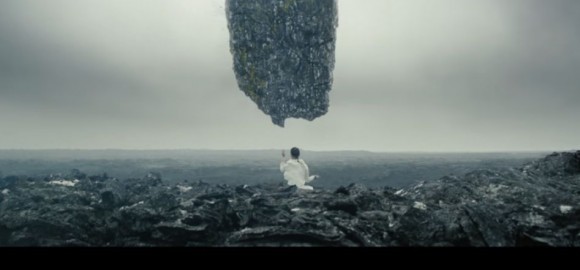
Ambition; the film.

Striving to achieve what is humanly possible.

A day almost exclusively devoted to writing left me wondering what to post for today.

Then in my ‘blog’ folder was this recent item from the blog site EarthSky.

It is republished here as it was received by me.

ooOOoo

Exciting Rosetta space mission inspires a magical short film

A very good 7-minute film, called Ambition. It’s not like any film about space exploration you’ve ever seen. The Rosetta comet mission lies at its heart.

Everything about the European Space Agency’s Rosetta mission – which, in August, caught up to Comet 67P/Churyumov–Gerasimenko and began moving in tandem with it – has been fantastic so far. For us space buffs, this mission has gone a long way toward fulfilling our fantasies about what might be accomplished in outer space. It’s caused us to remember why we got so excited about space exploration in the first place. And now – just weeks before Rosetta will send a lander to the surface of its comet – ESA and Platige Image have released a very good short film, called Ambition. It’s not a space documentary, or like any film about space exploration you’ve ever seen. It doesn’t focus so much on the mission itself – although the Rosetta mission does lie at the heart of the film – as on why we need to go into space.

The film features an apprentice magician and her master, talking about the making of solar systems.

I won’t tell you more; you should watch the film. It might touch your heart in ways you’ve forgotten, as the Rosetta mission itself has touched mine.

Tomek Baginski directed the film Ambition, which stars Aiden Gillen – who played Littlefinger in Game of Thrones – and Aisling Franciosi. Its producers shot Ambition on location in Iceland and produced it primarily in Poland. Its first public screening was October 24, 2014 during the British Film Institute’s celebration of Sci-Fi: Days of Fear and Wonder, at the Southbank, London.

By the way, Tim Reyes at UniverseToday.com has written a very good essay about the film Ambition, and what it means in the context of U.S. and European space efforts, and in the larger context of our striving to meet challenges in the world today. He also says you should watch the film. Because it’s about what it means to want to know what’s possible.

In the film Ambition, a young magician tries to build a solar system … but fails.
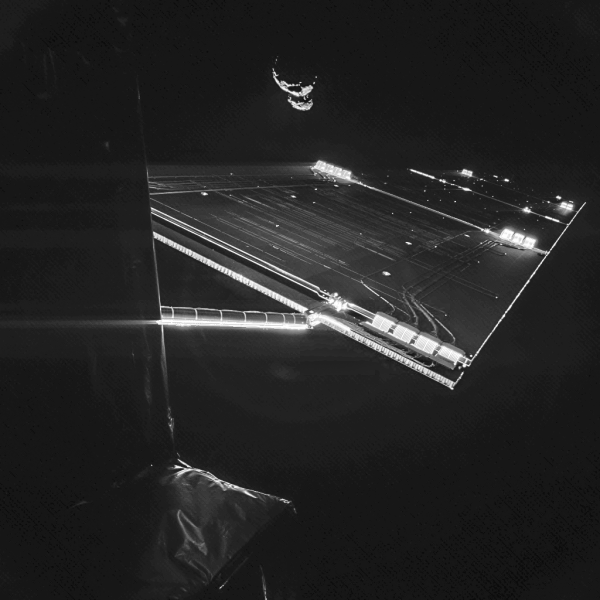
Did you assume this was an artist’s concept? It’s not. It’s a real image. It’s the Rosetta spacecraft’s selfie with comet 67P/Churyumov–Gerasimenko, imaged Sunday, September 7, 2014. Image via ESA/Rosetta/Philae/CIVA

Bottom line: A very good 7-minute film, called Ambition. It’s not like any film about space exploration you’ve ever seen. The Rosetta comet mission lies at its heart.

ooOOoo

And here is that film.

Published on Oct 24, 2014
Ambition is a collaboration between Platige Image and ESA. Directed by Tomek Bagiński and starring Aidan Gillen and Aisling Franciosi, Ambition was shot on location in Iceland, and screened on 24 October 2014 during the British Film Institute’s celebration of Sci-Fi: Days of Fear and Wonder, at the Southbank, London.

The book! Part Two: We are all connected.

Mankind, Nature and Dogs

We are all connected – The biological interconnectedness of all conscious life.

I sit here writing the draft of this book in the Summer of 2014, a stone’s throw from the small community of Merlin in Southern Oregon where my wife and I and numerous animals, including nine dogs and four horses, live in thirteen acres of very rural countryside. Just a few miles away from us is a place known as Wildlife Images, or to give them their full name Wildlife Images Rehabilitation and Education Center. As their website declares, “The facility was created in order to provide for the care and treatment of sick, injured and orphaned wildlife.

We visit Wildlife Images frequently, especially when we have guests staying with us.

There is an enclosure for the otters and on one of the surrounding glass screens is engraved a Native American Proverb: “We will be forever known by the tracks we leave.

The first time I stood and read the words I was struck by something very profound, yet something that struggled to surface in my mind as a clearly articulated idea. Part of me embraced the irony of a race of people, the many tribes of the ancient North American Indians, that history suggests lived very much in harmony with the land, leaving a message to another race of people, modern man, who not only subjugated those native Indians but proceeded to despoil much of the vastness of what we today call the United States of America.

Granted, that word ‘despoil’ is a bit harsh in the direct sense that millions of acres of this continent remain as open, unspoilt countryside, but when one thinks about what Americans have exported in terms of technology and culture right across the planet then, maybe, despoil isn’t being too unfair. Exported, of course, to millions of eager recipients in dozens of other countries. This is a failure of modern man, not of any one country.

Returning to my reactions to that glass-engraved proverb, the only other thought that surfaced was that we, as in all of humanity, are living in such very strange times, times in which the tracks that we have been leaving over the last, say sixty years, indicate a path towards a future oblivion.

—-

In July, 2014, Stanford Biology Professor, Rodolfo Dirzo, and his colleagues, issued a warning that the present rate of what he called “defaunation” could have harmful downstream effects on human health. Professor Dirzo explained that despite the “planet’s current biodiversity, the product of 3.5 billion years of evolutionary trial and error being the highest in the history of life” we may have reached a tipping point.

The warning explained that more than 320 terrestrial vertebrates had become extinct since the year 1500 and that, since then, “Populations of the remaining species show a 25 percent average decline in abundance. The situation is similarly dire for invertebrate animal life.

Professor Dirzo further went on to explain that “while previous extinctions have been driven by natural planetary transformations or catastrophic asteroid strikes, the current die-off can be associated to human activity.” He even gave this era a name: the era of the “Anthropocene defaunation.

The current die-off can be associated to human activity”. Surely, this is the irony of all ironies. By that I mean the die-off of modern man being a direct consequence of the actions directly associated with modern man. Wow!

It seems to me that whichever way we look, the interconnectedness of all conscious life is staring at us full in the face. Of course we are all interconnected. Not just all of mankind but all of conscious life. Ergo, the destruction of natural habitats, the loss of every species, even the unwarranted killing of a wild animal is, in a very real and tangible way, the destruction of our own habitat, the loss of the species that is us, and the unwarranted killing of future generations of that same species: homo sapiens.

Now it would be perfectly reasonable to see this as a temporary distraction that has affected, or should the word be infected, mankind since the end of the Second World War, a relatively modern example of a new-style madness of our species. Some may claim that our continuing destruction of our habitat is an ingrained characteristic; a blindness beyond comprehension to the consequences of our actions. I see it in clearer terms. That the relative peace and prosperity of these last seven decades, the incredible gains in terms of medical science and human life-span, and above all our global population, have combined to bring about a growth in the demands on our planet that has taken us to a point where our consumption is now way beyond that which is sustainable. That millions of people who live comparatively comfortable lives have lost their connection with the planet, or more properly put, their connection with the laws of nature of the planet.

To further reinforce the argument that we are beyond a point of living sustainably on the only planet we can call home, consider the figures regarding the growth of the human population.

The first billion inhabitants of this planet did not occur until 1800. The next billion was clocked up one hundred and twenty-seven years later, in 1927. The third billion arrived in 1960, just thirty-three years after 1927. Since 1960 we have been increasing our presence on our planet by a billion people every fourteen years or so. Now fifty years or so after 1960 we have a global population of over seven billion: 7.183 billion[1] to be precise.

Several recent studies[2] show that Planet Earth’s resources are enough to sustain only about two billion people, at a European standard of living that is, so the global population of over seven billion is already two to three times higher than what is sustainable, stably so, over any period of time. That’s even before we consider that the typical European, on average, consumes only about half the planet’s resources of the typical American.

Yet despite the drama of these numbers, despite the daily headlines all over the world offering examples of our collective madness, so many do not sense the peril of our ways. It is almost as though we have become immune to some form of potential global suicide.

The global population of over seven billion people, from the top to the bottom in terms of living standards, are using about fifty percent more resources than our planet Earth is capable of producing. Or to put it another way: If we take the past twelve months, you and I and the rest of the 7.2 billion of us, have consumed the resources that it took the planet about eighteen months to produce. We are consuming our own resource base.

No, that previous sentence, about consuming our own resource base, despite the truth of the statement, comes over as too bland, too unemotional, to my way of thinking. Let me turn to E. F. Schumacher and one of his quotes: “Infinite growth of material consumption in a finite world is an impossibility.” That says it much better!

It could be argued, and frequently is so argued, that these are the end times for mankind, the end of the era of materialism and consumption, that we are past a number of critical tipping-points, past any chance of saving mankind from massive and widespread extinction. I would admit to being drawn to this ‘end of the world’ chant because whichever way one looks the challenges and problems far outweigh the solutions. But there’s another quote that frequently tickles my consciousness, the one that goes, “Never underestimate the power of the unintended consequence”. I have no idea who penned it but that doesn’t weaken the power of the quotation.

What I sense, in some barely-conscious manner, is that the interconnectedness of all living things, and I use the term interconnectedness in the broadest way possible, is the power-house, the engine, of huge unintended consequences that will illustrate the unarguable logic of Mr. Schumacher’s quotation. Because soon nature will remind mankind that we are part of nature, not in charge of nature. Nature will not only offer the solution to our present massive imbalance with our planet, but will enforce it.

Of course, I have no idea what nature’s solution will mean to me and my loved ones. Maybe being born a 1944 baby, I will not live sufficiently long to see the future clearly. However, of one thing I am clear. The sooner every human being starts living a life of balance with the planet, starts learning the way to live from all of nature including our nearest companions, our dogs, then the sooner the power of interconnectedness redeems us all.

It takes an ancient proverb from a people that lived in harmony with the planet to speak the truth. We ignore it at our peril.


[1] Estimate as of 2013 by the United States Census Bureau (USCB.
[2] WorldPopulation.org website

1,484 words Copyright © 2014 Paul Handover

Back to the book!

NaNoWriMo 2014.

In the year since NaNoWriMo 2013, I spent a great deal of time thinking, rethinking and massively changing what I wrote last November.  My last chapter, Chapter Twenty-Three, published on this blog last December was written in the third tense, using fictional names.  Here’s an example from that chapter, (Molly is Jean; Philip is yours truly):

It was October 25th, 2013. Exactly a year since the day that they had moved in to their Merlin home. Yet in some very strange way if felt neither as long as a full year nor as short.

Molly and Philip were sitting on the decked verandah looking out over the acres of grass. A group of five dogs were cavorting and chasing around in what looked like for them a dog heaven.

I didn’t like it. It wasn’t working and I rewrote it in the first person, namely me!

Then during the year I was contacted by a professional freelance publishing agent who added to my feelings of not really knowing what I was doing.  She asked me if I had defined my reading audience and the structure of the book? Duh! How bloody obvious!  Me an ex-marketing man and it hadn’t even occurred to me to “define my market”!

It was incredibly helpful advice and I did sit down and produce what I called a Statement of Purpose (SoP).  Here are the Introduction and Reading audience sections from v1.65 of my Statement of Purpose.

Introduction

We live in very challenging times.

It seems rare these days to meet someone who doesn’t sense, to one degree or another, a feeling of vulnerability to today’s world. A sense that many aspects of their lives are beyond their control.

These are also times where it is widely acknowledged that the levers of privilege and money are undermining the rights and needs of so many, that there are unprecedented levels of deceit, lying and greed; all enveloped within an abuse of power.

That’s even before we embrace the matter of climate change and whether or not there is a potential “end-of-world” tipping point; the so-called beat of the butterfly’s wing.

Yes, these are challenging times. As we are incessantly reminded by the drumbeat of the doom-and-gloom news industry every hour, frequently every half-hour, throughout the day. A symphony of negative energy.

Yet right next to us is a world of positive energy. The world of dogs. A canine world full of love and trust, playfulness and relaxation. A way of living that is both clear and straightforward. Albeit, far from being simple, as anyone will know who has seen the way dogs interact with each other and with us humans.

In other words, dogs offer endless examples of positive behaviours. The wonderful power of compassion for self, and for others, and of loving joy. The way to live that we humans often crave for. A life full of hope and positive energy that keeps the power of negativity at bay.

Reading audience

The book is written by ‘an ordinary bloke’, not by someone who has a specialist or professional understanding in the areas of mind and behaviour. On that count, the author is no different to the majority of people ‘out there’ and, presumably, the majority of potential readers.

Potential readers who feel the weight of all that ‘doom-and-gloom’ and negativity that seems to be in the air at this time. Yet, readers who desire a positive, compassionate attitude to their own life, and to the lives of the people around them. Almost certainly readers who are animal lovers, in general, and dog lovers in particular.

Anyway, my ambition for NaNoWriMo 2014 is to write 50,000+ words that will become Parts Two, Three, Four and Five of the book Learning from Dogs. My SoP describes those sections as:

  • Part Two – Mankind, Nature and Dogs
  • Part Three – Mankind in the 21st Century
  • Part Four – The power of positive thoughts and deeds
  • Part Five – What does mankind need to learn from dogs

Thus, as I did last year, thirty minutes after publishing my daily blog post I will publish my day’s NaNoWriMo writing. Ergo, in thirty minutes time I will be publishing what was written under NaNoWriMo last Saturday, November 1st.

Another Saturday smile.

Three bad nights have dented my creativity!

I had my surgical procedure for the removal of a benign prostatic enlargement (BPE) last Tuesday and was back home by 6pm.  However, having a catheter and a collection bag attached to me for Tuesday and Wednesday nights inhibited a decent night’s sleep. The catheter was removed on Thursday morning and I was confident of getting a good night.  Wrong! I found myself having to get up and pee more-or-less every hour of the night.  Apparently, according to the nurse to whom I spoke yesterday, my bladder would have still been extremely sore making any form of urine retention impossible.

All a long-winded way of me saying that my creative juices were non-existent when I wanted to get today’s post completed.

So please accept the following and hope it puts a smile on your face. (To make matters worse, I forgot which kind reader sent it to me!)

ooOOoo

MURPHY’S OTHER 15 LAWS

  • Light travels faster than sound. This is why some people appear bright until you hear them speak.
  • A fine is a tax for doing wrong. A tax is a fine for doing well.
  • He, who laughs last, thinks slowest.
  • A day without sunshine is like, well, night.
  • Change is inevitable, except from a vending machine.
  • Those who live by the sword get shot by those who don’t.
  • Nothing is foolproof to a sufficiently talented fool.
  • The 50-50-90 rule: Anytime you have a 50-50 chance of getting something right, there’s a 90% probability you’ll get it wrong.
  • It is said that if you line up all the cars in the world end-to-end, someone from California would be stupid enough to try to pass them.
  • If the shoe fits, get another one just like it.
  • The things that come to those who wait, may be the things left by those who got there first.
  • Give a man a fish and he will eat for a day. Teach a man to fish and he will sit in a boat all day drinking beer.
  • Flashlight: A case for holding dead batteries.
  • God gave you toes as a device for finding furniture in the dark.
  • When you go into court, you are putting yourself in the hands of twelve people, who weren’t smart enough to get out of jury duty.

ooOOoo

Everyone have a great week-end.

Wherein lays the truth?

It is said that the first casualty in war is truth!

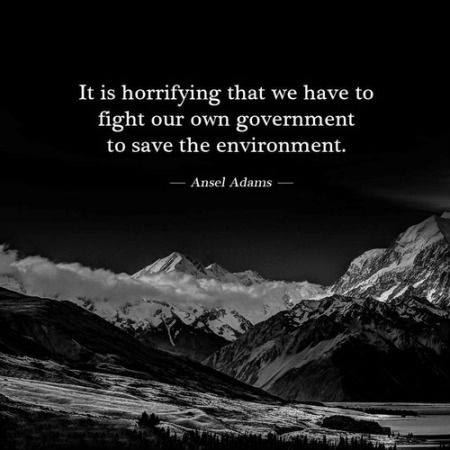
Ansel Adams

In yesterday’s post Vested interests, perhaps, I featured an article brought to my attention by dear friend, Dan Gomez. Namely an article featured in the UK’s Daily Mail newspaper that was headlined: ‘There is NO climate crisis’: Man-made global warming is a lie and not backed up by science, claims leading meteorologist.

Dan’s strong belief is that labelling the natural change in the world’s climate as anthropogenic global warming (AGW) serves governments and many large institutions incredibly well because it offers greater leverage to raise taxes.  In other words, Dan has no doubt that the climate is changing, but as a result of natural forces that go back long before the days of man.  In other words, it is being ‘sold’ as the direct result of man’s activities because it makes it easier to apply taxes and levies for purposes not related to climate matters.

As John Coleman was reported as saying:

John Coleman, who co-founded the Weather Channel, claims that the belief humans are causing climate change is not backed up by science.

In an open letter attacking the UN, the 80-year-old from San Diego, said that what ‘little evidence’ there is for global warming points to natural cycles in temperature.

‘There is no climate crisis,’ he wrote. ‘The ocean is not rising significantly. The polar ice is increasing, not melting away. Polar bears are increasing in number. ‘Heat waves have actually diminished, not increased. There is not an uptick in the number or strength of storms.

‘I have studied this topic seriously for years. It has become a political and environment agenda item, but the science is not valid.’

Now I am as sceptical about the workings of governments as the next man. But I find it incredibly difficult to believe that AGW is a myth, hoax or conspiracy.  There is a wall of science to say that we, as in man, are dangerously close to going over the edge, going beyond ‘tipping points’ from which there is no returning.

A quick dip into Wikipedia tells us [my emphasis]:

Scientific understanding of the cause of global warming has been increasing. In its fourth assessment (AR4 2007) of the relevant scientific literature, the Intergovernmental Panel on Climate Change (IPCC) reported that scientists were more than 90% certain that most of global warming was being caused by increasing concentrations of greenhouse gases produced by human activities. In 2010 that finding was recognized by the national science academies of all major industrialized nations.

Affirming these findings in 2013, the IPCC stated that the largest driver of global warming is carbon dioxide (CO2) emissions from fossil fuel combustion, cement production, and land use changes such as deforestation.

Only last Wednesday there was an item on Naked Capitalism that opened [again, my emphasis]:

J.D. Alt: Have We Passed the Tipping Point of Biological Collapse?

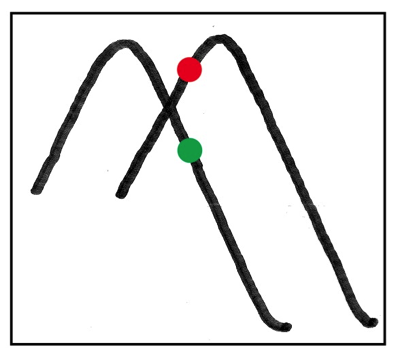
alt1The squiggle illustrated here may look like the Ebola virus, but it isn’t. The resemblance is just an eerie coincidence. It’s actually a graphical snapshot of the classic “Predator-Prey Model.” This mathematical exercise, first developed in the 1920s, serves as the introductory basis for a more recent NASA funded effort which produced—amidst a brief flurry of news and commentary last spring—the startling conclusion that a complete collapse of modern civilization may now be “irreversible.”

The NASA study involved the creation and running of a more elaborate model—HANDY (Human and Nature Dynamics)—which simulates the human consumption of naturally replenishing systems, as well as (intriguingly, given today’s news cycle) wealth and income inequality between two classes of citizens: “Elites” and “Commoners.” Now a new study, just released by the World Wildlife Fund, reports a grim statistic suggesting the abstract mathematics of the HANDY Model may be more than just a theoretical exercise. According to the WWF, in the last forty years—from 1970 to 2010—the Earth has lost over HALF (52%) of its wildlife population.

There are yards and yards of solid information all over the internet about our changing climate. The loss of wildlife, the destruction of forests and wild lands is beyond argument, and those aspects of this ‘modern’ world are most certainly the direct result of man’s activities!  Our inability to stop growing as a global population is insane.  Our inability to stop seeing continual economic and material growth as a ‘good thing’ is insane. We need massive change  – now!

Therein lays the problem.  Because, whether or not there is an approaching climate catastrophe as a result of man’s activities is, in a very real sense, irrelevant. If that seems a bizarre thing to write, I mean it is irrelevant in terms of what you and I, ordinary people trying to lead civilised lives, can do to make a difference.

Patrice Ayme recently published a post under the title of Total Plutocracy covering the death of Christophe de Margerie when his jet hit a snow plough on a Moscow runway at midnight, flipped on its back, caught fire, and skidded across. All four on board died.

Now the accidental death of any person is a tragedy, make no mistake, but as Patrice revealed in his post, this particular accident did raise some interesting aspects.  Here’s a little of what Patrice wrote:

With 200 billion Euros in revenue, TOTAL SA is not far behind the French government budget. TOTAL’s profits are 14 billion Euros (“Soyons serieux!” laughed Margerie). It pays nearly no tax in France, having concentrated there its money losing refineries.

Other countries get nearly all their fuel from French refineries; TOTAL has also a green light to frack in Britain. So this is not just a French situation. TOTAL is one of the five great oil companies concentrating the fossil fuel firepower. Those companies have the best technology. Some of TOTAL’s specialties are very deep water drilling, and using steam to extract tar oil in Canada.

What was de Margerie doing at midnight? Flying back to France, after meeting with Putin and Medvedev, late at night.

That’s how these guys are: great fun. Putin was recently invited to Milan for a big time European meeting. He arrived several hours late to visit with Merkel, who was not amused. After keeping her up past midnight, he motored to Berlusconi’s mansion, and the two plutocrats reveled together until 4 am. (We don’t know how many female teenagers were in attendance to further their studies.)

The next European meeting was at 8am, and Putin showed up.

Supposedly Margerie had just told Medvedev and Putin to cool it with Ukraine. At least that’s the massaging message Margerie’s minions floated after his death.

Why was Margerie so important to the Russian dictators? Because the six “supermajor” oil companies have the advanced technology. After all, they recruit from the best universities in the world (that’s paid by taxpayers). TOTAL SA was the spearhead of high tech development for hydrocarbon production in Russia. Among other things, it’s helping to build a gas liquefaction plant in the far north, to load special ships with methane (something TOTAL does with Qatar, in the world’s largest such installation).

Once a ship is fully loaded, it has several times the explosive power deployed at Hiroshima (such a catastrophic accident has not happened yet, but it’s just a matter of time).

When citizen Lambda dies, Mr. Anybody, nobody official cares. When a major plutocrat dies, our leaders, even our socialist leaders, weep, and present the accident as a national, even international tragedy.

Is the death of a plutocrat worth that much more, that all this public weeping has to occur?

And, by the way, who and what has authorized Mr. Margerie to lead his own foreign policy? Who authorized him to make nice with thermonuclear dictators? To the point of allowing their survival?

I recommend that you read it in full for it says so much about what is wrong with these present times: so much inequality and so many abuses of power.

Just the other day the Guardian newspaper published an article under the title of: Richest 1% of people own nearly half of global wealth, says report.

The richest 1% of the world’s population are getting wealthier, owning more than 48% of global wealth, according to a report published on Tuesday which warned growing inequality could be a trigger for recession.

According to the Credit Suisse global wealth report (pdf), a person needs just $3,650 – including the value of equity in their home – to be among the wealthiest half of world citizens. However, more than $77,000 is required to be a member of the top 10% of global wealth holders, and $798,000 to belong to the top 1%.

“Taken together, the bottom half of the global population own less than 1% of total wealth. In sharp contrast, the richest decile hold 87% of the world’s wealth, and the top percentile alone account for 48.2% of global assets,” said the annual report, now in its fifth year.

On October 8th, George Monbiot published an essay in The Guardian newspaper under the title of The Toll-Booth Economy.  The opening lines set the theme.

Corporate power is the real enemy within, but none of the major parties will confront it.

The more power you possess, the more insecure you feel. The paranoia of power drives people towards absolutism. But far from curing them of the conviction that they are threatened and beleaguered, it becomes only stronger.

On Friday, the Chancellor of the Exchequer, George Osborne, claimed that business is under political attack on a scale it has not faced since the fall of the Berlin wall. He was speaking at the Institute of Directors, where he was introduced with the claim that “we are in a generational struggle to defend the principles of the free market against people who want to undermine it or strip it away.” A few days before, while introducing Osborne at the Conservative party conference, Digby Jones, formerly the head of the Confederation of British Industry, warned that companies are at risk of being killed by “regulation from Big Government” and of drowning “in the mire of anti-business mood music encouraged by vote-seekers.” Where is that government and who are these vote-seekers? They are a figment of his imagination.

Read the full essay here.

Yes, one could go on and on.

Indeed, I will. Go on with just one more reference.  From the Smithsonian. An article that started, as follows:

Five Conflicts and Collapses That May Have Been Spurred by Climate Change

Earth’s changing climate has been a spectre in centuries of civil conflict and, at times, the collapse of whole civilizations

By Natasha Geiling
smithsonian.com
October 20, 2014

Is climate change a matter of national security? In a warming world, sea-level rise, drought and soil degradation are putting basic human needs such as food and shelter at risk. In March, the U.S. Department of Defense called climate change a “threat multiplier,” saying that competition for resources “will aggravate stressors abroad such as poverty, environmental degradation, political instability and social tensions—conditions that can enable terrorist activity and other forms of violence.”

Connecting climate change to a global increase in violence is tricky, and attempts to make such a link receive a fair amount of criticism. A hotter planet doesn’t automatically become a more conflict-ridden one. The 2000s, for instance, saw some of the highest global temperatures in recorded history—and some of the lowest rates of civil conflict since the 1970s.

But there are historical examples of civilizations that did not fare well when faced with drastic environmental change, and those examples may offer a window into the future—and even help prevent catastrophe. “We can never know with 100-percent certainty that the climate was the decisive factor [in a conflict],” says Solomon Hsiang, assistant professor of public policy at the University of California, Berkeley. “But there’s a lot of cases where things look pretty conspicuous.”

Read the five historical examples and realise that we are not immune.

Earlier on I ventured the idea that whether or not an approaching climate catastrophe was a result of man’s activities was, in a very real sense, irrelevant.  Because of the lack of individual power to make a real difference, especially a political difference.

What is relevant is improving the way we govern ourselves. The abuses of money and power are too widespread to be ignored.  We need to start with strong local democracies and thence building a system of global governance that really is of the people by the people for the people.

Phew – I need a dog to hug!

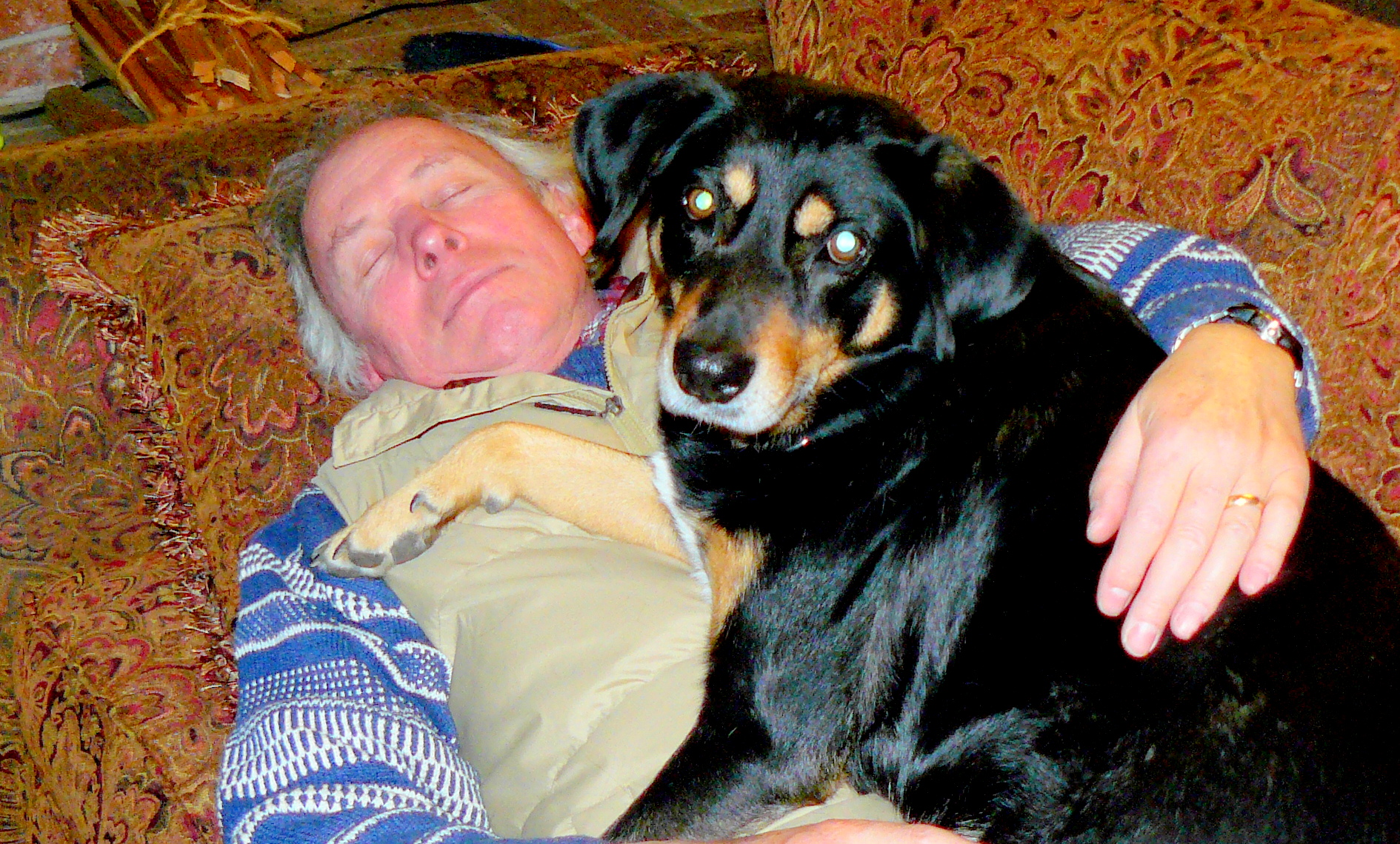
The truest of love between a man and a dog!
Hazel providing the ‘love-in’.

Vested interests, perhaps.

I’m being very brave and stepping into the climate change cauldron!

Learning from Dogs has been posting a wide range of items for well over five years. Indeed, today’s post is number 2,238!

Over those five years, my position regarding climate change or global warming has been pretty clear: a belief in the proposition that man’s behaviours are changing the very climate of our planet.  For instance, a little over a year ago I posted under the title Sceptical about global warming?  It opened:

Learning from Dogs is not a blogsite about climate change!

Why, you may ask, do I start today’s post with that sub-heading?  Because, I am conscious that many of my posts do touch on this subject.  For example, just two days ago there was Breaking news.  Then there was the piece about the climate implications for Phoenix, Arizona.  Followed the next day by the changes in the flow of the jet stream across the North Atlantic with all the weather implications for North-West Europe.

Indeed, as the heading to today’s post makes clear, this is also about the changes going on to our planet.

Learning from Dogs is about a different way of living and behaving.  A campaign, if one wants to call it that, to show that the way that modern man is living is corrupt.  Not with a big ‘C’ but still in the sense of living a dishonest life.  Learning from Dogs attempts to show that our wonderful dogs, a source of so much love and pleasure for so many millions, offer us an example of a life in and of this planet.

If there was ever a time in the history of man when we needed being reminded of our frailty and vulnerability, it is now.  As the following so starkly illustrates.

Peter Sinclair of Climate Crocks recently republished an item from Skeptical Science that opened up as follows:

A new study of ocean warming has just been published in Geophysical Research Letters by Balmaseda, Trenberth, and Källén (2013).  There are several important conclusions which can be drawn from this paper.

  • Completely contrary to the popular contrarian myth, global warming has accelerated, with more overall global warming in the past 15 years than the prior 15 years.  This is because about 90% of overall global warming goes into heating the oceans, and the oceans have been warming dramatically.

Then last week-end, Dan Gomez, friend for over 40 years, sent me the following:

Weather Channel Founder: Global Warming Science ‘Not Valid’

Meteorologist John Coleman, who co-founded The Weather Channel, says the claim that human activity is leading to global warming is no longer scientifically credible.

Instead, the “little evidence” there is for rising global temperatures points to a “natural phenomenon,” Coleman asserts.

In an open letter to the United Nations’ Intergovernmental Panel on Climate Change (IPCC), he wrote: “There is no climate crisis. The ocean is not rising significantly. The polar ice is increasing, not melting away. Polar bears are increasing in number.

“Heat waves have actually diminished, not increased. There is not an uptick in the number or strength of storms.

“I have studied this topic seriously for years. It has become a political and environmental agenda item, but the science is not valid.”

Coleman says he based his views on the findings of the Nongovernmental International Panel on Climate Change (not to be confused with the U.N. panel), a body of scientists and scholars who assess the science of global warming.

“There is no significant man-made global warming at this time. There has been none in the past and there is no reason to fear any in the future,” says Coleman, who was the original meteorologist on “Good Morning America.”

“Efforts to prove the theory that carbon dioxide is a significant greenhouse gas and pollutant causing significant warming or weather effects have failed.

“There has been no warming over 18 years.”

The U.N.’s IPCC argues that their research shows man-made global warming will lead to extreme weather events becoming more frequent and unpredictable, the Express in Britain reported.

Climate expert William Happer, a professor at Princeton University, expressed support for Coleman’s claims.

“No chemical compound in the atmosphere has a worse reputation than CO2, thanks to the single-minded demonization of this natural and essential atmospheric gas by advocates of government control [of] energy production,” Happer said.

“The incredible list of supposed horrors that increasing carbon dioxide will bring the world is pure belief disguised as science.”

What Dan had seen was an article in the UK Daily Mail that, in turn, was echoed on the US WesternJournalism blogsite.  Here’s how that Daily Mail story opens:

Climate change has been proven to be a lie, according to a leading meteorologist.

John Coleman, who co-founded the Weather Channel, claims that the belief humans are causing climate change is not backed up by science.

In an open letter attacking the UN, the 80-year-old from San Diego, said that what ‘little evidence’ there is for global warming points to natural cycles in temperature.

‘There is no climate crisis,’ he wrote. ‘The ocean is not rising significantly. The polar ice is increasing, not melting away. Polar bears are increasing in number. ‘Heat waves have actually diminished, not increased. There is not an uptick in the number or strength of storms.

‘I have studied this topic seriously for years. It has become a political and environment agenda item, but the science is not valid.’

The WesternJournalism post runs with the story explaining (in part):

John Coleman, the original meteorologist for ABC’s Good Morning America and the founder of The Weather Channel, which launched in 1982, wrote an open letter to the UCLA’s Hammer Forum urging them “to re-examine their plan” for their forum, scheduled for this past Thursday, after they announced their experts, both of whom believe in climate change science.

Coleman has made his position against climate change science clear in the past.

“There is no significant man-made global warming at this time, there has been none in the past and there is no reason to fear any in the future. Efforts to prove the theory that carbon dioxide is a significant ‘greenhouse’ gas and pollutant causing significant warming or weather effects have failed. There has been no warming over 18 years.”

The Weather Channel founder cites professors from Princeton University, Massachusetts Institute of Technology (MIT), Harvard Smithsonian Observatory, and the University of Alabama, along with “9,000 Ph.D scientists” who agree with him.

“Yet at your October 23 Hammer Forum on Climate Change you have scheduled as your only speakers two people who continue to present failed science as though it is the final and complete story on global warming/climate change. This is a major mistake.”

Coleman urged the UCLA group to reconsider, noting he is not a “flat Earther,” or a “paid shill of the Koch Brothers.”

In a discussion yesterday with Dan, he was of the clear mind that, yes, the climate is changing, as it always has over eons of time, but that the degree of change that is directly attributed to man’s affairs is minute.  Then all around me I see sign after sign, read article after article, that we, as in mankind, are relentlessly ‘fouling our own nest’ and the time left for us to learn how to live sustainably on this planet is fast running out.

Can we get to the truth? The topic will be continued tomorrow!

Lights out for the first time!

My first general anaesthetic in nearly 70 years!

Today, I have an appointment with a urologist surgeon at the Rogue Regional Medical Centre in Medford, about an hour south of where we live in Merlin. All being well I should be out the same day but will need to take it easy for a couple of days thereafter.  I’m curious about the experience of having a general anaesthetic; the first one I have had.

Also this week I need to get my head down and commit to another month of writing under the NaNoWriMo banner.

Last November, participating in the National Novel Writing Month was critical in me completing a draft start of 56,000 words of my book Learning from Dogs. Despite it not being a novel and despite me wanting to continue the draft rather that start another writing project, NaNoWriMo have accepted me for a second time.  I’m very grateful because, fingers crossed, by the end of this coming November I should be within reach of my target of 120,000 words for a non-fiction book.

November also brings along a ’70’ birthday for me, a birthday for Jean later on in the month and our wedding anniversary in the middle of the month.

So you know where this is leading, don’t you!

Creative blog writing is going to be a little thin on the ground for the next four weeks – (What was that you said? Something about creative writing frequently being thin on the ground?!)

There will be a post every day but if I get squeezed for time I will repost something previously published in this place.  I will also republish items of general interest that catch my eye on the broader front of the big-wide-web!

Going to close today by sharing a photograph of the recent solar eclipse.  There have been many published but this one seemed especially beautiful. It was part of a set over on the EarthSky blogsite.

Sunset partial solar eclipse, with sea birds, from the beach in Englewood, Florida, overlooking the Gulf of Mexico. Photo by K. King.


Spying and security: Further thoughts.

My follow-up to yesterday’s post.

Yesterday, the central theme of my post was the essay from Tom Engelhardt where he interviews Laura Poitras on the back of the recent release of her film Citizenfour. You will recall that I closed the post as follows:

On first reading the TomGram I found myself nodding vigorously, metaphorically speaking, with the whole thrust of the essay.

Then what appeared to be small uncertainties started appearing in my mind.

Those will be the subject of tomorrow’s post.

To set the background to what follows, you need to know a little about my own military experiences; which is not saying very much!

I was born in London six months to the day before WWII ended; at least the European side of things. When I got to the age of being vulnerable to a call-up if circumstances so dictated, I thought I would influence things by volunteering to join the United Kingdom’s Royal Naval Reserve or the RNR.  The world in the early 60’s especially in Europe was far from stable.  Thus, I signed up with London Division, RNR that was headquartered on HMS President, moored on the River Thames in the centre of London.

HMS President.
HMS President.

I served as a Radio Operator in the RNR from 1963 to 1968.  Inevitably, as a radio operator I was security cleared and, in time, as I was promoted up the ranks, allowed to handle traffic up to but not including “Top Secret: Captain’s Eyes Only”.

In 1968 I decided to emigrate to Australia and resigned from the RNR.  The parting advice was that the knowledge I had acquired prevented me, for my own safety, from entering any country hostile to NATO for a period of a further 5 years. Including the Soviet Union; naturally.

At the end of 1970, living and working in Sydney, I was planning to attend Expo70 in Japan and then travel on to Helsinki, Finland.  One look at the atlas made it clear that a wonderful way of travelling westwards was via the Russian Trans-Siberian express.

So off I trotted to the British Embassy in Sydney to seek advice about entering Russia in this fashion.  One of the military guys, on hearing about my concerns, laughed his head off and said, “The Russians will know more about you than we do!”  Then, becoming more serious, he added: “My friend, if you ever find yourself in a difficult corner anywhere in a country hostile to the West, just find a way of transmitting your RNR Service Number to us and we’ll take care of things”.  To this day, well over 40 years later, I still remember my service number.

Returning to the subject of the American security ‘apparatus’, Laura Poitras answered a question from Tom Engelhardt that seems very pertinent.

TE: To ask the same question another way, what would the world be like without Edward Snowden? After all, it seems to me that, in some sense, we are now in the Snowden era.

LP: I agree that Snowden has presented us with choices on how we want to move forward into the future. We’re at a crossroads and we still don’t quite know which path we’re going to take. Without Snowden, just about everyone would still be in the dark about the amount of information the government is collecting. I think that Snowden has changed consciousness about the dangers of surveillance. We see lawyers who take their phones out of meetings now. People are starting to understand that the devices we carry with us reveal our location, who we’re talking to, and all kinds of other information. So you have a genuine shift of consciousness post the Snowden revelations.

What struck me was the point about a changed consciousness.  That is healthy. Without doubt.

The technology available to the governments of countries with regard to the gathering of all sorts of data represents a place where we haven’t been before.  Inevitably, learning how best to govern that data, with both a small ‘g’ and a large ‘G’, is going to be a traveled road where some wrong turnings are made from time to time.

If the Edward Snowden affair has accelerated that learning process, then that seems nothing but good.

Mind you, not everyone applauds Mr. Snowden.

Fred Kaplan, a serious political scientist, published a critical article, Sins of Omission, recently on the Slate web news site from which I quote:

If all I knew about Edward Snowden were his portrait in Laura Poitras’ documentary, Citizenfour, I’d probably regard him as a conscientious, brave young man, maybe an American hero. But Poitras, a very talented filmmaker who flipped from journalist to collaborator in this story long ago, has chosen to leave a lot out.

Snowden’s claim as a whistleblower, exposing the National Security Agency’s violations of civil liberties, rests on some of the documents that he leaked, which reveal that the NSA’s domestic surveillance was far more extensive than anyone had imagined—and, in a few instances, conducted in defiance of orders from the Foreign Intelligence Surveillance Court.

However, many other documents—which he downloaded at the NSA facility in Hawaii and turned over to Poitras and the Guardian’s Glenn Greenwald in Hong Kong—go far beyond exposures of spying on Americans.

Judging from Snowden-derived stories in the Guardian and the Washington Post, some of these documents also detail NSA intercepts of email and cellphone conversations by Taliban fighters in Pakistan; assessments of CIA assets in several foreign countries; and surveillance of cellphone calls “worldwide” that (in the Post’s words) allows the NSA “to look for unknown associates of known intelligence targets by tracking people whose movements intersect.” In Snowden’s first interview abroad, with the South China Morning Post, he disclosed that the NSA routinely hacks into hundreds of computers in Hong Kong and China. Just last week a story co-authored by Poitras in Greenwald’s new publication, the Intercept, revealed—again, based on Snowden-supplied documents—that the NSA has undercover operatives in Germany and China.

Whatever you think about foreign intelligence operations, the NSA’s core mission is to intercept communications of foreign governments and agents. If Snowden and company wanted to take down an intelligence agency, they should say so. But that has nothing to do with whistleblowing or constitutional rights.

As the Mission Statement on the NSA website explains, in part,:

The National Security Agency/Central Security Service (NSA/CSS) leads the U.S. Government in cryptology that encompasses both Signals Intelligence (SIGINT) and Information Assurance (IA) products and services, and enables Computer Network Operations (CNO) in order to gain a decision advantage for the Nation and our allies under all circumstances.

The Information Assurance mission confronts the formidable challenge of preventing foreign adversaries from gaining access to sensitive or classified national security information. The Signals Intelligence mission collects, processes, and disseminates intelligence information from foreign signals for intelligence and counterintelligence purposes and to support military operations. This Agency also enables Network Warfare operations to defeat terrorists and their organizations at home and abroad, consistent with U.S. laws and the protection of privacy and civil liberties.

I read, “to gain a decision advantage for the Nation and our allies under all circumstances” as meaning maintaining a positive security for the Nation.  My home nation as it happens.

While the scale may be beyond comparison, the principle of maintaining a secure nation or home strikes me as no different as locking the doors of our house when we go off somewhere.  And that’s even with nine dogs in the house!

Given that what any ex-head of GCHQ might say, the recent words from Sir Iain Lobban, as reported by the BBC, were not extreme; far from it.

Sir Iain Lobban.
Sir Iain Lobban.

A dimly lit bunker beneath Whitehall – perhaps a suitable venue for a man to say farewell to a 31-year career in what had been one of the most secret parts of the British state.

Sir Iain Lobban was joined by an assortment of spies and securocrats including former heads of GCHQ and the current chief of MI6. It was a venue not chosen by chance.

As he leaves his position as director of GCHQ, Sir Iain used his speech to try to connect the work of today’s GCHQ with its predecessor at Bletchley Park which supplied vital information to Sir Winston Churchill who, from the same bunker, directed Britain’s wartime efforts.

Then, the mission was intercepting and breaking the Enigma code used by the German military to communicate. Dealing with today’s threats, Sir Iain argued, involved going online.

“Those who would do us harm don’t want to be found. They choose certain routers or applications to hide in the darkest places of the internet. We have to enter that labyrinth to find them. We work to crack their defences,” he told the audience.

Sir Iain took aim at those who saw spy agencies polluting a free internet. “We all now know that the beautiful dream of the internet as a totally ungoverned space was just that – a beautiful dream.

“Like all utopian visions, it was flawed because it failed to account for the persistence of the worst aspects of human nature.

“Alongside the blessings – the comprehensive information, the communities of interest, the commercial opportunities and efficiencies – there are the plotters, the proliferators and the paedophiles.”

Being reported later on as saying:

“The people who work at GCHQ would sooner walk out the door than be involved in anything remotely resembling ‘mass surveillance’.” he asserted.

“Secret does not have to equal sinister,” he went on to say, blaming the idea partly on the portrayal of intelligence in popular culture.

Finally, in an article by Jill Serjeant over on Yahoo News, she offers:

Poitras hopes the documentary will allow audiences to reach their own conclusions about Snowden, who is wanted in the United States on charges brought under the Espionage Act and is viewed as either a traitor or a hero.

Only time will tell if the USA is overdoing the ‘mass’ aspect of surveillance, or if it’s right for this age in the affairs of man.

That nothing can be constructed perfectly the first time around is a truism for life at all scales. Thank goodness I’m living in a country where I feel able to offer these thoughts.

The golden age of spying; or whistleblowing?

Maybe an open debate is the most important aspect of this important topic – the one about national security.

I am frequently a republisher of essays that are presented over on TomDispatch, as regulars of this place know well.  As the TD ‘About’ page explains, in part and my emphasis,:

In December 2002, it gained its name, became a project of The Nation Institute, and went online as “a regular antidote to the mainstream media.

No bad thing as the ‘media’ is a vast machine and it’s long been difficult, nay impossible, to separate fact from fiction.  Perhaps, better expressed as impossible to separate fact from agenda!

TD’s ‘About’ page goes on to add, and again my emphasis:

Tomdispatch is intended to introduce readers to voices and perspectives from elsewhere (even when the elsewhere is here). Its mission is to connect some of the global dots regularly left unconnected by the mainstream media and to offer a clearer sense of how this imperial globe of ours actually works.

Stay with that last thought, the one about having a clearer sense of how this imperial globe works, and I am assuming Tom Engelhardt has in mind the USA when he uses the word “imperial”,  for both today and tomorrow.  Why? Because in this particular instance I’m not sure that I have ended up with a clearer sense about how the security apparatus works across the USA and much of the rest of the ‘Western world’.  I want to explore this very important topic over two days.

Back to TomDispatch.

On the 19th October, Tom published a joint essay, or TomGram as he calls it, with Laura Poitras about her film Citizenfour.  This film is about Edward Snowden. The TomGram was called: Laura Poitras and Tom Engelhardt, The Snowden Reboot.

Here is the trailer to the film.

Next to the TomGram.  But first a note about hyperlinks.  There are many links in the TomGram, many of which offer great insight into the background to the essay.  However, there are too many to carry across to my republication so, please, do go across to TomDispatch if you wish to pursue a link or two.

Finally, a thank you to both Tom and Laura for giving me permission to republish.

ooOOoo

Tomgram: Laura Poitras and Tom Engelhardt, The Snowden Reboot

Posted by Laura Poitras and Tom Engelhardt at 5:01pm, October 19, 2014.

[Note for TomDispatch Readers: Call me moved. I recently went to the premiere of Citizenfour, Laura Poitras’s engrossing new film on Edward Snowden, at the New York Film Festival. The breaking news at film’s end: as speculation had it this summer, there is indeed at least one new, post-Snowden whistleblower who has come forward from somewhere inside the U.S. intelligence world with information about a watchlist (that includes Poitras) with “more than 1.2 million names” on it and on the American drone assassination program.

Here’s what moved me, however. My new book, Shadow Government: Surveillance, Secret Wars, and a Global Security State in a Single-Superpower World, ends with a “Letter to an Unknown Whistleblower,” whose first lines are: “I don’t know who you are or what you do or how old you may be. I just know that you exist somewhere in our future as surely as does tomorrow or next year… And how exactly do I know this? Because despite our striking inability to predict the future, it’s a no-brainer that the national security state is already building you into its labyrinthine systems.” And now, of course, such a whistleblower is officially here and no matter how fiercely the government may set out after whistleblowers, there will be more. It’s unstoppable, in part thanks to figures like Poitras, who is the subject of today’s TomDispatch interview. Tom]

Edward Snowden and the Golden Age of Spying

A TomDispatch Interview With Laura Poitras

Here’s a Ripley’s Believe It or Not! stat from our new age of national security. How many Americans have security clearances? The answer: 5.1 million, a figure that reflects the explosive growth of the national security state in the post-9/11 era. Imagine the kind of system needed just to vet that many people for access to our secret world (to the tune of billions of dollars). We’re talking here about the total population of Norway and significantly more people than you can find in Costa Rica, Ireland, or New Zealand. And yet it’s only about 1.6% of the American population, while on ever more matters, the unvetted 98.4% of us are meant to be left in the dark.

For our own safety, of course. That goes without saying.

All of this offers a new definition of democracy in which we, the people, are to know only what the national security state cares to tell us. Under this system, ignorance is the necessary, legally enforced prerequisite for feeling protected. In this sense, it is telling that the only crime for which those inside the national security state can be held accountable in post-9/11 Washington is not potential perjury before Congress, or the destruction of evidence of a crime, or torture, or kidnapping, or assassination, or the deaths of prisoners in an extralegal prison system, but whistleblowing; that is, telling the American people something about what their government is actually doing. And that crime, and only that crime, has been prosecuted to the full extent of the law (and beyond) with a vigor unmatched in American history. To offer a single example, the only American to go to jail for the CIA’s Bush-era torture program was John Kiriakou, a CIA whistleblower who revealed the name of an agent involved in the program to a reporter.

In these years, as power drained from Congress, an increasingly imperial White House has launched various wars (redefined by its lawyers as anything but), as well as a global assassination campaign in which the White House has its own “kill list” and the president himself decides on global hits. Then, without regard for national sovereignty or the fact that someone is an American citizen (and upon the secret invocation of legal mumbo-jumbo), the drones are sent off to do the necessary killing.

And yet that doesn’t mean that we, the people, know nothing. Against increasing odds, there has been some fine reporting in the mainstream media by the likes of James Risen and Barton Gellman on the security state’s post-legal activities and above all, despite the Obama administration’s regular use of the World War I era Espionage Act, whistleblowers have stepped forward from within the government to offer us sometimes staggering amounts of information about the system that has been set up in our name but without our knowledge.

Among them, one young man, whose name is now known worldwide, stands out. In June of last year, thanks to journalist Glenn Greenwald and filmmaker Laura Poitras, Edward Snowden, a contractor for the NSA and previously the CIA, stepped into our lives from a hotel room in Hong Kong. With a treasure trove of documents that are still being released, he changed the way just about all of us view our world. He has been charged under the Espionage Act. If indeed he was a “spy,” then the spying he did was for us, for the American people and for the world. What he revealed to a stunned planet was a global surveillance state whose reach and ambitions were unique, a system based on a single premise: that privacy was no more and that no one was, in theory (and to a remarkable extent in practice), unsurveillable.

Its builders imagined only one exemption: themselves. This was undoubtedly at least part of the reason why, when Snowden let us peek in on them, they reacted with such over-the-top venom. Whatever they felt at a policy level, it’s clear that they also felt violated, something that, as far as we can tell, left them with no empathy whatsoever for the rest of us. One thing that Snowden proved, however, was that the system they built was ready-made for blowback.

Sixteen months after his NSA documents began to be released by the Guardian and the Washington Post, I think it may be possible to speak of the Snowden Era. And now, a remarkable new film, Citizenfour, which had its premiere at the New York Film Festival on October 10th and will open in select theaters nationwide on October 24th, offers us a window into just how it all happened. It is already being mentioned as a possible Oscar winner.

Director Laura Poitras, like reporter Glenn Greenwald, is now known almost as widely as Snowden himself, for helping facilitate his entry into the world. Her new film, the last in a trilogy she’s completed (the previous two being My Country, My Country on the Iraq War and The Oath on Guantanamo), takes you back to June 2013 and locks you in that Hong Kong hotel room with Snowden, Greenwald, Ewen MacAskill of the Guardian, and Poitras herself for eight days that changed the world. It’s a riveting, surprisingly unclaustrophic, and unforgettable experience.

Before that moment, we were quite literally in the dark. After it, we have a better sense, at least, of the nature of the darkness that envelops us. Having seen her film in a packed house at the New York Film Festival, I sat down with Poitras in a tiny conference room at the Loews Regency Hotel in New York City to discuss just how our world has changed and her part in it.

Tom Engelhardt: Could you start by laying out briefly what you think we’ve learned from Edward Snowden about how our world really works?

Laura Poitras: The most striking thing Snowden has revealed is the depth of what the NSA and the Five Eyes countries [Australia, Canada, New Zealand, Great Britain, and the U.S.] are doing, their hunger for all data, for total bulk dragnet surveillance where they try to collect all communications and do it all sorts of different ways. Their ethos is “collect it all.” I worked on a story with Jim Risen of the New York Times about a document — a four-year plan for signals intelligence — in which they describe the era as being “the golden age of signals intelligence.” For them, that’s what the Internet is: the basis for a golden age to spy on everyone.

This focus on bulk, dragnet, suspicionless surveillance of the planet is certainly what’s most staggering. There were many programs that did that. In addition, you have both the NSA and the GCHQ [British intelligence] doing things like targeting engineers at telecoms. There was an article published at The Intercept that cited an NSA document Snowden provided, part of which was titled “I Hunt Sysadmins” [systems administrators]. They try to find the custodians of information, the people who are the gateway to customer data, and target them. So there’s this passive collection of everything, and then things that they can’t get that way, they go after in other ways.

I think one of the most shocking things is how little our elected officials knew about what the NSA was doing. Congress is learning from the reporting and that’s staggering. Snowden and [former NSA employee] William Binney, who’s also in the film as a whistleblower from a different generation, are technical people who understand the dangers. We laypeople may have some understanding of these technologies, but they really grasp the dangers of how they can be used. One of the most frightening things, I think, is the capacity for retroactive searching, so you can go back in time and trace who someone is in contact with and where they’ve been. Certainly, when it comes to my profession as a journalist, that allows the government to trace what you’re reporting, who you’re talking to, and where you’ve been. So no matter whether or not I have a commitment to protect my sources, the government may still have information that might allow them to identify whom I’m talking to.

TE: To ask the same question another way, what would the world be like without Edward Snowden? After all, it seems to me that, in some sense, we are now in the Snowden era.

LP: I agree that Snowden has presented us with choices on how we want to move forward into the future. We’re at a crossroads and we still don’t quite know which path we’re going to take. Without Snowden, just about everyone would still be in the dark about the amount of information the government is collecting. I think that Snowden has changed consciousness about the dangers of surveillance. We see lawyers who take their phones out of meetings now. People are starting to understand that the devices we carry with us reveal our location, who we’re talking to, and all kinds of other information. So you have a genuine shift of consciousness post the Snowden revelations.

TE: There’s clearly been no evidence of a shift in governmental consciousness, though.

LP: Those who are experts in the fields of surveillance, privacy, and technology say that there need to be two tracks: a policy track and a technology track. The technology track is encryption. It works and if you want privacy, then you should use it. We’ve already seen shifts happening in some of the big companies — Google, Apple — that now understand how vulnerable their customer data is, and that if it’s vulnerable, then their business is, too, and so you see a beefing up of encryption technologies. At the same time, no programs have been dismantled at the governmental level, despite international pressure.

TE: In Citizenfour, we spend what must be an hour essentially locked in a room in a Hong Kong hotel with Snowden, Glenn Greenwald, Ewan MacAskill, and you, and it’s riveting. Snowden is almost preternaturally prepossessing and self-possessed. I think of a novelist whose dream character just walks into his or her head. It must have been like that with you and Snowden. But what if he’d been a graying guy with the same documents and far less intelligent things to say about them? In other words, how exactly did who he was make your movie and remake our world?

LP: Those are two questions. One is: What was my initial experience? The other: How do I think it impacted the movie? We’ve been editing it and showing it to small groups, and I had no doubt that he’s articulate and genuine on screen. But to see him in a full room [at the New York Film Festival premiere on the night of October 10th], I’m like, wow! He really commands the screen! And I experienced the film in a new way with a packed house.

TE: But how did you experience him the first time yourself? I mean you didn’t know who you were going to meet, right?

LP: So I was in correspondence with an anonymous source for about five months and in the process of developing a dialogue you build ideas, of course, about who that person might be. My idea was that he was in his late forties, early fifties. I figured he must be Internet generation because he was super tech-savvy, but I thought that, given the level of access and information he was able to discuss, he had to be older. And so my first experience was that I had to do a reboot of my expectations. Like fantastic, great, he’s young and charismatic and I was like wow, this is so disorienting, I have to reboot. In retrospect, I can see that it’s really powerful that somebody so smart, so young, and with so much to lose risked so much.

He was so at peace with the choice he had made and knowing that the consequences could mean the end of his life and that this was still the right decision. He believed in it, and whatever the consequences, he was willing to accept them. To meet somebody who has made those kinds of decisions is extraordinary. And to be able to document that and also how Glenn [Greenwald] stepped in and pushed for this reporting to happen in an aggressive way changed the narrative. Because Glenn and I come at it from an outsider’s perspective, the narrative unfolded in a way that nobody quite knew how to respond to. That’s why I think the government was initially on its heels. You know, it’s not everyday that a whistleblower is actually willing to be identified.

TE: My guess is that Snowden has given us the feeling that we now grasp the nature of the global surveillance state that is watching us, but I always think to myself, well, he was just one guy coming out of one of 17 interlocked intelligence outfits. Given the remarkable way your film ends — the punch line, you might say — with another source or sources coming forward from somewhere inside that world to reveal, among other things, information about the enormous watchlist that you yourself are on, I’m curious: What do you think is still to be known? I suspect that if whistleblowers were to emerge from the top five or six agencies, the CIA, the DIA, the National Geospatial Intelligence Agency, and so on, with similar documentation to Snowden’s, we would simply be staggered by the system that’s been created in our name.

LP: I can’t speculate on what we don’t know, but I think you’re right in terms of the scale and scope of things and the need for that information to be made public. I mean, just consider the CIA and its effort to suppress the Senate’s review of its torture program. Take in the fact that we live in a country that a) legalized torture and b) where no one was ever held to account for it, and now the government’s internal look at what happened is being suppressed by the CIA. That’s a frightening landscape to be in.

In terms of sources coming forward, I really reject this idea of talking about one, two, three sources. There are many sources that have informed the reporting we’ve done and I think that Americans owe them a debt of gratitude for taking the risk they do. From a personal perspective, because I’m on a watchlist and went through years of trying to find out why, of having the government refuse to confirm or deny the very existence of such a list, it’s so meaningful to have its existence brought into the open so that the public knows there is a watchlist, and so that the courts can now address the legality of it. I mean, the person who revealed this has done a huge public service and I’m personally thankful.

TE: You’re referring to the unknown leaker who’s mentioned visually and elliptically at the end of your movie and who revealed that the major watchlist you’re on has more than 1.2 million names on it. In that context, what’s it like to travel as Laura Poitras today? How do you embody the new national security state?

LP: In 2012, I was ready to edit and I chose to leave the U.S. because I didn’t feel I could protect my source footage when I crossed the U.S. border. The decision was based on six years of being stopped and questioned every time I returned to the United States. And I just did the math and realized that the risks were too high to edit in the U.S., so I started working in Berlin in 2012. And then, in January 2013, I got the first email from Snowden.

TE: So you were protecting…

LP: …other footage. I had been filming with NSA whistleblower William Binney, with Julian Assange, with Jacob Appelbaum of the Tor Project, people who have also been targeted by the U.S., and I felt that this material I had was not safe. I was put on a watchlist in 2006. I was detained and questioned at the border returning to the U.S. probably around 40 times. If I counted domestic stops and every time I was stopped at European transit points, you’re probably getting closer to 80 to 100 times. It became a regular thing, being asked where I’d been and who I’d met with. I found myself caught up in a system you can’t ever seem to get out of, this Kafkaesque watchlist that the U.S. doesn’t even acknowledge.

TE: Were you stopped this time coming in?

LP: I was not. The detentions stopped in 2012 after a pretty extraordinary incident.

I was coming back in through Newark Airport and I was stopped. I took out my notebook because I always take notes on what time I’m stopped and who the agents are and stuff like that. This time, they threatened to handcuff me for taking notes. They said, “Put the pen down!” They claimed my pen could be a weapon and hurt someone.

“Put the pen down! The pen is dangerous!” And I’m like, you’re not… you’ve got to be crazy. Several people yelled at me every time I moved my pen down to take notes as if it were a knife. After that, I decided this has gotten crazy, I’d better do something and I called Glenn. He wrote a piece about my experiences. In response to his article, they actually backed off.

TE: Snowden has told us a lot about the global surveillance structure that’s been built. We know a lot less about what they are doing with all this information. I’m struck at how poorly they’ve been able to use such information in, for example, their war on terror. I mean, they always seem to be a step behind in the Middle East — not just behind events but behind what I think someone using purely open source information could tell them. This I find startling. What sense do you have of what they’re doing with the reams, the yottabytes, of data they’re pulling in?

LP: Snowden and many other people, including Bill Binney, have said that this mentality — of trying to suck up everything they can — has left them drowning in information and so they miss what would be considered more obvious leads. In the end, the system they’ve created doesn’t lead to what they describe as their goal, which is security, because they have too much information to process.

I don’t quite know how to fully understand it. I think about this a lot because I made a film about the Iraq War and one about Guantanamo. From my perspective, in response to the 9/11 attacks, the U.S. took a small, very radical group of terrorists and engaged in activities that have created two generations of anti-American sentiment motivated by things like Guantanamo and Abu Ghraib. Instead of figuring out a way to respond to a small group of people, we’ve created generations of people who are really angry and hate us. And then I think, if the goal is security, how do these two things align, because there are more people who hate the United States right now, more people intent on doing us harm? So either the goal that they proclaim is not the goal or they’re just unable to come to terms with the fact that we’ve made huge mistakes in how we’ve responded.

TE: I’m struck by the fact that failure has, in its own way, been a launching pad for success. I mean, the building of an unparallelled intelligence apparatus and the greatest explosion of intelligence gathering in history came out of the 9/11 failure. Nobody was held accountable, nobody was punished, nobody was demoted or anything, and every similar failure, including the one on the White House lawn recently, simply leads to the bolstering of the system.

LP: So how do you understand that?

TE: I don’t think that these are people who are thinking: we need to fail to succeed. I’m not conspiratorial in that way, but I do think that, strangely, failure has built the system and I find that odd. More than that I don’t know.

LP: I don’t disagree. The fact that the CIA knew that two of the 9/11 hijackers were entering the United States and didn’t notify the FBI and that nobody lost their job is shocking. Instead, we occupied Iraq, which had nothing to do with 9/11. I mean, how did those choices get made?

Laura Poitras is a documentary filmmaker, journalist, and artist. She has just finished Citizenfour, the third in a trilogy of films about post-9/11 America that includes My Country, My Country, nominated for an Academy Award, and The Oath, which received two Emmy nominations. In June 2013, she traveled to Hong Kong with Glenn Greenwald to interview Edward Snowden and made history. She has reported on Snowden’s disclosures about the NSA for a variety of news outlets, including the Guardian, Der Spiegel, and the New York Times. Her NSA reporting received a George Polk award for National Security Reporting and the Henri Nannen Prize for Services to Press Freedom.

Tom Engelhardt is a co-founder of the American Empire Project and the author of The United States of Fear as well as a history of the Cold War, The End of Victory Culture. He runs the Nation Institute’s TomDispatch.com. His new book, Shadow Government: Surveillance, Secret Wars, and a Global Security State in a Single-Superpower World (Haymarket Books), has just been published.

Follow TomDispatch on Twitter and join us on Facebook. Check out the newest Dispatch Book, Rebecca Solnit’s Men Explain Things to Me.

Copyright 2014 Laura Poitras and Tom Engelhardt.

ooOOoo

On first reading the TomGram I found myself nodding vigorously, metaphorically speaking, with the whole thrust of the essay.

Then what appeared to be small uncertainties started appearing in my mind.

Those will be the subject of tomorrow’s post.