Category: People and their pets

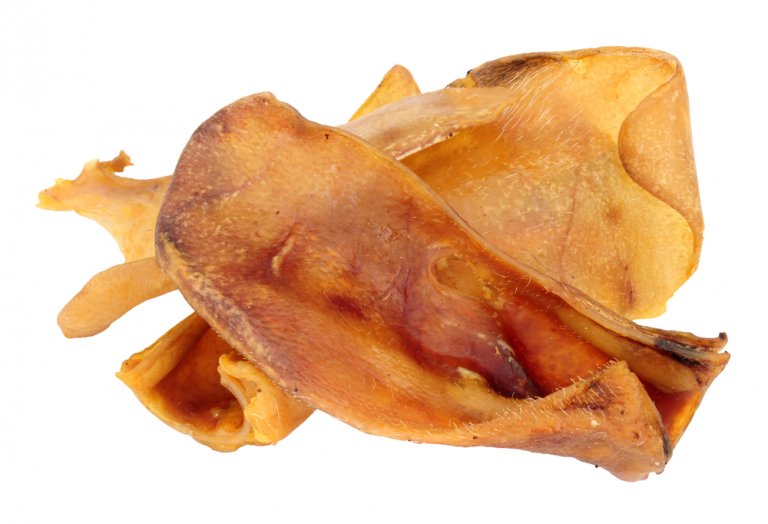
Pig Ears Dog Treats Recall

Because they have the potential to be contaminated with Salmonella bacteria.

Yet another recall.

ooOOoo

Brutus & Barnaby Pig Ears Dog Treats Recall

August 27, 2019 — Brutus & Barnaby LLC of Clearwater, Florida, is recalling all size variations of its Pig Ears for Dogs because they have the potential to be contaminated with Salmonella bacteria.

What Products Are Recalled?

Bags of Brutus & Barnaby Pig Ears were distributed throughout all states via Amazon.com, Chewy.com, Brutusandbarnaby.com and the brick and mortar Natures Food Patch in Clearwater, Florida.

The product label is identified by the company’s trademarked logo and reads “Pig Ears 100% Natural Treats for Dogs”.

The affected products were available in 4 sizes:

  • Brutus & Barnaby Pig Ears (8 Count)
  • Brutus & Barnaby Pig Ears (12 Count)
  • Brutus & Barnaby Pig Ears (25 Count)
  • Brutus & Barnaby Pig Ears (100 Count)

Brutus & Barnaby has ceased the production and distribution of the product as FDA and the company continue their investigation as to what caused the problem.

About Salmonella

Salmonella can affect animals eating the products and there is risk to humans from handling contaminated pet products, especially if they have not thoroughly washed their hands after having contact with the products or any surfaces exposed to these products.

Healthy people infected with Salmonella should monitor themselves for some or all of the following symptoms: nausea, vomiting, diarrhea or bloody diarrhea, abdominal cramping and fever.

Rarely, Salmonella can result in more serious ailments, including arterial infections, endocarditis, arthritis, muscle pain, eye irritation, and urinary tract symptoms.

Consumers exhibiting these signs after having contact with this product should contact their healthcare providers.

Pets with Salmonella infections may be lethargic and have diarrhea or bloody diarrhea, fever, and vomiting.

Some pets will have only decreased appetite, fever and abdominal pain.

Infected but otherwise healthy pets can be carriers and infect other animals or humans.

If your pet has consumed the recalled product and has these symptoms, please contact your veterinarian.

What to Do?

Consumers who have purchased Brutus & Barnaby pig ears are urged to destroy any remaining product not yet consumed and to contact the place of purchase for a full refund.

Consumers with questions may contact the company at 800-489-0970 Monday through Friday, 9 am to 5 PM ET.

U.S. citizens can report complaints about FDA-regulated pet food products by calling the consumer complaint coordinator in your area.

Or go to https://www.fda.gov/petfoodcomplaints.

Canadians can report any health or safety incidents related to the use of this product by filling out the Consumer Product Incident Report Form.

ooOOoo

Once again, please share this as much as possible. One dog with salmonella is one dog too many!


A rescue plus!

Ninety-nine percent of the time it’s a match of dog and human.

Today, Tuesday, Jean and I went to visit one of the retirement homes in town. The woman who saw us at this particular one, Cindy, was a dog lover and had two dogs. But while we toured the home and saw this and that all three of us were much more interested in speaking about our dogs.

It came to mind while we were talking about our dogs, and remarking how we loved them and how life wouldn’t be the same without them, that dogs occupy a place in our hearts that is so special. Now it’s not unique; cats and horses to some are also special. (And there are some dog owners who don’t really endear themselves to their dogs.)

But there’s something about the dog that for most people is magical.

This came to mind when I was reading this post; something magical about the humble dog. Taken from The Dodo.

ooOOoo

Frightened Shelter Dog Completely Transforms When She Meets Her New Human Brother

She couldn’t stop smiling!
BY
PUBLISHED ON 16th August, 2019.

After Tricia Carter and her family lost their beloved dog Bailey back in November, it was hard to imagine another dog could ever take her place. But when Carter’s friend texted her pictures of a sweet pit bull/bulldog mix, just like Bailey, at their local shelter, she decided maybe her family was ready to adopt again.

“Once I saw pics, I couldn’t stop thinking about her and the next morning I went to the shelter,” Carter told The Dodo.

Tricia Carter

The shelter didn’t know much about the dog’s past except that she’d passed through more than one shelter, and that she was likely used for breeding by her previous owner and cast aside once she was no longer useful. The poor dog, named Lola, seemed defeated as she came out to meet Carter, but Carter could tell that she was so sweet and just needed to find the right family to love her.

“She had a very quiet, calm nature at the shelter,” Carter said. “Didn’t really react one way or another to other dogs, seemed to hang her head for the most part.”

Tricia Carter

Poor Lola had already been adopted and returned to the shelter once before, and after meeting her, Carter knew she wanted to give her a chance. The official deciding factor would be if Lola got along well with her teenage son. Two hours later, Carter headed back to the shelter with her son — and as soon as the pair met, Lola’s demeanor completely changed. It was as if this was the person she had been waiting for all along.

Tricia Carter

“The moment she looked into his eyes, they both fell in love,” Carter said. “She had the biggest grin and it hasn’t gone away since.”

Tricia Carter

It was such a beautiful moment, and no one could believe how much the pair connected right away. Carter immediately made the adoption official, and sweet Lola couldn’t stop smiling the whole car ride home.

Tricia Carter

Lola arrived in her new home and settled in immediately, and slept the whole night with Carter’s son. The next day, her personality really started to shine through, and it was as if she knew she had finally found a place to stay forever.

Tricia Carter

To this day, Carter’s son is still Lola’s absolute favorite person, and she spends most of her time snuggled up with him. She also loves playing with the family’s other two dogs, and seems to feel more like a part of the pack every day. At the shelter, poor Lola could barely lift her head, but now she’s found exactly where she belongs, and she’s never looking back.

Tricia Carter

“She’s so happy and fun-loving — I can’t help but smile every time I’m around her,” Carter said. “No matter what her backstory might be, she’s a sweet girl who just wants to love, play and be loved.”

ooOOoo

And there’s something more to this story of love and friendship – we can only guess at what the dog is thinking.

For sure this dog is very happy, and shows it, but for an animal that for years and years has bonded so closely with us we really don’t understand what’s going on.

But it is still very beautiful!

Picture Parade Three Hundred and Two

Again, a republication of an earlier post.

ooOOoo

 Yes, another set of those wonderful photographs sent in by Marg.

If you missed previous sets then start back here.

“A dog is the only thing on earth that will love you more than you will love yourself.”  –
Josh Billings

oooo

“You can live without a dog, but it is not worthwhile.”

oooo

“If a dog does not come to you after looking you in the face, it is better that you go home and examine your conscience“ – Woodrow Wilson

oooo

“Buying a dog may be the only opportunity that a human being has to choose a relative”. – Mordecai Siega

oooo

“You can say any foolish thing to a dog and the dog will look at you in a way that seems to say: ‘My God, he is right!!! That would have never occurred to me’ “. – Dave Barry

oooo

“Sitting back in the evening, stargazing and stroking your dog, is an infallible remedy.“ – Ralph Waldo Emerson

oooo

“To exercise, walk with someone who will accompany you willingly, preferably a dog.“ – David Brown

oooo

It breaks my heart to advise you that the Picture Parade in a week’s time will be the last of the most glorious and touching photographs that came from Marg down in Tasmania.

ooOOoo

Not only are the photographs to die for but the sayings are exquisite as well!


How dogs are so good for children.

A delightful guest post from Holli.

A short while ago I was emailed by Holli Burch who asked me if I was ready for another guest post. Was I! I love to receive guest posts. From regular contributors, such as Holli, and people who are new to Learning from Dogs.

There was a quick exchange of emails and then yesterday in came Holli’s latest. It’s brilliant!

ooOOoo

How Dogs are Good For Kids

By Holli Burch. 22nd August, 2019
Many kids dream of having a dog.

While we know that dogs teach kids loyalty and unconditional love, there are also many other reasons that dogs are good for kids! I feel so grateful to be able to have both human and canine kids at home. I have always had dogs around me as a child also. My dad had hunting dogs and my mom liked the smaller poodle terrier dog breeds.

According to an article in the Washington Post, a recent study found that children who had strong bonds with their dog also had more secure stronger bonds with their parents and with their (human) best friends. I find this so extremely important, especially in adolescent age when kids struggle the most!

They had another study regarding how dogs effect children’s emotions during stressful times. They found that when the children had their dog with them, they were much more calm. Suggesting that the contact they have with their dog enhances positive affect.
More reasons dogs are good for our kids…

  • Dogs can help kids with behavioral problems – A dog can calm a hyperactive child and have been shown to be especially beneficial to those with special needs. Having a therapy dog can help ease parent worries a little by knowing the dog will protect them and can be trained to react to certain behaviors, including wandering.
  • Dogs can help ease anxiety- Petting your dog or cuddling with them releases the “feel good” hormones in their body called oxytocin. This soothes the anxiety mind and helps to calm them down
  • Dogs teach kids responsibility- Dogs need to be fed, walked and given love daily. When a child gets a dog they learn to take care of something other than themselves. This also creates empathy and self confidence.
  • Dogs keep kids in better health- Dogs can help overweight children and help get kids active. Parents need to make sure both are getting daily exercise. A study from Psychology today found that children who walked their dogs were 50% less likely to become obese. Not only that but according to LiveScience, kids that grow up around dog dust have less chance of developing allergies and asthma! It helps them develop a strong immune system.
  • Protection- A dog will always protect those it feels are family. This can mean protecting your child from bullies or helping them to feel safe while home alone. Kids often feel more safe during scary events if they have their dog by their side.
  • Dogs are best friends- They are always willing to play with your child and lift their spirit. Dogs can help with loneliness and depression because they won’t go away, they give unconditional love no matter what, so kids feel wanted and loved. They don’t fight with them, hit or yell. Kids can share anything with them with no judgement. Dogs often can help kids recover from trauma because they can confide in them.

We rescued Tuffy (above) from a shelter, as a puppy, after my daughter lost her horse in a traumatic accident. It’s been a couple years now and Tuffy has also helped her through more. We are blessed to have her and she follows my daughter everywhere. I know she will always keep her safe. Their bond is so strong and if she is ever feeling down, Tuffy knows and is right there to lift her spirit.

Each of my children have one of our dogs that they call theirs, except my 5 year old. Although, he did just ask me the other day if he can get his own dog. He is good at helping me walk them everyday and loves to cuddle with them. When we recently lost Jesse in April, it was also a hard lesson for the kids on loss. We miss her everyday. That’s her below.
One last thing I want to mention is how important it is to teach your child to respect their dog. First few things to teach is to respect their boundaries, how dogs communicate and how to interact when the dog is new to the family.

I would love to hear your comments and stories about how your dogs have helped your kids!
Dog Bless!~ The Dog Connection

oooo

A little bit about Holli.

As a mother of 4 canines and 4 humans, I am here to help the connection between dogs and humans; mind, body & soul.  My purpose is providing inspiration and information to dog lovers on health, training and bonding.

Holli – The Dog Connection
Blog link: https://mysecretdog.blog

Dog Bless!❤🐾

ooOOoo

Time and time again we see a bonding between a human and a dog. It’s precious and the need to involve children from a young age is crucial. Young people growing up today will be facing a whole raft of issues, many of them extremely serious. All the more reason to have a young person bond with a dog, because that’s so important for that young person.

So go on, how old is your dog?

An explanation of how old is that pet of yours.

One of the most frequent questions dog and cat owners get asked is how old is he or she. The pet that is!

And one of the most frequent concerns we have for our pets is how long will they live, as in what is their natural life span. Certainly, most of us realise that the larger dogs live slightly shorter lives but is that borne out in practice.

Well a recent professional article on The Conversation blogsite answered those questions.

ooOOoo

How old is my pet in dog years or cat years? A veterinarian explains

By

Clinical Instructor of Veterinary Medicine, Mississippi State University

July 23rd, 2019

“Just how old do you think my dog is in dog years?” is a question I hear on a regular basis. People love to anthropomorphize pets, attributing human characteristics to them. And most of us want to extend our animal friends’ healthy lives for as long as possible.

It may seem like sort of a silly thing to ponder, born out of owners’ love for their pets and the human-animal bond between them. But determining a pet’s “real” age is actually important because it helps veterinarians like me recommend life-stage specific healthcare for our animal patients.

There’s an old myth that one regular year is like seven years for dogs and cats. There’s a bit of logic behind it. People observed that with optimal healthcare, an average-sized, medium dog would on average live one-seventh as long as its human owner – and so the seven “dog years” for every “human year” equation was born.

Not every dog is “average-sized” though so this seven-year rule was an oversimplification from the start. Dogs and cats age differently not just from people but also from each other, based partly on breed characteristics and size. Bigger animals tend to have shorter life spans than smaller ones do. While cats vary little in size, the size and life expectancy of dogs can vary greatly – think a Chihuahua versus a Great Dane.

Human life expectancy has changed over the years. And vets are now able to provide far superior medical care to pets than we could even a decade ago. So now we use a better methodology to define just how old rule of thumb that counted every calendar year as seven “animal years.”

Based on the American Animal Hospital Association Canine Life Stages Guidelines, today’s vets divide dogs into six categories: puppy, junior, adult, mature, senior and geriatric. Life stages are a more practical way to think about age than assigning a single number; even human health recommendations are based on developmental stage rather than exactly how old you are in years.

Canine life stages

Veterinarians divide a dog’s expected life span into six life stages based on developmental milestones. These age ranges are for a medium-sized dog; smaller dogs tend to live longer, while larger dogs tend to have shorter life expectancies.

STAGE
AGE (YEARS)
CHARACTERISTICS
Puppy 0 – 0.5 Birth to sexual maturity
Junior 0.5 – 0.75 Reproductively mature, still growing
Adult 0.75 – 6.5 Finished growing, sexually and structurally mature
Mature 6.5 – 9.75 From middle to last 25% of expected lifespan
Senior 9.75 -13 Last 25% of life expectancy
Geriatric over 13 Beyond life span expectation

Chef Toby Pig Ears Recall for dog treats.

Yet another dog food (treats) recall.

There seem to be more than normal just at present.

But anyway let’s go directly to the recall.

ooOOoo

Dog Goods USA Recalls Chef Toby Pig Ears Dog Treats

August 16, 2019 — Dog Goods USA LLC of Tobyhanna, PA, is recalling its Chef Toby Pig Ears Treats due to possible contamination with Salmonella bacteria and its associated health risks.

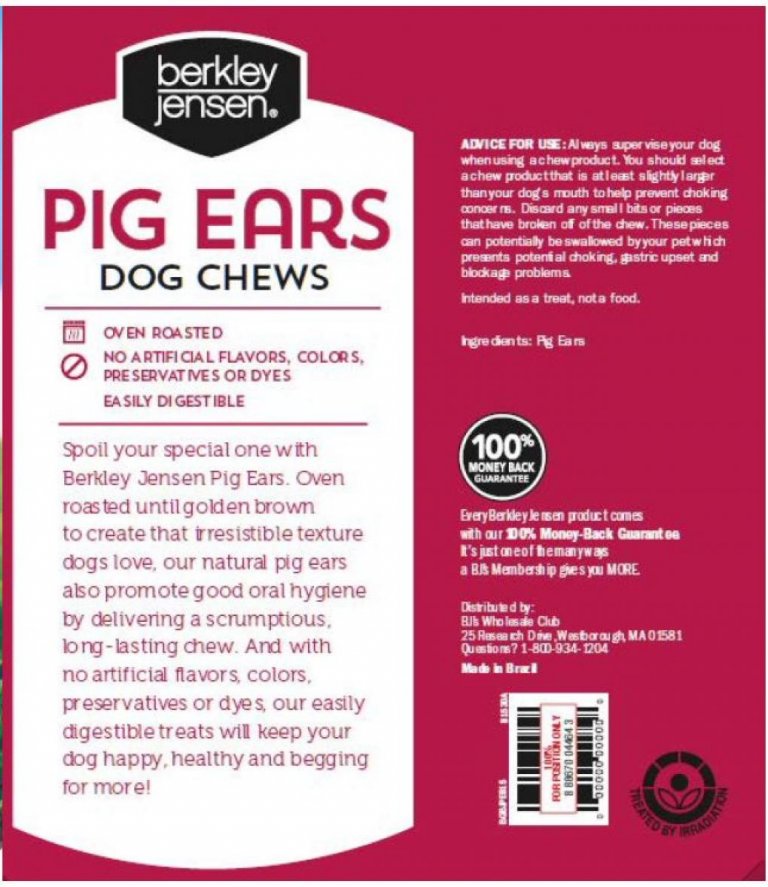
Chef Toby Pig Ears Treats
Product Images

The images below represent the labels of the recalled products:

What Caused the Recall?

Dog Goods bought the affected products from a single supplier in Brazil from September 2018 through August 2019 and distributed them nationwide in retail stores.

The FDA sampled pig ears manufactured by its supplier in Brazil and one sample tested positive for Salmonella.

As previously reported on this website, the U.S. Food and Drug Administration (FDA), together with the Centers for Disease Control and Prevention (CDC) and State partners, is investigating a suspected link between pig ear pet treats and human cases of salmonellosis.

What’s Being Recalled?

Dog Goods USA LLC is conducting a voluntary recall of the following bulk and packaged pig ears branded Chef Toby Pig Ears.

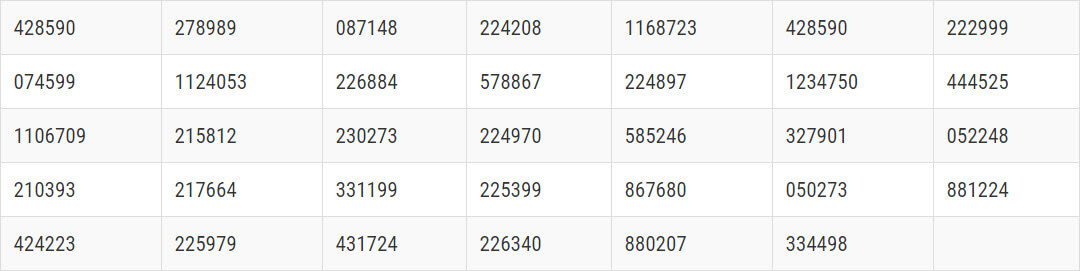
Product lot codes include: 428590, 278989, 087148, 224208, 1168723, 428590, 222999, 074599, 1124053, 226884, 578867, 224897, 1234750, 444525, 1106709, 215812, 230273, 224970, 585246, 327901, 052248, 210393, 217664, 331199, 225399, 867680, 050273, 881224, 424223, 225979, 431724, 226340, 880207, 334498.

About Salmonella

Healthy people infected with Salmonella should monitor themselves for some or all of the following symptoms: nausea, vomiting, diarrhea or bloody diarrhea, abdominal cramping and fever.

Rarely, Salmonella can result in more serious ailments, including arterial infections, endocarditis, arthritis, muscle pain, eye irritation, and urinary tract symptoms.

Consumers exhibiting these signs after having contact with this product should contact their healthcare providers.

Pets with Salmonella infections may be lethargic and have diarrhea or bloody diarrhea, fever and vomiting.

Some pets will have only decreased appetite, fever and abdominal pain. Infected but otherwise healthy pets can be carriers and infect other animals and humans.

If your pet has consumed the recalled product and has these symptoms, please contact your veterinarian.

For more information about Salmonella and its symptoms and health risks, please refer to the following link: FDA Investigates Contaminated Pig Ear Pet Treats Connected to Human Salmonella Infections.

Company Statement

Dog Goods has also launched an internal investigation to determine if, when and where the Products may have been contaminated.

To date, this internal investigation has not indicated any vulnerability in the company’s practices, including but not limited to the inspection, handling and storage of the Products.

No illnesses have been linked to the products to date.

Nonetheless, Dog Goods will continue to investigate the matter, collaborate fully with the FDA and the CDC, and provide further information to its customers and the public as appropriate.

What to Do?

Consumers who have purchased the products are urged to return them to the place of purchase for a full refund.

Consumers with questions may contact the company at 786-401-6533 (ext 8000) from 9 am ET through 5 pm ET.

U.S. citizens can report complaints about FDA-regulated pet food products by calling the consumer complaint coordinator in your area.

Or go to https://www.fda.gov/petfoodcomplaints.

Canadians can report any health or safety incidents related to the use of this product by filling out the Consumer Product Incident Report Form.

ooOOOo

As always, please share this as far and wide as you can.

Picture Parade Three Hundred and One

Again, a republication of an earlier post.

ooOOoo

The second set of wonderful photographs sent in by Marg.

Following on from the first set a week ago.

“We can judge the heart of a man according to his love for animals” Immanuel Kant

oooo

“Do not call me dog, I do not deserve such a high qualification…” “I am not as faithful or loyal…I am only a human being”

oooo

“Every child should have two things: a dog and a mother who let him have one”

oooo

It is shameful for our species being the dog, (man’s best friend) when the man is the dog’s worst friend.“ Eduardo Lamazón

oooo

Do not accept the admiration of your dog as an obvious conclusion that you are wonderful“ Ann Landers

oooo

“The dog knows, but does not know that he knows“ Pierre Teilhard de Chardin

oooo

“Who said you can not buy happiness, when you are thinking about puppies“ Gene Hill

oooo

“If your dog doesn’t like someone, you probably should not either.”

You do know, good people, that I get as much pleasure from presenting Picture Parades as you get from viewing them.

ooOOoo

Yet more in a week’s time!

A freak accident

This was an item on yesterday’s BBC News.

One knows the saying: “Never say never!”

That saying comes to mind when one reads about an attack on a dog in Queensland, Australia reported on the BBC News.

Here’s that item.

ooOOoo

Australia couple injured in ‘freak’ goanna attack on their dog

Goannas can grow up to two metres (6.5ft) in length

An elderly couple has been attacked in Australia by a goanna (a large lizard), as they tried to stop it from savaging their dog, emergency officials say.

The man, in his 70s, was said to have sustained significant injuries and was airlifted to hospital after the incident in north-eastern Queensland.

The woman, in her 60s, was also taken to hospital with an injury to her foot.

The couple’s dog, a long-haired Jack Russell cross, was seriously injured.

Goannas can grow up to 2m (6.5ft) in length, though most varieties are under 1m, and rarely attack humans.

The rescue service described the attack which took place in Flametree near Airlie Beach, as “a horrific and freak ordeal”.

“The man suffered a very serious laceration and possible fracture of his right forearm as well as severe bleeding from his leg wound. He was in considerable pain,” ABC News quotes an ambulance worker as saying.

“The patients are quite lucky not to have been more seriously injured given that goannas can be quite savage,” another ambulance worker told ABC, adding: “It doesn’t happen every day, that’s for sure.”

The dog was earlier reported to have died, but ABC later reported that it had survived the attack.

ooOOoo

Now I wasn’t sure what a goanna was but thanks to Wikipedia (and not the only source), we find:

Goanna refers to some species of the genus Varanus found in Australia and Southeast Asia.

Around 80 species of Varanus are known, 25 of which are found in Australia. This varied group of carnivorous reptiles ranges greatly in size and fills several ecological niches.[1]

The goanna features prominently in Aboriginal mythology and Australian folklore.

Being predatory lizards, goannas are often quite large, or at least bulky, with sharp teeth and claws. The largest is the perentie (V. giganteus), which can grow over 2.5 m (8.2 ft) in length.

Not all goannas are gargantuan. Pygmy goannas may be smaller than the arm of an adult human. The smallest of these, the short-tailed monitor (Varanus brevicuda) reaches only 20 cm (8 inches) in length. They survive on smaller prey, such as insects and mice.

Goannas combine predatory and scavenging behaviours. A goanna will prey on any animal it can catch and is small enough to eat whole. Goannas have been blamed for the death of sheep by farmers, though most likely erroneously, as goannas are also eaters of carrion and are attracted to rotting meat.

Most goannas are dark-coloured, with greys, browns, blacks and greens featuring prominently; however, white is also common. Many desert-dwelling species also feature yellow-red tones. Camouflageranges from bands and stripes to splotches, speckles, and circles, and can change as the creature matures, with juveniles sometimes being brighter than adults.

Like most lizards, goannas lay eggs. Most lay eggs in a nest or burrow, but some species lay their eggs inside termite mounds. This offers protection and incubation; additionally, the termites may provide a meal for the young as they hatch. Unlike some other species of lizards, goannas do not have the ability to regrow limbs or tails.

So there you are!

Texas Tripe Recall

Yet another Dog Food Advisory.

This one from Texas Tripe Inc.

ooOOoo

Texas Tripe Recalls Pet Food Due to Salmonella and Listeria

August 14, 2019 — The U.S. Food and Drug Administration is warning dog owners not to feed certain lots of Texas Tripe raw pet food after samples tested positive for Salmonella and/or Listeria monocytogenes.

The FDA is issuing this alert because these lots of Texas Tripe Inc. raw pet food represent a serious threat to human and animal health.

Because these products are sold and stored frozen, FDA is concerned that people may still have them in their possession.

What’s Being Recalled?

The recalled products are sold frozen in 20-pound and 40-pound cases.

Each case contains multiple plastic pouches.

Lot codes to help identify recalled product are printed on the outside of the cases. But the lot codes are not printed on the individual sealed plastic pouches, also known as chubs.

So, if the case has been discarded, there are no unique identification numbers on the individual chubs that allow customers to determine that they possess the recalled products.

These products are manufactured by Texas Tripe Inc. and were sold direct to consumers online and by phone.

The chart below lists the recalled products and lot numbers provided by the firm to FDA on 8/6/2019. These include 35 lots for each of the following 23 product varieties.

The FDA-sampled products below tested positive for Salmonella and/or Listeria monocytogenes (as of 8/13/19) but have not been recalled.

  • Texas Tripe Chicken Blend: Lot 19196-6
  • Texas Tripe Pork Blend: Lot 19190-09
  • Texas Tripe Beef Blend: Lot 19191-05

Where Were the Products Sold?

According to the company, recalled products have been sold directly to consumers in the following states:

  • Alabama
  • Arizona
  • Arkansas
  • California
  • Colorado
  • Florida
  • Georgia
  • Illinois
  • Kansas
  • Kentucky
  • Louisiana
  • Michigan
  • Mississippi
  • Missouri
  • New Jersey
  • New Mexico
  • New York
  • North Carolina
  • Ohio
  • Oklahoma
  • Pennsylvania
  • Tennessee
  • Texas
  • Virginia

What Caused the Recall?

The Office of the Texas State Chemist (OTSC) collected 23 finished product samples at Texas Tripe Inc. Of the 23 samples, 16 tested positive for Listeria and/or Salmonella.

The FDA followed up these findings with an inspection and collected and analyzed samples of unopened finished product, after the firm performed corrective actions, from additional lots of some of the same products tested by OTSC.

FDA testing showed some of the samples contained Salmonella and/or L. mono.

FDA and OSTC shared their test results with Texas Tripe Inc. The firm initiated a recall on July 3, 2019 by directly notifying some of its customers via email.

Why FDA Is Concerned

Pet foods and treats contaminated with Salmonella and L. mono are of particular public health importance because they can affect both human and animal health.

Pets can get sick from these pathogens and may also be carriers of the bacteria and pass it on to their human companions without appearing to be ill.

People can get sick from handling contaminated pet foods and treats or touching surfaces that have had contact with the contaminated pet foods and treats.

Additionally, if a person gets Salmonella or L. mono on their hands, they can spread the bacteria to other people, objects, and surfaces.

The FDA is aware of recent cases in which humans and/or animals have gotten sick from exposure to Salmonella-contaminated pet foods (Salmonella-human cases, Salmonella-kitten, Salmonella-kitten and dog).

Although FDA is not aware of a documented case of a person acquiring L. mono infection from a pet food, once Salmonella or L. mono get established in the pet’s gastrointestinal tract, the animal can shed the bacteria in the feces when it has a bowel movement, and the contamination may continue to spread.

Because animals can shed the bacteria in the feces when they have bowel movements, it’s particularly important to clean up the animal’s feces in yards or parks where people or other animals may become exposed, in addition to cleaning items in the home.

The Federal Food, Drug, and Cosmetic Act requires that all animal food, like human food, be safe to eat, produced under sanitary conditions, contain no harmful substances, and be truthfully labeled.

Without an effective control for pathogens, such as cooking, animal food is more likely to contain pathogens such as Salmonella and L. mono.

Refrigeration or freezing does not kill the bacteria.

About Salmonella

Salmonella is a bacterium that can cause illness and death in humans and animals, especially those who are very young, very old, or have weak immune systems.

According to the CDC, people infected with Salmonella can develop diarrhea, fever and abdominal cramps.

Most people recover without treatment, but in some people, the diarrhea may be so severe that they need to be hospitalized.

In some patients, the Salmonella infection may spread from the intestines to the blood stream and then to other body sites unless the person is treated promptly with antibiotics.

Consult your health care provider if you have symptoms of Salmonella infection.

Pets do not always display symptoms when infected with Salmonella, but signs can include vomiting, diarrhea (which may be bloody), fever, loss of appetite and/or decreased activity level.

If your pet has these symptoms, consult a veterinarian promptly.

You should also be aware that infected pets can shed the bacteria in their feces and saliva without showing signs of being sick, further contaminating the household environment.

About Listeria

Listeria monocytogenes (L. mono) is a bacterium that can cause illness and death in humans and animals, especially those who are pregnant, very young, very old, or have weak immune systems.

According to CDC, listeriosis in humans can cause a variety of symptoms, depending on the person and the part of the body affected.

Symptoms can include headache, stiff neck, confusion, loss of balance, and convulsions in addition to fever and muscle aches.

Pregnant women typically experience only fever and other flu-like symptoms, such as fatigue and muscle aches.

However, infections during pregnancy can lead to miscarriage, stillbirth, premature delivery, or life-threatening infection of the newborn.

Pregnant women and their newborns, adults age 65 and older, and people with weakened immune systems are more likely to get sick with listeriosis.

Anyone with symptoms of listeriosis should contact a health care provider.

L. mono infections are uncommon in pets, but they are possible.

Symptoms may include mild to severe diarrhea, anorexia, fever, nervousness, muscular and respiratory signs, abortion, depression, shock and death.

Pets do not need to display symptoms to be able to pass L. mono on to their human companions.

Once L. mono gets established in the pet’s gastrointestinal tract, the animal can shed the bacteria in the feces when it has a bowel movement…

And the contamination may continue to spread, further contaminating the household environment.

What to Do?

If you have any recalled product, stop feeding it to your pets and throw it away in a secure container where other animals, including wildlife, cannot access it.

Consumers who have had this product in their homes should clean refrigerators/freezers where the product was stored and clean and disinfect all bowls, utensils, food prep surfaces, pet bedding, toys, floors, and any other surfaces that the food or pet may have had contact with.

Clean up the pet’s feces in yards or parks where people or other animals may become exposed.

Consumers should thoroughly wash their hands after handling the recalled product or cleaning up potentially contaminated items and surfaces.

If you believe you have symptoms of Salmonella and L. mono, consult your health care provider.

People who think their pets have become ill after consuming contaminated pet food should first contact their veterinarians.

Veterinarians who wish to have pets tested for Salmonella may do so through the Veterinary Laboratory Investigation and Response Network (Vet-LIRN Network) if the pet is from a household with a person infected with Salmonella.

U.S. citizens can report complaints about FDA-regulated pet food products by calling the consumer complaint coordinator in your area.

Or go to https://www.fda.gov/petfoodcomplaints.

Canadians can report any health or safety incidents related to the use of this product by filling out the Consumer Product Incident Report Form.

ooOOoo

Yet again, share this as far and wide as you can.

And, please, check that you aren’t continuing to use a Texas Tripe product from the above list.

Is your community no-kill?

A timely republication of a helpful article.

The Best Friends website has a useful article under their 2025 Goal aim.

It follows nicely yesterday’s post.

ooOOoo

2025 Goal

No-Kill for Cats and Dogs in America’s Shelters

You believe that animals deserve compassion and good quality of life. You also love your community and want to take action for the pets and people in it. Here’s how.

Last year, about 733,000 dogs and cats were killed in our nation’s animal shelters, simply because they didn’t have safe places to call home. Together, we can change that and achieve no-kill for dogs and cats nationwide by 2025.

Is your community no-kill?

Explore lifesaving nationwide using the interactive tool below and see which shelters in your community need your support. When every shelter in a community achieves a 90% save rate for all cats and dogs, that community is designated as no-kill. This provides a simple, effective benchmark for our lifesaving progress.

This dashboard presents a dynamic data set that is being updated regularly with the most current information available. We welcome your feedback to help ensure that our data is the latest and most accurate information.

Go here to access the map!

Common elements of a no-kill community
All no-kill communities embrace and promote:

Collective responsibility: We hold ourselves accountable for the welfare of pets in our animal shelters and communities.

    • Individual community members are willing to participate in lifesaving programs.
    • State and local government are poised to support those programs.
    • A transparent shelter staff is working with their community to save more lives.

Progressive lifesaving: We value compassionate and responsible actions to save animals.

  • Decision-making is data-driven and anchored by best practices in the field.
  • Quality care is provided to every pet and quality of life is a priority.
  • Programs are designed to save the animals most at risk of being killed.
  • Programs are designed to tackle the root of the problem rather than the symptoms.

True euthanasia: We recognize that, for some animals, euthanasia is the most compassionate choice. This is why the no-kill benchmark for save rate is 90% and not 100%. In some cases, shelters may not meet the 90% benchmark, but do meet the philosophical principles of no-kill, which are:

  • Ending the life of an animal only to end irremediable suffering.
  • Ending the life of an animal when the animal is too dangerous to rehabilitate and place in the community safely.

End-of-life decisions are made by animal welfare professionals engaging in best practices and protocols.

Visit the “Community Lifesaving Dashboard Frequently Asked Questions” page to learn more.

Working together to save more pets

About the lifesaving community maps

These community maps are the first of their kind in animal welfare. They represent an enormous undertaking on the part of compassionate organizations and individuals throughout the country and a commitment to collaboration and transparency from more than 3,200 shelters across the country.

Learn more about how these maps were created and how you can help make them more accurate and powerful for the pets in your community and beyond.

ooOOoo

Once again, go here to view the maps.

The best of luck!