Back on the 14th January in a post called Now we are seventeen, I introduced the two miniature horses, Dancer and Grace, that came to be with us. In that post I mentioned,
Ready to leave
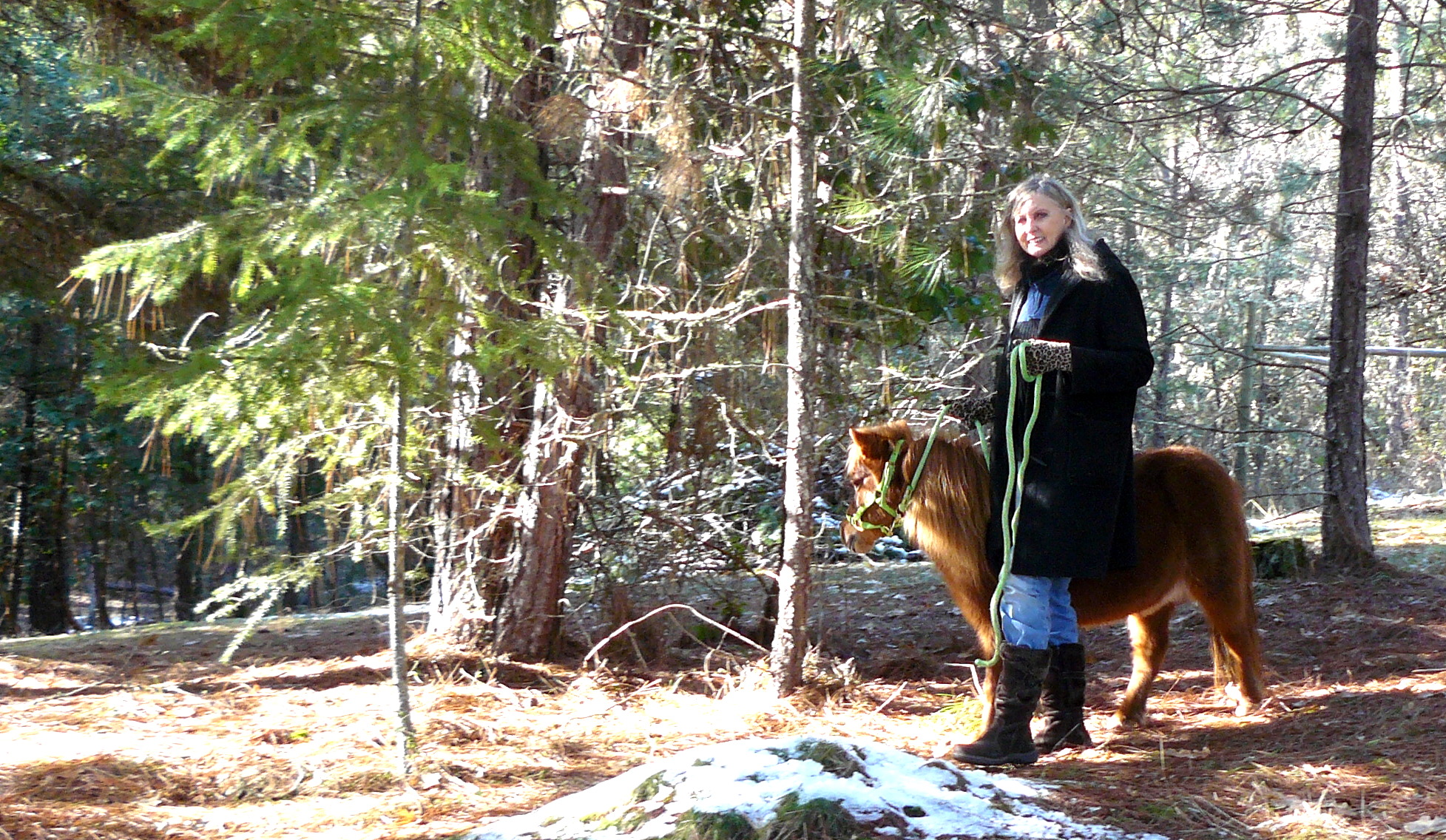
Jean is holding Dancer while Grace is waiting by the fence. Our original plans had been to take Dancer’s sister’s foal Allegra, but she was too stressed to leave her mother so soon; she is just six months old. As an interim, we borrowed Grace, Dancer’s last foal, until Allegra is ready to move homes.
Well yesterday Allegra was ready and came over to join Dancer while lovely Grace returned to neighbour Margo. Just wanted to share some pictures from yesterday.
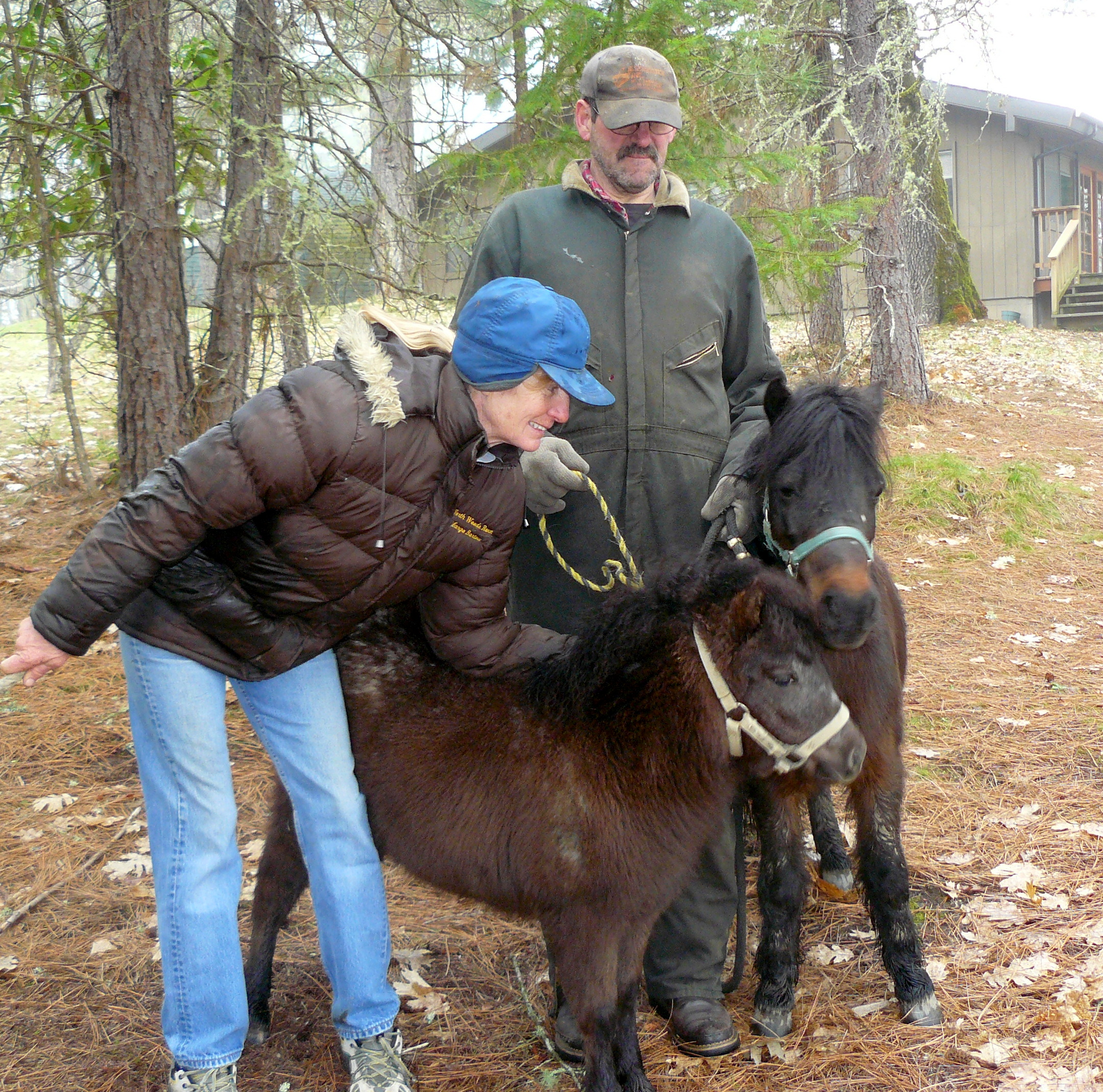
Margo, her arm on Allegra, and her husband, Clarence, holding Allegra’s mother Keepsake. The two horses had come over together so as to offer comfort to young Allegra, now just 7 months old.
Allegra is on the left getting to know her new grounds. On the right is Aunt Chloe who came to spend the night here with Allegra to minimise any separation anxiety.
Close up of Dancer’s nose!
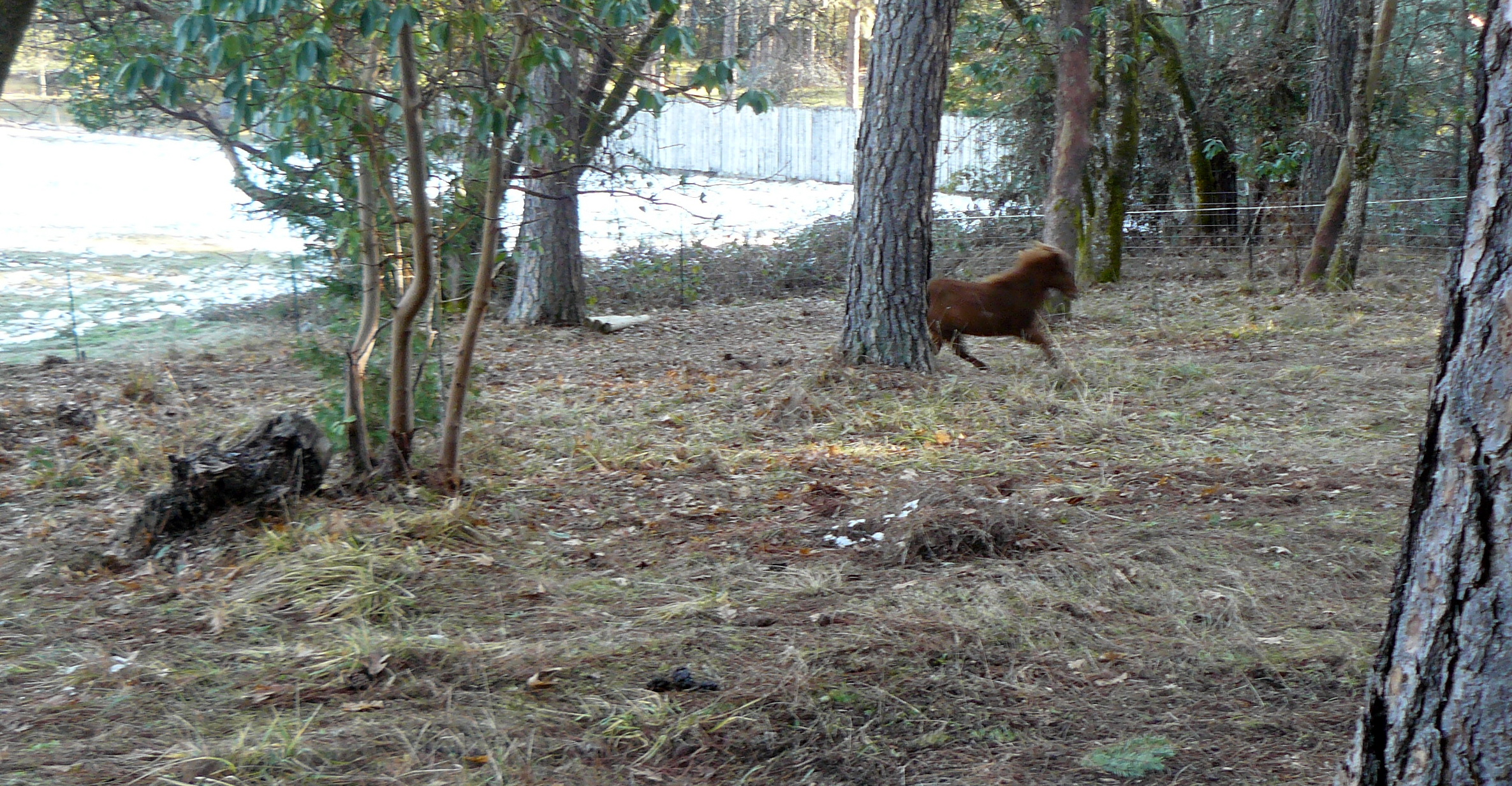
Don’t believe it! Another horse!!
I’m sure Pharaoh is wondering how long it will be before there are more horses than dogs!
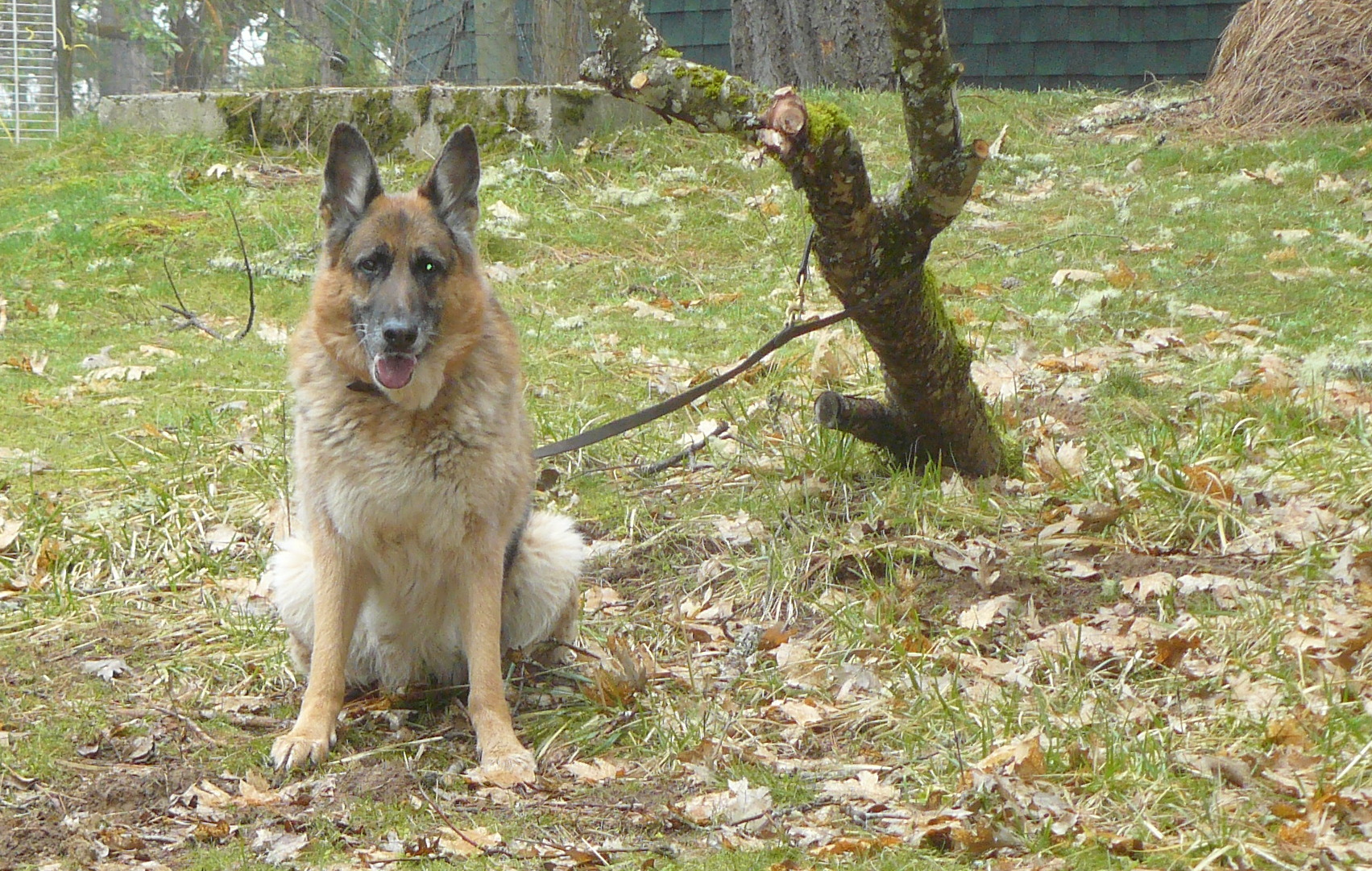
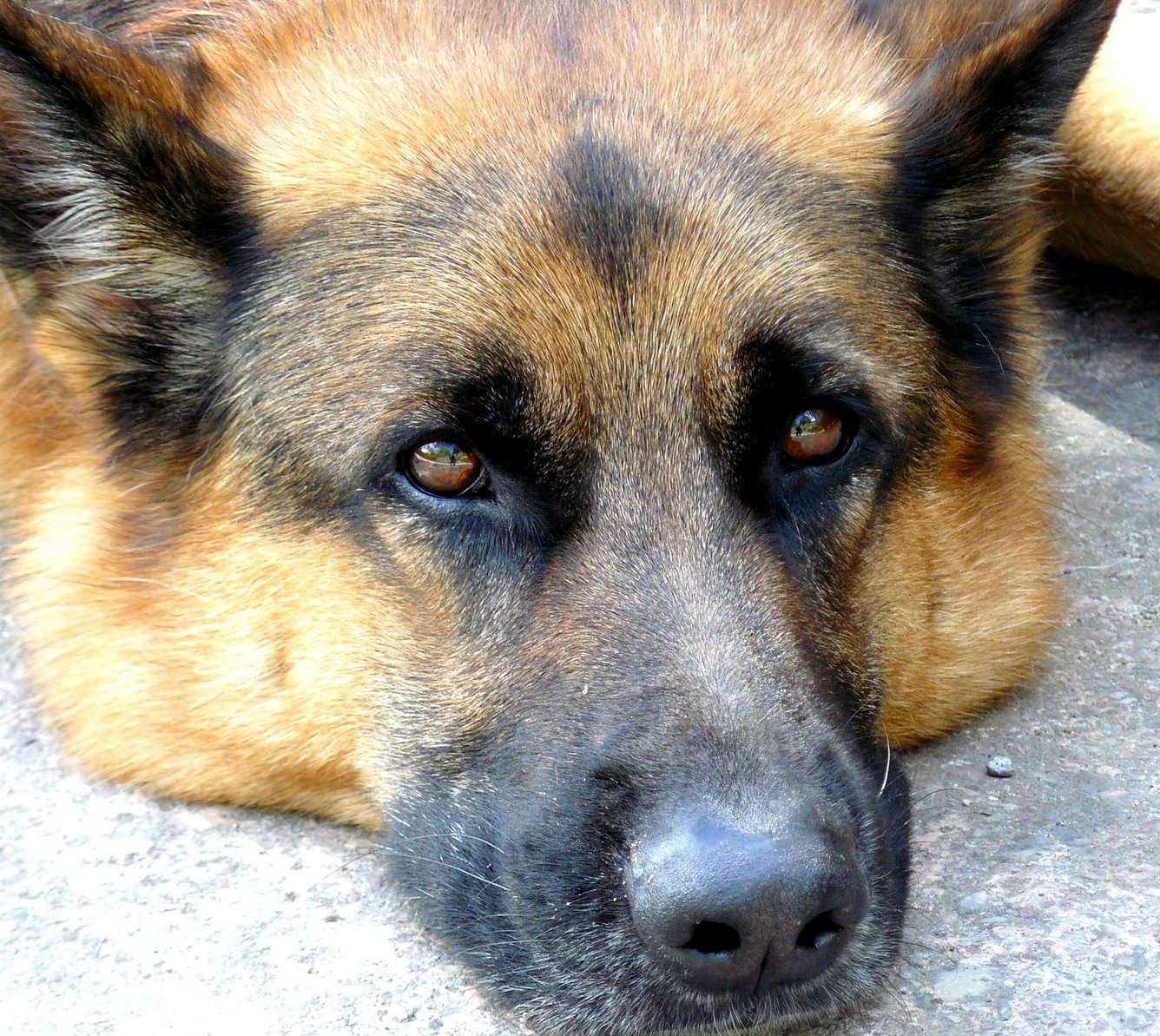
Our beautiful young German Shepherd is one year old today.
How time flies! How life moves on!
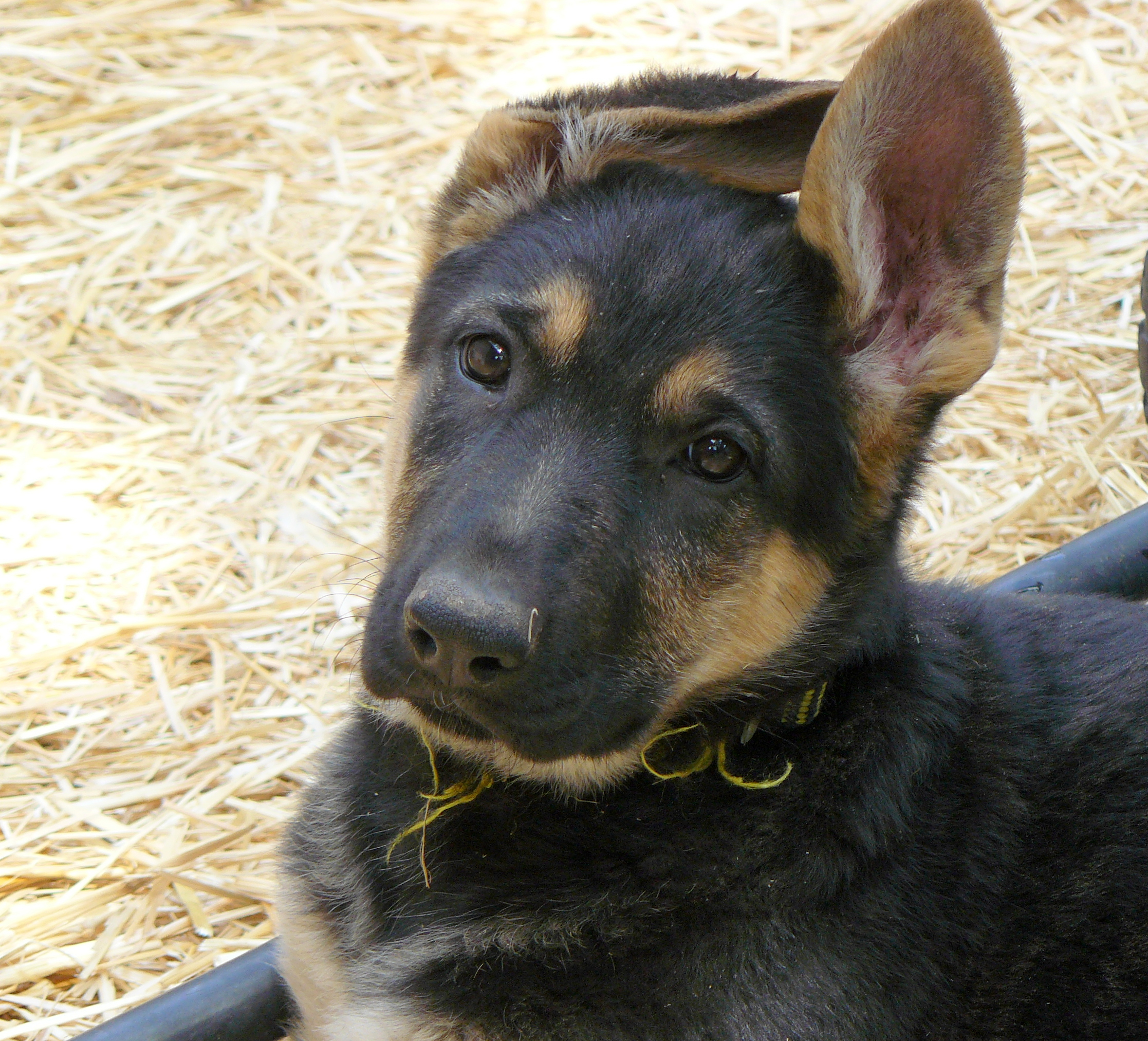
On the 8th April, 2012, I wrote a piece about the arrival of Cleo into our home in Payson, Arizona. Then on the 26th April, I added a few more pictures to say how well Cleo was setting in. (I include the links in case you want to look at the pictures in those posts.)
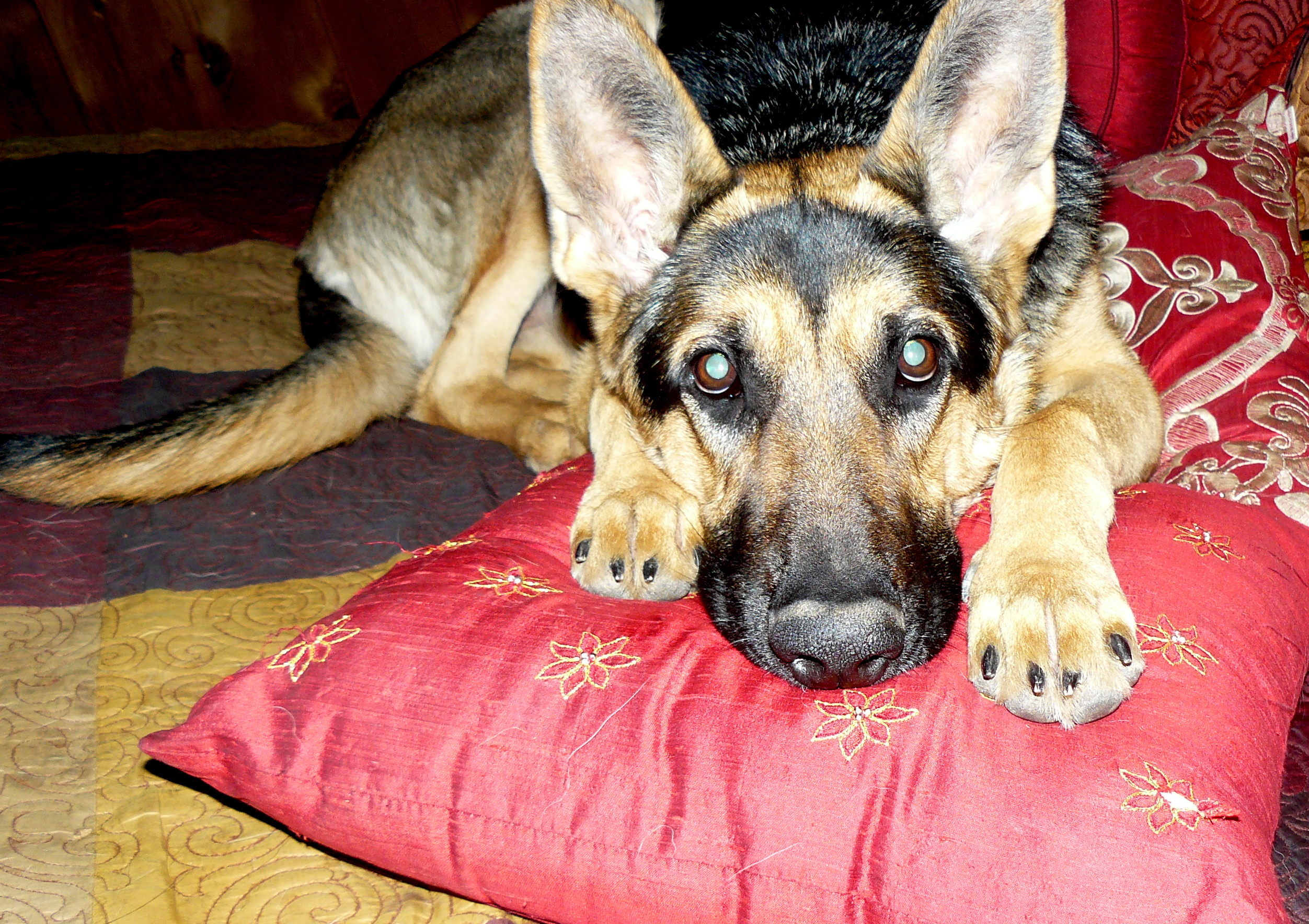
Cleo was born on the 23rd January, 2012. Thus today is her first birthday. She has grown into the most loving, friendly dog and she is adored by all who meet her.
Here’s a picture of Cleo from last year.
Cleo, just 71 days old.
Now two pictures taken this week. This first one showing Cleo lifting her head to the camera.
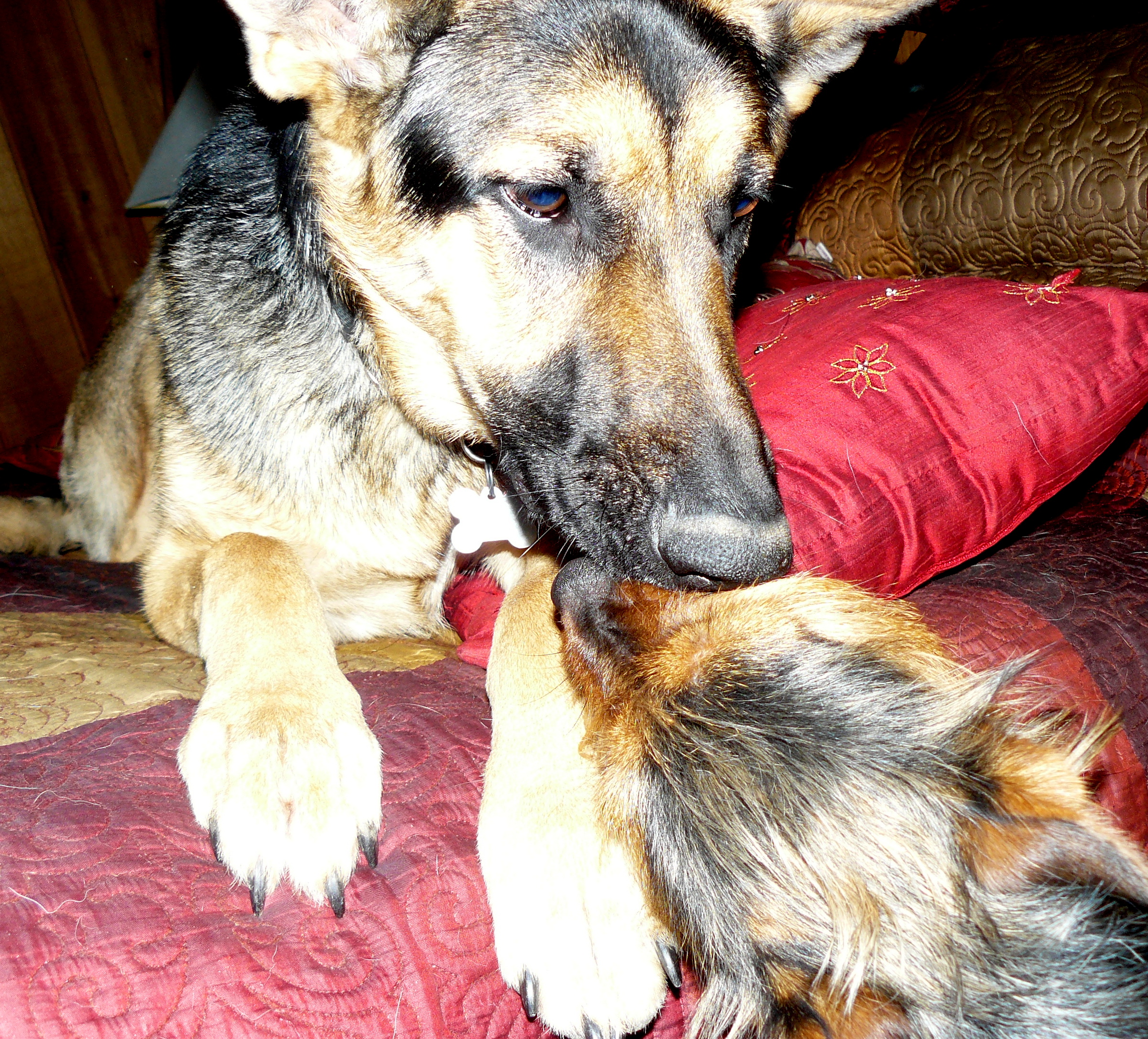
The next one showing Cleo and Sweeny having one of their frequent ‘kiss ins‘.
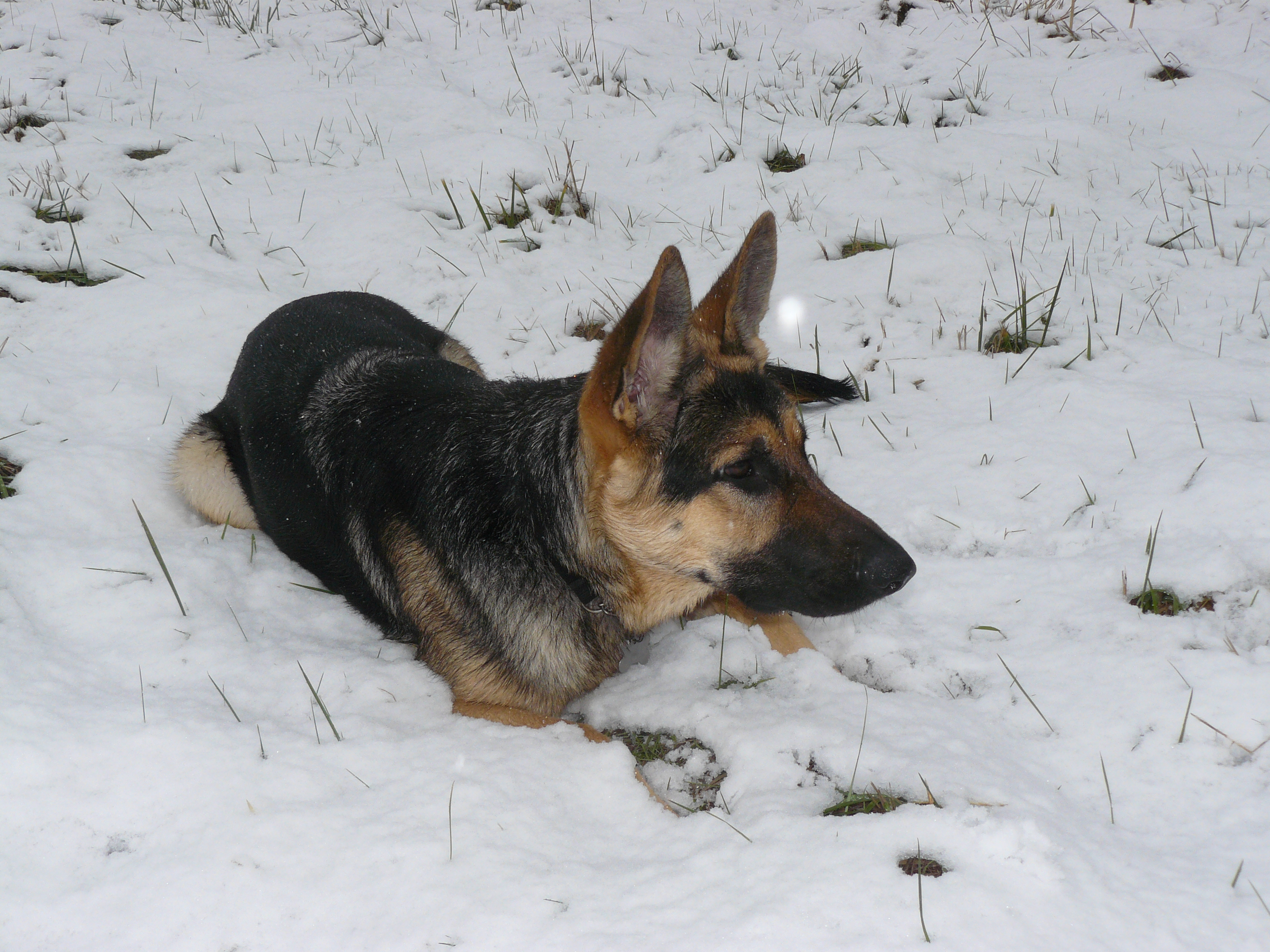
Finally, a picture of Cleo enjoying our recent snows.
We are so fortunate to share our lives with these beautiful creatures.
Back on the 10th we had a few days of cold, overcast weather that brought temperatures down below freezing and some snow.
Here’s a scene looking towards the North-East corner of the property, taken just before 11 am.
Then a few days later, on the 14th, the sun was out while the temperatures remained below freezing. Shown clearly as the sunlight catches the frost on the tree.
A few minutes later I swung the camera to take a picture of Dancer munching away in the morning sunshine, just a day after we collected her and Grace.
The horses settled in quickly, adapting to the dogs who were very curious.
Grace and Cleo being nonchalant with each other.
Jean unable to get her fill of her new companions.
And in a very different vein, a sneak photograph taken of yours truly who had collapsed in front of the fire early evening last Friday, quickly becoming a cushion for Hazel.
My reasoning was that the NCA report was such a stunning indictment of the madness, the myopic madness of mankind these last 100 years, that this appreciation of the wonder of dogs must act as a beacon for us all. I use the word ‘beacon’ because the qualities demonstrated by these nine dogs are just the qualities that we need to adopt.
Every living person on Planet Earth has to embrace the stark choice coming up on us like a runaway train. If we don’t change our values, our behaviours and our relationship with this one, finite planet, in the next ten years, at most, then the consequences will be beyond imagination; a world of unimaginable terror and chaos.
Forgive me if I repeat what the Home page of Learning from Dogs offers:
As man’s companion, protector and helper, history suggests that dogs were critically important in man achieving success as a hunter-gatherer. Dogs ‘teaching’ man to be so successful a hunter enabled evolution, some 20,000 years later, to farming, thence the long journey to modern man. But in the last, say 100 years, that farming spirit has become corrupted to the point where we see the planet’s plant and mineral resources as infinite. Mankind is close to the edge of extinction, literally and spiritually.
On the 30th December, 2012 The Week magazine published an item written by Editor Lauren Hansen. I ask Lauren if I might republish the article in full but that was denied. However, I was given permission to refer extensively to the piece. I will use it to underline just what we have to learn from dogs.
The 9 most newsworthy dogs of 2012
Dogs are the best. Here’s the proof… if you even need it
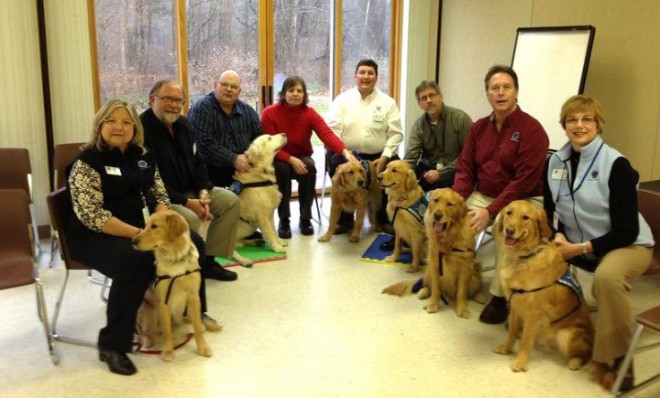
The K-9 Parish Comfort dogs (and their handlers) who helped the residents of Newtown, Conn., through their grief.
If you’re reading this, then you’re probably aware: Dogs rule. This year, a handful of canines rose above the rest, making headlines for their actions — whether facing imminent danger to save lives, enduring unimaginable physical hardships, or simply making us laugh. A look at nine of the year’s most newsworthy pups:
1. Chicago’s comfort dogs After the unimaginable events that befell Newtown, Conn., on Dec. 14 that left 27 people, including 20 children, dead at the hands of suspected gunman Adam Lanza, a team of golden retrievers was deployed from Chicago to the picturesque town. About 10 specially trained dogs, including Chewie, Ruthie, and Luther, made the 800-mile journey to sit with children and adults during masses and funerals. “Dogs are nonjudgmental. They are loving. They are accepting of anyone,” says one handler. “It creates the atmosphere for people to share.” The Chicago comfort dogs are notable not only for this caring venture but also for helping those who suffered through Hurricane Sandy and the tornado that hit Joplin, Mo., in 2011.
The next story was about the puppies that kept a lost boy warm.
That was followed by the hero dog that lost its snout saving two girls.
One dog’s heroism so disfigured her sweet little face that her photo is often preceded by a warning. This canine’s story started with a motorcycle careening through the streets of Zamboanga City, Philippines, earlier this year. Young cousins Dina Bunggal, 11, and Princess Diansing, 3, stepped unknowingly into its path. A mutt named Kabang came out of nowhere and jumped in front of the motorbike, stopping it in its tracks, and saving the little girls from serious injury. The driver and the girls emerged with superficial wounds, but Kabang wasn’t so lucky. Her head landed on the motorcycle’s front wheel and as the wheel rolled forward, Kabang’s upper snout was ripped right off. Her story quickly went viral and when local doctors could do no more to help her, specialty surgeons from the University of California, Davis, flew Kabang to their facilities, where she’ll endure six to eight weeks of treatment to repair her face. The cost of her surgeries, which could top $20,000, will be covered by her many supporters who have started an online fundraising campaign.
Vets at William R. Pritchard Veterinary Medical Teaching Hospital don’t plan to fullyy reconstruct Kabang’s snout, or fit her with a prosthetic. Instead, they are attempting to close the gaping wound on her face, preventing further infections.
Then my last dip into Lauren’s article is dog story eight.
8. The dog that saved its own life by calling the police
We’ve often heard the tale of the puppy that proves its “man’s best friend” status by saving its owner’s life. But this year, there was George, a 2-year-old basset hound in West Yorkshire, England, who reworked the well-worn script a bit, literally calling for help to save himself. Home alone, George had knocked the phone to the floor and was strangling himself with the handset’s cord when he apparently dialed 999 — England’s 911 equivalent — in a panic. The operator heard only frantic gasps and, assuming someone was desperately sick or reeling from an attack, sent police to the house. The dog was found and rescued from the cord. “Incredibly, you could see where his paw print was on the phone,” said the neighbor, “he literally saved his own life.”
Now, what fun-loving toddler can walk past a puddle without stopping for a little splash? Not this one!
Little Arthur was out for a stroll with his best mate, Watson the dog, when he noticed a tempting puddle. So he put down the leash and plunged straight in. And Watson? Well, he’s a more mature 12 years old, so he didn’t partake himself. But he was more than happy to wait while Arthur had his fun.
You know what this video is, don’t you? That’s right. Too. Cute. For. Words.
Here’s the video, seen over 4,800,000 times!
Finally, there’s the beautiful story of the dog befriending a Down’s Syndrome boy.
So what does this all add up to? That the qualities of the dog; integrity, unconditional love, patience, loyalty, and their ability to live in harmony with nature really do send us humans a message for the future.
Yesterday, Jean and I went across to our neighbour’s ranch to collect two miniature horses, Dancer and her daughter Grace. Jean was a keen horsewoman many years ago and when we became aware that our neighbour, Margo, was also a keen horse breeder, trainer and coach, the lure of getting two horses was too much! Two miniature horses seemed the perfect idea.
So just a few pictures to share the event.
Ready to leave
Jean is holding Dancer while Grace is waiting by the fence. Our original plans had been to take Dancer’s sister’s foal Allegra, but she was too stressed to leave her mother so soon; she is just six months old. As an interim, we borrowed Grace, Dancer’s last foal, until Allegra is ready to move homes.
Off we go
For Grace especially, the horse being led by Margo, this was quite an adventure, as the next photograph demonstrates.
Mummy, do I really have to cross this stream?
Then before they knew it, their new enclosure beckoned.
Welcome to your new home.
Jean opens her heart to the latest member of the Handover family!
Note: This post was first published in August, 2010 and has remained a very popular read on Learning from Dogs since then.
So here is that post once again, albeit with a few minor changes.
oooOOOooo
More than a film, a message from dogs to mankind.
Richard Gere and Hachi
We recently watched a film about an Akita dog called Hachi, Hachikō in Japanese, that demonstrates the loyalty that dogs can offer their human companions.
It’s a very moving film. Expect to shed many tears. Even more so when one reflects that the Hollywood film is based, reasonably accurately, on a true story. The details of this story are in Wikipedia from which is quoted:
In 1924, Hidesaburō Ueno, a professor in the agriculture department at the University of Tokyo took in Hachikō as a pet. During his owner’s life Hachikō saw him out from the front door and greeted him at the end of the day at the nearby Shibuya Station. The pair continued their daily routine until May 1925, when Professor Ueno did not return on the usual train one evening. The professor had suffered from a cerebral hemorrhage at the university that day. He died and never returned to the train station where his friend was waiting. Hachikō was loyal and every day for the next nine years he waited sitting there amongst the town’s folk.
Hachikō was given away after his master’s death, but he routinely escaped, showing up again and again at his old home. Eventually, Hachikō apparently realized that Professor Ueno no longer lived at the house. So he went to look for his master at the train station where he had accompanied him so many times before. Each day, Hachikō waited for Professor Ueno to return. And each day he did not see his friend among the commuters at the station.
The permanent fixture at the train station that was Hachikō attracted the attention of other commuters. Many of the people who frequented the Shibuya train station had seen Hachikō and Professor Ueno together each day. They brought Hachikō treats and food to nourish him during his wait.
This continued for nine years with Hachikō appearing precisely when the train was due at the station
Now watch and weep.
Back to the Wikipedia entry:
That same year, another of Ueno’s faithful students (who had become something of an expert on the Akita breed) saw the dog at the station and followed him to the Kobayashi home (the home of the former gardener of Professor Ueno — Kikuzaboro Kobayashi) where he learned the history of Hachikō’s life. Shortly after this meeting, the former student published a documented census of Akitas in Japan. His research found only 30 purebred Akitas remaining, including Hachikō from Shibuya Station.
Professor Ueno’s former student returned frequently to visit the dog and over the years published several articles about Hachikō’s remarkable loyalty. In 1932 one of these articles, published in Tokyo’s largest newspaper, threw the dog into the national spotlight. Hachikō became a national sensation. His faithfulness to his master’s memory impressed the people of Japan as a spirit of family loyalty all should strive to achieve. Teachers and parents used Hachikō’s vigil as an example for children to follow. A well-known Japanese artist rendered a sculpture of the dog, and throughout the country a new awareness of the Akita breed grew.
Eventually, Hachiko’s legendary faithfulness became a national symbol of loyalty.
Hachikō died on March 8, 1935. He was found on a street in Shibuya. His heart was infected with filarial worms and 3-4 yakitori sticks were found in his stomach. His stuffed and mounted remains are kept at the National Science Museum of Japan in Ueno, Tokyo.
Hachiko
A dog offers loyalty, trust and love in exchange for being treated with integrity and compassion.
Another fascinating aspect of how we learn from our dogs.
The last week has been challenging, to say the least.
The biggest winter storm in ages hit this part of Southern Oregon last Thursday, the 20th. That day we lost our power to the home around 6.30 pm. We only had it restored around 4pm last Sunday, the 23rd. That meant no access to our well, no cooker, no heating in the house and … well you get the picture.
The wet snow, some 9 inches or so, brought down trees across the property including one that blocked our driveway.
So where’s this leading?
Just that there have been times when I have been irritable to the extreme. My normal patience with the dogs has been lacking from time to time. Moments when I have pushed a dog away from me, or shouted at another when the barking was getting to me.
The dogs have been so forgiving, so tolerant of my irritability. I was able to reflect in my quieter moments about my behaviours. Able to see how well or otherwise I coped. The dogs offered a mirror to me. Allowing me a gently chastisement that getting angry with the world around me was my problem. It was me that was ‘choosing’ my actions and behaviours.
The dogs also chose to respond to me. Here’s how Hazel responded.
Here’s how Dhalia responded.
Finally, here’s how that grand old man Pharaoh responded.
All of them offering me the message: chill out, Paul!