The last set from Dan Gomez.

oooo

oooo

oooo

oooo

oooo

oooo

That’s it, folks!
On to next Sunday and who knows what!
Dogs are animals of integrity. We have much to learn from them.
Category: Musings
The last set from Dan Gomez.
oooo
oooo
oooo
oooo
oooo
oooo
That’s it, folks!
On to next Sunday and who knows what!
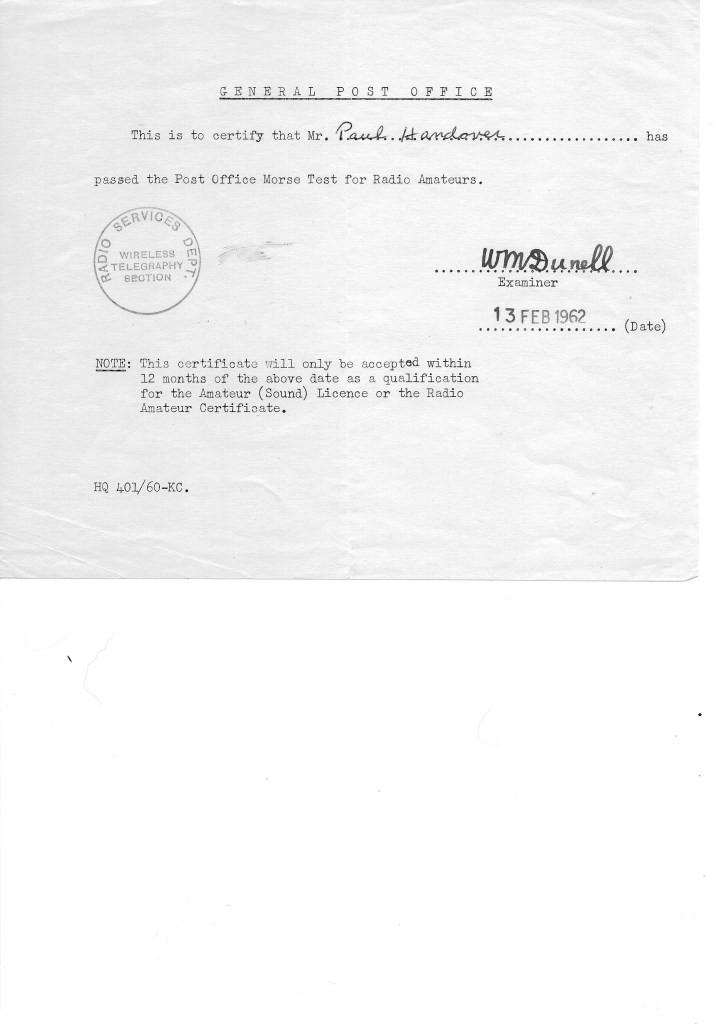
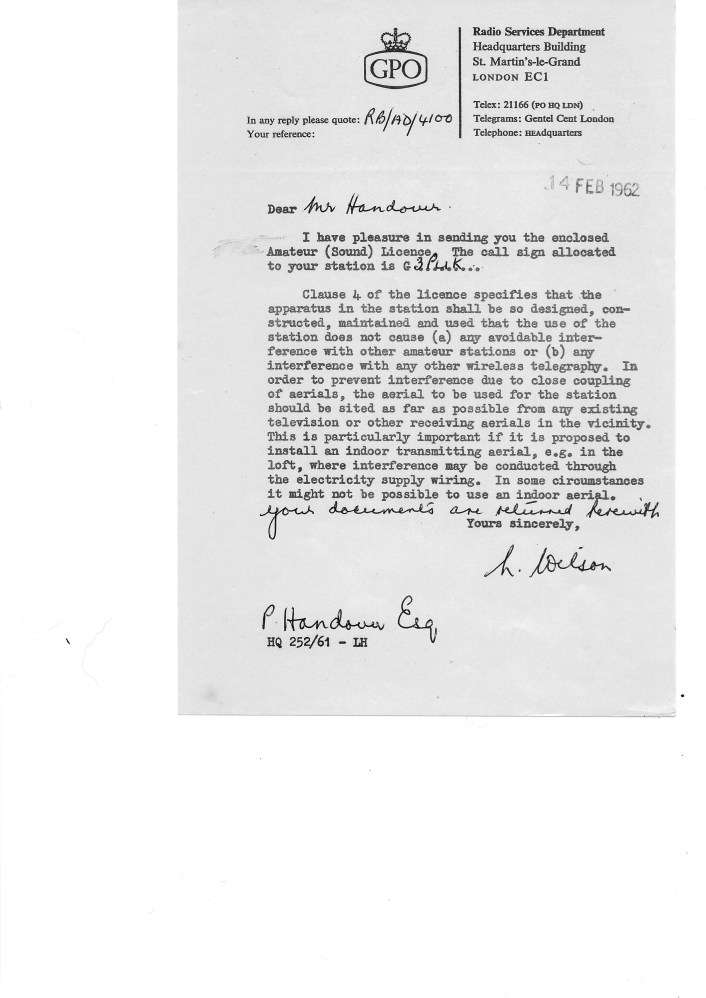
The story of me gaining my radio amateur licence.
As I spoke about yesterday in my introduction, when my mother remarried my sister and I had a new man about the house, so to speak. He was Richard Mills.
I was 13 or thereabouts and already struggling with my school work (the result of my father’s sudden death). And ‘Dad’ as we called him was finding his feet in the strange world of going from having no children to instantly having two step children!
Anyway, Dad found a theme with me that I enjoyed: building a shortwave radio receiver. It was full of learning for me and over the years I became hooked on listening to radio stations both near and far transmitting in morse code. I also joined the Harrow Radio Society and went across to their weekly meetings by tube and bus. (Despite the Society no longer being at the Harrow address it is amazing that they are still going strong.)
It was also a time when there was a great deal of ‘radio surplus’ equipment going for next to nothing and I ‘upgraded’ to an R-1152 receiver.

In time I became sufficiently old to take driving lessons and pass my driving licence. I then got a secondhand car. It helped because then I could drive up to Bushey and spend Sunday mornings at the house of Ron Ray. Ron was a keen amateur. On Sunday mornings Ron had a small group of people who wanted to pass the morse code test and apply for a licence.
I was already a member of the RSGB, the Radio Society of Great Britain, and that surely encouraged me further to study for my amateur licence.
In time, I sat the exam and much to my amazement passed!
oooo
oooo
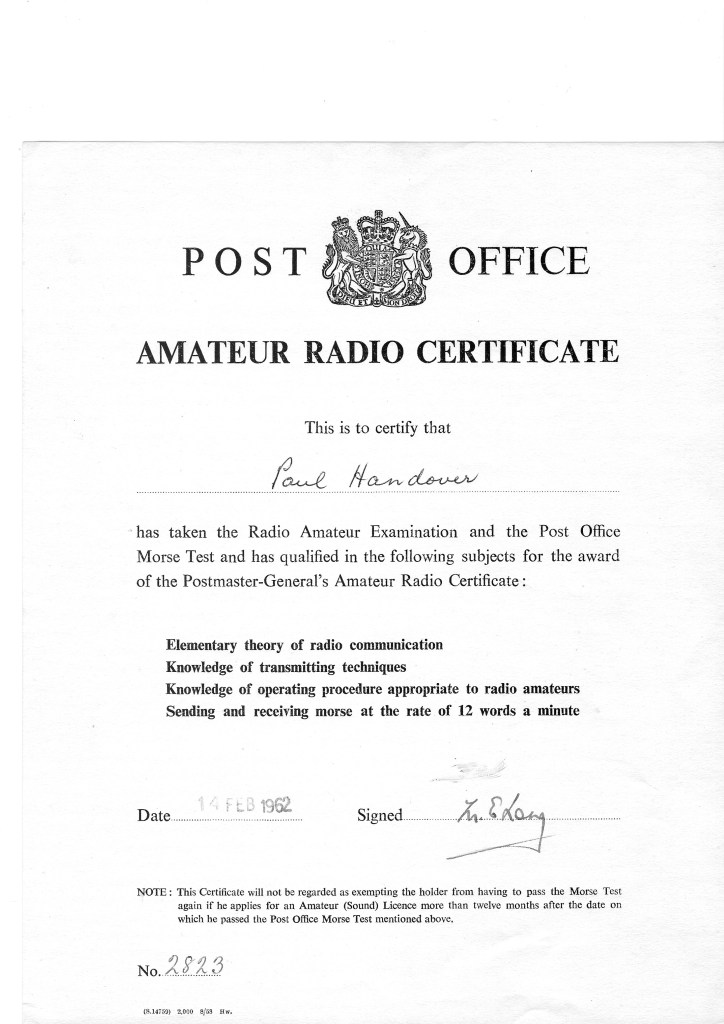
So that is the story of me and amateur radio.
Well, almost the full story.
In 1963 I volunteered for the Royal Naval Reserve, London Division. In time I was accepted and chose the join the radio branch, my G3PUK status coming in useful, because I reckoned that when we went to sea, on flat-bottomed minesweepers, it was better to be sick into a bucket between the knees than be sick on deck!
So there you are – G3PUK!
Yes, more of the wonderful pictures from Dan Gomez.

oooo

oooo

oooo

oooo

oooo

We have one more set left for next Sunday. I shall miss them after that.
I thought it would be useful to publish this.
Here is the text of an email that was received yesterday morning.
ooOOoo
Dear Fellow Dog Lover,
Because you signed up on our website, I’m sending you this recall update report. If you no longer wish to receive these emails, please click the “unsubscribe” link at the bottom of this message.
Over the past 60 days, the FDA has announced 2 dog food recalls:
For details, please visit our Dog Food Recall Alerts Center.
Feeding Tip
Got a dog that’s 7 years… or older? Here are 5 of The Advisor’s Top 15 Best Senior Dog Foods for 2019:
Click here to see all 15 of The Dog Food Advisor’s top senior picks for May 2019.
Please feel free to share this recall update report with other dog lovers.
Mike Sagman, Editor
The Dog Food Advisor
P.S. Not already on our dog food recall notification list? Sign up to get critical dog food recall alerts by email. There’s no cost for this service. No spam. Cancel anytime.
ooOOoo
You are welcome to receive notifications via this web site but for a more reliable, long-term service then sign up to the email service.
Best wishes!
A reflection on our dogs.
I was sorting out some stuff the other day and came across the following. It is the record of a talk I gave some time ago in connection with the publication of my book Learning from Dogs.
As much as I would have expected to have previously published this on the blog I cannot find an entry. So here you are!
ooOOoo
The concept of attributing dogs with human traits is nothing new. In fact the ancient Greeks came up with a fancy word for it around two thousand years ago: anthropomorphism.
As ever, the truth of the matter is not a case of black and white but subtle shades of grey. No doubt in another two thousand years as science advances and we discover more about DNA and the mysteries of the human and canine brains the picture will develop into sharper focus. In the meantime, we must satisfy ourselves with some basic observations.
Let’s start off on common ground. One thing that we all seem to agree on is that humans are at the top of the pile in terms of evolutionary sophistication. For obvious reasons we view ourselves as the being the highest life form (although there is increasing alarm that we have totally lost touch with our basic instincts, if not totally lost the plot, by endangering the very planet that sustains life as we know it).
But I digress – back to common ground. We agree that as children our mental capacity is not fully developed. We survive by our instincts and the basic needs to be fed, watered, sheltered and bonded in a family group where we defer to a natural hierarchy. When you think about it this is precisely how dogs survive.
Like children, dogs display the most basic instincts to rough and tumble, compete for toys and establish a natural pecking order. Inherent in this is the need for a parent or pack leader to set down boundaries and create order and stability out of chaos. Without this both child and dog feel insecure and may well grow to display anti-social behaviour.
You would responsibly bring a child up with love and discipline, have consistent boundaries, teach them what is safe and what is dangerous, what is sociable and what is unsociable.
Dogs too need love and discipline, consistent boundaries, and to learn what is safe and what is dangerous, what is sociable and what is unsociable.
Communicating with a child is not so very different from communicating with a dog. Young children, like dogs, do not have the power of speech so you have to work out alternative strategies to speech in order to get through to them. You will find that if you approach a dog in much the same way as you approach a child, life will be a whole lot easier for you. And the dog! Hopefully you will have realised that praise is a far stronger motivator that punishment.
A positive approach.
Take the example of the puppy that makes a puddle on the floor and the child that wets its bed. Each one of them have not learnt control of their bladder and are simply responding to the call of nature. Neither are being naughty nor are in the wrong.
Yelling at the child will only make it more stressed and, therefore, more likely to continue wetting the bed. In exactly the same way if a puppy has an accident on the carpet being harsh will make matters worse.
How many human ‘sports’ involve chasing a moving object? How many of these games also involve people working as a team to ‘catch’ these objects? Football, rugby, basketball, tennis, badminton, etc. I could go on but you get the idea.
Why do we enjoy these games? Is it not because we too are instinctively striving for a pecking order within the pack and following our predatory instincts.
“No, no no!’ I hear you say. ‘We are a civilised, sophisticated race who have created these games for our enjoyment. They are so different to the throw and fetch games our canine friends mindlessly enjoy.’
Don’t kid yourself. Look also how football supporters revert to uninhibited childlike behaviour. At worst becoming hooligans and behaving, almost literally, like savage animals when they find themselves challenged or threatened by an opposing pack.
Or on a much more positive note how hundreds of fans, unrehearsed, suddenly find one voice and break into a prefect, heart-stopping rendition of “You’ll Never Walk Alone”. Now that’s a perfect example of the ‘pack call’.
We all enjoy the close relationship we have with our dogs. Maybe sometimes we don’t realise quite how close we are.
ooOOoo
I can’t imagine life without our dogs.
They mean everything to Jeannie and me.

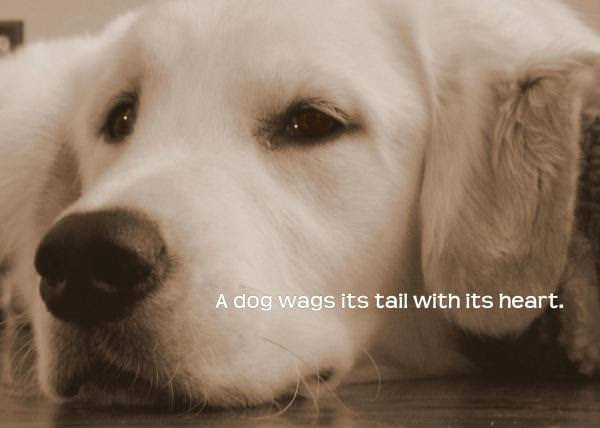
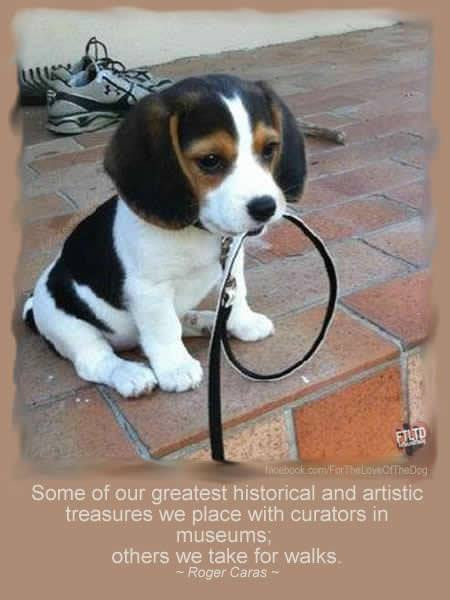
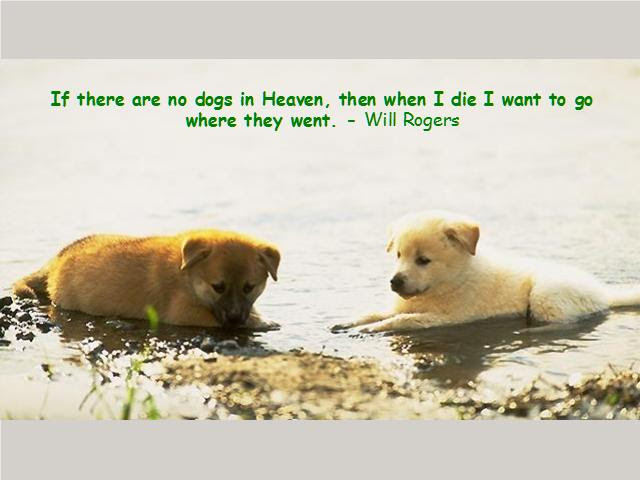
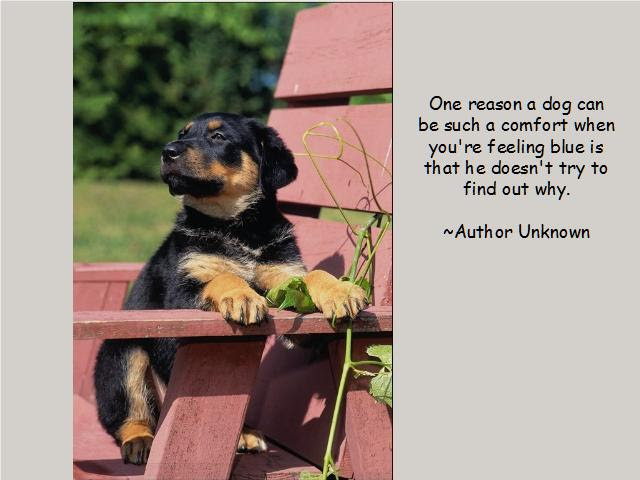
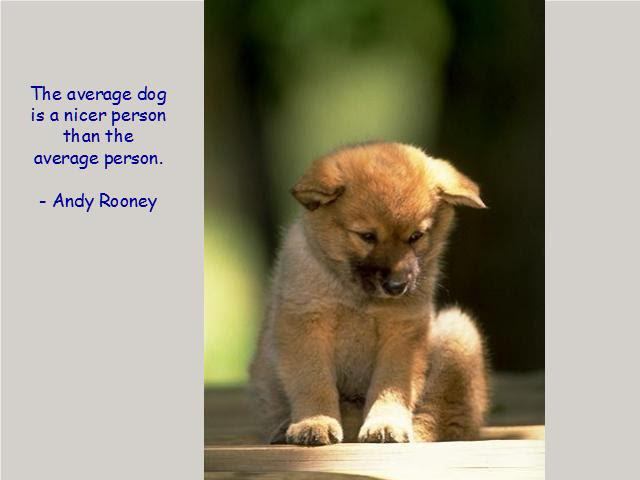
More from Dan’s email.
oooo
oooo
oooo
oooo
oooo
oooo

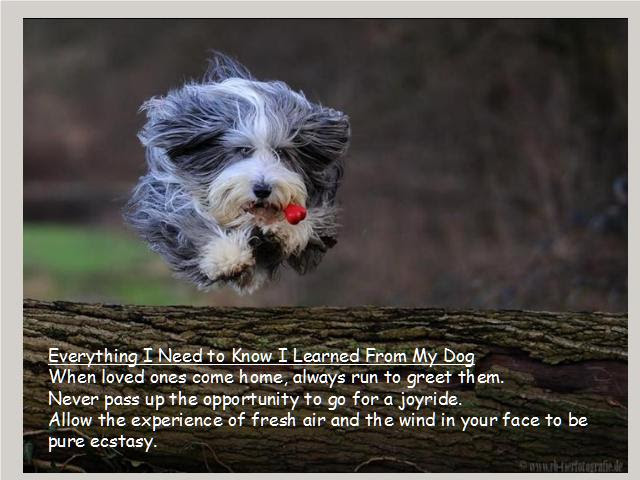
Perfect. A combination of wise sayings and lovely photographs. Plus, more in a week’s time!
A post from Patrice Ayme.
I have subscribed to Patrice Ayme for some time now. I don’t know who he is because he writes under a pseudonym, or a nom-de-plume. (And, indeed, I may have the gender incorrect but I’m pretty sure it’s a male.)
Patrice writes frequently and doesn’t mince his words.
But then he writes about really serious matters and often has criticism for the ‘ruling classes’.
Such as he has in the post that was published on the 6th May. I left a comment:
It’s extremely worrying and not something that can be put off. The clock is at 5 minutes to midnight. In Britain Extreme Resistance are pursuing a campaign that may just produce a political outcome. And, indeed, the English Government have come up with goals to combat climate change.
So keep banging your drum, Patrice, and hope that urgent action across the world isn’t too far away.
To which Patrice replied:
Dear Paul:
thanks! Here I am fighting with my daughter’s school, which has decided to install artificial, plastic grass. It’s horrendous for the environment, and it endangers the lives of children (in many ways, including a disease called “SUBEROSIS” caused by organic cork.) Here real ecologist take it hard, and have started to burn artificial plastic flame retardant fields: 13,000 were recently installed in the USA, a proof of mass corruption…
Feel free to use my essay on your site, BTW, of course…
And thanks again…
P
Now I hadn’t heard of Suberosis before, but no problem, a quick web search brought up Wikipedia and this:
Suberosis is a type of hypersensitivity pneumonitis usually caused by the fungus Penicillium glabrum (formerly called Penicillum frequentans) from exposure to moldy cork dust.[1][2] Chrysonilia sitophilia, Aspergillus fumigatus, uncontaminated cork dust, and Mucor macedo may also have significant roles in the pathogenesis of the disease.[1]
Cause
Cork is often harvested from the cork oak (Quercus suber) and stored in slabs in a hot and humid environment until covered in mold.[1] Cork workers may be exposed to organic dusts in this process, leading to this disease.[1]
I don’t fully understand how the laying of artificial grass leads to possible Suberosis.
But I have decided to republish even though it has nothing to do with dogs! (Well, not directly.)
ooOOoo
Both phenomena are related. The more nature collapses, the more plutocracy thrives (see the multi-centennial fall of Rome, for reference). Small people and other losers have no interest to see nature collapse. However, plutocracy does. Because Pluto-Kratia, Evil-Power, is best expressed and justified during war-like states, and civilizational collapse sure qualifies.
Plutocracy survived the collapse of the Roman and Carolingian empires with flying colors. In the Roman case, most noble families had a bishop in their midst. The collapse of the Renovated Empire of the Romans (Renovatio Imperii Romanorum) and its renewal by the Ottos and Capets brought the feudal order, another plutocratic success.
Now is no different: we have a terminal CO2 crisis bringing in extreme, sudden temperature, acidification and ocean rises: 1% of US CO2 is from state subsidized private jets. Nobody notices, because media have made sure to create entire generations just preoccupied by celebrities, not by what is going on, which is really most significant.
Nor has the media been keen to notice the likes of Biden annihilated the Banking Act of 1933, in the 1990s, bringing in the age of the financial plutocracy… itself a heavy financier of fossil fuels. So all what some schools are thinking of is installing “Apps”, and plastic grass, instead of teaching sustainable global citizenship. We are cruising towards an apocalypse, at an increasing pace: the Sixth Mass Extinction. The United Nations just came up (May 6, 2019) with an analysis made by 132 countries and 455 scientists: one million species are disappearing. For example, nearly all amphibians.
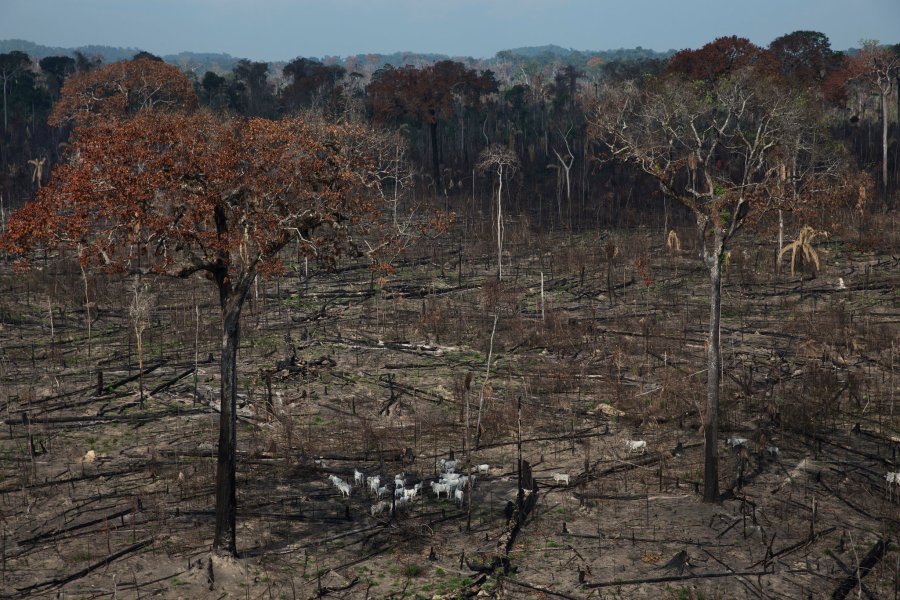
One problem with burning forests in the tropics is that what is left are often extremely poor soils (differently from northern European soils, which are very forgiving, explaining in great part why north west Europe replaced the Greco-Roman world…) Cattle grazing on a tract of illegally cleared Amazon forest in Pará State, Brazil. In most major land habitats, the average abundance of native plant and animal life has fallen by 20 percent or more, mainly over the past century,,, [Credit Lalo de Almeida for The New York Times]
In Africa, burned forest is often replaced by lateritis, a soil which is red, baked, hard… for the good reason that it is full of Aluminum.
It is the Sixth Mass Extinction, but this time the dinosaurs have thermonuclear weapons.
What to do? Get involved, get aware, protest. Protests can become unbearable to the powers that be.
This is the way the fascist government of Brunei on the island of Borneo was just dealt with. It drew powerful international condemnation when it rolled out its interpretation of sharia laws on April 3. Now, the Sultan of Brunei, Hassanal Bolkiah, reverted his decision: after all, the country won’t enforce Islamic laws that include stoning to death for rape, adultery and gay sex.
Killing all the people who got killed in World War Two was atrocious. However, what is now unfolding has the potential to be way way worse. Einstein said he didn’t know which weapons will be used to fight World War Three, but next it would be sticks and stones. That was naively optimistic. If we acidify further the ocean with acid from CO2, we may kill the Earth’s oxygen making mechanism. Not really news, as this was clear five years ago already:
https://patriceayme.wordpress.com/2014/05/30/global-hypoxia/
Many behave as if there will be no tomorrow, because they feel that way! It’s a self-fulfilling prophecy, it has to be resisted.
What’s needed, beyond recording what’s going on, is interpreting it, going beyond, building ideas, and moods meant to last. Only deeper thinking can do this, and ensure a planet capable of lasting. Because we are not at the regional level anymore. When climate change, plus nefarious human impact, forced the Harappan civilization to abandon its homeland, the Indus valley, it was dealing with forces it had no idea existed. Maybe there are such forces out there. But there are also plenty of forces we can see, and which are plenty lethal enough, at civilizational scale, and the scale of the entire biosphere. Stop. And think. One million species are marching towards extinction, among the plants and animals we know.
Patrice Ayme
***
***
From NYT:
WASHINGTON — Humans are transforming Earth’s natural landscapes so dramatically that as many as one million plant and animal species are now at risk of extinction, posing a dire threat to ecosystems that people all over the world depend on for their survival, a sweeping new United Nations assessment has concluded.
The 1,500-page report, compiled by hundreds of international experts and based on thousands of scientific studies, is the most exhaustive look yet at the decline in biodiversity across the globe and the dangers that creates for human civilization. A summary of its findings, which was approved by representatives from the United States and 131 other countries, was released Monday [May 6, 2019] in Paris. The full report is set to be published this year.
Its conclusions are stark. In most major land habitats, from the savannas of Africa to the rain forests of South America, the average abundance of native plant and animal life has fallen by 20 percent or more, mainly over the past century. With the human population passing 7 billion, activities like farming, logging, poaching, fishing and mining are altering the natural world at a rate “unprecedented in human history.”
At the same time, a new threat has emerged: Global warming has become a major driver of wildlife decline, the assessment found, by shifting or shrinking the local climates that many mammals, birds, insects, fish and plants evolved to survive in. When combined with the other ways humans are damaging the environment, climate change is now pushing a growing number of species, such as the Bengal tiger, closer to extinction.
As a result, biodiversity loss is projected to accelerate through 2050, particularly in the tropics, unless countries drastically step up their conservation efforts.
ooOOoo
I’m in the autumn of my life and may not live to see the consequences of what we are doing to Nature and to the Planet.
Then again, if some of the predictions bear true, I won’t have to live an awful lot longer to experience real change.
It’s time for a complete re-analysis of our relationship with the natural world.
And, yes, it does concern dogs!
I wasn’t going to post anything today but then came across this YouTube video.
So watch and enjoy.
A bit too cold for my liking!
Another example of that man-dog relationship.
So many people put their dog before anything else.
Take Randy Etter and his dog Gemini.
Or rather take The Dodo‘s description of Randy and Gemini.
ooOOoo
“I would be devastated if I lost my best friend.”
PUBLISHED ON 04/24/2019
Randy Etter and his dog Gemini have been together since Gemini was just a little puppy. It’s been around two years now, and the pair are the absolute best of friends. They love each other so much and brighten each other’s lives every single day — so when Etter found out he might lose Gemini, he vowed to do absolutely everything he could to save his life.

Gemini was playing with Etter’s girlfriend’s daughter one day four weeks ago, and the baby thought it was hilarious to continuously throw her bottle out of her playpen at Gemini. Gemini would pick it up every time and his dad would quickly grab it from him, wash it off, and give it back to the baby — but at some point, Gemini got ahold of the bottle without his dad realizing and ended up eating the top off of it.
No one had any idea that Gemini had swallowed something he wasn’t supposed to — until he started getting very, very sick.
“He just started to slow down and I didn’t think that was normal, just laying beside me and following me everywhere,” Etter told The Dodo. “I just felt like he was saying, ‘Help me.’”

When Gemini started vomiting uncontrollably, his dad knew something was very, very wrong, and immediately rushed him to the vet. Unfortunately, at first, no one could tell him for sure what was wrong with Gemini.
“I lost my job driving vet to vet to vet and it just seemed like I wasn’t gonna get anywhere or get him the help he needed in time,” Etter said. “It was truly one of the scariest things I had to deal with.”
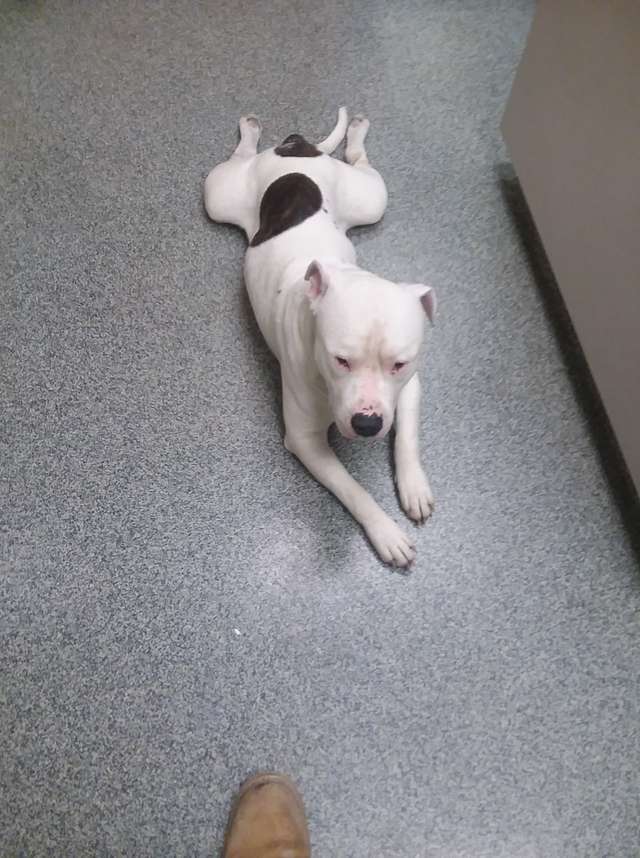
Finally, a vet was able to confirm that Gemini had a blockage inside of him and would need surgery — which would cost $4,500, money that Etter definitely did not have. Losing Gemini was not an option, though, and so he decided to put his car up for sale to try and raise at least part of the money to save his best friend’s life.
“I was gonna spend every dollar made from the car sale on his surgery,” Etter said. “I would be devastated if I lost my best friend.”

Eventually, a friend was able to loan him $2,000, but it still wasn’t enough — until a local charity heard about his plight and decided to do everything they could to help Etter and Gemini.
The S.O.A.R Initiative (Street Outreach Animal Response) heard about what was happening to Etter and Gemini, and were able to raise nearly $3,000 in donations from total strangers who just wanted to help the best friend pair continue their life together. With all of the donated money, Gemini was able to have the surgery — and made it through with flying colors.
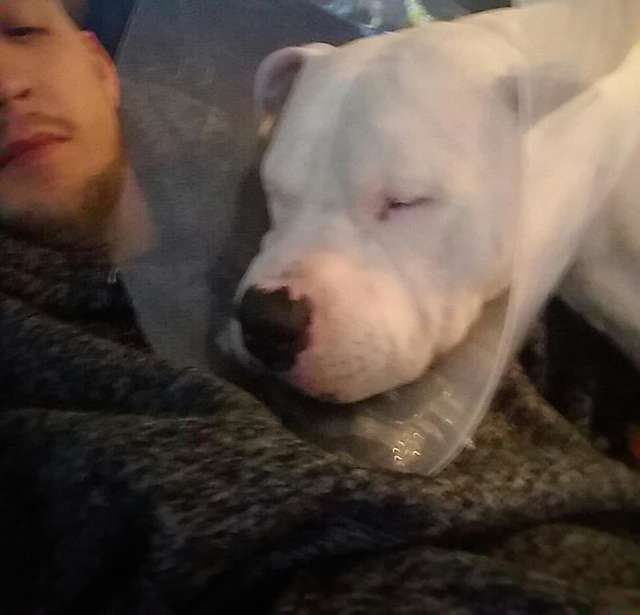
Gemini is now recovering well, safe in the arms of his dad and best friend. Etter is so grateful to everyone who helped him keep Gemini alive, and can’t imagine what he would have done without everyone’s support.

“It means the world to me,” Etter said. “He’s my best friend. He’s always there for me, I just wanted to be able to return the favor and be there for him.”
ooOOoo
Randy puts it perfectly; “He’s my best friend. He’s always there for me, I just wanted to be able to return the favor and be there for him.”
Thousands upon thousands of people feel exactly the same way.
Thank goodness for dogs!
This was on the BBC News the other day!
This remarkable story of a dog that was rescued some 200+ kilometres off the coast of Thailand was featured on the BBC news website.
It’s quite amazing and truly miraculous.
ooOOoo
A dog discovered some 220km (135 miles) off the coast of Thailand has been rescued by a team of oil rig workers after the exhausted pooch was spotted paddling near a drilling platform.
The brown aspin swam towards the workers when they called out to him last Friday afternoon. He was then pulled to safety.
It is not clear how the dog became stranded so far out at sea. Some reports suggest he may have fallen from a fishing trawler.
The rig workers named the dog Boonrod, a Thai word that roughly translates as “the saved one” or “survivor”.

Boonrod was said to have been exhausted and in need of fresh drinking water and food.


He was nursed back to health on the rig while staff radioed for help, requesting the assistance of a tanker that was heading back to shore.
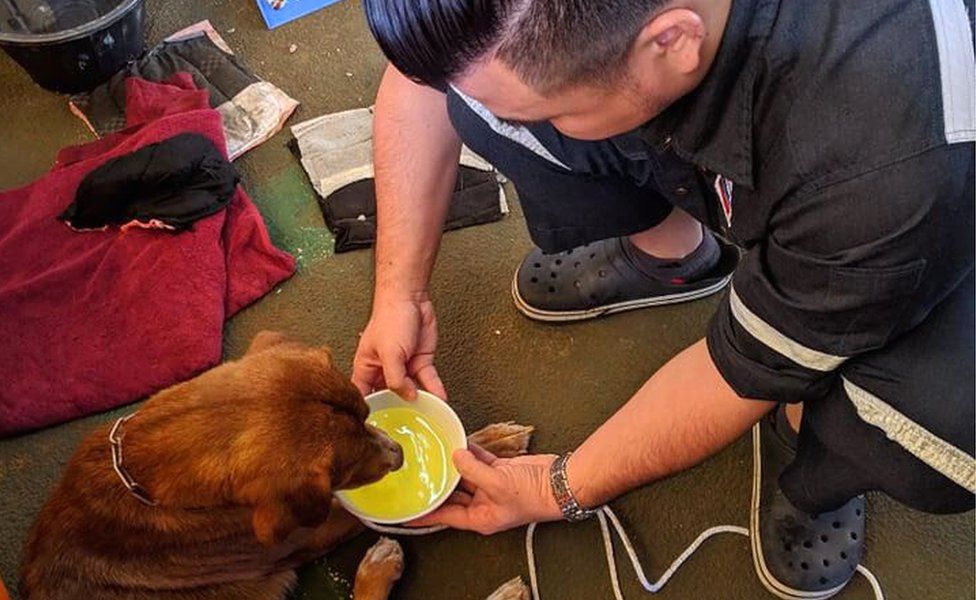

Boonrod had to have a proper wash to cleanse his fur of salt from the seawater. Afterwards, he had a nap.
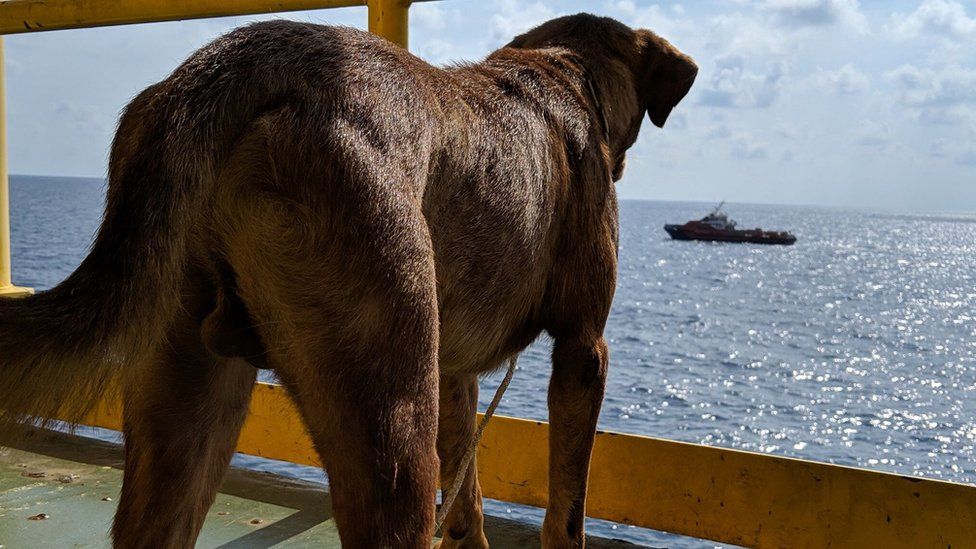
The conditions were said to have been calm during the rescue, which workers said made it easier to spot Boonrod among the rusty metal bars of the rig.
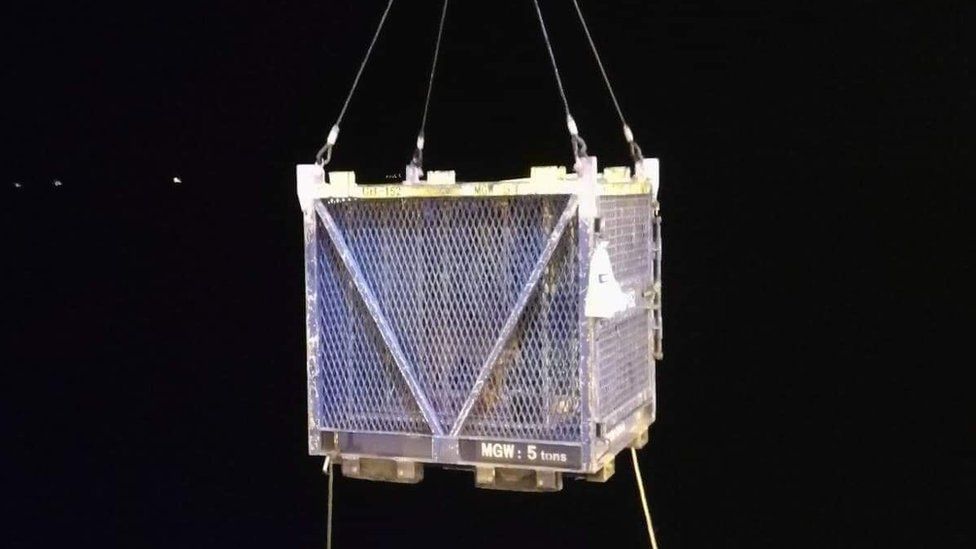
Boonrod was lifted by crane on to an oil vessel that was passing through the area on Sunday to be transported to a veterinary practice in southern Thailand.
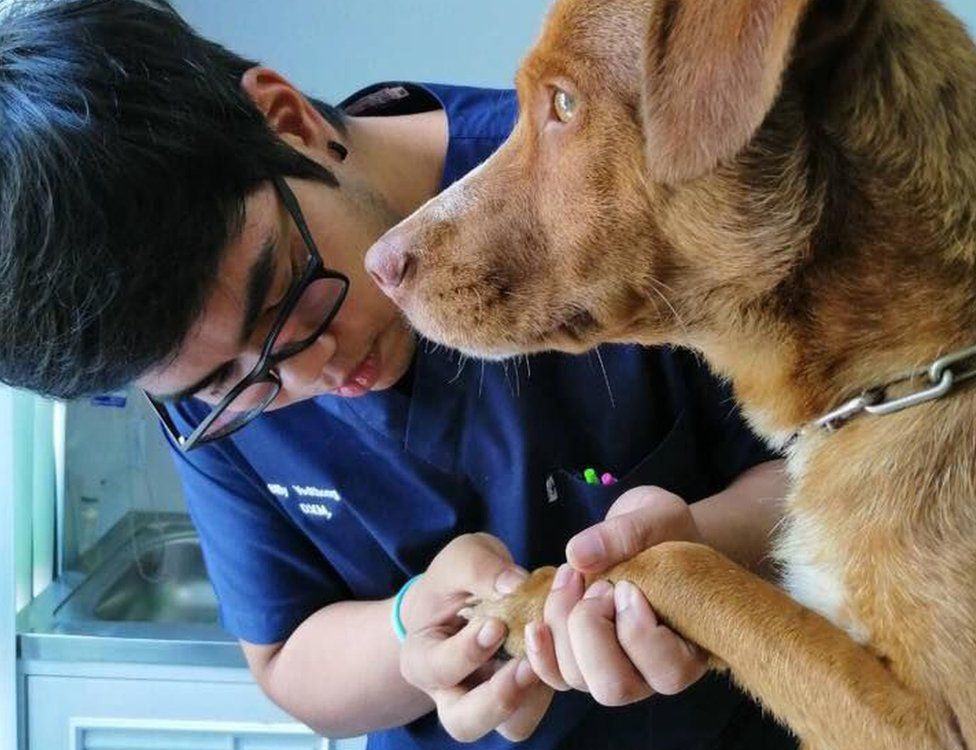
The dog was said to have been in good spirits when he arrived on land to be taken to the vet.

(All images are copyright Viralpress.)
ooOOoo
The fact that this dog was rescued so far out to sea is incredible. Clearly, the poor dog had fallen off another vessel but the details of that incident are not known and it is purely conjecture.
But what is really important was that the dog was rescued and returned to health.
 Learning from Dogs