“A dog is the only thing on earth that will love you more than you will love yourself.” – Josh Billings
oooo
“You can live without a dog, but it is not worthwhile.”
oooo
“If a dog does not come to you after looking you in the face, it is better that you go home and examine your conscience“ – Woodrow Wilson
oooo
“Buying a dog may be the only opportunity that a human being has to choose a relative”. – Mordecai Siega
oooo
“You can say any foolish thing to a dog and the dog will look at you in a way that seems to say: ‘My God, he is right!!! That would have never occurred to me’ “. – Dave Barry
oooo
“Sitting back in the evening, stargazing and stroking your dog, is an infallible remedy.“ – Ralph Waldo Emerson
oooo
“To exercise, walk with someone who will accompany you willingly, preferably a dog.“ – David Brown
oooo
It breaks my heart to advise you that the Picture Parade in a week’s time will be the last of the most glorious and touching photographs that came from Marg down in Tasmania.
ooOOoo
Not only are the photographs to die for but the sayings are exquisite as well!
A short while ago I was emailed by Holli Burch who asked me if I was ready for another guest post. Was I! I love to receive guest posts. From regular contributors, such as Holli, and people who are new to Learning from Dogs.
There was a quick exchange of emails and then yesterday in came Holli’s latest. It’s brilliant!
ooOOoo
How Dogs are Good For Kids
By Holli Burch. 22nd August, 2019 Many kids dream of having a dog.
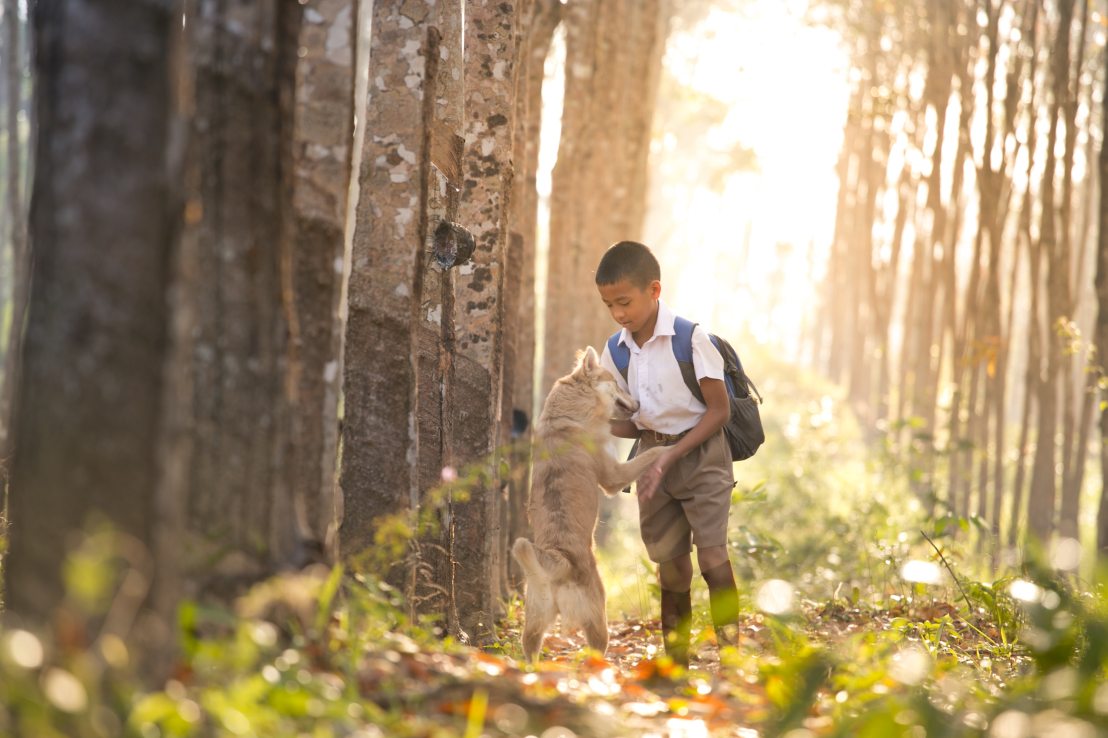
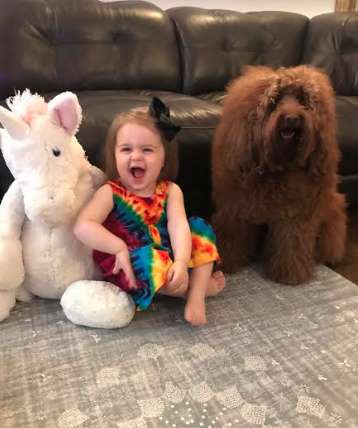
While we know that dogs teach kids loyalty and unconditional love, there are also many other reasons that dogs are good for kids! I feel so grateful to be able to have both human and canine kids at home. I have always had dogs around me as a child also. My dad had hunting dogs and my mom liked the smaller poodle terrier dog breeds.
According to an article in the Washington Post, a recent study found that children who had strong bonds with their dog also had more secure stronger bonds with their parents and with their (human) best friends. I find this so extremely important, especially in adolescent age when kids struggle the most!
They had another study regarding how dogs effect children’s emotions during stressful times. They found that when the children had their dog with them, they were much more calm. Suggesting that the contact they have with their dog enhances positive affect.
More reasons dogs are good for our kids…
Dogs can help kids with behavioral problems – A dog can calm a hyperactive child and have been shown to be especially beneficial to those with special needs. Having a therapy dog can help ease parent worries a little by knowing the dog will protect them and can be trained to react to certain behaviors, including wandering.
Dogs can help ease anxiety- Petting your dog or cuddling with them releases the “feel good” hormones in their body called oxytocin. This soothes the anxiety mind and helps to calm them down
Dogs teach kids responsibility- Dogs need to be fed, walked and given love daily. When a child gets a dog they learn to take care of something other than themselves. This also creates empathy and self confidence.
Dogs keep kids in better health- Dogs can help overweight children and help get kids active. Parents need to make sure both are getting daily exercise. A study from Psychology today found that children who walked their dogs were 50% less likely to become obese. Not only that but according to LiveScience, kids that grow up around dog dust have less chance of developing allergies and asthma! It helps them develop a strong immune system.
Protection- A dog will always protect those it feels are family. This can mean protecting your child from bullies or helping them to feel safe while home alone. Kids often feel more safe during scary events if they have their dog by their side.
Dogs are best friends- They are always willing to play with your child and lift their spirit. Dogs can help with loneliness and depression because they won’t go away, they give unconditional love no matter what, so kids feel wanted and loved. They don’t fight with them, hit or yell. Kids can share anything with them with no judgement. Dogs often can help kids recover from trauma because they can confide in them.
We rescued Tuffy (above) from a shelter, as a puppy, after my daughter lost her horse in a traumatic accident. It’s been a couple years now and Tuffy has also helped her through more. We are blessed to have her and she follows my daughter everywhere. I know she will always keep her safe. Their bond is so strong and if she is ever feeling down, Tuffy knows and is right there to lift her spirit.
Each of my children have one of our dogs that they call theirs, except my 5 year old. Although, he did just ask me the other day if he can get his own dog. He is good at helping me walk them everyday and loves to cuddle with them. When we recently lost Jesse in April, it was also a hard lesson for the kids on loss. We miss her everyday. That’s her below. One last thing I want to mention is how important it is to teach your child to respect their dog. First few things to teach is to respect their boundaries, how dogs communicate and how to interact when the dog is new to the family.
I would love to hear your comments and stories about how your dogs have helped your kids!
Dog Bless!~ The Dog Connection
oooo
A little bit about Holli.
As a mother of 4 canines and 4 humans, I am here to help the connection between dogs and humans; mind, body & soul. My purpose is providing inspiration and information to dog lovers on health, training and bonding.
Time and time again we see a bonding between a human and a dog. It’s precious and the need to involve children from a young age is crucial. Young people growing up today will be facing a whole raft of issues, many of them extremely serious. All the more reason to have a young person bond with a dog, because that’s so important for that young person.
I just happened to click on the ‘signature’ of a follower that took me to a blog where I was truly enthralled. It was called Who Will Let the Dogs Out? and I was fascinated by what was being written.
Now I already follow this blog but had been very reluctant to go across to their place and read the posts. Shame on me! I have no idea why!
How about this post, that I am taking the liberty of republishing.
Ian and I are still processing what we saw and what we learned in Tennessee, each in our own way.
He is taking a break and feels he can’t look at the pictures for a bit. His pictures capture the emotion of the dogs caught in our human failure, and that is hard to look at. I know eventually he will be ready to edit them and to hopefully share more here on the blog. He took thousands of pictures. My big son has a very big heart, and it truly broke in Tennessee.
For me, seeing the conditions in western Tennessee made me furious. This should not be happening. We should not be leaving the responsibility for lost and surrendered animals to a handful of citizens who are quite literally standing in the gap left by a government that neglects its duties and an unaware public.
I cannot look away. So, I am doing what I do– writing and talking and making a nuisance of myself. I’m working on articles, blog posts (like this one), and even a book. I am in the midst of signing a publishing contract for 100 Dogs and Counting, a follow up to Another Good Dog: One Family and Fifty Foster Dogs that will recount more of our fostering adventures, and then take the reader south to discover where these dogs come from and what they can do about it.
I am also planning another trip in September– this time back to Tennessee, and then on to Alabama. Ian will be in school, but I will bring along another talented photographer and excellent co-pilot, Nancy Slattery.
One of the people I am excited to see on this next trip is a rescue hero of mine — Aubrie Kavanaugh. I’m excited to introduce you to her today in the following interview. Aubrie is not only an expert in the fight for a No-Kill nation, but a talented writer, a wickedly smart and funny person, and a dog-hearted woman relentlessly and methodically committed to changing the situation.
Enjoy!
The biggest first – the question everyone asks me – Why are there so many unwanted dogs in the south?
I honestly try to avoid the word “unwanted” because it implies that no one wants the animals when that is not necessarily true. Having said that, we have so many in need of homes for a host of reasons, some of which I’ll explain.
In many locations, there is a complete disconnect between animal control agencies/animal shelters which have animals needing new homes and the general public who could provide those homes. The shelters presume no one wants the animals and the public presumes the animals all find homes. The chasm between the agencies and the public is wide and leads to animals who otherwise may be saved being destroyed.
We have issues with most municipalities who manage animal shelters continuing to use the outdated “catch and kill” method of sheltering because they have not learned about or embraced No Kill programs and philosophies which could both reduce shelter intake and increase shelter output. Rather than educate themselves on how to keep animals alive which still ensure public safety, they hold firm to the status quo with the mindset of, “its’ not broken, so don’t fix it.” But the shelter system is broken and it does need to be fixed.
Many people are quick to ascribe what has been called “The Bubba Factor” to the south which essentially means that people here are too woefully stupid or callous to care about what happens to animals in need. We do have cultural differences regarding the value of animals in our lives (“it’s just a dog”) or where animals live (inside v. outside) and there are some people who could care less about animal welfare. Most people, however, do care at most about the welfare of animals and at least about how their tax dollars are spent. People can be informed not only about how their tax dollars can be best used, but also about how they can make better personal choices which affect how shelters operate (like the value of spay/neuter, how to keep pets contained, how to rehome pets in the event of their death or some life crisis, etc.). Many see themselves as stewards of the species we have domesticated and for them this is an issue of ethics, but they need to be informed of the need to address the need.
In many parts of the south, there is also very limited access to spay/neuter at all, let alone at a reasonable cost. This means that in some places, pet populations are not contained and just continue to grow over time. The more animals there are in any particular community, the more animals are apt to end up in animal control systems.
Define what ‘no-kill’ means to you.
No kill means we don’t kill healthy and treatable shelter animals using our tax dollars or donations.
Some try to portray the phrase as controversial or complicated when it really is not. When we use the intended meanings of words like “euthanasia” and “kill,” the phrase makes more sense.
If you have ever made The Terrible Decision to euthanize a beloved pet who is suffering, you know exactly what euthanasia means. It is an act of mercy to end or alleviate suffering. If a shelter ends the life of a healthy dog, that is not euthanasia no matter how many times we call it that. If someone outside an animal shelter setting were to end the lives of healthy animals, we would not say those animals were euthanized. We would say they were killed. We should not alter the meaning of words based on the location where the act takes place.
There will always be animals in shelters who are suffering and for whom euthanasia is the only responsible action as an act of mercy. There will also always be a very small number of dogs who are so broken as to be genuinely dangerous (as opposed to scared, traumatized or undersocialized) and who cannot be adopted out because they present a public safety risk and those dogs must, unfortunately, be euthanized. No Kill does not mean animals do not die. It means we keep the healthy and treatable animals alive because that’s what the public expects and because it is possible using a progressive business model.
We had our 16-year old German Sheppard mix euthanized on Earth Day of 2006. We knew for years that the day was coming, but it was heart-wrenching. I found I was not coping well in the wake of our loss. I began donating to the animal shelter in the city where I work in her honor and to help me cope with the loss by doing something positive.
I was on the shelter website a few months later when I came across a promotional video which began harmlessly but then transitioned to footage of an outwardly healthy dog being taken from his kennel to be killed. It shocked me. I had no real clue prior to that that the shelter was destroying healthy and treatable animals. When I later asked if the dog in the video had actually died, I was told five words that changed my life: “nobody wants Beagles these days.”
I got upset, then I got angry and then I began educating myself about why this was happening not just in my area, but all over the country. I wanted to do all I could to make it stop. I now consider myself an unapologetic No Kill advocate. For me, this is an issue about free speech and municipal accountability. I see my advocacy as a moral imperative. Shelters operate using tax dollars and it is up to us to hold those places accountable for how they spent our money and in our name (while sometimes blaming us for the process). As a country, we are better than this.
Is no-kill truly possible and if so, what will it take?
I absolutely believe that any community can become a No Kill Community and that as more places take this step, we move closer to a time when the killing of healthy and treatable animals will become part of our shameful past. Change can come in one of two ways. Municipalities can get ahead of this issue by adopting progressive programs. If they will not do so, the burden passes to citizens to educate themselves and then speak out to demand better of elected and appointed officials. If elected officials will not listen to the will of the people, they need to be replaced.
I support and promote the No Kill Equation which is a one-size-fits-all DIY solution for any community which was first published by Nathan Winograd in 2007. It is an all-in series of programs which work in concert with each other to reduce shelter intake and then move animals who are in the shelter through the system as quickly as possible. I group them into “keep them out” and “get them out” programs. Anyone can learn about the No Kill Equation by reading Nathan’s book, “Redemption: The Myth of Pet Overpopulation and the No Kill Revolution in America.” They can also read about the equation on numerous websites including those for the No Kill Advocacy Center, No Kill Movement, No Kill Learning, my Paws4Change website or our No Kill Huntsville website. I also go into a lot of detail about the Equation in my book and explain a bit about how each of the programs works.
What can someone who is not in the rural south do to help?
Every area can improve. If you live outside the south, find out how your local shelter is functioning using your tax dollars. Many shelters claim to have high release rates when, in fact, they are playing a numbers game or are using words in different ways than they are used by the public to condone or excuse killing. If you don’t like what you learn, speak out and ask for better. Only when more places across our country change will those changes ultimately become infectious everywhere, including in the south.
Even if your local area is doing a great job, you can connect with people you know in the south and encourage them to educate themselves and perhaps become politically active about their local shelter. It often falls to the public to speak out and demand better. Only those who live in the area can speak out for better use of their tax dollars in ways which are consistent with their values.
If you don’t know anyone in the south, you can help rescue and advocacy organizations in the south which are doing some of the heavy lifting to keep animals alive. If that is the help you choose to provide, please also encourage the rescue group or advocates with whom you engage to speak out to seek better. While I have the utmost respect for people “in the trenches,” who are keeping animals alive, they are doomed to provide that role indefinitely unless the system is forced to change through public demand. I have a section in my book called “For Rescuers,” which addresses this need to go beyond saving X dog and Y cat to becoming a catalyst for change so there are fewer animals in need of rescue or help. As simple as it sounds, nothing will change unless something changes to alter the process.
I love the title of your book because that’s what I’ve concluded, too – It’s not Rocket Science. Tell me a little about why you wrote the book and what you hope people take from it.
I formed an advocacy group called No Kill Huntsville in 2012 to speak with one voice to persuade the City of Huntsville, Alabama, to stop destroying healthy and treatable animals using tax dollars. The live release rate at the shelter at the time was about 34% and my individual efforts going back to 2008 to bring about change had failed. Fast forward a few years and things have changed remarkably. The live release rate at the shelter has been above 90% for more than four years and while there is still work to be done, the culture at our shelter has changed. It was an incredible struggle for a long time. It got ugly with some strong opposition from some unlikely sources. But we’re proud of what we did working together as a coalition.
One day last fall after a city council meeting which set some new guidelines for the shelter, I was thinking back to all the times people have contacted us asking for help or asking what we recommend. People contact us from the south, from other regions and even from other countries. I decided to write the book to help others learn from our path. We didn’t get everything we wanted and our work is not over, but the worst is behind us and I think people may learn something from our methods and from our mistakes. I think the content in the book about the opposition we faced is almost as important as the No Kill Equation we promoted and still promote. If advocates are not prepared to counter opposition, their arguments in support of animal shelter reform may fall short.
Anything else you’d like to add?
The phrase No Kill is on the public radar and is not going away. We do better to educate people on what it means and to help people learn how to promote change than to try to sugarcoat what is happening in our shelters using our money. We should be respectful in our advocacy, but there truly is no polite way to say, “please stop killing healthy and treatable animals using our money.” No Kill advocates are not the enemy of shelters any more than the public is the enemy. I always encourage people to focus not on the messenger, but the fact that the message is necessary in the first place.
There are some who use the phrase No Kill and do so in ways which are inconsistent with our social movement. Some of these people engage in criminal acts for which they should be prosecuted. We should absolutely call out those bad actors when we find them. Those people who co-opt the phrase No Kill for illegal or unethical purposes are no more representative of our social movement than unethical breeders of animals represent all breeders. If an organization calls itself No Kill and destroys a lot of animals, keeps them for years, or does not provide for their care, they are using the words without the actions to support them. My book covers this topic and I touch on it in the No Kill Movement blog.
I believe a time will come when all shelters in America will be No Kill shelters. How long that takes is up to all of us. We must educate ourselves on what his happening in our own communities so we can decide if our money is being spent in ways of which we approve. When it is not, it is up to us to ask for better and, when necessary, be advocates for change. The lives of animals depend on it.
Aubrie Kavanaugh is an Army veteran who has worked for decades as a litigation paralegal doing defense work; her clients are mostly municipalities and law enforcement officials.
Aubrie became an animal welfare advocate in 2006 after learning about the deaths of animals at her local animal shelter. She manages the Paws4Change educational website, blogs on animal welfare issues, creates video productions and public service announcements for animal shelters and nonprofit organizations across the country, and is involved in advancing animal welfare legislation on the local and state level. She also leads an advocacy group called No Kill Huntsville. She lives in northern Alabama with her husband, their dog, and the enduring inspiration of their dogs to whom they have said farewell for now.
America is an animal friendly society. Approximately sixty-eight percent of U.S. households own a pet – about 85 million families. Most of us consider our companion animals family members. We recognize that they enrich our lives in countless ways, improve our physical and mental health, and make us better people. We value the fact that they don’t care what we look like, where we live, what we do for a living or how much money we make; their love for us is unconditional. And we agonize over our decisions when the time comes to say farewell to them due to advanced age or disease.
But there is a dark side to our relationship with companion animals which is our collective shame. We destroy millions of healthy and treatable animals in our tax-funded animal shelters every year. Many people simply do not know about what happens at their local animal shelter using their money and in their name. Some who know about this tragedy believe there is no other way to function. There is.
“Not Rocket Science” is a story of no kill animal shelter advocacy in Huntsville, Alabama, which explains how a group of animal welfare advocates joined forces to speak with one voice to save the lives of healthy and treatable animals in the municipal animal shelter. This advocacy helped change the shelter from one which destroyed more than half of the animals entrusted to its care to a shelter which saves the lives of all healthy and treatable animals instead.
Any community can be a no kill community. Sometimes it just takes the courage to try something new. And sometimes it just takes a group of people willing to band together and speak out with one voice to say “enough. We are better than this.”
The book is priced at $5.52. I have ordered a copy!
I am republishing what made up Picture Parade Two Hundred and One.
ooOOoo
Margaret (MargfromTassie) comes up with wonderful pictures for you.
These will make today’s Post and the next three Picture Parades. And there was me worrying about where I would find more Picture Parades!!
(Note that on the original Powerpoint images some of them had neat sayings as overlays. In the conversion from pps to jpg formats those were not carried across. I have them as introductions to each picture.)
MAN’s BEST FRIEND!
oooo
“A life without a dog is a mistake” – Karl Zuckmayer
oooo
“Women and cats will do what pleases them, dogs and men should relax and get used to the idea” – Robert A. Heinlein
oooo
“The love for animals, enhances the cultural level of the people.” – F. Salvochea
oooo
When you leave a dog behind because he “grew old”, your children will learn the lesson. Maybe they will do the same to you when you are an old man. Think about it….
oooo
“The dog has made man their God, if the dog was an atheist, it would be perfect” – Paul Valery
oooo
“Love is when your dog licks your face, even if you leave it alone the whole day” – Anita, 4 years old
oooo
“It doesn’t matter if an animal can reason. It matters only that it is capable of suffering and that is why I consider it my neighbor” – Albert Schweitzer
A deeply fascinating essay from an individual at the University of Oxford.
I have long read the daily output from The Conversation. It’s a very useful way of keeping one’s brain cells functioning in some sort of fashion.
Yesterday morning I read an essay put out by Thomas Moynihan, a PhD Candidate at the University of Oxford.
It was fascinating and I am republishing it here.
Now it’s not for everyone. It is also long and it also has a number of videos to watch. And there’s not a dog mentioned!
But if you are interested in where we, as in human beings, are ‘going’, so to speak, then this is for you.
And I’m ready to admit that it may be an age thing; something that is of much interest to me because I shall be 75 in November and one naturally wonders about the end of life. Both individually and of society!
ooOOoo
The end of the world: a history of how a silent cosmos led humans to fear the worst.
It is 1950 and a group of scientists are walking to lunch against the majestic backdrop of the Rocky Mountains. They are about to have a conversation that will become scientific legend. The scientists are at the Los Alamos Ranch School, the site for the Manhattan Project, where each of the group has lately played their part in ushering in the atomic age.
They are laughing about a recent cartoon in the New Yorker offering an unlikely explanation for a slew of missing public trash cans across New York City. The cartoon had depicted “little green men” (complete with antenna and guileless smiles) having stolen the bins, assiduously unloading them from their flying saucer.
By the time the party of nuclear scientists sits down to lunch, within the mess hall of a grand log cabin, one of their number turns the conversation to matters more serious. “Where, then, is everybody?”, he asks. They all know that he is talking – sincerely – about extraterrestrials.
The question, which was posed by Enrico Fermi and is now known as Fermi’s Paradox, has chilling implications.
Bin-stealing UFOs notwithstanding, humanity still hasn’t found any evidence of intelligent activity among the stars. Not a single feat of “astro-engineering”, no visible superstructures, not one space-faring empire, not even a radio transmission. It has beenargued that the eerie silence from the sky above may well tell us something ominous about the future course of our own civilisation.
Such fears are ramping up. Last year, the astrophysicist Adam Frank implored an audience at Google that we see climate change – and the newly baptised geological age of the Anthropocene – against this cosmological backdrop. The Anthropocene refers to the effects of humanity’s energy-intensive activities upon Earth. Could it be that we do not see evidence of space-faring galactic civilisations because, due to resource exhaustion and subsequent climate collapse, none of them ever get that far? If so, why should we be any different?
A few months after Frank’s talk, in October 2018, the Intergovernmental Panel on Climate Change’s update on global warming caused a stir. It predicted a sombre future if we do not decarbonise. And in May, amid Extinction Rebellion’s protests, a new climate report upped the ante, warning: “Human life on earth may be on the way to extinction.”
Meanwhile, NASA has been publishing press releases about an asteroid set to hit New York within a month. This is, of course, a dress rehearsal: part of a “stress test” designed to simulate responses to such a catastrophe. NASA is obviously fairly worried by the prospect of such a disaster event – such simulations are costly.
Space tech Elon Musk has also been relaying his fears about artificial intelligence to YouTube audiences of tens of millions. He and others worry that the ability for AI systems to rewrite and self-improve themselves may trigger a sudden runaway process, or “intelligence explosion”, that will leave us far behind – an artificial superintelligence need not even be intentionally malicious in order to accidentally wipe us out.
In 2015, Musk donated to Oxford’s Future of Humanity Institute, headed up by transhumanist Nick Bostrom. Nestled within the university’s medieval spires, Bostrom’s institute scrutinises the long-term fate of humanity and the perils we face at a truly cosmic scale, examining the risks of things such as climate, asteroids and AI. It also looks into less well-publicised issues. Universe destroying physics experiments, gamma-ray bursts, planet-consuming nanotechnology and exploding supernovae have all come under its gaze.
So it would seem that humanity is becoming more and more concerned with portents of human extinction. As a global community, we are increasingly conversant with increasingly severe futures. Something is in the air.
But this tendency is not actually exclusive to the post-atomic age: our growing concern about extinction has a history. We have been becoming more and more worried for our future for quite some time now. My PhD research tells the story of how this began. No one has yet told this story, yet I feel it is an important one for our present moment.
I wanted to find out how current projects, such as the Future of Humanity Institute, emerge as offshoots and continuations of an ongoing project of “enlightenment” that we first set ourselves over two centuries ago. Recalling how we first came to care for our future helps reaffirm why we should continue to care today.
Extinction, 200 years ago
In 1816, something was also in the air. It was a 100-megaton sulfate aerosol layer. Girdling the planet, it was made up of material thrown into the stratosphere by the eruption of Mount Tambora, in Indonesia, the previous year. It was one of the biggest volcanic eruptions since civilisation emerged during the Holocene.
Mount Tambora’s crater. Wikimedia Commons/NASA
Almost blotting out the sun, Tambora’s fallout caused a global cascade of harvest collapse, mass famine, cholera outbreak and geopolitical instability. And it also provoked the first popular fictional depictions of human extinction. These came from a troupe of writers including Lord Byron, Mary Shelley and Percy Shelley.
The group had been holidaying together in Switzerland when titanic thunderstorms, caused by Tambora’s climate perturbations, trapped them inside their villa. Here they discussed humanity’s long-term prospects.
Clearly inspired by these conversations and by 1816’s hellish weather, Byron immediately set to work on a poem entitled “Darkness”. It imagines what would happen if our sun died:
I had a dream, which was not all a dream
The bright sun was extinguish’d, and the stars
Did wander darkling in the eternal space
Rayless, and pathless, and the icy earth
Swung blind and blackening in the moonless air
Detailing the ensuing sterilisation of our biosphere, it caused a stir. And almost 150 years later, against the backdrop of escalating Cold War tensions, the Bulletin for Atomic Scientists again called upon Byron’s poem to illustrate the severity of nuclear winter.
Two years later, Mary Shelley’s Frankenstein (perhaps the first book on synthetic biology) refers to the potential for the lab-born monster to outbreed and exterminate Homo sapiens as a competing species. By 1826, Mary went on to publish The Last Man. This was the first full-length novel on human extinction, depicted here at the hands of pandemic pathogen.
Boris Karloff plays Frankenstein’s monster, 1935. Wikimedia Commons
Beyond these speculative fictions, other writers and thinkers had already discussed such threats. Samuel Taylor Coleridge, in 1811, daydreamed in his private notebooks about our planet being “scorched by a close comet and still rolling on – cities men-less, channels riverless, five mile deep”. In 1798, Mary Shelley’s father, the political thinker William Godwin, queried whether our species would “continue forever”?
While just a few years earlier, Immanuel Kant had pessimistically proclaimed that global peace may be achieved “only in the vast graveyard of the human race”. He would, soon after, worry about a descendent offshoot of humanity becoming more intelligent and pushing us aside.
Earlier still, in 1754, philosopher David Hume had declared that “man, equally with every animal and vegetable, will partake” in extinction. Godwin noted that “some of the profoundest enquirers” had lately become concerned with “the extinction of our species”.
In 1816, against the backdrop of Tambora’s glowering skies, a newspaper article drew attention to this growing murmur. It listed numerous extinction threats. From global refrigeration to rising oceans to planetary conflagration, it spotlighted the new scientific concern for human extinction. The “probability of such a disaster is daily increasing”, the article glibly noted. Not without chagrin, it closed by stating: “Here, then, is a very rational end of the world!”
So if people first started worrying about human extinction in the 18th century, where was the notion beforehand? There is enough apocalypse in scripture to last until judgement day, surely. But extinction has nothing to do with apocalypse. The two ideas are utterly different, even contradictory.
For a start, apocalyptic prophecies are designed to reveal the ultimate moral meaning of things. It’s in the name: apocalypse means revelation. Extinction, by direct contrast, reveals precisely nothing and this is because it instead predicts the end of meaning and morality itself – if there are no humans, there is nothing humanly meaningful left.
And this is precisely why extinction matters. Judgement day allows us to feel comfortable knowing that, in the end, the universe is ultimately in tune with what we call “justice”. Nothing was ever truly at stake. On the other hand, extinction alerts us to the fact that everything we hold dear has always been in jeopardy. In other words, everything is at stake.
Extinction was not much discussed before 1700 due to a background assumption, widespread prior to the Enlightenment, that it is the nature of the cosmos to be as full as moral value and worth as is possible. This, in turn, led people to assume that all other planets are populated with “living and thinking beings” exactly like us.
Although it only became a truly widely accepted fact after Copernicus and Kepler in the 16th and 17th centuries, the idea of plural worlds certainly dates back to antiquity, with intellectuals from Epicurus to Nicholas of Cusa proposing them to be inhabited with lifeforms similar to our own. And, in a cosmos that is infinitely populated with humanoid beings, such beings – and their values – can never fully go extinct.
Star cluster Messier 13 in Hercules, 1877. Wikimedia Commons
In the 1660s, Galileo confidently declared that an entirely uninhabited or unpopulated world is “naturally impossible” on account of it being “morally unjustifiable”. Gottfried Leibniz later pronounced that there simply cannot be anything entirely “fallow, sterile, or dead in the universe”.
Along the same lines, the trailblazing scientist Edmond Halley (after whom the famous comet is named) reasoned in 1753 that the interior of our planet must likewise be “inhabited”. It would be “unjust” for any part of nature to be left “unoccupied” by moral beings, he argued.
Around the same time Halley provided the first theory on a “mass extinction event”. He speculated that comets had previously wiped out entire “worlds” of species. Nonetheless, he also maintained that, after each previous cataclysm “human civilisation had reliably re-emerged”. And it would do so again. Only this, he said could make such an event morally justifiable.
Later, in the 1760s, the philosopher Denis Diderot was attending a dinner party when he was asked whether humans would go extinct. He answered “yes”, but immediately qualified this by saying that after several millions of years the “biped animal who carries the name man” would inevitably re-evolve.
This is what the contemporary planetary scientist Charles Lineweaver identifies as the “Planet of the Apes Hypothesis”. This refers to the misguided presumption that “human-like intelligence” is a recurrent feature of cosmic evolution: that alien biospheres will reliably produce beings like us. This is what is behind the wrong-headed assumption that, should we be wiped out today, something like us will inevitably return tomorrow.
Back in Diderot’s time, this assumption was pretty much the only game in town. It was why one British astronomer wrote, in 1750, that the destruction of our planet would matter as little as “Birth-Days or Mortalities” do down on Earth.
This was typical thinking at the time. Within the prevailing worldview of eternally returning humanoids throughout an infinitely populated universe, there was simply no pressure or need to care for the future. Human extinction simply couldn’t matter. It was trivialised to the point of being unthinkable.
For the same reasons, the idea of the “future” was also missing. People simply didn’t care about it in the way we do now. Without the urgency of a future riddled with risk, there was no motivation to be interested in it, let alone attempt to predict and preempt it.
It was the dismantling of such dogmas, beginning in the 1700s and ramping up in the 1800s, that set the stage for the enunciation of Fermi’s Paradox in the 1900s and leads to our growing appreciation for our cosmic precariousness today.
But then we realised the skies are silent
In order to truly care about our mutable position down here, we first had to notice that the cosmic skies above us are crushingly silent. Slowly at first, though soon after gaining momentum, this realisation began to take hold around the same time that Diderot had his dinner party.
One of the first examples of a different mode of thinking I’ve found is from 1750, when the French polymath Claude-Nicholas Le Cat wrote a history of the earth. Like Halley, he posited the now familiar cycles of “ruin and renovation”. Unlike Halley, he was conspicuously unclear as to whether humans would return after the next cataclysm. A shocked reviewer picked up on this, demanding to know whether “Earth shall be re-peopled with new inhabitants”. In reply, the author facetiously asserted that our fossil remains would “gratify the curiosity of the new inhabitants of the new world, if there be any”. The cycle of eternally returning humanoids was unwinding.
In line with this, the French encyclopaedist Baron d’Holbach ridiculed the “conjecture that other planets, like our own, are inhabited by beings resembling ourselves”. He noted that precisely this dogma – and the related belief that the cosmos is inherently full of moral value – had long obstructed appreciation that the human species could permanently “disappear” from existence. By 1830, the German philosopher F W J Schelling declared it utterly naive to go on presuming “that humanoid beings are found everywhere and are the ultimate end”.
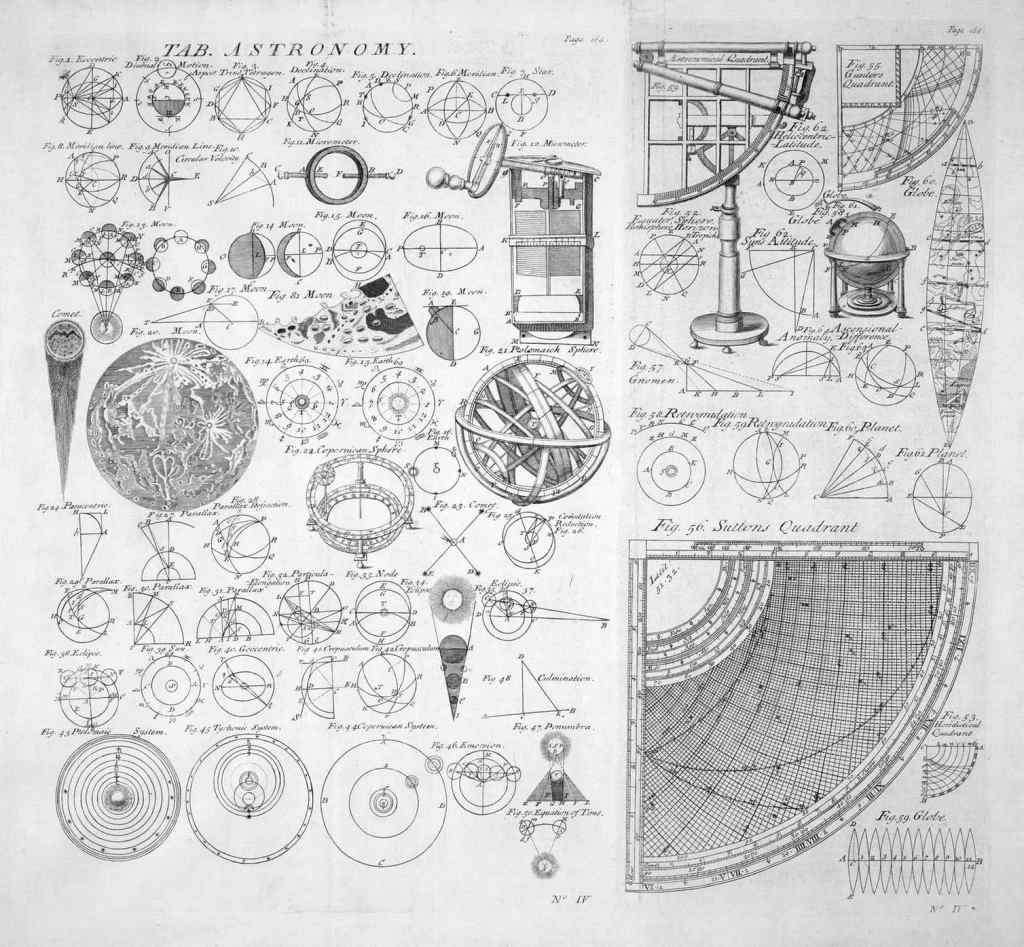
Figures illustrating articles on astronomy, from the 1728 Cyclopaedia. Wikimedia Commons
And so, where Galileo had once spurned the idea of a dead world, the German astronomer Wilhelm Olbers proposed in 1802 that the Mars-Jupiter asteroid belt in fact constitutes the ruins of a shattered planet. Troubled by this, Godwin noted that this would mean that the creator had allowed part of “his creation” to become irremediably “unoccupied”. But scientists were soon computing the precise explosive force needed to crack a planet – assigning cold numbers where moral intuitions once prevailed. Olbers calculated a precise timeframe within which to expect such an event befalling Earth. Poets began writing of “bursten worlds”.
The cosmic fragility of life was becoming undeniable. If Earth happened to drift away from the sun, one 1780s Parisian diarist imagined that interstellar coldness would “annihilate the human race, and the earth rambling in the void space, would exhibit a barren, depopulated aspect”. Soon after, the Italian pessimist Giacomo Leopardi envisioned the same scenario. He said that, shorn of the sun’s radiance, humanity would “all die in the dark, frozen like pieces of rock crystal”.
Galileo’s inorganic world was now a chilling possibility. Life, finally, had become cosmically delicate. Ironically, this appreciation came not from scouring the skies above but from probing the ground below. Early geologists, during the later 1700s, realised that Earth has its own history and that organic life has not always been part of it. Biology hasn’t even been a permanent fixture down here on Earth – why should it be one elsewhere? Coupled with growing scientific proof that many species had previously become extinct, this slowly transformed our view of the cosmological position of life as the 19th century dawned.
Copper engraving of a pterodactyl fossil discovered by the Italian scientist Cosimo Alessandro Collini in 1784. Wikimedia Commons
Seeing death in the stars
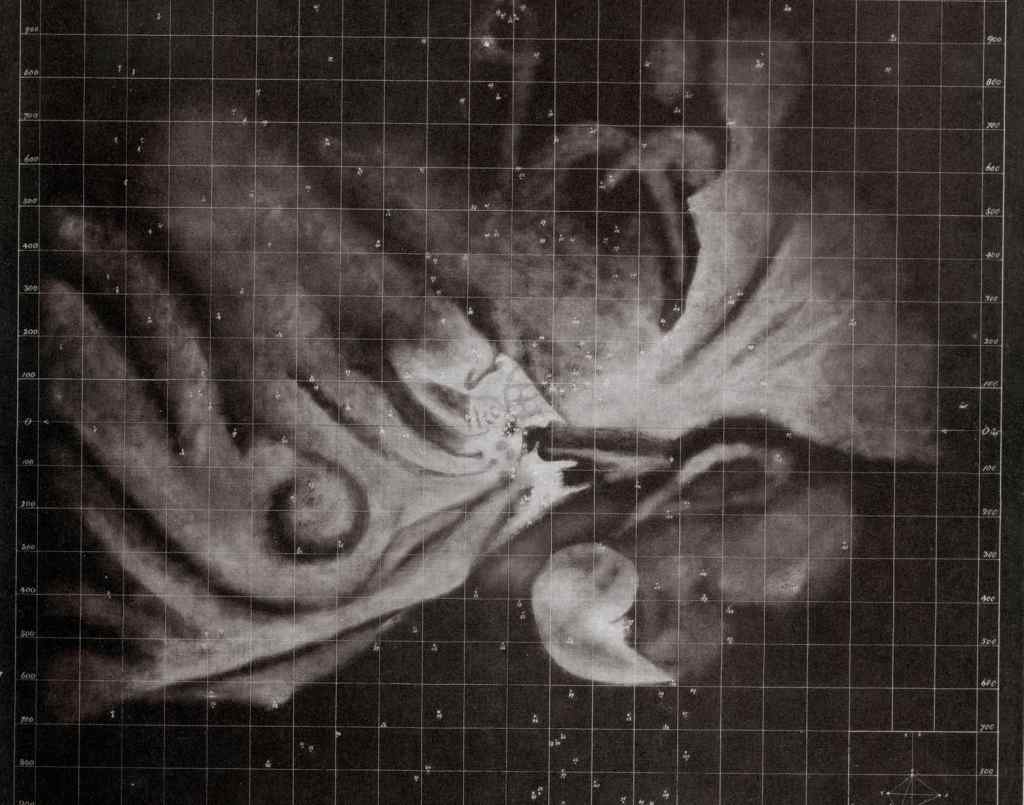
And so, where people like Diderot looked up into the cosmos in the 1750s and saw a teeming petri dish of humanoids, writers such as Thomas de Quincey were, by 1854, gazing upon the Orion nebula and reporting that they saw only a gigantic inorganic “skull” and its lightyear-long rictus grin.
The astronomer William Herschel had, already in 1814, realised that looking out into the galaxy one is looking into a “kind of chronometer”. Fermi would spell it out a century after de Quincey, but people were already intuiting the basic notion: looking out into dead space, we may just be looking into our own future.
People were becoming aware that the appearance of intelligent activity on Earth should not be taken for granted. They began to see that it is something distinct – something that stands out against the silent depths of space. Only through realising that what we consider valuable is not the cosmological baseline did we come to grasp that such values are not necessarily part of the natural world. Realising this was also realising that they are entirely our own responsibility. And this, in turn, summoned us to the modern projects of prediction, preemption and strategising. It is how we came to care about our future.
As soon as people first started discussing human extinction, possible preventative measures were suggested. Bostrom now refers to this as “macrostrategy”. However, as early as the 1720s, the French diplomat Benoît de Maillet was suggesting gigantic feats of geoengineering that could be leveraged to buffer against climate collapse. The notion of humanity as a geological force has been around ever since we started thinking about the long-term – it is only recently that scientists have accepted this and given it a name: “Anthropocene”.
Will technology save us?
It wasn’t long before authors began conjuring up highly technologically advanced futures aimed at protecting against existential threat. The eccentric Russian futurologist Vladimir Odoevskii, writing in the 1830s and 1840s, imagined humanity engineering the global climate and installing gigantic machines to “repulse” comets and other threats, for example. Yet Odoevskii was also keenly aware that with self-responsibility comes risk: the risk of abortive failure. Accordingly, he was also the very first author to propose the possibility that humanity might destroy itself with its own technology.
Acknowledgement of this plausibility, however, is not necessarily an invitation to despair. And it remains so. It simply demonstrates appreciation of the fact that, ever since we realised that the universe is not teeming with humans, we have come to appreciate that the fate of humanity lies in our hands. We may yet prove unfit for this task, but – then as now – we cannot rest assured believing that humans, or something like us, will inevitably reappear – here or elsewhere.
Beginning in the late 1700s, appreciation of this has snowballed into our ongoing tendency to be swept up by concern for the deep future. Current initiatives, such as Bostrom’s Future of Humanity Institute, can be seen as emerging from this broad and edifying historical sweep. From ongoing demands for climate justice to dreams of space colonisation, all are continuations and offshoots of a tenacious task that we first began to set for ourselves two centuries ago during the Enlightenment when we first realised that, in an otherwise silent universe, we are responsible for the entire fate of human value.
It may be solemn, but becoming concerned for humanity’s extinction is nothing other than realising one’s obligation to strive for unceasing self-betterment. Indeed, ever since the Enlightenment, we have progressively realised that we must think and act ever better because, should we not, we may never think or act again. And that seems – to me at least – like a very rational end of the world.
ooOOoo
I hope you have read it all. There’s much to engage one. And the message to me is very clear: We have to regard this race, correction: our race, as unique. As is put in the penultimate paragraph:
“Enlightenment when we first realised that, in an otherwise silent universe, we are responsible for the entire fate of human value.”
Now there’s a thought for an atheist on a Saturday morning!
There is a blog site, primarily for all those interested in photography. It is called Ugly Hedgehog! Seriously! But UHH, as it is known, also has room for general non-photographic chat so it really does cater for all.
I have been a member since July, 2017, and have been amazed at how quickly the time has gone.
Anyway, the home page of Ugly Hedgehog is here, it’s free, and if you have any interest in photography I strongly recommend it.
This item came in a couple of weeks ago and I’m taking the liberty of sharing it with you.
ooOOoo
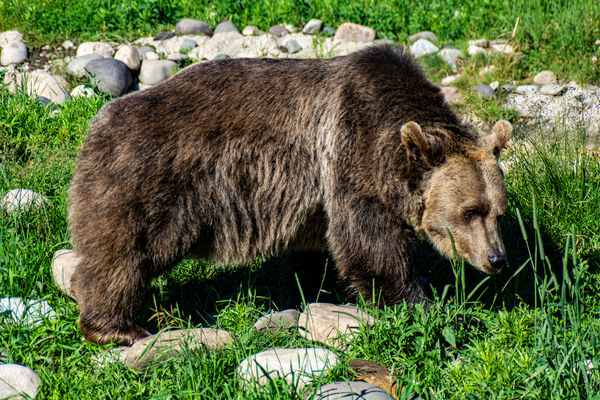
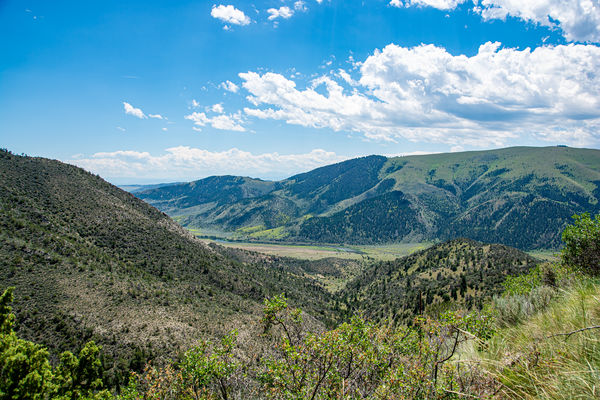
Spent a few days in Bozeman Montana visiting my youngest son and daughter in law before heading out to Southern California. A couple of images from my trip to Montana…
My long-term friend, Richard, is partner to Julie.
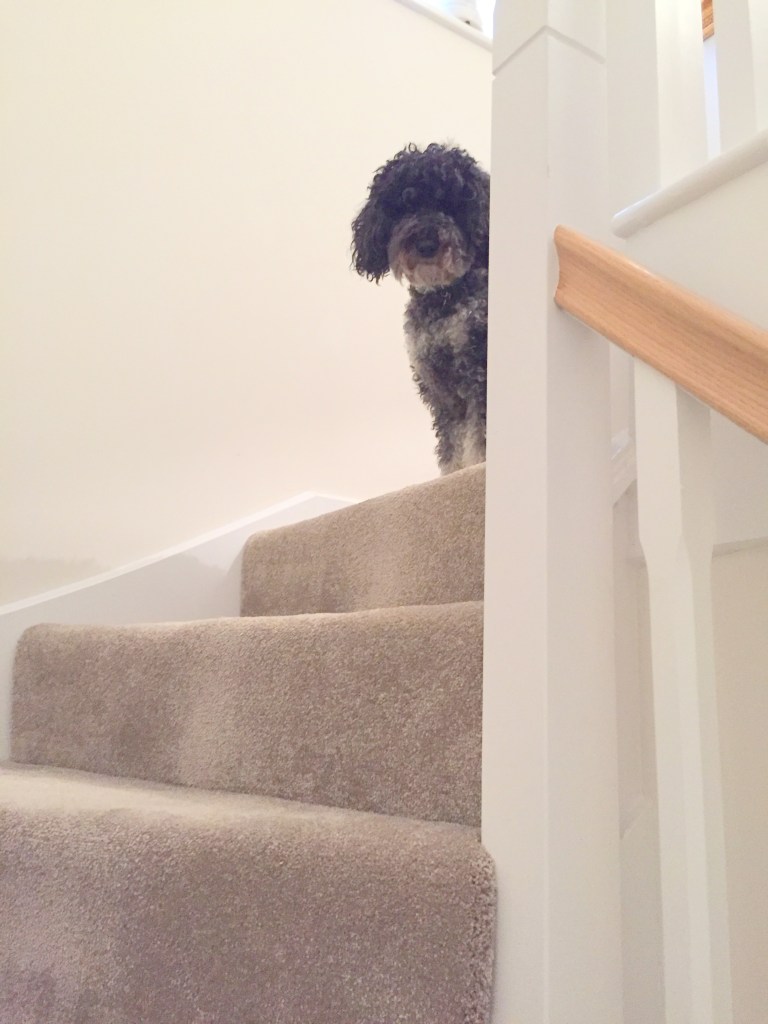
Julie sent me the following picture of their dog, Murphy, with the description:
It’s a rainy morning in Elsenham and the first day of normal summer temps after some excruciatingly hot days this week of 37 degrees.
We normally go for an early walk for ablutions and then back for breakfast.
Not this morning … Murphy just sat at the top of the stairs ignoring my enthusiastic “walkies Murphy”. Even more hysterical was after I took his photo he turned away and walked into our spare room and sat on the bed !
Murphy.
Elsenham is in South-East England near Bishop’s Stortford and west of Colchester.
6 wolf pups caught on trail cam in Mount Hood area
Posted Jul 11, 2019
Two wolf pups were observed on the Warm Springs reservation in early August, marking the first time the wolves have successfully bred in Oregon’s northern Cascades since the animals returned to the state.
MOUNT HOOD — Officials say six wolf pups have been born this year to Oregon’s White River wolf pack in the Mount Hood area. Biologists with the Confederated Tribes of Warm Springs posted footage of the pups from a trail camera that was shared on Facebook by the U.S. Fish and Wildlife Service/Oregon.
The White River Pack is located just southeast of Mount Hood and east of Timothy Lake. With five members in 2018, it was one of the few confirmed packs in Western Oregon, along with southwest Oregon’s Rogue Pack.
Oregon Department of Fish and Wildlife carnivore biologist Derek Broman told The Statesman Journal that the current size of the White River pack is 11 animals.
The latest wolf count shows Oregon is home to a minimum of 137 wolves. The majority are clustered in northeast Oregon.
— The Associated Press
ooOOoo
Now it’s a great shame but the video of the young pups, evident if you go to this link, I cannot put into a WordPress blog, namely Learning from Dogs.
It’s a brilliant site and one that has reams of good stories about dogs.
Plus it’s OK to republish them which makes a huge difference to so many of you. For I get the impression that you love what they publish as much as I do.
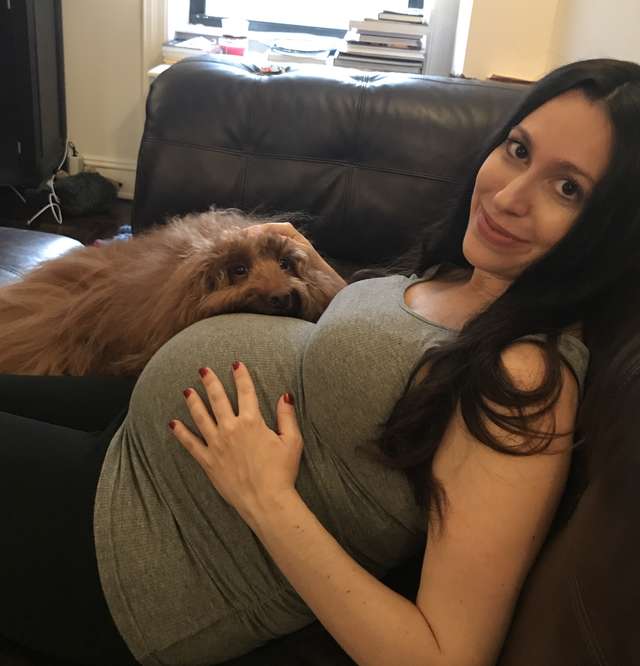
Almost 2 years ago, the lives of Sara Lebwohl and her husband Zach changed forever. That was when the first-time parents welcomed into the world their newborn daughter Halle.
But as the couple embarked on the journey of parenthood, they soon discovered there was someone eager to help them along the way.
That someone, of course, was their adorable dog Prince.
Sara Lebwohl
Even before Halle was born, Prince seemed to understand their family was about to grow. In fact, he rarely left Sara’s side, already devoted to the little one on the way.
Then the big day arrived.
Sara Lebwohl
“When she first came home, he went right up to her and sniffed her,” Sara told The Dodo. “He knew she was little and fragile. But he always stayed close and kept a very close eye on her. He was truly a nanny dog from the first day.”
Sara Lebwohl
Since then, Prince’s dedication to Halle has only grown deeper.
Sara Lebwohl
The two of them are simply inseparable — but although they always have a great time together, Prince still clearly sees himself as both playful companion and caretaker.
And it shows.
Sara Lebwohl
Halle is now nearly 2 years old, and has begun sleeping in her own room. But, as is often the case for youngsters her age, she still requires some comfort and reassurance in the early morning.
Prince, who usually sleeps in Mom and Dad’s room, has always been the first to notice when Halle is seemingly restless. And, without fail, he’d accompany whichever of them got up to attend to Halle during those inconvenient wake-up calls.
Recently, however, Sara and her husband had an idea: What if they left both their bedroom door and Halle’s open throughout the night? Would Prince put a fussy Halle back to sleep on his own?
Yes, is the answer — and here’s some sweet video to prove it:
“Surprisingly it has worked out well,” Sara said. “We crack the door open for him when she gets up, and he walks in to greet her. He has a little routine he does, including rolling around on the ground. Then he will look at her and lay down. The amazing thing is that this calms her, and she goes back to sleep.”
The dog’s stellar nannying skills have made life better for Halle — and her parents, too.
“Prince has been an unexpected savior, allowing us a bit more precious minutes to hours of sleep. When he walks in the room, we know she is in good paws and we can all get some more rest,” Sara said.
Now, everyone’s morning is that much happier.
Sara Lebwohl
This is just one of the ways that Prince has made life better. Every waking moment is improved by having him around, a faithful companion to those who love him the most. And as Halle grows, there’s no doubt he’ll continue to share in the joys and challenges that lie ahead.
His favorite little girl wouldn’t have it any other way.
“He takes his job as protective big brother very seriously,” Sara said. “Our family feels so fortunate to have a dog that is so loving and good-hearted. We are also thankful that Halle adores Prince.”
ooOOoo
See what I mean!
It’s a beautiful story of Prince being so attentive to the needs of Halle and Halle in turn adoring Prince.
Long after Prince has died, indeed for the rest of Halle’s days, she will love dogs.
But the single most important lesson is integrity.
Again, another post from previous times. Albeit just a couple of years ago.
ooOOoo
Another tribute to dear Pharaoh.
The most profound thing that I learned from Pharaoh is that dogs are creatures of integrity. That goes back to a day in June, 2007. Some six months before I met Jeannie in Mexico in December, 2007. I was sitting in Jon’s home office just a few miles from where Pharaoh and I were then living in South Devon.
It was a key chapter in Part Four of my book where I examine all the qualities that we humans need to learn from our dogs.
So here is Chapter 13 from my book Learning from Dogs. (Written in ‘English’ English!)
ooOOoo
Chapter 13 Integrity
In the Introduction to this book I mentioned how the notion of “learning from dogs” went back to 2007 and me learning that dogs were creatures of integrity. Let me now elaborate on that.
It is a Friday morning in June in the year 2007. I am sitting with Jon at his place with Pharaoh sleeping soundly on the beige carpet behind my chair. I didn’t know it at the time but it was to become one of those rare moments when we gain an awareness of life that forever changes how we view the world, both the world within and the world without.
“Paul, I know there’s more for me to listen to and I sense that we have established a relationship in which you feel safe to reveal your feelings. However, today I want to talk about consciousness. Because I would like to give you an awareness of this aspect of what we might describe under the overall heading of mindfulness.”
I sat quietly fascinated by what was a new area for me.
“During the years that I have been a psychotherapist, I’ve seen an amazing range of personalities, probably explored every human emotion known. In a sense, explored the consciousness of a person. But what is clear to me now is that one can distil those different personalities and emotions into two broad camps: those who embrace truth and those who do not.”
Jon paused, sensing correctly that I was uncertain as to what to make of this. I made it clear that I wanted him to continue.
“Yes, fundamentally, there are people who deny the truth about themselves, who actively resist that pathway of better self-awareness, and then there are those people who want to know the truth of whom they are and seek it out when the opportunity arises. The former group could be described as false, lacking in integrity and unsupportive of life, while the latter group are diametrically opposite: truthful, behaving with integrity and supportive of life.”
It was then that Jon lit a fire inside me that is still burning bright to this day. For he paused, quietly looking at Pharaoh sleeping so soundly on the carpet, and went on to add, “And when I look at dogs, I have no question that they have a consciousness that is predominantly truthful: that they are creatures of integrity and supportive of life.”
That brought me immediately to the edge of my seat, literally, with the suddenness of my reaction causing Pharaoh to open his eyes and lift up his head. I knew in that instant that something very profound had just occurred. I slipped out of my chair, got down on my hands and knees and gave Pharaoh the most loving hug of his life. Dogs are creatures of integrity. Wow!
****
Later, when driving home, I couldn’t take my mind off the idea that dogs were creatures of integrity. What were those other values that Jon had mentioned? It came to me in a moment: truthful and supportive of life. Dogs have a consciousness that is truthful, that they are creatures of integrity and supportive of life: what a remarkable perception of our long-time companions.
I had no doubt that all nature’s animals could be judged in the same manner but what made it such an incredibly powerful concept, in terms of dogs, was the unique relationship between dogs and humans, a relationship that went back for thousands upon thousands of years. I realised that despite me knowing I would never have worked it out on my own, Jon’s revelation about dogs being creatures of integrity was so utterly and profoundly obvious.
As I made myself my usual light lunch of a couple of peanut butter sandwiches and some fruit and then sat enjoying a mug of hot tea, I still couldn’t take my mind off what Jon had revealed: dogs are examples of integrity and truth. I then thought that the word “examples” was not the right word and just let my mind play with alternatives. Then up popped: Dogs are beacons of integrity and truth. Yes, that’s it! Soon after, I recognised that what had just taken place was an incredible opening of my mind, an opening of my mind that didn’t just embrace this aspect of dogs but extended to me thinking deeply about integrity for the first time in my life.
Considering that this chapter is titled “Integrity”, so far all you have been presented with is a somewhat parochial account of how for the first time in my life the word “integrity” took on real meaning. That until that moment in 2007 the word had not had any extra significance for me over the thousands of other words in the English language. Time, therefore, to focus directly on integrity.
“If goodness is to win, it has to be smarter than the enemy.”
That was a comment written on my blog some years ago, left by someone who writes their own blog under the nom-de-plume of Patrice Ayme. It strikes me as beautifully relevant to these times, times where huge numbers of decent, law-abiding folk are concerned about the future. Simply because those sectors of society that have much control over all our lives do not subscribe to integrity, let alone giving it the highest political and commercial focus that would flow from seeing integrity as an “adherence to moral and ethical principles; soundness of moral character; honesty.” To quote my American edition of Roget’s Thesaurus.
Let me borrow an old pilot’s saying from the world of aviation: “If there’s any doubt, there’s no doubt!”
That embracing, cautious attitude is part of the reason why commercial air transport is one of the safest forms of transport in the world today. If you had the slightest doubt about the safety of a flight, you wouldn’t board the aircraft. If you had the slightest doubt about the future for civilisation on this planet, likewise you would do something! Remember, that dry word civilisation means family, children, grandchildren, friends, and loved ones. The last thing you would do is to carry on as before!
The great challenge for this civilisation, for each and every one of us, is translating that sense of wanting to change into practical, effective behaviours. I sense, however, that this might be looking down the wrong end of the telescope. That it is not a case of learning to behave in myriad different ways but looking at one’s life from a deeper, more fundamental perspective: living as a person of integrity. So perfectly expressed in the Zen Buddhist quote: “Be master of mind rather than mastered by mind.” Seeing integrity as the key foundation of everything we do. Even more fundamental than that. Seeing integrity as everything you and I are.
It makes no difference that society in general doesn’t seem to value integrity in such a core manner. For what is society other than the aggregate of each and every one of us? If we all embrace living a life of integrity then society will reflect that.
Integrity equates to being truthful, to being honest. It doesn’t mean being right all the time, of course not, but integrity does mean accepting responsibility for all our actions, for feeling remorse and apologising when we make mistakes. Integrity means learning, being reliable, and being a builder rather than a destroyer. It means being authentic. That authenticity is precisely and exactly what we see in our dogs.
The starting point for what we must learn from our dogs is integrity.


 While we know that dogs teach kids loyalty and unconditional love, there are also many other reasons that dogs are good for kids! I feel so grateful to be able to have both human and canine kids at home. I have always had dogs around me as a child also. My dad had hunting dogs and my mom liked the smaller poodle terrier dog breeds.
 We rescued Tuffy (above) from a shelter, as a puppy, after my daughter lost her horse in a traumatic accident. It’s been a couple years now and Tuffy has also helped her through more. We are blessed to have her and she follows my daughter everywhere. I know she will always keep her safe. Their bond is so strong and if she is ever feeling down, Tuffy knows and is right there to lift her spirit.
 One last thing I want to mention is how important it is to teach your child to respect their dog. First few things to teach is to respect their boundaries, how dogs communicate and how to interact when the dog is new to the family.
 I would love to hear your comments and stories about how your dogs have helped your kids!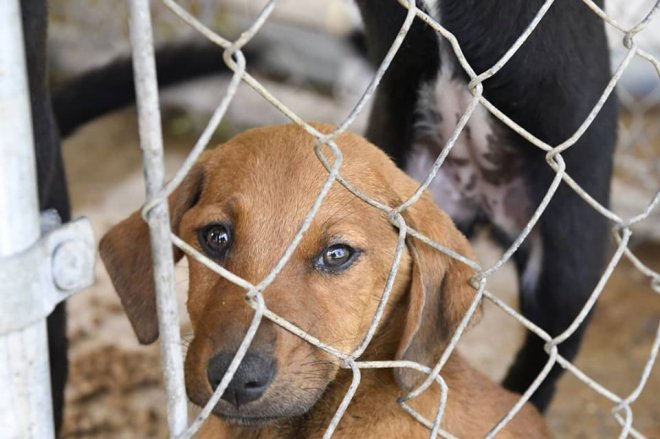



 defense work; her clients are mostly municipalities and law enforcement officials.











 Learning from Dogs