Category: Morality

eaarth, the book.

The latest edition of Bill McKibben’s book.

I’m about a third of the way through McKibben’s book eaarth.  To say that it is disturbing is an understatement.  I’ll tell you why.

eaarth

Most people when they think about it have, at the very least, feelings of guilt or denial in terms of what humans are doing to the planet’s environment that humans require for survival.  Many of us know in our hearts that it is probably not good news but maybe really thinking about it can be put off for a little longer!

It’s almost as though we know that those aches and pains are a sign of something potentially dangerous to our health but, hey ho, I’ll put off seeing the doctor for a little bit longer.

Then the day comes when one goes to the doctor and he confirms your worst fears; what you really knew deep in your heart.

Thus it is with the planet.  Most of us know that we have been treating the planet as an inexhaustible resource for the sole benefit of mankind and to hell with the future.  The you read a book such as eaarth from Bill McKibben and realise the extreme folly of denial, self-delusion, and the rest.  Here’s the preface of the book,

PREFACE

I’m writing these words on a gorgeous spring afternoon, perched on the bank of a brook high along the spine of the Green Mountains, a mile or so from my home in the Vermont mountain town of Ripton. The creek burbles along, the picture of a placid mountain stream, but a few feet away there’s a scene of real violence a deep gash through the woods where a flood last summer ripped away many cubic feet of tree and rock and soil and drove it downstream through the center of the village. Before the afternoon was out, the only paved road into town had been demolished by the rushing water, a string of bridges lay in ruins, and the governor was trying to reach the area by helicopter.

Twenty years ago, in 1989, I wrote the first book for a general audience about global warming, which in those days we called the “greenhouse effect.” That book, The End of Nature, was mainly a philosophical argument. It was too early to see the practical effects of climate change but not too early to feel them; in the most widely excerpted passage of the book, I described walking down a different river, near my then-home sixty miles away, in New York’s Adirondack Mountains. Merely knowing that we’d begun to alter the climate meant that the water fl owing in that creek had a different, lesser meaning. “Instead of a world where rain had an independent and mysterious existence, the rain had become a subset of human activity,” I wrote. “The rain bore a brand; it was a steer, not a deer.”

Now, that sadness has turned into a sharper-edged fear. Walking along this river today, you don’t need to imagine a damned thing the evidence of destruction is all too obvious. Much more quickly than we would have guessed in the late 1980s, global warming has dramatically altered, among many other things, hydrological cycles. One of the key facts of the twenty- first century turns out to be that warm air holds more water vapor than cold: in arid areas this means increased evaporation and hence drought. And once that water is in the atmosphere, it will come down, which in moist areas like Vermont means increased deluge and flood. Total rainfall across our continent is up 7 percent,1 and that huge change is accelerating. Worse, more and more of it comes in downpours.2 Not gentle rain but damaging gully washers: across the planet, flood damage is increasing by 5 percent a year.3 Data show dramatic increases 20 percent or more in the most extreme weather events across the eastern United States, the kind of storms that drop many inches of rain in a single day.4Vermont saw three flood emergencies in the 1960s, two in the 1970s, three in the 1980s and ten in the 1990s and ten so far in the first decade of the new century.

In our Vermont town, in the summer of 2008, we had what may have been the two largest rainstorms in our history about six weeks apart. The second and worse storm, on the morning of August 6, dropped at least six inches of rain in three hours up on the steep slopes of the mountains. Those forests are mostly intact, with only light logging to disturb them but that was far too much water for the woods to absorb. One of my neighbors, Amy Sheldon, is a river researcher, and she was walking through the mountains with me one recent day, imagining the floods on that August morning. “You would have seen streams changing violently like that,” she said, snapping her fingers. “A matter of minutes.” A year later the signs persisted: streambeds gouged down to bedrock, culverts obliterated, groves of trees laid to jackstraws.

Our town of barely more than five hundred people has been coping with the damage ever since. We passed a $400,000 bond to pay for our share of the damage to town roads and culverts. (The total cost was in the millions, most of it paid by the state and federal governments.) Now we’re paying more to line the creek with a seven-hundred-foot-long wall of huge boulders riprap, it’s called where it passes through the center of town, a scheme that may save a few houses for a few years, but which will speed up the water and cause even more erosion downstream. There’s a complicated equation for how wide a stream will be, given its grade and geology; Sheldon showed it to me as we reclined on rocks by the riverbank. It mathematically defines streams as we have known them, sets an upper limit to their size. You could use it to plan for the future, so you could know where to build and where to let well enough alone. But none of that planning works if it suddenly rains harder and faster than it has ever rained before, and that’s exactly what’s now happening. It’s raining harder and evaporating faster; seas are rising and ice is melting, melting far more quickly than we once expected. The first point of this book is simple: global warming is no longer a philosophical threat, no longer a future threat, no longer a threat at all. It’s our reality. We’ve changed the planet, changed it in large and fundamental ways. And these changes are far, far more evident in the toughest parts of the globe, where climate change is already wrecking thousands of lives daily. In July 2009, Oxfam released an epic report, “Suffering the Science,” which concluded that even if we now adapted “the smartest possible curbs” on carbon emissions, “the prospects are very bleak for hundreds of millions of people, most of them among the world’s poorest.”5

And so this book will be, by necessity, less philosophical than its predecessor. We need now to understand the world we’ve created, and consider urgently how to live in it. We can’t simply keep stacking boulders against the change that’s coming on every front; we’ll need to figure out what parts of our lives and our ideologies we must abandon so that we can protect the core of our societies and civilizations. There’s nothing airy or speculative about this conversation; it’s got to be uncomfortable, staccato, direct.

Which doesn’t mean that the change we must make or the world on the other side will be without its comforts or beauties. Reality always comes with beauty, sometimes more than fantasy, and the end of this book will suggest where those beauties lie. But hope has to be real. It can’t be a hope that the scientists will turn out to be wrong, or that President Barack Obama can somehow fix everything. Obama can help but precisely to the degree he’s willing to embrace reality, to understand that we live on the world we live on, not the one we might wish for. Maturity is not the opposite of hope; it’s what makes hope possible.

The need for that kind of maturity became painfully clear in the last days of 2009, as I was doing the final revisions for this book. Many people had invested great hope that the Copenhagen conference would mark a turning point in the climate change debate. If it did, it was a turning point for the worse, with the richest and most powerful countries making it abundantly clear that they weren’t going to take strong steps to address the crisis before us. They looked the poorest and most vulnerable nations straight in the eye, and then they looked away and concluded a face- saving accord with no targets or timetables. To see hope dashed is never pleasant. In the early morning hours after President Obama jetted back to Washington, a group of young protesters gathered at the metro station outside the conference hall in Copenhagen.It’s our future you decide, they chanted.

My only real fear is that the reality described in this book, and increasingly evident in the world around us, will be for some an excuse to give up. We need just the opposite increased engagement. Some of that engagement will be local: building the kind of communities and economies that can withstand what’s coming. And some of it must be global: we must step up the fight to keep climate change from getting even more powerfully out of control, and to try to protect those people most at risk, who are almost always those who have done the least to cause the problem. I’ve spent much of the last two de cades in that fight, most recently helping lead 350.org, a huge grassroots global effort to force dramatic action. It’s true that we’ve lost that fight, insofar as our goal was to preserve the world we were born into. That’s not the world we live on any longer, and there’s no use pretending otherwise.

But damage is always relative. So far we’ve increased global temperatures about a degree, and it’s caused the massive change chronicled in chapter 1. That’s not going to go away. But if we don’t stop pouring more carbon into the atmosphere, the temperature will simply keep rising, right past the point where any kind of adaptation will prove impossible. I have dedicated this book to my closest colleagues in this battle, my crew at 350.org, with the pledge that we’ll keep battling. We have no other choice.

Still on the theme of this Blog

More on why this Blog gets written.

Last Wednesday, I set out to explain why the blog is called Learning from Dogs.  If you missed that then it is here.  The focus was on the very special relationship between man and dog that goes back thousands of years.  It has been a critically important relationship for both species.

But there is another aspect to this Blog, as follows: The relationship between dogs and man goes back thousands of years. The theory is that dogs were domesticated between 15,000 and 40,000 years ago although DNA evidence suggests dogs split away from the grey wolf around 100,000 years ago.  Certainly, the dog was the first animal to be domesticated by man. In fact, some archaeologists speculate that man could not have been a successful ‘hunter-gatherer’ without his relationship with the dog and thus been able to progress to farming the earth for food.

The relationship between Planet Earth and man, as in H. sapiens, goes back around 200,000 years. There is little doubt that most people, even with a minimum of awareness about the world that we live in, are deeply worried. On so many fronts there are forbidding and scary views. It feels as though all the certainty of past times has gone; as if all the trusted models of society are now broken. Whether we are talking politics, economics, employment or the environment, nothing seems to be working.

Why is this? What’s the cause?

It would be easy to condemn man’s drive for progress and an insatiable self-centredness as root causes. But it’s not the case.

The root cause is clear. It is this. How mankind has developed is the result of mankind’s behaviours. All of us behave in many ways that are hugely damaging to the survival of our species. It is likely that these behaviours are little unchanged over thousands of years.

But 2000 years ago, the global population of man was just 300 million.

Twelve-hundred years later, in 1800, it was 1 billion. In 1927, just 127 years later, the two-billionth baby was born. In 1960, only 33 years on, the three-billionth baby. (Remember the moon landing in 1969?  Well, of course you do!  There were about three and a half billion people on the planet!)

Just 16 years on, in 1974, the four-billionth baby was born. In 1987, 13 years later, five billion. Around October 1999, the sixth-billionth baby was born!

It’s trending to a billion every decade. 100 million population growth every year, or about 270,000 every single day!

Combine man’s behaviours with this growth of population and we have the present situation. A totally unsustainable situation disconnected from the planet that supports us.

The only viable solution is to amend our behaviours. To tap into the powers of integrity, self-awareness and mindfulness and change our game.

We all have to work with the fundamental, primary relationships we have with each other and with the planet upon which we all depend. We need a level of consciousness with each other and with the living, breathing planet that will empower change. We need spiritual enlightenment on a grand scale.

That’s why we have so much to learn from dogs. They are man’s best friend. They are man’s oldest friend. They have a relationship with us that is very special; almost certainly telepathic. They can show us how we need to live our lives.

Man's oldest, and wisest, friend.

That’s the real reason why this Blog gets written.  Phew! Glad that’s off my chest!

Earth Policy Release

Finding the right solutions for the 21st century and the next generation.

Just before presenting the release from the Earth Policy Institute that came out on the 20th, here’s a reminder about watching the film, Plan B, that I wrote about on the 4th April.  It’s a very good film from an excellent and creditable source.  You can watch it for FREE from PBS, BUT ONLY UNTIL THE END OF APRIL!

Here’s the link – Plan B, the film

Now to the release published in full on Learning from Dogs.

Earth Policy Release
World on the Edge
Book Byte
April 19, 2011

“LET NO MAN SAY IT CANNOT BE DONE”

www.earth-policy.org/book_bytes/2011/wotech13_ss5

By Lester R. Brown

We need an economy for the twenty-first century, one that is in sync with the earth and its natural support systems, not one that is destroying them. The fossil fuel-based, automobile-centered, throwaway economy that evolved in western industrial societies is no longer a viable model—not for the countries that shaped it or for those that are emulating them. In short, we need to build a new economy, one powered with carbon-free sources of energy—wind, solar, and geothermal—one that has a diversified transport system and that reuses and recycles everything. We can change course and move onto a path of sustainable progress, but it will take a massive mobilization—at wartime speed.

Whenever I begin to feel overwhelmed by the scale and urgency of the changes we need to make, I reread the economic history of U.S. involvement in World War II because it is such an inspiring study in rapid mobilization. Initially, the United States resisted involvement in the war and responded only after it was directly attacked at Pearl Harbor. But respond it did. After an all-out commitment, the U.S. engagement helped turn the tide of war, leading the Allied Forces to victory within three-and-a-half years.

In his State of the Union address on January 6, 1942, one month after the bombing of Pearl Harbor, President Franklin D. Roosevelt announced the country’s arms production goals. The United States, he said, was planning to produce 45,000 tanks, 60,000 planes, and several thousand ships. He added, “Let no man say it cannot be done.”

No one had ever seen such huge arms production numbers. Public skepticism abounded. But Roosevelt and his colleagues realized that the world’s largest concentration of industrial power was in the U.S. automobile industry. Even during the Depression, the United States was producing 3 million or more cars a year.

After his State of the Union address, Roosevelt met with auto industry leaders, indicating that the country would rely heavily on them to reach these arms production goals. Initially they expected to continue making cars and simply add on the production of armaments. What they did not yet know was that the sale of new cars would soon be banned. From early February 1942 through the end of 1944, nearly three years, essentially no cars were produced in the United States.

In addition to a ban on the sale of new cars, residential and highway construction was halted, and driving for pleasure was banned. Suddenly people were recycling and planting victory gardens. Strategic goods—including tires, gasoline, fuel oil, and sugar—were rationed beginning in 1942. Yet 1942 witnessed the greatest expansion of industrial output in the nation’s history—all for military use. Wartime aircraft needs were enormous. They included not only fighters, bombers, and reconnaissance planes, but also the troop and cargo transports needed to fight a war on distant fronts. From the beginning of 1942 through 1944, the United States far exceeded the initial goal of 60,000 planes, turning out a staggering 229,600 aircraft, a fleet so vast it is hard even today to visualize it. Equally impressive, by the end of the war more than 5,000 ships were added to the 1,000 or so that made up the American Merchant Fleet in 1939.

In her book No Ordinary Time, Doris Kearns Goodwin describes how various firms converted. A sparkplug factory switched to the production of machine guns. A manufacturer of stoves produced lifeboats. A merry-go-round factory made gun mounts; a toy company turned out compasses; a corset manufacturer produced grenade belts; and a pinball machine plant made armor-piercing shells.

In retrospect, the speed of this conversion from a peacetime to a wartime economy is stunning. The harnessing of U.S. industrial power tipped the scales decisively toward the Allied Forces, reversing the tide of war. Germany and Japan, already fully extended, could not counter this effort. British Prime Minister Winston Churchill often quoted his foreign secretary, Sir Edward Grey: “The United States is like a giant boiler. Once the fire is lighted under it, there is no limit to the power it can generate.”

The point is that it did not take decades to restructure the U.S. industrial economy. It did not take years. It was done in a matter of months. If we could restructure the U.S. industrial economy in months, then we can restructure the world energy economy during this decade.

With numerous U.S. automobile assembly lines currently idled, it would be a relatively simple matter to retool some of them to produce wind turbines, as the Ford Motor Company did in World War II with B-24 bombers, helping the world to quickly harness its vast wind energy resources. This would help the world see that the economy can be restructured quickly, profitably, and in a way that enhances global security.

The world now has the technologies and financial resources to stabilize climate, eradicate poverty, stabilize population, restore the economy’s natural support systems, and, above all, restore hope. The United States, the wealthiest society that has ever existed, has the resources and leadership to lead this effort.

One of the questions I hear most frequently is, What can I do? People often expect me to suggest lifestyle changes, such as recycling newspapers or changing light bulbs. These are essential, but they are not nearly enough. Restructuring the global economy means becoming politically active, working for the needed changes, as the grassroots campaign against coal-fired power plants is doing. Saving civilization is not a spectator sport.

Inform yourself. Read about the issues. Share the Earth Policy Institute’s publications with friends. Pick an issue that’s meaningful to you, such as tax restructuring to create an honest market, phasing out coal-fired power plants, or developing a world class-recycling system in your community. Or join a group that is working to provide family planning services to the 215 million women who want to plan their families but lack the means to do so. You might want to organize a small group of like-minded individuals to work on an issue that is of mutual concern. You can begin by talking with others to help select an issue to work on.

Once your group is informed and has a clearly defined goal, ask to meet with your elected representatives on the city council or the state or national legislature. Write or e-mail your elected representatives about the need to restructure taxes and eliminate fossil fuel subsidies. Remind them that leaving environmental costs off the books may offer a sense of prosperity in the short run, but it leads to collapse in the long run.

During World War II, the military draft asked millions of young men to risk the ultimate sacrifice. But we are called on only to be politically active and to make lifestyle changes. During World War II, President Roosevelt frequently asked Americans to adjust their lifestyles and Americans responded, working together for a common goal. What contributions can we each make today, in time, money, or reduced consumption, to help save civilization?

The choice is ours—yours and mine. We can stay with business as usual and preside over an economy that continues to destroy its natural support systems until it destroys itself, or we can be the generation that changes direction, moving the world onto a path of sustained progress. The choice will be made by our generation, but it will affect life on earth for all generations to come.

Adapted from Chapter 13, “Saving Civilization,” in Lester R. Brown, World on the Edge: How to Prevent Environmental and Economic Collapse (New York: W.W. Norton & Company, 2011), available online at www.earth-policy.org/books/wote

Additional data and information sources at www.earth-policy.org

Earth Day and The 11th Hour

Some very thought-provoking ideas.

John H, a good friend of us here in Payson, lent us the Leonardo DiCaprio film The 11th Hour.  More information on the film’s website.  Here’s the trailer,

The plot of the film, if plot is the right word, is as follows,

With contributions from over 50 politicians, scientists, and environmental activists, including former Soviet leader Mikhail Gorbachev, physicist Stephen HawkingNobel Prize winner Wangari Maathai, and journalist Paul Hawken, the film documents the grave problems facing the planet’s life systems. Global warming, deforestation, mass species extinction, and depletion of the oceans’ habitats are all addressed. The film’s premise is that the future of humanity is in jeopardy.

The film proposes potential solutions to these problems by calling for restorative action by the reshaping and rethinking of global human activity through technology, social responsibility and conservation.

Whether or not you watch the film, and I strongly suggest you do, the action website that supports making a difference is For the Love of Action.  Drop in and make your own mind up.

Following on from that film is this apt reminder of the world we have created.  I tend to write articles a few days ahead of the publish date, so it wasn’t possible to have this post come out on the 20th April, last Wednesday, which was Earth Day.  Shame.  Because as this email from the Alaska Wilderness League pointed out, it’s also a sad reminder of our love affair with oil.

Dear Paul,

The next Deepwater Horizon could be amid the broken sea ice and polar bear habitat of America’s Arctic: unless we prevent it now. Donate to the League.

It was one year ago today. I remember sitting in my living room after dinner when the news alert flashed across the screen:Deepwater Horizon oil rig explodes in the Gulf of Mexico; 11 workers dead or missing. 

Huddled around the office television the next morning, there was no way we could anticipate the true magnitude of the disaster. Images of ruined lives and tarnished lands poured out of the Gulf formonths on end. As the oil industry’s feeble attempts to contain the destruction grew evermore cartoony – ‘top hat,’ ‘junk shot,’ ‘top kill’ – we learned just how little they had prepared for the eventual catastrophe of an oil spill.

Our government rubber-stamped the faulty plans for this oil rig. They had a chance to prevent this disaster, but didn’t. What’s worse: they continue to approve plans for America’s Arctic that are functionally identical to the plans that caused the Gulf disaster. America’s Arctic could be our next Deepwater Horizon tragedy. The effects of deadly crude oil spilling into the broken sea ice and polar bear habitat of America’s Arctic would be disastrous: unless we stop it.

We are fighting the next horrifying oil spill every step of the way. Help us prevent it – donate now! 

When Deepwater Horizon exploded in the Gulf, the League had just completed a campaign to highlight the incredible annual migration of Arctic birds that begins in the Arctic Refuge and extends through each U.S. state. Some of these birds fly as far as the southern tip of Argentina! Many of them rely on critical nesting grounds around the Gulf of Mexico.

The League moved quickly to save these birds, distributing ‘Arctic Garden Kits’ to help donors across the country to provide sustenance and shelter to Arctic birds in their own backyards. Proceeds from the fundraiser helped us fight faulty plans from moving forward in America’s Arctic for the last two summers.

Shell Oil, the biggest threat for Arctic drilling, remains undaunted by our success. Their drilling plans for 2012 have ballooned from one drill rig to six. This is their big move – their cards are on the table. We need your help and support to go over the top to stop their escalating plans.

Help us stop the next disaster in America’s Arctic. Give today.

The way in which the League responded to the Gulf disaster – stemming the damage to wildlife and preventing the next disaster – was one of the most inspiring experiences of my life. You have a chance to be a part of this continuing work. Help us save America’s Arctic before it suffers the fate of another Deepwater Horizon.

Thank you for all that you do,

Cindy Shogan
Executive Director
Alaska Wilderness League

Finally, let me close rather pointedly, perhaps, by this video of the fires in Texas which are burning out of control and have already scorched 1.6 million acres.; long-term drought being part of the cause.

Unintended consequences!

Europe’s fishing quotas turning a seemingly good idea into apparent madness.

The European Union formally came into being in 1993 although co-operation in the form of the European Coal and Steel Community and then the European Economic Community went well back before then, back to the 1950’s.

As far back as 1957 when the Treaty of Rome was established, an Article stated that there should be a common policy for fisheries.  That became known as the Common Fisheries Policy.  Fish catches in many European waters were reducing stocks of many species to the point of extinction, so something had to be done.

Now watch this.

If you feel sufficiently perplexed to want to learn more, then Hugh Fearnley-Whittingstall,  a food and cookery writer and broadcaster, as well as a campaigner for real food, has a Campaign Website here.  There is a Facebook page here.

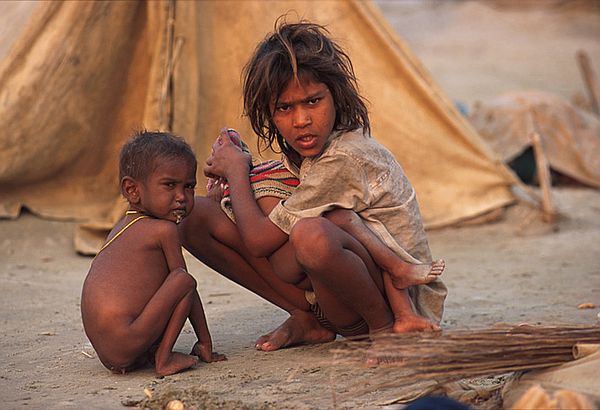
How on earth would one explain such actions to, say, these two kids?


Ready for a fish meal!


Inside job

The shocking documentary film about the global financial crisis.

I’m sure many have already see the film Inside Job but we only watched it a few nights ago.  Here’s the trailer.

The film is also available to watch on Top Documentary Films and is summarised on that website thus:

As he did with the occupation of Iraq in No End in Sight, Charles Ferguson shines a light on the global financial crisis in Inside Job.

Accompanied by narration from Matt Damon, Ferguson begins and ends in Iceland, a flourishing country that gave American-style banking a try – and paid the price.

Then he looks at the spectacular rise and cataclysmic fall of deregulation in the United States. Unlike Alex Gibney’s fiscal films,Enron: The Smartest Guys in the Room and Casino Jack, Ferguson builds his narrative around dozens of players, interviewing authors, bank managers, government ministers, and even a psychotherapist, who speaks to a culture that encourages Gordon Gekko-like behavior, but the number of those who declined to comment, like Alan Greenspan, is even larger.

Though the director isn’t as combative as Michael Moore, he asks tough questions and elicits squirms from several participants, notably former Treasury secretary David McCormick and Columbia dean Glenn Hubbard, George W. Bush’s economic adviser.

Their reactions are understandable, since the borders between Wall Street, Washington, and the Ivy League dissolved years ago; it’s hard to know who to trust when conflicts of interest run rampant.

If Ferguson takes Reagan and Bush to task for tax cuts that benefit the wealthy, he criticizes Clinton for encouraging derivatives and Obama for failing to deliver on the promise of reform. And in the category of unlikely heroes: former governor Eliot Spitzer, who fought against fraud as New York’s attorney general (he’s the subject of Gibney’s documentary Client 9).

Sony have available on their website a useful study guide.  It appears to be written with students in mind but there is much valuable background information there for all.  The guide, in pdf, may be seen here.

It would all have been worthwhile, if that’s the correct term, if we had seen effective regulatory responses from strong governments but, as the film points out, the millions of people on the receiving end of harsh, downward adjustment of personal wealth are still waiting.

Meanwhile, Europe continues to bleed, American housing is still trending downwards and the real effect of the Japanese earthquake is far from clear.

We are living in interesting times!

The Third Eye

A guest post from John Hurlburt.

Our living garden planet.

When we’re in love with God, the cosmos, our living garden planet and the steadily growing conscious interconnection between those who understand and serve, we live in awe and wonder and realize a peaceful natural serenity in the midst of our daily concerns and responsibilities.

As our world, our environment and our culture appear to be unraveling, it becomes increasingly necessary for human beings to slow down to re-energize. It’s clear that our species has recently lost spectacularly to natural forces in the Gulf of Mexico and Japan. It’s no coincidence that it’s our technology which continues to reveal the fundamental weakness of human ego. It’s more than a metaphor that our individual and species arrogance is our Achilles heel.

There are many people who fail to perceive, understand and appreciate parallel realities from a rational, sensory and unified perspective by learning to see through a mystical third eye. Mysticism may be misunderstood as simply thinking outside of the box. Forget about the box. Let go of self-centered fears. Become aware of being unaware. Nurture capabilities to perceive non-locally and act locally. What’s happening worldwide comes with the territory. We are each responsible for our collective destiny

Meditation reflects that imagination and creativity are necessary to invent and utilize tools. Creativity did not begin with humans and is not exclusive to humans. God’s nature precedes emerging technology. Morality derives from our common need for species unity.

The message is that God doesn’t care about money and the sky is no longer a human limit. The fact remains that except for occasional astronauts we all continue to live on the same planet. Those who understand need no explanation.

There is a need for productive use of intelligence and technology at our natural frontiers. We need to refuel world economies with clean energy visions that provide solutions for our present local planetary emergency.

We may choose to implement the changes necessary to avoid impending local ecosphere, cultural and technological meltdowns while preparing for a migration to the stars.

Unification is a common goal. Leaving the nest of our garden planet is a partial unifying solution for the problems of our exponentially expanding species. An alternative is that our obsession with the symbol of money will have the same dire consequences for those who are obsessed as for those whom are oppressed.

Please love God, maintain an even strain, follow your bliss, continue to learn, share and serve our common purpose under God, proceed as the way opens, cross the next bridge as we come to it, enjoy the journey and stay in touch.

Gratefully,

From an old lamplighter!

“Oh my ears and whiskers, how late it’s getting”

The quote that forms the title of this article is from Alice in Wonderland and is spoken by the Rabbit.

It's getting late!

At first, that quote seems quite mundane. However, most find ‘Alice’ quotes are rich in truisms and life’s great philosophies.  How about this?

Alice: “It would be so nice if something made sense for a change.”

So what drew me to these two illustrations from Lewis Carroll’s magical pen?  Just this sample of a few days of stuff coming into my email box!

1. Our environment.

From a recent piece on the BBC website.

Ice loss from Antarctica and Greenland has accelerated over the last 20 years, research shows, and will soon become the biggest driver of sea level rise.

From satellite data and climate models, scientists calculate that the two polar ice sheets are losing enough ice to raise sea levels by 1.3mm each year.

Overall, sea levels are rising by about 3mm (0.12 inches) per year.

2. Running on Oil

A recent email in my in-box from John Maudlin was all about Japan and oil.  But there were some stark messages about our use of oil across the planet.  Try this:

There are multiple sources for many of the metals Japan imports, so that if supplies stop flowing from one place it can get them from other places. The geography of oil is more limited. In order to access the amount of oil Japan needs, the only place to get it is the Persian Gulf. There are other places to get some of what Japan needs, but it cannot do without the Persian Gulf for its oil.

This past week, we saw that this was a potentially vulnerable source. The unrest that swept the western littoral of the Arabian Peninsula and the ongoing tension between the Saudis and Iranians, as well as the tension between Iran and the United States, raised the possibility of disruptions. The geography of the Persian Gulf is extraordinary. It is a narrow body of water opening into a narrow channel through the Strait of Hormuz. Any diminution of the flow from any source in the region, let alone the complete closure of the Strait of Hormuz, would have profound implications for the global economy. [My italics.]

3. Energy rethink

From Rob Dietz of CASSE, Centre for the Advancement of the Steady State Economy.

As if we really required more prompting, the unfolding nuclear accidents in Japan are confirming what we must do.  When a disaster strikes, the most urgent response is to help those who are suffering, prevent further calamities, and clean up the messes—it’s a time to get busy.  But the next critical step is to figure out what we might do differently—it’s a time to take a step back and contemplate how we got where we are and where we might go from here.  With each passing day, it is becoming increasingly clear that we need to rethink where and how we get our energy supplies.

And later in this article:

New York Times article provides an astonishing description of what happened at the Fukushima nuclear power plant where the backup generators failed to cool the overheating reactor:

The central problem arises from a series of failures that began after the tsunami. It easily overcame the sea walls surrounding the Fukushima plant. It swamped the diesel generators, which were placed in a low-lying area, apparently because of misplaced confidence that the sea walls would protect them.

The key phrase in that description is “misplaced confidence.”  Misplaced confidence sums up how we got to this point in history when it comes to selecting sources of energy to power our ever-expanding economy.  Regardless of what smooth-talking P.R. professionals say, a nuclear power facility has been the site of a serious accident about every 10 years: witness Three Mile Island in the U.S. in 1979, Chernobyl in Ukraine in 1986, Tokaimura in Japan in 1999, and now Fukushima in 2011.  “Safe nuclear power” is an offensive oxymoron.

Misplaced confidence also describes our failure to take big strides on phasing out fossil fuels.  We have misplaced confidence that we’ll find a technological solution to climate destabilization, that the market will take care of the problem, and that Mother Nature will continue to warehouse the emissions from our economy with no consequences.

Maybe millions of us should be adopting the same query as Alice; It would be so nice if something made sense for a change.”  Because continuing as we are without understanding the urgent need to make ‘sense’, to take heed, of the living, conscious planet that is our only home is utter nonsense!

Back to Mr Rabbit, “Oh my ears and whiskers, how late it’s getting!

Yes, Mr Rabbit, how late it’s getting!

Earth is a live conscious entity!

Yet another reflection of the precious planet upon which all life depends.

Watch this!

It comes towards the end of the fascinating documentary about the life of John Trudell.  If you would like to watch the complete documentary, then that is available on-line also.  It is described by the site Top Documentary Films thus:

At its most basic level, Trudell is an eye-opening documentary that challenges belief systems. At its loftiest, Trudell will inspire you to reawaken your spirit.

In the telling of Trudell, Rae invested more than 12 years chronicling John Trudell’s travels, spoken word, and politics. (The making of the movie, a journey in itself, is as much a story as the finished product).

The film combines archival, convert, and interview footage in a lyrical and naturally stylized manner, with abstract imagery mirroring the coyote nature of Trudell.

Pockmarked with adversity, counterbalanced by preservance, Trudell begins in the late sixties when John Trudell and a community group, Indians of All Tribes, occupy Alcatraz Island for 21 months. This creates international recognition of the American Indian cause and gives birth to the contemporary Indian people’s movement.

Rae revisits Alcatraz, returning to what John refers to as his birth. From Alcatraz, we follow John’s political journey as the national spokesman of the American Indian Movement (AIM).

During this tumultuous period, his work makes him one of the most highly politicalsubversives of the 1970′s, earning him one of the longest FBI files in history (more than 17,000 pages).

Enough – from Baseline Scenario

A powerful reflection on values.

I am indebted to James Kwak, the author of this article on Baseline Scenario, for giving me permission to reproduce in full what was published on the 12th March, 2011.

By James Kwak

A friend passed on this article in The Motley Fool by Morgan Housel. It begins this way:

Enough.

“That’s the title of Vanguard founder John Bogle’s fantastic book about measuring what counts in life.

“The title, as Bogle explains, comes from a conversation between Kurt Vonnegut and novelist Joseph Heller, who are enjoying a party hosted by a billionaire hedge fund manager. Vonnegut points out that their wealthy host had made more money in one day than Heller ever made from his novelCatch-22. Heller responds: ‘Yes, but I have something he will never have: enough.’”

The rest of the article discusses the cases of Rajat Gupta and Bernie Madoff, the former accused (but not criminally) and the latter convicted of illegal activity done after they had already been enormously successful, professionally and financially.

Housel asks, why do people push on — legally or illegally — when they have more of everything than anyone could possibly need? He summarizes the happiness research as follows:

“Money isn’t the key to happiness. What really gives people meaning and happiness is a combination of four things: Control over what they’re doing, progress in what they’re pursuing, being connected with others, and being part of something they enjoy that’s bigger than themselves.”

Of course, even if that’s true (and I think it is, except for the first sentence, on which more below), that doesn’t mean that people realize it. And if people don’t understand the relationship between their actions and their personal outcomes, we have no reason to believe that they will behave in a utility-maximizing way.

That said, renowned economist Justin Wolfers was recently on Planet Money saying that money does, indeed, buy happiness. He was discussing a paper he did with Betsey Stevenson looking at datasets covering many countries over many years. They find a positive relationship between income and subjective well-being, whether in the form of life satisfaction or happiness (although the relationship appears somewhat weaker for happiness).* In particular, they find that there is no satiation point, at least when making cross-country comparison (that is, the positive relationship persists even when you look only at countries that are at least moderately wealth).

At one point in the Planet Money interview, I believe Wolfers did say that when it comes to happiness, someone (Kahneman, I think) had estimated that there is a satiation point at around $75,000 per year. But, he went on, the issue is that we may want subjective states other than simple happiness. So, for example, we may want the subjective feeling of power, whether or not it actually makes us happy in the moment. And those other subjective states may not have satiation points, or they may have little to do with income.

But ultimately I agree with Heller. It is a great thing to have “enough,” and to know you have enough. And that is a feeling that for some people, apparently, no amount of money can buy.

* The difference, put simply, is between whether you feel happy at this moment and whether you feel satisfied with your life as a whole. For more, see this fantastic TED Talk by Daniel Kahneman (which I have recommended before).