Category: Morality

The watering hole.

Seems to follow-on from yesterday so well.

This game of blogging would have no meaning at all if it were not for the networking and sharing of so many ideas, thoughts and feelings unlimited by geographical distances. The ‘Likes’ and responses to my Hope Has A Place story yesterday meant so much.

I was trawling through my folder looking for something that felt good to publish after yesterday and came across the following that was sent in by dear friend, Dan Gomez, about a month ago.

ooOOoo

oldcowboy

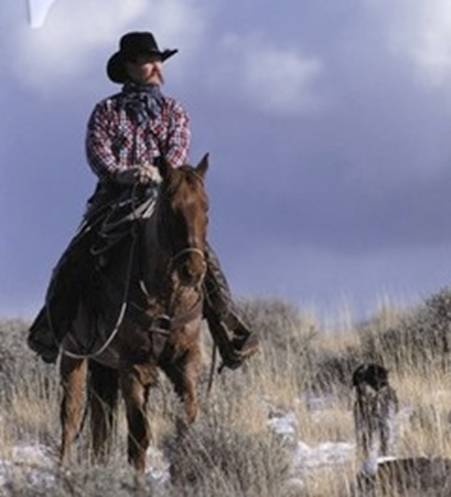
An old cowboy was riding his trusty horse followed by his faithful dog along an unfamiliar road. The man was enjoying the new scenery, when he suddenly remembered dying, and realized that the dog beside him had been dead for years, as had his horse. Confused, he wondered what was happening, and where the trail was leading them.

After a while, they came to a high, white stone wall that looked like fine marble. At the top of a long hill, it was broken by a tall arch topped by a golden letter “H” that glowed in the sunlight.

Standing before it, he saw a magnificent gate in the arch that looked like mother-of-pearl, and the street that led to the gate looked like gold.

He rode toward the gate and as he got closer he saw a man at a desk to one side. Parched and tired out by his journey, he called out, “Excuse me, where are we?

This is Heaven, sir,” the man answered.

Wow! Would you happen to have some water?” the old cowboy asked.

Of course, sir. Come right in, and I’ll have some ice water brought right up.

As the gate began to open, the cowboy asked, “Can I bring my partners, too?

I’m sorry; sir, but we don’t accept pets.

The cowboy thought for a moment, then turned back to the road and continued riding, his dog trotting by his side.

After another long ride, at the top of another hill, he came to a dirt road leading through a ranch gate that looked as if it had never been closed. As he approached the gate, he saw a man inside, leaning against a tree and reading a book.

Excuse me,‘ he called to the man. “Do you have any water?

Sure, there’s a pump right over there. Help yourself.

How about my friends here?” the cowboy gestured to his dog and his horse.

Of course! They look thirsty, too,” said the man.

The three of them went through the gate, and sure enough, there was an old-fashioned hand pump with buckets beside it. The cowboy filled a cup and the buckets with wonderfully cool water and took a long drink, as did his horse and dog.

pump

When they were full, he walked back to the man who was still standing by the tree. “What do you call this place?” he asked.

This is Heaven,” the man answered.

That’s confusing, the man down the road said that was Heaven, too.

Oh, you mean the place with the glitzy, gold street and fake pearly gates? That’s hell.

The cowboy retorted, “Doesn’t it make you angry when they use your name like that?

Not at all. Actually, we’re happy they screen out the folks who would leave their friends behind.

ooOOoo

Dan’s email went on to include this:

Sometimes, we wonder why friends forward things to us without writing a word. Maybe this explains it? When you’re busy, but still want to keep in touch, you can forward emails. When you have nothing to say, but still want to keep in contact, you can forward jokes. When you have something to say, but don’t know exactly how to say it, you can forward stuff.

A ‘forward’ lets you know that you’re still remembered, still important, still cared about.

So the next time you get a ‘forward’, don’t think of it as just another joke. Realize that you’ve been thought of today and that your friend on the other end just wanted to send you a smile.

PS: You’re welcome at my watering hole anytime.

Let me underline Dan’s PS by saying that all of life’s humans and creatures are welcome here!

Water jug


Rescuing has no borders!

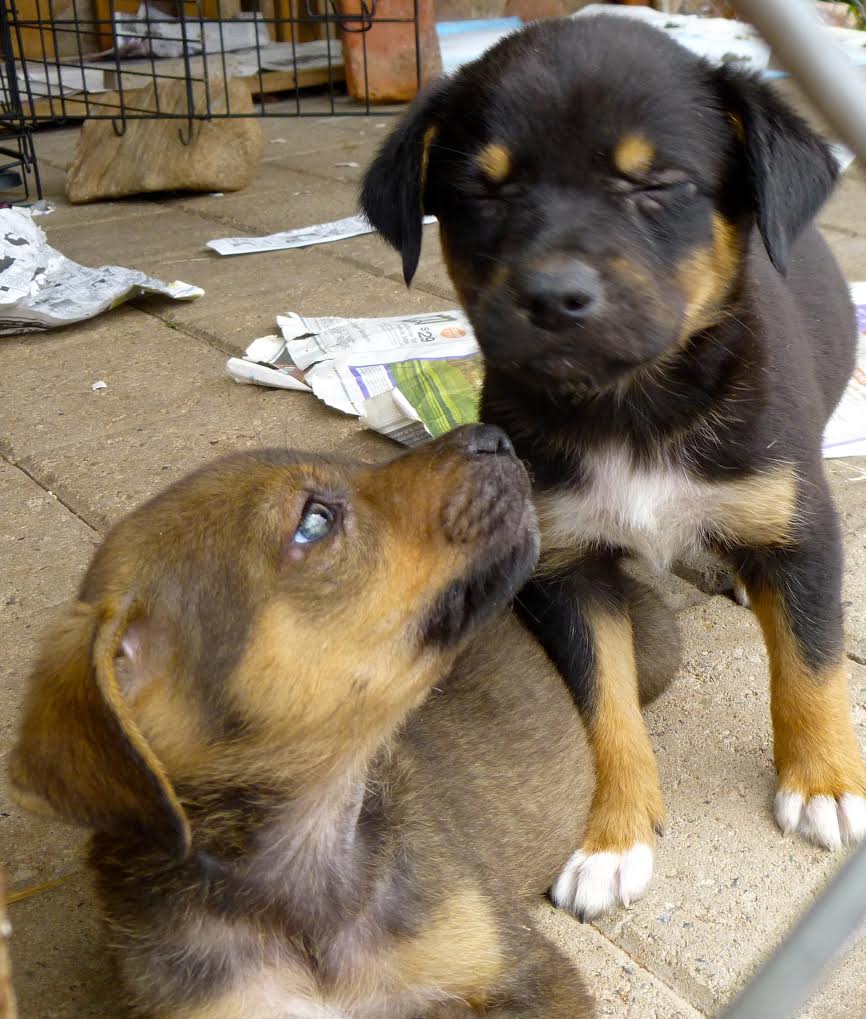
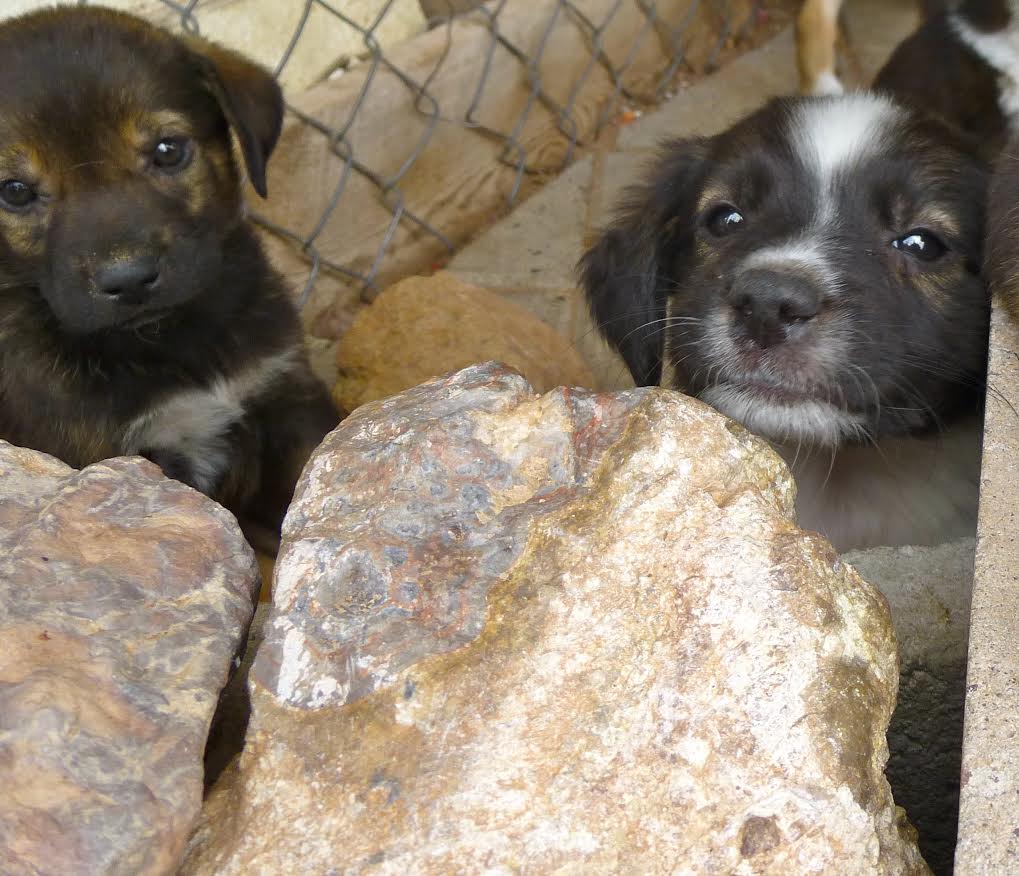
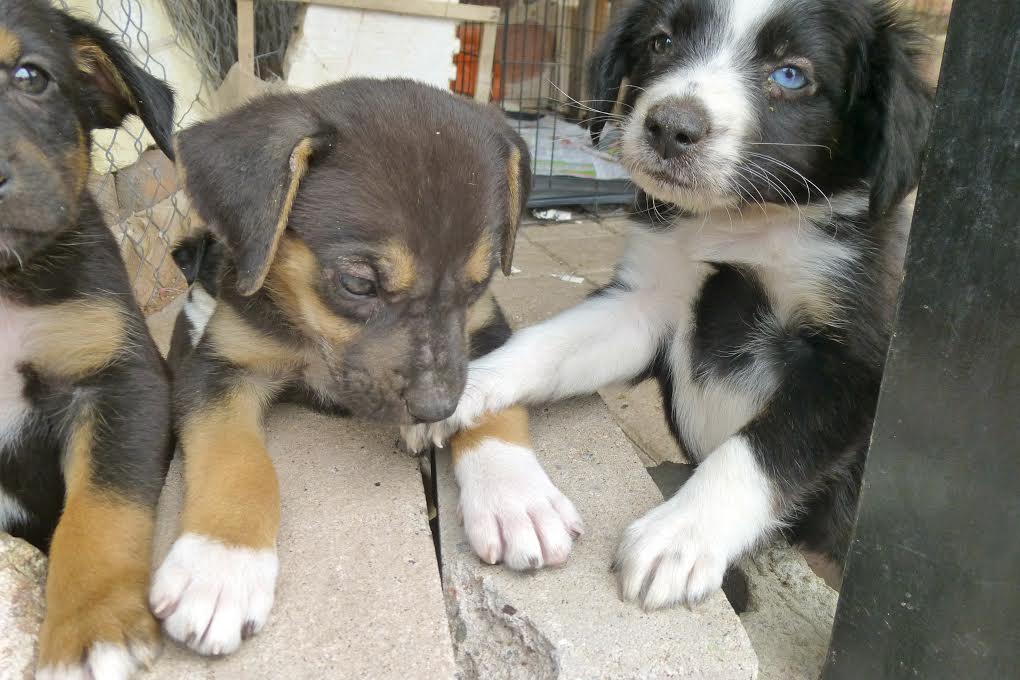
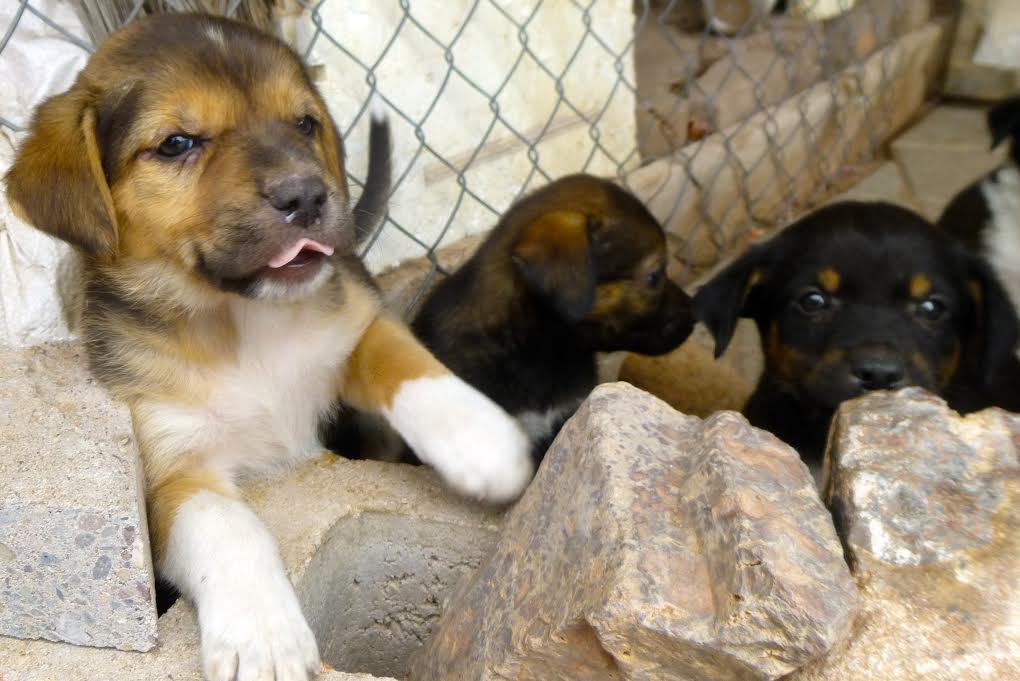
Please, please can you help find homes for these gorgeous puppies.

Please read to the end and share this post as widely as you can! Thank you!

Pup1

Many know that I first met Jean in San Carlos, Mexico over Christmas, 2007.

I met Jean as a result of the kindest gift anyone has given me. Namely, Suzann Reeve, sister of Dan Gomez, whom I have known for 45 years, and Suzann’s husband, Don, invited me to spend Christmas with them at their home in San Carlos.

pup2

Before my arrival on the scene, Jean and Su had worked together for a long time rescuing poor feral dogs off the streets and finding homes for them in the USA.

pup3

After Jean and I moved from San Carlos, with 14 dogs I hasten to add, up to Arizona in 2010, Su has kept going rescuing street dogs and loving them until they can find real homes.

pup4

Many of the Mexican people are so poor that when a female dog has a litter of puppies they sell the puppies for a few pesos and cast the mother dog back out on to the street.

pup5

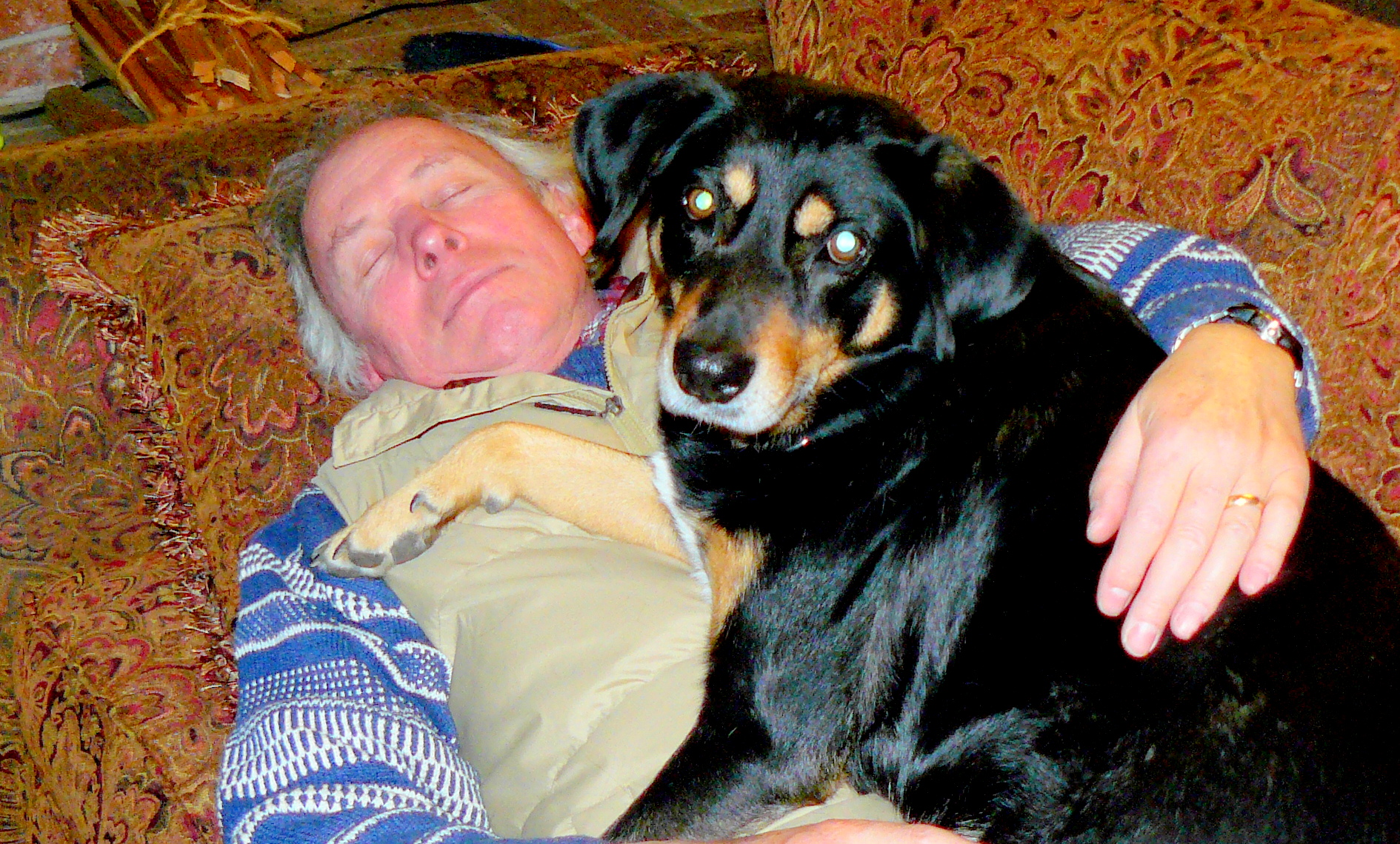
Our Hazel that we have here at home in Oregon was one such dog and, trust me, never have I experienced a more loving, loyal and affectionate dog.

The truest of love between a man and a dog!
Hazel loving up yours truly!

In the last few days, Su has been on the telephone to say that she has a litter of nine puppies and is desperate to find homes for them before too long.

pup6

In answer to my question about the background to the puppies, Su replied:

  • They are reputed to have been born on Valentine’s day, which makes them 8 weeks on April 14th.
  • They are about 6-7 lbs each today.
  • There are 4 girls and 5 boys.

pup7

  • Their mom was feral, but wags her tail ferociously when she spies me with her food bowl!
  • Mom eats steak, bone broth, rice, Kirkland Nature’s Domain canned food, Kirkland dry food. She has cared well for her pups.
  • The pups eat Blue Buffalo canned puppy food mixed in with Kirkland puppy food and some water. they have also received yogurt in their food which I weaned them off as of yesterday.

pup8

  • They will be receiving their first vaccination Monday.
  • They have been wormed twice.
  • They have been given anti-tick spray twice.

pup9

  • Several have at least one blue eye with the other being a brownish grey, some have brown eyes, and the others have light brown eyes.
  • I have their grandmother here at the casa as well, and Sofia is looking for a forever home as well. Bella, the mom of the pups, is a medium sized dog with brown, terra cota and white markings.
  • One of the dads is mostly black with a little white, and the one blue eye.

pup10

  • They were born in a small beach side fishing village in La Manga, Mexico.
  • The mom has a sweet disposition.
  • At least 2 of the pups have alpha tendencies.

pup11


So dear, dear people, if you or anyone you know might be interested in having one of these beautiful puppy dogs then leave a comment without delay.

If you have any questions or queries, likewise articulate that query as a comment to this post. Su will reply to each and every one.

Please share this post as far and wide as you can.

Don’t even hesitate in wondering how Su and all of us can get a puppy from San Carlos to wherever you are – it will be sorted!

Dogs spend their whole lives offering unconditional love to us humans.

Let’s return that love by finding homes for these nine beautiful puppies.

Thank you from the bottom of my heart.

Dogs and the inside of our souls!

The role of dogs in helping young offenders.

In these times of terrible inequality, if there is one thing that has the power to crush a young person’s chances in life it is a criminal record, even a minor one. This is well-known in the UK. For a number of years I was a mentor with what was then called the Prince’s Youth Business Trust (PYBT) and now is just simply called The Prince’s Trust.

What was discovered, courtesy of the PYBT, was that if one taught disadvantaged youngsters the principles of forming and running your own business there were two positive outcomes. The first was that the young person performed much better at job interviews, and increased his or her odds of getting a job offer, and some young persons decided to start their own business; some very successfully so.

Thus with that background it was natural that an article in the US edition of The Economist caught my eye. It was called Pups and perps.

Pups and perps

What has four legs, a wet nose and helps young thugs grow up?

Dec 6th 2014 | LOS ANGELES | From the print edition

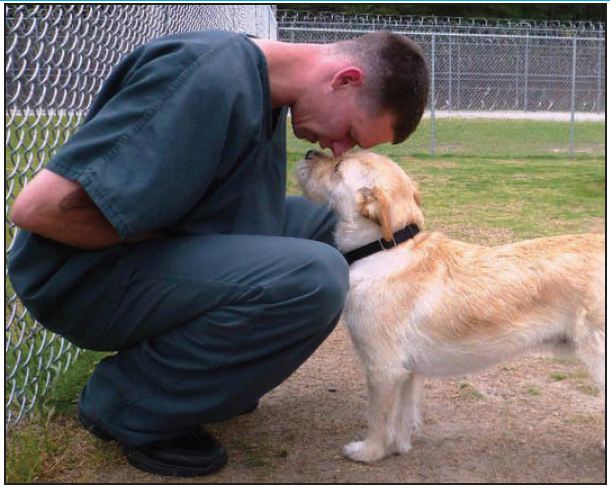
WHEN Jordan entered juvenile detention shortly after his 17th birthday, following a conviction for assault and robbery, all he could think about was getting out. The rowdy teenager from Anaheim, California, struggled to control his temper. But when he began working with Lulu, a poodle mix, he got a new leash on life. “I was too busy taking care of the dog to get into fights,” he says.

Jordan was taking part in “Pups and Wards”, a programme that pairs shelter dogs with young inmates. The perps train the pups and, with luck, learn something about personal responsibility. Other programmes allow prisoners to train dogs to be adopted by people with disabilities, such as traumatised veterans. Such training often requires full-time care—but prisoners have plenty of time on their hands.

The Economist article later on reports:

“All the research about the human-animal bond has buoyed these programmes,” says Gennifer Furst, a professor of criminal justice. “We have discovered that prisoners often identify with rescue dogs—they have both experienced trauma—and they are eager to become their protectors.” Crystal Wood, an officer at a maximum-security prison in Lancaster, California, says that several inmates on her yard—who are in prison for life—wept after interacting with dogs. “Many of these guys haven’t seen an animal in decades. It’s been striking to see how much working with a dog has reduced their anxiety levels.”

It was easy to find more information on Professor Gennifer Furst from the William Paterson University website:

Gennifer Furst received her B.A. in psychology (with a sociology minor) from Connecticut College and her M.A. in psychology (with a concentration in evaluation methodology) from Claremont Graduate University. She received her doctorate in criminal justice (with a concentration in corrections) from CUNY Graduate Center.

Dr. Furst is the Department of Sociology’s Criminal Justice Director. Dr. Furst’s research interests focus on issues of incarceration. She published the first national survey of prison-based animal programs in the US. A book based on that work was recently published. Additionally, she is interested in race and the administration of criminal justice, the death penalty, the use of animals in the criminal justice system, and the relationship between drugs and crime.

Read the rest of the good Professor’s background here.

Imagine my pleasure in finding that there is a film Dogs on the Inside and that YouTube carries an official trailer.

http://www.youtube.com/watch?v=S7ZjxPqL_EQ

As the film website states: “Everyone deserves a second chance.

So if you are motivated to get involved then don’t hesitate to return to the film’s website and read the Get Involved page.

The power of love.
The power of love.

We are what we eat.

Integrity and honesty should certainly apply to what we eat!

Published author Deborah Taylor-French has her own blog Dog Leader Mysteries. She and I follow each other’s blog and I’m very grateful for the connection, as indeed I am with so many other fellow bloggers.

Thus that was how I came to learn of a recent post from Deborah about how rabbit meat is being used for human consumption.  On the face of it, nothing wrong in eating rabbit but wait until you have read Deborah post, that is republished here with her kind permission.

ooOOoo

Tell Whole Foods: Do not sell bunnies

Tell Whole Foods, “Don’t sell bunny meat!”

Farm animals suffer greatly in the United States of America. Plus this suffering comes to us well documented. Before the U.S. Congress passes laws allowing Ag-Gag [see my footnote] states to make it illegal for people to photograph, video or report animal abuse inside or outside their meat plants.

The disturbing truth? Pet rabbits now sold for meat at Whole Foods Market come from being raised in U.S.A. Ag-gag states. What’s wrong with that? Everything.

Big farms doing business in Ag-gag states operate free from animal welfare laws.

In fact these huge meat farms have made laws against taking photographs, video recording or any reporting of animal abuse. What have they got to hide?

Enough. All too many cruel animal farming practices already hurt farm animals, enough to make most of us sick. The Humane Society of the United States and the Animal Defense Fund continue working to legally raise farm animal welfare practices. Most Americans know that farm animals do not receive acceptable room for walking nor a humane standard of care. Before we let another category of animal become victims of Ag-gag farm cruelty, we need to improve farm animals welfare.

Adopted from Rohnert Park Animal Shelter.

Rabbits die of fright.

They share the species lagomorph.

There are about eighty species of lagomorph include thirty species of pika, twenty species of rabbit and cottontail, and thirty species of hare family. Wikipedia

I learned about this issue of Whole Foods Market, selling a new category of animal for meat through a volunteer at my local shelter. Kathy, along with volunteers from Save a Bunny and a Southern California group, are working to raise awareness pet rabbits should not end up as mainstream Big Farm meat products. Why?

Whole Foods Market buys meat rabbits from Ag-gag states. If Whole Foods succeeds, farm animal suffering will fall on whole other category of animals, pet rabbits.

It comes as no secret in United States that farm animals end up being raised inhumanely. If you have ever read about the Ag-gag states and how they are able to prosecute anyone willing to go undercover and take photographs and videos to report the truth on this ongoing unnecessary torture of farm animals. What meat animals endure in the U.S.A. is nothing less than cruelty, it’s time we changed that, before adding anymore farm animals.

Nine facts hidden in Ag-gag pig farms

  1. Millions of meat pigs live, eliminate and sleep in cramped spaces.
  2. The environment these pigs endure smell rank. Their wastes drain into a central open sewer and their housing is so unclean many of them die.
  3. Meat pigs lack all exercise to the extreme point that their legs break.
  4. Pigs housed in huge warehouses with thousands of other pigs, hear others screaming day and night from pain.
  5. Female pigs, sows, live horrible lives in gestation crates.
  6. Gestation crates built for female pigs force them to stand up for 24-hours per day. Farmers do not allow pigs to walk or lie down. Gestation crates, notoriously painful for animals, need to be banned. Often the pigs’ legs break because their bones grow soft, due to not being allowed to walk.
  7. Big meat farms build bars underneath sows to brace broken legs.
  8. The meat pig lives in constant physical pain, terror, fear and unhappiness. When piglets die, often in these unsanitary conditions, their bodies get ground up and mixed into the food the sows eat. So mother pigs eat their own young.Pigs do not live as cannibals. Why should they be forced to eat their own young?
  9. What horrible animal welfare to make pigs eat their own young. It’s incomprehensible that animals must live like this so that people can eat pork barbecue, pork steak and pork ribs.

How can they call these farms? Not giving animals room to walk, sit or lie down? Meat farm animals get denied their normal and natural behaviors. They never see the light of the sun nor feel the earth nor wind.

What U.S.A. meat farms won’t let us see.

After four years of hesitation and never mentioning recordings of farm animals lack of good welfare, I break my silence.

Much of the time I avoid eating meat. From now on, I will be seeking out small sustainable and local farms. We have several nearby that do not inflict senseless cruelty on pigs, chickens and cows. After study of commercially farmed pork and chicken and beef, I have returned to my original vegetarian and fish eating ways.

My footnote. As a non-American I didn’t fully understand the phrase “Ag-gag”. Deborah kindly explained it as follows:

Several states have passed laws against anyone photographing, video recording or reporting on animal abuse inside massive meat farms. The Humane Society of the United States keeps working (under cover to film the truth of this unsanitary and cruel business) but now they can arrest anyone caught, send reporters to jail and sue anyone trying to inform the public.

ooOOoo

I know for a fact that Deborah would love that this item is shared and republished as far and wide as possible. Please help.

For spreading the word and being very careful about the meat that we eat are the only ways to put a stop to these unbelievably cruel practices, and the ‘Ag-gag’ laws.

Misery Is Optional

Another guest essay from the old lamplighter.

It seems to me that it is so incredibly easy to be influenced, even engulfed, by bad news.

Back on the 20th I posted an item that had been sent to me by John Hurlburt, who is the old lamplighter, called Interstellar News.

Here’s another essay from John that is a great reminder of that old adage: We are what we think.

ooOOoo

Lost

Misery Is Optional

There’s always been a delicate balance in the struggle between growth and stagnation. The emerging universe invariably prevails. The good news is that absolutely insisting upon the denial of reality naturally backfires in the long run. Common sense has repeatedly saved our collective bacon from the fire as our species has faced former crises. The stakes have never been higher.

There’s a natural balance that runs through our relatively brief species history. Extreme cultural alternatives include plutocracy and anarchy. There’s no question that if we’re not an active supporter of an inclusive solution we contribute to our collective dissolution.

Nero fiddled while Rome burned. There’s a current global analogy. Global media communications reflect hate, divisiveness and violence. The obvious truth is essentially ignored. A result is our present state of angst, paranoia and associated stress disorders. We compensate with bread and circuses.

Indifference doesn’t have to be a local reality. We’re all naturally connected in whatever we conceive of as God. We share a common soul. If we are wise we’ll act accordingly. We’ll accept our inherent responsibilities as stewards of Creation. The fulfilment of positive actions in according with the nature of our being is a blessing that keeps on giving.

an old lamplighter

ooOOoo

These are beautiful words and whatever one’s religious or spiritual convictions if we don’t recognise that we are all “naturally connected” then it won’t be long before we run out of bread and circuses – and deservedly so.

Going to close this post by using the following picture and quotation taken from the latest Terry Hershey newsletter.

Machado

Beyond living and dreaming
there is something more important: waking up.

Antonio Machado

Preserving what we love

A repeat of a popular item from a year ago.

Yesterday afternoon Jean and I were invited to join Jim and Janet on a forest walk joined by their dog, Louie, and our Sweeny.

Jim is a vet working locally here in Oregon and, as you might expect, much of the conversation was about animals, nature and ‘the meaning of life’.

By the time we were back home and dogs fed and horses brought in for the night, my creative juices were severely lacking.  I browsed through what had been published in March, 2014 and came across a post called My wish for the world that came out on the 28th of that month.

It seemed such an appropriate item to republish for today, with the kind permission of the author, Jeremy Nathan Marks.

ooOOoo

The Sand County

“In wildness is the preservation of the world.” -Henry David Thoreau Sand County

My Wish for the World

If I could leave behind but one lasting accomplishment from my life it would be to have changed the hearts and minds of all those people who accept or practice cruelty towards animals.

Now there are a great many worthy causes in this world which fully deserve the attention of all those who believe in justice, in fairness, and in mercy. But I also know that each of us -perhaps- has a cause that stands above and beyond all of the other noble concerns that we know exist. For me this cause is the humane treatment of animals. And when I say animals I mean ALL animals. Permit me to explain.

My wife and I have two dogs. Both are mutts and both were adopted through the Animal Rescue Foundation of Ontario (ARF). I have blogged about ARF before and can only offer the highest praise for the organization. Courtesy of ARF, we have been provided with free dog training classes which have proved to be an invaluable resource in learning about dog behaviour. Better yet, the dog trainer we have worked with has made herself available for our questions outside of class.

Whenever we have encountered a behavioural challenge that we have not understood or have been unsure of a proper method of approach, this trainer has been very obliging. Importantly, she believes in positive reinforcement and does not believe in the use of pain, dominance, or stress as a means of conditioning dogs. For my wife and me, this fits in with our moral beliefs and our ethics.

Our eldest dog, who just turned one year old, is a 60 lbs. shepherd mix who has a “leash anxiety,” if I may call it that. When we are out on a walk and she sees another dog she becomes quite agitated and will bark loudly and lunge at the other dog. This has puzzled us because our dog loves to play with others and is frequently socialized. We grew increasingly concerned because our use of treats and positive reinforcement was not working. And because our dog is a large shepherd, we both have worried that she might develop a reputation and become a source of fear or suspicion by other people in our neighbourhood.

In due course, we contacted our trainer for advice. She suggested that rather than putting our dog in a stressful situation by repeatedly walking her past other dogs (and trying to control her behaviour when she becomes agitated) we should take her out of the situation instead. So, when we see another dog approaching we turn around and walk in a different direction, all the while rewarding our dog with treats and telling her she is a good girl. We have recently started doing so and the improvements are showing. So, let us fast forward to today. . .

This afternoon we took both of our dogs on a 20 km hike along the Thames River. The trail is like so many other trails; it forms a narrow path through the woods which makes passing other trail goers challenging at points. If another dog were to come toward us this narrowness would pose something of a challenge because we cannot turn around (and head home). Also, because the trail runs through the woods, there aren’t often places to step aside and let other dogs pass by without our oldest detecting them.

Inevitably we encountered another dog. We were approached by a small dog that was off leash (which is posted as unlawful, actually). We heard the dog before we saw it and prepared ourselves for some nervousness on the part of our oldest. When the dog approach some barking ensued and I tried to move our dog, as best I could, off the trail to let the family that was approaching us pass by with their dog. When we informed the family that our dog is uncomfortable around other dogs when she is leashed they did not seem to understand that we wanted them to pass by us quickly. When our eldest became excited one of the women turned to us and said that we should “knee our dog in her side to show her who is dominant.”

I was appalled. Some woman, whom I have never met, who knows nothing about our dog or our relationship with our dog, was suggesting we use violence against her to show her who is boss. . . And this is a woman with a dog of her own!

My wife later remarked to me, as we were driving home, that she would not feel entitled to the love and affection our dogs offer us if we used violence on them in any way. I thought what she said was beautiful and captured the principle of the matter perfectly. We want our dogs to love us and to trust us. How would we have any right to their love and affection if we were to lead them to believe that at any moment and for no apparent reason we might use painful force on them?

Dogs do not understand why you use violence against them. They do not reason or understand cause-and-effect the same way that humans do. This is not a fault. It does not mean they are stupid or of lesser value than human beings. It does not mean they deserve to be treated with cruelty or brutality. Dogs experience violence as pain and suffering that is inflicted out of the blue. They are not only unprepared for it, but are often completely defenceless against it. How could we ever defend such an inhumane practice?

It troubles me immensely that someone, whom I do not know, could so nonchalantly counsel me to violence against my dog. Her arrogant presumption aside, this was a monstrous act. It was barbaric. Nowhere in polite society would someone get away with counseling violence against a child. . . or against someone who is weaker. Yet violence against animals, even against dogs who supposedly occupy a place closer to human hearts than most other animals, is countenanced and even endorsed. (I won’t even begin to explain why the Dog Whisperer horrifies and saddens me.) If a young child was caught torturing animals we would all raise the alarm. The torture of animals, by a young child, is seen as an early warning sign of severe mental disturbance and has been linked to homicidal tendencies and highly violent behaviour.

One of the great villains of American literature, the character Popeye from William Faulkner’s novel Sanctuary is depicted as a torturer of animals in his youth. Now I know that increasingly there are laws on the books in many nations that are designed to prevent cruelty to animals and to prosecute perpetrators. This is a positive development that I certainly applaud. But I would argue that there is something broader, more troubling in our relationship with animals that goes beyond the bounds of this current posting. It is a topic I will return to time and again at this blog. What troubles me is how animals are frequently seen as objects if they are even seen or thought of at all.

The damage that our destruction of the forests, deserts, plains, and oceans of this world does to countless species is something that has been well documented. We do this because we are interested in acquiring the resources we feel are vital to ensuring our survival. . . but often it is our comfort or our “way of life” that really is the central reason for our pursuit of these things. There is a deep seated human arrogance which treats animals as inferior forms of life. We see them as less sophisticated because they cannot compete with us for power on this planet.

We suffer from what Aldo Leopold called an “Abrahamic view” toward the land. Somewhere biblical “dominion” over nature became domination.

This is tragic. And it is not necessary. I was deeply troubled by what I experienced today and it reminded me that if I could leave behind but one lasting accomplishment it would be to somehow awaken a sense of love, of mercy, and a thirst for justice where the animal life on this planet is concerned.

Just imagine what realizing that love would really mean. By achieving a love that transcends the will to power, the will to control, and the will to domination our embrace of animals really is, after all, the achievement of that revelatory love that is at the heart of the great religions and the religious spirit. Love for animals is love for justice and mercy. It is reverence for life. And it is peace.

I think Henry Beston captures these sentiments beautifully: “Remote from universal nature, and living by complicated artifice, man in civilization surveys the creature through the glass of his knowledge and sees thereby a feather magnified and the whole image in distortion. We patronize them for their incompleteness, for their tragic fate in having taken form so far below ourselves. And therein we err, and greatly err. For the animal shall not be measured by man. In a world older and more complete than ours they move finished and complete, gifted with extensions of the senses we have lost or never attained, living by voices we shall never hear. They are not brethren; they are not underlings; they are other nations, caught with ourselves in the net of life and time, fellow prisoners of the splendour and travail of the earth.” -from The Outermost House, by Henry Beston (quoted from Farley Mowat’s A Whale For The Killing) photos-1761

ooOOoo

A year ago, I closed the post with these words, “I’m sure you will join me in thanking Jeremy for writing such a beautiful and heart-felt essay.”  They more than stand as closing words today. Do please drop in to Jeremy’s blog The Sand County.

Interstellar News

In celebration of the 2015 Spring Equinox.

space-graphics-planet-earth-stars-moon-3d


The moment of the equinox is Friday, March 20, 2015 at 22:45 UTC.

I want to share something with you that was sent in the mail to Jean and me two days ago.

Interstellar News

The essence of a shadow is the energy of the leading edge of Creation.

The dominant species on a remote, possibly unique, planet called Earth has as yet to learn that life is the essence of a shadow.

As a result, the self-centred dominant species on this possibly unique planet appear to self-destruct. The shame and the pity are that a majority of life on the beautiful and evolving planet will accompany the selfish human species into the void of biological extinction.

The good news is that although extinctions have not been previously caused by dominant life forms on planet Earth, multiple mass extinctions have taken place. Life has regenerated every time. The planet will create new life and consciousness as it heals.

The Nature of Creation always wins. Stay tuned to learn if humans wake up in time.

AOL Universal Communications

Picking up on that last sentence, humans will wake up in time if we learn to care for each other and the environment as Nature’s animals have done for ever.

Just watch this short video of a mother wolf and her four one-week-old pups as evidence of the power of caring.

http://www.youtube.com/watch?v=r1oTr6UpqWg

And human madness!

Reality will intrude whatever we believe.

Fitting in very neatly with yesterday’s post And human wisdom?, on Tuesday evening Jean and I sat down after dinner and watched a documentary film that was available on the website Top Documentary Films. It was called Our Rising Oceans and was introduced, thus:

In the opening moments of Our Rising Oceans we learn that global catastrophe lies beneath the awe-inspiring pale blue skies and ghostly white icescapes of West Antarctica. The scientific data regarding the effects of climate change on the ongoing process of glacial melting is overwhelming. Yet according to the many subjects featured in the film, a staggering percentage of the public remains doubtful, and our politicians and other policy influencers remain hesitant to act due to ill-informed skepticism and corporate interests.

In response to those naysayers, VICE founder and host Shane Smith ventures to the epicenter of the crisis to discover firsthand the science by which these changes are being observed, and the dire consequences of inaction.

Antarctica is starting to melt,” warns expert glaciologist Dr. Eric Rignot. Over the past twenty years, Dr. Rignot has analyzed reams of carefully procured data, and his discoveries indicate a rapidly deteriorating environment which could forever alter the fate of mankind. Here, in the midst of the Antarctic plains, wind is circulating at an unprecedented rate and pushing warm waters underneath the massive sheets of ice. This dynamic effectively melts these sheets from the bottom up, and has a profoundly distressing impact on rising sea levels.

Over the course of the film, Dr. Rignot is joined by a host of additional scientists who dedicate their lives to bearing witness to these calamitous changes, and pursuing solutions against the opposition of politicized stagnation. But even in the absence of this opposition, the disastrous effects of climate change may be too far gone to rectify. Dr. Rignot contends that even the strictest emission regulations cannot reverse the tides of a redefining global landscape. Others testify that additional environmental protection policies may slow the process, but will by no means guarantee the sustainability of future generations.

But even the slivers of hope which do exist seem impossible to realize given the gridlock of governmental leadership within the United States, as its representatives remain sharply divided on the mere existence of climate change. “I think it’s almost like denying gravity now,” says Vice President Joe Biden in an interview which closes the film. Our Rising Oceans paints a powerful portrait of a planet on the brink of ruin, and the political dysfunction which continues to push it over the edge.

Now in that opening paragraph I deliberately used the expression “was available” because when I came to check that the video, a YouTube video, was available, I received a “This video is private.” message.

So all I can do is to offer you the link to the Top Documentary Film page for Our Rising Oceans and hope that you are able to freely watch the full documentary. The link is here.

The documentary was scary and only confirmed the truth of what Jean and I instinctively felt – that unless those who lead and comprise all the governments of the free world react to the truth of where this planet is heading, and react soon, then the next great extinction is guaranteed. The first great extinction that is man-made!

If for whatever reason the video is unavailable to you then, at least, do watch the trailer.

For if we, as in humanity, turn a blind eye to this then reality will have a way of reminding us of what science already knows: significant sea-level rises are guaranteed.

Here’s a recent item from the Washington Post.

A hundred years from now, humans may remember 2014 as the year that we first learned that we may have irreversibly destabilized the great ice sheet of West Antarctica, and thus set in motion more than 10 feet of sea level rise.

Meanwhile, 2015 could be the year of the double whammy — when we learned the same about one gigantic glacier of East Antarctica, which could set in motion roughly the same amount all over again. Northern Hemisphere residents and Americans in particular should take note — when the bottom of the world loses vast amounts of ice, those of us living closer to its top get more sea level rise than the rest of the planet, thanks to the law of gravity.

The findings about East Antarctica emerge from a new paper just out in Nature Geoscience by an international team of scientists representing the United States, Britain, France and Australia. They flew a number of research flights over the Totten Glacier of East Antarctica — the fastest-thinning sector of the world’s largest ice sheet — and took a variety of measurements to try to figure out the reasons behind its retreat. And the news wasn’t good: It appears that Totten, too, is losing ice because warm ocean water is getting underneath it.

Read the full piece here.

Welcome to the new world!

Storm surge on a Louisiana highway shows the affects of rising sea levels. (Credit: NOAA)

Once again, I’m going to be predictable in saying that our dogs wouldn’t be as half as mad as to deny the truth of what man is doing to our planet!

Welcome to the asylum!

Michael Klare offers convincing proof that the world is mad!

Once again, serendipity has stepped in and provided me with today’s post.

What do I mean?

Well yesterday, I republished in full a recent essay from George Monbiot.  He demonstrated that when it comes to “fiddling while Rome burns” the United Nations takes some beating. This is in the context of 23 years of UN gatherings to control the levels of CO2 in our planet’s atmosphere without attempting, in the slightest, to control the production of coal, oil and gas.  Take this excerpt as an example of our madness.

You cannot solve a problem without naming it. The absence of official recognition of the role of fossil fuel production in causing climate change – blitheringly obvious as it is – permits governments to pursue directly contradictory policies. While almost all governments claim to support the aim of preventing more than 2°C of global warming, they also seek to “maximise economic recovery” of their fossil fuel reserves. (Then they cross their fingers, walk three times widdershins around the office and pray that no one burns it). But few governments go as far as the UK has gone.

In the Infrastructure Act that received royal assent last month, maximising the economic recovery of petroleum from the UK’s continental shelf became a statutory duty. Future governments are now legally bound to squeeze every possible drop out of the ground.

The idea came from a government review conducted by Sir Ian Wood, the billionaire owner of an inherited company – the Wood Group – that provides services to the oil and gas industry. While Sir Ian says his recommendations “received overwhelming industry support”, his team interviewed no one outside either the oil business or government. It contains no sign that I can detect of any feedback from environment groups or scientists.

Then serendipitously, yesterday morning up pops an essay from Michael Klare published on Tom Dispatch that continues to underline the absence, the global absence, of any form of smart thinking.  It is republished today with the kind permission of Tom Engelhardt.

ooOOoo

Tomgram: Michael Klare, Is Big Oil Finally Entering a Climate Change World?

Posted by Michael Klare at 8:00am, March 12, 2015.
Follow TomDispatch on Twitter @TomDispatch.

Welcome to the asylum! I’m talking, of course, about this country, or rather the world Big Oil spent big bucks creating.You know, the one in which the obvious — climate change — is doubted and denied, and in which the new Republican Congress is actively opposed to doing anything about it. Just the other day, for instance, Senate Majority Leader Mitch McConnell wrote a column in his home state paper, the Lexington Herald-Leader, adopting the old Nancy Reagan slogan “just say no” to climate change. The senator from Coalville, smarting over the Obama administration’s attempts to reduce carbon emissions from coal-fired power plants, is urging state governors to simply ignore the Environmental Protection Agency’s proposed “landmark limits” on those plants — to hell with the law and to hell, above all, with climate change. But it’s probably no news to you that the inmates are now running the asylum.

Just weeks ago, an example of Big Energy’s largess when it comes to sowing doubt about climate change surfaced. A rare scientific researcher, Wei-Hock Soon, who has published work denying the reality of climate change — the warming of the planet, he claims, is a result of “variations in the sun’s energy” — turned out to have received $1.2 million from various fossil fuel outfits, according to recently released documents; nor did he bother to disclose such support to any of the publications using his work. “The documents,” reported the New York Times, “show that Dr. Soon, in correspondence with his corporate funders, described many of his scientific papers as ‘deliverables’ that he completed in exchange for their money. He used the same term to describe testimony he prepared for Congress.”

There’s nothing new in this. Big Energy (like Big Tobacco before it) has for years been using a tiny cadre of scientists to sow uncertainty about the reality of climate change. Naomi Oreskes and Erik Conway wrote a now-classic investigative book, Merchants of Doubt, about just how the fossil fuel companies pulled this off, creating a public sense of doubt where a scientific one didn’t exist. Now, the book has been made into a striking documentary film, which has just opened nationally. Someday, perhaps, all of this will enter a court of law where those who knowingly perpetrated fraud on the American and global publics and in the process threatened humanity with a disaster of potentially apocalyptic proportions will get their just desserts. On that distant day when those who ran the planet into the ground for corporate profits have to pay for their criminal acts, Merchants of Doubt will undoubtedly be exhibit one for the prosecution.

In the meantime, TomDispatch regular Michael Klare continues his invaluable chronicling at this site of the depredations of Big Oil on this fragile planet of ours. Tom

Big Oil’s Broken Business Model

The Real Story Behind the Oil Price Collapse
By Michael T. Klare

Many reasons have been provided for the dramatic plunge in the price of oil to about $60 per barrel (nearly half of what it was a year ago): slowing demand due to global economic stagnation; overproduction at shale fields in the United States; the decision of the Saudis and other Middle Eastern OPEC producers to maintain output at current levels (presumably to punish higher-cost producers in the U.S. and elsewhere); and the increased value of the dollar relative to other currencies. There is, however, one reason that’s not being discussed, and yet it could be the most important of all: the complete collapse of Big Oil’s production-maximizing business model.

Until last fall, when the price decline gathered momentum, the oil giants were operating at full throttle, pumping out more petroleum every day. They did so, of course, in part to profit from the high prices. For most of the previous six years, Brent crude, the international benchmark for crude oil, had been selling at $100 or higher. But Big Oil was also operating according to a business model that assumed an ever-increasing demand for its products, however costly they might be to produce and refine. This meant that no fossil fuel reserves, no potential source of supply — no matter how remote or hard to reach, how far offshore or deeply buried, how encased in rock — was deemed untouchable in the mad scramble to increase output and profits.

In recent years, this output-maximizing strategy had, in turn, generated historic wealth for the giant oil companies. Exxon, the largest U.S.-based oil firm, earned an eye-popping $32.6 billion in 2013 alone, more than any other American company except for Apple. Chevron, the second biggest oil firm, posted earnings of $21.4 billion that same year. State-owned companies like Saudi Aramco and Russia’s Rosneft also reaped mammoth profits.

How things have changed in a matter of mere months. With demand stagnant and excess production the story of the moment, the very strategy that had generated record-breaking profits has suddenly become hopelessly dysfunctional.

To fully appreciate the nature of the energy industry’s predicament, it’s necessary to go back a decade to 2005, when the production-maximizing strategy was first adopted. At that time, Big Oil faced a critical juncture. On the one hand, many existing oil fields were being depleted at a torrid pace, leading experts to predict an imminent “peak” in global oil production, followed by an irreversible decline; on the other, rapid economic growth in China, India, and other developing nations was pushing demand for fossil fuels into the stratosphere. In those same years, concern over climate change was also beginning to gather momentum, threatening the future of Big Oil and generating pressures to invest in alternative forms of energy.

A “Brave New World” of Tough Oil

No one better captured that moment than David O’Reilly, the chairman and CEO of Chevron. “Our industry is at a strategic inflection point, a unique place in our history,” he told a gathering of oil executives that February. “The most visible element of this new equation,” he explained in what some observers dubbed his “Brave New World” address, “is that relative to demand, oil is no longer in plentiful supply.” Even though China was sucking up oil, coal, and natural gas supplies at a staggering rate, he had a message for that country and the world: “The era of easy access to energy is over.”

To prosper in such an environment, O’Reilly explained, the oil industry would have to adopt a new strategy. It would have to look beyond the easy-to-reach sources that had powered it in the past and make massive investments in the extraction of what the industry calls “unconventional oil” and what I labeled at the time “tough oil”: resources located far offshore, in the threatening environments of the far north, in politically dangerous places like Iraq, or in unyielding rock formations like shale. “Increasingly,” O’Reilly insisted, “future supplies will have to be found in ultradeep water and other remote areas, development projects that will ultimately require new technology and trillions of dollars of investment in new infrastructure.”

klarepbk2012For top industry officials like O’Reilly, it seemed evident that Big Oil had no choice in the matter. It would have to invest those needed trillions in tough-oil projects or lose ground to other sources of energy, drying up its stream of profits. True, the cost of extracting unconventional oil would be much greater than from easier-to-reach conventional reserves (not to mention more environmentally hazardous), but that would be the world’s problem, not theirs. “Collectively, we are stepping up to this challenge,” O’Reilly declared. “The industry is making significant investments to build additional capacity for future production.”

On this basis, Chevron, Exxon, Royal Dutch Shell, and other major firms indeed invested enormous amounts of money and resources in a growing unconventional oil and gas race, an extraordinary saga I described in my book The Race for What’s Left. Some, including Chevron and Shell, started drilling in the deep waters of the Gulf of Mexico; others, including Exxon, commenced operations in the Arctic and eastern Siberia. Virtually every one of them began exploiting U.S. shale reserves via hydro-fracking.

Only one top executive questioned this drill-baby-drill approach: John Browne, then the chief executive of BP. Claiming that the science of climate change had become too convincing to deny, Browne argued that Big Energy would have to look “beyond petroleum” and put major resources into alternative sources of supply. “Climate change is an issue which raises fundamental questions about the relationship between companies and society as a whole, and between one generation and the next,” he had declared as early as 2002. For BP, he indicated, that meant developing wind power, solar power, and biofuels.

Browne, however, was eased out of BP in 2007 just as Big Oil’s output-maximizing business model was taking off, and his successor, Tony Hayward, quickly abandoned the “beyond petroleum” approach. “Some may question whether so much of the [world’s energy] growth needs to come from fossil fuels,” he said in 2009. “But here it is vital that we face up to the harsh reality [of energy availability].” Despite the growing emphasis on renewables, “we still foresee 80% of energy coming from fossil fuels in 2030.”

Under Hayward’s leadership, BP largely discontinued its research into alternative forms of energy and reaffirmed its commitment to the production of oil and gas, the tougher the better. Following in the footsteps of other giant firms, BP hustled into the Arctic, the deep water of the Gulf of Mexico, and Canadian tar sands, a particularly carbon-dirty and messy-to-produce form of energy. In its drive to become the leading producer in the Gulf, BP rushed the exploration of a deep offshore field it called Macondo, triggering the Deepwater Horizon blow-out of April 2010 and the devastating oil spill of monumental proportions that followed.

Over the Cliff

By the end of the first decade of this century, Big Oil was united in its embrace of its new production-maximizing, drill-baby-drill approach. It made the necessary investments, perfected new technology for extracting tough oil, and did indeed triumph over the decline of existing, “easy oil” deposits. In those years, it managed to ramp up production in remarkable ways, bringing ever more hard-to-reach oil reservoirs online.

According to the Energy Information Administration (EIA) of the U.S. Department of Energy, world oil production rose from 85.1 million barrels per day in 2005 to 92.9 million in 2014, despite the continuing decline of many legacy fields in North America and the Middle East. Claiming that industry investments in new drilling technologies had vanquished the specter of oil scarcity, BP’s latest CEO, Bob Dudley, assured the world only a year ago that Big Oil was going places and the only thing that had “peaked” was “the theory of peak oil.”

That, of course, was just before oil prices took their leap off the cliff, bringing instantly into question the wisdom of continuing to pump out record levels of petroleum. The production-maximizing strategy crafted by O’Reilly and his fellow CEOs rested on three fundamental assumptions: that, year after year, demand would keep climbing; that such rising demand would ensure prices high enough to justify costly investments in unconventional oil; and that concern over climate change would in no significant way alter the equation. Today, none of these assumptions holds true.

Demand will continue to rise — that’s undeniable, given expected growth in world income and population — but not at the pace to which Big Oil has become accustomed. Consider this: in 2005, when many of the major investments in unconventional oil were getting under way, the EIA projected that global oil demand would reach 103.2 million barrels per day in 2015; now, it’s lowered that figure for this year to only 93.1 million barrels. Those 10 million “lost” barrels per day in expected consumption may not seem like a lot, given the total figure, but keep in mind that Big Oil’s multibillion-dollar investments in tough energy were predicated on all that added demand materializing, thereby generating the kind of high prices needed to offset the increasing costs of extraction. With so much anticipated demand vanishing, however, prices were bound to collapse.

Current indications suggest that consumption will continue to fall short of expectations in the years to come. In an assessment of future trends released last month, the EIA reported that, thanks to deteriorating global economic conditions, many countries will experience either a slower rate of growth or an actual reduction in consumption. While still inching up, Chinese consumption, for instance, is expected to grow by only 0.3 million barrels per day this year and next — a far cry from the 0.5 million barrel increase it posted in 2011 and 2012 and its one million barrel increase in 2010. In Europe and Japan, meanwhile, consumption is actually expected to fall over the next two years.

And this slowdown in demand is likely to persist well beyond 2016, suggests the International Energy Agency (IEA), an arm of the Organization for Economic Cooperation and Development (the club of rich industrialized nations). While lower gasoline prices may spur increased consumption in the United States and a few other nations, it predicted, most countries will experience no such lift and so “the recent price decline is expected to have only a marginal impact on global demand growth for the remainder of the decade.”

This being the case, the IEA believes that oil prices will only average about $55 per barrel in 2015 and not reach $73 again until 2020. Such figures fall far below what would be needed to justify continued investment in and exploitation of tough-oil options like Canadian tar sands, Arctic oil, and many shale projects. Indeed, the financial press is now full of reports on stalled or cancelled mega-energy projects. Shell, for example, announced in January that it had abandoned plans for a $6.5 billion petrochemical plant in Qatar, citing “the current economic climate prevailing in the energy industry.” At the same time, Chevron shelved its plan to drill in the Arctic waters of the Beaufort Sea, while Norway’s Statoil turned its back on drilling in Greenland.

There is, as well, another factor that threatens the wellbeing of Big Oil: climate change can no longer be discounted in any future energy business model. The pressures to deal with a phenomenon that could quite literally destroy human civilization are growing. Although Big Oil has spent massive amounts of money over the years in a campaign to raise doubts about the science of climate change, more and more people globally are starting to worry about its effects — extreme weather patterns, extreme storms, extreme drought, rising sea levels, and the like — and demanding that governments take action to reduce the magnitude of the threat.

Europe has already adopted plans to lower carbon emissions by 20% from 1990 levels by 2020 and to achieve even greater reductions in the following decades. China, while still increasing its reliance on fossil fuels, has at least finally pledged to cap the growth of its carbon emissions by 2030 and to increase renewable energy sources to 20% of total energy use by then. In the United States, increasingly stringent automobile fuel-efficiency standards will require that cars sold in 2025 achieve an average of 54.5 miles per gallon, reducing U.S. oil demand by 2.2 million barrels per day. (Of course, the Republican-controlled Congress — heavily subsidized by Big Oil — will do everything it can to eradicate curbs on fossil fuel consumption.)

Still, however inadequate the response to the dangers of climate change thus far, the issue is on the energy map and its influence on policy globally can only increase. Whether Big Oil is ready to admit it or not, alternative energy is now on the planetary agenda and there’s no turning back from that. “It is a different world than it was the last time we saw an oil-price plunge,” said IEA executive director Maria van der Hoeven in February, referring to the 2008 economic meltdown. “Emerging economies, notably China, have entered less oil-intensive stages of development… On top of this, concerns about climate change are influencing energy policies [and so] renewables are increasingly pervasive.”

The oil industry is, of course, hoping that the current price plunge will soon reverse itself and that its now-crumbling maximizing-output model will make a comeback along with $100-per-barrel price levels. But these hopes for the return of “normality” are likely energy pipe dreams. As van der Hoeven suggests, the world has changed in significant ways, in the process obliterating the very foundations on which Big Oil’s production-maximizing strategy rested. The oil giants will either have to adapt to new circumstances, while scaling back their operations, or face takeover challenges from more nimble and aggressive firms.

Michael T. Klare, a TomDispatch regular, is a professor of peace and world security studies at Hampshire College and the author, most recently, of The Race for What’s Left. A documentary movie version of his book Blood and Oil is available from the Media Education Foundation.

Follow TomDispatch on Twitter and join us on Facebook. Check out the newest Dispatch Book, Rebecca Solnit’s Men Explain Things to Me, and Tom Engelhardt’s latest book, Shadow Government: Surveillance, Secret Wars, and a Global Security State in a Single-Superpower World.

Copyright 2015 Michael T. Klare

ooOOoo

Both yesterday’s essay from George Monbiot and Michael Klare’s essay above are not quick reads.  But reading them thoroughly is rewarding because it underlines the degree to which the lives of millions of hard-working citizens comes to naught when big money, power and politics are involved.

Written with a hopeful heart.

Good people must never do nothing!

Last Friday, I published a post under the title: Written with a heavy heart! It was about the appalling atrocities being carried out by ISIS. I was humbled by the many replies.

Yesterday, Su sent me another email that contained a link to a short video of what happened in Holland in September, 2011 when a Muslim attempted to make his personal beliefs known to Queen Beatrix of Holland.

All will become clear when you watch the video.

Love is the answer!

Now at first sight this may seem a silly, naive comment from a Brit who is way past longing for the hippie days of the 60s.

But maybe not!

Here’s a comment left by Lois on a recent Sue Dreamwalker’s post:

Sue, I looked at Paul’s post and came away with tears rolling down my face. Why isn’t this shown on our news, why aren’t we doing more to save these people? We start wars for oil and political ideology but not to save children. Today i just heard that the last group of the Peace Corp just pulled out of Israel because it was no longer safe enough to be there. We can’t keep ignoring what is going on in other parts of the world yet what can we as individuals do? Your poem was perfect for the subject and brings out much of the same questions I have swirling in my head now.

Here’s another reminder of the power of love; a reminder of the role of dogs in allowing us humans to open our hearts and practice unconditional love.

It’s what Jean and I experienced when we were out shopping in Grants Pass yesterday morning.

We were in a largish store when I saw a grey-haired woman pushing her shopping cart. Nothing unusual about that! But this shopping cart had a small, black puppy riding in the section where handbags are placed; just beyond the push-bar.

Halfway down the same aisle that we were in, the lady paused, lifted the puppy into her arms, and was looking at some food items on a shelf.  It was more than Jean and I could resist and we both approached the woman.

It turned out that the lady was 71 and had recently lost a dog from old age. As we petted the little puppy we learnt that he was 10 weeks old and that his name was Shadow.

Then without any prompting she went on to say:

People said I’m too old to be taking on a puppy. But I was so heart-broken when my dog died; so lonely without having him in my life. Now I have Shadow and I can face my days again. Little Shadow means the world to me. And I’m not going to worry about the future – I’m sure someone will take Shadow when I die. I just know that there is nothing better than the love of a little dog.

The power of love.
The power of love.

Of all the many things we can learn from dogs love is the greatest.

How to finish today’s post?

To me, only one way. Over to you: Simply Red.

Lives and loves
Don’t tell me about it
To respond to something permanent
You’ve got to be strong

Lives and loves
Only you know in your heart
How the pain felt
How the love made you melt

Me and you love
We have a way that seems to brighten up the day
We have our problems
Is the whole world asking, “Is it worth it?”

All the lovers in the world
Should they go on?
After all, they say
“You only live once”

Lives and loves
Only you know in your heart
How the pain felt
How the love made you melt

Me and you love
We have a way, that seems to brighten up the day
We have our problems
Is the whole world asking, “Is it worth it?”

All the lovers in the world
Should they go on
On and on and on

Lives and loves
Don’t tell me about it
Someone always gets hurt in it
You’ve got to be strong

Yeah lives and loves
Only we know in our hearts
How the pain felt
Oh your love made me melt

Me and you love
We had a way that seemed to brighten up the day
We had our problems
Is the whole world asking, “Is it worth it?”

All the lovers in the world
Should they go on?
After all, they say
“You only live once”