Category: Military

Are today’s friends tomorrow’s enemies?

Sometimes looking down the other end of the telescope reveals more, much more!
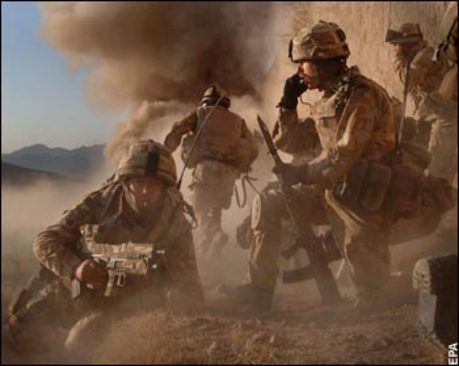
Afghanistan - where is it leading?

Now that coalition forces have just recently suffered their deadliest month yet in the conflict in Afghanistan, it now has become more crucial than ever to rethink the strategy of the United States and its allies in the region.  Currently, the cornerstone of this strategy rests upon two key factors – winning over the local peoples of the region, and training local forces to carry the burden when, and if, coalition forces leave the region.

At least on the exterior, these goals in Afghanistan do make some sense.  The only possible way to succeed via a continued military occupation of Afghanistan is to attain and bank on the support of the local peoples.  Also, if western powers are ever to withdraw from the region, local forces will have to be able to maintain whatever structure these forces leave in their wake.

However, while this strategy is not completely outlandish and does show some merit on the part of military strategists in that they are leaning more towards localized models that entail comprehension of diverse local factors, the question still must be asked – is this strategy actually possible to carry out and have the sought-after effects in the region?  Can the United States and its allies actually win over the peoples of Afghanistan and western Pakistan, and can these same powers possibly train forces that will remain peacekeepers in the years to come?

Despite the fact that I admire the intentions of the military’s current strategy in this region, I do not think that their plan is in fact possible.  It seems to me that rather we are fighting an unwinnable war to win over a people that we do not and cannot understand, and that by funding the Afghani security forces of today, we are inevitably funding our enemy of tomorrow, just as our nation has mistakenly done so many times in the past in this very region.

I cannot foretell the future.  Nor can anyone else.  However, I can comment on what is likely to occur.  And, in constructing such a model, two of the most important subjects to understand are history and praxeology, or human behavior.

An attempt by the United States to make Afghanistan a stable, western-friendly state is by no means a new happening.  The date of the beginnings of our intervention in the region could be debated, but a decent starting point is the late 1970’s when President Carter put forth the Carter Doctrine, which stated that the United States would defend its interests in the Middle East.

This doctrine just barely preceded the Soviet invasion of Afghanistan, and it was this invasion that saw the beginnings of American forces, at this point being mostly CIA and other such agencies, which were attempting to hamper the Soviet forces by funding the Afghani resistance.

Now, there is no room here for a history of American involvement in Afghanistan.  However, what must be noted is that during the 1980’s and 1990’s, a pattern developed in the Middle East – the United States would fund a group in the hope of combating some common enemy, and then in later years the group funded with American taxpayer money would inevitably end up turning against the United States.

A few prominent examples of this are Al Qaeda, who received $6 billion from the United States from 1989 to 1992, the Afghani Taliban, who was receiving US foreign aid up to the very minute American forces entered their country (and continues to receive US foreign aid through Pakistani backchannels) and Saddam Hussein, who received chemical weapons from the US during the Iraq-Iran War of the 1980’s, weapons he later used to kill American soldiers.

This, though briefly put, is the history, or the “what.”  So now must come an examination of the “why,” or the element of praxeology.  For obviously, our attempts to forge friendships in the region in the past have failed.  Our friends have become our enemies, in fact our worst enemies.

There are several possible explanations for why this occurs.  However, mine is quite simple – we do not understand these people, we do not understand this region, we do not understand Islamic culture, and, to be quite blunt, we never will.  It is not a wrongdoing by the West to look at the Middle East through Western eyes.  Rather, it is the only way that a westerner possibly can look at the Middle East.

On top of this extremely problematic misunderstanding of the Middle East by Western peoples then comes another layer of problems, these being the base problems of intervention in any context, amplified by the extreme foreignness and instability of the Middle East as a whole.  The consequences of intervention in any scenario are so unpredictable, so many, and so far-reaching that no one can possibly intervene and successfully fulfil their objectives without in the process creating a dozen new problems.  This is seen with the federal government intervening in states in their own country – how much greater then are the problems when intervening in a region like the Middle East?

All this now brings us back to the point on considering the future.  As I mentioned previously, I cannot say what the future holds.  However, I can make an educated guess.  And, based on analyses of both history and human behavior, it is safe to say that by both indirectly and directly funding the training of a new military force in Afghanistan, we very likely are creating our enemy of tomorrow.  For when these people that we are now training realize that the United States is not leaving, that they are not in fact a free state, that they have become a part of the American empire, and that if they want to live culturally independent of western influence they will have to forcibly remove Western elements within their borders, it seems extremely probable that they will do exactly that.

To say that we are creating a force that will do what we expect it to do in the future is a wish at best.  The reality is that we do not and cannot understand what is truly a foreign mindset, and our best course of action would be to distance ourselves from what is and will be for many years of region of perpetual conflict.

By Elliot Engstrom
Unintended Consequences

A modern Greek tragedy – that could have been foreseen.

As I tried to point out in a recent Learning From Dogs post, foreign policy is an extremely complicated thing.  This sounds self-evident, but it’s amazing the extent to which certain officials think they can control events occurring around the world.

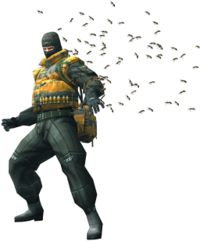
I like to characterize US foreign policy in the Middle East as throwing rocks at a hornet’s nest, and then expecting to be

Unintended consequences

able to control the hornets when they emerge.  The consequences of intervention are so many, so widespread, so complicated, and so unforeseen that no one can hope to be able to manage them, without inevitably intervening even more and thus fueling even more unintended consequences.  (You can see a strong parallel between the overconfidence of government officials in the area of foreign policy and their attitude in areas of attempted economic control.  But, that’s a separate discussion.)

Thanks to the wonderful (in my opinion) people at WikiLeaks, we have been able to see a much more realistic picture of the war in Afghanistan than has so far been available.  CNN reports on one element of these reports that is none other than one of these most unintended of consequences — some of the most advanced military technology in our country’s arsenal falling into the hands of…well we’re not really sure who.  CNN reports:

When unmanned aircraft crash in Afghanistan, scavenger hunters frequently aren’t far behind, U.S. military incident reports published by WikiLeaks suggest.

On several occasions, military units sent to recover the aircraft — known as tactical unmanned aerial vehicles — have arrived to find the aircraft stripped of valuable parts.

In April 2007, a parachute deployed on one that had maintenance issues, one report says. Troops sent to recover the aircraft couldn’t reach it until the next day, when they discovered it was missing some of its electronic components and its payload.

Is this a surprise?  For me, no!

For those who oversimplify foreign policy to international powers moving on a chess board, yes.  Government officials often forget that at the end of the day we are not dealing simply with “the Taliban” or “Al Qaeda” — we are dealing with individual human beings.

And while the Taliban and Al Qaeda as groups may seem predictable, individual human beings are essentially the most advanced supercomputers ever to exist on this planet.  To think that one can predict the actions of human beings on the other side of the world, especially human beings whose culture and background one hardly understandings, is nothing but the highest form of hubris.

And, just like in Greek tragedy, the hubris comes just before the fall, when it turns out that the prideful character did not have everything under control, and in fact is the victim of consequences that he was too prideful to foresee or even consider as a possibility.

By Elliot Engstrom

Realism as an argument against war

Let’s be real about Realism.

Usually when I talk with supporters of America’s current wars in the Middle East, those who discover that I am vehemently opposed to an American presence in the region find me to be naïve.  In their minds, I just do not understand realism or how power politics actually functions.  My anti-war sentiments are the idealistic notions of an inexperienced youth who thinks that everyone should just get along.

The great irony here is that when followed to its logical end, the realist school of internationalist relations which so

The 'fog' of war.

many use to justify the American presence all over the world is in fact one of the greatest arguments against our current foreign policy.  I do not argue against America’s wars in Iraq, Afghanistan, and Pakistan because I think that we would all just get along if these wars ceased to happen.  I argue against these wars because I come from a perspective that sees the people we are fighting as human beings with the same base motivations as myself, and when these people see their livelihood threatened, they take the best course of action that they can find, which unfortunately often involves siding with whatever group holds the most regional power.

The great mistake in logic made by many advocates of an interventionist foreign policy is to merely think of the world in terms of the international stage.  Such people look at the world in terms of what Iran, Al Qaeda, Russia, China, OPEC, or other entities have done or might do, rather than considering actions based on their effects on individuals, and what these individuals are likely to do in response.

Read more of this post

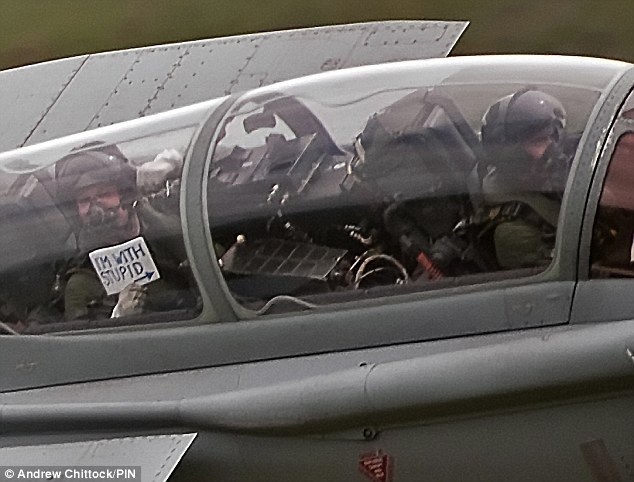
I’m with stupid!

The Loop in North Wales and a neat gag!

Photo Chris Chambers

The British Royal Air Force frequently train their air crews in and around the valleys of North Wales.  Much of that area is designated a Tactical Training Area.  One such route is known as The Loop.  Here’s a description of that from the website Warplane.co.uk:

Machynlleth Loop

The most appropriate place to start with is the Machynlleth Loop which is usually referred to by aircrews as ‘The Loop’ although the USAF crews refer to it as ‘The Roundabout’. It is literally a roundabout of flowed valleys running counter-clockwise following the A470 north eastwards from Machynlleth in the south to Dinas Mawddwy then heading north west to join the A487 at the Cross Foxes Inn. From here it follows the A487 southwards through Corris to end back at Machynlleth. Ordnance Survey Explorer Map OL23 is recommended for anyone planning a visit.

It is arguably the busiest part of the UK low fly system and although the cold war days of up to 80 plus movements in a day are long gone it is still sometimes possible to see 30 plus aircraft in one day. The usual daily total is usually between 10 and 20 aircraft mainly made up of Hawks with the odd Tornado, Harrier or Hercules thrown in. It is certainly the place to go to practice your panning technique.

It takes about 3 minutes for a jet aircraft to do a circuit of the Loop and multiple passes by aircraft is not an uncommon sight, especially by Hawks. So whenever you see an aircraft it is worth checking to see if it looks like doing a circuit as you may be lucky enough to see it again in 3 minutes.

Do click on the link if only to view some of the fantastic flying photographs.

Anyway, a couple of British newspapers recently published a piece about an RAF Navigator holding up a sign inside the cockpit for the many amateur photographers who frequent this part of the country.

Here’s an extract from the Daily Mail:

A RAF navigator gave plane-spotters a chuckle as he held up a sign reading ‘I’m with stupid’ with an arrow pointing to the pilot.

The pair were on a training mission in a £13million Tornado GR4 aircraft, capable of reaching 1,400mph, when the navigator pulled the prank as they jetted through a valley in Wales.

Copyright Andrew Chittock

Wonderful prank, and wonderful picture taken by Andy Chittock who clearly is rather used to taking a mean photograph!

By Paul Handover

Arizona Immigration Law

Introduction

[As a newcomer to Arizona with only a couple of months experience of living in Payson, North-East of Phoenix, I have no right to pass comment on what has been big news both inside and outside the State.  I have observed that feelings run strong about illegal immigrants, with many reacting to the complicated process that I am going through applying for US residency by saying “It’s not fair”.  Not fair in the sense that they see so many Mexicans just walking over the long border that Arizona has with it’s neighbour to the south.

Thus this thoughtful Post from Gordon Coons is a chance for Learning from Dogs to air a point of view from someone who does have a right to an opinion. Ed.]

My fellow Americans, friends and relatives:

I am writing you to express my concerns over the recently passed law regarding immigration in my former state of Arizona.

As most (if not all) of you know, I lived in Arizona for 10 years, my children still live there and Linda and I have been living in Mexico. I mention this only in that it gives me a certain perspective on the events that have transpired recently.

The Border

The spate of marches and protests around the country would lead us to believe that the state of Arizona has completely lost its collective and legislative mind. The feeling is that enforcing such a law would lead to rampant profiling of Mexicans (and other Chicanos) who DO live in this country legally.

First of all, let’s examine WHY all of those Latinos want to come here. There are 2 basic, and yet profound, reasons:

  1. they want jobs and
  2. they want their children to be born here so that they become naturalized citizens and are the beneficiaries of all of our rights.

Do I blame them? Of course not….if I were in their shoes, I would want to come here as well.

I do take exception to the growing group of “banditos Mexicano” who are bent on illegal activities on both sides of the border.

Read the rest of this Post

More on the SR-71, Part 2

The second part of the guest post by Captain Dave Jones. Ed.

Part One was yesterday which I introduced as follows:

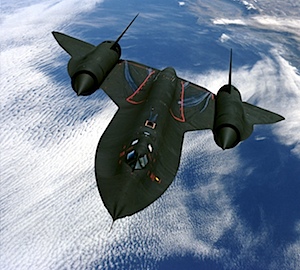
The SR-71, a truly great aircraft

John’s couple of articles about the SR-71 here and here reminded me of the time that I was given an article by my instructor at Mojave. He was a military test pilot and ended up with NASA and he was one of a select few to fly the Blackbird as a civilian….a great chap to talk to…  I continue with Part 2

     The SR-71 was an expensive aircraft to operate. The most significant
cost was tanker support, and in 1990, confronted with budget cutbacks, the
Air Force retired the SR-71. The Blackbird had outrun nearly 4,000 missiles,
not once taking a scratch from enemy fire. On her final flight, the
Blackbird, destined for the Smithsonian National Air and Space Museum, sped
from Los Angeles to Washington in 64 minutes, averaging 2,145 mph and
setting four speed records. 

        The SR-71 served six presidents, protecting America for a quarter of
a century. Unbeknownst to most of the country, the plane flew over North
Vietnam, Red China, North Korea, the Middle East, South Africa, Cuba,
Nicaragua, Iran, Libya, and the Falkland Islands. On a weekly basis, the
SR-71 kept watch over every Soviet nuclear submarine and mobile missile
site, and all of their troop movements. It was a key factor in winning the
Cold War. 

 Read the final part of this great story

More on the SR-71, Part 1

This is a guest post from Captain Dave Jones.  Dave and I go back many years to the time when I was studying for my Instrument Rating, a flying rating that allows one to fly in the same airspace as commercial aircraft.  He is what I call a Total Aviation Person!  Dave read the posts from John Lewis about the SR-71 and mentioned that he had once had a instructor at Mojave Airport, California who had been a civilian SR-71 pilot.  Ed.

The SR-71

The SR-71, a truly great aircraft

John’s couple of articles about the SR-71 here and here reminded me of the time that I was given an article by my instructor at Mojave. He was a military test pilot and ended up with NASA and he was one of a select few to fly the Blackbird as a civilian….a great chap to talk to…

This is his article [broken into two posts because of its length. Ed.] with an intro from my instructor.

Awesome story about a truly great aircraft. I only let it go as high as Mach 3.27 once (the design speed was 3.2) but it could do all that is in this story, Cheers, Rogers

In April 1986, following an attack on American soldiers in a Berlin
disco, President Reagan ordered the bombing of Muammar Qaddafi's terrorist
camps in Libya. My duty was to fly over Libya and take photos recording the
damage our F-111s had inflicted. Qaddafi had established a "line of death,"
a territorial marking across the Gulf of Sidra, swearing to shoot down any
intruder that crossed the boundary. On the morning of April 15, I rocketed
past the line at 2,125 mph. 

        I was piloting the SR-71 spy plane, the world's fastest jet,
accompanied by Maj. Walter Watson, the aircraft's reconnaissance systems
officer (RSO). We had crossed into Libya and were approaching our final turn
over the bleak desert landscape when Walter informed me that he was
receiving missile launch signals. I quickly increased our speed, calculating
the time it would take for the weapons-most likely SA-2 and SA-4
surface-to-air missiles capable of Mach 5 - to reach our altitude. I
estimated that we could beat the rocket-powered missiles to the turn and
stayed our course, betting our lives on the plane's performance. 

 Read more about this amazing story

Not your average day in the ‘office’!

There are escapes, lucky escapes and this …..

Flying an SR-71 Blackbird must have been one of the more extreme forms of aviation at the best of times.

Surviving the breakup up of one at Mach 3.18 and 78,800 feet is unlikely beyond all measure, but not impossible, as this story describes.

The severity of this incident is captured many times over in this story. Can you even imagine thinking:

I had no idea how this could have happened; I hadn’t initiated an ejection.

And the scale of the navigational issues are extreme too:

Before the breakup, we’d started a turn in the New Mexico-Colorado-Oklahoma-Texas border region. The SR-71 had a turning radius of about 100 miles at that speed and altitude, so I wasn’t even sure what state we were going to land in.

Above all, for me, the matter-of-fact way that stories like this are told is testament to the professionalism of these pilots.

[In fact this is such an amazing story that the full account will be published tomorrow, Ed.]

By John Lewis

The Hawker Hunter aircraft

What a beautiful aircraft!

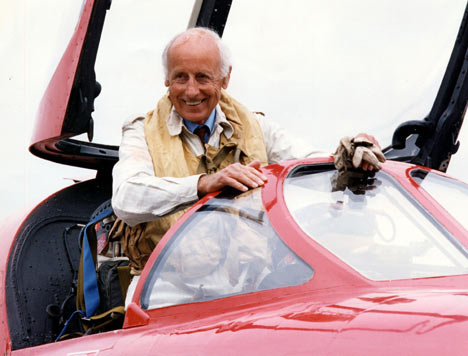
On April 2nd, I published an account of a flight in a Hawker Hunter that my dear cousin, Richard, experienced in 2003, the 50th anniversary of Neville Duke’s breaking of the existing world speed record on September 7th, 1953.  Neville Duke died in 2007 at the age of 85.

Squadron Leader Neville Duke, 85, flew 485 operational sorties during the war

It seemed fitting to add a little more information about this marvellous aircraft from an era when Britain built some of the best aircraft in the world.

As always, WikiPedia has an excellent account of the history of the aircraft.  So this Post will just present a few images for readers to ooh, aah over!

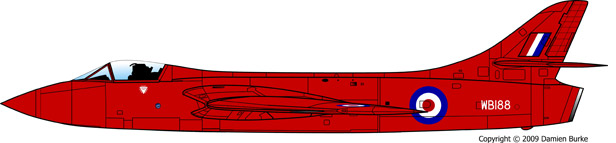
Thunder and Lightnings has some excellent images of all the different types including WB188 that Duke broke the speed record in.

Copyright 2009 Damien Burke

F.3 WB188, Hawker Aircraft, RAF Tangmere, 1953; author
As at 7th September 1953, when World Absolute Speed Record of 722.2 mph gained by Neville Duke; pointed nose, reheated engine, additional curved/raked windscreen
Later scheme of Scarlet Red

There is also a distant connection with our erstwhile editor, Paul.  Paul used to fly a TB2o from Exeter Airfield in SW England which is where the Hunter Club is based.  Jonathan Whaley, who commanded the Hunter that Richard flew in, has his own personal Hunter – Miss Demeanour – registration G-PSST so during the summer months it was not uncommon to see Hunters in the sky above Exeter.

Hawker Hunter 'Miss Demeanour'

Finally, a couple of videos to drool over.

and a lovely display at RAF Waddington in rather unpleasant weather conditions

Wonderfully nostalgic!

By Bob Derham

A Guilty Verdict for Bomber is not “Success”!

Wartime issues – assuming we are at war!

The debate about the Christmas Day Bomber continues.   The pundits continue to define “success” in this case as finding him guilty in a court of law.  They go on and on, repeating over and over again, how the evidence is so strong, how the civilian court system is so reliable, how the shoe bomber was tried in civilian court, and how a guilty verdict is virtually certain.  

This is so wrong.  The definition of success is not whether we find the Christmas Day Bomber guilty in a civilian court.  This man intended to blow himself up on Christmas Day, and take hundreds of innocent Americans with him.  The fact that he is alive today, facing a jury or a judge and possible jail time or, at the worst, the death penalty, is a mere footnote to him.

Has it occurred to anyone that if the military had interrogated the shoe bomber as the failed terrorist that he was, that the odds of the Christmas Day Bomber getting on that plane with those explosives would have been diminished?  And interrogating the Christmas Day terrorist instead of shipping him off to the local prosecutor — for reasons Eric Holder, the U.S. Attorney General, has yet to articulate– diminishes the odds of some future terrorist act?

Eric Holder

We are at war!

These people attacked us as part of the ongoing war with terrorists.   No one should “rest easy” because some lawyer is going to sleepwalk through a trial that may or may not successfully reach the painfully obvious conclusion that the Christmas Day Bomber is guilty! On the contrary, it makes me very uneasy that he is in the civilian court system at this point in time at all, because every moment spent reading this man his rights is a moment that could have been spent gathering intelligence from a terrorist.  His punishment will come in due time.  In the meanwhile, we have to extract as much information from his as we can in order to defend ourselves.

We are at war.

By Sherry Jarrell