Category: Innovation

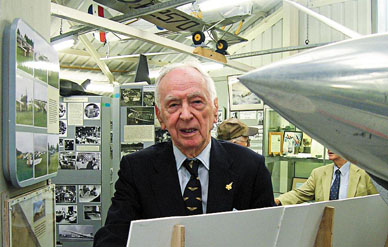
Captain Eric Brown. MBE, OBE, CBE, DSC, AFC.

Now Think Sound Barrier!

I was excited to see details of a lecture held recently in Glasgow, recounting the Struggle to Break the Sound Barrier.  [Nice history on WikiPedia, Ed]

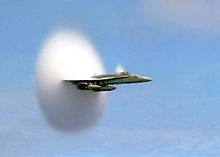
FA-18 breaking sound barrier

How easy it is today to jump into an aircraft, and expect to fly safely round the world in the luxury of an arm chair 7 miles or more above the surface of the earth, or know that the modern aircraft of our Air Forces can fly on every limit known, in the knowledge that all the aerodynamic tests and trials have been carried out.

Eric Brown is now 92. He gave up his wings at 70, but still 22 years later is lecturing on a subject which was at the time uncharted territory, a race to fly faster than Mach1, the Speed of Sound. Chuck Yeager got there first, but now ponder the following.

Captain “Winkle” Brown was with the Royal Navy for 31 years, much of it as an outstanding test pilot.

He flew 487 different types, (not variants) and made 2407 Aircraft Carrier landings, both World records.

At University he studied German, so at the end of the war as a linguist he interrogated many leading German aviation personalities such as Willy Messerschmitt, Ernst Heinkel, and Hanna Reitsch..

Capt. Eric Brown

What an interesting life, and still with stories to tell, and knowledge to pass on. There’s a lovely interview with Capt. Brown here.

By Bob Derham

Captain Thomas Murray – RIP

Regular readers of Learning from Dogs will know that we usually only post a single article on week-end days.  But yesterday I received news that a business friend of many years standing had lost his battle against ill-health and died peacefully in the afternoon.  His name was Tom Murray and it’s my wish to celebrate his life by reproducing in full the email that was sent to me. It’s serendipitous that the planned posts by John Lewis for this week-end are aviation related.

Capt. Tom Murray

On Thursday afternoon the world lost a respected, influential, and creative aviator, one of the “Great Ones”.

Captain Thomas Murray was a pilot, artist, inventor, musician, and father.

A noted jet pilot, he explored the far corners of the globe, mapping out the Canadian Arctic, flying thousands of hours in Africa, Europe, the Himalayas, and the Americas.

Whether flying Gulf streams, Falcon, Hawkers, Learjets or old DC3s, Tom was a pilot’s pilot, the friendly, knowledgeable kind of guy who knew his craft so thoroughly that airmen the world over would “just call Tom”, whenever they needed answers.

He thrilled everyone he met with exciting stories of his travels…

…such as the time he found himself lost while flying over what should have been a large African lake, only to realize the lake had dried up. The only hope of finding civilization was to dead-reckon his way in a straight line and hope he hit the tiny “dot of a town” that was his final destination.

…Or the time his oxygen system failed in the Himalayas at 20,000 feet forcing him to dive the airplane into an 8000-foot valley to find out he was the only conscious crewmember.

…Or the time the entire front panel of his Hawker 800 fell onto his lap during takeoff because someone had forgotten to screw it in.

An adventurer to the max, he was also an inventor and visionary.

Tom took an ordinary problem such as converting hard-to-read aircraft performance charts into easy-to-read tables, and then turned that process into a successful business.

Tom created one of the first electronic documents to find its way into a cockpit – tables of aircraft performance data that minimized the chance of pilot error due to miscalculation that he called “EPADS”.

Constantly working to organize the cockpit, provide higher levels of safety and better information to the pilots, he invented one of the world’s first electronic flight bags, and established the process of managing aircraft electronic checklists, a process that the FAA later modeled their ECL guidelines after.

He joked that the entire cockpit should have a mode that turned it into a simulator during flight to alleviate boredom amongst pilots and give them a chance to train in truly challenging simulations during long flights.

He invented games for children, played flute, and wrote a storybook.

An accomplished artist, he relaxed by attending artist workshops and amazing all with his skill and precision. Just last summer, Tom held his first art exhibition.

His greatest creation with wife Daisy was his son, Thomas Alexander Murray, who was born with the charismatic smile and sense of mischief that characterized Tom at his best.

Tom’s inventions were his “other child”.  He would latch onto a design problem like a pit bull.

He cherished the fact that he would uncompromisingly focus on a design and refuse to leave it go it until it was “perfect”, even to his own financial detriment when those around him insisted he was losing sight of the “big picture”.

To this effect, during his last year, he asked me to form a foundation in his name, to offer an annual award (which I’ll see if it’s possible to do)…

“To the individual who focuses on solving difficult problems; who is clearly addicted to finding the solution; who is unrelenting in the face of opposition – which may seem to be (or genuinely be) to their own personal detriment”

Perhaps he wanted an award, he knew he’d win!

Tom was well known for acting as “pilot in command” in his daily life, often forcing people to act “my way or the highway” and insisting that his way was the “right way”.

While this trait was annoying and frustrating to colleagues and friends, what was possibly more frustrating was the number of times one was forced to humble oneself when he was indeed “right”.

In the last year of his life, Tom worked relentlessly to teach others his design philosophy and prepare several of us to run the company he’d created, the vessel that would carry his vision and concern for the safety of his fellow pilots into the future.

Tom loved life and spent his days on a personal mission to make the world a better place, a more interesting place, a more ordered place, a more beautiful place, a more fun place to live…

Tom wasn’t always too clear with his emotions, and though he often maintained a “business” exterior, at heart he was the artist, and his appreciation and depth of love for his family, fellow pilots, and the people who worked for him and with him, his friends — was endless.

You always knew when he respected you, he’d give you a big pilot’s “Thumbs up!”

We will miss him dearly.

Today, we salute a great airman, Captain Thomas Murray.

On behalf of Tom, I know he would wish you a warm, “Thumbs up!”

Charles Guerin President
On-Board Data Systems (OBDS)
Innovation? What innovation?

We’ve always known “why?”

Eureka!

We can carry on doing the same old things!
Along the way, we can improve, sell more, and cut costs.
But in end, sooner or later, we need to do something different.
That is why we innovate.

Now we know “how?”

Nowadays, everyone is talking about innovation!
Many things seem mysterious for a long time, and then we bring them under control.
It happened in “sales”, then in “quality”, now it is the turn of “innovation”.
In the past, a few people knew that they could manage innovation; now everyone knows.
There are processes for managing innovation using “ideation”, “co-creation” and, even, “open innovation”.
That is how we innovate.

But do we know “what?”

How do we know what to innovate?

Now there is a question!

By John Lewis

20 years of the WWW

And a neat idea from the BBC

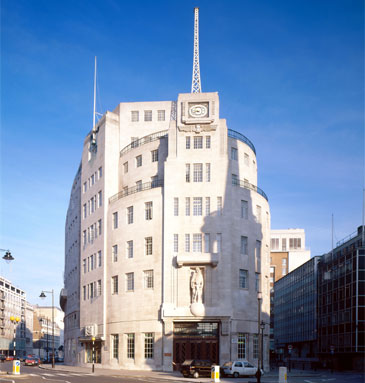
BBC Broadcasting House, Portland Place, London

For those living outside the UK (well so far as our IP address is concerned) watching BBC television via the Web has always been a bit of a challenge.  Presumably because of the way that the BBC is funded, a Licence Fee (aka tax!) on those UK householders that wish to watch public broadcasted television, it is deemed ‘unfair’ if those outside the UK, who do not pay this Fee, have unfettered access to the Beeb’s programming.  Thus if one attempts to access the BBC online from outside the UK you are met with the following message:

Currently BBC iPlayer TV programmes are available to play in the UK only, but all BBC iPlayer Radio programmes are available to you. Why?

However, the BBC have made a wonderful exception with regard to a series of programmes under the title of The Virtual Revolution. All about 20 years of the World Wide Web.

Most of, if not all, the key players of this last 20 years have been interviewed and the uncut footage of these interviews is here.  Fascinating viewing.

And if you fancy making your own documentary using this material, under a unique BBC permissive licence, then here’s where to start.

Well done, the Beeb!

By Paul Handover

Less is more in manufacturing productivity

Recollections of an memorable project

Thinking about the concept of “less is more”, takes me back to a small and initially unpromising project that a maverick boss of mine persuaded me to get involved in many years ago. It provides an interesting example of counter-intuitive optimisation.

The scene…

There was a manufacturing plant which produced credit cards. The plastic cards were manufactured in sheets; this involved a lamination process which started with a “layup” of three plastic sheets and ended up with them laminated together as one sheet.

The lamination was done in a press which was heated and then cooled; this caused the plastic sheets to melt slightly and to become welded together as one.  To produce cards with flat and clean surfaces, each layup also had shiny metal plates on either side to produce a smooth finish.

The instinct … Read more of this article

Even more Tim Berners-Lee

The powerful spread of open data.

Sir 'Tim' Berners-Lee

Tim Berners-Lee was, or is, the father of the Internet, that remarkable network that has done to connect millions together.  Indeed, my personal view is that the Internet may be the only real tool that people have to protect and defend democracy.

I’m sure thousands know the background of Sir Timothy John “Tim” Berners-Lee, to give him his full name, an Englishman living in the USA.

There was an introduction to the the way that Sir Tim wants to see the web move in yesterday’s Post.

But Tim recently (February 2010) gave a talk in Long Beach, California, entitled The year open data went worldwide. This takes the concept much further.

It’s a fascinating presentation.

By Paul Handover

More Tim Berners-Lee

Not content with ‘inventing’ the world wide web, Sir Tim is still at it.

This Post doesn’t really require any introduction.

If you see Sir Tim as the hero that he is then you will want to watch this presentation given to a TED audience in 2009.

Enough said!

By Paul Handover

Man on the moon

How many remember this?

Very early on in the life of this Blog, indeed on the second day, I wrote a short article about the NASA mission to the moon, some 40 years after the event.  You see, for me that has been the historic event of my lifetime.

I believe that this nation should commit itself to achieving the goal, before this decade is out, of landing a man on the Moon and returning him safely to the Earth. No single space project in this period will be more impressive to mankind, or more important in the long-range exploration of space; and none will be so difficult or expensive to accomplish.
Apollo 11 badge

That speech before Congress by President Kennedy was on the 25th May, 1961.  I was 16 and was enthralled by the idea of being alive when man first set foot on another planetary body.  That came about on July 20th, 1969 at which time I was living and working in Sydney, Australia.  I took three days off work, rented a TV and watched every minute of the event.

Exploration is a core need of man.  By pushing out the boundaries of our knowledge we continue to offer hope to mankind.

So it is with great disappointment that it has been announced by President Obama that the manned mission programs to the moon are to be severely curtailed – that sounds terribly like political speak for cancelled!

As Eugene Cernan (last astronaut to set foot on the moon) said:

I’m quite disappointed that I’m still the last man on the Moon. I thought we’d have gone back long before now.
I think America has a responsibility to maintain its leadership in technology and its moral leadership… to seek knowledge. Curiosity’s the essence of human existence.

Curiosity is indeed the essence of human existence.

That curiosity and the investment in space exploration by NASA on behalf of the whole world has shown us some remarkable findings about Saturn and it’s majestic rings.  Just watch the video segments in this piece from the BBC.

The one-time cost of Cassini-Huygens mission was $3.26 billion. Just 0.3% of the cost of one year’s expenditure on U.S. defense spending.

Science missions like Cassini enhance cooperation between nations, and greatly contribute to scientific progress which benefits everyone.

Perhaps the big Banks would like to pick up the cost of further manned missions to the Moon?

By Paul Handover

Less is more!

Less complexity is more simplicity and fun!

There seems to be an upsurge of interest in the philosophy of “less is more”. A couple of recent articles about product design, in general and in a specific case, address relevant aspects of this phenomenon.

What do we know?

On one level, we tend to question: how can “less” be “more”? We know it makes no sense! This is true: it really does not make any sense, if all that we focus on is measurable, countable, sequenced information – the kind of information understood by the “left side” of our brains.

On a different level, we know that “less” really is “more”. Less complexity is more simplicity and fun; less distraction is more concentration; and so on. This makes sense when we are thinking about the whole picture – the kind of information which is handled by the “right side” of our brains.

At the moment and on this topic, there is a specific product which is exercising the minds of people who follow these things. Continue reading “Less is more!”

The manageability of innovation

Innovation is manageable

“Innovation” means different things to different people but, generally, it involves the application of novel ideas, products or processes for some purpose. But even if we can agree on “what” it is, do we understand “how” innovation happens?

Managing 'bright' ideas

There is a significant change taking place in the way that the process of innovation is understood. We can put this in the context of developments in the manageability of other areas of business activity in recent times. Read more of this Post