Category: Innovation

Changing our fuel would be a great move.

A recommendation to watch this film.

I’m talking about the film Fuel which Jean and I watched on Monday night.

Here’s the trailer,

This movie trailer gives insight into the impeding oil dependency problem and hints at the biofuel solution. The Fuel Film raises awareness of 9/11, global warming, and moreover, how we can switch to an alternative fuel called biofuel. It is based on renewable sources such as algae or ethanol, costs less, and combats the impeding destruction of the environment.

But Top Documentary Films has the full film available, the link is here. (And see below)  TDF describe the film, thus,

Eleven years in the making, FUEL is the in-depth personal journey of filmmaker and eco-evangelist Josh Tickell, who takes us on a hip, fast-paced road trip into America’s dependence on foreign oil.

Combining a history lesson of the US auto and petroleum industries and interviews with a wide range of policy makers, educators, and activists such as Woody Harrelson, Sheryl Crow, Neil Young and Willie Nelson.

Animated by powerful graphics, FUEL looks into our future offering hope via a wide-range of renewable energy and bio-fuels. Winner of the Sundance Audience Award.

The events of Sept. 11 and Hurricane Katrina factor in both visually and thematically, providing provocative anchors for the movie’s indictment of what Tickell believes is the Big Oil-cozy, ecologically indifferent Bush administration.

Johnny O’Hara’s WGA Award-nominated script doesn’t dwell on muckraking, however; it’s more focused on broadly inspiring viewers than preaching to the converted.

Interviews with a wide range of environmentalists, policy makers and educators, along with such “green” celebrities as Woody Harrelson, Sheryl Crow and Larry Hagman offer serious fuel for thought – as well as for action.
Smartly animated interstitials, memorable archival material and a lively soundtrack round out the fast-paced proceedings.

Have to say that the film was powerful and compelling and a great reminder that a sustainable way of life for all of us doesn’t mean the end of the world as we know it.  Far from it; the word ‘sustainable’ is the clue here!

Here’s the full film,

Director Josh Tickell takes us along for his 11 year journey around the world to find solutions to America’s addiction to oil. A shrinking economy, a failing auto industry, rampant unemployment, an out-of-control national debt, and an insatiable demand for energy weigh heavily on all of us. Fuel shows us the way out of the mess we’re in by explaining how to replace every drop of oil we now use, while creating green jobs and keeping our money here at home. The film never dwells on the negative, but instead shows us the easy solutions already within our reach.

Finally, a little footnote for all you Planet watchers out there.  Summer starts, as in the summer solstice, today (the 20th) in North America at 7:09 P.M. EDT (UTC -4 hours) or 4:09 P.M. MST (UTC -7 hours) and in the UK at 23:09 UTC.

Welcome Doctor Barkman!

A delightful contribution from a guest author.

Dear readers, from time to time I am approached by other authors who have flattered me by asking if I would like to publish their Blog posts from time to time.  So I have been doubly flattered by having two authors contact me in the last week.

So to the first.  It is with great pleasure that I welcome Jane Brackman, Ph.D., author of the blog Doctor Barkman Speaks who will, from time to time, republish her posts on Learning from Dogs. I have no doubt that you will enjoy her scientific expertise regarding dogs

So today, please enjoy …

oooOOOooo

HOW DOGS THINK – NEW SCIENCE LOOKS INSIDE THEIR MINDS WITH MRI IMAGING

Canine illustrator Robert Dickey assigned thoughts and feeling to his Boston Terrier based on the dogs’s expressions. Here he illustrates contentment, sympathy and misery.  (Dogs from Life, Page & Co., 1920)
**
Are you gonna eat that? Are you gonna eat that?  I’ll eat it.”
Is this what dogs think?  Or do they experience more complex thoughts?  Apparently science is getting pretty close to figuring it out. If not exactly WHAT they’re thinking, then where in the brain the thoughts are coming from.  Since brains are pretty much the same across mammal species, if researchers identify which parts of the the brain light up, based on what humans have said, they can guess what the dogs’ thoughts are, too.

A couple of smart guys, Gregory Berns and Andrew Brooks of Emory University, watching a military dog assist Navy Seals as they overran the Osama Bin Laden compound, got a brilliant idea.  If you can teach dogs to jump out of helicopters, surely dogs could be trained to enjoy themselves inside an fMRI machine while scientists calculate what the dogs are thinking by scanning their brains.

The researchers, who are dog-lovers, explained, “We want to understand the dog-human relationship, from the dog’s perspective.  From the outset, we wanted to ensure the safety and comfort of the dogs.  We wanted them to be unrestrained and go into the scanner willingly.

So they recruited a professional dog trainer, Mark Spivak, and two companion dogs, a Feist Terrier named Callie and a Border Collie named McKenzie.  The team said that both dogs were trained over several months to walk into an fMRI scanner and hold completely still while researchers measured their brain activity.

In the photo below Callie wears ear protection as she 
prepares to enter the scanner.  The research team 
includes, from left, Andrew Brooks, Gregory Berns and Mark Spivak.  
(Credit: Photo by Bryan Meltz)

This is what the researchers wrote in the journal article that was published in PLOS last week:

Because of dogs’ prolonged evolution with humans, many of the canine cognitive skills are thought to represent a selection of traits that make dogs particularly sensitive to human cues. But how does the dog mind actually work? To develop a methodology to answer this question, we trained two dogs to remain motionless for the duration required to collect quality fMRI images by using positive reinforcement without sedation or physical restraints. The task was designed to determine which brain circuits differentially respond to human hand signals denoting the presence or absence of a food reward.

Eventually they hope to answer the more profound questions we all ask:  Do dogs have empathy? Do they know when we are happy or sad?  How much language do they really understand?”  (And here’s one from me- When they pee on the carpet and we don’t find it until the next day, when we scold them do they know why we are scolding them?)

Do dogs feel guilt?
You can read a brief summary of the project here:  What is Your Dog Thinking? Brain Scans Unleash Canine Secrets.

Or read the entire scholarly article here:

Berns, Gregory, Brooks, Andrew and Spivak, Mark, Functional MRI in Awake Unrestrained Dogs (April 27, 2012). 

Jane Brackman, Ph. D.

oooOOOooo

Well, I don’t know about you but I found this a most fascinating article.  All of us who live around dogs, both physically and emotionally, sense the closeness, may I use the word ‘magic’, of the relationships.

Take a look at the photograph below.  Until I left the UK in 2008, a few of us owned a lovely old Piper Super Cub.  It was a joy to fly.  I used frequently to take Pharaoh to the grass airfield, Watchford Farm, up on the Devon moors.  One day he showed such interest in the aircraft that I lifted him up to the passenger’s seat, strapped him in and taxied all over the grass airfield.  This picture shows something that is difficult to explain otherwise – Pharaoh’s real joy at sharing the adventure.  Of course, I didn’t fly with him, that would have been a step too far, but we did taxi almost up to take-off speed.  Dr. Barkman, what do you make of that?

Watchford Farm, Devon, July 2006.


Our most beautiful planet.

Revisiting the wonderful NASA time-lapse film.

Last November, I published a Post on Learning from Dogs under the title of This is rocket science!  It included the film Walking on Air shot from the International Space Station.

Anyway, a few days ago, Ginger I. here in Payson, sent me an email with the YouTube version of the film and I decided to include it as the only item in today’s post.

Enjoy.

Time lapse sequences of photographs taken with a 4K-camera by Ron Garan fragileoasis.org/bloggernauts/Astro_Ron and the crew of expedition 28 & 29 onboard the International Space Station from August to October, 2011. All credit goes to them, who to my knowledge shot these pictures at an altitude of around 350 km.  I intend to upload a FullHD-version presently.

HD, refurbished, smoothed, retimed, denoised, deflickered, cut, etc.  All in all I tried to keep the looks of the material as original as possible, avoided adjusting the colors and the like, since in my opinion the original footage itself already has an almost surreal and aestethical visual nature.

Music: Jan Jelinek | Do Dekor, faitiche back2001 w+p by Jan Jelinek, published by Betke Edition janjelinek.com | faitiche.de

Image Courtesy of the Image Science & Analysis Laboratory, NASA Johnson Space Center, The Gateway to Astronaut Photography of Earth eol.jsc.nasa.gov

Editing: Michael König | koenigm.com

Shooting locations in order of appearance:

1. Aurora Borealis Pass over the United States at Night
2. Aurora Borealis and eastern United States at Night
3. Aurora Australis from Madagascar to southwest of Australia
4. Aurora Australis south of Australia
5. Northwest coast of United States to Central South America at Night
6. Aurora Australis from the Southern to the Northern Pacific Ocean
7. Halfway around the World
8. Night Pass over Central Africa and the Middle East
9. Evening Pass over the Sahara Desert and the Middle East
10. Pass over Canada and Central United States at Night
11. Pass over Southern California to Hudson Bay
12. Islands in the Philippine Sea at Night
13. Pass over Eastern Asia to Philippine Sea and Guam
14. Views of the Mideast at Night
15. Night Pass over Mediterranean Sea
16. Aurora Borealis and the United States at Night
17. Aurora Australis over Indian Ocean
18. Eastern Europe to Southeastern Asia at Night

Dogs and the mathematics of calculus.

A remarkable story about two very clever men and an equally clever dog!

Five days ago, I received an email from a Richard Hake quite out of the blue!  This is what it said,

Dear Paul Handover,

I’m taking the liberty of cc’ing this to Tim Pennings since he may be interested in your blog “Learning from Dogs.”
As founding author of the great blog “Learning from Dogs”, I thought you might be interested in the work of Tim Pennings.
Paraphrasing from the Hope College website:

*~*~*~*~*~*~*~*~*~*~*~*~*~*~*~*~*~*~*~*~*~*
Tim Pennings is a professor of mathematics at Hope College and owner of a famous Welsh Corgi dog, Elvis, who knows calculus. He has given over a hundred talks – including several speaking tours – based on his papers “Do Dogs Know Calculus?” [Pennings (2003)] and “Do Dogs Know Bifurcations?” [Minton & Pennings (2007)]. Articles about Elvis are easily found on Google and Youtube. For example:
1. “A Dog, a Ball, and Calculus” Ivars Peterson’s MathTrek,
2. “Calculating Dogs” Ivars Peterson’s MathTrek ,
3. “Dog Plays Fetch With Calculus” YouTube (see below)
4. “Elvis The Calculus Dog at Roanoke College” Vime0 Videos.
*~*~*~*~*~*~*~*~*~*~*~*~*~*~*~*~*~*~*~*~*~*

Regards,

Richard Hake, Emeritus Professor of Physics, Indiana University
Honorary Member, Curmudgeon Lodge of Deventer, The Netherlands
President, PEdants for Definitive Academic References which Recognize the Invention of the Internet (PEDARRII)

Well what fun!

Let me start with that YouTube video mentioned above:

Tim Pennings of Hope College in Madison, Wisconsin takes a look at the mathematics his dog Elvis uses to play fetch.

And here are a number of wonderful pictures of Elvis from which comes this one:

Elvis: Professor Tim Pennings' dog.

More may be learnt about Tim Pennings from here, from which I quote:

I am a professor of mathematics at Hope College. My areas of research and writing include dynamical systems (the shadowing property in particular), mathematical modeling, and the infinite. I have directed the Mathematics REU Site since 1995 and have mentored research students almost every year since 1990. A complete list of published papers, talks, and other professional activity is included in my vitae.

My interest in infinity stems from my intrigue with the rich stuff that lies in the confluence of mathematics, physics, philosophy, and theology. My paper, “Infinity and the Absolute: Insights into Our World, Our Faith, and Ourselves” is the backbone of my senior seminar course, Pondering the Big Questions. Several other math-theology papers, published in Perspectives include “A Life Lesson from Calculus” and “Haggai, Mathematical Dynamics, and the Nature of Good and Evil”.

I have a famous Welsh Corgi dog, Elvis, who knows calculus. Here are some pictures of us. We have given over a hundred talks – including several speaking tours – based on our papers “Do Dogs Know Calculus?” and “Do Dogs Know Bifurcations?” (written with Roland Minton) both published in the The College Mathematics Journal of the MAA. Articles about Elvis are easily found on Google and Youtube.

Finally, the author of the email, Richard Hake, is no slouch!  Here’s Richard’s Blog Hake’sEdStuff and information on his academic background.

Thanks, Richard, for getting in touch!

Coping with traffic jams!

With thanks to Dan Gomez for sending me the YouTube link.

It’s a crazy old world but sometimes that craziness provides a relief from the ‘serious’ side to life.

This week the Dutch company PAL-V announced the first flights of its prototype “flying car”.
This unique vehicle is called the PAL-V One, or the ‘Personal Air and Land Vehicle’, and It marks the start of a new era.

On the ground the vehicle drives like a sports car. Within minutes its rotor is unfolded and its tail is extended: then it is ready to take off thanks to the advanced gyrocopter technology.

With these successful test results it is proven that it is not only possible to build a flying car but also that it can be done within existing international rules for both flying and driving.

Having passed this important milestone the company is now inviting investors to join them in creating the future.

The next step will be the design of the first commercial production model of the PAL-V, and first deliveries are expected in 2014.

For 100 years people have dreamed of a flying car, and many attempts have been made to realize this dream, but now it has truly become a reality.

www.PAL-V.com

Meating climate change!

An interesting reflection on the rearing of cattle and an ‘Anti-Meat pill!  No kidding!

I was vaguely aware of the contribution of cattle towards the overall rise in greenhouse gases.  A very quick web search found this news item from the United Nations which included,

29 November 2006 – Cattle-rearing generates more global warming greenhouse gases, as measured in CO2 equivalent, than transportation, and smarter production methods, including improved animal diets to reduce enteric fermentation and consequent methane emissions, are urgently needed, according to a new United Nations report released today.

“Livestock are one of the most significant contributors to today’s most serious environmental problems,” senior UN Food and Agriculture Organization (FAO) official Henning Steinfeld said. “Urgent action is required to remedy the situation.”

But what prompted me to look a little closer at this was a recent article on the Big Think website that was entitled, The Anti-Meat Pill: Human Engineering to Combat Climate Change.

Let me quote a little from the article, presented on the Big Think website by Daniel Honan.

NYU Bio-ethicist Matthew Liao has caused a stir recently with a forthcoming paper that explores the biomedical modification of humans in order to stop us from consuming red meat.

and a paragraph later continued with,

In a forthcoming paper to be published in Ethics, Policy and the Environment, Liao suggests that humans might take pills to bring about mild nausea to rid ourselves of our appetite for red meat. This would have a mitigating effect on climate change, he argues.

Liao refers to studies such as a widely-sited UN report that estimates 18 percent of greenhouse emissions come from livestock, which is a higher share than transportation. Another report, from 2009, estimates livestock emissions are significantly higher, at 50 percent. Fact of life: cows fart. Other negative impacts of increased livestock farming includes deforestation and a drain on water supplies.

The Internet rapidly found Matthew Liao’s website and from there the paper referred to above, which is introduced thus,

Professor Matthew Liao of New York University

Anthropogenic climate change is arguably one of the biggest problems that confront us today. There is ample evidence that climate change is likely to affect adversely many aspects of life for all people around the world, and that existing solutions such as geoengineering might be too risky and ordinary behavioural and market solutions might not be sufficient to mitigate climate change. In this paper, we consider a new kind of solution to climate change, what we call human engineering, which involves biomedical modifications of humans so that they can mitigate and/or adapt to climate change. We argue that human engineering is potentially less risky than geoengineering and that it could help behavioural and market solutions succeed in mitigating climate change. We also consider some possible ethical concerns regarding human engineering such as its safety, the implications of human engineering for our children and for the society, and we argue that these concerns can be addressed. Our upshot is that human engineering deserves further consideration in the debate about climate change.

Now if we go back to that UN article, we can see that emissions from cattle and livestock in general is not a minor issue.

When emissions from land use and land use change are included, the livestock sector accounts for 9 per cent of CO2 deriving from human-related activities, but produces a much larger share of even more harmful greenhouse gases. It generates 65 per cent of human-related nitrous oxide, which has 296 times the Global Warming Potential (GWP) of CO2. Most of this comes from manure.

And it accounts for respectively 37 per cent of all human-induced methane (23 times as warming as CO2), which is largely produced by the digestive system of ruminants, and 64 per cent of ammonia, which contributes significantly to acid rain.

With increased prosperity, people are consuming more meat and dairy products every year, the report notes. Global meat production is projected to more than double from 229 million tonnes in 1999/2001 to 465 million tonnes in 2050, while milk output is set to climb from 580 to 1043 million tonnes.

But modifying humans, frankly, misses the point.

That is unless we wholeheartedly embrace the need to change, to sustain the only planet we can call home, and do it because we care, Planet Earth will do the bioengineering for us – engineering us into extinction.  For example, just cut back on eating meat!  And if you don’t want to do it for the planet, do it for the health of your children as this Health Petition underlines in spades.

So I’m sorry Professor Liao but this seems like a step too far – by a long way.

Rupert Sheldrake

An opportunity to watch a new video of Rupert Sheldrake talking about his new book The Science Delusion

I have written or referred to Rupert Sheldrake many times previously on Learning from Dogs. I have also read the book by Mr. Sheldrake, Dogs That Know When Their Owners Are Coming Home. (The linked title takes you to something I published about the book and the author on the 9th May, 2011 and also links to other articles about Rupert Sheldrake.)

Rupert Sheldrake

Previously, I had written about what Rupert Sheldrake calls morphic resonance and morphic fields, see my article here.

Yesterday, I received an email promoting Sheldrake’s new book.  This is what it said,

From Rupert Sheldrake
London January 30th, 2012

In my last newsletter I said that the UK launch of my new book The Science Delusion would be streamed live from Kings College, London University, on January 17, but unfortunately the internet connection at King College broke down, so this did not happen.

Clearly they were able to film that launch and that video link is available, but only until February 7th, 2012!  So if you want to watch the video then please go here.  I am not able to embed that into this Post.  You will be going to the video of this:

ONLINE VIDEO STREAM

THE SCIENCE DELUSION: FREEING THE SPIRIT OF INQUIRY

January 17, 2012, 7pm – 8:30pm (GMT), 2pm – 3:30pm (EST)
Venue: Great Hall King’s College London, Strand, London WC2R 2LS

In addition, that email newsletter carried the link to a review of the new book in the British Guardian newspaper, by Mary Midgley.  It starts thus,

The unlucky fact that our current form of mechanistic materialism rests on muddled, outdated notions of matter isn’t often mentioned today. It’s a mess that can be ignored for everyday scientific purposes, but for our wider thinking it is getting very destructive. We can’t approach important mind-body topics such as consciousness or the origins of life while we still treat matter in 17th-century style as if it were dead, inert stuff, incapable of producing life. And we certainly can’t go on pretending to believe that our own experience – the source of all our thought – is just an illusion, which it would have to be if that dead, alien stuff were indeed the only reality.

If you want to read the review in full then it is here. (If you are a follower of Rupert Sheldrake, best not to take the comments to Mary’s article too seriously!)

Also, the Guardian blog carried a piece by Mark Vernon, that opened thus,

Werner Heisenberg, one of the founding fathers of quantum physics, once observed that history could be divided into periods according to what people of the time made of matter. In his book Physics and Philosophy, published in the early 60s, he argued that at the beginning of the 20th century we entered a new period. It was then that quantum physics threw off the materialism that dominated the natural sciences of the 19th century.

Of materialism, he wrote:

“[This] frame was so narrow and rigid that it was difficult to find a place in it for many concepts of our language that had always belonged to its very substance, for instance, the concept of mind, of the human soul or of life. Mind could be introduced into the general picture only as a kind of mirror of the material world.”

Today we live in the 21st century, and it seems that we are still stuck with this narrow and rigid view of the things. As Rupert Sheldrake puts it in his new book, published this week, The Science Delusion: “The belief system that governs conventional scientific thinking is an act of faith, grounded in a 19th-century ideology.”

Mark Vernon closes the fascinating piece with these tantalising words.

The analogy has the benefit of naturalising extrasensory perception, Watts notes. But it also raises problems. For example, how would it be possible mentally “to touch” objects that don’t exist, as would happen when contemplating a centaur? Watts concludes: “An adequate account of the mind must encompass both first- and third-person description whereas the idea of a ‘field’, along with the other spatial descriptions that Sheldrake uses, seem to be exclusively third-person type descriptions.” Oddly, this is a strikingly 19th century attitude to have.

Nonetheless, Sheldrake must welcome such serious engagement with his work. He may not be right in the details. But he is surely right, with Heisenberg, in insisting that the materialist world view must go.

Don’t rely on my short excerpts, read the article in full here.

For my money, this will be a book that I won’t miss reading!

To take your breath away!

Dancing like you have never, ever seen it before!

Unless you are one of the several million that have watched a couple of versions on YouTube.

Anyway, the YouTube link was sent to me by Katie S.

Watch and be overwhelmed.

Duo MainTenanT

Composed by Nicolas Besnard (former guest hand to hand of Cirque du Soleil “Zumanity” 2005-2009) and Shenea Booth (formerly of Duo Realis and two time Sport Acrobatic World Champion).

————

Nicolas Besnard developed his art at National Circus School and at the University of Dance of Montreal. In 2005, Nicolas was invited to be a guest act in the sexiest production of Cirque du Soleil in Las Vegas – Zumanity where he performed over 2000 times in four years.

He has performed all around the globe and has appeared in many different TV shows: Le Plus Grand Cabaret du Monde, Benissimo, …

He also won the Silver Medal in Paris at the most recognized Circus Festival in the world – 31st Festival Mondial du Cirque de Demain and made it to the finals of French Got Talent.

Shenea Booth is a former two time World Champion in Acrobatic Gymnastics, and is a recent USA Gymnastics Hall of Fame Inductee.  In 2004 she retired from the competitive arena and evolved into a world renowned artist, creating a groundbreaking genre of entertainment as an acrobatic duo.

As an entertainer, Shenea has made special appearances on Dancing With The Stars, So You Think You Can Dance, Cirque Du Soliel premier special events, NBC’s Ice Skating and Gymnastics Spectacular, and was a finalist on Americas Got Talent.

Today, Shenea and Nicolas have come together to combine their unique and original artistic knowledge of acrobatic dance and create a breathtaking master piece.

More learning from dogs!

A peek at a very interesting article in the February issue of National Geographic magazine.

Big thanks to Bob T. here in Payson for sending me a recent email that contained the one line, “There is a lengthy article entitled “Mix, Match, Morph” in the February issue of National Geographic.  I strongly suspect you will find it of interest.”   Understatement big time!  The article is wonderful.   It is also available online! 🙂

The premise behind the article is, as the opening words reveal,

Three breeds, Copyright National Geographic, photo by Robert Clark

How to Build a Dog

Scientists have found the secret recipe behind the spectacular

variety of dog shapes and sizes, and it could help unravel the

complexity of human genetic disease.

As is made clear early on in Evan Ratcliff’s text, the huge variety in the breeds of dogs is a very recent occurence,

For reasons both practical and whimsical, man’s best friend has been artificially evolved into the most diverse animal on the planet—a staggering achievement, given that most of the 350 to 400 dog breeds in existence have been around for only a couple hundred years.

And later Ratcliff writes,

The breeders gave no thought, of course, to the fact that while coaxing such weird new dogs into existence, they were also tinkering with the genes that determine canine anatomy in the first place­. Scientists since have assumed that underneath the morphological diversity of dogs lay an equivalent amount of genetic diversity. A recent explosion in canine genomic research, however, has led to a surprising, and opposite, conclusion: The vast mosaic of dog shapes, colors, and sizes is decided largely by changes in a mere handful of gene regions.

What is critically being discovered is,

Already, more than a hundred dog diseases have been mapped to mutations in particular genes, many of them with human counterparts. Those diseases may have a whole array of mutations leading to a risk of disease in dogs, as they do in us.

It would be wrong, without permission to reproduce the article, to include more but you can quickly go here and read it yourself.  Except I can’t resist closing with the last sentence from the article,

After all, he points out, there are millions of dog lovers out there willing and eager to help with the fieldwork.

Ain’t that the truth!

And don’t miss the fabulous photographs of dogs taken by Robert Clark which you can see here, another example of which is below.  Robert Clark’s website is here.

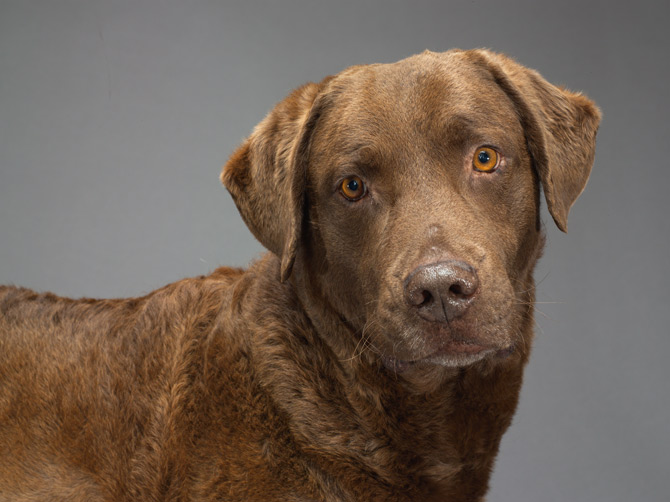
Chesapeake Bay retriever, 48, Photograph by Robert Clark

Life and the cosmos

A powerful lecture by the eminent Lord Martin Rees

Martin Rees at Jodrell Bank, 2007

I came across this interview a few days ago in connection with some book research that I was undertaking.  Please don’t be put off by the 56 minute length because Martin Rees is one of the most pre-eminent cosmologists around today, as well as being the UK’s Astronomer Royal since 1995.

Make a promise to yourself to settle down sometime soon and watch the lecture, given at the University of Melbourne’s Medical School in 2010.  And a warning! I going to pick up on some of the important points made by Martin Rees in a couple of posts next week.

Here’s how the lecture was reported by the Australian science website, SixOne Science,

Lord Rees in Melbourne

In a packed Sunderland Lecture Theatre in the University of Melbourne’s Medical School, Lord Martin Rees gave the inaugural Derek Denton Lecture in Science and the Arts. Lord Rees, an eminent and accomplished astrophysicist and cosmologist, is coming to the end of his five year tenure as the president of The Royal Society. The event even managed to attract or Prime Minister, Kevin Rudd, who entered without a noticeable entourage and with no fanfare, and the Governor of Victoria, Professor David de Kretser, a scientist himself.

The lecture was entitled “Life and the Cosmos”, a grand and sweeping title if ever there was one. It seemed like an impossible amount of material to cover in the allotted hour. However, Rees delivered an entertaining, humorous account of life from the big bang, through the formation of stars and galaxies, to the origins of life and perhaps the biggest crowd pleaser, the search for extra-terrestrial life. Most in the lecture theatre would not have learnt anything new, but this lecture was aimed at a general audience and the material was interesting enough to keep everyone interested for the hour despite being squashed into an ageing undergraduate lecture theatre complete with squeaky desks and a slightly musty smell. Perhaps Mr. Rudd was sufficiently uncomfortable to increase university funding, we can hope.

Whist this was predominately an overview of the subject material, Rees expressed some opinions about space exploration. He seemed torn between his human curiosity and the cost of human exploration. Given the advances in robotic exploration vehicles, Rees has difficulty in justifying the cost of sending humans on planetary exploration missions. Perhaps the best case for robotic exploration was made by the amazing photos he showed from the surfaces of Mars (photos) and Titan (photos), a moon of Saturn. Interestingly, Rees believes that if human exploration does proceed in the future it will be led by the Chinese or groups of private individuals. He also raised the issue of exploitation of other planets, something not often mentioned in the debate over human space travel. We need to decide if other bodies in our solar system are open for exploitation or if they should be preserved as wilderness, in a similar way to Antarctica. Given the pressures faced by places like Antarctica and the Amazon this will be an important debate should human exploration resume.

Rees concluded his lecture with the almost obligatory call for us to take better care or our own planet. He, like many others, recognises the unique place in history that we occupy. For the first time a single species is capable of exerting profound changes on the Earth’s natural and physical environments (although it might be argued that the first photosynthesizing cyanobacteria had a similarly singular influence by increasing the proportion of oxygen in the atmosphere). It is interesting to note that he does not see colonisation of other planets as a solution as the Earth is still the only known planet capable of sustaining us. Although he did discuss the likelihood of discovering Earth-like planets (pretty good given advances in technology). However, Rees did not paint an overly pessimistic picture and he generally came across as optimistic and enthusiastic about the future.

The organisers of the Derek Denton Lecture series should be commended for attracting such a high profile speaker for the first of the series. Hopefully the series will be successful, and if so may need to be moved to a bigger venue. If you want to see the lecture it will soon be available here. The next lecture of this series hasn’t been announced yet, it will be on the Arts, but you can check here for future public events at The University of Melbourne.