Category: Innovation

Don’t believe your eyes!

There are some very creative people out there!

Just over a week ago, Dan Gomez sent me a link to an item on StumbleUpon.  It was a feature called Don’t Believe Your Eyes featuring the work of Matthew Albanese.

I am not going to reproduce all the images despite them all being on that StumbleUpon webpage simply because I haven’t had time to ask Matthew’s permission.  I will just offer a few of them so you may be wowed as I was.

oooOOOooo

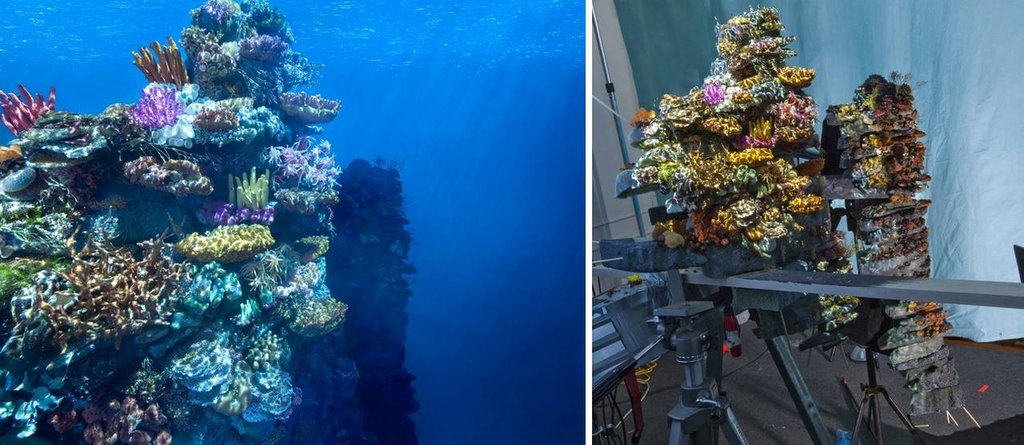
Matthew Albanese is an artist who fascinates with special effects and magic. Matthew owns a stunning artwork collection of photographs that will blow your mind with their realistic presence. On the left side in the gallery you can see the final image and on the right you will be able to see how image was created using his special effects. Scroll down and enjoy today’s gallery of 15 beautiful artworks.

BOX OF LIGHTNING

Matthew-Albanese-16-2

Diorama for Box of Lightning.. Backlit etching in plexiglass painted black.

HOW TO BREATHE UNDERWATER

lfXZ5uKh

Diorama made out of walnuts, poured and cast candle wax, wire, glitter, peanut shells, flock, plaster, wire, dyed starfish, compressed moss,

jellybeans (anemones), sponges, wax coated seashells, toothpaste, clay, figs, feathers, Q-tips, nonpareils.

A NEW LIFE

fdPyPIyh-2

Diorama made using painted parchment paper, thread, hand dyed ostrich feathers, carved chocolate, wire, raffia, masking tape, coffee, synthetic potting moss and cotton.

oooo

OK, if you want to see the whole set you will have to go Matthew’s website.

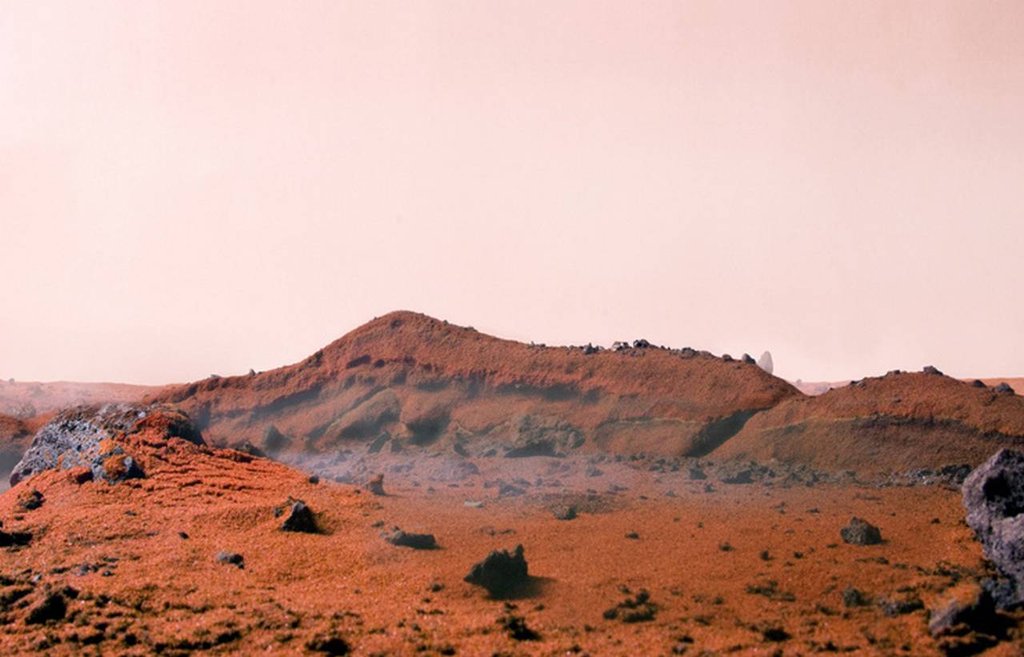
But I will just sneak in the last one from that series of fifteen.

PuyEOkVh

Paprika Mars. Made out of 12 pounds paprika, cinnamon, nutmeg, chili powder and charcoal

oooo

Matthew Albanese’s fascination with film, special effects and movie magic—and the mechanics behind these illusions—began early.  Born in northern New Jersey in 1983, Albanese spent a peripatetic childhood moving between New Jersey and upstate New York. An only child, Albanese enjoyed imaginative, solitary play. He loved miniatures and created scenarios intricately set with household objects and his extensive collection of action figures. After earning a Bachelor of Fine Arts degree in Photography at the State University of New York, Purchase, Albanese worked as a fashion photographer, training his lens on bags, designer shoes and accessories—this small-object specialization is known in the retail trade as “table top photography.” Albanese’s creative eye soon turned to tabletop sets of a more wildly eclectic nature. In 2008, a spilled canister of paprika inspired him to create his first mini Mars landscape. More minute dioramas—made of spices, food and found objects—followed. In 2011, Albanese was invited to show at the Museum of Art and Design of New York. His work has also been exhibited at the Virginia Museum of Contemporary Art, Winkleman Gallery, and Muba, Tourcoing France. Matthew is represented  at Bonni Benrubi Gallery in New York

ALL IMAGES, TITLES, DESCRIPTION AND BIO ARE COPYRIGHT AND IN OWNERSHIP OF MATTHEW ALBANESE WEBSITE

The lure of patterns.

Is this present era really coming to an end?

Somewhere in my aged brain cells is the memory of having heard that humans are great lovers of patterns.  In other words, patterns are deemed to be very important for the progress and evolution of homo sapiens.  Of course, it is not just humans who learn from patterns; I’m sure most of the animals who live around us are great pattern matchers.  To support that proposition, anyone who has owned a dog or cat will have spotted how quickly they learn patterns.  (As an aside, some months ago our puppy German Shepherd, Cleo, work me at around 4am because she needed to go outside for a ‘call of nature’.  I now get woken every single night variously between 2am and 5am for Cleo’s benefit!)

The British mathematician G. H. Hardy who lived from the last quarter of the 19th Century well into the 20th Century, reputedly said (and I cheated and looked it up!):

A mathematician, like a painter or poet, is a maker of patterns. If his patterns are more permanent than theirs, it is because they are made with ideas.

So why has this post opened with the theme of patterns?  Because, call it coincidence or what, within the last couple of weeks there have been three articles, each from very a different source, predicting that the present levels of inequality in society are both unsustainable and the beginning of the end.

First, on Michael Robert’s blog there was a post eleven days ago about global wealth inequality. From which I quote:

Global wealth inequality: top 1% own 41%; top 10% own 86%; bottom half own just 1%

—–

Just 8.4% of all the 5bn adults in the world own 83.4% of all household wealth (that’s property and financial assets, like stocks, shares and cash in the bank).  About 393 million people have net worth (that’s wealth after all debt is accounted for) of over $100,000, that’s 10% own 86% of all household wealth!  But $100,000 may not seem that much, if you own a house in any G7 country without any mortgage.  So many millions in the UK or the US are in the top 10% of global wealth holders.  This shows just how little two-thirds of adults in the world have – under $10,000 of net wealth each and billions have nothing at all.

This is not annual income but just wealth – in other words, 3.2bn adults own virtually nothing at all.  At the other end of the spectrum, just 32m people own $98trn in wealth or 41% of all household wealth or more than $1m each.  And just 98,700 people with ‘ultra-high net worth’ have more than $50 million each and of these 33,900 are worth over $100 million each.  Half of these super-rich live in the US.

Michael Robert’s essay closes:

All class societies have generated extremes of inequality in wealth and income.  That is the point of a rich elite (whether feudal landlords, Asiatic warlords, Incan and Egyptian religious castes, Roman slave owners, etc) usurping control of the surplus produced by labour.  But past class societies considered that normal and ‘god-given’. Capitalism on the other hand talks about free markets, equal exchange and equality of opportunity.  But the reality is no different from previous class societies.

Secondly, just last Friday I was drawn to an essay on, of all places, The Permaculture Research Institute blog.  The essay, by Chris Hedges (**), was called On Inequality and the Collapse of Globalization.  Chris Hedges opened his essay, thus:

The uprisings in the Middle East, the unrest that is tearing apart nations such as the Ivory Coast, the bubbling discontent in Greece, Ireland and Britain and the labor disputes in states such as Wisconsin and Ohio presage the collapse of globalization. They presage a world where vital resources, including food and water, jobs and security, are becoming scarcer and harder to obtain. They presage growing misery for hundreds of millions of people who find themselves trapped in failed states, suffering escalating violence and crippling poverty. They presage increasingly draconian controls and force—take a look at what is being done to Pfc. Bradley Manning—used to protect the corporate elite who are orchestrating our demise.

We must embrace, and embrace rapidly, a radical new ethic of simplicity and rigorous protection of our ecosystem—especially the climate—or we will all be holding on to life by our fingertips. We must rebuild radical socialist movements that demand that the resources of the state and the nation provide for the welfare of all citizens and the heavy hand of state power be employed to prohibit the plunder by the corporate power elite. We must view the corporate capitalists who have seized control of our money, our food, our energy, our education, our press, our health care system and our governance as mortal enemies to be vanquished.

The PRI editor’s preamble to the Chris Hedges essay included a couple of videos that he recommended watching.  One was a talk by Robert Reich: How Unequal Can America Get Before We Snap?

The other one was a recent TED Talk by Richard Wilkinson (his profile is here).

Mr. Wilkinson explains that for the majority of people there is an instinctive feeling that societies with huge income gaps and corresponding high levels of social inequality are somehow going wrong. He charts the hard data on such economic inequality and shows what gets worse when rich and poor are too far apart: ergo, the very real effects on health, lifespan, and even such basic values as trust.

Just 16 minutes long, it’s a very revealing talk.  Do watch it.

oooo

The final, third piece of the pattern was me coming across an essay on the blog DeflationLand, not a blog I had come across before, on the same day that I saw the PRI article.  This essay, published just two days before the PRI article, was about patterns; the patterns of the centuries.  More specifically, how the characteristics of a century generally evolve to a new culture within the first 10 to 15 years of the following century.  It was a most interesting proposition and, to my delight, I was given permission to republish that essay here on Learning from Dogs.  So here it is.

oooOOOooo

Why I stopped worrying and learned to love the currency collapse

For the past 300 years, the historical pattern has been for the era marked by a century to continue into the following century by fourteen or fifteen years. Let me explain.  Everyone knows that the 19th Century, its uprightness, its optimism and sense of purpose, the halcyon days of British Empire, came to an end with World War I, starting in 1914 and building to a nasty crescendo by 1916.  The 20th Century had arrived, and it had some real horrors in store for us.

Germans before Kraftwerk

But if we return back another hundred years, we notice that the 18th Century ends in 1815 with the final defeat of Napoleon, that final project of the Enlightenment and of the French Revolution.  With the Congress of Vienna in 1814-1815, we have a new Europe along the lines of Metternich’s plan, and the 19th Century at last is here.

"Sorry, guys.  My bad."
“Sorry, guys. My bad.”

In 1713 and 1714, we have the Treaties of Utrecht, Baden, and Rastatt, bringing an end to the era of Spain as a major power, and the rise of the Habsburgs.  Louis XIV dies in 1715, after reigning for 72 years.  The Baroque period is over, and we are now firmly in the 18th Century.

War of Spanish Succession

We still live in the 20th Century.  Nothing much significant has changed in our lives in the past twenty years.  Symptoms of a deeper rot are appearing here and there, foreshadowing a larger crisis, but the crisis itself has not arrived yet.  We still live in an era of Pax Americana, the old republic very much a strained and tired Empire now, with the U.S. Dollar as the world’s reserve currency.

That is going to change.

The next task for History is to dismantle the untenable structures and institutions put in place by late Modernity, which have been extended now as far as they can go.  Our debt-based monetary system will collapse, our unbacked fiats will be worthless.  The debts and unmeetable obligations will all default.

There are ironies and great contradictions as the former home and hope of Liberty becomes viciously unfree and increasingly despotic.  Our leaders no longer govern, but try instead to rule us — they are less legitimate with each passing day, their laws corrupt or worse.  They are nearly finished, and will be swept away with the tide.

Just as in 1914, the internationalist system will break down, dashing the hopes of the would-be first-world nations.  We will probably have a pretty good war as well, or many local ones worldwide.  These transitions tend to involve war.

Deflation first — it clears the way for the complete loss of faith and hyperinflation that will follow.  The next big wave down in the financial markets is the battering ram.  The U.S. national debt is about faith, so is quantitative easing, and so is the very idea of magical coins that could ever be “worth” a trillion dollars.  When this faith breaks, in concert with loss of faith in perpetual growth and unlimited cheap energy, then things will move very, very quickly.

There is nothing any of us can do at this point, except navigate the rapids as well as possible, and to stay out of the way of a dying empire, which is still very dangerous in its death throes.  We are actually very privileged to be alive and witnessing this next transition, to what we do not know just yet.  But what an honor to live at this time, not in ignorance but with an existential resolve to come out of it alive and much the wiser.

Ass Americana.
Ass Americana.

oooOOOooo

** Chris Hedges is a Pulitzer Prize–winning author and former international correspondent for the New York Times. His latest book is The World As It Is: Dispatches on the Myth of Human Progress.

I am neither a scientist nor a historian; just someone who has lived in and observed the world for coming on for 60 years.

So you have to understand that my prediction is hardly worth the ‘paper I write upon’ (which certainly dates me!).  But, undaunted, here are my predictions for the 21st Century:

  • That the power of internet communications will allow more people, more quickly, to find their soul-mates wherever they are on this planet.
  • That the realisation of how dysfunctional many Governments are, of how truly poorly they serve the majorities of their citizens, will lead to mass rejections of these so-called Governments’ policies.  Such rejections predominantly peaceful, as in taking the horse to water but being unable to make it drink.
  • That there will be a new form of localism.  At two levels.  Literally, people geographically close to each other creating 21st C. versions of local communities.  Virtually, those local communities linking to other like-minded communities right across the world resulting in highly effective and innovative learning, accelerated common-sense, (call it wisdom if you wish), and extraordinarily efficient and sustainable ways of living on this planet.

What do you think?

The power of thinking

It’s easy to underestimate just how powerful the brain can be.

Last Friday’s post was called Instinctive behaviours and explored the notion of instinct, coming to the conclusion that almost everything the brain does is a result of learning rather than genetics.  Yet acknowledging the vast amount of brain activity that runs in ‘background’ mode or subconsciously.

That was brought home to me in spades as a result of being introduced to the flying of gliders, or sailplanes in American speak.  The year was 1981 and working near to me in my offices in Colchester, Essex was a gentlemen running his own company, like yours truly.  His name was Roger Davis and we were sharing a beer one day when the subject of flying came up.  It piqued my interest so, as my logbook declares, on the 7th June, 1981 I had the first of two flights in a glider with Roger at the controls.  The place was Rattlesden Airfield, an old wartime airfield near Felsham, Bury St. Edmunds in Suffolk.  The gliding club was Rattlesden Gliding Club.

RGC header

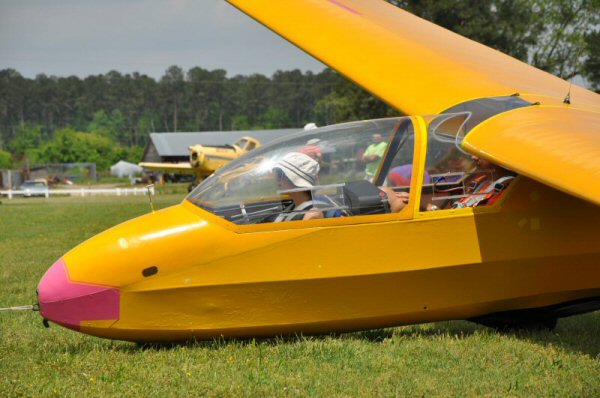
The glider we were in was known as a K-7, a high-wing, two-seater (naturally!) glider with the instructor sitting behind the student.
A K-7 typical of the glider I first flew in at Rattlesden GC.

Anyway, some 43 flights later, I was signed off to conduct my first solo flight in the K-7.  The date was 5th September, 1981 and my flight time was just 4 minutes!  I was hooked.

In over 10 years of flying amounting to more than 1,400 flights I had the great fortune to experience much of the magic of flying relying on nothing more than the currents of air.

Ahh! Memories!  Over 10 years of glider flying, amounting to more than 200 hours of flight-time, 17 different types of glider.  Longest flight was 5 hours, 16 minutes including a climb to over 6000 feet above sea-level on the 7th July, 1985 in a single-seater LS4 glider type.

So what’s this got to do with subconscious thinking?  Simply this.

One quickly learnt that once the decision had been made to land, most frequently because one was unable to find further, or any, rising air currents the brain had a major computing task in hand.  As the aircraft descends, the air currents change and the direction and velocity of the wind changes.  There is no engine to allow one to abort the landing; to do a ‘go round’!

One of the key visual judgments was determining the point of touchdown: not too early that might risk a ground contact before the start of the runway, and not too late which might risk running out of landing space.

Thus the brain was operating clearly in two modes.  Consciously, computing second by second where the touch-down point was going to be and, subconsciously, the flying of the glider as in operating the joystick and rudder pedals in support of the touch-down ‘computations’.

Moving on.

In last Friday’s post, I also wrote this: “Plus something that could just possibly be the key to mankind having a long-term sustainable future on this planet: The Power of Thinking.

That ‘something’ was me reflecting on an article in the October 7th edition of FORTUNE magazine.  Not something I read on a normal basis but just happened to come across that edition – and glad I did.  Because there was an article about IBM’s new supercomputer Watson.  The link to the summary is here, from which I republish this:

Dr. Mark Kris is among the top lung cancer specialists in the world. As chief of thoracic oncology at Memorial Sloan-Kettering (MSK) Cancer Center in New York City, he has been diagnosing and treating patients for more than 30 years. But even he is overwhelmed by the massive amount of information that goes into figuring out which drugs to give his patients — and the relatively crude tools he has to decipher that data. “This is the standard for treatment today,” he says, passing me a well-worn printout of the 2013 treatment guidelines in his office. We choose a cancer type. A paragraph of instructions says to pair two drugs from a list of 16. “Do the math,” he says. It means more than 100 possible combinations. “How do you figure out which ones are the best?”

It’s a huge problem. More than 230,000 Americans will be diagnosed with lung cancer this year. Almost all of them will receive chemotherapy. As crude as the existing guidelines are, says Kris, they won’t be followed more than half the time. If we bumped up adherence by just 10% to 20%, he says, as many as 30,000 people might live longer. Never mind curing cancer — shouldn’t we be able to get the best available combinations of medications to sick people now?

That’s the question that led Kris to IBM. He saw that more information was not the answer. What doctors needed was a better brain — one that could instantly vacuum up facts, draw deeper connections between data points, and remember everything. They needed Watson.

Just read that last paragraph again.  That it’s not about information, it’s about offering humanity computing power that can see things that humans might not easily see.

Thus, I mused that when mankind gets to the point where there is total and complete commitment to finding a non-carbon-burning way ahead for every living thing on this planet we won’t have the luxury of countless years working out the new journey directions.  Maybe, just maybe, computing power a la Watson might just be our saving grace.

Curious to learn more about IBM Watson?  Then here’s the relevant website.

Saturday Sounds!

Two virtuoso performances.

They are both breathtakingly wonderful to watch and listen to.  So put your feet up for half-an-hour and be swept away by these incredible musicians.

The first features Darren Foreman otherwise known as Beardy Man.  His bio is here.

Published on Aug 2, 2013

Frustrated by not being able to sing two notes at the same time, musical inventor Beardy Man built a machine to allow him to create loops and layers from just the sounds he makes with his voice. Given that he can effortlessly conjure the sound of everything from crying babies to buzzing flies, not to mention mimic pretty much any musical instrument imaginable, that’s a lot of different sounds. Sit back and let the wall of sound of this dazzling performance wash over you.

Beardy Man
Beardy Man

The second features Usman Riaz and Preston Reed and demonstrates the power of this new wired-up world we live in.

Usman Riaz is a 21-year-old whiz at the percussive guitar, a style he learned to play by watching his heroes on YouTube. The TED Fellow plays onstage at TEDGlobal 2012 — followed by a jawdropping solo from the master of percussive guitar, Preston Reed. And watch these two guitarists take on a very spur-of-the-moment improvisation.

Preston Reed has his own website from where I took the following photograph.

Kirkmichael International Guitar Festival 2005 © 2005 Alistair Mulhearn
Kirkmichael International Guitar Festival 2005
© 2005 Alistair Mulhearn

Closing my Windows.

A big move on in my computing. 

Warning! Today’s post has almost nothing to do with dogs plus if you are not into computing then you may want to come back tomorrow! 😉

A little over a week ago I ordered an Apple Mac computer.

So what, I hear you say.

Well one way or another, I have been associated with personal computing for too many years and with the Microsoft Windows operating system equally for a long time.

Here’s that history and, be warned, I do go on a tad!

In 1970 I joined the Office Products (OP) Division of IBM in the United Kingdom.  I joined as an office products salesman and after my initial training was based at IBM OP’s London North branch in Whetstone in the London Borough of Barnet.  I loved both the job (remember the Selectric ‘Golfball’ typewriter?) and the company and conspired to win the prize of top UK salesman for the year 1977.  By that time, IBM was selling dedicated word-processing (WP) machines.  They offered powerful benefits for companies of many sizes and, as an experienced WP salesman, I was enjoying the fruits of that success.  Thus it was that in 1978 I attended IBM’s Golden Circle celebrations for 1977 country winners from all around the world.  The Golden Circle celebrations were held in Hawaii!

I returned from Hawaii with the clear idea in my mind that this was the time to move on; my ego didn’t like the idea of not being number one again!  So within a couple of days of returning to my sales branch, I announced to my manager, David Halley, that I wished to give three months notice.  I can still recall David’s rather shocked response with him saying, “But I always thought Golden Circle was an incentive event!

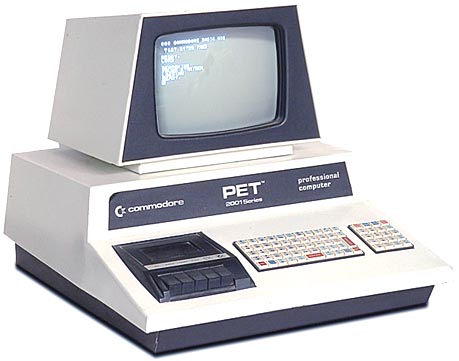
In those days New Scientist magazine was a regular read for me.  During my time of working out my notice I read in the magazine about this new personal computer from Commodore Business Machines that had been launched in the UK.  It was called the Commodore PET (Personal Electronic Transactor) and had been unveiled in 1977 at the US West Coast Computer Faire.  I was captivated by what I had read.

pet2001-black

I had casually mentioned it to Richard Maugham; a good friend and fellow office-products salesman working for Olivetti UK.  Richard said that coincidentally a close friend of many years had just been appointed sales manager for CBM UK Ltd.  That friend was Keith Hall and on making contact with Keith, I was invited to go and meet him and learn more about this funny device.  What I hadn’t bargained for was that Keith was yet another smart salesman; Keith and Richard had met when they were both salesmen working for Olivetti.

When I asked Keith the retail price of the ‘PET”, his immediate reply was, “Well why don’t you become a dealer and I can sell you one for 30% less!”  Like most salesmen, I was always a sucker to a good sales pitch! I signed the necessary paperwork. (It is very sad to say that Keith died a few years ago, at far too young an age.)

So it was that towards the end of 1978, I became the sixth Commodore computer dealer in the UK, opening my small store in what had once been a Barber’s shop in Church Street, off Head Street in the centre of Colchester, Essex.  I called my business Dataview Limited.

Frankly, I hadn’t a clue as to what I was doing!  If it hadn’t been for a gigantic stroke of luck I would not have lasted long!

That piece of luck was meeting someone who was a programmer for a large, traditional computing company, ICL, who had bought himself a Commodore PET and, just out of fun, was writing a word-processing program. Now if I didn’t know about computers, personal or otherwise, I certainly knew about word-processing.  When I looked at what Peter D. had written I practically wet myself.  Because, I was looking at a program that even incomplete already offered three-quarters, give or take, of the functionality of a £20,000 IBM Word Processor.

I offered to guide Peter in refining and honing his software which he graciously accepted.  Then a few weeks later Peter casually asked me if I would like to sell the software.  I jumped at the opportunity and in due course Wordcraft was launched under the Dataview umbrella.  (And do see my footnote!)

But back to my Windows journey.

In 1981 IBM announced the release of their own personal computer.

IBM PC
IBM PC

With my love affair with IBM not even dimmed, becoming an IBM PC dealer was a must.  An IBM PC version of Wordcraft was developed by Peter and now things were really rocking and rolling.  Then in 1983 Microsoft announced the development of Windows, a graphical user interface (GUI) for the operating system MS-DOS.  MS-DOS was the existing operating system on the IBM PC.

By the time I sold Dataview in 1986, Windows was well on its way to evolving into a full personal computer operating system and ever since that time my own PCs have been Windows based.  (Difficult to imagine now how in those early years Windows didn’t achieve any popularity!)

OK, fast forward 27 years to my present machine running Windows 7, Google Chrome web browser and all the fancy ‘cloud’-based applications of today.

Much of my time spent writing and blogging relies on me being online.  Like so many others, as soon as I turn on my computer it becomes an online PC.  On average, I am working in front of my PC for about 3 to 4 hours per day.  However, slowly but surely over the past few months I have become aware of a number of strange occurrences, the most annoying of which is the regular ‘hanging’ of my Chrome browser.  This was happening at least on a daily basis and required the complete rebooting of my PC – a right pain in the posterior!

Muttering about this to friends who know a lot more about computing than I, raised my awareness that the privacy and security of one’s computer was no longer to be assumed.  Then just recently, I read online,

A Special Surveillance Chip

According to leaked internal documents from the German Federal Office for Security in Information Technology (BSI) that Die Zeit obtained, IT experts figured out that Windows 8, the touch-screen enabled, super-duper, but sales-challenged Microsoft operating system is outright dangerous for data security. It allows Microsoft to control the computer remotely through a built-in backdoor. Keys to that backdoor are likely accessible to the NSA – and in an unintended ironic twist, perhaps even to the Chinese.

The backdoor is called “Trusted Computing,” developed and promoted by the Trusted Computing Group, founded a decade ago by the all-American tech companies AMD, Cisco, Hewlett-Packard, IBM, Intel, Microsoft, and Wave Systems. Its core element is a chip, the Trusted Platform Module (TPM), and an operating system designed for it, such as Windows 8. Trusted Computing Group has developed the specifications of how the chip and operating systems work together.

Its purpose is Digital Rights Management and computer security. The system decides what software had been legally obtained and would be allowed to run on the computer, and what software, such as illegal copies or viruses and Trojans, should be disabled. The whole process would be governed by Windows, and through remote access, by Microsoft.

Then a few paragraphs later:

It would be easy for Microsoft or chip manufacturers to pass the backdoor keys to the NSA and allow it to control those computers. NO, Microsoft would never do that, we protest. Alas, Microsoft, as we have learned from the constant flow of revelations, informs the US government of security holes in its products well before it issues fixes so that government agencies can take advantage of the holes and get what they’re looking for.

Now I’m using Windows 7 so imagine my angst when I then read:

Another document claims that Windows 8 with TPM 2.0 is “already” no longer usable. But Windows 7 can “be operated safely until 2020.” After that other solutions would have to be found for the IT systems of the Administration.

That did it for me – time to move on from Windows.

Many Apple-user friends said that I should switch to the Apple Mac; that it was the only logical way to go.  I checked that all my important software applications that I used under Windows were compatible with the Apple Mac Operating System and thankfully they were.  I was speaking of Open Office, WordPress, Scrivener, Picasa, Skype.  Then I started to browse the Apple website.  I was clear about wanting a desktop machine, an iMac, and pretty soon realised that my change of personal computing was going to cost me around $1,500, perhaps a little more.

Then Dan Gomez, both long-time friend and Apple user, in browsing the web came across the Mac mini.  He called me and I took a look.  For well under half the price of an iMac, I could get a great alternative to my Windows PC and use many of my existing peripherals.

A quick conversation with Zachary of the Apple Mac mini sales team and the deed was done!  So all that remained was the great transition!

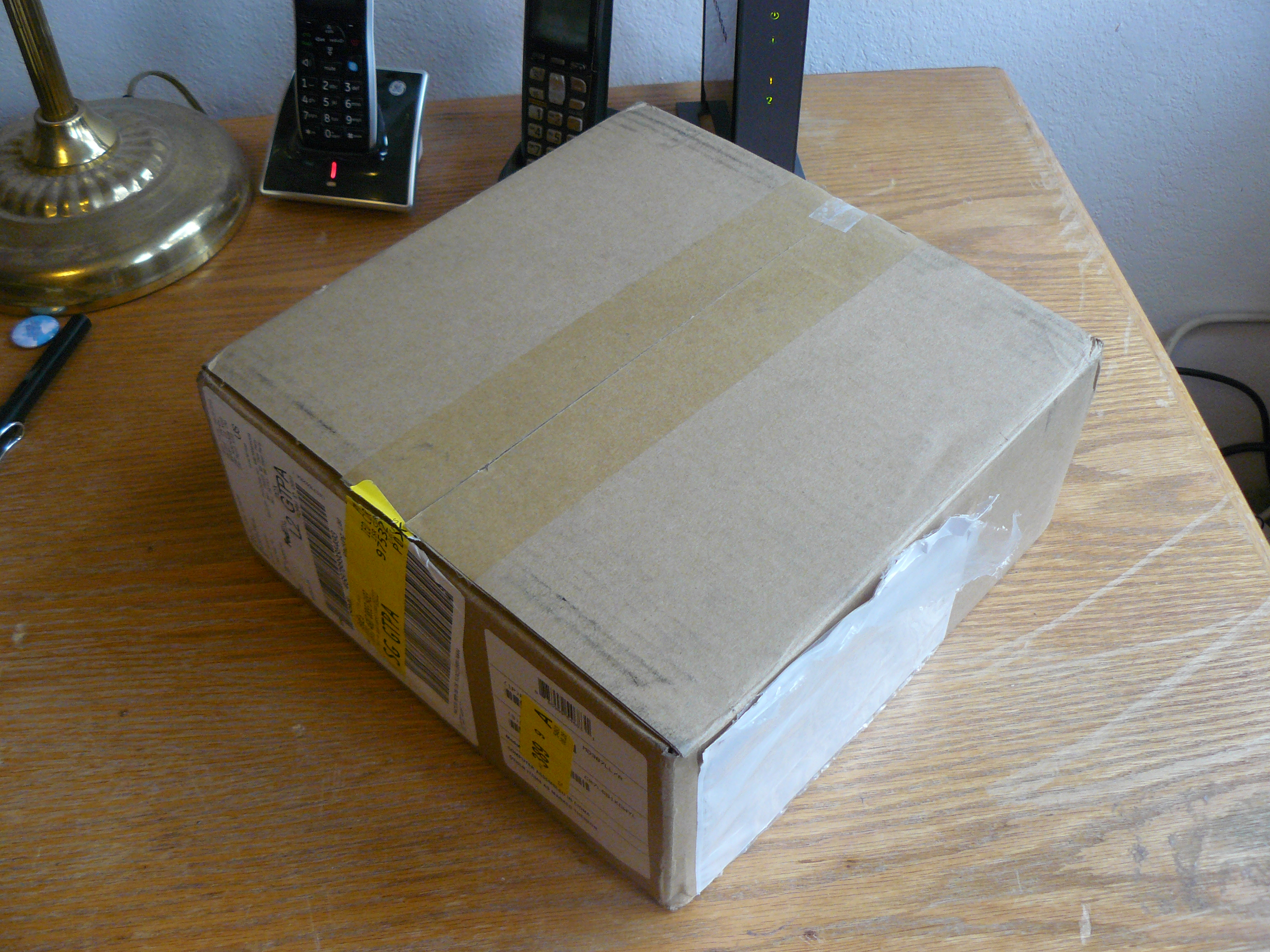
The box arrived last Wednesday.

Surely too small for a full-blooded personal computer?

I resisted opening the box until last Friday when I had some decent spare time.

This is a long, long way from the Commodore PET!

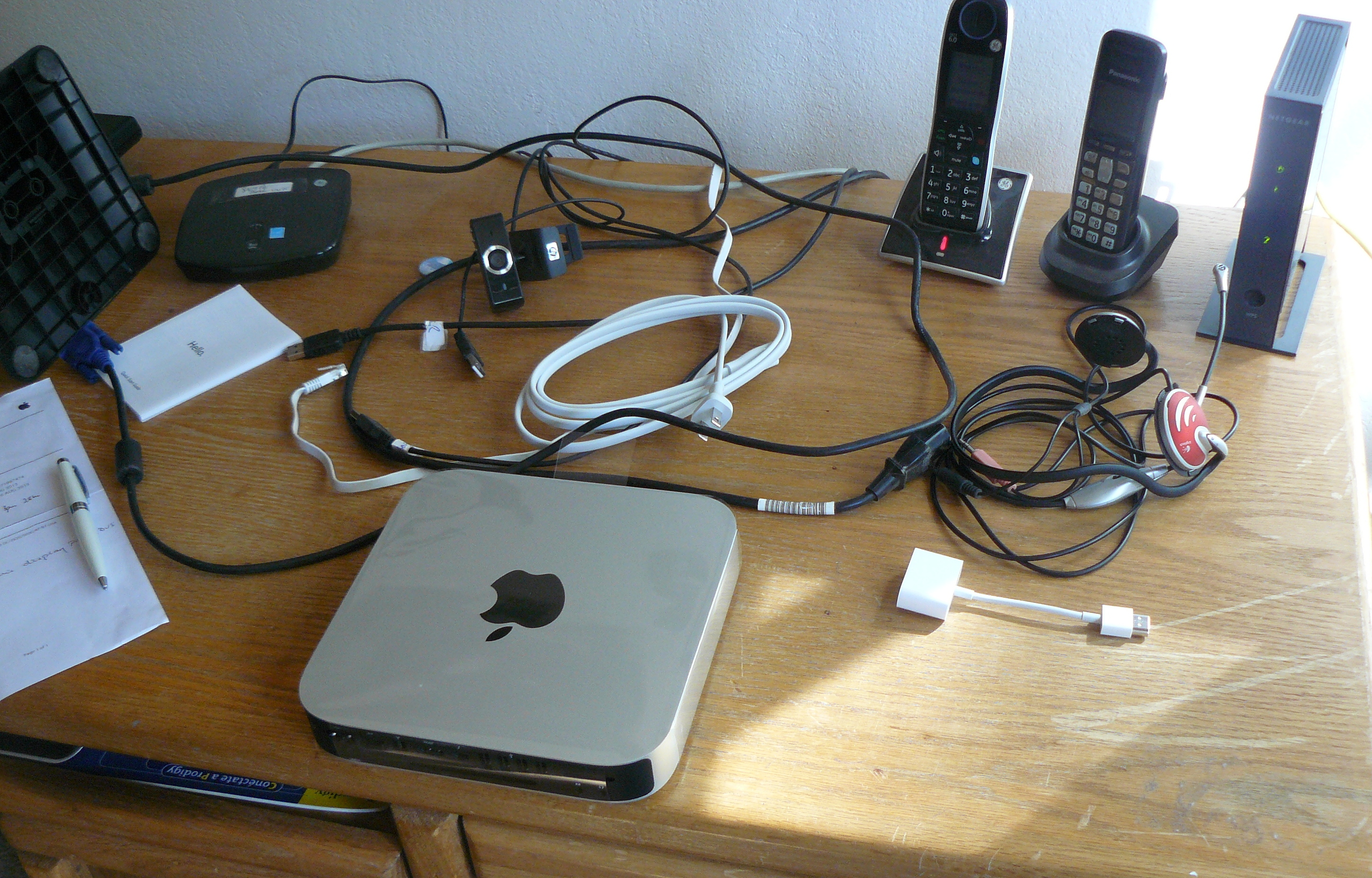
Plugging it all together was easier than I feared.

Just screen and keyboard/mouse and we are good to go!

Then the acid test. Could I even understand how to operate it?  I put that off until Saturday!

The new Mac mini system  on the right, all ready for me to play with!
The new Mac mini system on the right, all ready for me to play with!

I have to say that first impressions, especially of the elegance of the display and the icons, were great.

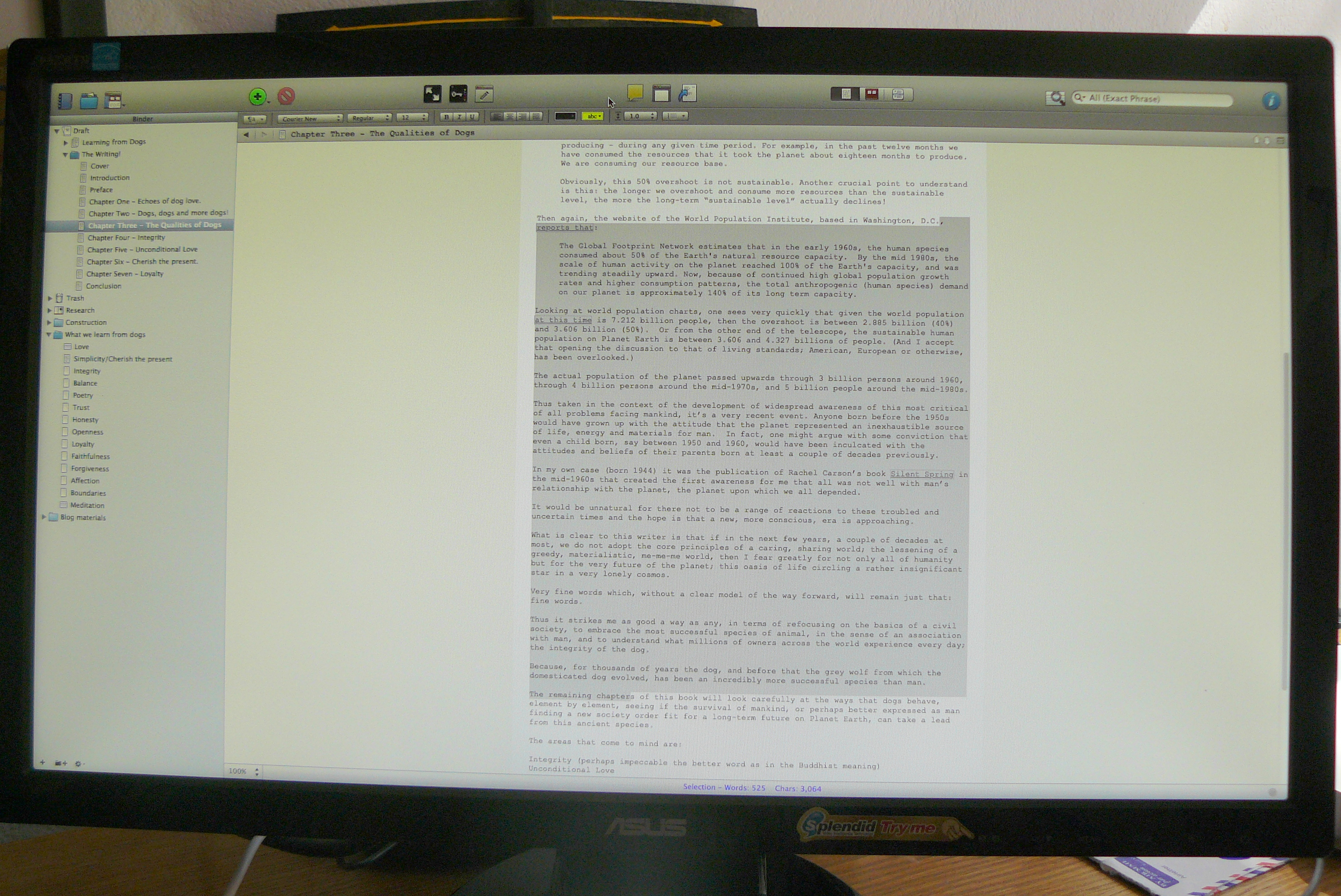
But this had to be a fully functional machine for me.  Where to start?  By downloading and installing the most critical of my software needs: Scrivener, my writing software.

Imagine my great pleasure and huge relief when less than a couple of hours later, not only had I downloaded and installed Scrivener for Apple Mac OS but had passed the latest backup file across from my Windows PC and accessed it on the Apple.

My (very) draft book file installed and running on the Mac mini!

So, all in all, despite this being very early days, it’s starting to look like a great change.

However, I mustn’t close without thanking a few people:

Dan Gomez and John Hurlburt, friends and Apple users, and in John’s case experienced on both Windows and Apple systems. Guys, I couldn’t have made the decision to change without your kind, generous and supportive advice.

Zachary Brown of Apple sales, Mac mini team. Zach, I know it’s your job but nonetheless you did and said all the right things. (And the new screen is much better than my existing one!)

Last but not least, my dearest wife Jean, who just let me get on with things and even though I knew she didn’t have a clue as to what I kept muttering on about, never let on.

Footnote:

Earlier on I wrote about launching Wordcraft, the word-processing software for personal computers. That was in early 1979 and later that year I was invited to present Wordcraft at an international gathering of Commodore dealers held in Boston, Mass.

During my presentation, I used the word ‘fortnight’ unaware that Americans don’t know this common English word.  Immediately, someone about 10 rows back in the audience called out, “Hey, Handover! What’s a fortnight?”

It released the presenter’s tension in me and I really hammed my response in saying, “Don’t be so silly, everybody knows the word fortnight.” Seem to remember asking the audience at large who else didn’t know the word.  Of course, most raised their arms!

Now on a bit of a roll, I deliberately started using as many bizarre and archaic English words that came to me.  Afterwards, the owner of the voice came introduced himself.  He was Dan Gomez, a Californian based in Costa Mesa near Los Angeles and also involved in developing software for the Commodore.

Dan became my US West Coast distributor for Wordcraft and was very successful. When Dataview was sold, Dan and I continued to see each other regularly and I count him now as one of my dear friends.  Through knowing Dan I got to know Dan’s sister Suzann and her husband Don.  It was Su that invited me to spend Christmas 2007 with her and Don at their home in San Carlos, Mexico.  Jean also lived in San Carlos and was close friends with Su. Together they had spent many years rescuing feral dogs from the streets of San Carlos and finding new homes for them.

Thus it was that I met Jean.  Both Jean and I were born 20 miles apart in London!

So from ‘Hey, what’s a fortnight’ to living as happily as I have ever been in the rural countryside of Oregon.  Funny old world!

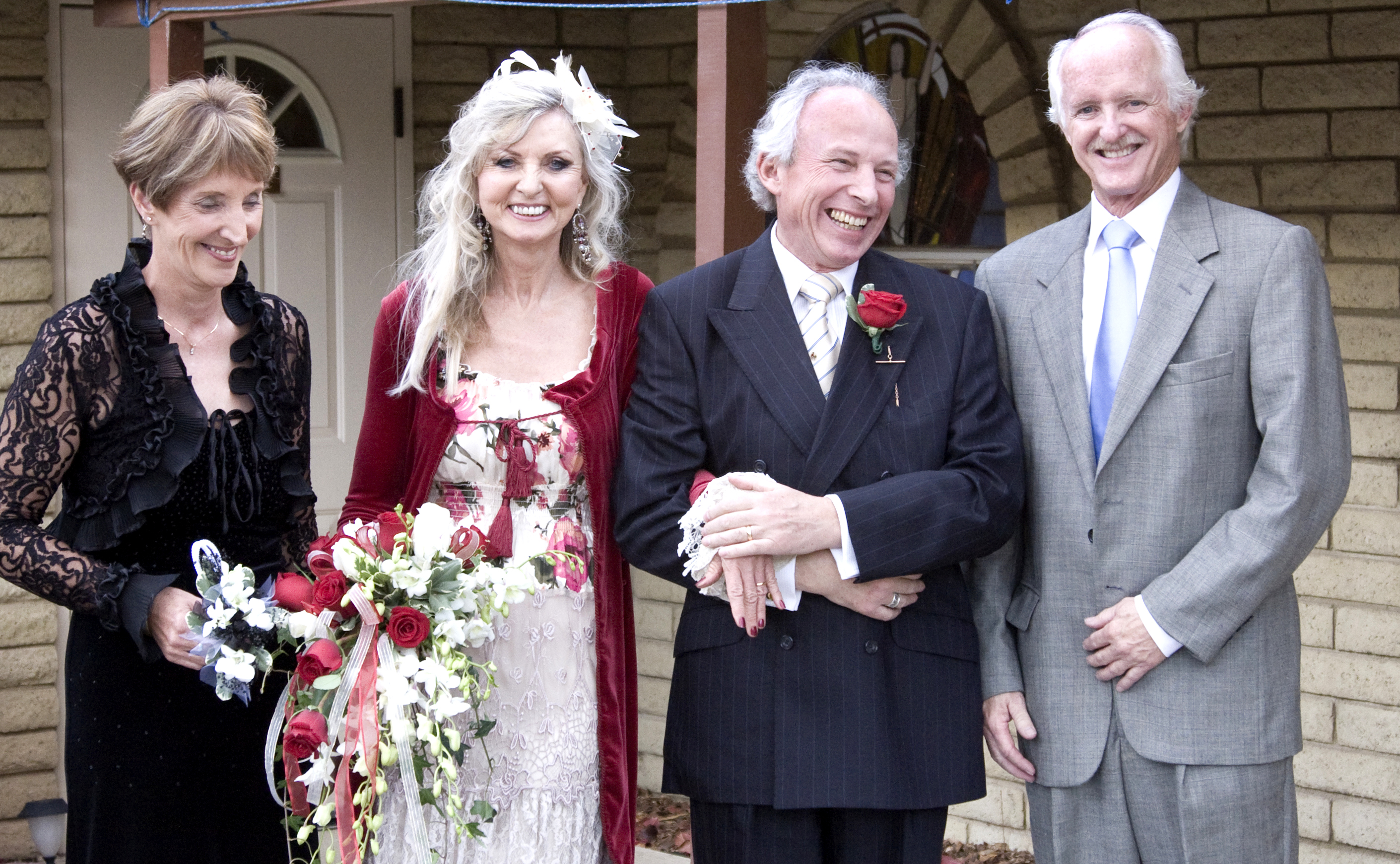
The marriage of Jean and Paul wonderfully supported by Diane, maid of honour, and best man, Dan Gomez.
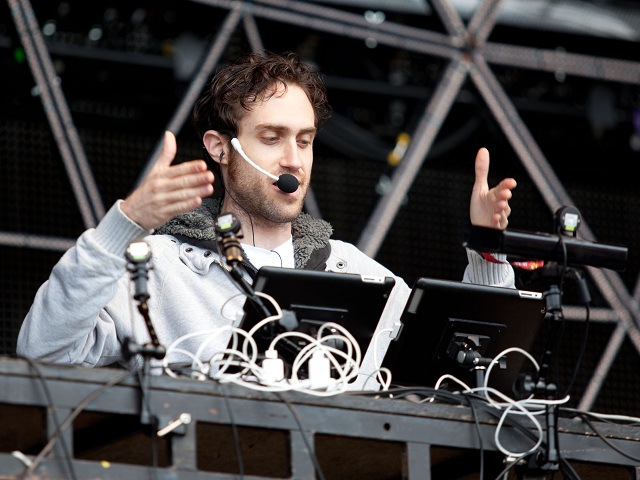
The ‘voice’ Dan Gomez – Best Man at the marriage of Jean and me, November 20th 2010.

Real meaning in a wolf’s howl.

Staying with the theme of communication.

I have often noticed how ideas come along and are then reinforced by other materials and comments.  This struck me (again) as follows. In my post about the fabulous, loving bond between Jeff Guidry and his eagle Freedom one of the comments was from Patrice Ayme, and I quote:

Birds have completely different brains. Still, the smartest birds are more clever than most primates. And many parrots speak (although we have not learned their language yet).

Then going on to add:

Parrot language studies have progressed enough to tell us that there is something huge going on. They apparently use names, as dolphins do.

Certainly Jean would verify the amount of talking that goes on between our two budgerigars here at home!

Mr. Green and Mr. Blu!

Then in yesterday’s post The knowing of dogs, I referred to research that indicated that empathy between those that we know and trust, (a) can be measured, and (b) that “our minds are partly defined by their intersections with other minds.”  I went on in that post to speculate that maybe dogs ‘reading’ the minds of humans that they know and trust wasn’t so far-fetched.

Then along comes this from ScienceDaily:

Wolves Howl Because They Care: Social Relationship Can Explain Variation in Vocal Production

Aug. 22, 2013 — When a member of the wolf pack leaves the group, the howling by those left behind isn’t a reflection of stress but of the quality of their relationships. So say researchers based on a study of nine wolves from two packs living at Austria’s Wolf Science Center that appears in Current Biology, a Cell Press publication, on August 22.

The findings shed important light on the degree to which animal vocal production can be considered as voluntary, the researchers say.

“Our results suggest the social relationship can explain more of the variation we see in howling behavior than the emotional state of the wolf,” says Friederike Range of the Messerli Research Institute at the University of Veterinary Medicine Vienna. “This suggests that wolves, to a certain extent, may be able to use their vocalizations in a flexible way.”

Scientists have known very little about why animals make the sounds that they do. Are they uncontrollable emotional responses? Or do animals have the ability to change those vocalizations based on their own understanding of the social context?

At the Wolf Science Center, human handlers typically take individual wolves out for walks on a leash, one at a time. On those occasions, they knew, the remaining pack mates always howl.

To better understand why, Range and her colleagues measured the wolves’ stress hormone levels. They also collected information on the wolves’ dominance status in the pack and their preferred partners. As they took individual wolves out for long walks, they recorded the reactions of each of their pack mates.

Those observations show that wolves howl more when a wolf they have a better relationship with leaves the group and when that individual is of high social rank. The amount of howling did not correspond to higher levels of the stress hormone cortisol.

“Our data suggest that howling is not a simple stress response to being separated from close associates but instead may be used more flexibly to maintain contact and perhaps to aid in reuniting with allies,” Range says.

For those that want to read the original research paper then it is available over at Current Biology, a Cell Press publication.

Wolf Howling Is Mediated by Relationship Quality Rather Than Underlying Emotional Stress

Authors

Francesco MazziniSimon W. TownsendZsófia VirányiFriederike Range

  • Highlights
  • We investigated the influence of social and physiological factors on wolf howling
  • Wolves howl more to keep contact with affiliated partners and with pack leaders
  • Howling is mediated by the social relationship not cortisol level of the howlers
  • This pattern indicates that wolves have some voluntary control of their howling

Summary

While considerable research has addressed the function of animal vocalizations, the proximate mechanisms driving call production remain surprisingly unclear. Vocalizations may be driven by emotions and the physiological state evoked by changes in the social-ecological environment [1,2], or animals may have more control over their vocalizations, using them in flexible ways mediated by the animal’s understanding of its surrounding social world [3,4]. While both explanations are plausible and neither excludes the other, to date no study has attempted to experimentally investigate the influence of both emotional and cognitive factors on animal vocal usage. We aimed to disentangle the relative contribution of both mechanisms by examining howling in captive wolves. Using a separation experiment and by measuring cortisol levels, we specifically investigated whether howling is a physiological stress response to group fragmentation [5] and whether it is driven by social factors, particularly relationship quality [6,7]. Results showed that relationship quality between the howler and the leaving individual better predicted howling than did the current physiological state. Our findings shed important light on the degree to which animal vocal production can be considered as voluntary.

So, don’t know about you, but it all seems to be suggesting how little we know about how animals communicate with the world around them.

The knowing of dogs.

A fascinating study on human empathy strikes a chord with man and dog, perhaps.

Let me start with a true account from the evening of Monday, 19th August.

That evening, at 7pm, I had an appointment with my doctor in Grants Pass.  Jean stayed at home looking after our guests and preparing the evening meal.

The journey from the doctor’s clinic back to home, a distance of 20 miles, takes a little over half-an-hour.  The last 3 miles are along Hugo Road; about 6 minutes including opening and closing the gate across our driveway.

Anyway, according to Jean shortly after 8pm Pharaoh sprang up barking and went across to put his nose against one of the windows that looks out over our front drive and garden.  Jeannie looked at the clock on the kitchen wall and made a note of the time: it was 8:10pm.  She also came over to the window that Pharaoh was looking out of and searched for any reason for his outburst of barking: squirrels, deer, any kind of wildlife or other distraction.  There was none.

A little before 8:20pm Jeannie saw the headlights of my car pull up and moments later I came in through the front door.

It appeared that Pharaoh had sensed the point where I had turned into Hugo Road.

One could easily dismiss this, perhaps by thinking that Jean had unconsciously signalled to Pharaoh that I was on my way home.  But Jean had only the vaguest idea of when I might be back.

Or one could be drawn to the research undertaken by Dr. Rupert Sheldrake, as this extract from a post back in May, 2011 explains.

What an amazing book this is.

Amazing!

I have written about Dr Rupert Sheldrake a few times on Learning from Dogs for pretty obvious reasons!  You can do a search on the Blog under ‘sheldrake’ but here are a couple of links.  Serious Learning from Dogs on January 10th, 2011 and Time for a rethink on the 14th April, 2011.

Anyway, I am now well towards the end of Sheldrake’s revised book, Dogs That Know When Their Owners Are Coming Home and it is more than fascinating.  Bit short of time just now so please forgive me if I do no more than show this video which sets out some of the background to the book.  Sheldrake’s website is here, by the way.

Anyway, what’s this all leading up to?

I can’t recall where it was that I read about a report posted on the Forbes website about the new findings of the power of human empathy.

Study: To The Human Brain, Me Is We

A new study from University of Virginia researchers supports a finding that’s been gaining science-fueled momentum in recent years: the human brain is wired to connect with others so strongly that it experiences what they experience as if it’s happening to us.

This would seem the neural basis for empathy—the ability to feel what others feel—but it goes even deeper than that. Results from the latest study suggest that our brains don’t differentiate between what happens to someone emotionally close to us and ourselves, and also that we seem neurally incapable of generating anything close to that level of empathy for strangers.

The research revealed:

“The correlation between self and friend was remarkably similar,” said James Coan, a psychology professor in U.Va.’s College of Arts & Sciences who co-authored the study. “The finding shows the brain’s remarkable capacity to model self to others; that people close to us become a part of ourselves, and that is not just metaphor or poetry, it’s very real. Literally we are under threat when a friend is under threat. But not so when a stranger is under threat.”

The findings back up an assertion made by the progenitor and popularizer of “Interpersonal Neurobiology,” Dr. Daniel Siegel, who has convincingly argued that our minds are partly defined by their intersections with other minds. Said another way, we are wired to “sync” with others, and the more we sync (the more psycho-emotionally we connect), the less our brains acknowledge self-other distinctions.

Later in that Forbes article Professor Coan is reported:

“A threat to ourselves is a threat to our resources,” said Coan. “Threats can take things away from us. But when we develop friendships, people we can trust and rely on who in essence become we, then our resources are expanded, we gain. Your goal becomes my goal. It’s a part of our survivability.”

So if science is discovering that our subconscious minds are connecting “psycho-emotionally” with the minds of others whom we trust, then it doesn’t seem like too great a leap to embrace human minds psycho-emotionally connecting with the animals that we trust, and vice versa.  Because for thousands upon thousands of years, the domesticated dog and man have depended on each other for food, protection, warmth, comfort and love.

Footnote.

References for those who wish to follow up on this article are:

Original Forbes article, written by David DeSalvo.

David DeSalvo’s website.

Daniel J. Siegelclinical professor of psychiatry at the UCLA School of Medicine and Executive Director of the Mindsight Institute.

Daniel Siegel’s book The Developing Mind.

Professor Robin Ian MacDonald Dunbar, British anthropologist, evolutionary psychologist and a specialist in primate behaviour.  His theory known as Dunbar’s Number explained here.

Oxford Journal: Familiarity promotes the blurring of self and other in the neural representation of threat.

Mathematics in action!

You will be amazed – guaranteed!

The TED Talk link was sent to me by friend, Lee Crampton.

Published on Jun 11, 2013

In a robot lab at TEDGlobal, Raffaello D’Andrea demos his flying quadcopters: robots that think like athletes, solving physical problems with algorithms that help them learn. In a series of nifty demos, D’Andrea show drones that play catch, balance and make decisions together — and watch out for an I-want-this-now demo of Kinect-controlled quads.

There’s more on Raffaello here where you can read this:

My work is focused on the creation of systems that leverage technological innovations, scientific principles, advanced mathematics, algorithms, and the art of design in unprecedented ways, with an emphasis on advanced motion control.

By their very nature, these creations require a team to realize. Many are enabled by the research I conduct with my graduate students. Many are also the fruit of collaborations with architects, entrepreneurs, and artists.

My hope is that these creations inspire us to rethink what role technology should have in shaping our future.

Raffaello D’Andrea

and where you can also find this further video – Zurich Minds – doubly fascinating.

Raffaello D’Andrea is interviewed by Rolf Dobelli

Makes me want to lie down in a darkened room! 😉

Be part of research into animal communication.

A request from Dr. Rupert Sheldrake.

Dr. Sheldrake has been very regularly mentioned on Learning from Dogs, the most recent time was last year in a post called Brain-to-brain communication.

Jean and I have been involved in a research programme involving our own dogs here at home.  So far, without much success.  But it occurred to me that there may be readers who would like to participate.  So here’s an email in response to my offer to post something in this place.

Companion Animal Research Group

Pam Smart and I are setting up a Companion Animal Research Group for people who would like to do research with their dogs, cats or other animals. If you have an animal that knows when you are coming home or who seems to respond to your thoughts and intentions telepathically, and if you would like to take part in a simple research project, please get in touch with Pam by email: p.e.smart (at) btinternet (dot) com She will send you further details.

Of course, if you do have such a telepathic animal then they will know about this post before you do! 😉

Sea Fever

But not of the John Masefield variety.

A friend of Jean and me and recent follower of Learning from Dogs, Ira W., sent me an email that included a link to Theo Jansen’s Strandbeest website.  To say that I was astonished at what I read would be a giant understatement.  Wikipedia offers this opening description:

Theo Jansen (born 1948) is a Dutch artist. In 1990, he began what he is known for today: building large mechanisms out of PVC that are able to move on their own, known as Strandbeest. His animated works are a fusion of art and engineering; in a car company (BMW) television commercial Jansen says: “The walls between art and engineering exist only in our minds.” He strives to equip his creations with their own artificial intelligence so they can avoid obstacles by changing course when one is detected, such as the sea itself.

How is that realised? Well take a look at this:

theo-jansen-2

The Strandbeest website has this information about what the ‘beast’ is about.

Self-propelling beach animals like Animaris Percipiere have a stomach . This consists of recycled plastic bottles containing air that can be pumped up to a high pressure by the wind. This is done using a variety of bicycle pump, needless to say of plastic tubing. Several of these little pumps are driven by wings up at the front of the animal that flap in the breeze. It takes a few hours, but then the bottles are full. They contain a supply of potential wind. Take off the cap and the wind will emerge from the bottle at high speed. The trick is to get that untamed wind under control and use it to move the animal. For this, muscles are required. Beach animals have pushing muscles which get longer when told to do so. These consist of a tube containing another that is able to move in and out. There is a rubber ring on the end of the inner tube so that this acts as a piston. When the air runs from the bottles through a small pipe in the tube it pushes the piston outwards and the muscle lengthens. The beach animal’s muscle can best be likened to a bone that gets longer. Muscles can open taps to activate other muscles that open other taps, and so on. This creates control centres that can be compared to brains.

Plus there is no shortage of videos to find on the web.  I chose this one for you. (But, please do go to  Jansen’s home page as well and watch the video.)

So the creativity of man knows no bounds!  Which neatly brings me to the creativity of the poet John Masefield.  Here is that famous poem.

Sea Fever

BY JOHN MASEFIELD

I must go down to the seas again, to the lonely sea and the sky,
And all I ask is a tall ship and a star to steer her by;
And the wheel’s kick and the wind’s song and the white sail’s shaking,
And a grey mist on the sea’s face, and a grey dawn breaking,

I must go down to the seas again, for the call of the running tide
Is a wild call and a clear call that may not be denied;
And all I ask is a windy day with the white clouds flying,
And the flung spray and the blown spume, and the sea-gulls crying.

I must go down to the seas again, to the vagrant gypsy life,
To the gull’s way and the whale’s way where the wind’s like a whetted knife;
And all I ask is a merry yarn from a laughing fellow-rover,
And quiet sleep and a sweet dream when the long trick’s over.