think about dogs, whether you have one, or not, whether you like them or not; think what we learn!
Much of it best described in the words and poetry of others.
Take this, for example:
If you can resist treating a rich friend better than a poor friend,
If you can face the world without lies and deceit,
If you can say honestly that deep in your heart you have no prejudice against creed, color, religion or politics,
Then, my friend, you are almost as good as your dog.
On 15th February 1858, in the city of Edinburgh, a man named John Gray died of tuberculosis.Gray was better known as Auld Jock, and on his death he was buried in old Greyfriars Churchyard.
Bobby, a wee Skye Terrier, belonged to John, who had worked for the Edinburgh City Police as a night watchman, and the two were virtually inseparable for approximately two years.
Bobby led his master’s funeral procession to the grave at Greyfriars Cemetery, and later, when he tried to stay at the graveside, he was sent away by the caretaker.
But the little dog returned and refused to leave, whatever the weatherconditions. Despite the efforts of the keeper of the kirkyard, John’s familyand the local people, Bobby refused to be enticed away from the grave for any length of time, and he touched the hearts of the local residents.
Although dogs were not allowed in the graveyard, the people rallied round and built a shelter for Bobby and there he stayed, guarding Auld Jock.
For fourteen years Bobby lay on the grave, leaving only for food.
Here’s another well-known saying from an unknown author.
“He is your friend, your partner, your defender, your dog. You are his life, his love, his leader. He will be yours, faithful and true, to the last beat of his heart. You owe it to him to be worthy of such devotion.”
I could go on and on but let me close with this eulogy for the dog, delivered at the Old Courthouse in Warrensburg by Attorney, George C Vest sometime around 1870:
The best friend man has in the world may turn against him and become his enemy. His son, or daughter, that he has reared with loving care, may prove ungrateful. Those who are nearest and dearest to us, those whom we trust with our happiness and good name may become traitors to their faith. The money a man has he may lose. It flies away from him, perhaps when he needs it most. A man’s reputation may be sacrificed in a moment of ill-considered action. The people who are prone to fall on their knees when success is with us may be the first to throw the stone of malice when failure settles its cloud upon our head.
The one absolutely unselfish friend that man can have in this selfish world, the one that never deserts him, the one that never proves ungrateful or treacherous, is his dog. A man’s dog stands by him in prosperity and poverty, in health and in sickness. He will sleep on the cold ground when the wintry winds blow and the snow drives fiercely, if only to be near his master’s side. He will kiss the hand that has no food to offer, he will lick the wounds and sores that come in encounters with the roughness of the world. He guards the sleep of his pauper master as if he were a prince.
When all other friends desert, he remains. When riches take wing, and reputation falls to pieces, he is as constant in his love as the sun in its journey through the heavens.
If fortune drives his master forth, an outcast in the world, friendless and homeless, the faithful dog asks no higher privilege than that of accompanying him, to guard him against danger, to fight against his enemies. And when that last scene of all comes, and death takes his master in its embrace and his body is laid away in the cold ground, no matter if all other friends pursue their way, there, by the graveside will the noble dog be found, his head between his paws, his eyes sad, but open in alert watchfulness, faithful and true, even in death.
Senator George Graham Vest, speaking to a jury about Old Drum, shot in 1869
(Well I say ‘guest’ in the sense that Patrice has very kindly allowed me to publish a post he recently published on his own Blog. It’s very much appreciated. I should add that the minor changes that I have made, in my editorial role, are gently to improve the clarity of this fine piece of work, not in any way to amend meaning. Ed.)
THE PRIVATIZATION OF MONEY CREATION IS THE ENGINE OF PLUTOCRACY.
To understand the present financial and economic crisis, we need the clarity of deep philosophy.
The situation is actually simple, in its grossest outline. To create public money, the money everybody uses (be it cash, electronic transfers, swaps, whatever) we use a private system, with proprietary money creating devices inside (say subprime, or derivatives). Civilization has never worked this way before, as the state previously was careful to stay the one and only money creator.
Now society, worldwide, uses a privately-managed public-money ‘system’ creating what is known as a fractional reserve system. [Wikipedia explanation of fractional reserve system, Ed]
That puts huge power in the hands of underground private individuals we don’t even know the names of. Those cloaked powers in turn corrupt the visible political socio-economy, from below. The whole metastasis is not even described, because intellectuals would have to do so, but most are paid by institutions subservient to the present global corruption.
We saw a similar situation in the Roman empire, when the intellectual class was at its richest, but its critical ability had been corrupted.
The modern banking system is a Faustian bargain (as in a deal with the Devil) with the bankers; in exchange for the immense powers the private bankers were given with money creation, they were supposed to loan it back to society for its development.
This worked reasonably well in the Nineteenth Century. But in the Twentieth Century, bankers observed they could support fascism regimes, and get away with it (only Dr. Schacht, one of the “Lords of Finance”, sat in Nuremberg tribunal, and he was exonerated). Now bankers think they can engineer a depression, and get even richer from it: just keep the profits, and make taxpayers pay for the losses.
By Patrice Ayme
Note 1: Paul Krugman observes, with many others, that the crisis of the West needs “intellectual clarity” to be resolved, and, meanwhile we are “overmatched“. I made preceding comment in answer to Krugman’s cogent remarks. (The New York Times had the kindness to publish what I wrote within two minutes! )
Note 2: HOW THE FINANCIAL CRISIS IS TURNING CIVILIZATIONAL:
China just established another train speed record for “unmodified’ train sets (481 km/h). OK, some will claim China stole a lot of Japanese and European technology. And some French engineers have sneered that the very high speed system in China is not as high performing as it looks (France has much higher average speeds, the highest in the world). However, this is not the point. The point is that China is trying very hard to progress and improve. Meanwhile some of the colossal technological edge of the West is eroding away quickly. The result will be world war, or global plutocratic peace (as plutocracy furthers its deal with China).
How does China improve so much and so fast? Because Chinese banks, the largest in the world, operate according to the fiduciary duty, the Faustian bargain, that the fractional reserve system ought to impose, and used to impose in the West.
Top Chinese bankers know all too well that if they cheated, they may end up with a bullet in their skull. China is led by scientists and engineers who turned to politics, but know that they cannot make mistakes in their calculations. Mao made many mistakes, and dozens of millions died.
The history of China, in the 26 centuries before that, was spoiled by a well meaning, but meek philosophy, which left too small a place to deliver progress of the material, and intellectual kinds.
Civilization is not about “leaving it at that”, the way Confucius mostly had it. Civilization is also about the dream, and implementing it. Indeed, civilization cannot stand still, anymore than a biker can stand still, because resources run out always (as Rome and the Mayas found out). Thus moving on is the price of sustainability. Progress is the price of sustainability.
Note 3: It may seem a curious thing that Karl Marx did not make a strident version of the preceding critique (instead he modestly accused tangentially bankers of “monopoly” powers).
But this Marxist discretion proves the point I alluded to above, namely that bankers were better behaved in the 19C. So Marx talked about other things.
Ironically, early American presidents had perfectly well seen the danger bankers posed, and worried more about them than Marx himself! And let no one call Andrew Jackson a communist: that would be serious mistake…
In the 21st Century, by capturing the states (USA, EU), and various institutions above them (IMF, World Bank, BIS), the bankers have established a monopoly of power early American presidents rightly feared (and Jackson, wounded at 13 by an English sword, later a proud carrier of several bullets, and a general in the field, feared very little). The wise know what to fear. The mentally simple just smile, thinking only about themselves, as they can’t think much further than that.
*********************************
From the Ed.
Dear Readers, I really hope that you read Patrice’s post in full and in a quiet place where you could reflect on the meaning and underlying implications of what Patrice is saying. Those in the UK may have been able to watch a typically fabulous BBC Television series, Ancient Worlds. It’s still available on BBC iPlayer.
What comes out from the message of mankind over the centuries is that wonderful French expression plus ça change, plus c’est la même chose – the more that changes, the more it stays the same thing. But where we are as we approach the New Year of 2011 A.D. is possibly at a cross-roads – and I intend to write a little more on this idea over the coming days.
Sorry, dear readers, a bit squeezed for time today so apologies for republishing a few bits and pieces that have caught my eye about the Irish situation.
The Irish Republic‘s prime minister (taoiseach) is facing parliament for the first time since agreeing to borrow 85bn euros ($113bn; £72bn).
Brian Cowen is answering questions in the Dail as the opposition Labour Party argues that the EU/IMF rescue will ruin the country.
Ireland faces four years of austerity to reduce its deficit from a record 32% of GDP to the eurozone limit of 3%.
Who else thinks that it would make so much more impact on folk if ‘bn’ was replaced with zeros. If that was the case then the first sentence would read,
The Irish Republic’s prime minister (taoiseach) is facing parliament for the first time since agreeing to borrow 85,000,000,000 euros ($113,000,000,000; £72,000,000,000).
Ouch!
In 2009 the World Bank estimated the Irish population to be 4,450,000. So this little borrowing for their country is the equivalent of 19,101 euros for every man, woman and child.
Is there an alternative? Yes, according to a suggestion from a reader of Yves Smith’s fabulous Blog, Naked Capitalism.
This suggestion on the Irish mess from an irreverent Commonwealth reader:
A fascinating insight and a reminder, courtesy of Alistair Cooke
Jeannie recently gave me the book Alistair Cooke’s America. The book was published in 1973 and was born out of the scripts that Cooke wrote for the television series America: A Personal History of the United States shown in both countries in 1972. I can’t recall when I first started listening to the BBC Radio programme Letter from America, broadcast by Cooke, but it was a long time ago considering that the 15-minute programme started to be broadcast on the BBC in March 1946, just 18 months after I was born!
Alistair Cooke Nov 1908 - Mar 2004
Anyway, the motivation to start into the book was born out of a desire to know a lot more about this new country of mine. But quickly there was a fascinating detour.
Early in Chapter One, The New-found Land, Cooke writes of the consequences of the Turks capturing Constantinople:
In 1453, there was a decisive turn in the centuries of warfare between the Christians of Europe and the Moslems of Asia. Their common market, bridge, and gateway was Constantinople, our Istanbul. In 1453, the Turks conquered it, and in so doing shut off the commerce between East and West, the exchange of cloth, leather wines and sword blades of Europe for the silks, jewels, chessmen, and spices of Asia. All things considered, the stoppage was much harder on the court treasuries of Europe that those of Asia and, in one vital item, harder on all Europeans. That item was spice.
Cooke then writes about historic change often being caused by the denial of a simple human need. Shortage of water, total absence of timber for the Egyptians since the time of Solomon, for example.
What I hadn’t realised that for Europeans, spices were regarded as “fundamental to human survival”. That was simply because in the 15th century spices made food edible. Cooke writes,
Even in rich houses, the meals came putrid to the table. (Dysentery, by the way, seems to have been considered through most of the last five centuries a hazard as normal as wind and rain.)
Think about that the next time you reach for the pepper!
That led me to think about the enormous benefit that electricity and therefore domestic refrigeration has had on the health and life expectancies of mankind. It is almost inconceivable to imagine the consequences of a widespread loss of electricity for, say a week, let alone a few months.
Patrice Ayme wrote a guest post for Learning from Dogs that was published on the 26th. In it he wrote,
But then, after an auspicious start, Mars lost most of most of its atmosphere (probably within a billion years or so). Why? Mars is a bit small, its gravitational attraction is weaker than Earth (it’s only 40%). But, mostly, Mars has not enough a magnetic field. During Coronal Mass Ejections, CMEs, the Sun can throw out billions of tons of material at speeds up to and above 3200 kilometers per seconds. It’s mostly electrons and protons, but helium, oxygen and even iron can be in the mix.
The worst CME known happened during the Nineteenth Century, before the rise of the electromagnetic civilization we presently enjoy. Should one such ejection reoccur now, the electromagnetic aspect of our civilization would be wiped out.It goes without saying that we are totally unprepared, and would be very surprised. Among other things, all transformers would blow up, and they take months to rebuild. we would be left with old books in paper, the old fashion way. A CME can rush to Earth in just one day. (Fortunately the Sun seems to be quieting down presently, a bit as it did during the Little Ice Age.)
So let’s just hope and pray that our continued interest in spices remains a flavouring desire and doesn’t return as a critical need for human survival.
In September 1620, a small ship, the Mayflower, left Plymouth, England carrying a 102 passengers. After a difficult crossing lasting 66 days, the Mayflower anchored near the tip of Cape Cod. One month later, the Mayflower crossed Massachusetts, where the Pilgrims, as they are now commonly known, began the work of establishing a village at a new Plymouth.
In November 1621, having produced a successful corn harvest, the settlers organised a celebratory feast.
The First Thanksgiving at Plymouth" By Jennie A. Brownscombe.
In December 2007 a Virgin flight pushed back from the stand at Gatwick Airport in England en route to Los Angeles airport. On board was yours truly. Two days later, a Aeromexico flight, again with me on board, pushed back from the stand at LAX for the short flight down to Hermosillo Airport in the State of Sonora, Mexico.
That same afternoon, around 2pm, I was met by Sue at Hermosillo airport ready for the relatively short drive down to San Carlos. I was there for a Christmas holiday courtesy of Sue and Don, her husband.
With Sue to meet me at the airport was Jean, a good friend of many years standing. Jean was originally a Londoner, having been born just a few miles from where I was born. Now she was settled in San Carlos after her American husband died in 2005.
Sue and Jean
We all headed off in Sue’s car for the journey to San Carlos.
Little did I know that just a few days later at a local dinner and dance spot in San Carlos when I got up and asked Jean for a dance something magical would happen when I put my arm around Jean’s waist. That evening was a 20th.
Fast forward 35 months, not only to the day but practically to the hour and that magic in our lives is still there in abundance.
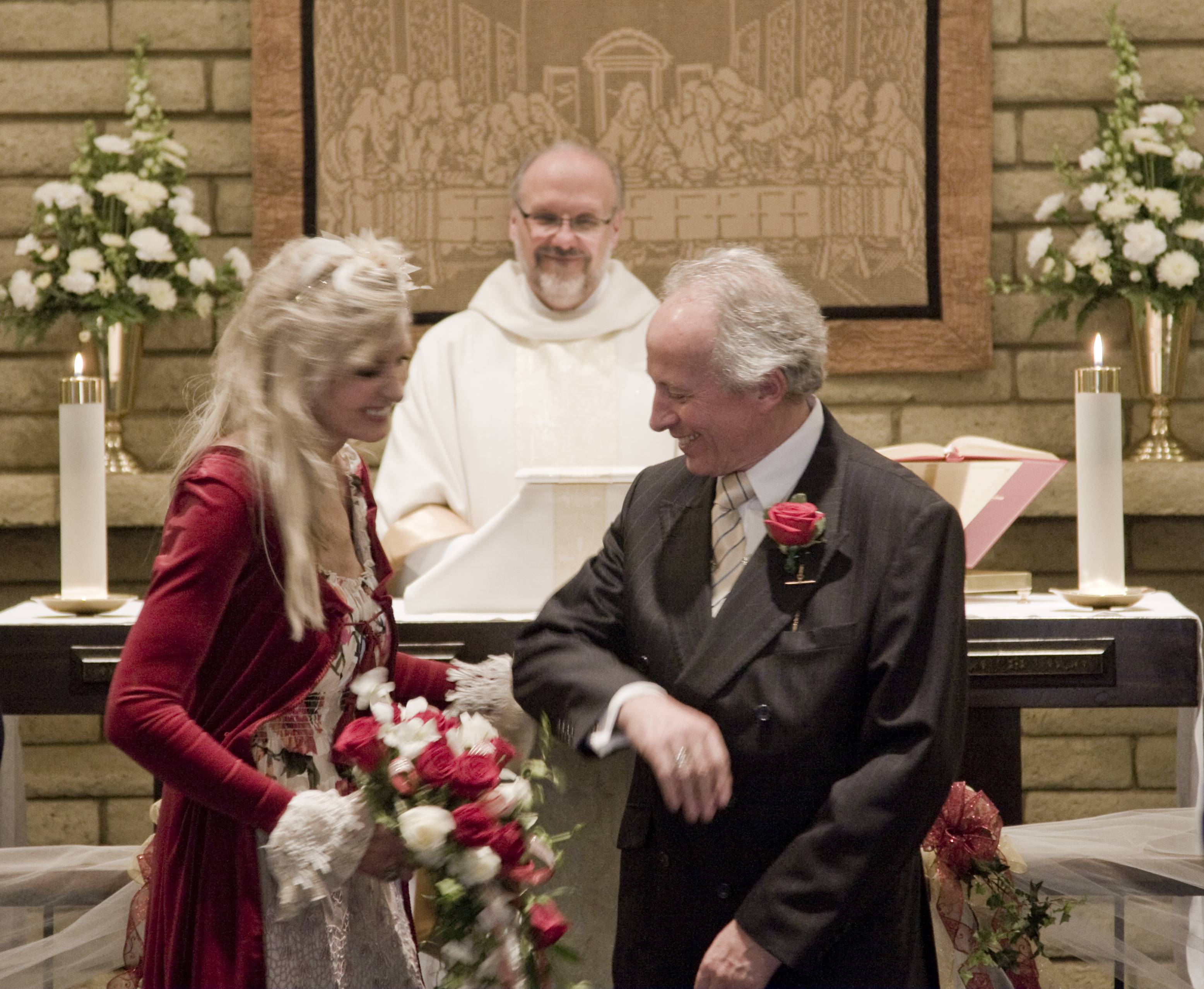
For Jean and I were married in St Paul’s Episcopal Church, Payson, Arizona on the 20th November in front of the Reverend Dan Tantimonaco.
Mr and Mrs Handover
That marriage gives me the right to apply to the US Government for Resident status and so, today, Thanksgiving Day 2010, Jean and I will also have our first celebratory feast in gratitude to starting our married lives as new Americans.
Jon’s post yesterday about how silence in more general terms is so important for good mental health got me musing about this.
The first thing that struck me was how good dogs are at doing nothing. They are naturals at being in the present, especially when being in the present means nothing more than just laying around.
Just doing - nothing!
OK, one could come up with an intellectual rebuff of that. Dogs aren’t humans, don’t have to go to work, don’t have to struggle to make one’s way in the world, etc., etc. No argument in that, is there. Or is there?
Let’s take monks. Clearly being a monk is a spiritual vocation that appeals to a very small number of people. But they prove that the ‘work, rush around, struggle with life’ scene is NOT hard-wired into mankind, ultimately it is a choice.
Just read this about a day in the life of a monk at Downside Abbey. Don’t react to what you read, just go through the text and notice how frequently words of silence, faith, reflection and prayer come up.
Now I am not suggesting that we all give up our present daily lives and become monks, but I am underlining the importance of balance, and for the sake of our private and public worlds that probably means spending more time doing nothing!
Let’s take North American Indians, in this case the Navajo. They too understood the huge importance of meditation and prayer. This video is just 3:40 long – see if you have the stillness in your mind to watch and listen to this for these few, short minutes.
How did you do?
Now let’s go back to 1966, the year when Simon & Garfunkel released the song, words written by Paul Simon, The Sound of Silence, that later became a huge, global hit. Here are the lyrics – read them slowly and reflect on the meaning in those words.
The Sound Of Silence (3:08)
P. Simon, 1964
Hello darkness, my old friend
I’ve come to talk with you again
Because a vision softly creeping
Left its seeds while I was sleeping
And the vision that was planted in my brain
Still remains
Within the sound of silence
In restless dreams I walked alone
Narrow streets of cobblestone
‘Neath the halo of a street lamp
I turn my collar to the cold and damp
When my eyes were stabbed by the flash of a neon light
That split the night
And touched the sound of silence
And in the naked light I saw
Ten thousand people maybe more
People talking without speaking
People hearing without listening
People writing songs that voices never shared
No one dared
Disturb the sound of silence
“Fools,” said I, “you do not know
Silence like a cancer grows
Hear my words that I might teach you
Take my arms that I might reach you”
But my words like silent raindrops fell
And echoed in the wells of silence
And the people bowed and prayed
To the neon god they made
And the sign flashed out its warning
In the words that it was forming
And the sign said “The words of the prophets are written on the subway walls
And tenement halls
And whispered in the sound of silence
For your sake, and therefore for the sake of all those around you – find your silence.
“Faith is not simply a patience that passively suffers until the storm is past. Rather, it is a spirit that bears things – with resignations, yes, but above all, with blazing, serene hope.” Corazon Aquino.
Yes, I cheated. I looked for a quotation to suit the mood of this post and came across the above. Corazon Aquino was the woman who led the revolution which toppled the authoritarian regime of the late strongman Ferdinand Marcos and restored democracy in the Philippines.
Anyway, to the theme of this Post.
Those that are regular readers of Learning from Dogs know that at one level I am not optimistic about the future over the coming years. A quick trawl through this Blog will find quite a few articles showing that things are going to get a lot worse before they get better.
One of the forecasters who has consistently been on the money, so to speak, is Gerald Celente. He runs an organisation known as Trends Research Institute.
Here’s 14 minutes from a recent interview on the Alex Jones Show. Do watch it to the end.
Despite being US focussed this interview still has massive implications for the rest of the world.
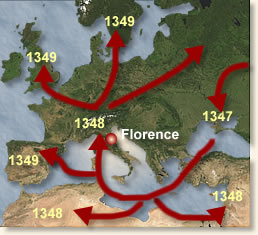
This Post is about faith. Around minute 10:30 in the above video, Celente talks of those people that have the faith in themselves to bring about change. Celente talks that from all great disasters comes change. He talks of the Black Death that in the three years from 1348 wiped out up to 50% of Europe’s population.
Coming out of the East, the Black Death reached the shores of Italy in the spring of 1348 unleashing a rampage of death across Europe unprecedented in recorded history. By the time the epidemic played itself out three years later, anywhere between 25% and 50% of Europe’s population had fallen victim to the pestilence.
Plague's progress
So here’s the point. In the Celente interview, he predicts that 20% of Americans will reject the way that they see their society going. Fascinating! That 20% figure.
Dr David Hawkins in his seminal book Power vs Force writes on page 77:
… 85% of the [world] race is below the critical level of 200, while the overall average level of human consciousness is approximately 204. The power of the relatively few individuals near the top counterbalance the weakness of the masses towards the bottom to achieve the overall balance.
Hawkins is saying that 15% of the world’s population has the integrity required to bring up the level of consciousness of all the rest.
I have the faith that we are on the verge of another renaissance for mankind, one based on integrity and truthfulness, honesty and love. In my faith, I see this next renaissance being born in America, still the land of the free.
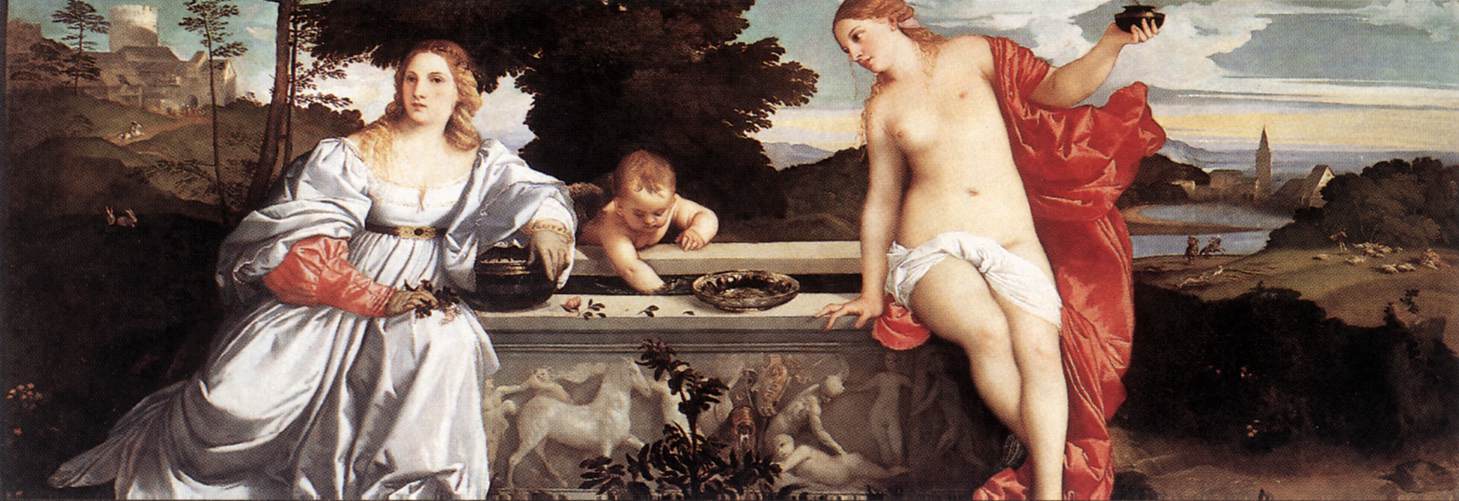
"Sacred and Profane Love" by Tiziano Vecellio, otherwise known as Titian
Titian was born in 1488 just 100 years after Europe was ravaged by the Plague.
Keep the faith – there is a wonderful new world just around the corner.
I don’t know about you but I’m picking up more and more ‘vibes’ from all over the place that strongly suggest an increasing awareness of the need for real change in society. Anyway, more of this another time.
My article today is base on an editorial in the Mole Valley Farmers Newsletter
MVF logo
for October 2010 (no. 557). First some background to this organisation.
Mole Valley Farmers was started in 1960 by a small group of farmers around South Molton* who were concerned by the discriminatory practices and the large margins being taken by many of their input suppliers. From the outset it was decided to treat all members equally, subject only to quantity allowance and that the Company would operate on the minimum margin to allow continuity and growth. Today it remains one of a few true co-operatives in the supply industry.
Mole Valley Farmers consists of:
Nine branches in the south west supplying a vast range of goods to farmers and the public alike. These range from farm requirements to clothing, footwear, garden supplies, pet food and accessories, domestic goods and power tools
Our own feed mills for all animal feeds
Fertiliser blending plants
A specialist mineral plant
A quality farm building division
Of special importance are our farmer customers who purchase animal feed, fertilisers and minerals, all manufactured to a high specification by Mole Valley Farmers and delivered direct from point of manufacture to farm or to branches for collection in small lots.
* South Molton is in Devon, England about half-way between Barnstaple and Tiverton and the history of this interesting firm may be found here.
I have to declare a certain interest in that when I lived in Harberton, Devon for a number of years, we were non-farmer Members of Mole Valley Farmers for feed for our chickens and ducks and later on for Pharaoh. So when I arrived to stay recently for a week with friends in Brixham, Devon, my eye quickly picked up the familiar look of the MVF Newsletter lying on the table.
This is the editorial, reproduced in full with the kind permission of the Newsletter editor, from the pen of David Burke, Chairman of MVF.
Commodity trading
Until relatively recently, the price of food was set by the forces of supply and demand for the food itself, which worked reasonably well in developed countries able to purchase in times of shortage. For the last century farmers have been able to reduce some of the market risk by forward selling crops to a trader in that market, at a price that fair to both parties.
This type of trading was tightly regulated and only those who were directly involved could participate and it worked well. At some time in the mid-90s, Goldman Sachs, with other financial institutions, successfully lobbied for the regulations to be abolished.
Forward contracts became derivatives, which could be bought and sold repeatedly by traders, which enabled the financial institutions to become involved. This type of investment really took off when the American and European pension market collapsed, together with that for normally traded derivatives like metals, prior to the recession, although actual food supply and demand remained relatively in balance. Last year Goldman Sachs reportedly made £3.2bn profit from derivatives trading.
In spite of Russia’s grain export ban and some other weather affected harvests, both the EU commission and the International Grains Council report more than adequate reserves of grain to meet demand and that the carry-over stocks are likely to be the second highest for years. The rumoured (but non-existent) wheat shortage that is driving up all feed prices, is entirely due to actions of the world’s principle investment bankers and their investors, which have serious implications throughout the globe. Whilst few in the developed world mostly in the Northern Hemisphere, will go hungry, it is a growing tragedy for the poorer countries in the Southern Hemisphere where three-quarters of the world’s population live. According to the Food and Agricultural Organisation, one third of the population lack food security and 792m people there are undernourished to varying degrees of starvation. But most damning of all, some 12m children die annually of malnourishment. Derivative speculation, which pushes up the cost of grains and in particular wheat, is responsible for food inflation that is proportionally greater for the impoverished nations.
Re-regulation of the basic food market to prevent a recurrence of the spikes of 2007 and 2010 would go some way to stabilising global food costs and help with developing nations, though without a great deal of pressure from compassionate people, this will be difficult, given the influence that the world’s richest investors have over governments. Alternatively, primary food producers worldwide are paid a high enough price for their produce to enable them to invest in research and best practice, as well as in efficient equipment. This concept received the approval of the European Parliament on 9th September and although they are considering legislation to ensure farmers receive a fairer share of the consumer price, it may be difficult to implement other than through a properly funded and regulated CAP.
Well said, Mr Burke.
NB. The web links in Mr Burke’s article have been inserted by me, they were not in the original article.
I had been in a bit of a rant mood and contributed a comment to that Post. I wrote:
I don’t have the knowledge to respond to Simon’s excellent Post in detail but his comments reinforce what feels like a constant throbbing in my mind – how can the citizens of so many countries have abdicated so much interest and concern in how they/we are governed. Wish I had even a clue as to the answer to that question.
Significant social unrest would be very scary – the ‘law’ of unintended consequences and all that – but there are times when I wonder if this, in the end, might be the only form of real progress for the hard-working, tax-paying majority.
End of rant! 😉
Interestingly, that stimulated some replies which were, in my opinion, worth sharing with you; kind reader of Learning from Dogs that you are!
Sir, you raise a sad but true point when you ask how a majority of us citizens, on a worldwide basis, could have lost true “by the people” control of our own governments.
For most of us the loss of healthy economic functioning has been the main consequence of this, something that has been very painful. But I also find myself reflecting on the unspeakable genocides in our collective human history. One gets an awful sense of how such things were permitted to arise…ZeroInMyOnes
And
Well spoken Paul Handover. The system cannot and will not be changed politically or judicially because the malevolent forces who conjured the system own and control both the political and judicial operations and operators. Those operators work to advance the interests of the predatorclass whose operations, operators, and structures are malevolent.
The people are the abused victims of predatorclass criminal enterprises bent on total control of the earths wealth and resources, and the enslavement or eradication of the rest of the population.
The peoples only hope for implementing the changes necessary to form a more perfect union is best described here:
(“We hold these truths to be self-evident, that all men are created equal, that they are endowed by their Creator with certain unalienable rights, that among these are life, liberty and the pursuit of happiness. That to secure these rights, governments are instituted among men, deriving their just powers from the consent of the governed. That whenever any form of government becomes destructive to these ends, it is the right of the people to alter or to abolish it, and to institute new government, laying its foundation on such principles and organizing its powers in such form, as to them shall seem most likely to effect their safety and happiness.”) TonyForesta
And
Paul Handover, that was not a rant. You are simply talking common sense.
Scary is right. And it’s scarier by the day.
We have to try to work constructively for change. I keep urging people to check out the potential for an economy based not on constant growth, which is impossible on a finite planet, but on some sane principles of equity and sustainability.
If you go to http://www.steadystate.org and look at their position statement, you can see that people from all over the world are signing on–yes, just three or four people a day–but they are from every continent and just about every country.
Now, can you help this “go viral”? Carla
These are strong, powerful views. I have joined Casse, the organisation referred to in Carla’s comment – see second Post from me today – and Tony’s comment motivated me to look up the history of the United States Declaration of Independence, the subject of a separate article on this Blog.
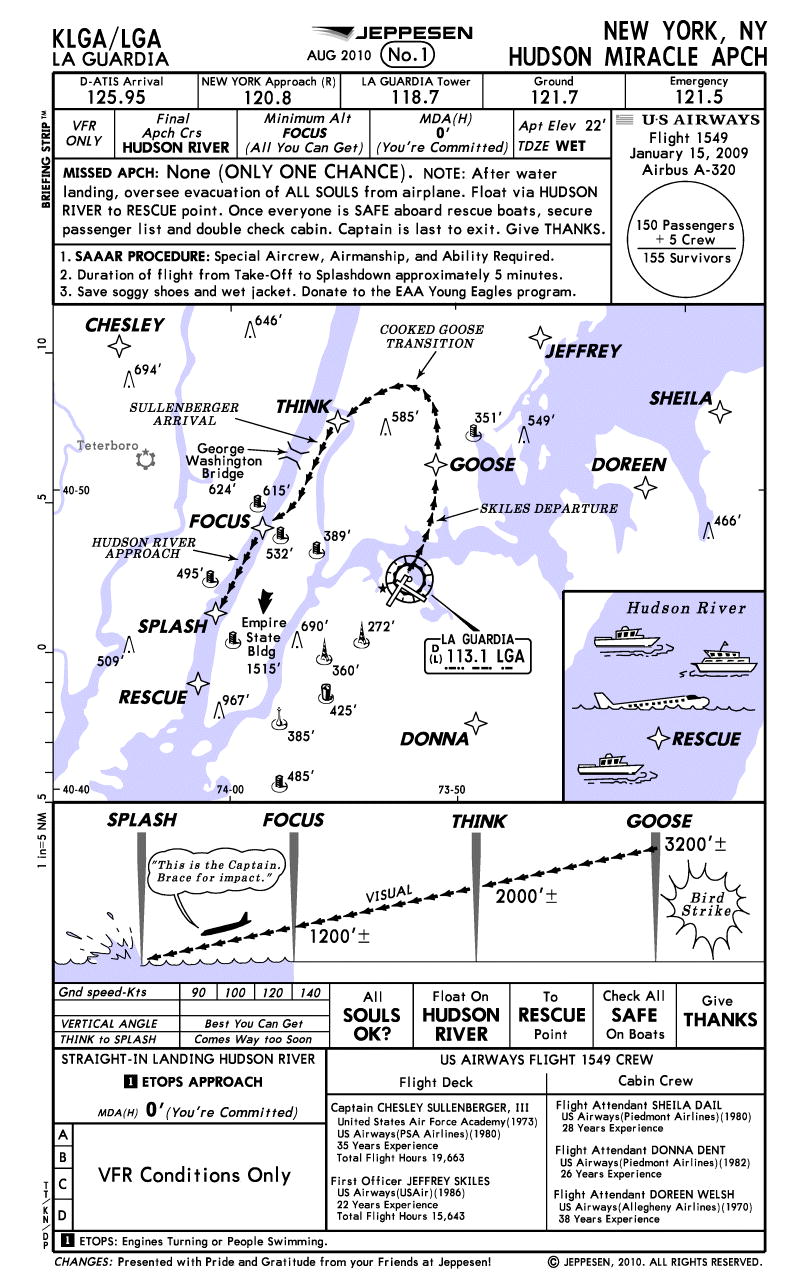
There has been much written and published about these two heros who enabled the stricken Airbus A-320 to ditch on the Hudson River with no loss of life. That was Flight 1549 on the 15th January, 2009.
However, at this year’s Oshkosh, Sullenberger and Skiles were presented with a wonderful memento from Jeppesen who publish among other products instrument approach charts for aircraft. They did something very creative in producing the following.
Jeppesen, known in the aviation industry as the worldwide leader in navigation and charting services, recently presented “Miracle on the Hudson” pilots captain Chesley Sullenberger and first-officer Jeffrey Skiles with a specially designed approach chart and engraved Jeppesen chart binders to commemorate the remarkable ditching of US Airways flight 1549 in the Hudson River in New York in January 2009.
Entitled “Hudson Miracle APCH,” the one-of-a-kind chart includes several light-hearted notations that honor the famous water landing that saved the lives of 155 passengers and crew on board the flight disabled by bird strikes. In the “briefing strip” section of the chart, instructions include: “After water landing, oversee evacuation of ALL SOULS from airplane. Float via HUDSON RIVER to RESCUE point. Once everyone is SAFE aboard rescue boats, secure passenger list and double check cabin. Captain is last to exit. Give THANKS.”
The chart documents the historic five minute flight with a unique graphic, beginning with departure from LaGuardia Airport, followed by a “Cooked Goose Transition” point and “Hudson River Approach,” which is then followed by “Splash” and “Rescue” points on the water. The humorous chart also salutes the career achievements of the crew of flight 1549, including Sullenberger, Skiles, and veteran flight attendants Sheila Dail, Donna Dent and Doreen Welsh.
Along with the commemorative chart, the pilots were presented with a special Jeppesen chart binder, engraved with the famous fortune cookie advice kept in Sullenberger’s flight bag: “A delay is better than a disaster.” The items were presented by Mark Van Tine, Jeppesen president and CEO, during the 2010 Gathering of Eagles fundraiser dinner and auction held during the EAA AirVenture fly-in and air show in Oshkosh, Wisc. The EAA Young Eagles event raises funds and awareness for youth involvement in aviation.
To view the commemorative US Airways flight 1549 chart, please visit this page.
A fellow pilot, Martin Thorpe, sent me the chart shortly after the Oshkosh event but it seemed appropriate to let some water flow under the bridge, so to speak, before I mentioned it on Learning from Dogs.




 Learning from Dogs