On Tuesday the Visiting the Vet post was about our Ruby. As was explained in the early part of that post:
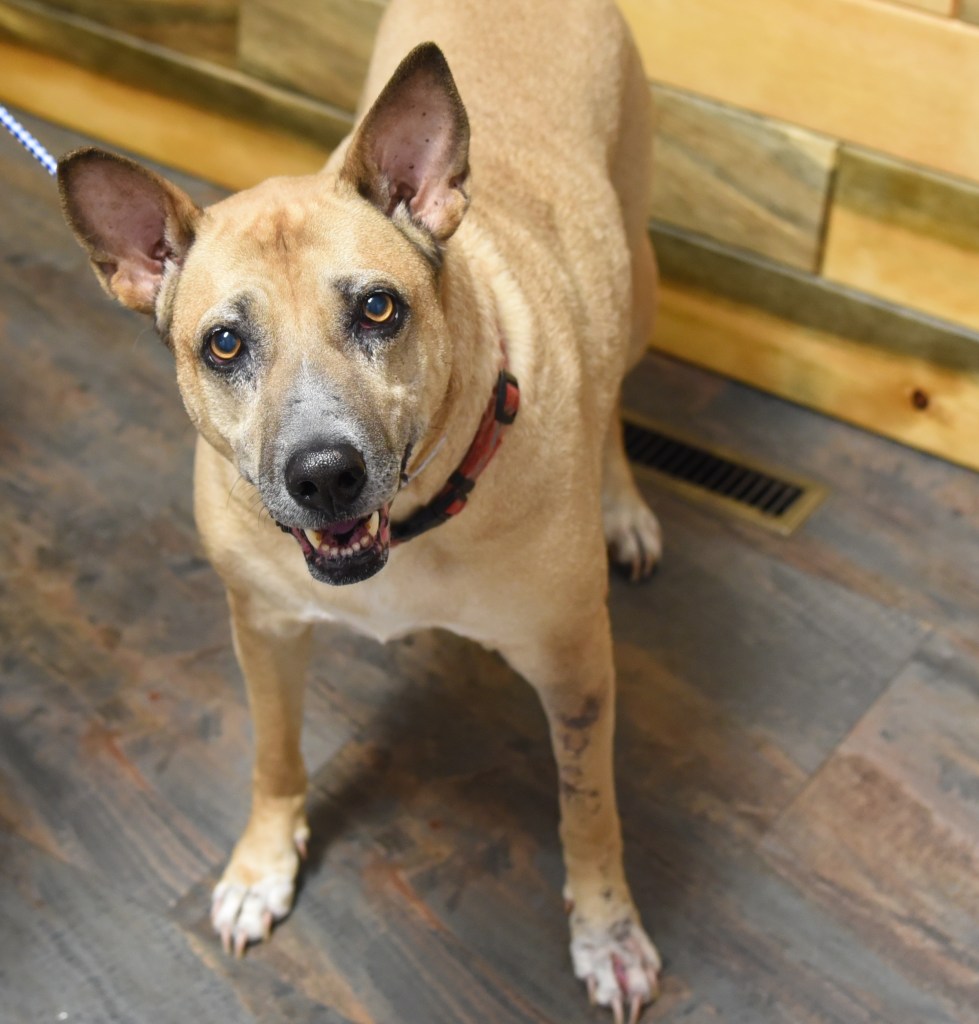
Back on the 11th August Jean and I took Ruby into Lincoln Road Vet because there was blood in her urine. Ruby is one of our six dogs that we have at home. Ruby is the last of the Mexican ex-rescue dogs and is an eleven-year old Sharpei mix.
Dr Jim thought that Ruby had a straightforward Urinary Tract Infection (UTI) and that a course of antibiotic would fix that.
All of that was reported in my previous post and, indeed, it did look as though it was all resolved.
Then on Tuesday night we discovered a pee in the house that had blood in it. Repeated yesterday. Although we hadn’t caught Ruby in the act, so to speak, we were pretty sure that it was her with the blood in her urine (again).
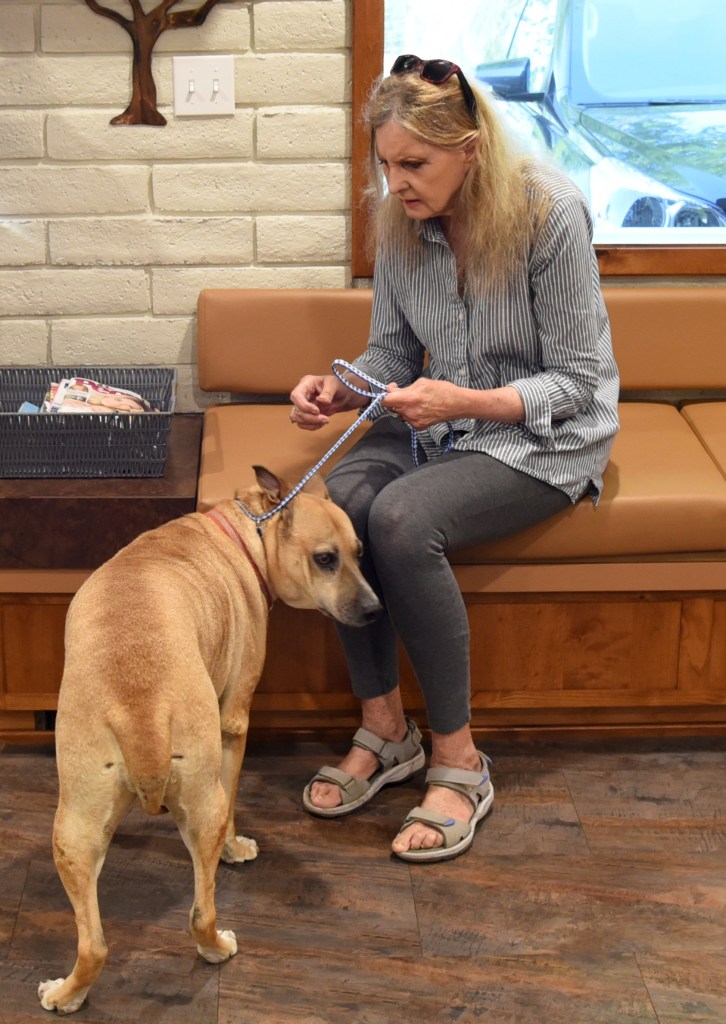
So yesterday morning back we went to Lincoln Road Vet Clinic to be seen by Dr. Jim.
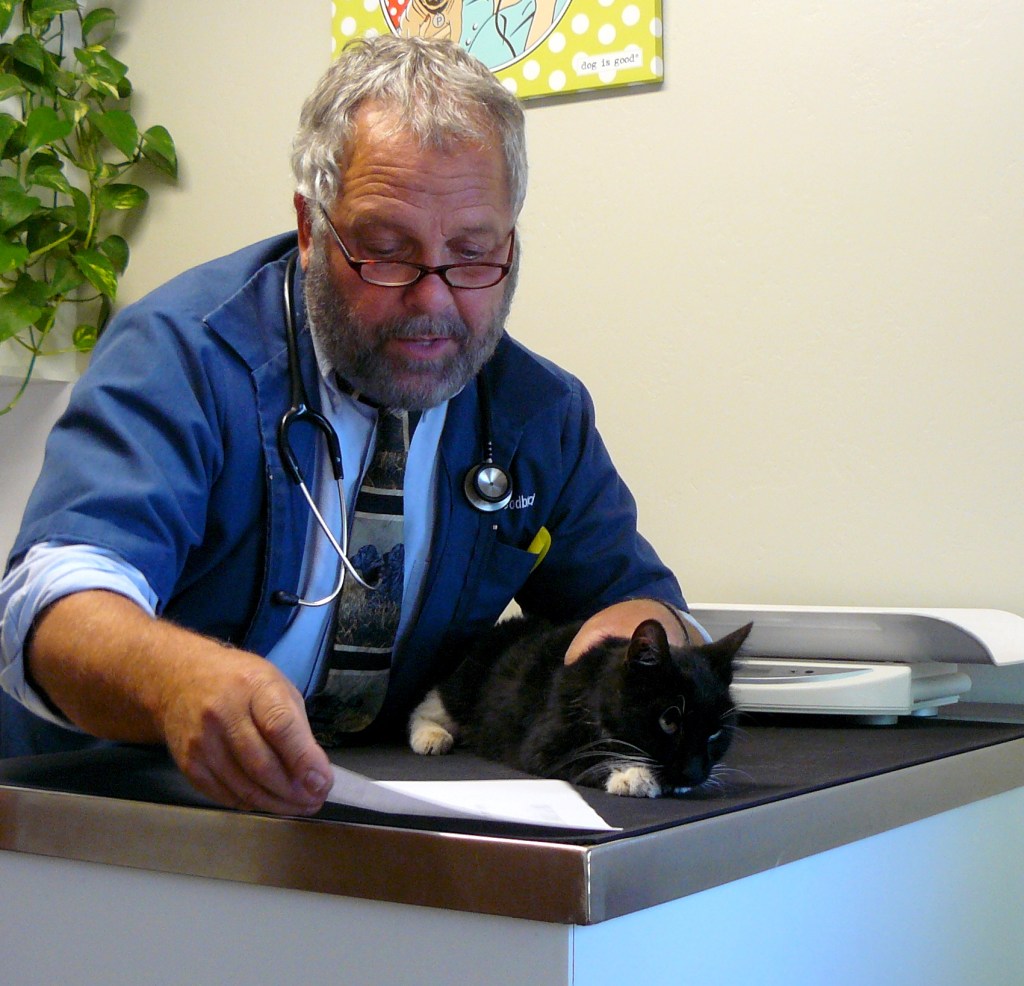
Jim and his assistant, Cianna, first took Ruby through to a lab at the back of the clinic to take an X-ray and draw some of Ruby’s urine directly from her bladder.
That urine was going to be cultured by Three Rivers Hospital in Grants Pass for that was the only reliable way of seeing what might be the cause of the infection. A quick web search found more information about a urine culture:
A urine culture is a test to find germs (such as bacteria) in the urine that can cause an infection. Urine in the bladder is normally sterile. This means it does not contain any bacteria or other organisms (such as fungi). But bacteria can enter the urethra and cause a urinary tract infection (UTI).
A sample of urine is added to a substance that promotes the growth of germs. If no germs grow, the culture is negative. If germs grow, the culture is positive. The type of germ may be identified using a microscope or chemical tests. Sometimes other tests are done to find the right medicine for treating the infection. This is called sensitivity testing.
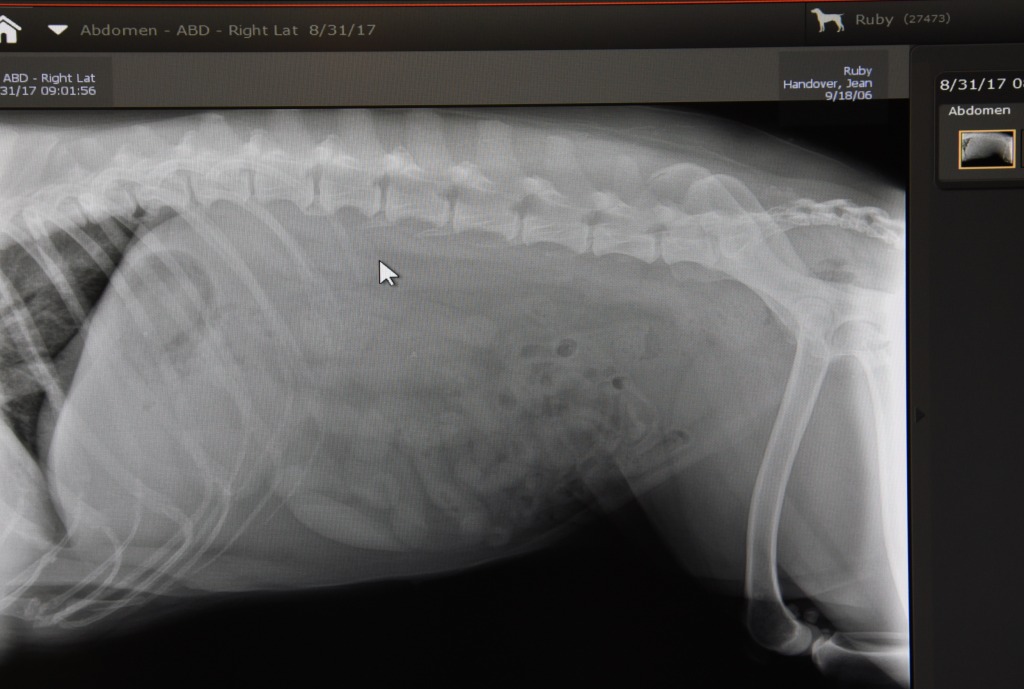
In no time at all the images from the X-ray were available to be viewed.
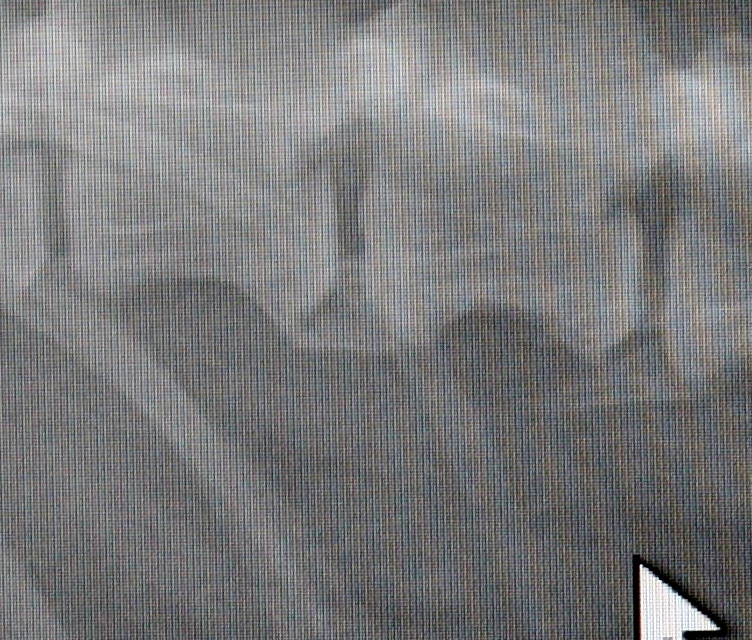
Jim was delighted to report that there was no sign of stones or a tumor. Ruby is an eleven-year old dog and what Jim did see on the X-ray was ‘bridging’ along parts of Ruby’s spine. The technical term for this is spondylosis and, again, a quick web search found more:
Spondylosis in dogs, also called spondylosis deformans, is a degenerative condition that usually occurs most along the spine in older dogs. There, degenerative disks cause bone spurs to develop. These bone spurs can form bridges from one vertebrae to the next, limiting flexibility and range of motion.
Most cases of spondylosis require minor pain relief, and dogs can live out healthy, comfortable lives with this condition.
It’s not a very good image but here is an enlargement of that first X-ray picture (or rather my photograph of same) showing that bridging.
Jim offered some general information regarding idiopathic cystitis that is more commonly seen in female cats but can also be seen in dogs. In cats the cause is more likely to be stress but in dogs the more likely cause is an infection; as in a UTI. In both cats and dogs the signs are frequent peeing but cats are more likely to incur some pain when urinating compared to dogs.
Back to Ruby.
The second X-ray image (below) did nothing to change Jim’s mind that Ruby might have a UTI that requires a change of antibiotic to accurately combat the infection.
While waiting for the results of the urine culture, Jim recommended putting Ruby on a second course of Amoxicillin.
When we get those results I will add the details to this post.
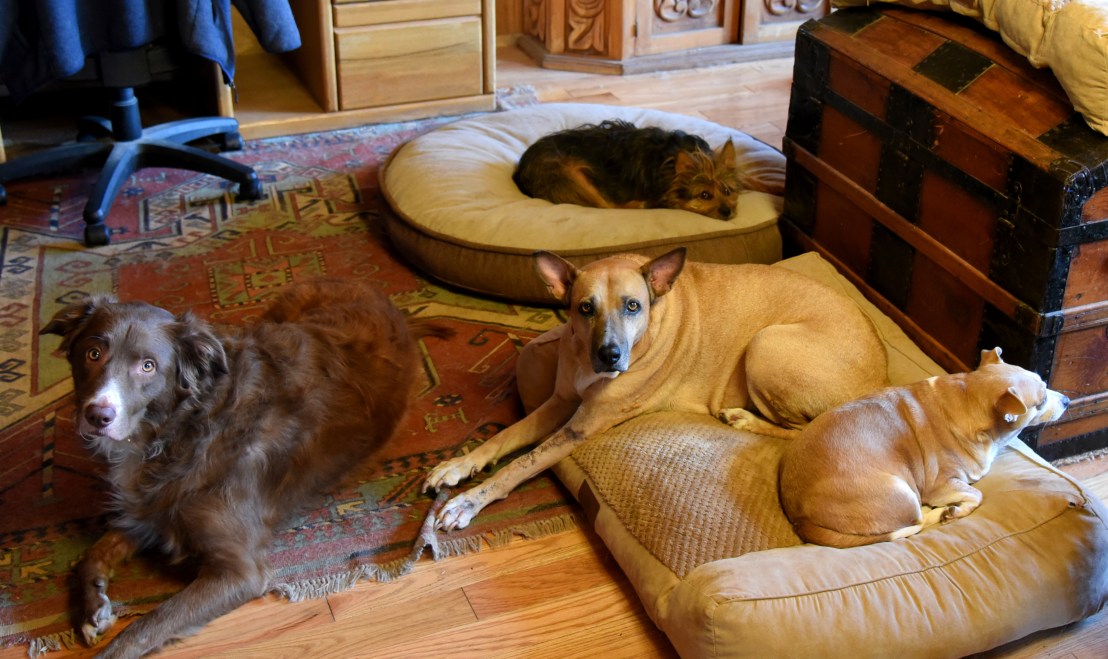
Back on the 11th August Jean and I took Ruby into Lincoln Road Vet because there was blood in her urine. Ruby is one of our six dogs that we have at home. Ruby is the last of the Mexican ex-rescue dogs and is an eleven-year old Sharpei mix.
Here she is staring up at me to the right of Oliver in the picture below .
In clockwise order: Oliver; Sweeny; Ruby; Pedy.
Because of Ruby’s age and background and the fact that there was significant blood in her urine we were bracing ourselves for some bad news.
Once checked in it wasn’t too long a wait before we were shown in to Dr. Jim’s room.
There Jim took some urine for analysis and then started examining Ruby. Jim was worried that Ruby might have kidney stones.
However, and thankfully, the urine test revealed an infection, nothing worse! A urinary tract infection or UTI.
Therefore, the first move would be to start Ruby on a course of Amoxillin.
Jim explained that Amoxillin was an antibiotic that he thought would be good for Ruby and would quickly determine whether or not Ruby had a simple urinary tract infection (UTI) or if it was something more challenging (my words).
Maybe my initial reluctance to publish this Visiting the Vet post was down to me not wanting to do that before the results of the antibiotic treatment were clear.
Ergo, Jean and I are overjoyed to report that the Amoxicillin course did sort everything out and that Ruby is over her UTI and back to being her normal, healthy, happy self.
When Jim called us at home a week later he was just as pleased to hear the good news!
We are chilling out for a couple of days giving our attention to Mark and Debbie who are staying with us. They came over to view the eclipse and I shall feature a few of Mark’s photographs for this coming Sunday’s Picture Parade.
Marc who blogs at Healthy Pawz recently decided to follow this place. I went across to Healthy Pawz to leave my thanks for the follow, as I always try to do, and read a most wonderful post. Wanted to republish it here today.
Pets have an amazing ability to change our lives for the better. They find that special place in our heart and latch on with incredible amounts of unconditional love. When we regularly give our pets undivided attention, we build a bond and connection that will last a lifetime.
Every moment we spend with our pets is an opportunity to observe them and learn more about their personality, nuances or needs. Notice the simple and basic things about your pet like when they are relaxed, comfortable, happy, anxious, etc., just as you would a child. Those moments of observation will teach you so much about the little being that wants nothing more than to provide you with unconditional love and attention.
Another great benefit to having a pet is that they can sometimes see in us what we cannot see in ourselves. We know about service pets that support people in different ways for sight, comfort, seizures, autism, etc. But, our own pets are also in tune to our needs and emotions. However, we are sometimes so rushed with life that we fail to recognize the great gift our pets are offering us (me included). We have a rescue kitten with one eye and in my opinion, she’s amazing. This little cat noticed inflections in my voice that indicated stress of some sort. For me it was business as usual, but for her it was climb on my chest and rub her little face against mine. After a few hundred times of this (exaggerated of course) I finally realized that she was trying to calm me down. And I learned to better recognize when I needed to take a step back with a deep breath throughout the day.
We live in a very fast paced, get it done kind of society. That kind of daily grind can strip away some of our compassion and empathy because we are so overwhelmed with other aspects of life that we may not notice when we are stuck in that vortex spinning around aimlessly. Whether we realize it or not our pets are a great conduit to restoring that which we need to sustain us in our human relationships. Compassion and empathy are easily understood, but not always easily lived out. Our pets are a daily reminder of this because they provide both compassion and empathy daily. Because of this, we have an opportunity to reciprocate compassion and empathy back to them and to those around us.
Whether you have a dog, cat, hamster, etc., pets can enhance our lives in so many ways. Carve out some daily time to spend with your furry loved one, observe them on their terms and take some time to reflect about how they are benefiting your life. Watch over time as your emotional intelligence evolves through this process.
ooOOoo
There is so much wise advice in that post!
Hard to highlight any particular sentence but this one spoke to me early on: “When we regularly give our pets undivided attention, we build a bond and connection that will last a lifetime.”
As I watched pet nutrition blogger Rodney Habib’s TedX video below, I found it simultaneously jaw-dropping and not surprising. After his dog, Sammie, was diagnosed with cancer, Habib went on a mission to find out why canine cancer is a growing epidemic. Currently, one out of every two dogs will be diagnosed with cancer at sometime in their life, mostly between age 6 and 12.
I have a 13-year-old Labrador. Admittedly, I’m obsessed with my awareness that he’s approaching the end of his life. But, what if he weren’t? What if he could live until he’s 30 like Maggie, the Kelpie, from Australia. Maggie was possibly the world’s oldest dog.
During Habib’s trek around the world, he spoke with researchers and scientists. He learned that dogs have a higher rate of cancer than any other mammal. In the ’70s, dogs lived to age 17; today the average life span is 11. Why?
Diabetes is up 900 percent in dogs in the last five years. Obesity is up 60 percent. While 10 percent of all cancer cases are genetic, 90 percent are the results of lifestyle and environmental influences, including stress, obesity, infection, sedentary lifestyle, toxins, pollution and most importantly diet.
Habib spoke with Norwegian scientist, Thomas Sandberg, who is conducting a 30-year-old study (the longest observational study to date). Sandberg is hoping to prove that poor quality food may cause cancer to develop in dogs and cats, mainly due to a compromised immune system.
Here’s the part of Rodney’s TedX Talk that was jaw-dropping for me: Research shows that dogs on a diet of dry commercial pet food fed leafy green vegetables at least three times a week were 90 percent less likely to develop cancer than dogs that weren’t. And dogs fed yellow/orange vegetables at least three times a week were 70 percent less likely to develop cancer.
I feed Sanchez and Gina organic kale, spinach, green beans and carrots, along with many fruits. Personally, I wasn’t surprised by the benefits, but by the research showing that just a little bit of produce added to kibble could have such a profound effect on canine health.
Thomas Sandberg has Great Danes, who typically live only six to eight years. In a 6-year study of 80 dogs fed a completely raw diet with low amounts of carbs, only one dog developed cancer.
Another study at Purdue University showed a 90 percent decrease risk of cancer when they added green leafy vegetables to a bowl of processed food three times a week.
Remember Maggie, the world’s oldest dog? In addition to a diet that included raw fed grass milk, she also self fasted some days. She lived on a dairy farm and exercised all day long, often getting in 9 kilometers (5 1/2 miles ). Obesity is also now known to be a contributing factor to canine cancer, which is why exercising with your pet is so important.
We have dogs because we love them. We bring them into our human world and expect them to adjust. They do, because they want to please us. We expect them to follow our house rules, listen to the music we choose, build their life around our schedules, and accept the food we choose for them. But, what if we knew more and chose differently for them? How long would they live?
Do your pets eat green leafy veggies?
ooOOoo
Now if you have read down to this point but not yet watched Rodney Habib’s talk then …. STOP!
Go back and watch that talk!
Then you can truly appreciate the value of looking at the diets of our beautiful dogs!
Love to hear your thoughts on this!
Oh, and both Brandy and little Pedy are great vegetable eaters. But we will be following the recommendations of Rodney Habib and will share our findings with you all later on.
Not so long ago there was some discussion about how important it was for the natural way of things to include predators. I mentioned how this had been the topic of a post published some time ago in this place.
It was back in February, 2014 and I have republished it today.
oooo
The critical value of predators in our wild lands.
February 24th, 2014
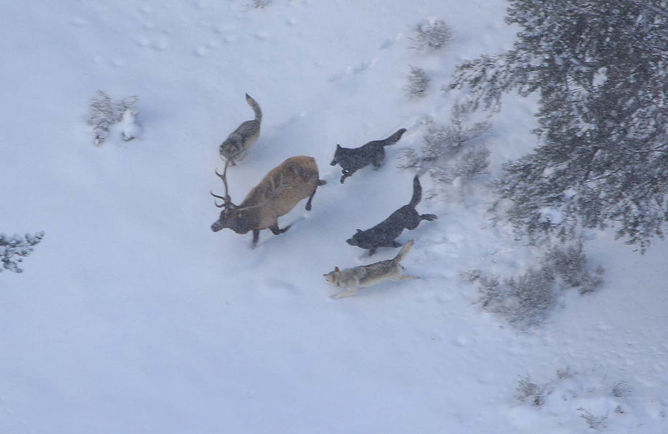
The consequences of the reintroduction of wolves to Yellowstone National Park.
I have two people to offer my thanks to for today’s post: Suzann and Ginger. Both of them within hours of each other sent me an email recommending the following video. So, without further ado, here is that video. (Oh, would you believe this. The video was released on February 13th, 2014 and, at the time of me writing this post, has been viewed 1,453,345 times! Wow!)
“When we try to pick out anything by itself, we find it hitched to everything else in the Universe.” – John Muir
When wolves were reintroduced to Yellowstone National Park in the United States after being absent nearly 70 years, the most remarkable “trophic cascade” occurred. What is a trophic cascade and how exactly do wolves change rivers? George Monbiot explains in this movie remix.
Narration from TED: “For more wonder, rewild the world” by George Monbiot. Watch the full talk, here: http://bit.ly/N3m62h
Music Credits:
“Unfoldment, Revealment, Evolution, Exposition, Integration, Arson” by Chris Zabriskie (http://bit.ly/1c2uckW)
FAIR USE NOTICE: This video may contain copyrighted material. Such material is made available for educational purposes only. This constitutes a ‘fair use’ of any such copyrighted material as provided for in Title 17 U.S.C. section 106A-117 of the US Copyright Law.
If you want to read more on a general level, then my post on the 11th January, 2014, An echo in the hills! may be worthwhile. It included this from William Ripple, of Oregon State University:
ooOOoo
Top dogs keep ecosystems in order
Many of these large carnivore species are endangered and some are at risk of extinction, either in specific regions or entirely. Ironically, they are vanishing just as we are learning about their important ecological effects, which is what led us to write a new paper in the journal Science to document their role.
From a review of published reports, we singled out seven species that have been studied for their important ecological role and widespread effects, known as trophic cascades. These are the African lion, leopard, Eurasian lynx, cougar, gray wolf, sea otter and dingo.
Based on field research, my Oregon State University co-author Robert Beschta and I documented the impact of cougars and wolves on the regeneration of forest tree stands and riverside vegetation in Yellowstone and other national parks in western North America. Fewer predators, we found, lead to an increase in browsing animals such as deer and elk. More browsing disrupts vegetation, reduces birds and some mammals and changes other parts of the ecosystem. From the actions of the top predator, widespread impacts cascade down the food chain.
Similar effects were found in studies of Eurasian lynx, dingoes, lions and sea otters. For example in Europe, absence of lynx has been closely tied to the abundance of roe deer, red fox and hare. In Australia, the construction of a 3,400-mile dingo-proof fence has enabled scientists to study ecosystems with and without dingoes which are closely related to gray wolves. They found that dingoes control populations of herbivores and exotic red foxes. The suppression of these species by dingoes reduces predation pressure, benefiting plants and smaller native prey.
In some parts of Africa, the decrease of lions and leopards has coincided with a dramatic increase in olive baboons, which threaten crops and livestock. In the waters off southeast Alaska, a decline in sea otters through killer whale predation has led to a rise in sea urchins and loss of kelp beds.
Predators are integral, not expendable
We are now obtaining a deeper appreciation of the impact of large carnivores on ecosystems, a view that can be traced back to the work of landmark ecologist Aldo Leopold. The perception that predators are harmful and deplete fish and wildlife is outdated. Many scientists and wildlife managers now recognise the growing evidence of carnivores’ complex role in ecosystems, and their social and economic benefits. Leopold recognised these relationships, but his observations were ignored for decades after his death in 1948.
Top carnivores, at work keeping things in check. Doug Smith
Human tolerance of these species is the major issue. Most would agree these animals have an intrinsic right to exist, but additionally they provide economic and ecological services that people value. Among the services documented in other studies are carbon sequestration, restoration of riverside ecosystems, biodiversity and disease control. For example, wolves may limit large herbivore populations, thus decreasing browsing on young trees that sequester carbon when they escape browsing and grow taller. Where large carnivore populations have been restored – such as wolves in Yellowstone or Eurasian lynx in Finland – ecosystems appear to be bouncing back.
I am impressed with how resilient the Yellowstone ecosystem is, and while ecosystem restoration isn’t happening quickly everywhere in this park, it has started. In some cases where vegetation loss has led to soil erosion, for example, full restoration may not be possible in the near term. What is certain is that ecosystems and the elements of them are highly interconnected. The work at Yellowstone and other places shows how species affect each another through different pathways. It’s humbling as a scientist to witness this interconnectedness of nature.
My co-authors and I have called for an international initiative to conserve large carnivores in co-existence with people. This effort could be modelled after a couple of other successful efforts including the Large Carnivore Initiative for Europe, a non-profit scientific group affiliated with the International Union for the Conservation of Nature, and the Global Tiger Initiative which involves all 13 of the tiger-range countries. With more tolerance by humans, we might be able to avoid extinctions. The world would be a scary place without these predators.
William Ripple does not work for, consult to, own shares in or receive funding from any company or organisation that would benefit from this article, and has no relevant affiliations.
If meditation really works then we want to engage in it.
Those who watched the video that was the central component of yesterday’s post will not have missed the references by Ted Meissner that scientific, double-blind evidence shows that meditation offers benefits for us humans.
Both Jean and I are especially interested in learning more and, hopefully, finding an appropriate meditation group in our nearest town, Grants Pass.
We would also welcome feedback and advice from any of you good people who have trod this path before.
For example, when one conducts a quick internet search into the different forms of meditation there are dozens of websites that are returned in the search findings. Almost choosing one website at random, the Visual Meditation website declares there are 7 Types of Meditation. As in:
Transcendental Meditation (TM)
Heart Rhythm Meditation (HRM)
Kundalini
Guided Visualization
Qi Gong
Zazen
Mindfulness
To my uneducated eye, not one of those types seems to accord with the type supported by the American Meditation Society:
OUR MISSION
To provide instruction in meditation as taught by the founder of AMS, Gururaj Ananda Yogi.
To preserve and share the universal teachings of Gururaj with integrity and wisdom.
To provide a place where those who wish to unfold the inner self may do so in the company of other like-minded people.
Back to the plot! For this post is about the science.
The following video seemed worthy of sharing with you.
I watched the first 10 minutes before deciding it should be shared. By the time this post is published Jean and I will have watched it to the end. [20:45 yesterday evening. Jean and I have just finished watching the Bob Roth video below. It was both fascinating and very helpful!!]
The Aspen Institute
Published on Jun 26, 2016
Published studies have documented the many physical and mental health benefits of meditation, including decreased pain, better immune function, less anxiety and depression, a heightened sense of well-being, and greater happiness and emotional self-control. Google Scholar turns up almost 700,000 research documents on meditation, among them imaging studies that show increased activity in brain regions associated with attention, a higher volume of grey matter, and lessened amygdala response to emotional stimuli. What actually happens in the brain when we meditate? Why is meditation so nourishing to the mind, body and spirit?
Perri Peltz, Interviewer
Bob Roth
But a search of the YouTube website using the search term “meditation science” brought up many other links to shorter videos.
I selected the following (2:23 mins) because it is presented by Ferris Jabr who is an Associate Editor with Scientific American magazine.
Bottom line to my way of thinking is that this is something worth committing to once we know much more about engaging in meditation.
Your experiences most welcomed.
(And, of course, when it comes to chilling out for hours regularly each day then there’s another thing we can learn from our beloved dogs! No better demonstrated than by Brandy yesterday morning in the following photograph!)
Reflections on a very interesting meeting of our local Freethinkers group.
Last Saturday was the regular monthly meeting of our local Rogue Valley Freethinkers and Humanists. Many know that Jean and I are secular humanists and go as often as we can to these meetings in Grants Pass, Oregon.
Saturday’s meeting was all about Buddhism or more accurately as Jerry Reed, the group’s administrator, put it in a recent email:
For Saturday, Aug 5: Brenda will be our presenter/discussion leader. She will introduce us to Secular Buddhism, including comments on basic principles of Buddhism, and how traditional and secular Buddhism compare with each other, as well as on overlapping philosophical views of Buddhism and Humanism.
This video link provides a discussion between a humanist, Scott Lohman, and a secular Buddhist, Ted Meissner, which may help to familiarize you with Brenda’s topic prior to our meeting. It is about 29 minutes long, all interesting, but if you are cramped for time, especially the segment from about 10:30 to 16:30 which discusses basic Buddhist principles that might also relate to humanism, and another segment from about 19:30 to 27:00 on advice to a beginner who might want to try meditation, and how Star Trek borrowed from Buddhism, and also about the similarity of ethical focus of Buddhism and Humanism.
What I would hope is that if any of you are interested in this subject, then do watch the interview with Ted Meisser conducted by Scott Lohman .
July 13th. 11:00 The second case that I sat in on was Linda bringing in Jefferson.
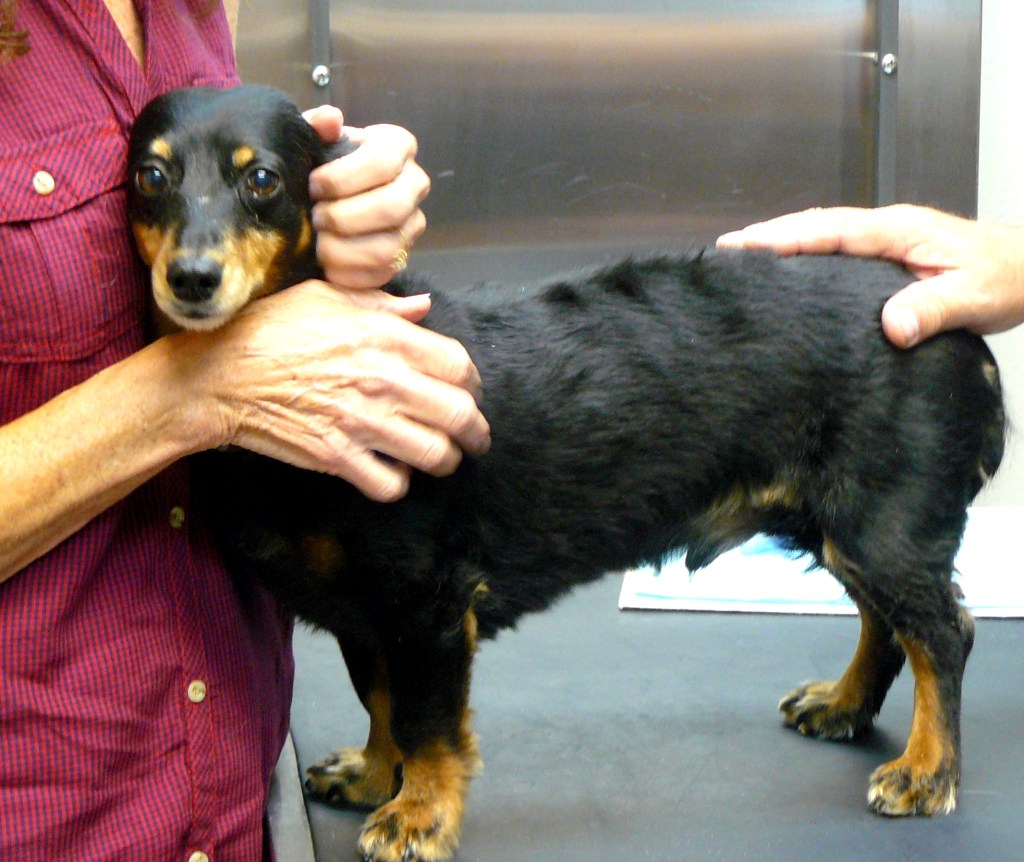
Jefferson is an eight-year-old long-haired male Dachshund. Linda had decided to bring her dog into Lincoln Road because recently Jefferson had started coughing but only when he was pulling on his leash.
Linda added that Jefferson seemed to be chewing on a number of pine cones just now.
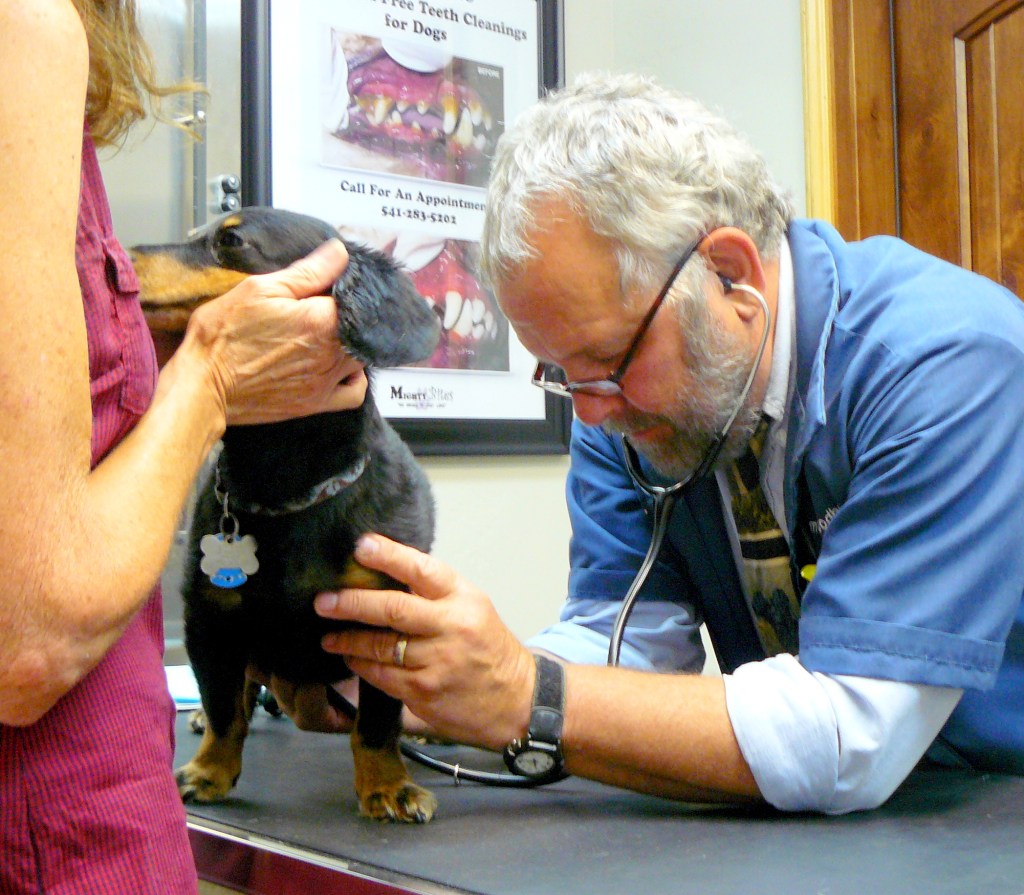
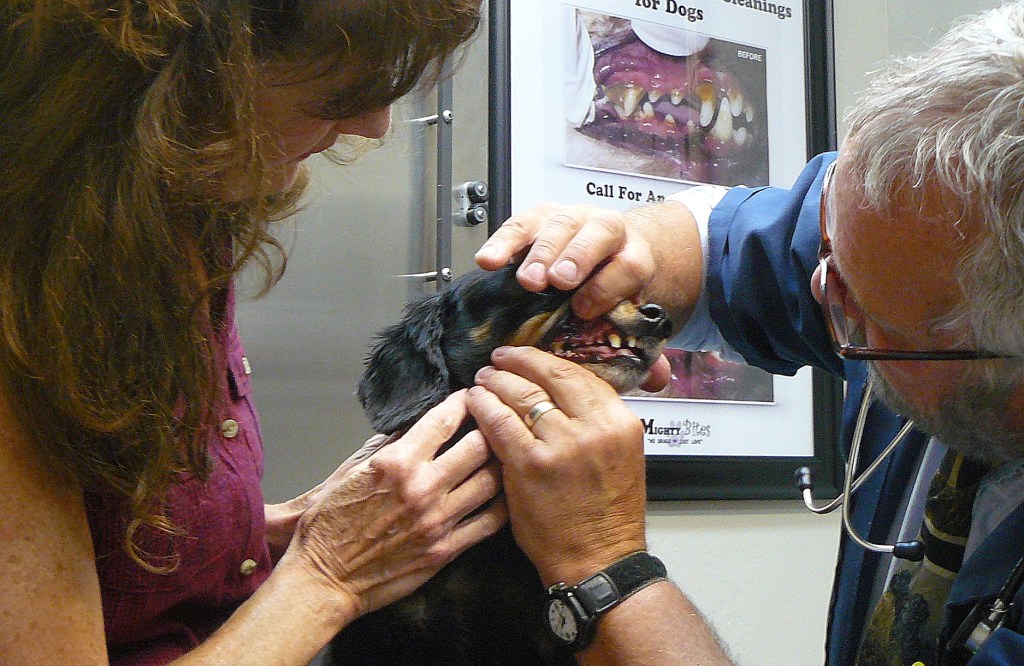
Jim examined Jefferson. First examining the dog’s lymph node and then listening to either side of the dog’s chest.
While everything sounded fine on Jefferson’s right side, Jim detected a very small heart murmur when listening to Jefferson’s left side.
Jim also noted that the lymph node was prominent but not enlarged. Dogs can get lymphoma.
Nothing arose to give cause for concern but in view of the chewing of pine cones, Jim thought that giving Jefferson an injection of ‘Lepto’ would be no bad thing.
It’s scary to think that a fun stroll through the woods or swim in a favorite watering hole can lead to a terrible illness, but it can –– for you as well as your dog. Leptospirosis is caused by a bacteria spread through soil, water, and the urine of infected animals, and if not caught early it can be deadly. There is a vaccine available for the most common subtypes of the bacteria that infect dogs, but it’s not always a recommended part of the routine vaccination protocol. Ask your veterinarian if the leptospirosis vaccine is right for your dog.
Overview
Leptospirosis is a potentially serious disease caused by the bacterium Leptospira interrogans. It affects dogs but can also infect a wide variety of domestic and wild animals as well as humans.
The organism is usually spread through infected urine, but contaminated water or soil, reproductive secretions, and even consumption of infected tissues can also transmit the infection. Introduction of the organism through skin wounds can also occur. Common carriers of the organism include raccoons, opossums, rodents, skunks, and dogs.
To be continued:
(Please note: These observations are mine alone and because of the busy environment it must be assumed that my interpretation of what was taking place might not be totally accurate. Nothing in this blog post should be used by a reader to make any medical judgment about an animal. If you have any concern about an animal do make an appointment to see a properly qualified veterinarian doctor.)
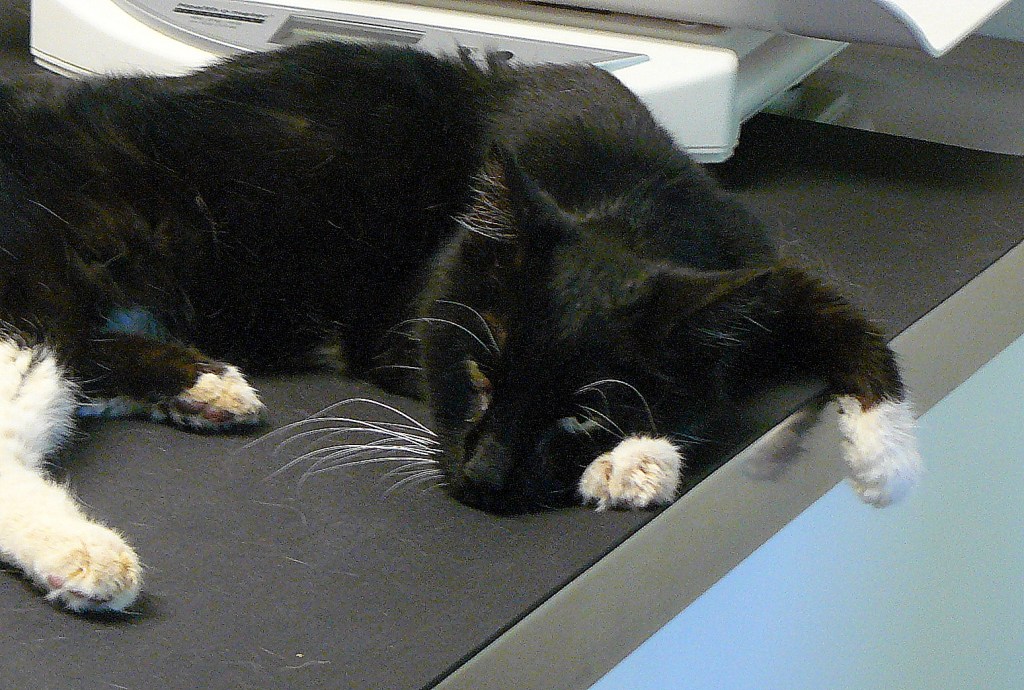
Jessica Louise is a 14-year-old cat that normally lives happily outside. But in recent times ‘Jessie’ has become very thin despite constantly eating and has now preferred to be inside the home even accounting for the fact of there being dogs in the house.
Jim’s pretty certain that he is looking at a cat with a hyperthyroid thyroid gland. No question that a blood test is needed and the blood sample is taken without delay.
The results are soon back and confirm that Jessie’s T4 readings of >8.00 mg/dL are very high, indeed beyond the upper limit of their testing equipment. Jim explains that the normal range for T4 is between 0.80 – 4.70 mg/dL.
The puzzled look on my face is seen by Jim and he takes a few minutes out to explain what a blood test accomplishes.
There are three parts to the blood test:
The Complete Blood Count (CBC), that is the cellular part of the test.
The chemistry of the blood, measuring the condition of the kidneys, liver, electrolytes, diabetic status as in blood glucose level, and more.
The optional Part, a test for T4 Total Thyroxine level.
A very quick web search found this from which one reads:
Your dog or cat’s T4 (Total T4) is a useful screening test to detect an under-active thyroid gland (hypothyroidism) in dogs or an over-active one (hyperthyroidism) in cats. But total T4 levels are a considerably more accurate way to diagnose an overly active thyroid gland in your cat than an under-active thyroid gland in your dog.
Methimazole is used to treat hyperthyroidism in cats. It has largely replaced propylthiouracil in this treatment process since it has a lower incidence of adverse side effects. Methimazole requires a prescription from your veterinarian, and is sold per tablet.
(This is only one of many products found online!)
Jim weighs Jessie and finds that she is 4lbs 12 oz. Her weight should be in excess of 8 lbs.
The clinic protocol is that Jessie should not be seen until at least 45 days has elapsed. But Dr. Jim underlines that Jessie should be brought back in to the clinic before then if there is no weight gain soon or, especially, if Jessie continues to lose weight.
10:05 All done.
To be continued:
(Please note: These observations are mine alone and because of the busy environment it must be assumed that my interpretation of what was taking place might not be totally accurate. Nothing in this blog post should be used by a reader to make any medical judgment about an animal. If you have any concern about an animal do make an appointment to see a properly qualified veterinarian doctor.)
ooooo
Good people, may I ask for your assistance.
Best explained by sharing part of a recent email sent to Yvonne D. who has offered her help with my book project. In past times, Yvonne was a Veterinary Technician.
Dear Yvonne,
My Visiting the Vet theme on Learning from Dogs has awakened within me the interest and passion to write my second book. Or, to put it more accurately, to switch away from the present theme that I have been struggling to get stuck into for months.
I spoke with Russel Codd at the clinic and he is really keen to support me.
The overall idea that is forming in my mind is to write a book that alternates, chapter by chapter, between observing the medical and clinical goings-on at a number of vet clinics in town, including specialist processes, surgery, cardiac, etc., and chapters that look deeply into the many different relationships that individuals have with their pets; primarily with dogs and cats.
I want to get into the ‘mindset’ of people who have pets in their lives across the whole range of feelings of those said people. From those who love their pets practically without any limit, to the homeless people (almost 100% men) whom one sees with a dog or two in tow alongside the highway. But also exploring those who seem so hateful. E.g. our pet sitter knows a man who threw his elderly dog away in some local woods. What causes someone to be like this? I want to find out!!
The book will be called: Of Pets, and Of People.
With very kind wishes,
Paul
Copyright (c) 2017 Paul Handover
Any feedback at all would be fabulous! What would you like to see in such a book? What would you most definitely not want to read?



 There Jim took some urine for analysis and then started examining Ruby. Jim was worried that Ruby might have kidney stones.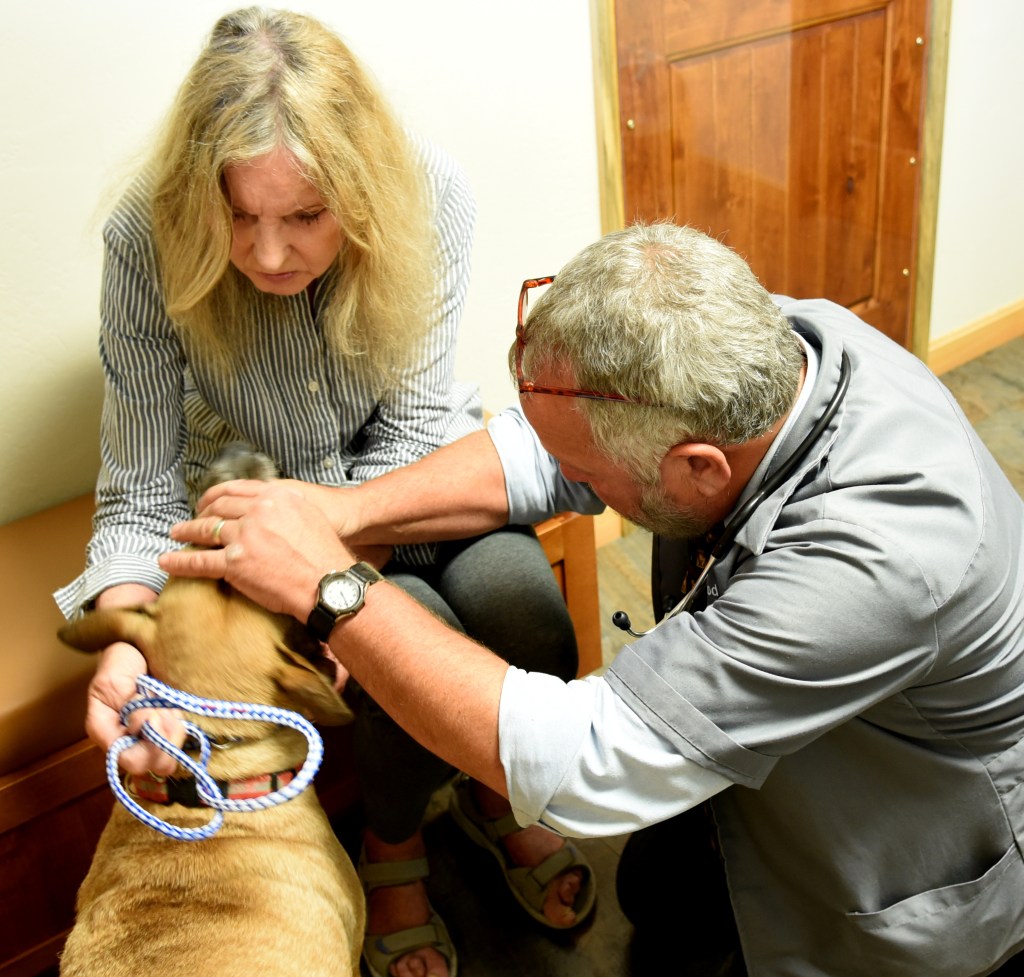



 Man! We are a strange species at times!