A reflection on why living in harmony with Planet Earth seems so challenging.
John Hurlburt is the ‘mover and shaker’ behind a series of talks and discussions under the overall title of Everything Fits Together, part of the adult education umbrella of St Paul’s Episcopal Church here in Payson, AZ. John generously asked if I would lead the discussion tonight (19th) along the theme of Nature and Faith. I plan to close the session with these words and the compelling video that was on Learning from Dogs last Friday A planet worth protecting.
oooOOOooo
Man – a study in behaviours.
The relationship between Planet Earth and man goes back a very long way. But what of today?
There is little doubt that many people, even with the minimum of awareness about the world in which we live, are deeply worried. On so many fronts there are forbidding and scary views. It feels as though all the certainty of past times has gone; as if all the trusted models of society are now broken. Whether we are talking politics, economics, employment or the environment, nothing seems to be working.
Why might this be?
It would be easy to condemn man’s drive for progress and an insatiable self-centredness as the obvious causes of our society failing in widespread ways. But in my view that’s too simple an explanation. It’s much more complex.
I propose that the challenges we all face today have their roots in the dawning of our evolution. Let’s remind ourselves how far back that goes.
The earliest documented members of the genus Homo are Homo habilis which evolved around 2.3 million years ago. Homo habilis was the first species for which we have positive evidence of the use of stone tools.
A theory known as Recent African Ancestry theory, postulates that modern humans evolved in Africa possibly from Homo heidelbergensis and migrated out of the continent some 50,000 to 100,000 years ago, replacing local populations of Homo erectus and Homo neanderthalensis.
Thus for tens of thousands of years, the behaviours of humans have served our species well, by definition. Ergo, mankind has evolved as the result of mankind’s behaviours. Behaviours that may have changed little over those countless years.
So one might speculate that these behaviours have been potentially damaging to the ultimate survival of our species, perhaps hugely damaging, for a very long time. But because man’s population footprint has been so small for 99% of eternity the consequences have not impinged on the planet until now. Let’s reflect on those population figures.
Until the development of agriculture, around the 11th millennium BC, the world population was stable at around one million persons, as man lived out a subsistence hunter-gatherer existence. By about 2000 years ago the global population of man had climbed to around 300 million. It took another 1,200 years for that global population to reach the first billion, as it did in 1804.
However, just 123 years later, in 1927, the two-billionth baby was born. The three-billionth baby was born in 1960, just 33 years later! Only a further 14 years slip by for the four-billionth baby to be born in 1974. Another blink of the geological eyelid and 13 years later, in 1987, along comes the five-billionth bundle of joy. Around October 1999, the sixth-billionth baby is born! It is likely that we are in a world where there are now seven billion people! Indeed, the world population clock estimates that on September 12th, a week ago, the world population was 7,039,725,283 persons.
About a billion every decade. The equivalent of a growth of 100 million each and every year, or around 270,000 every single day! Or if you prefer 11,250 an hour (Remember that’s the net growth, births minus deaths, of the population of humans on this planet!)
Combine man’s behaviours with this growth of population and we have the present situation. A totally unsustainable situation on a planet that is our only home.
The only viable solution is to amend our behaviours. To tap into the powers of integrity, self-awareness and mindfulness and change our game.
All of us, no exceptions, have to work with the fundamental, primary relationships we have with each other and with the planet upon which we all depend. We need the birth of a new level of consciousness; of our self, of each other and of the living, breathing planet. A new consciousness that will empower change. We need spiritual enlightenment. We need a spiritual bond with this beautiful planet.
Over eons of time, Planet Earth has favoured our evolution. Now, today, not tomorrow, it is time to favour our beautiful planet with our love and with our faith. It is the ultimate decision for our species.
oooOOOooo
If you need a reminder of how beautiful our planet is (and I’m sure the majority of LfD readers don’t require that reminder) then go back and watch David Attenborough’s video and voice-over to the song What a Wonderful World.
I will close by inserting into this post, the video that Martin Lack included in a recent comment to my post The wind doth blow!
Science may just be starting to make some sense of this cruelest of diseases.
It used be to the dreaded ‘C’ word; cancer. But now that ‘C’ word has a companion, the dreaded ‘A’ word. The incidence of Alzheimer’s disease seems to be on a terrible rise. Indeed, my wife, Jean, lost her late husband to Alzheimer’s disease. My half-sister back in England is now very ill with the disease. Just chatting to some people here in Payson a few days ago revealed many who had friends or relations suffering.
So a recent item first seen on the website of The Permaculture Research Institute of Australia really jumped off the ‘page’! It was an article by George Monbiot entitled The Mind Thieves. I dropped Mr. Monbiot a quick email requesting permission to republish the article and very promptly received a positive answer. Thank you, Sir.
So before moving to the article, first a little background on George M. From his website, one quickly reads,
George Monbiot
I had an unhappy time at university, and I now regret having gone to Oxford, even though the zoology course I took – taught, among others, by Richard Dawkins, Bill Hamilton and John Krebs – was excellent. The culture did not suit me, and when I tried to join in I fell flat on my face, sometimes in a drunken stupor. I enjoyed the holidays more: I worked on farms and as a waterkeeper on the River Kennet. I spent much of the last two years planning my escape. There was only one job I wanted, and it did not yet exist: to make investigative environmental programmes for the BBC.
I’m not going to copy the full ‘About George‘ description but do urge you to pop across to here and read it yourself; George has had, trust me, a fascinating life journey that I suspect is far from over. This is how that About description closes,
Here are some of the things I love: my family and friends, salt marshes, arguments, chalk streams, Russian literature, kayaking among dolphins, diversity of all kinds, rockpools, heritage apples, woods, fishing, swimming in the sea, gazpacho, sprinting up the pitch in ultimate frisbee, ponds and ditches, growing vegetables, insects, pruning, forgotten corners, fossils, goldfinches, etymology, Bill Hicks, ruins, Shakespeare, landscape history, palaeoecology and Father Ted.
Here are some of the things I try to fight: undemocratic power, corruption, deception of the public, environmental destruction, injustice, inequality and the misallocation of resources, waste, denial, the libertarianism which grants freedom to the powerful at the expense of the powerless, undisclosed interests, complacency.
Here is what I fear: other people’s cowardice.
I still see my life as a slightly unhinged adventure whose perpetuation is something of a mystery. I have no idea where it will take me, and no ambitions other than to keep doing what I do. So far it’s been gripping.
The article was first published in the British Guardian newspaper (there’s an online link to it here) as the article mentions below. But I am republishing, in full thanks to George, the copy that appeared on George’s website on the 10th September last, including the references.
oooOOOooo
The Mind Thieves
September 10th, 2012
The evidence linking Alzheimer’s disease to the food industry is strong and growing.
By George Monbiot, published in the Guardian, 11th September 2012
When you raise the subject of over-eating and obesity, you often see people at their worst. The comment threads discussing these issues reveal a legion of bullies, who appear to delight in other people’s problems.
When alcoholism and drug addiction are discussed, the tone tends to be sympathetic. When obesity is discussed, the conversation is dominated by mockery and blame, though the evidence suggests that it can be driven by similar forms of addiction(1,2,3,4). I suspect that much of this mockery is a coded form of snobbery: the strong association between poor diets and poverty allows people to use this issue as a cipher for something else they want to say, which is less socially acceptable.
But this problem belongs to all of us. Even if you can detach yourself from the suffering caused by diseases arising from bad diets, you will carry the cost, as a growing proportion of the health budget will be used to address them. The cost – measured in both human suffering and money – could be far greater than we imagined. A large body of evidence now suggests that Alzheimer’s is primarily a metabolic disease. Some scientists have gone so far as to rename it. They call it diabetes type 3.
New Scientist carried this story on its cover last week(5): since then I’ve been sitting in the library trying to discover whether it stands up. I’ve now read dozens of papers on the subject, testing my cognitive powers to the limit as I’ve tried to get to grips with brain chemistry. While the story is by no means complete, the evidence so far is compelling.
Around 35 million people suffer from Alzheimer’s disease worldwide(6); current projections, based on the rate at which the population ages, suggest that this will rise to 100 million by 2050(7). But if, as many scientists now believe, it is caused largely by the brain’s impaired response to insulin, the numbers could rise much further. In the US, the percentage of the population with diabetes type 2, which is strongly linked to obesity, has almost trebled in 30 years(8). If Alzheimer’s, or “diabetes type 3”, goes the same way, the potential for human suffering is incalculable.
Insulin is the hormone which prompts the liver, muscles and fat to absorb sugar from the blood. Diabetes 2 is caused by excessive blood glucose, resulting either from a deficiency of insulin produced by the pancreas, or resistance to its signals by the organs which would usually take up the glucose.
The association between Alzheimer’s and diabetes 2 is long-established: type 2 sufferers are two to three times more likely to be struck by this dementia than the general population(9). There are also associations between Alzheimer’s and obesity(10) and Alzheimer’s and metabolic syndrome (a complex of diet-related pathologies)(11).
Researchers first proposed that Alzheimer’s was another form of diabetes in 2005. The authors of the original paper investigated the brains of 54 corpses, 28 of which belonged to people who had died of the disease(12). They found that the levels of both insulin and insulin-like growth factors in the brains of Alzheimer’s patients were sharply reduced by comparison to those in the brains of people who had died of other causes. Levels were lowest in the parts of the brain most affected by the disease.
Their work led them to conclude that insulin and insulin-like growth factor are produced not only in the pancreas but also in the brain. Insulin in the brain has a host of functions: as well as glucose metabolism, it helps to regulate the transmission of signals from one nerve cell to another, and affects their growth, plasticity and survival(13,14).
Experiments conducted since then appear to support the link between diet and dementia(15,16,17,18), and researchers have begun to propose potential mechanisms. In common with all brain chemistry, these tend to be fantastically complex, involving, among other impacts, inflammation, stress caused by oxidation, the accumulation of one kind of brain protein and the transformation of another(19,20,21,22). I would need the next six pages of this paper even to begin to explain them, and would doubtless get it wrong (if you’re interested, please follow the links on my website).
Plenty of research still needs to be done. But if the current indications are correct, Alzheimer’s disease could be another catastrophic impact of the junk food industry, and the worst discovered so far. Our governments, as they are in the face of all our major crises, appear to be incapable of responding.
In this country as in many others, the government’s answer to the multiple disasters caused by the consumption of too much sugar and fat is to call on both companies and consumers to regulate themselves. Before he was replaced by someone even worse, the former health secretary, Andrew Lansley, handed much of the responsibility for improving the nation’s diet to food and drinks companies: a strategy that would work only if they volunteered to abandon much of their business(23,24).
A scarcely-regulated food industry can engineer its products – loading them with fat, salt, sugar and high fructose corn syrup – to bypass the neurological signals which would otherwise prompt people to stop eating(25). It can bombard both adults and children with advertising. It can (as we discovered yesterday) use the freedoms granted to academy schools to sell the chocolate, sweets and fizzy drinks now banned from sale in maintained schools(26). It can kill the only effective system (the traffic light label) for informing people how much fat, sugar and salt their food contains. Then it can turn to the government and blame consumers for eating the products it sells. This is class war: a war against the poor fought by the executive class in government and industry.
We cannot yet state unequivocally that poor diet is a leading cause of Alzheimer’s disease, though we can say that the evidence is strong and growing. But if ever there was a case for the precautionary principle, here it is. It’s not as if we lose anything by eating less rubbish. Averting a possible epidemic of this devastating disease means taking on the bullies: those who mock people for their pathologies and those who spread the pathologies by peddling a lethal diet.
References:
1. Caroline Davis et al, 2011. Evidence that ‘food addiction’ is a valid phenotype of obesity. Appetite Vol. 57, pp711–717. doi:10.1016/j.appet.2011.08.017
2. Paul J. Kenny, November 2011. Common cellular and molecular mechanisms in obesity and drug addiction. Nature Neuroscience, Vol. 12, pp 638-651. doi:10.1038/nrn3105
3. Joseph Frascella et al, 2010. Shared brain vulnerabilities open the way for nonsubstance addictions: Carving addiction
at a new joint? Annals of the New York Academy of Sciences, Vol. 1187, pp294–315. doi: 10.1111/j.1749-6632.2009.05420.x
4. Ashley N. Gearhardt et al, 2010. Can food be addictive? Public health and policy implications. Addiction, 106, 1208–1212. ad. d_3301 1208..1212 doi:10.1111/j.1360-0443.2010.03301.x
5. Bijal Trivedi, 1st September 2012. Eat Your Way to Dementia. New Scientist.
6. Sónia C. Correia et al, 2011. Insulin-resistant brain state: The culprit in sporadic Alzheimer’s disease? Ageing Research Reviews Vol. 10, 264–273. doi:10.1016/j.arr.2011.01.001
7. Fabio Copped`e et al, 2012. Nutrition and Dementia. Current Gerontology and Geriatrics Research, Vol. 2012, pp1-3. doi:10.1155/2012/926082
8. See the graph in Bijal Trivedi, 1st September 2012. Eat Your Way to Dementia. New Scientist.
9. Johanna Zemva and Markus Schubert, September 2011. Central Insulin and Insulin-Like Growth Factor-1 Signaling – Implications for Diabetes Associated Dementia. Current Diabetes Reviews, Vol.7, No.5, pp356-366. doi.org/10.2174/157339911797415594
10. Eg Weili Xu et al, 2011. Midlife overweight and obesity increase late life dementia risk: a population-based twin study. Neurology, Vol. 76, no. 18, pp.1568–1574.
11. M. Vanhanen et al, 2006. Association of metabolic syndrome with Alzheimer disease: A population-based study. Neurology, vol. 67, pp.843–847.
12. Eric Steen et al, 2005. Impaired insulin and insulin-like growth factor expression and signaling mechanisms in Alzheimer’s disease – is this type 3 diabetes?. Journal of Alzheimer’s Disease, Vol. 7, pp.63–80.
13. Konrad Talbot et al, 2012. Demonstrated brain insulin resistance in Alzheimer’s disease patients is associated with IGF-1 resistance, IRS-1 dysregulation, and cognitive decline. The Journal of Clinical Investigation, Vol.122, No.4, pp.1316–1338. doi:10.1172/JCI59903.
14. Naoki Yamamoto et al, 2012. Brain insulin resistance accelerates Aβ fibrillogenesis by inducing GM1 ganglioside clustering in the presynaptic membranes. Journal of Neurochemistry, Vol. 121, 619–628. doi: 10.1111/j.1471-4159.2012.07668.x
15. Eg:
Wei-Qin Zhao and Matthew Townsend, 2009. Insulin resistance and amyloidogenesis as common molecular foundation for type 2 diabetes and Alzheimer’s disease.
Biochimica et Biophysica Acta, Vol.1792, pp.482–496. doi.org/10.1016/j.bbadis.2008.10.014,
16. Sónia C. Correia et al, 2011. Insulin-resistant brain state: The culprit in sporadic Alzheimer’s disease? Ageing Research Reviews Vol. 10, 264–273. doi:10.1016/j.arr.2011.01.001
17. T. Ohara et al, 2011. Glucose tolerance status and risk of dementia in the community, the Hisayama study. Neurology, Vol. 77, pp.1126–1134.
18. Karen Neumann et al, 2008. Insulin resistance and Alzheimer’s disease: molecular links & clinical implications. Current Alzheimer Research, Vol.5, no.5, pp438–447.
19. Eg: Lap Ho et al, 2012. Insulin Receptor Expression and Activity in the Brains of Nondiabetic Sporadic Alzheimer’s Disease Cases. International Journal of Alzheimer’s Disease, Volume 2012. doi:10.1155/2012/321280
20. Suzanne M. de la Monte, 2012. Contributions of Brain Insulin Resistance and Deficiency in Amyloid-Related Neurodegeneration in Alzheimer’s Disease. Drugs, Vol. 72, no.1, pp. 49-66. doi: 10.2165/11597760
21. Ying Liu et al, 2011. Deficient brain insulin signalling pathway in Alzheimer’s disease and diabetes. Journal of Pathology, Vol. 225, pp.54–62. doi: 0.1002/path.2912
22. Konrad Talbot et al, 2012. Demonstrated brain insulin resistance in Alzheimer’s disease patients is associated with IGF-1 resistance, IRS-1 dysregulation, and cognitive decline. The Journal of Clinical Investigation, Vol.122, No.4, pp.1316–1338. doi:10.1172/JCI59903.
Don’t know about you but the above is a fine example of investigative reporting. It deserves the widest circulation because if it is proved that there is a link between diet and Alzheimer’s disease then, once again, it shows how taking personal responsibility for our health has huge implications for us, our families and for society at large.
This was sent to me recently. It has been doing the rounds big time, and rightly so!
oooOOOooo
Before going on to today’s post, I feel the need to explain something. That is that over the last week or so I have been republishing many more items rather than writing my own creative stuff. This is an unfortunate consequence of us having our house here in Payson up for sale, which is generating more work than usual. Plus we are packing. All this to do with us moving from Arizona to Oregon in the first week of November.
oooOOOooo
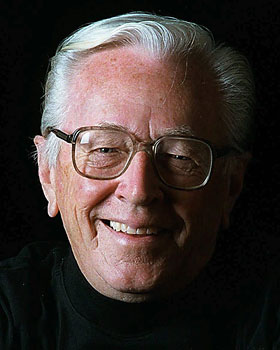
Charles Schulz
The following is the philosophy of Charles Schulz, the creator of the ‘Peanuts’ comic strip.
You don’t have to actually answer the questions. Just ponder on them. It will make very good sense!
Here’s A Little Quiz
You don’t have to actually answer the questions. Just read them straight through, ponder a tad, and you’ll get the point.
Name the five wealthiest people in the world.
Name the last five Heisman trophy winners.
Name the last five winners of the Miss America pageant.
Name ten people who have won the Nobel or Pulitzer Prize.
Name the last half dozen Academy Award winners for best actor and actress.
Name the last decade’s worth of World Series Winners.
How did you do?
The point is, none of us remember the headliners of yesterday. These are no second-rate achievers. They were the best in their fields.
But the applause dies. Awards tarnish over time. Achievements are forgotten and accolades and certificates are buried with their owners.
Here’s another quiz. See how you do on this one:
List a few teachers who aided your journey through school.
Name three friends who have helped you through a difficult time.
Name five people who have taught you something worthwhile.
Think of a few people who have made you feel appreciated and special!
Think of five people you enjoy spending time with.
Did you find that Easier? Of course you did!
So here’s the lesson!
The people who make a difference in your life are not the ones with the most credentials, or the most money…or the most awards…they simply are the ones who care the most.
“You don’t stop laughing when you grow old, you grow old when you stop laughing.” George Bernard Shaw.
Recently sent to me by Lindy C. from Devon, England.
This is dedicated to all of us who are seniors, to all of you who know seniors, and to all of you who will become seniors.
“WHERE is my SUNDAY paper?” The irate customer calling the newspaper office, loudly demanded to know where her Sunday edition was.
“Madam“, said the newspaper employee, “today is Saturday. The Sunday paper is not delivered until tomorrow, on SUNDAY.”
There was quite a long pause on the other end of the phone, followed by a ray of recognition as Madam was heard to mutter under her breath, “Well, shit, that explains why there was no one at church either!”
oooOOOooo
As British comedian Bob Monkhouse is reputed to have said, “Growing old is compulsory; growing up is optional.” (NB. More fabulous quotations from this naturally very funny man may be found here.)
On the subject of Bob Monkhouse, let me close with this video of Norman Wisdom appearing on the Bob Monkhouse Show back in 1983. As one of the YouTube commentators put it, “Two of Britains funniest men; we will never seek their likes again.“
A closer look at the excellent work undertaken by Dr. Krista Varady.
Back on the 16th I wrote a post that was a follow-up to the previous day’s post about living a long life. My follow-up was called, hardly surprisingly, Postscript to Long Life post.
In that follow-up post, I wrote this,
Over on the Healthy Fellow blogsite, there’s an interview with Dr. Varady. The web link of that interview is here and crossing over and reading the full interview is much recommended. Here’s a taste, pardon the pun, of that interview:
JP: Can you help explain the distinctions between alternate day fasting and caloric restriction?
Dr. Varady: Caloric restriction is basically daily calorie restriction where an individual would restrict themselves by about 15% to 40% of their energy needs daily. So basically every single day you’re undergoing the same amount of restriction, whereas alternate day fasting involves a fast day wherein the individual would only eat 25% of their energy needs. So about 500 calories or so and that’s alternated with something called a “feed day” where the individual would eat ad libitum – so as much as they want. However in our studies we show that people end up losing weight because they can’t fully make up for the lack of food on the fast day on the feed day.
I’ve been in touch with JP wondering if I might have permission to republish the full interview. Unfortunately that wasn’t possible. However JP did say that republishing a couple of paragraphs would be fine and I’m going to be cheeky in adding a couple to the one I already published above!
Anyway, before inserting those paragraphs, let me set the scene. A very quick web search comes across the fact that Dr. Varady is an Assistant Professor at the UIC College of Applied Health Sciences. Her research work is described thus,
Research Interests
Dr. Varady, PhD
My research investigates the ability of novel dietary restriction strategies to facilitate weight loss and decrease cardiovascular risk in obese subjects. The most common dietary restriction protocol implemented is daily calorie restriction (CR), which involves reducing energy intake by 15 to 40% of needs daily. Another dietary restriction regimen employed, although far less commonly, is alternate day fasting (ADF). ADF regimens include a “feed day” where food is consumed ad-libitum over 24-h, alternated with a “fast day”, where food intake is partially or completely reduced for 24-h. ADF regimens were created to increase adherence to dietary restriction protocols since these regimens only require energy restriction every other day, rather than every day, as with CR. Recent findings from our lab demonstrate that ADF is an effective means of facilitating weight loss and improving several indicators of cardiovascular disease risk in overweight and obese subjects. Our findings also show that changes in adipose tissue physiology during weight loss may mediate these improvements in vascular health.
Current research activities
Developing novel diet and exercise regimens to facilitate weight loss and decrease cardiovascular disease risk in humans; Examining the intermediate role of adipose tissue in mediating the cardio-protective effects of diet and exercise; Investigating the behavioral factors that influence adherence to dietary restriction strategies.
So this is one lady that ought to understand the effects of what we shovel down our mouths. OK, on to that interview. From Part One, I selected this exchange,
JP: How long does it generally take for people to adapt to this new way of eating?
Dr. Varady: A lot of the subjects were saying that for the first two weeks it was pretty tough to basically change from a 3 meal a day eating pattern to just eating 1 meal a day and then 3 slightly bigger meals the next day. But they said that about after two weeks they totally got used to it and weren’t that hungry on the fast day anymore. They could undergo these really long periods of fasting without really feeling deprived. The other interesting thing that they were telling us was with regard to the feed day. The people didn’t binge. They only ate about 100% to 110% of their calorie needs.
Then from the second part of the interview, JP underlines an important point, “The truth of the matter is that research into ADF is still in its infancy and Dr. Varady is the first person to admit it. ” I then went on to select this exchange between JP and Dr. Varady,
JP: It seems as though ADF provides a very broad array of health benefits. Do you have a theory about why this is possible?
Dr. Varady: In the human data the main thing you see is weight loss. Even if it’s done in normal weight people. The minute you start losing weight you all of a sudden see an improvement in the majority of these factors. A lot of the effects of alternate day fasting are mediated through weight loss. Losing weight is so tightly correlated with your blood pressure, your cholesterol levels and heart rate, etc.
Fasting May Reduce Age-Related Disease Risk Factors
So this is not something of trivial interest, it’s serious research that could have a remarkable effect on the huge problems of obesity and poor diet that affect millions. Do yourself a favour and read the interview now. Part One and Part Two.
Finally, in that post on the 16th, I owned up to having got my weight down to 161.6 lbs (73.30 kgs). Now here we are having completed my third week of 5:2 fasting and last Saturday morning my weight was 159.0 lbs (72.12 kgs). The routine is very comfortable and as Dr. Varady mentioned, there is no sense of wanting to binge after the two days of fasting.
Just about the most fundamental requirement in life!
I subscribe to the Mother Nature Network website and recently in their ’round robin’ was this item, A Breath of Fresh Air. It’s all about the role of plants inside the home for improving the quality of the air we breathe. Thought, dear reader, that you would enjoy this.
15 houseplants for improving indoor air quality
Photo: ivama/Flickr
A breath of fresh air
In the late ’80s, NASA and the Associated Landscape Contractors of America studied houseplants as a way to purify the air in space facilities. They found several plants that filter out common volatile organic compounds (VOCs). Lucky for us the plants can also help clean indoor air on Earth, which is typically far more polluted than outdoor air. Other studies have since been published in the Journal of American Society of Horticultural Science furtherproving the science. Want to see the best flowers? Just click through the buttons above to see all 15 plants. (Text: Julie Knapp)<
The image above is just one of 17, each with details of how they contribute to cleaner, less toxic, air. So don’t delay, click here and read all about them yourself. Here’s an example of the presentation from picture number 16.
Peace lily (Spathiphyllum)
Shade and weekly watering are all the peace lily needs to survive and produce blooms. It topped NASA’s list for removing all three of most common VOCs — formaldehyde, benzeneand trichloroethylene. It can also combat toluene and xylene.
Remaining with the theme of love, love lost and new love.
John Hurlburt sent me the following last week and it is so perfect as a sequel to the writings of the last two days. That was John’s poetry last Saturday on Learning from Dogs, by the way.
oooOOOooo
Two lost souls
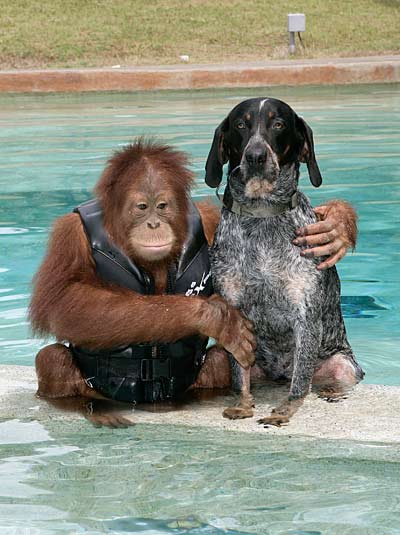
After losing his parents, this three year old orangutan was so depressed he wouldn’t eat and didn’t respond to any medical treatments. The veterinarians thought he would surely die from sadness.
The zoo keepers found an old sick dog on the grounds in the park at the zoo where the orangutan lived and took the dog to the animal treatment center. The dog arrived at the same time the orangutan was there being treated.
The two lost souls met and have been inseparable ever since. The orangutan found a new reason to live and each always tries his best to be a good companion to his new found friend. They are together 24 hours a day in all their activities.
They live in Northern California where swimming is their favorite past-time, although Roscoe (the orangutan) is a little afraid of the water and needs his friend’s help to swim.
Together they have discovered the joy and laughter in life and the value of friendship.
They have found more than a friendly shoulder to lean on.
Long Live Friendship!
I don’t know, but some say life is too short, others say it is too long, but I know that nothing that we do makes sense if we don’t touch the hearts of others. While it lasts!
May you always have love to share, health to spare, and friends who care…..even if they are a little hairy at times.
oooOOOooo
I must say that the generosity of so many of my readers in sending me these beautiful examples of what is really important in this world of ours touches me deeply. Thank you, John. Thank you, one and all.
How the relationship that we have with domesticated animals taught us the meaning of love.
This exploration into the most fundamental emotion of all, love, was stimulated by me just finishing Pat Shipman’s book The Animal Connection. Sturdy followers of Learning from Dogs (what a hardy lot you are!) will recall that about 5 weeks ago I wrote a post entitled The Woof at the Door which included an essay from Pat, republished with her permission, that set out how “Dogs may have been man’s best friend for thousands of years longer than we realized“.
The following day, I wrote a further piece introducing the book and then commenced reading it myself. Please go there and read about the praise that the book has received.
What I want to do is to take a personal journey through love. I should add immediately that I have no specialist or professional background with regard to ‘love’ just, like millions of others, a collection of experiences that have tapped me on the shoulder these last 67 years.
I would imagine that there are almost as many ideas about the meaning of love as there are people on this planet. Dictionary.com produces this in answer to the search on the word ‘love’.
love
[luhv] noun, verb, loved, lov·ing. noun
a profoundly tender, passionate affection for another person.
a feeling of warm personal attachment or deep affection, as for a parent, child, or friend.
sexual passion or desire.
a person toward whom love is felt; beloved person;sweetheart.
(used in direct address as a term of endearment, affection,or the like): Would you like to see a movie, love?
But, I don’t know about you, those definitions leave something missing for me. Here’s my take on what love is, and it’s only by having so many dogs in my life that I have found this clarity of thought.
Love is trust, love is pure openness, love is knowing that you offer yourself without any barriers. Think how you dream of giving yourself outwardly in the total surrender of love. Reflect on that surrender that you experience when deeply connecting, nay loving, with your dog.
Here’s how Pat Shipman expressed it in her book:
Clearly, part of the basis of our intimacy with tame or domesticated animals involves physical contact. People who work with animals touch them. It doesn’t matter if you are a horse breeder, a farmer raising pigs, a pet owner, a zoo keeper, or a veterinarian, we touch them, stroke them, hug them. Many of us kiss our animals and many allow them to sleep with us. We touch animals because this is a crucial aspect of the nonverbal communication that we have evolved over millennia. We touch animals because it raises our oxytocin levels – and the animal’s oxytocin levels. We touch animals because we and they enjoy it. (p.274)
Pat soon after writes,
From the first stone tool to the origin of language and the most recent living tools, our involvement with animals has directed our course.
Thus it is not beyond reason to presume that tens of thousands of years of physical and emotional closeness between humans and their animals have developed the emotion of love in us humans, so eloquently expressed in art and life.
There’s another aspect of what we may have learned from dogs. In Alexandra Horowitz’s book Inside of a Dog, she writes of the way that dogs look at us,
Having been folded into the world of humans, dogs no longer needed some of the skills that they would to survive on their own. As we’ll see, what dogs lack in physical skills, they make up for in people skills.
AND THEN OUR EYES MET ….
There is one final, seemingly minor difference between the two species. This one small behavioral variation between wolves and dogs has remarkable consequences. The difference is this: dogs look at our eyes.
Dogs make eye contact and look to us for information – about the location of food, about our emotions, about what is happening. Wolves avoid eye contact. In both species, eye contact can be a threat: to stare is to assert authority. So too is it with humans. In one of my undergraduate psychology classes, I have my students do a simple field experiment wherein they try to make and hold eye contact with everyone they pass on campus. Both they and those on the receiving end of their stares behave remarkably consistently: everyone can’t wait to break eye contact. It’s stressful for the students, a great number of whom suddenly claim to be shy: they report their hearts begin to race and they start sweating when simply holding someone’s gaze for a few seconds. They concoct elaborate stories on the spot to explain why someone looked away, or held their gaze for a half second longer. For the most part, their staring is met with deflected gazes from those they eyeball.
Then a few sentences later, Alexandra continues to write,
Dogs look, too. Though they have inherited some aversion to staring too long at eyes, dogs seem to be predisposed to inspect our faces for information, for reassurance, for guidance. Not only is this pleasing to us – there is a certain satisfaction in gazing deep into a dog’s eyes gazing back at you – it is also perfectly suited to getting along with humans. (pps 45-46)
No apologies for now inserting the photograph of Pharaoh that adorns the Welcome page of Learning from Dogs. Underlines what Alexandra wrote above in spades.
Now that is a gaze!
OK, time to start bringing this to a close.
The Toronto Star ran a great review of Pat Shipman’s book from which I will just take this snippet,
“But understanding animals and empathizing with them also triggered other changes in humanity’s evolution, Shipman said.
All those things allow people to live with people. Once people have domesticated animals, they start to live in stable groups. They have fields, crops and more permanent dwellings.”
In other words, we can see that living with animals took us from nomadic hunter-gatherers to living with other people in stable groups; the birth of farming. It is my contention that the evolution of communities and the resulting more stable relationships elevated love leading to love becoming a higher order emotion than just associated with the ‘grunt’ of reproduction.
I started by saying that it was Pat Shipman’s book that stimulated me to wander through my own consciousness and realise that when I bury my face in the side of one of the dogs, say on the bed, it resonates with the most ancient memories in my human consciousness. Indeed, I am of no doubt that my openness and emotional surrender to that dog enables me to be a better, as in more loving, person for Jean.
So let me close this essay by asking you to return here and read the guest post tomorrow from author Eleanore MacDonald, where Eleanore writes of the loss of their dog Djuna. You will read the most precious and heart-rending words about love. Thank you.
More information about fasting, not about being female!
In yesterday’s post on Learning from Dogs, I wrote that there are two important aspects of living a longer life. The first one was be a female and the second one was about fasting. I propose to expand a little on that second aspect because of the number of people who found the topic so interesting.
Valter D. Longo and students.
In yesterday’s post there was reference to the work that Professor Valter D. Longo of the University of Southern California (USC) has been undertaking. As the USC web reference explains, Valter Longo is the Director of the Longevity Institute, a Professor of Gerontology and Biological Sciences and the Edna Jones Chair of Biogerontology, so if anyone understands how humans tick, it’s likely to be this man! As his research overview states,
He is interested in understanding the mechanisms of aging in organisms ranging from yeast to humans. The focus is on the conserved nutrient signaling pathways that can be modulated to protect against age-dependent oxidative damage and delay or prevent diseases of aging including cancer, diabetes and neurodegenerative diseases.
(Any questions, ask Prof. Longo not me!)
BBC Presenter Michael Mosley with Dr Krista Varady
The other learned person referred to in yesterday’s post was Dr. Krista Varady. This is what was written,
Dr Krista Varady of the University of Illinois at Chicago carried out an eight-week trial comparing two groups of overweight patients on ADF. (ADF = Alternative Day Fasting)
Over on the Healthy Fellow blogsite, there’s an interview with Dr. Varady. The web link of that interview is here and crossing over and reading the full interview is much recommended. Here’s a taste, pardon the pun, of that interview:
JP: Can you help explain the distinctions between alternate day fasting and caloric restriction?
Dr. Varady: Caloric restriction is basically daily calorie restriction where an individual would restrict themselves by about 15% to 40% of their energy needs daily. So basically every single day you’re undergoing the same amount of restriction, whereas alternate day fasting involves a fast day wherein the individual would only eat 25% of their energy needs. So about 500 calories or so and that’s alternated with something called a “feed day” where the individual would eat ad libitum – so as much as they want. However in our studies we show that people end up losing weight because they can’t fully make up for the lack of food on the fast day on the feed day.
Let me add a personal perspective on this. On the morning of the first day after our two-day fast, my weight was 162.5 lbs (73.71 kg), on the morning of the second day after our fasting days my weight was 161.8 lbs (73.39 kgs) and on the morning of the third day after our fasting, my weight was 161.6 lbs (73.30 kgs). Ergo even though we were back to eating normally for three days after our two days of fasting, I continued to lose 0.9 lbs (0.4 kgs).
So if you have any concerns over cardiovascular health or want to explore a realistic way of losing excess weight, then do read the interview. Part One of that interview is here and Part two here.
As is said, we are what we eat and I shall close this postscript with a link to an article on the Mother Nature Network website that was published a little over a year ago: 18 foods that fight common ailments – Try healthy eats that help fight diabetes, heart disease, migraines and more.
OK, a change to the theme of the last few days, to a topic that must cross the minds of practically every single human being at some point; what is our lifespan going to be? Who doesn’t want to live a long and healthy life, and I don’t wish to be insensitive to those who labour under mental and physical troubles, of course.
So a recent couple of fascinating stories have given an insight into just how to live that longer and healthier life.
The first one is easy – be a woman!
Actress Michelle Ryan as the Bionic Woman was destined to live even longer!
OK, a bit of an issue if you are a man like me but did you realise, because I didn’t, that being the female of many species offers a significant advantage. This came from a BBC item published on the 2nd August, from which I quote,
Scientists believe they have discovered a clue to why women tend to live longer than men – by studying fruit flies.
Writing in Current Biology, they focus on mutations in mitochondrial DNA – the power source of cells.
Mitochondria are inherited only from mothers, never from fathers, so there is no way to weed out mutations that damage a male’s prospects.
Then came an extraordinary fact [my italics below],
By the age of 85, there are approximately six women for every four men in the UK, and by 100 the ratio is more than two to one.
And females outlive males in many other species.
If you are of the scientific bent and/or a woman! you can read a fuller account of the research findings on the Science Daily website. As well as that link you can also read the Monash University press release on those research findings.
As a fella’ I think I’m moving on!
The second one is almost as easy – Fasting
Again, this news came from the BBC website, the news about the power of fasting. In an article promoting the showing of a BBC Horizon programme, Michael Mosley wrote this,
Scientists are uncovering evidence that short periods of fasting, if properly controlled, could achieve a number of health benefits, as well as potentially helping the overweight, as Michael Mosley discovered.
I’d always thought of fasting as something unpleasant, with no obvious long term benefits. So when I was asked to make a documentary that would involve me going without food, I was not keen as I was sure I would not enjoy it.
But the Horizon editor assured me there was great new science and that I might see some dramatic improvements to my body. So, of course, I said, “yes”.
I am not strong-willed enough to diet over the long term, but I am extremely interested in the reasons why eating less might lead to increased life span, particularly as scientists think it may be possible to get the benefits without the pain.
For obvious reasons I can’t republish the full BBC article but I encourage you to read it here. And stay with me for some more research links that are most interesting.
But I will just include this part from the BBC item,
The IGF-1 hormone (insulin-like growth factor) is one of the drivers which keep our bodies in go-go mode, with cells driven to reproduce. This is fine when you are growing, but not so good later in life.
There is now evidence suggesting that IGF-1 levels can be lowered by what you eat. Studies on calorie restrictors suggest that eating less helps, but it is not enough.
As well as cutting calories you have to cut your protein intake. Not entirely – that would be a very bad idea. It’s about sticking to recommended guidelines, something most of us fail to do.
The reason seems to be that when our bodies no longer have access to food they switch from “growth mode” to “repair mode”.
As levels of the IGF-1 hormone drop, a number of repair genes appear to get switched on according to ongoing research by Professor Valter Longo of the University of Southern California.
Intermittent fasting
One area of current research into diet is Alternate Day fasting (ADF), involving eating what you want one day, then a very restricted diet (fewer than 600 calories) the next, and most surprisingly, it does not seem to matter that much what you eat on non-fast days.
Dr Krista Varady of the University of Illinois at Chicago carried out an eight-week trial comparing two groups of overweight patients on ADF.
“If you were sticking to your fast days, then in terms of cardiovascular disease risk, it didn’t seem to matter if you were eating a high-fat or low-fat diet on your feed (non-fast) days,” she said.
Michael Mosley explains how he couldn’t manage Alternate Day Fasting and found it was just too impractical.
Instead I did an easier version, the so-called 5:2 diet. As the name implies you eat normally 5 days a week, then two days a week you eat 500 calories if you are a woman, or 600 calories, if you are a man.
The BBC Horizon programme was screened on the 6th August but is available on the BBC iPlayer for UK viewers. Here’s how it was promoted on the BBC website,
Michael Mosley has set himself a truly ambitious goal: he wants to live longer, stay younger and lose weight in the bargain. And he wants to make as few changes to his life as possible along the way. He discovers the powerful new science behind the ancient idea of fasting, and he thinks he’s found a way of doing it that still allows him to enjoy his food. Michael tests out the science of fasting on himself – with life-changing results.
This programme clip will also attract your attention, trust me!
and if you would prefer a more inspiring antidote then here’s another clip from the programme,
Tomorrow, I’m going to link to the scientists behind these new findings because this is very significant research that could revolutionize the future health for millions.
Finally, I’m here to tell you that Jean and I have ‘signed up’ to the 5:2 pattern and had our fast days last Thursday and Friday. They were much easier than I expected and, frankly, will be fun to maintain. Leave a comment if you would like details of the food and calorific values of what Jean served those two days.















 Learning from Dogs