Staying with the theme of our lives being “rebooted” by our dogs.
Again, as so often occurs, a thought or reply left by someone to a previous post kicked off a new post for me.
So it was yesterday when Hariod commented: “This is the organisation that brought dogs into the care home my father lived in: http://www.petsastherapy.org/”
That website is full of great information and any readers living in the UK who have not come across them before are highly recommended to have a good browse. One item that caught my eye was the Precious Memories link.
The loss of a pet is always a devastating and traumatic experience but even more so for the owner of a PAT dog or cat who has brought much love and companionship to many people, as well as to their owners.
This page contains lasting memorials to some PAT dogs and PAT cats who have given much to society by regularly visiting in Hospitals, Hospices, Residential homes or Day Care Centres.
Baggy was a Finnish Lapphund and a wonderful and loving companion. She enjoyed taking part in many canine events including passing the KCGC Bronze, Silver & Gold awards, agility, showing and heel work to music, Baggy loved to go on a camping trip in the caravan or a trip down the river in our boat.
Baggy had two litters of puppies and two sons one from each litter are PAT dogs and her grand daughter is also a PAT dog. Baggy was my first PAT dog and she loved to go visiting in our local Residential home bringing joy and love to many people.
We love and miss Baggy so much our special sweet little friend.
Sheila Hall
The last aspect of the Pets As Therapy site that I want to refer to is their blog: Dog Dog Dog. Do drop in there and read some of the wonderful stories of those caring dogs.
That very nicely leads on to two videos that I quickly came across.
The first is described, thus:
Published on Dec 19, 2013
Follow Fraser, a black lab-golden mix, who has been a part of HCA Virginia’s unique Pet Therapy program since 2007. For several years, Fraser has spread comfort, compassionate care and joy to the faces of countless patients and staff at Chippenham and Johnston-Willis Hospitals from Tucker Pavilion and the Thomas Johns Cancer Hospital to many other areas. Catch a glimpse of how pet therapy is a source of alternative care for those in need.
While the second is about the therapy dog test.
Published on Dec 16, 2012
Achilles, my German Shepherd Dog, taking the Therapy Dog International test for certification.
Having this certification will allow Achilles and I to visit people in the hospital and other health care facilities.
Achilles is an AKC Obedience trained competitor and was able to pass the TDI test using that training and experience rather than special training for the test.
If you are interested in making your dog a TDI Therapy Dog go to their web site for information on how to accomplish that.
This is no conundrum: a direct contrast to yesterday.
The benefits of having a dog or two (or nine) are boundless and have been documented for thousands of years. Indeed, a quick web search revealed that Alexander Pope, the 18th-century English poet, is the attributed author of the quote, “Histories are more full of examples of the fidelity of dogs than of friends.”
Nevertheless, it was still a joy to come across the documentary film Dogs On The Inside.
Filmed in a Massachusetts prison, DOGS ON THE INSIDE follows the birth of a relationship between abandoned rescue dogs and prison inmates as they work together toward a second chance at a better life. Giving a voice to a forgotten dog and a forgotten man, the film is a life-affirming testament to the power of second chances.
The film was released in February 2014, and here is the trailer.
In general, it seems to have gathered good reviews with this one from Amazon being typical of what I have seen.
I had tears in my eyes during several segments of this film. Such a lovely connection between the rescue workers and the dogs. Then, the inmates and the dogs. And, finally, the photos of their forever homes and families. Bravo to all at Don’t Throw Us Away. People like you, who work to save and rehab these animals, are amazing.
You are also recommended to read the review that is on the Ecorazzi website. Here’s a flavour of that review:
Two parties neglected and forgotten become the powerful emotional center of an uplifting new documentary, Dogs on the Inside.
We’re taken to Massachusetts, where there exists a unique, mutually-beneficial rehabilitation program that finds rescue dogs paired with prison inmates.
This documentary, from directors Brean Cunningham and Douglas Seirup, follows a handful of inmates at a correctional facility involved in Don’t Throw Us Away, a program that partners them with neglected dogs. For the animal, benefits include exercise, attention, and care while shelters remain crowded. For the prisoners, they have a chance to form connections and work towards parole.
It’s fascinating throughout watching both sides – scared dogs and (emotionally) guarded inmates – warm to one another, seemingly leaving their past behind.
That’s at the heart of this illuminating, heartwarming film: second chances. Early on, it’s easy to see the parallels between these two groups – with the comparisons handled tactfully throughout a film that never strays from its simple, honest goal. Dogs never preaches or calls for political or social change; it more so asks the viewer to be willing to forgive and welcome in those which have been cast aside. When an inmate says, ‘they come from a bad life, they haven’t seen love in while,’ he isn’t necessarily talking just about the dog.
Let me close with this heart-stirring photograph that was included in the above review.
So much to learn from our precious, gorgeous dogs!
Some of you may have noticed a reply left by Marg (aka MargfromTassie) to my post yesterday. In part, this is what Marg wrote:
By the way Paul, you’re 71 now. If you reverse it, and were 17 again – what is the major thing, if any, that you would do differently with your life – knowing what you know now? ( or is this just too difficult?)
In turn, I replied:
What would I do differently? What a fascinating question. Rather than dump the first thing that comes to mind, let me reflect on the question for a while. Who knows? Maybe make it tomorrow’s post?
At first it was very clear what I would have done differently. Namely, had I had the awareness at a much earlier age of the psychological and emotional impact of my father’s death back in December 1956, just six weeks after I had had my twelfth birthday, I would have been a much more emotionally settled person and, in time, a better father to my son and daughter.
Then almost immediately I recognised the conundrum in what I was thinking.
For that subconscious fear of rejection that I carried all the way through my life until 2007, when a local Devon psychotherapist exposed that fear (thank you, J), had both strong positive and negative consequences. The positive consequences far outweighed the negative ones, that were mainly to do with uncertainty over relationships with women.
Because if my previous wife hadn’t announced in December 2006, fifty years to the day after my father died, that she had been unfaithful, I wouldn’t have sought J’s help, wouldn’t have gained the self-awareness that is so vital for all of us, and wouldn’t have met Jean in December 2007. And that has been a positive consequence of unimaginably beautiful measure.
So dear Marg, thank you for your fascinating question but, in the end, if I had the chance I would repeat my life exactly the same way again.
With apologies to any readers who have regarded the above as excessive navel-gazing! But my justification for writing this is to underline the supreme importance of knowing oneself!
What is happening in beautiful Indonesia is beyond imagination.
I am indebted to John Zande for introducing me to the word kakistocracy, that he explained means: “government by the worst persons; a form of government in which the worst persons are in power.”
For what is happening in Indonesia could well be an awful example of kakistocracy in action.
Like numerous others I knew that there were fires burning in Indonesia and that it was all somehow caught up in illegal logging, but knew little over and above that. And that is the crux of the title of a recent essay from George Monbiot: Nothing to See Here. It really is a “must read” essay and is republished below with Mr. Monbiot’s very kind permission. As with most of his essays, they are published in the Guardian newspaper. In this case, the Guardian version includes photographs that vividly underline the terrible situation out there. I agonised about copying them from the Guardian article, without explicit permission to so do, but have nevertheless done so on the basis of this story needing to make the maximum impact on readers. The photographs are inserted in Monbiot’s essay very closely to the format that is presented in the Guardian article.
ooOOoo
Nothing to See Here
30th October 2015
‘Children are being prepared for evacuation in warships already some have choked to death. Species are going up in smoke at an untold rate.’ Photograph: Ulet Ifansasti/Getty Images
In the greatest environmental disaster of the 21st Century (so far), Indonesia has been blotted out by smoke. And the media.
By George Monbiot, published in the Guardian 30th October 2015.
I’ve often wondered how the media would respond when eco-apocalypse struck. I pictured the news programmes producing brief, sensational reports, while failing to explain why it was happening or how it might be stopped. Then they would ask their financial correspondents how the disaster affected share prices, before turning to the sport. As you can probably tell, I don’t have an ocean of faith in the industry for which I work.
What I did not expect was that they would ignore it.
A great tract of the Earth is on fire. It looks as you might imagine hell to be. The air has turned ochre: visibility in some cities has been reduced to 30 metres. Children are being prepared for evacuation in warships; already some have choked to death. Species are going up in smoke at an untold rate. It is almost certainly the greatest environmental disaster of the 21st Century – so far.
[NB: The video that is embedded in the Guardian version is without sound. I have added one that is also a Greenpeace video, with sound, further on in the post.]
And the media? It’s talking about the dress the Duchess of Cambridge wore to the James Bond premiere, Donald Trump’s idiocy du jour and who got eliminated from the Halloween episode of Dancing with the Stars. The great debate of the week, dominating the news across much of the world? Sausages: are they really so bad for your health?
What I’m discussing is a barbeque on a different scale. Fire is raging across the 5000-kilometre length of Indonesia. It is surely, on any objective assessment, more important than anything else taking place today. And it shouldn’t require a columnist, writing in the middle of a newspaper, to say so. It should be on everyone’s front page.
It is hard to convey the scale of this inferno, but here’s a comparison that might help: it is currently producing more carbon dioxide than the US economy. In three weeks the fires have released more CO2 than the annual emissions of Germany.
‘The great debate of the week, dominating the news across much of the world? Sausages: are they really so bad for your health?’ Photograph: Abdul Qodir/AFP/Getty
But that doesn’t really capture it. This catastrophe cannot be measured only in parts per million. The fires are destroying treasures as precious and irreplaceable as the archaeological remains being levelled by Isis. Orang utans, clouded leopards, sun bears, gibbons, the Sumatran rhinoceros and Sumatran tiger, these are among the threatened species being driven from much of their range by the flames. But there are thousands, perhaps millions, more.
One of the burning islands is West Papua, a nation that has been illegally occupied by Indonesia since 1963. I spent six months there when I was 24, investigating some of the factors that have led to the current disaster. At the time, it was a wonderland, rich with endemic species in every swamp and valley. Who knows how many of those have vanished in the past few weeks? This week I have pored and wept over photos of places I loved, that have now been reduced to ash.
Nor do the greenhouse gas emissions capture the impact on the people of these lands. After the last great conflagration, in 1997, there was a missing cohort in Indonesia of 15,000 children under the age of three, attributed to air pollution. This, it seems, is worse. The surgical masks being distributed across the nation will do almost nothing to protect those living in a sunless smog. Members of parliament in Kalimantan (Indonesian Borneo) have had to wear face masks during debates. The chamber is so foggy that they must have difficulty recognising each other.
It’s not just the trees that are burning. It is the land itself. Much of the forest sits on great domes of peat. When the fires penetrate the earth, they smoulder for weeks, sometimes months, releasing clouds of methane, carbon monoxide, ozone and exotic gases like ammonium cyanide. The plumes extend for hundreds of miles, causing diplomatic conflicts with neighbouring countries.
Why is this happening? Indonesia’s forests have been fragmented for decades by timber and farming companies. Canals have been cut through the peat to drain and dry it. Plantation companies move in to destroy what remains of the forest to plant monocultures of pulpwood, timber and palm oil. The easiest way to clear the land is to torch it. Every year, this causes disasters. But in an extreme El Niño year like this one, we have a perfect formula for environmental catastrophe.
The current president, Joko Widodo, is – or wants to be – a democrat. But he presides over a nation in which fascism and corruption flourish. As Joshua Oppenheimer’s documentary The Act of Killing shows, leaders of the death squads that helped murder around a million people during Suharto’s terror in the 1960s, with the approval of the West, have since prospered through other forms of organised crime, including illegal deforestation.
They are supported by a paramilitary organisation with three million members, called Pancasila Youth. With its orange camo-print uniforms, scarlet berets, sentimental gatherings and schmaltzy music, it looks like a fascist militia as imagined by JG Ballard. There has been no truth, no reconciliation; the mass killers are still greeted as heroes and feted on television. In some places, especially West Papua, the political murders continue.
Those who commit crimes against humanity don’t hesitate to commit crimes against nature. Though Joko Widodo seems to want to stop the burning, his reach is limited. His government’s policies are contradictory: among them are new subsidies for palm oil production that make further burning almost inevitable. Some plantation companies, prompted by their customers, have promised to stop destroying the rainforest. Government officials have responded angrily, arguing that such restraint impedes the country’s development. That smoke blotting out the nation, which has already cost it some $30 billion? That, apparently, is development.
Our leverage is weak, but there are some things we can do. Some companies using palm oil have made visible efforts to reform their supply chains; but others seem to move slowly and opaquely. Starbucks, PepsiCo, Kraft Heinz and Unilever are examples. Don’t buy their products until they change.
On Monday, Widodo was in Washington, meeting Barack Obama. Obama, the official communiqué recorded, “welcomed President Widodo’s recent policy actions to combat and prevent forest fires”. The ecopalypse taking place as they conferred, that makes a mockery of these commitments, wasn’t mentioned.
Governments ignore issues when the media ignores them. And the media ignores them because … well there’s a question with a thousand answers, many of which involve power. But one reason is the complete failure of perspective in a deskilled industry dominated by corporate press releases, photo ops and fashion shoots, where everyone seems to be waiting for everyone else to take a lead. The media makes a collective non-decision to treat this catastrophe as a non-issue, and we all carry on as if it’s not happening.
At the climate summit in Paris in December, the media, trapped within the intergovernmental bubble of abstract diplomacy and manufactured drama, will cover the negotiations almost without reference to what is happening elsewhere. The talks will be removed to a realm with which we have no moral contact. And, when the circus moves on, the silence will resume. Is there any other industry that serves its customers so badly?
A quick web search will offer endless pictures of this great tragedy but I will leave you with three; two showing the extent of the smoke and one that is much more an intimate photograph of the suffering animals.
oooo
oooo
In this Thursday, March 1, 2012, Indonesian veterinarian Yenni Saraswati, top center, of Sumatran Orangutan Conservation Programme (SOCP) examines the condition of an injured Sumatran orangutan found by environmental activists at a palm oil plantation in Rimba Sawang village, Aceh province, Indonesia. Conservationists say fires in an Indonesian swamp forest may have killed a third of the rare Sumatran orangutans living there and all of them may be lost this year. Binsar Bakkara, Associated Press.
Monbiot wrote: “Those who commit crimes against humanity don’t hesitate to commit crimes against nature.”
One cannot avoid reflecting that this would not have happened if there hadn’t been, “government by the worst persons; a form of government in which the worst persons are in power.”
Because you signed up on our website and asked to be notified, I’m sending you this special recall alert.
On October 25, 2015, Salix Animal Health of Deerfield, Florida announced it is expanding the recall of its Good ‘n’ Fun Beefhide Chicken Sticks because the product has the potential to be contaminated with Salmonella.
Salmonella is a bacteria that can affect the health of both pets and humans.
To learn which products are affected, please visit the following link:
Close neighbour, Dordie, sent me an email with a link to a recent item that was broadcast on CBS.
Published on Oct 1, 2015
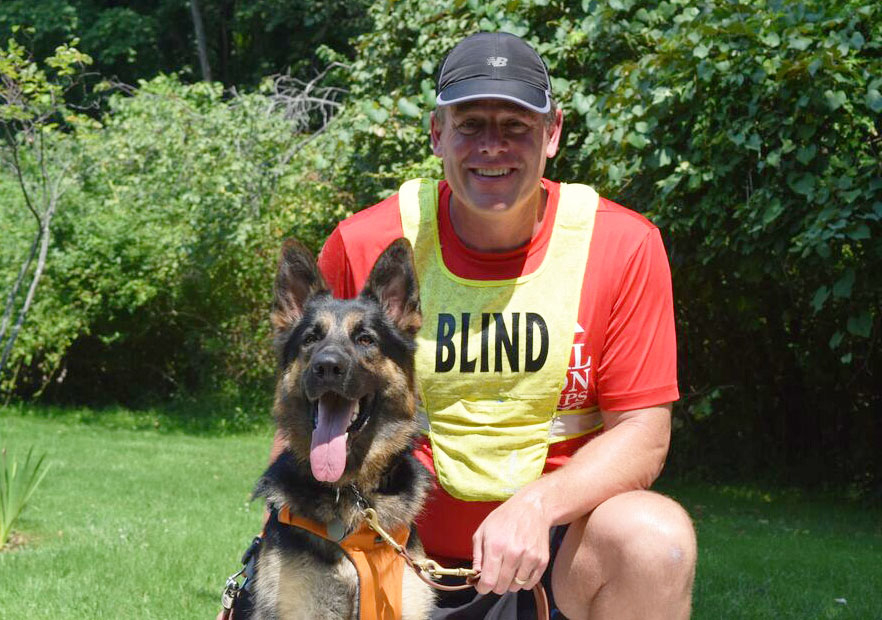
For thousands of blind athletes across the country, just setting foot out the door can be a huge challenge. Now one special dog is helping his owner not just walk out the door, but run. Only on “CBS This Morning,” Barry Petersen reports on the extraordinary story of one man’s journey to find the perfect running mate.
Richard and Klinger, and all those who made it happen, Jean and I salute you!
The title to today’s post is an old British expression that harks back to the days when “queer” meant strange. This blog has published no shortage of posts giving many examples of how “queer” we humans can be at times.
So the latest essay from Mr Monbiot is rather refreshing. I’ll say no more, apart from confirming that Monbiot’s post is republished with his kind permission.
ooOOoo
Human Kind
14th October 2015
Fascinating new lines of research suggest that we are good people, tolerating bad things.
By George Monbiot, published in the Guardian 14th October 2015
Do you find yourself thrashing against the tide of human indifference and selfishness? Are you oppressed by the sense that while you care, others don’t? That because of humankind’s callousness, civilisation and the rest of life on earth are basically stuffed? If so, you are not alone. But neither are you right.
A study by the Common Cause Foundation, due to be published next month, reveals two transformative findings. The first is that a large majority of the 1000 people they surveyed – 74% – identify more strongly with unselfish values than with selfish values. This means that they are more interested in helpfulness, honesty, forgiveness and justice than in money, fame, status and power. The second is that a similar majority – 78% – believes others to be more selfish than they really are. In other words, we have made a terrible mistake about other people’s minds.
The revelation that humanity’s dominant characteristic is, er, humanity will come as no surprise to those who have followed recent developments in behavioural and social sciences. People, these findings suggest, are basically and inherently nice.
A review article in the journal Frontiers in Psychology points out that our behaviour towards unrelated members of our species is “spectacularly unusual when compared to other animals”. While chimpanzees might share food with members of their own group, though usually only after being plagued by aggressive begging, they tend to react violently towards strangers. Chimpanzees, the authors note, behave more like the Homo economicus of neoliberal mythology than people do.
Humans, by contrast, are ultra-social: possessed of an enhanced capacity for empathy, an unparalleled sensitivity to the needs of others, a unique level of concern about their welfare and an ability to create moral norms that generalise and enforce these tendencies.
Such traits emerge so early in our lives that they appear to be innate. In other words, it seems that we have evolved to be this way. By the age of 14 months, children begin to help each other, for example by handing over objects another child can’t reach. By the time they are two, they start sharing things they value. By the age of three, they start to protest against other people’s violation of moral norms.
A fascinating paper in the journal Infancy reveals that reward has nothing to do with it. Three to five-year-olds are less likely to help someone a second time if they have been rewarded for doing it the first time. In other words, extrinsic rewards appear to undermine the intrinsic desire to help. (Parents, economists and government ministers, please note). The study also discovered that children of this age are more inclined to help people if they perceive them to be suffering, and that they want to see someone helped whether or not they do it themselves. This suggests that they are motivated by a genuine concern for other people’s welfare, rather than by a desire to look good. And it seems to be baked in.
Why? How would the hard logic of evolution produce such outcomes? This is the subject of heated debate. One school of thought contends that altruism is a logical response to living in small groups of closely related people, and evolution has failed to catch up with the fact that we now live in large groups, mostly composed of strangers. Another argues that large groups containing high numbers of altruists will outcompete large groups which contain high numbers of selfish people. A third hypothesis insists that a tendency towards collaboration enhances your own survival, regardless of the group in which you might find yourself. Whatever the mechanism might be, the outcome should be a cause of celebration.
So why do we retain such a dim view of human nature? Partly, perhaps, for historical reasons. Philosophers from Hobbes to Rousseau, Malthus to Schopenhauer, whose understanding of human evolution was limited to the Book of Genesis, produced persuasive, influential and catastrophically mistaken accounts of “the state of nature” (our innate, ancestral characteristics). Their speculations on this subject should long ago have been parked on a high shelf marked “historical curiosities”. But somehow they still seem to exert a grip on our minds.
Another problem is that – almost by definition – many of those who dominate public life have a peculiar fixation on fame, money and power. Their extreme self-centredness places them in a small minority, but, because we see them everywhere, we assume that they are representative of humanity.
The media worships wealth and power, and sometimes launches furious attacks on people who behave altruistically. In the Daily Mail last month, Richard Littlejohn described Yvette Cooper’s decision to open her home to refugees as proof that “noisy emoting has replaced quiet intelligence” (quiet intelligence being one of his defining qualities). “It’s all about political opportunism and humanitarian posturing,” he theorised, before boasting that he doesn’t “give a damn” about the suffering of people fleeing Syria. I note with interest the platform given to people who speak and write as if they are psychopaths.
The consequences of an undue pessimism about human nature are momentous. As the Common Cause Foundation’s survey and interviews reveal, those who have the bleakest view of humanity are the least likely to vote. What’s the point, they reason, if everyone else votes only in their own selfish interests? Interestingly, and alarmingly for people of my political persuasion, it also discovered that liberals tend to possess a dimmer view of other people than conservatives do. Do you want to grow the electorate? Do you want progressive politics to flourish? Then spread the word that other people are broadly well-intentioned.
Misanthropy grants a free pass to the grasping, power-mad minority who tend to dominate our political systems. If only we knew how unusual they are, we might be more inclined to shun them and seek better leaders. It contributes to the real danger we confront: not a general selfishness, but a general passivity. Billions of decent people tut and shake their heads as the world burns, immobilised by the conviction that no one else cares.
You are not alone. The world is with you, even if it has not found its voice.
Because you signed up on our website and asked to be notified, I’m sending you this special recall alert.
On October 2, 2015, K-9 Kraving Dog Food of Baltimore, Maryland, announced the recall of its Chicken Patties dog food because the product has the potential to be contaminated with Salmonella and Listeria mitocytogenes.
Salmonella and Listeria are bacteria that can affect the health of both pets and humans.
Please be sure to share the news of this alert with other pet owners.
Mike Sagman, Editor
The Dog Food Advisor
P.S. Not already on our dog food recall notification list yet? Sign up to get critical dog food recall alerts sent to you by email. There’s no cost for this service.
Note: If readers find these food recall alerts a waste of time, then do let me know – I’m aware that for many there are already too many emails in the ‘in-box’.
Dear Fellow Dog Lover,
On September 30, 2015, Salix Animal Health of Deerfield, Florida announced the recall of one lot of its Good ‘n’ Fun Beefhide Chicken Sticks because the product has the potential to be contaminated with Salmonella.
Salmonella is a bacteria that can affect the health of both pets and humans.



 Learning from Dogs