I was searching my files for something light-hearted to post for today and came across this article.
For some reason I hadn’t really noticed that our dogs are bothered by their farts and, thanks to a broken nose years and years ago, I have a very poor sense of smell.
Anyway, I wanted to share the article with you.
ooOOoo
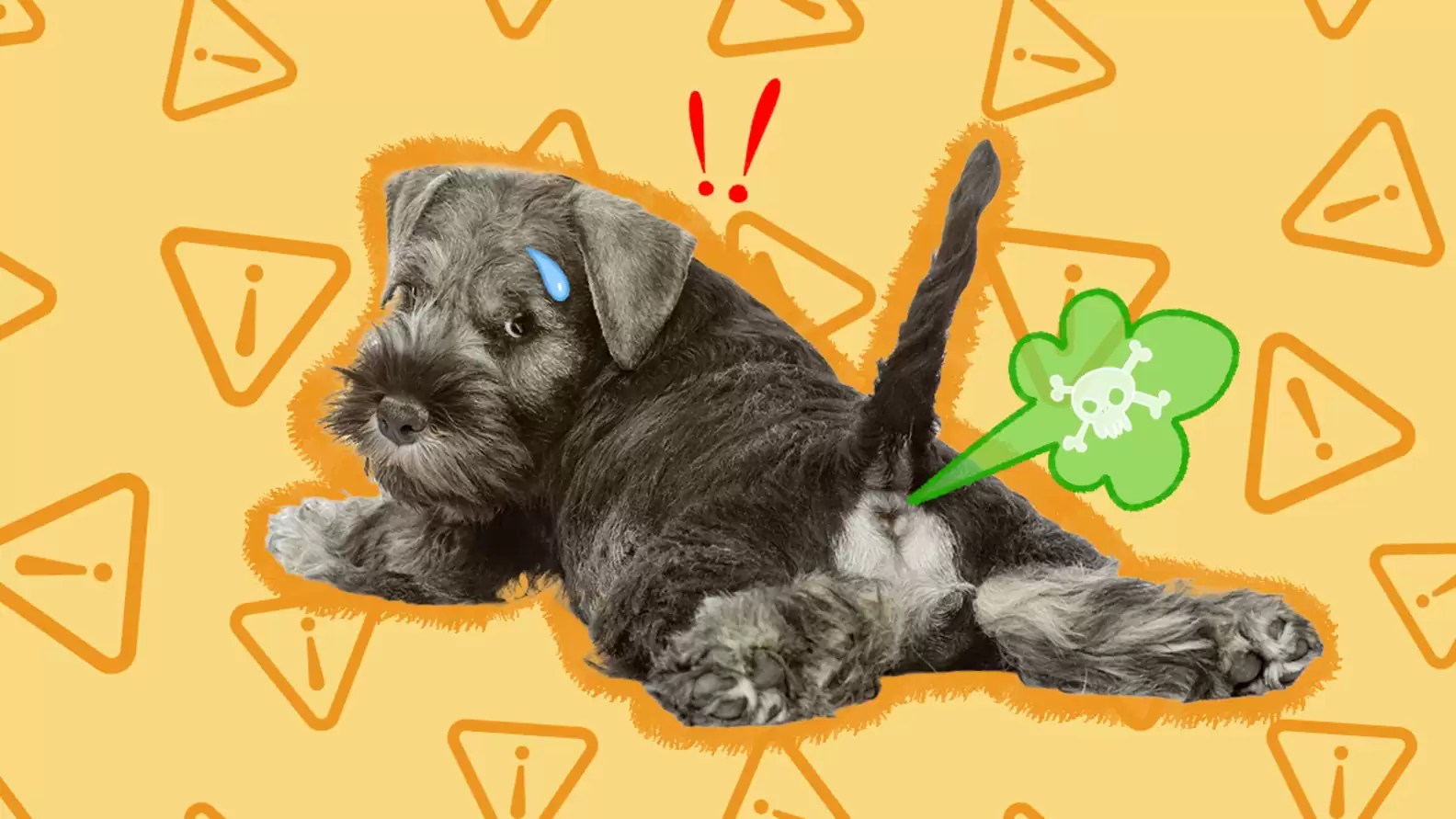
Why Do Dogs Get Scared Of Their Own Farts? 3 Reasons Passing Gas Spooks Them
Have you ever noticed that when your dog farts, he’ll jump up and just stare at his butt totally confused — and even a little spooked — by the gas that just came out?
It seems hard to believe that your pup can actually be caught off-guard by a totally normal bodily function that happens to him on the regular, but here we are. Another day, another fart that’s totally bamboozled your dog.
We spoke with Dr. Sara Ochoa, a small- and exotic-animal veterinarian in Texas and a veterinary consultant for doglab.com, to find out why dogs get scared of their own farts.
And there are a few reasons why your pup’s own flatulence might spook him.
Your dog didn’t know he farted
This might be hard for you to imagine, but there’s a decent chance that your dog just has no idea what a fart even is.
“Most dogs do not know what their farts are,” Dr. Ochoa told The Dodo. “They do not have the mental capacity to process that they just farted.”
Not only does your dog not understand the scientific concept of passing gas, but he also doesn’t expect this gas to be expelled from his body, even if it happens often.
“I think some dogs are surprised to know that some air just came out of them,” Dr. Ochoa said. “The air leaving them is a surprise to them and sometimes a smelly surprise for us.”
Your dog’s farts are loud
An unexpected loud noise can startle anyone, so if your dog rips a particularly noisy fart, he’s probably going to be a little confused and scared.
“Just like with people, some farts are louder and some farts are smellier,” Dr. Ochoa said.
And if you’re wondering why sometimes your dog’s farts are super loud, while others are the silent-but-deadly type, that simply has to do with how much air is coming out of him and how intensely it’s being expelled.
“The sound intensity of the fart is due to the amount of air and force behind the farts,” Dr. Ochoa said.
It happened at the same time as another bodily function
Have you ever sneezed and happened to fart at exactly the same time? (This is a safe space, no one’s judging you.) Well, it probably surprised you when you realized you broke a little wind while you sneezed, because you were only expecting one bodily function.
The same can happen to your dog, too.
“My little dog will commonly cough and fart at the same time, which scares her,” Dr. Ochoa said. “I don’t think she is expecting the fart. When she is coughing, everything just lets loose and she farts, scaring herself.”
Why does my dog fart so much?
It’s actually pretty natural for dogs to fart a bunch.
“Some dogs will fart every day, [and] other dogs will never fart,” Dr. Ochoa said. “I find dogs who snore also fart a lot.”
But if you noticed your pup’s farting a little too frequently, it’s probably related to what he ate. If he’s eaten something nasty or you recently changed his diet, his gastrointestinal (GI) system may need to adjust by releasing a bunch of gas.
Why do my dog’s farts smell so bad?
According to Dr. Ochoa, the reason your dog’s farts smell so bad is because he’s not exactly eating great-smelling food.
“Dog food does not smell like flowers, so the farts are also not going to smell good,” Dr. Ochoa said.
However, that doesn’t mean it’s a great sign if he’s regularly passing some putrid gas. In fact, if your dog’s farts are particularly rancid all the time, you should call your vet just to make sure everything’s OK with his GI system.
So even though passing gas is a common occurrence for your pup, dogs still get scared of their farts because they don’t quite realize what’s going on. But at least you’ll always know exactly when it’s accurate to blame it on the dog.
We independently pick all the products we recommend because we love them and think you will too. If you buy a product from a link on our site, we may earn a commission.
ooOOoo
I hope you learnt something from this post; I certainly did.
A more positive view as to how the future will pan out.
I tend to be rather pessimistic about the future. Maybe it is my age, I don’t know. But a week ago I posted an article by Ophelia Benson called Cruising over the Edge.
For this week I am republishing another climate change article but one that has a positive outlook on where we are going.
Have a read and let me know your thoughts.
ooOOoo
Climate change will transform how we live, but these tech and policy experts see reason for optimism
Authors
Robert Lempert Professor of Policy Analysis, Pardee RAND Graduate School
Elisabeth Gilmore Associate Professor of Climate Change, Technology and Policy, Carleton University
The latest reports from the Intergovernmental Panel on Climate Change discuss changes ahead, but they also describe how existing solutions can reduce greenhouse gas emissions and help people adjust to impacts of climate change that can’t be avoided.
The problem is that these solutions aren’t being deployed fast enough. In addition to push-back from industries, people’s fear of change has helped maintain the status quo.
To slow climate change and adapt to the damage already underway, the world will have to shift how it generates and uses energy, transports people and goods, designs buildings and grows food. That starts with embracing innovation and change.
Fear of change can lead to worsening change
From the industrial revolution to the rise of social media, societies have undergone fundamental changes in how people live and understand their place in the world.
Other transformations have had both good and bad effects. The industrial revolution vastly raised standards of living for many people, but it spawned inequality, social disruption and environmental destruction.
People often resist transformation because their fear of losing what they have is more powerful than knowing they might gain something better. Wanting to retain things as they are – known as status quo bias – explains all sorts of individual decisions, from sticking with incumbent politicians to not enrolling in retirement or health plans even when the alternatives may be rationally better.
This effect may be even more pronounced for larger changes. In the past, delaying inevitable change has led to transformations that are unnecessarily harsh, such as the collapse of some 13th-century civilizations in what is now the U.S. Southwest. As more people experience the harms of climate change firsthand, they may begin to realize that transformation is inevitable and embrace new solutions.
A mix of good and bad
The IPCC reports make clear that the future inevitably involves more and larger climate-related transformations. The question is what the mix of good and bad will be in those transformations.
If countries allow greenhouse gas emissions to continue at a high rate and communities adapt only incrementally to the resulting climate change, the transformations will be mostly forced and mostly bad.
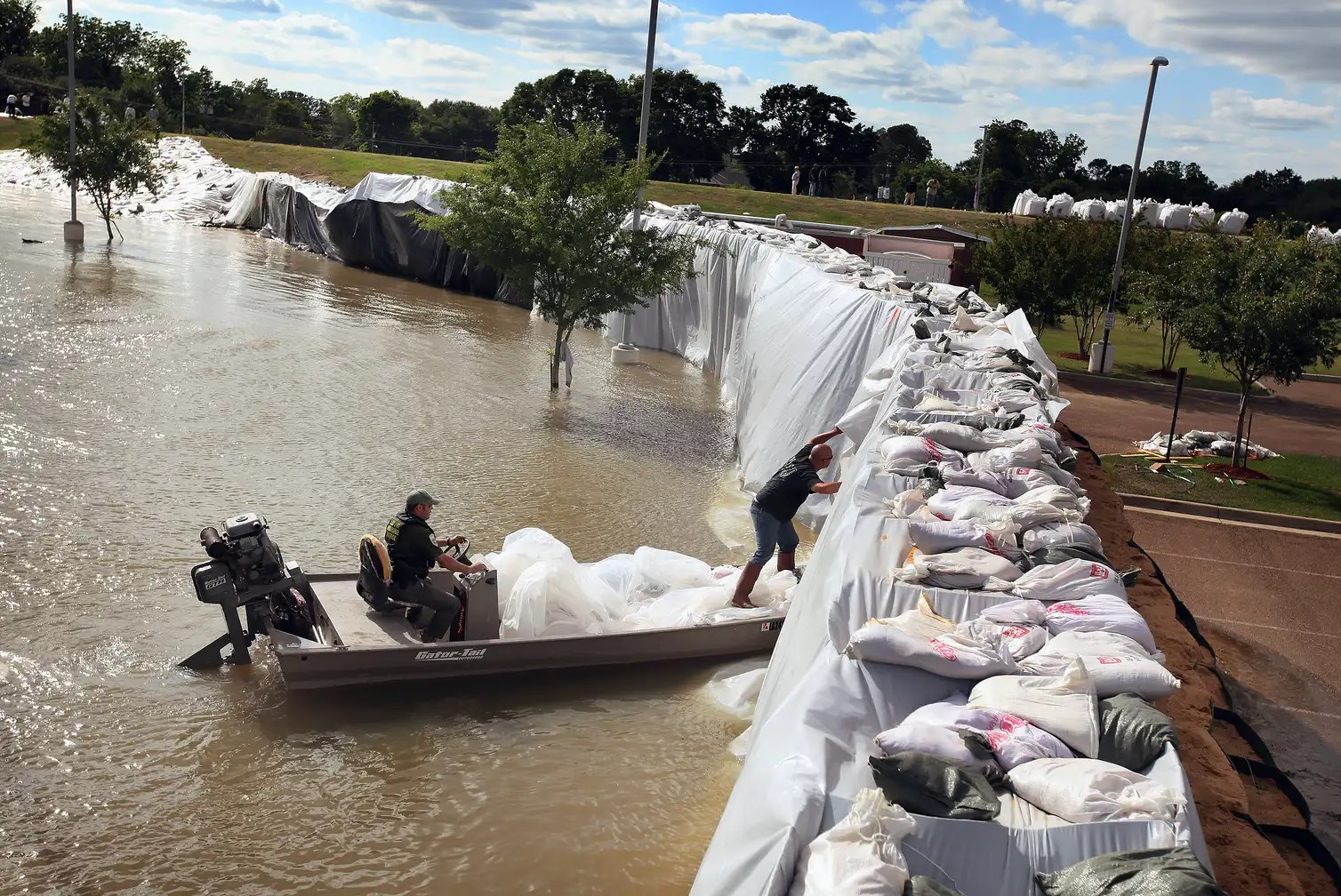
For example, a riverside town might raise its levees as spring flooding worsens. At some point, as the scale of flooding increases, such adaptation hits its limits. The levees necessary to hold back the water may become too expensive or so intrusive that they undermine any benefit of living near the river. The community may wither away.
Riverside communities often scramble to raise levees during floods, like this one in Louisiana. Scott Olson/Getty Images
The riverside community could also take a more deliberate and anticipatory approach to transformation. It might shift to higher ground, turn its riverfront into parkland while developing affordable housing for people who are displaced by the project, and collaborate with upstream communities to expand landscapes that capture floodwaters. Simultaneously, the community can shift to renewable energy and electrified transportation to help slow global warming.
Optimism resides in deliberate action
The IPCC reports include numerous examples that can help steer such positive transformation.
For example, renewable energy is now generally less expensive than fossil fuels, so a shift to clean energy can often save money. Communities can also be redesigned to better survive natural hazards through steps such as maintaining natural wildfire breaks and building homes to be less susceptible to burning.
Costs are falling for key forms of renewable energy and electric vehicle batteries. IPCC Sixth Assessment Report
No one group can enact these changes alone. Everyone must be involved, including governments that can mandate and incentivize changes, businesses that often control decisions about greenhouse gas emissions, and citizens who can turn up the pressure on both.
Doing more to disrupt the status quo with proven solutions can help smooth these transformations and create a better future in the process.
Disclosure statement
Robert Lempert receives funding from the National Science Foundation, U.S. Department of Transportation and Culver City Forward. He was coordinating lead author of the IPCC WGII Sixth Assessment Report, Chapter 1, and is affiliated with RAND Corp.; Harvard; SCoPEx (Stratospheric Controlled Perturbation Experiment) Independent Advisory Committee; National Renewable Energy Laboratory; Decision Science and Analysis Technical Advisory Committee (TAC); Council on Foreign Relations; Evolving Logic; and the City of Santa Monica Commission on Environmental, Sustainability, and Environmental Justice.
Elisabeth Gilmore receives funding from Minerva Research Initiative administered by the Office of Basic Research and the Office of Policy at the U.S. Department of Defense and the National Science Foundation. She is affiliated with Carleton University, Rutgers University, the Peace Research Institute Oslo (PRIO), and was a lead author on the IPCC WGII Sixth Assessment Report.
ooOOoo
The article makes the proposition that fear gets in the way of change. I think this is true because I tend to be a person that goes around saying ‘what can be done’ or ‘it is down to governments to set the changes required’ but not taking action personally.
So this is wakeup call for me and many others to be more positive and to support those changes that are beneficial, and to undertake them ourselves if at all possible.
I am afraid I was too busy to prepare a post for last Tuesday but no-one seemed to notice!
Today’s post is another one of the gorgeous guest posts from Indiana Lee. It is perfect!
ooOOoo
How to Keep Your Dog Happy and Healthy
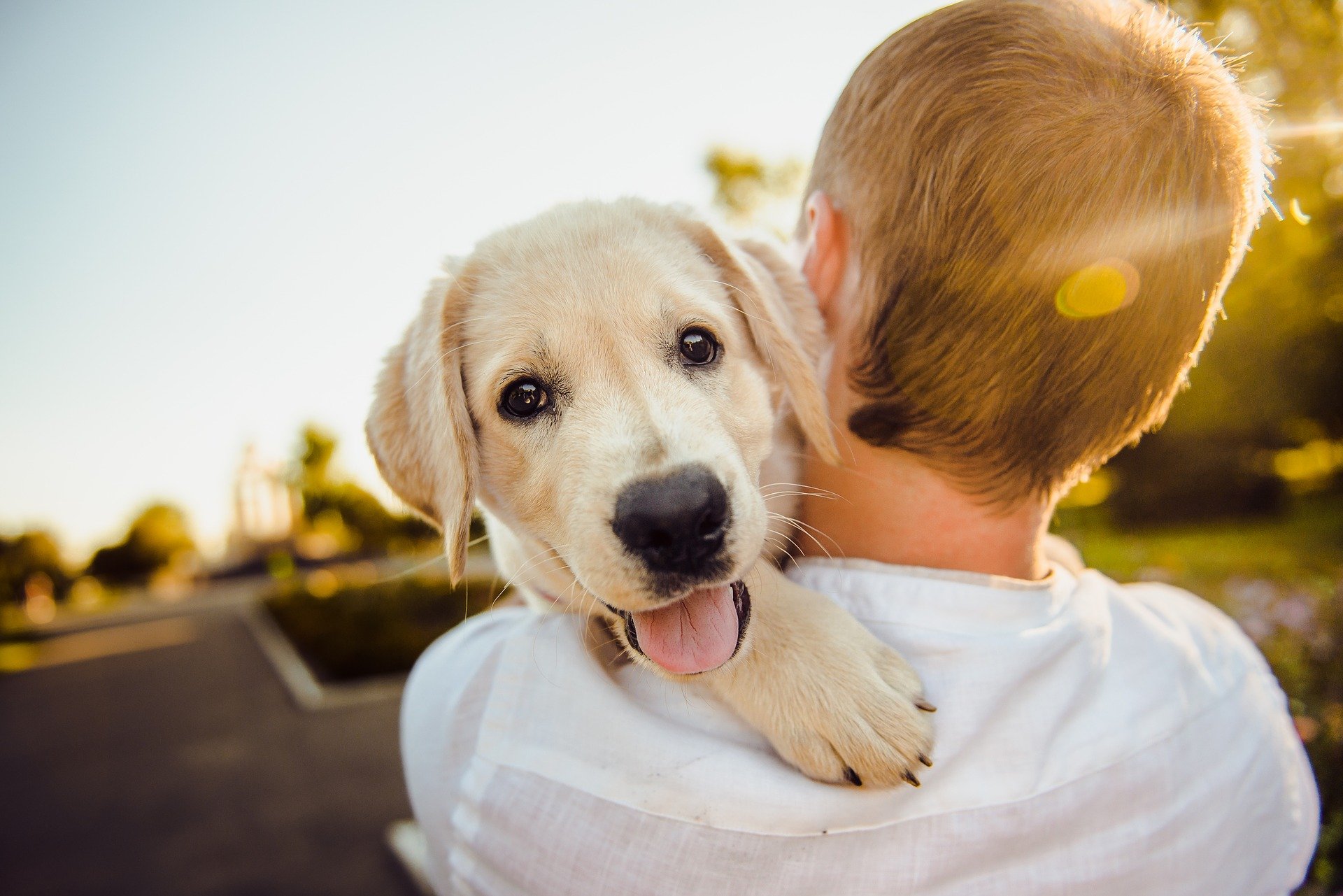
Courtesy of Pixabay
A happy dog typically equates to a happy dog owner. With 1.5 million U.S. households owning at least one pet and nearly a third of all pet owners hailing from the younger millennial generation, it goes without saying that many Americans want their dogs to be happy.
If a member of your family has four legs and some fur, you probably count yourselves amongst the ranks of pet owners looking to raise a happy pup. Here are some basic tips to make sure that you’re helping your canine get everything they need to live a comfortable, healthy, and fulfilling life.
Cover the Basics
Before you start thinking too outside of the box, it’s worth putting a little effort into ensuring that your pup has all of the basic elements required for daily life. This generally centers around three primary areas:
Water: Your dog should always have access to water. Often dogs won’t drink unless they want to. Whenever they decide it’s time to lap up some H2O, they should have water easily accessible.
Food: Dog food is an obvious purchase, but you may want to do a little extra homework. Look for food with quality ingredients and as few fillers as possible. In addition, create a list of approved human foods, like carrots and cucumbers, that you can feed your pooch as a nice treat.
Exercise: Every dog needs consistent exercise. The specific amount depends on your dog’s breed and age. Make sure to schedule in time for your pet to stay fit.
Visit the vet: Finally, make sure you’ve set up regular vet visits. It’s wise to also find a good pet insurance option to help you handle any additional expenses that might crop up during a check-up.
Once you’ve covered these basics, you can start to consider additional ways to cultivate health and happiness in your dog.
Provide Outside Access
One of the simplest-yet-most-impactful pleasures that you can give a dog is allowing them access to the outside on a regular basis. Some dogs will only want to take in Mother Nature for short stints at a time. Others will spend hours at a time outdoors, especially when the weather is nice.
If you can let your dog out regularly, plan on doing so. If you have a contained yard where they can wander without supervision, consider giving them a doggy door sized for them to comfortably fit through, too. That way they can control the number of times they head outside.
Designate Spaces
Along with outside access, make sure your dog has their own indoor space. Chances are, your happy pup will want to spend plenty of time in your company. However, just like humans, there are occasions when a dog needs some alone time.
The best way to facilitate this is to give them their own designated space. This could be the corner of a room. If you have more space, set up an entire pet room for them to occupy when they want to. This can give them the perfect retreat if they’re tired from a long day or even overwhelmed during a social gathering or a similar event hosted at your house.
Cultivating a Happy Dog and a Happy Home
It’s already been said, but it’s worth saying again. A happy dog leads to a happy owner. That isn’t just a cute saying, either. People are literally known to live longer and have good mental health if they have a dog in their lives.
ooOOoo
What a very useful article and that last paragraph is spot on. Jean and I have never been happier. Yes, we are not as young as we were (and that’s saying something) but having our dogs is perfect. So to Brandy, Pede, Cleo, Oliver and Sheena (and all the dogs that went before them) thank you!
A good friend of mine, Peter McCarthy, back in the UK, said that he had recently gone on to a supplement called Lion’s Mane. It is a supplement for keeping the cognition working and maintaining good brain function. Peter also mentioned a film called Fantastic Fungi that was available on Netflix.
At home we have Netflix and we watched the film. It was incredible, almost beyond words.
If you want to watch the official trailer then here it is:
The film is about the power of Mycelium. Here is an extract from Fungi Perfecti:
The activities of mycelium help heal and steer ecosystems on their evolutionary path, acting as a recycling mechanism to nourish other members of the ecological communities. By cycling nutrients through the food chain, mycelial networks benefit the soil and allow surrounding networks of plants and animals to survive and thrive.
Increasingly known as the “wood wide web”, mycelium can be found underfoot with nearly every footstep on a lawn, field, or forest floor. It has been concluded that as much as 90% of land plants are in a mutually beneficial relationship with mycelial networks. Without fungi – without mycelium – all ecosystems would fail.
Mycelium and mycological applications have enormous potential to benefit the health of both people and planet. We are committed to continuing our research efforts to find new and innovative ways to build bridges between mycological applications to both human and planetary health.
We can think of it in a way of finding the mother tree.
The film speaks of protecting the old-growth forest trees. So if you have old-growth trees nearby, do everything in your power to protect them.
Forest researcher and university professor Dr. Suzanne Simard has spent years studying trees. Her research led to the discovery that the forest’s plants and trees have an underground communication system, with trees and fungi cooperating. Her Ted talk brought her work to a larger audience, while her 200 articles in peer-reviewed journals shared her research findings with the larger science community. Now, she is releasing her first book Finding the Mother Tree, published by Penguin Random House.
‘This is not a book about how we can save the trees. This is a book about how the trees might save us’.
I have known John Zande for quite a few years. It has been, what they call, a virtual relationship for we have never met in person. I do have John’s book The Superstitious Naked Ape and it is a first-rate read.
John recently sent me an email. It read:
Hi Paul — How are you both, and the clan? Weather station up and going? Still has not stopped raining here. The ground is beyond saturated, and many of our big old trees around here are just falling over, which is horrible. Just got sent this link (below), and G asked me to send it on to people I know. To celebrate Betty White’s work with animals (and her 100th birthday, which sadly she’ll not have) her sister (in Australia) just started a short Gofundme for G and me here in Brazil. She’s good like that, and at this time of year (heaps of dumped dogs and cats after Christmas) everything helps.
If one opens the link then one reads the following:
ooOOoo
On 17/01 Betty White would turn 100 years old. Most of her life she was an advocate for the health & welfare of animals. As a tribute to her legacy, there’s a global movement to send monies to all animal shelters (thanks to my amazing friend Heather C who brought that to my attention). My sister and her husband John live in Brazil and have been working tirelessly to take stray cats & dogs off the streets for over 15 years.
Their amazing work, as much as is rewarding & noble have absolutely no financial help from the local Government. Stray animals are definitely a public health issue and depend practically solely on the private initiative.
So I’m asking my friends here to donate (any amount will help) to my sister’s VISTA VERDE ANIMAL FUND. Every cent in this campaign will go towards helping fund rescuing stray cats & dogs in the city of Sao Jose dos Campos, Brazil – where my family lives – have them spayed/neutered, nurtured back to health with whatever operations/medicines/treatment they need, house them, and, with luck, get them adopted out into loving homes.
As Betty White herself summed it up best: “Take responsibility and breathe kindness.” Thank you in advance. YOUR CONTRIBUTION WILL MAKE A HUGE DIFFERENCE.
ooOOoo
To view the photographs and, more importantly, to Donate! go here
We have joined thousands of others in making a modest donation!
What is happening to Earth’s climate needs attention NOW!
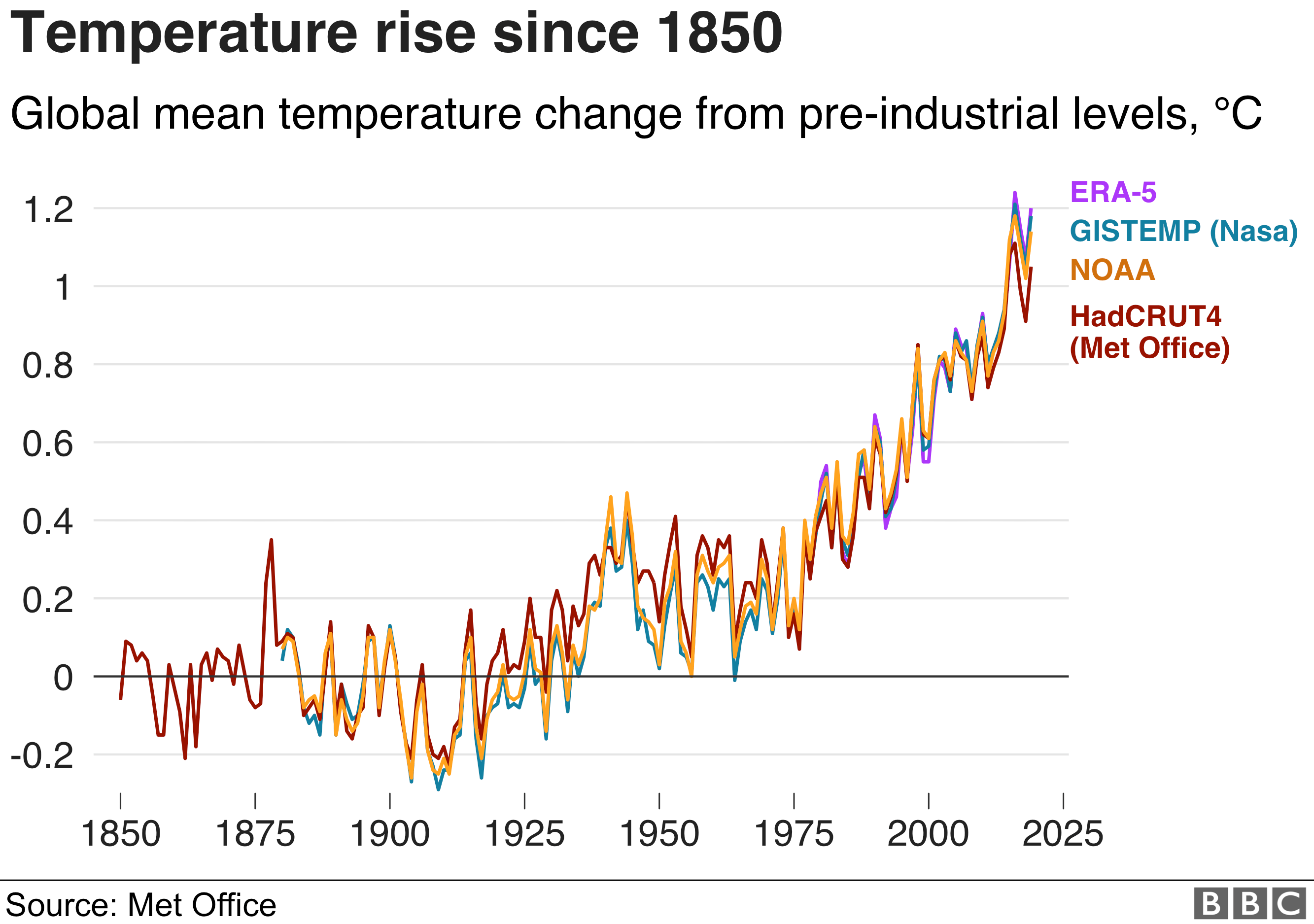
Two charts recently from the BBC News.
The 10 years to the end of 2019 have been confirmed as the warmest decade on record by three global agencies.
According to Nasa, Noaa and the UK Met Office, last year was the second warmest in a record dating back to 1850. The past five years were the hottest in the 170-year series, with the average of each one more than 1C warmer than pre-industrial.
The Met Office says that 2020 is likely to continue this warming trend.2016 remains the warmest year on record, when temperatures were boosted by the El Niño weather phenomenon.
This is the reality.
It affects every part of the world and it affects everyone. BUT! We, as in you and me, and everyone else, still haven’t got it.
The recent COP26 was progress and, especially, the next convention being held in a year’s time is important. But it is a long way from where we need to be. A very long way.
Patrice Ayme is someone that I follow and there have been times when I have gladly republished his posts. With his permission I should add.
Recently he published a post called Cataclysmic Seven Degree Centigrade Rise and I wanted to share it with you. Here is is:
ooOOoo
CATACLYSMIC SEVEN DEGREES CENTIGRADE RISE
Abstract: Expected rise of temperature in mountains correspond to a seven degree C rise. This informs global heating: in the long run, it will also be 7C. Large systems (Antarctica, Greenland) have greater thermal inertia, so their temperatures rise slower… But they will rise as much. In other words the so-called “forcing” by man-made greenhouse gases (which corresponds to 600 ppm of CO2) is universal, but the smaller the system, the faster the temperature rise…
****
Geographical systems with little thermal inertia (mountain glaciers) show an accelerated rate of heating of these parts which is only compatible with a seven (7) degrees rise in Celsius by 2100… A rise the IPCC of the UN considers impossible… But INERTIA says that it IS happening. The first thing this implies is that most forests will burn… worldwide. Then the ice shelves in Antarctica will follow.
TEMPS RISING ULTRA FAST IN MOUNTAINS
Anybody familiar with mountains worldwide know that temperatures are rising extremely fast: large glaciers I used to know have completely disappeared.. As in Chacaltaya, Bolivia. Or Portage, Alaska. The closest glacier to an Alpine village I went to as a child has been replaced by a larch forest (melezes)… One reason for this is that mountains are smaller in frozen mass than immense ensembles like Greenland and Antarctica. Moreover, the mountains’ permafrost is not as cold.
From 1984 to 2017, the upper reaches of the fires in the Sierra Nevada of California rose more than 1,400 feet. Now the temperature in the lower atmosphere decreases by 7C every 1,000 meters. There are many potential factors to explain why fires go higher (although some contradict each other). To avoid paralysis by analysis, I will assume the rise in fires is all due to temperature rise. So what we have here is a 2.5C rise in 33 years.
….FROM SMALLER THERMAL INERTIA:
Mountain thermal capacity is accordingly reduced relative to those of Greenland and Antarctica. The proportionality factors are gigantic. Say the permafrost of a mountain range is of the order of 10^4 square kilometers, at a depth of one kilometer (typical of the Sierra Nevada of California or the Alps at a temp of -3C. By comparison, Antarctica is 14x 10^6 sq km at a depth of 4 kilometers of permafrost at a temp of -30C. Thinking in greater depth reveals the proportions to be even greater: individual mountains are of the order of square kilometers. This means that (using massively simplified lower bounds), Antarctica has a mass of cold which is at least 4 orders of magnitude higher than a mountain range: to bring Antarctica to seriously melt, as mountain ranges are right now, would require at least 10,000, ten thousand times, as much heat (or maybe even a million, or more, when considering individual mountains).
As it is, mountains are exposed to a heat bath which makes their permafrost unsustainable. From their small thermal inertia, mountains warm up quickly. Greenland and Antarctica, overall, are exposed to the same bath, the same “forcing”, but because they are gigantic and gigantically cold, they resist more: they warm up, but much slower (moreover as warmer air carries more snow, it snows more while Antarctica warms up).
I have looked, in details at glaciologists records, from the US to Europe… Everywhere glaciologists say the same thing: expect a rise of the permafrost line of 1,000 meters… That corresponds to a SEVEN DEGREE CENTIGRADE RISE. Basically, while glaciers were found down to 2,500 meters in the Alps (some can still be seen in caves)… Expect that, in a few decades, none will occur below 3,500 meters… Thus speak the specialists, the glaciologists…
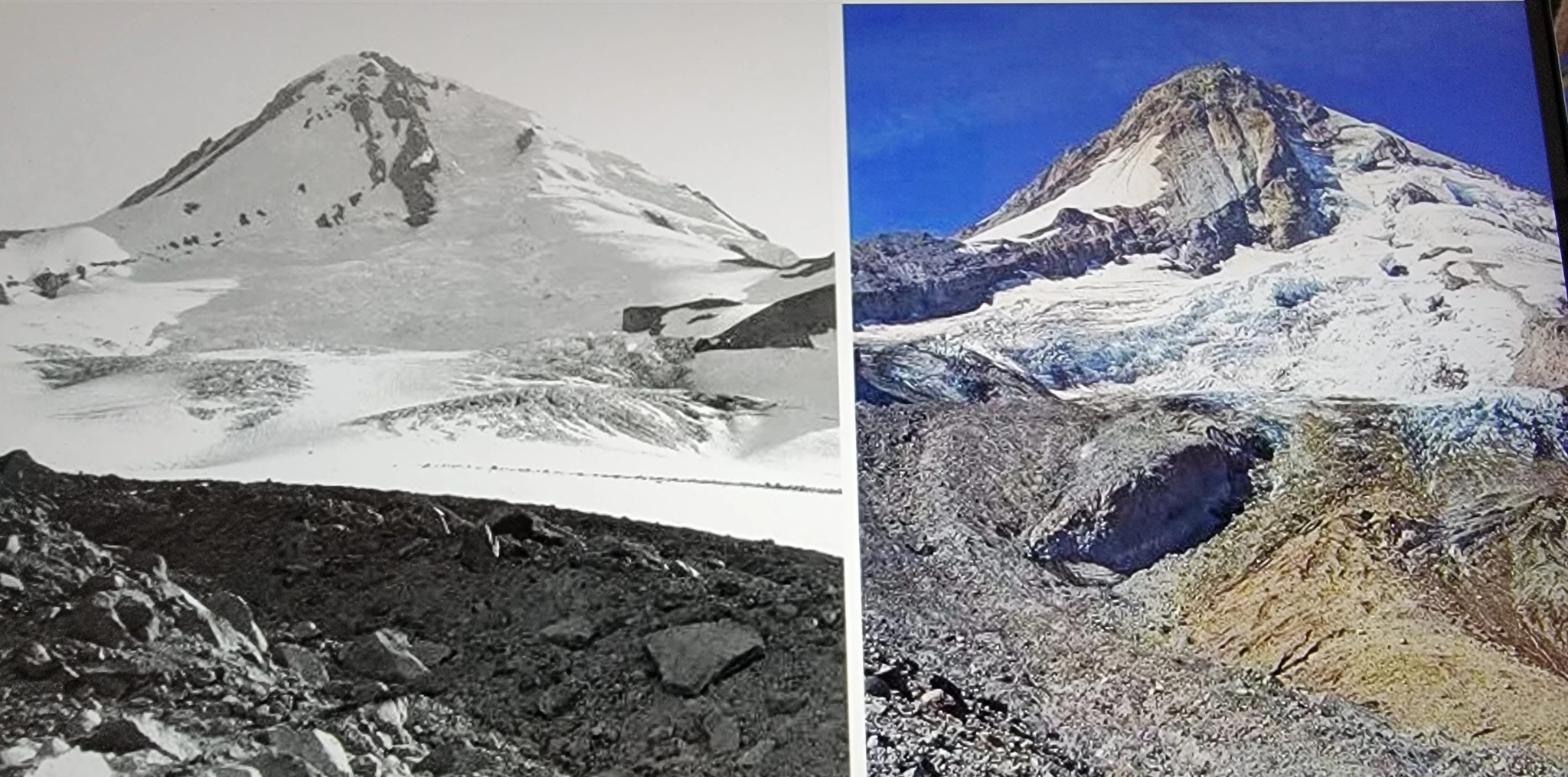
Mount Hood, Oregon, in August 1901 on the left, and August 2015, on the right. The Eliot glacier, front and center, which used to sprawl for miles, is in the process of disappearing completely.
What is happening then, when most climate scientists speak of holding the 1.5 C line (obviously completely impossible, even if humanity stopped emitting CO2 immediately)???… Or when they admit that we are on a 2.7C future in 2100? Well, those scientists have been captured by the establishment… They say what ensure their prosperous careers… At a global rise of 2.7 C, we get a migration of the permafrost line of around 500 kilometers towards the poles… Catastrophic, yes, but still, Antarctica will not obviously start to melt, big time.
If it came to light that a seven degree centigrade rise is a real possibility, authorities would turn around and really do some things, which may destabilize the worldwide plutocratic establishment: carbon tariffs are an obvious example. Carbon tariffs could be imposed next week… and they would have a big impact of the CO2 production. So why are carbon tariffs not imposed? Carbon tariffs would destabilize the deindustrialization gravy train: by employing who are basically slaves in poor countries, plutocrats make themselves ever wealthier, while making sure there would be no insurrection at home… A trick already used in imperial Rome, by the Senatorial aristocracy/plutocracy. That would be highly effective… By the way, without saying so, of course, and maybe even unwittingly, this is basically what Trump had started to do…
The devil has these ways which the commons do not possess…
That would stop the crafty, dissembling nonsense that countries such as France are at 4.6 tons per capita of CO2 emissions per year… That’s only true when all the CO2 emitted to produce the goods the French need is NOT counted.. including deforestation in Brazil to grow soybean. With them counted, one gets to 11 tons or so, more than double… The wonderful graph of CO2 emissions collapsing in Europe is the same graph as collapsing industrial production…
The devil has these ways the commons have not even detected…
Carbon tariffs would be a way to solve two wrongs in one shot: the wrong of deindustrialization, of corrupt pseudo-leaders not putting the most advanced countries, their own countries, first… And the wrong of producing too much CO2.
Little fixes will go a long way, as long as they incorporate hefty financing fundamentally researching new energy (it does not really matter which type, as long as it is fundamental…)
Patrice Ayme
ooOOoo
Now this isn’t some academic treatise that doesn’t affect the likes of you and me. This is, as I have said, the harsh reality of NOW!
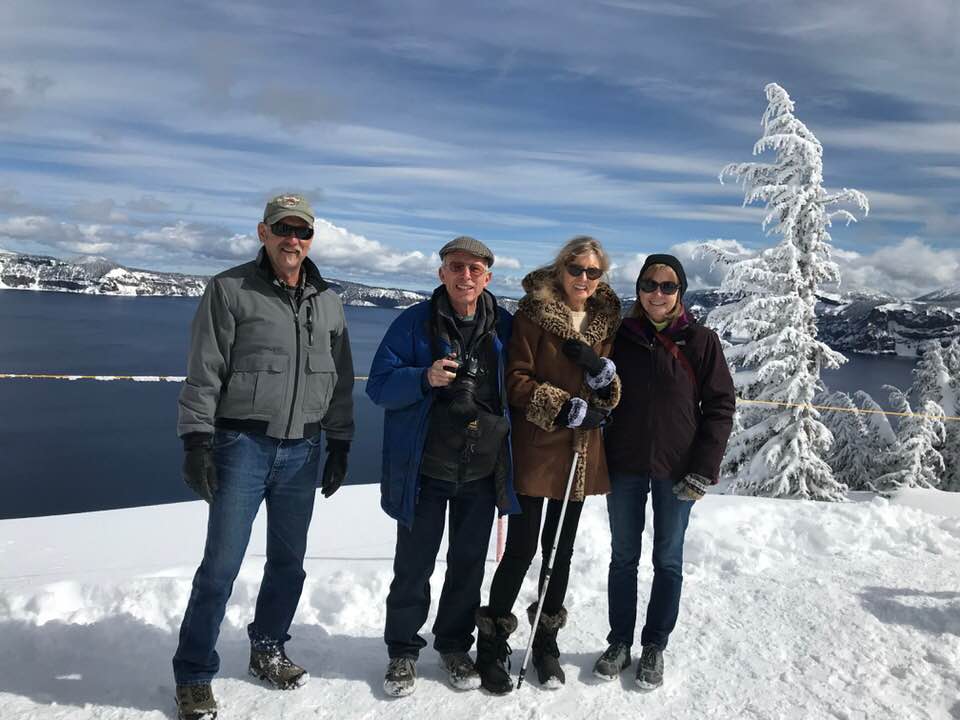
Here’s a photo of me and Jeannie together with Andy and Trish taken in March, 2018. On the edge of Crater Lake.
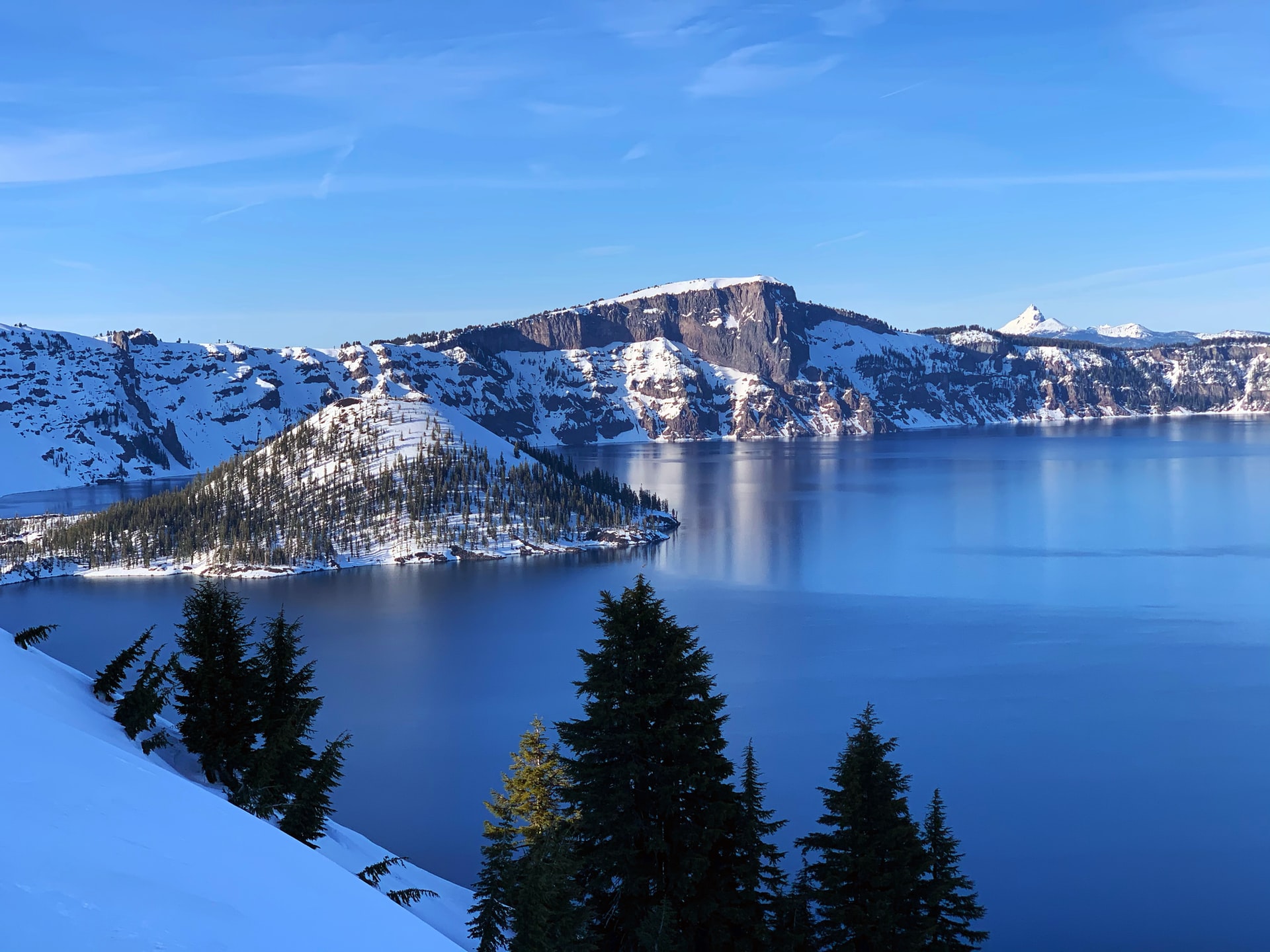
Then this is a stock photograph of Crater Lake taken in March, 2020.
Taken by Valerie Little
Not a great deal of difference but the trees in the photo above aren’t encased in snow as is the tree in the 2018 photo.
Now there is important news to bring you from COP 26. On Sunday Boris Johnson said:
Scientists say this would limit the worst impacts of climate change.
During a Downing Street news conference, Mr Johnson said:
“We can lobby, we can cajole, we can encourage, but we cannot force sovereign nations to do what they do not wish to do”
“For all our disagreements, the world is undeniably heading in the right direction”
The “tipping point has been reached in people’s attitudes” – with leaders “galvanised and propelled by their electorates”
But “the fatal mistake now would be to think that we in any way cracked this thing”
Mr Johnson said that despite the achievements of the summit, his reaction was “tinged with disappointment”.
He said there had been a high level of ambition – especially from countries where climate change was already “a matter of life and death”.
And “while many of us were willing to go there, that wasn’t true of everybody”, he admitted.But he added the UK could not compel nations to act. “It’s ultimately their decision to make and they must stand by it.”
That point about attitudes is interesting. Who would have thought, say, five years ago, that attitudes had changed so dramatically by late-2021.
One hopes that we will come to our collective senses but I can’t see the CO2 index being returned to its normal range without machines taking the excessive CO2 out of the atmosphere. Because, as was quoted on The Conversation nearly a year ago:
On Wednesday this week, the concentration of carbon dioxide in the atmosphere was measured at at 415 parts per million (ppm). The level is the highest in human history, and is growing each year.
Finally, my daughter, Maija, and my son-in-law, Marius, had a child some ten years ago. He is my grandson and I left England before he was born. He is Morten and he is a bright young spark.
Morten
Morten and all the hundreds of thousands of young persons like him are going to have to deal with the world as they find it!
I saw this article on the Sustainability at Harvard website and read it with great interest. I wanted to republish it to share with you but couldn’t readily see a copyright statement or an instruction regarding republishing. I sent an email but I was warned that Harvard receive a great deal of emails every day and a reply might not be forthcoming.
So ….. I have made a decision. I will publish the article and hope that it doesn’t infringe the copyright.
Before I do that let me ‘promote’ Sustainability at Harvard by giving you a little from their About page.
Together we are building a healthier, more sustainable community
Harvard University is devoted to excellence in teaching, learning, and research, and to developing leaders in many disciplines making differences globally.While Harvard’s primary role is to address global challenges, such as climate change and sustainability, through research and teaching, the University is also focused on translating research into action. Harvard is using its campus as a living laboratory for piloting and implementing solutions that create a sustainable and resilient community focused on health and well-being.
ooOOoo
Do food miles really matter?
March 7, 2017
By Molly Leavens, College ’19
Leavens breaks down the nuances of how a food’s carbon footprint relates to the distance it travels from farm to plate.
The local food movement, with the goal of consuming food produced and grown within a close geographic region, has been gaining traction in recent years as a way of eating fresh and high quality foods and reducing one’s environmental impact. However, public messaging about the outcomes of this movement is divided and often leads to confusion and misunderstanding among consumers. This short article will attempt to break down some of the nuances of how a food’s carbon footprint relates to the distance it travels from farm to plate (commonly referred to as food miles).
So, do food miles really matter? Yes and no.
For most American diets, the carbon cost of transportation is slight compared to the carbon costs of production (running the tractors, producing chemical fertilizer, pumping irrigation…). Therefore, the most effective way for most Americans to reduce their diet’s carbon footprint is not by buying local, but rather eliminating or reducing their consumption of animal products.
the most effective way for most Americans to reduce their diet’s carbon footprint is not by buying local, but rather eliminating or reducing their consumption of animal products.
For a vegan, food miles contribute to a larger portion of their food’s carbon footprint. Plant-based foods have lower production footprints, so transportation is comparatively more significant. Even then, the raw mileage is hardly informative for determining carbon footprints; the mode of transportation is the key variable. Cargo ships are the most efficient, followed by trains, then trucks, and lastly planes.
That means a product flown from Chicago to Boston has a significantly larger carbon footprint than one shipped 11,000 miles from Asia to California.
Although exact numbers vary across analyses, flying one ton of food is close to 70 times more carbon intensive than transporting that same weight via a large cargo ship (source). That means a product flown from Chicago to Boston has a significantly larger carbon footprint than one shipped 11,000 miles from Asia to California. As a result, locality is more important for perishable foods that are often flown like raw fish, asparagus, and berries. Foods such as tomatoes, bananas, pears, and apples can all be harvested before ripening, stored for long periods of time, then inoculated with ethylene gas (the naturally occurring hormone produced by fruits that causes the change in color and flavor profile associated with ripening) before entering a supermarket. In many cases, these shelf-stable foods have lower carbon footprints when produced internationally because the carbon cost of production far outweighs that of transportation.
Another frequently cited comparison is that of lamb produced in England verses lamb produced in New Zealand. For a consumer in England, the New Zealand lamb actually has a lower carbon footprint. Our intuition failed us. Why? Sheep in New Zealand are generally raised on farms run by hydroelectric power. This energy saving is so immense that it overrides the fuel output of the 11,000 mile cruise to England (source).
A similar story unfolds here in Boston. Local meat production could be more carbon intensive because the animals must be housed in heated facilities during the cold winter months. For a large portion of the year, we are better off shipping in a tomato from South America than growing one in a local greenhouse.
A similar story unfolds here in Boston. Local meat production could be more carbon intensive because the animals must be housed in heated facilities during the cold winter months.
Looking exclusively at carbon footprints neglects other important issues like water usage and farmer rights but it is none the less a valuable metric. Purchasing local food has many social benefits like boosting local economies, and increasing community cohesion and self-reliance. In conclusion, local food is not ‘good’ or ‘bad’, but it is important for consumers to define the values they hope to support through their purchasing decisions and think critically about when and where local foods support those values.
Looking exclusively at carbon footprints neglects other important issues like water usage and farmer rights but it is none the less a valuable metric.
ooOOoo
Like so many things in life they are frequently more complicated than they first appear.
Time and time again dogs do things which cause me to wonder about the way that dogs think and behave. One would think that with so many dogs here at home my days of wondering would be over but the truth is that the more I stay engaged with dog blogs, such as The Dodo, the more I realise that I am only skimming the surface of dogs.
That is my introduction to this post about a Turkish dog.
ooOOoo
Stray Dog Takes The Train All By Himself Every Day
“He knows where to go and has a purpose.”
By Lily Feinn, Published on the 8th October, 2021.
Meet Boji — a stray dog who’s bringing joy to commuters every day.
A few months ago, Istanbul’s public transportation department noticed a large, brown dog riding the buses, trams, subways and ferries. The dog, whom they dubbed Boji, seems to know exactly where he’s going any time he steps on or off the train.
INSTAGRAM/BOJI_IST
“Two months ago, we noticed a dog trying to use our trams, metros and our trains and he knows where to go and he knows where to get out,” Aylin Erol, head of customer relations at Metro Istanbul, told CNN. “It was quite interesting and we have started to follow him. And it was really an interesting pattern. It’s something like that he knows where to go and has a purpose.”
In mid-August, public transit officials picked Boji up and brought him to a vet for a health check. Boji also received a microchip which is connected to a mobile application, allowing the Metro Istanbul customer relations department to keep tabs on his whereabouts and wellbeing.
Boji’s frequent travels have made him a celebrity on public transit. When he’s not napping on a tram seat, rushing to catch a train, or enjoying the breeze on the ferry, he’s always happy to pose for selfies with commuters and receive lots of pets and treats.
INSTAGRAM/BOJI_IST
The good boy has proven himself to be the most polite passenger you’ll ever encounter.
“Boji knows all the rules of travel, gives way to the disembarking passengers, waits, enters the train, and calmly finds a place for himself,” wrote Cumhuriyet. “When he misses the subway, he runs after the subway.”
INSTAGRAM/BOJI_IST
Boji visits at least 29 stations and travels approximately 18 miles a day around the city, saying hi to his adoring fans along the way. While most commuters can’t wait to get off the subway or bus, for Boji, it’s where he’s most comfortable.
“I think it’s very beautiful,” passenger Abdulkadir Yalçın told Cumhuriyet. “It adds joy to the subway. It makes us smile. It’s the first time I’ve encountered such a thing.”
INSTAGRAM/BOJI_IST
Luckily, the good boy doesn’t have to pay a fare to hop on his preferred bus or train. For Boji, it’s just home.
ooOOoo
Isn’t that amazing! I wonder, however, how he stays fit and healthy? But whatever, it is a delightful story.
Rescuing dogs is both a wonderful and heart-breaking thing to do. When I met Jeannie in 2007 she had been rescuing dogs from the streets of Guaymas in Mexico for years, attending to their immediate needs, and finding homes for them mainly in Arizona. The stories she had to tell were incredible. A year later I moved from Devon, England, out to Mexico with Pharaoh to be with Jean and then in 2009 started writing this blog. In 2010 when we came North to the USA to be married we brought with us 16 dogs much to the amusement of the US Border officer as we entered the USA.
So this story in The Dodo naturally jumped out at me.
ooOOoo
Dog Chained In Abandoned Backyard Can’t Believe He’s Finally Being Rescued
“He ‘meeped’ like a muppet, he was so excited, so he got the name Beaker!”
When a man living in Detroit returned home one day and noticed that someone had dumped a chained dog in a neighboring backyard, he frantically began calling around for someone to help. Luckily, Rebel Dogs Detroit took the call and sent a volunteer, Tiffany Perkins, out to investigate. She had no idea what to expect when she first arrived — but as soon as she saw Beaker, her heart just melted.
REBEL DOGS DETROIT
“Beaker was timid and cowered behind the garage to hide,” Perkins told The Dodo. “He peeked out the side as I started calling for him. As I got closer, his tail started wagging. Then he pushed his weight against us for petting him — and seemed to be visibly relieved. He ‘meeped’ like a muppet, he was so excited, so he got the name Beaker!”
After being chained up and abandoned, Beaker was understandably a little nervous at first, but as soon as he realized Perkins was there to help him, he completely relaxed and was so excited to meet his new best friend.
REBEL DOGS DETROIT
“When the chain was untethered from the garage, he dropped to the ground for belly rubs and kisses and playful chaos,” Perkins said.
Unfortunately, the chain that Beaker had around him was stuck on his neck, so Perkins quickly rushed him to the vet to get him checked out. While they waited for Beaker’s surgery to remove the chain, Perkins took advantage of the extra time to give Beaker all the love he’d never had before, and the sweet dog appreciated it so much.
REBEL DOGS DETROIT
“We had lots of bonding time in the car waiting for his surgery for 5+ hours,” Perkins said. “He was napping with his head in my lap after a while.”
Even after everything Beaker had been through, all he wanted was to be loved — and finally, his wish had come true.
REBEL DOGS DETROIT
Beaker is now healing from his surgery in his foster home and is just the happiest dog anyone has ever met. For Beaker, it doesn’t seem to matter what happened to him in the past. What matters is where he is now and all the new friends he’s made who care about him and are making sure he’s happy and safe.
“He’s learning how to be an indoor dog with unconditional love in his foster home,” Perkins said.
REBEL DOGS DETROIT
Beaker is currently looking for his forever home and would love a home with another playful, energetic dog who can continue to show him the ropes and become his best buddy. As soon as Beaker laid eyes on his rescuers, he knew he was finally safe, and he’s so excited to find the forever family he deserves.
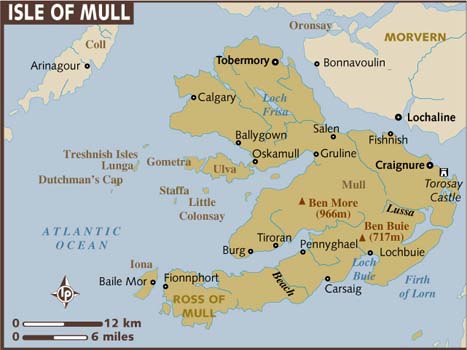
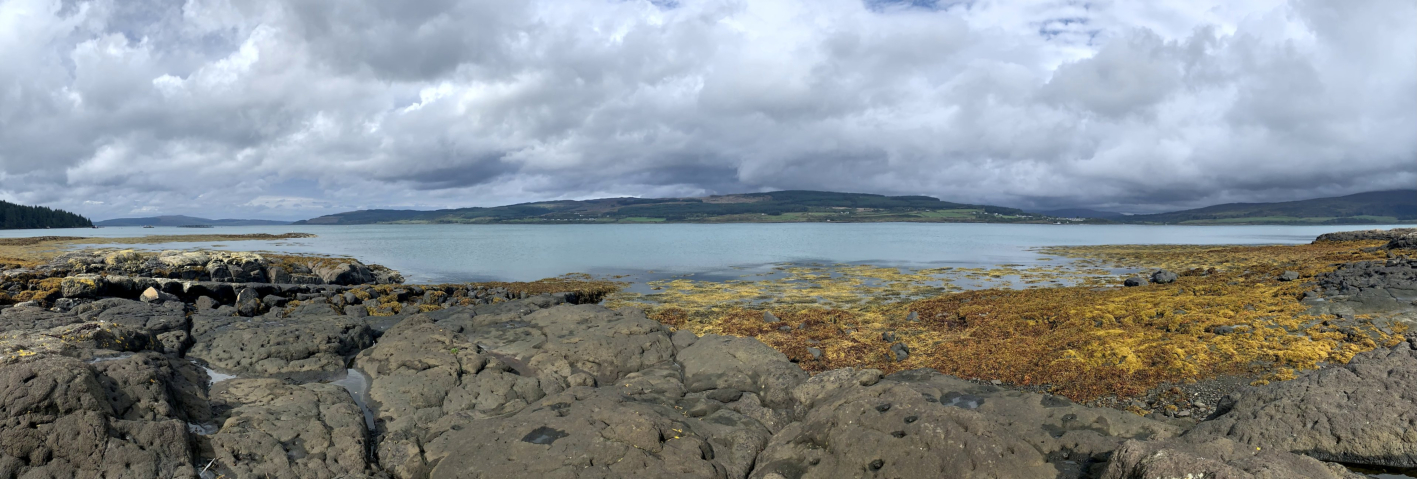
With a difference in that the guest author is my son, Alex. Recently Alex and his partner, Lisa, went on a trip to the Isle of Mull. But I will let Alex continue in his own words after I have explained a little more about the island. And where better to start than with the opening paragraphs of an article on the Isle of Mull from Wikipedia.
The island’s 2020 population was estimated at 3,000.[7] In the 2011 census, the usual resident population was 2,800.[2] In 2001, it was 2,667.[8] (In the summer, these numbers are augmented by an influx of many tourists.) Much of the year-round population lives in colourful Tobermory, the island’s capital, and, until 1973, its only burgh.
There are two distilleries on the island: the Tobermory distillery (formerly called Ledaig), which is Mull’s only producer of single malt Scotch whisky;[9] and another one located in the vicinity of Tiroran, which produces Whitetail Gin (having opened in 2019, it was the island’s first new distillery in 220 years). The isle is host to numerous sports competitions, notably the annual Highland Games competition, which is held in July. It also has at least four castles, including the towering keep of Moy Castle. A much older stone circle lies beside Lochbuie, on the south coast.
ooOOoo
This is now from Alex:
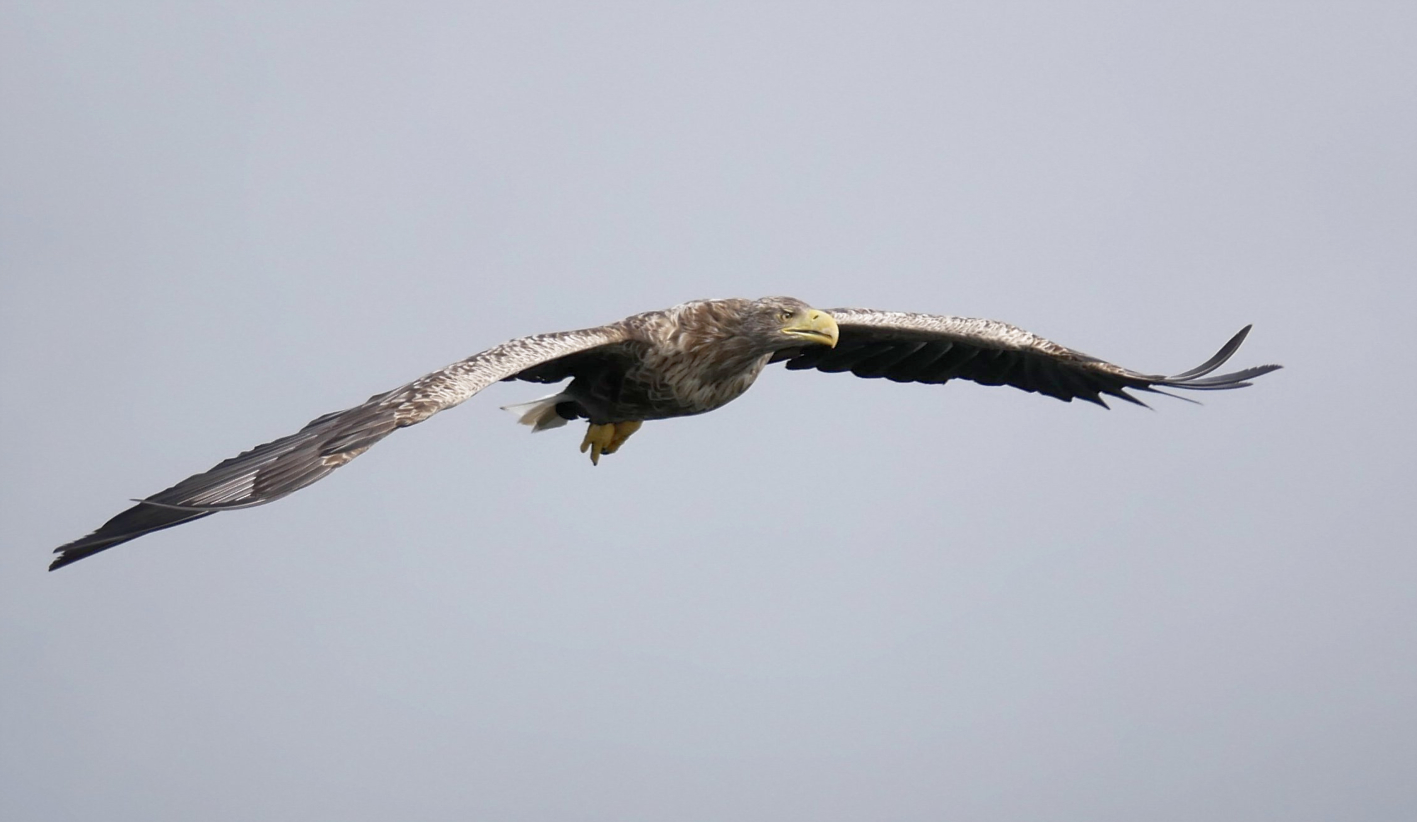
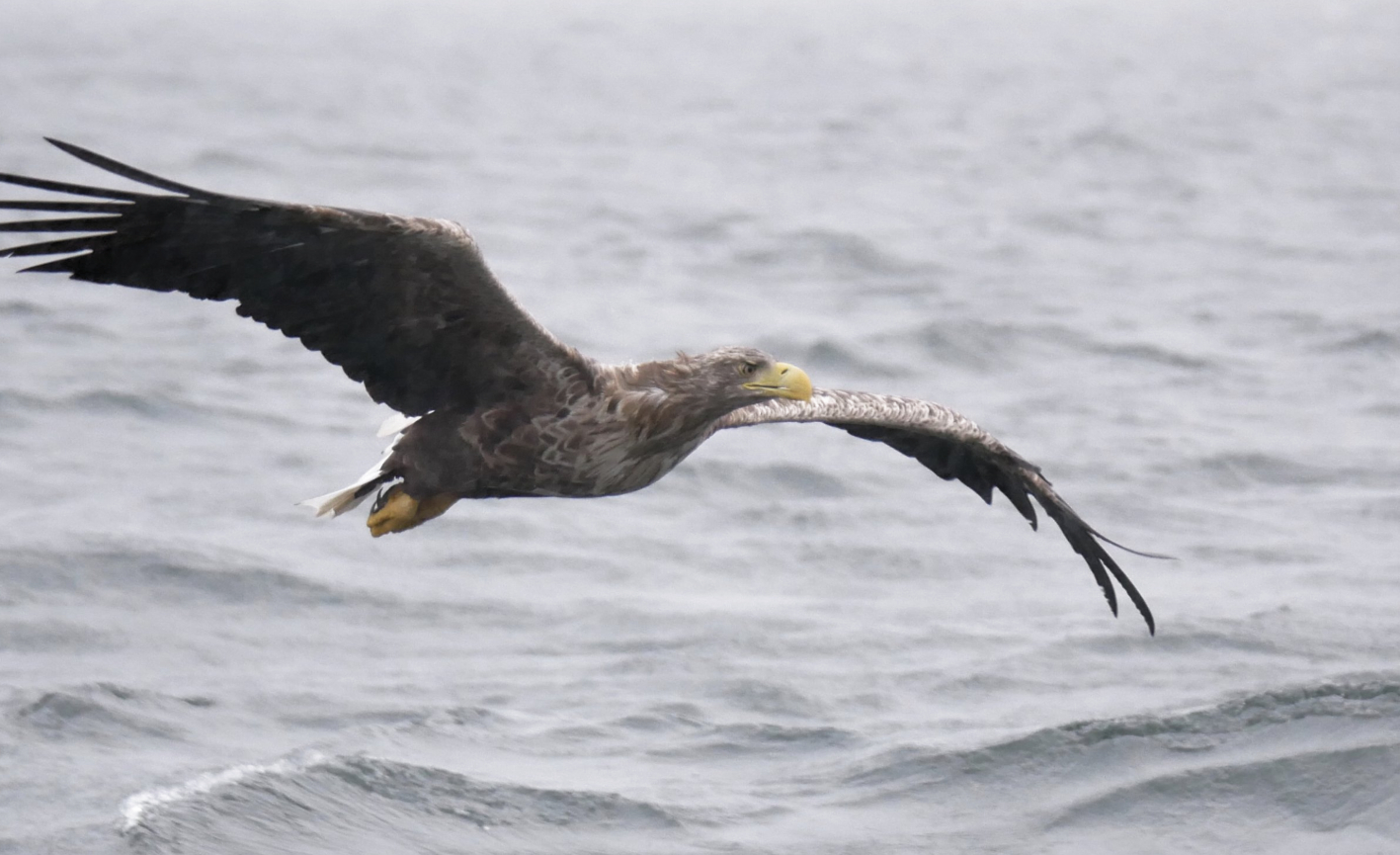
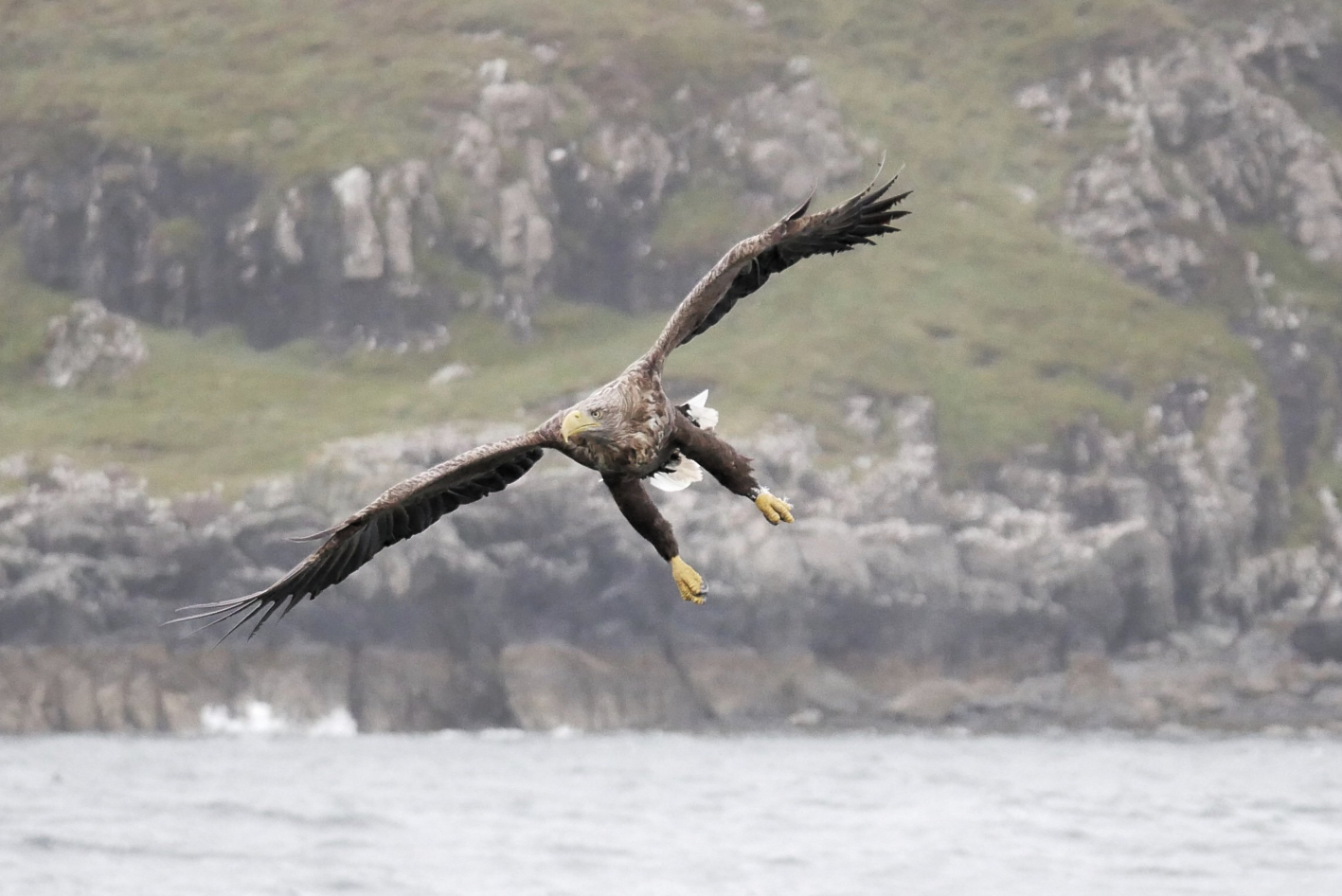
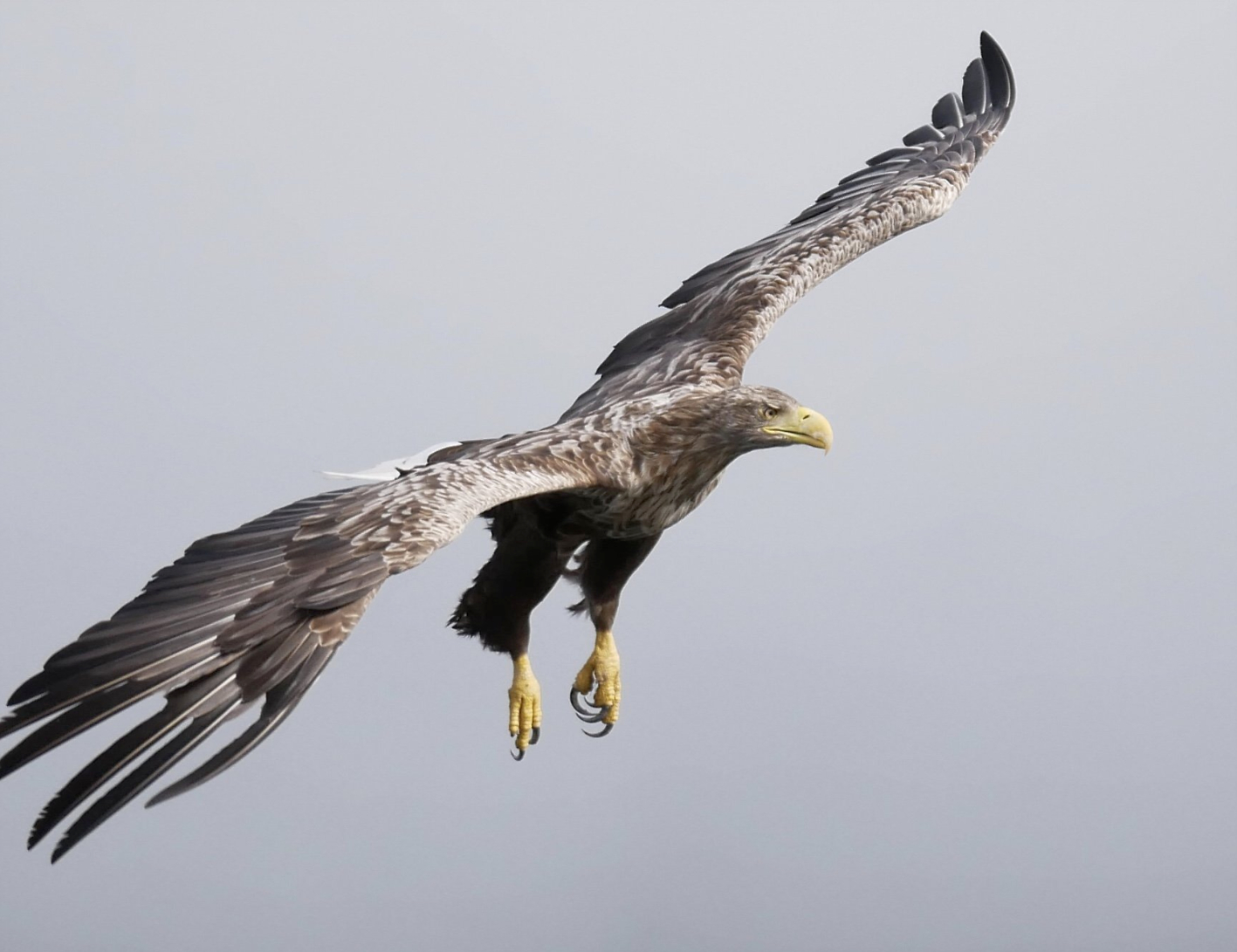
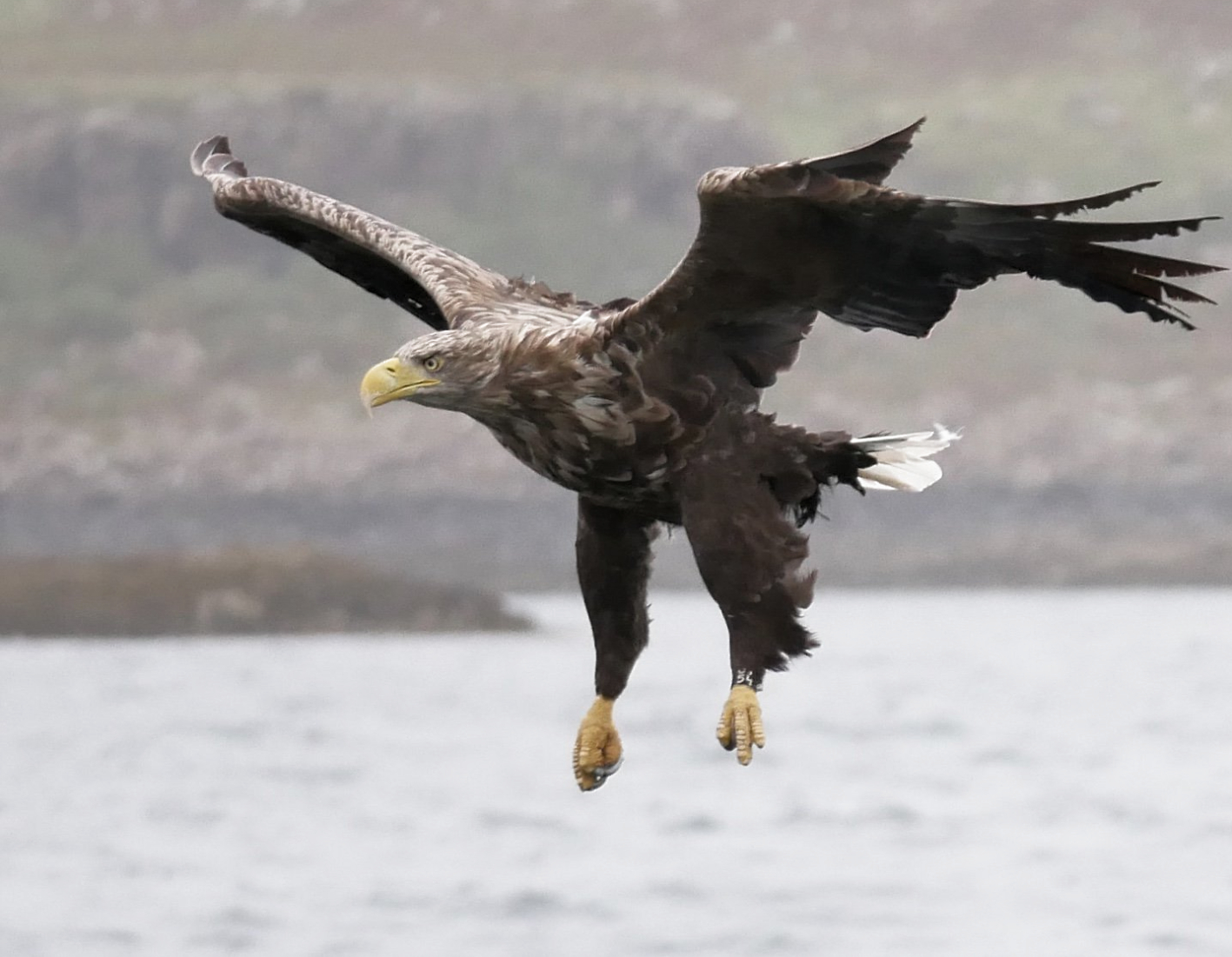
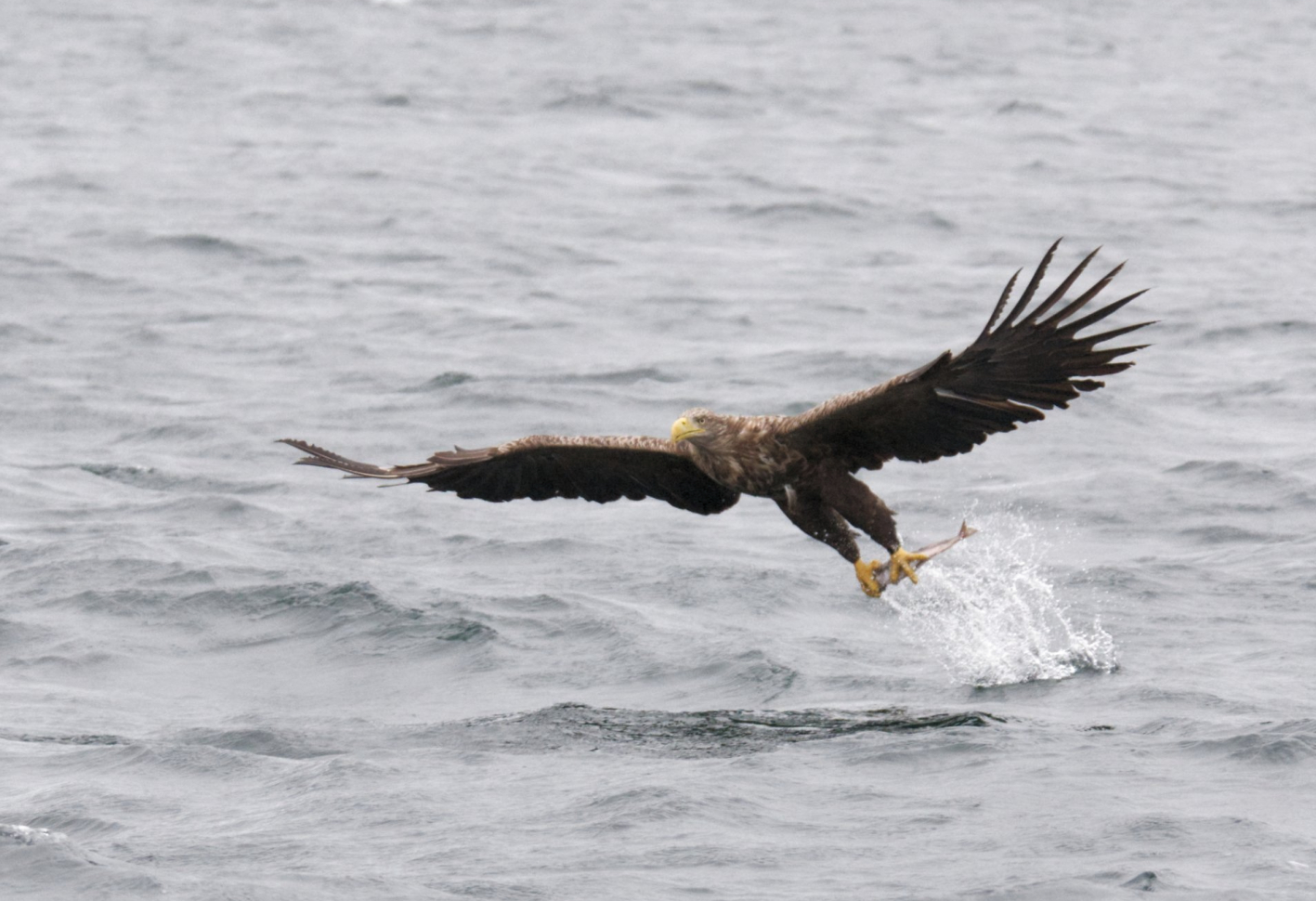
We decided to go to the Isle of Mull after reading about the amazing wildlife it has to offer. It’s famous for its white tailed eagles, which are the largest eagle in the U.K. and fourth largest in the world, with an average wingspan of 7-8ft and a perched height of 1m. After securing a place on a Mullcharters.com eagle photography boat trip, we waited with excitement as the boat left the small harbour at Ulva ferry in force 5 winds and intermittent rain showers, cruising out of the harbour, we where very lucky to spot an Otter swimming along.
On reaching Loch Na Keal, we where told to keep an eye out for an eagle approaching, they apparently recognise the boat from around 1-2 miles away and know that it offers them an opportunity to get some free fish! It wasn’t long before looming out of the distance, a white tailed eagle appeared and started circling the boat, one of the boats crew told us he was going to throw a fish out and exactly where he was throwing it, so we could aim our cameras in that direction, we where treated to the amazing spectacle of an adult white tailed eagle swooping down to collect its fish, which was about 20-30ft away. This enabled us to get some excellent pictures of the eagle picking up its fish on numerous occasions, we saw at least six different birds on the trip and at one point had two pairs of eagles overhead the boat. Even with the challenging conditions, we all managed to get some excellent photos, it’s just a shame we didn’t get any sun to really show the eagles colours off.
oooo
oooo
oooo
oooo
oooo
oooo
oooo
oooo
oooo
To round off these wonderful photographs, here are two of an otter. They are notoriously difficult to photograph.
oooo
ooOOoo
What a wonderful journey for Alex and Lisa. The camera was a Panasonic Lumix G85 with Leica 100-400 lens.