Category: Flying

A new NEON light beckons.

A wonderful investment in studying America’s ecology is just starting.

I am indebted to The Economist for including in their issue of the 25th August a story about NEON, something I had previously not heard about.

It was then an easy step to locate the main website for the National Ecological Observatory Network, or NEON.  (Just an aside that I can’t resist – NEON is such a fabulous acronym that one wonders how much push and shove there was to come up with the full name that also fitted the word ‘NEON’!  Sorry, it’s just me!)

Anyway, back to the plot.  The following video gives a very good idea of the projects aims.  When I watched it, I found it inspiring because it seemed a solid example of how the nation, that is the USA, is starting to recognise that evolving to a new, sustainable way of life has to be  built on good science.  NEON strikes me as excellent science.  You watch the video and see if you come to the same conclusion.

There’s also a comprehensive introduction to the project from which I will republish this,

In an era of dramatic changes in land use and other human activities, we must understand how the biosphere – the living part of earth – is changing in response to human activities. Humans depend on a diverse set of biosphere services and products, including air, water, food, fiber, and fuel. Enhancements or disruptions of these services could alter the quality of human life in many parts of the world.

To help us understand how we can maintain our quality of life on this planet, we must develop a more holistic understanding of how biosphere services and products are interlinked with human impacts. This cannot be investigated using disconnected studies on individual sites or over short periods of observation. Further, existing monitoring programs that collect data to meet natural resource management objectives are not designed to address climate change and other new, complex environmental challenges.

NEON, the first continental-scale ecological observatory, will provide comprehensive data that will allow scientists to address these issues.

Later on there’s more detail, as follows,

NEON has partitioned the U. S. into 20 eco-climatic domains, each of which represents different regions of vegetation, landforms, climate, and ecosystem performance. In those domains, NEON will collect site-based data about climate and atmospheresoils and streams and ponds, and a variety of organisms. Additionally, NEON will provide a wealth of regional and national-scale data from airborne observationsand geographical data collected by Federal agencies and processed by NEON to be accessible and useful to the ecological research community. NEON will also manage a long-term multi-site stream experiment and provide a platform for future observations and experiments proposed by the scientific community.

The data collected and generated across NEON’s network – all day, every day, over a period of 30 years — will be synthesized into information products that can be used to describe changes in the nation’s ecosystem through space and time. It will be readily available in many formats to scientists, educators, students, decision makers and the general public.

For some reason I couldn’t find on the NEON website the informative map that was included in The Economist so I grabbed that one, and offer it below:

These eco-climatic domains are fully described here on the NEON website.

The benefits of this fabulous project are described thus, “The data NEON collects and provides will focus on how land use change, climate change and invasive species affect the structure and function of our ecosystems. Obtaining this kind of data over a long-term period is crucial to improving ecological forecast models. The Observatory will enable a virtual network of researchers and environmental managers to collaborate, coordinate research, and address ecological challenges at regional, national and continental scales by providing comparable information across sites and regions.

As they say in business, if you can’t measure it, you can’t manage it!  So reading in the above the sentence, ‘Obtaining this kind of data over a long-term period is crucial to improving ecological forecast models.‘ is cheering to the soul.

The United States quite rightly gets a huge bashing over it CO2 emissions but to condemn the USA for that and not to applaud this sort of wonderful research is utterly unjustified.  As I have hinted before, America has, more than any other country in the world, the energy to make things better over the coming years.

As Professor Sir Robert Watson highlighted here recently said, ‘… deep cuts in CO2 emissions are possible using innovative technologies without harming economic recovery.’

Amen to that!

Compelled by curiosity

Wonderful news and a fabulous achievement!

I’m writing this as 5.40 am on the 6th.  I let our ‘bedroom’ dogs out for their early-morning pee some 20 minutes ago and then jumped back in bed, turned on my Kindle and went to the BBC News website.  There I read,

Nasa’s Curiosity rover successfully lands on Mars

The US space agency has just landed a huge new robot rover on Mars.

The one-tonne vehicle, known as Curiosity, was reported to have landed in a deep crater near the planet’s equator at 06:32 BST (05:32 GMT).

It will now embark on a mission of at least two years to look for evidence that Mars may once have supported life.

A signal confirming the rover was on the ground safely was relayed to Earth via Nasa’s Odyssey satellite, which is in orbit around the Red Planet.

The success was greeted with a roar of approval here at mission control at the Jet Propulsion Laboratory (JPL) in Pasadena, California.

As David Shukman, Science Editor of the BBC, wrote,

The day I watched Curiosity being built in a clean room at Nasa’s Jet Propulsion Laboratory in Pasadena last year, the rover’s six wheels were lying on one work bench while the chassis stood on another and it was hard to believe the white-suited engineers could make sense of the maze of tubes and cabling.

But what they’ve created now stands on the red soil of Mars – and it’s in one piece. In the hallway of a JPL building we were shown a full-size replica. Walking around it made me realise something difficult to grasp from the pictures and video: this is a beast of a machine, a kind of cosmic Humvee with instruments instead of weapons.

Sometimes Nasa public relations can appear bragging. Today it feels justified. Curiosity is all set to discover something remarkable about our strangest neighbour.

Well said and people from all around the world will echo those sentiments.

When I read what Patrice wrote in my Setting the scene post not so many hours ago,

Well, OK, keeping my fingers, and even my arms, crossed here. Seems to me the “sky crane” is over-complex, and I was not reassured when one of the physicist-engineers boasted that they had run the landing millions of time on simulator. Yeap, OK, how many times for real in Earth’s gravity?
I don’t see why they could not have landed normally, LEM style. Especially as they have wheels and could have rolled away to find undistrubed land.
There are no back-ups…
OK, let’s hope I’m wrong to be suspicious…
PA

I instinctively agreed and hoped his worries were misplaced.  They were!  The Curiosity rover is down!  Good luck to the Rover and all those who made it possible.  Well done, the team!

Man, dog and Piper Cub

Excuse the self-indulgence!

While going through previously published Posts, I came across two, first shown on the 17th & 18th August, 2009, that seemed a better fit being rolled into one.

So here they are.

oooOOOooo

This is not my dog but it brings out the same feelings in me as if I was looking at my German Shepherd.

german-shepherd-puppy

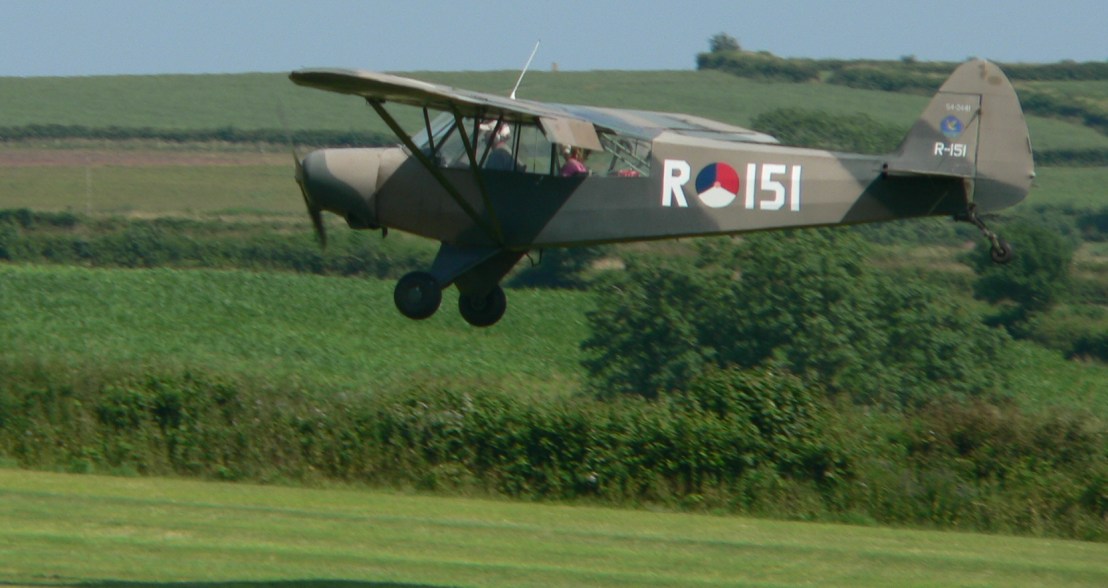
And this is my German Shepherd!  The photograph was taken in 2006 when Pharaoh was 3 years old.  The aircraft, by the way, is an L21B, the military variant of the Piper Super Cub.  The aircraft was originally delivered to the Dutch Air Force in 1954 and has dispensation from the UK CAA to retain the original registration and callsign of R151.

P1000357.s

oooOOOooo

More on the aircraft.

Originally when the first half of today’s Post was published separately readers asked for more information on the aircraft.

So here it is.

Piper Super Cub, L-21B, R-151

A/C Construction No. 18-3841, Frame No. 18-3843

Original Engine, Lycoming 135 Type 0-290-D2, 54/2441

Romeo 151 was one of a batch of 298 L-21’s delivered in 1954. There were 584 L-21B’s produced by Piper for military use, the ‘L’ standing for Liaison. The L-21B’s were PA-18-135’s with civil Lycoming 0-290-D2 engines, glasswork as most L-21A’s and L-18’s and a gross weight of 1760 lbs.

This aircraft was delivered to Koninklijke Luchtmacht, Dutch Air Force, on the 1st July, 1954 and registered R-151. After various homes R-151 transferred to the Dutch civil register as PH-GER, 1st April 1976 with 4,458 hours and shortly thereafter was registered to Vlieclub Hoogeveen, Certificate Number 2380.

On the 27th March, 1981 the aircraft was delivered to the UK with a total time of 5,043 hours and in September, 1981 became G-BIYR. In April, 1983 YR was the first of type to be given a Public Transport CofA and was used for training at Tollaton. YR reverted to a Private CofA in January, 1984 when purchased by Mike and Barbara Fairclough at 5,120 hours.

In 1992 YR was re-engined with a Lycoming 150HP, 0320-A2B No. L49809-27A (zero hours). Finally on the 2nd June, 1995 the a/c was repainted in original Dutch insignia and given CAA (UK Civil Aviation Authority) permission to use the original call-sign, Romeo 151.

The aircraft is based in South Devon, England and owned by the five members of the Delta Foxtrot Flying Group.

A few photos of the aircraft.

Approaching home in South Devon, England
Approaching home airfield in South Devon, England
Flying in the French Alps, Mt Blanc in sight
9,300 ft up in the French Alps

Really takes me back does this!

Hope via Openness

Don Tapscott presents what might just be humanity’s salvation.

Millions of us, of all ages, are linked together in this new ‘wired’ world.  For old crusties such as myself, it’s all too easy to recall the days when the mention of the word ‘chip’ immediately brought to mind fried fish!  But we struggled into this new world and now can’t imagine how it was in those earlier days – anyone want to buy my old quill pen? 😉

There are huge benefits to this wonderful networked world and most days I read something on a website here or a blog there that opens my mind in unfathomable ways.  Not only that, but the number of friends, new and old, who co-operate with my attempts to show how integrity is the only way forward is humbling.

Thus it was that an old friend of many years, Lee C., sent me a link to a recent TED talk that revealed in just 17 minutes a message of hope for all of us.  It reminded me that our younger generation have their own knowledge, their own aspirations, their own fears and dreams.

Without more ado, watch it now!

The recent generations have been bathed in connecting technology from birth, says futurist Don Tapscott, and as a result the world is transforming into one that is far more open and transparent. In this inspiring talk, he lists the four core principles that show how this open world can be a far better place.

And weren’t those flocks of starlings just breathtaking?

Lee also sent me this:

Don Tapscott’s recent TED talk ends with footage of starlings in vast numbers which is referred to as a ‘murmuration’. I watched it just two nights or so ago. Tonight I went outside for a breath of fresh air (ok a call of nature) and this is part of what I saw. So pleased to have had my mobile phone in my shirt pocket.

Finally, I hadn’t come across Don Tapscott before but thanks again to this amazing world of shared information, a quick Google search finds Don’s own website here.

Something to Make your Day!

Another gem sent to me by dear friend, Bob D.

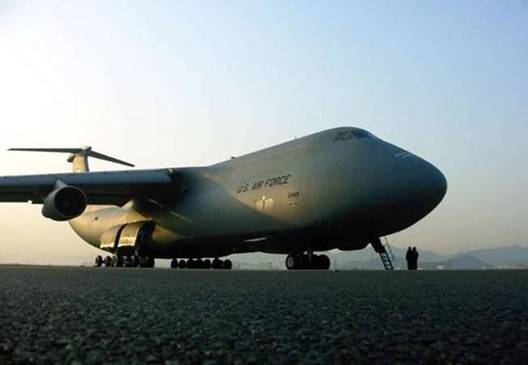
While the C-5 was turning over its engines, a female crewman gave the G.I.s on board the usual information regarding seat belts, emergency exits, etc.

Finally, she said, ‘Now sit back and enjoy your trip while your captain, Judith Campbell, and crew take you safely to Afghanistan

An old Master Sergeant sitting in the eighth row thought to himself, ‘Did I hear her right? Is the captain a woman? ‘

When the attendant came by he said ‘Did I understand you right? Is the captain a woman?

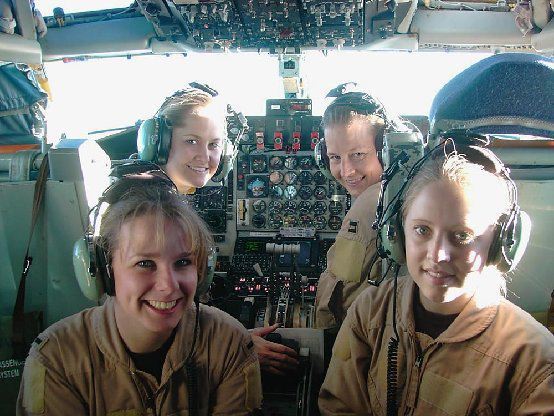
‘Yes,’! said the attendant, ‘In fact, this entire crew is female.’

My God,’ he said, ‘I wish I had two double scotch and sodas. I don’t know what to think with only women up there in the cockpit.’

That’s another thing, Sergeant,’ said the crew member, ‘We No Longer Call It The Cockpit

It’s The Box Office.’

oooOOOooo

Quote for today:

‘Whatever you give a woman, she will make greater. If you give her sperm, she’ll give you a baby. If you give her a house, she’ll give you a home. If you give her groceries, she’ll give you a meal. If you give her a smile, she’ll give you her heart.  She multiplies and enlarges what is given to her. So, if you give her any crap, be ready to receive a ton of shit.’


And now for something completely different!

Keeping a balance on one’s state of mind.

Don’t know about you but I find that it is all too easy to get wound up by so much that is going on in this crazy world.  That’s not to marginalise the threats to society that are all around us and there are some powerful writers out there who work so hard to inform the world as to the truth of those threats.  (As an aside, one of my favourite authors is this context is Patrice Ayme, just see this recent Post of his as an example of his depth of analysis.)

But my dear friend of over 40 years, Dan Gomez, recently sent me a link to a video of the 10 most extreme airports in the world.  That stirred some memories from my own flying days.

First settle back and enjoy 7 minutes of reasons why you don’t want to think about flying! 😉

The YouTube video has this information, which I republish below,

Pictures and videos of the top 10 most extreme airports in the world!

San Diego: Busy airspace lots of buildings on approach
Madeira: Difficult approach and did have a short runway
Eagle Vail: High altitude, short runway & mountainous approach & departure
Courchevel: Short runway, bumpy runway, high altitude
Kai Tak: Difficult approch, fly through tall buildings, short runway
Gibraltar: Short runway, building on approach, winds from the Gibraltar rock
St Maarten: Short runway, has to fly over the beach with alot of people on there, steep takeoff because of mountains
St Barts: Short runway, has to dive.
St Barts: To land, the low approach on that hill thingy
Toncontin: Difficult approach, short runway
Lukla, short runway, only was cemented a few years ago, no go around, if land too low you land into a cliff

First song: La Perla by Kobojsarna

Second song: Feel It – Explicit Album Version by Three 6 Mafia vs Tiesto with Sean Kingston and Flo Rida

Now to a personal recollection.

I was a private pilot for many years, first learning to fly at the Suffolk Aero Club at Ipswich Airport in Suffolk, England.  My first lesson was on the 3rd March, 1984!

Some twenty years later, on the 13th August 2004 to be exact, I was checked out to land at Courchevel Airport in an aircraft type known as a TB20, a French-built aircraft.  Here’s the page from my log book with the necessary authorisation stamp affixed.

Cleared to land at Courchevel, LFLJ!

The following year, 19th July, 2005, I added my wonderful Piper Super Cub to that authorisation.  (See here for a part picture of the aircraft.)

So thanks to YouTube as someone has uploaded a film of a light aircraft operating into Courchevel.  It really is rather thrilling!

Finally, back to Dan.  Here’s his recollections included in the email that he sent with that first film.

Just found this.  I’ve landed at two of these.  Eagle Vail was a piece of cake compared to Toncontin as Marty and Bruce know. BAE146 and small Boeing jets.  I flew in and out of Toncontin 5 times in the 90’s and had no idea it was as scary as it was.  That is to say, I knew it was scary because my palms sweated and heartbeat was about 140 but when I look at it now I go “what was I thinking?”

Take offs were like Orange County, Full brake power straight up. The big difference was you were shuttling along the runway and then down the runway and finally, up the runway to get the wheels up.

One time, on a connecting flight from Medellin, we taxied in, were boarded by military police with drug dogs who sniffed their way through the aisle.  Bags were searched while everyone waited in intense heat. It took about 2 hours, three time longer than necessary. Then the interior was fumigated with everyone aboard. All the big machine guns too. Nobody said a word!

There’s one thing about flying a light aircraft, especially into ‘interesting’ airfields, you don’t have a moment to worry about the state of the world!

The loss of a lovely Uncle

Please indulge me with this purely personal reflection.

My Uncle Peter died in his sleep at 1.30am UK time on Monday, the 21st May, 2012.  He was 91 and had been suffering from declining health for a while.

As my parting gift from across the seas, I just wanted to record the great inspiration that he was to both me and my son, Alex.

Peter was a great gliding fan (sailplane in American speak!).  He must have started gliding not many years after the end of the war in 1945.  Anyway, when I was a young lad, back in the mists of time, my Uncle Peter took me for a glider flight.  That left a memory in me that lay dormant for many years until the late 1970s when a colleague, Roger Davis, introduced me to the Rattlesden Gliding Club and that started a 25-year interest in gliding and later power flying.

My son, Alex, also when he was a young boy was taken up for his first flight in a glider by Uncle Peter and later flew with me many times both in gliders and power aircraft.  Today he is a Senior Captain with a British airline.

So, dear Uncle Peter, what an aviation inspiration you have been for two generations.

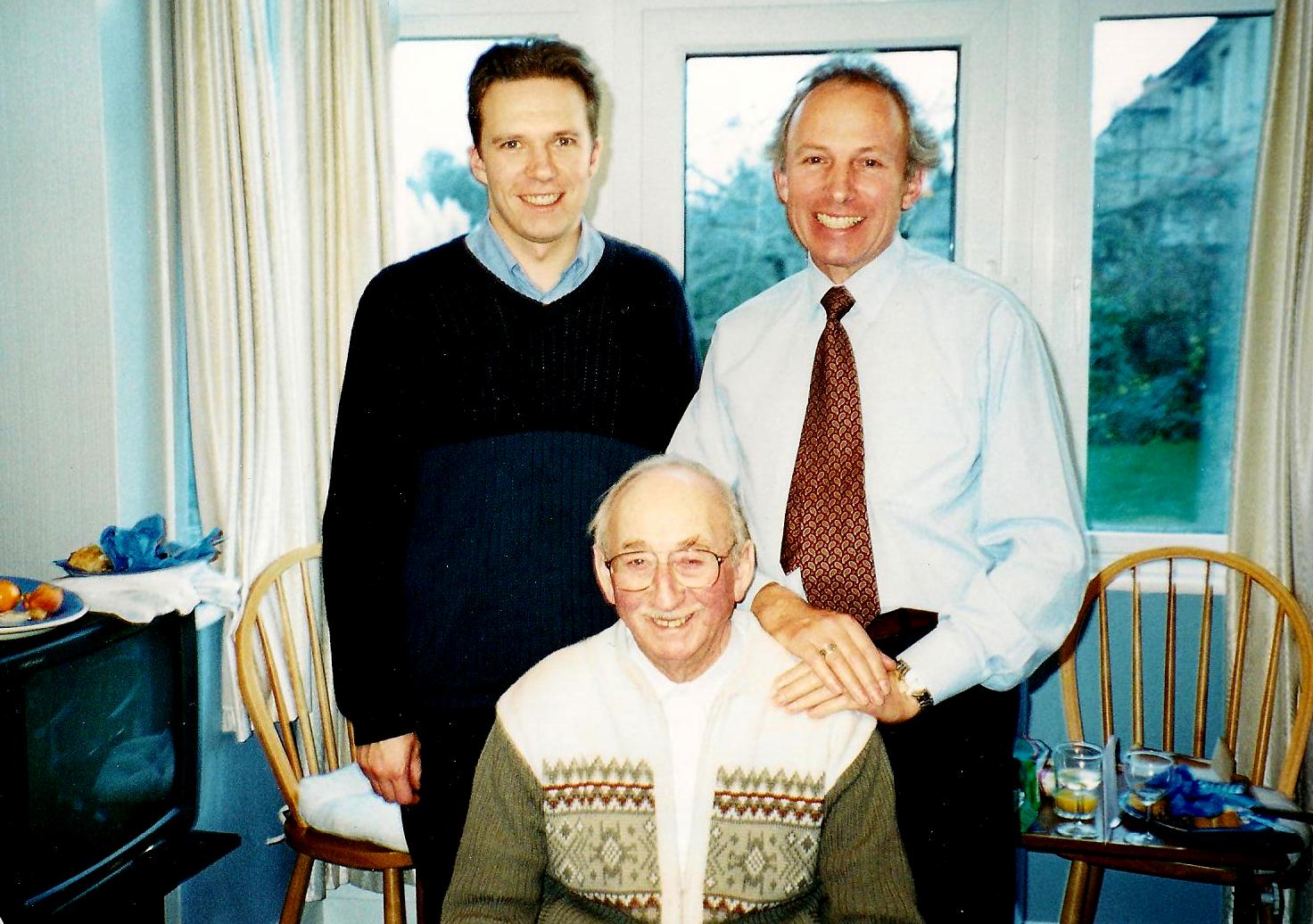
Uncle Peter and two generations of pilots.

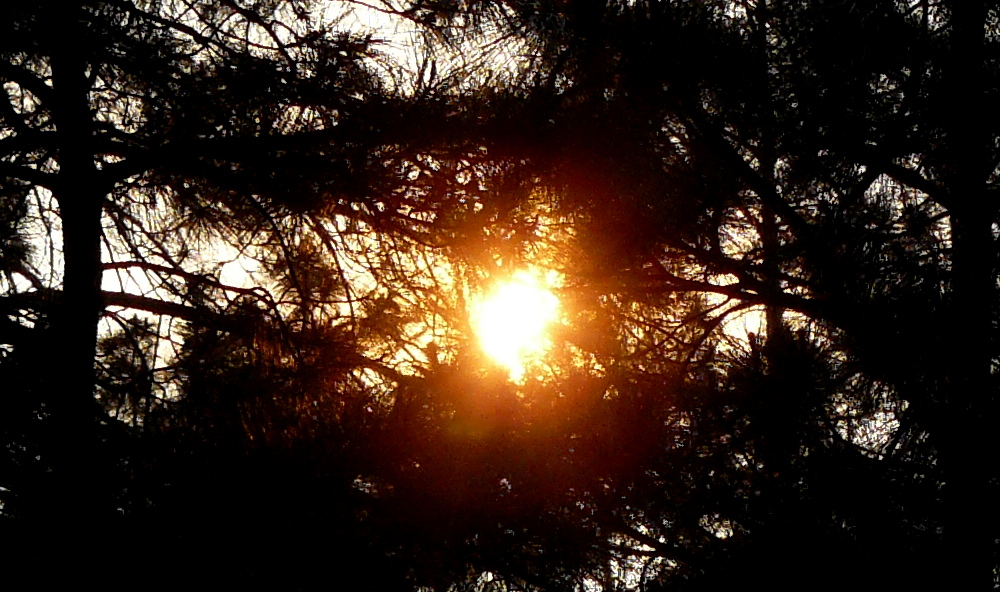
As it happens, 1.30 am UK time on Monday the 21st was 5.30pm Arizonan time on Sunday the 20th.  At that very moment, well 5.26pm to be precise, Jean and I were watching the solar eclipse and I took the photograph below of what was the partial eclipse here in Payson.

Partial solar eclipse partly hidden by the pine trees.

A tribute to a wonderful family man with a great sense of humour.

Welcome Doctor Barkman!

A delightful contribution from a guest author.

Dear readers, from time to time I am approached by other authors who have flattered me by asking if I would like to publish their Blog posts from time to time.  So I have been doubly flattered by having two authors contact me in the last week.

So to the first.  It is with great pleasure that I welcome Jane Brackman, Ph.D., author of the blog Doctor Barkman Speaks who will, from time to time, republish her posts on Learning from Dogs. I have no doubt that you will enjoy her scientific expertise regarding dogs

So today, please enjoy …

oooOOOooo

HOW DOGS THINK – NEW SCIENCE LOOKS INSIDE THEIR MINDS WITH MRI IMAGING

Canine illustrator Robert Dickey assigned thoughts and feeling to his Boston Terrier based on the dogs’s expressions. Here he illustrates contentment, sympathy and misery.  (Dogs from Life, Page & Co., 1920)
**
Are you gonna eat that? Are you gonna eat that?  I’ll eat it.”
Is this what dogs think?  Or do they experience more complex thoughts?  Apparently science is getting pretty close to figuring it out. If not exactly WHAT they’re thinking, then where in the brain the thoughts are coming from.  Since brains are pretty much the same across mammal species, if researchers identify which parts of the the brain light up, based on what humans have said, they can guess what the dogs’ thoughts are, too.

A couple of smart guys, Gregory Berns and Andrew Brooks of Emory University, watching a military dog assist Navy Seals as they overran the Osama Bin Laden compound, got a brilliant idea.  If you can teach dogs to jump out of helicopters, surely dogs could be trained to enjoy themselves inside an fMRI machine while scientists calculate what the dogs are thinking by scanning their brains.

The researchers, who are dog-lovers, explained, “We want to understand the dog-human relationship, from the dog’s perspective.  From the outset, we wanted to ensure the safety and comfort of the dogs.  We wanted them to be unrestrained and go into the scanner willingly.

So they recruited a professional dog trainer, Mark Spivak, and two companion dogs, a Feist Terrier named Callie and a Border Collie named McKenzie.  The team said that both dogs were trained over several months to walk into an fMRI scanner and hold completely still while researchers measured their brain activity.

In the photo below Callie wears ear protection as she 
prepares to enter the scanner.  The research team 
includes, from left, Andrew Brooks, Gregory Berns and Mark Spivak.  
(Credit: Photo by Bryan Meltz)

This is what the researchers wrote in the journal article that was published in PLOS last week:

Because of dogs’ prolonged evolution with humans, many of the canine cognitive skills are thought to represent a selection of traits that make dogs particularly sensitive to human cues. But how does the dog mind actually work? To develop a methodology to answer this question, we trained two dogs to remain motionless for the duration required to collect quality fMRI images by using positive reinforcement without sedation or physical restraints. The task was designed to determine which brain circuits differentially respond to human hand signals denoting the presence or absence of a food reward.

Eventually they hope to answer the more profound questions we all ask:  Do dogs have empathy? Do they know when we are happy or sad?  How much language do they really understand?”  (And here’s one from me- When they pee on the carpet and we don’t find it until the next day, when we scold them do they know why we are scolding them?)

Do dogs feel guilt?
You can read a brief summary of the project here:  What is Your Dog Thinking? Brain Scans Unleash Canine Secrets.

Or read the entire scholarly article here:

Berns, Gregory, Brooks, Andrew and Spivak, Mark, Functional MRI in Awake Unrestrained Dogs (April 27, 2012). 

Jane Brackman, Ph. D.

oooOOOooo

Well, I don’t know about you but I found this a most fascinating article.  All of us who live around dogs, both physically and emotionally, sense the closeness, may I use the word ‘magic’, of the relationships.

Take a look at the photograph below.  Until I left the UK in 2008, a few of us owned a lovely old Piper Super Cub.  It was a joy to fly.  I used frequently to take Pharaoh to the grass airfield, Watchford Farm, up on the Devon moors.  One day he showed such interest in the aircraft that I lifted him up to the passenger’s seat, strapped him in and taxied all over the grass airfield.  This picture shows something that is difficult to explain otherwise – Pharaoh’s real joy at sharing the adventure.  Of course, I didn’t fly with him, that would have been a step too far, but we did taxi almost up to take-off speed.  Dr. Barkman, what do you make of that?

Watchford Farm, Devon, July 2006.


Our most beautiful planet.

Revisiting the wonderful NASA time-lapse film.

Last November, I published a Post on Learning from Dogs under the title of This is rocket science!  It included the film Walking on Air shot from the International Space Station.

Anyway, a few days ago, Ginger I. here in Payson, sent me an email with the YouTube version of the film and I decided to include it as the only item in today’s post.

Enjoy.

Time lapse sequences of photographs taken with a 4K-camera by Ron Garan fragileoasis.org/bloggernauts/Astro_Ron and the crew of expedition 28 & 29 onboard the International Space Station from August to October, 2011. All credit goes to them, who to my knowledge shot these pictures at an altitude of around 350 km.  I intend to upload a FullHD-version presently.

HD, refurbished, smoothed, retimed, denoised, deflickered, cut, etc.  All in all I tried to keep the looks of the material as original as possible, avoided adjusting the colors and the like, since in my opinion the original footage itself already has an almost surreal and aestethical visual nature.

Music: Jan Jelinek | Do Dekor, faitiche back2001 w+p by Jan Jelinek, published by Betke Edition janjelinek.com | faitiche.de

Image Courtesy of the Image Science & Analysis Laboratory, NASA Johnson Space Center, The Gateway to Astronaut Photography of Earth eol.jsc.nasa.gov

Editing: Michael König | koenigm.com

Shooting locations in order of appearance:

1. Aurora Borealis Pass over the United States at Night
2. Aurora Borealis and eastern United States at Night
3. Aurora Australis from Madagascar to southwest of Australia
4. Aurora Australis south of Australia
5. Northwest coast of United States to Central South America at Night
6. Aurora Australis from the Southern to the Northern Pacific Ocean
7. Halfway around the World
8. Night Pass over Central Africa and the Middle East
9. Evening Pass over the Sahara Desert and the Middle East
10. Pass over Canada and Central United States at Night
11. Pass over Southern California to Hudson Bay
12. Islands in the Philippine Sea at Night
13. Pass over Eastern Asia to Philippine Sea and Guam
14. Views of the Mideast at Night
15. Night Pass over Mediterranean Sea
16. Aurora Borealis and the United States at Night
17. Aurora Australis over Indian Ocean
18. Eastern Europe to Southeastern Asia at Night

Coping with traffic jams!

With thanks to Dan Gomez for sending me the YouTube link.

It’s a crazy old world but sometimes that craziness provides a relief from the ‘serious’ side to life.

This week the Dutch company PAL-V announced the first flights of its prototype “flying car”.
This unique vehicle is called the PAL-V One, or the ‘Personal Air and Land Vehicle’, and It marks the start of a new era.

On the ground the vehicle drives like a sports car. Within minutes its rotor is unfolded and its tail is extended: then it is ready to take off thanks to the advanced gyrocopter technology.

With these successful test results it is proven that it is not only possible to build a flying car but also that it can be done within existing international rules for both flying and driving.

Having passed this important milestone the company is now inviting investors to join them in creating the future.

The next step will be the design of the first commercial production model of the PAL-V, and first deliveries are expected in 2014.

For 100 years people have dreamed of a flying car, and many attempts have been made to realize this dream, but now it has truly become a reality.

www.PAL-V.com