There are so many aspects of the dog world that we have to learn. Top of the list of what we must learn from dogs is unconditional love.
You all know how if you approach a strange dog with love in your heart, how that dog senses your love immediately and responds in the same loving fashion.
So approach every conscious being in your life with love in your heart. It will truly change the world!
So with that in mind, it seemed very appropriate to follow up yesterday’s post that included the essay by Chris Johnstone on celebration with this short film from Rick Hanson. Especially just now.
Published on Nov 7, 2013
Hardwiring Happiness : The Hidden Power of Everyday Experiences on the Modern Brain. How to overcome the Brain’s Negativity Bias.
Rick Hanson is a neuropsychologist and the author of Hardwiring Happiness: The New Brain Science of Contentment, Calm, and Confidence, best selling author of Buddha’s Brain, founder of the Wellspring Institute for Neuroscience and Contemplative Wisdom and an Affiliate of the Greater Good Science Center at UC Berkeley, he’s been an invited speaker at Oxford, Stanford, and Harvard, and taught in meditation centers worldwide.
Just a quick reminder that, as heralded in my post of the 10th – Time waits for no man – arriving family in fewer than two weeks is cutting into my blogging time.
So going to make today’s offering three stunning photographs of lightning strikes on the World Trade Center. As seen on EarthSky News.
ooOOoo
Boom! Three perspectives on July 2 lightning strike at One World Trade Center
Beth Alison (@bethalison) got this shot of the July 2, 2014 lightning strike of One World Trade Center from her Manhattan apartment … with her phone!
oooo
Jennifer Khordi caught the lightning hitting One World Trade Center from New Jersey.
oooo
Lightning strikes One World Trade Center July 2, 2014. Gary Hershorn (@garyhershorn), who took this photo, said it turned the sky red.
Another gem of an essay from guest writer John Hurlburt.
It was just a short while ago, on the 26th June, that I posted a guest essay from John under the title of Arrogance ‘R Us. It was very well received with twenty-two ‘Likes’ and, without exception, many favourable comments.
Therefore I am delighted to offer another of John’s essays; again beautifully crafted as you are about to see.
ooOOoo
Independence Day
Human beings on planet Earth are a tiny component of the Nature of the Cosmos. Life is an experiential opportunity which obeys Natural cycles and adapts in order to survive and grow. Cosmic awareness is unlimited. The statistical probability of consciousness awareness being a purely local phenomenon is so remote that it’s actually ridiculous to consider.
Human awareness is limited. We’re a very young cosmic species. Sometimes we don’t see much beyond the end of our own noses. We need to learn to play nicely with other children before we go much further beyond the living nest called Earth that we consistently befoul.
Time changes. In a consciously aware biological world, we may choose to build for the future or to ignore the future in favor of our short term lives. Those who accept change and make a coordinated effort to adapt have a better probability for a future than those who fear change. Responsibility to adapt to change comes with the territory.
What’s happening on Earth today is simply a matter of Mother Nature cleansing herself of an unhealthy species that’s lost track of the spiritual, natural and reasonable moral foundation necessary for equitable balance. Our problem today is that we tend to blindly follow the noisy mouthpieces of unified financial interests into bottomless pits. The pits are already dry or are rapidly drying.
We’re aware of the opportunity of each new day at the depth of our being. We’re aware that anything can happen and probably will sooner or later. It’s easy to develop a blasé attitude of acceptance without action. Why worry about it? It’s difficult to accept the truth about our self and make the effort necessary to change. What a drag ….
Nature is telling us that it’s time for Final Exams. How much have we learned? Are we aware or are we unaware of being unaware? Do we know that today is the tomorrow we dreamed of yesterday? What will be the harvest of our lives?
At a time when the Nature of our planet is changing rapidly, there’s an understandable cultural, social and economic churning taking place. Human history, particularly our wisdom tradition, record human successes and failures in adapting to the natural constant of change. Records of natural disasters date back to verbal histories of a great flood and beyond. We continue to ignore the obvious.
Ego keeps us in denial of our natural reality. Ego is our common villain as we lose what little that remains of our natural heritage through ignorance and arrogance. Ego is fear driven. We fear losing something we think we have or not getting something we believe we want or need.
Fear fuels anger. Anger fuels hate. Hate fuels war. War escalates the level of planetary destruction dramatically while doing relatively little to slow the relentless expansion of our ravenous species.
We are inclusively blessed at this very moment with the opportunity to make a positive difference in a negatively inclined world. Consider how attractive positive is to negative.
We need to proceed as the way opens and cross the next bridge as we come to it based on an emerging set of unifying human values which places the Nature of whatever we call God above and beyond the inventions and opinions of a species which has as yet to be proven trustworthy.
Speaking of trust, we have as yet to learn to trust our own realty as cosmically energized creatures sharing a transitory biological learning experience. Support for environmental suicide and global murder is insane.
We gain sanity and serenity through surrender. Recovery and healing follow surrender in direct relation to an increasing understanding of how everything fits together and an acceptance of our true purpose to live as stewards of Creation.
Such a fundamental aspect of all conscious life on Planet Earth.
As many of you know, weekend posts on Learning from Dogs are usually pretty innocuous. But two things came together to make me want to offer today’s central thoughts while they were fresh and clear in my mind.
The first thing flowed from good friend, John Hurlburt. Together with Jon Lavin, John had helped me develop my Statement of Purpose for my book. It was John who proposed a chapter under the heading of “The biological interconnectedness of all conscious earthly life“; a proposal I embraced with open arms.
The second thing was that Alex Jones, he of the blog The Liberated Way, published a post yesterday that, succinctly and beautifully, supported John Hurlburt’s thesis.
What do we mean by the idea that all of us are connected? (…. and ignoring the many of you who wonder why the question even has to be asked.)
I’m going to answer that most fundamental of all questions in this rather roundabout manner.
As someone who in previous times has been a glider pilot (aka sailplane in US speak), and a long-distance sailor (Tradewind 33), the weather about me was very much part of my life. Long ago I came to love clouds. Yesterday morning we had to take puppy Oliver to the vet and, unusually for this time of year in Southern Oregon, overhead there were beautiful grey stratus clouds covering 90% of the sky. There wasn’t the time to grab my camera but the following stock photograph found on the web is close to what we saw.
Still en-route in answer to the question, take a look at the next photograph; also from the web.
Now to the next photograph. (Hang on in there!)
See how the road, a man-made road stretching away to the horizon, is such an intimate part of the landscape and the sky.
Now to my final photograph.
I see a strong and clear theme behind these four beautiful images. A theme that answers the question of what we mean by the idea that all of us are connected.
It is this.
Our planet’s atmosphere gives us all that we need to live. All the oxygen and water and other essentials for all of life. Over millions of years it has provided all that life has needed to evolve and grow.
The land prospered. Beautiful animals arrived. Then came man and over time he left his mark on the lands of the planet. For aeons of time, man and animals shared their lives upon the land. Indeed, man and animals frequently demonstrated they had the capacity to love each other without denying the fact that both man and animals, in many cases, were also meat-eaters. To state the obvious, the beauty of the obvious, is to say that everything on this planet is connected under Nature. Man, animals, lands: all part of that same Nature.
Loving each other: woman and dog!
Let me close by republishing with Alex’s permission his post from yesterday.
ooOOoo
One in nature
The joy of knowing nature and self are one.
The butterfly and I enjoyed a common connection in the sun on a fallen tree – we became one.
Sitting upon a fallen dead tree, one that could have but did not kill me when it fell in the storms last year, an orange butterfly flew and settled next to me. Here we were, butterfly and I, enjoying the warm sun sitting on the same tree trunk like two people on a park bench. The butterfly would after a time fly away returning later to sit next to me. In this moment I shared something in common with this butterfly, different species, but living on and coming from the same planet earth.
Another day it is raining, I huddle under the garden conifers eating raspberries, watching the clouds empty their water upon a thirsty garden, my cat Pebbles sitting at my feet. Out of the fallen branches two little mice played, oblivious to me and the cat, which did not seem to notice them.
For many people there are degrees of separation from nature, us and them. For some like me, Ubuntu, I am because we are. There is only connection, the animals and I are one.
Camping in the rain, a knocking at the tent door. I looked out of the tent, I looked into the eyes of a frog, which then vanished into the rainy darkness.
Before I move on to today’s essay, published courtesy of The Automatic Earth, let me ponder about the nature of reason. A quick dip into the dictionary offers this:
reason
noun
a basis or cause, as for some belief, action, fact, event, etc.: the reason for declaring war.
a statement presented in justification or explanation of a belief or action.
the mental powers concerned with forming conclusions, judgments, or inferences.
sound judgment; good sense.
normal or sound powers of mind; sanity.
The PhilosopherAyn Rand wrote once, “The Renaissance was specifically the rebirth of reason, the liberation of man’s mind, the triumph of rationality over mysticism – a faltering, incomplete, but impassioned triumph that led to the birth of science, of individualism, of freedom.”
Now as we move on, endeavour to keep this notion of reason in the forefront of your mind!
A few days ago, I read an essay that was first seen on Naked Capitalism. It was introduced by Yves Smith of NC thus:
Yves here. As Ilargi himself acknowledges, even by the standards of his fare, this post on “overshoot” is plenty sobering. We do seem to be on our way to precipitating a mass species die off (as in it’s underway already and humans seem remarkably unwilling to take sufficiently stern measures to stop it). The end of civilization as we know it seems almost inevitable, given that most “advanced” economies are seeing serious erosion of their social fabric, as reflected in falling social well-being measures.
However, the provocative point that Jay Hanson argues is that our hard-wired political habits guarantee our undoing. It’s akin to a literary rendering I read long ago of Dollo’s theory of evolution, which went something like this:
Species develop characteristics which give them competitive advantage. Dinosaurs get big so no predators can eat them up. Saber tooth tigers develop monster jaws so they can chomp on mastadons and other large prey.
But the problem is that species continue to develop these characteristics beyond the point of maximum advantage. Dinosaurs get so big that they need to get a second brain in their midsection to manage their bodies and they die of anatomical schizophrenia. Saber-tooth tiger become such efficient killers of large prey that they begin to wipe them out, and their hypertrophied jaws are badly adapted to killing smaller prey, so they die of starvation. And humans have developed overly large brains and are in the process of thinking themselves to death.
It was then a matter of moments to find that the essay was originally published on The Automatic Earth and, as was noted yesterday, a request to republish was very promptly replied to in the affirmative. It’s a privilege to share it with you.
It’s a long essay but entirely engaging; right through to the last footnote. More than that, many of those footnote links open up a majesty of learning and knowledge.
So if you aren’t in the right ‘headspace’ to settle down now and read it fully then bookmark it for a later date. I guarantee you will not be disappointed!
ooOOoo
Debt Rattle Jul 7 2014: Overshoot Loop
Posted by Raúl Ilargi Meijer
Russell Lee Fun with fountain at 4th of July picnic, Vale, OR July 1941
There is not one single person I’ve learned more from than Jay Hanson, back when I was even younger than I am now. Jay is not the greatest writer in the world, his talent is that he has the right kind of unrelenting curiosity, needed to dig deep into the reasons we put ourselves where we do (it’s hardwired). This curiosity put together the best library of information on ourselves and the world we live in that one can ever hope to find, at dieoff.org, much of it not published anywhere else. I took a month off, 15 years ago, and read it all back to back. The dieoff library was – mostly – finished by then. So it was a nice surprise to have someone send me the following piece, which is recent. It may look bleak and dark to you, but the challenge is to find where you think Jay goes wrong, and what you know better. That will not be easy, Jay’s a mighty smart puppy. I guess the essence is this: our brains are our destiny. That this leads to things we don’t like to acknowledge is something we will need to deal with. Walking away from it is neither a solution nor the best way to use the one part of us that may help find a solution. Which is also our brain.
Jay Hanson: I have been forced to review the key lessons that I have learned concerning human nature and collapse over the last 20 years. Our collective behavior is the problem that must be overcome before anything can be done to mitigate the coming global social collapse. The single most-important lesson for me was that we cannot re-wire (literally, because thought is physical) our basic political agendas through reading or discussion alone. Moreover, since our thoughts are subject to physical law, we do not have the free-will to either think or behave autonomously.
We swim in “politics” like fish swim in water; it’s everywhere, but we can’t see it!
We are “political” animals from birth until death. Everything we do or say can be seen as part of lifelong political agendas. Despite decades of scientific warnings, we continue to destroy our life-support system because that behavior is part of our inherited (DNA/RNA) hard wiring. We use scientific warnings, like all inter-animal communications, for cementing group identity and for elevating one’s own status (politics).
Only physical hardship can force us to rewire our mental agendas. I am certainly not the first to make the observation, but now, after 20 years of study and debate, I am totally certain. The net energy principle guarantees that our global supply lines will collapse. The rush to social collapse cannot be stopped no matter what is written or said. Humans have never been able to intentionally-avoid collapse because fundamental system-wide change is only possible after the collapse begins.
What about survivors? Within a couple of generations, all lessons learned from the collapse will be lost, and people will revert to genetic baselines. I wish it weren’t so, but all my experience screams “it’s hopeless.” Nevertheless, all we can do is the best we can and carry on…
I am thankful for the Internet where I can find others bright enough to discuss these complex ideas and help me to understand them.
Today, when one observes the many severe environmental and social problems, it appears that we are rushing towards extinction and are powerless to stop it. Why can’t we save ourselves? To answer that question we only need to integrate three of the key influences on our behavior: biological evolution, overshoot, and a proposed fourth law of thermodynamics called the “Maximum Power Principle”(MPP). The MPP states that biological systems will organize to increase power [1] generation, by degrading more energy, whenever systemic constraints allow it [2].
Biological evolution is a change in the properties of populations of organisms that transcend the lifetime of a single individual. Individual organisms do not evolve. The changes in populations that are considered evolutionary are those that are inheritable via the genetic (DNA/RNA) material from one generation to the next.
Natural selection is one of the basic mechanisms of evolution, along with mutation, migration, and genetic drift. Selection favors individuals who succeed at generating more power and reproducing more copies of themselves than their competitors.
OVERSHOOT!
Energy is a key aspect of overshoot because available energy is always limited by the energy required to utilize it.
Since natural selection occurs under thermodynamic laws, individual and group behaviors are biased by the MPP to generate maximum power, which requires over-reproduction and/or over-consumption of resources [3] whenever system constraints allow it. Individuals and families will form social groups to generate more power by degrading more energy. Differential power generation and accumulation result in a hierarchical group structure.
Overshoot eventually leads to decreasing power attainable for the group with lower-ranking members suffering first. Low-rank members will form subgroups and coalitions to demand a greater share of power from higher-ranking individuals who will resist by forming their own coalitions to maintain it. Meanwhile, social conflict will intensify as available power continues to fall.
Eventually, members of the weakest group (high or low rank) are forced to “disperse.” [4] Those members of the weak group who do not disperse are killed, [5] enslaved, or in modern times imprisoned. By most estimates, 10 to 20 percent of Stone-Age people died at the hands of other humans. The process of overshoot, followed by forced dispersal, may be seen as a sort of repetitive pumping action — a collective behavioural loop — that drove humans into every inhabitable niche.
Here is a synopsis of the behavioral loop described above:
Step 1. Individual and group behaviors are biased by the MPP to generate maximum power, which requires over-reproduction and/or over-consumption of natural resources (overshoot), whenever systemic constraints allow it. Individuals and families will form social groups to generate more power by degrading more energy. Differential power generation and accumulation result in a hierarchical group structure.
Step 2. Energy is always limited, so overshoot eventually leads to decreasing power available to the group, with lower-ranking members suffering first.
Step 3. Diminishing power availability creates divisive subgroups within the original group. Low-rank members will form subgroups and coalitions to demand a greater share of power from higher-ranking individuals, who will resist by forming their own coalitions to maintain power.
Step 4. Violent social strife eventually occurs among subgroups who demand a greater share of the remaining power.
Step 5. The weakest subgroups (high or low rank) are either forced to disperse to a new territory, are killed, enslaved, or imprisoned.
Step 6. Go back to step 1.
The above loop was repeated countless thousands of times during the millions of years that we were evolving [6]. This behavior is entrained in our genetic material and will be repeated until we go extinct. Carrying capacity will decline [7] with each future iteration of the overshoot loop, and this will cause human numbers to decline until they reach levels not seen since the Pleistocene.
Current models used to predict the end of the biosphere suggest that sometime between 0.5 billion to 1.5 billion years from now, land life as we know it will end on Earth due to the combination of CO2 starvation and increasing heat. It is this decisive end that biologists and planetary geologists have targeted for attention. However, all of their graphs reveal an equally disturbing finding: that global productivity will plummet from our time onward, and indeed, it already has been doing so for the last 300 million years. [8]
It’s impossible to know the details of how our rush to extinction will play itself out, but we do know that it is going to be hell for those who are unlucky to be alive at the time.
• To those who followed Columbus and Cortez, the New World truly seemed incredible because of the natural endowments. The land often announced itself with a heavy scent miles out into the ocean. Giovanni da Verrazano in 1524 smelled the cedars of the East Coast a hundred leagues out. The men of Henry Hudson’s Half Moon were temporarily disarmed by the fragrance of the New Jersey shore, while ships running farther up the coast occasionally swam through large beds of floating flowers. Wherever they came inland they found a rich riot of color and sound, of game and luxuriant vegetation. Had they been other than they were, they might have written a new mythology here. As it was, they took inventory. Frederick Jackson Turner
• Genocide is as human as art or prayer. John Gray
• Kai su, teknon. Julius Caesar
oooo
[1] Power is energy utilization for a purpose; proportional to forces x flows = work rate + entropy produced (Maximum Power and Maximum Entropy Production: Finalities in Nature, by S. N. Salthe, 2010). A surplus resource is stored power. Energy is a key aspect of overshoot because available energy is always limited by the energy required to utilize it.
[2] Originally formulated by Lotka and further developed by Odum and Pinkerton, the MPP states that biological systems capture and use energy to build and maintain structures and gradients, which allow additional capture and utilization of energy. One of the great strengths of the MPP is that it directly relates energetics to fitness; organisms maximize fitness by maximizing power. With greater power, there is greater opportunity to allocate energy to reproduction and survival, and therefore, an organism that captures and utilizes more energy than another organism in a population will have a fitness advantage (The maximum power principle predicts the outcomes of two-species competition experiments, by John P. DeLong, 2008).
[3] The best way to survive in such a milieu is not to live in ecological balance with slow growth, but to grow rapidly and be able to fend off competitors as well as take resources from others.
Not only are human societies never alone, but regardless of how well they control their own population or act ecologically, they cannot control their neighbors behavior. Each society must confront the real possibility that its neighbors will not live in ecological balance but will grow its numbers and attempt to take the resources from nearby groups. Not only have societies always lived in a changing environment, but they always have neighbors. The best way to survive in such a milieu is not to live in ecological balance with slow growth, but to grow rapidly and be able to fend off competitors as well as take resources from others.
To see how this most human dynamic works, imagine an extremely simple world with only two societies and no unoccupied land. Under normal conditions, neither group would have much motivation to take resources from the other. People may be somewhat hungry, but not hungry enough to risk getting killed in order to eat a little better. A few members of either group may die indirectly from food shortages—via disease or infant mortality, for example—but from an individual s perspective, he or she is much more likely to be killed trying to take food from the neighbors than from the usual provisioning shortfalls. Such a constant world would never last for long. Populations would grow and human activity would degrade the land or resources, reducing their abundance. Even if, by sheer luck, all things remained equal, it must be remembered that the climate would never be constant: Times of food stress occur because of changes in the weather, especially over the course of several generations. When a very bad year or series of years occurs, the willingness to risk a fight increases because the likelihood of starving goes up.
If one group is much bigger, better organized, or has better fighters among its members and the group faces starvation, the motivation to take over the territory of its neighbor is high, because it is very likely to succeed. Since human groups are never identical, there will always be some groups for whom warfare as a solution is a rational choice in any food crisis, because they are likely to succeed in getting more resources by warring on their neighbors.
Now comes the most important part of this overly simplified story: The group with the larger population always has an advantage in any competition over resources, whatever those resources may be. Over the course of human history, one side rarely has better weapons or tactics for any length of time, and most such warfare between smaller societies is attritional. With equal skills and weapons, each side would be expected to kill an equal number of its opponents. Over time, the larger group will finally overwhelm the smaller one. This advantage of size is well recognized by humans all over the world, and they go to great lengths to keep their numbers comparable to their potential enemies. This is observed anthropologically by the universal desire to have many allies, and the common tactic of smaller groups inviting other societies to join them, even in times of food stress.
Assume for a moment that by some miracle one of our two groups is full of farsighted, ecological geniuses. They are able to keep their population in check and, moreover, keep it far enough below the carrying capacity that minor changes in the weather, or even longer-term changes in the climate, do not result in food stress. If they need to consume only half of what is available each year, even if there is a terrible year, this group will probably come through the hardship just fine. More important, when a few good years come along, these masterfully ecological people will/not/grow rapidly, because to do so would mean that they would have trouble when the good times end. Think of them as the ecological equivalent of the industrious ants.
The second group, on the other hand, is just the opposite—it consists of ecological dimwits. They have no wonderful processes available to control their population. They are forever on the edge of the carrying capacity, they reproduce with abandon, and they frequently suffer food shortages and the inevitable consequences. Think of this bunch as the ecological equivalent of the carefree grasshoppers. When the good years come, they have more children and grow their population rapidly. Twenty years later, they have doubled their numbers and quickly run out of food at the first minor change in the weather. Of course, had this been a group of “noble savages who eschewed warfare, they would have starved to death and only a much smaller and more sustainable group survived. This is not a bunch of noble savages; these are ecological dimwits and they attack their good neighbors in order to save their own skins. Since they now outnumber their good neighbors two to one, the dimwits prevail after heavy attrition on both sides. The “good” ants turn out to be dead ants, and the “bad” grasshoppers inherit the earth. The moral of this fable is that if any group can get itself into ecological balance and stabilize its population even in the face of environmental change, it will be tremendously disadvantaged against societies that do not behave that way. The long-term successful society, in a world with many different societies, will be the one that grows when it can and fights when it runs out of resources. It is useless to live an ecologically sustainable existence in the “Garden of Eden unless the neighbors do so as well. Only one nonconservationist society in an entire region can begin a process of conflict and expansion by the “grasshoppers” at the expense of the Eden-dwelling “ants”. This smacks of a Darwinian competition—survival of the fittest—between societies. Note that the “fittest” of our two groups was not the more ecological, it was the one that grew faster. The idea of such Darwinian competition is unpalatable to many, especially when the “bad” folks appear to be the winners.[pp. 73-75] (Constant Battles: Why we Fight, by Steven A. LeBlanc, St. Martin, 2004)
[4] “Dispersal” is important in biology. Many amazing biological devices have evolved to ensure it, such as the production of fruits and nectar by plants and the provision of tasty protuberances called elaiosomes by seeds to attract insects. Often a species will produce two forms:
(1) a maintenance phenotype (the outcome of genes and the structures they produce interacting with a specific environment) that is adapted to the environment in which it is born,
and (2) a dispersal phenotype that is programmed to move to a new area and that often has the capacity to adapt to a new environment.
According to the present theory, humans have developed two dispersal phenotypes in the forms of the prophet and the follower. The coordinated action of these two phenotypes would serve to disperse us over the available habitat. This dispersal must have been aided by the major climatic changes over the past few million years in which vast areas of potential human habitat have repeatedly become available because of melting of ice sheets.
The dispersal phenotypes might have evolved through selection at the individual level, since the reproductive advantage of colonizing a new habitat would have been enormous. They would also promote selection between groups. This is important because selection at the group level can achieve results not possible at the level of selection between individuals. One result of the dispersal phenotype includes ethnocentrism (the tendency to favor one’s own ethnic group over another) and the tendency to use “ethnic cleansing.” The other result, as previously noted, is selection for cooperation, self-sacrifice, and a devotion to group rather than individual goals. Factors that promote selection at the group level are rapid splitting of groups, small size of daughter groups, heterogeneity (differences) of culture between groups, and reduction in gene flow between groups. These factors are all promoted by the breaking away of prophet-led groups with new belief systems.
One of the problems of selection at the group level is that of free-riders. These are people who take more than their share and contribute to the common good of the group less than their proper share. Selection at the group level gives free-riders their free ride. They potentially could increase until they destroy the cooperative fabric of the group.
However, the psychology of the free-rider, which is one of self-aggrandizement and neglect of group goals, is not likely to be indoctrinated with the mazeway of the group. Nor is it likely to be converted to the new belief system of the prophet. Therefore, theoretically one would predict that cults and New Religious Movements should be relatively free of free-riders. Such an absence of free-riders would further enhance selection at the group level. Moreover, this is a testable theoretical proposition.
Cult followers have been studied and found to be high on schizotypal traits, such as abnormal experiences and beliefs. They have not yet been tested for the sort of selfish attitudes and behavior that characterize free-riders. If a large cohort of people were tested for some measure of selfishness, it is predicted that those who subsequently joined cults would be low on such a measure. Predictions could also be made about future cult leaders. They would be likely to be ambitious males who were not at the top of the social hierarchy of their original group. If part of why human groups split in general is to give more reproductive opportunities to males in the new group, it can also be predicted that leaders of new religious movements would be males of reproductive age. Female cult leaders are not likely to be more fertile as a result of having many sexual partners, but their sons might be in an advantageous position for increased reproduction.
Conclusion: The biobehavioral science of ethology is about the movement of individuals. We have seen that change of belief system has been responsible for massive movements of individuals over the face of the earth. Religious belief systems appear to have manifest advantages both for the groups that espouse them and the individuals who share them. It is still controversial whether belief systems are adaptations or by-products of other evolutionary adaptive processes. Regardless of the answer to this question, the capacity for change of belief system, both that seen in the prophet and also that seen in the follower, may be adaptations because they have fostered the alternative life history strategies of dispersal from the natal habitat.
Moreover, change of belief system, when it is successful in the formation of a new social group and transfer of that group to a “promised land,” accelerates many of the parameters that have been thought in the past to be too slow for significant selection at the group level, such as eliminating free-riders, rapid group splitting, heterogeneity between groups and reduction of gene transfer between groups. Natural selection at the group level would also favor the evolution of the capacity for change of belief system, so that during the past few million years we may have seen a positive feedback system leading to enhanced cult formation and accelerated splitting of groups. This may have contributed to the rapid development of language and culture in our lineage. (The Biology of Religious Behavior, Edited by Jay R. Feierman, pp. 184-186)
[5] The results of the study are striking, according to Robbins Schug, because violence and disease increased through time, with the highest rates found as the human population was abandoning the cities. However, an even more interesting result is that individuals who were excluded from the city’s formal cemeteries had the highest rates of violence and disease. (Violence, Infectious Disease and Climate Change Contributed to Indus Civilization Collapse , Science Daily, January 17, 2014)
[6] My discussion will revolve around two basic propositions regarding long-term human population history: 1) the near-zero growth rates that have prevailed through much of prehistory are likely due to long-term averaging across periods of relatively rapid local population growth interrupted by infrequent crashes caused by density-dependent and density-independent factors; and 2) broad changes in population growth rates across subsistence modes in prehistory are probably best explained in terms of changes in mortality due to the dampening or buffering of crashes rather than significant increases in fertility (Subsistence strategies and early human population history: an evolutionary ecological perspective, by James L. Boone, 2002).
So all of you will understand, without any doubt, why this key essay was published here on Learning from Dogs. It strikes me as a rather bitter-sweet irony that in today’s super-networked society, where it is so easy to ‘sit at the knees‘ of such learned folk, it may all be too late to have a decisive effect. So back to Jay Hanson. Yes, his well-presented and beautifully researched essay does have some pretty terrifying notions. But humanity’s only hope is that person-by-person, street-by-street, city-by-city, a cry for change becomes such a torrent of sound that like a huge waterfall it has the power to change our landscape. Nature needs to be listened to: and soon!
Nature maintains our equilibrium. Denying Nature is a sure path to extinction.
Further reflections on Tom’s essay Is Climate Change a Crime Against Humanity?
If you are new to this thread then drop in here to read the essay and here to read my postscript from last Monday.
This further postscript is founded on a recent email from Dan Gomez that included two stories that seemed relevant to the theme. I’m going to reproduce the email as Dan sent it to me.
Idealism, Pragmatism, Irony and Hypocrisy
Two short stories attempting to explain why everyone should think twice about their leaders, their promises and their intent regarding climate change and money:
Story One
The guy who just made the big global warming/climate change announcement, President Obama, today [Dan’s email was dated 7th July] flew into Los Angeles at around 5PM, rush hour. At a cost of $6M and unbelievable amounts of expended carbon matter, one B747 and two C-141 four-engined jets landed at LAX. LAX TCA [Terminal Control Area] was tied up for hours. And this is to say nothing of the traffic disruption caused by multiple street shut-downs as everyone headed home.
The C-141 delivered Marine One, Obama’s helicopter; a Sikorsky SH-3 Sea King. After assembly, Obama flew 12 miles to a hotel in Beverly Hills. This only cost several thousand dollars and just a bit more hydrocarbons.
Why did Obama come to LA? To raise Money. Really? Millions to raise a million?
At a Beverly Hills hotel, and after several SUVs, also flown in, dropped off the support team, Obama and his entourage delivered a dinner speech to many wealthy Hollywood types to raise money for the Democratic Party. Most expensive “donation” – $38,500 per plate. Just think, all this public money spent for a partisan political campaign revenue event.
This is the guy who the day before claimed that “climate change” and CO2 contributions were causing the destruction of the planet. In one event, over a couple of hours, he wasted millions of tax payer dollars and injected a shit load of carbon into the atmosphere to wine and dine a few very wealthy party donors.
Why the press does not point out this obvious hypocrisy, I’ll never know.
Why the public and climate idealists who live the dream cannot understand that their leaders are as greedy, corrupt and egocentric as any Wall Street Hedge Fund Manager, I’ll never know.
Anyway, this is the guy who everyone loves and ostensibly believes has the best interests of his constituency and the future of the world at heart. Right.
Story Two
Last week, Toyota announced it was vacating California for Texas after more than 50 years running its USA business from Torrance, CA. Taxes and local EPA regulations finally drove them out. Over the years, all of Toyota’s production lines were developed in other business friendly states. With HQ finally debouching, 3,000 good paying jobs are gone, mostly due to strict environmental regulatory laws harder and harder to comply with.
Now, Tesla, the new, tax-payer supported, alternative car company, who has declined to build any manufacturing plants in California is being aggressively wooed by Governor Brown. Brown wants Tesla’s battery technology to be manufactured here. Fits with his idealistic view of California’s future. Only thing is, Tesla wants no part of this due to the same issues that Toyota, a conventional auto builder, has stated. It’s too expensive in California with too many regulations and unknown future regulations. California’s predatory regulatory agencies are now “bending” all the rules to try to get them to come into California. Irony and hypocrisy, all rolled up in one.
Crazy world.
Dan.
Reminds me of the old saying, “There are lies, damn lies, and politicians!”
It also reminds me of that wonderful Irish response to a young Englishman who was asking an elderly local how to get to Tipperary in Southern Ireland. The old Irishman pulled at his grey beard for a while, looked the young man full in the face and said, “I’ve been thinkin’ about it and have to tell ‘ee, me young man, that if I were going to Tipperary, I wouldn’t been startin’ out from here!”
So whatever the rights and wrongs of Dan’s two stories, core issues, as in deeper, more fundamental concerns, override them both.
A personal viewpoint after reading Tom’s essay Is Climate Change a Crime Against Humanity?
Last Thursday, July 3rd, I republished a post, what Tom calls a Tomgram, from TomDispatch comparing the USA’s attitude to the very small risk of a country exploding a weapon of mass destruction, WMD, over American soil to the 95% risk of the USA being harmed from the effects of climate change. Here’s an extract from the central part of Tom’s essay:
So here’s a question I’d like any of you living in or visiting Wyoming to ask the former vice president, should you run into him in a state that’s notoriously thin on population: How would he feel about acting preventively, if instead of a 1% chance that some country with weapons of mass destruction might use them against us, there was at least a 95% — and likely as not a 100% — chance of them being set off on our soil? Let’s be conservative, since the question is being posed to a well-known neoconservative. Ask him whether he would be in favor of pursuing the 95% doctrine the way he was the 1% version.
After all, thanks to a grim report in 2013 from the Intergovernmental Panel on Climate Change, we know that there is now a 95% -100% likelihood that “human influence has been the dominant cause of the observed warming [of the planet] since the mid-20th century.” We know as well that the warming of the planet — thanks to the fossil fuel system we live by and the greenhouse gases it deposits in the atmosphere — is already doing real damage to our world and specifically to the United States, as a recent scientific report released by the White House made clear. We also know, with grimly reasonable certainty, what kinds of damage those 95% -100% odds are likely to translate into in the decades, and even centuries, to come if nothing changes radically: a temperature rise by century’s end that could exceed 10 degrees Fahrenheit, cascading species extinctions, staggeringly severe droughts across larger parts of the planet (as in the present long-term drought in the American West and Southwest), far more severe rainfall across other areas, more intense storms causing far greater damage, devastating heat waves on a scale no one in human history has ever experienced, masses of refugees, rising global food prices, and among other catastrophes on the human agenda, rising sea levels that will drown coastal areas of the planet.
Tom’s essays had many great links to background research papers and other supporting material. The penultimate link was embedded (my italics) in this sentence: “In the case of a major exchange of such weapons, we would be talking about “the sixth extinction” of planetary history.” That linked to the Amazon page describing the book, released earlier this year, of the same name written by Elizabeth Kolbert, as follows:
A major book about the future of the world, blending intellectual and natural history and field reporting into a powerful account of the mass extinction unfolding before our eyes
Over the last half a billion years, there have been five mass extinctions, when the diversity of life on earth suddenly and dramatically contracted. Scientists around the world are currently monitoring the sixth extinction, predicted to be the most devastating extinction event since the asteroid impact that wiped out the dinosaurs. This time around, the cataclysm is us. In The Sixth Extinction, two-time winner of the National Magazine Award and New Yorker writer Elizabeth Kolbert draws on the work of scores of researchers in half a dozen disciplines, accompanying many of them into the field: geologists who study deep ocean cores, botanists who follow the tree line as it climbs up the Andes, marine biologists who dive off the Great Barrier Reef. She introduces us to a dozen species, some already gone, others facing extinction, including the Panamian golden frog, staghorn coral, the great auk, and the Sumatran rhino. Through these stories, Kolbert provides a moving account of the disappearances occurring all around us and traces the evolution of extinction as concept, from its first articulation by Georges Cuvier in revolutionary Paris up through the present day. The sixth extinction is likely to be mankind’s most lasting legacy; as Kolbert observes, it compels us to rethink the fundamental question of what it means to be human.
Here’s an interview of Elizabeth Kolbert taken from the Democracy Now programme. It’s a tad under 20 minutes so easy to put aside a little of your time to watch it.
PLEASE DO!
Published on Feb 11, 2014
February 2014 on Democracy Now!
In the history of the planet, there have been five known mass extinction events. The last came 65 million years ago, when an asteroid about half the size of Manhattan collided with the Earth, wiping out the dinosaurs and bringing the Cretaceous period to an end. Scientists say we are now experiencing the sixth extinction, with up to 50 percent of all living species in danger of disappearing by the end of the century. But unlike previous extinctions, the direct cause this time is us — human-driven climate change. In “The Sixth Extinction: An Unnatural History,” journalist Elizabeth Kolbert visits four continents to document the massive “die-offs” that came millions of years ago and those now unfolding before our eyes. Kolbert explores how human activity — fossil fuel consumption, ocean acidification, pollution, deforestation, forced migration — threatens life forms of all kinds. “It is estimated that one-third of all reef-building corals, a third of all fresh-water mollusks, a third of sharks and rays, a quarter of all mammals, a fifth of all reptiles, and a sixth of all birds are headed toward oblivion,” Kolbert writes. “The losses are occurring all over: in the South Pacific and in the North Atlantic, in the Arctic and the Sahel, in lakes and on islands, on mountaintops and in valleys.”
Elizabeth Kolbert, is well known for her reporting on global warming as a staff writer at The New Yorker magazine, which led her to investigate climate species extinction. Her new book is The Sixth Extinction: An Unnatural History. In 2006, she wrote Field Notes from a Catastrophe: Man, Nature, and Climate Change.
Make no mistake, that short video interview doesn’t pull any punches. Just as Kolbert’s book. It is very tempting to want to hide, to close one’s ears and eyes and pretend it’s all a bad dream and, soon, we will awaken to a bright, new dawn.
(Now for something really lovely! It’s 1:40pm on Sunday, 6th)
I took a quick break to think about my next sentence. I was looking for some words that would encourage us all to do something! Because as John Hurlburt recently wrote: “Failure to act condemns us to death as a species of fools.”
In that short break I saw that someone else had signed up to follow Learning from Dogs. That person describes herself as Elsie Bowen-Dodoo. Her blog is called BowenDiaries. On her About page, Elsie writes:
Elsie Bowen-Dodoo. Living life with a purpose. Persevering to inspire all races.
I write to inspire people hoping that they reading my articles and stuff will be touched to do something positive in their lives.
We really can all make this world a better place to live in.
Talent should not be wasted.
This is the picture on Elsie’s home page.
Positive inspiration!
So here’s my take on where we, as in all mankind, are at.
We have to turn our backs on growth, greed and materialism.
Each of us must place caring for our planet our highest priority in life.
Each of us must be alive to making a positive difference.
Being true to what we know is right will set us free.
This will also create ripples of positive energy that will set others free.
That is the only sustainable way to go.
Let me close by returning to dogs. After all this blog is called Learning from Dogs! By recognising, of course, that these are challenging times. As we are incessantly reminded by the drumbeat of the doom-and-gloom news industry every hour, frequently every half-hour, throughout the day. A symphony of negative energy.
Yet right next to us is a world of positive energy. The world of dogs. A canine world full of love and trust, playfulness and relaxation. A way of living that is both clear and straightforward; albeit far from being simple. As anyone will know who has seen the way dogs interact with each other and with us humans.
In other words, dogs offer endless examples of positive behaviours. The wonderful power of compassion for self, and others, and of loving joy. The way to live that we humans crave for. A life full of hope and positive energy that keeps the power of negativity at bay.
A powerful essay by Tom Engelhardt from his blogsite TomDispatch.
Regular readers of Learning from Dogs know that essays from TomDispatch often find their way onto these pages. They are republished with the generous permission of Tom and I endeavour to select those essays that shine a new light on a current issue. No less so than with today’s essay, first published over on TomDispatch on May 22nd, 2014.
Just a note before you start reading Tom’s very important essay. That there are many links to papers, articles and other references throughout the essay. (I know, they took me a couple of hours to set up!) Could I recommend strongly that you ‘click’ on each link and make a note of the references you wish to read at a later time. I shall be referring to some of them next week when I comment more generally on this fabulous essay.
ooOOoo
Tomgram: Engelhardt, Is Climate Change a Crime Against Humanity?
Who could forget? At the time, in the fall of 2002, there was such a drumbeat of “information” from top figures in the Bush administration about the secret Iraqi program to develop weapons of mass destruction (WMD) and so endanger the United States. And who — other than a few suckers — could have doubted that Saddam Hussein was eventually going to get a nuclear weapon? The only question, as our vice president suggested on “Meet the Press,” was: Would it take one year or five? And he wasn’t alone in his fears, since there was plenty of proof of what was going on. For starters, there were those “specially designed aluminum tubes” that the Iraqi autocrat had ordered as components for centrifuges to enrich uranium in his thriving nuclear weapons program. Reporters Judith Miller and Michael Gordon hit the front page of the New York Times with that story on September 8, 2002.
Then there were those “mushroom clouds” that Condoleezza Rice, our national security advisor, was so publicly worried about — the ones destined to rise over American cities if we didn’t do something to stop Saddam. As she fretted in a CNN interview with Wolf Blitzer on that same September 8th, “[W]e don’t want the smoking gun to be a mushroom cloud.” No, indeed, and nor, it turned out, did Congress!
And just in case you weren’t anxious enough about the looming Iraqi threat, there were those unmanned aerial vehicles — Saddam’s drones! — that could be armed with chemical or biological WMD from his arsenal and flown over America’s East Coast cities with unimaginable results. President George W. Bush went on TV to talk about them and congressional votes were changed in favor of war thanks to hair-raising secret administration briefings about them on Capitol Hill.
In the end, it turned out that Saddam had no weapons program, no nuclear bomb in the offing, no centrifuges for those aluminum pipes, no biological or chemical weapons caches, and no drone aircraft to deliver his nonexistent weapons of mass destruction (nor any ships capable of putting those nonexistent robotic planes in the vicinity of the U.S. coast). But what if he had? Who wanted to take that chance? Not Vice President Dick Cheney, certainly. Inside the Bush administration he propounded something that journalist Ron Suskind later dubbed the “one percent doctrine.” Its essence was this: if there was even a 1% chance of an attack on the United States, especially involving weapons of mass destruction, it must be dealt with as if it were a 95%-100% certainty.
Here’s the curious thing: if you look back on America’s apocalyptic fears of destruction during the first 14 years of this century, they largely involved three city-busting weapons that were fantasies of Washington’s fertile imperial imagination. There was that “bomb” of Saddam’s, which provided part of the pretext for a much-desired invasion of Iraq. There was the “bomb” of the mullahs, the Iranian fundamentalist regime that we’ve just loved to hate ever since they repaid us, in 1979, for the CIA’s overthrow of an elected government in 1953 and the installation of the Shah by taking the staff of the U.S. embassy in Tehran hostage. If you believed the news from Washington and Tel Aviv, the Iranians, too, were perilously close to producing a nuclear weapon or at least repeatedly on the verge of the verge of doing so. The production of that “Iranian bomb” has, for years, been a focus of American policy in the Middle East, the “brink” beyond which war has endlessly loomed. And yet there was and is no Iranian bomb, nor evidence that the Iranians were or are on the verge of producing one.
Finally, of course, there was al-Qaeda’s bomb, the “dirty bomb” that organization might somehow assemble, transport to the U.S., and set off in an American city, or the “loose nuke,” maybe from the Pakistani arsenal, with which it might do the same. This is the third fantasy bomb that has riveted American attention in these last years, even though there is less evidence for or likelihood of its imminent existence than of the Iraqi and Iranian ones.
To sum up, the strange thing about end-of-the-world-as-we’ve-known-it scenarios from Washington, post-9/11, is this: with a single exception, they involved only non-existent weapons of mass destruction. A fourth weapon — one that existed but played a more modest role in Washington’s fantasies — was North Korea’s perfectly real bomb, which in these years the North Koreans were incapable of delivering to American shores.
The “Good News” About Climate Change
In a world in which nuclear weapons remain a crucial coin of the realm when it comes to global power, none of these examples could quite be classified as 0% dangers. Saddam had once had a nuclear program, just not in 2002-2003, and also chemical weapons, which he used against Iranian troops in his 1980s war with their country (with the help of targeting information from the U.S. military) and against his own Kurdish population. The Iranians might (or might not) have been preparing their nuclear program for a possible weapons breakout capability, and al-Qaeda certainly would not have rejected a loose nuke, if one were available (though that organization’s ability to use it would still have been questionable).
In the meantime, the giant arsenals of WMD in existence, the American, Russian, Chinese, Israeli, Pakistani, and Indian ones that might actually have left a crippled or devastated planet behind, remained largely off the American radar screen. In the case of the Indian arsenal, the Bush administration actually lent an indirect hand to its expansion. So it was twenty-first-century typical when President Obama, trying to put Russia’s recent actions in the Ukraine in perspective, said, “Russia is a regional power that is threatening some of its immediate neighbors. I continue to be much more concerned when it comes to our security with the prospect of a nuclear weapon going off in Manhattan.”
Once again, an American president was focused on a bomb that would raise a mushroom cloud over Manhattan. And which bomb, exactly, was that, Mr. President?
Of course, there was a weapon of mass destruction that could indeed do staggering damage to or someday simply drown New York City, Washington D.C., Miami, and other East coast cities. It had its own efficient delivery systems — no nonexistent drones or Islamic fanatics needed. And unlike the Iraqi, Iranian, or al-Qaeda bombs, it was guaranteed to be delivered to our shores unless preventive action was taken soon. No one needed to hunt for its secret facilities. It was a weapons system whose production plants sat in full view right here in the United States, as well as in Europe, China, and India, as well as in Russia, Saudi Arabia, Iran, Venezuela, and other energy states.
So here’s a question I’d like any of you living in or visiting Wyoming to ask the former vice president, should you run into him in a state that’s notoriously thin on population: How would he feel about acting preventively, if instead of a 1% chance that some country with weapons of mass destruction might use them against us, there was at least a 95% — and likely as not a 100% — chance of them being set off on our soil? Let’s be conservative, since the question is being posed to a well-known neoconservative. Ask him whether he would be in favor of pursuing the 95% doctrine the way he was the 1% version.
After all, thanks to a grim report in 2013 from the Intergovernmental Panel on Climate Change, we know that there is now a 95%-100% likelihood that “human influence has been the dominant cause of the observed warming [of the planet] since the mid-20th century.” We know as well that the warming of the planet — thanks to the fossil fuel system we live by and the greenhouse gases it deposits in the atmosphere — is already doing real damage to our world and specifically to the United States, as a recent scientific report released by the White House made clear. We also know, with grimly reasonable certainty, what kinds of damage those 95%-100% odds are likely to translate into in the decades, and even centuries, to come if nothing changes radically: a temperature rise by century’s end that could exceed 10 degrees Fahrenheit, cascading species extinctions, staggeringly severe droughts across larger parts of the planet (as in the present long-term drought in the American West and Southwest), far more severe rainfall across other areas, more intense storms causing far greater damage, devastating heat waves on a scale no one in human history has ever experienced, masses of refugees, rising global food prices, and among other catastrophes on the human agenda, rising sea levels that will drown coastal areas of the planet.
From two scientific studies just released, for example, comes the news that the West Antarctic ice sheet, one of the great ice accumulations on the planet, has now begun a process of melting and collapse that could, centuries from now, raise world sea levels by a nightmarish 10 to 13 feet. That mass of ice is, according to the lead authors of one of the studies, already in “irreversible retreat,” which means — no matter what acts are taken from now on — a future death sentence for some of the world’s great cities. (And that’s without even the melting of the Greenland ice shield, not to speak of the rest of the ice in Antarctica.)
All of this, of course, will happen mainly because we humans continue to burn fossil fuels at an unprecedented rate and so annually deposit carbon dioxide in the atmosphere at record levels. In other words, we’re talking about weapons of mass destruction of a new kind. While some of their effects are already in play, the planetary destruction that nuclear weapons could cause almost instantaneously, or at least (given “nuclear winter” scenarios) within months, will, with climate change, take decades, if not centuries, to deliver its full, devastating planetary impact.
When we speak of WMD, we usually think of weapons — nuclear, biological, or chemical — that are delivered in a measurable moment in time. Consider climate change, then, a WMD on a particularly long fuse, already lit and there for any of us to see. Unlike the feared Iranian bomb or the Pakistani arsenal, you don’t need the CIA or the NSA to ferret such “weaponry” out. From oil wells to fracking structures, deep sea drilling rigs to platforms in the Gulf of Mexico, the machinery that produces this kind of WMD and ensures that it is continuously delivered to its planetary targets is in plain sight. Powerful as it may be, destructive as it will be, those who control it have faith that, being so long developing, it can remain in the open without panicking populations or calling any kind of destruction down on them.
The companies and energy states that produce such WMD remain remarkably open about what they’re doing. Generally speaking, they don’t hesitate to make public, or even boast about, their plans for the wholesale destruction of the planet, though of course they are never described that way. Nonetheless, if an Iraqi autocrat or Iranian mullahs spoke in similar fashion about producing nuclear weapons and how they were to be used, they would be toast.
Take ExxonMobil, one of the most profitable corporations in history. In early April, it released two reports that focused on how the company, as Bill McKibben has written, “planned to deal with the fact that [it] and other oil giants have many times more carbon in their collective reserves than scientists say we can safely burn.” He went on:
The company said that government restrictions that would force it to keep its [fossil fuel] reserves in the ground were ‘highly unlikely,’ and that they would not only dig them all up and burn them, but would continue to search for more gas and oil — a search that currently consumes about $100 million of its investors’ money every single day. ‘Based on this analysis, we are confident that none of our hydrocarbon reserves are now or will become “stranded.”‘
In other words, Exxon plans to exploit whatever fossil fuel reserves it possesses to their fullest extent. Government leaders involved in supporting the production of such weapons of mass destruction and their use are often similarly open about it, even while also discussing steps to mitigate their destructive effects. Take the White House, for instance. Here was a statement President Obama proudly made in Oklahoma in March 2012 on his energy policy:
Now, under my administration, America is producing more oil today than at any time in the last eight years. That’s important to know. Over the last three years, I’ve directed my administration to open up millions of acres for gas and oil exploration across 23 different states. We’re opening up more than 75% of our potential oil resources offshore. We’ve quadrupled the number of operating rigs to a record high. We’ve added enough new oil and gas pipeline to encircle the Earth and then some.
Similarly, on May 5th, just before the White House was to reveal that grim report on climate change in America, and with a Congress incapable of passing even the most rudimentary climate legislation aimed at making the country modestly more energy efficient, senior Obama adviser John Podesta appeared in the White House briefing room to brag about the administration’s “green” energy policy. “The United States,” he said, “is now the largest producer of natural gas in the world and the largest producer of gas and oil in the world. It’s projected that the United States will continue to be the largest producer of natural gas through 2030. For six straight months now, we’ve produced more oil here at home than we’ve imported from overseas. So that’s all a good-news story.”
Good news indeed, and from Vladmir Putin’s Russia, which just expanded its vast oil and gas holdings by a Maine-sized chunk of the Black Sea off Crimea, to Chinese “carbon bombs,” to Saudi Arabian production guarantees, similar “good-news stories” are similarly promoted. In essence, the creation of ever more greenhouse gases — of, that is, the engine of our future destruction — remains a “good news” story for ruling elites on planet Earth.
Weapons of Planetary Destruction
We know exactly what Dick Cheney — ready to go to war on a 1% possibility that some country might mean us harm — would answer, if asked about acting on the 95% doctrine. Who can doubt that his response would be similar to those of the giant energy companies, which have funded so much climate-change denialism and false science over the years? He would claim that the science simply isn’t “certain” enough (though “uncertainty” can, in fact, cut two ways), that before we commit vast sums to taking on the phenomenon, we need to know far more, and that, in any case, climate-change science is driven by a political agenda.
For Cheney & Co., it seemed obvious that acting on a 1% possibility was a sensible way to go in America’s “defense” and it’s no less gospel for them that acting on at least a 95% possibility isn’t. For the Republican Party as a whole, climate-change denial is by now nothing less than a litmus test of loyalty, and so even a 101% doctrine wouldn’t do when it comes to fossil fuels and this planet.
No point, of course, in blaming this on fossil fuels or even the carbon dioxide they give off when burned. These are no more weapons of mass destruction than are uranium-235 and plutonium-239. In this case, the weaponry is the production system that’s been set up to find, extract, sell at staggering profits, and burn those fossil fuels, and so create a greenhouse-gas planet. With climate change, there is no “Little Boy” or “Fat Man” equivalent, no simple weapon to focus on. In this sense, fracking is the weapons system, as is deep-sea drilling, as are those pipelines, and the gas stations, and the coal-fueled power plants, and the millions of cars filling global roads, and the accountants of the most profitable corporations in history.
All of it — everything that brings endless fossil fuels to market, makes those fuels eminently burnable, and helps suppress the development of non-fossil fuel alternatives — is the WMD. The CEOs of the planet’s giant energy corporations are the dangerous mullahs, the true fundamentalists, of planet Earth, since they are promoting a faith in fossil fuels which is guaranteed to lead us to some version of End Times.
Perhaps we need a new category of weapons with a new acronym to focus us on the nature of our present 95%-100% circumstances. Call them weapons of planetary destruction (WPD) or weapons of planetary harm (WPH). Only two weapons systems would clearly fit such categories. One would be nuclear weapons which, even in a localized war between Pakistan and India, could create some version of “nuclear winter” in which the planet was cut off from the sun by so much smoke and soot that it would grow colder fast, experience a massive loss of crops, of growing seasons, and of life. In the case of a major exchange of such weapons, we would be talking about “the sixth extinction” of planetary history.
Though on a different and harder to grasp time-scale, the burning of fossil fuels could end in a similar fashion — with a series of “irreversible” disasters that could essentially burn us and much other life off the Earth. This system of destruction on a planetary scale, facilitated by most of the ruling and corporate elites on the planet, is becoming (to bring into play another category not usually used in connection with climate change) the ultimate “crime against humanity” and, in fact, against most living things. It is becoming a “terracide.”
There are so many strong and fundamental points raised in this essay from Tom that I am going to return to them next week. (Will give it a rest for July 4th!)
Last Saturday, I published a post under the title of Slotting right in! It was an introduction to ten of the most beautiful slot canyons featured on Mother Nature Network.
Then less than a day later, Rob from Transition Town Payson, sent me a link to the following essay. Regulars will recall that Jean and I lived in Payson for a while before moving to Oregon; indeed were married in Payson.
ooOOoo
The Place Where Water Runs Through Rock
Antelope Canyon located in Northern Arizona is well known around the world!
Antelope Canyon lies just outside of Page, Arizona.
Just outside of Page, Arizona lies Antelope Canyon. Located on the Navajo Indian Reservation. The Dine (The People as the Navajos call themselves), manage the use of the canyon as a Navajo Nation National Park. Antelope Canyon is broken into two sections, Upper Antelope is known as Tse bighanilini which means “The place where water runs through rocks” (aka The Crack), and lower Antelope Canyon is Hasdestwazi or “spiral rock arches” (aka The Corkscrew). Both of these canyons are an awesome display of natural forces at work. Carved by flash floods that are common to the area, this Navajo National Park has been accessible only by Navajo Permits since 1997. The permit system came after 11 tourists from around the world were killed by a flash flood in Lower Antelope Canyon!
For more information on these Canyons go to the following links;
The Navajo language is very descriptive and their words often describe things that they see in the natural world. Hence the name for Upper Antelope Canyon “The Place Where Water Runs Through Rocks”. The language was one that was used by a few heroic Navajo veterans to help win World War II. For example, a Battleship was translated into the Navajo word Lo-Tso which means “Whale”, while a Cruiser was Lo-Tso-Yazzie which meant “Small Whale”.
See the following link for the dictionary they used;
The use of Code Talkers was kept secret for many years!
The Code Talkers were kept secret for 23 years after the end of WWII. President Ronald Reagan gave them a Certificate of Recognition and made August 14, 1982, National Code Talkers Day. On December 21, 2000, President Bill Clinton awarded the surviving Code Talkers Congressional Gold Medals and Silver Medals to the approximate 329 surviving heroes.
The Canyon is 140 feet deep at it’s deepest point!
oooo
The Sandstone Walls are Cut into Mysterious Shapes.
oooo
The Canyon is so Narrow in places only two people can walk side by side.
oooo
The Heart of the Canyon.
oooo
The Sands of Time.
oooo
Sunlight lights the exit.
ooOOoo
Just a magnificent set of pictures. If you ever find yourself in Northern Arizona then don’t hesitate to visit the canyon. The address is: Antelope Canyon, 5975 Hwy 98, Page, AZ 86040.
A powerful and compelling post from friend and follower: John Hurlburt.
Anyone who can compose phrases such as “an enlightened interest in the quality of the harvest of our transitory lives” deserves to be listened to! Our friend, John, from our Payson, AZ, days, is a regular author of essays that arrive here in Hugo Road via the mail. It’s always a pleasure to read John’s words and frequently I feel the need to share them with you, dear reader. So it was with John’s latest.
I’ll say no more except to promise you that you will be enthralled.
ooOOoo
Arrogance ‘R Us
We hear the drumbeat of steadily increasing global, national, state, regional and local problems every day. When common-sense solutions are offered for any of these problems, the solutions are immediately demonized as actions which would aggravate the problems they would logically solve. This sort of nonsensical circular argument is both a paralyzing paradox and a guaranteed death spiral for our relatively young biological species.
We imagine that we know far more than we do. The Earth doesn’t need living species in order to regenerate life. Human beings continue to need the Earth from which we are made and which sustains our consciously aware being. Some of us believe that having money is the answer to all our problems. Actually, the imaginary power of human “money” is killing life on Earth from the bottom of the food chain up.
Every government in the world competes with every other government in the world for power and control to one degree or another. The richer the nation, the greater it’s illusion of power. We’ve forgotten about responsibility, morality and faith in the power of Nature. Change is a constant. Failure to adapt to change is a death knell for living beings.
We live to learn. Why? Is death a finality or a new beginning? Both classic and quantum physics recognize Conservation of Information and the exchange of energy and matter at the level of fundamental forces. How much of the energy of our lives is absorbed by the cosmos and how much is recycled as life energy? We have no earthly idea of the answer.
Aye, there’s the rub.
We do know that everything fits together. Otherwise, we’d be random atoms. We also know that the cosmos does not exist for the pleasure of human beings. To the contrary, if the cosmos were even minimally different, life as we know it would not exist. We are an infinitesimally small part of Reality.
Statistically, we’re not alone as consciously aware life forms in our universe. When we release ourselves from the bondage of our biological limitations, we connect with the living energy of our planet in harmony with the geo-magnetic network of our planet, our living galaxy, and our living universe. We realize that other life on Earth shares conscious awareness in varying degrees.
Don’t believe it? That’s a matter of choice. Consider that denying the facts of reality is a foundation for ignorance. Letting go is a gateway to enlightenment.
Those who do not accept change profess to believe that the immensity of a universe beyond our inclusive comprehension has existed since the beginning of time solely for their personal benefit. Their corporate slogan is “Arrogance ‘R Us”.
More precisely, the statistical probability of human conscious awareness being unique in the universe is so infinitesimal that it would be laughable if it weren’t for our present species peril.
Not only have we amassed enough fire power to turn the earth into a burning sphere overnight, we are now proceeding to systematically and efficiently eliminate the natural resources we need to live.
We can’t eat computers or opinions. Clean air, clean water, clean food and clean energy are more than slogans. They’re essential for human life. Are we a swarm of predatory locusts or are we stewards of the blessings of a life we don’t fully understand?
Money has dissolved the human contract with Nature which began about 14 million years ago on a planet that’s been around in one form or another for roughly the last 14 billion years. Preservation, sustainability and natural efficiency are enemies of our present delusional global economic system. No living species on Earth is safe from the ecocide being committed by human insanity. We’re experiencing a systemic failure and treating it as a side-show.
We’re suffering from a fatally immoral addiction to what we may personally consider to be the good life. It’s time for our conscious awareness to transcend self and species. We need to combine our spiritual awareness, our natural awareness, our moral awareness, our cultural awareness, our social awareness and our common sense for the immediate purpose of preserving, sustaining and accepting the natural efficiency of our pale blue dot in a universally remote solar system.
So, where do we begin? We begin wherever we are. Today is the tomorrow we dreamed of yesterday. What is our vision of tomorrow? Is it an Earth that is unchanging in the midst of constant change? Is it an Earth that is scorched and barren? Perhaps it can become an Earth that continues to grow and nurture our existence.
The choice is made by our daily actions. Time is not currently in our favor. Freedom is not the exclusive privilege of wealth. Freedom is everyone’s responsibility. Poverty is the deadliest form of violence. Seven trillion dollars of worthless derivatives tick like a time-bomb in dank Wall Street sub-basements. Environmental bankruptcy threatens all life on Earth. It’s more than past half-time to face our shared Reality. There’s no place to hide.
We grieve our former lives. We begin with the suppressed anger we have self-generated through fear until it has become a traumatic syndrome. The antidote for fear is faith. What do we believe? What are our values? Are we moral, semi-moral, immoral or amoral? Do we believe we are the purpose of the Cosmos or a relatively young animal living on a garden planet far from the heart of an emerging universe? Is our immediate gratification more important than any long-term purpose?
Global recovery depends upon inclusive personal recovery and the ability to recognize the urgency of our common purpose. Personal and cultural recovery begin by surrendering the illusionary cocoon of “self”. Stepping stones include daily humility, hope, study, acceptance, inventory, amends, sharing and compassionate service. The result is a new lease on life.
We surrender our politics. We learn to think for ourselves. We question authority. We test our ideas and follow the evidence. Science belongs to all of us. We reserve judgment. We realize that our imagination is nothing in comparison to the majesty of the truth of our shared Reality. We become creative rather than destructive.
We build a global resource management system based on the concepts of common well-being, strategic preservation and strategic efficiency. Our objective is to maintain, grow and recycle natural resources utilizing our technology as a constructive tool rather than as a weapon.
The concept of ownership needs to be replaced by the idea of strategic access to what we need as opposed to what we may superficially believe or think we want. We stop competing and start co-operating as the result of an enlightened interest in the quality of the harvest of our transitory lives.
As we live and learn together, we realize that love is as important to life as air, food, water and shelter.
Peace beyond all understanding,
an old lamplighter
ooOOoo
Fabulous essay! Breathtakingly so! Making it clear that there is so much for us humans to learn! Yet offering a clear pathway to that learning. Starting with unconditional love and openness! Now where’s a dog to learn from!
Hazel teaching us openness and love through her eyes.

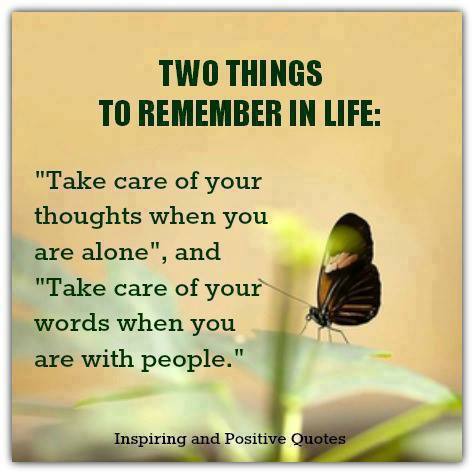
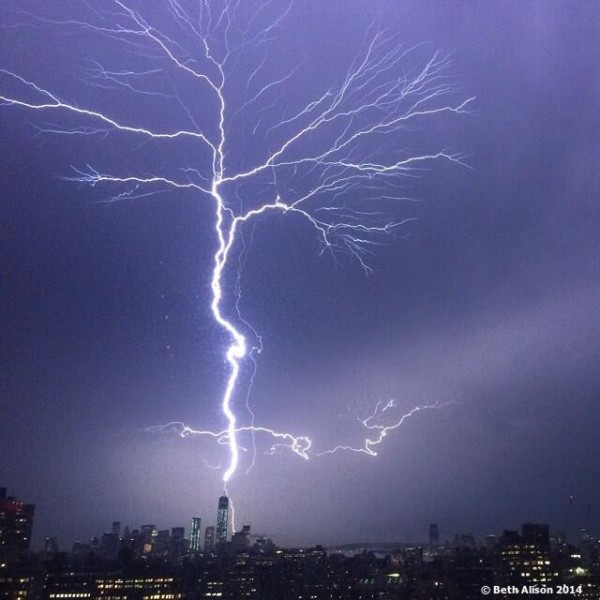
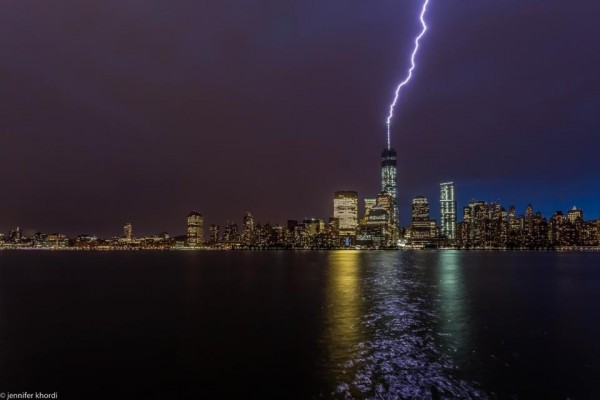









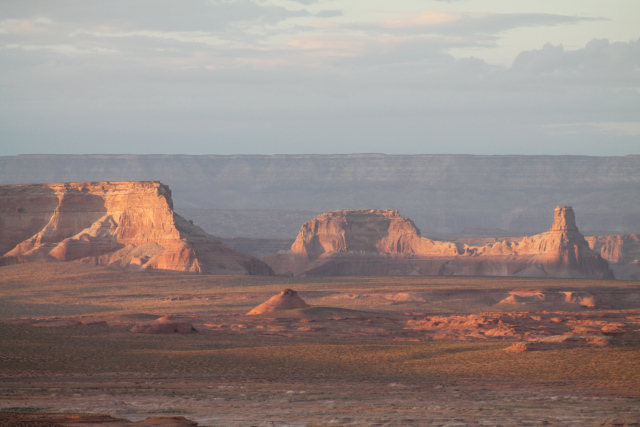








 Learning from Dogs