The film was mentioned in a Post here.
Enjoy!
Dogs are animals of integrity. We have much to learn from them.
Category: Education
If you only had one hour what would you ask?

This is how an excellent film by Rick Ray on the Dalai Lama is introduced. We watched the DVD a few evenings ago and it was heart-stirring and full of the extraordinary wisdom from one of the leading spiritual leaders alive today.
Do watch it if you can. Here’s the official trailer from YouTube:
As so often seems to be the case these days, there is a website for the movie here. And the Dalai Lama’s website is here.
Finally, I see that part of the film, where Rick Ray is having an audience with His Holiness, is available on YouTube. I’ll post links to the four videos over the next two days.
By Paul Handover
Another ‘take’ on Pink Floyd’s 1979 Release
I happened to be listening to the radio the other day and this Pink Floyd song was played again, as it regularly is. It haunts the mind with its dark, brooding and atmospheric rhythm, which is quite ironic for something supposedly against “thought control”.
It never struck me so clearly before, but I realized this time how very stupid it is and how much I really dislike the message it has given to generations of kids. Let’s have a closer look.
We don’t need no education: Oh yes you do, matey! It is in fact the ONLY THING that will SAVE you from “thought control”. The irony of this is breathtaking. What are you going to do WITHOUT education then? Without it you certainly WILL become just “another brick in the wall”, no ability to exercise any kind of judgement, no decent job = no money = no power of decision ….
As a teacher myself, I am frequently faced with spoilt, fairly mindless, ill brought-up, uninterested children who can’t concentrate for more than two minutes because their minds have been rotted by too much television and video-and computer games, plus of course the prevailing ethos in society of: “The world owes us a living.” and “We have a right to cars, houses, holidays and all the rest without having to work our socks off for them as our parents did.”
And of course, one needs to define “WE”. I suppose in fact you mean “YOU” , since who gave you the right to speak for everyone else? In my experience 95% of kids want to learn (i.e. develop their brains to avoid this dreaded ‘thought control’), whereas the remaining 5% of utter morons utterly muck up the class. Given the nature of your ranting I would place “you” in fact among the 5% of selfish morons.
So, the first line is idiotic. Does it get any better?
We don’t need no thought control: No, you don’t, but you don’t get it from teachers; they are overwhelmingly there to FREE your mind. If they tell you to “Shut up” then it is usually in the best interests of A) you yourself B) everyone else in the classroom. If you are looking for the best purveyors of “thought control”, why not have a go at politicians, advertisers and the like? Or indeed sections of the the media? (or even your own song – another great irony)
You are not FREE in a classroom to “do your own thing” (another prevailing ethos), since that is not possible in a largish group trying to concentrate on something. Your idiotic chatter and behaviour is extremely anti-social and of course humungously selfish.
No dark sarcasm in the classroom: Teachers are frequently driven to distraction trying to help eager kids learn while a minority of mindless, anti-social morons creates havoc. Teachers may indeed resort to occasional sarcasm in the face of this onslaught of idiocy, but they are overwhelmingly reacting to the tsunami of negativism that sweeps over the class from the utter morons.
Teacher, leave them kids alone: Actually Sonny Jim, it is not the teacher’s JOB to “leave them kids alone”. His duty is to HELP THEM, to DEVELOP THEIR MINDS. “Leaving them alone” is the LAST thing he should do.
Astonishingly enough (and it may not have occurred to you – but then you are of course a moron, so what do you expect) the teacher even tries to HELP the morons who make his life hell. That is his DUTY. That is why he BECAME A TEACHER instead of flogging houses or mortgages and making lots more money.
All in all it’s just another brick in the wall: The bricks in the wall are the mindless, uneducated plebs who live unfulfilled lives, and their lives are NOT unfulfilled because they are not Wayne Rooney or don’t have loads of money but because they have no education, like you presumably.
If you don’t eat yer meat, you can’t have any pudding: Too bloody right. Growing children need protein; you don’t in general get that from pudding, but from meat. But then you don’t know that, do you, because you are an uneducated moron.
Don’t you think the teacher has better things to do than constantly moan at kids to eat a balanced diet? But instead of slumping in an easy chair in the staffroom at lunchtime he gives up his time and more importantly nervous energy (since he gets a lot of negative crap from you) to HELP you A) get more protein B) avoid getting fat and C) learn something about nutrition so that when (God help us, or more pertinently ‘them’) you yourself have kids you might have some chance of bringing them up in a healthy way.
You may not be aware that an insanely-ludicrous percentage of British kids are clinically OBESE. Yes, VERY FAT (though these days it is probably not at all PC to use the word “fat”.) This means their lives will be much more uncomfortable, they will be very unattractive, will be subject to more illness than the healthy and will no doubt die younger.
So, the teacher who sacrifices his own nerves to try to get kids to eat properly is a HERO.
Sorry, your song is utter rubbish from start to end. Worse than that, it is pernicious and also insulting to teachers, whose overwhelming intention and indeed effect is to improve the present and future lives of their pupils.
The song may indeed refer to a personal experience of bad teachers (no section of society is without its black sheep) but the trouble is that it comes over as a blanket generalisation of negativism against teachers, and it is time someone stood up for them.
By Chris Snuggs
“An ethic of kindness, benevolence and sympathy extended universally and impartially to all human beings.” WikiPedia
Introduction

I do not in any of this mean to say that humanitarianism is a negative thing, I am merely attempting to describe why humanitarianism exists in the world today in much larger proportion than it has in the past.
I hope also in some of this to disagree, hopefully intelligently, with Nietzsche’s claim that humanitarianism decreases the overall strength of the human race, or at least its higher echelons.
Self-interest
Human beings are either entirely or nearly entirely driven by self-interest, this much has been made clear by both ancient and modern philosophy.
Different philosophers have realized this point in different ways.
I highly doubt that human nature has changed a great deal in 100 years.
However, 100 years ago it was very common for European nations to do just about whatever they wanted to the rest of the world. In fact, human nature is in all likelihood not very different now than it was in the days of the early church, when Christians were wrapped in lambskin, covered in oil, and burned alive in order to serve as torches.
Humanitarianism goes mainstream
Incredible outcomes from the dig in 2008
Stonehenge is one of Britain’s most famous historical sites, deservedly so because Stonehenge was one of the most important places in ancient Europe.


But evidence from a dig that was authorised in 2008 has shown that not only is Stonehenge a much older site of human habitation but that it’s purpose is altogether different to what has been assumed. It was, indeed, a healing place, possibly the most important in Europe.
Those living in the UK can watch the Timewatch programme on the BBC iPlayer. But for those living outside the UK then the following web site has reams of wonderfully fascinating information. That site is here.
By Paul Handover
That pre-frontal cortex is at it again.

There’s a fascinating video on the http://www.TED.com website given by Prof Dan Gilbert. Prof Dan is Professor of Psychology at Havard and there’s a good resume on WikiPedia.
Here’s how John Brockman describes Dan Gilbert.
Dan Gilbert doesn’t have an instruction manual that tells you how to be happy in four easy steps and one hard one. Nor is he the kind of thinker who needs Freud, Marx, and Modernism to explain the human condition.
Gilbert, the Director of Harvard’s Hedonic Psychology Laboratory, is a scientist who explores what philosophy, psychology, neuroscience, and behavioral economics have to teach us about how, and how well the human brain can imagine its own future, and about how, and how well it can predict which of those futures it will most enjoy.
There can’t be a human that hasn’t pondered on what makes them happy. Gilbert sets out some fascinating and possibly counter-intuitive ideas. Here’s the video
By Paul Handover
In the laboratory of the hermits, no one noticed that the monkeys could talk.
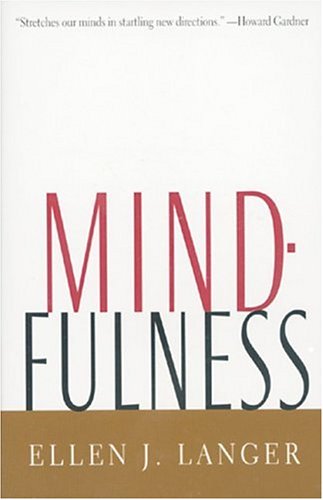
When a book ends with the above line, you know it’s going to be interesting.
When the inside front page carries a short review from Prof Alan Dershowitz of Havard Law School that reads, “One simply can’t finish this book and see the world in the same way”, you know the book is important.
Yes to both.
On Page 2, Ellen writes,
Unlike the exotic “altered states of conciousness” that we read so much about, mindfulness and mindlessness are so common that few of us appreciate their importance or make use of their power to change our lives.
This is a book for so many different aspects of life. From fields like aviation where mindlessness can, literally, kill to mindful new perspectives for people looking to explore new horizons for the soul.
Langer demonstrates a rare capacity both to see what is extraordinary about human events and to envision even more enlivening human possibilities. – Lee Ross, Stanford University.
By Paul Handover
Amazed they don’t just tax Fun and leave it at that!

Once again the British Politically Correct nanny-state lobby seems about to pounce by reducing the drink-driving limit to 50 mg. This is yet another fatuous knee-jerk “Let’s give the image that we are responsible and doing something” initiative.
No, I do NOT favour driving while drunk, but at 80 mg per ml you are not “drunk” or even impaired. The introduction of the 80 mg limit was a great step, but more would be a mg too far.
I know for an absolute fact that if I drink one pint of beer I am in no way more dangerous than if I drink nothing. Don’t ask me how I know; I just do. I’ve been driving all over Europe for 40 years; and experience counts for something after all.
Yes, I do want to see road accidents reduced, but let’s see something REALISTIC and EFFECTIVE. Why are most accidents caused? (apart from people way over the limit, unlicenced or driving unroadworthy cars and so on)
The last two points are perhaps crucial. Drive on the périphérique in Paris and you’ll see examples of both. Of course, the French are, in general, brilliant drivers and 99.9% of the time they can get away with driving up someone’s boot, but statistics tell us that there is 0.01% of the time when this will NOT be OK.
What steps COULD be taken instead of clobbering the one pinter?
The truth is that a car is as dangerous as a gun and people should treat them as such. Sadly, familiarity breeds contempt and people too often forget the basic principles.
Every time I get in my car I tell myself the following:
Let’s hope the new British government has a bit of commonsense about this.
PS The Police could do their bit, too. A significant number of people are killed by policemen rushing about.
By Chris Snuggs

A P.P.S. from the Editor. In fact, one of the best things that could be done is create an
incentive for passing the Institute of Advanced Driving driving test. I passed the test in 1966 and it has been the best investment I have ever made.
Why doesn’t the UK Government give a free year’s road-tax for every person who passed the IAM test. All this proposed change in the drink/drive limit will do is to put yet more British pubs out of business. G’rrr.
‘Among the calamities of war may be jointly numbered the diminution of the love of truth, by the falsehoods which interest dictates and credulity encourages.‘ (Samuel Johnson, from The Idler, 1758)
I have used this quotation simply because we need to remind ourselves that the media, politicians, journalists and many ordinary folk find it easier to be extreme, opinionated, outlandish and provocative (ergo, ignorant) than to be thoughtful and reflective about an incredibly complex situation. Rant and blame, while making for great reading or viewing, is not helpful.
This all came to mind from reading a recent article in The Financial Times (you may need to register to view it) which was titled:
By Clive Crook
That article starts like this:
A week ago I criticised the US media for childishly demanding that President Barack Obama “just do something” about the oil spill in the Gulf of Mexico, observing there was much to be said for a leader who stayed calm in a crisis. Next day, no doubt as a result, Mr Obama became pointedly less calm. He called for some “ass to kick”, a very Bushian sentiment, and dialled up the invective against BP – which he likes to call by its old name, British Petroleum, to underline the company’s alien perfidy.
The US outcry against the company is still building, and the administration, intent on deflecting its critics, has put itself in the vanguard. Criminal investigations and efforts to remove a statutory cap on the company’s liability are under way. It is ominous that lawyers are working hard, with the administration’s blessing, to enlarge the very concept of civil liability.
And concludes thus:
The question of whether even this company’s mighty resources are adequate to meet these demands cannot be dismissed. In such circumstances, I cannot see why BP has hesitated to suspend its dividend. The idea that it can take this calamity in its stride and proceed on the basis of business as usual is absurd, and politically foolish too, since it is a provocation to critics intent on vengeance.
The Gulf disaster will have far-reaching economic and energy-policy implications. The right liability and mandatory insurance regimes for deepwater drilling are high on the list. No doubt the White House should worry less about kicking ass and more about thinking these questions through. But British complaints that BP is being “scapegoated” will not help reason to prevail. Let us not add insult to injury.
Frankly, I don’t have either the knowledge or the competence to judge the validity of Mr Crook’s article and, as so often in cases like this, took to reading the comments as they can frequently shed more light on a particular issue.
And that is how I came across the following comment from RiskManager. Whoever you are, well done on taking the time to put what feels like some badly needed balance into this issue. This in no way lessens the terrible harm being metered out on innocents, just as in any ‘war’, but this is not about winning – it is about learning.
From RiskManager
Unlike ANY U.S. company EVER in a similar situation (Exxon, Union Carbide, Accidental Petroleum, etc. etc. – its ALL of them), BP has indeed done the right thing since the blowout by immediately admitting its liability/responsibilities. It has mobilised the largest containment and clean up operation ever and immediately issued compensation to those affected. The effort to stem the well, something never done before at this depth, has seen the assembly of the best experts in the world and the greatest concentration of sub-sea equipment perhaps ever seen. That efforts have failed so far to stem the leak is a fact that testifies to the challenge of the task, a challenge that cannot be understood until the failed Blowout Preventer (BOP) is recovered and we find out why the accident happened and why the top-kill did not work. What is going on inside the BOP?
And there it is. Today we just do not know. The failsafe in place, a modern BOP, failed. We don’t yet know why. BP may well. Transocean and Cameron the same. When we do recover the failed BOP which is under subpoena already all the questions will be answered. Until then it is fatuous and unhelpful to go round looking for bottoms to boot.
Why the gas kick happened down the well seems to me to be secondary. Things happen. That’s why we have a failsafe, that’s why there was BOP installed and paid for by BP, the failsafe device.
An editorial in The Daily Telegraph of yesterday said….
“It should not be difficult to rewrite the rules to make sure that no deep-water drilling is permitted without a fail-safe arrangement in place from the start,…..”
No, these are the current rules. The fail-safe arrangement was the blowout preventer, the one that failed. Note how BP always refer to it as the “failed blowout preventer”. Always.
The BOP has multiple (five I think) valves, of varying types with at least one that is meant to shear the casing, the drill pipe and anything else.
One valve was operated from the surface by the tool pusher who testified as such, indeed he operated it before the Offshore Installation Manager gave permission as mud circulation had been lost. That failsafe BOP valve failed.
The next I believe is a failsafe that shuts when contact is lost with the rig, like a dead mans handle on a train. As the Deepwater Horizon rig sank and contact was physically broken (or before), it also failed.
The others (three ?? ) are I believe all meant to be operable by sub sea vehicles (ROV’s). The first days after the blowout were spent trying to shut these valves as per the design of the failsafe device, the blowout preventer. All these valves failed.
That’s a lot of failure. Why??
Now, if BP should have known about whatever is found to have happened in the failsafe BOP then it is their fault. If sub-contractors installing and operating the BOP or is manufacturers lied or were negligent it is there fault.
If the blowout preventer had worked as intended, as the failsafe final defence device, there would have been no loss of life and no oil spilled.
Given the sums of money involved I suggest the UK immediately prepares to seize US assets of potentially liable companies or associates in the event that BP is found to be the victim of its supplier’s negligence. Unlike BP these companies have already sought protection of US law, are paying dividends and are saying nothing at all as BP gets a kicking
At the end of the day, we (you and I) need the deepwater oil as the worlds easy and cheap to produce oil reserves are controlled by the OPEC cartel and restricted to about a 40% of global production from 80% of reserves. But however many failsafes, however many regulations, human activities entail risk. The deep water drilling was thought to be safe with a modern BOP. It wasn’t. Now we need a BOP and inspection/testing regime that really is failsafe and expertise in responding if that fails. I would have thought the facility to install a new shear ram at the well head below the BOP after a blowout would do the job, or a fitting at the top of the LMRP that a ready built new valve could be installed on top of post blowout would do the job..
Ironically BP will certainly be the world experts in these matters after this accident and response.
P.S. Shortly after completing this Post, I read the following from the BBC. (Extract provided only – see link for full BBC article.)

US President Barack Obama has called on his Democratic Party and other supporters to back a government campaign for clean energy.
In a statement aimed both at paid-up Democratic Party members and at millions of individuals who backed his 2008 presidential bid online, the president asked his network to lend their name to a campaign to change the way America produces and consumes its energy.
“We are working to hold BP accountable for the damage to the lands and the livelihoods of the Gulf Coast, and we are taking strong precautions to make certain a spill like this never happens again,” Mr Obama said.
“Beyond the risks inherent in drilling four miles beneath the surface of the Earth, our dependence on oil means that we will continue to send billions of dollars of our hard-earned wealth to other countries every month – including many in dangerous and unstable regions,” he said.
“In other words, our continued dependence on fossil fuels will jeopardise our national security. It will smother our planet. And it will continue to put our economy and our environment at risk.
“We cannot delay any longer, and that is why I am asking for your help.”
Let me close as I started, by using an old saying:
“It’s an ill wind that blows no good.” (John Heywood (c.1497-1580))
By Paul Handover
Growth is good? Good for what?
[Apologies to our readers but a consistent error in all the links to previous posts within this and earlier posts has now been corrected. You can view all the previous sections of his lecture by clicking the links in this Post. Ed.]
We live on a finite Earth. But really understanding what that means is difficult. I guess because most of us think that in our own little way we can’t really be doing any harm to the planet – I mean what’s another few grams of CO2?

Well here’s Dr Albert Bartlett of the Department of Physics at the University of Colorado chatting about arithmetic! And if you go to his website, you will come across this quote on the home page:
“Can you think of any problem in any area of human endeavor on any scale, from microscopic to global, whose long-term solution is in any demonstrable way aided, assisted, or advanced by further increases in population, locally, nationally, or globally?”
Want to sit in on his famous lecture, “Arithmetic, Population and Energy: Sustainability 101”? Well you can.
The lecture is broken down into 8 10-minute videos, each of them on YouTube. The first two instalments are here , Part Three and Four here
Parts Five and Six were in this post. These are the concluding two parts.
Part Seven
Part Eight
By Paul Handover
 Learning from Dogs