A peek at a very interesting article in the February issue of National Geographic magazine.
Big thanks to Bob T. here in Payson for sending me a recent email that contained the one line, “There is a lengthy article entitled “Mix, Match, Morph” in the February issue of National Geographic. I strongly suspect you will find it of interest.” Understatement big time! The article is wonderful. It is also available online! 🙂
The premise behind the article is, as the opening words reveal,
Three breeds, Copyright National Geographic, photo by Robert Clark
How to Build a Dog
Scientists have found the secret recipe behind the spectacular
variety of dog shapes and sizes, and it could help unravel the
complexity of human genetic disease.
As is made clear early on in Evan Ratcliff’s text, the huge variety in the breeds of dogs is a very recent occurence,
For reasons both practical and whimsical, man’s best friend has been artificially evolved into the most diverse animal on the planet—a staggering achievement, given that most of the 350 to 400 dog breeds in existence have been around for only a couple hundred years.
And later Ratcliff writes,
The breeders gave no thought, of course, to the fact that while coaxing such weird new dogs into existence, they were also tinkering with the genes that determine canine anatomy in the first place. Scientists since have assumed that underneath the morphological diversity of dogs lay an equivalent amount of genetic diversity. A recent explosion in canine genomic research, however, has led to a surprising, and opposite, conclusion: The vast mosaic of dog shapes, colors, and sizes is decided largely by changes in a mere handful of gene regions.
What is critically being discovered is,
Already, more than a hundred dog diseases have been mapped to mutations in particular genes, many of them with human counterparts. Those diseases may have a whole array of mutations leading to a risk of disease in dogs, as they do in us.
It would be wrong, without permission to reproduce the article, to include more but you can quickly go here and read it yourself. Except I can’t resist closing with the last sentence from the article,
After all, he points out, there are millions of dog lovers out there willing and eager to help with the fieldwork.
Ain’t that the truth!
And don’t miss the fabulous photographs of dogs taken by Robert Clark which you can see here, another example of which is below. Robert Clark’s website is here.
Chesapeake Bay retriever, 48, Photograph by Robert Clark
On the 18th January, I re-published an article written by Satish Kumar that had recently appeared in Resurgence Magazine. It was called Money and morality and attracted 1,300 readings plus an above-average number of comments.
After the article, I wrote,
Satish Kumar is an extraordinary person as a dip into his biographical details here will underline. Please do read about Satish; you will be amazed by his background! It includes this fact,
During this time, he has been the guiding spirit behind a number of now internationally-respected ecological and educational ventures including Schumacher College in South Devon where he is still a Visiting Fellow.
Schumacher College was well-know to me, 2006 and before, as I lived in the small village of Harberton, just outside Totnes in South Devon, England and Schumacher College at Dartington was less than 5 miles away. The College description includes,
People from all over the world, of all ages and backgrounds, have been informed, inspired and encouraged to act, by our 20 years of transformative courses for sustainable living.
Then later, this,
It is precisely at this time of global upheaval that we want you to come to the College to share with us the ways in which you are moved to live and act differently.
and concluded that I would be presenting some videos of Satish Kumar in subsequent posts.
So today, I want to start with a video that despite its shortness is not short of wisdom. There will be more from Satish soon.
Institutionalized insanity versus intelligent thinking – a reflection.
This appeared on Patrice’s Blogsite on January 11th and is republished with his very kind permission. You may want to bookmark Patrice’s blogsite, which is here. The sub-heading of his blog is ‘Intelligence at the core of humanism‘ and, trust me, that is not an overstatement of the wisdom that is contained within his blog, as the following nobly illustrates.
Thinking Man (portion of), by Rodin
Aphorism January 2012
***
Species Shifting North, Intelligence Left Behind:
Nothing like raw numbers. In the last twenty years, Europe warmed up by one degree Celsius (about 2 degrees in the primitive, less meaningful Fahrenheit system). That’s equivalent to a thermal shift of 249 kilometers north.
Insects responded by an average shift north of 114 kilometers, and birds by only 33 kilometers. This is creating imbalances (fully obvious in Alaska, and high altitude North America, where the insects move faster than their predators, killing entire forests, which then burn).
This differential adaptation also illustrates an important point the stupid partisans of the “market” always neglect: being more intelligent can make you slower. Birds are more intelligent than insects, so they find harder to leave their families, friends, habits, and landscapes they are familiar with behind. (No, I will not say that insects are more like Americans, driven by the market, and birds more like Europeans, driven also by broader values. I shall resist, lest I move too fast, like an insect, and outrage part of my brainy readership…)
Thus, as the market dominates, so does the stupid.
Adaptation is not always a manifestation of intelligence, and inadaptation often a sign of intelligence. A well known experience is to put a fly, or a bee, inside an open bottle, with a light source opposed to the opening. The bee will search intelligently the bottom of the bottle, where the exit ought to be. The less intelligent fly will buzz around stupidly, and exit first.
It’s no wonder that the partisan of the markets, who are richer and thus more influential, are for something stupid, as they are faster, precisely because they are more stupid, with fewer values, besides the colossal greed which dominates their psyche. So there is a non linear vicious loop, the more the market dominates.
Thus, next year the candidate historically financed by Wall Street will confront the extremely wealthy businessman cum politician, son of his father, also a governor cum businessman. Market against market: the market should not lose. The birds will be left behind by the fast moving insects, once again. Change you can’t believe in.
***
Where is everybody?
“Lord” (!) Martin Rees, “Astronomer Royal”, Nobel laureate, etc., complete with pretty pictures and beautifully spooky music, speculates it’s teeming with aliens out there.
But as Enrico Fermi quipped:”Where is everybody?“
The situation is not helped by us understanding very little about what the universe is made of. In the latest numbers I saw the universe was made 4% conventional matter, and the rest was… Dark. Mostly Dark Energy, with some Dark Matter. Who said the Dark Side was not important?
There are no dominant theories of what the Darkness is made of.
CERN should be able to find stuff below its energy reach. So far, nothing.
We have detected more than 150 planets. It seems one star out of ten, at least, has planets. Some have been detected in the habitable zone, where liquid water is found. But the water has to be continuously present for billions of years. Continuously (which did not happen on Mars and Venus).
400 billion stars in our galaxy. The big question is how many planets can harbor advanced (=oxygen breathing) life. No inkling of that. There are plenty of planets out there, indeed, but most hostile to life. So far. How Much Intelligent Life Out There? On Earth, it took 1.5 billion years to go from advanced life to intelligent, civilized life. A lot of things can go wrong in 1.5 billion years.
That advanced life did not develop on Mars or Venus is not an accident: although on the outskirts of the habitable zone, either planet did not have what it took. Mars was too small, and, just like Venus was not protected by a powerful plate tectonic, with accompanying magnetic field, among other problems (so the solar wind blowing the top of the atmosphere stole the hydrogen, hence water, etc.)
My hunch is that most planets in the hospitable zone, when found, will be bereft of advanced life, although primitive life may be quite frequent. Reason? Too many miracles at work for billions of years in the solar system. Especially in light of what we find out there (We see plenty of Jupiter size planets in close orbits around their suns, presumably after sweeping their entire system clean; OK, that’s partly a result of the method used to find planets presently, but the fact is, we find such situations aplenty! The presence of Jupiter out there, as our guardian protecting Earth from comets looks quite miraculous…)
***
If You Want To Save the Biosphere, Push Tech:
Some people in the Netherlands have suggested building an artificial mountain. It’s feasible, and would be smart to do, not just there, but say in a place such as Saudi Arabia (technical variations on the theme could collect water, as in cloud, or fog forests found in California or Peru).
Another point is that artificial mountains could help protect biological diversity from the greenhouse heating. Cynics would point out that it would take an enormous amount of energy to build them. True, with present tech, and the energy would be dirty too, presently. But that would be another motivation to go green. Green and big.
***
Wind Fall-Out:
Most wind-driven energy system in Europe? Denmark. Most CO2 polluting country in Europe? Denmark. Coal power plants pick up the slack when the wind falters. Another case where nuclear offers its smiling face. Future nuclear that is. Not your great grandfather’s nuclear. Past nuclear tech should be terminated, just like coal. However, there are 100 unexploited, un-researched nuclear energies out there, and only those with insignificant waste will be acceptable. (Nobody would accept a fossil fuel system where only 2% of the fuel would be burned, and the rest allowed to pollute all over!)
Reminder: as the greenhouse heating proceeds, winds will falter because the heat differential between poles and equator will sink, thus shutting down that thermal engine known as the atmosphere (yes, hurricanes will be rarer, but fiercer).
***
Institutionalized insanity Versus Thinking Right:
In Switzerland a nuclear plant was built one kilometerdownstream from a dam, along the same river. None of those two could resist the sort of very strong quake happening occasionally in the Alps. A flood cum nuclear explosion is entirely imaginable. This sort of insanity has nothing to do with nuclear power, it has everything to do with lack of intelligence.
This is all the more strange since some Swiss cantons such as Valais get 20% of their GDP from research. By the way themedical drug sector part of GDP is twice the banking sector in Switzerland. For those who wonder why Switzerland is so rich (the same holds for Sweden and other Nordic company). It’s not (just) about the banks.
***
(More) Direct Democratic Keeps Bankers At Bay:
The weight of direct democracy has forced Swiss banks into reserve requirements twice those of the future Basel III regulations. (In other words, banks are many times tamer in Switzerland than in the USA, if one uses reserve requirements enforced as a measuring device; Basel III does not cover most of the enormous derivative trading, though.)
The scandal of the central banker heading the Swiss Central Bank buying dollars days before taking the decision of making the dollar explode up against the Swiss franc keeps unfolding. Yes, he knew about the trades, and yes, he had days to stop them afterwards.
It is dawning over Swiss society that those with privileged information should not be legally allowed to exploit them. The whole planet has to follow down that line. But, although it has been obvious for years that American and European politicians and central bankers are rich from insider trading, nothing has been done. Yet.
***
The Plutocrats Cash Out And Shame Does Not Count:
What looked to me as the immensely stupid and arrogant wife of the Swiss Bank President, explained herself from Singapore, where she owns an art gallery. If she really wanted to make real money out of her husband’s job, she knew how to do it, she asserted confidently. And there she was going through a list (a), b), c), d), etc… of things she would have done if she wanted to make more than the measly $75,000 she made. And how to make them secretly, she insisted.
Her name is “Kashya”, appropriately pronounced “Cashia”. In this case, Cashia said, in her native American English, they were in a rush, because they just had some cash from selling a chalet to store, so that is why she hid nothing. That brings a few questions, such as whether she is used to exploit the mechanisms of further cheating she explicated so adroitly on TV. The central banker, the plutocrat Hildebrand, having resigned, will get a million dollar salary in the next year, from the People, while his fellow plutocrats will rush to propose him a much more protitable conspiracy to join. I propose to put him in jail, instead.
***
Another Claim Of Mental Decline. And The Agenda Behind It: There Is No Good Wisdom, Except Dead Wisdom, Say Plutocrats:
Supposedly some new test showed a decline in “cognitive capabilities” starting at age 45. Apparently people were asked to remember lists of words starting with some particular letters. It does not seem to have come to the mind of the experimenters that maybe older brains do not like to remember such stupid stuff.
Thinking means motivating. Without the right motivation, there is not the right thinking.
In the case of “IQ”, a decline is observed at 24, some say… Military officers would concur that it is better to send 18 year olds to die, because they are bright enough to execute orders well, but not so bright that they would know that they might die for no good reason.
A related point: no doubt a two-year old training to go potty remembers very well each time she goes. Whereas an adult tends to lose this facility of neurological retention for this sort of event. One generally observes. But it is not because adults have suffered mental decline that they do not remember every poop. Simply, they have seen lots of poop passing by.
Actually the argument can be made that consciousness and conscious memorization are needed to deploy automatisms, but once those are in place, they are not needed anymore, and so consciousness, and conscious recall should not be present.
When I was a young driver, I remembered everything I did when driving a car, but now I do it automatically, remembering very few of my gestures. When driving, my consciousness is mostly watching for the unforeseen.
Is there a political interpretation explaining such mental declines claims? Indeed, there is. As people get older, they elaborate higher wisdom. Thus, although the soldiers of revolution are typically very young people, because they have their aggression hormones less tempered by wisdom, the leaders of revolution are typically much older.
Let me explain this carefully: fascist and plutocratic leaders typically claim that they are “conservatives“. It means that they justify their mean rule by a refusal to adapt to changed circumstances.
As the French revolution stirred, the most esteemed leaders were senior citizens such as Voltaire or Benjamin Franklin, and everybody looked up to them, from Louis XVI to Turgot; on the Dark Side, many of the leaders, such as the Comte d’ Artois, were barely teenagers.
Closer to us, in WWII, the SS seduced many a 16 year old. In the last few weeks of the war, many of the most enraged Nazis fighting to the bitter end with the allies in the mountainous heart of Germany were school children with heavy weapons. In more than one case, disgusted American GIs, reluctant to blow up some more enraged children to bits, sent their school mistresses to negotiate with them!
If the (plutocratic) establishment can claim that revolutionary wisdom is actually the fruit of mental decline, presto, no revolution. It will be “conservatism” all the way.
***
Why Do We Want To Always Support Winners?
Supporting the home team is easy to understand: this is the tribal instinct. Human beings are social, they have to love the group, thus dislike what hinders the group, namely, other groups.
One has to love the leader(s) of the group, the alpha(s). In general, to abate social tensions, an instinct has got to exist, which makes the oppressed love the oppressor, or let’s say, the inferior love the superior. or even love the winning group, to be motivated to join it. Something more plausible to females. Hence Beatlemania.
***
If One Wants Happiness, One Should Prepare For The Worst:
Pe Romaneste: So happiness must be an accident.
Alexi Helligar: There seems to be greater power in the accidental than we imagine.
Patrice Ayme: Indeed, to a great extent, everything is accidental. Realizing this means that those who complain that something happened accidentally, and, thus, was not expected, have not understood the first thing about causality. Accidents is how the world happens. Wisdom consists in anticipating their occurrence, and having a plan B, should they occur.
***
Brutality Is Friendly To Plutocracy, Long Life Friendly To Wisdom:
Only wisdom can allow long life. Really very long life, lasting centuries, for individuals or civilization. Short lives are brutish, and this has the consequence in many a perpetrator, to spurn whatever life is offered. Indeed a good way to spurn something is by devaluing it. The brutality of the human condition is self reinforcing…
This why human life extension is a necessity, a preliminary, for the extension of wisdom. Because as long as lives are short and brutish, the short and brutish way of life is all too optimal, for all too many people (although those with children, or grandchildren they love will disagree, but they are not necessarily a majority).
This is something that life spurning plutocrats such as Mr. Jobs have been busy not understanding, as brutality is their friend.
***
Plutocrats Love Death Indeed:
Steve Jobs, despite leaving Reed College after six months, was asked to give the 2005 commencement speech at Stanford. Why? Did Jobs invent anything important? (Disclosure: My Mom offered me an ultra light Mac Air, and I love it.) No, he was just an artistic technology integrator, but not necessarily as mechanically oriented as a car mechanic (his partner Wozniak was the programmer, but even this one finished his college studies in computer science, 20 years later, at Berkeley, and found them hard!)
In his Stanford address, delivered after Mr. Jobs was told he had cancer, but before it was clear that it would ultimately claim his life, Mr. Jobs told his mesmerized audience of naive sheep that “death is very likely the single best invention of life. It is life’s change agent.”
In this light, the invasion of Iraq by Bush and his fanatical followers made sense: by visiting more than one million deaths upon Iraq, the USA brought the single best inventionof life. Everybody, or more exactly 83%, including a majority of Stanford students, agreed, at the time.
Is this love of death why Jobs refused conventional medical treatment initially, until it was too late? Jobs insisted that the benefit of death, is you know not to waste life living someone else’s choices. I guess that extended to the medical.
Verily, death came first, and was denied by life. Life is the denial of death. Life did not have to invent death.
***
Hormuz Crisis Versus Suez Crisis: Spot The Difference!
Why did the USA not get upset when Nasser seized the Suez canal, in 1956? And actually why did the USA instead use the occasion to threaten Israel, Britain and France? Not just that, butpresident Eisenhower aligned himself with the Egyptian, and Soviet dictators. The Soviets, while invading Hungary, killing at least 40,000 Hungarians, threatened to atom bomb London and Paris. With the loud acquiescence of the USA… Which got France and Britain, not the mass murderous USSR, condemned at the United Nations’ general Assembly. What a crazy week it was.
And now, 55 years later, lo and behold, the USA is getting all upset as Iran wants to stop what’s going on below its nose in the strait of Hormuz? Just asking. Inquiring minds want to know.
Is it that in 1956, France and Britain were viewed as preys of the USA? And now that the USA has grabbed everything from France and Britain, they want to be friends again? Because the rich need servants, maybe? In any case, the Suez Crisis was an incongruous reminder that, in 1939, the USA was allied with the USSR and Nazi Germany, against France and Britain (oopss, something one should never say!)
And my advice would be to be very careful with Hormuz. If one wants long life, one does not want long wars. And one does not want fossil fuels. The sooner we get rid of fossil fuels, the better, and if Hormuz helps that way, so be it. The messy Iranian theocracy will not win a waiting game.
***
No Change, No Life!
What the USA needs to do is to do what all serious countries do, and have always done: change its constitution, since the changed circumstances require it.
***
Cool Is Not Cool:
“Cool”. Why is “cool” such a popular word? Is it supposed to correspond to an attitude? Is it a mark of, and a tool for, our subjugation?
So Obama is confronted to the greatest financial thievery in the history of civilization, and that leaves him “cool“? Having rebooted the perpetrators with public money he goes to them to ask for a billion to campaign for re-election? Cool? I mean: we are not supposed to blow our tops when we contemplate such injustice in the name of change we can’t believe?
In Europe, pretty amazingly intricate financial and semantic engineering is presently deployed to save the banks and the sovereign states entangled with them. There again the bottom line is that the resources of the countries are deployed for the exclusive enjoyment of the few, who happen to be the greatest swindlers ever. Although they are presented as too big to flay.
Actually the same technique as in the USA, Quantitative Easing, is being deployed, and on a similar scale. But, as the head of the European Central Bank, an ex Goldman Sachs partner, pointed out sardonically, a scornful smile on the corner of his mouth, Europeans use a different semantic: they don’t call it Quantitative Easing.Therein the difference. Is not that cool too?
Is the greenhouse effect already that bad that cool is the ultimate state one ought to strive for with all of one’s being? Or are we supposed to reject our mammalian inheritance? Mammals, by being warmer, could do more. So, when climate change happened 65 million years ago, they survived (so did the very warm birds, who evolved from bird-like dinosaurs). Are we supposed to do less now, and not survive? Or then survive like crocs, deep in the mud, super cool, eating carrion?
Is “cool” imposed on us so that people know no higher emotional state than iguanas? Become cool like barnacles, as we cling to the existence the plutocrats condescend to leave us to enjoy? Being so cool we would not be like the American and French hot heads who came forth with new constitutions in 1789?
So is the celebration of “cool” what forces us to not be outraged, as plutocrats steal and burn the entire planet to forget about their megalomaniac angst? To forget they are just crazy critters in need of some restraint? Is “cool” the state slaves are supposed to be in to optimize the enjoyment of their masters? Is it only cool to be cool like corpses?
***
France anti-genocide law denounced by Turkey:
Now this is hilarious. France passed a law punishing convicted holocaust deniers by up to one year in jail and 45,000 euros fine.
Fine, indeed. Who would turn into a partisan, a defender of holocausts? Is not holocaust denial a form of hate speech? Holocausts remain a problem, because when one has killed most of a human group, there is nearly nobody to complain on their behalf: other people move on, as herbivores do, once one of them has been seized and devoured.
France’s national Assembly passed the anti-genocidal law, with bipartisan support. And what do you think happened?
Erdogan, the three time elected Prime Minister of Turkey, had a fit: how does France dare make holocaust denial a crime? He forbade French fighter jets to land in Turkey (so I guess the no fly zone over Syria will be delayed), recalled the Turkish ambassador to France, and stopped all talks with France.
And the questions are: why does the present government in Turkey love holocausts so much? Are holocaust such an endangered species that Turkey has to protect them with all its might?
Why does Turkey consider that a general attack against holocausts is an attack against Turkey? Is it because holocausts are intrinsic to the Turkish character? Or is it because holocausts are mentioned positively in the Bible and the Qur’an, and the present Turkish government is obsessed with the religion of the child molester Abraham? Is this why Erdogan is angry?
***
We Are Truth Machines.
That monkeys now build cities has not changed that truth. No hallucination added in the last 6,000 years has changed that truth either. Science is what we do, and what stands in the way of that fundamental truth, faces extermination.
Join the One In A Million Movement to End Puppy Mills!
Take another quick look at the emotions that dogs bring out in so many of us. I’m referring to the piece I posted last Sunday under the title of The logic of dogs. However, there’s a darker side to owning a dog, or more accurately, a puppy.
A quick search for ‘puppy mills’ on Google or YouTube will come up with more anguish than I suspect you can handle. Here’s just one website that offers some facts about the commercial breeding of puppies.
Here’s a 2-minute video to underline the importance of this cause.
But thanks to an email sent to me from Diane M, here in Payson, there’s something that can be done.
Here’s the email that was sent.
Dear Friends and Family,
I’m sending this to you because of your concern for pets. Dan Morrison, my friend and ex-husband, has been an advocate for years for animals. I received the information below regarding another way to protect those animals who cannot speak for themselves.
Please take a minute and read the important message below. Please know that Dan Morrison along with Marlene Walsh are the co-founders of Pet Connections. Dan is also the President of the Board. Check out the website!
In addition, do you have friends who love animals and are understanding and empathize with the message below? If so, please take a couple minutes and forward this message to them. Dan, Marlene and I will greatly appreciate your effort.
Happy New Year, Everyone!
Diane
And now what follows is the information that Diane received and then circulated,
Sent: Friday, December 09, 2011 6:14 AM Subject: Join the One In A Million Movement to End Puppy Mills!
There is a new movement underway to permanently put an end to the puppy mill industry by ending all demand for these puppies. And Pet Connections, Inc. believes in the power of people to do this, one person at a time.
Just this week, the Pet Connections’ website (www.pet-connections.org) went live with its new “One In A Million” campaign, where the public is being asked to sign a pledge stating that they will not purchase or supportthe purchase of puppies, dogs, cats or kittens that come from “puppy mills” or indiscriminate breeders.
A puppy mill or kitten mill, sometimes known as a farm, is a commercial breeding facility that is operated with an emphasis upon profits above animal welfare and often hundreds of animals are kept in substandard conditions with little regard to the well-being of animals under their control.
Instead, the pledge asks the public to patronize animal shelters, humane societies, or “humane” pet stores who offer only shelter/rescue puppies, dogs, cats or kittens. Pet Connections’ goal is to collect one million names to present to the governors and legislators of states who harbor puppy or kitten mills because of lax or unenforced laws and to our congressmen and senators telling them that the people have spoken! This cruel and inhumane industry must end.
Pet Connections will work with any pet store who believes that their only source of animals are mills or farms and “convert” them to using animal shelters, humane societies or rescue groups as a source for their animals.
I am hoping that you will go to our pledge page (www.pet-connections.org/pledge/pledge.php) and sign the pledge, and then share it with your family, friends, colleagues, other organizations, newsletters – everything you can think of to help us get the word out and make a big enough impact to make a difference.
Pet Connections believes people can make a difference . . . one person at a time. I know that with your help we will make a difference.
So it’s just a moment to go here and sign the pledge – PLEASE! Why? Well, I can’t put it better than as conveyed in the thank-you email response you will receive,
Change will happen because you took the Pledge. Thank you for becoming ONE IN A MILLION and supporting the efforts of Pet Connections, Inc. We are dedicated to ending the practice of selling puppies bred in puppy mills and sold in pet shops. This is an intolerable practice and must end. By Pledging, you join a cause whereby numbers create the power for change.
Would you like to help Pet Connections, Inc., reach our goal of ONE IN A MILLION? Share the message by any means you can. Tell your friends, family and neighbors about the importance of Pledging. Convince your Facebook and Twitter friends to Pledge to become ONE IN A MILLION athttp://www.pet-connections.org/pledge/pledge.php. Watch the tote board change with each Pledge you influence.
Pet Connections, Inc., is grateful for contributions to help in our goal of ONE IN A MILLION. It is up to each and every one of us to take responsibility to end the practice of breeding and selling puppy mill puppies. It is the humane thing to do.
Now let me close with this video that shows the power that can flow from love as opposed to greed.
NEVER BUY A PUPPY FROM A PET STORE!!!
All three parts combined into one! Created in 2002, “I’m Alive For The Very First Time” tells the story of how two puppy mill rescue dogs forever changed the lives of their adoptive parents, Kathleen and Scottie.
Money must be guided by morality. – A powerful essay courtesy of Resurgence Magazine
(Because the essay, by Satish Kumar, is so well-worth reading, let me postpone my background chit-chat until later!)
Here it is.
If we take care of people and Nature, then the economy will take care of itself.
Money was a clever and convenient invention; it was designed as a means of exchange and a measure of wealth. But somehow that has changed; what was once solely a means to an end has become the end itself, and what was a measure of wealth has become wealth itself.
Take for example agriculture, the purpose of which was to produce nutritious food whilst ensuring that the land remained in good heart for all future generations and for the good health of biotic communities. Agriculture was a way of life that gave farmers their dignity, and in turn they cultivated the crops with tender loving care and considered their work intrinsically good.
Then came money, which changed everything: agriculture turned into agribusiness and the paramount purpose of it became the making of money. Food became a commodity and yet another means of making large profits. As a result British farmers – even those with 2,000 acres of land – cannot make a living, and farm labourers are paid £10 an hour whilst bankers are paid £1,000 an hour.
The example of agriculture turned to agribusiness is only one illustration of how our society has lost sight of right and wrong. We can cut down the rainforest to make money, we can pollute the rivers and over-fish the oceans for profit, we can destroy the local economy in search of cheaper goods, no matter how much CO2 is omitted in the process. The bottom line always comes first. We can hire and fire people at will for the sake of boosting the economy; people have become little more than the instruments of making money. GM crops, nuclear energy, cloning and animal experimentation – nothing is forbidden, just as long as it adds to GDP and increases the share value of corporations and companies.
Ethics, morals and human dignity are all secondary and subservient to the profit margin. Bankrupt bankers have to be bailed out even though we can all see that they and other business leaders are utterly incapable of solving the economic crisis. Politicians and policymakers have to obey their desires. No wonder then that our governments are completely incapable of creating conditions for the stability and wellbeing of people – because all social, political, educational and communal values exist solely to serve economic growth, which simply means growth in money supply, in GDP and in consumption.
As long as we are wedded to this financial paradigm and its money model, the strong will exploit the weak, and our social and environmental fabric (and morals) will continue to fall apart.
The current economic crisis gives us an opportunity to look deeper and examine the consequences of confusing the means with the ends. Money has a place, of course, but we must keep it in its place and not allow it to dominate our lives in such a manner that we lose all our bearings and become its slaves. Money was made to serve people, not the other way around. Unfortunately, we have allowed money to become the master and override all other moral, ethical and ecological values. There is more to life than an endless pursuit of money and profit.
Money is not wealth; real wealth is land, forest, rivers, animals and people. Wealth is created by the imagination, creativity and skill. Bankers and business leaders in search of ever-increasing profit are not the wealth creators; at best they are wealth counters and at worst wealth destroyers. So let’s honour the true wealth creators: skilled workers, architects and artists, craftsmen and women, teachers and doctors, builders and farmers; the economy is safe in their hands. Let us respect the generous Earth and wild Nature, the eternal source of wellbeing and prosperity. If we take care of people and Nature, then the economy will take care of itself.
Some people might say that this is too idealistic; but what have the realists done? They have made a complete mess of the world economy. Normally, we need idealism and realism in equal measure, but for the time being a little extra idealism will be helpful. We have had far too much realism.
Money must be guided by morality. And we are delighted to present this ideal in this issue of Resurgence, the first of a brand-new year.
Satish Kumar is Editor-in-Chief at Resurgence magazine.
with written permission from Resurgence magazine – at the heart of earth, art and spirit
published by The Resurgence Trust, Ford House, Hartland, Bideford, Devon EX39 6EE
oooOOOooo
OK, back to me!
I hope you enjoyed the essay, it certainly jumped off the page, as it were, for me hence my email to Emma Cocker, Picture Researcher & Assistant Editor at Resurgence Magazine which resulted in a very prompt approval for re-publishing on Learning from Dogs.
Satish Kumar
Satish Kumar is an extraordinary person as a dip into his biographical details here will underline. Please do read about Satish; you will be amazed by his background! It includes this fact,
During this time, he has been the guiding spirit behind a number of now internationally-respected ecological and educational ventures including Schumacher College in South Devon where he is still a Visiting Fellow.
Schumacher College was well-know to me, 2006 and before, as I lived in the small village of Harberton, just outside Totnes in South Devon, England and Schumacher College at Dartington was less than 5 miles away. The College description includes,
People from all over the world, of all ages and backgrounds, have been informed, inspired and encouraged to act, by our 20 years of transformative courses for sustainable living.
Then later, this,
It is precisely at this time of global upheaval that we want you to come to the College to share with us the ways in which you are moved to live and act differently.
No wonder that Bill McKibben of 350.org fame and often quoted on this Blog is quoted on the Schumacher website,
Schumacher is a very special place. As we try and figure out what on earth we’re going to do with this unraveling planet, it’s become a thinktank for hope, a battery for positive vision!
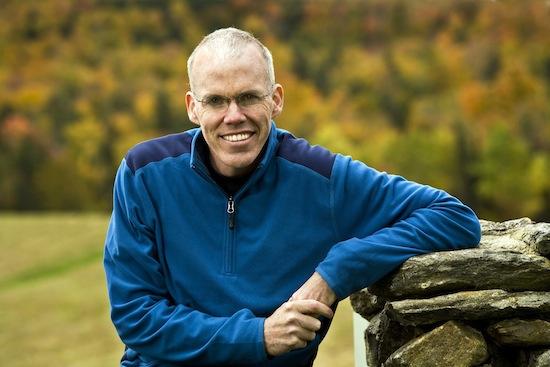
Bill McKibben, founder of 350.org
Finally, there are a number of videos presented by Satish that I propose to include in subsequent Posts on Learning from Dogs.
Yesterday I received an email from 350.org as part of their mailing to all 350.org supporters. I have previously written a number of times, for example see here and here, about this proposed project and why it is so important to have it rejected.
Yesterday I published a lecture given in Melbourne by Britain’s eminent Astronomer Royal, Lord Martin Rees. Lord Rees concluded his lecture with the call for us to take better care of our own planet. He, like many others, recognises the unique place in history that we occupy. For the first time a single species is capable of exerting profound changes on the Earth’s natural and physical environments.
Over and over again, scientists are reporting the rise in climate temperature of Planet Earth and the implications thereof if we do not wakeup soon to changing our ways. The Keystone pipeline is a huge potential mistake!
Bill McKibben of 350.org
Anyway, to the letter issued by 350.org – note the link to send a message to President Obama works – please use it!
Direct threats from Big Oil over Keystone XL
01/05/12, 11:43am
Here’s the email that Bill McKibben just sent to US 350.org supporters who have been working on Keystone XL:
Just in case you thought there was anything subtle about the Keystone battle, you need to hear what the president of the American Petroleum Institute — the oil industry’s #1 front group — said yesterday: if the President doesn’t approve the project there will “huge political consequences.”
That’s as direct a threat as you’re ever going to hear in DC, and it shows just how mad you made the oil industry last year by exposing Keystone for the climate-killing danger it is. And the oil industry can obviously make good on their threats — they’ve got all the money on earth, and thanks to Citizens United they can use it without restriction in our elections. They’re not used to ever losing.So far the Obama administration is standing firm in the face of Big Oil’s bullying — the White House made it completely clear last month that if the oil industry and its harem in Congress forced a speeded-up review, it would lead to an outright rejection of the permit for the pipeline. We expect they’ll keep their word.
Here’s what I think we need to do.
1- Let the president know you’ve got his back when he rejects the pipeline. Tell him that addressing climate change is the key to our future, and that you’re glad he’s not bending.
2- Take the offensive against the oil industry. If they’re going to try and ram Keystone down our throats we’re going to try and take away something they hold dear, the handouts that Congress gives them each and every year. They’re the richest industry on earth, they’re doing great damage to the planet — and they expect us to pay for it with our tax dollars.
Can you send a quick note to President Obama covering those two key points?
President Obama: Thank you for opposing the rushed Keystone XL pipeline permit. Responding to climate change is critical to preserving our collective future, and I hope this is a first step towards the dramatic changes we need to avoid catastrophe. PS: Please take handouts for the fossil fuel industry out of next year’s budget. There are people in America who need that money more.
There’s lots more to be done, of course. In the slightly longer run, we’ve got to take on the greatest subsidy of all: the special privilege that Congress gives the fossil fuel industry to use the atmosphere as an open sewer into which to dump its carbon for free.But today — right now, in the face of this kind of straight-up bullying — it’s time to punch back. We’re nonviolent, but we’re not wimps.
A powerful lecture by the eminent Lord Martin Rees
Martin Rees at Jodrell Bank, 2007
I came across this interview a few days ago in connection with some book research that I was undertaking. Please don’t be put off by the 56 minute length because Martin Rees is one of the most pre-eminent cosmologists around today, as well as being the UK’s Astronomer Royal since 1995.
Make a promise to yourself to settle down sometime soon and watch the lecture, given at the University of Melbourne’s Medical School in 2010. And a warning! I going to pick up on some of the important points made by Martin Rees in a couple of posts next week.
Here’s how the lecture was reported by the Australian science website, SixOne Science,
Lord Rees in Melbourne
In a packed Sunderland Lecture Theatre in the University of Melbourne’s Medical School, Lord Martin Rees gave the inaugural Derek Denton Lecture in Science and the Arts. Lord Rees, an eminent and accomplished astrophysicist and cosmologist, is coming to the end of his five year tenure as the president of The Royal Society. The event even managed to attract or Prime Minister, Kevin Rudd, who entered without a noticeable entourage and with no fanfare, and the Governor of Victoria, Professor David de Kretser, a scientist himself.
The lecture was entitled “Life and the Cosmos”, a grand and sweeping title if ever there was one. It seemed like an impossible amount of material to cover in the allotted hour. However, Rees delivered an entertaining, humorous account of life from the big bang, through the formation of stars and galaxies, to the origins of life and perhaps the biggest crowd pleaser, the search for extra-terrestrial life. Most in the lecture theatre would not have learnt anything new, but this lecture was aimed at a general audience and the material was interesting enough to keep everyone interested for the hour despite being squashed into an ageing undergraduate lecture theatre complete with squeaky desks and a slightly musty smell. Perhaps Mr. Rudd was sufficiently uncomfortable to increase university funding, we can hope.
Whist this was predominately an overview of the subject material, Rees expressed some opinions about space exploration. He seemed torn between his human curiosity and the cost of human exploration. Given the advances in robotic exploration vehicles, Rees has difficulty in justifying the cost of sending humans on planetary exploration missions. Perhaps the best case for robotic exploration was made by the amazing photos he showed from the surfaces of Mars (photos) and Titan (photos), a moon of Saturn. Interestingly, Rees believes that if human exploration does proceed in the future it will be led by the Chinese or groups of private individuals. He also raised the issue of exploitation of other planets, something not often mentioned in the debate over human space travel. We need to decide if other bodies in our solar system are open for exploitation or if they should be preserved as wilderness, in a similar way to Antarctica. Given the pressures faced by places like Antarctica and the Amazon this will be an important debate should human exploration resume.
Rees concluded his lecture with the almost obligatory call for us to take better care or our own planet. He, like many others, recognises the unique place in history that we occupy. For the first time a single species is capable of exerting profound changes on the Earth’s natural and physical environments (although it might be argued that the first photosynthesizing cyanobacteria had a similarly singular influence by increasing the proportion of oxygen in the atmosphere). It is interesting to note that he does not see colonisation of other planets as a solution as the Earth is still the only known planet capable of sustaining us. Although he did discuss the likelihood of discovering Earth-like planets (pretty good given advances in technology). However, Rees did not paint an overly pessimistic picture and he generally came across as optimistic and enthusiastic about the future.
The organisers of the Derek Denton Lecture series should be commended for attracting such a high profile speaker for the first of the series. Hopefully the series will be successful, and if so may need to be moved to a bigger venue. If you want to see the lecture it will soon be available here. The next lecture of this series hasn’t been announced yet, it will be on the Arts, but you can check here for future public events at The University of Melbourne.
For reasons that I am not clear about, there is a mood of pessimism about my person. Whether it is the scale of global issues that I see ahead that drags me down, whether the year of an American Presidential election will remind me of the loss of reason that afflicts so many modern democracies, whether the messages in Kunstler’s book The Long Emergency still resonate in my mind well, who knows?
But when one does look at the broader picture of modern society, there is much that troubles.
So forgive me if I provide a couple of examples of these troubles. I do so on the grounds of communication – the more that understand the risks ahead of us, the more likely we, as in the peoples of this planet, will say to our leaders, “Enough of this! For the sake of my children, my grandchildren and all of humanity we have to change our priorities, and soon!”
Climate change increases the risk of record-breaking extreme weather events that threaten communities across the country. In 2011, there were at least 2,941 monthly weather records broken by extreme events that struck communities in the US.
That was backed up by an article on the Onearth website that opened,
By many measures, 2011 was the most extreme weather year for the United States since reliable record-keeping began in the 19th century — and the costs have been enormous. According to the National Oceanic and Atmospheric Administration, 2011 set a record for the most billion-dollar disasters in a single year. There were 12, breaking the old record of nine set in 2009. The aggregate damage from these 12 events totals at least $52 billion, NOAA found.
And that just for the USA. But will climate change be the Number One political issue in 2012? And if not in 2012, when will it be?
Let me move on to my second example, very different from the one above but, in a sense, just as scary. This is an interview that was in a recent article on the Food Freedom website ( brilliant website, by the way). Dr. Joseph Mercola, the leading natural health practitioner, interviews Dr. Don M. Huber, one of the senior scientists in the U.S about the area of science that relates to genetically modified organisms (GMO). Here’s an extract from the article on Food Freedom,
Toxic botulism in animals linked to RoundUp
Dr Mercola recently interviewed Dr Don Huber, whose letter to the USDA warning that Monsanto’s RoundUp, a broad-spectrum “herbicide” that has been linked with spontaneous abortion in animals, continues to be ignored by food and environmental safety authorities. In this important hour-long discussion, Huber, a plant pathologist for over 50 years, explains how RoundUp is destroying our healthy soils by killing needed microorganisms.
Not only did his team discover a new soil pathogen, but he reports that animals are coming down with over 40 new diseases, like toxic botulism. Huber explains that before the widespread use of herbicides, pesticides and genetically modified food and feed, natural probiota would have kept Clostridium botulinum in check
The video, below, of the interview is included in the article. Please don’t be put off by the length, the material covered is riveting and critical to our general knowledge about the threats to our society.
So that’s enough from me for one day! On Monday, I shall include another video relating to the RoundUp issue that reveals, both directly and metaphorically, how the only solution to pessimism is to embrace the need to make change happen. Be inspired by this poem by Sam Keen, included in the latest Sabbath Moment from Terry Hershey,
I Want to Surrender
God, I want to surrender
to the rhythm of music and sea,
to the seasons of ebb and flow,
to the tidal surge of love.
I am tired of being hard,
tight, controlled,
tensed against tenderness,
afraid of softness.
I am tired of directing my world,
making, doing, shaping.
Tension is ecstasy in chains.
The muscles are tightened to prevent trembling.
Nerves strain to prevent trust,
hope, relaxation….
Surrender is a risk no sane man may take.
Sanity never surrendered
is a burden no man may carry.
God give me madness
that does not destroy
wisdom,
responsibility,
love.
A series of 10 delightful short films, courtesy of Transition Culture – For the introduction and the first three films, click here, for the next three click here.
Film Seven – Transition Town Totnes’s Transition Streets Origin: Transition Town Totnes
In December 2009, Transition Town Totnes, the UK’s first Transition initiative, was chosen as one of 20 community groups in England and Wales to win the ‘Low Carbon Communities Challenge’. Its project, ‘Transition Streets’, was awarded £625,000. In the last 18 months, nearly 500 households have participated in Transition Streets, each, on average, cutting their carbon emissions by 1.5 tonnes.
About a third of those have gone on to install solar photovoltaic systems. However, the main benefits that people who have participated talk about are the social connections they have made and how they now feel so much more a part of their community. It has also acted as a platform for all kinds of other initiatives as neighbours start to get a taste for working together.
Film Eight – A Small Pennant Flag Origin: Transition Town Monteveglio (Bologna, Italy)
Transition Town Monteveglio (TTM) was the first Italian Transition initiative. In 2009 its local Comune (local Council) passed an amazing resolution that offers a stateof-the-art taste of what it looks like when a council really ‘gets’ peak oil and climate change, stating: “… a view of the future (the depletion of energy resources and the significance of a limit to economic development), methods (bottom-up community participation), objectives (to make our community more resilient, i.e. better prepared to face a low energy future) and the optimistic approach (although the times are hard, changes to come will include great opportunities to improve the whole community’s quality of life)”.
It has led to all kinds of initiatives and projects, including a local currency and renewable energy installations. Our object here is the Comune’s official pennant.
Film Nine – A Small Bag of Topsoil Origin: Transition Norwich’s food initiatives
It is one thing to start local food projects, but quite another to think strategically about how those projects sit in the larger context of the intentional relocalisation of the area. Transition Norwich, together with East Anglia Food Link, produced a study called ‘Can Norwich Feed Itself?’ which worked out that it could, albeit with a simpler diet, but that it would need certain new infrastructures put in place. This included a new mill to enable locally produced grains to be milled, two CSA farms (hence our object, a soil sample from their first CSA site), community gardens and research into varieties of beans and oats that will grow well in the area.
A successful application to the Local Food Fund enabled these to become a reality. It is a fascinating example of why we need to think strategically about the localisation of food. As Tully Wakeman, one of the co-ordinators, told me: “A trap a lot of NGOs fall into is over-thinking about vegetables (yet) only one tenth of what we consume, in calorific terms, comes from fruit and vegetables… where is the other 90% going to come from? Growing vegetables in gardens, allotments, community gardens and so on offers a degree of food security and can happen relatively rapidly.
However the other 90% requires the rebuilding of the infrastructure required for growing, processing, cleaning, storing, milling and distributing grains and cereals, and that takes longer and requires more planning”.
Film Ten – Beer, A Bottle of Sunshine Ale Origin: The Lewes Community Power Station
The Ouse Valley Energy Service Company (OVESCO) is one of the offshoots of Transition Lewes focused on the installation of renewables in and around the town as well as promoting energy conservation and local economic resilience. In 2011 it took on its most exciting and ambitious project to date installing a 98kW solar photovoltaic array on the roof of local brewery, Harveys. This will turn the building into one of the first community-owned solar power stations in the country.
The 544 photovoltaic (PV) panels will generate 93,000kWh of green electricity each year – enough to save more than 40 tonnes of CO2 annually.
A community share launch event took place in April 2011 attended by 300 people. Within five weeks the target of £307,000 had been reached. Money invested will be repaid in full at the end of the 25 year scheme, or earlier at the request of the investor and subject to conditions. While the investment is held a dividend will be paid after the first year which is expected to be around 4%.
Our object is a bottle of ‘Sunshine Ale’, a special commemorative beer brewed to celebrate the launch of the scheme. Very nice it is too.
A final few words from Rob Hopkins.
Whittling down to these 10 objects has been very difficult but I hope what you have gained is a sense of something infectious, reaching beyond the idea of small individual initiatives, and arguing that localisation is the best way for the places in which we live to return to health. Various learned writers and academics have tried to encapsulate what Transition is, but I still think the best description of its spirit comes from Tove Jansson in Comet in Moominland in 1946, who wrote: “It was a funny little path, winding here and there, dashing off in different directions, and sometimes even tying a knot in itself from sheer joy. (You don’t get tired of a path like that, and I’m not sure that it doesn’t get you home quicker in the end).”
Rob Hopkins is the co-founder of Transition Town Totnes and Transition Network and blogs at www.transitionculture.org
This important information came to hand an hour ago.
Stephanie from our local Payson Humane Society Thrift Shop sent me and Jean an email a short while ago. While the potential issue goes back to 2007 that is no reason not to keep this in mind when it comes to what commercial treats you give your dog. Indeed, the US FDA updated their recall information only last November.
Please circulate this to all dog owners that you know.
Jerky treats from China could be causing illness in pets
The AVMA staff has been in communication with veterinarians who believe certain brands of jerky treats from China could be causing illness in pets. Signs of illness have included vomiting, lethargy, and anorexia.
The Food and Drug Administration is aware of consumer complaints relevant to chicken jerky for dogs. Laura Alvey, director of the communications staff at the FDA Center for Veterinary Medicine, said the agency is actively investigating the situation.
Alvey said the FDA has analyzed products for multiple microbiologic and chemical contaminants, but the agency had not detected any contaminants as of Sept. 14.
Wal-Mart pulled a type of chicken jerky for pets off store shelves July 26 after receiving complaints about the product, manufactured by both Import-Pingyang Pet Product Co. and Shanghai Bestro Trading. A laboratory that tested the jerky product reported finding low concentrations of melamine, one of the contaminants that led to massive recalls of pet food earlier this year.
Alvey said the FDA has reviewed the laboratory report, which found 20 ppm of melamine in one sample. The agency has not been able to verify the finding. Alvey added that the FDA would not expect the low concentration of melamine to result in any illness.
Dr. Richard Goldstein, an associate professor of small animal medicine at Cornell University College of Veterinary Medicine, has been collecting data on cases of pets that became ill after ingesting jerky treats from China. He is the primary author of an informational document available on the Web site of the American College of Veterinary Internal Medicine, www.acvim.org.
According to the document, ACVIM diplomates who work in nephrology and urology became aware of an unusual number of dogs with similar presenting complaints and clinicopathologic testing results in association with the ingestion of various brands of jerky treats, mostly chicken jerky. The dogs are typically small and have a history of vomiting, lethargy, and anorexia.
Blood chemistry in many cases has revealed hypokalemia and a mild increase in liver enzymes. Blood gas analysis indicates acidosis. Urinalysis has consistently shown glucosuria and granular casts. The findings suggest an acquired Fanconi syndrome, according to ACVIM diplomates, and Fanconi screens on urine have been positive.
The ACVIM document recommends treatment consisting of supportive care, electrolyte supplementation, and blood gas monitoring. These cases appear to warrant liberal potassium supplementation. In some cases, veterinarians should consider long-term bicarbonate supplementation.
Most of the dogs have recovered from their acute disease and have not required long-term treatment. Dr. Goldstein at Cornell asks veterinarians who can contribute data on these cases to e-mail him at rg225@cornell.edu. The AVMA will provide updates about the situation at www.avma.org as new information becomes available.
Veterinarians who see any illnesses that they suspect might relate to a pet food should contact an FDA consumer complaint coordinator and the manufacturer or retailer. A list of phone numbers for FDA complaint coordinators in each state is available at www.fda.gov/opacom/backgrounders/complain.html.
As I mentioned, the US. Food and Drug Administration website updated their recall information on November 15th, 2011. The link is here, from which is reproduced,
List of recalls for Pet Food Products from Jerky Treats
Note: This compiled list represents all pet food recalled since March 2007. If and when new information is received, this list will be updated. The “Information Current as of” date provided above indicates when this Web page was updated; it does not indicate the date when the pet food recalls listed below were initiated. Once listed, each of the recalled pet food products remains listed, even if there are no new recalls associated with that product. Although we have taken care to make sure the information is accurate, if we learn that any information is not accurate we will revise the list as soon as possible. For initiation dates of specific recalls, click on the brand name and then product description links that appear on these pages. For recalls that occurred before September 1, 2008, a date range might appear in the initiation date field. The date range indicates the timeframe within which multiple recalls of this product were initiated. For recalls that occur September 1, 2008 and after, the actual initiation date of each recall event is provided for each product. If a new recall is initiated for a product that had previously been recalled before September 1, 2008, the food product will be listed again, with the new recall initiation date. If a new recall is initiated for a product that had previously been recalled after September, 1, 2008, the initiation date of the new recall event will be added to the previous date listed.
The recall number is V-095-2007 The Trade Name is Jerky Treats
The Product Description is: Jerky Treats Beef Flavor Dog Snacks. The product is sold in 3.75 oz bags and shipped in cases containing 12 bags; sold in 7.5 oz bags shipped in cases containing 6 bags & 12 bags; sold in 11.25 oz bags shipped in cases containing 8 bags; sold in 15 oz bags (which is buy one get one free of the 7.5 oz size) shipped in cases containing 12 bags; sold in 170 g bags shipped in cases containing 12 bags (Canadian only); and sold in 567 g canisters shipped in cases containing 8 canisters (Canadian only).
Check the label for country of origin, and be observant if you give your dog chicken jerky treats. The American Veterinary Medical Association was notified last week by the Canadian VMA that several Canadian veterinarians have seen dogs with a condition that resembles Fanconi syndrome, and it may be associated with the consumption of chicken jerky treats manufactured in China. Similar incidents were reported in the United States in 2007 and investigated by the U.S. Food and Drug Administration, which issued a further warning in 2008.
It’s unknown if the problem is limited to Canada. The AVMA reports that it has not received any recent reports from U.S. veterinarians about pets with illness that may be related to chicken jerky treats, and there have been no recalls of any chicken jerky treat products associated with the Canadian complaints. Brand names of the products involved are not available.
Fanconi syndrome affects the kidney tubes and can be heritable or acquired. The heritable form is rare and usually is seen only in certain breeds, including basenjis and Norwegian elkhounds. The acquired form can be caused by heavy metal poisoning or certain chemicals. Dogs affected with the acquired syndrome usually have signs that include vomiting, listlessness and lack of appetite. According to the FDA’s 2008 report, extensive chemical and microbial testing did not turn up any contaminant or a definitive cause for the reported illness. Most dogs recover, but some reports to the FDA involved dogs that died.
After checking the information on the Veterinary Information Network, Lake Forest veterinarian Scott Weldy of Serrano Animal and Bird Hospital said that so far, the reports have been anecdotal, with no evidence tying the problems to the chicken jerky treats.
“Right now they’re basically not blaming anything,” he says. “They’re saying it might be from chicken treats, but they don’t know yet.”
According to the comments on VIN, Weldy says, veterinarians are reporting cases infrequently, “maybe one case every week or two or three.” Some cases have a reasonably suspicious history.
“Right now it is speculation,” he says. “Everybody wants to jump on a cause for everything that happens, and they’ll look for some common link. Cheap treats and cheap foods are by far more popular than more expensive things because people are trying to save money. A lot more people are using cheaper products or are being sold products that are marketed better, so they’re more common in the market. Sometimes those get blamed first when they have nothing to do with anything.”
Nonetheless, it doesn’t hurt to be cautious.
“I would be skeptical to put a cause-and-effect relationship on the chicken treats right now, but I also wouldn’t feed my dog a chicken jerky treat right now,” he says. “It’s an easy thing to avoid.”
Limit the amount of jerky treats you give to a small dog. If you give your dog chicken jerky treats, pay attention if the dog’s appetite or activity level decreases, if it vomits or has diarrhea, or starts to drink more water and urinate more frequently. Signs can occur within hours to days of giving the treats.
Stop giving the jerky if your dog shows any of these signs, and take him to the veterinarian if the signs are severe or continue for more than a day. Blood tests should be run to check for kidney failure or an increase in liver enzymes and urine tests to check for increased glucose levels. Treatment involves supportive care, such as fluids and electrolyte supplements.





 Learning from Dogs