Let’s not forget our dogs!

The one above is from ASPCA.
The one below because I just liked it!

Dogs are animals of integrity. We have much to learn from them.
Category: Dogs
Incredible!
There are so many stories and articles about dogs that it’s easy to overlook some of them.
Take this recent story from BBC News, back on February 11th.
ooOOoo

A dog that showed signs of a brain tumour was found to have a 7cm (3in) needle lodged in its neck.
Toby, a 13-year-old Yorkshire terrier, was taken to a vet in Nairn in the Highlands after he suffered neck pain, struggled to walk and showed seizure symptoms.
X-rays later showed the needle had pierced his spinal cord.
But surgeons in Edinburgh were able to extract it and Toby went on to make a full recovery.

Owner Alexander Jamieson, from Beauly, near Inverness, said: “We feel that without the help of the experts in Edinburgh, Toby would not be here today.
“The care and attention he got was out of this world and we are delighted to see him back to his old self.”
Toby was referred to the specialist surgical clinic at the University of Edinburgh’s Hospital for Small Animals at the Royal (Dick) School for Veterinary Studies where vets performed a CT scan to assess any major damage to his spinal cord in August 2018.
They found that the sewing needle – which still had thread attached – was dangerously close to his brain.
Toby has now recovered to the point where he is able to walk and run normally.

It is not known how the needle ended up in Toby’s neck but vets suspect that he could have eaten it or laid his head on it.
Samantha Woods, senior lecturer, and Jessica McCarthy, senior clinical training scholar in small animal surgery, said they were delighted with Toby’s progress.
Ms Woods added: “We are really pleased to see Toby back to full health, thanks to the combined efforts of his vets and our specialist teams here in Edinburgh.”
ooOOoo
That was fantastic! All kudos to the whole team that swung into action.
More than that how do you know if anything is real?
I was sitting in the living-room yesterday and watching Cleo dream. She was on the floor in front of the lit fire and happily involved in her dream.
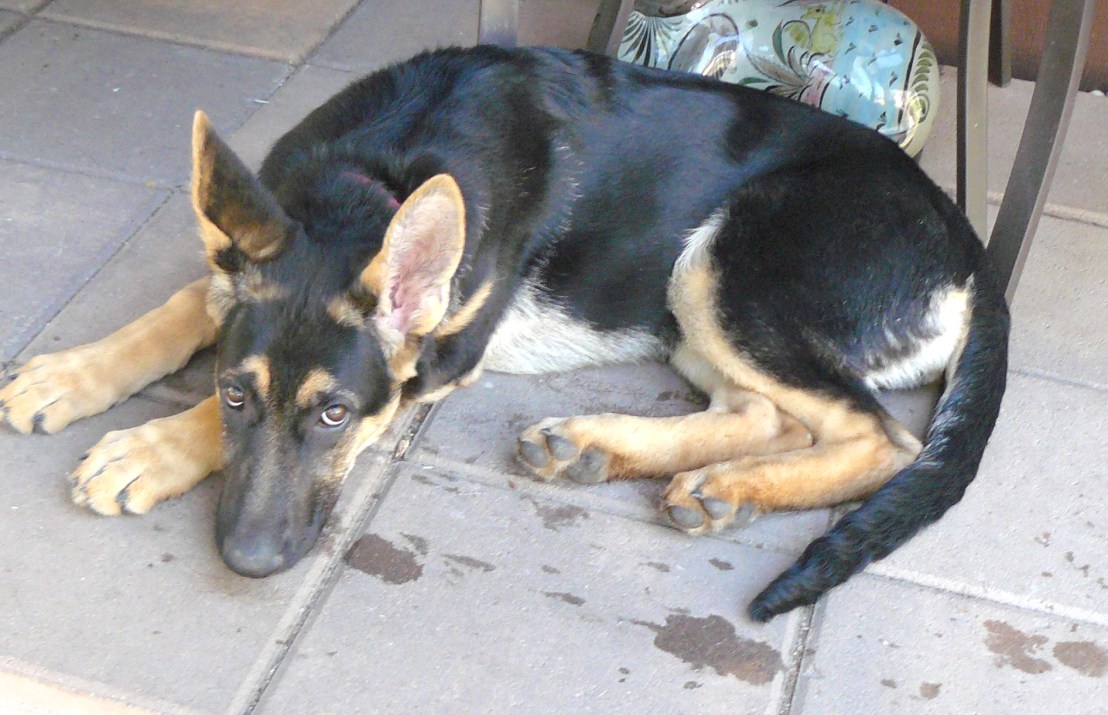
She was such a beautiful dog. It was natural of me to wonder of what she was dreaming. I could see her feet twitching and her eyelids flicking as though she was dreaming of chasing. But any more than that was pure speculation.
Then I mused about how the world looked for Cleo, and for the rest of our dogs come to that.
Then I went back to a philosophical article that I read quite recently.
What does it all mean? Are we real? What is reality?
ooOOoo
Research Fellow Center for Philosophy and History of Science, Boston University
February 6th, 2019

The life choices that had led me to be sitting in a booth underneath a banner that read “Ask a Philosopher” – at the entrance to the New York City subway at 57th and 8th – were perhaps random but inevitable.
I’d been a “public philosopher” for 15 years, so I readily agreed to join my colleague Ian Olasov when he asked for volunteers to join him at the “Ask a Philosopher” booth. This was part of the latest public outreach effort by the American Philosophical Association, which was having its annual January meeting up the street.
I’d taught before – even given speeches – but this seemed weird. Would anyone stop? Would they give us a hard time?
I sat between Ian and a splendid woman who taught philosophy in the city, thinking that even if we spent the whole time talking to one another, it would be an hour well spent.
Then someone stopped.
At first glance, it was hard to tell if she was a penniless nomad or an emeritus professor, but then she took off her hat and psychedelic scarf and came over to the desk and announced, “I’ve got a question. I’m in my late 60s. I’ve just had life threatening surgery, but I got through it.”
She showed us the jagged scar on her neck. “I don’t know what to do with the rest of my life,” she said. “I’ve got a master’s degree. I’m happily retired and divorced. But I don’t want to waste any more time. Can you help?”
Wow. One by one, we all asked her to elaborate on her situation and offered tidbits of advice, centering on the idea that only she could decide what gave her life meaning. I suggested that she might reach out to others who were also searching, then she settled in for a longer discussion with Ian.
And then it happened: A crowd gathered.
At first I thought they were there to eavesdrop, but as it turned out they had their own existential concerns. A group of teenagers engaged the philosopher on my right. One young woman, who turned out to be a sophomore in college, stepped away from the group with a serious concern. “Why can’t I be happier in my life? I’m only 20. I should be as happy as I’m ever going to be right now, but I’m not. Is this it?”
It was my turn. “Research has shown that what makes us happy is achieving small goals one after the other,” I said. “If you win the lottery, within six months you’ll probably be back to your baseline of happiness. Same if you got into an accident. You can’t just achieve happiness and stay there, you have to pursue it.”
“So I’m stuck?” she said.
“No…” I explained. “Your role in this is huge. You’ve got to choose the things that make you happy one by one. That’s been shown from Aristotle all the way down to cutting-edge psychological research. Happiness is a journey, not a destination.”
She brightened a bit, while her friends were still puzzling over whether color was a primary or secondary property. They thanked us and moved on.
Suddenly, the older woman who had stopped by initially seemed satisfied with what Ian had told her, and said that she had to be on her way as well.
Again it was quiet. Some who passed by were pointing and smiling. A few took pictures. It must have looked odd to see three philosophers sitting in a row with “Ask a Philosopher” over our heads, amidst the bagel carts and jewelry stalls.
During the quiet I reflected for a moment on what had just happened. A group of strangers had descended upon us not to make fun, but because they were carrying around some real philosophical baggage that had long gone unanswered. If you’re in a spiritual crisis, you go to your minister or rabbi. If you have psychological concerns, you might seek out a therapist. But what to do if you don’t quite know where you fit into this world and you’re tired of carrying that burden alone?
And then I spotted her … an interlocutor who would be my toughest questioner of the day. She was about 6 years old and clutched her mother’s hand as she craned her neck to stare at us. Her mother stopped, but the girl hesitated. “It’s OK,” I offered. “Do you have a philosophical question?” The girl smiled at her mother, then let go of her hand to walk over to the booth. She looked me dead in the eye and said: “How do I know I’m real?”
Suddenly I was back in graduate school. Should I talk about the French philosopher Rene Descartes, who famously used the assertion of skepticism itself as proof of our existence, with the phrase “I think, therefore I am?” Or, mention English philosopher G.E. Moore and his famous “here is one hand, here is the other,” as proof of the existence of the external world?
Or, make a reference to the movie “The Matrix,” which I assumed, given her age, she wouldn’t have seen? But then the answer came to me. I remembered that the most important part of philosophy was feeding our sense of wonder. “Close your eyes,” I said. She did. “Well, did you disappear?” She smiled and shook her head, then opened her eyes. “Congratulations, you’re real.”
She grinned broadly and walked over to her mother, who looked back at us and smiled. My colleagues patted me on the shoulder and I realized that my time was up. Back to the conference to face some easier questions on topics like “Academic Philosophy and its Responsibilities in a Post-Truth World.”
ooOOoo
Fascinating!
That can be affected by the weather!
In posting this I must admit to not noticing any changes in our group of ‘buddies’. Correction: I don’t notice any changes in behaviour as a result of cold temperatures. Hot weather is different.
See what you make of the following article that was taken from here.
ooOOoo
By Anna Burke,

Have you ever noticed that your dog’s mood shifts with the weather? Storms, heat, cold, and the changing seasons affect our dogs, just like they affect us. Understanding this behavior can help you prepare your canine companion for the forecast ahead.
Changing Seasons
When the temperature heats up, some dogs rejoice, while others seek out cool, shady spots where they can rest. Though all dogs can be susceptible to hot weather hazards, certain dog breeds are less heat tolerant than others. Brachycephalic breeds, such as Bulldogs, French Bulldogs, Pugs, and Boston Terriers, do best when staying cool in hot weather because they can have difficulty breathing in extreme heat. Large breeds are also susceptible to heat, as are longhaired breeds like the Komondor, Afghan Hound, and Alaskan Malamute. If you own a breed like these, you may find that your dog is not as active in hot weather or as willing to engage in play and other activities.
Colder climates, on the other hand, is where Northern breeds like American Eskimo Dogs, Samoyeds, and Siberian Huskies thrive. Longhaired or double-coated breeds like German Shepherd Dogs, Saint Bernards, Great Pyrenees, and Newfoundlands typically enjoy cooler weather, too. They often become more active and playful during the winter months, unlike cold-intolerant breeds such as Italian Greyhounds, Greyhounds, hairless breeds, toy breeds, senior dogs, and dogs with conditions such as hypothyroidism or Cushing’s disease.
Relocating to a New Climate
Seasons change gradually, giving your dog time to adjust. Relocating to an entirely new climate, however, can cause sudden shifts in your pup’s mood. Depending on your dog’s breed, you may notice that he becomes more or less active, and some dogs even show signs of irritation if the weather makes them too uncomfortable.

A move to a cold climate can be shocking for dogs that are not used to chilly temperatures. Some pups seek out warm places, like air vents, blankets, or human contact, and you might notice your canine companion becoming cuddlier in the cold. Understanding the cause of your dog’s sudden lethargy or increased activity can help you determine if his change in mood is circumstantial or medical. Lethargy is a common symptom of many illnesses and should be taken seriously, so make sure your dog is not exhibiting any other abnormal signs. If he is, consult your veterinarian immediately.
Helping Your Dog Adjust
If your dog gets grumpy in the heat, don’t worry. There are things you can do to make him more comfortable and lower his risk of heatstroke.
You can also help your dog acclimate to the cold. After all, who doesn’t love a pup in a sweater? With so many dog sweaters, jackets, raincoats, and booties to choose from, keeping your dog warm is easier than ever. However, it’s important to note that you should never leave an item of clothing on an unsupervised dog. And anything you do put on your canine companion should fit properly (not too tight or too loose).
ooOOoo
“Understanding this behavior can help you prepare your canine companion for the forecast ahead.” One wonders just how one prepares our canine companions (all six of them) for the forecast.
Maybe we should go back to the drawing board!
Another guest post from Holli Burch.
The first guest post from Holli Why dogs are so good for us was during a period where I had quite a few guest authors and I ended up losing track. Thus I didn’t attribute the guest post to Holli. Something that I can correct in today’s post.
ooOOoo
By Holli, February 2nd, 2019.

Many cultures believe there are spirit animals that guide and protect us during this physical journey we are on as humans. It is also said that we embody their characteristics and vice versa. The Shamen call it a power animal.
When a dog chooses to act as your spirit guide you will always have trust, courage, loyalty, protection, familiarity, a best friend and unconditional love. Just don’t abuse them or treat them badly…they may bite.

Here are the signs pointing to the dog as your spirit animal. Does it sound like you?
Did a dog come into your life at just the right time? Do you always have dogs around?
Human spiritual connection with dogs is nothing new and not many people can argue with that because you can feel and see it! Through the years the dog has evolved to be so much closer with the human. They are therapy dogs, dogs in schools, service dogs, dogs are becoming more popular to have at work, there are police dogs, the list goes on.
They sleep in our beds, follow us around the house and come for car rides with us. The closer they get to us, the more human like they become.
ooOOoo
In reply to my question about sending me a short bio, this is what Holli sent:
My name is Holli Burch, and I live in Wisconsin. I have had dogs all my life and love everything about them.Currently I have 4 labs, a yellow, black, chocolate and most recently a silver!I started a dog blog because of my passion for dogs and wanting to be my own boss! Along with my dogs I have 4 children, horses, goats and 2 cats!My typical dream day would include taking my kids to school, blogging and walking my dogs bare feet on the beach!
Cruelty to animals
I know hundreds, if not tens of thousands, share my lack of understanding of those who are cruel to dogs, or any other animal come to that! I cannot get into the head of someone who does cruel acts towards dogs.
Now read this about Joe. Taken from here.
ooOOoo
‘He was just looking up at me … sitting in this puddle of water.’
By CHRISTIAN COTRONEO January 30, 2019
If Joe had shed any tears over his fate — tied to a fence in a New York City park — it would have been hard to notice for the puddle of water he sat shivering in.
In fact, it was hard to notice the 11-month-old pit-bull mix at all on that cold December day in Betsy Head Park. The rush of people hurrying to get to where they were going must have seemed endless, all the while oblivious to the tragedy unfolding at their feet.
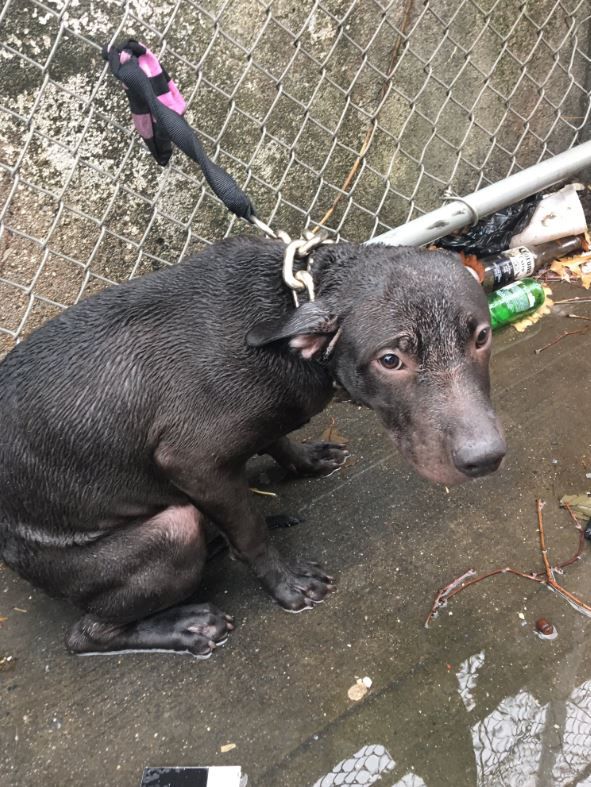
But while on a routine patrol in the area, NYPD officer Michael Pascale caught a glimpse of the abandoned dog.
“Just out of the corner of my eye I saw him,” he told the New York Post. “I jumped out of the car before the car even stopped.”
He found him scarcely moving, but still managing a whimper.
The officer wrapped the near-frozen dog in a towel.
“He was just looking up at me with these eyes … sitting in this puddle of water,” Pascale added. “I knew I had to get him out of there.”
Pascale and his partner wasted no time in ushering Joe to a local shelter. A triumphant photo of the pair was taken and later tweeted by NYPD Special Ops.

And that’s where you might think the chance encounter between Pascale and Joe would end.
But three weeks would pass and Joe was still at the shelter looking for a family. So Pascale, who had been keeping tabs on the dog, came to his rescue once again.
And this rescue would last a lifetime. Last week, after filling out the adoption papers, Pascale took Joe home for good.
“I felt a connection,” he told News 12. “I felt responsibility to make sure that he was going to have a good home, especially after what he experienced that day.”
ooOOoo
Officer Michael Pascale, you are a very good person. And I know Joe will be very happy with you.
This is important!
January 31, 2019 — Hill’s Pet Nutrition is voluntarily recalling select canned dog food products due to potentially elevated levels of vitamin D.
Vitamin D, when consumed at very high levels, can lead to serious health issues in dogs including kidney dysfunction.
What’s Recalled?


The following products and lot numbers are affected by the recall.
Difficulty reading the image below? Click here to view the actual FDA statement.

About Excessive Levels of Vitamin D
While vitamin D is an essential nutrient for dogs, ingestion of elevated levels can lead to potential health issues depending on the level of vitamin D and the length of exposure.
Dogs may exhibit symptoms such as vomiting, loss of appetite, increased thirst, increased urination, excessive drooling, and weight loss.
Pet parents with dogs who have consumed any of the products listed and are exhibiting any of these signs should contact their veterinarian.
In most cases, complete recovery is expected after discontinuation of feeding.
Where Were the Products Sold?
In the United States, the affected canned dog foods were distributed through retail pet stores and veterinary clinics nationwide.
No dry foods, cat foods, or treats are affected.
Message from the Company
Hill’s Pet Nutrition learned of the potential for elevated vitamin D levels in some of our canned dog foods after receiving a complaint in the United States about a dog exhibiting signs of elevated vitamin D levels.
Our investigation confirmed elevated levels of vitamin D due to a supplier error.
We care deeply about all pets and are committed to providing pet parents with safe and high quality products.
Hill’s has identified and isolated the error and, to prevent this from happening again, we have required our supplier to implement additional quality testing prior to their release of ingredients.
In addition to our existing safety processes, we are adding our own further testing of incoming ingredients.
This voluntary recall only impacts canned dog food and primarily in the United States.
It is being conducted in cooperation with the U.S. Food and Drug Administration.
What to Do?
Pet parents who purchased the product with the specific lot/date codes listed should discontinue feeding and dispose those products immediately.
To have discarded products replaced at no cost or for further information…
Please contact Hill’s Pet Nutrition, Inc. at 800-445-5777 Monday-Friday 9 AM to 5 PM (CST) or at contactus@hillspet.com.
Information can also be found at:
Impacted products outside of the United States will be subject to separate notices on the country-specific website.
If you are outside of the United States, please check your own country’s Hill’s website for more information.
U.S. citizens can report complaints about FDA-regulated pet food products by calling the consumer complaint coordinator in your area.
Or go to https://www.fda.gov/petfoodcomplaints.
Canadians can report any health or safety incidents related to the use of this product by filling out the Consumer Product Incident Report Form.
ooOOoo
Please share with all the other dog owners you know!
Woody’s Pet Food Deli Raw Food Recall
January 28, 2019 — The Minnesota Department of Agriculture is notifying consumers of a recall of raw turkey pet food from Woody’s Pet Food Deli due to Salmonella contamination.
This recall was issued after product samples collected by the MDA tested positive for Salmonella.
 oooo
oooo

oooo
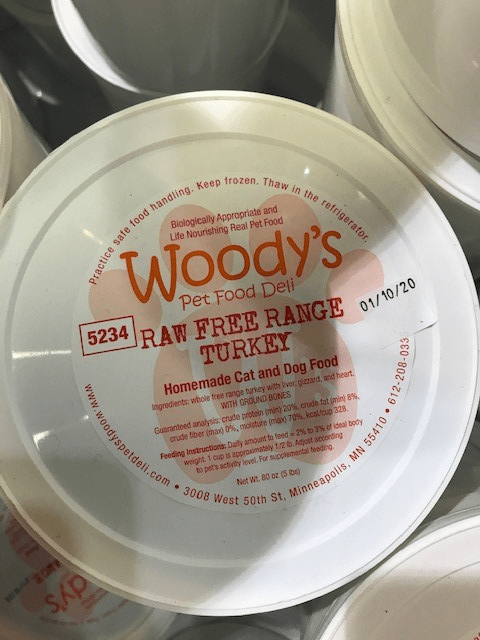
What’s Being Recalled?
The recalled product was sold in 5-pound plastic containers labeled “Woody’s Pet Food Deli Raw Free Range Turkey” and can be identified by the white date sticker on the cover of the pet food container.
The product was sold at Woody’s Pet Food Deli locations in Minneapolis, St. Paul and Woodbury.
The following three lots of product are being recalled:
No other lots of Woody’s Pet Food Deli products are affected by the recall.
What Caused the Recall?
Sampling was begun after the Minnesota Department of Health (MDH) identified a human case of Salmonella linked to the pet food.
The person with Salmonella infection was identified as part of an ongoing, multistate investigation of Salmonella Reading infections coordinated by the Centers for Disease Control and Prevention (CDC).
MDH’s interview of the person revealed that Woody’s Pet Deli raw ground turkey pet food was regularly fed to a pet in the household.
The pet also tested positive for Salmonella, but not the outbreak strain.
In February 2018, MDA and MDH investigated two other cases of Salmonella Reading that matched the outbreak strain and were linked to raw ground turkey pet food from a different manufacturer.
About Salmonella
Symptoms of Salmonella infection include diarrhea, abdominal pain and fever.
Symptoms usually begin within 12 to 96 hours after exposure, but they can begin up to two weeks after exposure.
Infections usually resolve in five to seven days, but about 28 percent of laboratory-confirmed cases require hospitalization.
If you’ve handled these products or had contact with an animal that has eaten these products, become ill and are concerned about your health, please consult your health care provider for more information.
After eating or coming into contact with Salmonella-containing food, pets can spread the bacteria from their mouths, saliva, fur and feces, even if they’re not showing signs of illness, to humans and other animals in the household.
Pet dishes, floors and the environment around the feeding station should be thoroughly cleaned and disinfected.
Pets with a Salmonella infection may be lethargic and have decreased appetite, diarrhea, fever and vomiting.
Pets exposed to contaminated food can also be infected without showing symptoms.
If your pet has consumed the recalled product and has these symptoms, contact your veterinarian.
Salmonella bacteria can survive for weeks in the household environment, which can serve as a continuing source of infection.
CDC does not recommend feeding a raw meat diet to pets because it can make animals and people sick.
If you choose to use pet food containing raw meat, follow CDC’s tips for healthy feeding.
What to Do?
If you have recalled product in your home, you should throw it out or return it to a Woody’s Pet Food Deli for a full refund.
Do not feed the contaminated product to pets.
Consumers with questions can contact the Woody’s Pet Food Deli stores directly at the following phone numbers:
Or by email at info@woodyspetdeli.com.
U.S. citizens can report complaints about FDA-regulated pet food products by calling the consumer complaint coordinator in your area.
Or go to https://www.fda.gov/petfoodcomplaints.
Canadians can report any health or safety incidents related to the use of this product by filling out the Consumer Product Incident Report Form.
ooOOoo
As per usual, feel free to share this as far and wide as possible.
Another guest post.
There’s been a flurry of requests to share a guest post with you all.
To be honest, I love it. So long as the author is not trying to sell something.
Anyway, here’s David Huner with a very useful guest article.
ooOOoo
Why are Long Dog Nails a Problem?
Fear of nail trims is a quite common issue dog guardian’s face and therefore the concern will vary from a mild dislike to outright terror, depending on the dog. For a few pet parents, the only way to trim a dog’s nails is under anesthesia that is certainly not a choice that works each week. Several give up making an attempt and simply permit the dog’s nails to stay long. Whereas the frustration is comprehensible, this selection will result in health drawbacks for dogs. Overgrown nails have an effect on a dog’s posture, eventually resulting in joint issues and inflammatory disease. They’re also a lot of vulnerable to splitting and breaking in painful ways. Long nails are a problem for humans likewise. Dogs with longer nails are more likely to destroy furniture and alternative objects, unwittingly, further as break human skin once jumping up to mention hello or when playing.
The most common reasons for avoiding nail trims are that the owner is frightened of “quicking” the dog, or that the dog fusses and creates unhealthy feelings round the procedure. Nail cutting becomes a happening encircled by angst and drama. For very active dogs who run all day long on varied surfaces, cutting nails might not be necessary. High mileage wears them down naturally.
But among town or community dogs who are lucky to induce a mile or 2 walk daily, excessively long toenails are more common than not.
Reducing stress once trimming your dog’s nails
If your dog is fearful of having nails cut, what are you able to do? Here are some ideas:
Some dogs’ nails can reside a healthy length if they’re exercised frequently on a rougher surface like concrete or pavement.
Another innovative plan is to make a filing “board” that consists of a sheet of wood lined with sandpaper. You teach your dog a paw target behavior so apply that behavior to the board, therefore the dog effectively is filing down his own nails as he paws the board.
Nail trim mats are essentially doormats with a rough surface that files the dog’s nails each time he walks on the mat.
While these concepts are often useful, a desirable choice is to be ready to trim your dog’s nails whenever you need to. A good set up is to do away with your nail clippers all at once and switch to a nail grinder.
Here are 8 Best Tips to Clip Dog Nails When Dog is Scared of It
1. PREPARATION IS PARAMOUNT!
First, be ready. It’s essential that you simply recognize specifically however your tools work, this includes where and how the blade slides and moves. Without this knowledge, you will not be able to totally make sure that you’re cutting the nail properly and within the correct place. In addition, if you’ve got any queries or uncertainties with the tool, take care to look up the answers before using the product on your dog’s nails. Cutting nails are some things that ought to never be a ‘learn as you go’ task.
2. Don’t Pressure Him
If you do not dare to cut your nails and take your dog to the vet to try and do it, attempt to be as delicate as potential with your pet. A trick? Choose an extended walk together with your furry friend before going, thus your pet is going to be tired and cannot be thus stressed before this dreaded moment.
3. Observe It With A Prize:
After that ‘tragic’ moment provide a prize to your pet as a ‘snack or a chuche’, during this approach you’ll build a process that may be ‘traumatic’ a pleasant moment for your dog. There’s nothing higher than the relationship of ideas and experiences to form it less tedious.
Whether you head to the vet to cut your dog’s nails or if you opt to do it at home, discuss with your dog during a loving way, this fashion you’ll feel more secure and calm.
4. Safety First
If you’re not a professional, never cut your dog’s nails, you may get to the hyponychial and cause injuries. If you’re feeling more secure, you’ll be able to prefer to file your pet’s nails rather than cutting them. There’s presently a series of very effective electric files on the market. But beware, the sound they emit scares many dogs, thus before you buy one make sure you’ll not be afraid of your furry friend.
5. Get your Time
While each you and your dog might want to finish the nail trimming as shortly as doable, it’s necessary to take your time. Dog nail clipping is tough even for the specialists. To stop accidents, go slowly and cautiously.
6. Firm Grip
The next step in nail trimming has a firm grip on their paw and pushing back any hair that’s within the way of the nail. You will need to make sure that you are able to see specifically wherever you’ll be cutting.
It is necessary for pet homeowners to understand that if the dog’s nails are overgrown, their paw can likely be sore and tender. Stay alert and responsive to your dog’s behavior after you take their paw in your hand. If they yelp, be gentler. However, your grip ought to be firm enough that their paw doesn’t accidentally slip one direction or the other during the cutting method.
7. Dogs Nails are Totally Different than Our Nails
Next, it’s necessary for dog homeowners to acknowledge that our nails are very different from our dog’s nails and should be cut consequently. Most significantly, you must never place the dog’s entire nail within the clipper or cut the whole nail. The nail ought to be cut from beneath and at a 45-degree angle.
Now, fastidiously place the gap of the nail clippers over the tip of the white nail. It’s imperative that you only cut within the white nail area. Again, if you’ve got any question concerning this it’s crucial that you get an accurate answer before cutting the dog’s nails. Cutting past the white nail area means you’re cutting within the pink area of the nail (also referred to as the “quick”). The pink area of the nail is wherever blood vessels are live. Cutting into this space are unbelievably painful and might cause a considerable quantity of bleeding. Trust us, you’ll be wanting to avoid this at all costs.
8. Creating a Clean Cut
Finally, hold the paw steady and create a clean, swish cut by gently squeezing on the handle of the nail trimmer. It’s necessary to have an educated idea of however tightly you’ll need to squeeze so as to urge a clean cut, however not unknowingly hurt your pup’s tender paw.
Precautions of Dog Nail Trimming
There are some necessary precautions that pet homeowners should remember of before cutting their dog’s nails.
THE “QUICK”
First, as we previously mentioned, the “quick” is that the living a part of the nail. It’s the area of the nail that contains blood vessels and nerve endings. Unknowingly cutting the quick can usually lead to a bleeding toenail and a substantial quantity of pain.
DARK NAILS
Additionally, the color of your dog will have an effect on the color of their nails which may increase the problem of determining where the “white nail” ends. For example, several black and dark brown dogs can have black nails. Black dog nails will prove to be unbelievably difficult and sometimes lead to the owner accidentally cutting the nail too short.
NAIL SHAPE
Finally, pet homeowners will make sure that they’re cutting the nails appropriately just by paying attention to the shape of the nail. The bottom of the nail should form a triangle area. Above all, go slowly. You’ll be able to invariably cut additional nail, however there’s no going back if too much is cut off.
What to try and do if you cut Nails Too Short
The main factor that the majority pet homeowners worry once cutting their dog’s nails is what happens if you narrow too deep. First, we urge our readers to actually try to avoid this. Always cut the minimum off and go from there depending if you wish to cut more. However, we all know that accidents happen. Here’s what to own reachable just in case you narrow your dog’s nails too short.
1. STYPTIC POWDER
Professional groomers and veterinarians ordinarily use a substance referred to as styptic powder to help stop bleeding from cutting nails, minor cuts, and scratches. Styptic powder not only stops bleeding but also serves as an antiseptic, serving to stop infections and creating it safe to use.
2. BAR OF SOAP
If you do not have styptic powder in your home, you’ll be able to use a fragrance-free bar of soap. Merely hold the bar against the toenail for some minutes and permit the blood to clot.
3. BAND-AID
Finally, if you’ve got nothing else reachable you’ll be able to use a Band-Aid to help control the bleeding. However, please recognize that this is often simply a temporary solution. If the bleeding continues it’ll be necessary to get one of the aforementioned tools so as to clot the blood. In severe cases, veterinary treatment may be necessary.
The Final Decision
Your ability to clip your dog nails without inflicting a lot of pain assure him and create him more at home another time you need to try and do a similar.
Author Bio:
David Huner is the founder of the pettrainingtip, where he and his team provides all necessary information related to pet care, supplies, health and even more. His team also always doing research on new pet related article topics to cover information from all bases including training tips.
ooOOoo
I don’t know about you but I found this article extremely useful.
A delightful share.
I only recently came across this blog and loved it.
There is more and more great stuff about dogs it seems to me.
Anyway, I have permission to share it with you.
ooOOoo

I have always had dogs around me. I remember my first dog, Sugar, from when I was a baby. She was always by my side. I am very grateful to be raised that way and in fact it made me a healthier person! Here are proven facts and studies that show dogs are very beneficial for humans!
ooOOoo
Give your dog/s a hug and remember why they are so special.
 Learning from Dogs