Staying with the theme of the relationship with humanity’s oldest friend.
Yesterday, I offered the first of two articles forwarded to me by local friend Jim, a vet, about the domestication of the wolf.
Here is the second.
Study narrows origin of dogs
By Krishna Ramanujan/ January 16th, 2014
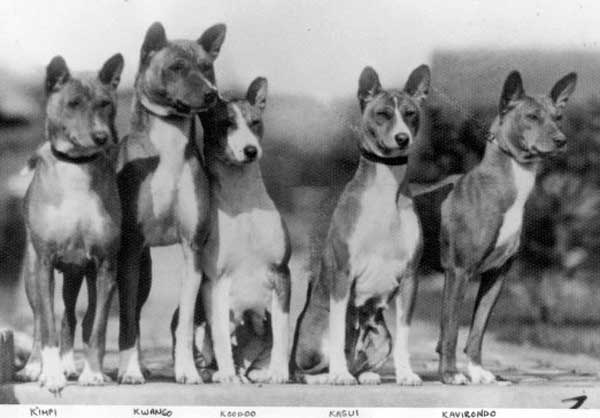
Genomic sequencing of genetically divergent dogs, such as this basenji from the Congo, together with wolves and other wild canids, provides rich information about the history of domestic dogs.
Dogs were domesticated between 9,000 and 34,000 years ago, suggesting the earliest dogs most likely arose when humans were still hunting and gathering – before the advent of agriculture around 10,000 years ago, according to an analysis of individual genomes of modern dogs and gray wolves.
An international team of researchers, who published their report in PLoS Genetics Jan. 16, studied genomes of three gray wolves, one each from China, Croatia and Israel – all areas thought to be possible geographic centers of dog domestication. They also studied dog genomes from an African basenji and an Australian dingo; both breeds come from places with no history of wolves, where recent mixing with wolves could not have occurred.
Their findings revealed the three wolves were more closely related to each other than to any of the dogs. Likewise, the two dog genomes and a third boxer genome resembled each other more closely than the wolves. This suggests that modern dogs and gray wolves represent sister branches on an evolutionary tree descending from an older, common ancestor. The results contrast with previous theories that speculated dogs evolved from one of the sampled populations of gray wolves.
“This is an incredibly rich new dataset, and it has allowed us to carry out the most detailed analysis yet of the genetic history of dogs and wolves,” said Adam Siepel, associate professor of biological statistics and computational biology at Cornell and a co-author of the paper. “There are still many open questions, but this study moves the ball forward,” Siepel added.
Computer methods for analyzing complete genome sequences developed by Ilan Gronau, the paper’s second author and a postdoctoral associate in Siepel’s lab, played a key role in the collaboration. Gronau’s computer program, called G-PhoCS (Generalized Phylogenetic Coalescent Sampler), was previously applied with success in a 2011 Nature Genetics study of early human history and demographics.
In this case, G-PhoCS provided a detailed picture of the demographic changes that occurred during the divergence of dogs from wolves. The analysis revealed there was a sizable pruning in population of early dogs and wolves around the time of domestication. Dogs suffered a sixteenfold cut in population size as they diverged from an early wolf ancestor. Gray wolves also experienced sharp drops in population, suggesting that the genetic diversity among both species’ common ancestors was larger than represented by dogs and modern wolves. In addition, there was considerable gene flow between dogs and wolves after domestication. Accounting for gene flow was a major challenge in the analysis, and Gronau’s research on this topic proved valuable in obtaining an accurate model of canid demography.
The picture emerging from this study will allow researchers to better interpret genetic differences observed between dogs and wolves and to identify differences driven by natural selection. “This paper sets the stage for the next step in the study of dog domestication that tries to determine the genetic changes that enabled this amazing transformation,” said Gronau.
The study’s senior authors included geneticists John Novembre at the University of Chicago and Robert Wayne at the University of California, Los Angeles (UCLA). Adam Freeman, a postdoctoral fellow at UCLA, was the paper’s first author. Adam Boyko, a Cornell assistant professor of biomedical sciences, also co-authored the paper.
The study was funded by various sources, including the National Science Foundation, National Institutes of Health and Life Technologies.
Staying with the theme of our early companions, back on the 28th February, 2015 there was an article in the UK’s Guardian newspaper about the way wolves helped early modern man. Now I don’t have permission to republish the full article but here’s a taste:
How hunting with wolves helped humans outsmart the Neanderthals
Forty thousand years ago in Europe our ancestors formed a crucial and lasting alliance that enabled us to finish off our evolutionary cousins, the Neanderthals.
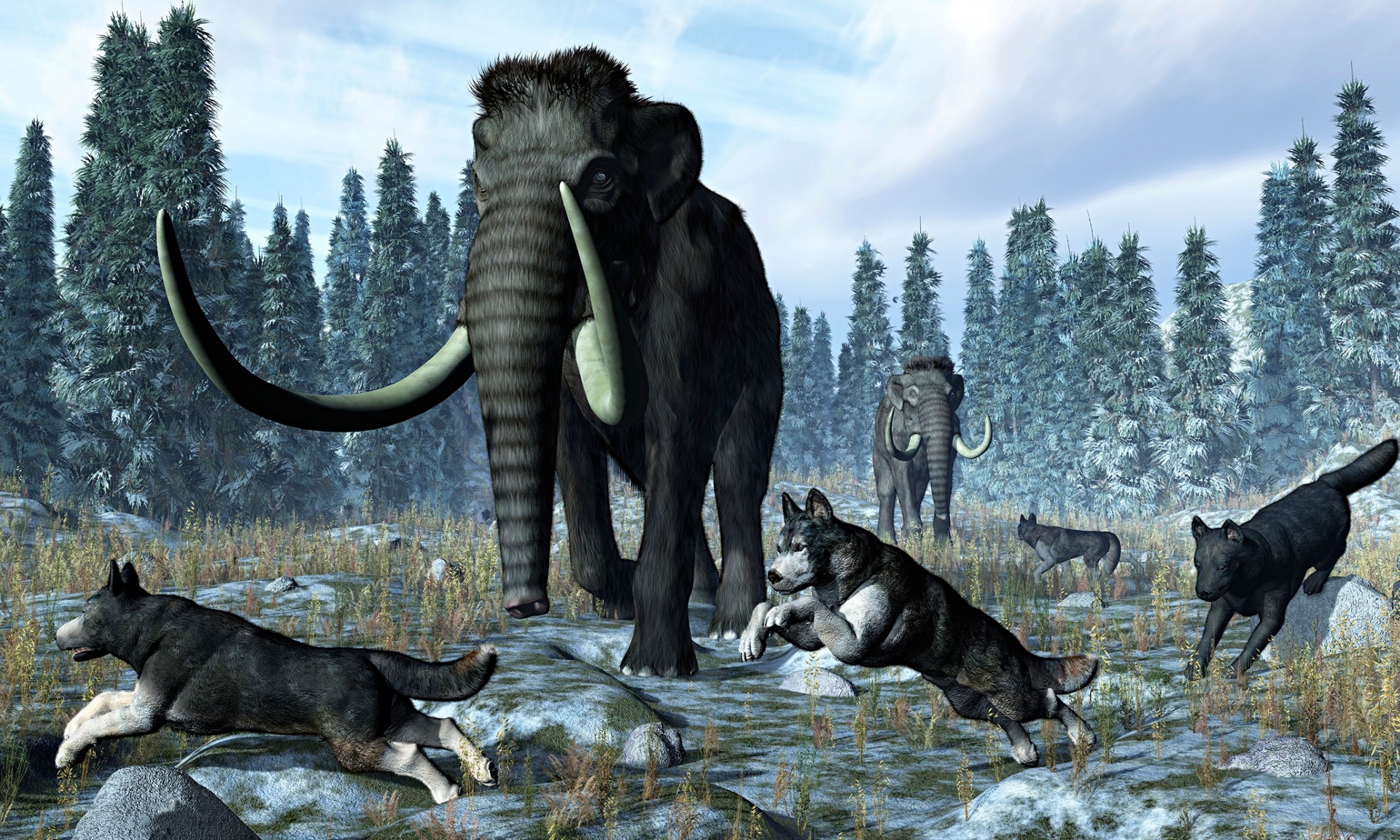
A pack of dire wolves crosses paths with two mammoths during the Upper Pleistocene Epoch. Photograph: Alamy
Dogs are humanity’s oldest friends, renowned for their loyalty and abilities to guard, hunt and chase. But modern humans may owe even more to them than we previously realised. We may have to thank them for helping us eradicate our caveman rivals, the Neanderthals.
According to a leading US anthropologist, early dogs, bred from wolves, played a critical role in the modern human’s takeover of Europe 40,000 years ago when we vanquished the Neanderthal locals.
The Guardian article finishes, thus:
Thus we began to change the wolf’s appearance and over the millennia turned them into all the breeds of dog we have today, from corgis to great Danes. Intriguingly, they may have changed our appearances as well, says [Professor Pat] Shipman, whose book, The Invaders: How Humans and Their Dogs Drove Neanderthals to Extinction, will be published this month. Consider the whites of our eyes, she states. The wolf possesses white sclera as does Homo sapiens though, crucially, it is the only primate that has them.
“The main advantage of having white sclera is that it is very easy to work out what another person is gazing at,” added Shipman. “It provides a very useful form of non-verbal communication and would have been of immense help to early hunters. They would been able to communicate silently but very effectively.”
Thus the mutation conferring white sclera could have become increasingly common among modern humans 40,000 years ago and would have conferred an advantage on those who were hunting with dogs.
By contrast, there is no evidence of any kind that Neanderthals had any relationship with dogs and instead they appear to have continued to hunt mammoths and elks on their own, a punishing method for acquiring food. Already stressed by the arrival of modern humans in Europe, our alliance with wolves would have been the final straw for Neanderthals.
Nor does the story stop in Europe, added Shipman. “I would see this as the beginning of the humans’ long invasion of the world. We took dogs with us wherever we went after our alliance formed in the palaeolithic. We took them to America and to the Pacific Islands. They made hunting easy and helped guard our food. It has been a very powerful alliance.”
RISE AND FALL OF NEANDERTHALS
250,000 years ago The first Neanderthals appear in Europe.
200,000 years The first modern humans appear in Africa.
70,000 years The first modern humans leave Africa.
50-60,000 years Modern humans and Neanderthals share territory in Middle East.
45,000 years Modern humans enter Europe.
40,000 years Neanderthals disappear.
I don’t know about you but I find the history of our, as in man’s, relationship with wolves and thence with dogs to be not just romantic but spiritually significant. To know, as I hug one of our many huggable dogs here at home, that I am bonding my mind and emotions with an animal that has been my partner for tens of thousands of years is beautiful beyond words.
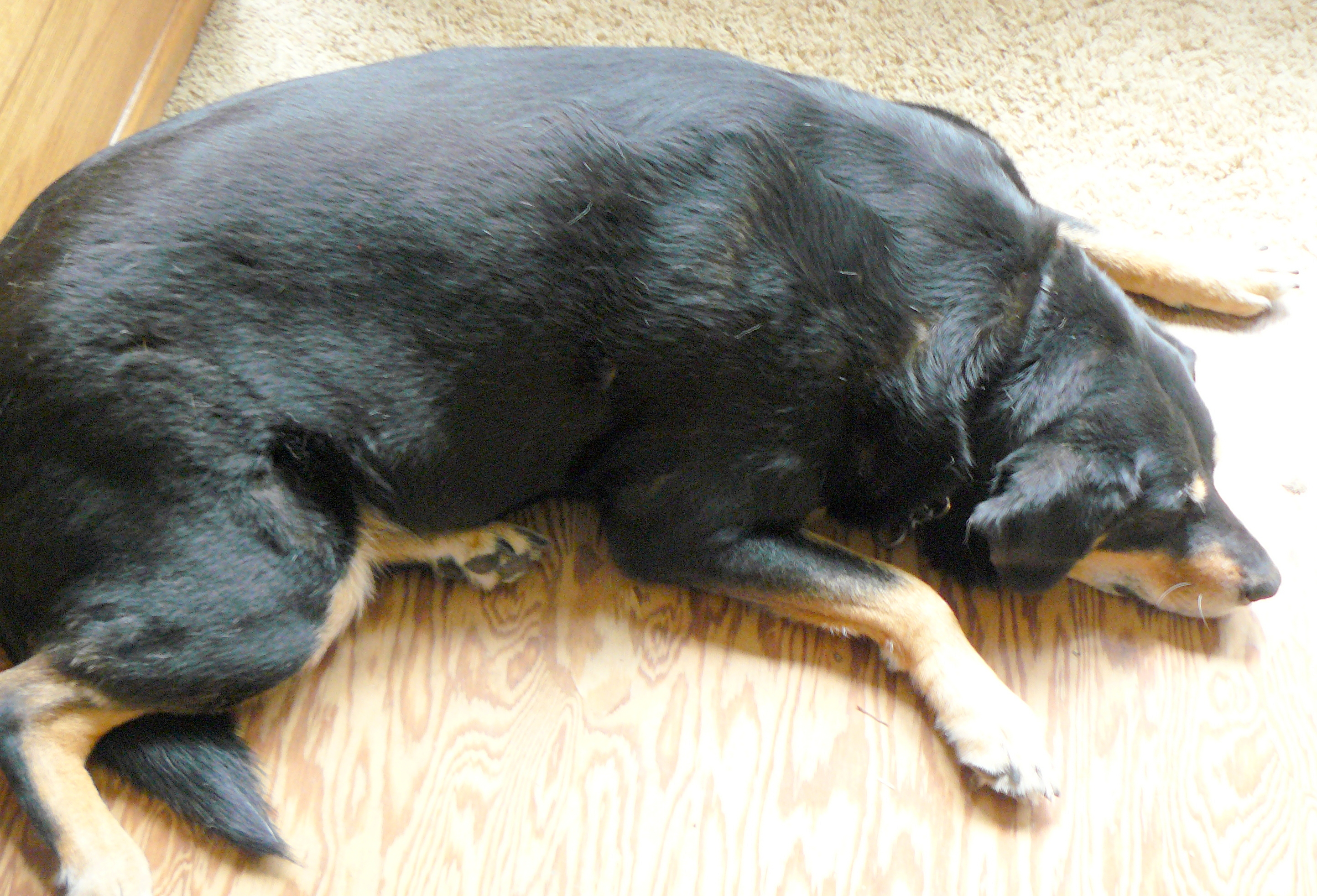
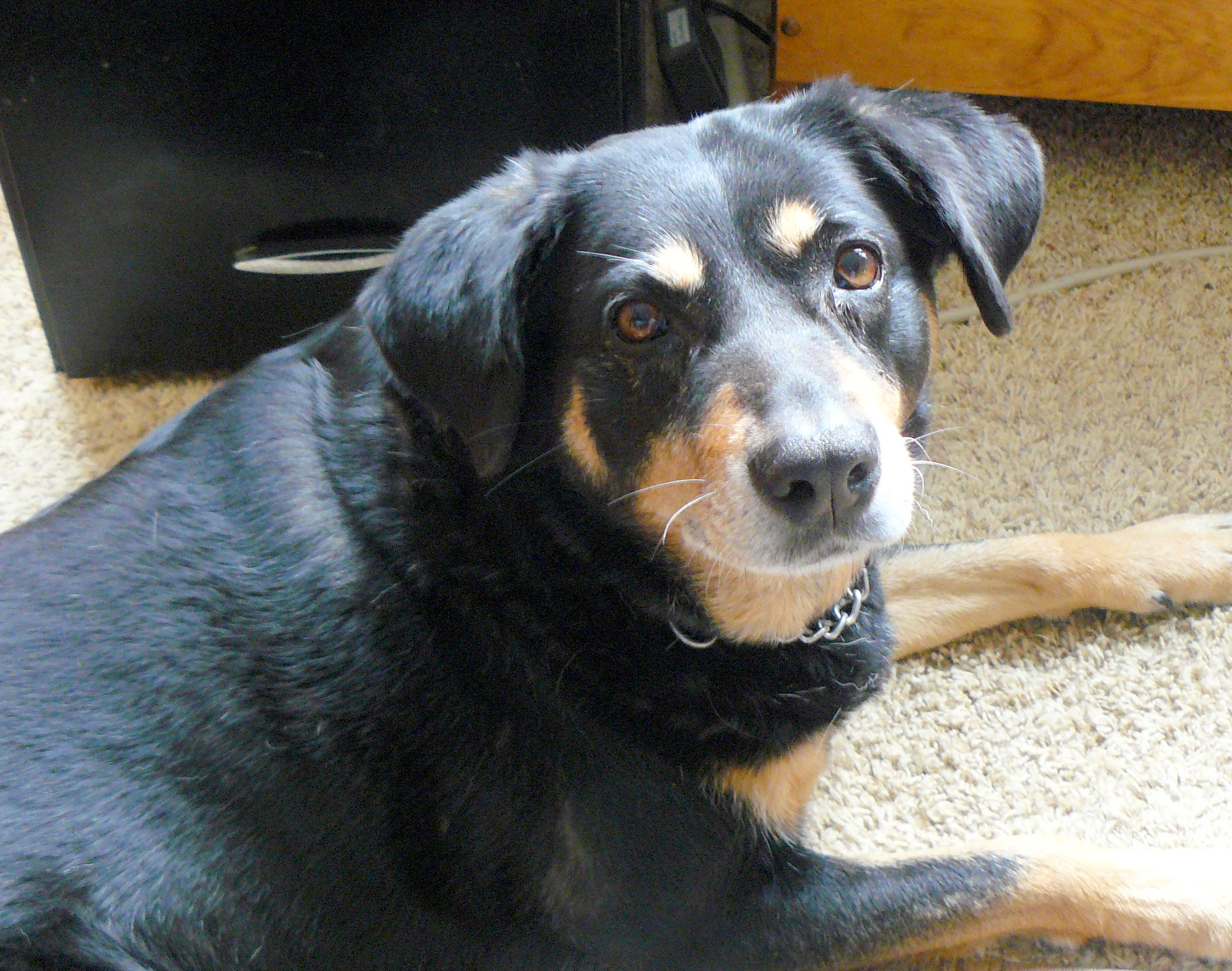
(I took a break of a couple of minutes at this point to grab my camera and take a photograph of Hazel sleeping next to my chair, as she so often does when I am writing. Then one of her when she looked up at me. Here they are:)
oooo
That second photograph reminds me that somewhere I read that dogs are the only animal that can look to where a human is directing a gaze or pointing a finger.
The revised understanding of humanity’s oldest friend.
I mentioned in yesterday’s post how on Sunday afternoon, Jean and I, together with little Sweeny, went for a forest walk with friends, Janet and Jim and their dog Louie, who all live a few hundred yards from us along Hugo Road.
As Jim, a vet, and I were walking and chatting the subject, inevitably, turned to dogs! Or more precisely the history of the domestication of dogs. Jim then promised to send me a couple of papers highlighting a new study that has turned the clock back, so to speak, on when domestic dogs evolved from European wolves.
Here’s the first of those reports.
Origin of Domestic Dogs
New analysis suggests that domestic dogs evolved from European wolves that interacted with human hunter-gatherers.
By Ed Yong | November 14, 2013
Domestic dogs evolved from a group of wolves that came into contact with European hunter-gatherers between 18,800 and 32,100 years ago and may have since died out.
This origin story comes from a new study that compares DNA from dozens of dogs and wolves, including 18 ancient fossils. The results, published today (November 14) in Science, provide the clearest picture yet of where, when, and how wild predators came to be man’s best friend.
“It really is a sea change from the little bits of fragmentary DNA that have been reported in the past,” said Gregor Larson from Durham University in the U.K., who was not involved in the study. “It includes really old material from a wide range of sites.”
The new paper follows two earlier studies that looked at the genetic signatures of domestication in dogs, and came to differing conclusions about canine origins. One group suggested that dogs were domesticated around 10,000 years ago during the Agricultural Revolution, when wolves started scavenging human scrap heaps. Another concluded that wolves and dogs split 32,000 years ago, somewhere in East Asia.
Both studies compared the genes of a wide variety of living dogs and wolves, but modern samples can be deceptive. Dogs and wolves diverged so recently that many of their genes have not had time to separate into distinct lineages. They have also repeatedly hybridized with each other, further confusing their genealogies.
To deal with these problems, a team led by Olaf Thalmann from the University of Turku in Finland analyzed mitochondrial DNA from 18 fossil canids. They compared these ancient sequences to those from 49 modern wolves and 77 modern dogs, and built a family tree that charts their relationships.
The tree conclusively pinpointed Europe as the major nexus of dog domestication. It identified four clades of modern dogs, which are all most closely related to ancient European canids rather than wolves from China or the Middle East. “We didn’t expect the ancestry to be so clearly defined,” Thalmann told The Scientist.
“This suggests that the population of wolves in Europe that gave rise to modern dogs may have gone extinct, which is plausible given how humans have wiped out wolves over the centuries,” he added.
According to this new tree, the largest clade of domestic dogs last shared a common ancestor 18,800 years ago, and collectively, they last shared a common ancestor with a wolf around 32,100 years ago. They must have been domesticated at some point during this window.
These molecular dates fit with fossil evidence. The oldest dog fossils come from Western Europe and Siberia, and are thought to be at least 15,000 years old. By contrast, those from the Middle East and East Asia are believed to be 13,000 years old, at most. “The archaeologists would be happy,” said Larson.
The dates also make it unlikely that dogs were domesticated during the Agricultural Revolution, which took place millennia later. Instead, they must have first associated with European hunter-gatherers. They may have assisted humans in bringing down large prey, or could simply have scavenged leftover carcasses. Either way, their association with humans grew stronger and stronger, until they eventually evolved into domestic dogs.
However, Thalmann acknowledged that his team’s analysis does not include any ancient DNA from the Middle East or China, nor nuclear DNA from any of the fossils. In other ancient DNA studies, nuclear DNA sequences have revised the evolutionary stories told by mitochondrial ones.
“Who knows what we would find if we had ancient canid samples from East Asia or elsewhere, or were successful in amplifying nuclear DNA from ancient canids,” said Adam Boyko from Cornell University, who was not involved in the study, via email. “But that shouldn’t detract from the great work they were able to do here,” he added.
Larson cautioned that the paper is not the final word on canine origins. “It would be a mistake to jump and say that dogs were domesticated in Europe and not anywhere else,” he said. “We know pigs were domesticated independently in China and Turkey, so there’s no thinking that dog domestication had to happen in just one place.”
Indeed, Thalmann’s team showed that the famous Goyet dog—a 36,000 year old Belgian skull, supposedly belonging to the oldest known dog — is not directly ancestral to modern dogs. Instead, it represents an ancient sister lineage that died out. The same is true for other old specimens from Belgium and Russia’s Altai Mountains. “Maybe they were trial domestications that were not successful,” said Thalmann.
O. Thalmann et al., “Complete mitochondrial genomes of ancient canids suggest a European origin of domestic dogs,” Science, doi:10.1126/science.1243650, 2013.
Clearly, a blog that is entitled Learning from Dogs needs to take notice of this new evidence!
So I will return tomorrow with the second of the reports.
Remains for the older prehistoric dog, which were excavated at Goyet Cave in Belgium, suggest to the researchers that the Aurignacian people of Europe from the Upper Paleolithic period first domesticated dogs.
Yesterday afternoon Jean and I were invited to join Jim and Janet on a forest walk joined by their dog, Louie, and our Sweeny.
Jim is a vet working locally here in Oregon and, as you might expect, much of the conversation was about animals, nature and ‘the meaning of life’.
By the time we were back home and dogs fed and horses brought in for the night, my creative juices were severely lacking. I browsed through what had been published in March, 2014 and came across a post called My wish for the world that came out on the 28th of that month.
It seemed such an appropriate item to republish for today, with the kind permission of the author, Jeremy Nathan Marks.
ooOOoo
The Sand County
“In wildness is the preservation of the world.” -Henry David Thoreau
My Wish for the World
If I could leave behind but one lasting accomplishment from my life it would be to have changed the hearts and minds of all those people who accept or practice cruelty towards animals.
Now there are a great many worthy causes in this world which fully deserve the attention of all those who believe in justice, in fairness, and in mercy. But I also know that each of us -perhaps- has a cause that stands above and beyond all of the other noble concerns that we know exist. For me this cause is the humane treatment of animals. And when I say animals I mean ALL animals. Permit me to explain.
My wife and I have two dogs. Both are mutts and both were adopted through the Animal Rescue Foundation of Ontario (ARF). I have blogged about ARF before and can only offer the highest praise for the organization. Courtesy of ARF, we have been provided with free dog training classes which have proved to be an invaluable resource in learning about dog behaviour. Better yet, the dog trainer we have worked with has made herself available for our questions outside of class.
Whenever we have encountered a behavioural challenge that we have not understood or have been unsure of a proper method of approach, this trainer has been very obliging. Importantly, she believes in positive reinforcement and does not believe in the use of pain, dominance, or stress as a means of conditioning dogs. For my wife and me, this fits in with our moral beliefs and our ethics.
Our eldest dog, who just turned one year old, is a 60 lbs. shepherd mix who has a “leash anxiety,” if I may call it that. When we are out on a walk and she sees another dog she becomes quite agitated and will bark loudly and lunge at the other dog. This has puzzled us because our dog loves to play with others and is frequently socialized. We grew increasingly concerned because our use of treats and positive reinforcement was not working. And because our dog is a large shepherd, we both have worried that she might develop a reputation and become a source of fear or suspicion by other people in our neighbourhood.
In due course, we contacted our trainer for advice. She suggested that rather than putting our dog in a stressful situation by repeatedly walking her past other dogs (and trying to control her behaviour when she becomes agitated) we should take her out of the situation instead. So, when we see another dog approaching we turn around and walk in a different direction, all the while rewarding our dog with treats and telling her she is a good girl. We have recently started doing so and the improvements are showing. So, let us fast forward to today. . .
This afternoon we took both of our dogs on a 20 km hike along the Thames River. The trail is like so many other trails; it forms a narrow path through the woods which makes passing other trail goers challenging at points. If another dog were to come toward us this narrowness would pose something of a challenge because we cannot turn around (and head home). Also, because the trail runs through the woods, there aren’t often places to step aside and let other dogs pass by without our oldest detecting them.
Inevitably we encountered another dog. We were approached by a small dog that was off leash (which is posted as unlawful, actually). We heard the dog before we saw it and prepared ourselves for some nervousness on the part of our oldest. When the dog approach some barking ensued and I tried to move our dog, as best I could, off the trail to let the family that was approaching us pass by with their dog. When we informed the family that our dog is uncomfortable around other dogs when she is leashed they did not seem to understand that we wanted them to pass by us quickly. When our eldest became excited one of the women turned to us and said that we should “knee our dog in her side to show her who is dominant.”
I was appalled. Some woman, whom I have never met, who knows nothing about our dog or our relationship with our dog, was suggesting we use violence against her to show her who is boss. . . And this is a woman with a dog of her own!
My wife later remarked to me, as we were driving home, that she would not feel entitled to the love and affection our dogs offer us if we used violence on them in any way. I thought what she said was beautiful and captured the principle of the matter perfectly. We want our dogs to love us and to trust us. How would we have any right to their love and affection if we were to lead them to believe that at any moment and for no apparent reason we might use painful force on them?
Dogs do not understand why you use violence against them. They do not reason or understand cause-and-effect the same way that humans do. This is not a fault. It does not mean they are stupid or of lesser value than human beings. It does not mean they deserve to be treated with cruelty or brutality. Dogs experience violence as pain and suffering that is inflicted out of the blue. They are not only unprepared for it, but are often completely defenceless against it. How could we ever defend such an inhumane practice?
It troubles me immensely that someone, whom I do not know, could so nonchalantly counsel me to violence against my dog. Her arrogant presumption aside, this was a monstrous act. It was barbaric. Nowhere in polite society would someone get away with counseling violence against a child. . . or against someone who is weaker. Yet violence against animals, even against dogs who supposedly occupy a place closer to human hearts than most other animals, is countenanced and even endorsed. (I won’t even begin to explain why the Dog Whisperer horrifies and saddens me.) If a young child was caught torturing animals we would all raise the alarm. The torture of animals, by a young child, is seen as an early warning sign of severe mental disturbance and has been linked to homicidal tendencies and highly violent behaviour.
One of the great villains of American literature, the character Popeye from William Faulkner’s novel Sanctuary is depicted as a torturer of animals in his youth. Now I know that increasingly there are laws on the books in many nations that are designed to prevent cruelty to animals and to prosecute perpetrators. This is a positive development that I certainly applaud. But I would argue that there is something broader, more troubling in our relationship with animals that goes beyond the bounds of this current posting. It is a topic I will return to time and again at this blog. What troubles me is how animals are frequently seen as objects if they are even seen or thought of at all.
The damage that our destruction of the forests, deserts, plains, and oceans of this world does to countless species is something that has been well documented. We do this because we are interested in acquiring the resources we feel are vital to ensuring our survival. . . but often it is our comfort or our “way of life” that really is the central reason for our pursuit of these things. There is a deep seated human arrogance which treats animals as inferior forms of life. We see them as less sophisticated because they cannot compete with us for power on this planet.
We suffer from what Aldo Leopold called an “Abrahamic view” toward the land. Somewhere biblical “dominion” over nature became domination.
This is tragic. And it is not necessary. I was deeply troubled by what I experienced today and it reminded me that if I could leave behind but one lasting accomplishment it would be to somehow awaken a sense of love, of mercy, and a thirst for justice where the animal life on this planet is concerned.
Just imagine what realizing that love would really mean. By achieving a love that transcends the will to power, the will to control, and the will to domination our embrace of animals really is, after all, the achievement of that revelatory love that is at the heart of the great religions and the religious spirit. Love for animals is love for justice and mercy. It is reverence for life. And it is peace.
I think Henry Beston captures these sentiments beautifully: “Remote from universal nature, and living by complicated artifice, man in civilization surveys the creature through the glass of his knowledge and sees thereby a feather magnified and the whole image in distortion. We patronize them for their incompleteness, for their tragic fate in having taken form so far below ourselves. And therein we err, and greatly err. For the animal shall not be measured by man. In a world older and more complete than ours they move finished and complete, gifted with extensions of the senses we have lost or never attained, living by voices we shall never hear. They are not brethren; they are not underlings; they are other nations, caught with ourselves in the net of life and time, fellow prisoners of the splendour and travail of the earth.” -from The Outermost House, by Henry Beston (quoted from Farley Mowat’s A Whale For The Killing)
ooOOoo
A year ago, I closed the post with these words, “I’m sure you will join me in thanking Jeremy for writing such a beautiful and heart-felt essay.” They more than stand as closing words today. Do please drop in to Jeremy’s blog The Sand County.
Dogs watch us all the time and read our body language like a sixth sense.
A fascinating, and inspiring, insight into our favourite animal companion.
Published on Jan 26, 2014
Check out BBC Earth on BBC online
Dogs watch us all the time and read our body language like a sixth sense. They also smell our bodies for changes.
Max smelt cancer in Maureen before any medical scans could pick it up. Dogs do this naturally and can be trained to pick up on tiny volatile chemicals given off by cancerous tumors. They can even be taught to alert diabetics to low blood sugar levels.
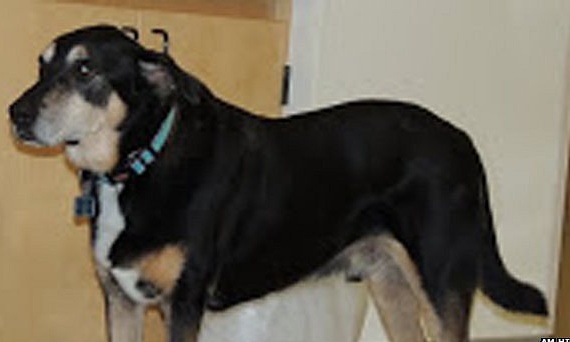
This is Frankie, a German shepherd mix. He can sniff out thyroid cancer in patients’ urine samples with 88% accuracy, according to a new study.
Image via The Endocrine Society.
A trained scent dog accurately identified whether patients’ urine samples had thyroid cancer or were benign (noncancerous) 88 percent of the time, according to a new study by researchers at University of Arkansas for Medical Sciences (UAMS). The results were presented March 6 at the Endocrine Society’s annual meeting in San Diego.
Approximately 62,450 new cases of thyroid cancer will be diagnosed in the US this year, and around 1,950 Americans will die from the disease.
Techniques used to diagnose thyroid cancer include fine-needle aspiration biopsy, which involves the patient having a thin needle inserted into the thyroid gland in the neck to obtain a tissue sample. Donald Bodenner, MD, PhD chief of endocrine oncology at UAMS is the study’s senior investigator. Bodenner said:
Scent-trained canines could be used by physicians to detect the presence of thyroid cancer at an early stage and to avoid surgery when unwarranted.
Study-coauthor Arny Ferrando previously “imprinted,” or scent-trained, a rescued male German Shepherd-mix named Frankie to recognize the smell of cancer in thyroid tissue. Ferrando, who noted that dogs have at least 10 times more smell receptors than humans, said:
Frankie is the first dog trained to differentiate benign thyroid disease from thyroid cancer by smelling a person’s urine.
German shepherd mix Frankie, a formerly stray dog rescued in Little Rock, Arkansas, was trained to diagnosis thyroid cancer through scent imprinting. Image credit: AM Hinson/BBC
In this study, 34 patients gave a urine sample before they went on to have a biopsy of suspicious thyroid nodules and surgery. The surgical pathology result was diagnosed as cancer in 15 patients and benign thyroid disease in 19. These urine samples were presented one at a time to Frankie to sniff. Frankie had been trained to alert to a cancer sample by lying down, and turning away from a benign sample to alert the absence of cancer.
The dog’s alert matched the surgical pathology diagnosis in 30 of the 34 study samples, the investigators reported.
Bottom line: A new study by University of Arkansas for Medical Sciences (UAMS) researchers presented March 6, 2015 at the Endocrine Society’s annual meeting in San Diego described Frankie, a trained scent dog that accurately identified whether patients’ urine samples had thyroid cancer or were benign 88 percent of the time.
Last Friday, I published a post under the title: Written with a heavy heart! It was about the appalling atrocities being carried out by ISIS. I was humbled by the many replies.
Yesterday, Su sent me another email that contained a link to a short video of what happened in Holland in September, 2011 when a Muslim attempted to make his personal beliefs known to Queen Beatrix of Holland.
All will become clear when you watch the video.
Love is the answer!
Now at first sight this may seem a silly, naive comment from a Brit who is way past longing for the hippie days of the 60s.
Sue, I looked at Paul’s post and came away with tears rolling down my face. Why isn’t this shown on our news, why aren’t we doing more to save these people? We start wars for oil and political ideology but not to save children. Today i just heard that the last group of the Peace Corp just pulled out of Israel because it was no longer safe enough to be there. We can’t keep ignoring what is going on in other parts of the world yet what can we as individuals do? Your poem was perfect for the subject and brings out much of the same questions I have swirling in my head now.
Here’s another reminder of the power of love; a reminder of the role of dogs in allowing us humans to open our hearts and practice unconditional love.
It’s what Jean and I experienced when we were out shopping in Grants Pass yesterday morning.
We were in a largish store when I saw a grey-haired woman pushing her shopping cart. Nothing unusual about that! But this shopping cart had a small, black puppy riding in the section where handbags are placed; just beyond the push-bar.
Halfway down the same aisle that we were in, the lady paused, lifted the puppy into her arms, and was looking at some food items on a shelf. It was more than Jean and I could resist and we both approached the woman.
It turned out that the lady was 71 and had recently lost a dog from old age. As we petted the little puppy we learnt that he was 10 weeks old and that his name was Shadow.
Then without any prompting she went on to say:
People said I’m too old to be taking on a puppy. But I was so heart-broken when my dog died; so lonely without having him in my life. Now I have Shadow and I can face my days again. Little Shadow means the world to me. And I’m not going to worry about the future – I’m sure someone will take Shadow when I die. I just know that there is nothing better than the love of a little dog.
The power of love.
Of all the many things we can learn from dogs love is the greatest.
How to finish today’s post?
To me, only one way. Over to you: Simply Red.
Lives and loves
Don’t tell me about it
To respond to something permanent
You’ve got to be strong
Lives and loves
Only you know in your heart
How the pain felt
How the love made you melt
Me and you love
We have a way that seems to brighten up the day
We have our problems
Is the whole world asking, “Is it worth it?”
All the lovers in the world
Should they go on?
After all, they say
“You only live once”
Lives and loves
Only you know in your heart
How the pain felt
How the love made you melt
Me and you love
We have a way, that seems to brighten up the day
We have our problems
Is the whole world asking, “Is it worth it?”
All the lovers in the world
Should they go on
On and on and on
Lives and loves
Don’t tell me about it
Someone always gets hurt in it
You’ve got to be strong
Yeah lives and loves
Only we know in our hearts
How the pain felt
Oh your love made me melt
Me and you love
We had a way that seemed to brighten up the day
We had our problems
Is the whole world asking, “Is it worth it?”
All the lovers in the world
Should they go on?
After all, they say
“You only live once”
Very grateful to Deborah over at Dog Leader Mysteries for today’s post.
The following appeared over on Dog Leader Mysteries last Monday and is republished with Deborah’s permission. Please share this as far and wide as you can.
ooOOoo
1 minute for Irish Greyhounds
Featured by dogleadermysteries
Please help Irish Greyhounds by signing this Care2 petition
Save greyhound dogs’ lives in less than 1 minute
Bring Irish Greyhound Racing Regulations in line with the United Kingdom
I will not submit my readers to the horrors racing greyhounds endure or lose their lives from. I never thought any thing could be worse than dogs bred in puppy mills. After reading the Care2 petition’s explanation of the conditions and animal cruelty in Ireland’s dog racing world, now I feel sadder but an informed and wiser person.
My friend, Rosee Riggs, sent me this petition. The situation and welfare for dogs on Irish racetracks distresses all animal lovers everywhere. Without boring you with research and background, the essence of this petition effort targets raising Irish greyhound racing rules to match those in Great Britain.
4 great things about greyhound dogs
When living in a home with a family
Greyhounds love to snuggle
Greyhounds enjoy being couch potatoes
Rescued track greyhounds often hate to run
Greyhounds cannot swim. They sink due to extremely low body fat
Myth buster: Not true that former track greyhounds become runaway dogs!
This is Rosee’s dog, Speedy. Read more about him on her site Good Dog Practice.
Former Irish greyhound, now safe and happy. Photo credit: Judith Utner
From Care2: legal changes needed to better protect Irish track greyhounds
Have a veterinarian present at all race meetings, trials and sales trials who must inspect every greyhound before it runs;
Provide the veterinarian with appropriate facilities;
Provide suitable kennels, diet, hygiene standards, for all greyhounds that are going to run in a race or trial and for the dogs NOT to be muzzled for 23-24 hours a day; Ensure that the greyhounds have access to an outside area for exercise and be supplied with food and water.
Only allow greyhounds that are healthy, micro-chipped, registered and, were required, tattooed, to run in a race or trial.
Keep up to date records of owners, trainers, greyhounds and any injuries/deaths to greyhounds.
Monitor all licensed and private Breeders to reduce excess Dogs thereby reducing the need to euthanize/kill unwanted puppies.
To regulate Ireland’s greyhound breeders, not governed by the same regulations & welfare stipulations as the UK. All aspects of greyhound dog breeding, training and kennelling.
To provide adequate travel facilities, breaks (on long journeys) and water/food as required.
Speedy came as a racetrack rescue from Ireland. Photo credit: Katrin Bargheer
Delighted to say that at 15:30 PST yesterday, the Care2 Petition site read:
we’ve got 169,061 signatures, help us get to 170,000
and went on to explain the background to the petition:
There are major concerns about animal welfare issues relating to the racing greyhound industry in Ireland. Many puppies and older dogs which don’t perform to racing owner expectations are killed simply because they won’t make money for the owner. They are discovered in mass graves with their tattooed ears hacked off so they can’t be identified – so that their owners can’t be held accountable.
Dogs are generally kennelled, constantly muzzled, for 23-24 hours a day for their entire racing life. There are usually at least two dogs per small kennel, sharing one bed (with straw if they are lucky). The kennels are overcrowded, not properly maintained and badly cramped.
In the UK there are regulations which provide some protection for racing greyhounds. These regulations do not exist in Ireland where most racing greyhounds come from. Changes need to be made to bring the laws in Ireland in line with those in the UK. These rules aren’t perfect but they do offer a lot of improvements to the lives of these beautiful dogs.
Please sign the petition to show the Irish Greyhound Racing Board that the public cares about these dogs, to encourage them to support laws to protect these dogs.
At least 20 greyhounds a day, either puppies, which do not make the track because of lack of “prey drive”, or ‘retired’ dogs, aged between 18 months to 3-4 years, simply ‘disappear’ according to “records”. All dogs should be identifiable by the tattoos & registry records. When they are tattooed the dogs are roughly handled & dragged around by their ears with pincers.
A fascinating look at preventing dogs from becoming bored, by guest author Amber Kingsley.
ooOOoo
Dogs and Boredom
by Amber Kingsley.
The daily care and keeping of our canine friends comprises several quotidian tasks. Feeding, walking, fresh water and brushing become just another part of our busy lives, much like our morning shower, dinner preparations, or daily commute. In the hustle and bustle, it’s important to remember that just like us, our dogs, stuck in the mix of the weekly routine, can become bored.
What does a bored dog look like? Often times, a dog that is bored will resort to bad behavior, whether it’s getting into the garbage and strewing it all over the house, or chewing on an expensive pair of dress shoes. Keeping a dog free from boredom requires some simple fixes that boil down to attention and stimulation.
In the first place, it’s necessary that a dog gets enough walking exercise to stave off boredom in addition to bad behavior. A dog that is walked regularly will be better behaved and happier in general. Walking is crucial for your dog’s overall good health both physically and emotionally; dogs experience walking with an owner as quality time that reinforces both trust and bonding.
Image Courtesy of Shutterstock.com
Dogs are very much pack animals, and they enjoy meeting new people and other dogs. Take your dog to the dog park, and bring him along in the car or to new events. Socializing your dog is a great way to keep your dog interested and well-rounded.
Though walks and trips are as necessary as feeding and grooming, one area that may fall by the wayside is play. Playtime is similar to walking in that it offers stimulation for your pet. Squeaky toys and balls are a good option for playing fetch, while rawhides or rag bones are great for games of tug. Don’t be afraid to mix it up with new tricks or toys.
Dogs are intelligent and sensitive creatures. Dogs often react in ways that we do, and just like us, they get bogged down with depressing boredom and the same old routine. In order to get through our at times hectic schedules, we get stuck in routines and forget to play. With all of the daily tasks we need to complete, we sometimes ignore the excitement of imagination or the benefits of self-examination. We are social creatures too, and getting out is just as important for us as it is for our pets, even if we would rather stay at home with the TV.
Taking care of our dog’s boredom reminds us to invest in our lives. Just as it doesn’t take much to get your furry friend’s eyes sparkling, it does us good to see the value of the simple things. Whether it’s getting out in nature, moving our bodies, or setting aside time to play with our family members and friends, we need some of the same basic maintenance as our dogs do. More than that, owning dogs teaches people how to be more human. At the end of the day, we need to bond with each other and get what we can out of our surroundings.
ooOOoo
“… owning dogs teaches people how to be more human“. Ain’t that the truth!
Thank you, Amber.
Amber Kingsley.
By way of background, Amber is a journalist as well as a lifetime pet lover. When she’s not traveling the world, she’s usually spending time at home with her pets, and wants to help others make sure that their pets are as happy as they can be.
Don’t know about you but I would love to read more guest articles from her! Good people, do let me have your feedback!
I was in Bend with him on Friday and got an insight into the amazing world of skiing.
Skiing that was on the slopes of Mt. Bachelor, about 20 miles from Bend.
The timing was perfect as a major snow storm hit the region Thursday night, continuing on Friday, as the following photograph shows.
Friday 27th. View of the Pine Marten Express ski lift from the balcony of the West Village Lodge at 6,300 ft altitude.
I returned on Saturday on roads that made the journey ‘interesting’.
Heading South on OR-97. Picture taken around 9am some 10 miles south of Bend.
But Alex stayed on for a further day to benefit from brilliant weather behind the storm and able to share such scenes as this one!
Breath-taking view from 7,200 feet.
All of which is a preamble to a very funny item that Alex sent to me.
A woman brought a very limp parrot into a veterinary hospital. As she lay her pet on the table, the vet pulled out his stethoscope and listened to the bird’s chest. After a moment or two, the Vet shook his head sadly and said, “I’m so sorry, Polly has passed away.”
The distressed owner wailed, “Are you sure? I mean, you haven’t done any testing on him or anything. He might just be in a coma or something.”
The vet rolled his eyes, shrugged, turned and left the room returning a few moments later with beautiful black Labrador. As the bird’s owner looked on in amazement, the dog stood on his hind legs, put his front paws on the examination table and sniffed the dead parrot from top to bottom. He then looked at the vet with sad eyes and shook his head.
The vet led the dog out but returned a few moments later with a cat. The cat jumped up and also sniffed delicately at the ex-bird. The cat sat back, shook its head, meowed and ran out of the room. The vet looked at the woman and said, “I’m sorry; but like I said, your parrot is most definitely, 100% certifiably …dead.”
He then turned to his computer terminal, hit a few keys and produced a bill which he handed to the woman. The parrot’s owner, still in shock, took the bill. “$150!” she cried. “$150 just to tell me my bird is dead?!”
The vet shrugged. “If you’d taken my word for it, the bill would only have been $20, but with the Lab Report and the Cat Scan, what did you expect?“










 Learning from Dogs