Category: Culture

Spirituality and activism

A look at the film Fierce Light

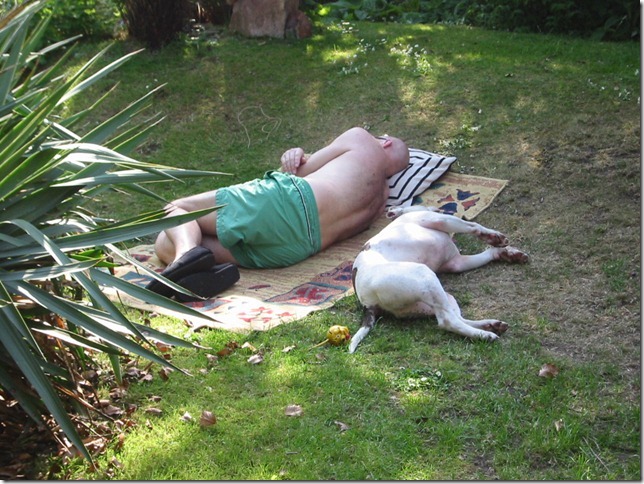
For a number of reasons, both private and public, I have not been feeling as creative as normal these last 24 hours.  What I am conscious of is that events of this week, from the riots in the UK, the chaos of financial markets, right through to the death of our dog Tess have all contributed to a mental heaviness.

So I am taking a small creative short-cut, as it were, by writing about a film that we watched on Monday night; Fierce Light.

There is a trailer on YouTube.  This is how it is presented,

A Feature Documentary By Velcrow Ripper

From the Director of Scared Sacred & The Producer of The Corporation

“Fierce Light” is a feature documentary that captures the exciting movement of Spiritual Activism that is exploding around the planet, and the powerful personalities that are igniting it.

Fueled by the belief that “another world is possible,” the film portrays stories of what Martin Luther King called “Love in Action,” and Gandhi called “Soul Force”; what Ripper is calling “Fierce Light.” Acclaimed filmmaker Velcrow Ripper (Scared Sacred) takes an insightful look at change motivated by love, featuring interviews with spiritual activists Thich Nhat Hanh, Desmond Tutu, Daryl Hannah, Julia Butterfly Hill, and more.

If you would like to sink a little deeper into the film and what the motivations are behind the making of it, then do go to the web site Fierce Light.

Jean and I found the film inspiring and beautifully presented.  It came over as a film that seriously approached the topic of human consciousness and gave plenty of opportunity to reflect on some of the many forces within our societies at this present time.

Then you may like to watch this talk by the Director, Velcrow Ripper (actually born Steve Ripper in 1963), broken into two parts as follows,

The film and this talk by Mr. Ripper both date back to 2009 so, in the light of where we are in August 2011, they are proving to be extremely relevant.

Future shock

“Everyone thinks of changing the world, but no one thinks of changing himself.” Leo Tolstoy

I am going to refer to some ideas before explaining from whom they came, and when.

Try this: the term “future shock” is defined as a certain psychological state of individuals and entire societies. The shortest definition for the term is a personal perception of “too much change in too short a period of time”.

Or try this: society is undergoing an enormous structural change, a revolution from an industrial society to a “super-industrial society”. This change will overwhelm people, the accelerated rate of technological and social change leaving them disconnected and suffering from “shattering stress and disorientation” – future shocked. It was stated that the majority of social problems were symptoms of the future shock.

Stay with me a little longer as I pose a few questions.  How do you feel at the moment?  Slightly unsure of where the world is going right now? Feeling a little unsettled?

Why those questions?  With the Dow Jones index heading down through 11,130 (at the time of writing on the 8th) and ‘chaos across markets’ headlines all over the place these are very unsettling times

Last week’s edition of The Economist had five pages about the present uncertain times in the USA.

August 6th, 2011

Here’s a quote from an article entitled,

Six years into a lost decade

The numbers keep being revised inexorably downwards

The rough news did not end there. The Bureau of Economic Analysis (BEA) revised its numbers back through the recession, revealing a downturn more serious than previously understood. The BEA’s first estimate of output in the fourth quarter of 2008, published in January of 2009, showed a contraction of 3.8%, later revised to a 6.8% drop. The new numbers change the figure yet again, to a shocking 8.9% fall in GDP. For 2009 as a whole, the American economy shrank by 3.5% rather than the previously reported 2.6%. American output has yet to reattain its 2007 peak. On a per-person basis, inflation-adjusted GDP stands at virtually the same level as in the second quarter of 2005. America is six years into a lost decade. [my emphasis]

So back to those comments about  ‘future shock’.  They come from a gentleman known across the world for his writings as a futurist, Alvin Toffler.  His website is here and there is a good review of the man and his works on Wikipedia.

Alvin Toffler, born 1928

Toffler’s book, Future Shock, from 1970 was prescient in forecasting …. well here’s how it is written on Wikipedia,

Toffler argues that society is undergoing an enormous structural change, a revolution from an industrial society to a “super-industrial society“. This change will overwhelm people, the accelerated rate of technological and social change leaving them disconnected and suffering from “shattering stress and disorientation” – future shocked. Toffler stated that the majority of social problems were symptoms of the future shock. In his discussion of the components of such shock, he also popularized the term “information overload.”

But there’s an aspect that wasn’t even on the horizon when Toffler was writing that book in the late 60s – the end of growth.  That is creating a whole new level of change and ‘information overload’, in my opinion.

Just a few days ago, I reviewed the Paul Gilding book The Great Disruption.  I quoted this extract from the very start of the book,

This means things are going to change.  Not because we will choose change out of philosophical or political preference, but because if we don’t transform our society and economy, we risk social and economic collapse and the descent into chaos.  The science on this is now clear and accepted by any rational observer.  While an initial look at the public debate may suggest controversy, any serious examination of the peer-reviewed conclusions of leading science bodies shows the core direction we are heading in is now clear.  Things do not look good.

These challenges and the facts  behind them are well-known by experts and leaders around the world, and have been for decades.  But despite this understanding, that we would at some point pass the limits to growth, it has been continually filed away to the back of our mind and the back of our drawers, with the label “Interesting – For Consideration Later” prominently attached.  Well, later has arrived.

Indeed, ‘later’ has arrived.  The ‘future’ is now here!

Watch the first 10 minutes of the Future Shock film made back in 1972 and ponder.

The following four parts are easily found on YouTube.

God grant me the serenity to accept the things I cannot change, the courage to change the things I can, and the wisdom to know the difference. Reinhold Niebuhr

Why we have cats and dogs!

Author Sue Miller perfectly articulates our relationship with dogs and cats.

As a rest to the number of non-fiction books that I have been reading over the past few months, Jean recommended a novel she recently finished, While I Was Gone, by Sue Miller.  It’s featured on Oprah’s Book Club, from which I quote,

About the Book

A decade ago she put a face on every mother’s worst nightmare with her phenomenal best-seller The Good Mother. Now, Sue Miller delivers a spellbinding novel of love and betrayal that explores what it means to be a good wife.

In the summer of 1968, Jo Becker ran out on the marriage and the life her parents wanted for her, and escaped–for one beautiful, idyllic year–into a life that was bohemian and romantic, living under an assumed name in a rambling group house in Cambridge. It was a time of limitless possibility, but it ended in a single instant when Jo returned home one night to find her best friend lying dead in a pool of blood on the living room floor.

Now Jo has everything she’s ever wanted: a veterinary practice she loves, a devoted husband, three grown daughters, a beautiful Massachusetts farmhouse. And if occasionally she feels a stranger to herself and wonders what happened to the freedom she once felt, or how she came to be the wife, mother, and doctor her neighbors know and trust–if at times she feels as if her whole life is vanishing behind her as she’s living it–she need only look at her daughters or her husband, Daniel, to recall the satisfactions of family and community and marriage.

But when an old housemate settles in her small town, the fabric of Jo’s life begins to unravel: seduced again by the enticing possibility of another self and another life, she begins a dangerous flirtation that returns her to the darkest moment of her past and imperils all she loves.

While I Was Gone is an exquisitely suspenseful novel about how quickly and casually a marriage can be destroyed, how a good wife can find herself placing all she holds dear at risk. In expert strokes, Sue Miller captures the precariousness of even the strongest ties, the ease with which we abandon each other, and our need to be forgiven. An extraordinary book, her best, from a beloved American writer.

Have to say that even though there’s an obvious gender difference between me, the heroine and the author, I found the book tough reading , as in emotional, from time to time.  Especially, the euthanasia of Arthur the dog towards the end of Chapter 7 – Jo is a vet.  A few paragraphs I just couldn’t read .  But then on page 137 in Chapter 8, comes this,

Pure bliss.

I stood in the center of the yard for a moment and tilted my head back to let the soft snow touch my face.  The dogs pranced and rolled for pure joy in the pale, gray-brown light.  They chased each other wildly.  I made snowballs and threw them; the dogs leapt and bit at where they’d disappeared.  As they played, their muzzles whitened, their paws pilled up.

I left them reluctantly and came back in.  Watson trailed me around as I did my chores, watching me soberly.  I shut him out of the cat room, where we had only two boarders.  I let one of them out to roam and use the litter pan while I checked its cage.  I put more food down.  Then I went back out and worked my way through the dogs’ cages.  Two of them had had accidents, so I cleaned up and changed their bedding.  Several of them had their own food, in cans – those dishes needed to be washed.  Water refreshed, kibbles set out for the others.

I went to the cat room, put the first cat back and let the other one out.  Then I called the reluctant dogs in.  Watson greeted each one like a tiny worried mother, licking at their snow, fussing about how they smelled.  Slowly I recaged them.  I released Lucky and let him go outside for his solitary run while I refilled his food and water dishes.  Three dogs needed medications.  I put the last cat back in, called Lucky inside, locked up.

And while I did all this, I thought only of them, of the dogs and cats, of their requests for affection, of their comical or passionate relationships to one another, of the performance of their bodily functions.  I was taken up by them and their life and energy, by what they needed and asked of me.  I let go of everything difficult or complex in my life.

It reminded me of my days at Dr. Moran’s, caring for the dogs and cats he boarded and treated.  It reminded me of what a comfort it had been to me, even just physical escape into the lives of animals.  As I was driving home, I thought of all this, and it seemed to me that I’d chosen work which offered me daily the presence of pure innocence, a forgiveness for all my human flaws.

the presence of pure innocence, a forgiveness for all my human flaws Impossible to add anything; so I won’t!

Lord of the Ants

A passing visit to the American biologist, E. O. Wilson

E O Wilson

Edward Osborne Wilson was born in June 1929 thus making him, at this time of writing, just into his 82 year.  His biological specialty is myrmecology.  Got that?  Myrmecology.  And if you, like me, didn’t have a clue as to what  myrmecology is and had to look it up, it is the study of ants.  Blow me down, there is even a myrmecology blogsite!

So where is this all heading?

One of the things that we do know about dogs, especially if we go way back into the dim and distant times when they behaved more like the grey wolf, from which the species ‘dog’ genetically originates 100,000 years ago, is that their social order, their pack behaviour, was highly stable.  As an aside, when Jean was rescuing dogs in San Carlos, Mexico during the years that she lived there with her late husband she readily observed that the stray dogs, of which there were too many, had a natural propensity to group up into their historic pack formations.  (And as an aside to my aside, Jean’s close friend of many years, Dan’s sister Suzann, today carries on the splendid work of looking after stray dogs from her San Carlos house!)

OK, back to the plot!

E O Wilson’s study of ants has revealed much about social order and organisation.  The following YouTube video was from a PBS programme, aired in May, 2008, from which I quote (that is the PBS website),

Program Description

At age 78, E.O. Wilson is still going through his “little savage” phase of boyhood exploration of the natural world. In “Lord of the Ants,” NOVA profiles this soft-spoken Southerner and Harvard professor, who is an acclaimed advocate for ants, biological diversity, and the controversial extension of Darwinian ideas to human society.

Actor and environmentalist Harrison Ford narrates this engaging portrait of a ceaselessly active scientist and eloquent writer, who has accumulated two Pulitzer Prizes among his many other honors. Says fellow naturalist David Attenborough: “He will go down as the man who opened the eyes of millions ’round the world to the glories, the values, the importance of—to use his term—biodiversity.”

It’s a fascinating film, truly engaging, so do settle down for a relaxing 53 minutes and watch,

Now there’s more to this and I do want to continue with the theme of this Post tomorrow.

So for now, look in on the E O Wilson Biodiversity Foundation’s website and I’ll see you tomorrow.

The Great Disruption by Paul Gilding

A book review

Unlike my recent review of Capt. Luis Montalvan’s book Until Tuesday which came about as a result of an invitation from the UK publishers, Headline Publishing, this review of Mr. Gilding’s book is totally off my own bat.  I should also declare that I have recently been in email contact with Paul Gilding with some pleasant outcomes.  To the review.

The way ahead.

Regular readers of Learning from Dogs will know that I have been making recent references to this book, which I have now finished reading.  On the 25th I quoted from the book in a post that I called The blame game.  I used a quote from Chapter 5, Addicted to Growth, namely “Growth goes to the core of the society we have built because it is the result of who we are and what we have decided to value.

Then the next day again when writing about Tim Bennett’s movie, What a Way To Go, when I reflected on Paul Gilding’s opinion that, ” the quicker that mankind recognises the massive levels of denial presently in place, the quicker that mankind will commit to the scale of change that is required“.

Now if mankind’s efforts to change to a sustainable way of life were proportional to the number of books, films and essays written about the subject then, frankly, the task would be complete.  There’s an awful lot out there!  Here’s a list of the books that I have read in the last few years:

The Human Side of Enterprise – Douglas McGregor

Motivation and Personality – Abraham Maslow

The Power of Pause – Terry Hershey

Earth in the Balance – Al Gore

The Spectrum of Consciousness – Ken Wilber

Politics Lost – Joe Klein

Why America Doesn’t Work – Chuck Colson & Jack Eckerd

The Art of Happiness – HH Dalai Lama & Howard C Cutler

Eaarth – Bill McKibben

Stabilizing an Unstable Economy – Hyman P. Minsky

The Next 100 Years – George Friedman

World of the Edge – Lester Brown

and finally

The Great Disruption – Paul Gilding

And, of course, this doesn’t even scratch the number of online journals, essays and articles that have been read in conjunction with writing hundreds of posts on this Blog.

So what’s the point?

On p.260, Chapter 20 Guess Who’s in Charge?, Paul Gilding writes,

We need to fully acknowledge the challenging times and inevitable suffering ahead but stay focused and determined to move forward and past this.  Easy to say, harder to do.

So yes, it is challenging to know how to respond to all this and what to do personally.  It is easy to see what the world should do, but what should you do?

but what should you do? Talk about a thump on the back of the head!

This is about me!

Of all the books that have influenced how I see the world and my opinions, the one book that has rammed home to me that this is about me, about my attitudes and behaviours, is The Great Disruption.  For a long time I haven’t needed convincing that man is screwing up the planet.  For ages, I’ve been sure that our greed and materialism were fundamentally incompatible with the planet. I have been so good at ‘talking the talk’ ….. but ….

But the way that Mr. Gilding has so comprehensively approached every aspect of how my past behaviours have been incompatible with the future needs of my little grandson, Morten, (and all the grandchildren in the world) is powerfully inspiring.  I now totally and utterly believe that only I am in charge of making a difference.

Why The Great Disruption touched me in this way when so many other books and articles haven’t done so isn’t clear.  Perhaps it was in the opening paragraphs?

The earth is full.

[skip one paragraph]

This means things are going to change.  Not because we will choose change out of philosophical or political preference, but because if we don’t transform our society and economy, we risk social and economic collapse and the descent into chaos.  The science on this is now clear and accepted by any rational observer.  While an initial look at the public debate may suggest controversy, any serious examination of the peer-reviewed conclusions of leading science bodies shows the core direction we are heading in is now clear.  Things do not look good.

These challenges and the facts  behind them are well-known by experts and leaders around the world, and have been for decades.  But despite this understanding, that we would at some point pass the limits to growth, it has been continually filed away to the back of our mind and the back of our drawers, with the label “Interesting – For Consideration Later” prominently attached.  Well, later has arrived.

I nodded silently in agreement when reading that.

Was it the opening paragraph to Chapter 4, Beyond the Limits – The Great Disruption?

The plans we have been making for our economies, our companies, and our lives have all been based on a key assumption that is clearly wrong.  This assumption is that our current economic model will carry on unless we choose to change it – in other words, no action means more of the same.

This resonated strongly with me because I happen to believe, without any specialist economic skills to my name – just a gut sense, that the economic situation now afflicting so many economies across the world is not cyclical but the start of a breakdown of the policies and behaviours of the last 20 years or more.  In other words, the Great Disruption was in my face already!  As is written on p. 87 in Chapter 6, Global Foreshock – The Year That Growth Stopped,

My view, firmly held at the time and since, is that 2008 was the year that growth stopped.  It was the year, as Thomas Friedman said, “when Mother Nature and Father Greed hit the wall at once”.

The Power of a New Future

But, in the end, the real power that I found in this book was the strength of Gilding’s argument that we will change, that seeing the future as hopeless is wrong, that man has the ability to commit to huge change when there is no alternative.  Ergo, p121 Chapter 9 When the Dam of Denial Breaks,

To argue we are naturally greedy and competitive and can’t change is like arguing that we engage naturally in murder and infanticide as our forebears the chimps do and therefore as we did.  We have certain tendencies in our genes, but unlike other creatures we have the proven capacity to make conscious decisions to overcome them and also the proven ability to build a society with laws and values to enshrine and, critically, to enforce such changes when these tendencies come to the surface.

So don’t underestimate how profoundly we can change.  We are still capable of evolution, including conscious evolution.  This coming crisis is perhaps the greatest opportunity in millennia for a step change in human society.

This quote is towards the end of the last chapter that spells out, as so many other books have done, that our global society Has a Very Big Problem.  Thus from page 123 onwards, slightly less than half-way through the book, Paul Gilding devotes huge detail to describing how we will change.  Frequently, the comparison used is World War II,

British poster from 1940

When Great Britain went to war in World War II, do you think they had clarity on all the details of transitioning into a war economy before they made the decision to act?  Of course they considered it, as we must, but it wasn’t a determining issue because there was no choice.  Do you think President Roosevelt calculated the United States could win the war by increasing military spending to 37 percent of U.S. GDP and producing a nuclear bomb before he decided to enter the war?  Of course not: he just knew they had to succeed and so they would.  He had confidence in human ingenuity delivering under pressure, when it’s given defined parameters and political support, and so must we.

From p. 164, Chapter 12 Creative Destruction on Steroids.

That’s what ended up being the real inspiration for me.  That it’s not about the complex problems looming large; as so many that Jean and I chat to here in Payson, AZ, readily admit to being worried.  It’s not news! The majority of the world’s citizens know the trends are not good.

No, what really socked me between the eyes was reading all the many and varied ways that we are changing (note present tense), that the Great Disruption is, in fact, mankind moving to a new era.  One where we will have less inequality, less poverty, be happier, have extended life-spans and a future that goes on for thousand of years.

The Future is Here.

The phrase ‘life-changing’ is often used but this book is truly life-changing.  The book will motivate you in ways that you can’t imagine.  It will inspire you but, above all, it will show you the way ahead.  Read it.

Well done, Mr. Gilding.  Well done, indeed!

Mr. Paul Gilding

The unexplored shores of the future

A focus on Tim Bennett’s movie, What a Way To Go: Life at the end of Empire

We first came across this film, made by independent film-maker Tim Bennett, on the Top Documentary Films website, see here.  The title to this article comes from that introduction, from which is quoted,

Tim Bennett, middle-class white guy, started waking up to the global environmental nightmare in the mid-1980s. But life was so busy with raising kids and pursuing the American dream that he never got around to acting on his concerns. Until now…

Bennett journeys from complacency to consciousness in his feature-length documentary, What a Way To Go: Life at the End of Empire. He reviews his Midwestern roots, ruthlessly examines the stories he was raised with, and then details the grim realities humans now face: escalating climate change, resource shortages, degraded ecosystems, an exploding global population and teetering global economies.

Now to be honest, this is a film that is both captivating and, in parts, pretty grim.  A couple of trailers and other background material were posted on Learning from Dogs back in February.

The film also has an excellent web site What a Way To Go Movie which contains much background material including the opportunity to watch the film for free, click here.  Or a quick YouTube search will bring you to here.

My own view is that this is a ‘must see’ film.  Not because I want all of you to wallow in doom and gloom, far from it, but because, as Paul Gilding writes in his book, The Great Disruption, the quicker that mankind recognises the massive levels of denial presently in place, the quicker that mankind will commit to the scale of change that is required.  That’s where Paul Gilding’s approach differs from the movie, The End of Empire.  Gilding is optimistic that man will bring about change simply because fairly soon, in just a few years, it will be obvious at all levels in our societies that there simply is no choice!

The blame game

A retrospective muse about the present global challenges.

A few days back I posted an article by Tom Engelhardt called The Great American Carbon Bomb.  It attracted a number of comments including a couple from Learning from Dogs supporter, Patrice Ayme.  Here is one of those comments,

Dear Paul: There is a gentleman leading the Tour de France, right now. He was not given a chance, especially in the mountains. However, he has been going day by day, and has now worn the Yellow Jersey for more than a week, supported by his inferior, but dedicated team. His philosophy: humility, and do the job day by day, trying his best, although he strongly doubts that he is up to the task.

We, as humankind, or, rather, our hubristic leaders are doing the exact opposite. We are not doing our best, and it’s precisely because those leaders are not humble and not honest, and so very sure we are going to pull out OK, because that’s what we do best, and have always done, and thus will always do.

Verily all indicators are that of an unfolding catastrophe. All signals are loud and clear that way. So it’s really not the moment to say:”Oh, BTW, we are very resilient and totally great, so it’s just a matter of time before we put it all together OK. So now let’s all pull together, and it’s fine.”

In truth we are on the verge of an irreversible situation, as the CO2 poisoning will turn, within a decade or so, into a political, and then military issue.
PA

Patrice is an angry man (not a criticism by the way – so many of us are angry!) and anger is a great reason to find someone, something, anything, to blame!  I suspect, wearing my cloak of an amateur psychologist, that a core reason why we feel anger is that, so often, the causes of our anger are our own errors.  Anger at one’s self is much more difficult to deal with!

Anyway, back to the plot.

Like Patrice I also feel badly let down by our ‘leaders’.  Especially with regard to the nightmare of economic and ecological issues fast approaching.

Then I read this in Paul Gilding’s book, The Great Disruption, that has been featured on this Blog a couple of times.

Our addiction to growth is a complex phenomenon, one that can’t be blamed on a single economic model or philosophy.  It is not the fault of capitalism or Western democracy, and it is not a conspiracy of the global corporate sector or of the rich.  It is not a bad idea that emerged in economics, and it is not the result of free market fundamentalism that emerged in the 1980s with globalization.  While each of those factors is involved, it is too simple and convenient to blame any of them as the main driver.  Growth goes to the core of the society we have built because it is the result of who we are and what we have decided to value. [Chapter 5, Addicted to Growth, p66]

That last half of that last sentence – ‘it is the result of who we are and what we have decided to value.‘  That strikes me as the core truth.  It is the reason why Patrice, and me, and countless thousands of others across the globe, are so angry.  At heart we all know that the circumstances we find ourselves in are, in great part and before we ‘saw the light’, the result of earlier personal values which we now know were not compatible with a sustainable relationship with the planet we all live on.

It is very good news.  That anger is fuelling change.  As Malcolm Gladwell writes in his book The Tipping Point societies change when something of the order of 18% of individuals emotionally commit to change.

William Rees on disconnection

William Rees discussing the disconnect between economics and ecology.

Yesterday, I wrote about Paul Gilding’s book The Great Disruption.  In a sense today’s article continues the theme; the idea that the future is going to be very different to the past, indeed has to be if mankind is to have a viable future.

Dr. Bill Rees

Dr. William Rees is Professor at the University of British Columbia’s School of Community and Regional Planning.  More details of Dr. Rees here.

Here’s a 17-minute video interview of Dr. Rees with Thomas Bernes, Executive Director, CIGI.

That interview is carried on the website of the Institute of New Economic Thinking from where one can read the introduction, thus,

The world economy is depleting the earth’s natural resources, and economists cling to models that make no reference whatsoever to the biophysical basis that underpins the economy. That’s why ecological economics is needed, says William Rees in this INET interview.

Standard economics portrays the economy as a circular flow: households pay money to firms in exchange for goods and services, and firms pay wages to households in exchange for labor. Textbooks describe this circular flow as self-perpetuating, capable of infinite expansion. William Rees argues that the textbooks get it wrong; he says the production of our goods and services depends on the extraction of material from ecosystems, causing resource depletion on the one hand, and excess pollution on the other.

William Rees, best known in ecological economics as the originator and co-developer of ‘ecological footprint analysis’, says the United States is using four or five times its fair share of the world’s total bio-capacity. In order to bring just the present world population up to the material standards enjoyed by North Americans, we would need the biophysical equivalent of about three additional planet earths.

There has been no time in history where income growth hasn’t been accompanied by increased material and energy consumption, Rees cautions. He says technologies exist that would enable us to enjoy our current lifestyles with perhaps as little as 20 percent of our current energy and material consumption, but we do not have the incentives in place to force that decoupling to take place.

Rees is as pessimistic on current culture and politics as he is optimistic on the technology. The global culture remains in denial, and people with vested interests in the status quo wield enormous power.

Want more from Dr. Rees?  Over at the website West Coast Climate Equity is an eight-part series where Dr. Rees sets out the proposition that humanity’s survival depends on an 80% reduction in energy use.

Finally, on the Post Carbon Institute website there’s a link to an audio speech given by Dr. Rees summarised as follows.

Bill Rees speech to Vancouver World Federalist meeting on Radio Ecoshock Show
This is a speech by Dr. Bill Rees delivered April 15th at the World Federalist meeting in Vancouver.  It goes a long way to explaining why we fail to act, even as the facts become clear and indisputable.  He covers the three brain theory, the limits of evolution, memes, Peak Oil, and cultural myths, plus some thoughts on solutions – mostly contraction and convergence.  Rees is one of the few academics more or less calling for a planned economic collapse.

The 53 minute speech is featured in this week’s Radio Ecoshock show, broadcast by 20 college and community radio stations in the U.S. and Canada, plus Green 960 AM in San Francisco.

The URL includes a link to download a transcript.

What is it you don’t understand?

Stating the obvious.

I am about a third into Paul Gilding’s book The Great Disruption.  It’s proving to be a very-thought provoking read that I will review in more detail over the coming weeks.

However, I just wanted to quote from the start of Chapter 5, Addicted to Growth,

Indeed, as argued by economist Kenneth Boulding: “Anyone who believes exponential growth can go on forever in a finite world is either a madman or an economist.”

Very little that can be argued about that statement.  It rather puts into context a couple of items read recently. Both from the blogsite New Economic Perspectives.  The first on June 10th by Stephanie Kelton,

Earlier this week, President Obama talked about the weakening state of the economy, telling us that he’s not worried about a double-dip recession and that the nation should “not panic.” It’s hard to imagine a more alarming assessment at this juncture.

The recovery is faltering. Our economy is growing at annual rate of just 1.8 percent. Manufacturing just grew at its slowest pace in 20 months. More than 44 million Americans – one in seven – rely on food stamps. Employers hired only 54,000 new workers in May, the lowest number in eight months. Jobless claims increased to 427,000 in the week ended June 4. The unemployment rate rose to 9.1 percent. Nearly half of all unemployed Americans have been without work for more than 6 months. About 25% of all teenagers who are looking for work are unemployed. Eight-and-a-half million Americans are underemployed – i.e. working part-time because their hours have been cut or because they can’t find full-time work. There are, on average, 4.6 unemployed people for every 1 job opening. And even if all the open positions were filled, there would still be 10.7 million people looking for work.

The second on July 8th by Marshall Auerback,

Today’s unemployment data suggests that we are experiencing something far worse than a mere “bump in the road”, as our President described it last month.  In fact, if last month was the time to panic, as Stephanie Kelton argued here, then today’s data should create real palpitations in the White House.  This isn’t just a “bump,” but a fully-fledged New York City style pot hole.

First the headline number everyone looks at: non-farm payrolls. Up 18,000 in June, the increase was 100,000 less than expectations.  In addition the prior two month payroll increases were revised down by -44,000 overall.  That’s weak – but not terrible.

Dig a bit deeper into the data and it looks absolutely awful:  The household measure of employment fell by -445,000.  Okay, it’s a noisy number. But, as Frank Veneroso has pointed out to me in an email correspondence, this measure of employment which is never revised now shows no employment growth over the last five months and very negative employment growth over the last three.

But it gets worse:  The work week was down one tenth.  Overtime was down one tenth.  The labor participation rate at 64.1% was the lowest since 1984.  The broad U6 unemployment rate rose from 15.8% to 16.2%.  In other words, as Frank suggested to me this morning, “many other employment indicators in this report confirm the deep disappointment in the payroll series and the much more negative message of the household series.”

Now here’s the latest item published by Paul Gilding in his Blog, The Cockatoo Chronicles. (I have republished it in full, hopefully without upsetting Mr. Gilding – couldn’t see advice on reproduction – but copyright remains, of course, fully with Paul Gilding.)

Like a Grenade in a Glasshouse

June 29, 2011

It’s going to hit hard and it’s going to hurt – made worse because most aren’t expecting it. They think the world is slowly returning to our modern “normal” – steadily increasing growth, with occasional annoying but manageable interruptions. After all, the global recession wasn’t so bad was it? Sure there was pain and things got shaky but Governments responded, bailed out companies, stimulated economies, got things back on track.  While it’s still a bit bumpy, Greek wobbles, US debt, extreme weather, high oil and food prices etc, it’ll work out. It always does….

If only it were so. In fact we are blindly walking towards the next in a series of inevitable system shaking and confidence sapping crises, deluded in the belief that the worst is behind us.

Each crisis will be a little worse than the last. Each one will shake our denial a little more. This is what happens when systems hit their limits. They don’t do so smoothly, but bump up against the wall, hitting hard, then bouncing off equally hard. It is the behaviour of a system trying to break through. But if the limits are solid, as is the case with our economic system hitting the limits of the planet – defined by unchangeable physical capacity and the laws of physics, chemistry and biology – then it can’t find its way through. So eventually, when the pain of hitting the wall gets too much, it stops.

Then it will hit. Like a grenade in a glasshouse, shattering denial and delusion and leaving it like a pile of broken glass on the floor of the old economic model. Then we’ll be ready for change.

I’ve been arguing the inevitability of this moment since 2005, mostly inside the business community. Before the 2008 financial crisis hit, the idea was almost universally rejected, with a belief in the indomitable power of globalised markets to overcome all challenges and keep growth on track. Most audiences believed that while markets always wobbled, they also always recovered. My suggestion, that this level of arrogance was the hallmark of empires before they fell, landed on deaf ears. They were the masters of the universe and markets and growth would always reign supreme.

Now the response is different. The financial crisis saw many break off from the pack and start to ask the difficult questions. I now find as I tour the world speaking about The Great Disruption to community gatherings, corporate executives and policy makers that minds are increasingly open. While not the dominant view, the previous confidence in the inevitably of growth has become shaky and the group asking the challenging questions is rapidly expanding.

As I argue in the book, the fundamental cause of what’s coming is resource constraint and environmental breakdown, which when combined with an overstretched financial system and high levels of debt puts unbearable tension into the global economy. While no one can know what event will pull the pin out of the grenade, the underlying pressures make that moment inevitable. Yes, the dominant commentary still blames each individual problem on unique circumstances, but the underlying systemic causes are clear for those who wish to look.

The continued level of denial still surprises me, especially given the pressures driving this are not esoteric and can be measured in clear economic indicators. A good example was recently published by one of the more interesting voices to join the growing chorus that we have a system-wide problem. The legendary contrarian and fund manager Jeremy Grantham is co-founder of the Boston based firm GMO, with over $100 billion of assets under management. So this guy is a solid capitalist and market advocate, pursuing wealth for the wealthy. But he sees the data and is raising the alarm, calling this moment “one of the giant inflection points in economic history” – referring to the end of a 100-year steady decline in commodity prices. His views were echoed by Stephen King, group chief economist at HSBC, who wrote in the FT: “After the biggest meltdown since the Great Depression, economic theory tells us that world commodity prices should not be this high. But they are and the West quickly needs to wake up to this new economic reality. Commodity prices are now permanently higher.”

Grantham provides the detail, pointing out that the 100 year trend of falling prices in the 33 most important commodities, except for oil, were wiped out with a price surge from 2002 to 2010 – a surge even greater than experienced in WW2. We have now reached what Grantham calls the Great Paradigm shift; not a price spike but a new reality. Within this new reality, Grantham says: “if we maintain our desperate focus on growth, we will run out of everything and crash.”

This is why hitting the wall is inevitable – because limits are not philosophies, they are limits. We can understand what to expect – and why the grenade will shatter the glasshouse of economic growth – by going back to how systems behave when they hit their limits. Our economic system first hit the wall in 2008 – that was when The Great Disruption began with food and oil prices hitting record highs and a credit crisis driven by reckless monetary policy pursuing growth at all costs. The resulting recession meant we backed away from those limits (bouncing off the wall), and then borrowed massive amounts of money from our children (think Greece) to try to get the economy moving again.

Now that the global economy is slowly entering a so-called “recovery”, the prices of commodities (representing our use of earth’s resources for food and materials) are on the way up, accelerated, in the case of food, by climate change. Of course if significant growth kicks in, the prices of oil, food and other commodities will surge, this timestarting from near record highs.  Then we will bounce back into recession and prices will back off again. Hit the wall, bounce off. Hit the wall, bounce off. Ouch.

By itself this would pose enough of a challenge to growth. But now we also have the debt we used to get the economy moving again. This debt can only be paid off with significant economic growth – but such significant growth is impossible as outlined above. So the debt itself becomes an enormous additional tension in the system, as argued by Richard Heinberg in his important forthcoming book The End of Growth. With the global economy and ecosystem now both burdened by unmanageable debt, effective global default is only a matter of time.

So we’re living in a glass house with the grenade sitting there for all to see. Who knows what will pull the pin. It could be Greece, a Chinese food crisis, peak oil or any number of other triggers. But it’s coming.

The question to ask yourself is simple. Are you ready?

Back to Kenneth Boulding: “Anyone who believes exponential growth can go on forever in a finite world is either a madman or an economist.

Precisely!