Category: Culture

The real you!

I am delighted to present the following guest post from Ruth Nina Welsh.

We seem to be on a bit of a roll in terms of seeking a better self-understanding.

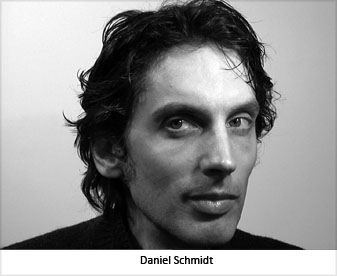
Last Thursday I offered up some thoughts and reflections on meditation Quietening one’s self down and then the following day presented the film Inner worlds, Outer worlds, the wonderful film by Canadian film maker, musician and meditation teacher Daniel Schmidt. Daniel described his film “as the external reflection of his own adventures in meditation.” (And did you read the fascinating comments by ‘R’?)

Anyway, to today.

I forget how Ruth and I made contact with each other but that’s immaterial to today’s guest post. What is material is that we did make contact and through Ruth’s website I became aware of her talents. In her own words:

BE YOUR OWN COUNSELLOR & COACH shares psychology, memoirs and creativity to help and inspire you to live a happier, more fulfilling and purposeful life.

****

WHO AM I? – I’m a freelance writer, specialising in lifestyle, wellbeing and self-help; a former counsellor & coach and an erstwhile musician. I have a diverse educational Ruth-Profile-Photobackground – with degrees in arts and law – but psychology is my passion. You can find out more about me on my personal site.

  • As a singer-songwriter, I released my debut acoustic album – As I Breathe – in 2000.
  • As a counsellor and coach, I was in private practice from 2008-2011.
  • As a freelancer in the publishing field, I’ve been involved as an editor, formatter, copy-editor, proofreader and I’ve also managed book projects and manuscript submissions.
  • Now, as a freelance writer, I write articles and guest posts, and continue to build this free online self-help resource.

So back to the connection between Ruth and me.

A couple of weeks ago, Ruth asked me if I would like to publish an essay from her.

I read it and replied without hesitation that I would be honoured to publish said essay.

Thus with no further ado here it is. (And do read to the end to be informed about a very generous free offer from Ruth.)

ooOOoo

The Struggle To Be Authentic

Introduction

Of all the challenges we face in life, the struggle to be authentic is a vital one. It’s not always recognised that being authentic – being true to ourselves – is essential for our own wellbeing and happiness. We struggle with authenticity because it’s often hard to reveal the truth about how we feel. And, as strange as it may seem, sometimes we don’t even know how we truly feel. It can be painful and difficult to begin to speak from a place of truth and to unmask hidden feelings which may be covered over by years of denial, trauma and people pleasing.

How we learn to be authentic in childhood

Being authentic and true to ourselves is not innate; it’s something we learn how to do. We learn from those close to us as we grow up. As children we observe our parents, or others who care for us. We notice how truthful and genuine they are. We also learn that there is power in the gap between how we feel and what we actually reveal to others. During our childhood we sometimes find that it can be unwise to say what we honestly feel or think, it can get us into trouble. Bruising judgements from our parents can mean we stay quiet rather than speak up. If a parent constantly criticises and mocks us it’s likely that we’ll modify our behaviour around them. We’ll try to please them and avoid unnecessary pain by saying what they want to hear – even if this is not our own truth. Not being true to ourselves can also follow a traumatic event where we may feel the need to hide our feelings or bury painful grief. All of these things and more mean that, piece by piece, we can lose connection with ourselves and how we truly feel.

The struggle to be authentic in adulthood

As we leave childhood behind us we take the lessons we learn from it into our adult lives. If we felt unable to speak up truthfully when younger then this usually doesn’t change when we become an adult. We can find ourselves unable to speak up within an intimate relationship, downtrodden in our work life and unable to fully connect in our friendships. Over time, if we keep speaking the words only others want to hear – words that are not our own truth – we can lose touch with what we actually feel. We can lose touch with our true selves, our true desires and our true needs and wants. Having been a spokesperson for others for so long we can find ourselves lost and adrift, not knowing how we truly feel about anything, not knowing who we really are. And this can lead us to a treacherous place – living behind a mask, fearing disapproval, and not connecting at a genuine level with anyone. This damaging cycle will continue unless, or until, we see the need for change and realise that being authentic is vital for our own happiness and wellbeing.

Learning to be authentic

It’s difficult to be authentic when this has not been our normal way of being. We may have been used to white lies, outright untruths, or just unconsciously denying our own thoughts and feelings. We may have lived in a family where half-truths and masks were the norm. We may have had to hide our own feelings to survive. This is then our problem: without a template of truth-telling and speaking out in a genuine way, we often struggle to be authentic. We may even have to learn how to be honest and authentic from the bottom up.

Two steps to authenticity

As a starting point, our task is two-fold and can be seen in two distinct steps. Firstly, to find out how we actually feel about things and, secondly, to begin to reveal how we feel to others. This sounds straightforward but doing these two things can be intensely challenging. We are often beaten down by life, our words may have been ridiculed, our self-esteem may be low. We can feel worthless and feel that what we have to say doesn’t matter. If you are in this place, then the most important thing to understand, as a given, is that what you have to say does matter and you have a right to say it. Whatever you have learned in the past and whatever you have been told, know these vital, universal truths:

Each of us has value, has a voice, and we are entitled to speak out and have our own precious, individual opinions heard.

First Step: How do you feel?

With that as your starting point – that your true, individual voice matters – you can begin the first step: to find out how you actually feel. This can be easier said than done. You’ve spoken the words others wanted to hear for so long now that you may not actually know how you genuinely feel. To begin to make inroads into this takes time, an effort of will, and an increase in your own self-awareness. One of the easiest ways to begin this process is to record your thoughts, feelings and opinions down on paper. In a private way, in your own journal, you can start to look and search inside yourself for how you actually feel about things – what you believe, what your opinions are, what you want from life. You can uncover what your own personal likes and dislikes are – not to please others, but to please yourself. With time and patience your awareness will increase and you’ll begin to hear your own inner voice speak out. It may be a whisper at first, but, if nurtured, this will develop. Gradually you will begin to connect with your true self and start to know how you truly feel.

Second Step: Share how you feel

As you begin to know how you feel you can start to embark on the second step on the road to being authentic and true to yourself – revealing and sharing how you feel. You can begin to speak up for yourself and share your own beliefs and opinions. Your voice does not need to be loud or demanding, but with calm authority you can learn to speak out. This can be a difficult process at the beginning but try starting this process by speaking out in safe emotional surroundings. Find friends who are supportive and then begin to honestly and truthfully share your thoughts and feelings with them. As you begin to know how you feel, and start to voice your own opinions, you can create more meaningful relationships. You can connect at a deeper emotional level – from a place of truth and honesty.

Conclusion

It sounds simple, being true to ourselves, but it is a continual struggle and it is fraught with difficulty. Fraught with judgement, disapproval and fear. But the courageous speak out from a place of truth and in doing this they make deep, meaningful and honest connections. This impacts on all parts of a person’s life: from choices made to the quality of relationships enjoyed. Being authentic becomes a way of being, a way of life. With the voice of authenticity comes true connection and it is well worth the struggle it costs us. For if we are just a spokesperson for others, or a mouthpiece for others – fake, in other words – then what value and meaning can we attach to our own lives and to our relationships? And if we are not being true to ourselves and genuinely authentic in our words and deeds then who are we in this world and what is the point of our life?

© 2014 Ruth Nina Welsh

ooOOoo

So to that special offer.

Ruth asked me to include this invitation for all readers of Learning from Dogs.

Simply if you go across to Ruth’s website Be Your Own Counsellor & Coach and sign up as an email subscriber, you will get the free ebook when it becomes available in the autumn!!  The sign-up box is to the top right-hand corner of the home page, just above the following:

Free Ebook For Subscribers – Coming Autumn 2014

RNW ebook

FREE to Subscribers. The first book in my series will be free to subscribers of this site and also available on Amazon as an ebook.

Subscribe above to receive this free book when it becomes available.

oooo

Being authentic?

Do you share your life with a dog?  Learn!
Our inner and outer worlds.

To awaken one’s true self, one must awaken the entire world.

As you may gather from the sub-heading above, this is not a typical post today! (If there is a typical post in this place!) In fact, I think this is the first time in over five years of publishing Learning from Dogs that I have devoted a post solely to a full-length film.

But the film so perfectly picks up the theme of yesterday’s post, Quietening one’s self down, that it was too good an opportunity to miss.

The film is called Inner Worlds, Outer Worlds and that website explains:


Inner Worlds was created by Canadian film maker, musician and meditation teacher Daniel Schmidt. The film could be described as the external reflection of his own adventures in meditation. As Daniel came to meditative insights, he realized that these same insights were discovered over and over in spiritual traditions around the world and that all traditions share a common mystical underpinning.

He realized that it is this core experience that connects us not only to the mysterious source of all creation, but to each other as well. Along with his wife Eva, Daniel currently lives in a log home tucked away in a forest of tall pine trees located in Ontario, Canada. It is in this beautiful setting where they run a meditation and yoga center called Breathe True Yoga www.breathetrue.com.

Daniel has studied meditation from the traditions of Buddhism, Taoism, the Yogic traditions of India, as well as the mystical traditions of various cultures, and has come to his own teaching method helping point people towards their own inner wisdom and knowledge. “Meditation eva-smallis not so much a technique to master as it is a re-orientation of the heart; a selfless act of love and surrender into the mystery and stillness at the core of our being“.

Daniel has always had a strong life connection with sound and music. He has been a composer for over 20 years with an extensive library of music venturing into many genres and styles, and he is the President and CEO of REM Publishing Ltd. Music is not something to be comprehended merely with the hearing faculty. The vibratory nature of the universe is understood when we recognize that everything is music.

Eva has studied and teaches chakra yoga, hatha yoga, meditation and healing through expressive arts. She has integrated yogic traditions from around the world and attended the Pyramid Yoga Center in Thailand for extensive yoga training. Eva is a sound healer, artist and was a strong creative force in the editing room as “Inner Worlds” was being created. Together Dan and Eva were the Shiva and Shakti forces that birthed the film into the world.

It became clear during the making of the film that Inner Worlds Outer Worlds had to be released for free for the benefit of all beings. In the ancient traditions the dharma or “the truth” was always taught freely and never for personal gain or profit in order to preserve the purity of the teachings. It is Daniel and Eva’s belief that to awaken one’s true self, one must awaken the entire world. Daniel and Eva have started the Awaken the World initiative www.awakentheworld.com to bring the ancient knowledge back to the earth in order to restore balance and harmony on the planet.


If you want to dip into the film then here’s the trailer.

But many, including Jean and me, will want to watch the full film.

The website Top Documentary Films offers this summary (the links below will take you to other films on meditation):

Inner Worlds could be described as the external reflection of Daniel Schmidt’s own adventures in meditation.

Akasha is the unmanifested, the “nothing” or emptiness which fills the vacuum of space. As Einstein realized, empty space is not really empty. Saints, sages and yogis who have looked within themselves have also realized that within the emptiness is unfathomable power, a web of information or energy which connects all things.

The Spiral. The Pythagorean philosopher Plato hinted enigmatically that there was a golden key that unified all of the mysteries of the universe. The golden key is the intelligence of the logos, the source of the primordial om. One could say that it is the mind of God. The source of this divine symmetry is the greatest mystery of our existence.

The Serpent and the Lotus. The spiral has often been represented by the snake, the downward current, while the bird or blooming lotus flower has represented the upward current or transcendence.The ancient traditions taught that a human being can become a bridge extending from the outer to the inner, from gross to subtle, from the lower chakras to the higher chakras.

Beyond Thinking. Life, liberty and the pursuit of happiness. We live our lives pursuing happiness “out there” as if it is a commodity. We have become slaves to our own desires and craving. Happiness isn’t something that can be pursued or purchased like a cheap suit.

So here is the film:

Part 1 – Akasha

Part 2 – The Spiral

Part 3 – The Serpent and the Lotus

Part 4 – Beyond Thinking

To close, let me offer these links.

The Inner Worlds Movie website is here.

As each film link on YouTube notes:

All 4 parts of the film can be found at www.innerworldsmovie.com.

Music from the film can be found at www.spiritlegend.com.

Sacred geometry posters and products can be found at: http://www.zazzle.com/awakentheworld

My closing thought? I can’t do better than to repeat this from the film’s website:

It is Daniel and Eva’s belief that to awaken one’s true self, one must awaken the entire world.

This strikes me as very pertinent, for I see a world sorely in need of a new awakening.


Quietening one’s self down.

Not without a touch of serendipity.

I’m speaking of meditation.

That is all I seem to do when I approach the subject: speak and think about it but never do it!

However, I think I may be approaching a turning point. All thanks to a follower of Patrice Ayme’s blog.  It was a comment from ‘R.’ in response to my question on this PA post.  Here’s how the comments flowed (hope this isn’t too long-winded but I wanted to select all that seemed appropriate to the post):

R:

I run 5d/wk, and I notice my thinking/contemplation is “heightened” during cardio. I believe this is no different than the “high” you get when taking some drugs (mushroom, weed, etc).

Physical exercise also helps keep my rest of the day sharp. But this is just keeping the engine (physical body) fit, thus helps thinking straight. Nothing more.

Meditation/awareness is the main key. And you need some way to be in it 24/7, not just during (or little while after) exercise . And “calm and collected” is the way for it. You can sustain this through out the day, and even during sleep/dream states (according to advanced meditators). “Calm” not as in “looking at navel”; calm as in “focused, in control, zen-like”. This involves moral conditioning too, as it’s hard to be calm if you have any shred of fear. And the way to lose fear, is through ideal morals (aka dharma, natural law).

There are higher meditative states (permanent, sustained), humans can get into. Temporary highs are just that.

—-

Patrice:

R: To be answered mostly in a separate comment. Meditative states are numerous. They are even necessary to some physical activities. It can be called concentration in some cases. Deep diving in apnea is an example. There is a case when meditation is life saving. Miss the meditation, miss the resuscitation.paul, like any new habit, meditation takes time to cultivate. It is after all a life long endeavor of “understanding one’s self”. It is easier if we dont view it as some new task (or half-hour daily exercise in navel-gazing).

—-

Me:

Having re-read the essay and others’ comments, causes me to speak a little about my own short-term memory failings. I’m 70 later this year and in the last, oh I don’t know ( can’t remember 😉 ), 2 or 3 years, my ‘event’ memory has declined dreadfully. But it’s not uniform. Even after 2 years, I still struggle to find certain shops in nearby Grants Pass but do recall clearly when our bridge washed out after we moved into the house in October, 2012.

There is no discernible pattern, and other men of my general age frequently suffer the same way.

If there were mental exercises that helped stem this problem, I would love to know more; assuming I could remember the details!

—-

R:

If i may, try meditation. A simple meditation exercise is just to be aware of yourself in all activities you do (initially we find ourselves lost often, but if you keep at it, soon % of being with yourself greatly exceeds losing self. calm, control and clarity is developed.). A good barometer/progress is to see if the daily activities drive you, or you drive the daily activities.

Of course physical exercises/fitness are absolute minimum. For old-age i would recommend yoga (fancy word for stretching and proper breathing)

Meditation while doing yoga with proper breathing (pranayama) gives out of this world results (this whole process is collectively called “yoga”).

And you can “be in it” 24/7 (as yoga includes sitting, sleeping poses too; It just an art of proper physical + mental positioning through out the day).

If eastern keywords are disturbing, ignore those. Just like everything else, the more you do something, the more you become that. This is particularly (exponentially) true for mind stuff.

—-

Patrice:

R: Paul is obviously a very reflective person. I do not exactly know what would be the distinctive definition(s?) between reflective and meditative states. I do know, though, that some sports (solo climbing and apnea) require total neurological control.

R:

Reflection/contemplation/meditation all of these help in mind (habits, inertia, anything thats limiting/holds-back) transformation.

Meditation is reflection on self. Reflection on daily activities takes time away from reflection on self. Increasing self awareness makes apparent all blind spots (wisdom).

If you are a physically able, healthy human, almost all your problems (aka “suffering”) are mind related. Physical body (including physical brain) just needs basic (of course healthy) sustenance.

Me:

R, yes I concur entirely about the majority of ‘problems’ being mind related. I have on my bookshelf next to me Roy Masters’ book ‘How Your Mind Can Keep You Well – An Introduction to Stress Management.

But if there’s one thing I would like to crack is starting and maintaining a programme of meditation. So many have recommended this approach and, rationally and emotionally, I know it will offer benefits. However, for some reason I can’t translate that ambition into actually starting.

Would love to listen to your advice about how to get started. You don’t have a blog do you? If not, fancy writing a guest post for Learning from Dogs! 😉 Contact details on the home page.

(Sorry Patrice – didn’t mean to hog the channel!)

Patrice:

Hog all you want, Paul. Even when I disagree with you, I find you interesting. Meditation and memory are vast questions. I pointed out that too much memory could be bad,  basically. The first thing to get good memory, is to stop stressing about it, and thinking about what we really care about, without getting drawn to, and drowned, in formalism.
PA

R:

Paul, If you are just looking for basic stress relieving meditation, this one looks good.

‘R’ then very kindly sent me the following:

To permanently establish this habit, first our mind needs to be convinced of the benefits.

Like any hobby, we need to develop an interest in the topic. And this means reading up on theory, on what is mediation, why do we need it, what happens if we pretend it doesn’t exist.

There are different styles of meditation, and different end goals, different schools of thought.

Self-inquiry is my preferred approach, as it’s the only thing you can rely on (your own self). There is a lot of literature on this. But all of this is just food for thought, nothing more.

There is also vast Buddhist literature: you can ignore all the theology and just focus on basics. Theory becomes a burden , so all conceptual knowledge has to be discarded. So I don’t advocate any philosophy or sect or schools of thought: Only believe in your realisations.

The end-goal of all this is full wisdom; reality as-is; liberation (end of suffering); control of one’s self; “the world is truly yours”; you are capable of handling anything; you can exercise “real free-will”; you are at ease being you; your knowledge will be flaw-less; and, finally, you will naturally empathise with others (as you will be aware what others are going through).

This is not some mumbo-jumbo, you will realize and experience it for your self.

This is about wisdom as in practical common-sense.

I am totally convinced by those heartfelt words. I’m sure there are others who, like me, have talked about meditation but done no more, hence me sharing this with you.

Anything to learn from dogs?

Are you kidding!

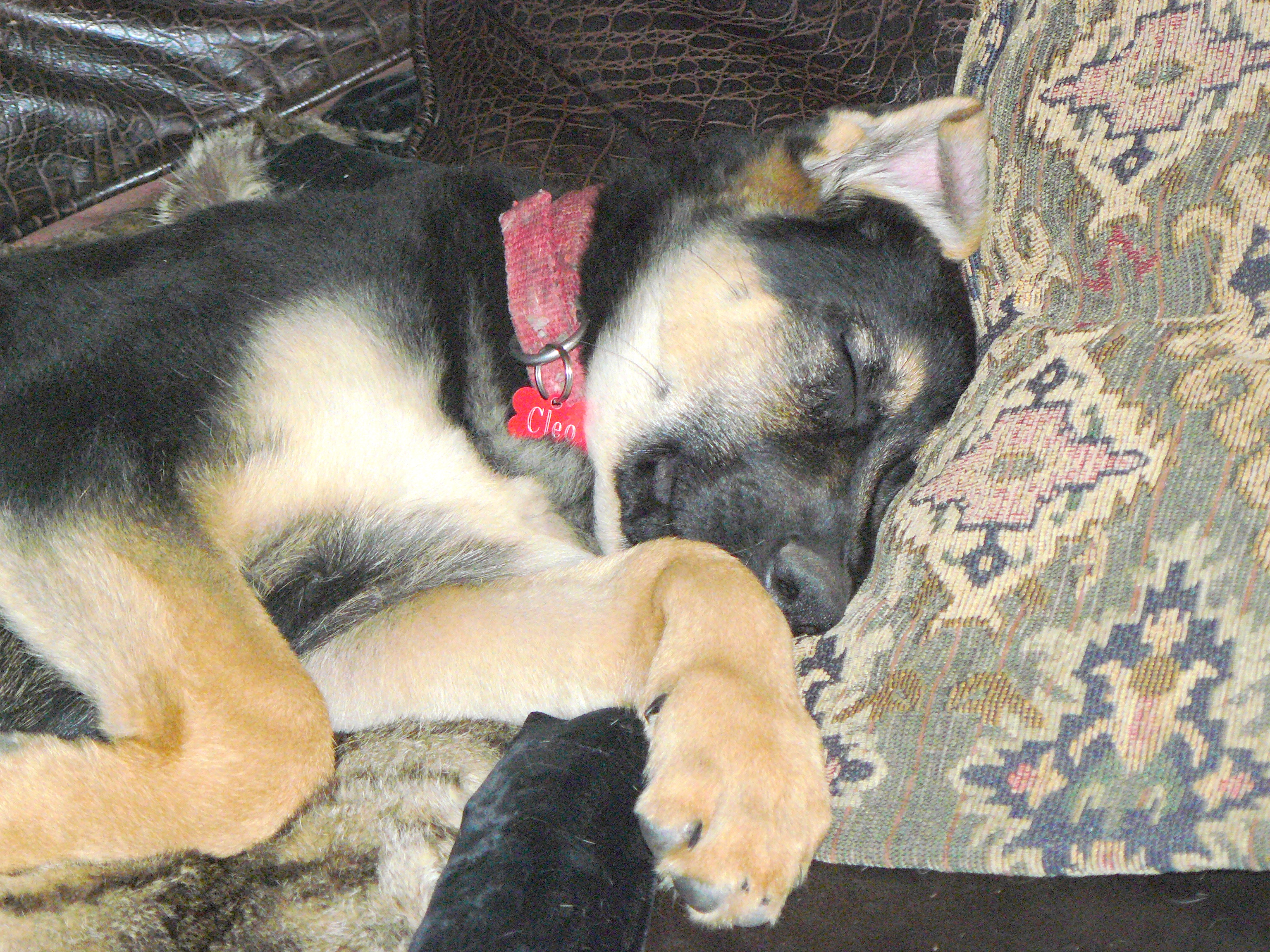
Cleo deep in meditation.

oooo

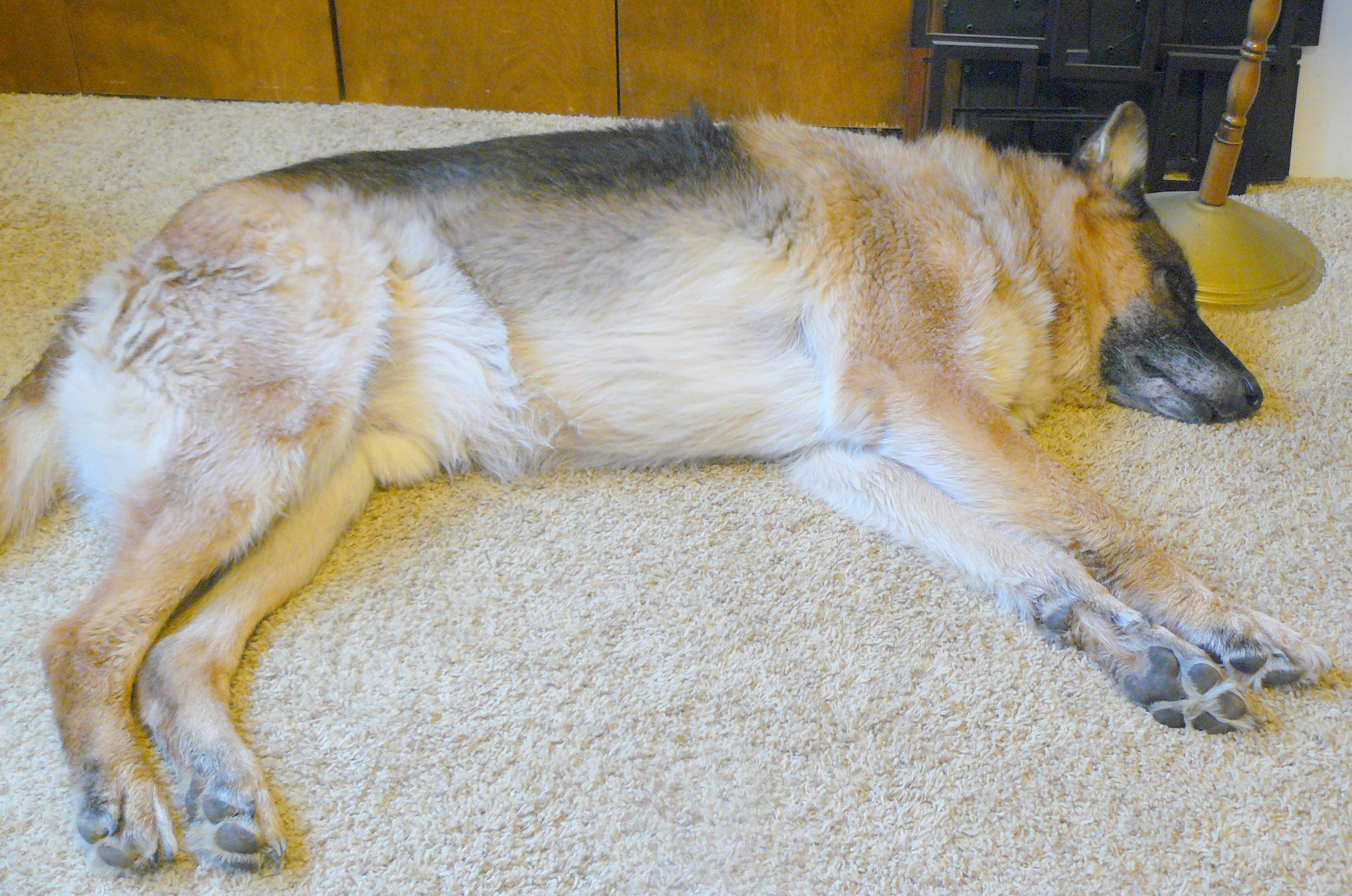
Pharaoh demonstrating the art of contemplation.

oooo

Cleo, deep in meditation.
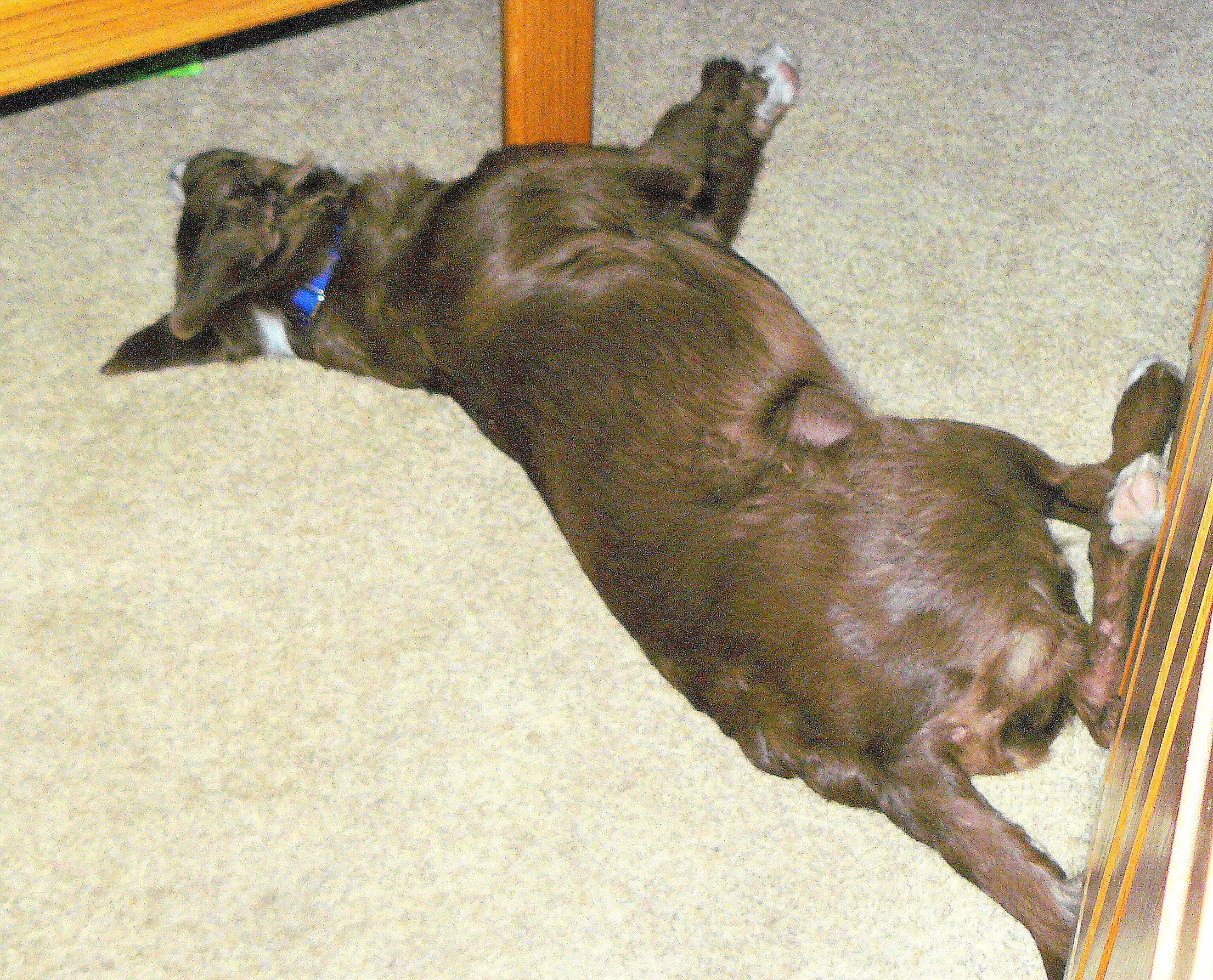
Young Oliver, learning new ways in meditation.

My case rests!

The passing of time.

The world-wide-web is now twenty-five years old.

I was doing a quick search through previous posts and, to my horror, found that I had published a post when the ‘web’ was twenty-years old.  It was a post called Even more Tim Berners-Lee and was published on the 25th March, 2010; some four-and-a-half years ago. Ouch!

Now Tim’s at it again speaking about the ‘web’ being twenty-five years old.

ooOOoo

From the web at 25 website:

Tim Berners-Lee calls for a Magna Carta for the Web (TED talk)

2014-8-19 // BY CORALIE MERCIER

2014 is the year the Web turns 25. Today, 19 August, marks the anniversary of Tim Berners-Lee, inventor of the World Wide Web, releasing the code of the WWW to the public by making the files available on the net via FTP (refer to the History of the World Wide Web for more details).

Last March we launched this site, kicking off a year-long celebration of the Web’s 25th birthday, which will culminate in an Anniversary Symposium and gala dinner on 29 October in Santa Clara (USA), to focus on potential and challenges of the future Web.

Last March in Vancouver, Tim Berners-Lee gave a TED Talk: A Magna Carta for the web, that was just released by the TED conference. Enjoy!

Sir Tim Berners-Lee invented the World Wide Web 25 years ago. So it’s worth a listen when he warns us: There’s a battle ahead. Eroding net neutrality, filter bubbles and centralizing corporate control all threaten the web’s wide-open spaces. It’s up to users to fight for the right to access and openness. The question is, What kind of Internet do we want?

This talk was presented at an official TED conference, and was featured by our editors on the home page.

I will leave you with the conclusion of Tim’s talk (the emphasis is mine (Coralie’s) ):

What sort of web do you want? I want one which is not fragmented into lots of pieces, as some countries have been suggesting they should do in reaction to recent surveillance. I want a web which is, for example, a really good basis for democracy. I want a web where I can use healthcare with privacy and where there’s a lot of health data, clinical data is available to scientists to do research. I want a web where the other 60 percent get on board as fast as possible. I want a web which is such a powerful basis for innovation that when something nasty happens, some disaster strikes, that we can respond by building stuff to respond to it very quickly.

So this is just some of the things that I want, from a big list, obviously it’s longer. You have your list. I want us to use this 25th anniversary to think about what sort of a web we want. You can go to webat25.org and find some links. There are lots of sites where people have started to put together a Magna Carta, a bill of rights for the web. How about we do that? How about we decide, these are, in a way, becoming fundamental rights, the right to communicate with whom I want. What would be on your list for that Magna Carta? Let’s crowdsource a Magna Carta for the web. Let’s do that this year. Let’s use the energy from the 25th anniversary to crowdsource a Magna Carta to the web. (Applause)

Thank you. And do me a favor, will you? Fight for it for me. Okay? Thanks.

Get’s my vote. Just wish the last twenty-five years hadn’t gone by just so quickly 😦

Being proud to be a deviant!

A powerful essay from George Monbiot.

Many will be aware that on a fairly regular basis, I repost essays here from George Monbiot, the last being Monbiot Unmasked on the 6th August.

I do so because in a world where much of the media is ‘bought’, and do understand that I use the term loosely, solid and trustworthy correspondents are to be applauded and, in turn, their views shared.  Mr. Monbiot is a classic example of someone who adheres to a truthful perspective. I am more than grateful for the blanket permission given to me by GM for the republication of his essays.

Thus with no further ado, here is George Monbiot’s essay Deviant and Proud published in the UK’s Guardian newspaper on the 6th August, 2014.

ooOOoo

Deviant and Proud

August 5, 2014

Do you feel left out? Perhaps it’s because you refuse to succumb to the competition, envy and fear neoliberalism breeds.

By George Monbiot, published in the Guardian 6th August 2014

To be at peace with a troubled world: this is not a reasonable aim. It can be achieved only through a disavowal of what surrounds you. To be at peace with yourself within a troubled world: that, by contrast, is an honourable aspiration. This column is for those who feel at odds with life. It calls on you not to be ashamed.

I was prompted to write it by a remarkable book, just published in English, by a Belgian professor of psychoanalysis, Paul Verhaeghe (1). What About Me?: The Struggle for Identity in a Market-Based Society is one of those books that, by making connections between apparently distinct phenomena, permits sudden new insights into what is happening to us and why.

We are social animals, Verhaeghe argues, and our identity is shaped by the norms and values we absorb from other people. Every society defines and shapes its own normality – and its own abnormality – according to dominant narratives, and seeks either to make people comply or to exclude them if they don’t.

Today the dominant narrative is that of market fundamentalism, widely known in Europe as neoliberalism. The story it tells is that the market can resolve almost all social, economic and political problems. The less the state regulates and taxes us, the better off we will be. Public services should be privatised, public spending should be cut and business should be freed from social control. In countries such as the UK and the US, this story has shaped our norms and values for around 35 years: since Thatcher and Reagan came to power (2). It’s rapidly colonising the rest of the world.

Verhaeghe points out that neoliberalism draws on the ancient Greek idea that our ethics are innate (and governed by a state of nature it calls the market) and on the Christian idea that humankind is inherently selfish and acquisitive. Rather than seeking to suppress these characteristics, neoliberalism celebrates them: it claims that unrestricted competition, driven by self-interest, leads to innovation and economic growth, enhancing the welfare of all.

At the heart of this story is the notion of merit. Untrammelled competition rewards people who have talent, who work hard and who innovate. It breaks down hierarchies and creates a world of opportunity and mobility. The reality is rather different. Even at the beginning of the process, when markets are first deregulated, we do not start with equal opportunities. Some people are a long way down the track before the starting gun is fired. This is how the Russian oligarchs managed to acquire such wealth when the Soviet Union broke up. They weren’t, on the whole, the most talented, hard-working or innovative people, but those with the fewest scruples, the most thugs and the best contacts, often in the KGB.

Even when outcomes are based on talent and hard work, they don’t stay that way for long. Once the first generation of liberated entrepreneurs has made its money, the initial meritocracy is replaced by a new elite, which insulates its children from competition by inheritance and the best education money can buy. Where market fundamentalism has been most fiercely applied – in countries like the US and UK – social mobility has greatly declined (3).

If neoliberalism were anything other than a self-serving con, whose gurus and think tanks were financed from the beginning by some of the richest people on earth (the American tycoons Coors, Olin, Scaife, Pew and others) (4), its apostles would have demanded, as a precondition for a society based on merit, that no one should start life with the unfair advantage of inherited wealth or economically-determined education. But they never believed in their own doctrine. Enterprise, as a result, quickly gave way to rent.

All this is ignored, and success or failure in the market economy are ascribed solely to the efforts of the individual. The rich are the new righteous, the poor are the new deviants, who have failed both economically and morally, and are now classified as social parasites.

The market was meant to emancipate us, offering autonomy and freedom. Instead it has delivered atomisation and loneliness. The workplace has been overwhelmed by a mad, Kafka-esque infrastructure of assessments, monitoring, measuring, surveillance and audits, centrally directed and rigidly planned, whose purpose is to reward the winners and punish the losers. It destroys autonomy, enterprise, innovation and loyalty and breeds frustration, envy and fear. Through a magnificent paradox, it has led to the revival of a grand old Soviet tradition, known in Russian as tufta. It means the falsification of statistics to meet the diktats of unaccountable power.

The same forces afflict those who can’t find work. They must now contend, alongside the other humiliations of unemployment, with a whole new level of snooping and monitoring. All this, Verhaeghe points out, is fundamental to the neoliberal model, which everywhere insists on comparison, evaluation and quantification. We find ourselves technically free but powerless. Whether in work or out of work, we must live by the same rules or perish. All the major political parties promote them, so we have no political power either. In the name of autonomy and freedom we have ended up controlled by a grinding, faceless bureaucracy.

These shifts have been accompanied, Verhaeghe writes, by a spectacular rise in certain psychiatric conditions: self-harm, eating disorders, depression and personality disorders. Of the personality disorders, the most common are performance anxiety and social phobia; both of which reflect a fear of other people, who are perceived as both evaluators and competitors, the only roles for society that market fundamentalism admits. Depression and loneliness plague us. The infantilising diktats of the workplace destroy our self-respect. Those who end up at the bottom of the pile are assailed by guilt and shame. The self-attribution fallacy cuts both ways (5): just as we congratulate ourselves for our successes,we blame ourselves for our failures, even if we had little to do with it.

So if you don’t fit in; if you feel at odds with the world; if your identity is troubled and frayed; if you feel lost and ashamed, it could be because you have retained the human values you were supposed to have discarded. You are a deviant. Be proud.

www.monbiot.com

References:

1. Paul Verhaeghe, 2014. What About Me?: The struggle for identity in a market-based society. Scribe. Brunswick, Australia and London.

2. http://www.theguardian.com/commentisfree/2010/oct/18/conservative-financial-crisis-opportunity

3. http://www.theguardian.com/news/datablog/2012/may/22/social-mobility-data-charts

4. http://www.theguardian.com/commentisfree/2007/aug/28/comment.businesscomment

5. http://www.theguardian.com/commentisfree/2011/nov/07/one-per-cent-wealth-destroyers

ooOOoo

What powerful observations; what common-sense written by Paul Verhaeghe, and beautifully reported by Mr. Monbiot in an incredible essay.

You have probably guessed where I stand! 😉

Listen up you Americans.

This had me laughing out loud!

Now before reading on, please allow me a moment to explain that the following does cast aspersions over the current president of the United States of America.  I don’t have the right to vote in any form of US election so am very happy to let all of American politics flow over the top of my head.  Thus this is published simply because it gave me so much fun when reading it and I wanted to share the fun with you.  Very grateful to neighbour Larry for sending it to me.

Enjoy!

ooOOoo

Queenie

A MESSAGE FROM THE QUEEN

To the citizens of the United States of America from Her Sovereign Majesty Queen Elizabeth II

In light of your failure in recent years to nominate competent candidates for the esteemed position of President of the USA and thereby a continuing failure properly to govern yourselves, as the Head of State of the United Kingdom I do hereby give notice of the revocation of your independence; effective immediately. (You should look up ‘revocation’ in the Oxford English Dictionary.)

As your new Sovereign, I, Queen Elizabeth II, will resume monarchical duties over all states, commonwealths, and territories (except North Dakota, which I have never liked).

The United Kingdom’s current Prime Minister, David Cameron, will now appoint a Governor for America without the need for further elections.

The United States Congress and the Senate are disbanded with immediate effect. My Government is preparing a questionnaire, to be circulated next year, to determine whether any of you noticed the change.

To aid in your transition to a British Crown dependency, the following rules are introduced with immediate effect:

  1. The letter ‘U’ will be reinstated in words such as ‘colour,’ ‘favour,’ ‘labour’ and ‘neighbour.’ Likewise, you will learn to spell ‘doughnut’ without skipping half the letters, and the suffix ‘-ize’ will be replaced by the suffix ‘-ise.’ Generally, you will be expected to raise your vocabulary to acceptable levels. (look up ‘vocabulary’).
  2. Using the same twenty-seven words interspersed with filler noises such as ”like’ and ‘you know’ is an unacceptable and inefficient form of communication. There is no such thing as U.S. English. We will let Microsoft know on your behalf. The Microsoft spell-checker will be adjusted to take into account the reinstated letter ‘u” and the elimination of ‘-ize.’
  3. July 4th will no longer be celebrated as a holiday.
  4. You will learn to resolve personal issues without using guns, lawyers, or therapists. The fact that you need so many lawyers and therapists shows that you’re not quite ready to be independent. Guns should only be used for shooting grouse. If you can’t sort things out without suing someone or speaking to a therapist, then you’re not ready to shoot grouse.
  5. Therefore, you will no longer be allowed to own or carry anything more dangerous than a vegetable peeler. Although a permit will be required if you wish to carry a vegetable peeler in public.
    All intersections will be replaced with roundabouts, and you will start driving on the left side with immediate effect. At the same time, you will go metric with immediate effect and without the benefit of conversion tables. Both roundabouts and metrication will help you understand the British sense of humour.
  6. The former USA will adopt UK prices on petrol (which you have been calling gasoline) of roughly $10/US gallon. Get used to it.
  7. You will learn to make real chips. Those things you call French fries are not real chips, and those things you insist on calling potato chips are properly called crisps. Real chips are thick cut, fried in animal fat, and dressed not with catsup but with vinegar.
  8. The cold, tasteless stuff you insist on calling beer is not actually beer at all. Henceforth, only proper British Bitter will be referred to as beer, and European brews of known and accepted provenance will be referred to as Lager. South African beer is also acceptable, as they are pound-for-pound the greatest sporting nation on earth and it can only be due to the beer. They are also part of the British Commonwealth (see what it did for them). American brands will be referred to as Near-Frozen Gnat’s Urine, so that all varieties may be sold without risk of further confusion.
  9. Hollywood will be required occasionally to cast English actors as good guys. Hollywood will also be required to cast English actors to play English characters. Watching Andie Macdowell attempt English dialect in Four Weddings and a Funeral was an experience akin to having one’s ears removed with a cheese grater.
  10. You will cease playing American football. There is only one kind of proper football; you call it soccer. Those of you brave enough will, in time, be allowed to play rugby (which has some similarities to American football, but does not involve stopping for a rest every twenty seconds or wearing full kevlar body armour like a bunch of nancies).
  11. Further, you will stop playing baseball. It is not reasonable to host an event called the World Series for a game which is not played outside of America. Since only 2.1% of you are aware there is a world beyond your borders, your error is understandable. You will learn cricket, and we will let you face the South Africans first to take the sting out of their deliveries.
  12. You must tell us who killed JFK. It’s been driving us mad.
  13. An internal revenue agent (i.e. tax collector) from Her Majesty’s Government will be with you shortly to ensure the acquisition of all monies due (backdated to 1776).
  14. Daily Tea Time begins promptly at 4 p.m. with proper cups, with saucers, and never mugs, with high quality biscuits (cookies) and cakes; plus strawberries (with cream) when in season.

God Save the Queen!

Union jack: hugely symbolic.

ooOOoo

As a Brit living happily here in Southern Oregon, all I can add to this statement from Her Majesty is don’t mention the Scottish referendum in just a few weeks time!

Now I think I better run for cover!

Dog magic!

A wonderful sequel to yesterday’s post.

There was a wonderful reader reaction to yesterday’s post and it seemed so utterly appropriate to repost something back from November, 2012. Simply because it underscores the reasons why if anyone is looking for a dog, to please consider a rescue dog first.

oooo

More on the beautiful and inspiring ways of the dog.

(First posted on the 20th November, 2012.)

Back at the beginning of July, I wrote a post about Jasmine.  Jasmine was a rescue dog that turned out to be a natural ‘Mother hen’.  That post was called Letting go; a dog lesson and, as the post explains, “Jasmine was truly one of a kind. She mothered many of the sanctuary’s residents back to health including Bramble the roe deer, Humbug the badger and two of the other sanctuary dogs, just to mention a few.

But, guess what?  More evidence of the benefits of having a dog in your life (or in our case make that 10 dogs!). [Ed. Now 9 dogs.]

From the blogsite The Raw Story comes this:

Babies who spend time around pet dogs have fewer ear infections and respiratory ailments than those whose homes are animal-free, reported a study.

The study, published in the US journal Pediatrics, did not say why but suggested that being around a dog that spends at least part of its day outdoors may boost a child’s immune system in the first year of life.

Cats, too, seemed to convey some protection to babies, though the effect observed was weaker than with dogs.

The article goes on to say,

The research was based on 397 children in Finland whose parents made diary entries each week recording the state of their child’s health during the infant’s first year, from nine weeks to 52 weeks of age.

Overall, babies in homes with cats or dogs were about 30 percent less likely to have respiratory infectious symptoms — which included cough, wheezing, rhinitis (stuffy or runny nose) and fever — and about half as likely to get ear infections.

And concludes,

The most protective association was seen in children who had a dog inside at home for up to six hours a day, compared to children who did not have any dogs or who had dogs that were always outside.

“We offer preliminary evidence that dog ownership may be protective against respiratory tract infections during the first year of life,” said the study.

“We speculate that animal contacts could help to mature the immunologic system, leading to more composed immunologic response and shorter duration of infections.”

The improvement was significant, even after researchers ruled out other factors that could boost infection risk, such as not having been breastfed, attending daycare, being raised by smokers or parents with asthma, or having older siblings in the household.

In addition to having less frequent ear infections and respiratory infections, babies near dogs tended to need fewer courses of antibiotics compared to those who were reared in pet-free households, it said.

Previous research has shown conflicting results, with some studies finding no benefit for young children being around furry pets and others finding that animal contact appears to offer some protection against colds and stomach ailments.

The study authors said their research differs from previous analyses because it focuses solely on the first postnatal year and does not include older children.

Pharaoh approves!

oooo

What amazing creatures they are.

The most elegant writing.

This will take your breath away.

Yesterday, I read the latest from TomDispatch, an essay entitled Eduardo Galeano, A Lost and Found History of Lives and Dreams (Some Broken).

I wasn’t sure if I had vaguely heard of Eduardo Galeano before but whatever, I had no idea of the power and beauty of his writings and was simply blown away when reading them. As Tom introduced the writings:

Who isn’t a fan of something — or someone? So consider this my fan’s note. To my mind, Uruguayan writer Eduardo Galeano is among the greats of our time. His writing has “it” — that indefinable quality you can’t describe but know as soon as you read it. He’s created a style that combines the best of journalism, history, and fiction and a form for his books that, as far as I know, has no name but involves short bursts of almost lyrical reportage, often about events long past. As it turns out, he also carries “it” with him. I was his English-language book editor years ago and can testify to that, even though on meeting him you might not initially think so. He has nothing of the showboat about him. In person, he’s almost self-effacing and yet somehow he brings out in others the urge to tell stories as they’ve never told them before.

Despite Tom’s blanket permission to republish his essays, I’m not going to do so in this case, there’s a small niggle in the back of my mind that the copyright issues are rightfully protecting Mr. Galeano’s publishing rights.

So just going to offer this single extract and trust that you will go here and read Tom’s full essay: please do!

Century of Disaster

Riddles, Lies, and Lives — from Fidel Castro and Muhammad Ali to Albert Einstein and Barbie
By Eduardo Galeano

[The following passages are excerpted from Eduardo Galeano’s history of humanity, Mirrors (Nation Books).]

Walls

The Berlin Wall made the news every day. From morning till night we read, saw, heard: the Wall of Shame, the Wall of Infamy, the Iron Curtain…

In the end, a wall which deserved to fall fell. But other walls sprouted and continue sprouting across the world. Though they are much larger than the one in Berlin, we rarely hear of them.

Little is said about the wall the United States is building along the Mexican border, and less is said about the barbed-wire barriers surrounding the Spanish enclaves of Ceuta and Melilla on the African coast.

Practically nothing is said about the West Bank Wall, which perpetuates the Israeli occupation of Palestinian lands and will be 15 times longer than the Berlin Wall. And nothing, nothing at all, is said about the Morocco Wall, which perpetuates the seizure of the Saharan homeland by the kingdom of Morocco, and is 60 times the length of the Berlin Wall.

Why are some walls so loud and others mute?

See what I mean!

There is much more about Eduardo Galeano on the web as these two following links prove.

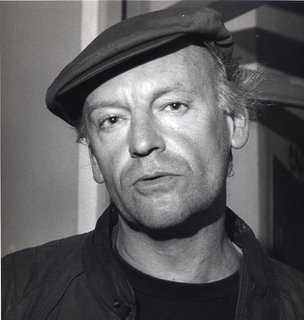
Eduardo Galeano
Eduardo Galeano

Wikipedia have an entry here that is informative. Then there is an in-depth article about the man over on The Atlantic website, that starts thus:

Eduardo Galeano is regarded as one of Latin America’s fiercest voices of social conscience. Yet he insists that language — its secrets, mysteries, and masks — always comes first.

November 30, 2000

“The division of labor among nations,” Eduardo Galeano proclaimed in the opening sentence of Open Veins of Latin America, “is that some specialize in winning and others in losing.” A native of Uruguay who was forced into exile under the country’s military regime during the 1970s, Galeano has always identified with the losing side. Open Veins, originally published in Mexico in 1971, employed captivating, elegiac prose to chronicle five centuries of plunder and imperialism in Latin America. Radically different in style, though not in content, from Marxist-oriented “dependency theory” of the 1960s — which held that Latin America had been systematically marginalized by the world economy since the colonial era — Open Veins quickly became a canonical text in radical circles, selling hundreds of thousands of copies in the Southern Hemisphere. In a period of social upheaval, guerrilla warfare, and dictatorship, the book, composed in three months of intense labor, was routinely treated as samizdat: when Open Veins was banned by the Pinochet regime, a young woman fled Chile with the book stashed in her infant’s diapers.

Going to close by musing on the fact that in today’s visual, technological age, the sharing of words, in all ways, shapes and sizes, across so many parts of our global society, is a pure miracle. Such creativity out there!

Could be the start of a welcome trend!

Certainly dogs couldn’t be any worse!

I am referring to politicians; but you probably guessed that.

Just my way of a lead-in to a wonderful item seen recently over on ABC Eye Witness News.

Namely:

DOG ELECTED MAYOR IN CORMORANT, MINNESOTA

Duke, the mayor of Cormorant, Minnesota.

Tuesday, August 12, 2014

CORMORANT, Minnesota (WLS) — Duke, a 7-year-old dog, was elected mayor of Cormorant, Minnesota.

He won by a landslide,” Tricia Maloney said of the Great Pyrenees. “He’s used to coming to the pub and getting some burgers and some fries or something.”

The 12 people who live in Cormorant all paid $1 to vote.

Poor Richard Sherbrook that owns the Cormorant store, he didn’t even have half as many votes as Duke did,” Maloney said.

The farm dog is all bark, no bite. His term lasts one year.

oooo

A quick web search found a longer version of the news item over on the CBS News website:

Duke The Dog Sworn In As Mayor Of Cormorant, Minn.

(credit: CBS)
(credit: CBS)

MINNEAPOLIS (WCCO) – Every dog has his day and Saturday is it for Duke the dog.

Duke was elected mayor of the northwestern Minnesota community of Cormorant, and he was sworn in Saturday. Organizer Tammy Odegaard says Duke got gussied up Friday night, his second trip to the groomer since his election.

He spends a lot of time at the dairy farm next door,” Odegaard said, who notes she’s now a member of Duke’s staff. “So, twice in, like, seven days for him is, like, it’s never happened. So I’m sure he’s wondering what’s going on with just that.”

His first grooming took five hours and came after the majority of the town’s 12 voters backed him in the balloting. The town pulled out all the stops for the 10 a.m. ceremony during Cormorant’s annual fair.

We’ll have him put his little paw on the bible, going to have him have the little oath,” Odegaard said. “Of course, he’s not going to repeat it. It would be awesome if he would bark, but who knows? He’s a country dog, so he’s not used to performing on cue.

During the two-minute inauguration ceremony, Steve Sorenson, chairman of Cormorant Township, greeted Duke and set forth his duties.

You are about to em-bark upon a great time of service, tremendous personal and professional growth,” Sorenson said. “If you accept this challenge and these responsibilities, please bark or pant.

Duke panted.

I think that qualifies,” Sorenson said.

As for the mayor’s salary, a pet food store is donating a year’s supply of kibble to reward him for his service.

The village of Cormorant is located in northwestern Minnesota, near Pelican Rapids.

Duke is a seven-year-old, big, white, shaggy Great Pyrenees that loves to roll around in the dirt. Odegaard would not say if that activity qualifies Duke for a career in politics.

You said it, not me,” Odegaard laughed.

oooo

That inauguration ceremony was captured on video; see below.  Warning, the first seven minutes are a little slow! But it is worth watching, trust me!

A wolf’s journey.

Yet another positive sign.

Hot on the heels of yesterday’s post The power of hope comes this wonderful story about the increasing population of wolves in Europe.  I can’t recall what led me to the item in the UK’s Guardian newspaper but this is what I read:

Incredible journey: one wolf’s migration across Europe

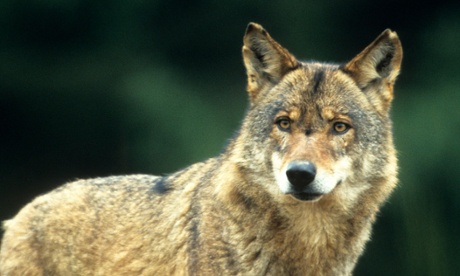
Slavc is a wolf. In 2011, he began an epic 2,000 kilometre migration across Europe from Slovenia to Italy via the Austrian Alps. Several months earlier, he had been fitted with a collar that allowed his movements to be tracked in incredible detail. I talked to Hubert Potočnik, the biologist whose work made this possible.

Henry Nichollstheguardian.com, Friday 8 August 2014 02.05 EDT

It has been estimated that there are now around 10,000 wolves in Europe. Photograph: tbkmedia.de/Alamy

Every year, Hubert Potočnik and his colleagues at the University of Ljubljana in Slovenia capture and collar a number of wolves in order to get a handle on the movements of these much-misunderstood creatures. In July 2011, he collared a young male that became known as Slavc. In June, I spoke to Potočnik for a feature that appears in New Scientist this week and he told me about Slavc’s extraordinary journey across Europe. What follows is an edited transcript of the interview …

HN: After you captured and collared Slavc in July 2011, he stayed with his pack for several months. Then, on 19 December 2011, he began to move. How did you know?

HP: We knew something was different because the GPS points showed that he had crossed two large motorways far outside of his natural territory.

Tell me about these collars. How do they work?

The collar is equipped with three types of different technology. It has a GPS receiver, a GSM modem to send SMS and also with a VHF radio transmitter as a back-up. We programme all our wolves to send a GPS signal every three hours, so we get about seven locations a day to give us continuous location sampling data.

Hubert Potočnik fits Slavc with the collar in July 2011, a device that will reveal the wolf’s incredible 2000-km migration from Slovenia to Italy. Photograph: Nina Ražen

To read the rest of this fascinating article then you will need to go here.  Please do so as the article is breathtakingly interesting. It closes, thus:

HN: How would you sum up this experience?

There are lots of data about long-distance dispersal of wolves but there are very few cases where we have had the opportunity to follow an animal in such detail. Following Slavc across Europe offered a rare insight into the secret life of the wolf. It was one of the most amazing events in my life.

A quick web search came across this short but wonderful video; albeit without sound.

Published on Aug 26, 2013
Two wolf cubs were documented in Lessinia Regional Nature Park on August 7, 2013. At the end of the video it is possible to partially see an adult wolf, the mother of the cubs, that was recognized as Giulietta. Giulietta and Slavc became famous because they brought together two wolf populations that were separated for over 150 years. Wolf Slavc originates from the Dinaric-Balkan wolf population and was collared in Slovenia. He travelled over 1500km over Austria to Italy, where he met Giulietta, originating from the wolf population from the western Alps (Piemonte region).

source: Parco Naturale Regionalle Della Lessinia