It seems to me that it is so incredibly easy to be influenced, even engulfed, by bad news.
Back on the 20th I posted an item that had been sent to me by John Hurlburt, who is the old lamplighter, called Interstellar News.
Here’s another essay from John that is a great reminder of that old adage: We are what we think.
ooOOoo
Misery Is Optional
There’s always been a delicate balance in the struggle between growth and stagnation. The emerging universe invariably prevails. The good news is that absolutely insisting upon the denial of reality naturally backfires in the long run. Common sense has repeatedly saved our collective bacon from the fire as our species has faced former crises. The stakes have never been higher.
There’s a natural balance that runs through our relatively brief species history. Extreme cultural alternatives include plutocracy and anarchy. There’s no question that if we’re not an active supporter of an inclusive solution we contribute to our collective dissolution.
Nero fiddled while Rome burned. There’s a current global analogy. Global media communications reflect hate, divisiveness and violence. The obvious truth is essentially ignored. A result is our present state of angst, paranoia and associated stress disorders. We compensate with bread and circuses.
Indifference doesn’t have to be a local reality. We’re all naturally connected in whatever we conceive of as God. We share a common soul. If we are wise we’ll act accordingly. We’ll accept our inherent responsibilities as stewards of Creation. The fulfilment of positive actions in according with the nature of our being is a blessing that keeps on giving.
an old lamplighter
ooOOoo
These are beautiful words and whatever one’s religious or spiritual convictions if we don’t recognise that we are all “naturally connected” then it won’t be long before we run out of bread and circuses – and deservedly so.
Going to close this post by using the following picture and quotation taken from the latest Terry Hershey newsletter.
“Beyond living and dreaming there is something more important: waking up.“
A Monday morning reminder of our beautiful planet.
American Wilderness: The John Moulton Barn on Mormon Row at the base of the Tetons. Photo: Jon Sullivan
Just a random picture found by doing a web search. (Actually found on what looks like a great blog: I am Wilderness.)
This morning’s post was prompted by listening to one of my favourite music groups: The Alan Parsons Band.Listening to this particular track: Call of the Wild. From his third solo album The Time Machinereleased in September, 1999.
Lyrics written by Ian Bairnson
Well I’ve talked to the wind and I’ve listened to rain,
I have climbed to the clouds and I’ve cried out with pain,
This life is for living so come to my side,
And open your heart to the call of the wild.
We are all of one nation, all of one creed,
We are all out of nature, all of one seed,
We are in this together, man, woman and child,
So open your heart to the call of the wild.
We talk the same language in different tongues,
We’re somebody’s daughters and somebody’s sons,
But those who believe we are head of the chain,
May wake up to find we are all that remain.
There is no need to fear what we don’t understand,
For we breathe the same air and we walk the same land,
The strong and the anxious, the meek and the mild,
All dance to the drum that’s the call of the wild.
Impossible to listen to this beautiful track and not reflect on how badly we are treating Mother Earth.
Or put another way: I can remember everything except the things I forget.
Like many others of my age, the short-term memory is not as sharp as it used to be (not that I can remember when that was! 😉 )
So with that in mind, and only for my dear readers who understand where I am coming from, here’s a lovely item that was sent to neighbour Dordie who then passed it on to me.
ooOOoo
Your Yearly Dementia Test
(only 4 questions)
Yep, it’s that time of year again for us to take our annual senior citizen test.
Exercise of the brain is as important as exercise of the muscles. As we grow older, it’s important to keep mentally alert. If you don’t use it, you lose it!
Here is a very private way to gauge how your memory compares to your last test.
Some may think it is too easy, but the ones with memory problems may have difficulty. So take this test to determine if you’re losing it or not.
The spaces below are so you don’t see the answers until you’ve made your answer.
OK, relax, clear your mind and begin.
Question One: What do you put in a toaster?
.
.
.
.
.
.
.
.
.
Answer: Bread.
If you said ‘toast’, just give up now and go do something else. And, try not to hurt yourself.
If you said Bread, go to Question #2.
Question Two: Say ‘silk’ five times. Now spell ‘silk.’ What do cows drink?
.
.
.
.
.
.
.
.
.
Answer: Cows drink water.
If you said ‘milk,’ don’t attempt the next question. Your brain is already over-stressed and may even overheat. Content yourself with reading more appropriate literature such as Women’s Weekly or Auto World. However, if you did say ‘water’, proceed to Question Three.
Question Three: If a red house is made from red bricks and a blue house is made from blue bricks and a pink house is made from pink bricks and a black house is made from black bricks, what is a green house made from?
.
.
.
.
.
.
.
.
.
Answer: Greenhouses are made from glass.
If you said ‘green bricks’, why are you still reading this??? PLEASE, go lie down! But, if you said ‘glass,’ go on to Question #4.
Question Four: (Do not use a calculator for this):
You are driving a bus from New York City to Philadelphia.
In Staten Island, 17 people got on the bus. In New Brunswick, 6 people get off the bus and 9 people get on. In Windsor, 2 people get off and 4 get on. In Trenton, 11 people get off and 16 people get on. In Bristol, 3 people get off and 5 people get on. And, in Camden, 6 people get off and 3 get on.
You then arrive at Philadelphia Station.
Without going back to review, how old is the bus driver?
.
.
.
.
.
.
.
.
Answer: Oh, for crying out loud! Don’t you remember your own age?!?! It was YOU driving the bus!
If you pass this along to your friends, pray they do better than you.
But don’t be too hard on yourself: 95% of people fail most of the questions!
Dave Isay opened the first StoryCorps booth in New York’s Grand Central Terminal in 2003 with the intention of creating a quiet place where a person could honor someone who mattered to them by listening to their story. Since then, StoryCorps has evolved into the single largest collection of human voices ever recorded. His TED Prize wish: to grow this digital archive of the collective wisdom of humanity. Hear his vision to take StoryCorps global — and how you can be a part of it by interviewing someone with the StoryCorps app.
It was a remarkable and fascinating talk and, thanks to YouTube, I’m able to share it with you.
I have no doubt that after watching Dave Isay’s talk you will want to go to the StoryCorps website.
Returning to a favourite story about one of our dogs.
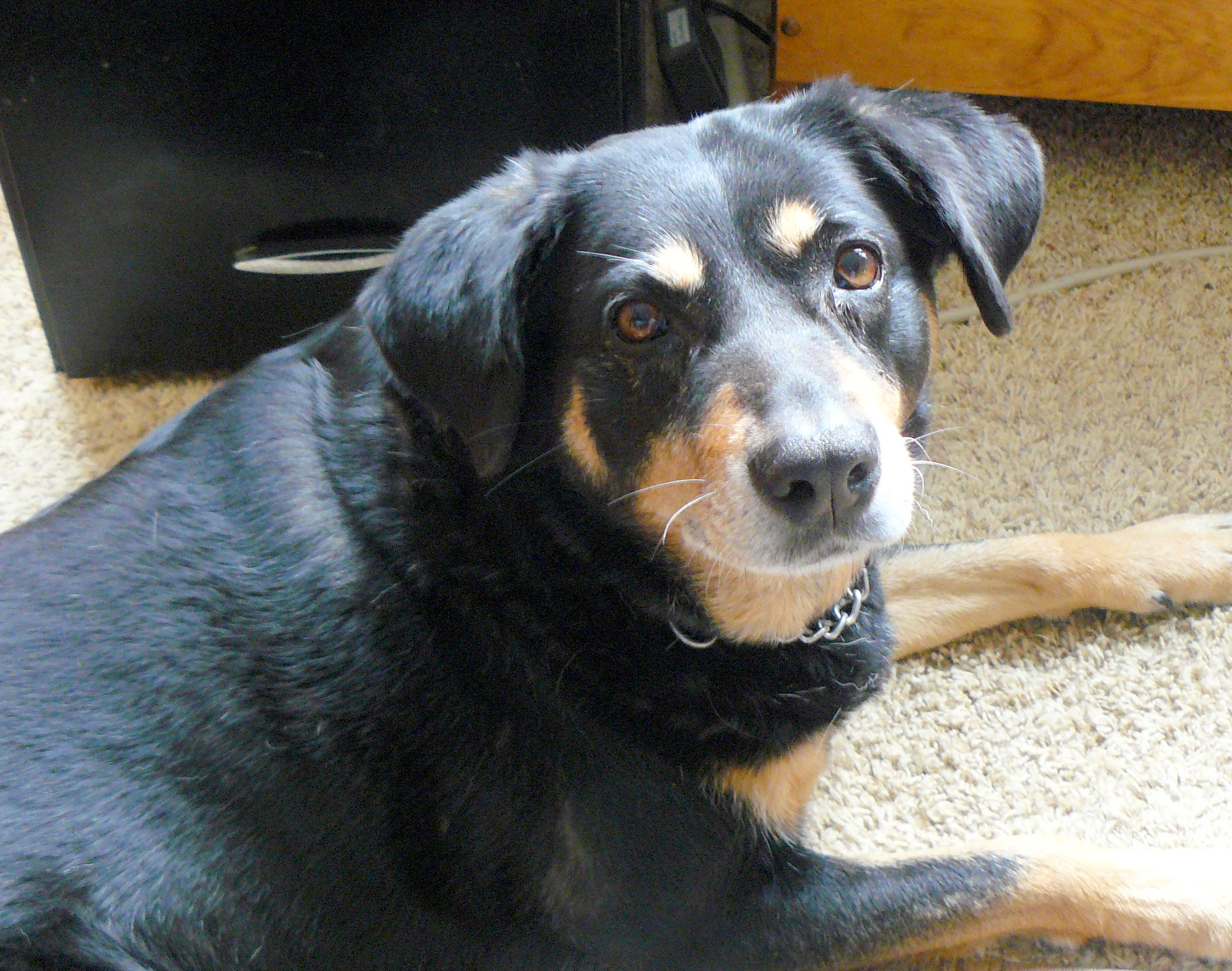
Yesterday’s post, the second this week about the long history of humans and dogs ended with me sharing a photograph of Hazel looking up at me as I was writing the post. Here it is again.
Dogs are such wonderful animals.
Later in the evening, thinking about how much we can learn from dogs (and, thank you so much, Deborah of Dog Leader Mysteries) my mind turned to the wonderful motivation dogs are for creative writing whether that is non-fiction, creative non-fiction or fiction.
In turn that reminded me of when, in the Summer of 2011, Jean and I attended a creative writing course at our nearby college in Payson, Arizona where we were then living. Here’s a story from that time that is fictional, in the sense that the event did not take place, but the names of all concerned, photographs and location are real!
ooOOoo
Messages from the Night
by Paul Handover
Dhalia heads for the hills!
“Jean, where’s Dhalia?”
“Don’t know. She was here moments ago.”
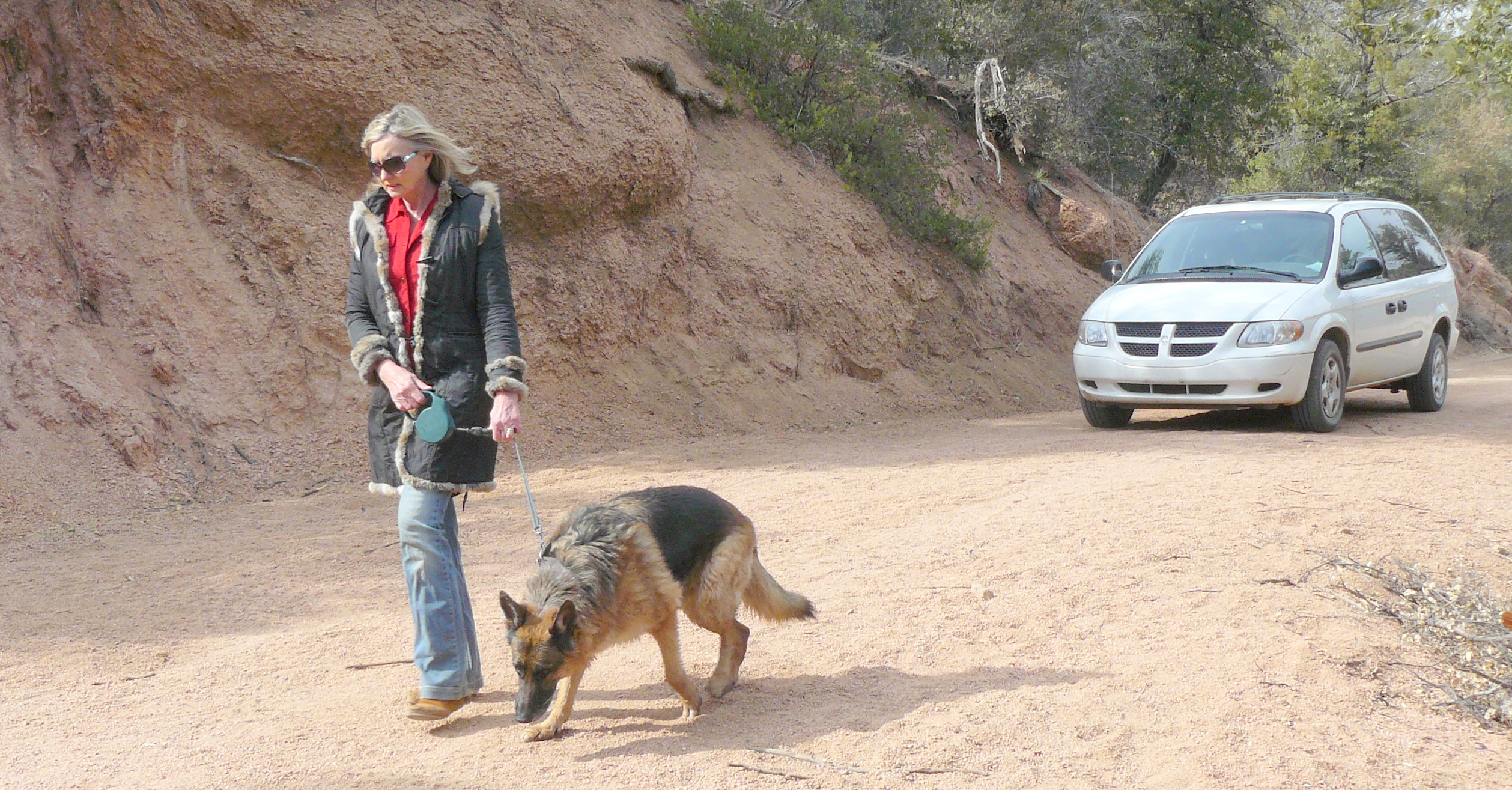
“Jeannie, You take the other dogs back to the car and I’ll go and scout around for her. Oh, and you better put Pharaoh on the leash otherwise you know he’ll follow me.”
“Paul, don’t worry, Dhalia’s always chasing scents; bet she beats us back to the car. Especially as it’s going to be dark soon.”
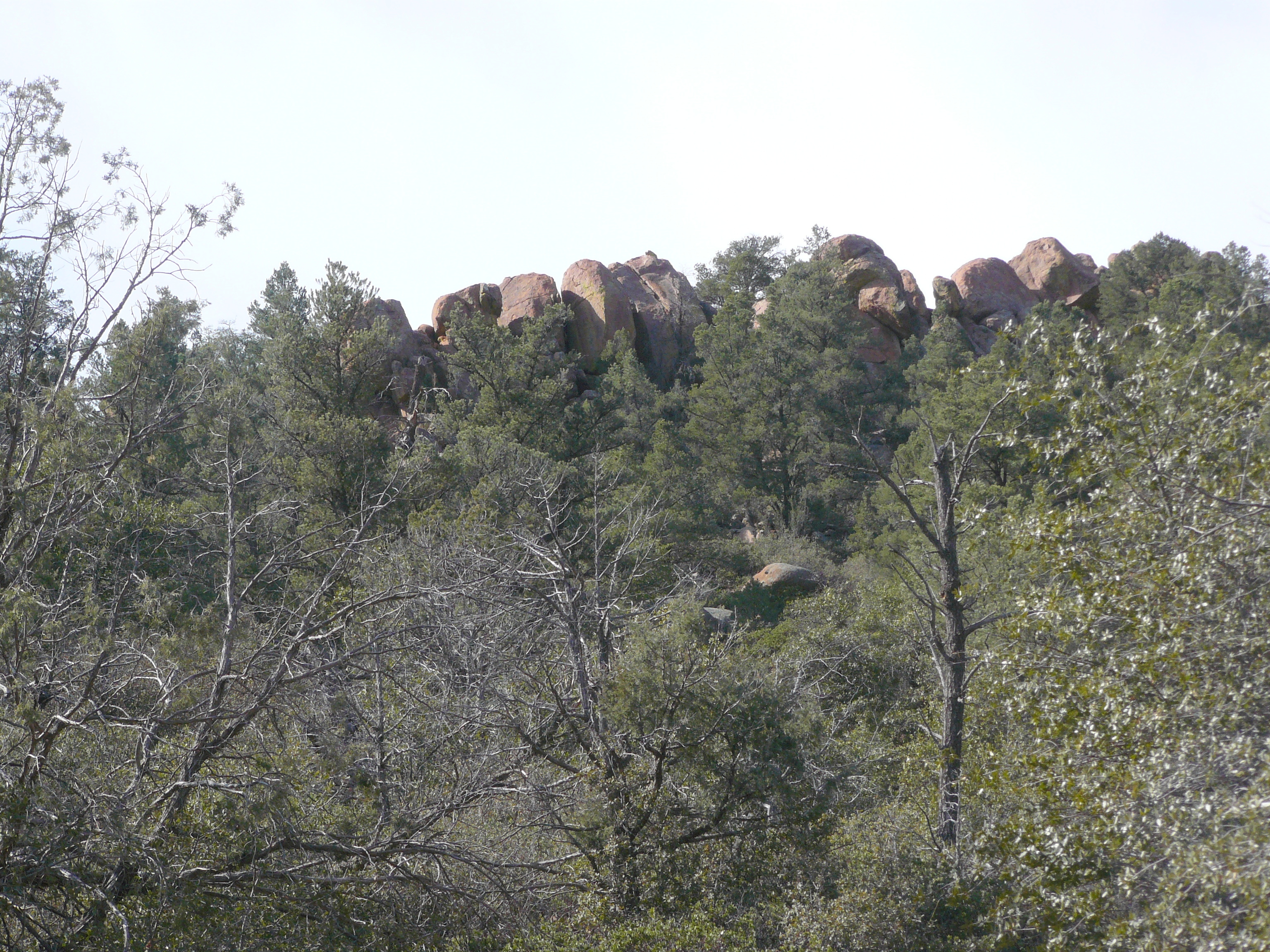
Nonetheless, Paul started back down the dusty, dirt road, the last rays of the sun pink on the high, tumbled cliffs of granite. This high rocky, forest plateau, known as the Granite Dells, just 3 miles from their home on the outskirts of Payson, made perfect dog-walking country and rarely did they miss an afternoon out here. However this afternoon, for reasons Paul was unclear about, they had left home much later than usual.
No sign of Dhalia ahead on the road so he struck off left, hoping she was somewhere up amongst the trees and the high boulders. Soon he reached the first crest, panting hard in the thin air. Behind him, across the breath-taking landscape, the setting sun had dipped beneath faraway mountain ridges; a magnificent sight. Suddenly, in the midst of that brief pause of admiring the perfect evening, a sound echoed around the cliffs. The sound of a dog barking. Paul bet his life on that being Dhalia. Just as quickly the barking stopped.
Challenging walking country.
The barking started up again, barking that suggested Dhalia was hunting something. The sound came from an area of boulders way up above the pine trees on the other side of the small valley ahead of him.
Perhaps, Dhalia had trapped herself. More likely, he reflected, swept up in the evening scents of the wilderness, Dhalia had temporarily reverted back to the wild, hunting dog she had been all those years ago. That feral Mexican street dog who in 2005 had tentatively turned away from scavenging in a pile of rubbish in a dirty Mexican town and shyly approached Jean. Jean had named her Dhalia.
He set off down to the valley floor and after fifteen minutes of hard climbing had reached the high boulders the other side. Paul whistled, then called “Dhalia! Dhalia! Come, there’s a good girl.”
Thank goodness for such a sweet, obedient dog.
He anticipated the sound of dog feet scampering through rough undergrowth. But no sound came.
He listened; no sounds, no more barking. Now where had she gone? Perhaps past these boulders down into the steep ravine beyond him, the one so densely forested with pine trees. With daylight practically gone he needed to find Dhalia very soon. He plunged down the slope, pushing through tree branches that whipped across his face, then fell heavily as his foot found empty space instead of the anticipated firm ground.
Paul cursed, picked himself up and paused. That fall had a message: the madness of continuing his search in the near dark. This terrain made very rough going even in daylight. At night, the boulders and plunging ravines would guarantee a busted body, at best! Plus, he ruefully admitted, he didn’t have a clue about finding his way back to the road from wherever he was!
The unavoidable truth smacked him full in the face. He would be spending this night alone in the high, open forest!
It had one hell of a very scary dimension. He forced himself not to dwell on just how scary it all felt. He needed to stay busy, find some way of keeping warm; last night at home it had dropped to within a few degrees of freezing. Paul looked around, seeing a possible solution. He broke a small branch off a nearby mesquite tree and made a crude brush with which he swept up the fallen pine needles he saw everywhere about him. Soon he had a stack sufficient to cover him, or so he hoped.
Thank goodness that when he and Jeannie had decided to give four dogs of their dogs this late afternoon walk, he had jeans and a long-sleeved shirt on, a pullover thrown over his shoulders. Didn’t make Dhalia’s antics any less frustrating but he probably wasn’t going to freeze to death!
The air temperature sank as if connected with the last rays of the sun. Paul’s confidence sank in harmony with the temperature. He lay down, shuffled about, swept the pine needles across his body, tried to find a position that carried some illusion of comfort. No matter the position, he couldn’t silence his mind. No way to silence the screaming in his head, his deep, primeval fear of this dark forest about him, imagination already running away with visions of hostile night creatures, large and small, watching him, smelling him, biding their time.
Perhaps he might sleep for a while? A moment later the absurdity of that last thought hit him. Caused him to utter aloud, “You stupid sod. There’s no way you’re going to sleep through this!”
His words echoed off unseen cliffs in the darkness, reinforcing his sense of isolation. He was very frightened. Why? Where in his psyche did that come from? He had spent many nights alone at sea without a problem, a thousand miles from shore. Then, of course, he knew his location, always had a radio link to the outside world. But being lost in this dark, lonely forest touched something very deep in him.
Suddenly, he started shivering. The slightest movement caused the needles to slip from him and the cold night air began to penetrate his body. He mused about how cold it might get and, by extension, thanked his lucky stars that the night was early October not, say, mid-December. So far, not too cold, but soon the fear rather than the temperature started to devour him. What stupid fool said, ‘Nothing to fear but fear itself!’ His plan to sleep under pine needles, fear or no fear, had failed! He couldn’t get warm. He had to move.
He looked around, saw an enormous boulder a few yards away, like some giant, black shadow. No details, just this huge outline etched against the night. Paul carefully raised himself, felt the remaining needles fall away, and gingerly shuffled across to the dark rock. He half-expected something to bite his extended hand as he explored the surface, as he ran his hand down towards the unseen ground. Miracle of miracles, the granite gently emitted the warmth absorbed from the day’s sun. He slowly settled himself to the ground, eased his back against the rock-face and pulled his knees up to his chest. He felt so much less vulnerable than when he had been flat out on the forest floor. Paul let out a long sigh, then burst into tears, huge heart-rending sobs coming from somewhere deep within him.
Gradually the tears washed away his fear, restored a calmer part of his brain. That calmer brain brought the realisation that he hadn’t considered, well not up until now, what Jeannie must be going through. At least he knew he was alive. Jeannie, not knowing, would be in despair. He bet she would remember that time when out walking here in the Dells they had lost little Poppy, an adorable ten-pound poodle mix, never to be found again despite ages spent combing the area, calling out her name. A year later and Jeannie still said from time to time, “I so miss Poppy!“. First Poppy and now him! No question, he had to get through this in one piece, mentally as much as physically.
Presumably, Jeannie would have called 911 and been connected to the local search and rescue unit. Would they search for him in the dark? He thought unlikely.
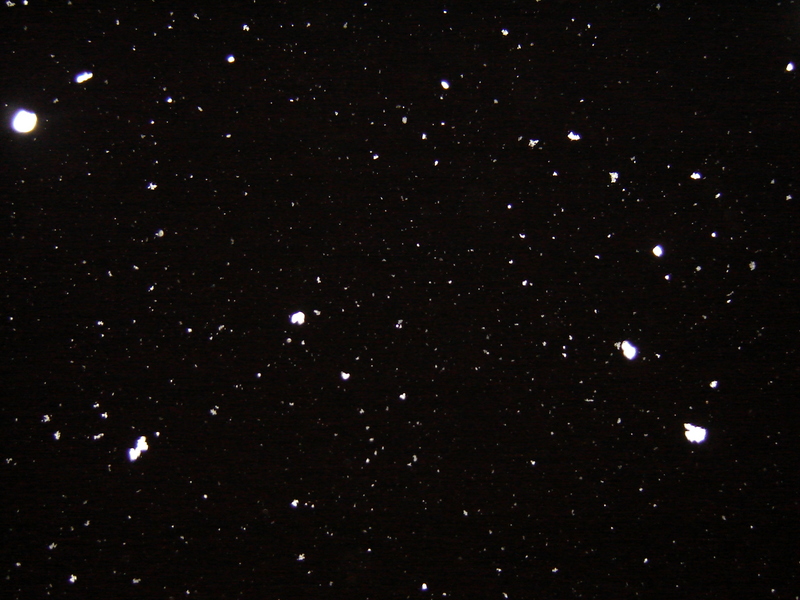
A vast stellar clock.
Thinking about her further eased his state of mind and his shivering stopped. Thank goodness for that! Paul fought to retain this new perspective. He would make it through, even treasure this night under the sky, this wonderful, awesome, night sky. Even the many pine tree crowns that soared way up above him couldn’t mask a sky that just glittered with starlight. Payson, at five-thousand feet, had many beautifully clear skies and tonight offered a magical example.
Frequently during his life, the night skies had spoken to him, presented a reminder of the continuum of the universe. On this night, however, he felt more humbled by the hundred, million stars surrounding him than ever before.
Time slipped by, his watch in darkness. However, above his head that vast stellar clock. He scanned the heavens, seeking out familiar pinpoints of light, companions over so much of his lifetime. Ah, there! The Big Dipper, Ursa Major, and, yes, there the North Pole star, Polaris. Great! Now the rotation of the planet became his watch, The Big Dipper sliding around Polaris, fifteen degrees for each hour.
What a situation he had got himself into. As with other challenging times in his life, lost in the Australian bush, at sea hunkering down through a severe storm, never a choice other than to work it out. Paul felt a gush of emotion from the release this changed perspective gave him.
Far away, a group of coyotes started up a howl. What a timeless sound, how long had coyotes been on the planet? He sank into those inner places of his mind noting how the intense darkness raised deep thoughts. What if this night heralded the end of his life, the last few hours of the life of Paul Handover? What parting message would he give to those that he loved?
Jeannie would know beyond any doubt how much he had adored her, how her love had created an emotional paradise for him beyond measure. But his son and daughter, dear Alex and Maija? Oh, the complexities he had created in their lives by leaving their mother so many years ago. He knew that they still harboured raw edges, and quite reasonably so. He still possessed raw edges from his father’s death, way back in 1956. That sudden death, five days before Christmas, so soon after he had turned twelve, that had fed a life-long feeling of emotional rejection. That feeling that lasted for fifty-one years until, coincidentally also five days before Christmas, he had met Jean in 2007.
His thoughts returned to Alex and Maija. Did they know, without a scintilla of doubt, that he loved them. Maybe his thoughts would find them. Romantic nonsense? Who knows? Dogs had the ability to read the minds of humans, often from far out of visual range. He knew Pharaoh, his devoted German Shepherd, skilfully read his mind.
Paul struggled to remember that saying from James Thurber. What was it now? Something about men striving to understand themselves before they die. Would that be his parting message for Alex and Maija? Blast, he wished he could remember stuff more clearly these days and let go of worrying about the quote. Perhaps his subconscious might carry the memory back to him.
He looked back up into the heavens. The Big Dipper indicated at least an hour had slipped by. Gracious, what a sky in which to lose one’s mind. Lost in that great cathedral of stars. Then, as if through some passing of consciousness, the Thurber saying did come back to him: All men should strive to learn before they die, what they are running from, and to, and why. As last words they would most certainly do for Alex and Maija!
Paul reflected on those who, incarcerated in solitary confinement, had their minds play many tricks, especially when it came to gauging time. What a bizarre oddment of information; where had that come from? Possibly because he hadn’t a clue about his present time. It felt later than 11pm and earlier than 4am, but any closer guess seemed impossible. Nevertheless, from out of those terrible, heart-wrenching hours of being alone he had found calm, had found something within him. He slept.
Suddenly, a sound slammed him awake. Something out there in the dark had made a sound, caused his whole body to become totally alert, every nerve straining to recognise what it might be. It sounded like animal feet moving through the autumn fall of dead leaves. He prayed it wasn’t a mountain lion. Surely such a wild cat preparing to attack him would be silent. Now the unknown creature had definitely paused, no sound, just him knowing that out there something waited. Now what, the creature had started sniffing. He hoped not a wild pig. Javelinas, those pig-like creatures that always moved in groups, could make trouble – they had no qualms at attacking a decent-sized dog.
Poised to run, he considered rising but chose to stay still and closed his right-hand around a small rock. The sniffing stopped. Nothing now, save the sound of Paul’s rapid, beating heart. He sensed, sensed strongly, the creature looking at him. It seemed very close, ten or twenty feet away. The adrenalin hammered through his veins.
He tried to focus on the spot where he sensed the animal waited; waited for what? He pushed that idea out of his head. His ears then picked up a weird, bizarre sound. Surely not! Had he lost his senses? It sounded like a dog wagging its tail; flap, flap, flapping against a tree-trunk.
A dog? If a dog, it had to be Dhalia!
Then came that small, shy bark! A bark he knew so well. Oh wow, it is Dhalia. He softly called, “Dhalia, Dhalia, come here, there’s a good girl.”
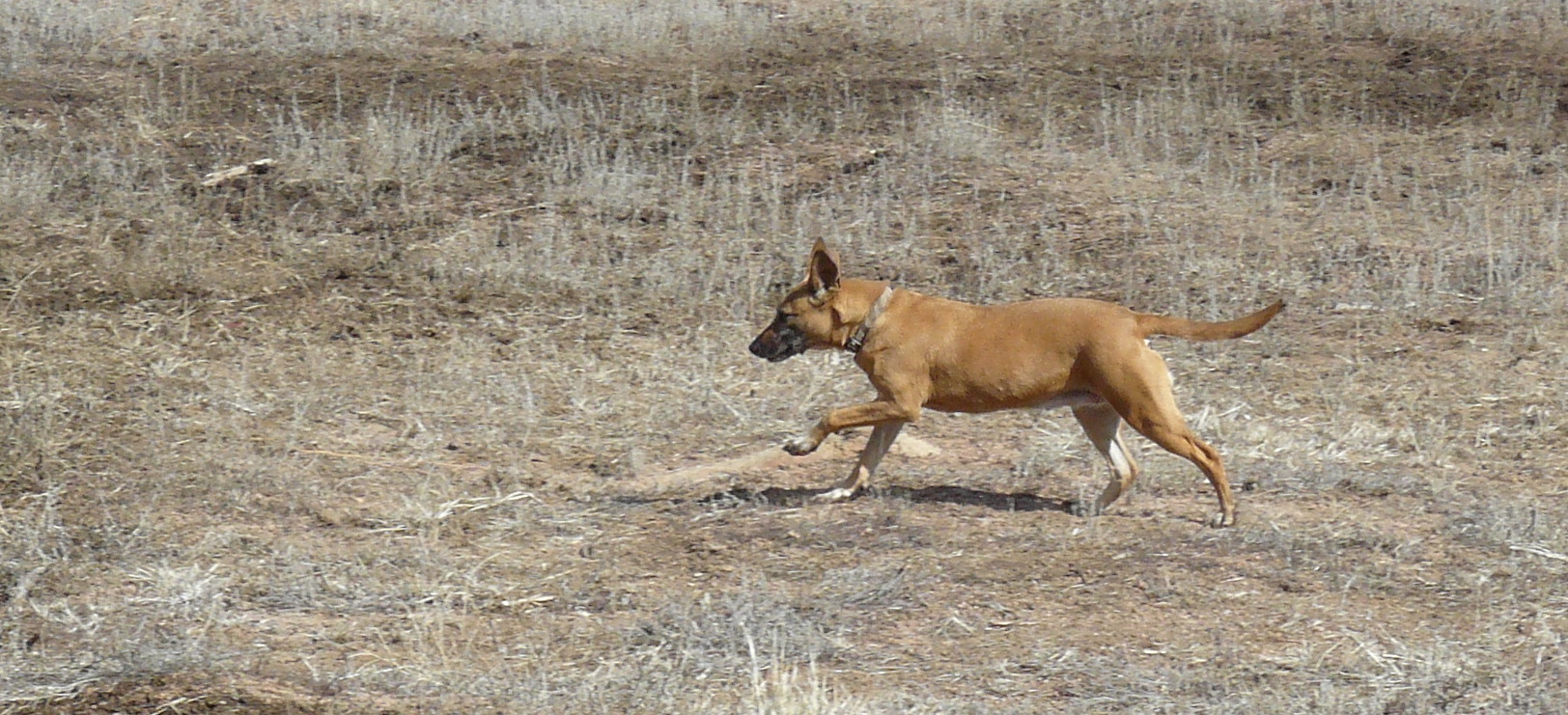
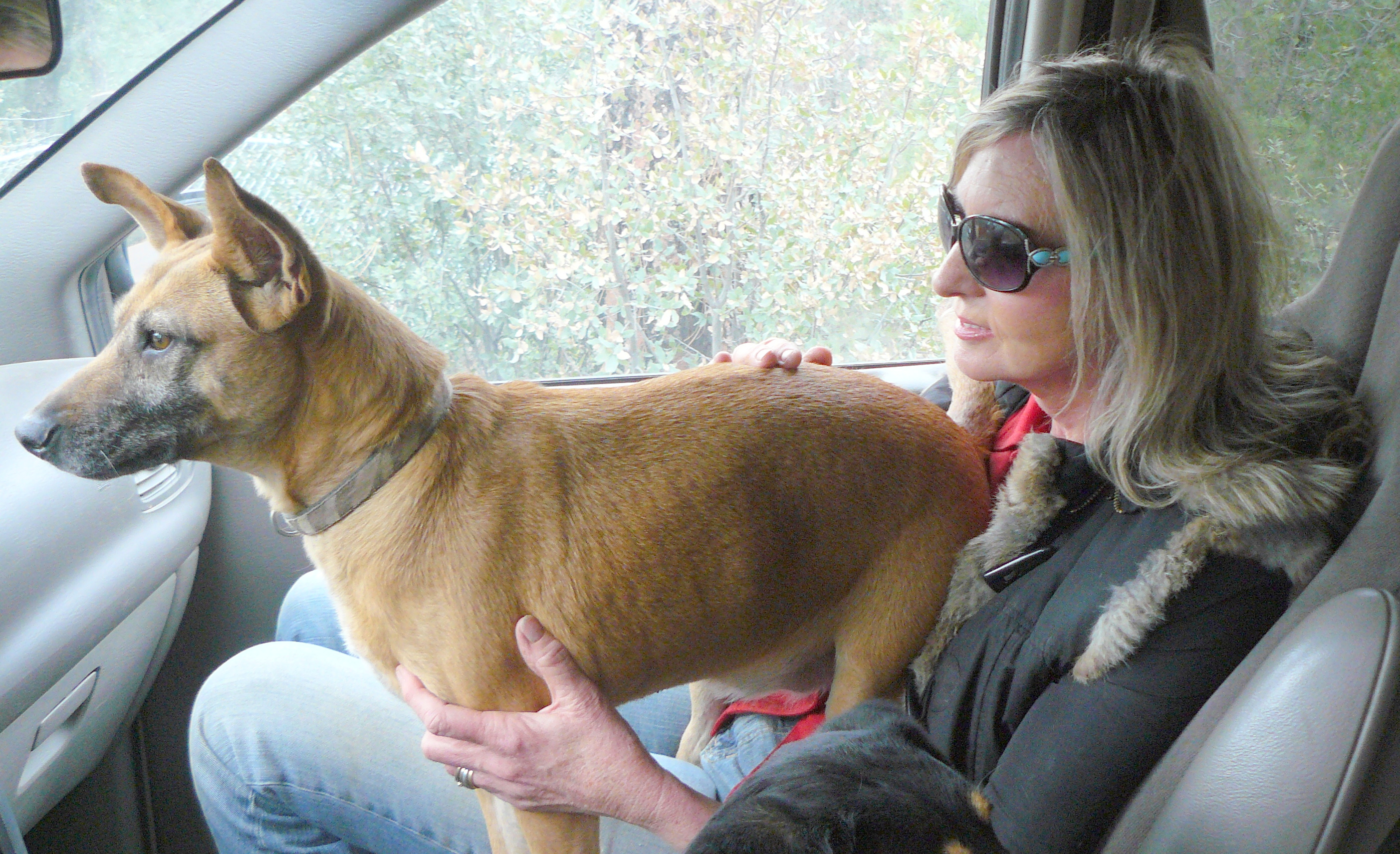
With a quick rustle of feet Dhalia leapt upon him, tail wagging furiously, her head quickly burrowing into Paul’s body warmth. He hugged her and, once more, tears ran down his face. Despite the darkness, he could see her perfectly in his mind. Her tight, short-haired coat of light-brown hair, her aquiline face, her bright inquisitive eyes and those wonderful head-dominating ears. Lovely large ears that seemed to listen to the world. A shy, loving dog when Jean had rescued her in 2005 and these years later still a shy, loving dog.
Dhalia licked his tears, her gentle tongue soft and sweet on his skin. He shuffled more onto his back which allowed her to curl up on his chest, still enveloped by his arms. His mind drifted away to an era long time ago, back to an earlier ancient man, likewise wrapped around his dog under a dome of stars, bonded in a thousand mysterious ways.
The morning sun arrived as imperceptibly as an angel’s sigh. Dhalia sensed the dawn before Paul, brought him out of his dreams by the slight stirring of her warm, gentle body.
Yes, there it came, the end of this night. The ancient sun galloping towards them across ancient lands, another beat of the planet’s heart. Dhalia slid off his chest, stretched herself from nose to tail, yawned and looked at him, as much to say time to go home! He could just make out the face of his watch; 4.55am. He, too, raised himself, slapped his arms around his body to get some circulation going. The cold air stung his face, yet it couldn’t even scratch the inner warmth of his body, the gift from the loving bond he and Dhalia had shared.
They set off and quickly crested the first ridge. Ahead, about a mile away, they saw the forest road busy with arriving search and rescue trucks. Paul noticed Jean’s Dodge parked ahead of the trucks and instinctively knew she and Pharaoh had already disappeared into the forest, Pharaoh leading the way to them.
Pharaoh and Jean heading up the search.
They set off down the slope, Dhalia’s tail wagging with unbounded excitement, Paul ready to start shouting for attention from the next ridge. They were about to wade through a small stream when, across from them, Pharaoh raced out of the trees. He tore through the water, barking at the top of his voice in clear dog speak, ‘I’ve found them, they’re here, they’re safe’. Paul crouched down to receive his second huge face lick in less than six hours.
Later, safely home, it came to Paul. When they had set off in that early morning light, Dhalia had stayed pinned to him. So unusual for her not to run off. Let’s face it, that’s what got them into the mess in the first place. Dhalia had stayed with him as if she had known that during that long, dark night, it had been he who had been the lost soul.
The message from the night, as clear as the rays of this new day’s sun, the message to pass to all those he loved. If you don’t get lost, there’s a chance you may never be found.
Staying with the theme of the relationship with humanity’s oldest friend.
Yesterday, I offered the first of two articles forwarded to me by local friend Jim, a vet, about the domestication of the wolf.
Here is the second.
Study narrows origin of dogs
By Krishna Ramanujan/ January 16th, 2014
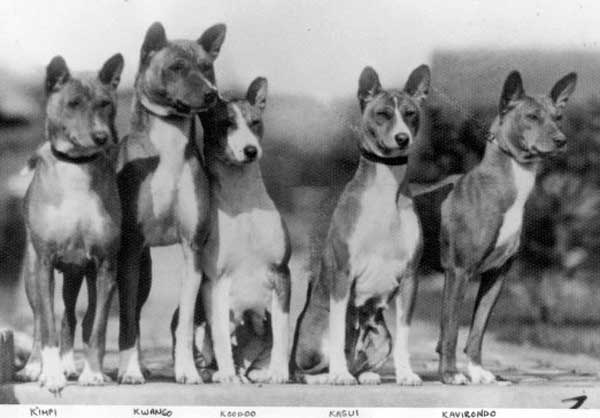
Genomic sequencing of genetically divergent dogs, such as this basenji from the Congo, together with wolves and other wild canids, provides rich information about the history of domestic dogs.
Dogs were domesticated between 9,000 and 34,000 years ago, suggesting the earliest dogs most likely arose when humans were still hunting and gathering – before the advent of agriculture around 10,000 years ago, according to an analysis of individual genomes of modern dogs and gray wolves.
An international team of researchers, who published their report in PLoS Genetics Jan. 16, studied genomes of three gray wolves, one each from China, Croatia and Israel – all areas thought to be possible geographic centers of dog domestication. They also studied dog genomes from an African basenji and an Australian dingo; both breeds come from places with no history of wolves, where recent mixing with wolves could not have occurred.
Their findings revealed the three wolves were more closely related to each other than to any of the dogs. Likewise, the two dog genomes and a third boxer genome resembled each other more closely than the wolves. This suggests that modern dogs and gray wolves represent sister branches on an evolutionary tree descending from an older, common ancestor. The results contrast with previous theories that speculated dogs evolved from one of the sampled populations of gray wolves.
“This is an incredibly rich new dataset, and it has allowed us to carry out the most detailed analysis yet of the genetic history of dogs and wolves,” said Adam Siepel, associate professor of biological statistics and computational biology at Cornell and a co-author of the paper. “There are still many open questions, but this study moves the ball forward,” Siepel added.
Computer methods for analyzing complete genome sequences developed by Ilan Gronau, the paper’s second author and a postdoctoral associate in Siepel’s lab, played a key role in the collaboration. Gronau’s computer program, called G-PhoCS (Generalized Phylogenetic Coalescent Sampler), was previously applied with success in a 2011 Nature Genetics study of early human history and demographics.
In this case, G-PhoCS provided a detailed picture of the demographic changes that occurred during the divergence of dogs from wolves. The analysis revealed there was a sizable pruning in population of early dogs and wolves around the time of domestication. Dogs suffered a sixteenfold cut in population size as they diverged from an early wolf ancestor. Gray wolves also experienced sharp drops in population, suggesting that the genetic diversity among both species’ common ancestors was larger than represented by dogs and modern wolves. In addition, there was considerable gene flow between dogs and wolves after domestication. Accounting for gene flow was a major challenge in the analysis, and Gronau’s research on this topic proved valuable in obtaining an accurate model of canid demography.
The picture emerging from this study will allow researchers to better interpret genetic differences observed between dogs and wolves and to identify differences driven by natural selection. “This paper sets the stage for the next step in the study of dog domestication that tries to determine the genetic changes that enabled this amazing transformation,” said Gronau.
The study’s senior authors included geneticists John Novembre at the University of Chicago and Robert Wayne at the University of California, Los Angeles (UCLA). Adam Freeman, a postdoctoral fellow at UCLA, was the paper’s first author. Adam Boyko, a Cornell assistant professor of biomedical sciences, also co-authored the paper.
The study was funded by various sources, including the National Science Foundation, National Institutes of Health and Life Technologies.
Staying with the theme of our early companions, back on the 28th February, 2015 there was an article in the UK’s Guardian newspaper about the way wolves helped early modern man. Now I don’t have permission to republish the full article but here’s a taste:
How hunting with wolves helped humans outsmart the Neanderthals
Forty thousand years ago in Europe our ancestors formed a crucial and lasting alliance that enabled us to finish off our evolutionary cousins, the Neanderthals.
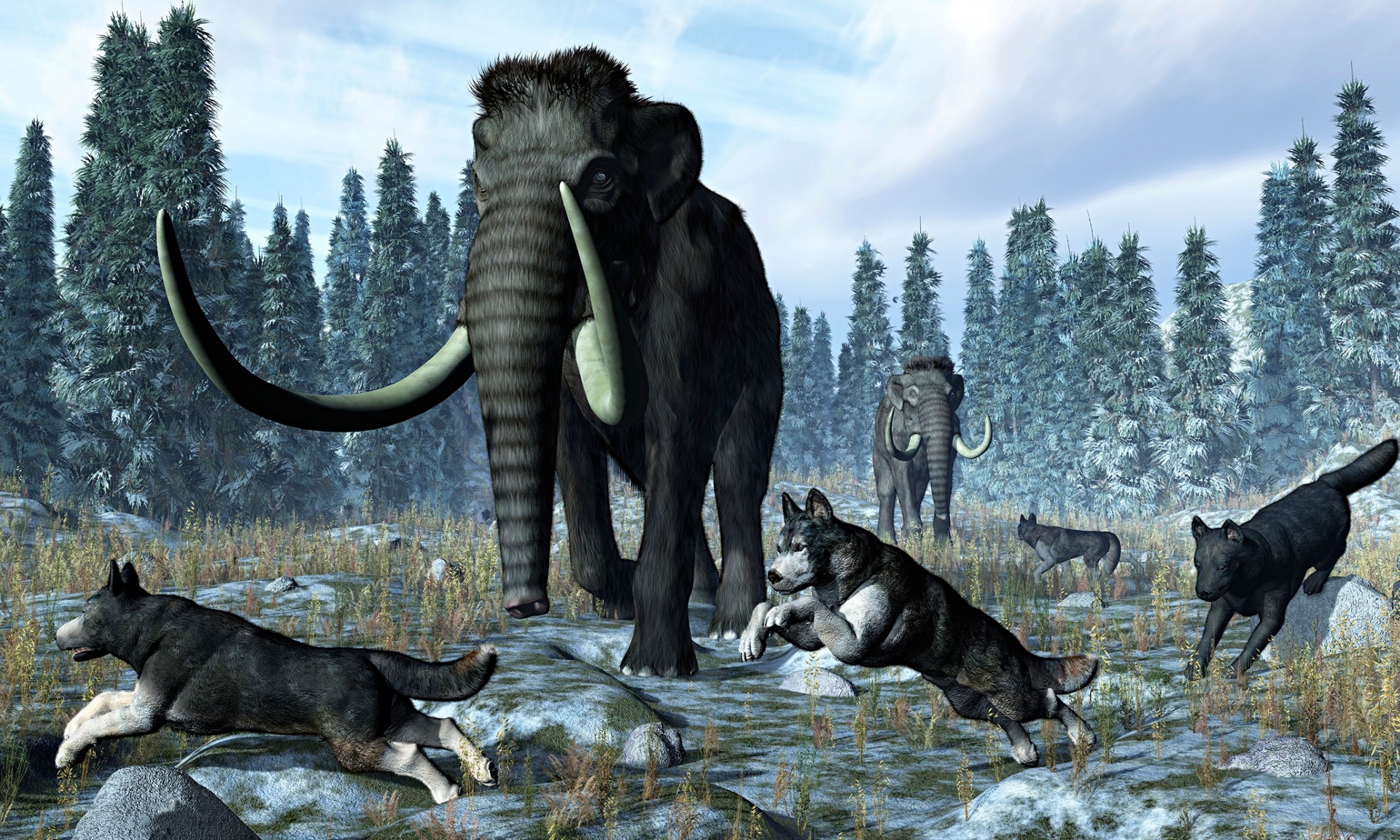
A pack of dire wolves crosses paths with two mammoths during the Upper Pleistocene Epoch. Photograph: Alamy
Dogs are humanity’s oldest friends, renowned for their loyalty and abilities to guard, hunt and chase. But modern humans may owe even more to them than we previously realised. We may have to thank them for helping us eradicate our caveman rivals, the Neanderthals.
According to a leading US anthropologist, early dogs, bred from wolves, played a critical role in the modern human’s takeover of Europe 40,000 years ago when we vanquished the Neanderthal locals.
The Guardian article finishes, thus:
Thus we began to change the wolf’s appearance and over the millennia turned them into all the breeds of dog we have today, from corgis to great Danes. Intriguingly, they may have changed our appearances as well, says [Professor Pat] Shipman, whose book, The Invaders: How Humans and Their Dogs Drove Neanderthals to Extinction, will be published this month. Consider the whites of our eyes, she states. The wolf possesses white sclera as does Homo sapiens though, crucially, it is the only primate that has them.
“The main advantage of having white sclera is that it is very easy to work out what another person is gazing at,” added Shipman. “It provides a very useful form of non-verbal communication and would have been of immense help to early hunters. They would been able to communicate silently but very effectively.”
Thus the mutation conferring white sclera could have become increasingly common among modern humans 40,000 years ago and would have conferred an advantage on those who were hunting with dogs.
By contrast, there is no evidence of any kind that Neanderthals had any relationship with dogs and instead they appear to have continued to hunt mammoths and elks on their own, a punishing method for acquiring food. Already stressed by the arrival of modern humans in Europe, our alliance with wolves would have been the final straw for Neanderthals.
Nor does the story stop in Europe, added Shipman. “I would see this as the beginning of the humans’ long invasion of the world. We took dogs with us wherever we went after our alliance formed in the palaeolithic. We took them to America and to the Pacific Islands. They made hunting easy and helped guard our food. It has been a very powerful alliance.”
RISE AND FALL OF NEANDERTHALS
250,000 years ago The first Neanderthals appear in Europe.
200,000 years The first modern humans appear in Africa.
70,000 years The first modern humans leave Africa.
50-60,000 years Modern humans and Neanderthals share territory in Middle East.
45,000 years Modern humans enter Europe.
40,000 years Neanderthals disappear.
I don’t know about you but I find the history of our, as in man’s, relationship with wolves and thence with dogs to be not just romantic but spiritually significant. To know, as I hug one of our many huggable dogs here at home, that I am bonding my mind and emotions with an animal that has been my partner for tens of thousands of years is beautiful beyond words.
(I took a break of a couple of minutes at this point to grab my camera and take a photograph of Hazel sleeping next to my chair, as she so often does when I am writing. Then one of her when she looked up at me. Here they are:)
oooo
That second photograph reminds me that somewhere I read that dogs are the only animal that can look to where a human is directing a gaze or pointing a finger.
The revised understanding of humanity’s oldest friend.
I mentioned in yesterday’s post how on Sunday afternoon, Jean and I, together with little Sweeny, went for a forest walk with friends, Janet and Jim and their dog Louie, who all live a few hundred yards from us along Hugo Road.
As Jim, a vet, and I were walking and chatting the subject, inevitably, turned to dogs! Or more precisely the history of the domestication of dogs. Jim then promised to send me a couple of papers highlighting a new study that has turned the clock back, so to speak, on when domestic dogs evolved from European wolves.
Here’s the first of those reports.
Origin of Domestic Dogs
New analysis suggests that domestic dogs evolved from European wolves that interacted with human hunter-gatherers.
By Ed Yong | November 14, 2013
Domestic dogs evolved from a group of wolves that came into contact with European hunter-gatherers between 18,800 and 32,100 years ago and may have since died out.
This origin story comes from a new study that compares DNA from dozens of dogs and wolves, including 18 ancient fossils. The results, published today (November 14) in Science, provide the clearest picture yet of where, when, and how wild predators came to be man’s best friend.
“It really is a sea change from the little bits of fragmentary DNA that have been reported in the past,” said Gregor Larson from Durham University in the U.K., who was not involved in the study. “It includes really old material from a wide range of sites.”
The new paper follows two earlier studies that looked at the genetic signatures of domestication in dogs, and came to differing conclusions about canine origins. One group suggested that dogs were domesticated around 10,000 years ago during the Agricultural Revolution, when wolves started scavenging human scrap heaps. Another concluded that wolves and dogs split 32,000 years ago, somewhere in East Asia.
Both studies compared the genes of a wide variety of living dogs and wolves, but modern samples can be deceptive. Dogs and wolves diverged so recently that many of their genes have not had time to separate into distinct lineages. They have also repeatedly hybridized with each other, further confusing their genealogies.
To deal with these problems, a team led by Olaf Thalmann from the University of Turku in Finland analyzed mitochondrial DNA from 18 fossil canids. They compared these ancient sequences to those from 49 modern wolves and 77 modern dogs, and built a family tree that charts their relationships.
The tree conclusively pinpointed Europe as the major nexus of dog domestication. It identified four clades of modern dogs, which are all most closely related to ancient European canids rather than wolves from China or the Middle East. “We didn’t expect the ancestry to be so clearly defined,” Thalmann told The Scientist.
“This suggests that the population of wolves in Europe that gave rise to modern dogs may have gone extinct, which is plausible given how humans have wiped out wolves over the centuries,” he added.
According to this new tree, the largest clade of domestic dogs last shared a common ancestor 18,800 years ago, and collectively, they last shared a common ancestor with a wolf around 32,100 years ago. They must have been domesticated at some point during this window.
These molecular dates fit with fossil evidence. The oldest dog fossils come from Western Europe and Siberia, and are thought to be at least 15,000 years old. By contrast, those from the Middle East and East Asia are believed to be 13,000 years old, at most. “The archaeologists would be happy,” said Larson.
The dates also make it unlikely that dogs were domesticated during the Agricultural Revolution, which took place millennia later. Instead, they must have first associated with European hunter-gatherers. They may have assisted humans in bringing down large prey, or could simply have scavenged leftover carcasses. Either way, their association with humans grew stronger and stronger, until they eventually evolved into domestic dogs.
However, Thalmann acknowledged that his team’s analysis does not include any ancient DNA from the Middle East or China, nor nuclear DNA from any of the fossils. In other ancient DNA studies, nuclear DNA sequences have revised the evolutionary stories told by mitochondrial ones.
“Who knows what we would find if we had ancient canid samples from East Asia or elsewhere, or were successful in amplifying nuclear DNA from ancient canids,” said Adam Boyko from Cornell University, who was not involved in the study, via email. “But that shouldn’t detract from the great work they were able to do here,” he added.
Larson cautioned that the paper is not the final word on canine origins. “It would be a mistake to jump and say that dogs were domesticated in Europe and not anywhere else,” he said. “We know pigs were domesticated independently in China and Turkey, so there’s no thinking that dog domestication had to happen in just one place.”
Indeed, Thalmann’s team showed that the famous Goyet dog—a 36,000 year old Belgian skull, supposedly belonging to the oldest known dog — is not directly ancestral to modern dogs. Instead, it represents an ancient sister lineage that died out. The same is true for other old specimens from Belgium and Russia’s Altai Mountains. “Maybe they were trial domestications that were not successful,” said Thalmann.
O. Thalmann et al., “Complete mitochondrial genomes of ancient canids suggest a European origin of domestic dogs,” Science, doi:10.1126/science.1243650, 2013.
Clearly, a blog that is entitled Learning from Dogs needs to take notice of this new evidence!
So I will return tomorrow with the second of the reports.
Remains for the older prehistoric dog, which were excavated at Goyet Cave in Belgium, suggest to the researchers that the Aurignacian people of Europe from the Upper Paleolithic period first domesticated dogs.
Yesterday afternoon Jean and I were invited to join Jim and Janet on a forest walk joined by their dog, Louie, and our Sweeny.
Jim is a vet working locally here in Oregon and, as you might expect, much of the conversation was about animals, nature and ‘the meaning of life’.
By the time we were back home and dogs fed and horses brought in for the night, my creative juices were severely lacking. I browsed through what had been published in March, 2014 and came across a post called My wish for the world that came out on the 28th of that month.
It seemed such an appropriate item to republish for today, with the kind permission of the author, Jeremy Nathan Marks.
ooOOoo
The Sand County
“In wildness is the preservation of the world.” -Henry David Thoreau
My Wish for the World
If I could leave behind but one lasting accomplishment from my life it would be to have changed the hearts and minds of all those people who accept or practice cruelty towards animals.
Now there are a great many worthy causes in this world which fully deserve the attention of all those who believe in justice, in fairness, and in mercy. But I also know that each of us -perhaps- has a cause that stands above and beyond all of the other noble concerns that we know exist. For me this cause is the humane treatment of animals. And when I say animals I mean ALL animals. Permit me to explain.
My wife and I have two dogs. Both are mutts and both were adopted through the Animal Rescue Foundation of Ontario (ARF). I have blogged about ARF before and can only offer the highest praise for the organization. Courtesy of ARF, we have been provided with free dog training classes which have proved to be an invaluable resource in learning about dog behaviour. Better yet, the dog trainer we have worked with has made herself available for our questions outside of class.
Whenever we have encountered a behavioural challenge that we have not understood or have been unsure of a proper method of approach, this trainer has been very obliging. Importantly, she believes in positive reinforcement and does not believe in the use of pain, dominance, or stress as a means of conditioning dogs. For my wife and me, this fits in with our moral beliefs and our ethics.
Our eldest dog, who just turned one year old, is a 60 lbs. shepherd mix who has a “leash anxiety,” if I may call it that. When we are out on a walk and she sees another dog she becomes quite agitated and will bark loudly and lunge at the other dog. This has puzzled us because our dog loves to play with others and is frequently socialized. We grew increasingly concerned because our use of treats and positive reinforcement was not working. And because our dog is a large shepherd, we both have worried that she might develop a reputation and become a source of fear or suspicion by other people in our neighbourhood.
In due course, we contacted our trainer for advice. She suggested that rather than putting our dog in a stressful situation by repeatedly walking her past other dogs (and trying to control her behaviour when she becomes agitated) we should take her out of the situation instead. So, when we see another dog approaching we turn around and walk in a different direction, all the while rewarding our dog with treats and telling her she is a good girl. We have recently started doing so and the improvements are showing. So, let us fast forward to today. . .
This afternoon we took both of our dogs on a 20 km hike along the Thames River. The trail is like so many other trails; it forms a narrow path through the woods which makes passing other trail goers challenging at points. If another dog were to come toward us this narrowness would pose something of a challenge because we cannot turn around (and head home). Also, because the trail runs through the woods, there aren’t often places to step aside and let other dogs pass by without our oldest detecting them.
Inevitably we encountered another dog. We were approached by a small dog that was off leash (which is posted as unlawful, actually). We heard the dog before we saw it and prepared ourselves for some nervousness on the part of our oldest. When the dog approach some barking ensued and I tried to move our dog, as best I could, off the trail to let the family that was approaching us pass by with their dog. When we informed the family that our dog is uncomfortable around other dogs when she is leashed they did not seem to understand that we wanted them to pass by us quickly. When our eldest became excited one of the women turned to us and said that we should “knee our dog in her side to show her who is dominant.”
I was appalled. Some woman, whom I have never met, who knows nothing about our dog or our relationship with our dog, was suggesting we use violence against her to show her who is boss. . . And this is a woman with a dog of her own!
My wife later remarked to me, as we were driving home, that she would not feel entitled to the love and affection our dogs offer us if we used violence on them in any way. I thought what she said was beautiful and captured the principle of the matter perfectly. We want our dogs to love us and to trust us. How would we have any right to their love and affection if we were to lead them to believe that at any moment and for no apparent reason we might use painful force on them?
Dogs do not understand why you use violence against them. They do not reason or understand cause-and-effect the same way that humans do. This is not a fault. It does not mean they are stupid or of lesser value than human beings. It does not mean they deserve to be treated with cruelty or brutality. Dogs experience violence as pain and suffering that is inflicted out of the blue. They are not only unprepared for it, but are often completely defenceless against it. How could we ever defend such an inhumane practice?
It troubles me immensely that someone, whom I do not know, could so nonchalantly counsel me to violence against my dog. Her arrogant presumption aside, this was a monstrous act. It was barbaric. Nowhere in polite society would someone get away with counseling violence against a child. . . or against someone who is weaker. Yet violence against animals, even against dogs who supposedly occupy a place closer to human hearts than most other animals, is countenanced and even endorsed. (I won’t even begin to explain why the Dog Whisperer horrifies and saddens me.) If a young child was caught torturing animals we would all raise the alarm. The torture of animals, by a young child, is seen as an early warning sign of severe mental disturbance and has been linked to homicidal tendencies and highly violent behaviour.
One of the great villains of American literature, the character Popeye from William Faulkner’s novel Sanctuary is depicted as a torturer of animals in his youth. Now I know that increasingly there are laws on the books in many nations that are designed to prevent cruelty to animals and to prosecute perpetrators. This is a positive development that I certainly applaud. But I would argue that there is something broader, more troubling in our relationship with animals that goes beyond the bounds of this current posting. It is a topic I will return to time and again at this blog. What troubles me is how animals are frequently seen as objects if they are even seen or thought of at all.
The damage that our destruction of the forests, deserts, plains, and oceans of this world does to countless species is something that has been well documented. We do this because we are interested in acquiring the resources we feel are vital to ensuring our survival. . . but often it is our comfort or our “way of life” that really is the central reason for our pursuit of these things. There is a deep seated human arrogance which treats animals as inferior forms of life. We see them as less sophisticated because they cannot compete with us for power on this planet.
We suffer from what Aldo Leopold called an “Abrahamic view” toward the land. Somewhere biblical “dominion” over nature became domination.
This is tragic. And it is not necessary. I was deeply troubled by what I experienced today and it reminded me that if I could leave behind but one lasting accomplishment it would be to somehow awaken a sense of love, of mercy, and a thirst for justice where the animal life on this planet is concerned.
Just imagine what realizing that love would really mean. By achieving a love that transcends the will to power, the will to control, and the will to domination our embrace of animals really is, after all, the achievement of that revelatory love that is at the heart of the great religions and the religious spirit. Love for animals is love for justice and mercy. It is reverence for life. And it is peace.
I think Henry Beston captures these sentiments beautifully: “Remote from universal nature, and living by complicated artifice, man in civilization surveys the creature through the glass of his knowledge and sees thereby a feather magnified and the whole image in distortion. We patronize them for their incompleteness, for their tragic fate in having taken form so far below ourselves. And therein we err, and greatly err. For the animal shall not be measured by man. In a world older and more complete than ours they move finished and complete, gifted with extensions of the senses we have lost or never attained, living by voices we shall never hear. They are not brethren; they are not underlings; they are other nations, caught with ourselves in the net of life and time, fellow prisoners of the splendour and travail of the earth.” -from The Outermost House, by Henry Beston (quoted from Farley Mowat’s A Whale For The Killing)
ooOOoo
A year ago, I closed the post with these words, “I’m sure you will join me in thanking Jeremy for writing such a beautiful and heart-felt essay.” They more than stand as closing words today. Do please drop in to Jeremy’s blog The Sand County.