For Christians the world over the Easter weekend is the religious moment of the year.
For all of humanity, believers and non-believers alike, the following simple but powerful words ought to be a reminder of eternal values for every day of the year.
ooOOoo
Today’s Quote from Theresa
Beautiful words and image from Theresa at Soul Gatherings. Let it settle in.💛
In these times of terrible inequality, if there is one thing that has the power to crush a young person’s chances in life it is a criminal record, even a minor one. This is well-known in the UK. For a number of years I was a mentor with what was then called the Prince’s Youth Business Trust (PYBT) and now is just simply called The Prince’s Trust.
What was discovered, courtesy of the PYBT, was that if one taught disadvantaged youngsters the principles of forming and running your own business there were two positive outcomes. The first was that the young person performed much better at job interviews, and increased his or her odds of getting a job offer, and some young persons decided to start their own business; some very successfully so.
Thus with that background it was natural that an article in the US edition of The Economist caught my eye. It was called Pups and perps.
Pups and perps
What has four legs, a wet nose and helps young thugs grow up?
Dec 6th 2014 | LOS ANGELES | From the print edition
WHEN Jordan entered juvenile detention shortly after his 17th birthday, following a conviction for assault and robbery, all he could think about was getting out. The rowdy teenager from Anaheim, California, struggled to control his temper. But when he began working with Lulu, a poodle mix, he got a new leash on life. “I was too busy taking care of the dog to get into fights,” he says.
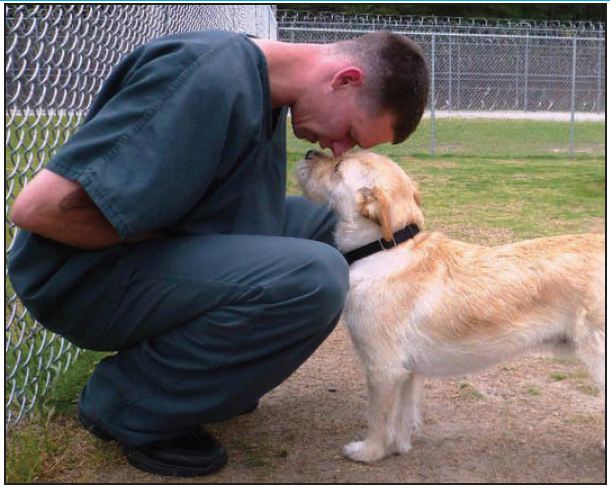
Jordan was taking part in “Pups and Wards”, a programme that pairs shelter dogs with young inmates. The perps train the pups and, with luck, learn something about personal responsibility. Other programmes allow prisoners to train dogs to be adopted by people with disabilities, such as traumatised veterans. Such training often requires full-time care—but prisoners have plenty of time on their hands.
The Economist article later on reports:
“All the research about the human-animal bond has buoyed these programmes,” says Gennifer Furst, a professor of criminal justice. “We have discovered that prisoners often identify with rescue dogs—they have both experienced trauma—and they are eager to become their protectors.” Crystal Wood, an officer at a maximum-security prison in Lancaster, California, says that several inmates on her yard—who are in prison for life—wept after interacting with dogs. “Many of these guys haven’t seen an animal in decades. It’s been striking to see how much working with a dog has reduced their anxiety levels.”
Gennifer Furst received her B.A. in psychology (with a sociology minor) from Connecticut College and her M.A. in psychology (with a concentration in evaluation methodology) from Claremont Graduate University. She received her doctorate in criminal justice (with a concentration in corrections) from CUNY Graduate Center.
Dr. Furst is the Department of Sociology’s Criminal Justice Director. Dr. Furst’s research interests focus on issues of incarceration. She published the first national survey of prison-based animal programs in the US. A book based on that work was recently published. Additionally, she is interested in race and the administration of criminal justice, the death penalty, the use of animals in the criminal justice system, and the relationship between drugs and crime.
Read the rest of the good Professor’s background here.
Imagine my pleasure in finding that there is a film Dogs on the Inside and that YouTube carries an official trailer.
As the film website states: “Everyone deserves a second chance.”
So if you are motivated to get involved then don’t hesitate to return to the film’s website and read the Get Involved page.
Integrity and honesty should certainly apply to what we eat!
Published author Deborah Taylor-French has her own blog Dog Leader Mysteries. She and I follow each other’s blog and I’m very grateful for the connection, as indeed I am with so many other fellow bloggers.
Thus that was how I came to learn of a recent post from Deborah about how rabbit meat is being used for human consumption. On the face of it, nothing wrong in eating rabbit but wait until you have read Deborah post, that is republished here with her kind permission.
ooOOoo
Tell Whole Foods: Do not sell bunnies
Tell Whole Foods, “Don’t sell bunny meat!”
Farm animals suffer greatly in the United States of America. Plus this suffering comes to us well documented. Before the U.S. Congress passes laws allowing Ag-Gag [see my footnote] states to make it illegal for people to photograph, video or report animal abuse inside or outside their meat plants.
The disturbing truth? Pet rabbits now sold for meat at Whole Foods Market come from being raised in U.S.A. Ag-gag states. What’s wrong with that? Everything.
Big farms doing business in Ag-gag states operate free from animal welfare laws.
In fact these huge meat farms have made laws against taking photographs, video recording or any reporting of animal abuse. What have they got to hide?
Enough. All too many cruel animal farming practices already hurt farm animals, enough to make most of us sick. The Humane Society of the United States and the Animal Defense Fund continue working to legally raise farm animal welfare practices. Most Americans know that farm animals do not receive acceptable room for walking nor a humane standard of care. Before we let another category of animal become victims of Ag-gag farm cruelty, we need to improve farm animals welfare.
Adopted from Rohnert Park Animal Shelter.
Rabbits die of fright.
They share the species lagomorph.
There are about eighty species of lagomorph include thirty species of pika, twenty species of rabbit and cottontail, and thirty species of hare family. Wikipedia
I learned about this issue of Whole Foods Market, selling a new category of animal for meat through a volunteer at my local shelter. Kathy, along with volunteers from Save a Bunny and a Southern California group, are working to raise awareness pet rabbits should not end up as mainstream Big Farm meat products. Why?
Whole Foods Market buys meat rabbits from Ag-gag states. If Whole Foods succeeds, farm animal suffering will fall on whole other category of animals, pet rabbits.
It comes as no secret in United States that farm animals end up being raised inhumanely. If you have ever read about the Ag-gag states and how they are able to prosecute anyone willing to go undercover and take photographs and videos to report the truth on this ongoing unnecessary torture of farm animals. What meat animals endure in the U.S.A. is nothing less than cruelty, it’s time we changed that, before adding anymore farm animals.
Nine facts hidden in Ag-gag pig farms
Millions of meat pigs live, eliminate and sleep in cramped spaces.
The environment these pigs endure smell rank. Their wastes drain into a central open sewer and their housing is so unclean many of them die.
Meat pigs lack all exercise to the extreme point that their legs break.
Pigs housed in huge warehouses with thousands of other pigs, hear others screaming day and night from pain.
Female pigs, sows, live horrible lives in gestation crates.
Gestation crates built for female pigs force them to stand up for 24-hours per day. Farmers do not allow pigs to walk or lie down. Gestation crates, notoriously painful for animals, need to be banned. Often the pigs’ legs break because their bones grow soft, due to not being allowed to walk.
Big meat farms build bars underneath sows to brace broken legs.
The meat pig lives in constant physical pain, terror, fear and unhappiness. When piglets die, often in these unsanitary conditions, their bodies get ground up and mixed into the food the sows eat. So mother pigs eat their own young.Pigs do not live as cannibals. Why should they be forced to eat their own young?
What horrible animal welfare to make pigs eat their own young. It’s incomprehensible that animals must live like this so that people can eat pork barbecue, pork steak and pork ribs.
How can they call these farms? Not giving animals room to walk, sit or lie down? Meat farm animals get denied their normal and natural behaviors. They never see the light of the sun nor feel the earth nor wind.
What U.S.A. meat farms won’t let us see.
After four years of hesitation and never mentioning recordings of farm animals lack of good welfare, I break my silence.
Much of the time I avoid eating meat. From now on, I will be seeking out small sustainable and local farms. We have several nearby that do not inflict senseless cruelty on pigs, chickens and cows. After study of commercially farmed pork and chicken and beef, I have returned to my original vegetarian and fish eating ways.
My footnote. As a non-American I didn’t fully understand the phrase “Ag-gag”. Deborah kindly explained it as follows:
Several states have passed laws against anyone photographing, video recording or reporting on animal abuse inside massive meat farms. The Humane Society of the United States keeps working (under cover to film the truth of this unsanitary and cruel business) but now they can arrest anyone caught, send reporters to jail and sue anyone trying to inform the public.
ooOOoo
I know for a fact that Deborah would love that this item is shared and republished as far and wide as possible. Please help.
For spreading the word and being very careful about the meat that we eat are the only ways to put a stop to these unbelievably cruel practices, and the ‘Ag-gag’ laws.
Last Saturday, in a humorous post called Cognitive Ageing, I wrote:
Or put another way: I can remember everything except the things I forget.
Like many others of my age, the short-term memory is not as sharp as it used to be (not that I can remember when that was! 😉 )
Today’s post is to pass on a recommendation for a programme called Lumosity. It was recommended to me by my local doctor and I signed up in February of this year. Clearly, it is impossible to know, in a scientific way, how much good it has done me but instinctively I feel it has made a strong, positive difference. Let me quote from their website:
The Science Behind Lumosity
Neuroplasticity: how the brain is capable of change
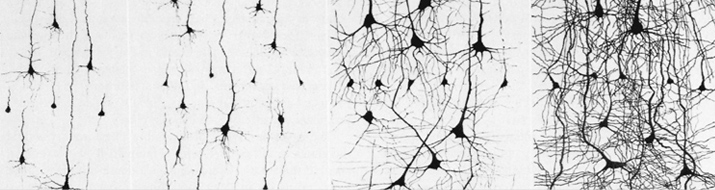
Scientists have historically believed that once a person reaches adulthood, their cognitive abilities are immutable. But beginning in the early twentieth century, that theory has been contested by evidence suggesting that the brain’s abilities are in fact malleable and plastic. According to this principle of neuroplasticity, the brain is constantly changing in response to various experiences. New behaviors, new learnings, and even environmental changes or physical injuries may all stimulate the brain to create new neural pathways or reorganize existing ones, fundamentally altering how information is processed.
One of the most dramatic examples of neuroplasticity at work comes from a 2000 brain scan study on London taxi drivers (Maguire et al., 2000). In order to earn a license, London taxi drivers typically spend about two years learning to navigate the city’s serpentine streets. What mark, the study’s researchers wondered, did this long, rigorous period of training leave on taxi drivers’ brains? Under the scrutiny of fMRI scans, 16 male taxi drivers in this study were revealed to have larger hippocampuses than a control group of 50 healthy males of similar ages. And the longer the time spent as a taxi driver, the larger the hippocampus tended to be. As a brain area involved in memory and navigation, the hippocampus likely changed in response to the taxi drivers’ experiences.
Most instances of neuroplasticity-based changes in the brain are much more subtle. But in recent decades, it’s cases like that of the London taxi drivers that have inspired certain members of the scientific community to pursue the next logical step in research: rather than passively waiting to see how the brain might respond to circumstances, is it possible to direct that capacity for change, targeting improvements in specific key abilities?
The science of cognitive training seeks to answer this question. In 2013 alone, 30 cognitive training studies were registered on the government database ClinicalTrials.gov. Lumosity scientists, with the help of outside collaborators, contribute to this research effort: so far, 7 peer reviewed studies have been published using Lumosity as a cognitive training tool for diverse populations, including healthy adults, cancer survivors, elderly people, and children with a genetic disorder.
Maguire, E. A., Gadian, D. G., Johnsrude, I. S., Good, C. D., Ashburner, J., Frackowiak, R. S. J., & Frith, C. D. (2000). Navigation-related structural change in the hippocampi of taxi drivers. Proceedings of the National Academy of Sciences of the United States of America, 97(8), 4398-4403.
Clearly, without trying it out yourself, it’s difficult for me to convey the nature of the ‘games’ that are provided.
What I can do is to republish a review that appeared on the website MD-Health.
Does Lumosity Work?
Lumosity was designed by several leading neuroscientists, which adds an air of credibility to this popular site, and combines the perks of social networking with brain training technology that supposedly makes your brain function at a higher level. But do these brain training games really work? There is plenty of evidence to support and contract the claims made by this popular gaming website, so it is important to look at the facts before making this determination.
What is Lumosity?
Lumosity is a webpage that features several different brain training games. Players are encouraged to create a profile that allows them to track their progress and play certain games that target mental flexibility, memory, problem solving, speed and attention. The idea is that performing these tasks regularly will help “train” your brain to function more effectively.
How Does Lumosity Work?
The web page explains that Lumosity is based on neuroplasticity, which treats the brain like a muscle that needs to adapt when it is presented with new challenges. The idea here is that if you present your brain with harder challenges, the portion of your brain meant to help solve them will grow larger and more functional. Previously it was believed that neuroplasticity was only available in children with brains that were still developing, but recent science leads researchers to believe that this skill is also available for adults.
Lumosity depends on two basic elements when users create their training program. First, users need to use the program regularly. This is similar to creating a daily routine at your local gym to work and tone your muscles. Your routine will not be as effective if you do not stick with it. The second part of this training program depends on users using many different types of games. There are 35 different games available on Lumosity in addition to many different skill levels within these games. Players should use a variety of different games and increase the difficulty level over time to help ensure that they are continuing to challenge the mind. Creating your initial profile gives the player an opportunity to see what weaknesses they have so they can create a routine that is ideal for their situation.
Is Lumosity Effective?
There are several scientific studies that lead scientists to believe that the brain training activities at Lumosity do have an effect on the brain. A study at the University of Michigan found that adults that used brain training games for a regular amount of time saw an improvement in test scores for dual attention asks and memory games in multiple tests. A similar study at Brown University also saw adults exceeding expectations in brain performance after using brain training games to aid in their work. These programs were found to boost the working memory which helps users keep track of tasks they are currently performing.
The thing to remember when analyzing these results is that they came from laboratory conditions. These adults used Lumosity games for hours every day for several months. Users that do not work on a similar schedule will not see these types of results. There is a great deal of evidence that supports the idea that brain training games can help grow and develop the mind, but not necessarily any evidence that Lumosity and the brain training games available here are more effective than other training games that are on the market elsewhere. In general, keeping the mind active and challenging your mind to learn more advanced tasks and ways of thinking are healthy and can help you perform tasks more effectively, and if Lumosity helps you accomplish this, then it can be seen as a positive asset.
There was a review published in The Guardian newspaper back in April, 2013 from which this extract is offered:
According to the website for Lumosity, which devised these games and is one of the best-known internet providers of brain training, setting aside a few minutes each day to complete the above tasks can make you feel “smarter, sharper, and brighter”. By factoring in a mental workout in the same way that we might go to the gym to exercise, we get cleverer and our IQ rockets.
That, at least, is the idea. And there are lots of people who buy it. In recent years, brain training has become a multimillion-pound business with companies such as Jungle Memory, Nintendo and CogniFit developing a wide range of user-friendly neuroscientific puzzles for the average punter. Lumosity itself has grown by 150% year-on-year since its launch in 2005 and now reaches more than 35 million people worldwide. In January alone, the company’s mobile app was downloaded nearly 50,000 times a day and its revenue hit $24m (£16m).
Co-founded by Michael Scanlon after he abandoned his neuroscience PhD at Stanford University, California, the business also has an extensive research programme that studies the effects of computerised cognitive training as well as conducting experiments over the web.
I can also republish another article from the Lumosity website:
The Science Behind Lumosity
The scientific roots of the Lumosity program
Research has found that certain types of activities may impact the brain more than others (Mechelli et al., 2004; Gaser and Schlaug, 2003; Draganski et al., 2006). It’s believed that as an activity is repeated, the brain tends to fall back on the same set of existing neural pathways. To continue changing, the brain must be exposed to novel, adaptive experiences that challenge it to work in new ways.
Drawing on this idea, Lumosity is designed to give each person a set of exercises that challenge their cognitive abilities.
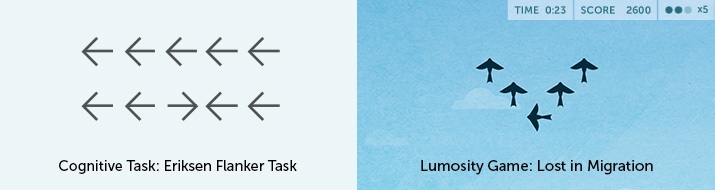
Lumosity “games” are based on a combination of common neuropsychological and cognitive tasks, many of which have been used in research for decades, and new tasks designed by an in-house science team. Working with experienced game designers, Lumosity neuroscientists have transformed these tasks into over 40 challenging, adaptive games.
Lumosity’s game-based training program is designed to expose your brain to gradually increasing levels of challenges, adapting game difficulty to your individual ability level. As your scores increase, you may encounter new or more difficult games. Modelled from the concept of a physical personal trainer, Lumosity pushes you to operate at the limits of your abilities and stay challenged.
Gaser, C. & Schlaug, G. (2003). Brain structures differ between musicians and non-musicians. Journal of Neuroscience, 23(27), 9240-9245.
Draganski, B., Gaser, C., Kempermann, G., Kuhn, H. G., Winkler, J., Büchel, C., & May, A (2006). Temporal and spatial dynamics of brain structure changes during extensive learning. Journal of Neuroscience, 26(23), 6314-6317.
Mechelli, A., Crinion, J. T., Noppeney, U., O’Doherty, J., Ashburner, J., Frackowiak, R. S., & Price, C.J. (2004). Neurolinguistics: Structural plasticity in the bilingual brain. Nature, 431, 757.
Lumosity is not expensive and while it is impossible to be objective about the positive difference it is giving me I wouldn’t give up on it.
It seems to me that it is so incredibly easy to be influenced, even engulfed, by bad news.
Back on the 20th I posted an item that had been sent to me by John Hurlburt, who is the old lamplighter, called Interstellar News.
Here’s another essay from John that is a great reminder of that old adage: We are what we think.
ooOOoo
Misery Is Optional
There’s always been a delicate balance in the struggle between growth and stagnation. The emerging universe invariably prevails. The good news is that absolutely insisting upon the denial of reality naturally backfires in the long run. Common sense has repeatedly saved our collective bacon from the fire as our species has faced former crises. The stakes have never been higher.
There’s a natural balance that runs through our relatively brief species history. Extreme cultural alternatives include plutocracy and anarchy. There’s no question that if we’re not an active supporter of an inclusive solution we contribute to our collective dissolution.
Nero fiddled while Rome burned. There’s a current global analogy. Global media communications reflect hate, divisiveness and violence. The obvious truth is essentially ignored. A result is our present state of angst, paranoia and associated stress disorders. We compensate with bread and circuses.
Indifference doesn’t have to be a local reality. We’re all naturally connected in whatever we conceive of as God. We share a common soul. If we are wise we’ll act accordingly. We’ll accept our inherent responsibilities as stewards of Creation. The fulfilment of positive actions in according with the nature of our being is a blessing that keeps on giving.
an old lamplighter
ooOOoo
These are beautiful words and whatever one’s religious or spiritual convictions if we don’t recognise that we are all “naturally connected” then it won’t be long before we run out of bread and circuses – and deservedly so.
Going to close this post by using the following picture and quotation taken from the latest Terry Hershey newsletter.
“Beyond living and dreaming there is something more important: waking up.“
A Monday morning reminder of our beautiful planet.
American Wilderness: The John Moulton Barn on Mormon Row at the base of the Tetons. Photo: Jon Sullivan
Just a random picture found by doing a web search. (Actually found on what looks like a great blog: I am Wilderness.)
This morning’s post was prompted by listening to one of my favourite music groups: The Alan Parsons Band.Listening to this particular track: Call of the Wild. From his third solo album The Time Machinereleased in September, 1999.
Lyrics written by Ian Bairnson
Well I’ve talked to the wind and I’ve listened to rain,
I have climbed to the clouds and I’ve cried out with pain,
This life is for living so come to my side,
And open your heart to the call of the wild.
We are all of one nation, all of one creed,
We are all out of nature, all of one seed,
We are in this together, man, woman and child,
So open your heart to the call of the wild.
We talk the same language in different tongues,
We’re somebody’s daughters and somebody’s sons,
But those who believe we are head of the chain,
May wake up to find we are all that remain.
There is no need to fear what we don’t understand,
For we breathe the same air and we walk the same land,
The strong and the anxious, the meek and the mild,
All dance to the drum that’s the call of the wild.
Impossible to listen to this beautiful track and not reflect on how badly we are treating Mother Earth.
Or put another way: I can remember everything except the things I forget.
Like many others of my age, the short-term memory is not as sharp as it used to be (not that I can remember when that was! 😉 )
So with that in mind, and only for my dear readers who understand where I am coming from, here’s a lovely item that was sent to neighbour Dordie who then passed it on to me.
ooOOoo
Your Yearly Dementia Test
(only 4 questions)
Yep, it’s that time of year again for us to take our annual senior citizen test.
Exercise of the brain is as important as exercise of the muscles. As we grow older, it’s important to keep mentally alert. If you don’t use it, you lose it!
Here is a very private way to gauge how your memory compares to your last test.
Some may think it is too easy, but the ones with memory problems may have difficulty. So take this test to determine if you’re losing it or not.
The spaces below are so you don’t see the answers until you’ve made your answer.
OK, relax, clear your mind and begin.
Question One: What do you put in a toaster?
.
.
.
.
.
.
.
.
.
Answer: Bread.
If you said ‘toast’, just give up now and go do something else. And, try not to hurt yourself.
If you said Bread, go to Question #2.
Question Two: Say ‘silk’ five times. Now spell ‘silk.’ What do cows drink?
.
.
.
.
.
.
.
.
.
Answer: Cows drink water.
If you said ‘milk,’ don’t attempt the next question. Your brain is already over-stressed and may even overheat. Content yourself with reading more appropriate literature such as Women’s Weekly or Auto World. However, if you did say ‘water’, proceed to Question Three.
Question Three: If a red house is made from red bricks and a blue house is made from blue bricks and a pink house is made from pink bricks and a black house is made from black bricks, what is a green house made from?
.
.
.
.
.
.
.
.
.
Answer: Greenhouses are made from glass.
If you said ‘green bricks’, why are you still reading this??? PLEASE, go lie down! But, if you said ‘glass,’ go on to Question #4.
Question Four: (Do not use a calculator for this):
You are driving a bus from New York City to Philadelphia.
In Staten Island, 17 people got on the bus. In New Brunswick, 6 people get off the bus and 9 people get on. In Windsor, 2 people get off and 4 get on. In Trenton, 11 people get off and 16 people get on. In Bristol, 3 people get off and 5 people get on. And, in Camden, 6 people get off and 3 get on.
You then arrive at Philadelphia Station.
Without going back to review, how old is the bus driver?
.
.
.
.
.
.
.
.
Answer: Oh, for crying out loud! Don’t you remember your own age?!?! It was YOU driving the bus!
If you pass this along to your friends, pray they do better than you.
But don’t be too hard on yourself: 95% of people fail most of the questions!
Dave Isay opened the first StoryCorps booth in New York’s Grand Central Terminal in 2003 with the intention of creating a quiet place where a person could honor someone who mattered to them by listening to their story. Since then, StoryCorps has evolved into the single largest collection of human voices ever recorded. His TED Prize wish: to grow this digital archive of the collective wisdom of humanity. Hear his vision to take StoryCorps global — and how you can be a part of it by interviewing someone with the StoryCorps app.
It was a remarkable and fascinating talk and, thanks to YouTube, I’m able to share it with you.
I have no doubt that after watching Dave Isay’s talk you will want to go to the StoryCorps website.
Returning to a favourite story about one of our dogs.
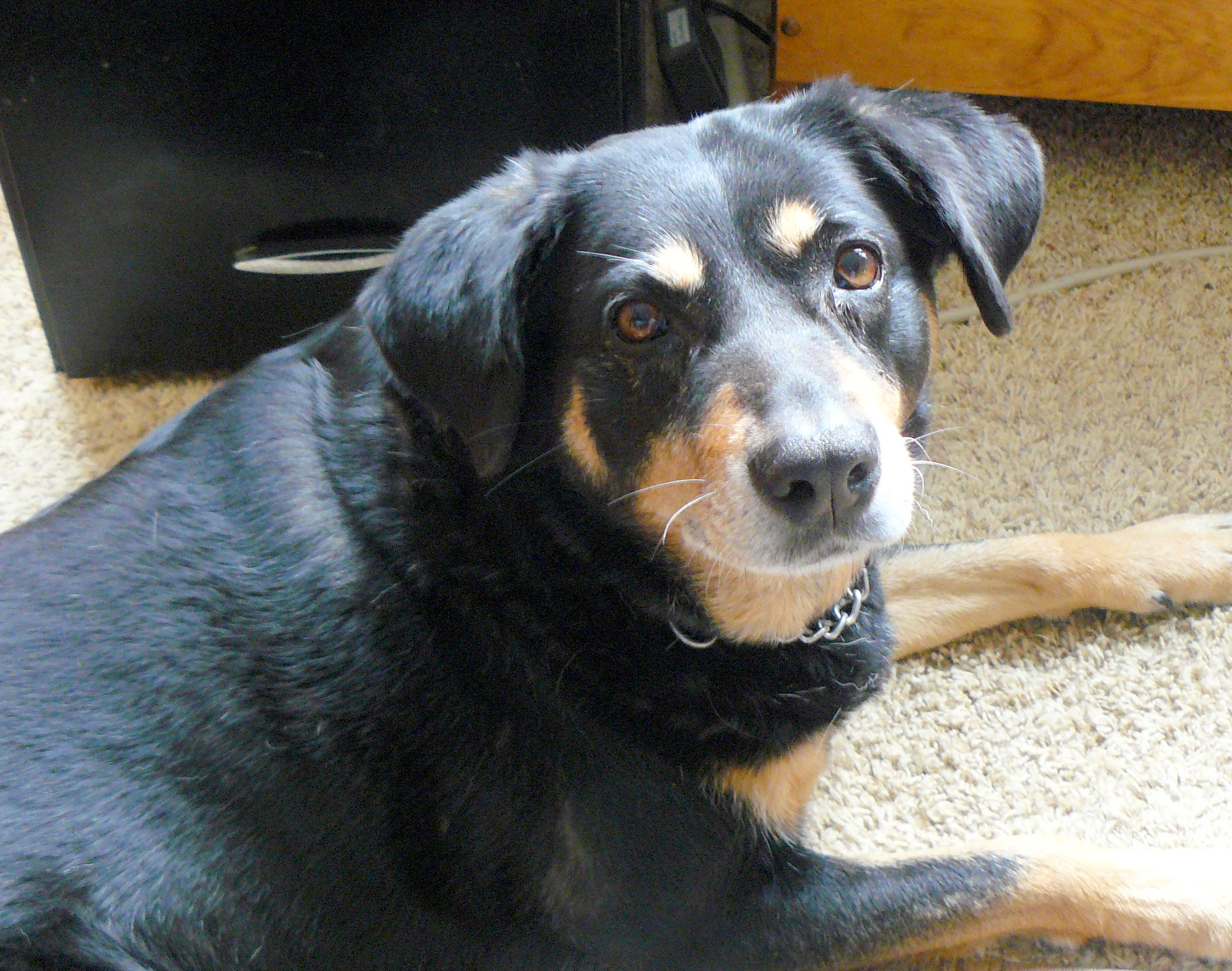
Yesterday’s post, the second this week about the long history of humans and dogs ended with me sharing a photograph of Hazel looking up at me as I was writing the post. Here it is again.
Dogs are such wonderful animals.
Later in the evening, thinking about how much we can learn from dogs (and, thank you so much, Deborah of Dog Leader Mysteries) my mind turned to the wonderful motivation dogs are for creative writing whether that is non-fiction, creative non-fiction or fiction.
In turn that reminded me of when, in the Summer of 2011, Jean and I attended a creative writing course at our nearby college in Payson, Arizona where we were then living. Here’s a story from that time that is fictional, in the sense that the event did not take place, but the names of all concerned, photographs and location are real!
ooOOoo
Messages from the Night
by Paul Handover
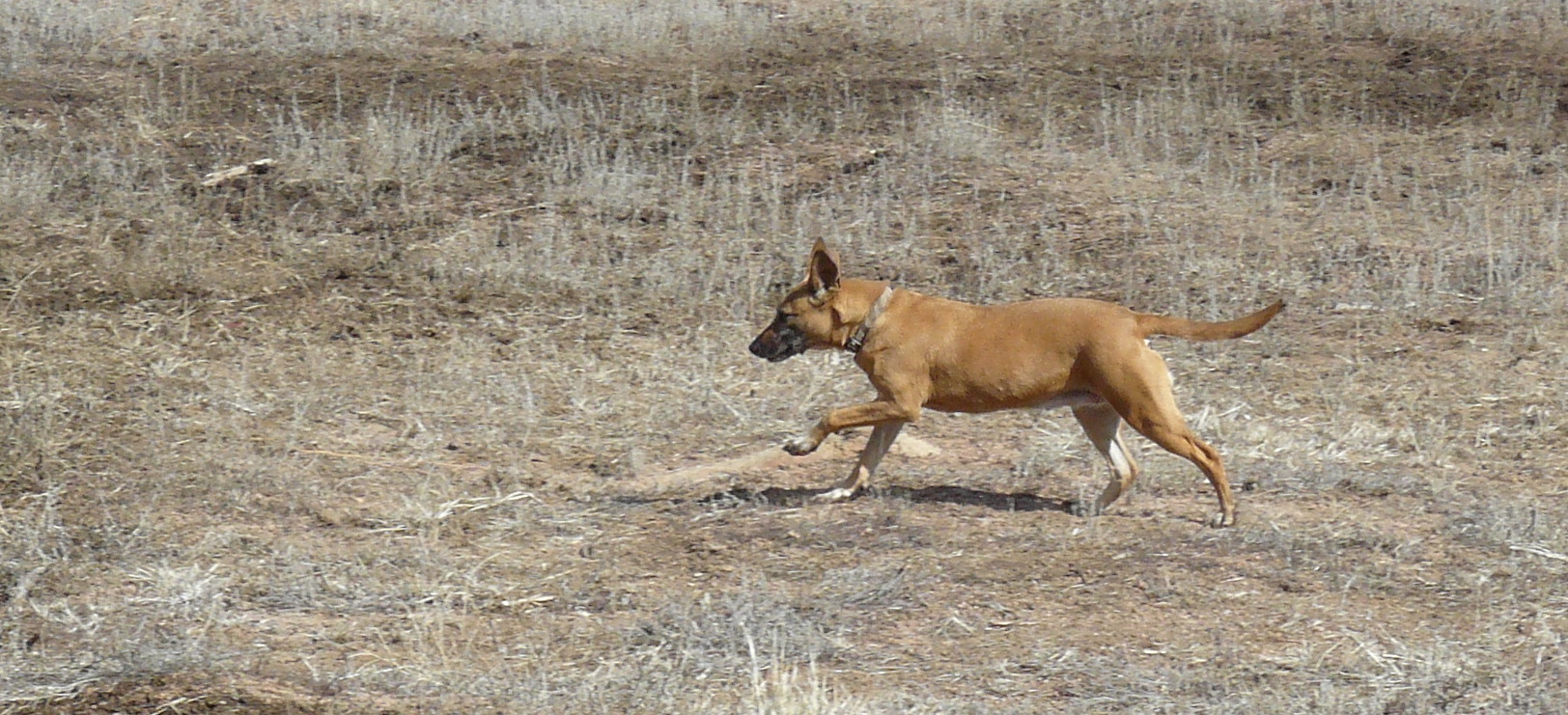
Dhalia heads for the hills!
“Jean, where’s Dhalia?”
“Don’t know. She was here moments ago.”
“Jeannie, You take the other dogs back to the car and I’ll go and scout around for her. Oh, and you better put Pharaoh on the leash otherwise you know he’ll follow me.”
“Paul, don’t worry, Dhalia’s always chasing scents; bet she beats us back to the car. Especially as it’s going to be dark soon.”
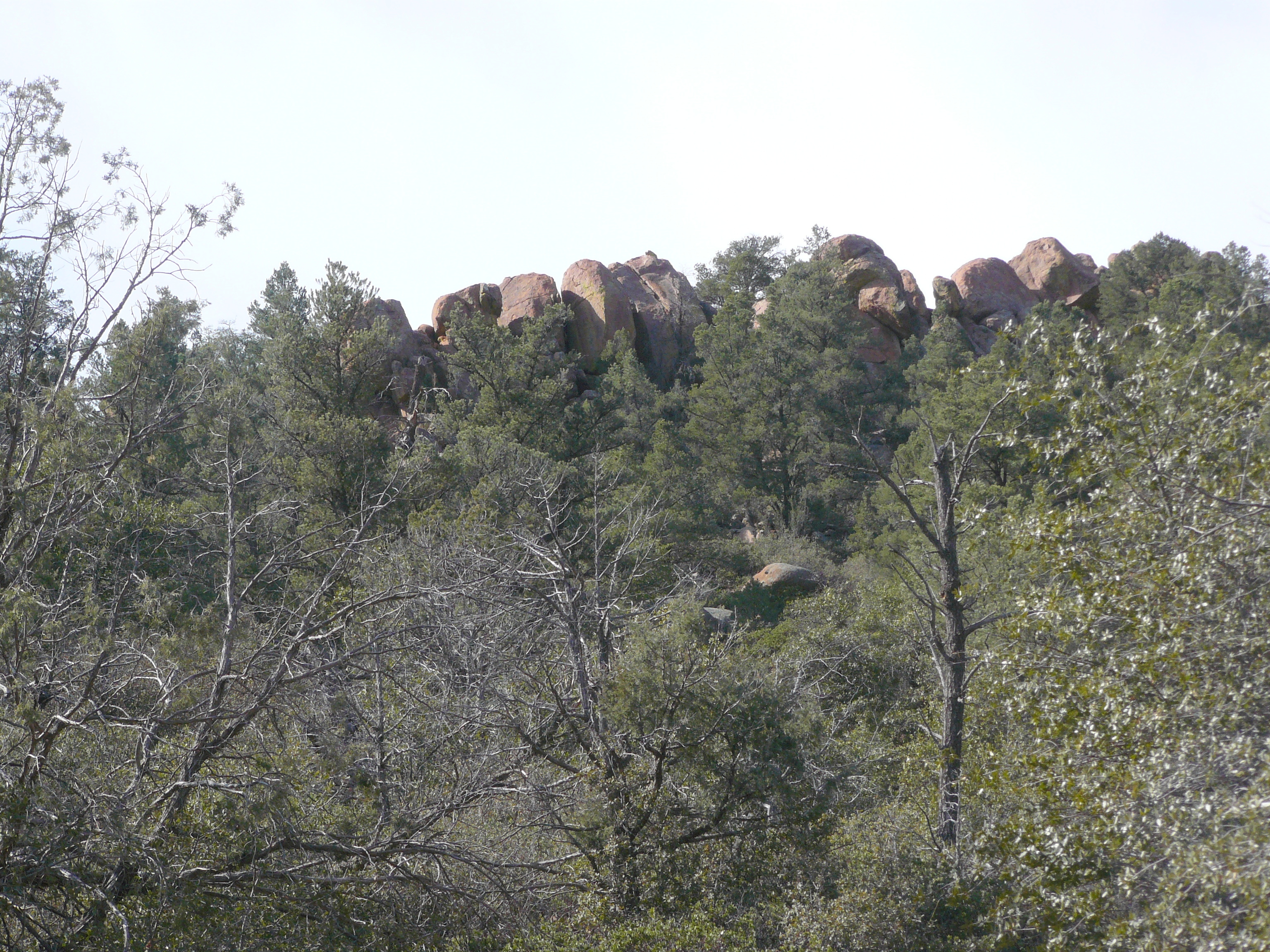
Nonetheless, Paul started back down the dusty, dirt road, the last rays of the sun pink on the high, tumbled cliffs of granite. This high rocky, forest plateau, known as the Granite Dells, just 3 miles from their home on the outskirts of Payson, made perfect dog-walking country and rarely did they miss an afternoon out here. However this afternoon, for reasons Paul was unclear about, they had left home much later than usual.
No sign of Dhalia ahead on the road so he struck off left, hoping she was somewhere up amongst the trees and the high boulders. Soon he reached the first crest, panting hard in the thin air. Behind him, across the breath-taking landscape, the setting sun had dipped beneath faraway mountain ridges; a magnificent sight. Suddenly, in the midst of that brief pause of admiring the perfect evening, a sound echoed around the cliffs. The sound of a dog barking. Paul bet his life on that being Dhalia. Just as quickly the barking stopped.
Challenging walking country.
The barking started up again, barking that suggested Dhalia was hunting something. The sound came from an area of boulders way up above the pine trees on the other side of the small valley ahead of him.
Perhaps, Dhalia had trapped herself. More likely, he reflected, swept up in the evening scents of the wilderness, Dhalia had temporarily reverted back to the wild, hunting dog she had been all those years ago. That feral Mexican street dog who in 2005 had tentatively turned away from scavenging in a pile of rubbish in a dirty Mexican town and shyly approached Jean. Jean had named her Dhalia.
He set off down to the valley floor and after fifteen minutes of hard climbing had reached the high boulders the other side. Paul whistled, then called “Dhalia! Dhalia! Come, there’s a good girl.”
Thank goodness for such a sweet, obedient dog.
He anticipated the sound of dog feet scampering through rough undergrowth. But no sound came.
He listened; no sounds, no more barking. Now where had she gone? Perhaps past these boulders down into the steep ravine beyond him, the one so densely forested with pine trees. With daylight practically gone he needed to find Dhalia very soon. He plunged down the slope, pushing through tree branches that whipped across his face, then fell heavily as his foot found empty space instead of the anticipated firm ground.
Paul cursed, picked himself up and paused. That fall had a message: the madness of continuing his search in the near dark. This terrain made very rough going even in daylight. At night, the boulders and plunging ravines would guarantee a busted body, at best! Plus, he ruefully admitted, he didn’t have a clue about finding his way back to the road from wherever he was!
The unavoidable truth smacked him full in the face. He would be spending this night alone in the high, open forest!
It had one hell of a very scary dimension. He forced himself not to dwell on just how scary it all felt. He needed to stay busy, find some way of keeping warm; last night at home it had dropped to within a few degrees of freezing. Paul looked around, seeing a possible solution. He broke a small branch off a nearby mesquite tree and made a crude brush with which he swept up the fallen pine needles he saw everywhere about him. Soon he had a stack sufficient to cover him, or so he hoped.
Thank goodness that when he and Jeannie had decided to give four dogs of their dogs this late afternoon walk, he had jeans and a long-sleeved shirt on, a pullover thrown over his shoulders. Didn’t make Dhalia’s antics any less frustrating but he probably wasn’t going to freeze to death!
The air temperature sank as if connected with the last rays of the sun. Paul’s confidence sank in harmony with the temperature. He lay down, shuffled about, swept the pine needles across his body, tried to find a position that carried some illusion of comfort. No matter the position, he couldn’t silence his mind. No way to silence the screaming in his head, his deep, primeval fear of this dark forest about him, imagination already running away with visions of hostile night creatures, large and small, watching him, smelling him, biding their time.
Perhaps he might sleep for a while? A moment later the absurdity of that last thought hit him. Caused him to utter aloud, “You stupid sod. There’s no way you’re going to sleep through this!”
His words echoed off unseen cliffs in the darkness, reinforcing his sense of isolation. He was very frightened. Why? Where in his psyche did that come from? He had spent many nights alone at sea without a problem, a thousand miles from shore. Then, of course, he knew his location, always had a radio link to the outside world. But being lost in this dark, lonely forest touched something very deep in him.
Suddenly, he started shivering. The slightest movement caused the needles to slip from him and the cold night air began to penetrate his body. He mused about how cold it might get and, by extension, thanked his lucky stars that the night was early October not, say, mid-December. So far, not too cold, but soon the fear rather than the temperature started to devour him. What stupid fool said, ‘Nothing to fear but fear itself!’ His plan to sleep under pine needles, fear or no fear, had failed! He couldn’t get warm. He had to move.
He looked around, saw an enormous boulder a few yards away, like some giant, black shadow. No details, just this huge outline etched against the night. Paul carefully raised himself, felt the remaining needles fall away, and gingerly shuffled across to the dark rock. He half-expected something to bite his extended hand as he explored the surface, as he ran his hand down towards the unseen ground. Miracle of miracles, the granite gently emitted the warmth absorbed from the day’s sun. He slowly settled himself to the ground, eased his back against the rock-face and pulled his knees up to his chest. He felt so much less vulnerable than when he had been flat out on the forest floor. Paul let out a long sigh, then burst into tears, huge heart-rending sobs coming from somewhere deep within him.
Gradually the tears washed away his fear, restored a calmer part of his brain. That calmer brain brought the realisation that he hadn’t considered, well not up until now, what Jeannie must be going through. At least he knew he was alive. Jeannie, not knowing, would be in despair. He bet she would remember that time when out walking here in the Dells they had lost little Poppy, an adorable ten-pound poodle mix, never to be found again despite ages spent combing the area, calling out her name. A year later and Jeannie still said from time to time, “I so miss Poppy!“. First Poppy and now him! No question, he had to get through this in one piece, mentally as much as physically.
Presumably, Jeannie would have called 911 and been connected to the local search and rescue unit. Would they search for him in the dark? He thought unlikely.
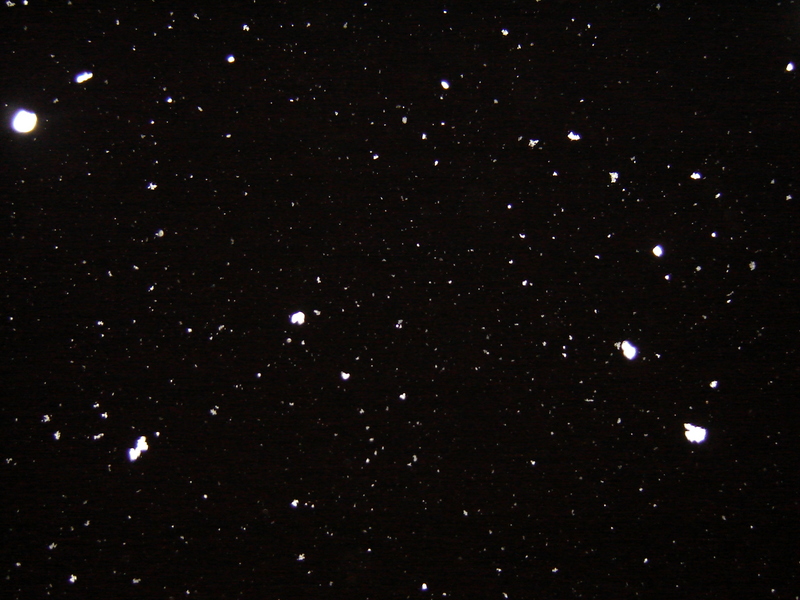
A vast stellar clock.
Thinking about her further eased his state of mind and his shivering stopped. Thank goodness for that! Paul fought to retain this new perspective. He would make it through, even treasure this night under the sky, this wonderful, awesome, night sky. Even the many pine tree crowns that soared way up above him couldn’t mask a sky that just glittered with starlight. Payson, at five-thousand feet, had many beautifully clear skies and tonight offered a magical example.
Frequently during his life, the night skies had spoken to him, presented a reminder of the continuum of the universe. On this night, however, he felt more humbled by the hundred, million stars surrounding him than ever before.
Time slipped by, his watch in darkness. However, above his head that vast stellar clock. He scanned the heavens, seeking out familiar pinpoints of light, companions over so much of his lifetime. Ah, there! The Big Dipper, Ursa Major, and, yes, there the North Pole star, Polaris. Great! Now the rotation of the planet became his watch, The Big Dipper sliding around Polaris, fifteen degrees for each hour.
What a situation he had got himself into. As with other challenging times in his life, lost in the Australian bush, at sea hunkering down through a severe storm, never a choice other than to work it out. Paul felt a gush of emotion from the release this changed perspective gave him.
Far away, a group of coyotes started up a howl. What a timeless sound, how long had coyotes been on the planet? He sank into those inner places of his mind noting how the intense darkness raised deep thoughts. What if this night heralded the end of his life, the last few hours of the life of Paul Handover? What parting message would he give to those that he loved?
Jeannie would know beyond any doubt how much he had adored her, how her love had created an emotional paradise for him beyond measure. But his son and daughter, dear Alex and Maija? Oh, the complexities he had created in their lives by leaving their mother so many years ago. He knew that they still harboured raw edges, and quite reasonably so. He still possessed raw edges from his father’s death, way back in 1956. That sudden death, five days before Christmas, so soon after he had turned twelve, that had fed a life-long feeling of emotional rejection. That feeling that lasted for fifty-one years until, coincidentally also five days before Christmas, he had met Jean in 2007.
His thoughts returned to Alex and Maija. Did they know, without a scintilla of doubt, that he loved them. Maybe his thoughts would find them. Romantic nonsense? Who knows? Dogs had the ability to read the minds of humans, often from far out of visual range. He knew Pharaoh, his devoted German Shepherd, skilfully read his mind.
Paul struggled to remember that saying from James Thurber. What was it now? Something about men striving to understand themselves before they die. Would that be his parting message for Alex and Maija? Blast, he wished he could remember stuff more clearly these days and let go of worrying about the quote. Perhaps his subconscious might carry the memory back to him.
He looked back up into the heavens. The Big Dipper indicated at least an hour had slipped by. Gracious, what a sky in which to lose one’s mind. Lost in that great cathedral of stars. Then, as if through some passing of consciousness, the Thurber saying did come back to him: All men should strive to learn before they die, what they are running from, and to, and why. As last words they would most certainly do for Alex and Maija!
Paul reflected on those who, incarcerated in solitary confinement, had their minds play many tricks, especially when it came to gauging time. What a bizarre oddment of information; where had that come from? Possibly because he hadn’t a clue about his present time. It felt later than 11pm and earlier than 4am, but any closer guess seemed impossible. Nevertheless, from out of those terrible, heart-wrenching hours of being alone he had found calm, had found something within him. He slept.
Suddenly, a sound slammed him awake. Something out there in the dark had made a sound, caused his whole body to become totally alert, every nerve straining to recognise what it might be. It sounded like animal feet moving through the autumn fall of dead leaves. He prayed it wasn’t a mountain lion. Surely such a wild cat preparing to attack him would be silent. Now the unknown creature had definitely paused, no sound, just him knowing that out there something waited. Now what, the creature had started sniffing. He hoped not a wild pig. Javelinas, those pig-like creatures that always moved in groups, could make trouble – they had no qualms at attacking a decent-sized dog.
Poised to run, he considered rising but chose to stay still and closed his right-hand around a small rock. The sniffing stopped. Nothing now, save the sound of Paul’s rapid, beating heart. He sensed, sensed strongly, the creature looking at him. It seemed very close, ten or twenty feet away. The adrenalin hammered through his veins.
He tried to focus on the spot where he sensed the animal waited; waited for what? He pushed that idea out of his head. His ears then picked up a weird, bizarre sound. Surely not! Had he lost his senses? It sounded like a dog wagging its tail; flap, flap, flapping against a tree-trunk.
A dog? If a dog, it had to be Dhalia!
Then came that small, shy bark! A bark he knew so well. Oh wow, it is Dhalia. He softly called, “Dhalia, Dhalia, come here, there’s a good girl.”
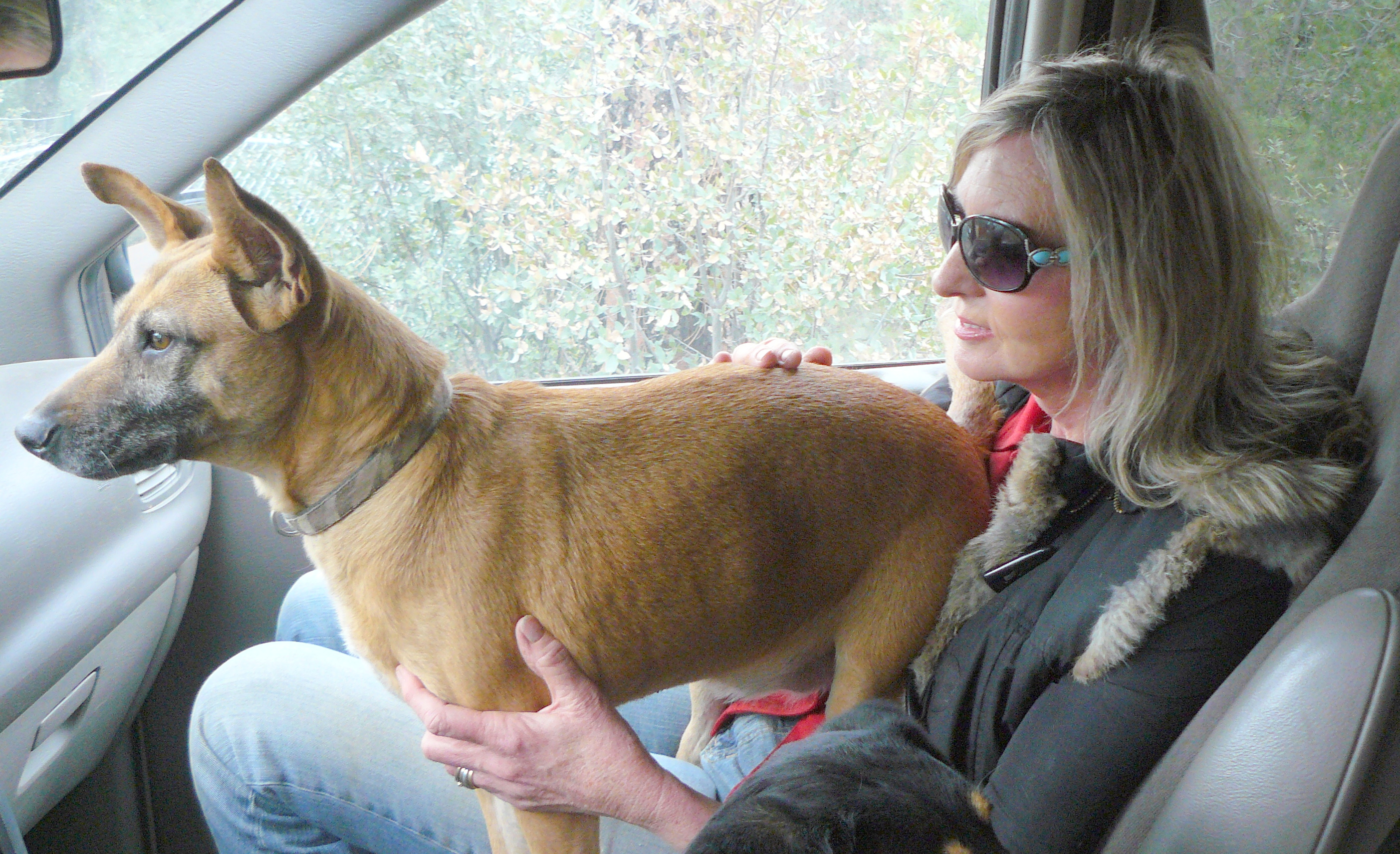
With a quick rustle of feet Dhalia leapt upon him, tail wagging furiously, her head quickly burrowing into Paul’s body warmth. He hugged her and, once more, tears ran down his face. Despite the darkness, he could see her perfectly in his mind. Her tight, short-haired coat of light-brown hair, her aquiline face, her bright inquisitive eyes and those wonderful head-dominating ears. Lovely large ears that seemed to listen to the world. A shy, loving dog when Jean had rescued her in 2005 and these years later still a shy, loving dog.
Dhalia licked his tears, her gentle tongue soft and sweet on his skin. He shuffled more onto his back which allowed her to curl up on his chest, still enveloped by his arms. His mind drifted away to an era long time ago, back to an earlier ancient man, likewise wrapped around his dog under a dome of stars, bonded in a thousand mysterious ways.
The morning sun arrived as imperceptibly as an angel’s sigh. Dhalia sensed the dawn before Paul, brought him out of his dreams by the slight stirring of her warm, gentle body.
Yes, there it came, the end of this night. The ancient sun galloping towards them across ancient lands, another beat of the planet’s heart. Dhalia slid off his chest, stretched herself from nose to tail, yawned and looked at him, as much to say time to go home! He could just make out the face of his watch; 4.55am. He, too, raised himself, slapped his arms around his body to get some circulation going. The cold air stung his face, yet it couldn’t even scratch the inner warmth of his body, the gift from the loving bond he and Dhalia had shared.
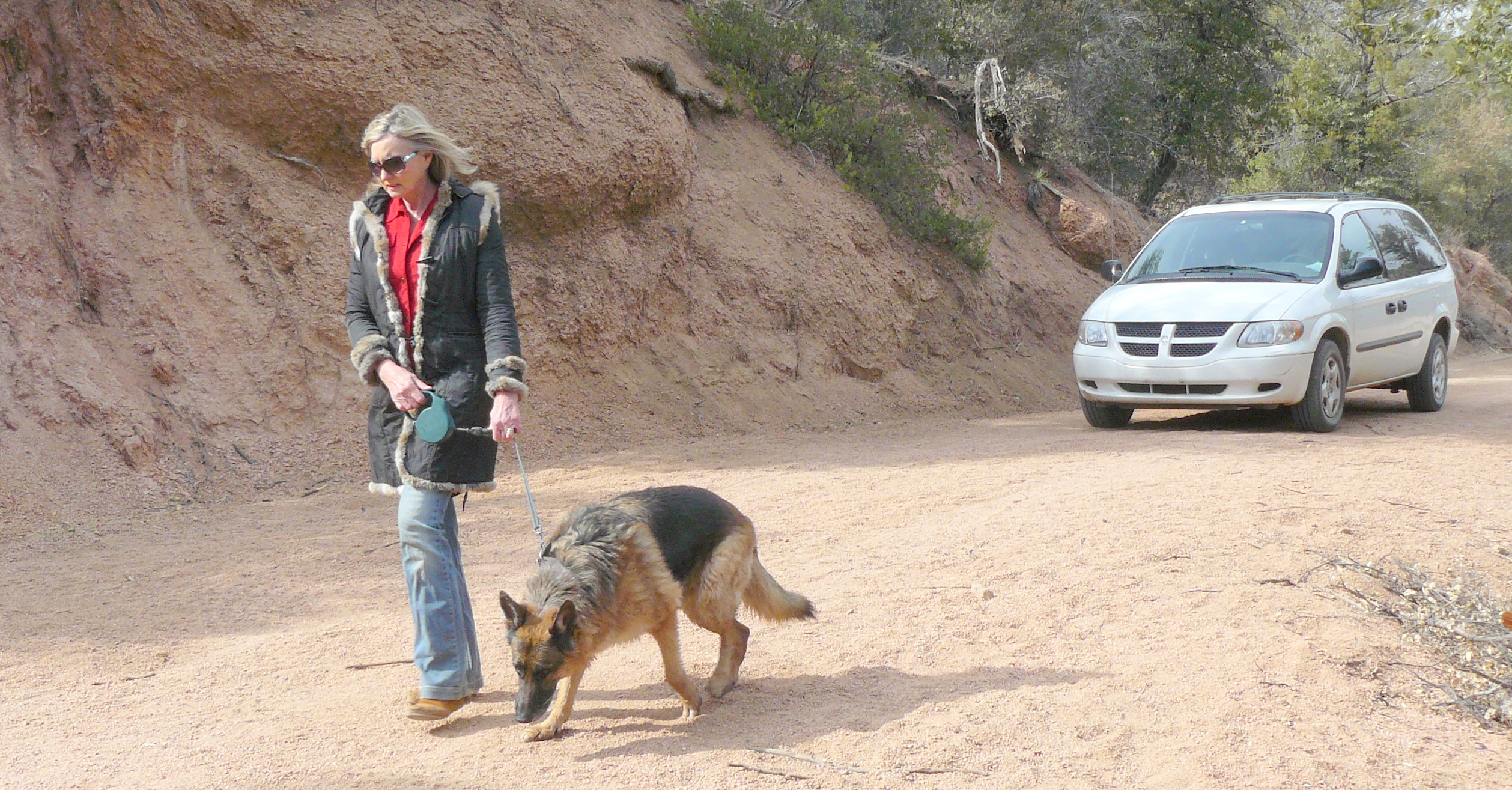
They set off and quickly crested the first ridge. Ahead, about a mile away, they saw the forest road busy with arriving search and rescue trucks. Paul noticed Jean’s Dodge parked ahead of the trucks and instinctively knew she and Pharaoh had already disappeared into the forest, Pharaoh leading the way to them.
Pharaoh and Jean heading up the search.
They set off down the slope, Dhalia’s tail wagging with unbounded excitement, Paul ready to start shouting for attention from the next ridge. They were about to wade through a small stream when, across from them, Pharaoh raced out of the trees. He tore through the water, barking at the top of his voice in clear dog speak, ‘I’ve found them, they’re here, they’re safe’. Paul crouched down to receive his second huge face lick in less than six hours.
Later, safely home, it came to Paul. When they had set off in that early morning light, Dhalia had stayed pinned to him. So unusual for her not to run off. Let’s face it, that’s what got them into the mess in the first place. Dhalia had stayed with him as if she had known that during that long, dark night, it had been he who had been the lost soul.
The message from the night, as clear as the rays of this new day’s sun, the message to pass to all those he loved. If you don’t get lost, there’s a chance you may never be found.




 Learning from Dogs