Category: consciousness

Musings on love.

Dedicated to MaryAnne G.

A week ago I started the first of what became four day’s writings about passing the 400ppm CO2 level in the planet’s atmosphere.  As I said in the penultimate post, “In nearly four years of writing for Learning from Dogs, I can’t recall devoting three days of posts to a single subject.

Later that week, I had a wonderful telephone conversation with MaryAnne back in Payson. MaryAnne and husband Ed were among a group of people who did so much to ease our transition into our new home in Arizona.  As part of the process of obtaining my fiancee visa, I was to and fro between Payson and London which meant having to leave Jeannie alone for a number of weeks at a time. So for Jean having to get used to a change of country as well as home and for me wondering if I would ever get the magic piece of paper allowing me and Jean to be married and settle down, having so many loving friends around us was invaluable.

In last week’s telephone conversation MaryAnne spoke so easily about love that I promised her that I would dedicate a post on Learning from Dogs to her.

In fact, rather than one post, I’m setting myself the challenge of writing about love for the entire week, i.e. Monday to Friday.  I will readily admit that over and beyond today’s post, I don’t have more than the vaguest inkling of how the week will pan out.  You have been warned!

But how much better that ‘devoting three days to a single subject‘ should be about love rather than climate change.

oooOOOooo

Love across the species.

A week ago, we had friend Richard and his partner Julie from England staying with us.  Richard and I go back 40 years and have been wonderful buddies all that time.  Last Monday, I took Richard and Julie across to Wildlife Images just a few miles from the house here in Merlin, Oregon.  As their website explains,

Wildlife Images Rehabilitation and Education Center was founded as a non-profit corporation in 1981 by renowned wildlife rehabilitator J. David Siddon. The facility was created in order to provide for the care and treatment of sick, injured and orphaned wildlife.

and a little later,

The organization’s clinic, animal sanctuary, and education center are located on 24 acres of land adjacent to the wild and scenic section of Oregon’s famous Rogue River. Animals treated at Wildlife Images have included everything from baby squirrels and badgers to American bald eagles.

Wildlife Images release rate of intakes is near 50 percent each year – far above the national average of 33 percent. Animals with permanently disabling injuries that make them unable to live in the wild are integrated into one of Wildlife Images educational programs, either as educational ambassadors, or as permanent residents of the facility.

While we were looking at the animals, along the pathway came a couple of the volunteer staff walking a Grey Wolf (Canis Lupus).

An afternoon walk for Tundra.

I was utterly captivated by this beautiful animal.  Her story was that she was born in captivity and owned by an individual who soon decided he didn’t want her!  Not long thereafter Tundra, as she became named, was brought to the Sarvey Wildlife Center in Washington and thence to Wildlife Images when she was just 8 weeks old.

Tundra turned to look at me. I stood perfectly still and quiet.  Tundra seemed to want to come closer.  As one would with a strange dog, I got down on my knees and turned my eyes away from Tundra’s.  I sensed she was coming towards me so quickly held up my camera and took the picture below.

Wolf greets man.
Wolf greets man.

I kept my gaze averted as I felt the warm breath of this magnificent animal inches from my face.  Then the magic of love across the species!  Tundra licked my face!  The tears came to my eyes and were licked away.  I stroked her and became lost in thought.

Was this an echo of how thousands and thousands of years ago, a wolf and an early man came together out of trust and love and started the journey of the longest animal-human relationship, by far?

As I write elsewhere on this blog,

Dogs are part of the Canidae, a family including wolves, coyotes and foxes, thought to have evolved 60 million years ago.  There is no hard evidence about when dogs and man came together but dogs were certainly around when man developed speech and set out from Africa, about 50,000 years ago.

Let me close the first day of these musings by coming forward all those thousands of years to the year 2012.  To the 6th April, 2012.  To the day that we brought puppy Cleo back home.  That sweet little creature of less than ten weeks of age starting her own journey of love across the species.

10-week-old little Cleo experiencing Jeannie's love for her dogs.
Little Cleo being loved from the start.

Feelings across the universe

If you can’t feel it, you can’t write it!

This saying was offered in a creative writing class that Jean and I attended when we were living in Payson, Arizona.  It came to me spontaneously as I started today’s post.  Because feeling what is going on around us is the only way to write it, to share it, to bring it to the attention of all.

These are tough times for so many that love the world around us and having the odd weep is a perfectly rational, and healthy, thing to happen.

So as you listen to the following just feel it. And if a tear comes to your eye … embrace it.

Hopefully, you listened to the full seven minutes before reading on!  Because to end the post at this point would be to leave out some great connections.

The first being that the inspiration for today’s post came from Peter Sinclair’s blog Climate Denial Crock of the Week, to which I subscribe.  The post was called Music Break: Across the Universe:

Put this on in the background and let it creep up on you.

Elizabeth Shepherd performs Live-to-Air with Michael Occipinti’s Shine On: The Universe of John Lennon
Toronto, June 1, 2012 CBC Radio

UPDATE: by popular demand, the original below.

Secondly, a quick dip into WikiPedia reveals that the song was recorded by the Beatles in February 1968 at the famous Abbey Road studios and released on the 12th December, 1969. It was written by John Lennon, and credited to Lennon–McCartney.

abbey road studios
Abbey Road Studios, 3 Abbey Road, St. John’s Wood, London

Thirdly, that Wikipedia reference includes the background to the composition of the song, some of which I will share here:

One night in 1967, the phrase “words are flowing out like endless rain into a paper cup” came to Lennon after hearing his ex-wife Cynthia, according to Lennon, “going on and on about something.” Later, after “she’d gone to sleep—and I kept hearing these words over and over, flowing like an endless stream,” Lennon went downstairs and turned it into a song. He began to write the rest of the lyrics and when he was done, he went to bed and forgot about them.

I was lying next to my first wife in bed, you know, and I was irritated, and I was thinking. She must have been going on and on about something and she’d gone to sleep and I kept hearing these words over and over, flowing like an endless stream. I went downstairs and it turned into a sort of cosmic song rather than an irritated song, rather than a “Why are you always mouthing off at me?”[1]… [The words] were purely inspirational and were given to me as boom!. I don’t own it you know; it came through like that.[2]

The flavour of the song was heavily influenced by Lennon’s and the Beatles’ interest in Transcendental Meditation in late 1967 – early 1968, when the song was composed. Based on this he added the mantra “Jai guru deva om” (Sanskrit: जय गुरुदेव ) to the piece, which became the link to the chorus. The Sanskrit phrase is a sentence fragment whose words could have many meanings. Literally it approximates as “glory to the shining remover of darkness,”[3] and can be paraphrased as “Victory to God divine”, “Hail to the divine guru”, or the phrase commonly invoked by the late Maharishi Mahesh Yogi in referring to his spiritual teacher “All Glory to Guru Dev.”[4]

Finally the lyrics.

“Across The Universe”

Words are flowing out like endless rain into a paper cup
They slither wildly as they slip away across the universe
Pools of sorrow, waves of joy are drifting through my open mind
Possessing and caressing me
Jai Guru Deva OM

Nothing’s gonna change my world

Images of broken light which dance before me like a million eyes
They call me on and on across the universe
Thoughts meander like a restless wind inside a letter box
They tumble blindly as they make their way across the universe
Jai Guru Deva OM

Nothing’s gonna change my world

Sounds of laughter shades of live are ringing through my open ears
Inciting and inviting me
Limitless undying love which shines around me like a million suns
It calls me on and on, across the universe
Jai Guru Deva OM

Nothing’s gonna change my world

Jai Guru Deva
Jai Guru Deva
Jai Guru Deva
Jai Guru Deva
Jai Guru Deva [fade out]

Footnote

The title of the song was given a new dimension when NASA beamed the song into space.

“On 4 February 2008, at 00:00 UTC, NASA transmitted the Interstellar Message “Across the Universe” in the direction of the star Polaris, 431 light years from Earth. The transmission was made using a 70m antenna in the Deep Space Network’s Madrid Deep Space Communication Complex, located outside of Madrid, Spain. It was done with an “X band” transmitter, radiating into the antenna at 18 kW. This was done to celebrate the 40th anniversary of the song’s recording, the 45th anniversary of the Deep Space Network (DSN), and the 50th anniversary of NASA. The idea was hatched by Beatles historian Martin Lewis, who encouraged all Beatles fans to play the track as it was beamed to the distant star. The event marked the first time a song had ever been intentionally transmitted into deep space, and was approved by McCartney, Yoko Ono, and Apple Corps.”

Thus those feelings so beautifully expressed in the song will be echoing around the universe for time immemorial. Now that is a legacy!

Change of tack!

Moving on to happiness.

Whatever one’s view is about the significance of CO2 levels in the Earth’s atmosphere, this blog is about integrity.  As the byline states, “Dogs are integrous animals. We have much to learn from them.” Regular readers (and thank you for being one) know that this blog ranges far and wide in pursuit of stories, essays and examples of integrity, all the more better when they involve a dog!

All dog owners know that one of the prime things we can learn from our dogs is the ability to remain in the present.  No, more than that! To value and cherish the present. Dogs manage this in an effortless manner, in a way that humans can only dream of achieving.

This came to me as a result of a recent post on Damn the Matrix, Mike Stasse’s fascinating blog.  The post was about what we humans regret at the end of our days, which I will come to in a moment.

Mike had taken the theme from a recent book by Australian author Bronnie Ware. Her website is here from where one learns:

Picture from The Sunday Mail (Qld)

Bronnie Ware is an inspiring and creative soul from Australia.

Through her work Bronnie weaves delightful tales of real life observations and experience. Using gentleness, honesty, and humour, Bronnie celebrates both the strength and vulnerability of human nature. Her message is a positive and inspiring one.

Bronnie is the author of the full-length memoir, The Top Five Regrets of the Dying – A Life Transformed by the Dearly Departing, released worldwide, with translations in 27 languages. She also runs an online personal growth and songwriting course, has released two albums of original songs, and writes a well-loved blog called Inspiration and Chai.

A quick visit to that blog site reveals:

Every challenge brings its own gifts. Sometimes though it is not always easy to see those gifts at first. Suffering and wounds can blind us. We have all been there. It is at times like these that Inspiration and Chai is needed. Inspiration to soothe the heart. Chai to soothe the body.

Even during happier cruising chapters, being inspired is still a beautiful thing. It keeps us going. It reminds us of what we already know.

Inspiration and Chai is an ongoing journey. The aim of this site is to share inspirational stories and motivational thoughts and for it to reach more and more people in need, seekers on their path. It is a positive environment to revisit whenever you feel it calling. It is also somewhere for me to share my love of story telling and to share memories of life.

Jean is no stranger to the death of a dog. Over her many years of rescuing dogs Jean has seen far too many deaths.  I have been living with Jean since 2008.  In that short time five of our dogs have died.

Of course, we have no idea of what goes through a dog’s mind in those last stages of life. Dogs appear to embrace death in an uncomplicated way but we will never know for sure.

What about humans? On Bronnie’s blogsite there is a post under the title of Regrets of the dying.  Whatever age you are, read what Bonnie wrote and ponder:

REGRETS OF THE DYING

For many years I worked in palliative care. My patients were those who had gone home to die. Some incredibly special times were shared. I was with them for the last three to twelve weeks of their lives.

People grow a lot when they are faced with their own mortality. I learnt never to underestimate someone’s capacity for growth. Some changes were phenomenal. Each experienced a variety of emotions, as expected, denial, fear, anger, remorse, more denial and eventually acceptance. Every single patient found their peace before they departed though, every one of them.

When questioned about any regrets they had or anything they would do differently, common themes surfaced again and again. Here are the most common five:

1. I wish I’d had the courage to live a life true to myself, not the life others expected of me.

This was the most common regret of all. When people realise that their life is almost over and look back clearly on it, it is easy to see how many dreams have gone unfulfilled. Most people had not honoured even a half of their dreams and had to die knowing that it was due to choices they had made, or not made.

It is very important to try and honour at least some of your dreams along the way. From the moment that you lose your health, it is too late. Health brings a freedom very few realise, until they no longer have it.

2. I wish I didn’t work so hard.

This came from every male patient that I nursed. They missed their children’s youth and their partner’s companionship. Women also spoke of this regret. But as most were from an older generation, many of the female patients had not been breadwinners. All of the men I nursed deeply regretted spending so much of their lives on the treadmill of a work existence.

By simplifying your lifestyle and making conscious choices along the way, it is possible to not need the income that you think you do. And by creating more space in your life, you become happier and more open to new opportunities, ones more suited to your new lifestyle.

3. I wish I’d had the courage to express my feelings.

Many people suppressed their feelings in order to keep peace with others. As a result, they settled for a mediocre existence and never became who they were truly capable of becoming. Many developed illnesses relating to the bitterness and resentment they carried as a result.

We cannot control the reactions of others. However, although people may initially react when you change the way you are by speaking honestly, in the end it raises the relationship to a whole new and healthier level. Either that or it releases the unhealthy relationship from your life. Either way, you win.

4. I wish I had stayed in touch with my friends.

Often they would not truly realise the full benefits of old friends until their dying weeks and it was not always possible to track them down. Many had become so caught up in their own lives that they had let golden friendships slip by over the years. There were many deep regrets about not giving friendships the time and effort that they deserved. Everyone misses their friends when they are dying.

It is common for anyone in a busy lifestyle to let friendships slip. But when you are faced with your approaching death, the physical details of life fall away. People do want to get their financial affairs in order if possible. But it is not money or status that holds the true importance for them. They want to get things in order more for the benefit of those they love. Usually though, they are too ill and weary to ever manage this task. It is all comes down to love and relationships in the end. That is all that remains in the final weeks, love and relationships.

5. I wish that I had let myself be happier.

This is a surprisingly common one. Many did not realise until the end that happiness is a choice. They had stayed stuck in old patterns and habits. The so-called ‘comfort’ of familiarity overflowed into their emotions, as well as their physical lives. Fear of change had them pretending to others, and to their selves, that they were content. When deep within, they longed to laugh properly and have silliness in their life again.

When you are on your deathbed, what others think of you is a long way from your mind. How wonderful to be able to let go and smile again, long before you are dying.

Life is a choice. It is YOUR life. Choose consciously, choose wisely, choose honestly. Choose happiness.

I hesitated to write anything more because that last sentence should be the one that continues to resonate.

So just a reflection on how easy it is for a dog to wag its tail – dogs so easily choose happiness.

Deckchairs on the RMS Titanic

A guest post from John Hurlburt.

The trouble with today’s post title is that while the analogy with the loss of the Titanic is accurate, indeed too bloody accurate, the phrase has dissolved into the depths of the barrel of smart, clever-dick sayings.  The brutal consequence of ‘fiddling while Rome burns‘, to use another ‘smart’ saying, is obscured.

So before you read this guest post from regular contributor, John Hurlburt, let me plead for something?

That is that you don’t treat this as just another anecdote in the affairs of man, but a symptom of the blindness of societies right across the world.  As my guest essay tomorrow reveals, waiting for leadership on this planet is a wait that you and I and millions of others just can’t afford.  Each and every one of us has to do something, however minute, to make a difference.  Even just sharing John’s words.

oooOOOooo

It seems that there’s no escaping politics in daily life.

I recently got together one evening with two friends at our local Elks Club.

They are a couple. Two old friends of about ten years who live across the street and around the corner from me during the summer season.  They’ve been together for more than half their lifetimes and spend the fall, winter and early spring in Yuma.

He is a frequent fishing buddy.  Sometimes wears a side arm when we fish the beautiful mountain lakes above Payson. Mountain lakes and related campgrounds that are maintained and supervised by the U.S. Forest Service.  Rather cheekily, I once asked if the plan was to hook trout or shoot them!

Anyhow, this was our first get together of the season.  It was noted that attendance and participation is down in Arizona for such fraternal organizations as the Elks and the Moose.  We had a discussion with club management about the nature of the problem.

Fraternal club management tends to be cautious and well paid. However, it seems that placing discomforting restrictions on people is not popular.  The case in point was a recent club smoking ban. The logic seemed reasonable enough.  Unfortunately, no realistic accommodation was made for the members who chose to smoke.  The reaction was emotional.

For many, it was apparently the last straw.  There were perhaps four other people at the Payson Elks club at 5:30 p.m. that Friday evening. An evening with a moderately priced dinner buffet on hand that had been advertised online, in a newsletter and by word of mouth.

There was a point when a comment seemed appropriate.  I offered the observation that the source of the problem might be political.  No one seemed to register the observation.

We talked a bit about aches and pains; the usual organ recital.  We spoke about what we’ve been doing.  I told them about church and transition town activities.  The conversation turned to our illusion of a stable economy.  An observation was made that the USA was leveraged over twenty-two times above any material foundation.  There was no disagreement.

Despite the clear New York Times warning that morning, climate change never entered the conversation.  A remedy was to note that so far Katrina has cost U.S. taxpayers over sixteen Billion dollars and climbing.   Sandy is expected to cost American taxpayers as much as sixty Billion dollars.

It was a pleasant evening and we plan to get together again soon.

Take care out there.

John.

oooOOOooo

The sound of scraping deckchairs is deafening!

The power in these words.

Day three of recognising the passing of 400 ppm atmospheric CO2.

In nearly four years of writing for Learning from Dogs, I can’t recall devoting three days of posts to a single subject. To put that into context, today’s post is number 1,683 since the first one was published on July 15th, 2009; not all of them from the brain of yours truly by any means you understand!

Today, I’m going to feature a recent essay written by George Monbiot finishing up three days of ‘reporting’ on the deeply disturbing, but fully anticipated, news that the planet’s atmosphere has reached a concentration of 400 ppm CO2.

Last Monday, I published What legacy do we wish to leave for others?

Then yesterday, a post under the title of 400 ppm, as the BBC reported it.  I closed with a reference to a remark made by Professor Sir Brian Hoskins, director of the Grantham Institute for Climate Change at Imperial College London; the remark being “A greater sense of urgency was needed.

I wrote that those wishy-washy words were pathetic.  That we needed the sort of words that George Monbiot penned a few days ago in the Guardian newspaper.  There it was entitled “Climate milestone is a moment of symbolic significance on road of idiocy“.

But I think the title that Mr. Monbiot chose to use on his own blog was far more apt: Via Dolorosa.  (Note that I haven’t formally requested permission to republish the essay but trust that the following is acceptable to both Mr. Monbiot and the Guardian newspaper.)

Here’s how it opened:

Via Dolorosa

May 10, 2013

Corruption and short-termism are pushing us along the path of sorrows.

By George Monbiot, published on the Guardian’s website, 10th May 2013

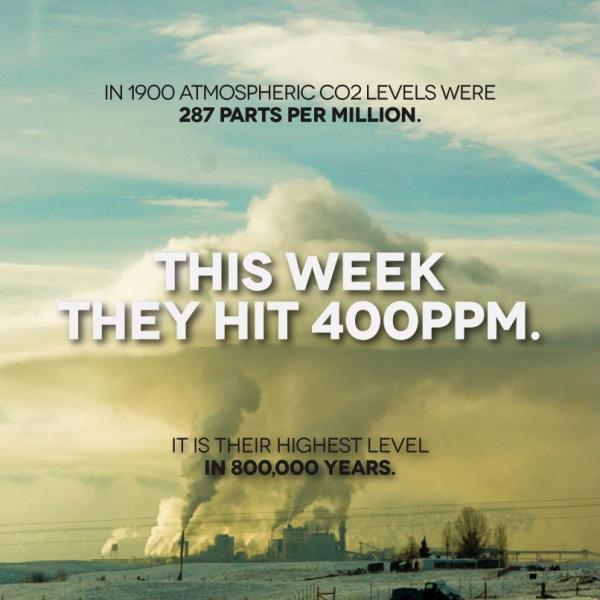
The records go back 800,000 years: that’s the age of the oldest fossil air bubbles extracted from Dome C, an ice-bound summit in the high Antarctic. And throughout that time there has been nothing like this. At no point in the pre-industrial record have concentrations of carbon dioxide in the air risen above 300 parts per million. 400 is a figure that belongs to a different era.

The difference between 399 and 400ppm is small, in terms of its impacts on the world’s living systems. But this is a moment of symbolic significance, a station on the Via Dolorosa of environmental destruction. It is symbolic of our collective failure to put the long term prospects of the natural world and the people it supports above immediate self-interest.

The symbolic significance of the planet’s atmospheric concentrations of CO2 passing 400ppm  is that, I hope, with all the hope that my heart can summon up, it will bring us back from the brink.  Then one ponders about this possibility as Monbiot’s next paragraph unfolds:

The only way forward now is back: to retrace our steps along this road and to seek to return atmospheric concentrations to around 350 parts per million, as the 350.org campaign demands. That requires, above all, that we leave the majority of the fossil fuels which have already been identified in the ground. There is not a government or an energy company which has yet agreed to do so.

“not a government or an energy company … has yet agreed to do so.”

I’m going to repeat that again, with emboldening; “not a government or an energy company … has yet agreed to do so.

In fact, one could reasonable argue that having any hope for a turning back is utterly naive. Look what the essay goes on to say:

Just before the 400-mark was reached, Shell announced that it will go ahead with its plans to drill deeper than any offshore oil operation has gone before: almost three kilometres below the Gulf of Mexico.

A few hours later, Oxford University opened a new laboratory in its department of earth sciences. The lab is funded by Shell. Oxford says that the partnership “is designed to support more effective development of natural resources to meet fast-growing global demand for energy.” Which translates as finding and extracting even more fossil fuel.

The European Emissions Trading Scheme, which was supposed to have capped our consumption, is now, for practical purposes, dead. International climate talks have stalled; governments such as ours now seem quietly to be unpicking their domestic commitments. Practical measures to prevent the growth of global emissions are, by comparison to the scale of the challenge, almost non-existent.

As an example of the scale of the hypocrisy in which we are all immersed, last week’s The Economist magazine carried a full-age advertisement from Chevron on page 5 under the banner of ‘Protecting The Planet Is Everyone’s Job – We agree‘ and going on to explain:

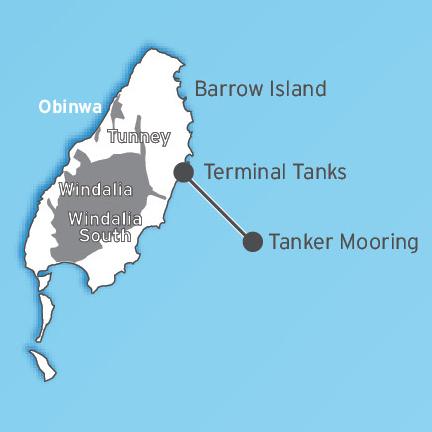
We go to extraordinary lengths to protect the integrity of the places where we operate.  Places all over the world, like Australia’s Barrow Island.  It’s home to hundreds of native species of wildlife, including wallabies, ospreys, and perenties.

We’ve been producing energy on the island for more than 40 years, and it remains a Class A Nature Reserve.

Didn’t take me two moments to find this image:

Barrow Island, Australia.  Taken from the Chevron Australia website.
Barrow Island, Australia. Taken from the Chevron Australia website.

To my mind this advertisement completely misses the point; deliberately or otherwise.  Chevron and all other oil producing companies in the world are endangering the future of the entire planet by continuing to ‘produce energy’, aka oil.  Period. Full stop.

Or to put it in the words of George Monbiot’s essay:

The problem is simply stated: the power of the fossil fuel companies is too great. Among those who seek and obtain high office are people characterised by a complete absence of empathy or scruples, who will take money or instructions from any corporation or billionaire who offers them, and then defend those interests against the current and future prospects of humanity. This new mark reflects a profound failure of politics, worldwide, in which democracy has quietly been supplanted by plutocracy. Without a widespread reform of campaign finance, lobbying and influence-peddling and the systematic corruption they promote, our chances of preventing climate breakdown are close to zero.

Thus the final sentence in GM’s essay carries a deep sadness.

So here we stand at a waystation along the road of idiocy, apparently determined only to complete our journey.

http://www.monbiot.com

Why are we not seeing, hearing and reading words of a similar weight and power from just about every ‘opinion maker’ in the world?

Why not?  Why not?

What legacy do we wish to leave others?

What on earth are we all doing!

I started writing this early morning last Friday, 10th May.  It was prompted by a post then just in from Christine’s blog 350 or bust. I didn’t have the heart to republish it for a few days.

Then as the news of the atmospheric CO2 concentration passing 400 parts per million (ppm) moved more and more into mainstream news, I found myself morphing from sadness and puzzlement into anger and then into some form of determination to ‘do something‘, however insignificant that might be.

Because if humanity does not turn back from our carbon-based lifestyle pretty damn soon then those who are, say, 20 years or more younger than me (I’m 68), are in for some very tough, very rough times indeed.

So over the next two or three days, I shall focus on this topic simply from the motivation of wanting to join the numerous others around the world who are also recognising this moment in the history of man.

Ergo, for today that post from Christine. But I make no apologies for staying with the theme for much of this week.

oooOOOooo

Rolling The Dice: CO2 Concentration Hits Record High Amid Global Inaction On Climate Change

2013/05/10

Via The Guardian:

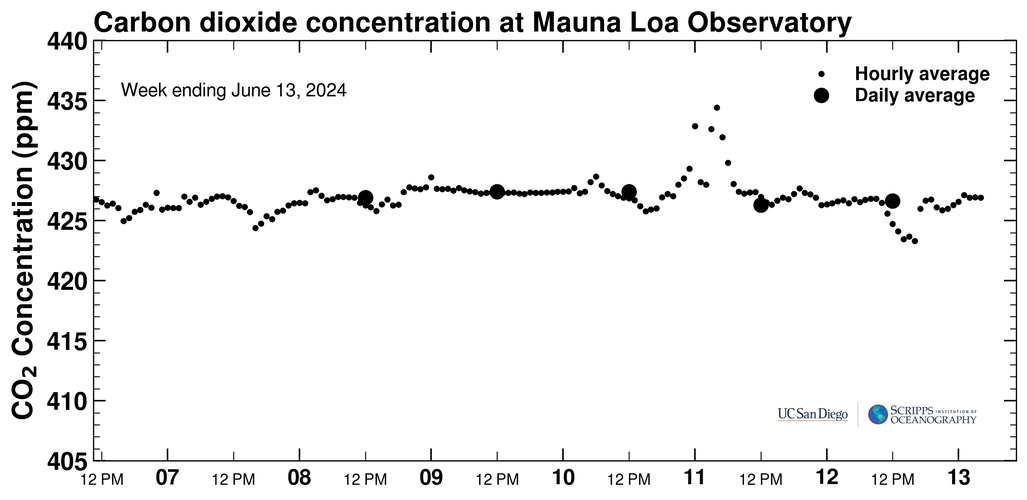
The concentration of carbon dioxide in the atmosphere has reached 399.72 parts per million (ppm) and is likely to pass the symbolically important 400ppm level for the first time in the next few days.

Readings at the US government’s Earth Systems Research laboratory in Hawaii, are not expected to reach their 2013 peak until mid May, but were recorded at a daily average of 399.72ppm on 25 April. The weekly average stood at 398.5 on Monday.

Hourly readings above 400ppm have been recorded six times in the last week, and on occasion, at observatories in the high Arctic. But the Mauna Loa station, sited at 3,400m and far away from major pollution sources in the Pacific Ocean, has been monitoring levels for more than 50 years and is considered the gold standard.

“I wish it weren’t true but it looks like the world is going to blow through the 400ppm level without losing a beat. At this pace we’ll hit 450ppm within a few decades,” said Ralph Keeling, a geologist with the Scripps Institution of Oceanography which operates the Hawaiian observatory.

*

four-hundred-ppm-milestone-reached

*

scripps
Source: Scripps Institute of Oceanography

*

For more on the awful implications of this milestone in human history, check out the links below (hint: it isn’t good news for humans or animals or the ocean).

More links:

As CO2 Concentrations Reach Ominous Benchmark, Daily Updates Begin

The Keeling Curve: A Daily Update of Atmospheric Carbon Dioxide From Scripps Institute of Oceanography At UC San Diego

Greenhouse Gas Levels Near Milestone: Highest in Millions of Years

oooOOOooo

Oceans and Minds.

How the linking of minds offers us vast horizons!

I subscribe to two blogs: Pendantry’s Wibble and Christine’s 350 or bust. But a temporary lack of quiet reading time has meant that recent posts from each of them were initially only briefly skimmed.  I made a mental note to read the one from Pendantry, Where oceans meet, because I have always had a love affair with the oceans.  When I did read it, I was blown away, to use the modern vernacular.  Why?  Stay with me.

Where oceans meet opened thus:

I’ve recently been introduced to two things that demonstrate (to my satisfaction, anyway) that the universe is much stranger than I first thought. Mind you, my first thought was quite some time ago, now.

Then after showing a wonderful photograph of where the Indian Ocean meets the Southern Ocean, (this one below) …

Twooceansmerging
Even vast oceans come together.

…. Pendantry goes on:

The other one of those ‘strange universe’ things is something that I find even more surprising: after decades of eating meat, an hour watching just one film has persuaded me to reconsider the habits of a lifetime.

That really jumped off the page at me because Jeannie has been a vegetarian for most of her life and I have been flirting with the idea.

That ‘one film’ was Vegucated.  Here’s the rest of that Wibble post republished with Pendantry’s kind permission.

oooOOOooo

A TED talk highlighted yesterday over on 350orbust (well worth watching — thanks, Christine) included a reference to the film Vegucated. Intrigued, was I, so I trundled off to watch it, and returned a changed man. Well, maybe that’s a bit ambitious, but I do now feel motivated to think more about what I eat, why I’m eating it, and to actively seek out vegan alternatives — something that I have never considered before.

vegucated-meat-means-disease-350_zpsc6ef410f
More meat equals more disease.

Vegucated reinforces the betrayal of a society that has sold us all on the idea of having ‘consumer choice’ — but continues to withhold from us the information necessary to make informed choices. And on that point: don’t just take my word for it that this is a film well worth watching: there are many other reviews and quotes about it.

Einstein deliberated, and chose a vegetarian lifestyle

Our world is changing, and, one way or another, we must change with it. I believe that films like Vegucated are essential to help us to choose to move in the direction of a healthier, happier world.

If slaughterhouses had glass walls, everyone would be vegetarian. “— Paul McCartney.

oooOOOooo

As you can see Pendantry referred to Christine’s recent post on 350orbust.  That post was called Are You A Changemaker?

Naturally I was curious and wandered across to that post.  Here are Christine’s own words,

It’s TED Talk Tuesday on 350orbust, and today’s presenter is Zoe Weil who spoke to the young people who gathered at the TEDx Youth symposium held at Cape Elizabeth, Maine, last December. Ms. Weil is the co-founder and president of the Institute for Humane Education. Ms. Weil’s inspiring talk is entitled “How To Be A Solutionary.” Enjoy!

I tell you what!  That 11 minute presentation by Zoe Weil was not just inspirational, it was one of the most inspirational speeches I have ever heard!  That’s EVER!

Take this quote that comes in less than 2 minutes from the start of the speech, “Never before have we had the capacity to cause the breakdown of so many ecological systems that sustain our life.

Now if that doesn’t have you gagging for the rest of what Zoe talks about, nothing will.  So here it is.

Published on Jan 11, 2013

Zoe Weil is the co-founder and president of the Institute for Humane Education and is considered a pioneer in the comprehensive humane education movement, which provides people with the knowledge, tools, and motivation to be conscientious choicemakers and engaged changemakers for a better world. Zoe created the first Master of Education and Certificate Program in Humane Education in the U.S. covering the interconnected issues of human rights, environmental preservation, and animal protection. She has also created acclaimed online programs and leads workshops and speaks at universities, conferences, and events across the U.S. and Canada. She has taught tens of thousands students through her innovative school presentations, and has trained several thousand teachers through her workshops and programs. Zoe’s most recent book, Most Good, Least Harm: A Simple Principle for a Better World and Meaningful Life, won the 2010 Nautilus silver medal in sustainability and green values. She is the author of several other books including Above All, Be Kind: Raising a Humane Child in Challenging Times for parents; The Power and Promise of Humane Education for educators; and Claude and Medea: The Hellburn Dogs, winner of the Moonbeam gold medal in juvenile fiction, which follows the exploits of two seventh graders who become clandestine activists in New York City, righting wrongs where they find them. Zoe received a Master of Theological Studies from Harvard Divinity School and a Master of Arts from the University of Pennsylvania.

So from the meeting of vast oceans to the meeting of minds.

Merlin Parade, May 4th

Community.

Just three photographs from our first experience yesterday of Merlin’s May Parade.  We live just 3 miles from Merlin in Southern Oregon.

P1120943

oooo

Old and New.
Old and New.

oooo

Great effort for such a small community.

Fancy a tiny pet?

When I say tiny, I mean tiny!

A few days ago, dear friend Dan Gomez sent me a link to an article in the March/April edition of Maui Magazine (must admit not heard of it before).

It was a story written by Shannon Wianecki under the title of ‘Eight Tiny Steps for Tardigrades‘.  Here’s how it opened;

Eight Tiny Steps for Tardigrades

phpThumb.php

It might sound like a fairy tale, but it’s fact: Haleakala National Park is home to a troupe of tiny bears. But don’t bother searching for these wee creatures. Tardigrades, better known as water bears, are miniscule, ranging from 50 to 1,200 microns. Which means a couple of water bears could fit into the period ending this sentence.

Water bears are so named for their appearance and form of locomotion. Like microscopic grizzlies, they pad along on eight stumpy legs, brandishing claws and short snouts. Another name — moss piglet — refers to the animal’s most common habitat. Tardigrades are aquatic, but to creatures of their size, suitable swimming holes include the moisture clinging to mosses, or the capillary water between grains of sand. They are found all over the globe: in the arctic, desert, deep sea, and — most of all — in Hawai‘i.

Now if I blow the dust off my aged brain, I recall that a micron is a millionth of a metre (or meter in American speak).  Whatever the spelling, that is small.

So even if this little creature can be up to 1,200 microns ‘big’ that would still only be 1.2 thousandths of a metre.

The article is well-worth reading in full.  However, I will take the small liberty of republishing the final paragraph;

In 2007, water bears joined astronauts in space to see how they handled cosmic rays. Exposed for ten days to the vacuum of space, without oxygen, water, or heat, and zapped by intense solar radiation, water bears became the first animals to survive in space.

Back on Earth, the mini-cosmonauts continued to breed successfully. Investigating the molecular makeup of these amazing creatures may show humans how to survive future space explorations.

Now without wishing to be too basic, I would love to have this question answered: How does something that small breed?  Indeed, how could they ever find each other?

So if you are a pet owner and a bit worried about the costs of feeding and looking after your beloved animal, don’t worry! There’s something else in town a little bit smaller!

A small island called Utila.

Something inspirational and encouraging (for a change!)

As regular readers of Learning from Dogs will know, I subscribe to news items from The Permaculture Institute of Australia.  It is much recommended.

Well just the other day, this item came up:

Permaculture Recycled

Off the coast of Honduras, on a small island called Utila, lives a guy called Shane. Shane has broken away from all the social restraints and has built his own house. He is now building his own garden. However, he is doing it slightly different from most people — he uses cardboard boxes! This short film by Serena Aurora talks about Shane’s key concepts and tips on permaculture.

It’s a deeply moving film.