An emotional post that is potentially upsetting to readers. Especially English readers.
Yesterday, September 14th, saw the opening of the inquiry into the Grenfell Tower fire that happened on June 14th. As the BBC News reported:
The inquiry into the Grenfell Tower fire has opened, with its chairman promising it will provide answers to how the disaster could have happened in 21st century London.
Sir Martin Moore-Bick said he would not shrink away from making recommendations that could lead to prosecutions.
Yesterday morning, I woke at 5am PDT (1pm UK time) and picked up my tablet that has a BBC Radio 4 app installed. I lay there in the dark, Jeannie still fast asleep alongside me, and listened to the World at One: Forty-five minutes of news, analysis and comment, with Martha Kearney. Naturally the opening stages of the inquiry were one of the main items covered.
I was born in London. At the maternity ward at the hospital in Park Royal, West London. Some 5 miles from Grenfell Tower. I was brought up in Wembley, London again some 5 miles straight line distance from the tower.
For much of my early life as a young adult I was in and around that part of London. So while I was not personally familiar with Grenfell Tower itself, the news coverage of the disaster at the time relayed sights of a part of London that seemed like an old friend from the past.
A ghost of my life from over 50 years ago.
Yesterday on the World at One Martha Kearney interviewed Kareem Dennis better known as the rapper Lowkey:
Lowkey: A song for Grenfell, a call for justice
Hip Hop artist Lowkey lives opposite Grenfell tower. He has written a song called Ghosts of Grenfell, featuring people from the local community, which demands justice for those who died.
Lowkey told the World at One about his song and the night of the fire.
(Photo: Lowkey. Credit: BBC)
The interview included snippets of Lowkey’s song.
After I had finished listening to the World at One I did a web search to learn more about the poor animals that lost their lives in the inferno. It broke my heart reading the stories.
Then I started watching the full video of Lowkey’s song: Ghosts of Grenfell. Sixty seconds into the song I could hold my emotions no longer and burst into deep sobs.
[Intro: Lowkey] The night our eyes changed Rooms where, love was made and un-made in a flash of the night Rooms where, memories drowned in fumes of poison Rooms where, futures were planned and the imagination of children built castles in the sky Rooms where, both the extraordinary and the mundane were lived Become forever tortured graves of ash Oh you political class, so serve out to corporate power
[Chorus: Mai Khalil & Lowkey]
Did they die, or us?
Did they die, or us?
Did they die, for us? Ghosts of Grenfell still calling for justice Now hear ’em, now hear ’em scream
Did they die, or us?
Did they die, or us?
Did they die, for us? This corporate manslaughter will haunt you Now hear ’em scream
[Verse 1: Lowkey]
Words can not express
Please allow me to begin though
1:30am heard the shouting from my window
People crying in the street
Watchin’ the burning of their kinfolk
Grenfell Tower, now historically a symbol
People reaching, from their windows
Screaming, for their lives
Pleading, with the cries
Tryna reason with the skies
Dale youth birthed champions
Comparison is clear though
That every single person in the building was a hero
So don’t judge our tired eyes in these trying times
‘Cause we be breathing in cyanide, the entire night
They say Yasin saw the fire and he ran inside
Who’d thought that would be the site where he and his family died
The street is like a graveyard, tombstones lurching over us
Those shouting out to their windows, now wish they never woke them up
Wouldn’t hope your worst enemy to go in this position
Now it’s flowers for the dead and printed posters for the missing, come home
[Chorus: Mai Khalil & Lowkey]
Did they die, or us?
Did they die, or us?
Did they die, for us? Ghosts of Grenfell still calling for justice Now hear ’em, now hear ’em scream
Did they die, or us?
Did they die, or us?
Did they die, for us? This corporate manslaughter will haunt you Now hear ’em scream
[Verse 2: Lowkey]
I see trauma in the faces of all those that witnessed this
Innocence in the faces of all those on the missing list
See hopes unfulfilled
Ambitions never achieved
No I’m not the only one that sees the dead in my dreams
Strive for the bravery of Yasin, artistic gift of Khadija
Every person, a unique blessing to never be repeated
Strive for the loyalty of siblings that stayed behind with their parents
Pray that every loved one lost can somehow make an appearance
We are, calling like the last conversations with their dearest
Until we face, what they face we will never know what fear is
We are, calling for survivors rehoused in the best place
Not to be left sleeping in the West Way for 10 days
We’re, calling for arrests made and debts paid
In true numbers known for the families that kept faith
We’re, calling for safety in homes of love
They are immortalised forever, the only ghosts are us
I wonder
[Chorus: Mai Khalil & Lowkey]
Did they die, or us?
Did they die, or us?
Did they die, for us? Ghosts of Grenfell still calling for justice Now hear ’em, now hear ’em scream
Did they die, or us?
Did they die, or us?
Did they die, for us? This corporate manslaughter will haunt you Now hear ’em scream
[Bridge: Mai Khalil (Arabic)]
Olooli win arooh
Nas a’am tehtere’a fe sa’at sahoor
Ahess ennee be alam tanee
Ahess ennee be alam tanee
Olooli win arooh
Nas a’am tehtere’a fe sa’at sahoor
Ahess ennee be alam tanee
Ahess ennee be alam tanee
[Speech: Lowkey & Various Voices] To whom it may concern, at the Queen’s royal borough of Kensington in Chelsea. Where is Yasin El-Wahabi? Where is his brother Mehdi? Where is his sister Nur Huda? Where is their mother and where is their father? Where is Nura Jamal and her husband Hashim? Where is their children, Yahya, Firdaus and Yaqoob? Where is Nadia Loureda? Where is Steve Power? Where is Dennis Murphy? Where is Marco Gottardi? Where is Gloria Trevisian? Where is Amal and her daughter Amaya? Where is Mohammed Neda? Where is Ali Yawar Jafari? Where is Khadija Saye? Where is Mary Mendy? Where is Mariem Elgwahry? Where is her mother Suhar?
Tell us, where is Rania Ibrahim and her two daughters? Where is Jessica Urbano Remierez? Where is Deborah Lamprell? Where is Mohammed Alhajali? Where is Nadia? Where is her husband Bassem? Where are her daughters, Mirna, Fatima, Zaina and their grandmother? Where is Zainab Dean and her son Jeremiah? Where is Ligaya Moore? Where is Sheila Smith? Where is Mohammednour Tuccu? Where is Tony Disson? Where is Maria Burton? Where is Fathaya Alsanousi? Where is her son Abu Feras and her daughter Esra Ibrahim? Where is Lucas James? Where is Farah Hamdan? Where is Omar Belkadi? Where is their daughter Leena? Where is Hamid Kani? Where is Esham Rahman? Where is Raymond Bernard? Where is Isaac Paulos? Where is Marjorie Vital? Where’s her son Ernie? Where is Komru Miah? Where is his wife Razia? Where are their children Abdul Hanif, Abdul Hamid, Hosna? Where are Sakineh and Fatima Afraseiabi? Where is Berkti Haftom and her son Biruk?
Tells us, where is Stefan Anthony Mills? Where is Abdul Salam? Where is Khadija Khalloufi? Where is Karen Bernard? Where are these people? Where are these people? Where is Gary Maunders? Where is Rohima Ali? Where is her six year old daughter Maryam, her five year old daughter Hafizah and her three year old son Mohammed? God bless you all! Where are all these people?
[Outro]
Where are all these people?
The blood is on your hands
There will be ashes on your graves
Like a Phoenix we will rise
The blood is on your hands
There will be ashes on your graves
Like a Phoenix we will rise
Jean and I were invited to Chicago this last weekend, actually Friday through Sunday, to support a charity that does a great deal of work saving dogs in many countries. (Will write more about this great charity soon.)
So we flew out, via San Francisco, from our local Medford airport last Thursday returning on Monday. The long week-end was not without a few challenges!!
I hadn’t been back to Chicago in nearly 30 years and found it a bit of a shock to the system.
So going to leave you for today with two photographs of the other side of city life!
“It is a time for kindness, love, community and human spirit to connect with nature.”
This sentence was written by Colette who blogs over at Stargazing Futures. Colette offered that thought in a response to a post last week in this place.
The reason I used it as the sub-heading for today’s share is that it is perfect.
When two young black-tailed deer wandered onto a construction site in 2016, they probably didn’t realize how dangerously muddy the ground had become. They both got stuck in the mud, a predicament that could have easily been fatal — if an observant worker at the site hadn’t noticed them and swung into action.
“I wouldn’t have seen them if they hadn’t moved and caught my eye!” wrote Bill Davis, a native of Tacoma, Washington, who was checking on the property for his employer.
When he realized the two yearling deer were stuck, he “orchestrated a rescue operation with his cellphone,” his son-in-law told GrindTV, by contacting a skilled excavator operator who might be able to pluck the helpless deer out of the mud.
Using an uncannily light touch for such a powerful piece of machinery, the operator managed to rescue both deer from the mud. Davis posted one of the rescues in the video above; the actual scooping up of the deer starts at about the 2:30 point.
Of course, it might have been even better for these deer if the property was still forest, not a muddy construction site, and it’s worth noting that habitat loss is one of the main problems facing wildlife around the world. But that was a moot point by the time these deer got stuck, and since Davis couldn’t return their lost patch of habitat, he did the next best thing by making sure they survived this ordeal.
Plus, as Earth Touch News points out, these deer were thought to be yearlings at the time, so they may have already been old enough to rebound afterward.
Davis wasn’t taking any chances, though. “Didn’t sleep much last night [after the rescue],” he wrote on Facebook. “[A]ll I could think about was those little guys getting stuck again, and not finding mama! I’m out there looking to make sure the babies didn’t come back to the mud! No sign of them.”
ooOOoo
“It is a time for kindness, love, community and human spirit to connect with nature.”
Just a few days ago I was contacted by June Frazier who offered me (and all of you!) a couple of topics for a guest post to be written by June. The two topics were 5 Common Winter Illnesses in Dogs (And How To Treat Them) and Why Now Is The Right Time To Change Your Dog’s Diet.
Of course I said ‘Yes’ and chose the second one thinking it was a tad too early for a post about Winter illnesses.
Here it is.
ooOOoo
Why Now Is The Right Time To Change Your Dog’s Diet.
3 Critical Signs That You Need To Change
by June Frazier.
Today, 96% of all dog owners in the world feed their dog’s commercial pet food. A good number of this population believes that the dried pet food is all their dog needs to stay healthy. Hence, the dogs are fed one type of food all the time.
In fact, they never consider introducing their dog to the many homemade dog food recipes available. Many dog owners are unaware of the fact that as a dog’s body changes, it requires different diets to stay healthy. If you are one of these dog owners, it is time to change your dog’s diet.
Three major reasons why now is the right time to change your dog’s diet:
1. The Age of the dog
As your dog ages, he needs extra diet considerations to stay nimble. At the age of 5, your dog is considered to be middle aged. You need to change their diet at this point as they need fewer calories and more fiber. This is because middle aged dogs are less active and their new lifestyle does not require the same diet they were on when they were younger. In addition, high calorie foods may do them more harm than good. Also, avoid giving your dog too much protein since it can damage his liver and kidneys.
Feed your dog with the right food that will benefit his joints to stay stronger, or foods that have plenty of antioxidants. Your middle aged dog may also need supplements to keep his joints and organs working optimally.
2. Obesity
Most dog parents do not realize that even in moderation, some food types contribute more to their pet’s weight than others. When your dog starts to put on a few extra pounds in their midsection, this is a clear indication that you need to change his diet.
The additional weight can easily slow down your dog. Obesity in dogs also opens them up to a variety of potential health problems. Change his diet to foods that can give them all the essential nutrients, vitamins and minerals without adding some extra kilos.
There are special diets for dogs that are specially designated for weight loss. These diets take advantage of the latest research in pet weight management, to ensure your dog leads a healthy, happier life. If your pet dog is extremely overweight, you are advised to consult with your veterinarian for a detailed and therapeutic nutritional solution.
3. Allergies and Skin conditions
On average, an itchy dog is an allergic dog. Most times, the reason behind their allergy and skin condition is their food or environment. You need to switch your dog’s diet to something a little simpler or less processed food.
In a case of an allergy, vets prescribe non-allergen diets or foods that do not trigger your dog’s allergic reaction. Homemade dog food recipes are ideal as you can mix the ingredients on your own as well as do an easy control experiment to figure out which foods cause his allergy. Also, make sure to alter one food ingredient per time until you get the culprit.
Although the transition may take a long time before you figure out what your dog is allergic to, the diet you end up with will be far healthier and nutritional to help him lead a better life. You can also take your dog to the vet to find out more about their allergy and skin condition.
Sometimes, the reason behind your dog’s skin condition may be due to a deficient diet. If your dog has a dull, matted coat, make sure you feed your dog foods rich in Omega-3 fatty acids to help improve their coat quality and gastric health.
Choosing the right food for your pet is essential for your dog’s long-term health. However, it is not a substitute for medical care.
Make sure you visit a veterinarian on a regular basis to ensure your pet is healthy and happy. Along with your new diet, make sure your dog has plenty of fresh, clean water available at all times.
It is also advisable that you change your dog’s diet gradually and systematically. Substitute a little of the new diet with the old food. Swap out a little more of the old with the new until your dog is comfortable with the new diet.
ooOOoo
No question in my mind that this was a useful and informative article. I did ask June to offer a little about herself and this is what she wrote me:
June is the founder of the blog Toby’s Bone where she shares her passion for writing and love for dogs. She wants to help you deal with your dog’s behavior issues, grooming and health needs, and proper training. Through her blog, you can find informative and reliable posts, tips and tricks, and a lot of interesting reads that will help you maintain a close bond with your furry companion.
Well this gets my vote and I sincerely hope this isn’t the last time we hear from June.
Our English guests, Mark and Debbie, who stayed with us after traveling to Warm Springs, South-East of Portland, Oregon, to view the eclipse took the following three photographs.
See the crescents in the dappled shade of a near by bush. 10 minutes before totality.
oooo
Totality – August 21st, 2017.
oooo
Our English guests.
oooo
Then you will love the next one. Sent in by Neil Kelly from Devon, England.
Madison wears sunglasses to view the eclipse along the Cumberland River, Nashville, USA
oooo
And another beauty courtesy of Neil K.
Last but not least ….
oooo
Back to the stars!
The rising moon a little after 5am on the 19th August.
oooo
And there hanging above that rising moon was Venus!
oooo
Finally, back to Tanja Brandt whose most beautiful photographs will be gracing these Picture Parades in the future.
Marc who blogs at Healthy Pawz recently decided to follow this place. I went across to Healthy Pawz to leave my thanks for the follow, as I always try to do, and read a most wonderful post. Wanted to republish it here today.
Pets have an amazing ability to change our lives for the better. They find that special place in our heart and latch on with incredible amounts of unconditional love. When we regularly give our pets undivided attention, we build a bond and connection that will last a lifetime.
Every moment we spend with our pets is an opportunity to observe them and learn more about their personality, nuances or needs. Notice the simple and basic things about your pet like when they are relaxed, comfortable, happy, anxious, etc., just as you would a child. Those moments of observation will teach you so much about the little being that wants nothing more than to provide you with unconditional love and attention.
Another great benefit to having a pet is that they can sometimes see in us what we cannot see in ourselves. We know about service pets that support people in different ways for sight, comfort, seizures, autism, etc. But, our own pets are also in tune to our needs and emotions. However, we are sometimes so rushed with life that we fail to recognize the great gift our pets are offering us (me included). We have a rescue kitten with one eye and in my opinion, she’s amazing. This little cat noticed inflections in my voice that indicated stress of some sort. For me it was business as usual, but for her it was climb on my chest and rub her little face against mine. After a few hundred times of this (exaggerated of course) I finally realized that she was trying to calm me down. And I learned to better recognize when I needed to take a step back with a deep breath throughout the day.
We live in a very fast paced, get it done kind of society. That kind of daily grind can strip away some of our compassion and empathy because we are so overwhelmed with other aspects of life that we may not notice when we are stuck in that vortex spinning around aimlessly. Whether we realize it or not our pets are a great conduit to restoring that which we need to sustain us in our human relationships. Compassion and empathy are easily understood, but not always easily lived out. Our pets are a daily reminder of this because they provide both compassion and empathy daily. Because of this, we have an opportunity to reciprocate compassion and empathy back to them and to those around us.
Whether you have a dog, cat, hamster, etc., pets can enhance our lives in so many ways. Carve out some daily time to spend with your furry loved one, observe them on their terms and take some time to reflect about how they are benefiting your life. Watch over time as your emotional intelligence evolves through this process.
ooOOoo
There is so much wise advice in that post!
Hard to highlight any particular sentence but this one spoke to me early on: “When we regularly give our pets undivided attention, we build a bond and connection that will last a lifetime.”
How humans and animals communicate with each other has more than an edge of mystery to it!
We sleep with our bedroom door open to the main run of the rest of the house. Generally, all six dogs sleep in our bedroom unless it is a very warm night when some of them may choose the cooler tiled surface of the kitchen floor.
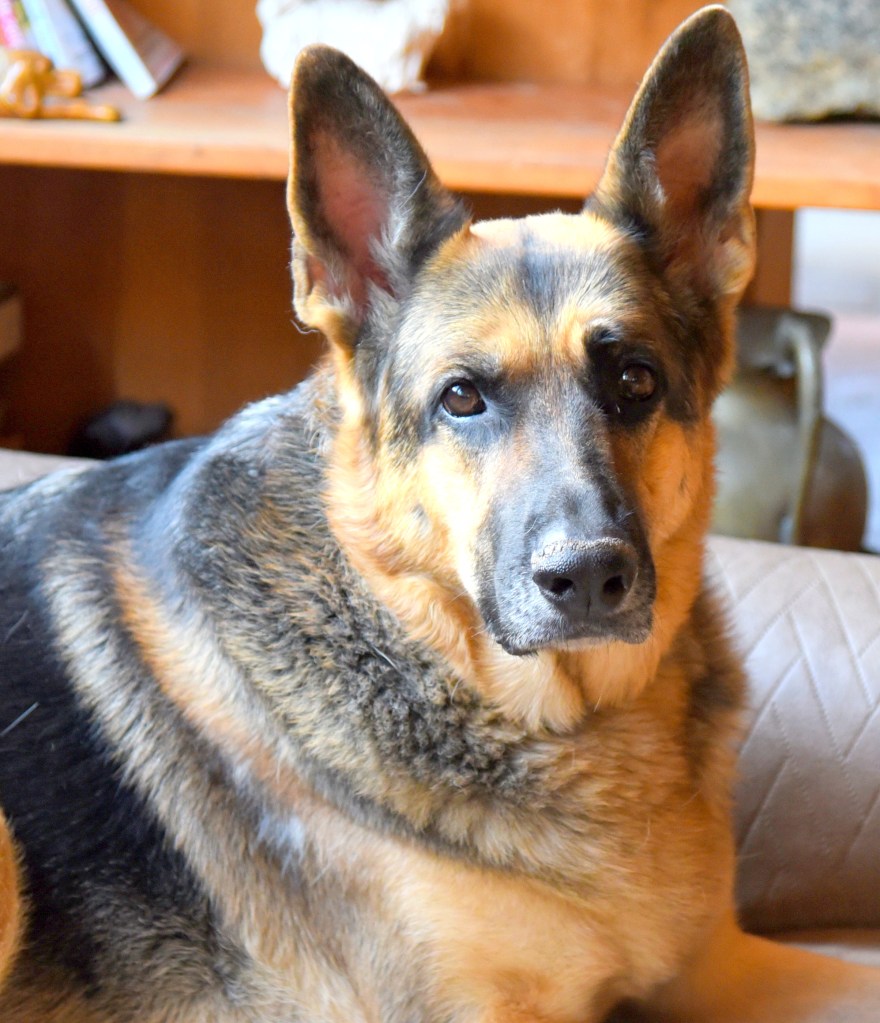
Cleo, our female German Shepherd, has a bit of a sensitive stomach and it is not unknown for her to need to be let outside in the middle of the night. Just a couple of nights ago her need for a ‘poo’ break came at 02:40!
But the point of this is that no matter how deeply I am sleeping, all it takes is a short, quiet whimper next to my side of bed and I am instantly awake. I need no time at all to know that Cleo has to be let outside from our bedroom door that opens out onto the deck. A few minutes later I hear her feet padding along the wooden boards of the deck and she is let back in to the bedroom.
Thus this demonstrates how well I understand her and in turn how well she acutely listens to me.
Just look at this photograph.
The connection, the intensity, of her attention towards me. And this was just from me pointing the camera at her and ‘click, clicking’ my tongue.
Moving on!
My introduction today was inspired by an article that I recently read on the Care2 site and that I want to share with you. Here it is.
ooOOoo
Can Humans Understand When Animals Are in Distress?
Have you ever jumped at the sound of birds fighting or a squirrel screaming? Heard an animal make a sound somewhere nearby that made your heart race?
More than one hundred years ago, Darwin suggested that there was a universal understanding of certain animal vocalizations — a way of expressing emotion that went all the way back to the Earth’s earliest animals. Now, researchers are re-examining that theory, and they’re making some interesting headway.
In a study published in the journal “Proceedings of the Royal Society B: Biological Sciences,” researchers decided to explore the idea that animal vocalizations, including distress calls, might be recognizable across different species — and even into different animal classes.
Earlier research delved into whether or not humans could detect which emotion, or signal, another mammal was using, but this study is the first to examine other vertebrates as well. Amphibians and reptiles joined the club, and, perhaps surprisingly, humans did pretty well determining what these animals were trying to communicate.
The researchers primarily looked into whether or not people listening to certain animal sounds would be able to detect the level of arousal — high or low — that an animal expressed vocally. High arousal indicates an animal in distress, expressing desperate or negative screams, who might be calling out because of a fight, a predator in the area or another perceived danger. Scientists believe that these sounds are part of an old signaling system.
Researchers asked 75 college-aged individuals to listen to sounds from nine different species. In order to account for language differences, these people included English, German and Mandarin speakers.
Scientists collected 180 recordings of animal vocalizations, reflecting high or low levels of excitement, such as “the sounds of frogs in competition for mates, monkeys reacting to danger or ravens confronted by a dominant bird,” and included humans in that list, instructing actors to react neutrally or with different, heightened emotions while speaking Tamil.
The 75 people were then asked to identify which vocalization out of paired sounds from the same species represented the higher level of arousal.
In this study, the results showed that people identified the correct “emotion,” roughly speaking, better than expected by chance. Here is how the accuracy broke down across species:
Humans: 95 percent correct
Giant panda: 94 percent correct
Hourglass tree frog: 90 percent correct
African bush elephant: 88 percent correct
American alligator: 87 percent correct
Black-capped chickadee: 85 percent correct
Pig: 68 percent correct
Common raven: 62 percent correct
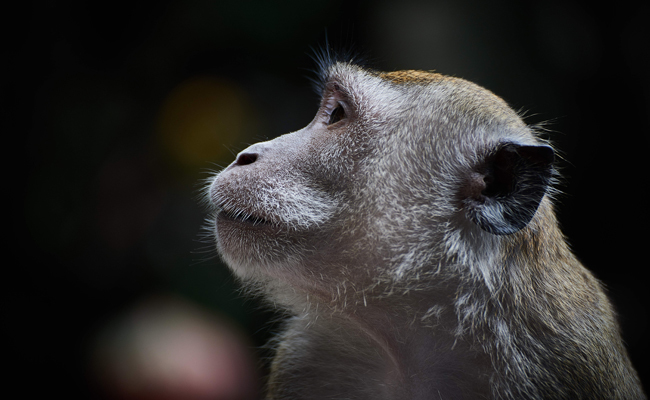
Barbary macaque (monkey): 60 percent correct
It seems strange that people were less able to identify the distress call of a monkey than a frog, but Harold Gouzoules, a bioacoustician and animal behavior expert at Emory University, posits that the monkey calls may have sounded less extreme in intensity than those of the other species, making it harder to tell the difference.
“Our study shows that humans are naturally able to recognize emotional arousal across all classes of vocalizing animals,” said Piera Filippi, who studies the evolution of cognition and communication at the Vrije University Brussels in Belgium.
This doesn’t mean that humans should feel confident in interpreting animal emotions or body language in general, though. Those behaviors can vary greatly, and humans are prone to misinterpretation and anthropomorphism. You wouldn’t, for example, want to assume a wolf baring its teeth is simply smiling at you.
Naturally, much remains to be studied in the effort to understand a wider range of animal emotions. Filippi hopes to repeat the experiment, but with the black-capped chickadees taking the place of the college-aged humans in interpreting the distress calls. It will be interesting to see if this understanding between humans and other animals goes both ways.
Could there be a beneficial reason for animals to understand each other’s distress calls? What do you think?
If meditation really works then we want to engage in it.
Those who watched the video that was the central component of yesterday’s post will not have missed the references by Ted Meissner that scientific, double-blind evidence shows that meditation offers benefits for us humans.
Both Jean and I are especially interested in learning more and, hopefully, finding an appropriate meditation group in our nearest town, Grants Pass.
We would also welcome feedback and advice from any of you good people who have trod this path before.
For example, when one conducts a quick internet search into the different forms of meditation there are dozens of websites that are returned in the search findings. Almost choosing one website at random, the Visual Meditation website declares there are 7 Types of Meditation. As in:
Transcendental Meditation (TM)
Heart Rhythm Meditation (HRM)
Kundalini
Guided Visualization
Qi Gong
Zazen
Mindfulness
To my uneducated eye, not one of those types seems to accord with the type supported by the American Meditation Society:
OUR MISSION
To provide instruction in meditation as taught by the founder of AMS, Gururaj Ananda Yogi.
To preserve and share the universal teachings of Gururaj with integrity and wisdom.
To provide a place where those who wish to unfold the inner self may do so in the company of other like-minded people.
Back to the plot! For this post is about the science.
The following video seemed worthy of sharing with you.
I watched the first 10 minutes before deciding it should be shared. By the time this post is published Jean and I will have watched it to the end. [20:45 yesterday evening. Jean and I have just finished watching the Bob Roth video below. It was both fascinating and very helpful!!]
The Aspen Institute
Published on Jun 26, 2016
Published studies have documented the many physical and mental health benefits of meditation, including decreased pain, better immune function, less anxiety and depression, a heightened sense of well-being, and greater happiness and emotional self-control. Google Scholar turns up almost 700,000 research documents on meditation, among them imaging studies that show increased activity in brain regions associated with attention, a higher volume of grey matter, and lessened amygdala response to emotional stimuli. What actually happens in the brain when we meditate? Why is meditation so nourishing to the mind, body and spirit?
Perri Peltz, Interviewer
Bob Roth
But a search of the YouTube website using the search term “meditation science” brought up many other links to shorter videos.
I selected the following (2:23 mins) because it is presented by Ferris Jabr who is an Associate Editor with Scientific American magazine.
Bottom line to my way of thinking is that this is something worth committing to once we know much more about engaging in meditation.
Your experiences most welcomed.
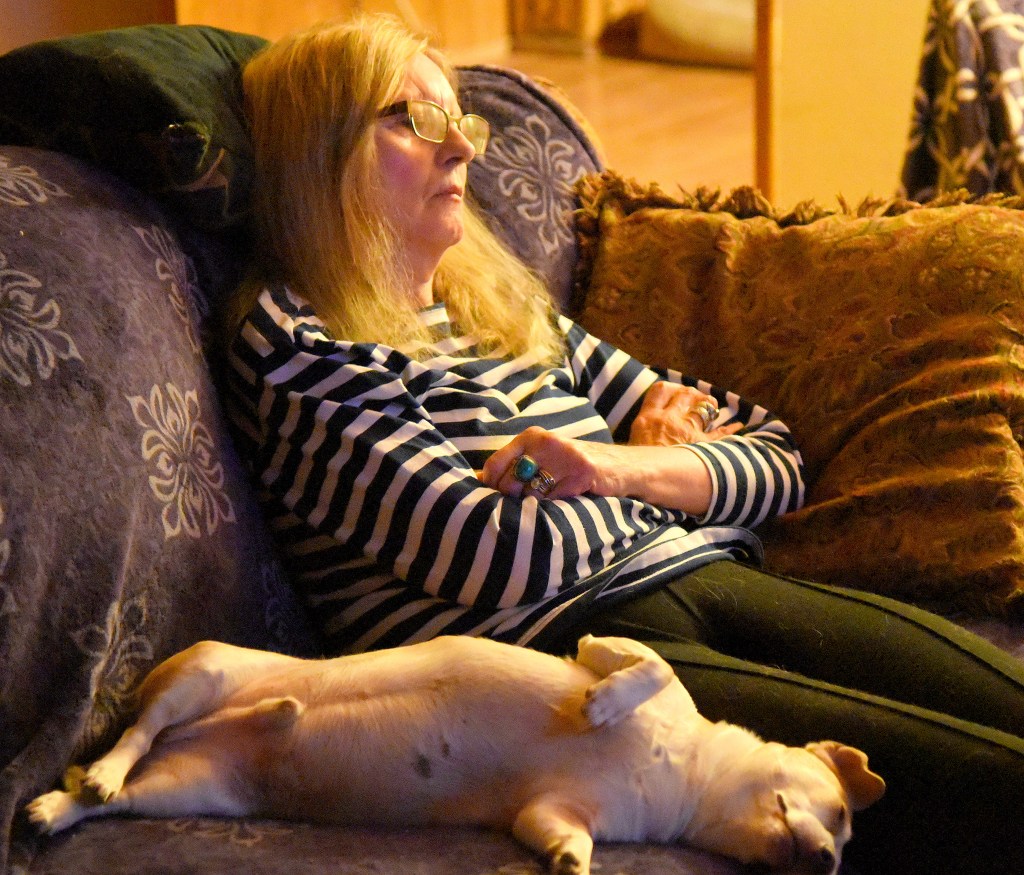
(And, of course, when it comes to chilling out for hours regularly each day then there’s another thing we can learn from our beloved dogs! No better demonstrated than by Brandy yesterday morning in the following photograph!)









 Learning from Dogs