Those of you who have come across Rupert Sheldrake and, in particular his book Dogs That Know When Their Owners Are Coming Home will really not be surprised at what is coming, in terms of the rest of this Post. Because most dog owners know, from countless observations, that dogs have an uncanny ability to see the world around them in a more deeper and intuitive manner than we can explain.
I wrote of Sheldrake’s book on the 1st June including touching on a report of Mason, a small terrier mix …
On April 27th, Mason was hiding in his garage in North Smithfield when the storm picked him up and blew him away. His owners couldn’t find him and had about given up when they came back Monday to sift through the debris, and found Mason waiting for them on the porch.
A few evenings ago, we watched a documentary from the website Top Documentary Films from the series Through The Wormhole. This particular documentary was entitled Is There a Sixth Sense? Here’s how that film was introduced,
Sight, hearing, smell, taste and touch are the tools most of us depend on to perceive the world. But some people say they also can perceive things that are outside the range of the conventional senses, through some other channel for which there is no anatomical or neurological explanation. Scientific researchers who study such abilities call them extrasensory perception (ESP), but lay people often refer to them as the sixth sense.
Either term really is a catch-all for a variety of different purported abilities that vary from person to person. Some people claim the power of telepathy – that is, the ability to perceive others’ thoughts, without having them communicated verbally or in writing. Others claim to have the power of clairvoyance, which is the ability to perceive events and objects that are hidden from view because of barriers or distance. Still others claim to be gifted with precognition, which enables them to look into the future and glimpse what hasn’t yet occurred.
The belief in ESP or the sixth sense dates back thousands of years. The Greek historian Herodotus wrote that Croesus, who ruled a kingdom in what is now Turkey in the sixth century B.C., consulted oracles – that is, groups of priests claimed to be able to predict the future — before he went to war. In ancient India, Hindu holy men were believed to possess the power to see and hear at a distance, and to communicate through telepathy.
In the late 1700s, the Viennese physician Franz Mesmer claimed that he could give people ESP powers by hypnotizing them. Just before his assassination in 1865, President Abraham Lincoln told friends that he’d dreamed of his own body lying in state in the White House. In the 20th century, Edgar Cayce and Jean Dixon attracted wide followings by claiming that they could foresee future events. During the Cold War, U.S. military and intelligence agencies, spurred by reports that the Soviets had psychics at their disposal, even tried to utilize clairvoyants who claimed remote-viewing powers for espionage purposes.
As well as watching it directly from the Top Documentary Films website, it is also available from YouTube. Here are the four links. It is a most fascinating review of the scientific findings in this area. If you have a dog with you when you watch the videos, don’t be surprised if he or she fall asleep! Nothing new for dogs in all this!
A focus on Tim Bennett’s movie, What a Way To Go: Life at the end of Empire
We first came across this film, made by independent film-maker Tim Bennett, on the Top Documentary Films website, see here. The title to this article comes from that introduction, from which is quoted,
Tim Bennett, middle-class white guy, started waking up to the global environmental nightmare in the mid-1980s. But life was so busy with raising kids and pursuing the American dream that he never got around to acting on his concerns. Until now…
Bennett journeys from complacency to consciousness in his feature-length documentary, What a Way To Go: Life at the End of Empire. He reviews his Midwestern roots, ruthlessly examines the stories he was raised with, and then details the grim realities humans now face: escalating climate change, resource shortages, degraded ecosystems, an exploding global population and teetering global economies.
Now to be honest, this is a film that is both captivating and, in parts, pretty grim. A couple of trailers and other background material were posted on Learning from Dogs back in February.
The film also has an excellent web site What a Way To Go Movie which contains much background material including the opportunity to watch the film for free, click here. Or a quick YouTube search will bring you to here.
My own view is that this is a ‘must see’ film. Not because I want all of you to wallow in doom and gloom, far from it, but because, as Paul Gilding writes in his book, The Great Disruption, the quicker that mankind recognises the massive levels of denial presently in place, the quicker that mankind will commit to the scale of change that is required. That’s where Paul Gilding’s approach differs from the movie, The End of Empire. Gilding is optimistic that man will bring about change simply because fairly soon, in just a few years, it will be obvious at all levels in our societies that there simply is no choice!
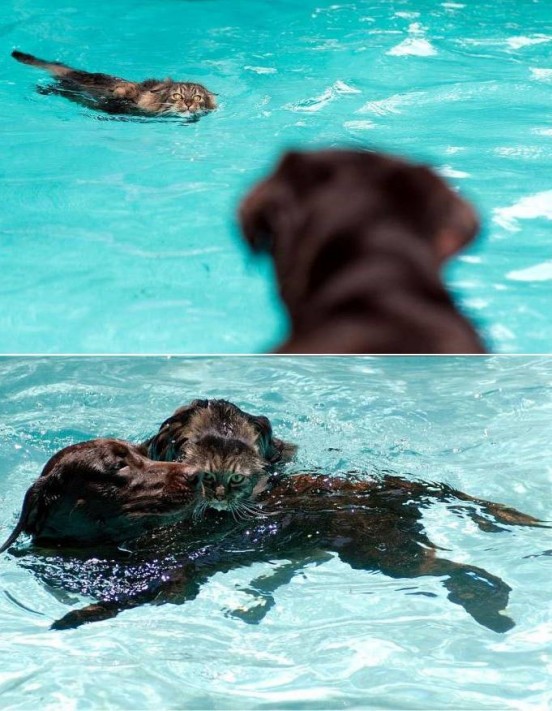
I subscribe to Naked Capitalism, as many of you will be aware, and in their 20th July release were the following photos,
In fact, a quick Google search reveals that the photographs have been widely circulated over recent years and in all probability the source and original story are long lost by now.
While being born an Englishman in 1944 has me slightly ahead of the so-called Baby Boomer period, which in American terms, ergo the U.S. Census Bureau, is defined as those born between January 1st, 1946 and December 31st, 1964, American and British people born in those ‘boomer’ years after WWII share many attitudes.
However, there is one stark difference between the UK and the USA regarding that period; the Vietnam War.
U.S. military advisors arrived beginning in 1950 and that U.S. involvement escalated in the early 1960s, with U.S. troop levels tripling in 1961 and tripling again in 1962.
Many good young Americans paid the ultimate price for that involvement (58,220 U.S. service members died in the conflict).
Why do I mention this? Because just as so many Americans have no idea of the scale of enemy bombing that England suffered during WWII, just as many Brits have no idea of the scale of the ‘draft’ (i.e. conscription) that was employed by the U.S. Government as the Vietnam involvement grew.
Now keep that in mind as a means of adding context to what follows.
Until Tuesday is a book of many extremes. It is a powerful book, a disturbing book, and a book about the beauty, dignity and, sadly, the madness of man.
I have been talking to a good friend of my life-long Californian pal, Dan Gomez. Let me just call him Tom. Tom saw service in Vietnam. This is how Tom describes his early experiences.
I was young and keen for some adventure. I had watched many war movies so I knew exactly what war was all about. So I enlisted as a soldier and was shipped out to Vietnam. After 60 days, I had experienced sufficient to know that things were not as they were portrayed by the media and the reality of Vietnam was very different to those movies. I had seen enough and was ready to come home.
Except that it didn’t work that way. I was there for a full tour of duty.
It became increasingly apparent by our behavior that we were not there to liberate the masses. We were there because some politicians had a theory and because of it didn’t want the locals to have a democratic election. So good people were put into harm’s way, died or were severely injured for no other reason than some politicians had a theory – that proved to be false in the end.
Through it all, the biggest pain that I suffered was to see my Government operating under false pretences, with no integrity and no dignity. It left me with a deep anger and mistrust of government that is still deep inside me.
Tom’s very personal and intimate sharing of his experiences of Vietnam resonates powerfully with what Captain Montalvan experienced in Iraq. Here’s an extract from the book,
I am an American soldier. I am an expert and I am a professional.
But at the same time, I was coming unmoored, my mind dwelling on the hand-to-hand struggle for my life, the Syrian ambush, the sandstorms, the riots, and Ali, Emad and Maher, the men left behind.
I am a guardian of freedom and the American way of life.
The wife of one of my best men from Al-Waleed had become pregnant during his midtour leave. The foetus was fatally deformed, but Tricare, the army’s health service, doesn’t provide abortions under any circumstances, and she was forced to carry the child to term. I will never accept defeat. Little Layla was born without a nose and several internal organs. Her parents had no financial resources on a soldier’s pay to provide her comfort. I emailed everyone I knew for help – hundreds of dollars were sent to the sergeant and his family. Nevertheless, it was heartbreaking, absolutely heartbreaking, to hold Layla in my hands. I will never quit. She lived eight weeks, and the difficulty of her life, and the inhumanity of forcing that existence not only from her but her parents too – I will never leave a fallen comrade – fuelled my downwards drive.
I was angry with the army. Not on the surface, but underneath, in the depth of my mind. Why did Layla and her parents have to endure that pain, especially after everything they had already endured? Why were they forcing our regiment back to Iraq just ten months after our return? Why weren’t they helping us cope with our pain? We were badly banged up. We were undermanned and underequipped. The army didn’t care. They were churning us through. They cared more about getting us back to Iraq and making the numbers than they did about our health and survival.
It was the summer of 2004. Victory was slipping away. Everyone could see that, but the media kept pounding the message: ‘The generals say there are enough men. The generals say there is enough equipment. The generals say everything is going well.’ It was a lie. The soldiers on the line knew it because we were the ones suffering. We were the ones who endured days of enemy mortar fire when we arrived in Iraq without weapons or ammunition, as my eighty troopers had in Balad in 2003; we were the ones going back in 2005 without adequate recovery time or armour for our Humvees. And that is the ultimate betrayal: when the commanding officers care more about the media and the bosses than about their soldiers on the ground. [Chapter 5, An American Soldier, pps 88-89]
So the first thing that most definitely comes out of the pages of Until Tuesday is the depth of disconnect between Montalvan as an active soldier in the front line and his nation. Just like Tom in Vietnam!
It’s not until Chapter 8, The Thought of Dogs, that the author moves on from his obsessiveness about his military experiences to his future world. Please realise that when I use the word ‘obsessiveness’, in no way is it used as a derogatory term. One of the symptoms of mental insecurity is the ease with which we can obsess on things in our lives.
Here’s how Chapter 8 starts,
I can’t tell you how much my life changed when I read the email on 1 July 2008. (A Tuesday, I just realised. I’ll have to add that to my list of fake reasons for Tuesday’s name.) The Wounded Warrior Project, the veteran service organisation I went with to the Bruce Springsteen concert, forwarded the message. They forwarded messages every day, actually, but I usually didn’t read them. This tagline intrigued me: ‘WWP and Puppies Behind Bars’. Puppies behind bars?
The message was almost as simple: ‘Dear Warriors, please note below. Puppies Behind Bars has 30 dogs a year to place, free of charge, with veterans from Iraq or Afghanistan who are suffering from PTSD, traumatic brain injuries or physical injuries. I’ve attached the Dog Tags brochure which explains the programme, as well as the Dog Tags application.’
As soon as I read the attached description, I knew the programme was for me. I suffered from debilitating social anxiety, and the dogs were trained to understand and soothe emotional distress. I suffered from vertigo and frequent falls, and a dog could keep me stable. Because of my back I could barely tie my own shoes, and a dog could retrieve and pick things up for me. I was the perfect candidate. I was down, but I was working towards a future. I was a leader, so I would never give up. And I was lonely. Terribly, terribly lonely.
From this point onwards the remaining 189 pages of Until Tuesday are about Luis Montalvan’s recovery built upon the foundation of his beautiful relationship with Tuesday, his service dog.
Of course there are ups and downs, as there are in all our lives, but the overall message is clear. A dog loves a human in the most beautiful and purest fashion of all. That unconditional, undemanding love for the humans in that dog’s life unlock even the most damaged souls. Tuesday unlocked the private hell that Captain Montalvan endured for so long.
In the privacy of a deep hug of your dog lays release. From that release comes peace, understanding and the desire to re-connect with the larger world. There is no greater gift than that.
So standing back in terms of reviewing this book (I reviewed the UK edition) here are my thoughts.
It’s a deeply moving book which many, but especially dog owners, will be touched by.
It’s a book that offers real hope and inspiration, most certainly for those who are going through their own private hell.
It’s a very American book and, at times, when reading it I did wonder if some UK readers might find themselves culturally disconnected.
Overall, this is a book that needs to be read.
Perhaps I should close by saying this. I didn’t have to pay for the book, it was sent to me on a complimentary basis once I had agreed to do the review. In the UK Until Tuesday is published by Headline Publishing. However, having read the book I realise that to have missed the opportunity of reading it would have left my life a little poorer.
Footnote
A note for all those that have been good enough to read to the end! This post published today is the 1,000th post since Learning from Dogs first saw the light of day on July 15th, 2009. That it has reached this point is a direct result of the number of readers and the support that so many of you give to this rather crazy enterprise! Thank you all!
There’s no question that when one stays very still and closely watches a dog’s behaviour you see an amazing level of awareness. Even when they appear to be deeply asleep anything sensed by their ‘being’ is registered immediately. A small tale, by way of example. Many years ago when Pharaoh and I lived in the Devon village of Harberton, we frequently shopped in the town of Totnes, just 3 miles away. Many times, I would be walking up the High Street with Pharaoh nicely to heel being passed by many people walking the opposite way on the same pavement.
Totnes High Street
Every once in a while, during the fraction of time that it took for someone to pass us by, Pharaoh would utter a low, throatal growl without even slowing his pace. I always presumed that something, way beyond my level of consciousness, had disturbed Pharaoh during that instant of time.
Real awareness, or if you prefer, consciousness is not some touchy/feely concept but a true understanding about just what the heck is going on.
So do watch the following video of Peter Russell discussing Rediscovering Ourselves; it’s very relevant.
Then have a read of a couple of items on Peter’s website. The first is about runaway climate change, and here’s an extract,
Runaway Climate Change
The most dangerous aspect of global warming.
Global Warming is bad enough. Over the last hundred years, average global temperatures have increased by 0.75°C, one third of that rise occurring in the last twenty years. The 2007 report by The Intergovernmental Panel of Climate Change (IPCC) forecast that, by 2090, temperatures will have risen between 2 and 6 degrees.
Even a two degree rise in temperature would be disastrous. Changes in climate will lead to more intense storms, longer periods of drought, crop failures in many developing countries, the destruction of nearly all the coral reefs, the melting of much of the polar ice, the flooding of many low-lying urban areas, the possible collapse of the Amazonian rain forest, and the extinction of 20-30% of the planet’s species. The IPCC projects that this could happen by 2050.
If the temperature were to rise by six degrees, the prognosis is extremely bleak. At this temperature, the entire planet will be ice-free. Sea levels will rise by 70 meters. Many species of tiny plankton will cease to exist, and the problem would echo up the food chain, bringing the extinction of many fish, sea mammals, and the largest whales. Much of the land will now be desert. Hurricanes of unimaginable ferocity will bring widespread ecological devastation. If, as is possible, the ozone layer were destroyed, the burning ultraviolet light could make life on land impossible. Evolution would have been set back a billion years. It would be a planetary catastrophe.
Read the rest of that essay here. Now on to the next extract, from here,
The Under-rated Approach to Carbon Reduction
As critical as it is to reduce future carbon emissions, it is equally critical, perhaps even more critical, to get much of the CO2 that as already been released—and which is responsible for the current warming—out of the atmosphere and back into the ground where it belongs.
This approach, known as carbon capture and sequestration, has until now been largely ignored, and for several reasons. The atmosphere is so huge, it would seem to be an impossible task. There are possible technologies, but they are not nearly so well-developed as alternative energy sources. Many are still only ideas on paper. Where technologies of carbon capture have been developed they are mostly for capturing CO2 from smokestacks. Valuable as this may be, it is still dealing with the problem of future carbon emissions. What we need are technologies that will remove from the atmosphere the carbon that we already emitted, and then sequestrate it (put it away) in a stable form.
It is to this end that Sir Richard Branson announced his $25 million prize (Virgin Earth Challenge) for technologies that could capture a billion tons of carbon a year from the atmosphere (about one tenth of what we now release each year). Nor is it just Richard Branson who believes we must make this an equally important approach to the problem. His team includes Al Gore, James Lovelock, Sir Crispin Tickell (former UK ambassador to the UN), and James Hansen, the head climate scientist at NASA).
Again, the full article, a ‘must-read, in my opinion, is here.
It is really about awareness! Dogs have so much to teach us!
William Rees discussing the disconnect between economics and ecology.
Yesterday, I wrote about Paul Gilding’s book The Great Disruption. In a sense today’s article continues the theme; the idea that the future is going to be very different to the past, indeed has to be if mankind is to have a viable future.
Dr. Bill Rees
Dr. William Rees is Professor at the University of British Columbia’s School of Community and Regional Planning. More details of Dr. Rees here.
The world economy is depleting the earth’s natural resources, and economists cling to models that make no reference whatsoever to the biophysical basis that underpins the economy. That’s why ecological economics is needed, says William Rees in this INET interview.
Standard economics portrays the economy as a circular flow: households pay money to firms in exchange for goods and services, and firms pay wages to households in exchange for labor. Textbooks describe this circular flow as self-perpetuating, capable of infinite expansion. William Rees argues that the textbooks get it wrong; he says the production of our goods and services depends on the extraction of material from ecosystems, causing resource depletion on the one hand, and excess pollution on the other.
William Rees, best known in ecological economics as the originator and co-developer of ‘ecological footprint analysis’, says the United States is using four or five times its fair share of the world’s total bio-capacity. In order to bring just the present world population up to the material standards enjoyed by North Americans, we would need the biophysical equivalent of about three additional planet earths.
There has been no time in history where income growth hasn’t been accompanied by increased material and energy consumption, Rees cautions. He says technologies exist that would enable us to enjoy our current lifestyles with perhaps as little as 20 percent of our current energy and material consumption, but we do not have the incentives in place to force that decoupling to take place.
Rees is as pessimistic on current culture and politics as he is optimistic on the technology. The global culture remains in denial, and people with vested interests in the status quo wield enormous power.
Want more from Dr. Rees? Over at the website West Coast Climate Equity is an eight-part series where Dr. Rees sets out the proposition that humanity’s survival depends on an 80% reduction in energy use.
Finally, on the Post Carbon Institute website there’s a link to an audio speech given by Dr. Rees summarised as follows.
Bill Rees speech to Vancouver World Federalist meeting on Radio Ecoshock Show
This is a speech by Dr. Bill Rees delivered April 15th at the World Federalist meeting in Vancouver. It goes a long way to explaining why we fail to act, even as the facts become clear and indisputable. He covers the three brain theory, the limits of evolution, memes, Peak Oil, and cultural myths, plus some thoughts on solutions – mostly contraction and convergence. Rees is one of the few academics more or less calling for a planned economic collapse.
The 53 minute speech is featured in this week’s Radio Ecoshock show, broadcast by 20 college and community radio stations in the U.S. and Canada, plus Green 960 AM in San Francisco.
Please watch this! It ‘s amazing, beautiful, and may take your breath away.
These are the words that John H., from here in Payson wrote, when he sent me the email that included the following video. Thanks John.
Here’s that video, Saving Valentina,
Now, while you are still ‘out there’ with the whales, go here and read,
Protecting blue whales along the California coast
The Great Whale Conservancy (GWC) Blue Whale Protection Program
Our Goal
To protect blue whales along the California coast from ship-strike caused injuries and death.
The Facts
The blue whale is the largest animal species to have ever inhabited the Earth. The global population prior to human predation has been estimated at 350,000 individuals. Today that number is ~10,000. Blue whales inhabit every ocean but one of the largest subpopulations is the Northeast Pacific group. These whales transit four favored areas: the California Bight (south of Point Conception,) the west coast of Baja California, the Sea of Cortez, and the Costa Rica Dome. By far the largest number of blue whales congregates in the California Bight between June and October where food availability is very high. This area is also one of the world’s busiest shipping lanes, with over 6000 cargo ships/year transiting the Santa Barbara Channel to and from the ports of Los Angeles and Long Beach.
The Problem
Blue whales are most vulnerable to strikes by cargo ships, tankers, cruise ships, and other large vessels at night while feeding on krill, transiting, or resting. During the day krill descend hundreds of feet into the water column, but every evening the whale’s photosensitive prey re-concentrate near the surface. The whales follow the krill back to the dark surface waters, and may not react quickly enough to avoid the large ships. A ship collision usually ends in injury or death for these giants of the seas. The documented number of blue whales killed by ships along the coast of California has been as high as 5 whales in a year. The actual number of mortalities is unknown and is suspected to be many times higher because blue whales are negatively buoyant – they sink when they die. The total number of ship-strike kills represents a survival threat to this subgroup and the worldwide population.
The Solution
Despite their size, California’s blue whales are for the most part unseen, which to a great degree is why they remain unprotected. The GWC will utilize media-generating tools such as web-based videos and public presentations and actions involving life-size blue whale floats to inform the public, focus attention on state and federal agencies and ship owners, and force a strengthening of the rules and operational policies for vessels transiting critical blue whale habitat. We will not turn the corner on this issue until the general public becomes aware of the problem and begins to “speak for the whales.” We must succeed – it would truly be a tragedy to lose this magnificent species forever.
It took decades to institute strong protections, including adjusted shipping lanes, ship speeds, and the establishment of protected areas for North Atlantic right whales, despite 60 years of “protected status” and the knowledge that 1/3 of the known mortalities every year resulted from ship strikes. The survival of the right whale population still hangs by a thread. We can’t afford to negotiate for decades on protecting blue whales in the Pacific.
Learning from Dogs first saw the light of day two years ago.
It all started on July 15th, 2009, during a very hot summer down in San Carlos, Mexico where I was first living with Jean.
Now, some 1,000 posts later life is very different. Jean and I are now married and living incredibly happily, with our twelve dogs and six cats, in Payson, Arizona, some 80 miles NE of Phoenix, up at 5,000 feet on the fringe of the world’s largest Ponderosa Pine forest.
Ponderosa pine forest
So apologies if today’s Post is partly reflective on the last two years. It also seems appropriate to revisit the reasons why so many articles on the Blog aren’t about dogs.
I feel the need to do that because the number of new readers now is just staggering.
The first full month was August 2009. Wordpress stats reveal that there were 1,172 unique viewers of the Blog. The last full month was, of course, June 2011. Wordpress figures were 31,664 unique viewers! That’s over a 1,000 viewers a day, and the trend is still upwards!
I am, of course, deeply moved by this response. Thank you, one and all!
In writing Learning from Dogs, I have tried to stay close to the theme that dogs are a metaphor for change for mankind. But that doesn’t mean that this is a doggy Blog.
As I wrote on the Welcome page, “Dogs live in the present – they just are! Dogs make the best of each moment uncluttered by the sorts of complex fears and feelings that we humans have. They don’t judge, they simply take the world around them at face value.”
Learning from Dogs is a Blog about the fundamental truths that we need to be reminded of, for our long-term survival. Dogs teach us the importance of integrity, of faith and loyalty and of unconditional love.
But just as importantly, dogs are a reminder that our evolution to Neolithic man may have been an evolutionary mistake. Stay with me for just a while.
Dogs were domesticated a mind-numbing number of years ago. There is good evidence that dogs were co-operating with man 30,000 years ago. However, one might speculate why the DNA of the dog separated from the grey wolf approximately 100,000 years ago. Was it because they evolved even that far back as domesticated companions to man? Science can’t tell us that yet.
But 30,000 years ago man was most definitely a hunter-gatherer. Archaeologists have pondered whether the domesticated dog allowed man to be so successful as a hunter-gatherer that, in time, man was able to evolve into farming which, of course, we describe more accurately as the Neolithic Revolution.
The “Neolithic” Revolution is the first agricultural revolution—the transition from hunting and gathering to agriculture and settlement. Archaeological data indicate that various forms of domestication of plants and animals arose independently in six separate locales worldwide ca. 10,000–7000 years BP (8,000–5000 BC), with the earliest known evidence found throughout the tropical and subtropical areas of southwestern and southern Asia, northern and central Africa and Central America.
However, the Neolithic Revolution involved far more than the adoption of a limited set of food-producing techniques. During the next millennia it would transform the small and mobile groups of hunter-gatherers that had hitherto dominated human history, into sedentary societies based in built-up villages and towns, which radically modified their natural environment by means of specialized food-crop cultivation (e.g., irrigation and food storage technologies) that allowed extensive surplus food production.
These developments provided the basis for concentrated high population densities settlements, specialized and complex labor diversification, trading economies, the development of non-portable art, architecture, and culture, centralized administrations and political structures, hierarchical ideologies and depersonalized systems of knowledge (e.g., property regimes and writing).
There’s one sentence that just jumps off the ‘page’. It’s this one. “During the next millennia it would transform the small and mobile groups of hunter-gatherers that had hitherto dominated human history”
Here’s a quick bit of history about Homo Sapiens, from here,
Neanderthal man: from 230,000 years ago
Around 250,000 years ago Homo erectus disappears from the fossil record, to be followed in the Middle Palaeolithic period by humans with brains which again have increased in size. They are the first to be placed within the same genus as ourselves, as Homo sapiens(‘knowing man’).
By far the best known of them is Neanderthal man — named from the first fossil remains to be discovered, in 1856, in the Neander valley near Dusseldorf, in Germany. The scientific name of this subspecies is Homo sapiens neanderthalensis. The Neanderthals are widely spread through Europe and the Middle East, and they thrive for an extremely long period (from about 230,000 to 35,000 years ago). Bones of animals of all sizes, up to bison and mammoth, and sophisticated stone tools are found with their remains.
Thus as a species we, as in H. sapiens, survived for approximately 200,000 years as hunter-gatherers!
Now after just 12,000 years, give or take, as ‘farmers’ we are facing the real risk of extinction. Go back to that WikiPedia extract above and re-read “concentrated high population densities settlements, specialized and complex labor diversification, trading economies, the development of non-portable art, architecture, and culture, centralized administrations and political structures, hierarchical ideologies and depersonalized systems of knowledge (e.g., property regimes and writing)“.
If you want to fully comprehend the mess we, as in man, have got ourselves into, then watch the stunning movie What a Way To Go: life at the end of the empire. That movie website is here or you can watch it from here. (I will be reviewing the film on Learning from Dogs in the next couple of weeks.)
The filmmakers, Tim Bennett and Sally Erickson, towards the end of the film muse if mankind must go back to some form of hunter-gatherer society, not literally, of course, but ‘back’ to a form of society that is fundamentally sustainable with the world upon which we live. As successful as Neanderthal man. Here’s where dogs may have critically important lessons for mankind.
Dogs form small packs, up to a maximum of 50 animals
They have a simple hierarchy within the pack; the alpha female (who has first choice of breeding male and makes the very big decisions about whether the pack should move to a better territory), the beta male (always a dominant male that teaches the young pups their social skills and breaks up fights within the pack – my Pharaoh, as seen on the home page, is a beta GSD), and the omega dog (the clown dog, male or female. whose role is to keep the pack happy through play).
They survive through an extraordinary relationship with humans but if they have to revert to the ‘wild’ they survive as hunter-gatherers.
Maybe humans, at heart, also share certain similar characteristics:
We are happiest in social groups of less than 50
We much prefer simple methods of group order, where rules and discipline are managed within the group. (Think about how easily we form all sorts of local clubs and groups.)
A ‘local’ approach to survival through deep and extensive group co-operation would be so much more effective than what most of us presently experience in our societies.
That’s why so many of the articles that appear on Learning from Dogs focus on the madness of what we experience so often in our present enormous, faceless, distant societies.
Back to Sally Erickson, one of the film makers mentioned earlier. Here’s what she wrote in her Blog
Our world is in need of healing at every level. We as a species aren’t going to survive, the way we are going. If we don’t heal ourselves, evolve a new consciousness, and fundamentally change the way we live, human beings won’t make it.
Where’s it all heading? Who knows? I am reminded of that wonderful quote attributed to Niels Bohr but, more likely, from an unknown author (although Mark Twain is often suggested), “Prediction is very difficult, especially about the future.”
Happy Birthday, Learning from Dogs. Thank you to all of you that have supported this venture over the last two years.
Just a few recent items to underline what a strange species we are!
This is being written on the 8th, not too many hours after the successful launch of the very last Shuttle space flight. Forget the [valid] question of cost, this launch sufficiently inspired nearly a million people to travel to the Kennedy Space Center to watch this historic flight. That adventuring drive is a wonderful aspect of mankind.
Now to another view of mankind.
Washington’s Blog of the 3rd July, 2011 has an in-depth review of how “the Japanese government, other governments and nuclear companies have covered up the extent of the Fukushima crisis.” In that excellent piece, there is a reference to material in the British Guardian newspaper (I’m taking the liberty of re-publishing quite a long extract from Washington’s Blog).
British Shenanigans
It’s not just the Japanese. As the Guardian notes:
British government officials approached nuclear companies to draw up a co-ordinated public relations strategy to play down the Fukushima nuclear accident just two days after the earthquake and tsunami in Japan and before the extent of the radiation leak was known.
Internal emails seen by the Guardian show how the business and energy departments worked closely behind the scenes with the multinational companies EDF Energy, Areva and Westinghouse…
Officials stressed the importance of preventing the incident from undermining public support for nuclear power.
***
The Conservative MP Zac Goldsmith, who sits on the Commons environmental audit committee, condemned the extent of co-ordination between the government and nuclear companies that the emails appear to reveal.
***
The official suggested that if companies sent in their comments, they could be incorporated into briefs to ministers and government statements. “We need to all be working from the same material to get the message through to the media and the public.
***
The office for nuclear development invited companies to attend a meeting at the NIA’s headquarters in London. The aim was “to discuss a joint communications and engagement strategy aimed at ensuring we maintain confidence among the British public on the safety of nuclear power stations and nuclear new-build policy in light of recent events at the Fukushima nuclear power plant”.
Other documents released by the government’s safety watchdog, the office for nuclear regulation, reveal that the text of an announcement on 5 April about the impact of Fukushima on the new nuclear programme was privately cleared with nuclear industry representatives at a meeting the previous week. According to one former regulator, who preferred not to be named, the degree of collusion was “truly shocking”.
The release of 80 emails showing that in the days after the Fukushima accident not one but two government departments were working with nuclear companies to spin one of the biggest industrial catastrophes of the last 50 years, even as people were dying and a vast area was being made uninhabitable, is shocking.
***
What the emails shows is a weak government, captured by a powerful industry colluding to at least misinform and very probably lie to the public and the media.
***
To argue that the radiation was being released deliberately and was “all part of the safety systems to control and manage a situation” is Orwellian.
And – as the Guardian notes in a third article – the collusion between the British government and nuclear companies is leading to political fallout:
“This deliberate and (sadly) very effective attempt to ‘calm’ the reporting of the true story of Fukushima is a terrible betrayal of liberal values. In my view it is not acceptable that a Liberal Democrat cabinet minister presides over a department deeply involved in a blatant conspiracy designed to manipulate the truth in order to protect corporate interests”. -Andy Myles, Liberal Democrat party’s former chief executive in Scotland
“These emails corroborate my own impression that there has been a strange silence in the UK following the Fukushima disaster … in the UK, new nuclear sites have been announced before the results of the Europe-wide review of nuclear safety has been completed. Today’s news strengthens the case for the government to halt new nuclear plans until an independent and transparent review has been conducted.” -Fiona Hall, leader of the Liberal Democrats in the European parliament
It’s us, all of us, that create the systems, the political and government systems that are at the heart of this approach to life.
But it’s also us, all of us, that ‘write’ such beautiful stories as this one from NPR Music.
Paul Simon has brought joy to so many for so long, but on this night he made Rayna Ford’s dream come true. During a show in Toronto on May 7, Rayna Ford, a fan from Newfoundland, called out for Simon to play “Duncan,” and said something to the effect that she learned to play guitar on the song. In a moment of astonishment and disbelief, Paul Simon invited her on stage, handed her a guitar and asked her to play it for the crowd. When she strapped on the guitar, the audience went crazy. In a few strums, the band played along, tears ran down Rayna Ford’s cheeks and Simon stood by her side in smiles.
It was an absolute moment of sobbing joy for Ford and for the crowd. It was a moment so beautiful, so human, it could almost be a story in a Paul Simon song. Excuse me while I wipe my own tears. Go Rayna and all the Raynas out there with dreams. As the song says:
Oh, oh, what a night
Oh, what a garden of delight
Even now that sweet memory lingers
I was playing my guitar
Lying underneath the stars
Just thanking the Lord
For my fingers,
For my fingers




 Learning from Dogs