This doesn’t really have a link to dogs. However, I sense that dog lovers across the world have less of a problem with depression.
ooOOoo
In a moving talk, journalist Johann Hari shares fresh insights on the causes of depression and anxiety from experts around the world — as well as some exciting emerging solutions. “If you’re depressed or anxious, you’re not weak and you’re not crazy — you’re a human being with unmet needs,” Hari says.
Why you should listen
Johann Hari’s first book, Lost Connections: Why You’re Depressed and How to Find Hope, is being translated into 27 languages and has been praised by a broad range of people — from Elton John (who said it “will change your life”) to the British Journal of General Practice, who called it “one of the most important texts in recent years.” His second book, Chasing the Scream: The First and Last Days of the War on Drugs, has been translated into 15 languages and is currently being adapted into a major Hollywood film by Oscar-winning director Lee Daniels, and into a non-fiction documentary series.
Hari graduated from Cambridge University with the highest degree grade, a Double First, in social and political sciences. He grew up in London, with a Swiss father who was a bus driver and a Scottish mother who worked in a shelter for victims of domestic violence. Today, he lives half the year in London, and he spends the other half of the year traveling to research his books.
Hari has written over the past eight years for some of the world’s leading newspapers and magazines, including the New York Times, the Los Angeles Times, the Guardian, the Spectator, Le Monde Diplomatique, the Melbourne Age and Politico. He has also appeared on leading TV shows, including HBO’s Realtime With Bill Maher. He was twice named “National Newspaper Journalist of the Year” by Amnesty International. He has also been named “Cultural Commentator of the Year” and “Environmental Commentator of the Year” at the Comment Awards, and “Gay Journalist of the Year” at the Stonewall Awards. Read about what Johann is working on now.
About Johann Hari
I’m indebted to Wikipedia from which I have drawn some of the following:
Early Career
Hari was born in Glasgow, Scotland, to a Scottish mother and Swiss father, before his family relocated to London when he was an infant. Hari was physically abused in his childhood while his father was away and his mother was ill.
In January 2012, after leaving The Independent, Hari announced that he was writing a book on the war on drugs, which was subsequently published as Chasing the Scream: The First and Last Days of the War on Drugs.
His 2015 T.E.D. talk entitled “Everything you think you know about addiction is wrong” has been viewed over 9.4 million times (as of July 12, 2018), and lays out the idea that most addictions are functional responses to experiences and a lack of healthy supportive relationships, rather than a simple biological need for a particular substance.
In January 2018, Hari’s book Lost Connections on depression and anxiety was published, with Hari citing his childhood issues, career crisis, and experiences with antidepressants and psychotherapy as fuelling his curiosity in the subject.Kirkus Reviews praised the book. Material from the book was criticised by neuroscientist and Guardian writer Dean Burnett, who pointed out that Hari appeared to be reporting as his own discoveries material — such as the biopsychosocial model – that has been common knowledge for decades, and for misrepresenting the medical, psychiatric and scientific establishments as “some shadowy monolithic organisation, in thrall to the drug industry”.
We are staying at the Noor Hotel in Torrey, Utah. We are here for just one night and will be heading South in a few hours time on Highway UT-12, a scenic route, from this stupendous area of geological wonderland down to Kanab, about 200 miles away.
Tomorrow we will have been on our travels for just one week. To say that we have done a lot would be an understatement! It started by us getting to Lakeview, SE Oregon, on Monday evening and finding that Brandy was very unhappy. So much so that on the Tuesday morning we drove the 4 hours back to Merlin and left him with Jana and the gang. He was so pleased to be back and all the other dogs likewise to see Brandy.
Then we drove back to Lakeview the same day!
Now we have seen such sights that are beyond words. This part of the world is variously 7,000 – 8,000 feet high. We are over 7,000 feet now. The region is known as the Waterpocket Uplift that includes Capitol Reef National Park and is dramatic, sensational and overwhelmingly beautiful. I have taken over 150 photographs already. Trust me, I can’t wait to post some of the better ones in about 10 days time.
So that’s all for now. Jeannie and I are well, very fortunate to have come this way, but missing our dogs!
So love to you all.
It may be quite a long time before there’s another update from us, and I’m sorry I can’t yet welcome new visitors or engage in responses to individual comments. And apologies for not being able to share a picture. That will come!
Written by Rob Moir, Ph.DI recently returned from a research sail through the Denmark Straits and I couldn’t be more in awe of mother nature.
We sailed aboard the gaft-rigged ketch Tecla out of Isafjordur, Iceland, bound for Greenland. We were thirteen women and men on a hundred-foot steel-hulled sailing vessel.
As we cleared the steep-sided fjord and sailed out into the bay past towering headlands, we saw a humpback whale breach. It rose straight out of the water, extended enormous knobby flippers, rotated and fell on its side with a large splash.
We sailed on, and another wheeled before us.
Further out, white-beaked dolphins streaked, exhaled, and splashed in the bow waves at the front of our boat.
Gray and white fulmars with outstretched wings carved the sky and nearly scratched the sea. And then there were icebergs.
The natural beauty of Mother Earth never ceases to take my breath away, no matter how many times I see it.
We traversed the threshold between the Atlantic and the Arctic Oceans. The south-bound East Greenland current squeezed between the craggy coasts of Iceland and Greenland to become a “superhighway” for turbulent water. Here, the denser Arctic water mass crashes into the bulwark front of warmer Atlantic Water. Arctic water plunges downwards into the Denmark Strait Cataract. This is the world’s largest waterfall. Yet, skimming the surface of immense water all we see are waves that crest white tumble and stream like the tossed manes of charging horses.
Unfortunately, we also saw the threats to nature.
First, a quick science lesson: When seawater freezes at the ocean surface, the ice is actually made of freshwater; the salt gets rejected back into the surrounding water. That surrounding water then becomes denser and sinks. This happens on a massive scale, which results in ocean currents around the world. Think of it like an organic engine that circulates the oceans’ water.
Now, because global warming exposes more of the surface every summer than it used to (about twice as much, in fact) that means more surface ice each winter. That means that our ocean circulation engine is twice as big, which radically alters the seascape, threatens not only the ocean ecosystem – from tiny algae to those humpback whales – but life worldwide.
We caused global warming. Now we must come together to decrease carbon emissions and increase carbon capture. For the Denmark Strait, for the humpback whales, and for our own places of habitation.
ooOOoo
I will do no better than to repeat that last paragraph.
We caused global warming. Now we must come together to decrease carbon emissions and increase carbon capture. For the Denmark Strait, for the humpback whales, and for our own places of habitation.
PUBLISHED ON 09/13/2019
To Loijuk the elephant, nothing is more important than family — especially now that she is starting one of her own.
In 2006, the orphaned elephant was found all alone at only 5 months old, and was rescued by the Sheldrick Wildlife Trust (SWT) in Kenya. She was hand-raised by SWT until she was old enough to return to the wild.
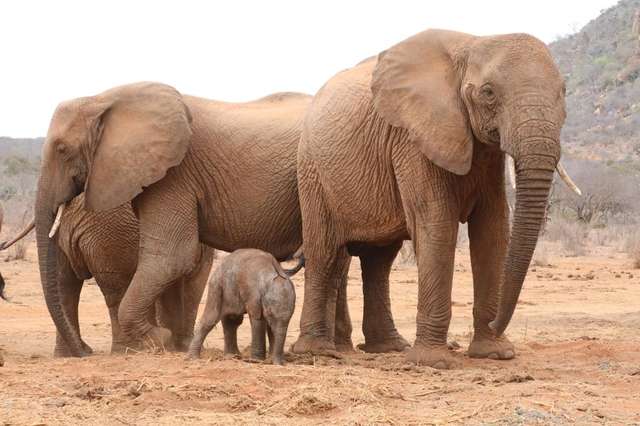
Years have passed, but Loijuk still has a close bond with her human family. She returns to the grounds of the sanctuary every month to visit. But in September, Loijuk surprised her former caretakers with a newborn elephant calf in tow.
Sheldrick Wildlife Trust
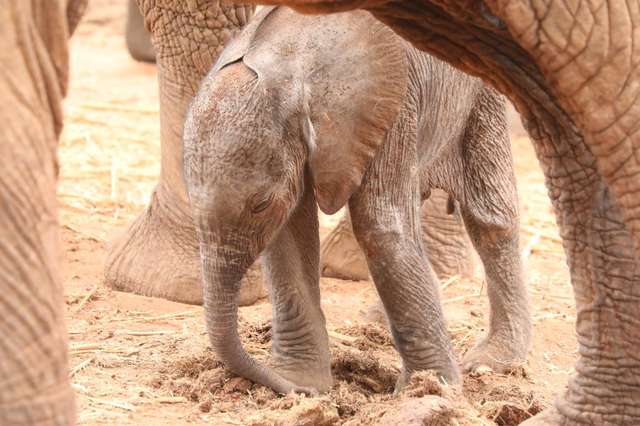
It was clear the proud elephant mom couldn’t wait to show off her baby. The calf, who has since been named Lili, was only hours old — likely born only the night before.
Loijuk has never forgotten the kindness of those who helped her. She even invited Benjamin Kyalo, the head keeper, to have a special moment with her newborn calf.
Sheldrick Wildlife Trust
“Benjamin was able to get close to Lili (who nestled into his legs), stroke her delicate newborn skin and breathe into her trunk, thereby letting her know who he was via his scent,” Rob Brandford, executive director of SWT, told The Dodo. “Elephants have an incredible memory and sense of smell and our keepers will often breathe into the orphans’ trunks so they can recognize who they are.”
You can watch a video of Loijuk and Lili’s touching visit here:
Lili was quite wobbly on her feet during the meeting, but over the course of the week, Kyalo watched as she got stronger and stronger.
“Loijuk has stayed close to the area around the unit, allowing our keepers to watch over her and check how she’s getting on,” Brandford said. “Considering September is the peak of the dry season in Tsavo, not the most favorable of conditions for a new baby, we are delighted that Loijuk has returned close to home so that we can help supplement her diet when she visits.”
Sheldrick Wildlife Trust
In the wild, calves are raised with the help of female relatives within the herd. Loijuk has played nanny to other babies before giving birth to Lili, and now her calf has nannies of her very own — two other wild orphans named Naserian and Ithumbah.
Lili will remain with her mom’s herd in the wild for life, and if she is ever in need, she now knows there is a safe place she can always return to.
Sheldrick Wildlife Trust
Lili is the 31st calf born to female orphaned elephants raised by SWT now living wild, and she is a beacon of hope for threatened elephant populations everywhere.
“Moments like these are momentous,” Brandford said. “In saving one orphaned elephant’s life, we are not only seeing that orphan thrive but start a family.”
“Lili has a brighter future ahead of her than many elephants,” Brandford added, “and we look forward to watching this little girl grow up in the wild.”
I was chatting to my very old friend, as in the number of years, Richard Maugham yesterday and shortly after the call he sent me an email with a link to a recent item on the BBC News website.
Most of you regulars know that Jeannie was diagnosed with Parkinson’s disease (PD) in December, 2015 and coincidentally at the same time Richard was also diagnosed with PD.
I’m sure there are a few who read this blog that either have PD of know or someone who has it.
ooOOoo
Prostate drug may slow Parkinson’s disease
By Michelle Roberts,
Health editor, BBC News online
17th September, 2019
A drug used to treat enlarged prostates may be a powerful medicine against Parkinson’s disease, according to an international team of scientists.
Terazosin helps ease benign prostatic hyperplasia (BPH) by relaxing the muscles of the bladder and prostate.
But researchers believe it has another beneficial action, on brain cells damaged by Parkinson’s.
They say the drug might slow Parkinson’s progression – something that is not possible currently.
Cell death
They studied thousands of patients with both BPH and Parkinson’s.
Their findings, published in the Journal of Clinical Investigation, suggest the alpha-blocker drug protects brain cells from destruction.
Parkinson’s is a progressive condition affecting the brain, for which there is currently no cure.
Existing Parkinson’s treatments can help with some of the symptoms but can’t slow or reverse the loss of neurons that occurs with the disease.
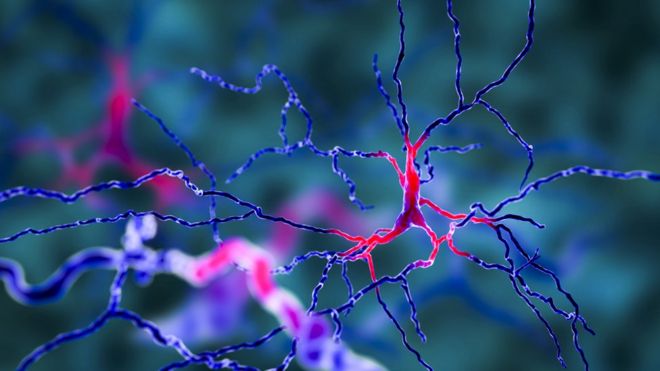
Terazosin may help by activating an enzyme called PGK1 to prevent this brain cell death, the researchers, from the University of Iowa, in the US and the Beijing Institute for Brain Disorders, China, say.
Clinical trials
When they tested the drug in rodents it appeared to slow or stop the loss of nerve cells.
To begin assessing if the drug might have the same effect in people, they searched the medical records of millions of US patients to identify men with BPH and Parkinson’s.
They studied 2,880 Parkinson’s patients taking terazosin or similar drugs that target PGK1 and a comparison group of 15,409 Parkinson’s patients taking a different treatment for BPH that had no action on PGK1.
Patients on the drugs targeting PGK1 appeared to fare better in terms of Parkinson’s disease symptoms and progression, which the researchers say warrants more study in clinical trials, which they plan to begin this year.
‘Exciting area’
Lead researcher Dr Michael Welsh says while it is premature to talk about a cure, the findings have the potential to change the lives of people with Parkinson’s.
“Today, we have zero treatments that change the progressive course of this neurodegenerative disease,” she says.
“That’s a terrible state, because as our population ages Parkinson’s disease is going to become increasingly common.
“So, this is really an exciting area of research.”
‘Disease modifying’
Given that terazosin has a proven track record for treating BPH, he says, getting it approved and “repurposed” as a Parkinson’s drug should be achievable if the clinical trials go well.
The trials, which will take a few years, will compare the drug with a placebo to make sure it is safe and effective in Parkinson’s.
Co-researcher Dr Nandakumar Narayanan, who treats patients with Parkinson’s disease said: “We need these randomised controlled trials to prove that these drugs really are disease modifying.
“If they are, that would be a great thing.”
Prof David Dexter from Parkinson’s UK said: “These exciting results show that terazosin may have hidden potential for slowing the progression of Parkinson’s, something that is desperately needed to help people live well for longer.
“While it is early days, both animal models and studies looking at people who already take the drug show promising signs that need to be investigated further.”
Interestingly, if one goes to the website of the JCI then one reads the following on the ‘About’ page:
The Journal of Clinical Investigation is a premier venue for discoveries in basic and clinical biomedical science that will advance the practice of medicine.
I’m going to try and publish some posts on a whole range of topics. The one common denominator is that they are of interest to yours truly. Hopefully I am not alone in this!
It’s going to be a bit ad hoc including responding to comments from a week today until October 8th/9th.
But today’s post is a short video that nonetheless makes for fascinating viewing.
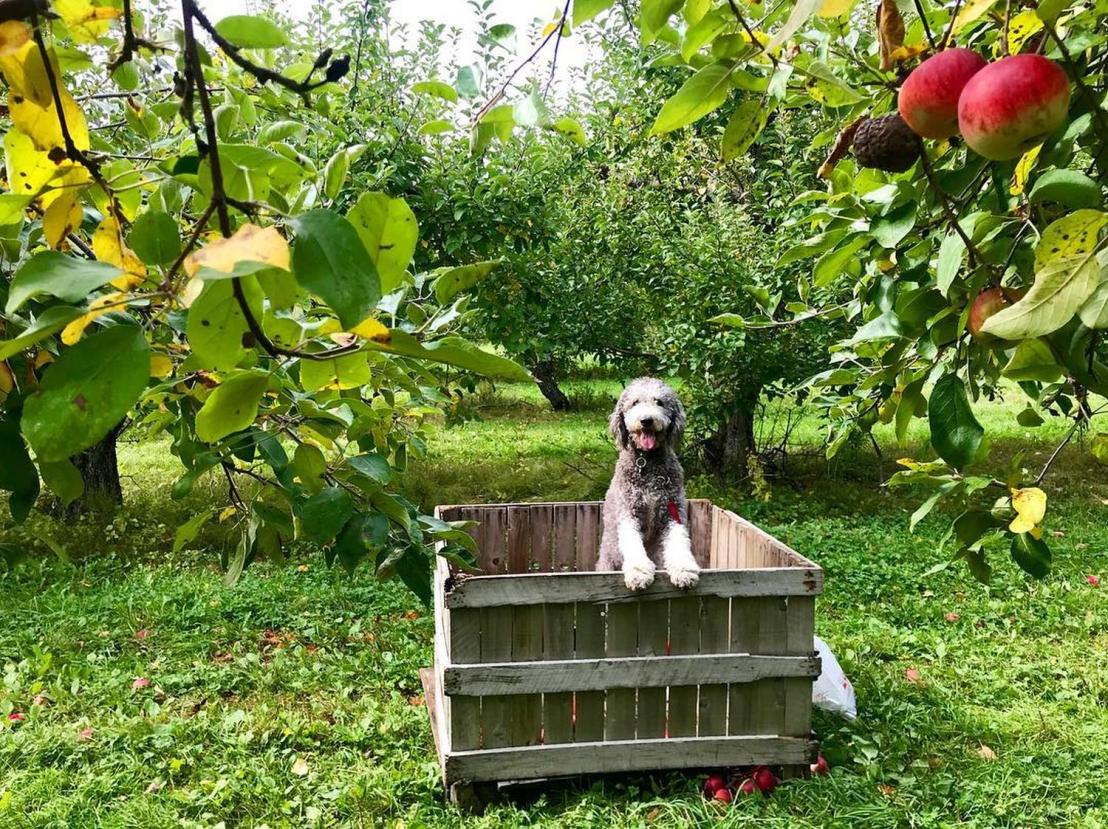
Your pooch may be the apple of your eye, but did you know you can take her to pick apples with you, too? Many farms and orchards around the country welcome four-legged guests. Not only can you use apples to make delicious apple pies, apple cider and apple butter, but your pup can enjoy the fruit as well! According to the American Kennel Club, apples are safe for dogs to eat, in moderation of course. However, dogs should not consume the seeds because they contain a plant compound that converts into cyanide when chewed. The core should also be kept away from pups, as it could be a choking hazard.
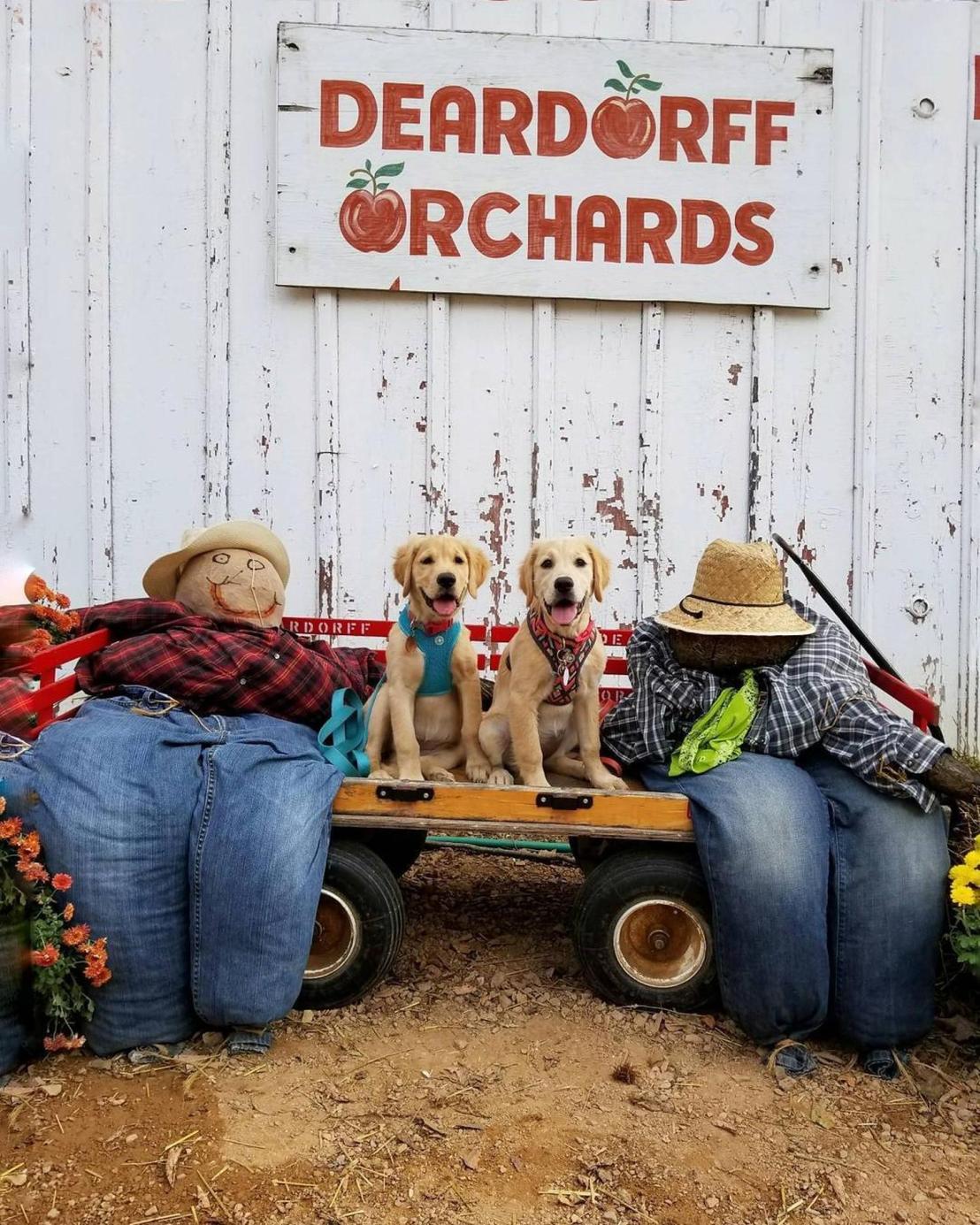
“Give us apples … and then maybe we’ll tell you who’s who.” Photo by @ellogoldengirls
Deardorff Orchards loves dogs, which is why they have two separate pet water stations on the premises as well as waste bags available for guests with pups. Dogs are welcome on their 125 acres of grounds if they’re leashed and friendly. You and your pup will be able to pick from their 10 varieties of apples, and their 3,000 trees ensure you can have your pick of the litter. Deardorff Orchards also has pumpkins, red wagons if you want to tow along your kids or your exceptionally lazy dog, and farm animals for Fido to meet. Guests are welcome to enjoy the barn, listen to live music, sample their wines, and take a tractor ride on the weekends. If your furry travel companion still isn’t ready to go home after a trip to the farm, visit dog-friendly Minneapolis, which is only about an hour away.
Pick-Your-Own apples is available at Deardorff Orchards Fridays to Sundays from September 5 through late October. Depending on the weather, apple picking is open from noon until 5 p.m. Customers must purchase at minimum a half-peck bag (roughly six pounds) before heading to the orchard. The cost varies depending on the apple variety and availability.
“Beep beep! Tired pup coming through!” Photo by Julie Leaver
Just a short drive from Asheville (and about two hours from Charlotte), Grandad’s Apples has been family-owned and operated since 1994. Pups and people alike can enjoy the 100 acres of the farm. Leashed dogs can join you while picking apples from the orchard but are not allowed in the pumpkin and playground areas. Fido is welcome inside the Barn and Country Store (where you can shop for apple turnovers, hot cider donuts, caramel apples and other goodies), near the barnyard corral where he can hang out with the resident farmyard animals, and in their 5-acre corn maze. Weekends at Grandad’s are full of fun events like cow trains, jump pillows, and even an apple cannon!
Grandad’s Apples is open for apple picking from late July through the third week of October from 8 a.m. to 6 p.m. daily. Pick-Your-Own is $11 for a peck and $18 for a half bushel. The corn maze is $4 per person and free for dogs. They recommend calling ahead to learn what’s available for picking before visiting.
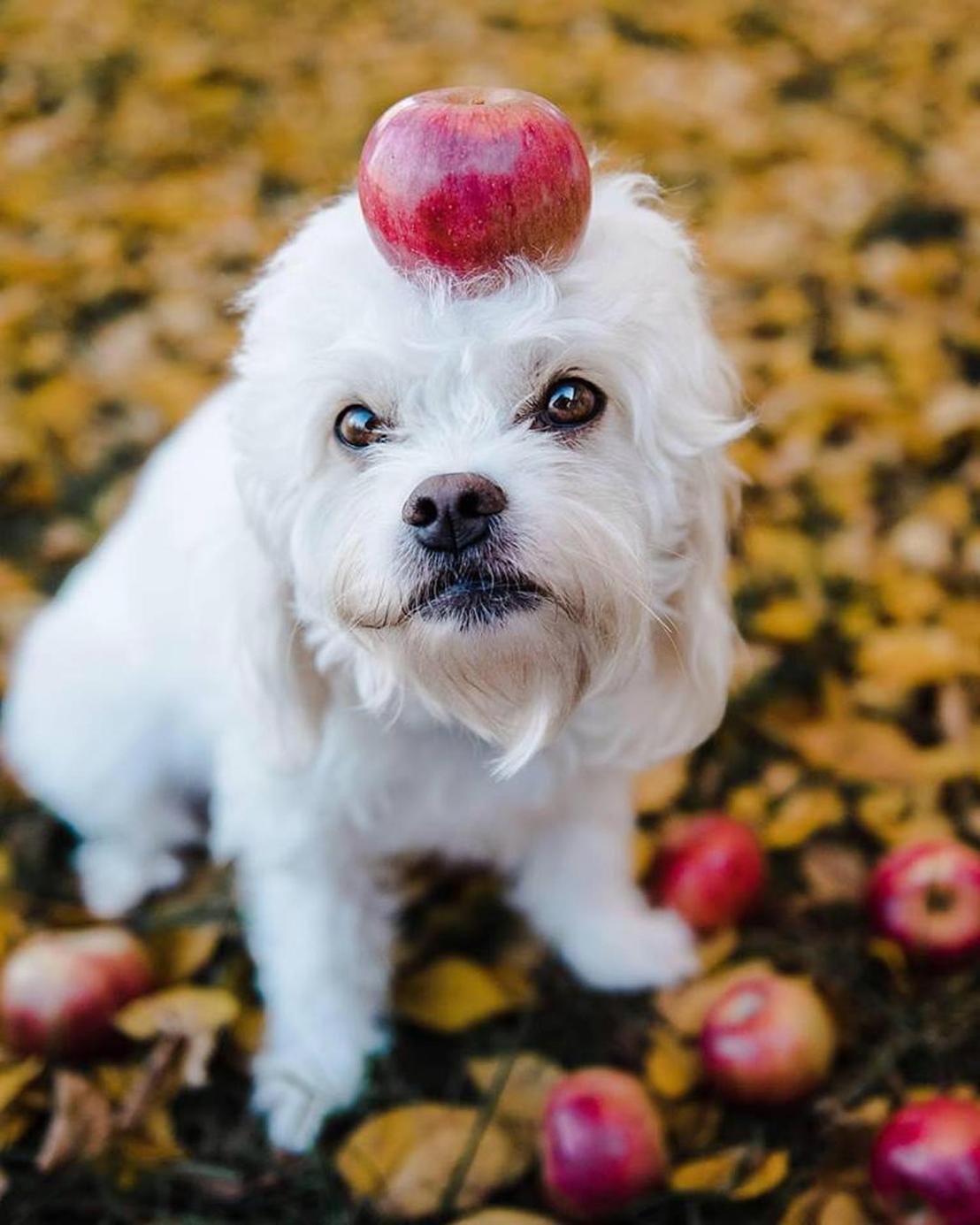
My fur coat really makes the apples pop.”
Photo by Facebook.com/WrightsFarm
Your pooch will love exploring Wrights Farm’s vast 453 acres. In addition to picking from the 100,000 bushels of apples they grow every year, you and Fido can hike, bike, picnic or tailgate here. They even welcome you to bring gas grills, kites and frisbees. The farm, which has been family-run for five generations, also offers Pick-Your-Own pumpkins and sells a variety of fruits, vegetables, baked goods, jams, jellies, pickles and apple sauces.
You can pick apples at Wrights Farm from September 8 to November 3, 2019. Pick-Your-Own hours are from 8 a.m. to 4:30 p.m every day. Admission is $12 and includes a one-peck bag. Children 5 to 9 years old pay $6 and receive a ½-peck bag. Children under 5 and dogs are free. Additional bags are available for purchase.
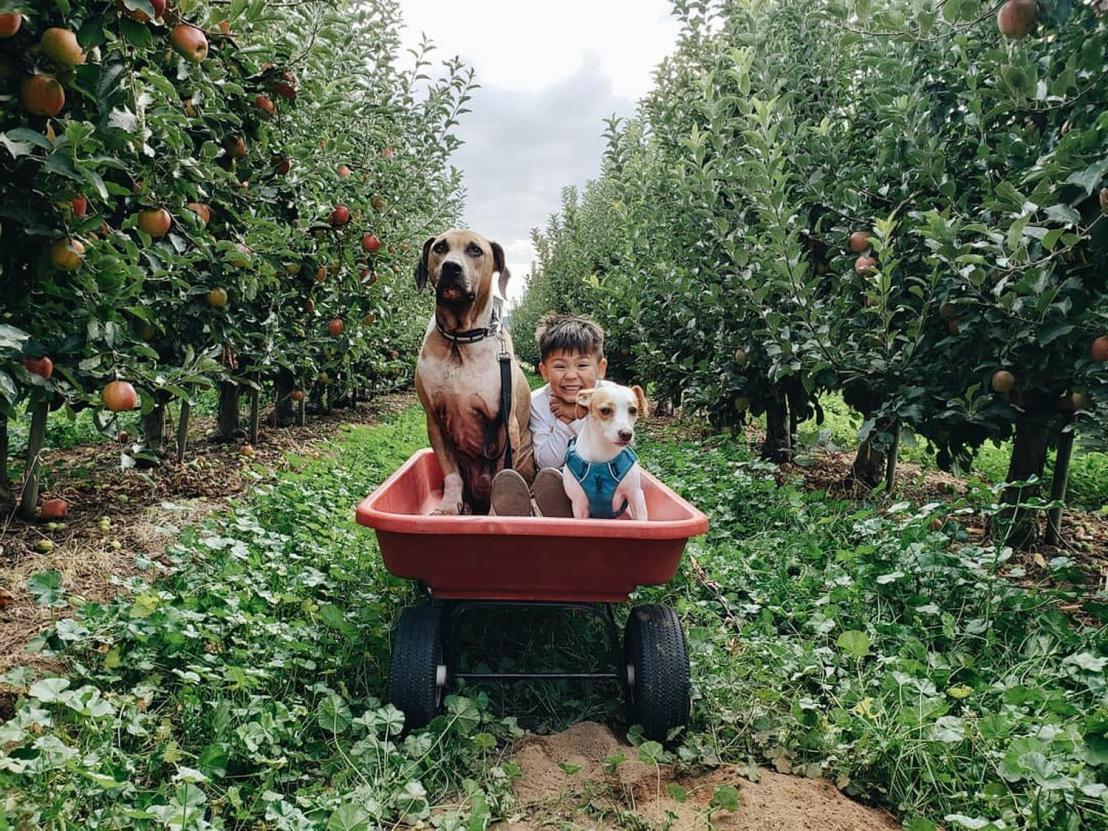
“It’s been apple-asure to share the wagon with you.” Photo by @itsokayklar
Dogs are part of the family, which is why leashed pups are invited to create fall memories along with everyone else at Kiyokawa Family Orchards. The family-owned and operated business has been growing produce (more than 120 varieties of apples and pears today!) since 1911. Dogs can lend a helping paw in the orchards. However, they may not enter the fruit stand. There is a water bowl for your pup to cool off and waste bags are available for easy cleanup. After you get your selection from the largest U-Pick orchard in the valley, don’t forget to snap some photos of Fido with the gorgeous backdrop of Mt. Hood.
Kiyokawa Family Orchards is open Saturdays and Sundays from July 13 to August 30 from 9 a.m. to 6 p.m. From August 30 to November 4, operating hours are Monday to Friday from 10 a.m. to 6 p.m. and weekends from 9 a.m. to 6 p.m. There is no admission fee and fruit prices vary.
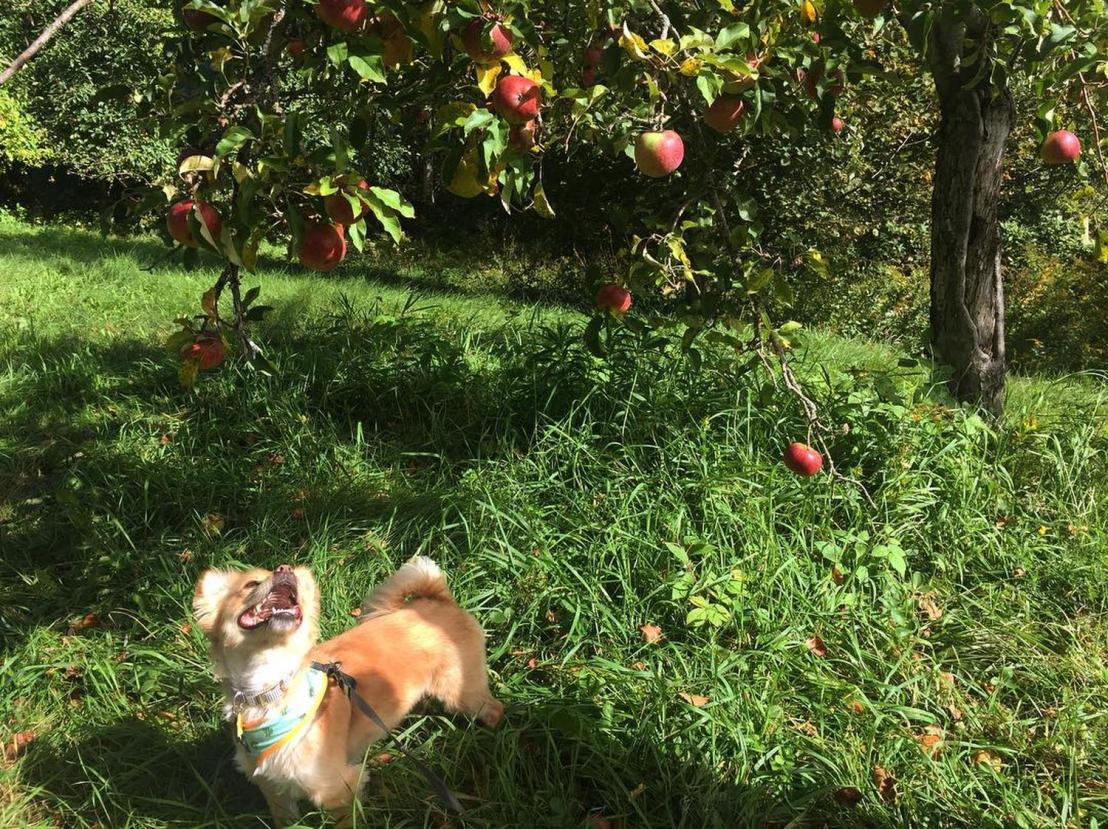
“Please fall! C’mon, just one! Please!” Photo by @mchemelski
Terison Apple Orchard gets it. One of their owners has her own pet-sitting service, so they understand how much people love their pooches. Leashed dogs can help you pick apples in their low-spray orchard. It’s the first Pick-Your-Own orchard in Maine, and you and your pup can bond together while savoring the sweet fruits of your labor.
While exact dates and hours vary due to the weather, Terison Apple Orchard is generally open from early September through October, from 9 a.m. to 5 p.m. daily. The orchard is self-service and uses the honor system. Bags cost $10 and $20, payable by cash only.
Apple picking with your pup can be a real balancing act.
Photo by Facebook.com/ciderhillfamilyorchardLeashed furry family members can help you pick from 18 different types of apples at Cider Hill Family Orchard’s 1,500 apple trees. Dogs are welcome on the 38 acres of farmland, but they may not enter buildings including the gift shop. Cider Hill also has a pumpkin patch, a fishing pond, a fire pit, hayrides and kid’s train rides. While you’re here, don’t forget to sample delicious treats made on site like cinnamon-cider doughnuts, apple crisp, kettle corn and apple butter.
Apple picking at Cider Hill begins in August. However, the end of the season varies due to the weather. In August, operating hours are 9 a.m. to 5 p.m. Tuesday through Saturday. In September and October, operating hours are 9 a.m. to 5 p.m Tuesday through Saturday and noon to 5 p.m. on Sunday. There is no admission fee. A peck of apples is $11, a half bushel is $21, and a bushel is $40. Aggressive dogs are not permitted.
Don’t sit under the apple tree with anyone else but me. Photo by @thesecretworldofjensendean
Applecrest Farm is not only the oldest continuously operated apple orchard in America, and the oldest and largest in New Hampshire, it’s also dog friendly! Pups are welcome if they’re leashed, under control and picked up after. The farm boasts 220 acres and more than 40 types of apples. While dogs are not permitted in buildings or in the blueberry fields, you and Fido may enjoy the free tractor rides offered to and from the orchard on weekends in September and October. If your pup is itching for a road trip, the farm is conveniently located an hour from Boston and about 15 miles from historic Portsmouth and Newburyport.
Customers can pick apples from mid-August to late October from 8 a.m. to 5:30 p.m. daily. Admission is free. Pick-Your-Own apples are sold by the peck for $20 and by the half bushel for $30, payable by cash only.
“Now, how do I get out?”
Photo by @rogerdawgHilltop Orchards uses eco-farming methods to grow no-residue apples, which you and your leashed pup can pick together. The family-run property sits on 200 acres and grows 26 varieties of apples, most of which are available for Pick-Your-Own. On weekends during peak season, they offer free hayrides for two-legged and four-legged guests alike from 11 a.m. to 5 p.m. Hilltop Orchards also allows visitors with pets to use their land for hiking, skiing and snowshoeing. In addition, furry visitors can join you for wine and/or hard cider tastings at their on-site Furnace Brook Winery.
Apple season at Hilltop Orchards runs from Labor Day through Columbus Day, although they often have limited availability before and after these dates. The orchards are open daily from 9 a.m. to 5 p.m. A half peck costs $7, a peck costs $10, and a half bushel costs $20.
“Just one small one while they’re not looking …” Photo by @remisayshi
Minnetonka Orchards is very dog friendly. Dogs are welcome in all 12 acres of apple orchards and even on hayrides. They only ask that dogs are leashed and picked up after. The orchards, which have been around since 1976, feature 12 types of apples. The grounds also include Cinderella pumpkin patches and fields of gourds and squash. Other activities include a petting zoo, a tree deck, a corn maze, nature trails and several kids’ play areas. Tasty snacks like apple donuts and brats are also available for purchase. Their sister company, Painter Creek Winery & Cidery, allows dogs as well.
Minnetonka Orchards is open daily from late August through October. Hours of operation are from 10 a.m. to 7 p.m. The admission fee varies based on the crop but includes access to all the attractions on the premises.
“One apple picked and I’m already dog-tired.” Photo by @kyandthetriguy
Alldredge Orchards welcomes dogs to pick apples with their owners as long as they’re leashed and cleaned up after (and you let them pet your pooch!). They grow several varieties which vary year to year depending on the weather. The property also has a pumpkin patch, barn store, cafe, playground and farm animals, so there’s plenty of fun for the whole family.
Alldredge Orchards is open from Labor Day Weekend through October. Guests can pick apples during the weekends from 10 a.m. to 5 p.m. Admission is $3 for ages 2 and up. Prices for apples are based on the crop and availability, and they recommend calling ahead before visiting.
“You see the fruits of my labor?” Photo by sherryontherock/BringFido
Doe Orchards has offered Pick-Your-Own apples since the 1960s and has no plans of stopping now. Leashed four-legged guests are allowed during the fall as long as their two-legged companions clean up after them. Doe Orchards also has pumpkins, gourds, honey and cider. There are plenty of areas for picnicking after a long day of fruit-filled fun.
Apple picking usually begins Labor Day weekend (but may be a little later this season due to weather) and ends in mid-October. Hours of operation are 10 a.m. to 5 p.m. daily. Prices in 2018 were $17 for a peck and $30 for a half bushel.
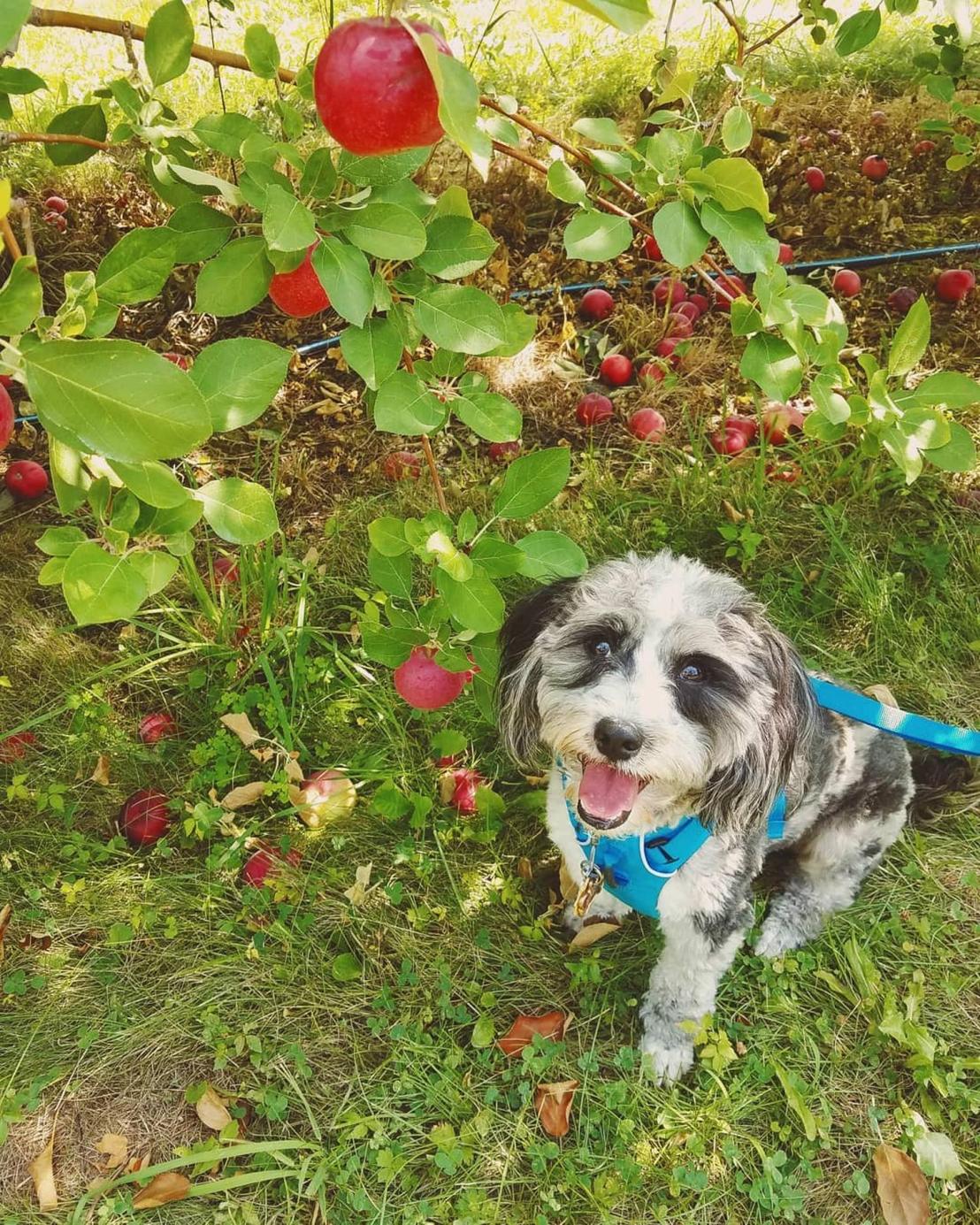
I pick, U pick, we all pick apples! Photo by @ikellih
West Valley U-Pick offers a great pesticide-free option for you and your pup, not to mention it was named one of Washington’s top 10 apple picking spots. Leashed dogs are welcome anywhere on the property to help you sniff out your perfect pick of apples or other seasonal fruits and veggies. If your pooch really wants to feel accomplished, you can even use one of the orchard’s old-fashioned hand-cranked cider presses to make your own cider.
Fido can pick apples Monday through Saturday 8 a.m. to 7 p.m. and Sunday 8 a.m. to 5 p.m. from late August until the end of September. There is no admission fee for two- or four-legged pickers. Apples are $0.85 per pound and cider presses may be used for free with the purchase of U-Pick apples–simply bring your own container or purchase one of theirs.
“Didn’t I do good? Aren’t I a good boy? Shouldn’t I get … treats?” Photo by Nicolle/BringFido
Dogs are welcome to join you at DeMeritt Hill Farm as long as they are leashed at all times. Don’t worry if you forget one! Leashes are available for rent or purchase at their store. There are trash bins throughout the property for easy cleanup after your pup. Dogs are allowed on the orchard grounds (with 25 apple varieties) and trails, just not in the buildings or on the hayrides.
The farm gives back to animals as well. Every October, it hosts Haunted Overload, a Halloween attraction that benefits the Pope Memorial Humane Society. Dogs are allowed during day haunts but are not permitted at night. The annual “spooktacle” has been voted one of the top haunted attractions in the country multiple times, and even won “The Great Halloween Fright Fight’” on ABC. The $50,000 grand prize from the show was donated to the Humane Society.
DeMeritt Farms is open for apple picking from late August through October. Pick-Your-Own is available Wednesday through Sunday from 10 a.m. to 5 p.m. There is no admission fee, but customers must purchase a one-peck bag before entering the orchard. The price depends on the type of apple but is typically around $16 per peck.
ooOOoo
Yes, I know they are selling apples but nonetheless the photographs are so good that as far as I am concerned the post is a big plus!
It’s not exactly a ball of fun growing old. But while somethings inevitable decline writing isn’t one of them. This is a fascinating article from The Conversation.
When Toni Morrison died on Aug. 5, the world lost one of its most influential literary voices.
But Morrison wasn’t a literary wunderkind. “The Bluest Eye,” Morrison’s first novel, wasn’t published until she was 39. And her last, “God Help the Child,” appeared when she was 84. Morrison published four novels, four children’s books, many essays and other works of nonfiction after the age of 70.
Morrison isn’t unique in this regard. Numerous writers produce significant work well into their 70s, 80s and even their 90s. Herman Wouk, for example, was 97 when he published his final novel, “The Lawgiver.”
Such literary feats underscore an important point: Age doesn’t seem to diminish our capacity to speak, write and learn new vocabulary. Our eyesight may dim and our recall may falter, but, by comparison, our ability to produce and to comprehend language is well preserved into older adulthood.
In our forthcoming book, “Changing Minds: How Aging Affects Language and How Language Affects Aging,” my co-author, Richard M. Roberts, and I highlight some of the latest research that has emerged on language and aging. For those who might fear the loss of their language abilities as they grow older, there’s plenty of good news to report.
Language mastery is a lifelong journey
Some aspects of our language abilities, such as our knowledge of word meanings, actually improve during middle and late adulthood.
One study, for example, found that older adults living in a retirement community near Chicago had an average vocabulary size of over 21,000 words. The researchers also studied a sample of college students and found that their average vocabularies included only about 16,000 words.
In another study, older adult speakers of Hebrew – with an average age of 75 – performed better than younger and middle-aged participants on discerning the meaning of words.
On the other hand, our language abilities sometimes function as a canary in the cognitive coal mine: They can be a sign of future mental impairment decades before such issues manifest themselves.
In 1996, epidemiologist David Snowdon and a team of researchers studied the writing samples of women who had become nuns. They found that the grammatical complexity of essays written by the nuns when they joined their religious order could predict which sisters would develop dementia several decades later. (Hundreds of nuns have donated their brains to science, and this allows for a conclusive diagnosis of dementia.)
While Toni Morrison’s writing remained searingly clear and focused as she aged, other authors have not been as fortunate. The prose in Iris Murdoch’s final novel, “Jackson’s Dilemma,” suggests some degree of cognitive impairment. Indeed, she died from dementia-related causes four years after its publication.
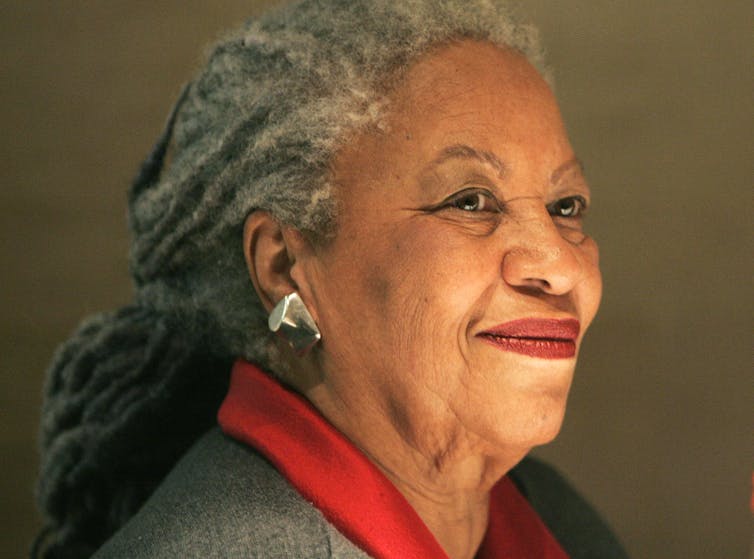
Toni Morrison published her last novel, ‘God Help the Child,’ when she was 84 years old. AP Photo/Michel Euler
Don’t put down that book
Our ability to read and write can be preserved well into older adulthood. Making use of these abilities is important, because reading and writing seem to prevent cognitive decline.
Keeping a journal, for example, has been shown to substantially reduce the risk of developing various forms of dementia, including Alzheimer’s disease.
Reading fiction, meanwhile, has been associated with a longer lifespan. A large-scale study conducted by the Yale University School of Public Health found that people who read books for at least 30 minutes a day lived, on average, nearly two years longer than nonreaders. This effect persisted even after controlling for factors like gender, education and health. The researchers suggest that the imaginative work of constructing a fictional universe in our heads helps grease our cognitive wheels.
Language is a constant companion during our life journey, so perhaps it’s no surprise that it’s interwoven into our health and our longevity. And researchers continue to make discoveries about the connections between language and aging. For example, a study published in July 2019 found that studying a foreign language in older adulthood improves overall cognitive functioning.
A thread seems to run through most of the findings: In order to age well, it helps to keep writing, reading and talking.
While few of us possess the gifts of a Toni Morrison, all of us stand to gain by continuing to flex our literary muscles.
Richard M. Roberts, a U.S. diplomat currently serving as the Public Affairs Officer at the U.S. Consulate General in Okinawa, Japan, is a contributing author of this article.
Roger J. Kreuz and Richard M. Roberts are the authors of:
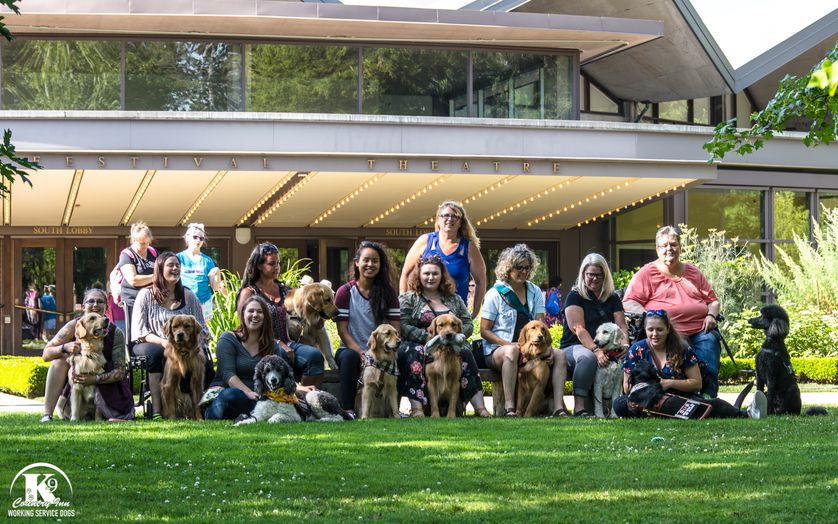
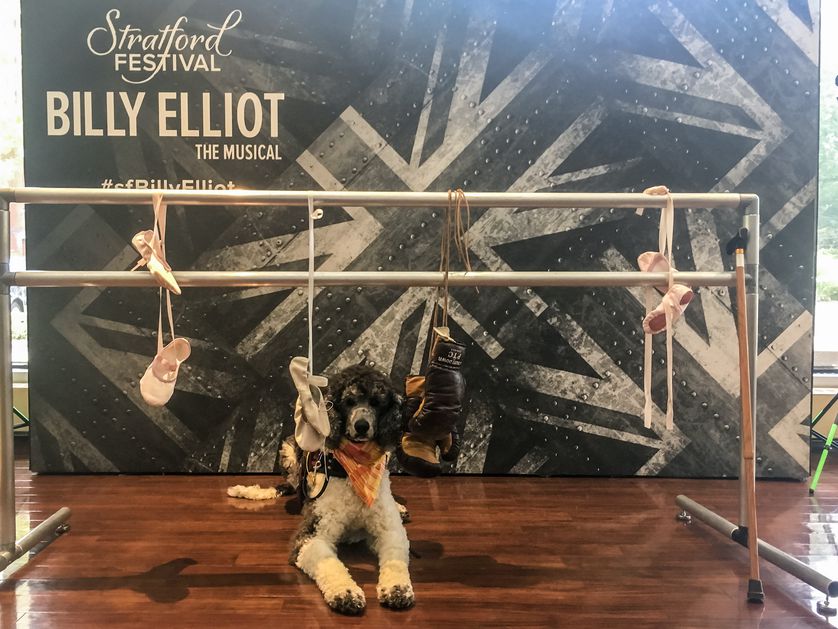
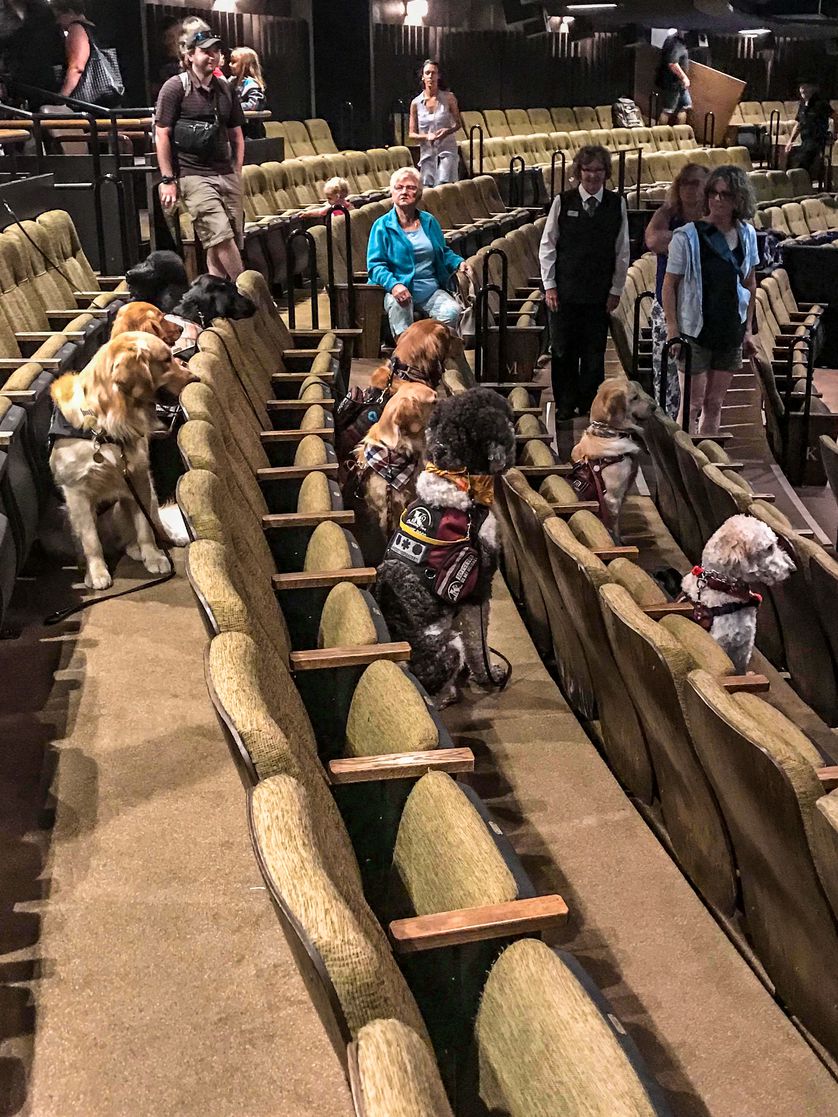
Service dogs from K-9 Country Inn Working Service Dogs attend a ‘relaxed’ performance at the Stratford Festival, and by all accounts, they loved it. (Photo: K-9 Country Inn Working Service Dogs & Co.)
oooo
The outing was more about training than culture. (Photo: K-9 Country Inn Working Service Dogs)
oooo
While the relaxed performance was an ideal environment in which to train these dogs, the festival welcomes service animals at all performances. (Photo: K-9 Country Inn Working Service Dogs)
oooo
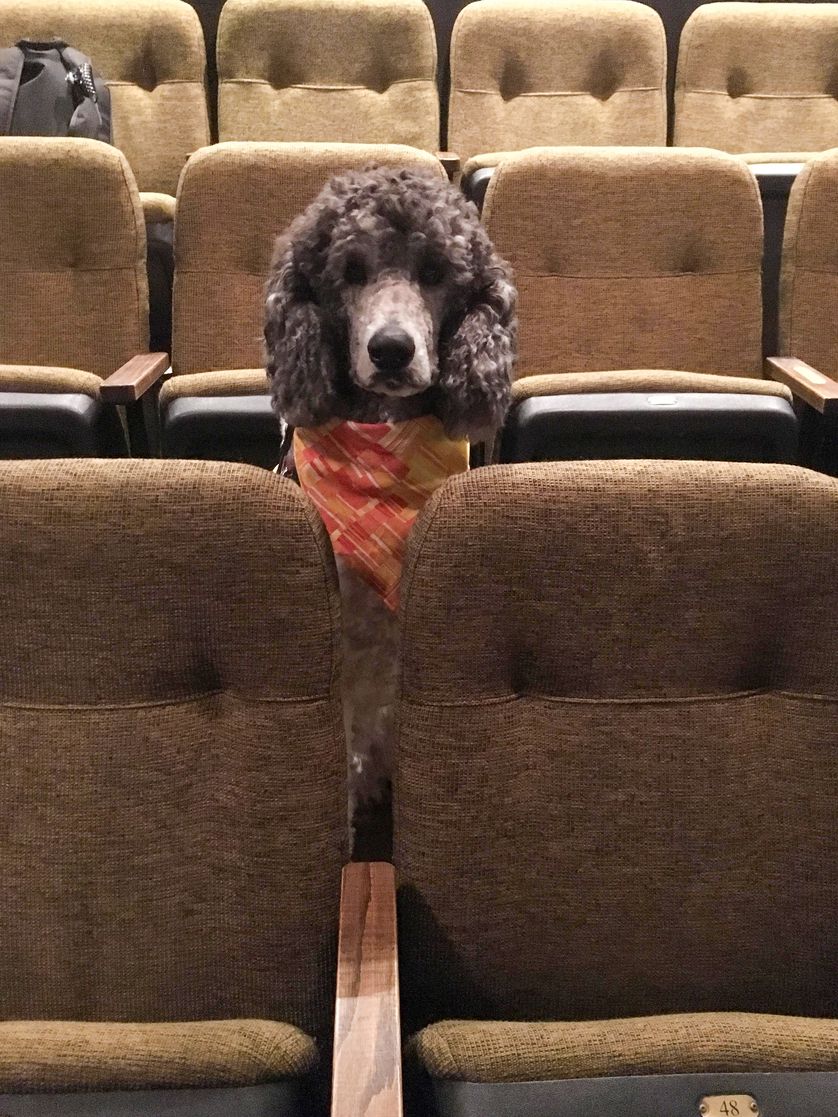
Elvis is ready for the play to begin. (Photo: K-9 Country Inn Working Service Dogs & Co.)
oooo
Audience members enjoy seeing how focused the dogs are during the play. (Photo: K-9 Country Inn Working Service Dogs & Co.)
oooo
Some of the dogs rested on the floor between the seats. (Photo: K-9 Country Inn Working Service Dogs & Co.)
oooo
It just goes to show that there’s no end to the pleasure a dog gets!
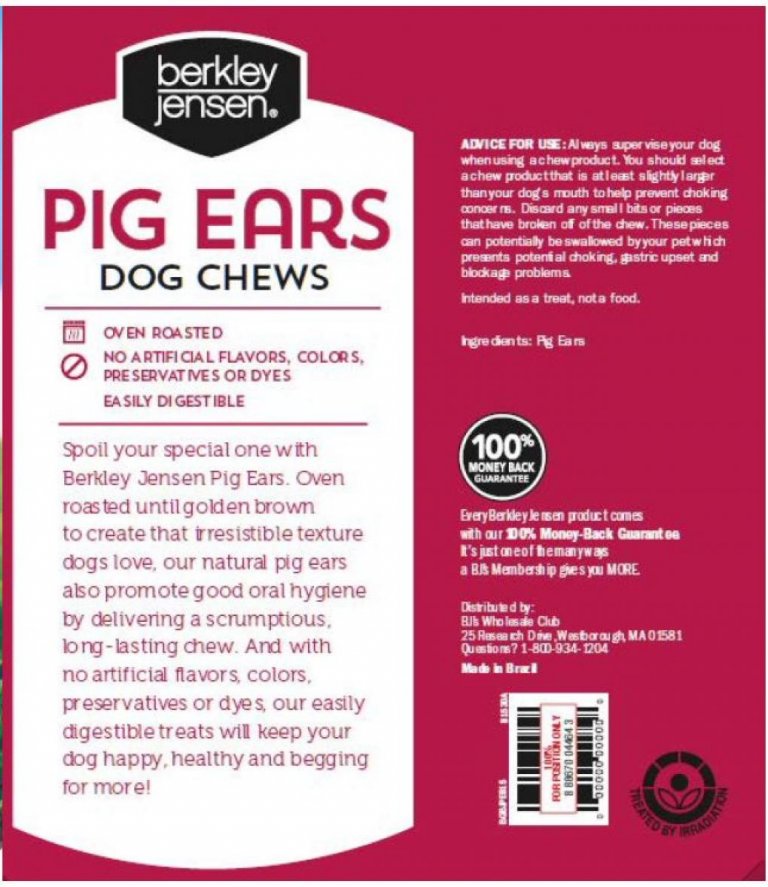
Berkley Jensen Pig Ear Dog Chews Sold at BJ’s Wholesale Club Recalled
September 3, 2019 — Dog Goods USA is expanding its recent recall to include all 30-packs of Berkley Jensen brand pig ear dog chews sold at BJ’s Wholesale Club stores due to possible contamination with Salmonella.
The previous recall is being expanded after testing by Rhode Island Department of Health found Salmonella bacteria in Berkley Jensen brand pig ear pet chews.
What’s Being Recalled?
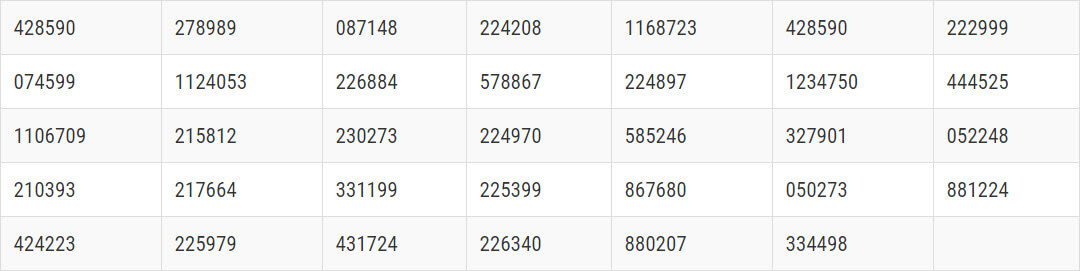
Dog Goods USA LLC of Tobyhanna, PA, has been contacted by the FDA and is conducting a voluntary recall of the following products: non-irradiated bulk and packaged pig ears branded Chef Toby Pig Ears with the lot codes indicated below.
The affected products were distributed nationwide in retail stores.
What Caused the Recall?
According to the company, Dog Goods USA purchased the affected treats from a single supplier in Brazil from September 2018 through August 2019.
The U.S. Food and Drug Administration, together with the Centers for Disease Control and Prevention and State partners, is investigating a link between pig ear pet treats and human cases of salmonellosis.
About Salmonella
Healthy people infected with Salmonella should monitor themselves for some or all of the following symptoms: nausea, vomiting, diarrhea or bloody diarrhea, abdominal cramping and fever.
Rarely, Salmonella can result in more serious ailments, including arterial infections, endocarditis, arthritis, muscle pain, eye irritation, and urinary tract symptoms.
Consumers exhibiting these signs after having contact with this product should contact their healthcare providers.
Pets with Salmonella infections may be lethargic and have diarrhea or bloody diarrhea, fever and vomiting.
Some pets will have only decreased appetite, fever and abdominal pain.
Infected but otherwise healthy pets can be carriers and infect other animals and humans.
If your pet has consumed the recalled product and has these symptoms, please contact your veterinarian.
The following statement has been provided by the company:
Dog Goods has also launched an internal investigation to determine, when and where the Products may have been contaminated.
To date, this internal investigation has not indicated any vulnerability in the company’s practices, including but not limited to the inspection, handling and storage of the Products.
Nonetheless, Dog Goods will continue to investigate the matter, collaborate fully with the FDA and the CDC, and provide further information to its customers and the public as appropriate.
What to Do?
Consumers who have purchased the products are urged to return them to the place of purchase for a full refund.
Consumers with questions may contact the company at 786-401-6533 from Monday to Friday, 9 AM ET through 5 PM ET.
U.S. citizens can report complaints about FDA-regulated pet food products by calling the consumer complaint coordinator in your area.


 Gray and white fulmars with outstretched wings carved the sky and nearly scratched the sea. And then there were icebergs.




 My fur coat really makes the apples pop.”