There have been a couple of hard-hitting posts this week, first about the implications of climate, with respect to the massive drought across the USA this year, and the efforts of Polly Higgins of the Eradicating Ecocide movement to make ecocide a crime against humanity.
This short but very compelling video shows why the planet is so worth protecting. Enjoy!
While Learning from Dogs trawls around a wide variety of topics, the theme behind the writings is, as the banner says on the home page: Dogs are integrous animals. We have much to learn from them.
Integrity, defined more or less universally as the ‘adherence to moral and ethical principles; soundness of moral character; honesty.‘
Please trust me that this position is taken not from the perspective of the writer, I’m struggle with ‘right’ and ‘wrong’ as much as the next guy. No, this position is the result of one very simple and stark vision: If we don’t understand pretty damn soon what we, as in mankind, are doing to our planet, both directly and indirectly, then we are living through the era of the end of civilised man; these are the last times.
The relationship between man and the dog is ancient beyond contemplation. It is widely believed by scientists who study the history of man that, at the very least, dogs assisted man in evolving from hunter-gatherers to farmers. But some scientists believe that without the support of dogs, man never would had made the transition to farming. Either way the relationship goes back more than 10,000 years.
So what on earth does that have to do with integrity? Simply that alongside millions of us, dogs offer us the examples of loyalty, faith, meditation, patience, truth in love; an example of an adherence to moral and ethical principles; soundness of moral character; honesty.‘ In a single word: integrity!
OK, now that I have got that off my chest, to the topic of today’s post. For some months now I have subscribed to the blog run by The Permaculture Research Institute of Australia. It has much that will be useful for Jean and me when we move to Oregon in November. But also, not infrequently, the Institute highlights deeper, more fundamental, issues.
Thus it was that a few days ago, my attention was drawn to an item with the title of We Need Your Help to End the Era of Ecocide. It was about the work of English woman, Polly Higgins. I’m ashamed to say that I had not heard of her before! A very quick search came across the website Eradicating Ecocide, from which one quickly learns that Polly,
In March 2010 international barrister and award winning author Polly Higgins proposed to the United Nations that Ecocide be made the fifth Crime Against Peace. There are currently four Crimes Against Peace: genocide, war crimes, crimes of aggression and crimes against humanity. Ecocide is the missing fifth crime – it is a crime against humanity, against current and future generations, and against all life on Earth.
Wow, that makes sense. So what is ecocide? Again, Eradicating Ecocide offers the answer,
Back to the specific topic. This is a copy of what is the latest news item on the Eradicating Ecocide website and it is reproduced in full. I’ve included the Editor’s introduction from the Permaculture News website, as I couldn’t say it any better.
oooOOOooo
We need your help to end this era of Ecocide
Editor’s Note: We’ve covered a little of Polly Higgin’s important work before (see here and here). If you’re not already familiar with Polly’s work, I would strongly encourage you to check out the web pages and videos linked to below, as well as our aforementioned pieces. Permaculturists dream of whole earth restoration, but our efforts, whilst essential, are, if I may, largely piecemeal. The reason for this is that for every positive step someone makes, an industry or government does, or allows, something significantly more destructive to take place that more than overshadows it. We will never break out of this destructive cycle unless we make environmental destruction illegal, and hold the people responsible accountable. As you are able, please support Polly’s work. If you cannot donate, please at least do what you can to share and circulate this page.
Polly Higgins
I have something I would like to share with you. Today myself and my team have reached zero. The pot is now bare and our funding resources are in urgent need of replenishing. In the past year your donations of over £200,000 funded my and my team’s work; we planted some incredible seeds in the run up to the Rio Earth Summit. Out of that we have had some wonderful successes; in the past year alone we have held a mock Ecocide Trial in the UK Supreme Court, the University of London launched their Ecocide Project, I have travelled to countries and spoken on many platforms, I launched my second book Earth is our Business, I have been awarded Overall Champion by the PEA awards, I have started a training programme for others to learn how to become a Voice for the Earth and I have submitted a concept paper, Closing the door to dangerous industrial activity to all government’s around the world. All this has been done with the help of your money and without it none of this would have been at all possible.
Yesterday we held an emergency meeting; despite the enormous efforts of our fundraiser over the past few months we have been unable to raise more than a few thousand pounds. We are looking squarely at the future and we see enormous opportunity to take forward all that I have already achieved; just think how close we are to making this law a reality.
Everything we do is governed by permaculture ethics; people care, earth care and fair share. Ecocides occur when we take far more than our fair share, which affects both our people and our Earth. To ensure we live within our planetary limits, a law of Ecocide creates a legal framework that can ensure we all live in peaceful enjoyment.
Please help me to continue to build upon all of this good work; now more than ever people care, earth care and fair share matters. Together we can end the era of Ecocide.
With love for the Earth,
Polly
oooOOOooo
If you read this and want to share this Post, feel free to so do. If you want to do that and more, then:
Send a cheque to us at 6 Highbury Corner, Highbury Crescent, London N5 1RD. Please write your cheque out to our charity, The Earth Community Trust.
In the US you can donate via the Iris Arts and Education Group 1856 San Antonio Ave, Berkeley, California 94707. Please write your cheque out to our charity, The Earth Community Trust.
Please become one of our funding volunteers. We are seeking a team of people to help us fundraise. This can be done in a number of ways. If you think you can help, please email our intern Nina: nina (at) eradicatingecocide.com
We are seeking a volunteer for 2 weeks full time to come into our London office: please email Louise with your CV: louise (at) eradicatingecocide.com
And don’t forget to go to the Eradicating Ecocide website to become more aware and then take action! Speaking of becoming more aware, do watch this video.
This was sent to me recently. It has been doing the rounds big time, and rightly so!
oooOOOooo
Before going on to today’s post, I feel the need to explain something. That is that over the last week or so I have been republishing many more items rather than writing my own creative stuff. This is an unfortunate consequence of us having our house here in Payson up for sale, which is generating more work than usual. Plus we are packing. All this to do with us moving from Arizona to Oregon in the first week of November.
oooOOOooo
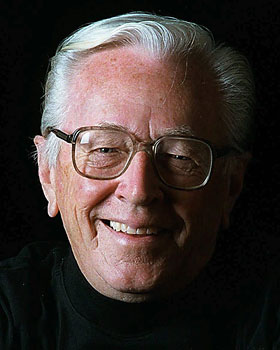
Charles Schulz
The following is the philosophy of Charles Schulz, the creator of the ‘Peanuts’ comic strip.
You don’t have to actually answer the questions. Just ponder on them. It will make very good sense!
Here’s A Little Quiz
You don’t have to actually answer the questions. Just read them straight through, ponder a tad, and you’ll get the point.
Name the five wealthiest people in the world.
Name the last five Heisman trophy winners.
Name the last five winners of the Miss America pageant.
Name ten people who have won the Nobel or Pulitzer Prize.
Name the last half dozen Academy Award winners for best actor and actress.
Name the last decade’s worth of World Series Winners.
How did you do?
The point is, none of us remember the headliners of yesterday. These are no second-rate achievers. They were the best in their fields.
But the applause dies. Awards tarnish over time. Achievements are forgotten and accolades and certificates are buried with their owners.
Here’s another quiz. See how you do on this one:
List a few teachers who aided your journey through school.
Name three friends who have helped you through a difficult time.
Name five people who have taught you something worthwhile.
Think of a few people who have made you feel appreciated and special!
Think of five people you enjoy spending time with.
Did you find that Easier? Of course you did!
So here’s the lesson!
The people who make a difference in your life are not the ones with the most credentials, or the most money…or the most awards…they simply are the ones who care the most.
I published a wonderfully funny piece yesterday sent to me by Lindy C. from Devon. Today, another precious senior’s tale sent to me by Richard Maugham, he of the Understanding Europe post.
oooOOOooo
An elderly man is stopped by the police around 2 a.m. and is asked where he is going at this time of night.
He replies, “I’m on my way to a lecture about alcohol abuse and the effects it has on the human body, as well as smoking and staying out late.”
The police officer asks, “Really? Who’s giving that lecture at this time of night?”
“You don’t stop laughing when you grow old, you grow old when you stop laughing.” George Bernard Shaw.
Recently sent to me by Lindy C. from Devon, England.
This is dedicated to all of us who are seniors, to all of you who know seniors, and to all of you who will become seniors.
“WHERE is my SUNDAY paper?” The irate customer calling the newspaper office, loudly demanded to know where her Sunday edition was.
“Madam“, said the newspaper employee, “today is Saturday. The Sunday paper is not delivered until tomorrow, on SUNDAY.”
There was quite a long pause on the other end of the phone, followed by a ray of recognition as Madam was heard to mutter under her breath, “Well, shit, that explains why there was no one at church either!”
oooOOOooo
As British comedian Bob Monkhouse is reputed to have said, “Growing old is compulsory; growing up is optional.” (NB. More fabulous quotations from this naturally very funny man may be found here.)
On the subject of Bob Monkhouse, let me close with this video of Norman Wisdom appearing on the Bob Monkhouse Show back in 1983. As one of the YouTube commentators put it, “Two of Britains funniest men; we will never seek their likes again.“
An afterthought about the adventurous spirit of man.
While the focus on the manned exploration of space has declined significantly since those days of the Apollo missions, the spirit to explore has not diminished. This was underlined in spades by a recent post from the British blog Earth & Solar System that I have been subscribing to since a few weeks ago.
This blog reflects the research interests of the Isotope Cosmochemistry and Geochemistry Group at the University of Manchester. In our laboratories we study samples from comets, interstellar dust, interplanetary dust, Mars, the moon and asteroids to understand how the Earth and the Solar System were formed, how they evolved and became what we see today. We study the Earth and its chemistry to understand how it works, its mantle, crust, oceans and how we change it. We want to share and discuss what we find with everyone.
The blog is for sharing science and what we and other research groups discover as we do science in real time. Discussion, questioning and enquiry are good, but politics, and opinion that can’t be backed up by published scientific work are strictly off-limits and will be removed.
Yet another example of why integrity is the only way forward.
Anyway, the recent post that was published came into my ‘in-box’ on Monday and I wanted to share it with you. Primarily because the mainstream media have moved on and there is little ‘news’ about NASA’s Curiosity rover. That’s why this post is so fascinating and it’s reproduced on Learning from Dogs with the permission of Ashley King, the author.
The past week has seen NASAs Curiosity rover return more amazing images of the Gale crater, fire up its DAN and SAM instruments, and take its first steps towards Mt. Sharp.
Mastcam view south-west from the Bradbury landing site. The foreground is boulder-strewn and contains the edge of an impact crater. The layered rocks in the background form the base of Mt. Sharp (NASA/JPL-Caltech/MSSS).
The new images, captured using the 100mm telephoto lens of the Mastcam, provide a glimpse of the geological treats that await scientists at the base of Mt. Sharp. Of particular interest has been the identification of an unconformity, where two rocks in contact but of different ages indicate a break in the geological record. Satellite data suggests that the rocks lying below the unconformity contain hydrous minerals whilst those above are “dry”. It appears these rock units formed under very different environmental conditions.
Unconformity (marked by white dots) at Mt. Sharp (NASA/JPL-Caltech/MSSS).
Next, Curiosity had another driving lesson, this time positioning itself over one of the scour marks created during landing. This allowed the rover to continue testing the ChemCam and turn on the Dynamic Albedo of Neutrons (DAN) instrument, which will be used to search for water below the Martian surface. The Sample Analysis at Mars (SAM) instrument, comprising of a mass spectrometer, gas chromatograph and tunable laser spectrometer, was also gently woken up. SAM can measure the abundance of C compounds, H, N and O, elements associated with life, in atmospheric and powdered rock samples. A quick test of some Earth air trapped in the instrument since launch confirmed that it is working well and should soon be ready for Martian samples.
Curiosity has now completed four drives and is heading for Mt. Sharp. However, the first target is Glenelg, a rock outcrop 400m to the east of the Bradbury landing site, where it’s hoped Curiosity will start using its drill. Although the journey will take several weeks, Glenelg contains at least three different rock types that will help scientists piece together the geological history of Gale crater.
Leaving the Bradbury landing site. This Navcam image shows the tracks left in the Martian soil by Curiosity (NASA/JPL-Caltech).
oooOOOooo
Makes a nice change to forget about the goings-on here on Planet Earth!
Like millions of others on this planet, I was held spellbound by the historic and epic moment of man placing his mark on another heavenly body, the Moon. I had been so wrapped up in NASA’s space missions that I took a holiday from work (I was working at the time for ICIANZ in Sydney, Australia) for the week of July 16th, 1969.
It was, of course, July 16th when the Apollo 11 Mission launched from the Kennedy Space Center culminating at precisely 20:17:39 UTC on July 20, 1969, the moment when the Lunar Module made lunar contact.
But in terms of me writing my own obituary for Neil, what could I offer?
Then a couple of items changed my mind.
Neil Armstrong (August 5, 1930 – August 25, 2012)
The first was reading the obituary printed in The Economist. I have long admired the many, many beautiful obituaries that have been published by this newspaper and this one was no exception. Take this extract from the Neil Armstrong obituary,
He had an engineer’s reserve, mixed with a natural shyness. Even among the other astronauts, not renowned for their excitability, he was known as the “Ice Commander”. Mike Collins, one of his crew-mates on the moon mission, mused that “Neil never transmits anything but the surface layer, and that only sparingly.” He once lost control of an unwieldy contraption nicknamed the Flying Bedstead that was designed to help astronauts train for the lunar landing. Ejecting only seconds before his craft hit the ground and exploded, he dusted himself off and coolly went back to his office for the rest of the day. There was work to be done.
Then the beautiful words that bring the obituary to a close,
Earth’s beauty
Over half a century, the man who never admitted surprise was surprised to observe the fading of America’s space programme. The Apollo project was one of the mightiest achievements of the potent combination of big government and big science, but such enterprises came to seem alien as well as unaffordable. Mr Armstrong, who after his flight imagined bases all over the moon, sadly supposed that the public had lost interest when there was no more cold-war competition.
Yet the flights had one huge unintended consequence: they transformed attitudes towards Earth itself. He too had been astonished to see his own planet, “quite beautiful”, remote and very blue, covered with a white lace of clouds. His reserve, after all, was not limitless. One photograph showed him in the module after he and Buzz Aldrin had completed their moon-walk, kicking and jumping their way across the vast, sandy, silver surface towards the strangely close horizon. He is dressed in his spacesuit, sports a three-day beard, and is clearly exhausted. On his face is a grin of purest exhilaration.
” … they transformed attitudes towards Earth itself. He too had been astonished to see his own planet, “quite beautiful”, remote and very blue, covered with a white lace of clouds.” For that reason alone, we need to celebrate the achievement of the Apollo 11 mission for putting our own planet into perspective within the enormity of the universe.
The second item that persuaded me to write this was a wonderful historic insight into how a potential catastrophy on the surface of the Moon would have been handled by President Nixon. This historic item was published on Carl Milner’s blog the other day, the specific item being What if the Moon Landing Failed? Republished with the very kind permission of Carl.
When Richard Nixon was the President of the United States, they had a speech ready for him to deliver to the world just in case the 1969 moon landing had ended in disaster. In fact many experts believed there was a big chance that Neil Armstrong and Edwin ‘Buzz’ Aldrin could have really gotten stuck on the moon. It’s something we don’t really think about now because we all know it was such a success. American Archives have unearthed the speech that would have been delivered if the late great Armstrong and Aldrin had never made it back to earth. This is such a great piece of history that I thought I might never see.
Give it a read, It’s such a moving and well prepared speech, and such a good thing that President Nixon never had to delivered it.
So, as with millions of others, I am delighted that this speech remained unspoken and instead we experienced: “At 5:35 p.m. (US EDT), Armstrong and Aldrin successfully docked and rejoined Collins, and at 12:56 a.m. on July 22 Apollo 11 began its journey home, safely splashing down in the Pacific Ocean at 12:50 p.m. on July 24.”
Neil Armstrong’s legacy is not only being part of the wonderful team that allowed man to make the first footprint on the Moon but also bringing into our human consciousness that this blue, wonderful planet we all live on is the only home we have.
First Full-View Photo of Earth Photograph courtesy NASA Johnson Space Center This famous “Blue Marble” shot represents the first photograph in which Earth is in full view. The picture was taken on December 7, 1972, as the Apollo 17 crew left Earth’s orbit for the moon. With the sun at their backs, the crew had a perfectly lit view of the blue planet.
Strikes me that celebrating July 20th each year as Blue Planet Day might not be a bad idea! Any takers? Now that would be a legacy for Neil!
Richard and I go back too many years! He has been a dear friend despite the obvious hurdle that when we first met, he declared that he was a typewriter salesman for Olivetti in the UK with me admitting that I was a typewriter salesman for IBM UK! Here’s the story.
oooOOOooo
WHAT WENT WRONG IN EUROPE – SIMPLY EXPLAINED!
Not Helga’s Bar!!
Helga is the proprietor of a bar. She realizes that virtually all of her customers are unemployed alcoholics and, as such, can no longer afford to patronize her bar. To solve this problem she comes up with a new marketing plan that allows her customers to drink now, but pay later.
Helga keeps track of the drinks consumed on a ledger (thereby granting the customers’ loans).
Word gets around about Helga’s “drink now, pay later” marketing strategy and, as a result, increasing numbers of customers flood into Helga’s bar. Soon she has the largest sales volume for any bar in town.
By providing her customers freedom from immediate payment demands, Helga gets no resistance when, at regular intervals, she substantially increases her prices for wine and beer – the most consumed beverages.
Consequently, Helga’s gross sales volumes and paper profits increase massively. A young and dynamic vice-president at the local bank recognises that these customer debts constitute valuable future assets and increases Helga’s borrowing limit. He sees no reason for any undue concern, since he has the debts of the unemployed alcoholics as collateral.
He is rewarded with a six figure bonus.
At the bank’s corporate headquarters, expert traders figure a way to make huge commissions, and transform these customer loans into DRINKBONDS. These “securities” are then bundled and traded on international securities markets.
Naive investors don’t really understand that the securities being sold to them as “AA Secured Bonds” are really debts of unemployed alcoholics. Nevertheless, the bond prices continue to climb and the securities soon become the hottest-selling items for some of the nation’s leading brokerage houses.
The traders all receive six figure bonuses.
One day, even though the bond prices are still climbing, a risk manager at the original local bank decides that the time has come to demand payment on the debts incurred by the drinkers at Helga’s bar. He so informs Helga. Helga then demands payment from her alcoholic patrons but, being unemployed alcoholics, they cannot pay back their drinking debts. Since Helga cannot fulfil her loan obligations she is forced into bankruptcy. The bar closes and Helga’s 11 employees lose their jobs.
Overnight, DRINKBOND prices drop by 90%. The collapsed bond asset value destroys the bank’s liquidity and prevents it from issuing new loans, thus freezing credit and economic activity in the community.
The suppliers of Helga’s bar had granted her generous payment extensions and had invested their firms’ pension funds in the BOND securities. They find they are now faced with having to write off her bad debt and with losing over 90% of the presumed value of the bonds. Her wine supplier also claims bankruptcy, closing the doors on a family business that had endured for three generations; her beer supplier is taken over by a competitor, who immediately closes the local plant and lays off 150 workers.
Fortunately though, the bank, the brokerage houses and their respective executives are saved and bailed out by a multibillion dollar no-strings attached cash infusion from the government.
They all receive a six figure bonus.
The funds required for this bailout are obtained by new taxes levied on employed, middle-class, non-drinkers who’ve never been in Helga’s bar……………………….!
Looking at the human-animal relationship, from the perspective of the animal.
This is a guest post from Virginia Ingram. Virginia is becoming more involved in the animal rescue movement. As such, she knows only too well how vital it is to give so many precious animals a second chance.
In a very real sense we, as in mankind, owe our humanity to dogs and other animals. As I wrote here in the essay What is love?
“But understanding animals and empathizing with them also triggered other changes in humanity’s evolution, Shipman said.
All those things allow people to live with people. Once people have domesticated animals, they start to live in stable groups. They have fields, crops and more permanent dwellings.”
We owe so much!
So with that in mind, here is Virginia’s guest post.
oooOOOooo
WE CAN MAKE A DIFFERENCE
Recently I started to question the time I spend on the internet reading articles, essays and recommendations of books about all things concerned with animals. I receive animal stories from friends, acquaintances and business associates from all corners of the globe. I love to get them because, well….. hey, I really enjoy them!
After I read them I forward them to others who I think will also enjoy them. They make me feel warm and fuzzy. They are enlightening, poignant, humorous, inspiring and sometimes heart-rending. I find I cannot ignore any cute email containing animal pictures even though I may have already seen it a dozen times before. Give me a story about a dog who ate a popsicle and to me ‘that’s entertainment’ as they say. We human beings love to feel moved by great stories and these communications are full of it. I am such a sap when it comes to animal stories; so many of us are.
But here is the rub. What do the animals get out of it?
We chuckle and get our jollies from these incredible beings from a distance on the World Wide Web but the fact of the matter is that so many of these wonderful creatures end up unwanted, uncared for or even starved and beaten in shelters across the world.
Unknown and uncared for!
What gives? Why is there such a disconnect? How can we love animals from a distance and not be concerned with the abuses that go on in our own environment?
We know that there are those who don’t understand that animals have feelings and emotions, that they experience deep loss and sadness as well as happiness and joy. What can we do raise to the consciousness of human beings who don’t get it?
I think it involves sticking our collective necks out. I think that we need to be ready to risk some things. It might involve changing or damaging a relationship with someone who is acting in irresponsible ways towards animals. We need to be ready to risk it.
Do you see it on your own street? Maybe it’s a neighbor who leaves their dog on a chain in the yard on weekends regardless of weather or exposure to other animals. Maybe it’s the guy next door who ‘forgets’ to feed his animal.
Let’s stand up for these animals who have no voice. Let’s be advocates for these amazing creatures who cannot be their own advocate. Let’s hold humans accountable. Let’s risk a friendship and say something, make that difficult phone call on behalf of a animal. Let’s talk to people about animal issues and problems. Let’s try to change the weak laws that do not properly address animal cruelty. Let’s summon our courage and do the unpopular things which will enhance the quality of life for these precious beings.
Can you imagine how animals feel when they have been turned over to an animal shelter by the person whom they loved more than themselves? Trust me, the sense of abandonment and fear, the bewilderment in their eye is excruciating to observe. I have seen it not from the distance of my computer but in person. Let’s DO something to change all this. It’s time to get involved.
By all means keep the cute emails going but for every minute we spend on the internet, reading the books and enjoying the emails let’s put the same amount of time into getting something done to improve the lives of animals. Stand up, walk out the door, volunteer or donate money. We can help the suffering. We can make a difference.
oooOOOooo
Powerful words indeed. Don’t know about you but I read a strength of feeling that was very moving. A clear message that we must never turn the head, never just ‘tut tut’ but do something. Even if only befriending a stray animal. Because one might argue that even that feral dog without a home is demonstrating something all of us on this green planet need to understand; living a sustainable life!
Finally, living proof of what we can give an animal when we care and love it. The dog in the picture below is Loopy, a dog that Jean rescued in Mexico many years ago. She was so badly hurt by humans that it took Jean six months before Loopy would let Jean touch and hug her.
When I came on the scene, my gender was against me. It took me twelve months before Loopy trusted me. Now she will come to me and let me place my face against hers in the most loving, caring embrace that one can imagine.
So why the fearful look on Loopy’s face as she turns away from the camera? Somehow the camera is reminding Loopy of some sort of weapon that was used to beat her!
Loopy
As Virginia so lovingly wrote, “We can help the suffering. We can make a difference.“
A wonderful investment in studying America’s ecology is just starting.
I am indebted to The Economist for including in their issue of the 25th August a story about NEON, something I had previously not heard about.
It was then an easy step to locate the main website for the National Ecological Observatory Network, or NEON. (Just an aside that I can’t resist – NEON is such a fabulous acronym that one wonders how much push and shove there was to come up with the full name that also fitted the word ‘NEON’! Sorry, it’s just me!)
Anyway, back to the plot. The following video gives a very good idea of the projects aims. When I watched it, I found it inspiring because it seemed a solid example of how the nation, that is the USA, is starting to recognise that evolving to a new, sustainable way of life has to be built on good science. NEON strikes me as excellent science. You watch the video and see if you come to the same conclusion.
There’s also a comprehensive introduction to the project from which I will republish this,
In an era of dramatic changes in land use and other human activities, we must understand how the biosphere – the living part of earth – is changing in response to human activities. Humans depend on a diverse set of biosphere services and products, including air, water, food, fiber, and fuel. Enhancements or disruptions of these services could alter the quality of human life in many parts of the world.
To help us understand how we can maintain our quality of life on this planet, we must develop a more holistic understanding of how biosphere services and products are interlinked with human impacts. This cannot be investigated using disconnected studies on individual sites or over short periods of observation. Further, existing monitoring programs that collect data to meet natural resource management objectives are not designed to address climate change and other new, complex environmental challenges.
NEON, the first continental-scale ecological observatory, will provide comprehensive data that will allow scientists to address these issues.
Later on there’s more detail, as follows,
NEON has partitioned the U. S. into 20 eco-climatic domains, each of which represents different regions of vegetation, landforms, climate, and ecosystem performance. In those domains, NEON will collect site-based data about climate and atmosphere, soils and streams and ponds, and a variety of organisms. Additionally, NEON will provide a wealth of regional and national-scale data from airborne observationsand geographical data collected by Federal agencies and processed by NEON to be accessible and useful to the ecological research community. NEON will also manage a long-term multi-site stream experiment and provide a platform for future observations and experiments proposed by the scientific community.
The data collected and generated across NEON’s network – all day, every day, over a period of 30 years — will be synthesized into information products that can be used to describe changes in the nation’s ecosystem through space and time. It will be readily available in many formats to scientists, educators, students, decision makers and the general public.
For some reason I couldn’t find on the NEON website the informative map that was included in The Economist so I grabbed that one, and offer it below:
These eco-climatic domains are fully described here on the NEON website.
The benefits of this fabulous project are described thus, “The data NEON collects and provides will focus on how land use change, climate change and invasive species affect the structure and function of our ecosystems. Obtaining this kind of data over a long-term period is crucial to improving ecological forecast models. The Observatory will enable a virtual network of researchers and environmental managers to collaborate, coordinate research, and address ecological challenges at regional, national and continental scales by providing comparable information across sites and regions.”
As they say in business, if you can’t measure it, you can’t manage it! So reading in the above the sentence, ‘Obtaining this kind of data over a long-term period is crucial to improving ecological forecast models.‘ is cheering to the soul.
The United States quite rightly gets a huge bashing over it CO2 emissions but to condemn the USA for that and not to applaud this sort of wonderful research is utterly unjustified. As I have hinted before, America has, more than any other country in the world, the energy to make things better over the coming years.
As Professor Sir Robert Watson highlighted here recently said, ‘… deep cuts in CO2 emissions are possible using innovative technologies without harming economic recovery.’




 Learning from Dogs