A personal perspective on today’s American presidential election
Voting for truth!
In many ways, it’s helpful that despite being a resident of the USA I am not eligible to vote. That’s because my residency status as a ‘Green card’ holder does not give me such entitlement. That’s the domain of citizens, and rightly so.
The reason I find it helpful is that as a non-voter and still very much the ‘newcomer’ to this county, I view the proceedings from a different perspective; well that’s my take on things!
So here are two thoughts.
Integrity
The motivation behind Learning from Dogs came from the realisation that dogs offer mankind many lessons, especially the one of behaving with integrity. You can read more about this aspect of dogs here.
Maybe it’s a naive hope but politicians around the world must rapidly embrace the fact that without integrity in the political processes we are all lost. To underline this plea, go and read a recent essay that was introduced by Daniel Honan on The Big Think. Here’s a dip into that:
Larry Lessig: End Raging Cronyism, Save Our Republic
What’s the Big Idea?
If you are not planning to vote in the upcoming election, Larry Lessig has a good explanation why.
You, like most Americans, believe that money buys results in Congress. No matter who wins, you believe that corporate interests will still have too much power and prevent real change. You are correct in your belief that money buys results in Congress, Lessig says. However, he has a different prescription than non-participation.
What’s the Significance?
Lessig points out that .000015 percent, or 47 individuals, have given 42 percent of the Super PAC donations this election cycle. As a result of this “money election,” Lessig says a few powerful interests exert an influence that conflicts with the public good.
“… 47 individuals, have given 42 percent of the Super PAC donations this election cycle.” Just reflect on the power and influence that flows from such a distortion of fairness.
Truthfulness
My second thought is about being truthful.
The time for all our leaders, right across the world, to come together and face the reality of climate change is upon us. There is no time left to duck and weave.
Peter Sinclair of ClimateCrocks blogsite recently posted this video. Watch it and ask yourself how much longer the leader of the most powerful nation in the world can sit on the sidelines of the greatest threat to our civilisation ever seen.
Your journey will be much lighter and easier if you don’t carry your past with you!
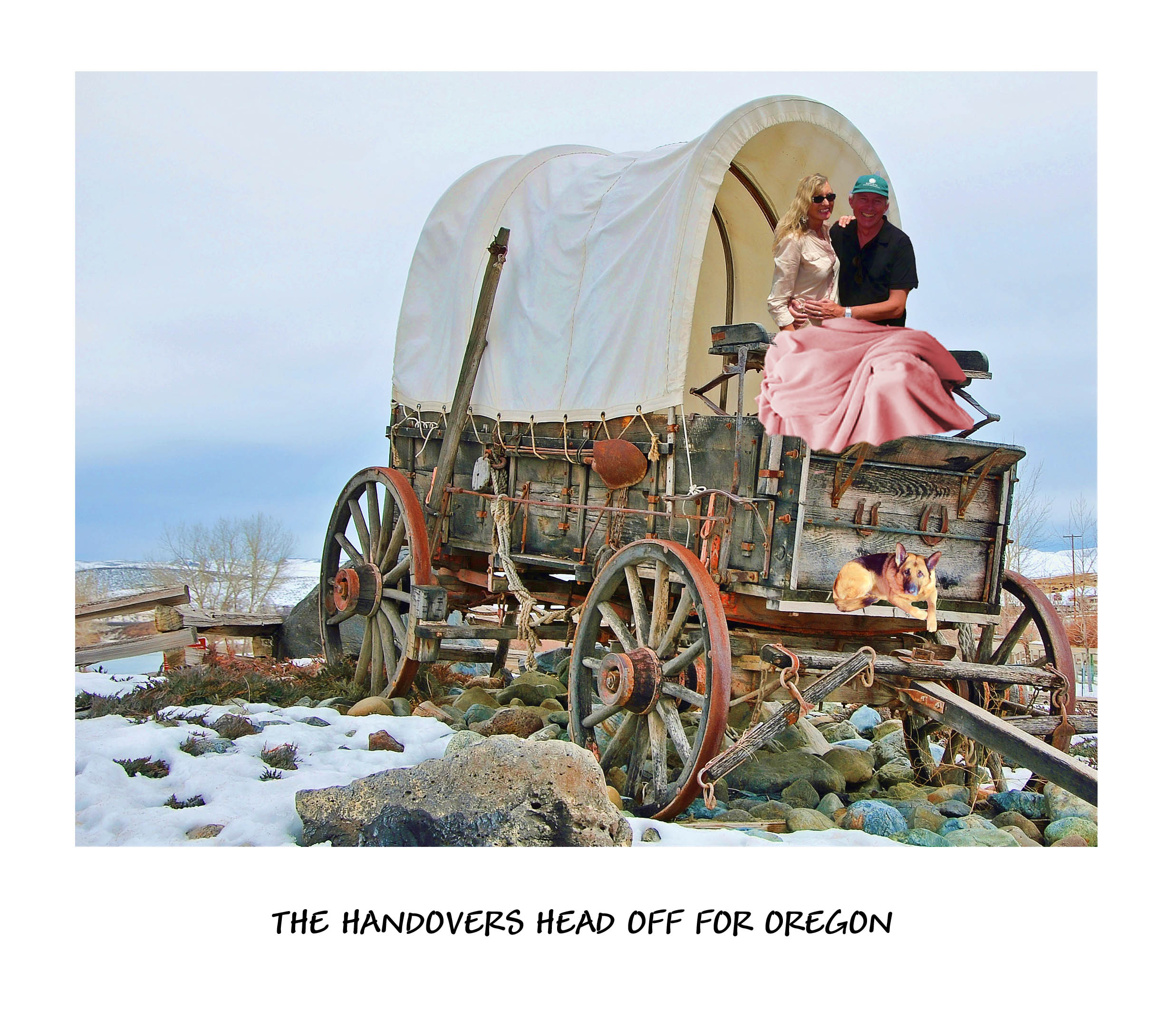
So said some unknown scribe. Well I have to say the move from Arizona to Oregon seemed to have quite a bit of ‘past’ travelling with us! But we made it!
Before I mention a few highlights of the last twelve days, first let me say a very big ‘thank you’ to Martin Lack for his fabulous role in looking after things while we were engaged in the moving process. Indeed, Martin’s involvement was so valuable that it made sense to retain his status as author on Learning from Dogs. I hope Martin shares posts with you all on a regular basis.
So to the recap.
As many of you saw, Neil Kelly sent us on our way to Oregon with that wonderful cartoon on the 23rd. October. The previous day had seen a transformation of belongings everywhere …
Ready for loading, except the dog!
…. to an eerily empty home.
Ready for the off in the morning.
The journey up to Merlin, Oregon of 1,176 miles over three days was a blur of hours and hours of driving, walking dogs around strange Motels evenings and mornings and keeping fingers and toes crossed that something didn’t go wrong!
Luckily fate was on our side and a little before 11am on Thursday, 25th October, our mini-convoy of a U-Haul truck towing Jean’s Dodge laden with one group of dogs and our Jeep with other dogs on board, towing a trailer with our five cats inside, pulled up outside the local store in Merlin, some three miles from our new home, so we could purchase basic necessities for the next 24 hours.
Nearly there!
Then at precisely eleven minutes past eleven a.m. we turned into our drive,
closely followed by the truck.
And here we are!
Nature was on hand to greet us as we nosed up to the edge of the paddock; a mother deer and her two babes. A treasured moment.
Welcome, you humans!
The rest of the day was absorbed with the unloading of all our belongings and making arrangements for bedding both humans and animals down, for the first night in Oregon.
Then the morning of Friday, 26th gave us a taste of what Autumn mornings here were like – stunning.
The reason we came here!
So there we are! It’s going to be weeks before we are properly settled in but there’s no question that we have ended up in a beautiful part of the world.
Happy dogs and happy people.
oooOOOooo
Now some thoughts regarding this Blog. The list of jobs and tasks that are ahead of us as we turn a house that has been empty for some years into a fully functioning home is ‘interesting’! Inevitably I will have to cut back a little on the 2 to 3 hours a day I used to spend writing for Learning from Dogs when back in Arizona. I am fully committed to publishing something every day but for a while I will lean more heavily than usual on finding material previously published elsewhere. Please let me have your feedback, good or bad!
Finally, the move made it impossible for me to reply individually to a number of readers who decided to subscribe, as I like to do.
So a blanket thank you to all who in the last 10 days decided to follow Learning from Dogs.
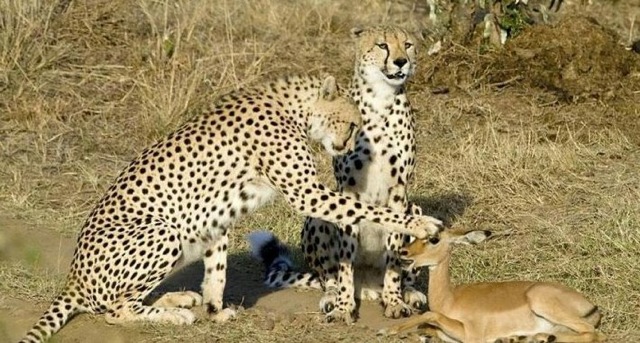
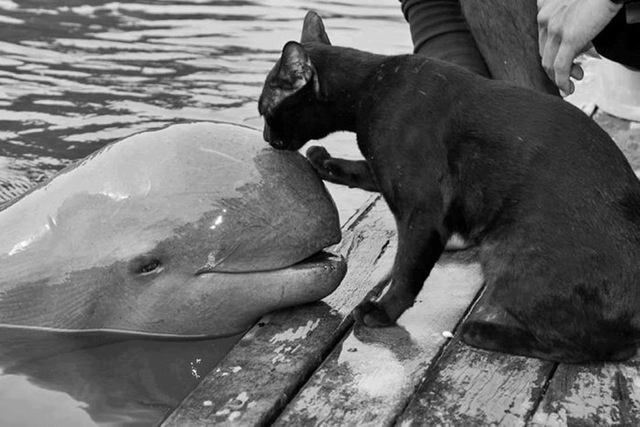
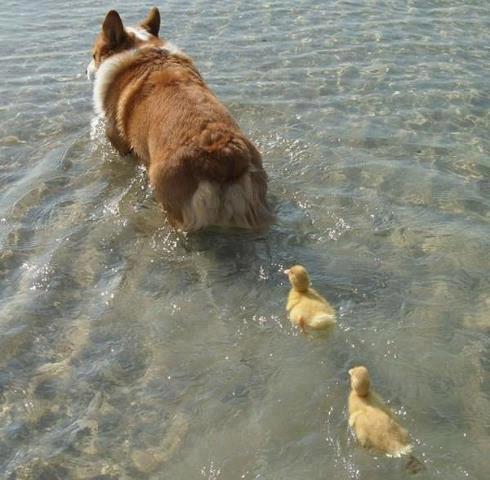
Just a wonderful set of very heart-warming pictures.
Note: These were sent to me by John H. back on the 13th October, our penultimate Saturday in Arizona. I thought they would make a perfect start to our first November week-end in Merlin, Oregon.
There are twenty-two in total; eleven today and the rest tomorrow.
oooOOOooo
oooOOOooo
The concluding glorious eleven photographs tomorrow.
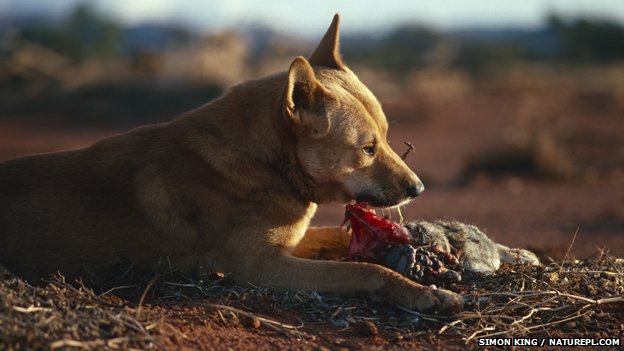
Dogs’ evolution shows why they ‘love’ gnawing on bones.
This is the second article on the BBC Nature website following yesterday’s item about why dogs enjoy a healthy breakfast.
oooOOOooo
Dogs’ evolution shows why they ‘love’ gnawing on bones
By Victoria Gill
Science reporter, BBC Nature, Ottawa, Canada
Social living drove dogs to evolve the “tools” for chewing bones, scientists say
Scientists say they have discovered why dogs love to eat meat and bones.
Ancient canines adopted pack-living about eight million years ago, to hunt larger prey, according to researchers.
The resulting evolution of their jaws gradually turned the ancestors of modern wolves, and ultimately our own pets, into “hypercarnivores”.
Dr Joao Munoz-Doran presented the findings at the First Joint Congress for Evolutionary Biology in Ottawa, Canada.
He and his colleagues from the National University of Colombia have created a canine “family tree”, piecing together the relationships between each of the more than 300 dog species.
“We compared species that have very different diets,” Dr Munoz-Doran explained to BBC Nature. “So we classified them as carnivores, hypercarnivores [animals that eat more than 70% meat] and omnivores [animals that eat meat and vegetation].”
The ancestors of modern wolves belong to this hypercarnivorous group.
The team’s analysis showed that the skull features that now distinguish a wolf – strong jaw muscles and enlarged canine teeth – first started to develop when their ancestors first began hunting in groups.
“We found a common evolutionary history for these traits,” Dr Munoz-Doran explained. “Eight million years ago was when [less forested, more] open habitats were spreading through Asia, Europe and North America. And when there are open habitats, the big prey group together. So there will be more eyes watching for a predator.”
The only way that dogs roaming the open plains could snatch very large prey from a herd was to work together.
“And after many generations of this grouping behaviour, there are new selective pressures on their [skull shape],” said the researcher.
This pressure meant that animals with larger teeth and stronger jaws were more likely to succeed in hunting, and to survive to pass on their large-toothed, strong-jawed genes to the next generation.
Animals with stronger jaws and larger canine teeth would have been more successful hunters
“They developed strength in their muscles – especially the muscles that close their mouth,” said Dr Munoz-Doran. “And bones that are more resistant to bending, so they could support the mechanical strains of biting the prey. “Over time, they became adapted to be ‘hypercarnivorous’.”
The researcher pointed out that domestic dogs had “very good evolutionary reasons to enjoy chewing a bone”.
“They have the tools to do that,” he told BBC Nature, “and they want to use their tools.”
oooOOOooo
Finally, to the side of that BBC Nature webpage were a few canine facts, as follows:
Common canines: Foxes, wolves, jackals, coyotes and dingoes are all members of this well-known group
Familiar faces: Wild canids are found on every continent except Antarctica
Communication is key: Previous studies of dog evolution have revealed that calls were essential for forming social groups and hunting larger prey
Pets’ past: All domestic dogs are descendants of the grey wolf
And don’t close without going here and listening to Steve Backshall howling with a wolf pack – (it’s a video as well – unmissable).
How a good breakfast is as relevant to dogs as it is to humans.
A little over three weeks ago, on the 10th October to be precise, there was a fascinating article on Nature news from the BBC. This was how it opened,
Dogs’ breakfasts boost search performance, says study
By Jeremy Coles
Reporter, BBC Nature
How important is breakfast for a wild dog?
Eating a morning meal increases search accuracy in dogs, a new study suggests.
Researchers at the University of Kentucky tested the search performance of trained dogs after either consuming breakfast or fasting.
The study found the canines searched more accurately 30 minutes after a meal than those that searched when hungry.
Findings from the research by Dr Holly Miller and colleague Charlotte Bender were recently published in the journal Behavioural Processes.
Studies demonstrating that children do better in cognitive exercises when they have eaten breakfast led Dr Miller to “wonder if a breakfast would also improve performance by dogs”.
So how on earth does one ‘study’ such a behaviour in a scientific manner?
So Dr Miller and Ms Bender tested trained domestic dogs’ (Canis familiaris) accuracy when finding hidden food, after either eating a morning meal or completing the task without eating.
To ensure that all dogs had depleted energy levels before the search test began, the dogs were required to exhibit self-control for 10 minutes in a ‘sit and stay’ exercise.
A previous study by Dr Miller demonstrated that the exertion of self-control depletes dogs’ energy levels as well as their ability to perform certain tasks.
The dogs were shown a treat that was subsequently hidden in one of six containers. Dogs that had eaten breakfast 30 minutes beforehand navigated to the treat more accurately than those that hadn’t eaten for 12 hours.
“The key finding here is rather simple: breakfast can aid performance by dogs,” Dr Miller told BBC Nature.
But is the same true for their wild relatives – the closely related wolves, coyotes and jackals?
“Here is where it gets a bit complicated,” she said.
A well-balanced diet
When “dogs eat a diet that is rich with carbohydrates [such as commercial dog food], their brains are more dependent on glucose and more affected by fluctuations in glucose levels,” explained Dr Miller.
But with a diet of hunted meat, where the carbohydrate level is low but fat content is high, the brain switches to its secondary fuel source of ketone bodies instead of the preferential glucose.
“If these animals are consuming a natural diet, that is not scavenged from the dump, they are probably in a state of ketosis where energy for neural processes does not fluctuate much,” Dr Miller explained.
This means that a single small meal may not have a big effect on problem-solving and may make “wolves and coyotes less impulsive and more cautious”.
But Dr Miller continued, “When hungry they become less able to control their behaviour and this might be why, when hungry, they are so much more dangerous and unpredictable.”
Neil Kelly lives in the small South Devon village of Littlehempston. When I was living in Devon, just a few miles away in the village of Harberton, I got to know Neil well and enjoyed his creative talents including cartoons. A few days ago Neil emailed me the cartoon below, which Jean and I just had to share.
It’s hard to believe, but some vets actually cut the vocal cords of dogs AND cats just to suppress their voices. We know because it happened to our dogs before we adopted them. They’re two very different breeds—a Newfoundland and a Chihuahua—and we live in two different states.
We joined with Coalition to Protect and Rescue Pets, which led the successful campaign to ban devocalization in Massachusetts, to make sure no other dog or cat anywhere suffers as ours have.
But until the American Veterinary Medical Association (AVMA) changes its position on devocalization, countless other dogs AND cats will be subjected to this inhumane, unnecessary surgery.
Though devocalization is so cruel it is illegal in many countries, the AVMA continues to condone it as a “final alternative” to manage barking.
That leaves animals vulnerable to and legitimizes devocalization.Here’s why:
No vet can possibly know if devocalization is a “final alternative,” and some won’t ask. Even receipts from a trainer or behaviorist don’t mean the advice was followed consistently or at all; devocalization is easier for lazy or impatient owners.
And just as devocalization didn’t keep our dogs from becoming homeless, it hasn’t prevented the abandonment and euthanasia of countless other dogs and cats.
HOW AVMA’S POSITION HURTS ANIMALS
Massachusetts currently has the only enforceable state devocalization ban in the US. Other state laws protect owners and vets but not animals, who are subjected to a dangerous surgery they don’t need but are helpless to refuse: http://cprpets.weebly.com/loopholes-that-hurt-animals.html
We wish veterinary associations had supported legislation that truly protects animals by prohibiting vocal cord surgery except to treat a physical illness, injury or birth defect.
Instead, these associations have opposed enforceable humane laws, using the AVMA’s “final alternative” position to justify cutting an animal’s vocal cords just to deal with barking or meowing.
Why would any vet condone such cruelty?It’s obvious that some devocalize dogs and cats because it’s profitable. Others won’t devocalizebut oppose banning it anyway. It could be they fear these laws would lead to prohibition of other unnecessary, mutilating surgeries like declawing, cropping ears and docking tails.
HOW DEVOCALIZATION HURT OUR DOGS
Please meet our dogs in the video on this page.
Though an experienced vet devocalized our gentle giant, Porter, in the least invasive way, scar tissue formed in his throat, making it hard for him to breathe and swallow; he rasps, coughs and gags throughout the day like a chain smoker. Because devocalization permanently damaged his larynx too, he’s at great risk for inhaling food, liquids, even vomit into his lungs.
Tiny Lola struggles to force out a bark and doesn’t always succeed. Like other devocalized animals, she coughs and gags a lot. One day, she may have to face the same $2,000 surgery Porter needed to save his life after he was devocalized.
That’s brutal punishment for the “crime” of communicating!
Please don’t let this brutality continue. Tell the AVMA: There is no ethical reason to cut vocal cords just to stifle an animal’s voice—ever. Devocalization is an act of cruelty that no animal deserves, no vet should perform, no veterinary association should sanction, and no civilized society should allow.
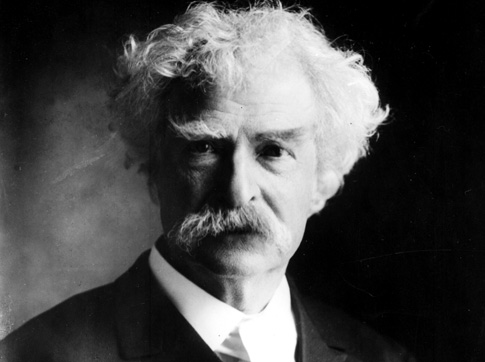
Mark Twain quotation after hearing that his obituary had been published in the New York Journal.
Mistaken publications of obituaries aren’t as rare as you might expect. A recent example is of Dave Swarbrick, the British folk/rock violinist, who was killed off mistakenly by the Daily Telegraph in April 1999 when they reported that his visit to hospital in Coventry had resulted in his death. He did at least get the opportunity to read a rather favourable account of his life, not something we all get to do, and to deliver the gag “It’s not the first time I have died in Coventry”.
So why have I opened with this quote from Mark Twain? Read on and I hope all will be clear.
Integrity is always about getting to the truth!
A little under a week ago I published a couple of posts that proposed that the United States of America is an empire in decline. The first was What goes up? and the second Might just come down! As a Brit I well know that aspect of British history!
However a recent conversation with a friend of many years back in England, who has also been a shrewd and wise entrepreneur for longer than I care to remember, argued that the evidence for the ‘end of the USA’ could be challenged.
He cited five reasons why he thought the USA would remain, more or less, in its dominant position. They were:
Spirit of innovation
Relaxed labour laws
The importance of Mexico
The uncertainty of China in terms of the next ’empire’
The likely energy self-sufficiency for the USA in the near-term.
So let me expand on each of those points.
Spirit of innovation
Let me quote from an article in TIME Magazine of the 5th June, 2011,
Innovation is as American as apple pie. It seems to accord with so many elements of our national character — ingenuity, freedom, flexibility, the willingness to question conventional wisdom and defy authority. But politicians are pinning their hopes on innovation for more urgent reasons. America’s future growth will have to come from new industries that create new products and processes. Older industries are under tremendous pressure. Technological change is making factories and offices far more efficient. The rise of low-wage manufacturing in China and low-wage services in India is moving jobs overseas. The only durable strength we have — the only one that can withstand these gale winds — is innovation.
Now there are plenty to argue both ways in terms of the future innovation potential for the USA, as a recent article in The Atlantic does, see American Innovation: It’s the Best of Times and the Worst of Times. But the spirit of innovation will be a powerful economic potential for the USA for many years to come.
Relaxed labour laws.
Definitely an area that I have little knowledge of except for the subjective notion that compared to many other nations, the laws in the USA are much less of a restraint on economic productivity than elsewhere.
The importance of Mexico.
Importance in the context of providing the USA with a source of cheaper manufacturing facilities. My English friend thought that this was a significant competitive advantage for the USA. Now, as it happens, we had a couple staying with us over the week-end of the 6th/7th October. The husband is a senior manager of Horst Engineering, an American firm based in Guaymas, Sonora County, Mexico. Here’s a picture from their website,
We are a contract manufacturer of precision machined components and assemblies for aerospace, medical, and other high technology industries. Our core processes include Swiss screw machining, turning, milling, thread rolling, centerless grinding, and assembly. Our extensive supply chain offers our customers a full service logistics solution for managing their precision product requirements. We are ISO9001:2008 and AS9100 registered and proud of our 66 year, three-generation legacy of quality and performance.
I was told that many American and British firms were using Mexico rather than China for a number of reasons. Not least because Chinese suppliers require full payment before shipment. Plus that taking into account that financial aspect together with shipping costs and other logistical issues, China wasn’t as ‘cheap’ over all. Here’s a recent announcement from Rolls Royce,
Rolls-Royce plans new Sonora hub
The burgeoning aerospace industry in Guaymas had its efforts validated recently when the venerable Rolls-Royce chose it as the site for its newest global purchasing office.
Surrounded by several of its aerospace manufacturing suppliers, London-based Rolls-Royce will move into a Guaymas industrial park owned by Tucson-based The Offshore Group to develop a supply hub for commercial jets and military aircraft around the globe.
“Rolls-Royce has very robust booking orders for the next 10 years,” said Joel Reuter, director of communications for Rolls-Royce in North America. “We need to double our production.”
Because a number of Rolls-Royce suppliers already operate in Guaymas, the city was a logical choice, Reuter said.
The uncertainty of China in terms of the next ’empire’
The point made in terms of China taking over ’empire’ status from the USA, as Simon Johnson argues over at Baseline Scenario, is countered by the fact that politically China is an unknown quantity. Until China endorses some form of democratic process, that unknowingness is not going to disappear.
The likely energy self-sufficiency for the USA in the near-term.
I can’t do better than to ask you to watch this video! Just 27-minutes long, it is a very interesting review of the energy future of the USA.
As the TED website suggests in terms of why you should listen to Amory Lovins,
Amory Lovins was worried (and writing) about energy long before global warming was making the front — or even back — page of newspapers. Since studying at Harvard and Oxford in the 1960s, he’s written dozens of books, and initiated ambitious projects — cofounding the influential, environment-focused Rocky Mountain Institute; prototyping the ultra-efficient Hypercar — to focus the world’s attention on alternative approaches to energy and transportation.
His critical thinking has driven people around the globe — from world leaders to the average Joe — to think differently about energy and its role in some of our biggest problems: climate change, oil dependency, national security, economic health, and depletion of natural resources.
So, don’t know about you, but I found those five points deeply convincing. How about you? Are the reports of the death of the USA greatly exaggerated? Do leave a comment.
I started writing this post back on the 25th September. Why so far back? Because that day something came into my in-box that deserved the widest circulation. It’s an event being held just under a month from today, November 14th. But it seemed worthwhile to give this amount of notice. However, the reason why I wanted to start it back in September was because in the last 24 hours of that day, the 25th, the UK offered very good evidence of the significant increase in severe weather.
From the UK’s Met Office blog on the 25th September, 2012, (I have included the inches equivalent of the mm figures)
Rainfall figures: over a month’s worth of rain in two days
Rainfall totals for the past few days – from 1:00 am Sunday morning to 8:00 am this morning [Tuesday] – show some areas have already had more than twice their usual September rainfall. Ravensworth, in North Yorkshire, has seen the highest total, with 107.8 mm [4.24 in] falling, over 200 % of its average September rainfall.
The rainfall has been widespread, with many areas across the United Kingdom receiving large totals. Killylane, in Antrim Northern Ireland saw 98.2 mm [3.87 in], and high totals were also recorded in the south-west, with 72.4 mm [2.85 in] in Filton and 65.2 mm [2.57 in] at Dunkeswell Aerodrome.
Dunkeswell Aerodrome in Devon was where I used to fly our group-owned Piper Super Cub, still in military markings.
Piper Super Cub at Dunkeswell AerodromeA carriage made for two!
Anyway, back to the plot!
Also on that day (September 25th) the website Think Progress released this item,
Markey/Waxman Report: Carbon Pollution Creating A ‘Cocktail Of Heat And Extreme Weather’
By Climate Guest Blogger and Stephen Lacey on Sep 25, 2012 at 3:31 pm
by Katie Valentine and Stephen Lacey
Two House Democrats have released a report that aims to connect the dots on climate change and extreme weather events.
The staff report, issued by Henry Waxman (D-Calif.) and Edward Markey (D-Mass.), outlines the past year’s record-setting temperatures, storms, droughts, water levels and wildfires, and is being circulated in an attempt to rebuild congressional momentum to address climate change.
“The evidence is overwhelming — climate change is occurring and it is occurring now,” said Rep. Waxman, a Ranking Member of the Energy and Commerce Committee, in a statement.
The report outlines the stunning array of record-breaking extreme weather events throughout 2012 within five categories:
Extreme temperatures
July was the hottest month ever recorded in the continental U.S. Some areas were 8 degrees warmer than average, with the average temperature in the lower 48 states at 77.6 degrees Fahrenheit, 3.3 degrees above the 20th century average.
Spring 2012 saw the warmest March, third-warmest April and second-warmest May in history, and was approximately 5.2 degrees Fahrenheit above average overall.
Through late June 2011, daily record highs were outnumbering daily record lows by 9-to-1.
Drought
As of September, 64 percent of the continental U.S. is experiencing drought, with August and September 2012 comparable to the worst months of the 1930s Dust Bowl.
By the beginning of August, more than half the counties in the U.S. had been designated disaster zones because of drought.
As of August, 51 percent of corn and 38 percent of soybeans grown in the U.S. were rated as poor or very poor by the U.S. Department of Agriculture. Some states’ corn fared worse – Indiana had 70 percent of its corn rated as poor or very poor, and Missouri had 84 percent.
Wildfires
This fire season 8.6 million acres – roughly the size of Connecticut and New Jersey combined – have burned in the U.S., with fires still burning in parts of the West.
Wildfires in Colorado have killed six people, destroyed 600 homes and caused about $500 million in property damage.
There has been nearly a four-fold increase in large wildfires in the West in recent decades, with fires burning longer and more intensely and wildfire seasons lasting longer.
Storms
Tropical Storm Debby caused Florida to have its wettest June on record. The storm killed at least seven people and also damaged more than 7,500 homes and businesses.
In July, the “derecho” storm system killed at least 23 people and left more than 3.7 million people without power.
In August, Hurricane Isaac caused storm surges of up to 15 feet in some places and contributed to Louisiana and Mississippi experiencing their second-wettest August on record and to Florida experiencing its wettest summer on record.
Extreme water levels and water temperatures
In July, water in the Great Lakes reached temperatures of 60 and 65 degrees Fahrenheit – more than 10 degrees warmer than the same time last year.
In August, water temperatures of up to 97 degrees and low water levels caused tens of thousands of fish to die in Midwestern lakes and rivers.
Low water levels in the Mississippi watershed have caused some barge companies to reduce their loads by 25 percent and have caused harbor closures in Tennessee, Missouri, Arkansas and Mississippi.
According to the report, 2012 natural disasters (not including wildfires or drought) have caused $22 billion in insured losses and more than 220 deaths as of August. The full cost of 2012’s extreme weather events isn’t yet known, but it’s expected to rival 2011’s record-breaking $55 billion.
The document outlines what scientists following the link between extreme weather and climate change have been saying for years: more carbon pollution adds extra energy in the atmosphere, thus warming the planet and making extreme weather events more likely.
We’ll move between our home studio in New York City and into each region of the world, bringing voices, news and multimedia content across all 24 time zones. We’ll feature videos from around the globe, man-on-the-street reports, music, and most importantly, stories from communities moving forward with solutions.
Most of all, we’ll generate new energy and urgency around the fact that we must — and we can — work together to address the climate crisis.
GET INVOLVED
Sign up today to be a part of the global community taking part in 24 Hours of Reality. RSVP on Facebook. Share this event with your friends. Submit your own videoabout the impacts of climate change where you live. And keep checking this page: We’ll post further details as the event draws closer.
Millions of people around the world know that the weather, their climate is changing. But if you can take some more powerful evidence of just how it’s all changing then go and read a recent report on the Grist website, entitled ‘Deadly connection: New report on extreme weather and climate change’












 Learning from Dogs