Apologies again for today’s post being largely the republication of other essays but looking after our guests is, as it should be, taking first priority.
The first one was something I read on the Cliff Mass weather blogsite. It was a forecast as to which of the lower US 48 States would remain habitable. It opens:
Will the Pacific Northwest be a Climate Refuge Under Global Warming?
As global warming takes hold later in the century, where will be the best place in the lower 48 states to escape its worst effects?
A compelling case can be made that the Pacific Northwest will be one of the best places to live as the earth warms. A potential climate refuge.
and offers this conclusion:
So what conclusion does one inevitably reach by studying the IPCC reports, the U.S. Climate Assessment, and the climate literature?
The Northwest is the place to be during global warming.
Temperatures will rise more slowly than most of the nation due to the Pacific Ocean (see below)
We will have plenty of precipitation, although the amount falling as snow will decline (will fall as rain instead). But we can deal with that by building more reservoir and dam capacity (and some folks on the eastern slopes of the Cascades have proposed to do exactly that).
The Pacific Ocean will keep heat waves in check and we don’t get hurricanes.
Sea level rise is less of a problem for us due to our substantial terrain and the general elevation rise of our shorelines. Furthermore, some of our land is actually RISING relatively to the sea level because we are still recovering from the last ice age (the heavy ice sheets pushed the land down and now it is still rebounding).
There is no indication that our major storms…cyclone-based winds (like the Columbus Day Storm)… will increase under global warming.
Increased precipitation may produce more flooding, but that will be limited to river valleys and can be planned for with better river management and zoning.
The second item was this:
Antarctica’s Point of No Return
POTSDAM – Recent satellite observations have confirmed the accuracy of two independent computer simulations that show that the West Antarctic ice sheet has now entered a state of unstoppable collapse. The planet has entered a new era of irreversible consequences from climate change. The only question now is whether we will do enough to prevent similar developments elsewhere.
What the latest findings demonstrate is that crucial parts of the world’s climate system, though massive in size, are so fragile that they can be irremediably disrupted by human activity. It is inevitable that the warmer the world gets, the greater the risk that other parts of the Antarctic will reach a similar tipping point; in fact, we now know that the Wilkes Basin in East Antarctica, as big or even bigger than the ice sheet in the West, could be similarly vulnerable.
There are not many human activities whose impact can reasonably be predicted decades, centuries, or even millennia in advance. The fallout from nuclear waste is one; humans’ contribution to global warming through greenhouse-gas emissions from burning fossil fuels, and its impact on rising sea levels, is another.
Indeed, the latest Intergovernmental Panel on Climate Change (IPCC) report stated, in uncharacteristically strong terms, that the sea level is “virtually certain” to continue to rise in the coming centuries or millennia. Moreover, the greater our emissions, the higher the seas will rise.
Simply, because the quicker that the awareness of the critical challenges ahead becomes widespread knowledge, right around the world, the quicker that there will be political movements to change our relationship with our planet.
It’s never about not needing governments, it’s always about needing the right sort of governments.
I have written previously on Learning from Dogs about the future having to be local if we are to stand any chance of coping with what is ahead. So it was a delight to read this post from Alex’s blog The Liberated Way. In my opinion, Alex is spot on the mark.
ooOOoo
The rise of localism
Posted on August 6, 2014
Globalism and central control is coming to an end.
Bees are localised, sustainable and self-reliant, something humanity will learn the hard way.
The first of a series of debates on Scottish independence from the UK took place yesterday, the vote for independence takes place next month. The campaign for Scottish independence is part of a larger paradigm shift away from globalism to localism around the world. Cornwall, Wales, Mercia, Yorkshire and Wessex are all campaigning for independence in the UK. Even in my town of Colchester we want to take back control of highways from external authorities.
The European elections this year resulted in a surge in anti-EU nationalistic parties doing well. UKIP which wants the UK to leave the EU was the clear winner in the UK in the European elections. The UN is increasingly seen as ineffective in the face of international crisis, often used by a few powerful nations, and ignored by practically everyone. Israel recently expressed the contempt nations now have for the UN by bombing UN schools in Gaza.
The USSR has broken up into small nations, as has Yugoslavia. Sudan split into two and Georgia into three nations. There is talk of California in the USA breaking into six states, and a growing but still small movements for other states breaking away from the Union altogether. The fighting in East Ukraine is as much about local Russians wanting to determine their own future as the international games of chess between the superpowers.
Flanders is seeking to break from Belgium; Catalonia and the Basque Country want to break from Spain; the city of Venice wants to break from Italy; Quebec is looking to break from Canada; Kurdistan and many other Peoples are seeking to form their own nation states out of the chaos of Iraq, Syria and Libya.
New forms of local currency such as the Totnes pound and electronic currencies such as Bitcoin challenge the bankers. Until recently my local council Essex Council was talking about creating its own bank for local people. Corporates such as Starbucks are considering creating their own currencies, in effect becoming their own banks. Multiple non-banking payment systems such as PayPal are now part of internet commerce. In the face of sanctions Russia has created their own version of VISA for citizens to pay their bills.
The internet has helped to break up the power of information monopolies where the citizen blogger is as effective as a journalist in the New York Times. The internet places greater power in the hands of the individual on the local level.
Water, energy, food and debt are the four great forces now driving the world politically, economically and socially. The many chasing a diminishing amount of resources drives people to fight or conserve their resources. Huge growing public and private debt is destroying nation states, driving the momentum to think local rather than global. The Greek economic crisis drove local people back to the land, to become self-sufficient, and create systems of trade outside of the global financial system.
I support localism, and I designed my business with localism in mind. The growing international crisis will force people to become local, sustainable and self-reliant. As the money runs out nations, communities and individuals will quickly learn that it is down to themselves to live or die.
I’m preparing this post on Sunday; i.e. three days ago. Reason is that my sister, Elizabeth, and friend, Merle, are arriving on Monday afternoon (as in two days ago) bringing us up to three guests in the house. My mother leaves on tomorrow morning and then Elizabeth and Merle depart on Friday morning. So for all the right reasons, Learning from Dogs is taking a backstage. Hence me doing as much as I can ahead of time.
In Monday’s post, The tracks we leave, towards the end I wrote, “The utter madness of mankind’s group blindness is beyond comprehension.” Many know that there is something very badly wrong with the way politics is operating today. Yet, at the same time, many intuitively know the political changes that mankind has to see if there is to be any chance of a sustainable future for mankind on this planet.
Thus George Monbiot’s essay published on the 29th July makes encouraging reading in the context of the growing confidence of the UK Green Party. It is republished here with the kind permission of George Monbiot.
ooOOoo
Unmasked
July 29, 2014
The justifications for extreme inequality have collapsed. But only the Green Party is prepared to take the obvious step
By George Monbiot, published in the Guardian 30th July 2014
When inequality reaches extreme and destructive levels, most governments seek not to confront it but to accommodate it. Wherever wealth is absurdly concentrated, new laws arise to protect it.
In Britain, for example, successive governments have privatised any public asset which excites corporate greed. They have cut taxes on capital and high incomes. They have legalised new forms of tax avoidance (1). They have delivered exotic gifts like subsidised shotgun licences and the doubling of state support for grouse moors (2). And they have dug a legal moat around the charmed circle, criminalising, for example, the squatting of empty buildings (3) and most forms of peaceful protest (4). However grotesque inequality becomes, however closely the accumulation of inordinate wealth resembles legalised theft, political norms shift to defend it.
None of this should surprise you. The richer the elite becomes, and the more it has to lose, the greater the effort it makes to capture public discourse and the political system. It scarcely bothers to disguise its wholesale purchase of political parties, by means of an utterly corrupt and corrupting funding system (5,6). You can feel its grip not only on policy but also on the choice of parliamentary candidates and appointments to the cabinet. The very rich want people like themselves in power, which is why we have a government of millionaires (7).
But that describes only one corner of their influence. They fund lobby groups, thinktanks and economists to devise ever more elaborate justifications for their seizure of the nation’s wealth (8). These justifications are then amplified by the newspapers and broadcasters owned by the same elite.
Among the many good points Thomas Piketty makes in Capital in the 21st Century – his world-changing but surprisingly mild book – is that extreme inequality can be sustained politically only through an “apparatus of justification.” (9) If voters can be persuaded that insane levels of inequality are sane, reasonable and even necessary, then the concentration of income can keep growing. If they can’t, then either states are forced to act, or revolutions happen.
For the notion that inequalities must be justified sits at the heart of democracy. It is possible to accept that some can have much more than others if one of two conditions are met: either that they reached this position through the exercise of their unique and remarkable talent; or that this inequality is good for everyone. So the network of think tanks, economists and tame journalists must make these justifications plausible.
It’s a tough job. If wages reflect merit, why do they seem so arbitrary? Are the richest executives 50 or 100 times better at their jobs than their predecessors were in 1980? Are they 20 times more skilled and educated than the people immediately below them, even though they went to the same business schools? Are US executives several times as creative and dynamic as those in Germany? If so, why are their results so unremarkable?
It is, of course, all rubbish. What we see is not meritocracy at work at all, but a wealth grab by a nepotistic executive class which sets its own salaries, tests credulity with its ridiculous demands and discovers that credulity is an amenable customer. They must marvel at how they get away with it.
Moreover, as education and even (in the age of the intern) work becomes more expensive, the opportunities to enter the grabbers’ class diminish. The nations which pay the highest top salaries, such as the US and Britain, are also among the least socially mobile (10). Here, you inherit not only wealth but opportunity.
Aha, they say, but extreme wealth is good for all of us. All will be uplifted by their god’s invisible hand. Their creed is based on the Kuznet’s curve, the graph which appears to show that inequality automatically declines as capitalism advances, spreading wealth from the elite to the rest.
When Piketty took the trouble to update the curve, which was first proposed in 1955, he discovered that the redistribution it documented was an artefact of the peculiar circumstances of its time. Since then the concentration of wealth has reasserted itself with a vengeance (11). The reduction in inequality by 1955 was not an automatic and inherent feature of capitalism, but the result of two world wars, a great depression and the fierce response of governments to these disruptions.
For example, the top federal income tax rate in the US rose from 25% in 1932 to 94% in 1944. The average top rate throughout the years 1932 to 1980 was 81%. In the 1940s, the British government imposed a top income tax of 98% (12). The invisible hand? Hahaha. As these taxes were slashed by Reagan and Thatcher and the rest, inequality boomed once more, and is exploding today. This is why the neoliberals hate Piketty with such passion and poison: he has destroyed with data the two great arguments with which the apparatus of justification seeks to excuse the inexcusable.
So here we have a perfect opportunity for progressive parties: the moral and ideological collapse of the system of thought to which they were previously in thrall. What do they do? Avoid the opportunity like diphtheria. Cowed by the infrastructure of purchased argument, Labour fiddles and dithers (13).
But there is another party, which seems to have discovered the fire and passion that moved Labour so long ago: the Greens. Last week they revealed that their manifesto for the general election will propose a living wage, the renationalisation of the railways, a maximum pay ratio (no executive should receive more than 10 times the salary of the lowest paid worker), and, at the heart of their reforms, a wealth tax of the kind Piketty recommends (14).
Yes, it raises plenty of questions, but none of them are unanswerable, especially if this is seen as one step towards the ideal position: a global wealth tax, that treats capital equally, wherever it might lodge. Rough as this proposal is, it will start to challenge the political consensus and draw people who thought they had nowhere to turn. Expect the billionaires’ boot boys to start screaming, once they absorb the implications. And take their boos and jeers as confirmation that it’s onto something. You wanted a progressive alternative? You’ve got it.
My draft book of the same name as this blog is slowly coming together and I’m at the 30,000-word mark. A while ago, John Hurlburt, a good friend of this blog, was chatting to me and he spoke about the “interconnectedness of all conscious life”. It immediately appealed to me as a chapter in the book.
But while it was obvious to me that all conscious life is connected, for some time I struggled to achieve any clarity about what I wanted to write. Seeing that proverb kicked off the journey towards clarity.
Thus, today, I wanted to share the steps of that journey so far.
Over on the Skeptical Science blogsite there is a post, dated 15th April, 2010, with the title of Earth’s five mass extinction events. The author, John Cook, opens:
As climate changes, a major question is whether nature can adapt to the changing conditions? The answer lies in the past. Throughout Earth’s history, there have been periods where climate changed dramatically. The response was mass extinction events, when many species went extinct followed by a very slow recovery. The history of coral reefs gives us an insight into the nature of these events as reefs are so enduring and the fossil record of corals is relatively well known (Veron 2008). What we find is reefs were particularly impacted in mass extinctions, taking many millions of years to recover. These intervals are known as “reef gaps”.
Figure 1: Timeline of mass extinction events. The five named vertical bars indicate mass extinction events. Black rectangles (drawn to scale) represent global reef gaps and brick-pattern shapes show times of prolific reef growth (Veron 2008).
So what, one might ask?
Well, forget about millions of years ago. Just 12 days ago, there was a news item released by Stanford University. It read in full:
July 24, 2014
Stanford biologist warns of early stages of Earth’s 6th mass extinction event
Stanford Biology Professor Rodolfo Dirzo and his colleagues warn that this “defaunation” could have harmful downstream effects on human health.
The planet’s current biodiversity, the product of 3.5 billion years of evolutionary trial and error, is the highest in the history of life. But it may be reaching a tipping point.
In a new review of scientific literature and analysis of data published in Science, an international team of scientists cautions that the loss and decline of animals is contributing to what
Elephants and other large animals face an increased risk of extinction in what Stanford Biology Professor Rodolfo Dirzo terms “defaunation.” (Claudia Paulussen/Shutterstock)
appears to be the early days of the planet’s sixth mass biological extinction event.
Since 1500, more than 320 terrestrial vertebrates have become extinct. Populations of the remaining species show a 25 percent average decline in abundance. The situation is similarly dire for invertebrate animal life.
And while previous extinctions have been driven by natural planetary transformations or catastrophic asteroid strikes, the current die-off can be associated to human activity, a situation that the lead author Rodolfo Dirzo, a professor of biology at Stanford, designates an era of “Anthropocene defaunation.”
Across vertebrates, 16 to 33 percent of all species are estimated to be globally threatened or endangered. Large animals – described as megafauna and including elephants, rhinoceroses, polar bears and countless other species worldwide – face the highest rate of decline, a trend that matches previous extinction events.
Larger animals tend to have lower population growth rates and produce fewer offspring. They need larger habitat areas to maintain viable populations. Their size and meat mass make them easier and more attractive hunting targets for humans.
Although these species represent a relatively low percentage of the animals at risk, their loss would have trickle-down effects that could shake the stability of other species and, in some cases, even human health.
For instance, previous experiments conducted in Kenya have isolated patches of land from megafauna such as zebras, giraffes and elephants, and observed how an ecosystem reacts to the removal of its largest species. Rather quickly, these areas become overwhelmed with rodents. Grass and shrubs increase and the rate of soil compaction decreases. Seeds and shelter become more easily available, and the risk of predation drops.
Consequently, the number of rodents doubles – and so does the abundance of the disease-carrying ectoparasites that they harbor.
“Where human density is high, you get high rates of defaunation, high incidence of rodents, and thus high levels of pathogens, which increases the risks of disease transmission,” said Dirzo, who is also a senior fellow at the Stanford Woods Institute for the Environment. “Who would have thought that just defaunation would have all these dramatic consequences? But it can be a vicious circle.”
The scientists also detailed a troubling trend in invertebrate defaunation. Human population has doubled in the past 35 years; in the same period, the number of invertebrate animals – such as beetles, butterflies, spiders and worms – has decreased by 45 percent.
As with larger animals, the loss is driven primarily by loss of habitat and global climate disruption, and could have trickle-up effects in our everyday lives.
For instance, insects pollinate roughly 75 percent of the world’s food crops, an estimated 10 percent of the economic value of the world’s food supply. Insects also play a critical role in nutrient cycling and decomposing organic materials, which helps ensure ecosystem productivity. In the United States alone, the value of pest control by native predators is estimated at $4.5 billion annually.
Dirzo said that the solutions are complicated. Immediately reducing rates of habitat change and overexploitation would help, but these approaches need to be tailored to individual regions and situations. He said he hopes that raising awareness of the ongoing mass extinction – and not just of large, charismatic species – and its associated consequences will help spur change.
“We tend to think about extinction as loss of a species from the face of Earth, and that’s very important, but there’s a loss of critical ecosystem functioning in which animals play a central role that we need to pay attention to as well,” Dirzo said. “Ironically, we have long considered that defaunation is a cryptic phenomenon, but I think we will end up with a situation that is non-cryptic because of the increasingly obvious consequences to the planet and to human wellbeing.”
The coauthors on the report include Hillary S. Young, University of California, Santa Barbara; Mauro Galetti, Universidade Estadual Paulista in Brazil; Gerardo Ceballos, Universidad Nacional Autonoma de Mexico; Nick J.B. Isaac, of the Natural Environment Research Council Centre for Ecology and Hydrology in England; and Ben Collen, of University College London.
For more Stanford experts on ecology and other topics, visit Stanford Experts.
It hardly requires any imagination to realise that what we humans need in order to live, air, food, and clean water, is utterly dependant on us humans caring for the planet that sustains us. It’s all too easy just to take for granted that we will always have air, food and clean water. Now go back and read that last sentence from Professor Dirzo. [my emphasis]
We tend to think about extinction as loss of a species from the face of Earth, and that’s very important, but there’s a loss of critical ecosystem functioning in which animals play a central role that we need to pay attention to as well. Ironically, we have long considered that defaunation is a cryptic phenomenon, but I think we will end up with a situation that is non-cryptic because of the increasingly obvious consequences to the planet and to human wellbeing.
The tracks we leave! H’mmm.
Let me move on in my journey.
Over on the EarthSky blogsite there was an item about the mysterious giant crater that appeared suddenly in Siberia.
Mystery crater in Yamal peninsula probably caused by methane release
Thawing permafrost likely allowed methane gas to be released, creating the large hole in permafrost found in northern Russia, says the Russian team that investigated it.
UPDATE July 31, 2014.
Stories are popping up fast in various media this afternoon about a likely source of a reported, mysterious hole in permafrost in the Yamal region of northern Russia. This hole was
The first mysterious crater spotted by helicopter in the Yamal region of northern Russia. Image via Nature.
spotted by a helicopter pilot in mid-July; reindeer herders reported a second hole some days later. Eric Holthaus of Slate said that there is now:
… new (and definitive) evidence … that the Siberian holes were created via methane released from warming permafrost.
The evidence has come via the journal Nature, which published a story on its website today (July 31) featuring the findings of Andrei Plekhanov, a senior researcher at the Scientific Centre of Arctic Studies in Salekhard, Russia, and his team. This is the team that was sent in to investigate the first hole shortly after it was found. Holthaus said:
That team measured methane concentrations up to 50,000 times standard levels inside the crater.
The story in Nature said:
Air near the bottom of the crater contained unusually high concentrations of methane — up to 9.6% — in tests conducted at the site on 16 July … Plekhanov, who led an expedition to the crater, says that air normally contains just 0.000179% methane …
Plekhanov and his team believe that it is linked to the abnormally hot Yamal summers of 2012 and 2013, which were warmer than usual by an average of about 5°C. As temperatures rose, the researchers suggest, permafrost thawed and collapsed, releasing methane that had been trapped in the icy ground.
Holthaus pointed out:
Last week, the New York Times’ Andrew Revkin interviewed a Russian scientist who had also visited the hole and came to similar conclusions.
This newly reported evidence, just coming to light today, seems particularly scary given the story earlier this week about what the University of Stockholm called “vast methane plumes” found by scientists aboard the icebreaker Oden, which is now exploring and measuring methane release from the floor of the Arctic Ocean.
Build-up and release of gas from thawing permafrost most probable explanation, says Russian team.
My last step in the journey about our interconnectedness involves water.
Water scarcity may be the most underrated resource issue the world is facing today.
Seventy percent of world water use is for irrigation.
Each day we drink nearly 4 liters of water, but it takes some 2,000 liters of water — 500 times as much — to produce the food we consume.
1,000 tons of water is used to produce 1 ton of grain.
Between 1950 and 2000, the world’s irrigated area tripled to roughly 700 million acres. After several decades of rapid increase, however, the growth has slowed dramatically, expanding only 9 percent from 2000 to 2009. Given that governments are much more likely to report increases than decreases, the recent net growth may be even smaller.
The dramatic loss of momentum in irrigation expansion coupled with the depletion of underground water resources suggests that peak water may now be on our doorstep.
Today some 18 countries, containing half the world’s people, are overpumping their aquifers. Among these are the big three grain producers — China, India, and the United States.
Saudi Arabia is the first country to publicly predict how aquifer depletion will reduce its grain harvest. It will soon be totally dependent on imports from the world market or overseas farming projects for its grain.
While falling water tables are largely hidden, rivers that run dry or are reduced to a trickle before reaching the sea are highly visible. Among this group that has limited outflow during at least part of the year are the Colorado, the major river in the southwestern United States; the Yellow, the largest river in northern China; the Nile, the lifeline of Egypt; the Indus, which supplies most of Pakistan’s irrigation water; and the Ganges in India’s densely populated Gangetic basin.
(The rest of this important article including the many useful links may be read here.)
Now, despite the despondent theme of the contents of this post, I am not beating a ‘doom and gloom’ drum. What I am trying to point out is that we are all interconnected. Not just all of mankind but all conscious life. Ergo, the destruction of natural habitats, the loss of every species, even the unwarranted killing of a wild animal is, in a very real and tangible way, the destruction of our habitat, the loss of our species and the unwarranted killing of future generations of homo sapiens.
It seems that whichever way we look the interconnectedness of all conscious life is staring us full in the face. The utter madness of mankind’s group blindness is beyond comprehension.
It takes an ancient proverb from a people that lived in harmony with the planet to speak the truth. We ignore it at our peril.
Undoubtedly, those of you that watched the George Monbiot speech in yesterday’s post will have been struck by at least two key aspects. The first being the utter absurdity in the way that we are being governed (UK and the USA) and the second that change can only come from people bonding at a local level. For it is within local communities that groups of people share their ideas and develop a vision for change that they can stand behind in an open and demonstrable manner.
The history of mankind is inseparable from the history of living in communities. It’s only in recent times that so many have chosen to live in cities and towns. Dogs, of course, offer a brilliant and wonderful example of the benefits of community life.
Back to George Monbiot. Here are some of Mr. Monbiot’s words towards the end of his speech. (My emphasis.)
As Lakoff has pointed out, these people are trying to do the right thing but they are completely failing to apply a frames analysis. A frame is a mental structure through which you understand an issue. Instead of framing the issue with our own values and describing and projecting our values – which is the only thing in the medium- to long-term that ever works – we are abandoning them and adopting instead the values of the people who are wrecking the environment. How could there be any long-term outcome other than more destruction?
There’s another way of looking at this, which says the same thing in different ways. All of us are somewhere along a spectrum between intrinsic values and extrinsic values. Extrinsic values are about reputation and image and money. They’re about driving down the street in your Ferrari and showing it to everyone. They are about requiring other people’s approbation for your own sense of well-being.
Intrinsic values are about being more comfortable with yourself and who you are. About being embedded in your family, your community, among your friends, and not needing to display to other people in order to demonstrate to yourself that you are worth something.
The desire for humans to belong to a community was highlighted in a recent article in Time Magazine under it’s Culture section (August 4th). The article was called Atheist “Churches” Gain Popularity—Even in the Bible Belt(again, my emphasis).
Jerry Dewitt (Left), A former Pentecostal minister, DeWitt now leads the secular Community Mission Chapel in Lake Charles, La. Mike Aus (Right), In September 2012, Aus began Houston Oasis, an atheist service that is considered a model for nonbelievers nationwide.
On a clear, Sunny July morning, as churchgoers all around Houston take to their pews, dozens of nonbelievers are finding seats inside a meeting room in a corporate conference center on the city’s west side to listen to a sermon about losing faith. But first there’s the weekly “community moment”–remarks on a chosen topic delivered by the group’s executive director, this time focused on how we’re hardwired to read sensationalized news–as well as announcements about an upcoming secular summer camp. In between, a musician sings softly of Albert Einstein.
The men speaking before the assembled gathering–executive director Mike Aus, who regularly leads the group, and Jerry DeWitt, a visitor who heads a similar gathering in Louisiana–are both deeply familiar with the idea of Sunday ritual.
Later in the article, Mike Aus (see picture above) goes on to say (once more, my emphasis):
There are a lot of people in the free-thought movement who say: Well, this is just mimicking church. But if we don’t offer regular human community and support for nonbelievers, it would be detrimental to the movement.
Whether we like it or not, change is being thrown at us by nature at an unprecedented scale; certainly unprecedented in the experience of homo sapiens. Our only hope is to turn away from the destructive agendas of our present governments all across the world and build change from the grassroots up.
I’m really showing my age and cultural upbringing through the choice of this title to today’s post.
For The Goon Show was an integral part of my ‘education’ during my formative years. Spike Milligan was an outstanding actor in The Goon Show, a comedy legend, along with Peter Sellers and Harry Secombe; not forgetting the narratives from Wallace Greenslade.
The Goon Show ran from 1951 to 1960 (I was born in 1944) broadcast by the BBC Home Service.
Spike Milligan after receiving his Order of the British Empire (OBE) in 1992.
What’s this all leading up to?
Simply that a recent speech by George Monbiot reveals such utter madness in the upper echelons of the United Kingdom that only reflecting on The Goon Show offers any meaning to this old Brit. Not that the USA escapes Mr. Monbiot’s analysis.
Here’s how the speech opens:
The Pricing of Everything
Ladies and gentlemen, we are witnessing the death of both the theory and the practice of neoliberal capitalism. This is the doctrine which holds that the market can resolve almost all social, economic and political problems. It holds that people are best served, and their prosperity is best advanced, by the minimum of intervention and spending by the state. It contends that we can maximise the general social interest through the pursuit of self-interest.
To illustrate the spectacular crashing and burning of that doctrine, let me tell you the sad tale of a man called Matt Ridley. He was a columnist on the Daily Telegraph until he became – and I think this tells us something about the meritocratic pretensions of neoliberalism – the hereditary Chair of Northern Rock: a building society that became a bank. His father had been Chair of Northern Rock before him, which appears to have been his sole qualification.
While he was a columnist on the Telegraph he wrote the following:
The government “is a self-seeking flea on the backs of the more productive people of this world. … governments do not run countries, they parasitize them.”(1) He argued that taxes, bail-outs, regulations, subsidies, interventions of any kind are an unwarranted restraint on market freedom. When he became Chairman of Northern Rock, Mr Ridley was able to put some of these ideas into practice. You can see the results today on your bank statements.
In 2007 Matt Ridley had to go cap in hand to the self-seeking flea and beg it for what became £27 billion. This was rapidly followed by the first run on a British bank since 1878. The government had to guarantee all the deposits of the investors in the bank. Eventually it had to nationalise the bank, being the kind of parasitic self-seeking flea that it is, in order to prevent more or less the complete collapse of the banking system. (2)
You can read the full transcript and look up the references over on the George Monbiot website.
However, a real bonus is that his speech (delivered without notes!), his SPERI Annual Lecture, hosted by the Sheffield Political Economy Research Institute at the University of Sheffield, was recorded on video.
Please set aside a quiet hour (and a tad) to listen to George Monbiot and wonder at the goon show that we are all acting out! In fact, watching his speech and his answers to a number of questions from the audience will give you something that the transcript just can’t convey. Watch it! You will be inspired!
(SPERI Annual Lecture by George Monbiot: “The Pricing of Everything” at the Octagon in Sheffield, UK, on 29th April 2014.)
Back to dear old Spike Milligan and to close with what seems like a very apt quote of his.
“All I ask is the chance to prove that money can’t make me happy.“
“Democracy is when the indigent, and not the men of property, are the rulers.”
Thus said Aristotle.
Here’s another quote from more recent times.
“The supreme quality for leadership is unquestionably integrity. Without it, no real success is possible, no matter whether it is on a section gang, a football field, in an army, or in an office.”
So said President Dwight D. Eisenhower.
oooo
Today’s post started as an ill-defined idea in my head following me reading a recent essay over on Patrice Ayme’s blog. It was his (her?) post of the 17th July in which was written, “Representative democracy has to be destroyed as an ideal.” and later,
Meanwhile the French People would be well advised to search for a new form of government more appropriate to the modern world, and the increasing democracy we all dearly need.
One does not have to look very far for inspiration: the Confoederatio Helvetica next door, an independent, and central part of the Franks’ Francia, is enjoying a much more direct form of democracy.
that caused me to leave a comment,
I read a deeper malaise in your essay, Patrice, and that is the failure of ‘representative’ democracy in country after country around the world. In fact, it’s inspiring me to write a post over on LfD about the possibilities for truly democratic government.
that, in turn, was replied to by Patrice:
Please go ahead, Paul, and keep me informed! ;-)! And you are completely right. Representative democracy is actually oligarchic representation. Athenians had 80,000 citizens, and 80,000 legislators. France has about 1,000 times more citizens, and one half of a thousandth (1/2,000) fewer legislators. That makes the French democratic index half of a million times less than the Athenians!
Let me step back for a moment.
Over the life of this blog, I have touched on the vulnerability of human life on this planet more than once. It’s not being at all smart to say that mankind is crapping on its own doorstep and our future is in severe doubt. The reason I say it’s not smart is simply because millions of people almost certainly think that or something pretty damn close.
Maybe the huge divide between what ‘the man in the street’ knows makes common sense and the terrible lack of common sense shown by so many of our governments is at the root of the problem. In other words, our representative democratic system isn’t working.
Here’s a letter from the pages of the Tampa Bay Times from just last Tuesday.
Tuesday’s letters: Our democratic system is at risk
There are thoughtful, informed people who are worried that our democratic system of government is not working and the whole enterprise is at risk. I think there is only one solution to the problem: to elect people who have demonstrated the ability to work cooperatively with others and solve problems.
It is foolish to think that the personalities of members of Congress change when they arrive in Washington. A worrisome number were fools, buffoons and rigidly ideological before they were elected, and there is no realistic possibility that anyone or anything can change their personalities after they are elected and while they are in office.
It is a crisis long in the making. Most students finish high school with little or no understanding of American history or the way their government works. There is no understanding of the idea of citizenship and the heavy responsibility imposed on citizens who live in a democratic republic. There has never been so much information so easily available that could allow people to make wise use of their votes. But without the perspective of education and a deep understanding that voting is everything in our system of government, it all may slip away.
Roger C. Benson, St. Petersburg
“to elect people who have demonstrated the ability to work cooperatively with others and solve problems.”
I wouldn’t argue at all with the wisdom in those words. But I would add to it.
It’s my sense that many citizens in many countries feel that the whole business of government has got to large, too complicated, too remote and, frankly, has less to do with working “cooperatively with others and solve problems” than with feeding its own mouth. Take voter turnout.
Voter turnout in the USA; 1824 – 2008
Why such high levels of absenteeism; for want of a better description?
Let’s go back to the Athenians as Patrice mentioned. Plenty on the web to read but this article caught my eye.
Athenian Democracy: a brief overview
Christopher W. Blackwell, edition of February 28, 2003
· Summary ·
This article was originally written for the online discussion series “Athenian Law in its Democratic Context,” organized by Adriaan Lanni and sponsored by Harvard University’s Center for Hellenic Studies. Its purpose is to introduce, very briefly, the institutions of the Athenian democracy during the late 5th century BCE through the end of the radical democracy in the late 4th century. This is a companion-piece to “The Development of Athenian Democracy,” also written for the CHS’s discussion series.
· Introduction ·
The city of Athens lived under a radically democratic government from 508 until 322 BCE. Before the earlier date there was democracy to be found here and there in the government of Athens, and democratic institutions survived long after the latter date, but for those 186 years the city of Athens was self-consciously and decidedly democratic, autonomous, aggressive, and prosperous. Democracy in Athens was not limited to giving citizens the right to vote. Athens was not a republic, nor were the People governed by a representative body of legislators. In a very real sense, the People governed themselves, debating and voting individually on issues great and small, from matters of war and peace to the proper qualifications for ferry-boat captains (for the latter, see Aeschin. 3.157).1 The Athenian democracy was not, of course, a free-for-all of mob rule. The Athenians understood the value of checks and balances and of enforcing time for reflection before acting. They understood that professionalism is necessary in certain jobs, that accountability was necessary of most jobs, and that some jobs required absolute job-security. The system evolved over time, suffered two complete breakdowns in the 5th century, and is certainly open to criticism at many points during its history. Nevertheless, it was coherent enough during those two centuries that we can describe it, in general terms, without being too far wrong on any point. And despite its moments of imprudence, injustice, and indecision, it was an experiment remarkable enough to deserve our attention.
The early history of Athenian Democracy and its development is the subject of another article in this series. This general description of how the Athenians governed themselves will focus on the 4th century BCE, both because the democracy was most fully developed during that time and because the majority of our evidence either comes from that period, or describes the the Athenian government during that period.
Now there’s much more to read here for those so interested but I want to highlight a section from the above. This section:
In a very real sense, the People governed themselves, debating and voting individually on issues great and small, from matters of war and peace to the proper qualifications for ferry-boat captains. The Athenian democracy was not, of course, a free-for-all of mob rule. The Athenians understood the value of checks and balances and of enforcing time for reflection before acting. They understood that professionalism is necessary in certain jobs, that accountability was necessary of most jobs, and that some jobs required absolute job-security.
So from 322 BCE to 2014 AD!
A few days ago, Jeannie needed to change some details regarding her US Social Security payment. We saw that it could be done online. As one would expect, setting up online access for Jean meant jumping through a number of security hoops. All more or less sorted in 20 minutes.
It was clear that it would be incredibly difficult for someone to fraudulently break into her online SSA account. Think of the millions who perfectly happily manage their bank accounts online.
Ergo, there are no technical issues why every single eligible voter in the USA (and many other countries) couldn’t move towards governing themselves in a direct manner just like the Athenians. Indeed, voting in the USA at times of Presidential elections is permitted. But all that is doing is participating in a system that isn’t delivering real democracy.
We need to govern ourselves: “debating and voting individually on issues great and small, from matters of war and peace to the proper qualifications for ferry-boat captains.” Because humanity is facing some issues that are very great indeed!
Or have I missed something bloody obvious?
oooo
I opened today’s post with two quotations. I shall close by offering another two.
“If we don’t hang together, we most assuredly will hang separately.”
Benjamin Franklin advising the original continental congress of what became the United States of America.
“A key political question today is: Do you support the well-being of the Earth and the life that the Earth supports?“
From a good friend and supporter of this blog who chooses to remain anonymous. Who then added: “This question has spiritual, natural and rational implications which frame the debate in terms of human values greater than money.”
Before I move on to today’s essay, published courtesy of The Automatic Earth, let me ponder about the nature of reason. A quick dip into the dictionary offers this:
reason
noun
a basis or cause, as for some belief, action, fact, event, etc.: the reason for declaring war.
a statement presented in justification or explanation of a belief or action.
the mental powers concerned with forming conclusions, judgments, or inferences.
sound judgment; good sense.
normal or sound powers of mind; sanity.
The PhilosopherAyn Rand wrote once, “The Renaissance was specifically the rebirth of reason, the liberation of man’s mind, the triumph of rationality over mysticism – a faltering, incomplete, but impassioned triumph that led to the birth of science, of individualism, of freedom.”
Now as we move on, endeavour to keep this notion of reason in the forefront of your mind!
A few days ago, I read an essay that was first seen on Naked Capitalism. It was introduced by Yves Smith of NC thus:
Yves here. As Ilargi himself acknowledges, even by the standards of his fare, this post on “overshoot” is plenty sobering. We do seem to be on our way to precipitating a mass species die off (as in it’s underway already and humans seem remarkably unwilling to take sufficiently stern measures to stop it). The end of civilization as we know it seems almost inevitable, given that most “advanced” economies are seeing serious erosion of their social fabric, as reflected in falling social well-being measures.
However, the provocative point that Jay Hanson argues is that our hard-wired political habits guarantee our undoing. It’s akin to a literary rendering I read long ago of Dollo’s theory of evolution, which went something like this:
Species develop characteristics which give them competitive advantage. Dinosaurs get big so no predators can eat them up. Saber tooth tigers develop monster jaws so they can chomp on mastadons and other large prey.
But the problem is that species continue to develop these characteristics beyond the point of maximum advantage. Dinosaurs get so big that they need to get a second brain in their midsection to manage their bodies and they die of anatomical schizophrenia. Saber-tooth tiger become such efficient killers of large prey that they begin to wipe them out, and their hypertrophied jaws are badly adapted to killing smaller prey, so they die of starvation. And humans have developed overly large brains and are in the process of thinking themselves to death.
It was then a matter of moments to find that the essay was originally published on The Automatic Earth and, as was noted yesterday, a request to republish was very promptly replied to in the affirmative. It’s a privilege to share it with you.
It’s a long essay but entirely engaging; right through to the last footnote. More than that, many of those footnote links open up a majesty of learning and knowledge.
So if you aren’t in the right ‘headspace’ to settle down now and read it fully then bookmark it for a later date. I guarantee you will not be disappointed!
ooOOoo
Debt Rattle Jul 7 2014: Overshoot Loop
Posted by Raúl Ilargi Meijer
Russell Lee Fun with fountain at 4th of July picnic, Vale, OR July 1941
There is not one single person I’ve learned more from than Jay Hanson, back when I was even younger than I am now. Jay is not the greatest writer in the world, his talent is that he has the right kind of unrelenting curiosity, needed to dig deep into the reasons we put ourselves where we do (it’s hardwired). This curiosity put together the best library of information on ourselves and the world we live in that one can ever hope to find, at dieoff.org, much of it not published anywhere else. I took a month off, 15 years ago, and read it all back to back. The dieoff library was – mostly – finished by then. So it was a nice surprise to have someone send me the following piece, which is recent. It may look bleak and dark to you, but the challenge is to find where you think Jay goes wrong, and what you know better. That will not be easy, Jay’s a mighty smart puppy. I guess the essence is this: our brains are our destiny. That this leads to things we don’t like to acknowledge is something we will need to deal with. Walking away from it is neither a solution nor the best way to use the one part of us that may help find a solution. Which is also our brain.
Jay Hanson: I have been forced to review the key lessons that I have learned concerning human nature and collapse over the last 20 years. Our collective behavior is the problem that must be overcome before anything can be done to mitigate the coming global social collapse. The single most-important lesson for me was that we cannot re-wire (literally, because thought is physical) our basic political agendas through reading or discussion alone. Moreover, since our thoughts are subject to physical law, we do not have the free-will to either think or behave autonomously.
We swim in “politics” like fish swim in water; it’s everywhere, but we can’t see it!
We are “political” animals from birth until death. Everything we do or say can be seen as part of lifelong political agendas. Despite decades of scientific warnings, we continue to destroy our life-support system because that behavior is part of our inherited (DNA/RNA) hard wiring. We use scientific warnings, like all inter-animal communications, for cementing group identity and for elevating one’s own status (politics).
Only physical hardship can force us to rewire our mental agendas. I am certainly not the first to make the observation, but now, after 20 years of study and debate, I am totally certain. The net energy principle guarantees that our global supply lines will collapse. The rush to social collapse cannot be stopped no matter what is written or said. Humans have never been able to intentionally-avoid collapse because fundamental system-wide change is only possible after the collapse begins.
What about survivors? Within a couple of generations, all lessons learned from the collapse will be lost, and people will revert to genetic baselines. I wish it weren’t so, but all my experience screams “it’s hopeless.” Nevertheless, all we can do is the best we can and carry on…
I am thankful for the Internet where I can find others bright enough to discuss these complex ideas and help me to understand them.
Today, when one observes the many severe environmental and social problems, it appears that we are rushing towards extinction and are powerless to stop it. Why can’t we save ourselves? To answer that question we only need to integrate three of the key influences on our behavior: biological evolution, overshoot, and a proposed fourth law of thermodynamics called the “Maximum Power Principle”(MPP). The MPP states that biological systems will organize to increase power [1] generation, by degrading more energy, whenever systemic constraints allow it [2].
Biological evolution is a change in the properties of populations of organisms that transcend the lifetime of a single individual. Individual organisms do not evolve. The changes in populations that are considered evolutionary are those that are inheritable via the genetic (DNA/RNA) material from one generation to the next.
Natural selection is one of the basic mechanisms of evolution, along with mutation, migration, and genetic drift. Selection favors individuals who succeed at generating more power and reproducing more copies of themselves than their competitors.
OVERSHOOT!
Energy is a key aspect of overshoot because available energy is always limited by the energy required to utilize it.
Since natural selection occurs under thermodynamic laws, individual and group behaviors are biased by the MPP to generate maximum power, which requires over-reproduction and/or over-consumption of resources [3] whenever system constraints allow it. Individuals and families will form social groups to generate more power by degrading more energy. Differential power generation and accumulation result in a hierarchical group structure.
Overshoot eventually leads to decreasing power attainable for the group with lower-ranking members suffering first. Low-rank members will form subgroups and coalitions to demand a greater share of power from higher-ranking individuals who will resist by forming their own coalitions to maintain it. Meanwhile, social conflict will intensify as available power continues to fall.
Eventually, members of the weakest group (high or low rank) are forced to “disperse.” [4] Those members of the weak group who do not disperse are killed, [5] enslaved, or in modern times imprisoned. By most estimates, 10 to 20 percent of Stone-Age people died at the hands of other humans. The process of overshoot, followed by forced dispersal, may be seen as a sort of repetitive pumping action — a collective behavioural loop — that drove humans into every inhabitable niche.
Here is a synopsis of the behavioral loop described above:
Step 1. Individual and group behaviors are biased by the MPP to generate maximum power, which requires over-reproduction and/or over-consumption of natural resources (overshoot), whenever systemic constraints allow it. Individuals and families will form social groups to generate more power by degrading more energy. Differential power generation and accumulation result in a hierarchical group structure.
Step 2. Energy is always limited, so overshoot eventually leads to decreasing power available to the group, with lower-ranking members suffering first.
Step 3. Diminishing power availability creates divisive subgroups within the original group. Low-rank members will form subgroups and coalitions to demand a greater share of power from higher-ranking individuals, who will resist by forming their own coalitions to maintain power.
Step 4. Violent social strife eventually occurs among subgroups who demand a greater share of the remaining power.
Step 5. The weakest subgroups (high or low rank) are either forced to disperse to a new territory, are killed, enslaved, or imprisoned.
Step 6. Go back to step 1.
The above loop was repeated countless thousands of times during the millions of years that we were evolving [6]. This behavior is entrained in our genetic material and will be repeated until we go extinct. Carrying capacity will decline [7] with each future iteration of the overshoot loop, and this will cause human numbers to decline until they reach levels not seen since the Pleistocene.
Current models used to predict the end of the biosphere suggest that sometime between 0.5 billion to 1.5 billion years from now, land life as we know it will end on Earth due to the combination of CO2 starvation and increasing heat. It is this decisive end that biologists and planetary geologists have targeted for attention. However, all of their graphs reveal an equally disturbing finding: that global productivity will plummet from our time onward, and indeed, it already has been doing so for the last 300 million years. [8]
It’s impossible to know the details of how our rush to extinction will play itself out, but we do know that it is going to be hell for those who are unlucky to be alive at the time.
• To those who followed Columbus and Cortez, the New World truly seemed incredible because of the natural endowments. The land often announced itself with a heavy scent miles out into the ocean. Giovanni da Verrazano in 1524 smelled the cedars of the East Coast a hundred leagues out. The men of Henry Hudson’s Half Moon were temporarily disarmed by the fragrance of the New Jersey shore, while ships running farther up the coast occasionally swam through large beds of floating flowers. Wherever they came inland they found a rich riot of color and sound, of game and luxuriant vegetation. Had they been other than they were, they might have written a new mythology here. As it was, they took inventory. Frederick Jackson Turner
• Genocide is as human as art or prayer. John Gray
• Kai su, teknon. Julius Caesar
oooo
[1] Power is energy utilization for a purpose; proportional to forces x flows = work rate + entropy produced (Maximum Power and Maximum Entropy Production: Finalities in Nature, by S. N. Salthe, 2010). A surplus resource is stored power. Energy is a key aspect of overshoot because available energy is always limited by the energy required to utilize it.
[2] Originally formulated by Lotka and further developed by Odum and Pinkerton, the MPP states that biological systems capture and use energy to build and maintain structures and gradients, which allow additional capture and utilization of energy. One of the great strengths of the MPP is that it directly relates energetics to fitness; organisms maximize fitness by maximizing power. With greater power, there is greater opportunity to allocate energy to reproduction and survival, and therefore, an organism that captures and utilizes more energy than another organism in a population will have a fitness advantage (The maximum power principle predicts the outcomes of two-species competition experiments, by John P. DeLong, 2008).
[3] The best way to survive in such a milieu is not to live in ecological balance with slow growth, but to grow rapidly and be able to fend off competitors as well as take resources from others.
Not only are human societies never alone, but regardless of how well they control their own population or act ecologically, they cannot control their neighbors behavior. Each society must confront the real possibility that its neighbors will not live in ecological balance but will grow its numbers and attempt to take the resources from nearby groups. Not only have societies always lived in a changing environment, but they always have neighbors. The best way to survive in such a milieu is not to live in ecological balance with slow growth, but to grow rapidly and be able to fend off competitors as well as take resources from others.
To see how this most human dynamic works, imagine an extremely simple world with only two societies and no unoccupied land. Under normal conditions, neither group would have much motivation to take resources from the other. People may be somewhat hungry, but not hungry enough to risk getting killed in order to eat a little better. A few members of either group may die indirectly from food shortages—via disease or infant mortality, for example—but from an individual s perspective, he or she is much more likely to be killed trying to take food from the neighbors than from the usual provisioning shortfalls. Such a constant world would never last for long. Populations would grow and human activity would degrade the land or resources, reducing their abundance. Even if, by sheer luck, all things remained equal, it must be remembered that the climate would never be constant: Times of food stress occur because of changes in the weather, especially over the course of several generations. When a very bad year or series of years occurs, the willingness to risk a fight increases because the likelihood of starving goes up.
If one group is much bigger, better organized, or has better fighters among its members and the group faces starvation, the motivation to take over the territory of its neighbor is high, because it is very likely to succeed. Since human groups are never identical, there will always be some groups for whom warfare as a solution is a rational choice in any food crisis, because they are likely to succeed in getting more resources by warring on their neighbors.
Now comes the most important part of this overly simplified story: The group with the larger population always has an advantage in any competition over resources, whatever those resources may be. Over the course of human history, one side rarely has better weapons or tactics for any length of time, and most such warfare between smaller societies is attritional. With equal skills and weapons, each side would be expected to kill an equal number of its opponents. Over time, the larger group will finally overwhelm the smaller one. This advantage of size is well recognized by humans all over the world, and they go to great lengths to keep their numbers comparable to their potential enemies. This is observed anthropologically by the universal desire to have many allies, and the common tactic of smaller groups inviting other societies to join them, even in times of food stress.
Assume for a moment that by some miracle one of our two groups is full of farsighted, ecological geniuses. They are able to keep their population in check and, moreover, keep it far enough below the carrying capacity that minor changes in the weather, or even longer-term changes in the climate, do not result in food stress. If they need to consume only half of what is available each year, even if there is a terrible year, this group will probably come through the hardship just fine. More important, when a few good years come along, these masterfully ecological people will/not/grow rapidly, because to do so would mean that they would have trouble when the good times end. Think of them as the ecological equivalent of the industrious ants.
The second group, on the other hand, is just the opposite—it consists of ecological dimwits. They have no wonderful processes available to control their population. They are forever on the edge of the carrying capacity, they reproduce with abandon, and they frequently suffer food shortages and the inevitable consequences. Think of this bunch as the ecological equivalent of the carefree grasshoppers. When the good years come, they have more children and grow their population rapidly. Twenty years later, they have doubled their numbers and quickly run out of food at the first minor change in the weather. Of course, had this been a group of “noble savages who eschewed warfare, they would have starved to death and only a much smaller and more sustainable group survived. This is not a bunch of noble savages; these are ecological dimwits and they attack their good neighbors in order to save their own skins. Since they now outnumber their good neighbors two to one, the dimwits prevail after heavy attrition on both sides. The “good” ants turn out to be dead ants, and the “bad” grasshoppers inherit the earth. The moral of this fable is that if any group can get itself into ecological balance and stabilize its population even in the face of environmental change, it will be tremendously disadvantaged against societies that do not behave that way. The long-term successful society, in a world with many different societies, will be the one that grows when it can and fights when it runs out of resources. It is useless to live an ecologically sustainable existence in the “Garden of Eden unless the neighbors do so as well. Only one nonconservationist society in an entire region can begin a process of conflict and expansion by the “grasshoppers” at the expense of the Eden-dwelling “ants”. This smacks of a Darwinian competition—survival of the fittest—between societies. Note that the “fittest” of our two groups was not the more ecological, it was the one that grew faster. The idea of such Darwinian competition is unpalatable to many, especially when the “bad” folks appear to be the winners.[pp. 73-75] (Constant Battles: Why we Fight, by Steven A. LeBlanc, St. Martin, 2004)
[4] “Dispersal” is important in biology. Many amazing biological devices have evolved to ensure it, such as the production of fruits and nectar by plants and the provision of tasty protuberances called elaiosomes by seeds to attract insects. Often a species will produce two forms:
(1) a maintenance phenotype (the outcome of genes and the structures they produce interacting with a specific environment) that is adapted to the environment in which it is born,
and (2) a dispersal phenotype that is programmed to move to a new area and that often has the capacity to adapt to a new environment.
According to the present theory, humans have developed two dispersal phenotypes in the forms of the prophet and the follower. The coordinated action of these two phenotypes would serve to disperse us over the available habitat. This dispersal must have been aided by the major climatic changes over the past few million years in which vast areas of potential human habitat have repeatedly become available because of melting of ice sheets.
The dispersal phenotypes might have evolved through selection at the individual level, since the reproductive advantage of colonizing a new habitat would have been enormous. They would also promote selection between groups. This is important because selection at the group level can achieve results not possible at the level of selection between individuals. One result of the dispersal phenotype includes ethnocentrism (the tendency to favor one’s own ethnic group over another) and the tendency to use “ethnic cleansing.” The other result, as previously noted, is selection for cooperation, self-sacrifice, and a devotion to group rather than individual goals. Factors that promote selection at the group level are rapid splitting of groups, small size of daughter groups, heterogeneity (differences) of culture between groups, and reduction in gene flow between groups. These factors are all promoted by the breaking away of prophet-led groups with new belief systems.
One of the problems of selection at the group level is that of free-riders. These are people who take more than their share and contribute to the common good of the group less than their proper share. Selection at the group level gives free-riders their free ride. They potentially could increase until they destroy the cooperative fabric of the group.
However, the psychology of the free-rider, which is one of self-aggrandizement and neglect of group goals, is not likely to be indoctrinated with the mazeway of the group. Nor is it likely to be converted to the new belief system of the prophet. Therefore, theoretically one would predict that cults and New Religious Movements should be relatively free of free-riders. Such an absence of free-riders would further enhance selection at the group level. Moreover, this is a testable theoretical proposition.
Cult followers have been studied and found to be high on schizotypal traits, such as abnormal experiences and beliefs. They have not yet been tested for the sort of selfish attitudes and behavior that characterize free-riders. If a large cohort of people were tested for some measure of selfishness, it is predicted that those who subsequently joined cults would be low on such a measure. Predictions could also be made about future cult leaders. They would be likely to be ambitious males who were not at the top of the social hierarchy of their original group. If part of why human groups split in general is to give more reproductive opportunities to males in the new group, it can also be predicted that leaders of new religious movements would be males of reproductive age. Female cult leaders are not likely to be more fertile as a result of having many sexual partners, but their sons might be in an advantageous position for increased reproduction.
Conclusion: The biobehavioral science of ethology is about the movement of individuals. We have seen that change of belief system has been responsible for massive movements of individuals over the face of the earth. Religious belief systems appear to have manifest advantages both for the groups that espouse them and the individuals who share them. It is still controversial whether belief systems are adaptations or by-products of other evolutionary adaptive processes. Regardless of the answer to this question, the capacity for change of belief system, both that seen in the prophet and also that seen in the follower, may be adaptations because they have fostered the alternative life history strategies of dispersal from the natal habitat.
Moreover, change of belief system, when it is successful in the formation of a new social group and transfer of that group to a “promised land,” accelerates many of the parameters that have been thought in the past to be too slow for significant selection at the group level, such as eliminating free-riders, rapid group splitting, heterogeneity between groups and reduction of gene transfer between groups. Natural selection at the group level would also favor the evolution of the capacity for change of belief system, so that during the past few million years we may have seen a positive feedback system leading to enhanced cult formation and accelerated splitting of groups. This may have contributed to the rapid development of language and culture in our lineage. (The Biology of Religious Behavior, Edited by Jay R. Feierman, pp. 184-186)
[5] The results of the study are striking, according to Robbins Schug, because violence and disease increased through time, with the highest rates found as the human population was abandoning the cities. However, an even more interesting result is that individuals who were excluded from the city’s formal cemeteries had the highest rates of violence and disease. (Violence, Infectious Disease and Climate Change Contributed to Indus Civilization Collapse , Science Daily, January 17, 2014)
[6] My discussion will revolve around two basic propositions regarding long-term human population history: 1) the near-zero growth rates that have prevailed through much of prehistory are likely due to long-term averaging across periods of relatively rapid local population growth interrupted by infrequent crashes caused by density-dependent and density-independent factors; and 2) broad changes in population growth rates across subsistence modes in prehistory are probably best explained in terms of changes in mortality due to the dampening or buffering of crashes rather than significant increases in fertility (Subsistence strategies and early human population history: an evolutionary ecological perspective, by James L. Boone, 2002).
So all of you will understand, without any doubt, why this key essay was published here on Learning from Dogs. It strikes me as a rather bitter-sweet irony that in today’s super-networked society, where it is so easy to ‘sit at the knees‘ of such learned folk, it may all be too late to have a decisive effect. So back to Jay Hanson. Yes, his well-presented and beautifully researched essay does have some pretty terrifying notions. But humanity’s only hope is that person-by-person, street-by-street, city-by-city, a cry for change becomes such a torrent of sound that like a huge waterfall it has the power to change our landscape. Nature needs to be listened to: and soon!
Nature maintains our equilibrium. Denying Nature is a sure path to extinction.
Further reflections on Tom’s essay Is Climate Change a Crime Against Humanity?
If you are new to this thread then drop in here to read the essay and here to read my postscript from last Monday.
This further postscript is founded on a recent email from Dan Gomez that included two stories that seemed relevant to the theme. I’m going to reproduce the email as Dan sent it to me.
Idealism, Pragmatism, Irony and Hypocrisy
Two short stories attempting to explain why everyone should think twice about their leaders, their promises and their intent regarding climate change and money:
Story One
The guy who just made the big global warming/climate change announcement, President Obama, today [Dan’s email was dated 7th July] flew into Los Angeles at around 5PM, rush hour. At a cost of $6M and unbelievable amounts of expended carbon matter, one B747 and two C-141 four-engined jets landed at LAX. LAX TCA [Terminal Control Area] was tied up for hours. And this is to say nothing of the traffic disruption caused by multiple street shut-downs as everyone headed home.
The C-141 delivered Marine One, Obama’s helicopter; a Sikorsky SH-3 Sea King. After assembly, Obama flew 12 miles to a hotel in Beverly Hills. This only cost several thousand dollars and just a bit more hydrocarbons.
Why did Obama come to LA? To raise Money. Really? Millions to raise a million?
At a Beverly Hills hotel, and after several SUVs, also flown in, dropped off the support team, Obama and his entourage delivered a dinner speech to many wealthy Hollywood types to raise money for the Democratic Party. Most expensive “donation” – $38,500 per plate. Just think, all this public money spent for a partisan political campaign revenue event.
This is the guy who the day before claimed that “climate change” and CO2 contributions were causing the destruction of the planet. In one event, over a couple of hours, he wasted millions of tax payer dollars and injected a shit load of carbon into the atmosphere to wine and dine a few very wealthy party donors.
Why the press does not point out this obvious hypocrisy, I’ll never know.
Why the public and climate idealists who live the dream cannot understand that their leaders are as greedy, corrupt and egocentric as any Wall Street Hedge Fund Manager, I’ll never know.
Anyway, this is the guy who everyone loves and ostensibly believes has the best interests of his constituency and the future of the world at heart. Right.
Story Two
Last week, Toyota announced it was vacating California for Texas after more than 50 years running its USA business from Torrance, CA. Taxes and local EPA regulations finally drove them out. Over the years, all of Toyota’s production lines were developed in other business friendly states. With HQ finally debouching, 3,000 good paying jobs are gone, mostly due to strict environmental regulatory laws harder and harder to comply with.
Now, Tesla, the new, tax-payer supported, alternative car company, who has declined to build any manufacturing plants in California is being aggressively wooed by Governor Brown. Brown wants Tesla’s battery technology to be manufactured here. Fits with his idealistic view of California’s future. Only thing is, Tesla wants no part of this due to the same issues that Toyota, a conventional auto builder, has stated. It’s too expensive in California with too many regulations and unknown future regulations. California’s predatory regulatory agencies are now “bending” all the rules to try to get them to come into California. Irony and hypocrisy, all rolled up in one.
Crazy world.
Dan.
Reminds me of the old saying, “There are lies, damn lies, and politicians!”
It also reminds me of that wonderful Irish response to a young Englishman who was asking an elderly local how to get to Tipperary in Southern Ireland. The old Irishman pulled at his grey beard for a while, looked the young man full in the face and said, “I’ve been thinkin’ about it and have to tell ‘ee, me young man, that if I were going to Tipperary, I wouldn’t been startin’ out from here!”
So whatever the rights and wrongs of Dan’s two stories, core issues, as in deeper, more fundamental concerns, override them both.
A personal viewpoint after reading Tom’s essay Is Climate Change a Crime Against Humanity?
Last Thursday, July 3rd, I republished a post, what Tom calls a Tomgram, from TomDispatch comparing the USA’s attitude to the very small risk of a country exploding a weapon of mass destruction, WMD, over American soil to the 95% risk of the USA being harmed from the effects of climate change. Here’s an extract from the central part of Tom’s essay:
So here’s a question I’d like any of you living in or visiting Wyoming to ask the former vice president, should you run into him in a state that’s notoriously thin on population: How would he feel about acting preventively, if instead of a 1% chance that some country with weapons of mass destruction might use them against us, there was at least a 95% — and likely as not a 100% — chance of them being set off on our soil? Let’s be conservative, since the question is being posed to a well-known neoconservative. Ask him whether he would be in favor of pursuing the 95% doctrine the way he was the 1% version.
After all, thanks to a grim report in 2013 from the Intergovernmental Panel on Climate Change, we know that there is now a 95% -100% likelihood that “human influence has been the dominant cause of the observed warming [of the planet] since the mid-20th century.” We know as well that the warming of the planet — thanks to the fossil fuel system we live by and the greenhouse gases it deposits in the atmosphere — is already doing real damage to our world and specifically to the United States, as a recent scientific report released by the White House made clear. We also know, with grimly reasonable certainty, what kinds of damage those 95% -100% odds are likely to translate into in the decades, and even centuries, to come if nothing changes radically: a temperature rise by century’s end that could exceed 10 degrees Fahrenheit, cascading species extinctions, staggeringly severe droughts across larger parts of the planet (as in the present long-term drought in the American West and Southwest), far more severe rainfall across other areas, more intense storms causing far greater damage, devastating heat waves on a scale no one in human history has ever experienced, masses of refugees, rising global food prices, and among other catastrophes on the human agenda, rising sea levels that will drown coastal areas of the planet.
Tom’s essays had many great links to background research papers and other supporting material. The penultimate link was embedded (my italics) in this sentence: “In the case of a major exchange of such weapons, we would be talking about “the sixth extinction” of planetary history.” That linked to the Amazon page describing the book, released earlier this year, of the same name written by Elizabeth Kolbert, as follows:
A major book about the future of the world, blending intellectual and natural history and field reporting into a powerful account of the mass extinction unfolding before our eyes
Over the last half a billion years, there have been five mass extinctions, when the diversity of life on earth suddenly and dramatically contracted. Scientists around the world are currently monitoring the sixth extinction, predicted to be the most devastating extinction event since the asteroid impact that wiped out the dinosaurs. This time around, the cataclysm is us. In The Sixth Extinction, two-time winner of the National Magazine Award and New Yorker writer Elizabeth Kolbert draws on the work of scores of researchers in half a dozen disciplines, accompanying many of them into the field: geologists who study deep ocean cores, botanists who follow the tree line as it climbs up the Andes, marine biologists who dive off the Great Barrier Reef. She introduces us to a dozen species, some already gone, others facing extinction, including the Panamian golden frog, staghorn coral, the great auk, and the Sumatran rhino. Through these stories, Kolbert provides a moving account of the disappearances occurring all around us and traces the evolution of extinction as concept, from its first articulation by Georges Cuvier in revolutionary Paris up through the present day. The sixth extinction is likely to be mankind’s most lasting legacy; as Kolbert observes, it compels us to rethink the fundamental question of what it means to be human.
Here’s an interview of Elizabeth Kolbert taken from the Democracy Now programme. It’s a tad under 20 minutes so easy to put aside a little of your time to watch it.
PLEASE DO!
Published on Feb 11, 2014
February 2014 on Democracy Now!
In the history of the planet, there have been five known mass extinction events. The last came 65 million years ago, when an asteroid about half the size of Manhattan collided with the Earth, wiping out the dinosaurs and bringing the Cretaceous period to an end. Scientists say we are now experiencing the sixth extinction, with up to 50 percent of all living species in danger of disappearing by the end of the century. But unlike previous extinctions, the direct cause this time is us — human-driven climate change. In “The Sixth Extinction: An Unnatural History,” journalist Elizabeth Kolbert visits four continents to document the massive “die-offs” that came millions of years ago and those now unfolding before our eyes. Kolbert explores how human activity — fossil fuel consumption, ocean acidification, pollution, deforestation, forced migration — threatens life forms of all kinds. “It is estimated that one-third of all reef-building corals, a third of all fresh-water mollusks, a third of sharks and rays, a quarter of all mammals, a fifth of all reptiles, and a sixth of all birds are headed toward oblivion,” Kolbert writes. “The losses are occurring all over: in the South Pacific and in the North Atlantic, in the Arctic and the Sahel, in lakes and on islands, on mountaintops and in valleys.”
Elizabeth Kolbert, is well known for her reporting on global warming as a staff writer at The New Yorker magazine, which led her to investigate climate species extinction. Her new book is The Sixth Extinction: An Unnatural History. In 2006, she wrote Field Notes from a Catastrophe: Man, Nature, and Climate Change.
Make no mistake, that short video interview doesn’t pull any punches. Just as Kolbert’s book. It is very tempting to want to hide, to close one’s ears and eyes and pretend it’s all a bad dream and, soon, we will awaken to a bright, new dawn.
(Now for something really lovely! It’s 1:40pm on Sunday, 6th)
I took a quick break to think about my next sentence. I was looking for some words that would encourage us all to do something! Because as John Hurlburt recently wrote: “Failure to act condemns us to death as a species of fools.”
In that short break I saw that someone else had signed up to follow Learning from Dogs. That person describes herself as Elsie Bowen-Dodoo. Her blog is called BowenDiaries. On her About page, Elsie writes:
Elsie Bowen-Dodoo. Living life with a purpose. Persevering to inspire all races.
I write to inspire people hoping that they reading my articles and stuff will be touched to do something positive in their lives.
We really can all make this world a better place to live in.
Talent should not be wasted.
This is the picture on Elsie’s home page.
Positive inspiration!
So here’s my take on where we, as in all mankind, are at.
We have to turn our backs on growth, greed and materialism.
Each of us must place caring for our planet our highest priority in life.
Each of us must be alive to making a positive difference.
Being true to what we know is right will set us free.
This will also create ripples of positive energy that will set others free.
That is the only sustainable way to go.
Let me close by returning to dogs. After all this blog is called Learning from Dogs! By recognising, of course, that these are challenging times. As we are incessantly reminded by the drumbeat of the doom-and-gloom news industry every hour, frequently every half-hour, throughout the day. A symphony of negative energy.
Yet right next to us is a world of positive energy. The world of dogs. A canine world full of love and trust, playfulness and relaxation. A way of living that is both clear and straightforward; albeit far from being simple. As anyone will know who has seen the way dogs interact with each other and with us humans.
In other words, dogs offer endless examples of positive behaviours. The wonderful power of compassion for self, and others, and of loving joy. The way to live that we humans crave for. A life full of hope and positive energy that keeps the power of negativity at bay.




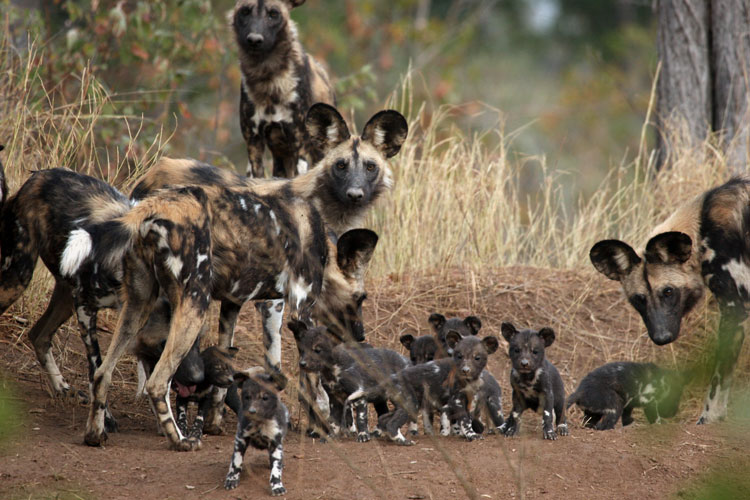

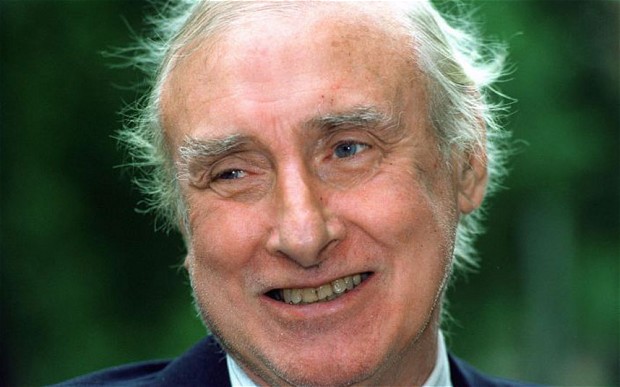


 Learning from Dogs