How often does a great conference on an emerging subject attract local, national and global participants to a quiet corner of the UK? Not often, I suspect.
Nevertheless last Friday, 2010 February 26, it happened again at LikeMinds 2010! The first time it happened was in 2009 on October 16th. Back in February 2009, two people met having got to know each other using Twitter, the popular social media tool/service. Scott Gould is a Devon-based web and experience designer. Trey Pennington is an American social media and business consultant. They met in Exeter and set the date for a half-day event which became LikeMinds 09. A local conference centre was the venue. People came from far and wide to became part of the inaugural gathering. Afterwards, they knew that they’d started something and felt the need to repeat it.
This time, just over four months later. More came to LikeMinds 2010, in the same relatively small venue. The same loyal bunch of social media specialists came back and brought more with them. There was more buzz and activity. This time, it lasted a full day and was followed by a business-oriented summit event at a prestigious location.
It was good to be there. It was good to meet new people. It was good to get a real sense of what is going on in human social communication. And all of this in my local city of Exeter, Devon, England.
There is more to come on this conference! But to give you a flavour, here is the talk by Chris Brogan … after I’d had lunch with him!
And, I am sure, more LikeMinds conferences to come.
Growth in final GDP hides disturbing weaknesses in economy
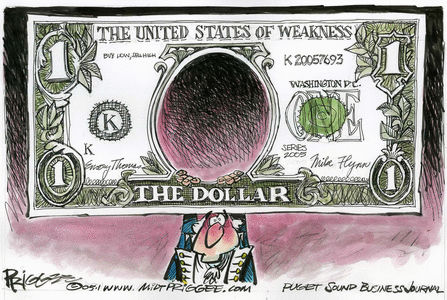
The U.S. GDP grew at an annual rate of 5.9% in the last quarter of 2009 which may look good at first glance, but when we dig a little deeper, we find some concerns about the implications for sustainable growth. A large fraction of this reported growth came from businesses selling off accumulated inventories, which has more to say about past production than current. Exports were also a significant source of fourth quarter growth, driven in large part by a weak dollar.
Weak dollar both helps and hurts the economy
Of course, a weak dollar is a very mixed blessing for the economy, and is hardly a sign of a strong or recovering economy.
Real residential fixed investment increased 5.0 percent, helped along by the extension of the home purchase tax credits from the federal government.
New housing helps spur growth in GDP
Real nonresidential fixed investment increased 6.5 percent. This figure nets out nonresidential structures, which decreased at a troubling rate of 13.9 percent, and equipment and software, which increased 18.2 percent. Investment in equipment and software consists of capital account purchases of new machinery, equipment, furniture, vehicles, and computer software; dealers’ margins on sales of used equipment; and net purchases of used equipment from government agencies, persons, and the rest of the world. Own-account production of computer software is also included, which is production performed by a businesses or government for its own use.
Again, the underlying figures show that those variables most associated with building a sustainable productive capital base for the economy – nonresidential fixed investment –are declining at an alarming rate. This, combined with a 9.7% unemployment rate and the specter of rising debt levels, energy prices, and taxes, paints a picture of a slow to non-existent recovery to a robust economy any time in the next year.
A friend on another site just posed this question.
Why is it that a recession is described as two or more successive quarters of “negative growth”, but being out of recession is just one quarter of (estimated) growth?
I felt emboldened to pen an answer as follows ….
In Britain, the definition of recession-emergence is from the same school of economics as growth predictions for next year (any year), which are always about 5 zillion% more than actually turns out to be the case.
Recession in Britain
The cunning idea is that future growth will be vast enough to cover the even vaster existing debts and commitments. And, of course, by the time we KNOW what the growth actually turned out to be, most people will have forgotten the predictions on growth from the financial and economic wizards running the country. That’s also one of the great things about a new mess or crisis; it always takes the mind off previous crises, which are likely to be ongoing but less in the media and therefore not to be bothered about too much.
This is, of course, in addition to the fact that growth in itself is incompatible with reducing global warming, but here we are getting a bit too technical.
Well, that’s how we do it in Britain anyway. How do you manage it over there?
by Chris Snuggs
A reply from a U.S. economist.
Hello there Chris!
Recession in the U.S. is also defined as two successive quarters of negative GDP growth. At least, that’s how its officially defined. And to add my answer to your friend’s question — either the economy is either in a recession — i.e., two or more consecutive quarters of negative GDP growth — or it isn’t, which means that the string of negative GDP growth rates is broken. And that only takes one quarter of positive growth.
Most of the economists I know personally tend to look at a bigger picture than the stated GDP figures, however. I focus on capital and labor utilization rates as I believe that they are more important measures of a well-functioning economy. The final GDP figures in both of our countries are national income accounting figures, and have all the weaknesses of any income statement variable. They are flow variables, which ignore the stock of economic wealth. For example, if you invest $100 this year in the stock market, and it grows in value by $20, only the $100 is counted. The increase in wealth is never captured in measures of GDP.
Another problem with current measures of GDP and GDP growth is that government spending is considered on par with private spending, which brings into question the sustainability of growth measures based on GDP, although President Obama and perhaps Prime Minister Brown are both fine with growth rates being fueled by large increases in government spending. Finally, a significant fraction of economic activity, like the value of work in the home — is not measured.
So, yes, the official measurement of GDP is all wrapped up in technicalities. But most economists I know pay little attention to it. They are more concerned with how well the economy is functioning, whether the growth is sustainable, and whether people who want to work can find work. If you are unemployed, the economy is in a recession, regardless of what the GDP figures say!
I’ve been asked many times over the years for advice on investing. “What is the market going to do?” “Should I be invested in stocks or bonds?” And, especially in the last few weeks, “Should I hold U.S. or foreign government bonds?”
A U.S. treasury bill
Those are some good questions! The answers are not as “good.” The factors that drive the yields on treasury bills and bonds are complex and, despite Ben Bernanke’s pronouncements to the contrary, less well understood than stock returns, and I don’t have a crystal ball, but I can at least begin to frame an answer to these questions here. I will come back to expand on this topic over time, as markets, economies, and world events evolve.
The return on both bonds and stocks is measured as the percent change between the market price today, and the cash flows received later. The cash flows of a bond, namely coupon payments and principal, are specified in a contract; if they are not paid, the issuer is in default, and the bondholder has the right to take them to court. The cash flows on stock, dividends and capital gains, are residual; they are discretionary, and are paid out only after debt payments and other obligations are paid. For this reason, bonds are considered to be less risky than stocks, and the nominal yields on bonds are generally lower than those of stocks. The risk-adjusted returns on stocks and bonds may be the same, but the nominal yields on bonds are typically lower.
There is an important distinction between the nature of the returns on bonds and stocks. With bonds, the future cash flows are known. Movements in the bond’s yield are determined simultaneously with movements in the bond’s price. Once a bond is issued, only changes in interest rates (yield, risk) drive unexpected changes in its price. Stock prices, on the other hand, fluctuate as either risk or residual cash flows change. As a result, changes in a bond’s price, hypothetically at least, are a much cleaner indicator of the market’s expectations of future market rates of interest than a stock’s price.
One problem that distorts the information about expected future interest rates that is revealed by changes in the bond’s price is that bonds are less frequently traded than stocks, so the price data on bonds is less comprehensive and complete. In addition, the reported price data that form the basis of bond yield models often diverge from actual market-clearing prices, so that bond pricing models may not describe actual market behavior. Lastly, there is such a tremendous volume of economic and policy information, some of it conflicting, that is crammed into this one variable, the bond price which, given the coupon and principal, summarizes the market’s referendum on future interest rates.
by Sherry Jarrell
Next time: Sources and types of risk in U.S. and other bond prices.
Learning from Dogs was created by a few people who felt compelled to promote the values of “integrity”, which is often in short supply in the modern world, though perhaps it always has been to some extent in all civilisations. Is dishonesty an eternal part of Human Nature? We like to think not …..
Well, “Integrity” includes being honest, open and dedicated to the truth, even if this is personally inconvenient. It may seem a somewhat forlorn hope to promote something that for an important minority of people is and will probably remain an alien concept, these being people who put self above group. However, the recent Toyota fiasco reminds me that perhaps integrity’s time has indeed arrived, for this is THE INFORMATION AGE. It is NO LONGER easy to hide the truth, which tends to come out now with greater frequency due to a variety of factors including most importantly the Internet. But there are other reasons, too. To take Britain, for example, we now have the “Freedom of Information Act”, which – despite some limitations – has done wonders in allowing the free press (another essential ingredient of course, and sadly lacking in so many countries) to reveal wrong-doing, principally by appallingly-incompetent governments.
Toyota chief Akio Toyoda
As for Toyota, what has staggered me is that the company KNEW of these accelerator & brake problems several years ago. Indeed, people began having crashes as far back as 2006. Yet only recently has it done anything serious about putting things right. One has to wonder what on earth possessed the Toyota bosses to think that they could get away with it, which on the face of it seems to be exactly what they were trying to do. Who was advising them? It seems to me to have been INEVITABLE that the truth about their cars’ problems would come out, so even from a cynical and selfish point of view they should have recalled the defective cars at least two years ago. But quite APART from the wisdom of doing that in practical, business terms (the result of delay being to devastate the company’s image to a far greater extent than would otherwise have been the case) there was a MORAL aspect to the problem, too. By ALLOWING the problems to go unresolved they put people at risk. And not just ANY people, but their customers! As has been said before, but sadly with all too much frequency, “You couldn’t make this up.”
How could the world’s number one car manufacturer get it so utterly and totally wrong, both from a moral and practical point of view? I am wondering if Toyota can recover from this. Yes, I know they are big, but there are PLENTY OF CHOICES for people seeking to buy a vehicle. Who in their right mind is now going to buy a car from a company which A) made defective cars (and MILLIONS of them) and B) HID THE TRUTH while people were dying in crashes?
One reason may again be the Japanese obsession with “face”. It was probably difficult for the world’s number one company, which seemed capable of nothing but success, to admit publicly that it had got things badly wrong. The Chairman is now admitting this, but to be frank it reminds me of the old expression about getting blood out of a stone, or being dragged kicking and screaming to the confessional. And from what I read today he seems to be blaming the troubles on the fact that “the company may have grown too quickly.” I could describe this utterance with an extremely rude word or two but as this is a family site I will refrain. Let’s just say that the company WASN’T HONEST.
I remember as a kid growing up in the shattered London of the1950s the lessons I got from teachers and parents. One of those which stuck in my mind was “Honesty is the best policy.” This has never been more true as it is now. For the Brave New World we dream of honesty is a sine qua non. We must be honest with ourselves, our friends, families, companies and the public. There is no other way to happiness. Will Toyota’s disaster be a lesson for other companies? NOBODY can get it right all the time and there is no dishonour in the occasional failure, only in the lies involved in trying to cover it up. How many times has this been demonstrated? Had Nixon come clean at once about Watergate he might have survived, but the cover-up was worse than the deed.
On a practical note, I sincerely hope that the families of those killed or maimed in Toyota accidents will sting the company for every yen they can; that is no more than the company deserves.
By Chris Snuggs
[BBC News had an item on the 24th that makes interesting watching. Ed.]
There are many people who might represent the subject of entrepreneurship. It is likely that a calm analysis of the candidates would select someone with a broad range of characteristics which had been identified as generally accepted as typical. But this would be to fly in the face of the nature of entrepreneurship itself!
How can the sense of the personal distortion of reality required to see a different path be communicated by someone identified as a “typical” entrepreneur?
With that in mind, the following video captures such a motivational performance that any selection process that might have been used has been abandoned in selecting Jason Calacanis, the controversial and abrasive founder of multiple “dot com” ventures, mainly in the broad area of web publishing.
Say what you like about his activities during his various ventures, and who knows whether it is as unprepared as it appears to be, his performance in this video is pure gold in the annals of motivational presentations for entrepreneurs. He starts slowly, sets the scene, describes his story and steadily builds momentum and intensity. As the stakes increase, so does the passion. Balanced by a substantial level of self-analysis, this is a gripping personal story. If you are interested in entrepreneurship, set aside the next half hour or so, sit back and enjoy this:
While many factors arise in describing entrepreneurs, the one issue that comes up time and again is the simple choice between two different paths. He captured that!
Even in the midst of great pain, we must think through our choices
The last week has been really mad. I have been working in different companies and organisations and having to be part of redundancies, power struggles and people rebuilding their lives.
For example, I was in a company that had just let its second lot of people go in as many months. It’s gone past losing ‘dead wood’ and now people with valuable skills needed for recovery are going. I’ve noticed previously that good, employable people with key skills start to get concerned and will often take voluntary redundancy rather than hanging around to see how things pan out.
End of job!
It’s the shocking way that it’s done as well that’s unbelievable. No warning, just a phone call to attend a meeting, no hint as to what the meeting is about, then an envelope slid across the table and then a rapid escort off site. All done and dusted in 5 minutes.
Having been through this myself some years ago, it’s not something you forget in a hurry. Lots of feelings of rejection and feeling unvalued and unwanted are what I remember. Perhaps its part of being bought up in a job-for-life culture and then having that illusion shattered.
Working with people in this situation is literally quite shocking and traumatic because it clearly affects them and their lives and the lives of their families, and it affects me because the work we started comes to an abrupt end usually with little or no warning, and so does a source of income to be brutally honest. I don’t even have chance to say good-bye in many cases.
Every Thursday I become a trainee psychotherapist and work with people who mostly struggle to hold down any sort of job. The reasons for this are generally because of upbringings that are awful beyond description. The shock and trauma that is in the air when working with these people is amazing, and so scary for them that the idea of being present in the room with me and is virtually impossible.
So that brings us to managing in a world where lots of mad and non-integrous things happen. I believe that mindfulness can provide a key to these situations; being present for another does more than any instruction manual!
Being present means we make ourselves available at many levels to someone who is suffering. By avoiding the subtle invitation to join someone in their shock and trauma but by being there for them, to the best of our ability and listening to them at depth, we can provide an environment where real reflection can take place. Then options may be chosen which are not born of panic and reaction but come from reflection and response.
I believe that this approach gets us out of the ‘noise machine in our heads‘ (that is forever churning and worrying, in my case) that we have no control over, and creates space for more subtle things to come through the quiet and calm.
Most people I’ve met in my engineering work like to assume that they think their way out of tight situations but I’m not convinced that this process is actually effective. I have heard and practised many times the activity of ‘sleeping on something’ and then being able to decide on a course of action the following morning with relative ease. My psychotherapy clients can’t think their way out the awfulness because thinking about things has got them into a spiral
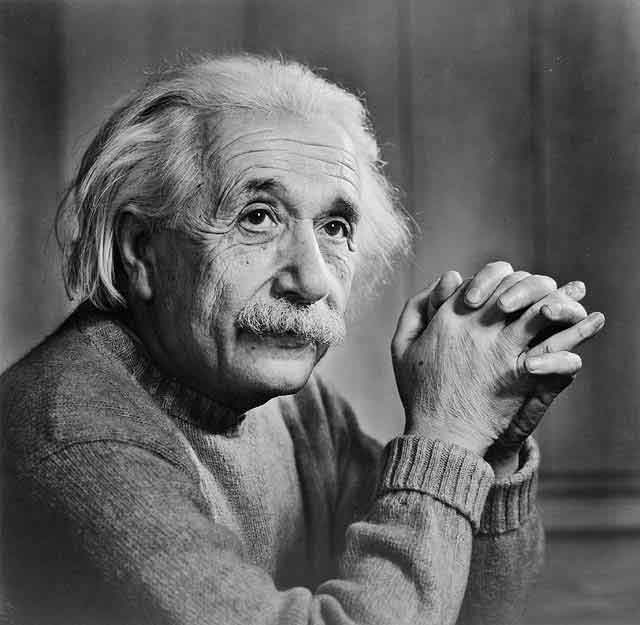
Albert Einstein
process which is highly addictive, predictable and virtually impossible to break without the intervention of a higher level of awareness. I think it was Einstein who said something like, “you can’t use the same intelligence that created a problem to solve it“! In other words, a different approach or level must be used.
I believe that this different approach or level can be used to solve most problems we have. By bringing a different level of awareness to a challenge, whether it is redundancy or some other sort of deeper problem always gives different results and provides more options. It’s just that initially it needs to be facilitated, until we can do it under our own steam. I am heartened that even in the depths of a recession that there are still companies out there that support this approach and the work I do.
By Jon Lavin [This article from the BBC is worth reading in conjunction with Jon’s excellent Post. Jon may be contacted via learningfromdogs (at) gmail (dot) com]
Looking more closely at the implications of changes in the Fed rate
Fed Funds rate influences consumer and business interest costs
Does the Fed Funds Rate, the rate charged by the Federal Reserve to make short-term loans to banks, directly influence the interest rate consumers and businesses pay on credit cards, mortgages, and consumer and business loans? If you took the word of the average business news commentator, you would think not. But the answer, of course, is yes.
One way to view the market rate of interest, although certainly not the only correct or useful way, is to think of it as a base rate that represents the risk-free rate, a rate that compensates the population for its impatience to consume the goods it would have consumed had it not lent the funds out in the first place. This risk-free rate is also influenced by the efficiency and functioning of the capital markets that bring borrowers and lenders together.
A risk premium is then added to this base rate of risk-free interest, one that varies depending on the degree of uncertainty of the lender getting repaid. The risk of default, the risk of prepayment, the risk of political uprising, exchange rate risk, and many other sources of uncertainty — including the risk of inflation — raise the level of the risk premium commanded by lenders in the market. As an example, over the last 100 years or so, the average annual risk-free rate in the U.S. has been about 4%, and the average annual risk premium for equity securities has been about 8%, bringing the average annual observed interest rate or rate of return to about 12% on these securities.
So what happens to the interest rate charged to consumers and businesses when the Fed raises the fed funds rate? Basically, the level of the risk-free rate in the economy rises and, as debt contracts expire or new lending takes place, this higher base rate gets factored into the market rate of interest charged.
Overall, the demand for loanable funds falls, the aggregate demand curve for the economy falls, and equilibrium output and employment fall, RELATIVE to where they would have been without the rate increase. The bright side is that a reduction in the money supply that accompanies an increase in the fed funds rate is absolutely essential to curtailing inflation, which drives the risk premium, and represents a much greater cost to the economy.
What does it mean when the Fed raises the interest rate? It helps to first understand how the Fed raises the rate, which may surprise some people. The Fed does not “set” the interest rate as it might, for example, by declaration or edict or by fixing prices. No, it targets a higher interest rate by contracting the money supply until that money supply intersects the market demand for money at a higher market-clearing rate of interest.
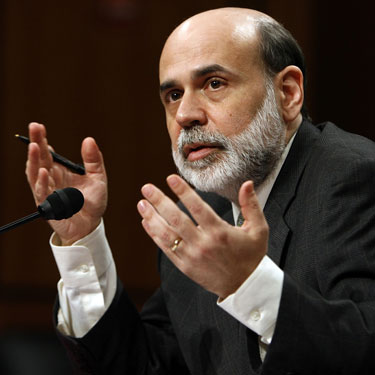
Ben Bernanke, recently reconfirmed Fed Chairman
How does the Fed reduce the money supply? Typically by conducting open market operations, which is the purchase or sale of government securities by the Fed. To raise the money supply, it purchases new government securities, paying for them by creating — out of thin air — reserves for the commercial banking system. To reduce the money supply, it sells securities which shrinks the amount of deposits in circulation in the economy. In other words, it reduces the liquidity or amount of credit in the system. This is equivalent to reducing aggregate demand for the goods and services in the economy. (Yes, you heard right — a reduction in the money supply decreases the aggregate demand for goods and services by businesses and consumers.)
Raising interest rates is a contractionary policy decision. It is designed to “slow down” the economy, reducing output and employment, and raising the equilibrium prices of goods and services in the economy. Why would the Fed choose to contract an already anemic economy? To head off inflation, which has it own set of insidious costs and distortions that significantly hurt the economy.
The Fed has always had to tread a very fine line between increasing the money supply enough in the short run to pump up demand and minimize the depth and length of a recession, but not increasing the money supply so much that the increase in demand outstrips the ability of the economy to produce, which creates inflation in the longer run. Excessive money growth is what causes inflation. And over the last two years, the U.S. has witnessed a record-shattering increase in the money supply as policymakers struggled to deal with an unprecedented financial crisis.
I have been saying for months that this behemoth money supply would inevitably lead to significant inflation unless steps were taken to shrink it. I believe the Fed has now begun to take those steps.
There is currently a merry old ding-dong spat going on between the German and Swiss governments. Basically, someone has got hold of information about German citizens with bank accounts in Switzerland where they are hiding large sums on which they should pay German taxes.
This or these enterprising whistleblower(s) are offering to sell this data to the German government for a hefty fee. The German government is on the point of accepting to buy this “illegally-obtained” information from the (from the Swiss point of view) criminals who have stolen their secret bank data.
This story raises a large number of fascinating questions. It has long been common knowledge that Switzerland offers banking facilities with few questions asked. Any self-respecting criminal or tax evader has or had a secret, numbered Swiss account.
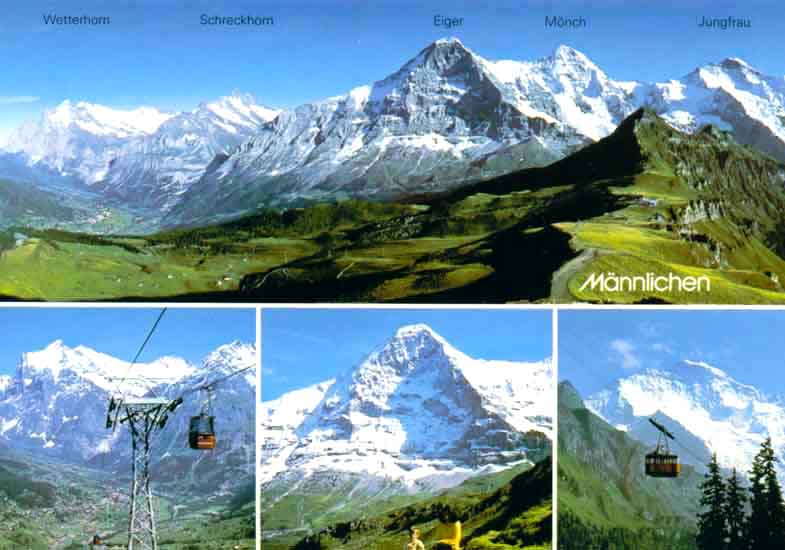
What has always amazed me is how they have got away with this for so long, stuck as they are in the centre of Europe. How is it possible that other countries have allowed Switzerland to become a haven for money obtained illegally in other countries?
For it is clearly immoral to profit from the illegal activities of foreign nationals, isn’t it? What exactly is the difference between this behaviour and “receiving stolen goods”? Worse, we have to remember that the largest sums come from drugs. Anyone willing to look after (or launder) drug money is complicit in the misery and deaths of millions of drug addicts worldwide. Yet the Swiss have pulled off this trick for decades. The Swiss banking (and government) fraternity has never shied away from shady dealings, being until the end of WWII covert supporters of the Nazis.
Well, Angela Merkel is going to do a deal with presumably Swiss “criminals” (according to the Swiss government) in order to recoup money it is owed by German criminals (according to Germany). What a merry old moral maze we have here. But in truth, the world is now too small and inter-connected to allow either tax evasion on a vast scale or the safeguarding of criminal funds.
Switzerland has to decide whether to remain as a supporter of tax evaders and gangsters (including of course African Presidents who have ripped their countries off in a big way) OR to join the real, civil, honest and inter-connected world.
The rest of us should stop tolerating this connivance with crime. “Client secrecy” is no excuse for condoning and profiting from crime.
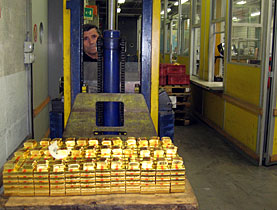
More on the whole Nazi gold in Switzerland story is here.
 A global local conference




 Learning from Dogs