Category: Business

The Verdict!

A nearly 30-year old film has real relevance for today!

Those of you that read yesterday’s Post right through to the end will have picked up on the fact that after completing that article last Friday, Jean and I watched the movie The Verdict.

Amazingly, this powerful film was released on the 8th December 1982.

So why the connection between the film and the Post written yesterday?

Well yesterday I wrote about two recent examples of, at best, a terrible lack of integrity, or, at worst, blatant examples of powerful institutions lying to us.  It troubled me greatly and I found no adequate way of closing the Post expressing my troubles in a succinct and fitting way.  Stay with me for a few moments.

In the film The Verdict, Paul Newman plays Frank Galvin – here’s the synopsis from the IMDb website:

Frank Galvin is a down-on-his luck lawyer, reduced to drinking and ambulance chasing. Former associate Mickey Morrissey reminds him of his obligations in a medical malpractice suit that he himself served to Galvin on a silver platter: all parties willing to settle out of court. Blundering his way through the preliminaries, he suddenly realizes that perhaps after all the case should go to court: to punish the guilty, to get a decent settlement for his clients, and to restore his standing as a lawyer.

As one might have guessed, Galvin wins the case against all the odds, which doesn’t in any way reduce the power of the film.  Newman was brilliant.

Tackling a medical malpractice case that could revive his once glorious career, attorney Frank Galvin (Paul Newman) questions a key witness, Dr. Thompson (Joe Seneca), in the compelling courtroom drama The Verdict.

At the end of the hearing Galvin rises to give his summation.  Technically the case appears utterly lost to his side.  Galvin slowly stands, hesitantly looks as his notes, cast the sheet aside and reluctantly addresses the jury.

You know, so much of the time we’re just lost.

We say, “Please, God, tell us what is right; tell us what is true.” And there is no justice: the rich win, the poor are powerless. We become tired of hearing people lie.

And after a time, we become dead… a little dead. We think of ourselves as victims… and we become victims. We become… we become weak. We doubt ourselves, we doubt our beliefs. We doubt our institutions. And we doubt the law.

But today you are the law. You ARE the law. Not some book… not the lawyers… not the, a marble statue… or the trappings of the court. See those are just symbols of our desire to be just. They are… they are, in fact, a prayer: a fervent and a frightened prayer. In my religion, they say, “Act as if ye had faith… and faith will be given to you.” IF… if we are to have faith in justice, we need only to believe in ourselves. And ACT with justice. See, I believe there is justice in our hearts.

Now go back and read my Post of yesterday.  Read of the Citi executives paying token fines for lying to investors.  Read of the allegation that the 2009 data set in the US GDP report was a “bald-faced lie”.

Now read again, aloud to yourself if you can, the first few sentences of Galvin’s summation.  Here they are again (my emphasis).

You know, so much of the time we’re just lost.

We say, “Please, God, tell us what is right; tell us what is true.” And there is no justice: the rich win, the poor are powerless. We become tired of hearing people lie.

And after a time, we become dead… a little dead. We think of ourselves as victims… and we become victims. We become… we become weak. We doubt ourselves, we doubt our beliefs. We doubt our institutions. And we doubt the law.

I firmly believe that this is where millions of ordinary, hard-working, caring citizens of many countries have arrived today because of the lack of integrity, the lack of honesty and the lack of grace shown by so many in positions of power and privilege.

But do not despair because if we do that, then all is lost.  No, believe in the power of good men.  Back to the summation from the film:

In my religion, they say, “Act as if ye had faith… and faith will be given to you.” IF… if we are to have faith in justice, we need only to believe in ourselves. And ACT with justice. See, I believe there is justice in our hearts.

Exactly!

By Paul Handover

Is thinking going out of fashion?

Another Yves Smith special!

Many will know that Naked Capitalism is a wonderful Blog and what Yves does is truly amazing.  (And a big ‘thank you’

Yves Smith

to Richard Smith who so ably stood in for Yves on her recent European trip.)

On the 29th July this year, Yves reran an article that she posted on May 11th, 2007.  It’s spot on, in my opinion.

Here’s how Yves starts the Post:

I am beginning to suspect that many are reacting to the over-stimulation of the modern world – the accelerating pace of change, data overload, time pressure, work and relationship instability – by turning off their brains. The rise of fundamentalism and the “family values” push, both efforts to turn back the clock, is one set of responses.

Another is the rise of sound-biting, of using pithy communications to cut through the clutter of the daily information assault. But sound biting is inherently reductionist. It doesn’t permit nuanced argument, or pointing out fuzziness in data, or shades of grey. Sound bites are great for simple, emotional appeals, lousy for policy development (which is one reason why this country seems incapable of having an intelligent discussion on important topics like health care. The public has been trained out of having a long enough attention span to listen to alternatives).

That is so true. Just re-read the sentences, “But sound biting is inherently reductionist. It doesn’t permit nuanced argument, or pointing out fuzziness in data, or shades of grey.” (My italics.)

We live in such a complex world that reducing any important idea or concept to a headline or to an executive summary is, in its own way, significantly short on integrity.

That article from Yves concludes thus:

Most businesses operated in competitive environments far too complex for a terse phrase to be a useful guide to action. Yet a magic incantation, a talisman, a battle cry is terribly appealing. But those who can resist the temptation of relying on a simple playbook and face the complexity and uncertainty of their environment are likely to steer a better path. But understanding risk and adapting also demands far more courage that trusting simple ideas.

Ironically, if one reflects for a moment, that closing sentence is a pretty good executive summary! “…… understanding risk and adapting also demands far more courage that trusting simple ideas.

Precisely!

By Paul Handover

Anniversary message from Paul

Learning from Dogs has been running for one year.

On July 15th, 2009 a post called Parenting lessons from Dogs started what has now become a bit of a ‘habit’.  But more reflections tomorrow.

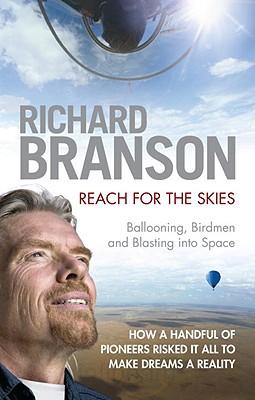
Reach for the Skies

Today I want to voice something that has been running around my mind for some time.  It is whether we give in to the mounting doom and gloom at so many levels in our societies (and it can be a very compelling draw) or whether we see this as a painful but necessary period where slowly but surely the desires of ordinary people; for a fairer, more truthful, more integrous world are gaining power.

And I’m going to use Richard Branson to voice it for me!

(Now this is an unusually long Post so I’ve inserted the Read More divider to prevent the Post visually swamping your browser.)

Read the rest of this article

The Two-sided Coin of the World Cup

Football’s World Cup – a review

It is probably a bit non-PC [PC = politically correct, Ed] to say anything negative about the World Cup, but I sense that the importance of being PC is beginning to wane; not that it ever bothered me anyway.

Let’s look at the positives, since almost everything has some positives somewhere; Stalin, Hitler, Pol Pot and the North Korean regime being obvious exceptions.

  • They built world-class stadia on time.
  • The foreign visitors who were there generally got to venues on time and the matches all started on time.
  • Inside the stadia (despite the obvious occasional sillinesses for which we can blame FIFA), everything went tickety-boo. According to some pundits, the atmosphere was “the best ever”, despite (or because of?) the hideous vuvuzela.
  • There was no major crime wave, no terrorism, no significant disasters of any kind.
  • The South Africans were reportedly very hospitable.
  • Opposing fans celebrated together; the England fans totally restored their reputations; reports of drunken English mobs were distinguishable by their absence. (they probably couldn’t afford to get there.)
  • South Africa took pride in its ability to put on the World Cup, which many had suspected it incapable of.
  • For a month the nation forgot all its problems; most people had a big party, even if the South African team (and Africa in general) was made to realize the enduring gulf between its standard of football and that of the other continents.

So, all’s well that ends well, then? Unfortunately not ….

  • The country paid around 10 billion rand to put the event on, three times more than original estimates. Where did all the money go?
  • The country is left with giant stadia that may never again be filled, the so-called “white-elephants” typical of almost all these major events. Apparently even the wondrous “Birds-nest” stadium in Beijing used for the opening ceremony of the Olympics has only been used once since 2008.
  • Only half the number of expected foreign tourists came, as the organisers over-priced everything. Organisers claim the extra income generated will pay for the costs, but nobody believes them …..
  • Preparations for the World Cup provided jobs, but those workers are now back on the street. The ordinary people of South Africa benefited little from the event, except in terms of “national pride”.

And there of course is an interesting animal; “national pride”. In a grown-up world, you’d have hoped that national pride would be best achieved through one of the following:

  • the building of suitable housing for the population
  • the setting-up of an affordable and accessible national health system (fat chance, even the USA hasn’t got that!!)
  • the diminution and ending of corruption
  • the creation of a fair society
  • the development of the economy to provide jobs and create wealth to allow ordinary people to live decently and comfortably

Any of these and other things could be seen as deserving of “national pride”, but the ability to put on at vast expense a four-week jamboree that mostly benefited the political elite, other nations, FIFA and the international television networks is a dubious contender for “pride”.

But of course it depends which side of the coin you are looking at. For some, all the expense justifies the “putting of South Africa on the map.” The politicians as usual will have been the most happy; four weeks in the spotlight strutting about on the world stage, loads of media coverage, hundreds of journalists hanging on their every word …

As for the real ethos behind the World Cup, the bits that don’t hit the glitzy headlines, two in particular struck me as symbolic of Man’s capacity for self-delusion; Africa’s attitude to its poor and the obscene power of international non-governmental monopolies such as FIFA.

These have been variously described in excellent articles written by proper journalists. The first example is from Globalpost. I find it pretty depressing.

Green Point Stadium, Cape Town: In Cape Town, Green Point Stadium is covered in a sheath of woven fiberglass so that it glows at night like a floating bowl. But its location on six city blocks in a prime real estate area has also created controversy. In 2006, the city’s government published a study that found the stadium’s location offered the least amount of economic gain to Cape Town’s resident. In fact, repairs to several older stadiums in the surrounding area could have led to savings that could have paid for 250,000 new homes for the city’s poor, according to researchers.

But FIFA wanted a stadium that would sit between South Africa’s iconic Table Mountain and Robben Island, according to reports, causing the football federation’s president, Sepp Blatter, to come under fire.

“I really think that we’re going into Green Point because Sepp Blatter says: ‘I like Green Point,’ not because it is the best thing for South Africans,” Cape Town’s then-mayor, Helen Zille, said in 2006.

Sepp Blatter will take his $2 BILLION profit away with him to some lush office somewhere, while the ordinary residents of Cape Town pick up their lives as before. How long “national pride” will sustain them is a moot point.

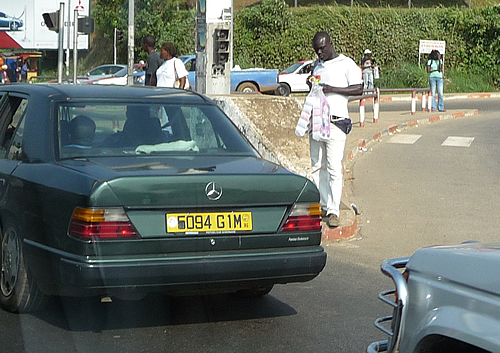
Roadside waterseller in Gabon, West Africa

The Marketing Bonanza: If you’ve been to Africa and driven around a bit, you’ll know that there are street traders everywhere. These are desperately poor people who will try to flog you anything and everything. They wander up and down lines of cars carrying their pathetic wares. In the ferocious midday heat women often carry large heavy  buckets full of water bottles on their heads. Many do this all day every day to earn a pittance.

But of course, like beggars in the big city, they don’t really create the right “image” and “ambiance” for a major international event with its glitz and invasion of well-off foreigners. So, as reported in “The Guardian they were simply banned whenever the authorities considered it appropriate. So much for the World Cup “improving the lives of ordinary Africans”.

But not just anyone will be allowed to participate in what President Jacob Zuma calls “the greatest marketing opportunity of our time“. Informal traders – a significant part of the working poor – are subject to a verbatim “exclusion zone” from the bonanza in the fan parks, fan walks and stadiums. For them, the World Cup may as well be happening on another continent.

I have personal experience of something similar in Gabon. When the wife of President Bongo died, the whole country was ordered to do a week’s mourning. Street trading was banned. This of course did not affect the elite, but for many of the rest it meant the difference between eating and going hungry. When a few daring and desperate people dared to try to sell their pitiful produce in some locations the police confiscated it and trashed their stands.

And FIFA? It is reported to have made $2 BILLION in tax-free profits. Who controls this money? Why is it tax-free?  How will it be spent? To whom is FIFA really accountable? Ah, to national Football Associations? You mean like the British one, which pays £6 million per annum to a failed manager, which is three times more than the German Coach gets?

These vast sums swilling about leave a nasty taste in the mouth. Of course, any organisation’s primary concern is usually to its own self-aggrandizement, so nothing new there. Even the European Union refuses to get its accounts signed off properly, so what faith the common man can have in the honesty of these vast international organisations is questionable.

Well, the World Cup has come and gone and it provided much entertainment for those watching the games. The long-term legacy for the ordinary people of South Africa (43% of whom live on less than $2 per day) is another matter, so forgive me if my rejoicing is muted.

PS The Vuvuzuela …. nothing to me more clearly illustrates Man’s stupidity. The sound output of this instrument is 113db, which can apparently become harmful to the hearing after only 90 seconds. Those in the stadia (including the players, by the way – did anyone ask THEM what they felt?) were subject to nearly TWO HOURS of continuous multiple vuvuzuelae. Many of those people will have had their hearing IRREPARABLY DAMAGED. This will only become clearer to them in LATER YEARS.

For me it is a symbol of our stupidity. All the above health risks are clear and known. Did FIFA ban the damned thing? OF COURSE NOT!! That would have diminished the “local colour” so vital for the international media, which gives Blatter his $2 billion profit. Who gives a damn about ordinary people’s hearing? I doubt whether Sepp Blatter exposed himself overmuch to the bloody things, though he seems pretty deaf already. Once again, for a transient thrill or benefit we do ourselves lasting damage, no different from the way we often treat the planet of course.

By Chris Snuggs

Integrity – aviation fashion!

The brilliance of fine engineering

The BBC have been started a series on how things are made!  The first episode was on the making of a nuclear submarine – perhaps not something that touches most of us!

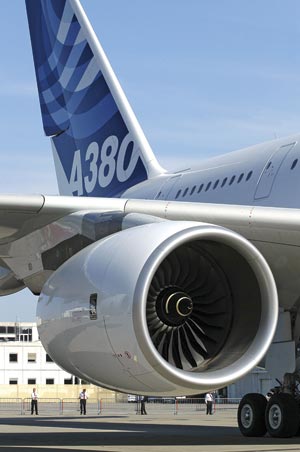
Trent 900 on the A380

But the second episode was much more the ‘touch of the common man’ as it was about the building of a commercial jet engine, the Trent engine built by Rolls Royce of Derby, England.

Anyway, I’m not going to natter on other than to say that not all regulatory bodies are bad in this world.  Indeed, the aviation industry has shown how splendid both engineering and the certification processes can be in giving us a incredibly safe form of transport.

There are plenty of YouTube videos on the Trent engine but here are two that I found of great interest. (Thanks to Simon H for the pointers.)

Rolls Royce Trent Engine Certification video

A380 Loss of Blade test

By Paul Handover

Gulf Oil Spill – that feeling of déjà vu!

Rachel Maddow on how we have been here before.

Rachel M

(Thanks to Peter Nauman for this tip.)

Well done the Rachel Maddow on MSNBC-TV.

Watch this YouTube video of a recent show and run out of words!

By Paul Handover

That oil spill

Visualisation of data

I can’t recall how but I came across a web site that focuses on ‘translating’ data into pictures.  As they say, a picture is worth a thousand words.  The web site is called Information is Beautiful.

Anyhow, they have attempted to graphically portray the scale of the BP oil spill. (A thumbnail is below but please click on the link, or here, to see this as it was meant to be shown.)

Ouch!

But this image is an update of an earlier one here that is really powerful.  Because it attempts to put the scale of the oil spill into context with global oil consumption.

If the Purdue University estimate of the oil spill is correct at 48,500 barrels a day (a barrel is approximately the equivalent of two car tankfuls of gas/petrol) and the spill is contained in 90 days then the total oil spilled will be:

90 x 48,500 = 4,365,000 barrels

That is an enormous quantity.

But have a guess as to how much that would represent in terms of hourly global oil consumption?

Any idea?

Well global oil consumption is 3,500,000 barrels an hour.

So 90 days at 48,500 barrels a day represents just 1 hour 15 minutes worth of global consumption!

If there was ever an argument for the world to wean itself off oil then this would appear to be it.

What has happened so far is tragic – tragic beyond measure.  But if it turns out to be a ‘tipping point’ for nations to reconsider how we find and use energy then, perhaps, it will have been a horrible lesson that we all had to take.

And if the USA puts all it’s collective back into leading the world out of our addiction to oil then the damage and hardship will not have been in vain.

By Paul Handover

Feeling safe!

Safe, as in psychologically as well as physically, has its rewards.

Jon 05'
Jon Lavin

I had a very interesting session recently. I did some coaching work with a client company who managed a small team. The day was split into two – the morning with the client and the afternoon with the whole team.

What struck me about the day was the power of good leadership and the importance of leaders who are aware of how they come across and are capable of forming a relationship with their teams.

My client was struggling with her team because she was unaware how she was communicating, not only with her team but with other people in the organisation.

Unfortunately, becoming aware of how we are in a relationship with others brings us face to face with ourselves and requires a willingness to accept ourselves, warts and all, before trying to change anything.

After we all had lunch together and broke the ice a bit we focused on what was working (not what was not working), what was missing, what inspired and what was possible. By examining these areas and so creating a safe environment, everybody was able to reveal more of themselves and what they needed to have a satisfactory, safe working relationship with each other.

By Jon Lavin

Letter from Payson – The Farmers Market

A foreigner but not a foreigner!

Despite the fact that we have now been living in Payson, Arizona, since the end of February and, therefore, a degree of familiarity exists in both directions, the local Saturday Farmers Market prompted this thought.

Why do I not feel a foreigner here?

There is no question that America, in general, and Arizona, in particular, is very different to England.  In many ways the differences are far greater than, say, England and Australia, or England and New Zealand (I’m picking other English speaking countries to avoid to obvious difference between countries of different languages).

Local goats' cheese

I love Farmers Markets.  They seem to encapsulate the wholeness of locals growing meat and produce for other locals. They seem to serve as a reminder of the integrity that is needed just as much in food as in all other areas of life.

Of course, I am not so naive to think that we could wind the food revolution back to before the days of supermarket chains – food is wonderful value nowadays especially for those families on tight incomes.

But I can’t be the only one that ponders what the long term effect of all those

Local jellies (jams to Brits!)

E-numbers and other strange ingredients that one reads on most packets of most items, and whether or not fruit is sprayed with anything that we should know about, and so on and so forth.

That’s why that place in my psyche is ‘stroked’ so well by wandering around the Farmers Market.

One would expect if there was going to be any place where yours truly, dressed and sounding like the Englishman that he is, is going to feel foreign, it would be at the Payson Farmers Market.  I don’t even try to hide my origins, responding to a “Howdy folks” from the stall-holder with a quintessentially English “Good Morning!

Inevitably there are reasons why I am made to feel welcome here in Payson, my hunch is that it is much to do with this being a pioneering town for most of the last 100 years, and therefore co-operation, collaboration and a welcoming attitude were key elements of sustaining a way of life, but, in the end, analysis is pointless.

What matters is how we are made to feel, and we are made to feel very welcome.

Indeed, Payson with it’s predominance of right-wing, independent thinking, tough ‘cow-boy’ inhabitants echoing a recent past, may have an important lesson for all of us, across the globe, as the forces of disconcerting change build and build: be local, think local, preserve local.

I’m very proud to be slowly but surely turning into a Payson local.

By Paul Handover

BP and Congress

Truth – 0, Lawyers – 1

Hayward of BP taking the oath

I can’t possibly add anything of substance to the hours and millions of words spoken about this tragic event.

All I felt as I watched the Congressional Hearing live on CNN was both embarrassment and sadness as a fellow Englishman demonstrated how the lawyers have won.

Hayward, from the couple of hours that I saw, said nothing of substance, nothing of real value and nothing that recognised how the American people, and the world in general, deserved openness and in-depth answers.

Very poorly advised, in my opinion.

Tragic.

By Paul Handover