Category: Business

No room for being wrong!

Getting to the truth of what is or is not good for our dogs.

As many will understand so very often I am acting more as a messenger than an authoritative source in this place. It is very difficult for me, almost impossible indeed, for me to verify the validity of what is posted here.

On January 11th, I published a guest post from Kathreen Miller. Her article was called Is Organic Food Really Good For Your Dog To Eat?

Yesterday, local good friend and neighbour, Jim Goodbrod, sent me an email pointing out a number of weaknesses in Kathreen’s article and giving me permission to republish what he wrote as a post on Learning from Dogs.

Jim is an experienced Doctor of Veterinary Medicine (DVM) and has frequently advised us, both professionally and informally, about our own dogs and cats. We trust him fully. Jim attends a couple of local vet clinics including Lincoln Road Veterinary Clinic in Grants Pass to where we take our pets when required.
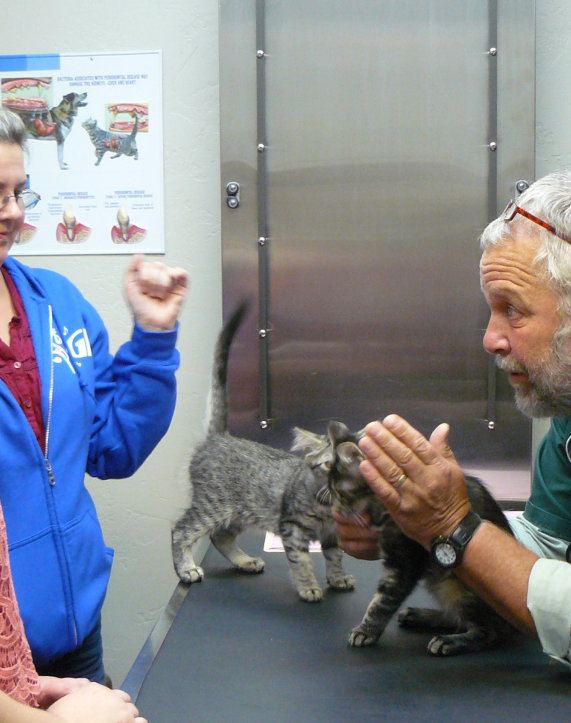
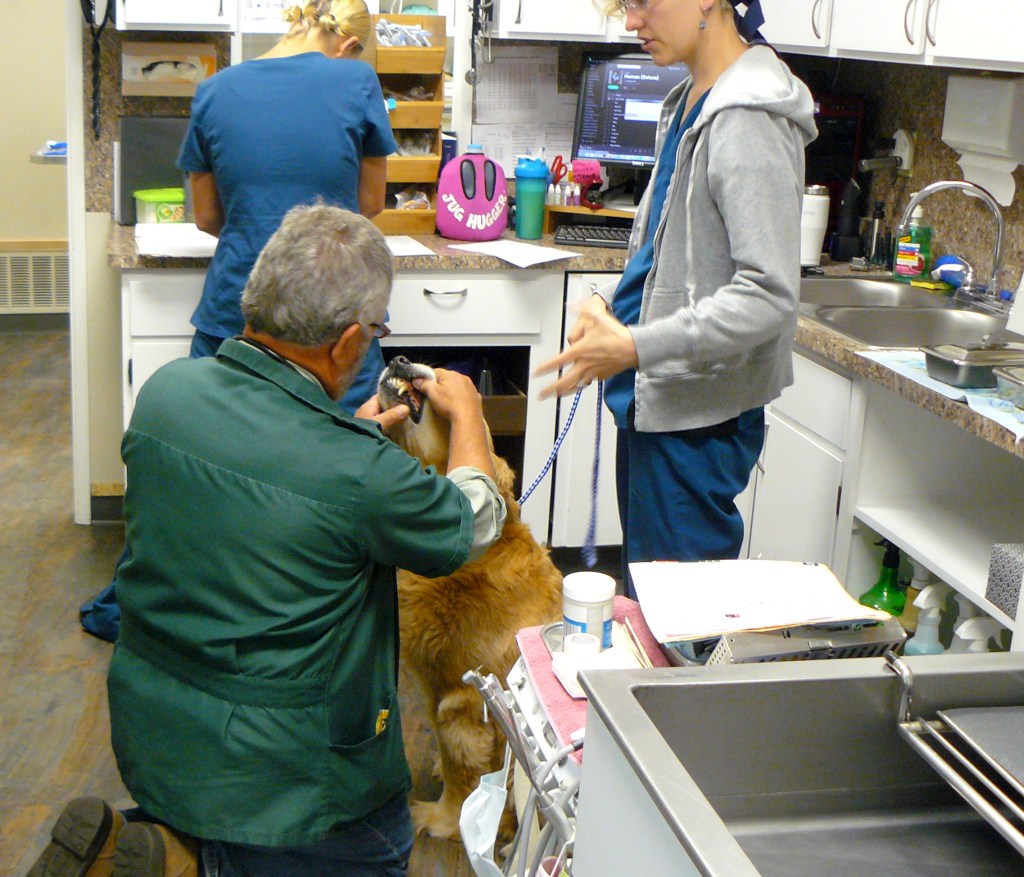
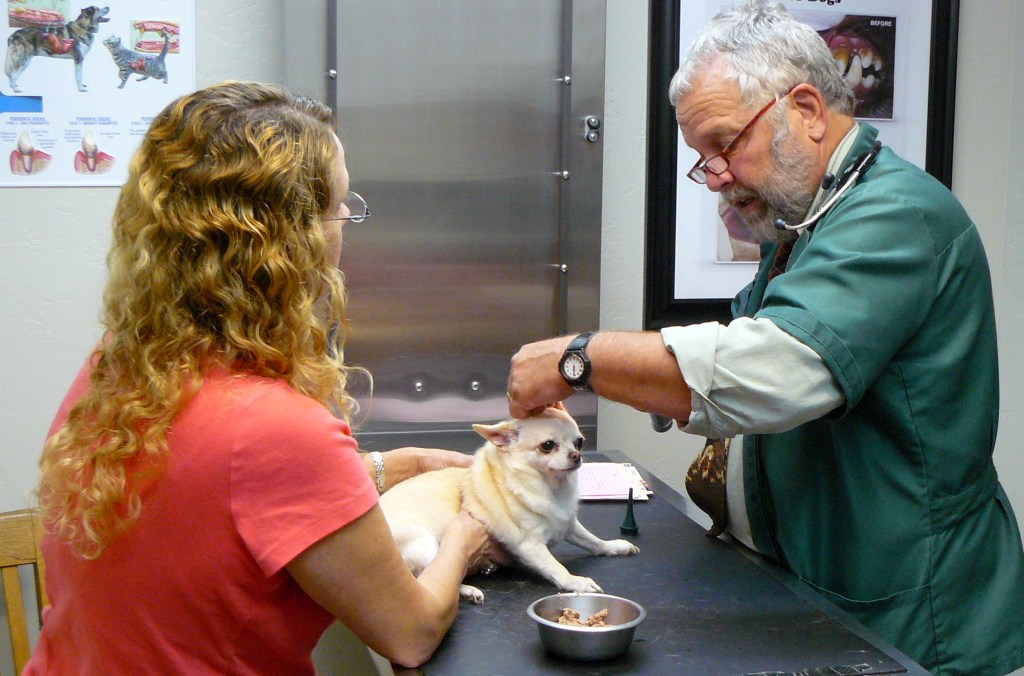
Dr. Jim seeing a patient at Lincoln Road Vet.

Here is Jim’s update published with his kind permission and unchanged by me apart from some minor formatting amendments including italicising some phrases.

ooOOoo

Hey Paul …

Regarding your post of 1-11-18, a guest post by Kathreen Miller concerning canine diet, I feel the need (justified or not) to clarify a few points. She seems to be a big proponent of “organic diets” and lest your readers be misled, I think we need to define what is meant by “organic”.

The legal definition of “organic” is codified by the USDA National Organic Program (NOP) in 7 CFR 205. Pet foods and pet treats must comply with these regulations or they may not legally use the word “organic” on the label. If you read these regulations, you will find that “organic” refers only to the handling and processing of ingredients and products.

These regulations cover: ingredient sourcing, ingredient handling, manufacturing, and labeling & certification of products wanting to use the word “organic” in their labeling.

However, these rules are not considered by NOP as a means to ensure safer, healthier, or more nutritious foods. In fact, there is no regulatory distinction in the tolerable levels of pesticides, drugs, or other residues allowed in organic vs conventional products (even though lower residues may in fact be a result).

Rather, the “organic” label is viewed as a confirmation of the organic production process, and the purchaser is left to his or her own determination as to whether the costs merit the perceived benefits. The bottom line is that “organic” refers to the processing of a product, and makes no guarantees as to the quality or digestibility of ingredients, safety, nutritional value or health benefits of the product.

A savvy pet owner, in order to ensure her dog’s optimal nutritional health, would be better advised to follow guidelines outlined by WSAVA or AAHA (or other reputable source) rather than to reflexively reach for the dog food that says “organic” on the label. The “organic” label does not necessarily mean a diet is good or bad, but it has nothing to do with the nutritional adequacy of the diet and hence your dog’s health.

Another point: Kathreen seems to buy into the popular myth that plant-based ingredients (like corn) are poorly digested fillers that provide little nutritional value and can cause allergies. Corn provides a good source of carbohydrates, essential amino acids, protein, and essential fatty acids in the diets of dogs and cats. It is highly digestible and is not a common cause of allergies. It is actually a very good nutrient as an ingredient in pet food.

My last point is regarding the product “Pet Bounce” that Kathreen endorses as a treatment for arthritic pain in dogs. This product is labelled as homeopathic and as such is nothing more than a placebo.

It has been proven over and over and over again that homeopathic remedies are nothing but water and perform no better than placebos in numerous clinical trials. Reading the list of ingredients, one can see that it contains:

  • 1) Belladonna 6X
  • 2)Caulphyllum 6C
  • 3) Colchicum autumnale 200C
  • 4) Apis mellifica 30C
  • 5) Rhus toxicodendron 200C
  • 6) Ruta graveolens 6X.

Anyone familiar with homeopathic nomenclature knows that, for example, the Apis mellifica 30C designation means that this particular herb is diluted in water 1 to  or   (that’s 1 followed by 60 zeroes!).

To put it into perspective, that’s equivalent to 1 molecule of this substance in a sphere of water 90 million miles in diameter (approximately the distance of the earth to the sun). That’s a 30C dilution.

At a 200C dilution, the treating substance is diluted more than the total number of atoms in the known universe!

Regardless of any medicinal properties these herbs may have, they are so fantastically diluted that there is not one molecule present in the final solution.

I defy any reasonable person to tell me that this so-called remedy is effective to treat anything and consists of anything more than a water placebo.

My problem with this kind of snake oil is that well-meaning pet owners waste their money (~$50.00 per bottle!) on this useless product, believing all the hype and thinking that they are improving the quality of their dog’s life, meanwhile squandering the opportunity to actually help their dog with an effective and evidence-based treatment.

Kathreen seems to be a nice and well-intentioned woman, but I don’t know what qualifies her as a “pet health expert”, other than her own opinion. According to her profile (from your blog) she lives in Chicago with her daughter and dog “Buddy” and listens to music, watches TV, and travels. That’s it? Nothing more??

Again, your readers, Paul, would be well advised to visit professional veterinary nutrition websites (and there are dozens of them) for their veterinary nutritional information.
Below are a couple good places to start:
http://www.wsava.org/sites/default/files/Nutrition%20on%20the%20Internet%20dogs.pdf

http://www.wsava.org/sites/default/files/Recommendations%20on%20Selecting%20Pet%20Foods.pdf

Regards, Jim

ooOOoo

I know you will join me in thanking Jim for spending the time in writing this update.
Diet is so crucial to good health.

Not only for us but for our wonderful dogs.

Sometime over the next few days I will write a post about an amazing connection that Jean made, via Richard in England, with Colin Potter. He is the founder of the site Fight Parkinson’s.

It is mentioned as an introduction to today’s post because Colin stresses the critical importance of the right diet for us humans.

But now I want to go straight to a guest post sent to me by Kathreen Miller on the topic of diet for our dogs.

ooOOoo

Is Organic Food Really Good For Your Dog To Eat?

by Kathreen Miller

If you are searching for information related to organic food for dogs, then you’re probably a firm believer in animal rights and how food affects their health. . Maybe you are also considering how your dog will follow a vegan diet. Or how an organic diet can help improve your pet’s health?

You must understand that dogs require protein-rich foods. Therefore, you should look for balanced and high-quality food so that your pet’s health is not deteriorated. A low intake of protein in your pet could result in anemia which again causes joint pain in dogs.

Pet Bounce is one of the best dog pain medications to allefviate the joint pain in pet dogs.

Therefore, read this article to get information about organic food for a dog and how to make it a part of their regular diet. You might have some questions in your mind. You might think how can you make your dog eat organic food? Is it good for dogs? Before you start such kind of diet for your pet you need to do some research.

Consult a veterinary doctor and speak to him/her about the deficiency and advantage of an organic diet. You need to understand that the stomach of dogs is fragile. An instant change in the diet of a dog makes them suffer from diarrhea or bad breath. The change of diet in your dog should be slow.

If you are starting with organic food for your pet, then initially you need to give them organic food once a week. This will make your dog habitual and accustomed to organic food.

During this time period, you need to ensure that your dog gets a mix of normal as well as organic diet. Then after a considerable period of time, slowly increase the organic food proportion, and finally making it one hundred percent.
Besides, if you are considering about giving your dog the homemade diet then you must know which vegetables and fruits aren’t consumed by your dog. This is of utmost importance as a few vegetables can be toxic to your dog’s digestion. Visit a professional canine nutritionist to receive expert guidance. Also take your dog for health checkups.

This is to make sure that your dog will eat their new food and does not suffer from any diseases.

Why is Organic Food Important for Your Dog?

It is correct, that organic food for dogs is created with natural methods and does not contain any type of additives, preservatives, and artificial colorants. Also, the organic food should be grown in a completely natural manner. But remember, that all organic food brands won’t be entirely free from the preservatives.

Is Organic food Good for Dog’s Health?

As long as you obey the advice of your veterinary doctor, organic food is very good for the health of your dog. If you satisfy the requirements of your dogs, and their health is good, then we can have the idea that organic diet is good for the dogs. There are many types of organic foods. But what makes them bad or good is the range to which they satisfy the animal requirements for the nutrients.

Also, ensure that dogs must get a regular and high intake of protein and they never eat the excess quantity of corn. Since for dogs, corns are not easy to digest.

ooOOoo

I am delighted to add a little about Kathreen’s background.

 Kathreen Miller is a pet health expert. She lives in Chicago with her daughter and a dog named “Buddy”. She regularly contributes her write ups to pet health related websites and blogs. In her Free time, she loves listening to music, watching TV and traveling.

On her Pet Bounce site there is an informative article about joint pain in dogs.

Thanks Kathreen for composing this guest post.

I have taken the liberty of grabbing a copy of one of the photos from the Pet Bounce site.

We must do all we can to keep our dogs fit and healthy for as many years as possible!

Consuming the living planet.

The eating habits of us humans have to change!

Funny how things go!

For just two days ago I published a post under the heading of Meat is Heat. It featured an essay by Michael Greger. He of the website NutritionFacts.org. That essay promoted the message:

What we eat may have more of an impact on global warming than what we drive.

Just cutting out animal protein intake one day of the week could have a powerful effect. Meatless Mondays alone could beat out a whole week of working from home and not commuting.

Many of you read that post.

On the same day that I published that post, George Monbiot published an article in The Guardian newspaper that offered the same message, albeit coming at it from a different place but nonetheless just as critically important.

Here it is republished with Mr. Monbiot’s very kind permission.

ooOOoo

We Can’t Keep Eating Like This

This is the question everyone should be attending to – where is the food going to come from?

By George Monbiot, published in the Guardian 11th December 2017

Brexit; the crushing of democracy by billionaires; the next financial crash; a rogue US president: none of them keeps me awake at night. This is not because I don’t care – I care very much. It’s only because I have a bigger question on my mind. Where is the food going to come from?

By mid-century there will be two or three billion more people on Earth. Any one of the issues I am about to list could help precipitate mass starvation. And this is before you consider how they might interact.

The trouble begins where everything begins: with soil. The UN’s famous projection that, at current rates of soil loss, the world has 60 years of harvests left, appears to be supported by a new set of figures. Partly as a result of soil degradation, yields are already declining on 20% of the world’s croplands.

Now consider water loss. In places such as the North China Plain, the central United States, California and north-western India – among the world’s critical growing regions – levels of the groundwater used to irrigate crops are already reaching crisis point. Water in the Upper Ganges aquifer, for example, is being withdrawn at 50 times its recharge rate. But, to keep pace with food demand, farmers in South Asia expect to use between 80 and 200% more water by 2050. Where will it come from?

The next constraint is temperature. One study suggests that, all else being equal, with each degree Celsius of warming the global yield of rice drops by 3%, wheat by 6% and maize by 7%. This could be optimistic. Research published in the journal Agricultural & Environmental Letters finds that 4°C of warming in the US Corn Belt could reduce maize yields by between 84 and 100%.

The reason is that high temperatures at night disrupt the pollination process. But this describes just one component of the likely pollination crisis. Insectageddon, caused by the global deployment of scarcely-tested pesticides, will account for the rest. Already, in some parts of the world, workers are now pollinating plants by hand. But that’s viable only for the most expensive crops.

Then there are the structural factors. Because they tend to use more labour, grow a wider range of crops and work the land more carefully, small farmers, as a rule, grow more food per hectare than large ones. In the poorer regions of the world, people with less than 5 hectares own 30% of the farmland but produce 70% of the food. Since 2000, an area of fertile ground roughly twice the size of the United Kingdom has been seized by land grabbers and consolidated into large farms, generally growing crops for export rather than the food needed by the poor.

While these multiple disasters unfold on land, the seas are being sieved of everything but plastic. Despite a massive increase in effort (bigger boats, bigger engines, more gear), the worldwide fish catch is declining by roughly 1% a year, as populations collapse. The global land grab is mirrored by a global seagrab: small fishers are displaced by big corporations, exporting fish to those who need it less but pay more. Around 3 billion people depend to a large extent on fish and shellfish protein. Where will it come from?

All this would be hard enough. But as people’s incomes increase, their diet tends to shift from plant protein to animal protein. World meat production has quadrupled in 50 years, but global average consumption is still only half that of the UK – where we eat roughly our bodyweight in meat every year – and just over a third of the US level. Because of the way we eat, the UK’s farmland footprint (the land required to meet our demand) is 2.4 times the size of its agricultural area. If everyone aspires to this diet, how do we accommodate it?

The profligacy of livestock farming is astonishing. Already, 36% of the calories grown in the form of grain and pulses – and 53% of the protein – are used to feed farm animals. Two-thirds of this food is lost in conversion from plant to animal. A graph produced last week by Our World in Data suggests that, on average, you need 0.01m2 of land to produce a gram of protein from beans or peas, but 1m2 to produce it from beef cattle or sheep: a difference of 100-fold.

It’s true that much of the grazing land occupied by cattle and sheep cannot be used to grow crops. But it would otherwise have sustained wildlife and ecosystems. Instead, marshes are drained, trees are felled and their seedlings grazed out, predators are exterminated, wild herbivores fenced out and other lifeforms gradually erased as grazing systems intensify. Astonishing places – such as the rainforests of Madagascar and Brazil – are laid waste to make room for yet more cattle.

Because there is not enough land to meet both need and greed, a global transition to eating animals means snatching food from the mouths of the poor. It also means the ecological cleansing of almost every corner of the planet.

The shift in diets would be impossible to sustain even if there were no growth in the human population. But the greater the number of people, the greater the hunger meat eating will cause. From a baseline of 2010, the UN expects meat consumption to rise by 70% by 2030 (this is three times the rate of human population growth). Partly as a result, the global demand for crops could double (from the 2005 baseline) by 2050. The land required to grow them does not exist.

When I say this keeps me up at night, I mean it. I am plagued by visions of starving people seeking to escape from grey wastes, being beaten back by armed police. I see the last rich ecosystems snuffed out, the last of the global megafauna – lions, elephants, whales and tuna – vanishing. And when I wake, I cannot assure myself that it was just a nightmare.

Other people have different dreams: the fantasy of a feeding frenzy that need never end, the fairytale of reconciling continued economic growth with a living world. If humankind spirals into societal collapse, these dreams will be the cause.

There are no easy answers, but the crucial change is a shift from an animal to a plant-based diet. All else being equal, stopping both meat production and the use of farmland to grow biofuels could provide enough calories for another 4 billion people and double the protein available for human consumption. Artificial meat will help: one paper suggests it reduces water use by at least 82% and land use by 99%.

The next Green Revolution will not be like the last one. It will rely not on flogging the land to death, but on reconsidering how we use it and why. Can we do this, or do we – the richer people now consuming the living planet – find mass death easier to contemplate than changing our diet?

http://www.monbiot.com

ooOOoo

As many of you know Jeannie and I changed our diet to a vegan diet some four weeks ago. It was done more for personal health reasons than from an awareness of the difference that it made to the future of the planet. But over the last few weeks we have had our eyes opened to the broader benefits of not eating meat. George Monbiot spells out the urgency of change for all of us, especially the richer people in the richer countries.

Am I hopeful that there will be a mass awareness of the need to change? I truly just don’t know. I will close be repeating Mr. Monbiot’s closing sentence.

Can we do this, or do we – the richer people now consuming the living planet – find mass death easier to contemplate than changing our diet?

Interesting times!

And more care required

Yet another dog food alert.

Reminds me of that wonderful quip about London buses. The one about waiting for ages for a bus and then two come more-or-less together!

For it was just twelve days ago that I republished a dog food alert concerning bone treats; or as the FDA described it:

The FDA reports it has received about 68 reports of pet illnesses related to “bone treats”.

Bone treats differ from regular uncooked butcher-type bones because they’re processed and packaged for sale as “dog treats”.

Then just early last Saturday there was an email that warned:

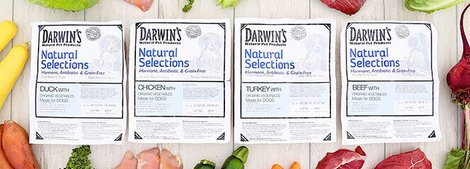
Darwin’s Natural Pet Products of Tukwila, Washington, has notified its customers that it is recalling 2 lots of its Natural Selections raw dog food products because they have the potential to be contaminated with Salmonella bacteria.

To learn which products are affected, please visit the following link:

Darwin’s Dog Food Recall of December 2017

Please be sure to share the news of this alert with other pet owners.

Mike Sagman, Editor
The Dog Food Advisor

Here are the full details of that alert.

ooOOoo

Darwin’s Dog Food Recall of December 2017

December 8, 2017 — Darwin’s Natural Pet Products of Tukwila, Washington, has notified distributors that it is recalling select lots of its Darwin’s Natural Selections dog food due to possible contamination with Salmonella bacteria.

What’s Recalled?

The product was shipped to distributors between September and early October 2017.

The affected product includes the following:

  • Natural Selections Turkey Meals for Dogs
    Net wt 2 lbs
    Lot #39937
    Manufacture date 08/24/17
  • Natural Selections Duck Meals for Dogs
    Net wt 2 lbs
    Lot #40487
    Manufacture date 09/29/17

Why Is It Recalled?

Through testing, the company determined that the products listed above, have the potential to be contaminated with Salmonella.

About Salmonella

Salmonella is a bacterial organism that can cause serious and sometimes life-threatening infections in people, particularly young children, frail or elderly people, and those with weakened immune systems.

There is risk to humans from handling contaminated products, especially if they have not thoroughly washed their hands after having contact with the product or any surfaces exposed to these products.

Some healthy individuals who are infected may experience fever, diarrhea, nausea, vomiting and abdominal pain.

In rare circumstances, infections can result in the organism getting into the bloodstream and producing more severe or chronic illness.

According to the FDA, it is uncommon for healthy dogs to become sick from Salmonella.

However, dogs with weakened immune systems (such as puppies or older dogs) have a higher risk of becoming sick.

Pets with infections may be lethargic and have diarrhea or bloody diarrhea, fever, and vomiting.

Some pets will have only decreased appetite, fever and abdominal pain.

Further information about Salmonella can be found on the Food and Drug Administration website.

Message from the Company

In an email message to distributors, Darwin’s president, Gary Tashjian writes…

We have not received any reports from customers regarding these meals, and are taking these steps out of an abundance of caution.

However, if your pet has consumed the recalled product and has any of the above symptoms, please contact your veterinarian if they persist.

We are recommending that you inspect your inventory of Darwin’s meals to determine if you have any left from the lot listed above.

If any of the above product is still in your inventory, please take the following steps:

Write down the lot number, date/time of manufacture and quantity of any product from the above lot remaining in your inventory.

Dispose of the product by placing it in a plastic bag, then placing the bag in the trash in a secure manner.

Contact us at productsafety@darwinspet.com to confirm that you have taken the above steps and to arrange for replacement of any unused product.

Please note the following:

Your name and address (or customer number)

The date and time of manufacture and quantity of food from this lot that you have remaining in your inventory

Confirmation that you have disposed of it.

We anticipate that some of our customers will have questions or concerns regarding this matter.

We welcome the opportunity to talk with you about it.

Toward that end, we have set up a special toll-free number for you to call: 866-832-8319 (Monday through Friday from 6 AM to 6 PM and Saturday 7 AM to 3 PM Pacific Time).

Please note that we may not be able to talk with each of you at once, so we do ask that you be patient, particularly if your issue is not of an urgent nature.

We regret any concern and/or inconvenience that this causes you.

We are taking steps to reduce the opportunity for this to occur again.

What to Do

U.S. citizens can report complaints about FDA-regulated pet food products by calling the consumer complaint coordinator in your area.

Or go to http://www.fda.gov/petfoodcomplaints.

Canadians can report any health or safety incidents related to the use of this product by filling out the Consumer Product Incident Report Form.

Get Dog Food Recall Alerts by Email

Get free dog food recall alerts sent to you by email. Subscribe to The Dog Food Advisor’s emergency recall notification system.FDA

ooOOoo

As always, please share this with other dog lovers.

It’s holiday time again

For our beloved dogs!

It’s a rare week when I don’t receive an email from a person representing an organisation that would like a mention here. That’s how it was a couple of weeks ago. In to my inbox came:

Hi Paul,

I hope this finds you well! My name is Sam and I’m a Community Marketing Manager at Rover.com–the nation’s largest online network of pet sitters.

While checking out your website, I was really taken by the DIY content and all of your fun and creative ideas. At Rover, we like to get creative too with everything from making your own dog treats, to celebrating custom dog houses.

It seems that your audience would like to learn more about DIY ideas for their dogs–affordable, adorable, and creative! Please let me know if you’re interested in getting some free DIY content from Rover. I look forward to hearing from you!

All the best,

Sam

I responded along the lines of not really wanting to be seen supporting this or that company when I had no experience or knowledge of what they were selling. Sam was very sensitive to that position and we agreed on the following guest post format. In other words, I was happy to allow the link to Rover.com in return for what I thought was a guest post that would be helpful to many readers.

Let me know, dear reader, if this is acceptable to you or whether you would prefer no ‘commercial’ contributions at all in this place.

ooOOoo

DIY Holiday Gifts for your Pup

by Tracy Vicory-Rosenquest

The holidays are just around the corner, and there’s no need to go broke this year. If you love to spoil everyone in the house including your pups this season, consider a few DIY projects so you can celebrate without breaking the bank! Whether you’ve got lots of time to create a gift or just a few hours, here are a few ideas to get the creative juices flowing…

Fleece for Peace & Winter Gear

It’s time to make peace with winter and snuggle in for the season. Check out these winter gear doggie gift ideas:

  • What better way to get cozy than with fleece?! Grab a sewing pattern for a doggie jacket and roll out the fleece! Pick out your favorite holiday fleece pattern and get your dog fancy for holiday pictures.
  • Buy a little extra fleece and measure out your dog’s bed. Make a holiday duvet cover or throw blanket for their naps this winter.
  • More into knitting? Grab some wool or alpaca yarn for a doggie scarf or sweater. Alpaca is super warm and hypoallergenic if your dog gets itchy with wool.
  • If you’ve got a small dog, check out the baby clothing section for winter attire. You should find a few flannels onsies that will fit!

Personalize and Seasonalize your Doggie Decor

There’s nothing sweeter than a little doggie decorating this time of year. Consider these seasonal gifts for your pup:

  • Search your local craft store for a simple screen printing kit and go crazy. Screen print your holiday photo on the canvas bag you keep doggie toys in or create a seasonal design to screen print on patches of fabric for a quilted doggie blanket.
  • Embroider it! Get out your needle and thread for an embroidery project. Pick out a new towel that you toss in the back of the car for dog park adventures and stitch your dog’s name on it.
  • Create a seasonal leash cover (or collar cover) by sewing a few strands of holiday fabric inside out. Flip the fabric to the right side and iron on letters to spell out your dog’s favorite nickname! Then, thread your leash through the fabric for your next winter walk.
  • If you love holiday baking, get out the flour, oats, and peanut butter to bake homemade dog treats! There are tons of great recipes online–or just buy a pack of dog treats and mix up a dog-friendly frosting. In a small bowl, combine 1 cup of tapioca starch and ¾ cup of honey (or maple). Let it thicken in the fridge and then frost your dog treats! If your dog won’t go nuts, tie 12 treats to the tree like ornaments and celebrate the 12 days of Christmas with a doggie reward each day!

We hope you’ll enjoy one of these fun DIY projects this year. There’s nothing better than a happy pup during your holiday festivities!

More about Tracy. Tracy Vicory-Rosenquest is a Rover.com community member. Rover is the nation’s largest network of 5-star pet sitters and dog walkers.

ooOOoo

So good people, was this useful for you or too close to being a sales proposition? I have to add that I have no personal knowledge or experience of Rover. But did think the content of the article was of interest to you all.

Life with Luna

Time and time again we see what dogs mean to us.

Not that long ago I received an email out-of-the-blue from Linley Achtenhagen. Linley wanted to tell me, and all of you, what having a dog had meant to her.

ooOOoo

How It All Started

by Linley Achtenhagen

Before I start talking about all of the things I have learned from having a dog, I should probably tell the story of how this crazy journey started.

My sophomore year of college was probably one of the most difficult years I’ve had. I was struggling with anxiety issues and I had just quit basketball, which was the hardest decision I’ve ever made. Why? Well, I had been playing basketball from the time I could walk and the day that I decided I was done was a very difficult, yet relieving day.

Me playing basketball had become unhealthy for me and caused me so much stress and anxiety that it was hurting me more than it was helping me, but that’s a different story.

Anyways, once I was done playing college basketball I felt relieved, but also empty. All I had really ever known was basketball, so now I felt like I wasn’t doing anything with my life other than going to school and studying things that I didn’t care about. I knew that something was missing!

I have always been an animal lover. Growing up we had everything from cats, to dogs, to horses and even a pet bird. Dogs were my favorite though (sorry cat lovers) and I thought, “why not see if there’s a dog that needs a home”.

So I went online and of course, I found, literally, thousands of dogs that needed homes. After months of searching and convincing my parents that I could do this, I adopted Luna.

Luna came from a high-kill shelter in Missouri, meaning that if she wasn’t adopted in a certain time frame she was going to be put to sleep. Lucky for me, Tiny Paws Small Dog Rescue in Milwaukee, Wi transported her and about 10 other dogs from the shelter up to Wisconsin.

Luna was about 15 pounds underweight and for a 40-pound dog that’s dangerously skinny. When I would pet her I could feel every single bone on her body. She was skinny, shy, and had patches of fur missing, yet the trust this animal gave me right from the start was amazing. This animal had gone through only God knows what, and trusted me immediately. It was an eye-opening thing to watch.

Now, I’m not going to lie and say that it was all butterflies and rainbows when I adopted Luna. The first few days I was panicked and thought, “what on earth did I get myself into”. But I knew that I had made a commitment to this dog and I couldn’t give her away. I have always hated change, in fact, it is one of the things that gives me pretty bad anxiety, and I knew that giving Luna back would be the easy way out. Sure enough, in about a week, this dog became my best friend and it’s like we had a mutual understanding that we were in this together.

Since getting Luna I went from not knowing what I wanted to do with my life to declaring my major as entrepreneurship and knowing that one day I want to open my own pet supply store.

I want to share all of the knowledge that I have gained about dogs from having Luna with other pet and dog lovers. I have found that big, franchise pet stores just don’t have the same knowledge that small, local pet stores do. I am also not saying that I know everything there is to know about dogs because I still learn new things every single day. But I want to share everything I have learned with dog owners and help them give their pet the best life possible. I also hope to learn new things from all the people that (hopefully) come in and out of my store every day.

In the posts to come, I will share everything I have learned about life, love, animals, and everything in between from my life with Luna.

ooOOoo

If only all decisions in life were as easy as me wanting to publish Linley’s account of her meeting Luna!

All we now need is a photograph of the happy couple!

Luna being loved by Linley.

May everything go well for you, Linley!

Best ‘unlaid’ plans

All change on the flooring front – again!

If you detect a tone of exasperation in the following then you are very sensitive to the mood in the Handover household!

For until around 10:30 yesterday morning we had every expectation that the flooring installers would be hard at work through to Wednesday. That fact displayed on this blog by the continuing Flooring Diversion posts.

However, when we were told yesterday that a) Home Depot couldn’t advise us of the total cost of laying the board laminate on our floors, and b) that the installers were now unable to return to our house until the 23rd., it was decided that a face-to-face with the person in charge at our local HD store was called for.

That resulted in us going to the store and meeting Ben the store manager. And in fairness to Ben he listened to our grumbles, acknowledged that we had reason to grumble and got it all sorted. That translating into the installers being with us this coming weekend.

I had planned to publish a fabulous guest post on Thursday assuming that the flooring work had been completed by then.

It is now being published in ten minutes time. You will love it!

Visiting the Vet – Updates

How this theme is taking shape!

But first, let me offer an update and a correction.

In my first report, published on June 28th, the very first patient for Dr. Jim was Ginger.Here’s an extract from that report:
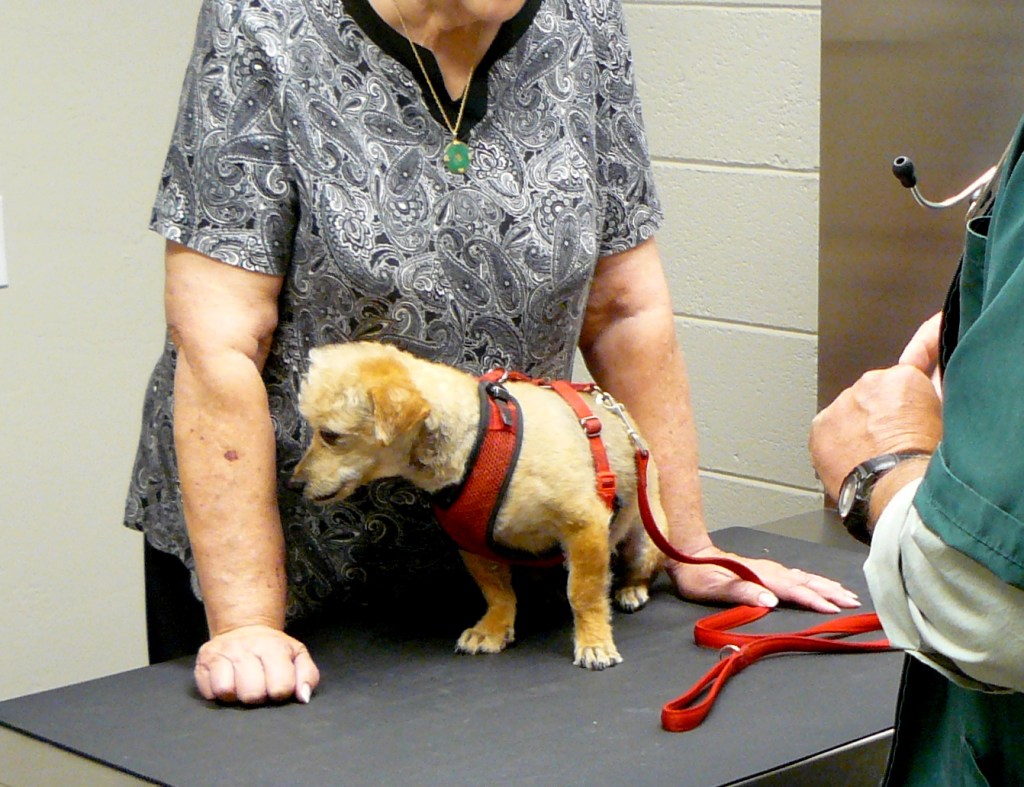
It was immediately clear to Jim when he listened to Ginger’s heart that it was racing; Jim thought at something like 200 beats per minute. Jim continued to check Ginger over although, as he told me later, he had an idea that Ginger’s medical problem was a cardiac issue. Jim arranged for Ginger to be given an X-ray as well as blood work.

A number of you wanted me to check on Ginger’s status. Jim said that in a follow-up call made by the clinic they were told that Ginger was doing well.

The second item is a correction. In the report that described Lynn bringing in a stray kitten that had terrible puss oozing from one eye, I wrote: “Moments later Jim has not only cleaned out all the puss but found and removed the cause of the infection that was behind the kitten’s eyeball.”

When I queried with Jim what was the cause of the infection, he said that there was nothing physical behind the eye but that the kitten had contracted a severe eye infection probably a viral infection. The kitten was also doing well.

So last Thursday, the 13th July, I returned to Lincoln Road, arriving at 09:45. My plan was to spend the morning with Jim and then the afternoon with Dr. Russel  Codd the owner of the clinic.

It was another wonderfully interesting day and I have sufficient material for the next two to three weeks.

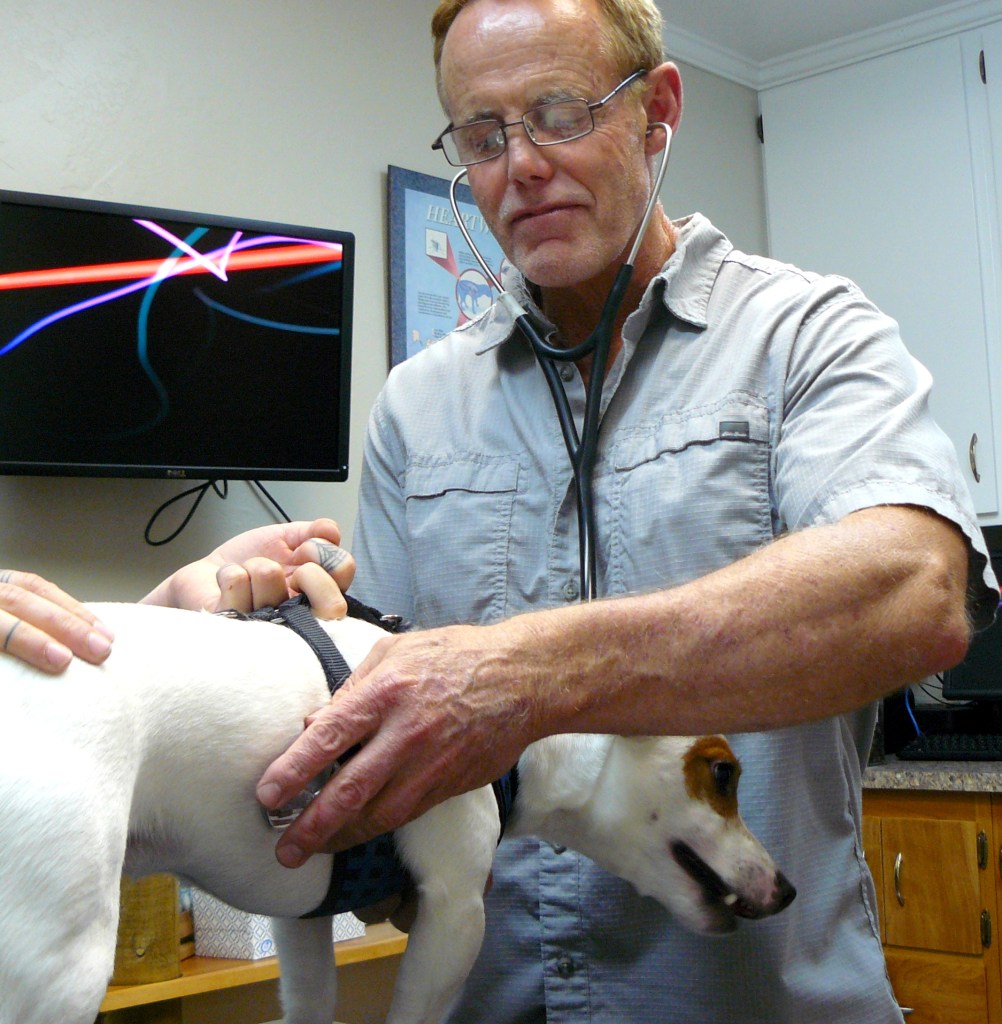
This is Cooper, a male Jack Russell, being checked out by Dr. Russ.

Dr. Russ started the afternoon at 14:30 so there was a bit of a wait after Jim had finished his morning at 12:05. That prompted me to see if future sessions watching Dr. Russ at work could be morning ones.

In other words, I would go across to Lincoln Road on two mornings a month; one to spend with Dr. Jim and one with Dr. Russ. I have yet to speak to Russ about that but can’t envisage an issue.

What Russel Codd did say to me that afternoon was that he really supported this theme and that he might arrange for me to ‘shadow’ one or two specialists who work locally in Grants Pass.  Plus, I did venture the idea that maybe there was book potential and Russ was very happy with that possible development as well.

So Sue, there’s the answer to you writing last week: “Lots of information here perhaps for a second book?” Great suggestion! (Indeed, good people, I am giving the idea of turning this series into a book very careful thought and will ask for feedback from you in a subsequent post once I am clearer about the purpose and objectives of such a book.)

So the first of my reports from my visit on the 13th will be published either later this week or early next week.

Thank you, everyone, for your interest, suggestions and support. You really are a great group of readers!

Visiting the Vet – Transformations.

This is why some choose to become veterinary doctors.

Today I write about the last animal that Dr. Jim attended to from my morning at Lincoln Road on June 22nd. I have been blown away by the interest in this theme from so many of you. Thank you!

Indeed, today I am back at the clinic spending both the morning and some of the afternoon watching and recording.

My plan from now on, subject to Dr. Codd supporting the idea, is to spend time at the clinic roughly one day a month. For in just the five or six hours of a day’s visit there is such a variety of events that it will provide more than enough material for me to present Visiting the Vet posts regularly each week during the following month.

OK! Now to the last patient that morning.

12:20

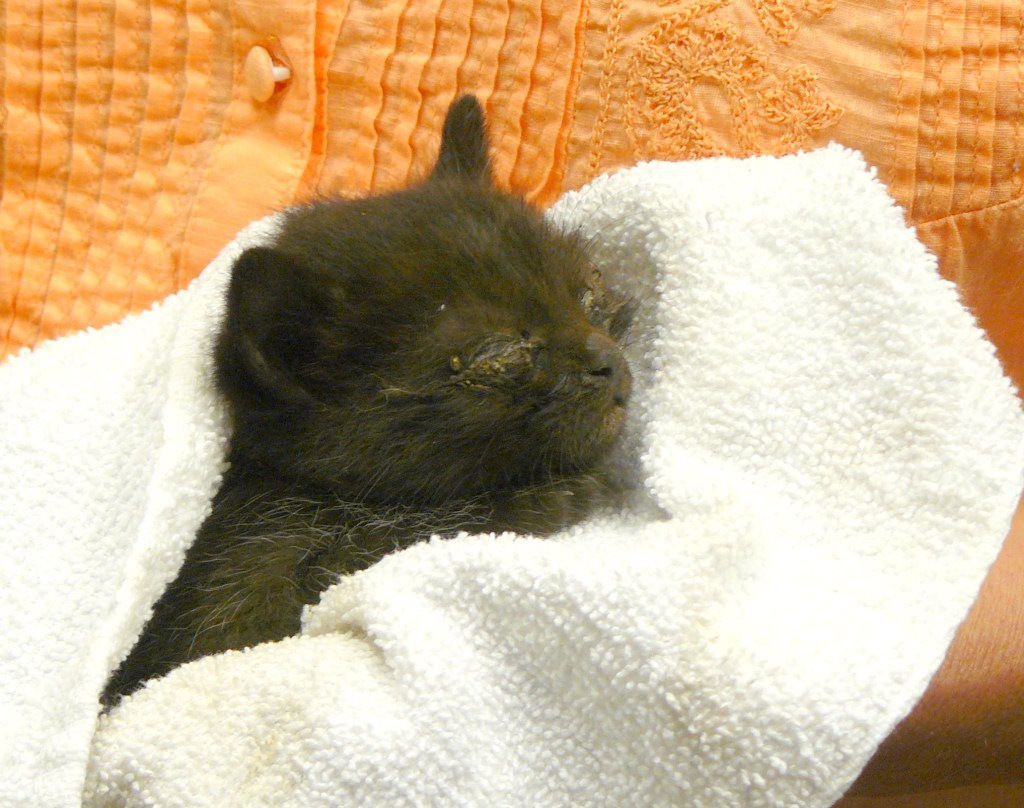
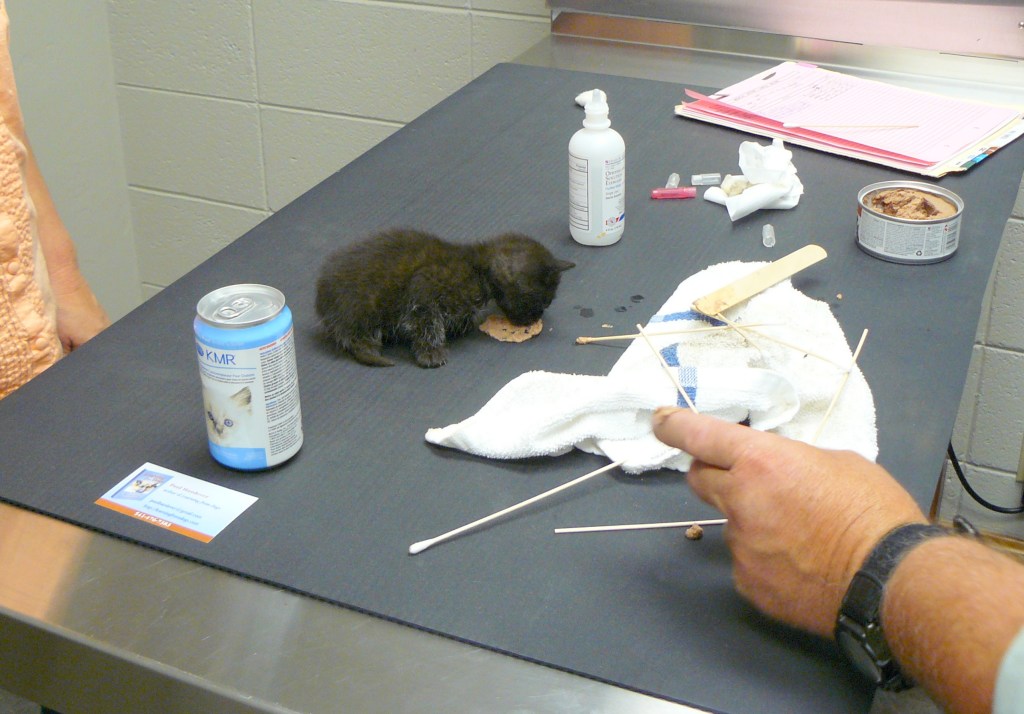
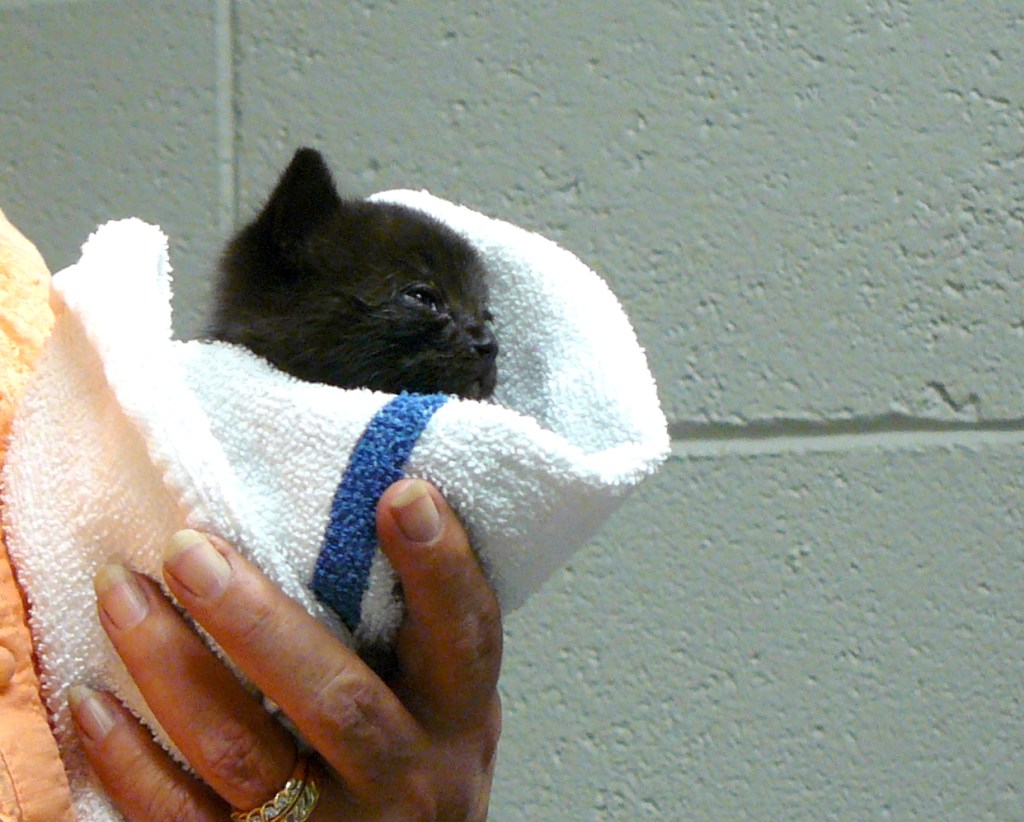
A woman carries in a stray kitten that had been found on the premises of a local scrap metal dealer.

The woman, Lynn, didn’t hesitate to bring the kitten to Lincoln Road because it had an infected right eye.

Jim takes some blood, in itself a bit of a challenge with such a young kitten, and looks more closely at the male kitten. He observes that the eye is most terribly infected with puss pouring out and Jim is of no doubt that the kitten had this eye infection since birth just a few weeks ago.

I come closer to take a photograph (the one above) and am in awe of the delicate way that Jim uses a tiny swab, Lynn holding the kitten for Jim, to clear the puss away from the eye. Moments later Jim has not only cleaned out all the puss but found and removed the cause of the infection that was behind the kitten’s eyeball.

12:40 The kitten sees with both eyes. What a transformation in just twenty minutes.

Jim looks up at Lynn: “Lynn, you do know you have saved his life!”

Lynn replies: “I didn’t really want another cat!”

Jim then gets some food for the kitten and gives it time to settle down.

Lynn and I chat and I am flattered to learn that Lynn has previously purchased a copy of my book. It can be such a small world at times!

12:30 All done. Lynn wraps the kitten back into the same towel that was used to bring it in to the clinic such a short time ago.

Thus ended my first experience of being behind the scenes of a busy vet practice.

The experience has profoundly affected me.

For as well as the astounding level of medical skill that I have observed it was also clear, as Jim put it, that he has to play counselor, psychotherapist, and even bartender. Why bartender? Because Jim quietly offers the observation that quite a few persons come in with their pets when they are the worse for drink! The owner that is not the animal!

Seriously though, let me offer what I concluded after just this one visit to Lincoln Road. That Jim and, I’m sure, Dr. Russ and many thousands of DVMs across the world, have many more demands on them than just being a good doctor.

They must display attention to detail and have an inquiring mind. They must be genuinely empathetic for the animal owner’s circumstances. But also good record keepers! Also they will have to endure a great deal of kneeling. Then, again, those knees have to be topped with a head that is jam-packed full of knowledge and experience to avoid jumping to incorrect conclusions. More subjectively, their emotions have to be kept under control for they frequently will see animals that have not been best cared for and, again all too frequently, they will have to end the life of a dear pet as gently and painlessly as is possible.

To be continued!

Visiting the Vet – Buffy & Chloe

Still it comes, one pet after another!

It’s 11:05

This is Buffy, a nine-year-old Dachshund crossed with a Terrier, who is drinking and peeing too much according to the lady who brought Buffy in to the clinic this morning. Adding that Buffy seems to be always hungry and quieter than normal.

Jim runs a blood test and not long after says that nothing has jumped out at him as a potential issue from Part One of the test results. (Apparently, the blood test comprised two parts – I will learn more in a subsequent visit to Lincoln Road.)

Buffy’s heart sounds good. Buffy has not lost weight.

Then Part Two of the blood test results reveal, thankfully, that Buffy is not diabetic, is not indicating Cushing’s Syndrome, and that Buffy’s kidneys are fine.

In other words, Buffy has the look of a healthy dog.

Has this all been a waste of time and money? Not at all, says Dr. Jim. This is the first time the clinic has seen Buffy and all the test results can now be logged providing a baseline of data for future reference purposes.

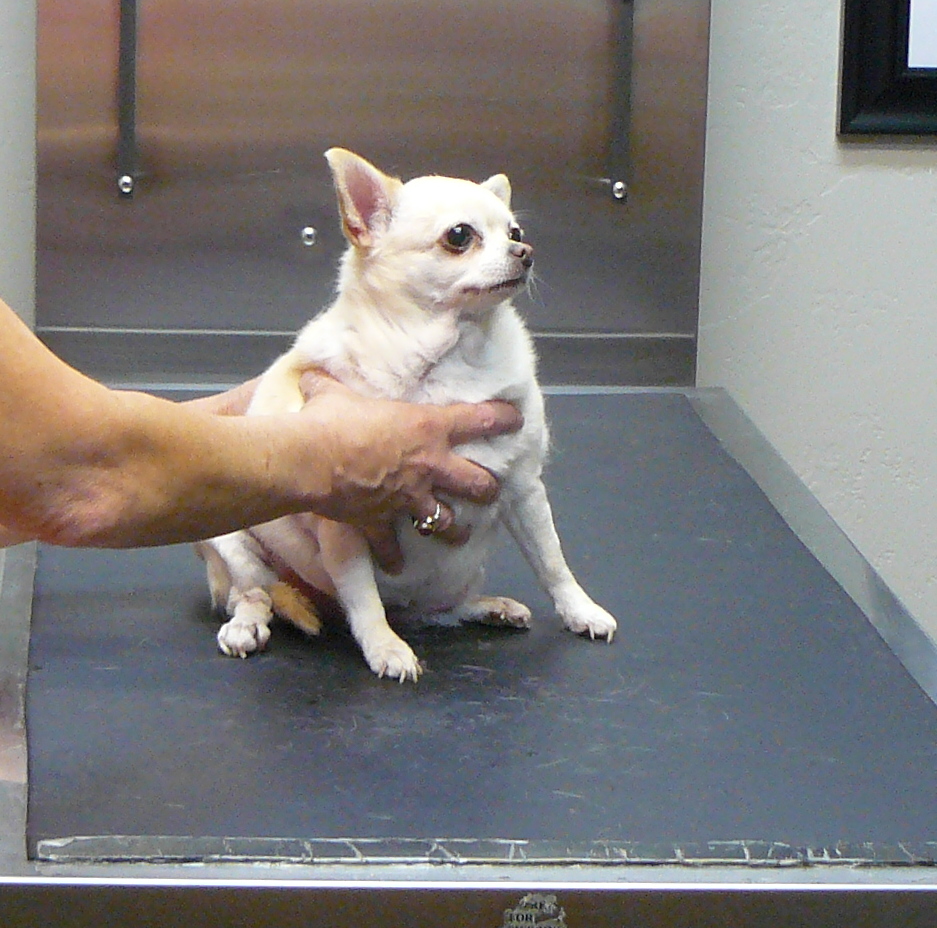
11:50 In comes Chloe.

Chloe has been vomiting up her food and, consequently, has stopped eating. Jim is concerned that Chloe is overweight and that in the very hot weather of recent days (high 90s F./mid 30s C.) he has been seeing a number of dogs with excessive heat problems.

One thing that could be done to Chloe was to clip her excessively long toe nails.

Jim does that.

12:15 All done.

To be continued:

(Please note: These observations are mine alone and because of the busy environment it must be assumed that my interpretation of what was taking place might not be totally accurate. Nothing in this blog post should be used by a reader to make any medical judgment about an animal. If you have any concern about an animal do make an appointment to see a properly qualified veterinarian doctor.)