Category: Art

An awakened soul

Keeping it nice and gentle for today. 

We had neighbours come and have a meal with us a few days ago and in their thank-you email, the following was included.

Until one has loved an animal, a part of one’s soul remains un-awakened.
~ Anatole France

DL1

dl2

dl3

dl5

dl4

dl6

Thanks Dordie and Bill.

Hachikō, a lesson in faithfulness.

Note:  This post was first published in August, 2010 and has remained a very popular read on Learning from Dogs since then.

So here is that post once again, albeit with a few minor changes.

oooOOOooo

More than a film, a message from dogs to mankind.

Richard Gere and Hachi

We recently watched a film about an Akita dog called Hachi, Hachikō in Japanese, that demonstrates the loyalty that dogs can offer their human companions.

It’s a very moving film. Expect to shed many tears.  Even more so when one reflects that the Hollywood film is based, reasonably accurately, on a true story.  The details of this story are in Wikipedia from which is quoted:

In 1924, Hidesaburō Ueno, a professor in the agriculture department at the University of Tokyo took in Hachikō as a pet. During his owner’s life Hachikō saw him out from the front door and greeted him at the end of the day at the nearby Shibuya Station. The pair continued their daily routine until May 1925, when Professor Ueno did not return on the usual train one evening. The professor had suffered from a cerebral hemorrhage at the university that day. He died and never returned to the train station where his friend was waiting. Hachikō was loyal and every day for the next nine years he waited sitting there amongst the town’s folk.

Hachikō was given away after his master’s death, but he routinely escaped, showing up again and again at his old home. Eventually, Hachikō apparently realized that Professor Ueno no longer lived at the house. So he went to look for his master at the train station where he had accompanied him so many times before. Each day, Hachikō waited for Professor Ueno to return. And each day he did not see his friend among the commuters at the station.

The permanent fixture at the train station that was Hachikō attracted the attention of other commuters. Many of the people who frequented the Shibuya train station had seen Hachikō and Professor Ueno together each day. They brought Hachikō treats and food to nourish him during his wait.

This continued for nine years with Hachikō appearing precisely when the train was due at the station

Now watch and weep.

Back to the Wikipedia entry:

That same year, another of Ueno’s faithful students (who had become something of an expert on the Akita breed) saw the dog at the station and followed him to the Kobayashi home (the home of the former gardener of Professor Ueno — Kikuzaboro Kobayashi) where he learned the history of Hachikō’s life. Shortly after this meeting, the former student published a documented census of Akitas in Japan. His research found only 30 purebred Akitas remaining, including Hachikō from Shibuya Station.

Professor Ueno’s former student returned frequently to visit the dog and over the years published several articles about Hachikō’s remarkable loyalty. In 1932 one of these articles, published in Tokyo’s largest newspaper, threw the dog into the national spotlight. Hachikō became a national sensation. His faithfulness to his master’s memory impressed the people of Japan as a spirit of family loyalty all should strive to achieve. Teachers and parents used Hachikō’s vigil as an example for children to follow. A well-known Japanese artist rendered a sculpture of the dog, and throughout the country a new awareness of the Akita breed grew.

Eventually, Hachiko’s legendary faithfulness became a national symbol of loyalty.

Hachikō died on March 8, 1935. He was found on a street in Shibuya. His heart was infected with filarial worms and 3-4 yakitori sticks were found in his stomach. His stuffed and mounted remains are kept at the National Science Museum of Japan in Ueno, Tokyo.

Hachiko

A dog offers loyalty, trust and love in exchange for being treated with integrity and compassion.

That’s why we have so much to learn from dogs.

Smarter than we realise!

Be that change!

A most beautiful message from Paul Chefurka This republication of a recent item on The Permaculture Research Institute website comes with the written permission of their editor, for which I am very grateful.  Nothing from me will add to this very personal essay, so with no more ado here it is.

oooOOOooo

Enough!

Society — by Paul Chefurka December 20, 2012

Meditation_on_rock

Whenever I contemplate the spectacular mischief that we humans have wreaked on our world, I am compelled to ask how this could have possibly happened. The despoilment of our planet seems to be the exact opposite of how I would expect a thinking, feeling, caring creature to treat their home. What could have driven us to this, and what perverse qualities could have allowed us to ignore the consequences of our actions for so very long?

At first blush, our problems seem decidedly physical. Dangerous gases drift in the air; acidity rises slowly in the ocean as the fish disappear from its depths; garbage and detritus of all kinds fouls the land where lush forests and grasslands once ruled. All these disturbances point back to human actions.

The proximate causes of this planet-wide distress include economics, politics, and personal and corporate greed – all facilitated by a technological cleverness that rests on a bed of dispassionate science.

I have spent over 50 years of my life trying in vain to understand our environmental problems as purely physical problems. When I viewed them in those terms, the fact that such problems even existed in a rational, scientific culture seemed nonsensical. However, when I recently began to understand them as consequences of a rupture in the human spirit they finally began to make sense to me. Yes, they are compounded by political and economic forces, but in my view even politics and economics are simply consequences of the same qualities of the human psyche.

Since the dawn of consciousness, human societies have been driven by a complex web of factors with their roots embedded deep in our evolved human nature. Power relationships and hierarchies, kinship and xenophobia, selfishness and altruism, competition and cooperation, curiosity and apathy, and countless other polarities mingle together to form the infinite variety of human dynamics.

Underneath it all, though, lurks our self-awareness. Human self-awareness is the root of our sense of separation from the natural world, and from each other for that matter. It’s the crowning paradox of the human condition – at once both our greatest glory and our fatal flaw. It is behind the dualism – the perceptual split into subject and object – that gave us science. It’s the source of our ability to see others as “different yet the same”, giving us the power to act altruistically. It’s also behind the sense of self and other that has allowed us to assume dominion over all we survey, whether animal, vegetable, mineral or human. Our sense of separation is the rupture of the human spirit that has allowed our current predicament to develop.

If this is the case, then no physical, political or economic remediation will heal the wound. The solution to our predicament is not – cannot be – material, political, economic, or simply philosophical. If a “solution” exists at all, it’s orthogonal to all those domains. Only by healing our belief in our separateness will we be able to finally and fully restore our balance with Nature.

When I began to view the situation like this, I was finally able to see that there are in fact solutions, where none had previously been visible. These new solutions don’t attack the predicament directly as a series of material, political, economic or technological problems. Instead, they seek to effect change from the center, by encouraging people to mature into an inter-connected adulthood and assume personal responsibility for their actions.

This approach follows Gandhi’s dictum, “Be the change you wish to see in the world.

The mischievous idea of science and technology as a post-modern “religion of salvation” with Ray Kurzweil’s transhuman singularity playing the role of the Rapture and an economist making a cameo appearance as the Devil (think infinite growth on a finite planet…) resonates very strongly with me.

But to be a little more precise, it’s not exactly science that has failed us. We have been undone by a toxic stew of classical economics, technological cleverness, love of progress, an attitude of Manifest Destiny and an unwillingness to accept any limits on our growth.

Technology lets us use scientific discoveries to satisfy human desires of all kinds. When we harness scientific knowledge to human ends, the outcomes we choose to implement are based on our wishes. If our wish is dominion over nature, we will use scientific principles to invent technology like mining machinery, continental energy grids, factory farming and the automobile.

Of course, each of those inventions is presented within our cultural narrative as an obvious, irrefutable boon. One of the points of having a cultural narrative is to put a positive spin on human activity. The spin is always in line with the narrative – or more precisely, in line with the wishes of those who create and sustain the narrative. The fact that these inventions, the technological expressions of science, have a subtext of dominion over nature is carefully camouflaged, and the idea that this might possibly be a bad idea is thoroughly discouraged.

None of this would have been so damaging if people didn’t have such a natural ability to delude themselves into believing that whatever they wish for hard enough is possible. It’s kind of like clapping for Tinkerbell. “The future is always going to be better than the past,” and “My kids will have better jobs, bigger houses and faster cars than I did,” are examples of such magical thinking at its finest.

Those two kinds of wishing – the wish to improve the human condition and the wish to see the human milieu keep growing forever – are not inherently different. I see them more as two points on a continuum. On one end is simple desire; on the other end is unreasonable desire. They are distinguished less by any intrinsic difference than by the attitude and realism of the one doing the wishing.

It can be very difficult to tell when the reasonable morphs into the unreasonable.”I wish to own a small piece of land” becomes “I wish to own an entire island” which inflates into “I wish to claim a continent for my King” and eventually becomes “I wish to rule the world.” The underlying desire is the same; it’s just the scale and reasonableness of the wish that changes.

Whether or not a wish is realistic or deluded depends very much on the one doing the wishing. There are people who wish for our (and by extension, their own) material wealth to continue growing forever. There is no shortage of economists who will tell them that such a strange thing is possible. Are the dreamers deluded? Are the economists deluded? What laws of nature would need to be violated for such a delusion to become reality? How is the worship of the Charging Bull of Wall Street materially different from worshiping the Golden Calf of the Bible, when both imply a violation of the laws of nature?

The world changes only when enough people have made a choice to change themselves. At what point will we each say, “Enough!” and choose a different path? Is anything keeping you from making that choice right now?

As you finish reading this article I invite you to say it quietly to yourself.

Enough!

If you listen closely with your heart, you may be able to hear the life that shares our planet say, “Thank you.

oooOOOooo

You can read more of Paul Chefurka’s writings on the PRI website here. Do, also, visit Paul’s website here.  You will not be disappointed.

Finally, let me do two things before closing.

The first is to highlight a sentence towards the end of this beautiful essay. This one. “The world changes only when enough people have made a choice to change themselves.

The second is to highlight on Paul’s website his Public Domain Notice statement: Any article on this web site may be reproduced by anyone, in whole or in part , in any manner and for any purpose whatsoever, with no restrictions.

Spread the word about you, me and all of us being the change the world needs – and needs now.  Thank you.

The end of the world?

Maybe not from a Mayan perspective but, nevertheless, who knows!

For some time now I have subscribed to the online magazine Big Think.  Daniel Honan, Managing Editor, has contrived to bring together a group of very interesting authors from a wide range of disciplines, presenting a weekly collection of thought-provoking articles.  Despite the volume of emails that seems to assault my in-box each day, it’s very rare for me not to browse the weekly digest from Big Think.

Thus it was that early on the 13th (last Thursday) I read a wonderful item written by Steven V. Mazie, Associate Professor of Political Studies at Bard High School Early College-Manhattan.

A quick telephone call to Dan Honan produced an immediate ‘yes’ to my request for permission to republish the Steven Mazie piece here on Learning from Dogs so settle back and enjoy.

oooOOOooo

Googling the Apocalypse: the Web as Epistemological Vortex

Steven Mazie on December 11, 2012, 2:12 PM

Let’s say you’re just now tuning in to reports that the world will end on December 21 when the Mayan calendar resets to zero. Maybe you’re one of the 35 million Americans who fear it will really happen. Maybe the prospect of solar storms, rogue planets and devastating floods is a welcome distraction from more pedestrian anxieties of everyday life. Or maybe you’re just curious how such a ridiculous idea could persuade “panicked” Russians to buy up all the “matches, kerosene, sugar and candles” in town or spur a Chinese man to spend his life savings building an ark to keep him afloat after the catastrophe.

Where do you turn to learn more? To the epistemic umbrella of the 21st century, of course, and here is what Google will show you.

SM1

Do you consult the first hit, billed as the “official website for 122112 information”? Do you settle for the detailed account in the Wikipedia entry, listed second? Or do you flick down to the third, an earnest attempt by NASA to explain “Why the World Won’t End”?

If you go with the first site, you will find a bizarre, colorful bazaar of information, perspectives and advice on the approaching doomsday. There is enough to keep you occupied here for a while: a list of celebrities who believe the hype (finding Mel Gibson on the list isn’t much of a surprise, but Janeane Garofolo? really?), an article listing “37 Things You Should Start Hoarding Now” and one remarkable video summarizing the various ways the world might end and calling on world leaders to tell the “TRUTH” about the devastation awaiting us:

The video is a study in epistemic manipulation. Narrated by a man with a severe British accent, the presentation claims — three times — “we just don’t know what to believe anymore” about “the most anticipated date of our time.” Implying that the media, corporate advertisers, the “government-sponsored scientists” at NASA and “even highly respected major religious organizations” are all either mistaken or willfully fooling us, the video appeals to our “gut instincts that something is wrong — something just doesn’t feel right.” It’s a miracle Stephen Colbert hasn’t picked this up yet. “In the eyes of many,” the video announces with no substantiation, “the prophecies of doom have been written.”

The sad hilarity of NASA’s attempt to calm everyone down takes the form of a staid FAQ. There are no bells and whistles, videos, garish colors or flashing links. Just sober, somewhat condescending, straightforward claims: “Our planet has been getting along just fine for more than 4 billion years, and credible scientists worldwide know of no threat associated with 2012.”

The problem is that credible science often fails to convince the masses. It cannot budge the majority of Americans who continue to deny the reality of evolution. It cannot convince more than 41 percent of Americans that the activities of human beings play a role in global warming. It’s no wonder, then, that so many people worldwide are keeping doomsday supply companies in business, buying up freeze-dried food rations and personal bunkers rather than Christmas presents, or that sites like December212012.com are profiting from these advertisers.

It’s dispiriting to witness the mass delusion of a tenth of humanity. You have to feel sorry for the Chinese ark-builder who will be left penniless on December 22, and you have to empathize with the people who are contemplating killing their pets or committing suicide to avoid the doomsday devastation.

But this unsettling phenomenon is a symptom of a universal human quandary: how to know whom to trust about things we can’t see or don’t understand. In a section on the rationality of belief in his delicious book Cunning (2006), political and legal theorist Don Herzog offers this:

What you believe depends on who you believe. And who you believe depends on what you believe. Your beliefs, your knowledge, your experience, your assignments of what I’ll call epistemic authority, that is, who or what sources are trustworthy on what issues: all are caught up in each other…Whether it’s rational for you to believe something depends on how it fits in with what you already believe, not least about the credibility of those reporting it.

The best argument against the doomsday believers may come on December 22, when, with any luck, most of us will still be around. But as my fellow blogger David Ropeik explained recently, and as Herzog’s analysis indicates, the next epistemological doomsday is just around the corner.

Follow Steven Mazie on Twitter: @stevenmazie

oooOOOooo

My judgment is that I should leave this post as it is.  As a slightly tongue-in-cheek review of this much heralded prediction.

But I can’t.

I’m going to follow Steve’s article with this (thanks Christine):

More footage from Chasing Ice,  an astonishing clip of the largest iceberg calving ever recorded. Arctic sea ice levels this summer hit a record low; according to the U.S. National Snow & Ice Data Centre in September, more than 600,000 square kilometres more ice had melted in 2012 than was ever recorded by satellites before. We are indeed melting our children’s future, and apparently many of us are too busy to hold our governments to account for their lack of action.

If we don’t change our ways on this beautiful planet pretty damn soon, then my guess is that we are headed for a massive depopulation and a return to a much more primitive lifestyle, a future that will be brutally obvious by 2020.

What is relevant, to a degree unprecedented in the history of humanity, is how the peoples of this planet respond NOW!

Historic times indeed.

co2Nov12

Just very grateful.

Yet another aspect of what we learn from dogs.

This is Hazel.

Hazel

As I write these words, Hazel is laying down on the carpet just next to me.  She was dumped on the street outside Jean’s Mexican house back in early 2010.  Hazel was still in milk and probably had had her puppies taken from her and sold for a few pesos.  Who knows!

But her gratitude for being rescued by Jean is boundless.  Most nights she sleeps on our bed, curled up tightly behind my back.  Her love for her world here in Oregon is beautiful and pure.  As they say, dogs do not lie about love.

So what’s this leading up to?

Simply setting the scene for a wonderful TED video by Louie Schwartzberg, first seen by me on Christine’s blog 350 or bust.

Watch and be grateful for all the beautiful things in the world.

louieschwartzberg

Louie Schwartzberg is an award-winning cinematographer, director, and producer whose notable career spans more than three decades providing breathtaking imagery for feature films, television shows, documentaries and commercials.

This piece includes his short film on Gratitude and Happiness. Brother David Steindl-Rast’s spoken words, Gary Malkin’s musical compositions and Louie’s cinematography make this a stunningly beautiful piece, reminding us of the precious gift of life, and the beauty all around us.

As a visual artist, Louie has created some of the most iconic and memorable film moments of our time. He is an innovator in the world of time-lapse, nature, aerial and “slice-of-life” photography – the only cinematographer in the world who has literally been shooting 24 hours a day, 7 days a week continuously for more than 30 years.

Louie was recognized as one of the top 70 Cinematographers for the On Film Kodak Salute Series. He is a member of the Directors Guild of America and the Academy of Motion Pictures Arts and Sciences.

Louie is credited by many with pioneering the contemporary stock footage industry by founding Energy Film Library, a global company with a network of 12 foreign offices, which was acquired by Getty Images in 1997. Motion picture clients of his cinematic artistry include Sex in the City, The Bourne Ultimatum, Die Hard 4, Syriana, Crash, Men in Black and classics such as American Beauty, Koyaanisqatsi and E.T. among others.

Louie went on to found BlackLight Films, a creative production company specializing in producing original theatrical feature, large format films, HD and TV programming.

In 2004, BlackLight Films completed production of the theatrical feature film, America’s Heart &Soul, distributed theatrically by Walt Disney Pictures. In 2006, BlackLight Films completed a series of HD shorts, Louie Films, for the launch of Buena Vista Home Entertainment’s Blu-Ray DVD releases. In 2007, the company produced a 1-hour special, Chasing the Light, which aired nationally on PBS.

Past projects include the 35mm film Seasons of the Vine for Disney’s California Adventure Theme Park and a 26-half hour series, America!, for The Hallmark Channel.

Louie has won two Clio Awards for Best Environmental Broadcast Spot, an Emmy nomination for Best Cinematography for the Discovery Channel Special, Oceans of Air, and the Heartland Film Festival’s Truly Moving Picture Award for Walt Disney Pictures’ feature film release America’s Heart & Soul.

Louie completed production on a feature length nature documentary, Wings of Life, to be theatrically released worldwide, under Walt Disney Pictures’ new production banner, Disneynature. The film was released in France (March 2011) under the title Pollen and won the Roscar Award for Best Cinematography at the 2011 Wild Talk Africa Film Festival.

Louie spoke at the TED 2011 conference in Long Beach, CA and has been a regular presenter at the annual Bioneers Conference in San Francisco. Currently, Louie is in production with National Geographic to produce Hidden Worlds, a 3D Imax film.

To underline the gratitude that I have to be here surrounded by such beautiful countryside, let me close with this picture recently taken from our bedroom window.

Deer

It almost makes sense, doesn’t it?

Starting the week-end a little early.

Regular followers of Learning from Dogs know that I try and offer something more gentle and light-hearted for the week-end.  But yesterday afternoon amid all the hustle and bustle of things, the telephone cable was cut to add to our sensation of being cut off from the outside world.  (If you are new to this theme then drop in here for further explanation.)  Somehow finding the time to offer you a post of substance for today became too challenging.

We recently watched a comedian by the name of Reggie Watts appearing on BBC television and laughed our sides off.  But Mr. Watts is not your average comedian.  Wikipedia describes him thus:

reggie-watts-8

Reggie Watts (born March 23, 1972 in StuttgartGermany[1]) is a Brooklyn-based comedian and musician. His shows are mostly improvised and consist of stream of consciousness stand-up in various shifting personae, mixed with loop pedal-based a cappella compositions. He performs regularly on television, radio, and in live theater. His comic skills come into play in improvisational performance, as well as performance of written music. Watts currently appears as the sidekick on the IFC talkshow Comedy Bang Bang, which began airing on June 8, 2012.

So enjoy the following, and have a lovely week-end!  You will see how it all makes sense!

The dirt beneath our feet.

A film about dirt that opens eyes!

dirt-splsh

I have mentioned the website of the Permaculture Research Institute of Australia before.  It’s a fabulous resource for many aspects of moving towards a more sustainable lifestyle, and not just for Australians.

A few days ago, their regular posting included a link to this:

Dirt: The Movie

DIRT! The Movie — directed and produced by Bill Benenson and Gene Rosow — takes you inside the wonders of the soil. It tells the story of Earth’s most valuable and underappreciated source of fertility — from its miraculous beginning to its crippling degradation. The opening scenes of the film dive into the wonderment of the soil. Made from the same elements as the stars, plants and animals, and us, “dirt is very much alive.” Though, in modern industrial pursuits and clamor for both profit and natural resources, our human connection to and respect for soil has been disrupted. “Drought, climate change, even war are all directly related to the way we are treating dirt.”

DIRT! the Movie — narrated by Jaime Lee Curtis — brings to life the environmental, economic, social and political impact that the soil has. It shares the stories of experts from all over the world who study and are able to harness the beauty and power of a respectful and mutually beneficial relationship with soil.

DIRT! the Movie is simply a movie about dirt. The real change lies in our notion of what dirt is. The movie teaches us: “When humans arrived 2 million years ago, everything changed for dirt. And from that moment on, the fate of dirt and humans has been intimately linked.” But more than the film and the lessons that it teaches, DIRT the Movie is a call to action.

Here’s the trailer to the film.

And here’s the movie’s website.

The link to the film on the PRI Australia’s website is here: Dirt: The Movie.

So plan on sitting down somewhere and enjoying a full-length film about dirt.  It will hold you spellbound.

To nurture a garden is to feed not just on the body, but the soul.  Alfred Austin

Another pause!

More beautiful pictures from Cynthia G.

A couple of weeks ago, I published a selection of photographs from a number of pictures that had been sent to me by Cynthia.  I named the post Small pause today and it received 25 ‘Likes’ and favourable comments including one from Pedantry that simply said, “More of the same, please! :)

So to Pedantry and all you other dear readers, here comes more of the same!

cg1

cg2

cg3

cg4

cg5

cg6

cg7

cg8

cg9

cg10

oooOOOooo

Forgive me now for this little indulgence; a couple of pictures from closer to home – literally!

HugoRd

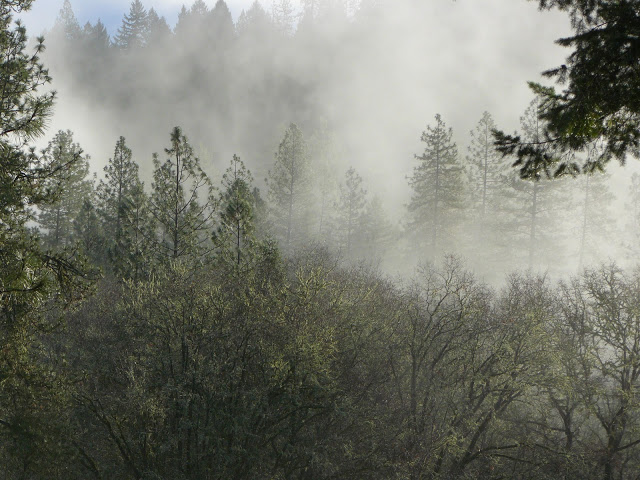
An early morning picture of the woods overlooking our Oregon property.

Jeannie

My lovely Jeannie helping tidy up the bank of the creek.

The creek did rise!

Connections!

Our good friend back in Payson, John Hurlburt, is often heard to close a conversation in response to a “Best wishes” with the saying “Good Lord willing and the creek don’t rise.

Well for us the creek did rise last week-end!

creekrise

So when I rang John a couple of days ago and asked him where the expression came from, he was quick to explain that it was a familiar ‘sign-off’ by Red Barber, a former sports broadcaster.

Red Barber
Red Barber

As Wikipedia explains:

Walter Lanier “Red” Barber (February 17, 1908 – October 22, 1992) was an American sportscaster.

Barber, nicknamed “The Ol’ Redhead”, was primarily identified with radio broadcasts of Major League Baseball, calling play-by-play across four decades with the Cincinnati Reds (1934–38), Brooklyn Dodgers (1939–1953), and New York Yankees (1954–1966).

Like his fellow sports pioneer Mel Allen, Barber also gained a niche calling college and professional football in his primary market of New York City.

OK, that’s all for now – off to the shops to get in 10 days of supplies before the bridge is repaired, as reported here!

Another Sunday pause

More beautiful pictures.

Many of you ‘Liked’ the pictures from last Sunday’s Small pause today post.  Those pictures were sent to me by Cynthia, wife of long-time friend Dan Gomez.

So I decided to present another set, this time sent to me by Suzann, who is Dan’s sister.  Again, they are beautiful albeit very different images.

Northern Lights Over Teepees

(NORTHERN LIGHTS, YELLOW KNIFE, CANADA )

sr1

Now check out that thermometer!

sr2

Now more beautiful images.

sr3

sr4

sr5

sr6

sr7

sr8

The next picture is a fire rainbow; the rarest natural phenomenon in the atmosphere.  The picture was taken on the Idaho Washington border and the event lasted for about an hour.

Apparently, the clouds have to be cirrus of an altitude of 20,000 feet with just the right proportion of ice crystals.  Then the sunlight has to illuminate the clouds at precisely 58 degrees to the horizontal.

sr9

Sunset at the North Pole

Another rare picture taken when the moon was closest to the earth. Taken Thursday, the 13th. of March 2011.

sr10

Note how unusual it is to see the sun below the moon!

Thanks Su for sending me the pics.