Category: Art

Hands across the ether.

Never underestimate the power of like-minded people.

We are nothing without others in our life.  Each one of us is drawn to those that laugh with us, cry with us and comfort us in times of sorrow.

These thoughts come to mind as, to my humble amazement, the number of followers of Learning from Dogs approaches 500 and I reflect on how many of you, dear readers, now feel like friends. (Update: as at 7:40 pm last night, Raechelsheart became follower number 500!  Thank you all.)

So from that parochial view to the following video.  No introduction required by me, other than to thank neighbours Dordie and Bill who brought this performance to my attention.

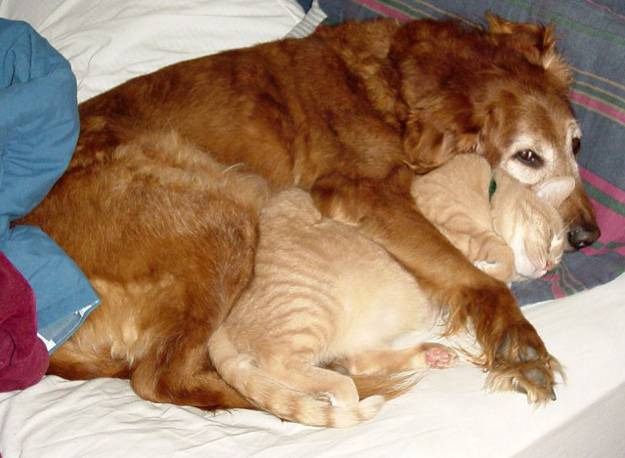
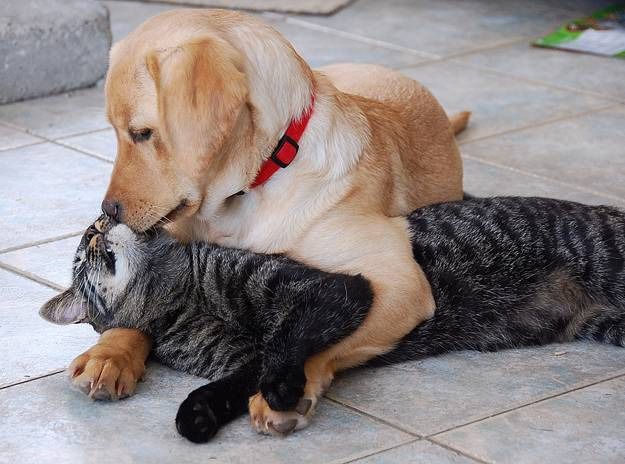
Finally, it’s not just humans who are drawn together.  Here’s Pharaoh getting to know puppy Cleo back on the 7th April last year.  They are now deeply connected friends who share their whole lives together; with so much fun.

P1110332

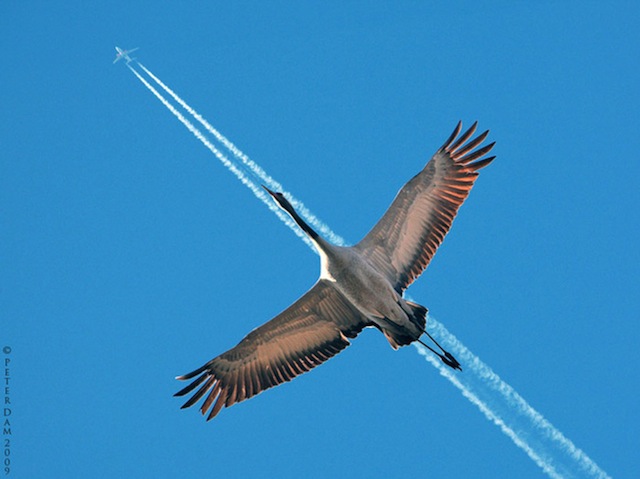
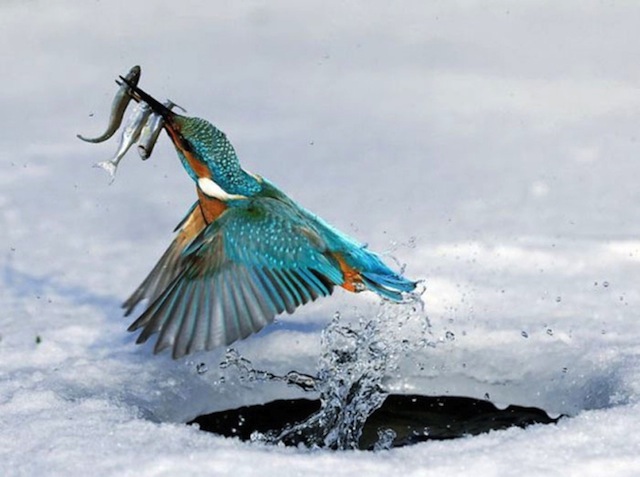
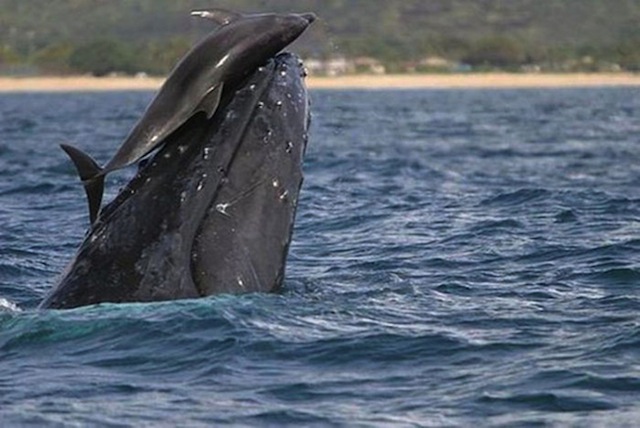
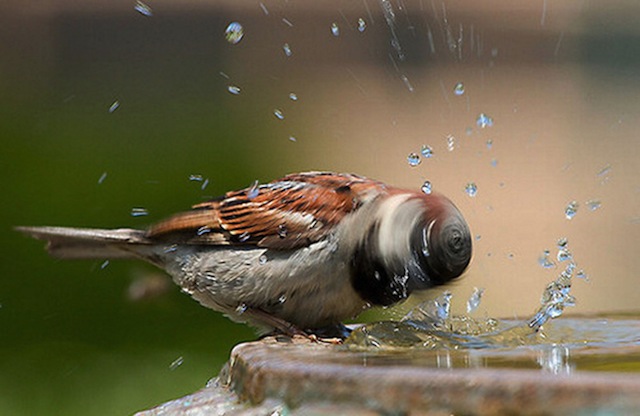
Perfect timing, set one.

Sit back and be amazed!

A friend from Payson, Arizona, Lew Levenson, recently sent across a set of 38 astounding photographs, all on the theme of perfectly timed shots.

They are so fabulous that I have decided that for today and the following four Sundays I will post a selection.

So today, the first set of 8 photographs. Trust me you will love them, so a big thank you to Lew.  Do say which are your best ones!

oooOOOooo

LL1

oooo

LL2

oooo

LL6

oooo

LL8

oooo

LL3

oooo

LL4

oooo

LL7

oooo

LL5

oooo

Another set next Sunday.

More wonder and awe!

Another incredible, unbelievable feat of balance.

Back on the 16th June, I published a post under the title of Wonder and Awe. It featured Miyoko Shida Rigolo and a balancing act of such artistry with a most beautiful finale!

Well here she is again.

Mid-week break.

Just ran out of time yesterday, so enjoy the following:

(Sent to me by Dan Gomez.)

DanG1

The beautiful strange-eyed kitten, taken in  Lovech, Bulgaria in the summer of 2009 by Bobby Pfeiffer.

DanG3

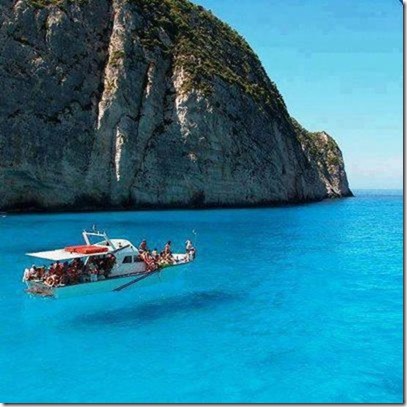
Zakynthos Island in Greece. The water is so clear, it looks like the boat is floating in the air.

DanG4
This is what ocean sand looks like when it’s magnified 250 times.

DanG5
California Red-Sided Garter Snake.

DanG8

Zanjeer, The Golden Labrador Who Saved Thousands Of Lives.

In March 1993, a series of 12 bombs went off across Mumbai, India. The serial blasts left 257 dead and 713 injured. But in the aftermath, an unlikely hero emerged. According to Reuters, a golden labrador named Zanjeer worked with the bomb squad and saved thousands of lives by detecting “more than 3,329 kgs of the explosive RDX, 600 detonators, 249 hand grenades and 6,406 rounds of live ammunition.” He helped avert three more bombs in the days following the blasts.

The dog died of bone cancer in 2000. He was eight years old.

In the photo, a senior police officer lays a wreath of flowers on Zanjeer as he was buried with full police honors at a widely-attended ceremony.

DanG6

The love of a woman for her horse!

The incredible story of one woman’s loyalty to her horse – she spent three hours holding its head above the tide after it got stuck in the mud on a beach in Australia.  His owner, Nicole Graham, who was enjoying an afternoon ride, stayed with him as rescuers struggled for three hours to pull him out. With moments to spare, the 500kg horse, named Astro, was freed with the help of a tractor and harness at Avalon Beach in Geelong, Victoria, Australia .

DanG7

Returning to Nature

The power of serendipity!

Why the choice of this sub-heading?  Well, just because a number of quite separate articles and essays have come together to offer a powerful, cohesive argument for reconsidering the role of Nature in the future of mankind.

Of course, my use of words in that preceding sentence is completely ludicrous; the suggestion that ‘Nature’ is disconnected from ‘mankind’.  Yet millions of us, to a greater or lesser degree, do behave as if we are the masters of the world.

So let me dip into what has been ‘crossing my desk’ in recent times.

On May 28th, George Monbiot published in The Guardian newspaper an essay entitled A Manifesto for Rewilding the World.  (The link takes you to the article on the Monbiot blogsite.)  Here’s how that essay opened,

Until modern humans arrived, every continent except Antarctica possessed a megafauna. In the Americas, alongside mastodons, mammoths, four-tusked and spiral-tusked elephants, there was a beaver the size of a black bear: eight feet from nose to tail(1). There were giant bison weighing two tonnes, which carried horns seven feet across(2).

The short-faced bear stood thirteen feet in its hind socks(3). One hypothesis maintains that its astonishing size and shocking armoury of teeth and claws are the hallmarks of a specialist scavenger: it specialised in driving giant lions and sabretooth cats off their prey(4). The Argentine roc (Argentavis magnificens) had a wingspan of 26 feet(5). Sabretooth salmon nine feet long migrated up Pacific coast rivers(6).

During the previous interglacial period, Britain and Europe contained much of the megafauna we now associate with the tropics: forest elephants, rhinos, hippos, lions and hyaenas. The elephants, rhinos and hippos were driven into southern Europe by the ice, then exterminated around 40,000 years ago when modern humans arrived(7,8,9). Lions and hyaenas persisted: lions hunted reindeer across the frozen wastes of Britain until 11,000 years ago(10, 11). The distribution of these animals has little to do with temperature: only where they co-evolved with humans and learnt to fear them did they survive.

I’m not going to reproduce the bulk of the article; just hoped that I have tickled your curiousity sufficient for you to read it in full here. But will just show you how it closed:

Despite the best efforts of governments, farmers and conservationists, nature is already beginning to return. One estimate suggests that two thirds of the previously-forested parts of the US have reforested, as farming and logging have retreated, especially from the eastern half of the country(23). Another proposes that by 2030 farmers on the European Continent (though not in Britain, where no major shift is expected) will vacate around 30 million hectares (75 million acres), roughly the size of Poland(24). While the mesofauna is already beginning to spread back across Europe, land areas of this size could perhaps permit the reintroduction of some of our lost megafauna. Why should Europe not have a Serengeti or two?

Above all, rewilding offers a positive environmentalism. Environmentalists have long known what they are against; now we can explain what we are for. It introduces hope where hope seemed absent. It offers us a chance to replace our silent spring with a raucous summer.

Then further research for this post brought to light an interview with David Suzuki in February.  Widely reported, I picked the version published on Straight.com, from which comes:

In December, Canadian specialty TV channel Business News Network interviewed me about the climate summit in Copenhagen. My six-minute interview followed a five-minute live report from Copenhagen, about poor countries demanding more money to address climate change and rich countries pleading a lack of resources. Before and after those spots were all kinds of reports on the Dow Jones Industrial Average, the price of gold and the loonie, and the implications of some new phone technology.

For me, this brought into sharp focus the inevitable failure of our negotiating efforts on climate change. BNN, like the New York-based Bloomberg channel, is a 24-hour-a-day network focused completely on business. These networks indicate that the economy is our top priority. And at Copenhagen, money dominated the discussions and the outcome.

But where is the 24-hour network dealing with the biosphere? As biological creatures, we depend on clean air, clean water, clean soil, clean energy, and biodiversity for our well-being and survival. Surely protecting those fundamental needs should be our top priority and should dominate our thinking and the way we live. After all, we are animals and our biological dependence on the biosphere for our most basic needs should be obvious.

The economy is a human construct, not a force of nature like entropy, gravity, or the speed of light or our biological makeup. It makes no sense to elevate the economy above the things that keep us alive. But that’s what our prime minister does when he claims we can’t even try to meet the Kyoto targets because that might have a detrimental effect on the economy.

This economic system is built on exploiting raw materials from the biosphere and dumping the waste back into the biosphere. And conventional economics dismisses all the “services” that nature performs to keep the planet habitable for animals like us as “externalities”. As long as economic considerations trump all other factors in our decisions, we will never work our way out of the problems we’ve created.

Concluding:

Nature is our home. Nature provides our most fundamental needs. Nature dictates limits. If we are striving for a truly sustainable future, we have to subordinate our activities to the limits that come from nature. We know how much carbon dioxide can be reabsorbed by all the green things in the oceans and on land, and we know we are exceeding those limits. That’s why carbon is building up in the atmosphere. So our goal is clear. All of humanity must find a way to keep emissions below the limits imposed by the biosphere.

The only equitable course is to determine the acceptable level of emissions on a global per capita basis. Those who fall below the line should be compensated for their small carbon footprint while those who are far above should be assessed accordingly. But the economy must be aligned with the limits imposed by the biosphere, not above them.

Quite clearly, if we continue to turn our backs on Nature, the consequences won’t be long in tapping us on the shoulder.

So, going to close it today with this, seen nearly a month ago on the PRI website:

oooo
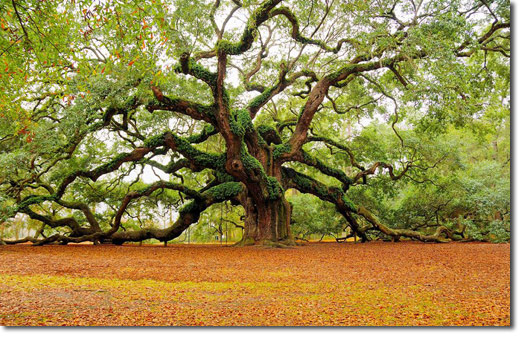
Plant a Tree

Trees — by Kristof Nordin May 27, 2013

angel-tree

Imagine the type of world we could see
If instead of saying ‘pray,’ we said, ‘plant a tree’.
With this one little change so much more could be done
To protect all living things found under the sun.

We could ‘plant a tree’ for our troops sent away into war
So when they return they’d come home to find more.
We could ‘plant a tree’ at our churches with our husband or wife
To praise the Creator through a celebration of life.

We could ‘plant a tree’ for the needy and for those with no food
We could even plant in public without seeming rude.
The government would not have to introduce rules,
And most likely we could ‘plant a tree’ at our schools.

If we took it to task to ‘plant trees’ for the poorest,
We would all soon be reaping the wealth of a forest.
We could plant freely with those of all religions and creeds,
The improvement of earth would be based on these deeds.

We could plant with our neighbours, our family, and friends,
And ‘plant a tree’ with our enemies to help make amends.
If we ‘plant a tree’ for the sick to show them we care,
We would also be healing the soil, water, and air.

We could ‘plant a tree’ to observe when two people wed,
And plant one with our kids each night before bed.
Throughout the history of the whole human race
We find respect for the ‘tree’ has always had a place.

The great Ash of the Norse was their tree of the World,
And on a tree in the Garden is where the serpent once curled.
It was in groves of Oaks that the Druid priests wandered,
And under the Bodhi where the great Buddha pondered.

In the Bible it’s clear that we have all that we need:
‘All the trees with their fruits and plants yielding seed’.
Despite all these lessons that the past has taught
Now days, it seems, we cut our trees without thought.

This is confirmed by the Koran, for in it we read:
‘Many are the marvels of earth, yet we pay them no heed’.
We all have a duty, no matter what nation
To perform our part in protecting Creation.

Just think what we’d have if we had picked up a spade
Every time each one of us bowed our heads and prayed.

Further Reading:

oooOOOooo

The theme continues tomorrow.
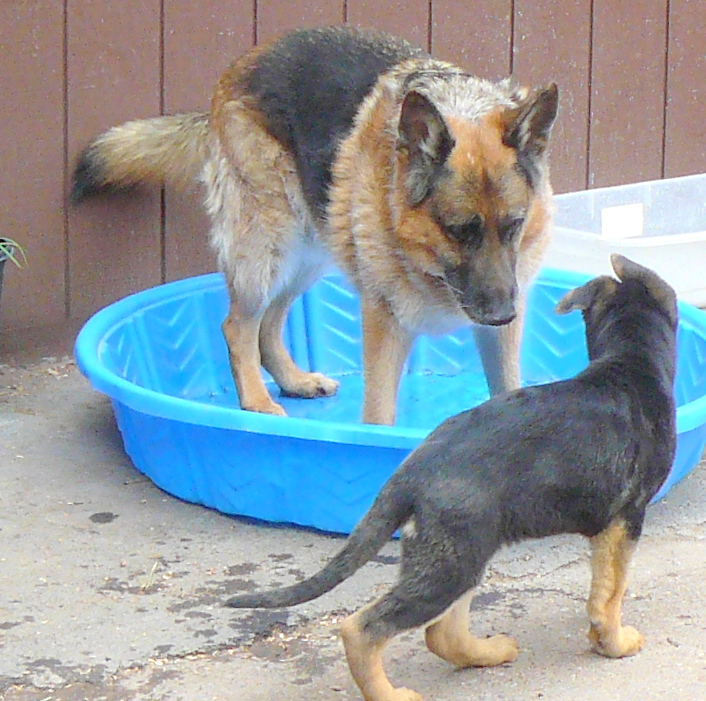
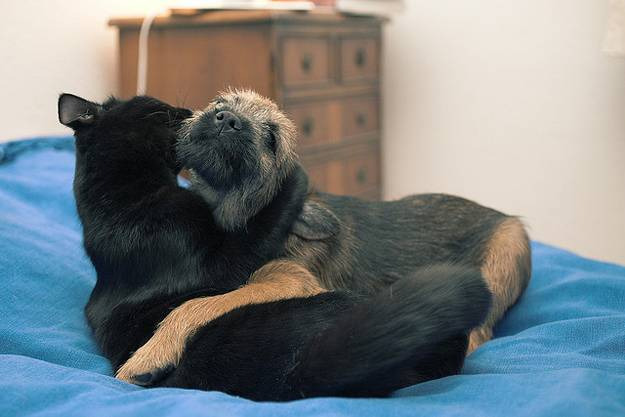
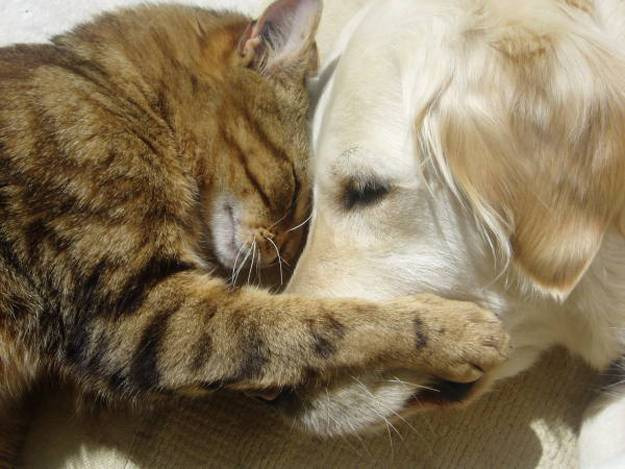
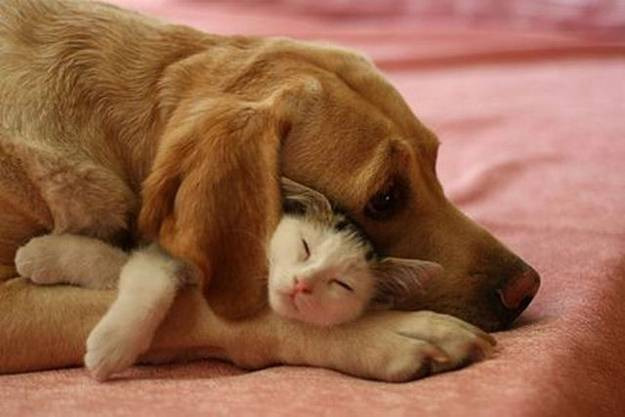
Every dog should have its cat!

Another gem from John Hurlburt.

dogcat1

oooo

dogcat2

oooo

dogcat3

oooo

dogcat4

oooo

dogcat5

oooo

dogcat6

oooo

dogcat7

oooo

dogcat8

oooo

dogcat9

oooo

It came to me that every time I lose a dog,
they take a piece of my heart with them….
And every new dog who comes into my life,
gifts me with a piece of their heart.
If I live long enough, all the components of
my heart will be dog …
and maybe
I will become as generous and loving as they are.

Unknown author.

Be in grace.

In memory of my elder sister, Corinne Grace Joiner, nee Handover, who died peacefully in her sleep at 7am yesterday, UK time.

The following video was sent to me a few days ago by John Hurlburt before me hearing the sad news of my sister’s graceful release from extreme dementia.  The video seemed a most fitting tribute to Corinne who was a loving friend to me for well over 60 years.

Published on May 5, 2012

Video by Scott Mckinley Productions, Produced for Rocky Mountain Elk Foundation for Ad campaign. Licensed music by Kenny G.. This short video won Best of Category at the International Wildlife Film Festival in Missoula Montana! The majority was shot on location in Yellowstone National Park, Grand Teton National Park and The National Elk Refuge in Jackson Hole, Wyoming.

Summer solstice

As old as time itself!

holding-the-sun

The point at which the sun reaches its farthest point north of the equator is the Summer Solstice, well it is for the Northern Hemisphere. This occurs annually on June 20 or June 21, depending on your time zone.

Here in Southern Oregon, the moment of the Summer Solstice will be 22:04 Pacific Daylight Time (PDT) on the evening of June 20th and at 05:04 GMT/UTC on June 21 2013 in the United Kingdom.

A quick web ‘look-up’ finds that the word solstice is from the Latin solstitium, from sol (sun) and stitium (to stop), reflecting the fact that the Sun appears to stop at this time, albeit momentarily.

At the ancient stone circle of Stonehenge in Southern England, the prehistoric monument that took Neolithic builders an estimated 1,500 years to erect, for many years the Druids have celebrated the Solstice and, undoubtedly, will be doing so again.

AMESBURY, UNITED KINGDOM - JUNE 21:  A man stands on top of Stonehenge as the sun rises over Salisbury Plain on June 21, 2006 in Amesbury, England.  Police estimated around 17,000 people travelled to watch the sun rise ove the 5,000 year old stone circle to start the longest day of the year. The all-night party to celebrate the Summer Solstice passed with only four arrests being made. (Photo by Daniel Berehulak/Getty Images)
AMESBURY, UNITED KINGDOM – JUNE 21: A man stands on top of Stonehenge as the sun rises over Salisbury Plain on June 21, 2006 in Amesbury, England. Police estimated around 17,000 people travelled to watch the sun rise over the 5,000 year old stone circle to start the longest day of the year. (Photo by Daniel Berehulak/Getty Images)

Wonder and Awe.

Sometimes applause seems just … oh, I don’t know  …. just so inadequate!

If you, like me, was entranced by the music then thanks to a comment left by one Eugene Karry on the YouTube website, all is explained.

Eugene explained that the instrument is called the Armenian Duduk and that Armenian Duduk music is recognized by UNESCO.

It was only a quick search on the UNESCO website to find this:

The duduk, the Armenian oboe, is a single or double reed wind instrument made of the wood of the apricot tree and has a warm, soft, slightly nasal timbre. The duduk or tsiranapokh, which is also called the apricot tree pipe, belongs to the organological category of areophones, which also includes the balaban played in Azerbaijan and Iran, the duduki common in Georgia and the ney in Turkey. The soft wood is the ideal material to carve the body of the instrument. The reed, called ghamish or yegheg, is a local plant growing alongside the Arax river.

img

The roots of Armenian duduk music go back to the times of the Armenian king Tigran the Great (95-55 BC). The instrument is depicted in numerous Armenian manuscripts of the Middle Ages. The duduk accompanies popular Armenian traditional songs and dances of the various regions and is played at social events, such as weddings and funerals. Although there are also famous duduk soloists, among them Gevorg Dabaghyan and Vache Sharafyan, the duduk is mainly played by two musicians. One player creates the musical environment for the lead melody by playing a continual drone that is held by circular breathing, while the other player develops complex melodies and improvisations.

There are four major types of duduk, varying in length from 28 to 40 cm and in sound, ranging from one to fourth or third octaves. Therefore, the sound of the duduk can express various moods depending on the content of the piece and the playing context. The 40-cm long duduk, for example, is regarded as most appropriate for love songs, whereas the smaller one usually accompanies dances. Today, duduk craftsmen continue to create and experiment with different forms of duduks. Many Armenians consider the duduk as the instrument that most eloquently expresses warmth, joy and the history of their community.

Over recent decades, the popularity of Armenian duduk music has decreased, in particular in the rural areas where it originated. At present, most duduk players are concentrated in Yerevan. The duduk instrument is played less and less in social festivities, but more often by professionals as a staged performance. Duduk music risks losing its viability and traditional character and becoming just another facet of “high culture”.

Back to Eugene, who went on to write that Jivan Gasparyan and Gevorg Dabaghyan are famous duduk players among many others. The musical pieces played on the duduk are mostly armenian folk or spiritual tunes; many of them sad songs. Nowadays the duduk is very often played during funerals among Armenians but there are some dance songs as well.

Finally, Eugene offered these further hauntingly beautiful pieces of music.

——-

——-

——–

oooOOOooo

Just beautiful.

The power of the present moment.

A reminder of the beauty of the present moment.

Yesterday, I wrote a post I cry for the wolves. A comment from Jeremy Nathan Marks included this:

I have learned slowly that being an adult means learning to face and acknowledge the many horrors of our world. It also means -for me, anyway- recognizing that love is the one saving grace, the one remaining hope, the one promise that might be kept. And I mean love in the hear and now and not in any afterlife. Love is what animates beauty for me -a beauty that is about more than aesthetics.

Some people would perhaps think I am ridiculous for saying that I feel that wolves are my kin. But they are. To be kin doesn’t mean we have to think the same thoughts, speak the same spoken language, or even move through the world in precisely the same way. Being kin to me means that we recognize the life lived in one another. I see that life and its light and love in wolves, just as you have beautifully described. And I know people who have lived and worked with wolves have seen that mutuality in their encounters and interactions with wolves and their packs.

That is such a profound reflection.

Unwittingly, before I read that comment from Jeremy, I had added this comment:

Around 7am I went down to our pond just to enjoy the world Jean and I live in and there was a young deer grazing the field grass near the water. Slowly, I moved towards a bench seat by the edge of the pond and sat down. The deer strolled away, perhaps some 30 feet, and continued to graze. Thanks to Dordie and Bill this young, beautiful creature was perfectly comfortable with my presence.

I sat there and my mind wander back to some far-off time when a curious young wolf might have let curiousity compell it to come a little closer to a human, perhaps nibble at the bone that the human threw in its direction.

There’s a theme here.  “Love in the here and now ..” from Jeremy and me being lost watching that deer; the love of that moment.

A couple of evenings ago, Jean and I watched a truly wonderful and inspiring film.  The film was called What about me? 1 Giant Leap  The embedded link takes you to the website for the film.

Here’s the trailer.

Following the success of their first double Grammy nominated film & album, What About Me? is the latest offering from 1 Giant Leap. This visionary project took Jamie Catto and Duncan Bridgeman to over 50 locations as they explore through music, the complexities of human nature on a global scale, and aims to reveal how we are all connected through our creativity and beliefs, but most of all through our madness.

Through music and film, “1 Giant Leap” explores the universal complexities of human nature. Jamie Catto (Faithless co-founder) and Duncan Bridgeman set out on their journey recording musical jewels and words of wisdom with the cream of the world’s thinkers, writers and entertainers along the way. The duo traveled to the farthest corners of the planet, to ensure immense cultural diversity in this time capsule of humanity at its most inspirational.

Covering universal topics such as God, Sex, Death and Money, What About Me? features an incredibly diverse collection of collaborators from Noam Chomsky to Will Young, Maxi Jazz to Tim Robbins, Billy Connolly to Michael Stipe, Eckhart Tolle to Baaba Mal, among many others.

Encompassing a TV series, film and album, this is a poignant, emotional and entertaining time capsule of humanity at its most inspirational.

I can’t recommend too strongly that you watch the full-length film – I doubt that you will watch it and remain unchanged.