To awaken one’s true self, one must awaken the entire world.
As you may gather from the sub-heading above, this is not a typical post today! (If there is a typical post in this place!) In fact, I think this is the first time in over five years of publishing Learning from Dogs that I have devoted a post solely to a full-length film.
But the film so perfectly picks up the theme of yesterday’s post, Quietening one’s self down, that it was too good an opportunity to miss.
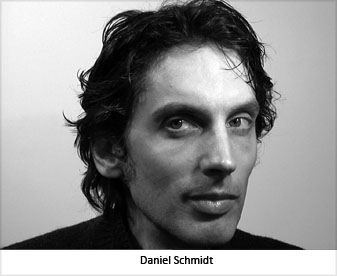
Inner Worlds was created by Canadian film maker, musician and meditation teacher Daniel Schmidt. The film could be described as the external reflection of his own adventures in meditation. As Daniel came to meditative insights, he realized that these same insights were discovered over and over in spiritual traditions around the world and that all traditions share a common mystical underpinning.
He realized that it is this core experience that connects us not only to the mysterious source of all creation, but to each other as well. Along with his wife Eva, Daniel currently lives in a log home tucked away in a forest of tall pine trees located in Ontario, Canada. It is in this beautiful setting where they run a meditation and yoga center called Breathe True Yoga www.breathetrue.com.
Daniel has studied meditation from the traditions of Buddhism, Taoism, the Yogic traditions of India, as well as the mystical traditions of various cultures, and has come to his own teaching method helping point people towards their own inner wisdom and knowledge. “Meditation is not so much a technique to master as it is a re-orientation of the heart; a selfless act of love and surrender into the mystery and stillness at the core of our being“.
Daniel has always had a strong life connection with sound and music. He has been a composer for over 20 years with an extensive library of music venturing into many genres and styles, and he is the President and CEO of REM Publishing Ltd. Music is not something to be comprehended merely with the hearing faculty. The vibratory nature of the universe is understood when we recognize that everything is music.
Eva has studied and teaches chakra yoga, hatha yoga, meditation and healing through expressive arts. She has integrated yogic traditions from around the world and attended the Pyramid Yoga Center in Thailand for extensive yoga training. Eva is a sound healer, artist and was a strong creative force in the editing room as “Inner Worlds” was being created. Together Dan and Eva were the Shiva and Shakti forces that birthed the film into the world.
It became clear during the making of the film that Inner Worlds Outer Worlds had to be released for free for the benefit of all beings. In the ancient traditions the dharma or “the truth” was always taught freely and never for personal gain or profit in order to preserve the purity of the teachings. It is Daniel and Eva’s belief that to awaken one’s true self, one must awaken the entire world. Daniel and Eva have started the Awaken the World initiative www.awakentheworld.com to bring the ancient knowledge back to the earth in order to restore balance and harmony on the planet.
If you want to dip into the film then here’s the trailer.
But many, including Jean and me, will want to watch the full film.
The website Top Documentary Filmsoffers this summary (the links below will take you to other films on meditation):
Inner Worlds could be described as the external reflection of Daniel Schmidt’s own adventures in meditation.
Akasha is the unmanifested, the “nothing” or emptiness which fills the vacuum of space. As Einstein realized, empty space is not really empty. Saints, sages and yogis who have looked within themselves have also realized that within the emptiness is unfathomable power, a web of information or energy which connects all things.
The Spiral. The Pythagorean philosopher Plato hinted enigmatically that there was a golden key that unified all of the mysteries of the universe. The golden key is the intelligence of the logos, the source of the primordial om. One could say that it is the mind of God. The source of this divine symmetry is the greatest mystery of our existence.
The Serpent and the Lotus. The spiral has often been represented by the snake, the downward current, while the bird or blooming lotus flower has represented the upward current or transcendence.The ancient traditions taught that a human being can become a bridge extending from the outer to the inner, from gross to subtle, from the lower chakras to the higher chakras.
Beyond Thinking. Life, liberty and the pursuit of happiness. We live our lives pursuing happiness “out there” as if it is a commodity. We have become slaves to our own desires and craving. Happiness isn’t something that can be pursued or purchased like a cheap suit.
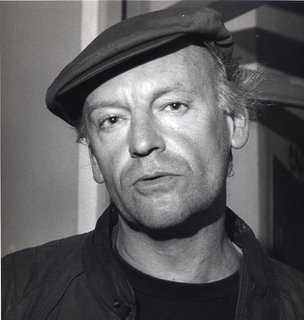
Yesterday, I read the latest from TomDispatch, an essay entitled Eduardo Galeano, A Lost and Found History of Lives and Dreams (Some Broken).
I wasn’t sure if I had vaguely heard of Eduardo Galeano before but whatever, I had no idea of the power and beauty of his writings and was simply blown away when reading them. As Tom introduced the writings:
Who isn’t a fan of something — or someone? So consider this my fan’s note. To my mind, Uruguayan writer Eduardo Galeano is among the greats of our time. His writing has “it” — that indefinable quality you can’t describe but know as soon as you read it. He’s created a style that combines the best of journalism, history, and fiction and a form for his books that, as far as I know, has no name but involves short bursts of almost lyrical reportage, often about events long past. As it turns out, he also carries “it” with him. I was his English-language book editor years ago and can testify to that, even though on meeting him you might not initially think so. He has nothing of the showboat about him. In person, he’s almost self-effacing and yet somehow he brings out in others the urge to tell stories as they’ve never told them before.
Despite Tom’s blanket permission to republish his essays, I’m not going to do so in this case, there’s a small niggle in the back of my mind that the copyright issues are rightfully protecting Mr. Galeano’s publishing rights.
So just going to offer this single extract and trust that you will go here and read Tom’s full essay: please do!
Century of Disaster
Riddles, Lies, and Lives — from Fidel Castro and Muhammad Ali to Albert Einstein and Barbie
By Eduardo Galeano
[The following passages are excerpted from Eduardo Galeano’s history of humanity, Mirrors (Nation Books).]
Walls
The Berlin Wall made the news every day. From morning till night we read, saw, heard: the Wall of Shame, the Wall of Infamy, the Iron Curtain…
In the end, a wall which deserved to fall fell. But other walls sprouted and continue sprouting across the world. Though they are much larger than the one in Berlin, we rarely hear of them.
Little is said about the wall the United States is building along the Mexican border, and less is said about the barbed-wire barriers surrounding the Spanish enclaves of Ceuta and Melilla on the African coast.
Practically nothing is said about the West Bank Wall, which perpetuates the Israeli occupation of Palestinian lands and will be 15 times longer than the Berlin Wall. And nothing, nothing at all, is said about the Morocco Wall, which perpetuates the seizure of the Saharan homeland by the kingdom of Morocco, and is 60 times the length of the Berlin Wall.
Why are some walls so loud and others mute?
See what I mean!
There is much more about Eduardo Galeano on the web as these two following links prove.
Eduardo Galeano
Wikipedia have an entry here that is informative. Then there is an in-depth article about the man over on The Atlantic website, that starts thus:
Eduardo Galeano is regarded as one of Latin America’s fiercest voices of social conscience. Yet he insists that language — its secrets, mysteries, and masks — always comes first.
November 30, 2000
“The division of labor among nations,” Eduardo Galeano proclaimed in the opening sentence of Open Veins of Latin America, “is that some specialize in winning and others in losing.” A native of Uruguay who was forced into exile under the country’s military regime during the 1970s, Galeano has always identified with the losing side. Open Veins, originally published in Mexico in 1971, employed captivating, elegiac prose to chronicle five centuries of plunder and imperialism in Latin America. Radically different in style, though not in content, from Marxist-oriented “dependency theory” of the 1960s — which held that Latin America had been systematically marginalized by the world economy since the colonial era — Open Veins quickly became a canonical text in radical circles, selling hundreds of thousands of copies in the Southern Hemisphere. In a period of social upheaval, guerrilla warfare, and dictatorship, the book, composed in three months of intense labor, was routinely treated as samizdat: when Open Veins was banned by the Pinochet regime, a young woman fled Chile with the book stashed in her infant’s diapers.
Going to close by musing on the fact that in today’s visual, technological age, the sharing of words, in all ways, shapes and sizes, across so many parts of our global society, is a pure miracle. Such creativity out there!
Sorry, folks, the headline was half-designed to set you off down the wrong road. Because the television series Antiques Roadshow is well known both sides of the Atlantic.
No, today’s post is a lovely silly story sent to me by dear friend Richard Maugham back in England. Prompted by the guest post on Tuesday about the risks to dogs of throwing sticks for them.
This is what he sent me:
Antique Road Show.
Paddy took two stuffed dogs to the Antiques Roadshow.
”Ooh”, said the presenter. “This is a very rare set produced by the celebrated Johns Brothers taxidermists who operated in London at the turn of the last century.
Do you have any idea what they would fetch if they were in good condition?”
A short film by Alan Watts and Terence McKenna. A film that makes a perfect postscript to yesterday’s post: The tracks we leave.
Published on Mar 3, 2013
Alan Watts and Terence McKenna talk about our need for a sense of unity as our global problems are getting worse and we have become enemies of our planet and each other.
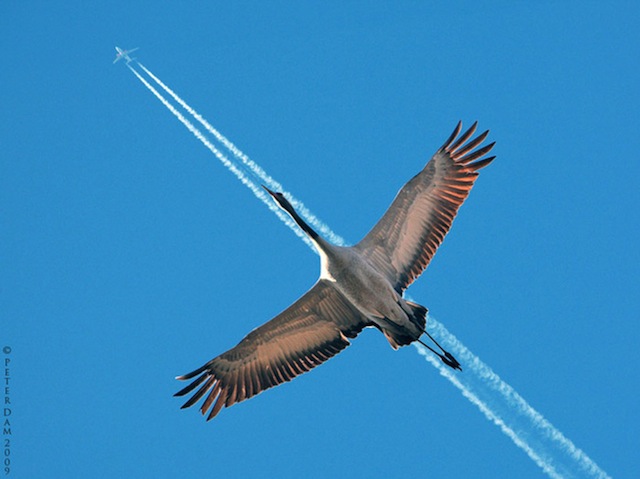
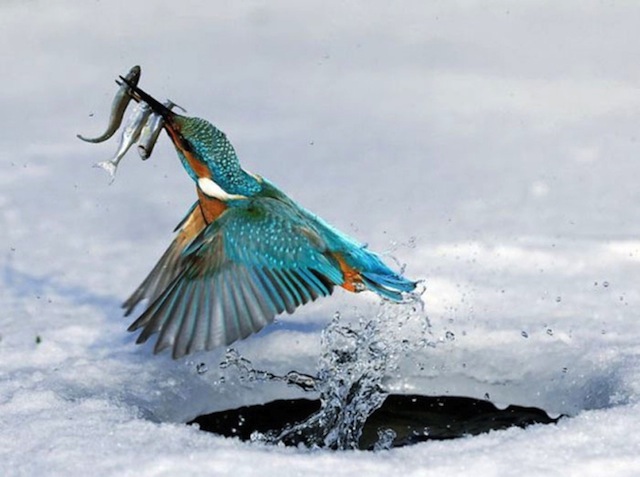
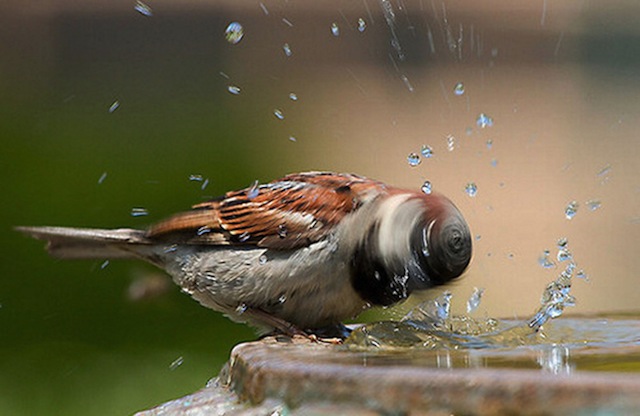
As I said in last week’s picture parade, “A friend from Payson, Arizona, Lew Levenson, recently sent across a set of 38 astounding photographs, all on the theme of perfectly timed shots.” Despite the fact that they had previously appeared in this place, your responses were do delightful that I have no problem in staying with these pictures over the next few Sundays.
oooo
oooo
oooo
oooo
oooo
oooo
oooo
oooo
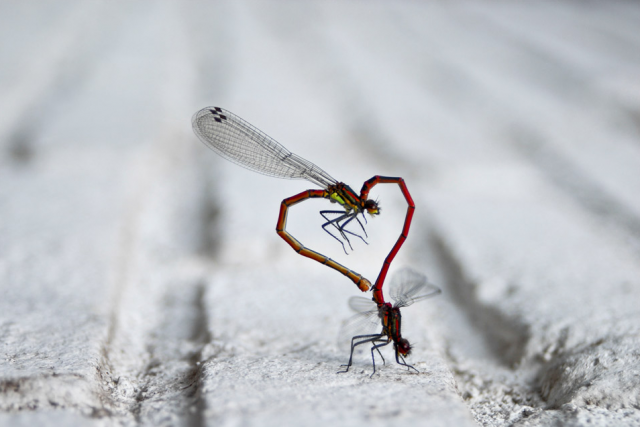
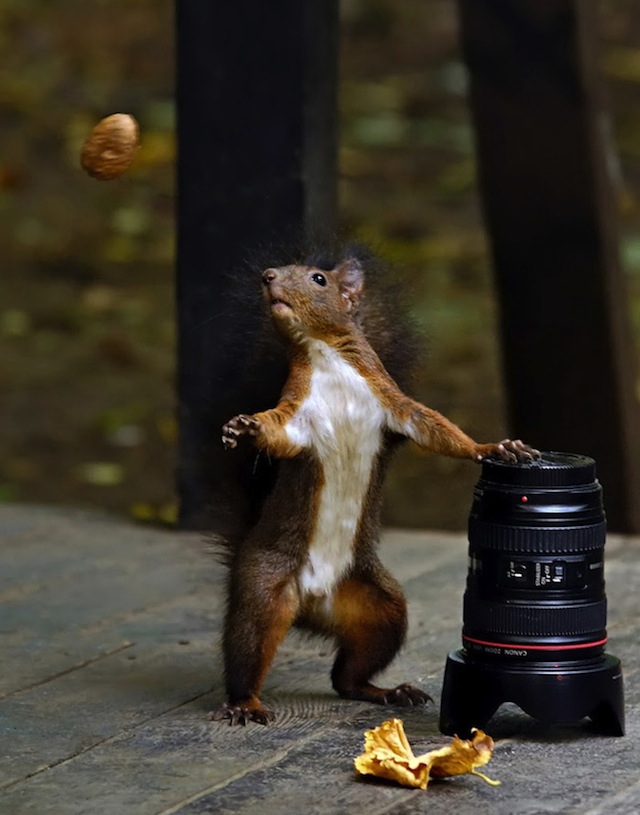
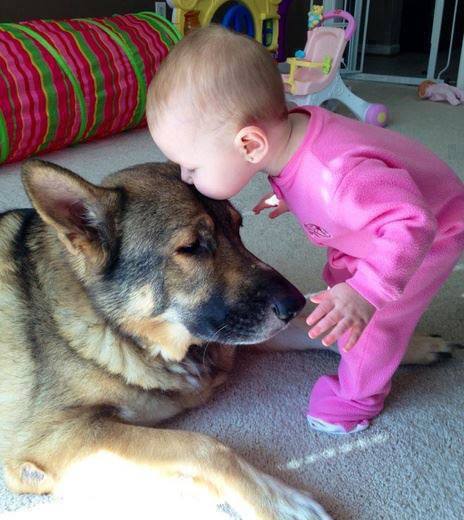
Each picture gives one such a warm and cuddly feeling!
There are so many aspects of the dog world that we have to learn. Top of the list of what we must learn from dogs is unconditional love.
You all know how if you approach a strange dog with love in your heart, how that dog senses your love immediately and responds in the same loving fashion.
So approach every conscious being in your life with love in your heart. It will truly change the world!
So with that in mind, it seemed very appropriate to follow up yesterday’s post that included the essay by Chris Johnstone on celebration with this short film from Rick Hanson. Especially just now.
Published on Nov 7, 2013
Hardwiring Happiness : The Hidden Power of Everyday Experiences on the Modern Brain. How to overcome the Brain’s Negativity Bias.
Rick Hanson is a neuropsychologist and the author of Hardwiring Happiness: The New Brain Science of Contentment, Calm, and Confidence, best selling author of Buddha’s Brain, founder of the Wellspring Institute for Neuroscience and Contemplative Wisdom and an Affiliate of the Greater Good Science Center at UC Berkeley, he’s been an invited speaker at Oxford, Stanford, and Harvard, and taught in meditation centers worldwide.
A fascinating essay courtesy of Transition Network in the UK
I have very little doubt that I share with the majority of ‘common folk’ out there a feeling of these being dark and desperate times. I’m not even going to list the things that, on an almost daily basis, come along under the category of ‘doom and gloom’.
Yet it is also pretty widely known that change is embraced much more easily through reward. In other words, we commit to change, in a thousand different ways, from the expectation of reward: reward in many varied and numerous ways, many of them non-financial, of course.
The challenge for us all is that the negative has great pulling power. If we read news websites, watch television, read newspapers, and more, we are exposed essentially to wall-to-wall bad news.
So how on earth do we keep our spirits up? How on earth do we maintain hope in there being a positive way forward? Whatever ‘way forward’ translates to in terms of the individual?
Over in the UK there is the website of the Transition Network. From that home page one can link across to a number of blogs. Anyway, recently on Rob Hopkins’ blog there was a very interesting essay by Chris Johnstone about the power of celebration. Read it and reward yourself for so doing! 😉
Chris Johnstone works in the area of the psychology of resilience, sustainable happiness and is co-author, with Joanna Macy, of Active Hope: how to face the mess we’re in without going crazy. [1.] Chris appeared at both the Unleashing of Transition Town’s Totnes and Lewes, and has interacted with different Transition groups ever since. He’s also an accomplished musician (you can hear him playing briefly at the end of the podcast of our interview). I started by asking him why celebration matters:
“I’m just thinking about how important food is. Without food, we wither away. Food is nourishment. We also have needs for psychological nourishment or psycho-spiritual nourishment, emotional nourishment. I see celebration as one of those things that nourishes us psychologically, emotionally, spiritually. I was thinking about this also in terms of how important celebration is in keeping us going.
One of the thought blocks that people bump into sometimes is the voice that says “well what’s the point of doing this?” What celebration does is it gives us an answer to that. I think of it as helping shifting us from a going nowhere story where we feel we’re making no progress and have no direction to what I think of as a going somewhere story, where we feel that we’re on the way somewhere because we’re celebrating and marking important steps along the way.
What are the risks of not pausing to celebrate, do you think?
If you don’t pause to first of all notice that you’ve made any progress, it’s very easy to feel that you’re not making any progress. If you’re not making any progress, one of the risks for burnout is that loss of meaning where you lose the sense that there’s a point to what you do. Basically you run dry.
I see one of the parallels here as sustainable agriculture. One of the keys of sustainable agriculture is to nourish the soil. If you look after the soil, you get good crops. In terms of personal productivity, I think it would be to have sustainable activism. The parallel to topsoil is, I guess, our enthusiasm. We need to look after our enthusiasm for something. If we don’t, our enthusiasm gets thin like thin topsoil and you can get to a point where there’s no enthusiasm left and you just have that sense of, well what’s the point. You lose the oomph, you lose the energy, and you lose the plot.
What does good celebration look like? What for you would be the ingredients of a good celebration?
You can do it alone. It’s good to have ways where we notice the steps that we’re taking by ourselves and find some way of marking those and reinforcing those, but I’d say that celebration generally is much better in company. It’s also socially bonding and there’s very interesting research here about what really makes a difference in relationships.
There’s a psychologist called Shelley Gable who worked at the University of California, Los Angeles, and she was trying to work out what are the vital things that really make a difference and she recorded lots and lots of relationships. One area of communication that seemed to make a key difference in relationships was the response to good news.
If one person had good news and shared it with the other and the other person responded to the good news by being ‘joy in the joy of another’, by celebrating the good news, that deepened trust, that deepened the sense of satisfaction in the relationship. But if somebody shared good news and it passed by without notice or even worse, the person tried to persuade them that really it was bad news, that led to a drop in the level of satisfaction in the relationship that was so strong that Shelley Gable found that she could work who was at higher risk of breaking up over the next 12 months just by looking at their response to good news, whether somebody celebrated the good news when it was shared, or whether somebody passed it by or poured cold water on it.
There was a thing that I wrote for this month’s framing editorial that was my attempt at what some of the ingredients of good group celebrations might look like. What does celebration on a more day to day basis in a group like a Transition group – how can we design it into our meetings, our everyday rather than having something we just do once a year?
I’d say there’s something here about celebration needing to be meaningful. It’s asking yourself “what exactly is it that we are celebrating?” What we’re doing with celebration is celebrating the things we appreciate, the things that we value. By having a shared celebration, what you’re doing is reinforcing the system of values, the shared system of values within that group. In terms of what keeps us going, it’s really important to celebrate success. So what comes up there is we need to look at how do we notice success, how do we notice progress and how do we define that?
It’s particularly important when working for social change, for social and ecological justice, that we can often have a lot of disappointment and frustration along the way. If we only celebrate the really big things, the really big victories, we can have long gaps between the celebrations which makes us feel that we’re losing, that we’re not making progress. And so therefore I think what’s really important is to look at the mini victories along the way, and to both celebrate the positive outcomes that happen, but also to celebrate the effort put in, and one way of doing that is just to find some way of appreciating what has been done, so for example research on our mood shows that one of the things that improves mood is both the experience and also the expression of gratitude.
One of the ways that you can build celebration into everyday meetings and things is just finding some way to appreciate each other, appreciate the steps that we’ve been taking. If you’ve noticed that someone’s worked really hard on something, to have some gap in a meeting, some agenda item in the meeting where you just notice the things that have been done and the effort put in, and find some way of valuing them, marking them, noting them.
It might be first of all there’s a slot for anyone who’s got any good news to share and then to celebrate that, but also has anyone got any appreciations of gratitude to express. To actually build that into part of a group culture that we take time to notice and celebrate the steps we notice each other taking, and also if somebody has noticed a step that we’ve taken, for it to be completely more than fine, I’d say brilliant, for us to step forward and say – one thing I’m pleased about, you may not have seen this but one thing I’ve done is… where we take time to notice and to celebrate the steps we’ve taken ourselves.
It’s great when other people can notice it, but we don’t want to end up feeling resentful because no one cheered for this hard piece of work I did. We actually get better at stepping out there and saying – yes, I’m really pleased that I did this, I’m really pleased that I did that, because when we mark the steps that we’re taking, we reinforce that in a way that helps us keep taking those steps.
The environmental movement, in as much as I’ve been around it for the last 25 years or so, feels to be fairly spectacularly bad at stopping and celebrating. The culture is like a marathon, “got to keep going, got to keep going”, so there’s lots of burnout. Why do you think the environmental movement has been so poor at that?
Partly it’s the scale of the tasks that we face. We can’t have a party to celebrate climate change being sorted out, because that’s probably not going to happen in our lifetime. There’s already problems in the post, as it were, from the carbon that’s already been released into the atmosphere. The task is so huge that we could be working, well, there’s 168 hours in the week and we could be working all of those for a whole year and still feel that there’s more and more to do. There’s two things here.
There’s the to-date thinking which is where we look at what we’ve done so far, but there’s also to-go thinking where we look at what we’ve still got to go, the distance we’ve still got to cover. When we look at the distance we’ve still got to cover, it’s further than we can get in our lifetime, so that’s the trouble as I see it. We can just be working, working, working, and feel that there’s always more to go.
But also if we only focus on the work that’s still to be done, the danger is we just get exhausted. We become like what we’re doing to the fields of wheat around the world – we harvest them unsustainably and end up depleting the soil. I’d say that activist enthusiasm is a vital renewable resource, and we need to get much more skilful about how we treasure it. How we look after it in a way that can help it grow.
My last question is, can you think of one celebratory event that you were particularly moved by or inspired by which could be a story that might be useful for Transition groups to hear?
I’ve shared a number with you that I really delight in. One that comes to mind is when the two of us spoke together at the launch of Transition Town Totnes. It was the official unleashing of Transition Town Totnes and that was years ago now. But I think that was in 2006, so eight years ago now. What we do is celebrate launches of things in a way that we’re marking them and saying – hey, this is the beginning of something. We don’t know what will happen, but we’re marking our very clear intention.
There’s a form of energy, I call it ACACI which means A Clear and Committed Intention. It’s like a form of psychological energy. When you have strong, clear and committed intention, it drives you on. One of the ways of building that up is to have a launching celebration. I really enjoyed that event with you. We spoke together at the unleashing of Transition Town Lewes as well and we’ve both been back there since then. You wrote recently in your July 1st blog about being at their 7 year celebration and I was there at their 5 year celebration.
If you have a party to begin something, then you can also revisit that point some years on. So they become markers in time. We can say yes, we were here when this began, we celebrated the launch of this. And now here we are meeting again, this number of years later and we also celebrate the effort put in and the steps taken and the distance covered in that between time.
What you do there is build in the journey approach to change. This sense that we’re on a cultural migration. That’s why I love the term Transition. Transition is about moving from one place to another and we mark the steps along the way. So we celebrate when we begin this journey with the unleashing, the launch, but we keep coming back to that at periodic intervals and say – hey, we’re still on this journey. It’s still important to us.
While there might be some steps forward and some steps back and frustrations and disappointments along the way, there will always be things that we can look at and say yeah, that’s what we did and I feel really good about that.
When you mark the things that you feel good about, you get something which I call afterglow. This is the warm feeling of satisfaction after you’ve done something or noticed something that you feel good about. That’s what keeps us going, it’s fuel for the journey. So back to that original idea that celebration is a form of psychological nourishment and it’s absolutely vital to keep ourselves going.
You’re a very gifted musician and you managed to weave music and getting everybody moving and joining in as well. What’s the role of music in that, do you think?
It’s so interesting, because they’ve found bits of bone that have been turned into flutes that are 20,000 years old. I see music as a form of social glue. It draws people together. There’s something very remarkable that can happen when people move rhythmically together. It’s where we shift out of just seeing ourselves as separate individuals to where we sing and dance together it reinforces our connectivity, our sense of being part of something larger.
That’s great – actually ‘great’ is an understatement. I talked about psychological nourishment, also how do we reinforce and grow social capital? Social capital is the wealth that comes out of relationships. Shared music and dance is one of the ways that happens.
I wanted to know more about Chris and very quickly came to this place, from where I read:
Chris Johnstone
Chris Johnstone is a medical doctor, author, and coach who worked for nearly twenty years as an addictions specialist in the UK National Health Service. A former Senior Teaching Fellow at Bristol University Medical School, he trains health professionals in behavioral medicine and gives courses exploring the psychological dimensions of planetary crisis. Chris is known for his work pioneering the role of resilience training in promoting positive mental health, developing self-help resources and setting up the Bristol Happiness Lectures. He is author of Find Your Power: A Toolkit for Resilience and Positive Change (2nd Ed, 2010) and co-presenter of The Happiness Training Plan CD (2010).
Chris has been a trainer in the Work That Reconnects for more than two decades, working with Joanna on many occasions and running facilitator trainings in the United Kingdom. In 2004 he set up the free email newsletter [2.] The Great Turning Times, which is now read by thousands of people throughout the world. He has been active in the Transition movement since its very beginnings and contributed to a chapter on the psychology of change in The Transition Handbook by Rob Hopkins.
After many years living in Bristol, Chris recently moved to the North of Scotland, where he lives with his wife, Kirsty, their dogs and chickens, pursuing his love of growing fruit in their evolving forest garden. He continues his coaching and training work, as well as his writing and music. His website is at www.chrisjohnstone.info
He runs workshops and a facilitator training in the Work That Reconnects in the UK. Details at: www.facilitationforlifeonearth.org.
He also offers online courses in Active Hope, Resilience, Sustainable Happiness and Change-Making Skills at www.resiliencehappinesschange.com.
[1.] The following video is from the Active Hope theme.
[2.] If you wish to subscribe to the newsletter, then the link may be found on this page. (I have just done so.)
Yes, fifty-two Sundays ago, I had the idea of posting a set of photographs. That first set was published on the 30th June, 2013 and just for fun I’m going to repost them.
Plus, I can’t resist adding a photograph that Chris Snuggs sent me.
oooo
Sit back and be amazed!
A friend from Payson, Arizona, Lew Levenson, recently sent across a set of 38 astounding photographs, all on the theme of perfectly timed shots.
They are so fabulous that I have decided that for today and the following four Sundays I will post a selection.
So today, the first set of 8 photographs. Trust me you will love them, so a big thank you to Lew. Do say which are your best ones!
oooo
oooo
oooo
oooo
oooo
oooo
oooo
oooo
To close here is that picture courtesy of Chris Snuggs.
By the way, if you would like see again the rest of Lew’s photographs just leave a comment to that effect.
is not so much a technique to master as it is a re-orientation of the heart; a selfless act of love and surrender into the mystery and stillness at the core of our being“.



















 Learning from Dogs