On April 1st I set the scene for the essays that I wanted to write for Learning from Dogs as follows:
I often ask myself just how effective the modern US schooling system is as a tool of education, and whether or not its costs outweigh its benefits. I hope to have at least a rough answer to this question in the
Elliot Engstrom
final post of this series.
In the following posts, I will examine three topics:
– In what ways does the modern schooling system function as a positive tool for education?
– What costs involved in modern schooling hinder its ability as an educative tool, and even make it a negative influence on students?
– Considering the analyses put forth in the first two posts, do the costs or benefits or this system outweigh the other? On the whole, are school and education complements or antagonists?
Here is the first one looking at the positive aspects of the American educational system.
Intellectual exploration
My kindergarten teacher told me to always start with something positive, so I’ll be beginning my analysis of American schooling by looking at how it is a positive tool for education.
One facet of the American education system that I once disapproved of but now find extremely useful and educative is the long period of time that students have before they must commit to a career choice.
I used to view this lag as a waste of resources. However, living in France and being a student at a French university changed my mind. The French system begins to lock children into a career path as early as the closing years of middle school. If a student in France wants to be a doctor, for example, they enter into medical school immediately upon leaving high school. The same is true for professions like pharmacology and law. There is very little opportunity for intellectual exploration in the country’s schools. Rather, one simply must make the best of wherever one ends up.
While the American system is more long-winded, it is a better tool for education in that it allows for a more dynamic range of studies. A liberal arts education forces students to delve into a wide range of subjects, giving students the chance to explore their interests and abilities.
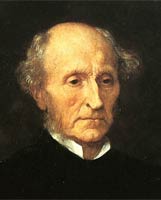
Socrates (or Plato, depending on your interpretation of Plato’s dialogues), believed that a liberal arts education also encouraged the development of critical thinking skills. However, it should be noted that many of the greatest critical
John Stewart Mill, (1806–1873)
thinkers in history did not go through formal schooling. (Socrates himself and John Stewart Mill come to mind.)
This system also allows students to change their mind, pursuing those fields of study that truly interest them the most. It is amazing how many students in the American university system change majors during their tenure as students. This often is because they find that the career path they thought was for them is in fact not their liking – the number of students who abandon the premed track during college is a perfect example of this.
Education also entails socializing with other human beings. The American education system also facilitates this form of education quite well, as a liberal arts form of study at both the high school and university levels mixes together students of different interests.
Whereas in the French model a student studying medicine is constantly surrounded by other students of the same mindset, a premed student in the United States will have classes with students in other fields of study, expanding their social horizons and forcing them to relate to people with whom they may have little in common.
In my next post, I will examine the American schooling system as an antagonist to education, and will then close this series by attempting to weigh the system’s costs and benefits against each other.
This is the second Guest post from AJ Easton, a 13-year-old girl from North Carolina, USA. AJ first wrote about Learning from Horses on January 17th this year. This is a more reflective essay that would have been a credit to someone with many, many more years.
Trust is a complicated thing…
You have to learn to trust, but it is not something that can be taught in schools. You also have to earn trust, by keeping secrets and not spreading rumors.
With the people you trust, you do things you wouldn’t do with other people . Your true self comes out with the people you trust. You don’t worry about being judged; you don’t worry about people disliking you for who you are.
AJ Easton
But, in our modern-day world, it seems as if everyone judges.
People seem to hate for reasons as stupid as one’s appearance. People don’t trust people anymore because it seems that we are constantly warned to avoid strangers because they might hurt you, murder you, or completely mess up your life in some way, shape, or form.
And in school, if you trust someone enough to tell them a secret, they don’t keep it. And then, in your point of view, the world has ended.
All because of some secret that got out about who you like, or what you did with the person you were dating, or something else that, in the end, isn’t all that important.
Then everyone will judge you based on that rumor until you leave the school or graduate. They do this to make themselves feel “cool” and “important.” And you learn not to trust.
Social status has become such a big factor in everything we do these days. Everyone feels as though they have to be highly ranked socially to mean anything to the world.
But, truly, all you have to do is love what you do and respect yourself, to follow your dream and be determined. We should make decisions that help us move forward, not dwelling on the past. Every second is different; everything is unique. Nothing is the same. Not a single person, or tree, or moment. Each moment represents a new opportunity.
Don’t have regrets. What has happened has already happened and you can’t change it. Time travel is fictitious, not a reality. You can’t rewind your life to change what you have already done. There is a reason behind everything: remember this when you are having doubts about what you have done. Learn from your past but don’t let it eat at you.
Live your own life. And learn to trust yourself, and those who love you.
This is the concluding part four of a multipart series on the factors that drive U.S. and foreign bond prices and yields.
[Part One is here, Part Two here, Part Three here Ed.]
Bond’s in a weak or faltering economy will generate a lower return to lenders than bonds in a strong economy, absent inflation or any other material changes in the purchasing power of the currency. Weak demand for goods and services means weak demand for financial capital which means low rates of return on financial capital.
The policies of the government can increase the borrowing costs of private industry. Fiscal policy that increases taxes reduces the profitability of projects and undermines the ability of companies to pay coupons and repay principal. Monetary policy that increases the money supply may lead to inflation, which also increases the cost of borrowing and reduces economic activity.
Lastly, and of the greatest concern of late, is the level of borrowing by the U.S. government. Debt levels are at record highs, with no relief in sight. The AAA rating of U.S. debt is reportedly in jeopardy (Chicago Tribune editorial).
Moody's Corporate Logo
Both existing and new lenders worry about the ability of the U.S. government to repay. Yes, the can simply roll over existing debt by raising taxes or creating money to retire old debt and replace it with new, but the interest rate required by new lenders goes up as the ability of the private economy to sustain tax revenues falls and the risk of inflation rises (Moody’s explains U.S. bond ratings).
Both factors are in play now: an anemic economy with little hope that this administration will undertake policies that support business, and a ballooning money supply and weak dollar that undermine the purchasing power of the returns to lenders. The returns to U.S. debt may still be healthy relative to those one can earn in other countries, but the spread is shrinking. The private economy remains fundamentally strong, thanks to the work ethic of the American people and the profit motive of the capitalistic system, but the policies of the U.S. government are straining those resources.
The yield on a bond is made up of several components. Some think of the return on a bond as the sum of the risk-free rate of interest (how impatient we are to get our money back, or how much we need to be compensated to delay consumption) and a risk premium (the additional return we require to compensate us for the risk of default, the risk the bond will be called, the risk of inflation reducing the purchase power of the repaid dollars, and many other sources of risk as outlined in the most recent article in this series).
Another useful way of thinking of the return on a bond is as the sum of the real rate of interest and the expected rate of inflation. But what is the real rate of interest? We never actually observe that rate, unless of course the inflation rate is zero and then the real rate is just the nominal rate set in the market.
It is useful, however, to think about what drives the ability of a company to generate a real rate of return to lenders, for this is essence of capitalism and risk-taking and creating economic value and growth.
Bond traders
A firm’s asset cash flows support the real returns to its lenders – all kinds of lenders (debt, equity, hybrid, and derivative security holders). A firm will want to borrow more, and is willing to pay a higher interest rate for those funds, the more profitable are the projects they want to undertake, or the greater the number of profitable projects. Profitability, in turn, is determined by the relationship between demand and supply: how much does society value a good or service, and how many resources does the business use in producing the good or service. As the marginal productivity or efficiency of a business goes up, it can afford to profitably fund more projects. So the core driver of the real return on bonds is the strength of the underlying economic activity of the private economy.
Or, when viewed from the investor’s side, note that an investor will purchase a bond, or lend money to a company, if they expect to earn a return sufficient to compensate them, first, for delaying consumption and, second, for bearing the various sources of risk or uncertainty associated with the bond’s cash flows or return.
I have hit a man only once in my adult life. Only once, but this was a full-out, closed-fist, knock-you-off-your-feet slug that dared him to come back for more. And he didn’t. One slug did it! How empowering!
Bob (name changed) took me and George (my then-fiancé and now ex-husband) for a ride in a four-seat plane above the skyline in downtown Dallas, Texas late one summer night when the skies were dark and the stars were bright.
Private Plane
Bob was a friend of Allen, who was a very good friend of mine and an accomplished private pilot who had introduced me to the joys of flying. Allen trusted Bob and I trusted Allen, so I was not unusually concerned about Bob’s ability to get us back down safely. But I hadn’t factored in Bob’s judgment, or lack thereof.
I think, in hindsight, that Bob had hoped I would show up for the ride alone despite the fact that I had arranged it as a surprise for George. The plan was for George to sit up front and play co-pilot. Upon arrival at the hanger, however, Bob promptly stuck George in the back seat of the plane and then turned his full attention to me. I’m usually fairly dense to these things, but it was apparent even to me that Bob considered this to be a “date.” He was charming, animated and very friendly, while virtually ignoring George’s very existence. We reviewed the safety measures, checked out the plane, and away we went.
Bob was showing me a series of maneuvers, swooping and banking and it was all lovely and exciting until…..a sudden plunge…..and everything instantly blacked out. It was very disorienting — even though my eyes were wide open and I was totally conscious, I could not see a thing.
The sirens started blaring; a recorded voice shouted “Stall! Stall! Stall!” I called to George but he didn’t answer. Either he was unconscious or couldn’t hear me over the noise, but I wasn’t sure which. I reached out to Bob, but he was unresponsive and felt limp. Now I was really worried. Momentarily terrified, actually, with that cold feeling of raw fear in the pit of my stomach. I thought to myself, “If I am blacked out and cannot see, then HE, the, um, PILOT, might be blacked out as well!”
I had what seemed like a very long time to ponder what I could do to survive this emergency, and keep George alive, who was there because of me! I tried to feel my way along the control panel to find the radio to call out “May Day,” but that wasn’t going too well. Somehow — I don’t know how because I still could not see! — Bob got us out of the descent, pulling the nose up and righting the plane. The sirens and warnings stopped. After a few more moments, my vision came back, and my stomach returned to its rightful place. We landed in one piece.
But when ole’ Bob got out of the pilot’s seat and walked around the plane to help me exit, I had a little surprise for him. Actually, it was a surprise for me, too, because I didn’t plan it and didn’t “see” or “feel” it coming. The next thing I knew I had drawn my right arm back, made a fist, and threw it into his left shoulder with everything I had. POW!
He stumbled, grabbed his arm, and said “Ow! What did you do THAT for?” Well, I didn’t think I had to explain how I thought he had just put my life and that of a friend in danger just to show off. I didn’t think he would see it the way I did, that he had flown that plane beyond his ability to control it. And even if he was in control the entire time, which I doubted, he scared the bajeebees out of me which was reason enough for me to sock him one!
I don’t recommend physical violence, even if the assailant is half the size of the perpetrator, but I have to tell you that to my knowledge, Bob never took another unsuspecting victim up for a little spin around the tops of buildings in downtown Dallas. And I know that if I ever really need to wind it up and let her go, I do have it in me.
The official unemployment rate of the U.S. economy remains at 9.7%, and the underemployment rate increased to 16.9%. These numbers represent a real tragedy for many Americans.
While the White House tries to celebrate the creation of 162,000 new jobs last month, at least 48,000 of these new jobs are government jobs, specifically temporary census workers, who are doing unproductive work and are being paid with taxes collected from the rest of the private economy.
Unemployment
Employment also increased in temporary help services and healthcare, but continued to decline in financial activities and in information, which is interesting given the recent comments by President Obama that the government takeover of the student loan program tucked into the health care bill “took $68 billion from banks and financial institutions.”(Obama’s April 1 remarks) That’s a lot of jobs, Mr. President.
Seems like there is more concrete evidence that, rather than creating jobs, the President’s policies are costing the economy jobs.
Elliot was ‘exposed’ to the Learning from Dogs readership on the 22nd March as our first Guest author. He wrote about the US Government and Poverty.
Elliot has one important distinction with respect to the other authors of this Blog; he is the right side of 30 years old!
He is going to use this perspective to reflect on schooling, something that most of us ‘aged’ peeps take for granted, assuming we can remember our school days! 😉
It promises to be a fascinating reflection.
———————————–
Setting the scene
I’ve had a plethora of experiences over the past 17 years of my life. I’ve made and lost friends, had romantic
Elliot Engstrom
relationships, read, traveled all around the world, lived in France, and done countless other things that I consider myself immeasurably blessed to have experienced.
Despite the fluidity of where these different experiences have taken me, my entire life since the age of four has had one characteristic in common – I have been a school student.
In the spirit of “Learning from Dogs,” I thought it might be interesting to reflect a bit upon the core dynamic between education (not learning, which is a far broader topic) and schooling.
I often ask myself just how effective the modern US schooling system is as a tool of education, and whether or not its costs outweigh its benefits. I hope to have at least a rough answer to this question in the final post of this series.
In the following three posts, I will examine three topics:
– In what ways does the modern schooling system function as a positive tool for education?
– What costs involved in modern schooling hinder its ability as an educative tool, and even make it a negative influence on students?
– Considering the analyses put forth in the first two posts, do the costs or benefits or this system outweigh the other? On the whole, are school and education complements or antagonists?
This series is going to be exciting for me because, to be quite frank, I have no idea what my final answer is going to be. I guess I’ll just have to stay tuned to see where my brain takes me – and so for you!
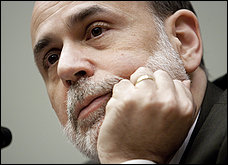
Ben Bernanke, Chairman of the U.S. Federal Reserve, announced that the Fed was likely to begin to sell some of the $1 trillion in mortgages, the so-called “toxic assets,” that it purchased over the last fifteen months to help stave off a total credit market meltdown. Those purchases essentially doubled the U.S. money supply, igniting fears of potential inflation should the underlying real economy recover before the money supply could be drawn back down. See earlier post.
Well, the process of tightening the money supply may be just around the corner. And increases in interest rates and the cost of everything purchased on credit – homes, cars, durable goods, and business capital expenditures – are not far behind. Increases in interest rates dampen economic activity, an unfortunate development given the current lethargic state of the U.S. economy. But it has to be done sometime – we cannot sustain such a huge increase in the money supply without paying an even higher price in terms of inflation and a weak dollar.
It will be interesting to see who buys the toxic assets and how much they will pay. Regardless, the sale will reduce the money supply which, if done in a slow, orderly manner, is a good thing for the economy. Getting the Fed out of the business of buying and selling private market securities will be an even better thing for the U.S. economy. Now more than ever we need a monetary authority that is focused on the best policies for our economy, not those that help Fannie Mae, the White House, or the Treasury Secretary save face.
Behavioral Economist concludes that most people cheat.
In a very interesting video on the website TED, Dan Ariely, Professor of Behavioral Economics at Duke University, explains his research into why people think it is okay to cheat and steal.
Here is Ariely’s presentation from YouTube:
From his research, he concludes the following:
A lot of people will cheat.
When people cheat, however, they cheat by a little, not a lot.
The probability of being caught is not a prime motivation for avoiding cheating.
If reminded of morality, people cheat less.
If distanced from the benefits from cheating, like using “chips” instead of actual money in transactions, people cheat more.
If your in-group accepts cheating, you cheat more.
Dan Ariely
I quibble with the interpretation of some of his findings, which may justify a separate post on how people perceive what they do and do not know, but there are always issues of this sort with a given research project. Where I draw the line is when he expands his conclusions to include all of Wall Street and the stock market, which is totally beyond the scope and nature of his research.
On what basis does he draw this conclusion? As explained in this short video (as I have not read his book, though I’ve read excerpts and am familiar with the study upon which the book is based), Ariely claims that because stocks and derivatives are not in the form of money, they “distance people from the benefits of cheating,” which leads individuals who engage in the stock market to cheat more. He alludes to Enron as proof.
This is almost too silly to spend a lot of time on trying to discredit, but I fear that a lot of people who hear his talks or read his book may be lulled into accepting what he says about the stock market as true. But it is not! Enron is the exception, not the rule.
Companies who issue stocks are raising money to provide a good or service that is valued by society; they are rewarded by profits. Investors who buy and sell stocks, trade derivatives, and invest in portfolios are trying to make their money go further. They are trying to earn a return on their savings. Cheaters do not survive in the stock market, unlike the “consequences-free” classroom in Areily’s experiment.
On the other hand, these factors are in glaring abundance in the government: politicians never “see” the taxes they spend as the hard-earned income of the citizens. And the “benefits” of cheating, including power and privilege, are amorphous and vague, and couched in the so-called morality of “doing the greater good.” I’m surprised Ariely does not condemn the federal government using the same logic as his does the stock market.
His last take-away from this research project? That we find it “hard to believe that our own intuition is wrong.”
I think Dr. Ariely ought to apply that caveat to the conclusions he draws about his own research. Very interesting, very compelling, but his interpretation of the results as they apply to the stock market falls victim to the very same biases that he claims to find in others.
On the 10th February, I wrote an article entitled Every Economist, Mr President? No Sir! The thrust of my argument was “that the unemployment rate would have been much lower today had the stimulus program never occurred.”
That post also appeared on my own Blog and there attracted a fascinating response from Rick Rutledge. Rick’s response is worthy of a separate article, as below, together with my reply.
Sherry,
The problem with your explanation here is that it states that “government spending is funded with taxes that WOULD HAVE BEEN invested by private industry” and that “the unemployment rate WOULD HAVE BEEN much lower today had the stimulus program never occurred.” (Emphasis mine.)
This argument, it seems to me, is predicated on the conceptual fiction of a two-dimensional relationship between government spending and business investment, with taxes as the lever. That model lacks a time vector, not so much from omitting it, as compressing it. The relationship between those factors can only be simplified to this level by compressing all time into the representational plane.
That is to say that, to fairly represent the relationship between government spending and business investment (via taxation), we have to compress three presumptions into one premise:
– Past government spending that resulted in increased taxes diminishes past, present, and/or future business investment resources;
– Increasing present taxes to fund present and future spending diminishes business’ investment resource pool.
– Past, present, and future government spending without matching funding WILL, EVENTUALLY result in increased taxation, diminishing future business investment resources. (And, consequently, MAY have a chilling effect on present business investment attitudes.)
However, unless NPR has let me down (it could happen), and I’ve missed a big, breaking story about an increase in business taxes, these stimulus programs have been wholly funded by deficit spending.
Of course, it could be argued that deficit spending generally COULD (nay, should) have a chilling effect on business investment. This, together with the third presumption of the aggregate premise above (that is to say, burgeoning national debt), does create a basis for the belief that the unemployment rate COULD have been much lower today, IF a number of things had been done differently. The French have a saying: “With enough ‘IFs,’ we could put Paris in a bottle.”
To simply state that “the unemployment rate would have been much lower today had the stimulus program never occurred” strikes me as conclusory, and the sort of reasoning on which our elected officials too often rely to justify partisan and ideological positions.
Too, and unfortunately, there is a great body of evidence to suggest that business leaders have historically taken a disappointingly short-sighted approach to management, so I would be reluctant to put too many eggs into the “chilling effect” arguments.
Rick Rutledge
As a person who teaches financial literacy, I’m fully aware that sometimes there are urgent needs that justify the use of leverage (and short-term deficit spending) to deal with near-term emergencies. Credit has its uses. I’m of the belief that short-term deficit spending is not the primary (and certainly is not in and of itself) the cause for our current woes. I’m more inclined to believe that short-sightedness, whether in the form of The Quick Buck on Wall Street, or a systemic refusal to acknowledge the looming problem of the national debt, is more to blame than any single short-term stimulus program. Government spending on stimulus, OUTSIDE THE CONTEXT OF DEFICIT SPENDING, wholly evades your argument.
(But then, there may be good reason I don’t claim to be an economist – through no fault of yours, to be sure!)
Rick Rutledge
This was my reply:
Hi Rick,
Goodness. Where to begin! I simply stated my conclusion because it’s a post, and I was responding directly to Obama’s claim about what “all” economists think or say. He was misinformed or stretching the truth, and I wanted to point out that fact. So, yes, there were a lot of unstated underlying assumptions and data and studies and research and theory that I did not specify. Apparently you’ve supplied some of your own to try to deconstruct the “reasoning” or “ideology” that I might have used to arrive at my conclusion! Creative and ambitious but, alas, wrong.
You’ve ignored or misunderstood the very essence of causality: the only thing one needs to know is that business profits are the ONLY source of tax revenues to the government, and when the government takes and spends those tax revenues, they are spending dollars that WOULD HAVE BEEN RETAINED AND INVESTED by the business that created those profits and those very tax revenues IN THE FIRST PLACE, and would have then caused further profits next period. CAUSED. And it doesn’t matter whether you talk one period or multiperiod or lags. This fundamental economic fact does not change.
You bring deficit spending (the relation between this period’s G and this period’s T) and the level of debt (cumulative deficits) into the picture, both of which are entirely irrelevant to the issue I am raising and, worse yet, are the accountant’s version of business profits.
You site “evidence” that business leaders have been short-sighted (do please share some of that evidence with me — cite the source and let me have at it — it will not hold up) and use that to conclude that government spending does not reduce economic wealth? And then literally blame our current woes on the short-sightedness of business? or on national debt? huh?
You say: “Government spending on stimulus, outside the context of deficit spending, wholly evades my argument.” Not so. My point is that when the government takes a dollar of tax revenues, whether the government is running a deficit or surplus, it reduces the economic wealth of the economy relative to what it would have been had the government not taken that dollar of business profits as taxes. Very simple. Very straightforward. The plain, simple, unadorned, incontrovertible truth.
Thanks for your interest and for taking the time to write such a thoughtful, thought-provoking comment!








 Learning from Dogs