Author: Paul Handover

The Anthropocene period

Is this a new geological age?

Before moving to the thrust of this article, let me say that of the few things that I miss now living in Arizona, British draft beer and BBC Radio 4 are top of the list.  Radio 4 have long broadcast a splendid 30-minute summary of science matters under the banner of Material World.  It was the broadcast on May 12th that had a very powerful except that I will present here.  The programme is available to listen online.  This is how the BBC wrote up the summary,

Researchers from all over the world and various disciplines gathered together in London for a conference called “The Anthropocene: A New Epoch of Geological Time?” The term “Anthropocene” was coined by Professor Paul Crutzen of the Max Planck Institute in 2002 to suggest human activity has had such an irreversible affect on our planet, that we have entered into a new geological period, influenced by humans. The conference aimed to discuss the various research projects studying the Anthropocene, as well as to discuss whether or not it should be formalised as a geological “Epoch”. What actually is the Anthropocene, why are so many disciplines researching it and what difference will it make if it is formalized? Quentin finds out from Leicester University geologist Dr. Jan Zalasiewicz, and ecologist Professor Erle Ellis from the University of Maryland, Baltimore County.

Elsewhere on the BBC website, a fuller summary of the conference was written up by Howard Falcon-Lang, Royal Holloway, University of London.  I have taken the liberty of publishing that summary, minus the photographs, below, simply because it’s so important a read.

Anthropocene: Have humans created a new geological age?

By Howard Falcon-Lang Royal Holloway, University of London, 10th May 2011

Human civilisation developed in a cosy cradle.

Over the last 11,700 years – an epoch that geologists call the Holocene – climate has remained remarkably stable. This allowed humans to plan ahead, inventing agriculture, cities, communication networks and new forms of energy.

Some geologists now believe that human activity has so irrevocably altered our planet that we have entered a new geological age.

This proposed new epoch – dubbed the Anthropocene – was discussed at a major conference held at the Geological Society in London on Wednesday. Yet some experts say that defining this “human age” is much more than about understanding our place in history. Instead, our whole future may depend on it.

The term, the Anthropocene, was coined over a decade ago by Nobel Laureate chemist, Paul Crutzen. Professor Crutzen recalls: “I was at a conference where someone said something about the Holocene. I suddenly thought this was wrong. The world has changed too much. No, we are in the Anthropocene. I just made up the word on the spur of the moment. Everyone was shocked. But it seems to have stuck.”

But is Professor Crutzen correct? Has the Earth really flipped into a new geological epoch – and if so, why is this important?

Back to the beginning

Dr Jan Zalasiewicz of the University of Leicester is one of the leading proponents of the Anthropocene theory. He told BBC News: “Simply put, our planet no longer functions in the way that it once did. Atmosphere, climate, oceans, ecosystems… they’re all now operating outside Holocene norms. This strongly suggests we’ve crossed an epoch boundary.” Dr Zalasiewicz added: “There are three ideas about when the Anthropocene began. Some people think it kicked off thousands of years ago with the rise of agriculture, but really those first farmers didn’t change the planet much. Others put the boundary around 1800. That was the year that human population hit one billion and carbon dioxide started to significantly rise due to the burning of fossil fuels in the Industrial Revolution,” he explained. Dr Zalasiewicz continued, “However, the really big changes didn’t get going until the end of the Second World War – and that’s another candidate for the boundary.”

To formally define a new epoch, geologists must show how it can be recognised in the layers of mud that will eventually form rocks. As it turns out, there is enormous practical advantage in fixing 1945 as the beginning of the Anthropocene.

“1945 was the dawn of the nuclear age,” explained Dr Zalasiewicz. “Sediments deposited worldwide that year contain a tell-tale radioactive signature from the first atom bomb tests in the States”. So, thousands of years from now, geologists (if any still exist) will be able to place their finger on that very layer of mud.

Extraordinary times?

Nonetheless, the choice of 1945 for start of the Anthropocene is much more than just convenient. It coincides with an event that Professor Will Steffen of the Australian National University describes as the “Great Acceleration”. Professor Steffen told the BBC: “A few years ago, I plotted graphs to track the growth of human society from 1800 to the present day. What I saw was quite unexpected – a remarkable speeding up after the Second World War”.

In that time, the human population has more than doubled to an astounding 6.9 billion. However, much more significantly, Professor Steffen believes, the global economy has increased ten-fold over the same period.

“Population growth is not the big issue here. The real problem is that we’re becoming wealthier and consuming exponentially more resources,” he explained.

This insatiable consumption has placed enormous stresses on our planet. Writing in the prestigious journal Nature, Professor Steffen and colleagues recently identified nine “life support systems” essential for human life on Earth. They warned that two of these – climate and the nitrogen cycle – are in danger of failing, while a third – biodiversity – is already in meltdown.

“One of the most worrying features of the Great Acceleration is biodiversity loss,” Professor Steffen said. “Species extinction is currently running 100 to 1000 times faster than background levels, and will increase further this century. When humans look back… the Anthropocene will probably represent one of the six biggest extinctions in our planet’s history.” This would put it on a par with the event that wiped out the dinosaurs.

But perhaps more alarming is the possibility that the pronounced global warming seen at the start of the proposed Anthropocene epoch could be irreversible. “Will climate change prove to be a short-term spike that quickly returns to normal, or are we seeing a long term move to a new stable state?” asked Professor Steffen. “That’s the million dollar question.”

If the Anthropocene does develop into a long-lived period of much warmer climate, then there may be one very small consolation: the fossil record of modern human society is likely to be preserved in amazing detail.

Dr Mike Ellis of the British Geological Survey told BBC News: “As a result of rising sea level, scientists of the future will be able to explore the relics of whole cities buried in mud”.

Preserved buildings

In New Orleans, large areas of the city are already below sea level. The disastrous combination of rising sea level and subsidence of the Mississippi Delta on which it is built suggest that it will succumb at some point in the future. Although the Intergovernmental Panel on Climate Change (IPCC) predicts less than a metre of sea level rise over the next 90 years, more than five metres of sea level rise is possible over the coming centuries as the Greenland and West Antarctic ice caps melt.

Sea level rise of this magnitude will mean that the lower storeys of buildings will be preserved intact. Such “urban strata will be a unique, widespread and easily recognisable feature of the sedimentary deposits of the human age”, Dr Ellis commented.

Geologists of the future may also hunt for other, more unusual, “markers” of the Anthropocene epoch, such as the traces of plastic packaging in sediments.

But geologists like Dr Mark Williams from the University of Leicester hold much more serious concerns: “One of the main reasons we developed the Anthropocene concept was to quantify present-day change and compare it with the geological record,” he explained. “Only when we do so, can we critically assess the pace and degree of change that we’re currently experiencing.”

Dr Williams added that while the Anthropocene has yet to run its course, “all the signs are that the human age will be a stand-out event in the 4.5 billion year history of the Earth”.

We certainly do live in interesting times!
A day off

Apologies to all but circumstances have conspired to steal any time today (Saturday) to put together a post for tomorrow (Sunday) or ‘today’ for you the reader, if you follow me!

But here’s a very interesting if scary website that I will return to in due course.

http://co2now.org/ which is introduced thus,

What the world needs to watch

Global warming is mainly the result of CO2 levels rising in the Earth’s atmosphere. Both atmospheric CO2 and climate change are accelerating. Climate scientists say we have years, not decades, to stabilize CO2 and other greenhouse gases. To help the world succeed, CO2Now.org makes it easy to see the most current CO2 level and what it means. So, use this site and keep an eye on CO2.  Invite others to do the same. Then we can do more to send CO2 in the right direction.

Once again that website is CO2Now. org.

The sky at night

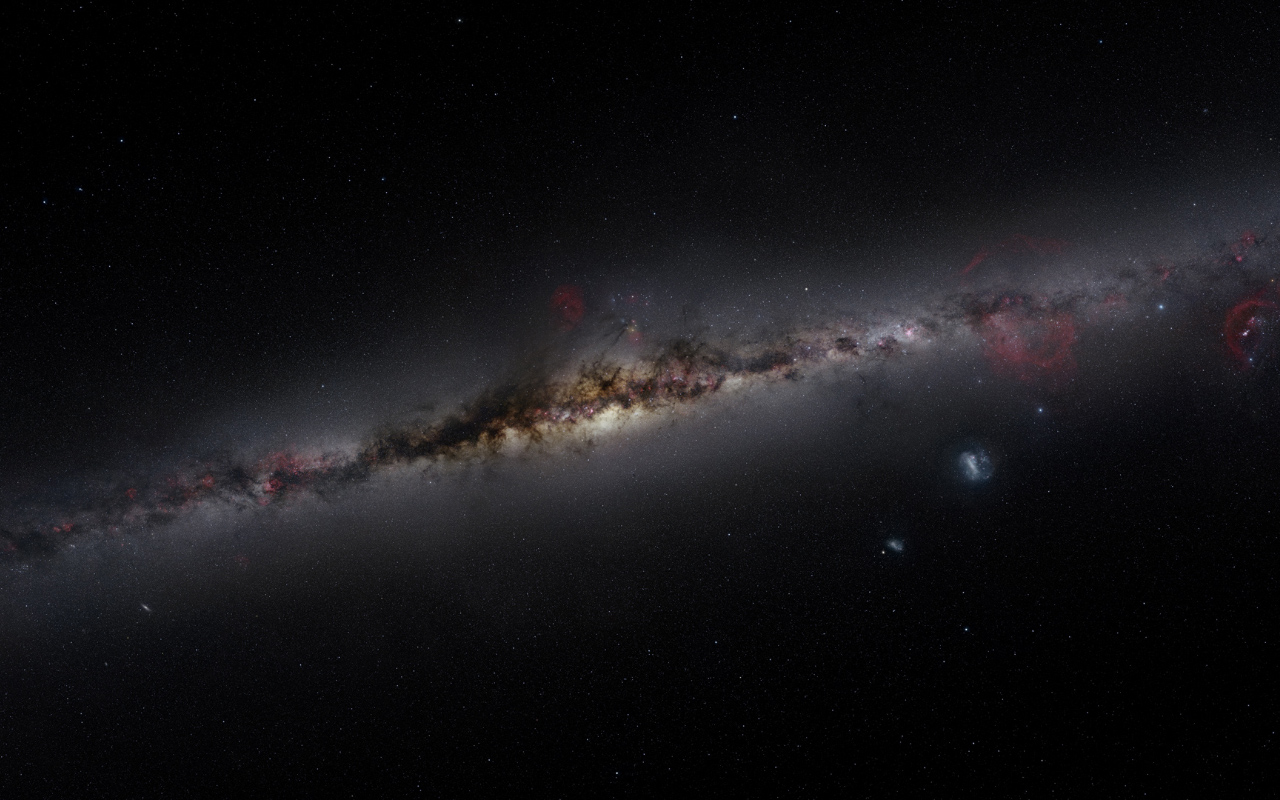
This is just so beautiful.

Tens of millions of stars, the glowing factories of newborn ones, and a rich tapestry of dust all floating on a stage of unimaginable proportions.

The image is from the Photopic Sky Survey website. From which also comes the following,

What do you see? This was the anthropic question of a year-long photographic project dubbed the Photopic Sky Survey, meant to reveal the entire night sky as if it rivalled the brightness of day. In it we see tens of millions of stars, the glowing factories of newborn ones, and a rich tapestry of dust all floating on a stage of unimaginable proportions. I hope you enjoy this new view of our place in the universe as much as I have enjoyed making it.

The Photopic Sky Survey is a 5,000 megapixel photograph of the entire night sky stitched together from 37,440 exposures. Large in size and scope, it portrays a world far beyond the one beneath our feet and reveals our familiar Milky Way with unfamiliar clarity. When we look upon this image, we are in fact peering back in time, as much of the light—having traveled such vast distances—predates civilization itself.

Well done, Nick Risinger, for all your efforts and for presenting such a magnificent detailed view of the heavens above.

Plus, more or less the same time, this came to my attention, from the BBC News website.

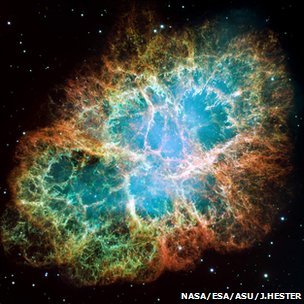
A Hubble classic: The Crab Nebula is about 6,500 light-years from Earth

The Crab Nebula has shocked astronomers by emitting an unprecedented blast of gamma rays, the highest-energy light in the Universe.

The cause of the 12 April gamma-ray flare,described at the Third Fermi Symposium in Rome, is a total mystery.

It seems to have come from a small area of the famous nebula, which is the wreckage from an exploded star.

The object has long been considered a steady source of light, but the Fermi telescope hints at greater activity.

The gamma-ray emission lasted for some six days, hitting levels 30 times higher than normal and varying at times from hour to hour.

While the sky abounds with light across all parts of the spectrum, Nasa’s Fermi space observatory is designed to measure only the most energetic light: gamma rays.

These emanate from the Universe’s most extreme environments and violent processes.

The Crab Nebula is composed mainly of the remnant of a supernova, which was seen on Earth to rip itself apart in the year 1054.

At the heart of the brilliantly coloured gas cloud we can see in visible light, there is a pulsar – a rapidly spinning neutron star that emits radio waves which sweep past the Earth 30 times per second. But so far none of the nebula’s known components can explain the signal Fermi sees, said Roger Blandford, director of the Kavli Institute for Particle Astrophysics and Cosmology, US.

eaarth, the book.

The latest edition of Bill McKibben’s book.

I’m about a third of the way through McKibben’s book eaarth.  To say that it is disturbing is an understatement.  I’ll tell you why.

eaarth

Most people when they think about it have, at the very least, feelings of guilt or denial in terms of what humans are doing to the planet’s environment that humans require for survival.  Many of us know in our hearts that it is probably not good news but maybe really thinking about it can be put off for a little longer!

It’s almost as though we know that those aches and pains are a sign of something potentially dangerous to our health but, hey ho, I’ll put off seeing the doctor for a little bit longer.

Then the day comes when one goes to the doctor and he confirms your worst fears; what you really knew deep in your heart.

Thus it is with the planet.  Most of us know that we have been treating the planet as an inexhaustible resource for the sole benefit of mankind and to hell with the future.  The you read a book such as eaarth from Bill McKibben and realise the extreme folly of denial, self-delusion, and the rest.  Here’s the preface of the book,

PREFACE

I’m writing these words on a gorgeous spring afternoon, perched on the bank of a brook high along the spine of the Green Mountains, a mile or so from my home in the Vermont mountain town of Ripton. The creek burbles along, the picture of a placid mountain stream, but a few feet away there’s a scene of real violence a deep gash through the woods where a flood last summer ripped away many cubic feet of tree and rock and soil and drove it downstream through the center of the village. Before the afternoon was out, the only paved road into town had been demolished by the rushing water, a string of bridges lay in ruins, and the governor was trying to reach the area by helicopter.

Twenty years ago, in 1989, I wrote the first book for a general audience about global warming, which in those days we called the “greenhouse effect.” That book, The End of Nature, was mainly a philosophical argument. It was too early to see the practical effects of climate change but not too early to feel them; in the most widely excerpted passage of the book, I described walking down a different river, near my then-home sixty miles away, in New York’s Adirondack Mountains. Merely knowing that we’d begun to alter the climate meant that the water fl owing in that creek had a different, lesser meaning. “Instead of a world where rain had an independent and mysterious existence, the rain had become a subset of human activity,” I wrote. “The rain bore a brand; it was a steer, not a deer.”

Now, that sadness has turned into a sharper-edged fear. Walking along this river today, you don’t need to imagine a damned thing the evidence of destruction is all too obvious. Much more quickly than we would have guessed in the late 1980s, global warming has dramatically altered, among many other things, hydrological cycles. One of the key facts of the twenty- first century turns out to be that warm air holds more water vapor than cold: in arid areas this means increased evaporation and hence drought. And once that water is in the atmosphere, it will come down, which in moist areas like Vermont means increased deluge and flood. Total rainfall across our continent is up 7 percent,1 and that huge change is accelerating. Worse, more and more of it comes in downpours.2 Not gentle rain but damaging gully washers: across the planet, flood damage is increasing by 5 percent a year.3 Data show dramatic increases 20 percent or more in the most extreme weather events across the eastern United States, the kind of storms that drop many inches of rain in a single day.4Vermont saw three flood emergencies in the 1960s, two in the 1970s, three in the 1980s and ten in the 1990s and ten so far in the first decade of the new century.

In our Vermont town, in the summer of 2008, we had what may have been the two largest rainstorms in our history about six weeks apart. The second and worse storm, on the morning of August 6, dropped at least six inches of rain in three hours up on the steep slopes of the mountains. Those forests are mostly intact, with only light logging to disturb them but that was far too much water for the woods to absorb. One of my neighbors, Amy Sheldon, is a river researcher, and she was walking through the mountains with me one recent day, imagining the floods on that August morning. “You would have seen streams changing violently like that,” she said, snapping her fingers. “A matter of minutes.” A year later the signs persisted: streambeds gouged down to bedrock, culverts obliterated, groves of trees laid to jackstraws.

Our town of barely more than five hundred people has been coping with the damage ever since. We passed a $400,000 bond to pay for our share of the damage to town roads and culverts. (The total cost was in the millions, most of it paid by the state and federal governments.) Now we’re paying more to line the creek with a seven-hundred-foot-long wall of huge boulders riprap, it’s called where it passes through the center of town, a scheme that may save a few houses for a few years, but which will speed up the water and cause even more erosion downstream. There’s a complicated equation for how wide a stream will be, given its grade and geology; Sheldon showed it to me as we reclined on rocks by the riverbank. It mathematically defines streams as we have known them, sets an upper limit to their size. You could use it to plan for the future, so you could know where to build and where to let well enough alone. But none of that planning works if it suddenly rains harder and faster than it has ever rained before, and that’s exactly what’s now happening. It’s raining harder and evaporating faster; seas are rising and ice is melting, melting far more quickly than we once expected. The first point of this book is simple: global warming is no longer a philosophical threat, no longer a future threat, no longer a threat at all. It’s our reality. We’ve changed the planet, changed it in large and fundamental ways. And these changes are far, far more evident in the toughest parts of the globe, where climate change is already wrecking thousands of lives daily. In July 2009, Oxfam released an epic report, “Suffering the Science,” which concluded that even if we now adapted “the smartest possible curbs” on carbon emissions, “the prospects are very bleak for hundreds of millions of people, most of them among the world’s poorest.”5

And so this book will be, by necessity, less philosophical than its predecessor. We need now to understand the world we’ve created, and consider urgently how to live in it. We can’t simply keep stacking boulders against the change that’s coming on every front; we’ll need to figure out what parts of our lives and our ideologies we must abandon so that we can protect the core of our societies and civilizations. There’s nothing airy or speculative about this conversation; it’s got to be uncomfortable, staccato, direct.

Which doesn’t mean that the change we must make or the world on the other side will be without its comforts or beauties. Reality always comes with beauty, sometimes more than fantasy, and the end of this book will suggest where those beauties lie. But hope has to be real. It can’t be a hope that the scientists will turn out to be wrong, or that President Barack Obama can somehow fix everything. Obama can help but precisely to the degree he’s willing to embrace reality, to understand that we live on the world we live on, not the one we might wish for. Maturity is not the opposite of hope; it’s what makes hope possible.

The need for that kind of maturity became painfully clear in the last days of 2009, as I was doing the final revisions for this book. Many people had invested great hope that the Copenhagen conference would mark a turning point in the climate change debate. If it did, it was a turning point for the worse, with the richest and most powerful countries making it abundantly clear that they weren’t going to take strong steps to address the crisis before us. They looked the poorest and most vulnerable nations straight in the eye, and then they looked away and concluded a face- saving accord with no targets or timetables. To see hope dashed is never pleasant. In the early morning hours after President Obama jetted back to Washington, a group of young protesters gathered at the metro station outside the conference hall in Copenhagen.It’s our future you decide, they chanted.

My only real fear is that the reality described in this book, and increasingly evident in the world around us, will be for some an excuse to give up. We need just the opposite increased engagement. Some of that engagement will be local: building the kind of communities and economies that can withstand what’s coming. And some of it must be global: we must step up the fight to keep climate change from getting even more powerfully out of control, and to try to protect those people most at risk, who are almost always those who have done the least to cause the problem. I’ve spent much of the last two de cades in that fight, most recently helping lead 350.org, a huge grassroots global effort to force dramatic action. It’s true that we’ve lost that fight, insofar as our goal was to preserve the world we were born into. That’s not the world we live on any longer, and there’s no use pretending otherwise.

But damage is always relative. So far we’ve increased global temperatures about a degree, and it’s caused the massive change chronicled in chapter 1. That’s not going to go away. But if we don’t stop pouring more carbon into the atmosphere, the temperature will simply keep rising, right past the point where any kind of adaptation will prove impossible. I have dedicated this book to my closest colleagues in this battle, my crew at 350.org, with the pledge that we’ll keep battling. We have no other choice.

The plight of wild tigers

The power of our interconnected world.

My article yesterday about Tony the Tiger and what looks like a very happy ending to his dismal existence led me on to more sites regarding the situations about tigers.

Again, pressure on time means that this post is more about sharing links than expressing my own feelings, although most readers will know where I am coming from – having a Blog called Learning from Dogs is a bit of a clue!

The first website is Free Tony The Tiger and clearly has been an essential part of the force needed to get the win in court for Toby.  On that website, they set out their stance thus,

Free Tony The Tiger is dedicated to raising awareness to Tony’s situation as well as gaining support for Tony. The objective is to have Tony released to an accredited big cat sanctuary so he can receive the care, home, diet, enrichment, medical care and respect he deserves. It is also the mission of Free Tony The Tiger to bring attention to the severe problem of privately owned tigers in the United States.

Tony represents one of thousands of privately owned tigers in the United States whose numbers are greater than tigers in the wild. Captive U.S. tigers are used in roadside zoos and attractions, photo ops and exhibitions, entertainment shows, pseudo-sanctuaries, bred for profit or are owned as “pets.” Others end up in canned hunts or on the black market.

This is a serious situation that must be addressed and resolved and the more this issue is exposed , the better the chance to put an end to this abuse and exploitation. There is no conservational value in privately breeding tigers. The only sanctioned tiger breeding program in the United States is the Species Survival Plan in which AZA accredited zoos participate. Not all animal rescue centers and sanctuaries are what they claim to be. A true sanctuary would never buy, sell, trade, breed, or cart their animals to malls, fairs, etc. Such majestic and magnificent cats like tigers should be respected and protected. Visit End Tiger Farming In The U.S. and take action for tigers.

Please view this very important and informative video from Big Cat Rescue – Tampa Florida addressing this issue. Carole Baskin, Founder and CEO of Big Cat Rescue of Tampa FL , the world’s largest accredited sanctuary, that is devoted entirely to exotic cats speaks out about:

1. Where do big cats go when they are no longer profitable cubs?
2. If the good sanctuaries are full, where do the big cats go?
3. Should we be building bigger and more sanctuaries for the unwanted cats?
4. What is the best way to prevent the abuse of lions, tigers and other big cats?
5. Does banning private possession of exotics work?
6. Who tracks maulings, killings and escapes by tigers and other big cat species?
7. Do USDA and state inspections make sure breeders and dealers are being humane?
8. When did the big cat crisis in America start?
9. Are there laws to prevent exotic cats from being traded for their meat, skin and bones?
10. How is the public to blame for the worst acts toward tigers and their cubs?
11. What happens to breeders, dealers and other wild animal exploiters when they run out of money?
12. What are some of the most lax states when it comes to wildcat standards and enforcement?
13. Why doesn’t the government do something about all of the abuse of tigers, lions, leopards, jaguars & other big cats?
14. Are there illegal activities operating in the shadow of legal uses of tigers?
15. What kind of tracking is done and what needs to be done to end the abuse of exotic wild cats?

More important links from the above can be found here.

The Big Cat Rescue organisation, as referred to above, may be found here.  Finally, on the Free Tony website is much information about the efforts to save wild tigers, thus,

Please support Tony’s “wild cousins” by visiting http://www.savetigersnow, a global campaign by World Wildlife Fund and Leonardo DiCaprio whose objective is to build political, financial and public support to double the number of wild tigers by 2022, the next Year of the Tiger.

There are an estimated 3,200 tigers left in the wild – in the USA there are approximately 5,000 privately owned tigers. View the videos below courtesy of The World Wildlife Fund and Big Cat Rescue – Tampa, Florida and for more information: http://www.worldwildlife.org/species/finder/tigers/captive-tigers/

Here are those videos.  A short video setting out WWF’s stance and promoting their campaign.

Then Carole Baskin, Founder and CEO of Big Cat Rescue, the world’s largest accredited sanctuary, that is devoted entirely to exotic cats speaks out.

Yves Smith, Naked Capitalism and Tony the Tiger

You may well ask what on earth does this Blog title mean!

I have on previous occasions acknowledged the splendid job that Yves Smith does in terms of publishing the blog, Naked Capitalism.  I’m sure that I will have cause to mention her splendid Blog again.  Frankly, I don’t know how Yves finds the time to relentlessly publish every day a whole skew of articles and lots of links to other articles that have caught her eye.   So why the mention today?

Well this evening is the first of four evenings where I am running a course at our local Church Hall.  It’s a new project for me and the last few days have been ‘interesting’ as I get my stuff together and fret about it all, as I am wont to do!

So it was a blessing to find that the links presented on Naked Capitalism yesterday (10th) contained some wonderful stories that seemed appropriate for all you good readers, with the bonus that it allowed me to focus on last-minute preparations for the course.

Here’s the first one that caught my eye, published on the Care2 website, not a website that I had come across before.

Victory! ALDF Wins Freedom for Tony the Truck Stop Tiger

Tony, the 10-year-old Siberian Bengal tiger who’s been at the heart of an ongoing catfight over his living conditions at the Tiger Truck Stop in Grosse Tete, La., has had his freedom granted!

On Friday, May 6, District Judge R. Michael Caldwell of the East Baton Rouge District Court granted the Animal Legal Defense Fund’s (ALDF) request for a permanent injunction against the Louisiana Department of Wildlife and Fisheries (LDWF), preventing them from renewing the annual permit that allows Michael Sandlin to keep Tony as of this December 14.

Unbeknownst to Tony, he’s garnered the attention of people around the world who have been fighting to have him freed from the concrete cell he’s spent his entire life in for years. Unfortunately, officials have bent the rules and looked the other way when it came to the Tiger Truck Stop.

From the Care2 article, there was a link to the Animal Legal Defense Fund and the following press release.

Victory in Animal Legal Defense Fund’s Lawsuit to Free Tony the Truck Stop Tiger

May 6th, 2011

Baton Rouge Court Grants Permanent Injunction, Ordering Department of Wildlife and Fisheries to Stop Issuing Illegal Permit Allowing Tony to Be Kept on Display in Iberville Parish 

For immediate release

Contact:
Lisa Franzetta, Animal Legal Defense Fund
Megan Backus, Animal Legal Defense Fund

BATON ROUGE, La. – This morning, a judge in East Baton Rouge District Court granted the Animal Legal Defense Fund’s (ALDF) request for a permanent injunction against the Louisiana Department of Wildlife and Fisheries, preventing the Department from renewing the annual permit that allows Michael Sandlin, owner of Grosse Tete’s Tiger Truck Stop, to displayTony, a ten-year-old Siberian-Bengal tiger. When the current permit expires in December 2011, Sandlin will no longer be able to keep Tony confined as a roadside exhibit at the truck stop where he has languished for over a decade. The court also assessed costs against the Department in the case.

In preparation for the day the current permit expires and Tony is finally free, ALDF hopes to work with the Department to find the best possible new home for him, providing recommendations for reputable sanctuaries where Tony can live out his life in a peaceful, natural environment, free from the 24-hour exposure to noise and diesel fumes that have plagued his life to date.

ALDF’s lawsuit to free Tony has drawn the support of high profile advocates like Leonardo DiCaprio and True Blood’s Kristin Bauer and has galvanized activists around the world. This week, ALDF delivered to the Department of Wildlife and Fisheries over 31,000 signed petitions urging it to revoke Sandlin’s permit to keep Tony. Tony has been on exhibit at the Tiger Truck Stop since 2001; he has lived there with no other tiger companions since 2003. Joining ALDF as a co-plaintiff in the case is former Louisiana Representative Warren Triche, who authored the state’s law that led to the ban on the private ownership of big cats, including tigers. Two other Louisiana residents, also deeply concerned by Tony’s long-time suffering, are additional co-plaintiffs. The law offices of Baker, Donelson, Bearman, Caldwell, & Berkowitz, P.C. are providing pro bonoassistance with the lawsuit.

“Today, the law was upheld in the state of Louisiana, which has explicit regulations designed to protect tigers like Tony,” says ALDF Executive Director Stephen Wells. “It is an incredible victory for ALDF, the tens of thousands around the world who have supported this campaign, and most of all, for Tony. We eagerly look forward to the day that he leaves behind the noise and fumes of the Tiger Truck Stop for a new life of freedom that he has never known.”

Tony the Tiger

Splendid, splendid result which serendipitously led me to another aspect of tigers that I want to present to you tomorrow.

Nature, big business and the future

Just maybe, economic activity and financial capital could align itself with the planetary demands!

A collection of items crossed my screen in the last few days that reinforced the interconnectedness of all life on Planet Earth.

First I saw an item on the BBC News website that demonstrated that climate change, global warming, or however one wants to describe man’s relationship with the planet, is not some crazy, fuzzy idea of a few liberal environmentalists.  This was a report of the significant drop in global wheat yields.

The report was entitled, Climate shifts ‘hit global wheat yields’ and was written by Mark Kinver, Science and environment reporter, BBC News.  Here’s a taste of what was written.

Shifts in the climate over the past three decades have been linked to a 5.5% decline in global wheat production, a study has suggested.

A team of US scientists assessed the impact of changes to rainfall and temperature on four major food crops: wheat, rice, corn and soybeans.

Climate trends in some countries were big enough to wipe out gains from other factors, such as technology, they said.

Professor David Lobell from Stanford University went on to say,

“In particular, you have to assume how non-linear the response will be and how different the crops of tomorrow will be from the crops of today,” he said.

He added that the study focused on historical data in order to strengthen confidence in the existing projections.

“I think it is very clear that climate is not the predominant driver of change over long periods of time in crop production.

“Across the board, you see crop yields going up over the past 30 years, but the question is how much is climate modified (and) what would have happened if the climate was not changing.

“In some countries, we see that climate has only affected things by a few percent. In other countries, we see that yields would have been rising twice as fast.

“On a global average, we see that wheat production would be about 5% higher if we had not seen the warming since 1980. We see about the same for maize or corn.

“Yet for rice and soybean, we actually find that production is about the same as if climate had not been trending.”

The report may be accessed here.

Sort of moving on, most people, when they stop and think about it, must realise that 6.9 billion people living (i.e. depending) on Planet Earth have to be causing changes.  The Inside Science News Service published a reminder from last December of a calculation that,

By Mary Caperton Morton, ISNS Contributor
Inside Science News Service

STRASBURG, Pa. — Next month, representatives from more than 190 nations will gather in Japan at the Nagoya Biodiversity Summit to develop a global strategy for staunching habitat and biodiversity loss around the world.

The statistics are sobering: Every 20 minutes a species goes extinct. At that rate — estimated to be a thousand times faster than pre-human impact background levels – in 300 years, half of all living species of mammals, birds, fish, reptiles and plants will be gone. [My italics]

This alarming decline has not gone unnoticed. In 1992, the United Nations Convention on Biological Diversity — or CBD — one of the most widely ratified treaties in the world, established lofty conservation goals to be met by 2010. But since then the decline in biodiversity has not slowed. Nearly 16,000 species are still listed as threatened, with more than 200 of them described as “possibly extinct.”

What we need, some might ask, is for big business to get behind and push!  Perhaps not so far fetched.

Last October, the British Guardian newspaper, published a very telling reminder that nothing ever in life stays the same.

The article was presented thus,

Biodiversity loss seen as greater financial risk than terrorism, says UN

Loss of ecosystems perceived by banks and insurance companies to be a greater economic risk than terrorism, finds UN report.

Written by Jonathan Watts in Nagoya.

A controlled burn of oil from the Deepwater Horizon well in the Gulf of Mexico. The report cites the Gulf of Mexico oil spill as an extreme example of the potential impact of inadequate environmental controls. Photograph: Ann Heisenfelt/EPA

The financial risks posed by the loss of species and ecosystems have risen sharply and are becoming a greater concern for businesses than international terrorism, according to a United Nations report released today.

From over-depletion of fish stocks and soil degradation caused by agricultural chemicals to water shortages and mining pollution, the paper – commissioned by the UN Environment Programme and partners – said the likelihood has climbed sharply that declines in biodiversity would have a “severe” $10bn (£6bn) to $50bn impact on business.

With the European Union and other regions increasingly holding companies liable for impacts on ecosystem services, it suggests banks, investors and insurance companies are starting to calculate the losses that could arise from diminishing supplies, tightened conservationcontrols and the reputational damage caused by involvement in an unsound project.

Achim Steiner, UN under-secretary general and Unep executive director, said: “The kinds of emerging concerns and rising perception of risks underlines a fundamental sea change in the way some financial institutions, alongside natural resource-dependent companies, are now starting to glimpse and to factor in the economic importance of biodiversity and ecosystems”.

The briefing paper cites the 55% crash of BP’s share price and the decline of its credit rating in the wake of the Gulf of Mexico oil spill as an extreme example of the potential impact of inadequate environmental controls.

Read the full article in the Guardian here.

The United Nations Environment Programme report may be found here.  The cover page says this,

“ As the global financial sector recovers and moves into the post financial crisis era,
there is one notion that crystallises before our eyes more acutely than ever: we need
to understand systemic risk in a much more holistic way. This CEO Briefing underscores
the critical natural capital that underpins our economic activity and financial capital.”
Richard Burrett, Partner in Earth Capital Partners
Co-Chair, UNEP Finance Initiative

Well put!

As I wrote at the very start, just maybe, economic activity and financial capital could align itself with the planetary demands!

Dogs That Know When Their Owners Are Coming Home

What an amazing book this is.

Amazing!

I have written about Dr Rupert Sheldrake a few times on Learning from Dogs for pretty obvious reasons!  You can do a search on the Blog under ‘sheldrake’ but here are a couple of links.  Serious Learning from Dogs on January 10th, 2011 and Time for a rethink on the 14th April, 2011.

Anyway, I am now well towards the end of Sheldrake’s revised book, Dogs That Know When Their Owners Are Coming Home and it is more than fascinating.  Bit short of time just now so please forgive me if I do no more than show this video which sets out some of the background to the book.  Sheldrake’s website is here, by the way.

Arizona geology

An interesting insight into Arizona geology.

I’m taking a little gamble that the owners of the copyright in the following article will not mind the complete re-publishing of this piece.

While I have practically zero knowledge of the geology of much of the USA living here close to the Mogollon Rim makes it almost impossible not to sense the ageless beauty of the surrounding hills and mountains.  Anyway, this article was found on the Arizona Geology website. It is called Putting Earth Science Back in its Place, written by STEVEN SEMKEN of ARIZONA STATE UNIVERSITY.

The ancient landscape of Arizona

One of the most universal and fundamental things that humans do is to make places. We do this by sensing and experiencing the space around us, and attaching meanings to parts of it: here is a beautiful mountain, here is where my house is, here is where we have found copper, here is where my ancestors lived.  The meanings that we affix to places can be aesthetic, ceremonial, historic, practical, and mythical, as well as scientific. Humans develop emotional attachments to meaningful places, sometimes to the point of making significant personal sacrifices to preserve or protect them. The combination of meanings and attachments that connect us to places is called the sense of place.

We study and teach about Earth through its places. From Monument Valley to Organ Pipe, the landscapes of Arizona are set with places that are not only great geological exemplars, but meaningful to people for all kinds of reasons. It is only human for us to become interested in these diverse place meanings even as we explore our surroundings scientifically. Our students may also have, or can be encouraged to develop, rich senses of these places—particularly ones that are relevant to their personal interests, family experiences, or cultural backgrounds. This is the nature ofplace-based teaching, which encourages students to explore, and become involved in, local environments and communities. Urban places are just as meaningful, and can be just as instructive, as rural or remote places.

It is not simply teaching about the geology of a place such as Grand Canyon or the Río Salado Valley. It is finding ways for your students to experience the place: if possible by bringing them there, but alternatively by bringing them local rock specimens, images, maps, and readings to investigate, or enabling them to explore virtually using Google Earth. It is also helping them to become moreinvested in local places: by being able to explain how they get their weather, drinking water, fuel, and electrical power; by doing a community-service project; by creating art that celebrates the beauty of land and environment. And authentically place-based teaching and learning are as trans-disciplinary as place meanings themselves are. Here are reason and motivation for Earth science teachers to collaborate with their colleagues in life sciences, geography, history, language, literature, and so on, to develop ways to explore and understand the natural and cultural landscapes of Arizona across the curriculum.

Why is this important? On one hand, cultural forces such as the pervasiveness and popularity of digital entertainment and the homogenizing effects of global commerce conspire against student and community interest in local places and concerns. There is mounting research and anecdotal evidence that children and families spend less time outdoors. To be oblivious to the importance of local places is to forego opportunities to learn from them and protect them from environmental and cultural degradation. On the other hand, right here in Arizona we are already faced with a number of what many scientists and policymakers have labeled “grand challenges” to sustainability if not human existence, including depletion of water resources, lessened biodiversity, declining air quality, continued dependence on fossil energy, and climate change.  Place-based teaching is an appropriate response. And it is intellectually and emotionally delightful to reacquaint yourself and your students with the places of home.

SELECTED, RECOMMENDED READINGS

ONE PLACE-BASED TEACHING AND LEARNING:
Gruenewald, D. A., & Smith, G. A. (Eds.). (2008). Place-Based Education In The Global Age: Local Diversity.
New York: Lawrence Erlbaum. ISBN 978-0-8058-5864-8.

Sobel, D. (2004). Place-Based Education: Connecting Classrooms And Communities.
Great Barrington, MA: The Orion Society. ISBN 0-913098-54-X.

ON THE MANY PLACE MEANINGS OF ARIZONA AND THE SOUTHWEST:
Basso, K. H. (1996). Wisdom Sits In Places: Landscape And Language Among The Western Apache.
Albuquerque, NM: University Of New Mexico Press. ISBN 0-8263-1724-3.

Ffolliott, P. F., & Davis, O. K. (2008).  Natural Environments Of Arizona: From Deserts To Mountains.
Tucson, AZ: University Of Arizona Press.  ISBN 978-0-8165-2697-0.

Granger, B.H. (1982).   Will C. Barnes’s Arizona Place Names, Facsimile Edition.
Tucson, AZ: University Of Arizona Press. ISBN 0-8165-0729-5.

Kamilli, R. J., & Richard, S. M. (Eds.). (1998). Geologic Highway Map Of Arizona, Map M-33.
Tucson, AZ: Arizona Geological Society And Arizona Geological Survey. ISBN 1-891924-00-1.

McNamee, G. (1993).  Named In Stone And Sky: An Arizona Anthology.
Tucson, AZ: University Of Arizona Press.  ISBN 0-8165-1348-1.

Nations, D., & Stump, E. (1996).  Geology Of Arizona, Second Edition.
Dubuque, IA: Kendall-Hunt Publishing.  ISBN 0-7872-2525-8.

Trimble, M. (1986).  Roadside History Of Arizona.
Missoula, MT:  Mountain Press Publishing Company.  ISBN 978-0-8784-2198-5.

Wiewandt, T., & Wilks, M. (2001). The Southwest Inside Out: An Illustrated Guide To The Land And Its History.
Tucson, Arizona: Wild Horizons Publishing. ISBN 1-879728-03-6.