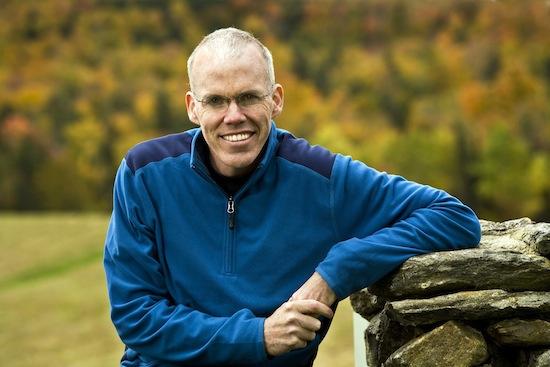
Author: Paul Handover

Pick up thy pen!

A reminder that other people in other places may not be so fortunate as you.

In that sub-heading is an assumption that everyone who calls by Learning from Dogs enjoys a life where they are, relatively speaking, free to make their own life decisions.  My apologies if that is a false assumption.

Amnesty International have a December campaign Write for Rights.  It is so worth supporting.  Here are some details from that website,

YOUR WORDS CAN CHANGE LIVES.

Your words can be a SPOTLIGHT that exposes the dark corners of the torture chamber. They can bring POWER to a human rights defender whose life is in jeopardy. They can IGNITE hope in a forgotten prisoner.

Your words can SAVE LIVES.

Join hundreds of thousands of people around the world in marking International Human Rights Day this December by taking part in Amnesty International’s Write for Rights Global Write-a-thon – the world’s largest human rights event. Through letters, cards and more, we take action to demand that the human rights of individuals are respected, protected and fulfilled. We show solidarity with those suffering human rights abuses, and work to bring about positive change in people’s lives.

Will you write a letter to save a life?

Sign up now to Write for Rights!

Jenni Williams

“I am alive today, after 34 arrests, because members of Amnesty International spoke out for me.”

 – Jenni Williams, human rights defender in Zimbabwe

It really doesn’t make any difference which Amnesty case you support – just pick one and do it before the end of the month.

Amnesty also offer a full suite of resources, obtainable from here, to assist you with producing your letter.

Jean and I have decided to write in support of Jabbar Savalan, as described here and below,

AZERBAIJAN – Jabbar Savalan / Youth activist detained after using facebook

Jabbar Savalan

Hours after he posted a note on Facebook calling for protests against the government, Jabbar Savalan told his family that he was being followed. The next evening, February 5, 2011, police arrested him without explanation and took him to the Sumgayit police station, where they “discovered” marijuana in his outer coat pocket. Police questioned him without a lawyer for two days, reportedly hitting and intimidating him to make him sign a confession.

Authorities in Azerbaijan have a history of using trumped-up drug charges to jail perceived critics. Jabbar maintains that he does not use drugs and that the marijuana was planted on him. In May 2011, he was was convicted of possessing illegal drugs and sentenced to two-and-a-half years in prison. Amnesty International believes that authorities fabricated the drug charges against Jabbar to silence him. Amnesty considers him to be a prisoner of conscience.

A history student in college, Jabbar was an active member of an opposition political party. In January 2011, he posted on Facebook a newspaper article that described Azerbaijan’s President Ilham Aliyev as corrupt.

On February 4, Jabbar was inspired by the protests in the Middle East and North Africa to use Facebook to call for a “Day of Rage” to protest the government in Azerbaijan. The next day, police arrested him. He was 19 years old at the time.

Enough said!

Let me close with this video.

Kepler 22b

In a sense the discovery of a potential life-supporting planet isn’t news.

What do I mean by that sub-heading?

Many (and I mean ‘many’) years ago I was a student at Faraday House Electrical Engineering College in Southampton Row, London.  The College was closely associated with London University and one year there was an invite to attend a lecture by the famous British astronomer, Sir Bernard Lovell.

Sir Bernard Lovell and the Jodrell Bank radio telescope

Despite that lecture being about 45 years ago, I still recall Sir Bernard explaining the statistics of the universe to demonstrate that the odds of another planet somewhere ‘out there’ that could support life were huge.  (Just as an aside do read this interesting story of Jodrell Bank picking up signals from the Russian Lunar 15 just as Neil Armstrong and Buzz Aldrin prepared to leave the moon’s surface.)

So with the positive identification of this planet some 600 light-years away, Sir Bernard’s speculation has been proved spot-on.

But in another very real sense, the discovery of Kepler 22b is astounding.  Step outside the science of the find and just cogitate a little about the implications; the deep philosophical issues that Kepler 22b raises.  Here’s an extract from Northern Voices Online news,

The excitingly named Kepler 22b, a planet believed to have been discovered orbiting a star a mere 600 light years away, is being hailed as a “New Earth”. But sci-fi fans shouldn’t get too excited just yet: as always with these stories, the likelihood is that we have not met the neighbours. Or, if we have, they probably aren’t very exciting conversationalists.

Talking about the likelihood of intelligent life on Kepler 22b, Dr Lewis Dartnell, of the Centre for Planetary Sciences at UCL, said, “There are big hurdles that life has to get over, and we don’t know how big a hurdle the origin of life itself is. You simply can’t tell with a single datum – you can’t do stats when N=1.

The N that Dr Dartnell mentioned was earth: the only known planet inhabiting intelligent life forms, or better still, life forms of any kind.

Dr Dartnell further adds, “The interesting thing will be when we go to Mars and Europa and see whether there are bacteria there. It would be enormously significant if life is found there. But the next step, once Kepler has looked at a lot of planets, will be to see what their atmospheres are made of, using infrared spectroscopy.

“If one or two of them have oxygen in the atmosphere, it may be a transient thing – like Venus, undergoing a runaway greenhouse effect – but if we find, say, 20 Earth-like planets, all with the signature of oxygen in their atmosphere, then that would be very unlikely. Life would be the more reasonable explanation,” concluded Dr Dartnell.

Read the rest of this article here.

There are many news reports online but this short video caught my eye.

The latest NASA report is here from which is quoted,

NASA’s Kepler Mission Confirms Its First Planet in Habitable Zone of Sun-like Star

NASA’s Kepler mission has confirmed its first planet in the “habitable zone,” the region where liquid water could exist on a planet’s surface. Kepler also has discovered more than 1,000 new planet candidates, nearly doubling its previously known count. Ten of these candidates are near-Earth-size and orbit in the habitable zone of their host star. Candidates require follow-up observations to verify they are actual planets.

The newly confirmed planet, Kepler-22b, is the smallest yet found to orbit in the middle of the habitable zone of a star similar to our sun. The planet is about 2.4 times the radius of Earth. Scientists don’t yet know if Kepler-22b has a predominantly rocky, gaseous or liquid composition, but its discovery is a step closer to finding Earth-like planets.

Previous research hinted at the existence of near-Earth-size planets in habitable zones, but clear confirmation proved elusive. Two other small planets orbiting stars smaller and cooler than our sun recently were confirmed on the very edges of the habitable zone, with orbits more closely resembling those of Venus and Mars.

“This is a major milestone on the road to finding Earth’s twin,” said Douglas Hudgins, Kepler program scientist at NASA Headquarters in Washington. “Kepler’s results continue to demonstrate the importance of NASA’s science missions, which aim to answer some of the biggest questions about our place in the universe.”

So let me leave you with this tantalising thought.  One day it will be confirmed that there is intelligent life on a planet out there in the universe.  That is likely to be one of the astounding events ever in the history of man on this planet.  Even trying some wild guesses about how that will change mankind’s self-perception is more than difficult – yet it will change the way we look at ourselves irrevocably!

I pray that I am still alive when that happens, as I’m sure many others must do.

Could you bear a hug!

A heart-warming interlude for this Sunday

Just watch the following video and enjoy the magical way that polar bears and dogs interact.


‘Honey, just taking the dogs for a walk!’

Prepare to be amazed!

Big thanks to Ginger from our local Humane Centre, the Humane Society of Central Arizona, who sent me this YouTube link.

You all have a restful week-end, whatever you are doing!

Make a difference – now!

A plea to sign a global call not to delay action on global warming

How many of you in Europe watched the final episode of Sir Peter Attenborough’s Frozen Planet series, entitled On Thin Ice?

Did you watch the short video in last week’s post, The power of truth?  If not, it’s below.

Here’s a piece from a BBC news item from yesterday,

A hungry polar bear

It is an image that is sure to shock many people.

An adult polar bear is seen dragging the body of a cub that it has just killed across the Arctic sea ice.

Polar bears normally hunt seals but if these are not available, the big predators will seek out other sources of food – even their own kind.

The picture was taken by environmental photojournalist Jenny Ross in Olgastretet, a stretch of water in the Svalbard archipelago.

“This type of intraspecific predation has always occurred to some extent,” she told BBC News.

“However, there are increasing numbers of observations of it occurring, particularly on land where polar bears are trapped ashore, completely food-deprived for extended periods of time due to the loss of sea ice as a result of climate change.”

Re-read that last segment of that last sentence, “completely food-deprived for extended periods of time due to the loss of sea ice as a result of climate change.

So with all that in mind, please read on.

Friends,

What if someone told you we should abandon all hope for global climate action until 2020? Well, that’s exactly the proposal that the United States is pushing at the UN Climate Talks taking place this week in Durban, South Africa. The 2020 delay might well be the worst idea ever.

Waiting nine years for climate action isn’t just a delay, it’s a death sentence for communities on the front lines of the climate crisis — and it could slam the door on ever getting carbon pollution levels below the safe upper limit of 350 parts per million.

It’s not too late to stop this delay from going through. Over the next three days, our team of 350.org activists in Durban will be working with our partners at Avaaz and allies from around the world to isolate the United States — and build support for the African nations that are fighting for real climate action. But it will take a massive grassroots outcry to demonstrate that people everywhere are taking a stand to prevent the United States negotiators from signing away our future.

If we raise an international alarm before the talks end on Friday, we can convince the US to get out of way of progress and help unlock the global process that can lead to bold climate action all around the world.

Click here to add your voice to a global call to action we’re delivering in Durban: www.350.org/durban

The climate talks in South Africa end in just 48 hours, and it’s vital that we ramp up the pressure now. To make sure the US gets the message, our team on the ground here in Durban will deliver your messages directly to the US negotiating team at a high-impact event we’re helping to pull together on Friday. We can’t say much more about it now, but suffice to say our message will be unavoidable.

This year, the 350 network has shown that people power can truly move the planet in the right direction. We mobilized hundreds of thousands of people to push for climate action in nearly every country on earth. We beat back the Keystone XL pipeline when no one said it was possible. We took over the radio waves to spread a message of hope and action on the climate crisis. And through our actions, we helped keep the hope of saving our planet — and reaching 350 ppm — alive.

The UN Climate Talks here in Durban aren’t going to get us back to 350 by themselves, but they can keep the option open by making progress on a legally binding, international framework to help nations make serious cuts in carbon emissions. In 2012, we’re going to need to do all we can to challenge the fossil fuel companies that are the real obstacles to progress. Breaking their stranglehold on our governments is the only way to really unlock these negotiations.

But right now, the most important thing we can do is keep the possibility of a strong international climate deal alive by pushing back on the United States negotiating team. In recent months, President Obama has shown that he’ll stand up for the climate, but only if he’s got a movement to back him up. On the Keystone pipeline, he’s been doing the right thing by blocking Republican efforts to push it through — now we need him to do the right thing on the international stage.

There’s no guarantee that we’ll be successful, but we owe it to our allies across the planet — many of whom are already feeling the impacts of climate change — to resist the chorus of cynics and keep hope alive. As Nelson Mandela said, “It always seems impossible until it’s done.” The 350 network has pulled off the impossible before — now’s the time to step up the pressure again.

Please add your voice today: www.350.org/durban

Let’s do this,

Jamie Henn for the whole 350.org team

P.S. We have just 48 hours to build a huge groundswell of pressure. Please help make it go viral with a few clicks on Twitterand Facebook — tag your popular friends, and post it again and again.

William deBuys, The Parching of the West

Once again, a powerful essay from the TomDispatch blog.

Quick introduction.  Tom Engelhardt, of TomDispatch, has given me a blanket permission to reproduce his essays.  As always, I am indebted to his generosity.  This particular essay is extremely timely coming after my Post yesterday about extreme weather.

Tomgram: William deBuys, The Parching of the West

Posted by William deBuys at 6:02pm, December 4, 2011.

The good news? While 2010 tied for the warmest year on record, 2011 — according to the U.N.’s World Meteorological Organization (WMO) — is likely to come in 10th once November and December temperatures are tallied. In part, this is evidently due to an especially strong La Niña cooling event in the Pacific.  On the other hand, with 2011 in the top ten despite La Niña, 13 of the warmest years since such record-keeping began have occurred in the last 15 years.  Think of that as an uncomfortably hot cluster.

And other climate news is no better.  A recent study indicates that Arctic ice is now melting at rates unprecedented in the last 1,450 years (as far back, that is, as reasonably accurate reconstructions of such an environment can be modeled).  As the Arctic warms and temperatures rise in surrounding northern lands — someday, Finland may have to construct artificial ski trails and ice rinks for its future winter tourists — a report on yet another study is bringing more lousy news.  Appearing in the prestigious science journal Nature, it indicates that the melting permafrost of the tundra may soon begin releasing global-warming gases into the atmosphere in massive quantities.  We’re talking the equivalent of 300 billion metric tons of carbon over the next nine decades.

Recently, Fatih Birol, the chief economist for the International Energy Agency, suggested that, by century’s end, the planet’s temperature could rise by a staggering 6º Celsius (almost 11º Fahrenheit).  International climate-change negotiators had been trying to keep that rise to a “mere” 2º C.  “Everybody, even the schoolchildren, knows this is a catastrophe for all of us,” was the way Birol summed the situation up.  If only it were so, but here in the U.S., none of the above news was even considered front-page worthy.  Nor was the news that, in 2010, humans had pumped more carbon dioxide into the atmosphere than at any time since the industrial revolution began: 564 million more tons than in 2009 to be exact.  We’re living today with just less than a degree of those six degrees to come, and the results in extreme weather this year should have made us all stop and think.

If you want to focus in on damage here in the U.S., consider Rick Perry’s Texas, where, according to scientists, “daily temperatures averaged 86.7° in June through August — a staggering 5.4°F above normal.”  According to the WMO, that’s the highest such average “ever recorded for any American state.”  And still global politicians yammer on and do little; still, the U.S. shuffles its political feet, while Canada’s government has announced that it will make no new commitments and may even be preparing to withdraw from the Kyoto protocol, and countries with booming developing economies like China, India, and Brazil hedge their bets when it comes to action.

In the meantime, nature doesn’t care whether or not we do anything.  It’s on its own schedule.  And when it comes to the American Southwest, that schedule looks daunting indeed as William deBuys makes clear.  His new book, A Great Aridness: Climate Change and the Future of the American Southwest, is the definitive work on the subject of water and the West (and, as with all of his work, a pleasure to read). So get yourself a glass of water while you still can and settle in for a dose of the Age of Thirst. (To catch Timothy MacBain’s latest Tomcast audio interview in which deBuys discusses the water politics of the American West, click here or download it to your iPod here.) Tom

The Age of Thirst in the American West
Coming to a Theater Near You: The Greatest Water Crisis in the History of Civilization 

By William deBuys

Consider it a taste of the future: the fire, smoke, drought, dust, and heat that have made life unpleasant, if not dangerous, from Louisiana to Los Angeles. New records tell the tale: biggest wildfire ever recorded in Arizona (538,049 acres),biggest fire ever in New Mexico (156,600 acres), all-time worst fire year in Texas history (3,697,000 acres).

The fires were a function of drought.  As of summer’s end, 2011 was the driest year in 117 years of record keeping for New Mexico, Texas, and Louisiana, and the second driest for Oklahoma. Those fires also resulted from record heat.  It was the hottest summer ever recorded for New Mexico, Texas, Oklahoma, and Louisiana, as well as the hottest August ever for those states, plus Arizona and Colorado.

Virtually every city in the region experienced unprecedented temperatures, with Phoenix, as usual, leading the march toward unlivability. This past summer, the so-called Valley of the Sun set a new record of 33 days when the mercury reached a shoe-melting 110º F or higher. (The previous record of 32 days was set in 2007.)

And here’s the bad news in a nutshell: if you live in the Southwest or just about anywhere in the American West, you or your children and grandchildren could soon enough be facing the Age of Thirst, which may also prove to be the greatest water crisis in the history of civilization.  No kidding.

If that gets you down, here’s a little cheer-up note: the end is not yet nigh.

In fact, this year the weather elsewhere rode to the rescue, and the news for the Southwest was good where it really mattered.  Since January, the biggest reservoir in the United States, Lake Mead, backed up by the Hoover Dam and just 30 miles southwest of Las Vegas, has risen almost 40 feet. That lake is crucial when it comes to watering lawns or taking showers from Arizona to California.  And the near 40-foot surge of extra water offered a significant upward nudge to the Southwest’s water reserves.

The Colorado River, which the reservoir impounds, supplies all or part of the water on which nearly 30 million people depend, most of them living downstream of Lake Mead in Los Angeles, San Diego, Phoenix, Tucson, Tijuana, and scores of smaller communities in the United States and Mexico.

Back in 1999, the lake was full. Patricia Mulroy, who heads the water utility serving Las Vegas, rues the optimism of those bygone days.  “We had a fifty-year, reliable water supply,” she says. “By 2002, we had no water supply. We were out. We were done. I swore to myself we’d never do that again.”

In 2000, the lake began to fall — like a boulder off a cliff, bouncing a couple of times on the way down. Its water level dropped a staggering 130 feet, stopping less than seven feet above the stage that would have triggered reductions in downstream deliveries. Then — and here’s the good news, just in case you were wondering — last winter, it snowed prodigiously up north in Colorado, Utah, and Wyoming.

The spring and summer run-off from those snowpacks brought enormous relief. It renewed what we in the Southwest like to call the Hydro-Illogic cycle: when drought comes, everybody wrings their hands and promises to institute needed reform, if only it would rain a little. Then the drought breaks or eases and we all return to business as usual, until the cycle comes around to drought again.

So don’t be fooled.  One day, perhaps soon, Lake Mead will renew its downward plunge.  That’s a certainty, the experts tell us.  And here’s the thing: the next time, a sudden rescue by heavy snows in the northern Rockies might not come. If the snowpacks of the future are merely ordinary, let alone puny, then you’ll know that we really are entering a new age.

And climate change will be a major reason, but we’ll have done a good job of aiding and abetting it. The states of the so-called Lower Basin of the Colorado River — California, Arizona, and Nevada — have been living beyond their water means for years. Any departure from recent decades of hydrological abundance, even a return to long-term average flows in the Colorado River, would produce a painful reckoning for the Lower Basin states.  And even worse is surely on the way.

Just think of the coming Age of Thirst in the American Southwest and West as a three-act tragedy of Shakespearean dimensions.

The Age of Thirst: Act I

The curtain in this play would surely rise on the Colorado River Compact of 1922, which divided the river’s water equally between the Upper and Lower Basins, allocating to each annually 7.5 million acre-feet, also known by its acronym “maf.” (An acre-foot suffices to support three or four families for a year.) Unfortunately, the architects of the compact, drawing on data from an anomalously wet historical period, assumed the river’s average annual flow to be about 17 maf per year.  Based on reconstructions that now stretch back more than 1,000 years, the river’s long-term average is closer to 14.7 maf.  Factor in evaporation from reservoirs (1.5 maf per year) and our treaty obligation to Mexico (another 1.5 maf), and the math doesn’t favor a water-guzzling society.

Nonetheless, the states of the Lower Basin have been taking their allotment as if nothing were wrong and consequently overdrafting their account by up to 1.3 maf annually.  At this rate, even under unrealistically favorable scenarios, the Lower Basin will eventually drain Lake Mead and cutbacks will begin, possibly as soon as in the next few years.  And then things will get dicier because California, the water behemoth of the West, won’t have to absorb any of those cutbacks.

Here’s one of the screwiest quirks in western water law: to win Congressional approval for the building of a monumental aqueduct, the Central Arizona Project (CAP), which would bring Colorado River water to Phoenix and Tucson, Arizona agreed to subordinate its Colorado River water rights to California’s.  In that way, the $4 billion, 336-mile-long CAP was born, and for it Arizona paid a heavy price. The state obliged itself to absorb not just its own losses in a cutback situation, but California’s as well.

Worst case scenario: the CAP aqueduct, now a lifeline for millions, could become as dry as the desert it runs through, while California continues to bathe. Imagine Phoenix curling and cracking around the edges, while lawn sprinklers hiss in Malibu. The contrast will upset a lot of Arizonans.

Worse yet, the prospective schedule of cutbacks now in place for the coming bad times is too puny to save Lake Mead.

The Age of Thirst: Act II

While that Arizona-California relationship guarantees full employment for battalions of water lawyers, a far bigger problem looms: climate change. Models for the Southwest have been predicting a 4ºC (7.2ºF) increase in mean temperature by century’s end, and events seem to be outpacing the predictions.

We have already experienced close to 1º C of that increase, which accounts, at least in part, for last summer’s colossal fires and record-setting temperatures — and it’s now clear that we’re just getting started.

The simple rule of thumb for climate change is that wet places will get wetter and dry places drier. One reason the dry places will dry is that higher temperatures mean more evaporation. In other words, there will be ever less water in the rivers that keep the region’s cities (and much else) alive. Modeling already suggests that by mid-century surface stream-flow will decline by 10% to 30%.

Independent studies at the Scripps Oceanographic Institute in California and the University of Colorado evaluated the viability of Lake Mead and eventually arrived at similar conclusions: after about 2026, the risk of “failure” at Lake Mead, according to a member of the Colorado group, “just skyrockets.” Failure in this context would mean water levels lower than the dam’s lowest intake, no water heading downstream, and the lake becoming a “dead pool.”

If — perhaps “when” is the more appropriate word — that happens, California’s Colorado River Aqueduct, which supplies water to Los Angeles, San Diego, and the All-American Canal, which sustains the Imperial and Coachella Valleys, will go just as dry as the Central Arizona Project aqueduct. Meanwhile, if climate change is affecting the Colorado River’s watershed that harshly, it will undoubtedly also be hitting the Sierra Nevada mountain range.

The aptly named Lester Snow, a recent director of California’s Department of Water Resources, understood this. His future water planning assumed a 40% decline in runoff from the Sierras, which feeds the California Aqueduct. None of his contemplated scenarios were happy ones. The Colorado River Aqueduct and the California Aqueduct make the urban conglomerations of southern California possible. If both fail at once, the result will be, as promised, the greatest water crisis in the history of civilization.

Only Patricia Mulroy has an endgame strategy for the demise of Lake Mead. The Southern Nevada Water Authority is, even now, tunneling under the lake to install the equivalent of a bathtub drain at close to its lowest point. At a cost of more than $800 million, it will drain the dregs of Lake Mead for Las Vegas.

Admittedly, water quality will be a problem, as the dead pool will concentrate pollutants. The good news, according to the standard joke among those who chronicle Sin City’s improbable history, is that the hard-partying residents and over-stimulated tourists who sip from Lake Mead’s last waters will no longer need to purchase anti-depressants. They’ll get all the Zoloft and Xanax they need from their tap water.

And only now do we arrive at the third act of this expanding tragedy.

The Age of Thirst: Act III

Those who believe in American exceptionalism hold that the historical patterns shaping the fate of other empires and nations don’t apply to the United States. Be that as it may, we are certainly on track to test whether the U.S. is similarly inoculated against the patterns of environmental history.

Because tree rings record growing conditions year by year, the people who study them have been able to reconstruct climate over very long spans of time. One of their biggest discoveries is that droughts more severe and far longer than anything known in recent centuries have occurred repeatedly in the American Southwest. The droughts of the Dust Bowl in the 1930s, of the 1950s, and of the period from 1998 to 2004 are remembered in the region, yet none lasted a full decade.

By contrast, the drought that brought the civilization of the ancestral Puebloans, or Anasazi, centered at Chaco Canyon, to its knees in the twelfth century, by contrast,lasted more than 30 years. The one that finished off Mesa Verdean culture in the thirteenth century was similarly a “megadrought.”

Jonathan Overpeck, a climate scientist at the University of Arizona who played a major role in the Nobel-Prize-winning work of the Intergovernmental Panel on Climate Change, tells me that the prospect of 130° F days in Phoenix worries him far less than the prospect of decades of acute dryness. “If anything is scary, the scariest is that we could trip across a transition into a megadrought.” He adds, “You can probably bet your house that, unless we do something about these greenhouse gas emissions, the megadroughts of the future are going to be a lot hotter than the ones of the past.”

Other scientists believe that the Southwest is already making the transition to a“new climatology,” a new normal that will at least bring to mind the aridity of theDust Bowl years. Richard Seager of Columbia University, for instance, suggests that “the cycle of natural dry periods and wet periods will continue, but… around a mean that gets drier. So the depths — the dry parts of the naturally occurring droughts — will be drier than we’re used to, and the wet parts won’t be as wet.”

Drought affects people differently from other disasters. After something terrible happens — tornados, earthquakes, hurricanes — people regularly come together in memorable ways, rising above the things that divide them. In a drought, however, what is terrible is that nothing happens. By the time you know you’re in one, you’ve already had an extended opportunity to meditate on the shortcomings of your neighbors. You wait for what does not arrive. You thirst. You never experience the rush of compassion that helps you behave well. Drought brings out the worst in us.

After the Chacoan drought, corn-farming ancestral Puebloans still remained in the Four Corners area of the Southwest. They hung on, even if at lower population densities. After the Mesa Verdean drought, everybody left.

By the number of smashed crania and other broken bones in the ruins of the region’s beautiful stone villages, archaeologists judge that the aridifying world of the Mesa Verdeans was fatally afflicted by violence. Warfare and societal breakdown, evidently driven by the changing climate, helped end that culture.

So it matters what we do. Within the limits imposed by the environment, the history we make is contingent, not fated. But we are not exactly off to a good start in dealing with the challenges ahead. The problem of water consumption in the Southwest is remarkably similar to the problem of greenhouse gas pollution. First, people haggle to exhaustion over the need to take action; then, they haggle over inadequate and largely symbolic reductions. For a host of well-considered, eminently understandable, and ultimately erroneous reasons, inaction becomes the main achievement. For this drama, think Hamlet. Or if the lobbyists who argue for business as usual out west and in Congress spring to mind first, think Iago.

We know at least one big thing about how this particular tragedy will turn out: the so-called civilization of the Southwest will not survive the present century, not at its present scale anyway. The question yet to be answered is how much it will have to shrink, and at what cost. Stay tuned. It will be one of the greatest, if grimmest, shows on Earth.

William deBuys is the author of seven books, including the just published A Great Aridness: Climate Change and the Future of the American Southwest (a Pulitzer Prize finalist), and The Walk (an excerpt of which won a Pushcart Prize). He has long been involved in environmental affairs in the Southwest, including service as founding chairman of the Valles Caldera Trust, which administers the 87,000-acre Valles Caldera National Preserve in New Mexico. To listen to Timothy MacBain’s latest Tomcast audio interview in which deBuys discusses the water politics of the American West click here, or download it to your iPod here

Copyright 2011 William deBuys

What’s the weather like, honey?

A couple of articles about our weather prospects.

Let me start with a recent report from Environmental Research Web, part of IOP Publishing.

Nov 24, 2011

Extreme weather will strike as climate change takes hold, IPCC warns

From the Guardian

Heavier rainfall, fiercer storms and intensifying droughts are likely to strike the world in the coming decades as climate change takes effect, the world’s leading climate scientists said on Friday.

Rising sea levels will increase the vulnerability of coastal areas, and the increase in “extreme weather events” will wipe billions off national economies and destroy lives, according to the Intergovernmental Panel on Climate Change (IPCC), the body of the world’s leading climate scientists convened by the United Nations.

Later on the article includes this,

Simon Brown, climate extremes research manager at theHadley Centre, the climate research unit of the UK’s Met Office, said: “This focus of the IPCC on extremes is very welcome as less emphasis has traditionally been given to these phenomena which are very likely to be the means by which ordinary people first experience climate change. Human susceptibility to weather mainly arises through extreme weather events so it is appropriate that we focus on these which, should they change for the worse, would have wide-ranging and significant consequences. This review will be very helpful in progressing the science by bringing together a wide range of studies – not just on the physical weather aspects of climate extremes but also on how we might adapt and respond to their changes in the future.”

Now I turn to last week’s Economist newspaper.

Climate change

The sad road from Kyoto to Durban

The latest UN climate summit says much about why the world is failing to tackle global warming

Dec 3rd 2011 | from the print edition

IN HARD times governments are consumed by short-term problems. But this does not mean the archetypal long-term problem, climate change, has gone away. Science continues to support the case for curbing greenhouse-gas emissions so as to minimise the risks of catastrophe. Meanwhile it is clear how wretchedly the world is failing to do so. Even if countries honour their promises, the UN reckons that by 2020 emissions will exceed the trajectory for keeping warming under 2°C by up to 11 gigatonnes. That is equivalent to more than double the emissions of every car, bus and truck in 2005.

The concluding paragraph reads,

No one should imagine such a deal would turn the tide on climate change. That tide will rise, and countries will need to adapt to a lot of warming. But by acknowledging that everybody has a responsibility to act, it would represent progress.

‘Countries will need to adapt to a lot of warming.’  Tomorrow, I will publish a recent essay on TomDispatch.  As a taster the opening paragraph is,

The good news? While 2010 tied for the warmest year on record, 2011 — according to the U.N.’s World Meteorological Organization (WMO) — is likely to come in 10th once November and December temperatures are tallied. In part, this is evidently due to an especially strong La Niña cooling event in the Pacific.  On the other hand, with 2011 in the top ten despite La Niña, 13 of the warmest years since such record-keeping began have occurred in the last 15 years.  Think of that as an uncomfortably hot cluster.

We live in interesting times.

Second message in a bottle

Continuing the advice you might offer to the next generation?

On the 1st December I published the first message.  It had been inspired by a conversation with Peter McCarthy, who lives and works in Bristol, England.  Here’s a little of what I wrote,

Anyway, Peter and I were talking about the sorts of qualities that enable some young people to take a risk-based entrepreneurial approach to life.  Peter gave me the links to three videos that he thought were especially relevant to the notion of achieving success in life.  So over the next few days I want to share those videos with you, dear reader.  To me, these videos are, indeed, the essence of the messages that any person, especially those the wrong side of 60, would wish to leave in a bottle floating down the river of life.

So to the second message which is a recording of the talk that Sir Ken Robinson gave to the TED Talks conference in Monterey in February, 2006.  It has been widely seen for all the right reasons; Sir Ken offers some powerful common-sense and a wonderful message for all the young people out there.  As Sir Ken’s website says,

Sir Ken Robinson, PhD is an internationally recognized leader in the development of education, creativity and innovation.  He is also one of the world’s leading speakers with a profound impact on audiences everywhere.  The videos of his famous 2006 and 2010 talks to the prestigious TED Conference have been seen by an estimated 200 million people in over 150 countries.

Read the rest of Sir Ken’s background here.

So with no more ado, here’s the film, watched by nearly 3 million people!


Too late to be a pessimist

A life-changing film

Last Friday I published a Post under the title of The power of truth.  Just 5 minutes long, the YouTube video was powerful, starkly so.  I wrote at the end of that article, “The principal source for the footage was Yann Arthus-Bertrand’s incredible film HOME.”

Jean and I watched Yann Arthus-Bertrand’s film last Friday night and to say that we were moved would be pitiful compared to the emotional impact it really had.  Take a look at the film trailer; it’s a little over 3 1/2 minutes long.  (But please don’t use that as a substitute for watching the full film, see below!)

Home is a 2009 documentary by Yann Arthus-Bertrand. The film is entirely composed of aerial shots of various places around Earth. It shows the diversity of life on Earth and how humanity is threatening the ecological balance of the planet. The movie was released simultaneously on June 5th in cinemas all over the world, on DVD and on YouTube. Released on the same date in 50 countries is a world record for any film release in history. The film is 100% free, and no profits will be made from its release or future showings.

I wasn’t going to add anything other than a brief introduction to the main film.  However, an article in The Economist The World in 2012 caught my eye and seemed especially relevant to promoting the message carried by the film. Sheryl Sandberg, chief operating officer of Facebook, wrote about the power of social media and how it would be even more evident in 2012.  This is the paragraph that caught my eye,

Expressing our authentic identity will become even more pervasive in the coming year. Profiles will no longer be outlines, but detailed self-portraits of who we really are, including the books we read, the music we listen to, the distances we run, the places we travel, the causes we support, the videos of cats we laugh at, our likes and our links. And, yes, this shift to authenticity will take getting used to and will elicit cries about lost privacy. But people will increasingly recognise the benefits of such expression. Because the strength of social media is that it empowers individuals to amplify and broadcast their voices. The truer that voice, the louder it will sound and the farther it will reach.

That last sentence jumped out at me, “The truer that voice, the louder it will sound and the farther it will reach.” Mull on that as you watch the film and, please, please, please if you support the need to return to a harmonious relationship with the planet spread the word as far and wide as you can.

Please promise yourself to sit down quietly and watch it uninterrupted.  And if you feel so minded to add comments to this Post please do – would be delighted to have your feedback.

HOME

We are living in exceptional times. Scientists tell us that we have 10 years to change the way we live, avert the depletion of natural resources and the catastrophic evolution of the Earth’s climate.

The stakes are high for us and our children. Everyone should take part in the effort, and HOME has been conceived to take a message of mobilization out to every human being.

For this purpose, HOME needs to be free. A patron, the PPR Group, made this possible. EuropaCorp, the distributor, also pledged not to make any profit because Home is a non-profit film.

HOME has been made for you : share it! And act for the planet.

Yann Arthus-Bertrand

HOME official website
http://www.home-2009.com

PPR is proud to support HOME
http://www.ppr.com

HOME is a carbon offset movie
http://www.actioncarbone.org

More information about the Planet
http://www.goodplanet.info

So settle down and watch what may be one of the most important films of your life.

Pigeon: Impossible

A truly remarkable example of the level of film animation being produced.

The second item that came to me from Bob D. (yesterday’s is here) has clearly done the rounds; the YouTube video has been watched nearly 7 million times!  But if you haven’t seen this short film, just over 6 minutes long, then do watch it.  It shows just how close to reality film animation has become!  The story behind the film is from here, reproduced below.

Pigeon: Impossible is the tale of Walter, a rookie secret agent faced with a problem seldom covered in basic training: what to do when a curious pigeon gets trapped inside your multi-million dollar, government-issued nuclear briefcase.

The film took nearly 5 years to complete and is the first attempt at animation by writer/director Lucas Martell: “When the project started, it was mostly an excuse to learn 3D animation, but by the end of the project I had spent so much time reworking and polishing the story that I just wanted people to laugh.

The end-result is a hilarious 6-minute romp through the streets of Washington D.C. as our hero fights to save himself, and the world from the chaos reigned down by a hungry pigeon. Breathtaking visuals and a sweeping soundtrack showcase the work of nearly one-hundred talented artists and musicians, and the film stands as a testament to what can be accomplished by a team of dedicated volunteers working for the love of their craft.

Personally, I think that last sentence is still an understatement.  Just watch this – and be amazed.