Author: Paul Handover

The knowing of dogs.

A fascinating study on human empathy strikes a chord with man and dog, perhaps.

Let me start with a true account from the evening of Monday, 19th August.

That evening, at 7pm, I had an appointment with my doctor in Grants Pass.  Jean stayed at home looking after our guests and preparing the evening meal.

The journey from the doctor’s clinic back to home, a distance of 20 miles, takes a little over half-an-hour.  The last 3 miles are along Hugo Road; about 6 minutes including opening and closing the gate across our driveway.

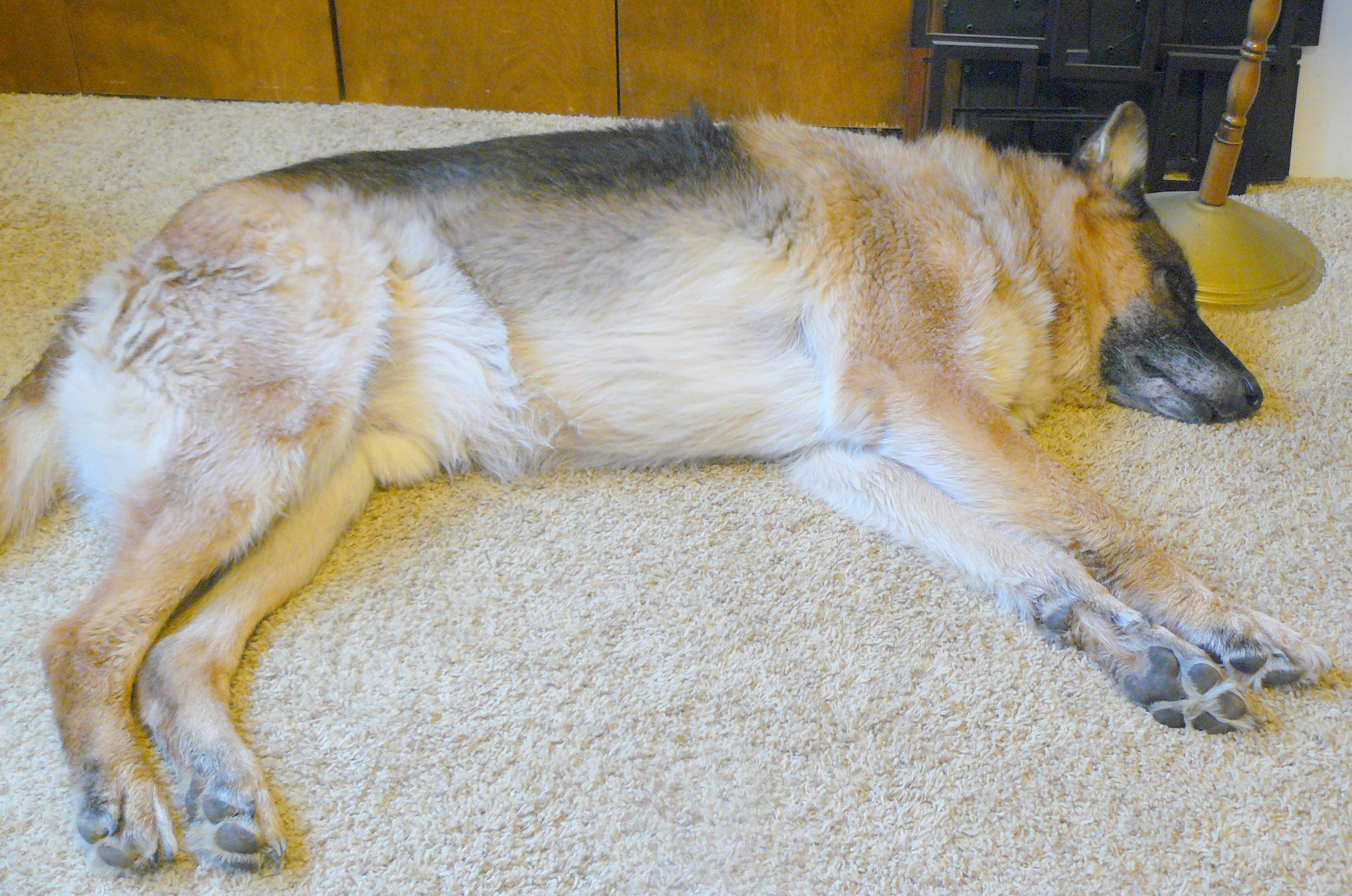
Anyway, according to Jean shortly after 8pm Pharaoh sprang up barking and went across to put his nose against one of the windows that looks out over our front drive and garden.  Jeannie looked at the clock on the kitchen wall and made a note of the time: it was 8:10pm.  She also came over to the window that Pharaoh was looking out of and searched for any reason for his outburst of barking: squirrels, deer, any kind of wildlife or other distraction.  There was none.

A little before 8:20pm Jeannie saw the headlights of my car pull up and moments later I came in through the front door.

It appeared that Pharaoh had sensed the point where I had turned into Hugo Road.

One could easily dismiss this, perhaps by thinking that Jean had unconsciously signalled to Pharaoh that I was on my way home.  But Jean had only the vaguest idea of when I might be back.

Or one could be drawn to the research undertaken by Dr. Rupert Sheldrake, as this extract from a post back in May, 2011 explains.

What an amazing book this is.

Amazing!

I have written about Dr Rupert Sheldrake a few times on Learning from Dogs for pretty obvious reasons!  You can do a search on the Blog under ‘sheldrake’ but here are a couple of links.  Serious Learning from Dogs on January 10th, 2011 and Time for a rethink on the 14th April, 2011.

Anyway, I am now well towards the end of Sheldrake’s revised book, Dogs That Know When Their Owners Are Coming Home and it is more than fascinating.  Bit short of time just now so please forgive me if I do no more than show this video which sets out some of the background to the book.  Sheldrake’s website is here, by the way.

Anyway, what’s this all leading up to?

I can’t recall where it was that I read about a report posted on the Forbes website about the new findings of the power of human empathy.

Study: To The Human Brain, Me Is We

A new study from University of Virginia researchers supports a finding that’s been gaining science-fueled momentum in recent years: the human brain is wired to connect with others so strongly that it experiences what they experience as if it’s happening to us.

This would seem the neural basis for empathy—the ability to feel what others feel—but it goes even deeper than that. Results from the latest study suggest that our brains don’t differentiate between what happens to someone emotionally close to us and ourselves, and also that we seem neurally incapable of generating anything close to that level of empathy for strangers.

The research revealed:

“The correlation between self and friend was remarkably similar,” said James Coan, a psychology professor in U.Va.’s College of Arts & Sciences who co-authored the study. “The finding shows the brain’s remarkable capacity to model self to others; that people close to us become a part of ourselves, and that is not just metaphor or poetry, it’s very real. Literally we are under threat when a friend is under threat. But not so when a stranger is under threat.”

The findings back up an assertion made by the progenitor and popularizer of “Interpersonal Neurobiology,” Dr. Daniel Siegel, who has convincingly argued that our minds are partly defined by their intersections with other minds. Said another way, we are wired to “sync” with others, and the more we sync (the more psycho-emotionally we connect), the less our brains acknowledge self-other distinctions.

Later in that Forbes article Professor Coan is reported:

“A threat to ourselves is a threat to our resources,” said Coan. “Threats can take things away from us. But when we develop friendships, people we can trust and rely on who in essence become we, then our resources are expanded, we gain. Your goal becomes my goal. It’s a part of our survivability.”

So if science is discovering that our subconscious minds are connecting “psycho-emotionally” with the minds of others whom we trust, then it doesn’t seem like too great a leap to embrace human minds psycho-emotionally connecting with the animals that we trust, and vice versa.  Because for thousands upon thousands of years, the domesticated dog and man have depended on each other for food, protection, warmth, comfort and love.

Footnote.

References for those who wish to follow up on this article are:

Original Forbes article, written by David DeSalvo.

David DeSalvo’s website.

Daniel J. Siegelclinical professor of psychiatry at the UCLA School of Medicine and Executive Director of the Mindsight Institute.

Daniel Siegel’s book The Developing Mind.

Professor Robin Ian MacDonald Dunbar, British anthropologist, evolutionary psychologist and a specialist in primate behaviour.  His theory known as Dunbar’s Number explained here.

Oxford Journal: Familiarity promotes the blurring of self and other in the neural representation of threat.

I Am Leader

A short story from author Wendy Scott.

Back in July, I published a post reviewing Traveling Light, the novel by Andrea Thalasinos.  At the end of that post, I made the following offer.

Now here’s an offer.

Wiley has offered a free copy of Andrea’s book as a ‘give-away’ from Learning from Dogs.  Here’s the plan.

Would you like to write a story about any aspect of the relationship that dogs can have with humans?

Any length, truth or fiction; it doesn’t matter.  Email your story to me to be received by the end of Wednesday, 31st July 2013, Pacific Daylight Time …… [and] I will publish every one received.

Just one story was received, from Wendy, and the promised free copy of Andrea’s book has been mailed to her.

So here is that short story.

oooOOOooo

I Am Leader

The water was angry today. I watched as it tore the tall trees from their roots, thundering, roaring, snapping them, toppling them.

I watched as the angry water shredded the shore. I watched as its fury snatched my pup, my baby, sweeping her away like a dying twig torn from the mother tree.

I am hunter. I am leader.

But now I am nothing.

I ran after my pup, tried to grab her by the nape, take her back. But I failed. I saw her paddle in the froth, scramble atop a long gnarled broken bole that was once a tree. My pup shook, her ears flattened, her tail tucked. She cried. I watched the cold, angry froth take her.

My mind sang with the cry of my little grey pup that I could not save, the little one who would never learn about the hunter, the leader.

I picked my way, shivering, along a path — it used to be our way to good hunting, to the forest edge where the deer grazed as near as yesterday. Now…

My left shoulder ached where the water nearly took me, hurled a branch at me in frustration. I fell and dragged myself away from the collapsing shore, to higher ground. The rain poured and sleeted to drench the shambles left by water that continued to roar and foam. Mud slid through my feet, gusts took my breath.

It was very cold. My ears twitched, hearing nothing beyond the roar of the fury. Water is very noisy when it is angry. The others, my sisters, my mate, I could not scent them, hear them, see them.

The day retreated. I blinked to see better, my eyes wide, but they saw nothing that I could recognise. My nose and ears twitched and twisted — nothing. I could hear my little grey one, my pup; she shivered and cried in my mind, but my eyes and ears, my nose … she was gone.

I stumbled over broken branches, a drowned fox, mice flushed from their holes, a broken-necked bird, bushes overturned and torn apart, walls of fallen trees. Daylight was lost in a twilight.

Now, I scented a 2-legged. I stilled. Crackling. Smoke, deep and hard to breath. Rabbit, burnt. These were the smells I knew of the 2-leggeds. One was near.

I crouched and crept. Yellow-orange light bounced and throbbed through the jumble of once-forest. I remained low, but now I could hear. The 2-legged rustled. It was noisy and careless while its fire snapped. And the rabbit smell was very faint, distorted.

I could see it now, this 2-legged, seated in that foolish way 2-leggeds have, crossing one foot over the other. It rustled again and held a big stick over its fire — the stick jabbed through the rabbit. The rabbit’s fur was gone from its blackened body, abandoned near the 2-legged’s thigh.

My stomach twitched. My mouth filled with hunger. I took another step.

The 2-legged looked up and over. He saw me, then quickly looked away.

I am hunter, I am leader — you do not meet my gaze unless you want to be punished.

I crouched, readied myself to spring.

The 2-legged stood. I eased back. My back paws met the tangled once-forest left of the water’s anger and stopped me. I tensed.

But the 2-legged lifted the big stick with its rabbit, tore a haunch with its hand. It looked directly at me again — no, I am hunter, I am leader — and threw the haunch at me. The burnt meat landed close to my feet.

The 2-legged looked away and returned to its foolish, awkward sitting. It tore ragged bites from the burnt rabbit, holding the big stick between the paws of its upper limbs.

My stomach demanded food. I scented the burnt rabbit, the smell of blood faint and smoky. I did not hunt the rabbit, I am not like the vultures and scavengers … but I was hungry. I nosed it, picked it up and turned away from the 2-legged. The flesh was warm. It sated. I licked my paws, swiped my whiskers and jowls to groom.

For a moment, my mind tricked me. I heard my pup. I scented my mate, my others, we were sated, we curled together, our warm bodies close, to sleep through the long cold night.

I opened my eyes. I was alone.

Except the 2-legged. Its odour was unmistakable, deer hide, rabbit, something sweetly sour I thought must be its own scent, not the ones borrowed by the other animals it ate or draped over its body.

I studied the 2-legged. It had curled on its side. The fire beside it throbbed yellow and orange, throwing strange shadows where they should not be. When I looked away, my sight was poor. I would not look directly at the fire again.

All was silent, save the angry water behind us. We lived. Nothing else lived. The water took everything.

I dreamed of my mate, his powerful howls alerting our cousins of our hunt; the deer was warm, its blood and flesh giving us another day of life. The deer was old and slow, an easy hunt. Its time had come; we knew that, understood it, this deer and our pack.

I dreamed of my sisters, nipping at my pup, teasing her to chase them in mock hunts. I dreamed of my brothers, circling and securing our family. My pack. My life.

We slept.

The day hung low and grey. Overnight, the angry water had become a sussurrating hiss behind us.

With its strange flat feet and its big stick, the 2-legged was tossing dirt and wet leaves over the ash where the fire and the rabbit had been. The old fire flared briefly. A cool damp gust caught some of the sparks and swept them high. A bird swooped near to see, then lost interest, flapped its wings to gain height.

The smell in the air was smoke and faint rabbit scent. It was upturned earth and rot and rain.

The 2-legged’s odour wore the smoke and long-dead deer.

The 2-legged came close. It looked at me — no — I am hunter, I am leader, you do not meet my gaze. But it was stupid and foolish, this 2-legged, like a pup that had not yet learned. It neared me. I growled, prepared to attack.

Surely it could see my flattened ears, my lowered shoulders?

No, it was stupid. It walked passed me.

I watched. The 2-legged paused and turned. It swung one of its upper limbs down low, then away, a sweeping motion. Strange language. It did not lower its ears, or roll on its belly. It made noises with its mouth. The noises were terrible, low, rumbling, but they were not threatening. I watched.

It made the motion again, then turned and walked on.

I sat on my haunches.

I am leader, I am hunter. But this 2-legged did not understand. It had not learned from its pack.

We two were the only ones I scented. We were alone. The angry water had taken the others.

The 2-legged stopped, made the strange sweeping motion and noises again. I took a step in its direction.

I am hunter. I am leader.

My pup cries in my mind. My mate howls. My sisters tease, my brothers scout. But around me is silence, the scents dirty and empty, the forest destroyed, the deer gone. We two are alone.

The 2-legged’s head bobs up and down. I take another step.

We walk on, stepping carefully over the tangled mess that was once our home, our feet slipping in mud, scratched in dying brambles, struggling in the unfamiliar path before us. 2-legged uses the big stick as if it were a third leg.

It is learning. I am patient.

I am hunter. I am leader.

oooOOOooo

Don’t know about you but I found that story by Wendy more than compelling. Found it hauntingly beautiful.  A ancient account of the first meeting between man and wolf.

Therefore, can’t close without again reproducing this short extract and images of the grey wolf posted on the 20th May Musings on love.

oooo

While we were looking at the animals, along the pathway came a couple of the volunteer staff walking a Grey Wolf (Canis Lupus).

An afternoon walk for Tundra.

I was utterly captivated by this beautiful animal.  Her story was that she was born in captivity and owned by an individual who soon decided he didn’t want her!  Not long thereafter Tundra, as she became named, was brought to the Sarvey Wildlife Center in Washington and thence to Wildlife Images when she was just 8 weeks old.

Tundra turned to look at me. I stood perfectly still and quiet.  Tundra seemed to want to come closer.  As one would with a strange dog, I got down on my knees and turned my eyes away from Tundra’s.  I sensed she was coming towards me so quickly held up my camera and took the picture below.

Wolf greets man.
Wolf greets man.

I kept my gaze averted as I felt the warm breath of this magnificent animal inches from my face.  Then the magic of love across the species!  Tundra licked my face!  The tears came to my eyes and were licked away.  I stroked her and became lost in thought.

Was this an echo of how thousands and thousands of years ago, a wolf and an early man came together out of trust and love and started the journey of the longest animal-human relationship, by far?

oooo

Picture parade five

Back to the fabulous pictures, courtesy Neil Kelly.

(Captions from yours truly!)

??
Formal dinner wear?


oooo

Presumably the ladies bathroom?


oooo

?
Coffee hallucinations?


oooo

Now that's what I call a bath!
Now that’s what I call a bathroom!


oooo

Large comb, or very small bicycles!


oooo

Example of a green diet.


More of these fabulous pictures next Sunday.

The power of love.

The widely reported but nonetheless wonderful story of a man and an eagle.

This was sent to me by Dan Gomez but I very quickly found information all over the ‘web’.  After reading many accounts, I decided to use the version of the story that was in Dan’s email.

oooOOOooo

Freedom and Jeff Guidry

Love and trust across the species gap.

Freedom and I have been together 11 years this summer. She came in as a baby in 1998 with two broken wings. Her left wing doesn’t open all the way even after surgery, it was broken in 4 places.  She’s my baby.

When Freedom came in she could not stand and both wings were broken. She was emaciated and covered in lice. We made the decision to give her a chance at life, so I took her to the vet’s office. From then on, I was always around her. We had her in a huge dog carrier with the top off, and it was loaded up with shredded newspaper for her to lay in. I used to sit and talk to her, urging her to live, to fight; and she would lay there looking at me with those big brown eyes. We also had to tube feed her for weeks.

This went on for 4-6 weeks, and by then she still couldn’t stand. It got to the point where the decision was made to euthanize her if she couldn’t stand in a week. You know you don’t want to cross that line between torture and rehab, and it looked like death was winning. She was going to be put down that Friday, and I was supposed to come in on that Thursday afternoon. I didn’t want to go to the center that Thursday, because I couldn’t bear the thought of her being euthanized; but I went anyway, and when I walked in everyone was grinning from ear to ear. I went immediately back to her cage; and there she was, standing on her own, a big beautiful eagle. She was ready to live. I was just about in tears by then. That was a very good day.

We knew she could never fly, so the director asked me to glove train her. I got her used to the glove, and then to Jesse’s, and we started doing education programs for schools in western Washington.

We wound up in the newspapers, radio (believe it or not) and some TV. Miracle Pets even did a show about us.

In the spring of 2000, I was diagnosed with non-Hodgkin’s lymphoma. I had stage 3, which is not good (one major organ plus everywhere), so I wound up doing 8 months of chemo. Lost the hair – the whole bit. I missed a lot of work. When I felt good enough, I would go to Sarvey and take Freedom out for walks. Freedom would also come to me in my dreams and help me fight the cancer. This happened time and time again.

Fast forward to November 2000.

The day after Thanksgiving, I went in for my last checkup. I was told that if the cancer was not all gone after 8 rounds of chemo, then my last option was a stem cell transplant. Anyway, they did the tests; and I had to come back Monday for the results. I went in Monday, and I was told that all the cancer was gone.

So the first thing I did was get up to Sarvey and take the big girl out for a walk. It was misty and cold. I went to her flight and we went out front to the top of the hill. I hadn’t said a word to Freedom, but somehow she knew. She looked at me and wrapped both her wings around me to where I could feel them pressing in on my back (I was engulfed in eagle wings), and she touched my nose with her beak and stared into my eyes, and we just stood there like that for I don’t know how long. That was a magic moment. We have been soul mates ever since she came in. This is a very special bird.

On a side note: I have had people who were sick come up to us when we are out, and Freedom has some kind of hold on them. I once had a guy who was terminal come up to us and I let him hold her. His knees just about buckled and he swore he could feel her power course through his body. I have so many stories like that..

I never forget the honor I have of being so close to such a magnificent spirit as Freedom.

An inspiring message for all.

oooOOOooo

Fight for the trees.

An update to yesterday’s post.

In the recent post Sing for the trees, Pedantry of the blog Wibble left this comment:

 don’t consider myself an envious type, but I have to admit to being jealous of your location there, Paul. Deer in the back garden! Amazing. I guess I’m lucky to see the odd squirrel. But (as usual) I digress…

Trees… yes. Were I King of the Earth my first edict would be to make it illegal to chop down any more trees anywhere for any reason, and to reward true reforestation efforts (while banning old-forest lumbering dressed up as ‘reforestation’).

As I’m not, the extent of my singing for the trees is limited to pledges on such worthy projects as Who Bombed Judi Bari? (less than subtle hint: just 39 hours to go, as I write).

Your first image above is wonderful, and is a terrific, healing counterpoint to the images I see elsewhere, such as in the clip below, of what we’re doing to our home, out of sight of most people. Thank you.

That comment also included this video:

I thought readers would be interested in learning more by visiting the Kickstarter Campaign page and just possibly offering whatever pledge you can afford.

The importance of this campaign was underlined by the fact that just last Wednesday my daughter Maija, son-in-law Marius, and grandson Morten visited the Redwood Forest as part of their holiday with us in Oregon.  Here are three of their pictures taken just two days ago.

Life-giving Redwoods.

oooo

That need lots of loving.

oooo

From young and old alike.

oooo

So do whatever you can, please!  There are just 26 hours to go at the time of posting this: 9:10 am PDT.

Thanks to Pedantry for bringing this to the attention of LfD readers and followers.

Healing our planet, person by person.

Jon Lavin reflects on the Four Noble Truths of Buddhism.

Last week, I republished a number of Jon’s posts from way back and was delighted at how many of you enjoyed his writings.  Jon and his family are taking a well-earned vacation which clearly includes reading posts on Learning from Dogs: Poor soul!  This was made clear from an email Jon sent me yesterday afternoon.

Jon had read the essay from George Monbiot that was published three days ago under my post title of Dichlorodiphenyltrichloroethane (DDT) all over again?  So hopefully, this introduction puts Jon’s email into proper context.  The subject title of Jon’s email was DDT 2.0.

oooOOOooo

Hi Paul!

Hope you guys are well on your lovely farm! We’re in sunny Falmouth for the week staying in our Ben’s student flat slowly working our way through his food supplies.

In my current chilled state, I read your reproduced article and I got to thinking; so you might pick out the odd bit of coherence in these ramblings!

I am reminded of David Hawkins’ ‘Scale of Human Consciousness’. If 80 percent of us are below the level of Integrity, and therefore truth, and the average level of integrity in business is below this level, it is no wonder that money comes before the greater good. Think of the banking crisis as a good example.

I guess we move forward at the speed of the slowest. We certainly seem to learn through the pain and suffering of our own making. I can understand now why this world is perfect for our development and advancement. We are exposed to every opportunity to better ourselves and not everyone has enough of what it takes to hit the mark. We just have to keep going until we get it, even if this means pain and suffering.

The Four Noble Truths of Buddhism talk about suffering and how we create it.The First Noble Truth states that life is suffering. The 2nd Noble Truth talks about our craving for things: money, possessions, etc.; cravings that create suffering. The Third Noble Truth talks of a cure and a way out of hopelessness and suffering and finally, the Fourth Noble Truth gives guidance on walking the path out of suffering.

So, although your article is awful, it is to be expected that we keep being attracted to these sorts of schemes and are attracted to money. We have to learn through pain and suffering until we get it right.

People frequently ask, “What can I do to help?”. Unfortunately or fortunately, there is a way out! The best way to help is to work on ourselves! Sounds a bit silly but by working and developing ourselves we raise the overall level of human consciousness. This means that when companies and individuals attempt to do things that are not integrous, there is less likelihood of them being successful.

Heady stuff really and I wouldn’t describe myself as Buddhist but I have to admit there seems to be some truth in this.

I hope some of this makes sense.

Warm wishes,

Jon.

oooOOOooo

Well, of course it makes sense; perfect sense!  Reminds me of the old adage that one cannot truly help another without first helping oneself.

Thus what I read in Jon’s words is that by living a life of integrity we help bring up the overall level of human consciousness, right across our planet.  Let me stay with that for a moment longer.  Jon mentioned David Hawkins’ ‘Scale of Human Consciousness’.  It was included in a post in January 2012 The evolution of the domestic dog but to save you going there, here it is again:

Map of Consciousness, copyright Dr. David Hawkins

One might argue that the column headed ‘LEVEL’ is a pseudonym for ‘Behaviour’. In other words, those behaviours from Courage and up represent integrity.

So when Jon writes, “The best way to help is to work on ourselves!“, what he is saying that by consciously abandoning levels below 200 we open ourselves to being a force for good beyond ourselves.  Just run your eye down the emotions from Ineffable to Affirmation and reflect on how others that offer those emotions affect us in such a positive and inspiring way.  Indeed, no better than reflecting on how a dog makes us feel when offering unconditional love!

Of course it’s not easy! Nothing great ever is. There is so much around us that we can hate (score 150), so much to create anxiety (score 100), and so many examples of despair (score 50).

But remember the beginning of integrity is 200.

Which is why trust (score 250) and optimism (score 310) and forgiveness (score 350) and especially love (score 500) are truly the tools of healing our planet.

You can start right now by hugging a dog (dogs score 210!).

Love and Trust - Grandson Morten hugging Dhalia.
Love and Trust – Grandson Morten hugging Dhalia.

Thank you, Jon.

Some content on this page was disabled on August 23, 2017 as a result of a DMCA takedown notice from Susan Hawkins. You can learn more about the DMCA here:

https://wordpress.com/support/copyright-and-the-dmca/

Sing for the trees.

What can we do for the trees?

Winter sunlight filtering through the trees. Oregon, January 2013.

We don’t subscribe to television services here at home.  The only way I stay partially informed is via the BBC News website.  Thus it was a few days ago I saw the headline, “European forests near ‘carbon saturation point’”  This was a report by Mark Kinver, Environment reporter, BBC News.  It made me sit up and take notice.  For Mark Kinver wrote:

European forests are showing signs of reaching a saturation point as carbon sinks, a study has suggested.

Since 2005, the amount of atmospheric CO2 absorbed by the continent’s trees has been slowing, researchers reported.

Writing in Nature Climate Change, they said this was a result of a declining volume of trees, deforestation and the impact of natural disturbances.

Carbon sinks play a key role in the global carbon cycle and are promoted as a way to offset rising emissions.

Many of Europe’s forests are reaching an age where growth, and carbon uptake, slows down.

Writing in their paper, the scientists said the continent’s forests had been recovering in recent times after centuries of stock decline and deforestation.

The growth had also provided a “persistent carbon sink”, which was projected to continue for decades.

However, the team’s study observed three warnings that the carbon sink provided by Europe’s tree stands was nearing a saturation point.

It would be wrong to republish the full report but do go and read it here.  It contains much information, some of it counter-intuitive.  Such as Dr. Gert-Jan Nabuurs from Wageningen University and Research Centre, Netherlands saying of Europe’s forest;

“These forests have now reached 70-80 years old and are starting a phase in the life of a tree where the growth rate starts to come down,” he explained.

“So you have large areas of old forest and even if you add these relatively small areas of new forest, this does not compensate for the loss of growth rate in the old forests.”

The report includes the glaringly obvious, “However, mature woodlands have been recognised as a key habitat for supporting and conserving biodiversity.”!

The issue of knowing what is best for the wildlife, of all types and sizes, of balancing doing nothing to the forest or undertaking beneficial husbandry is one that is going to be in our minds here at home this coming Winter.

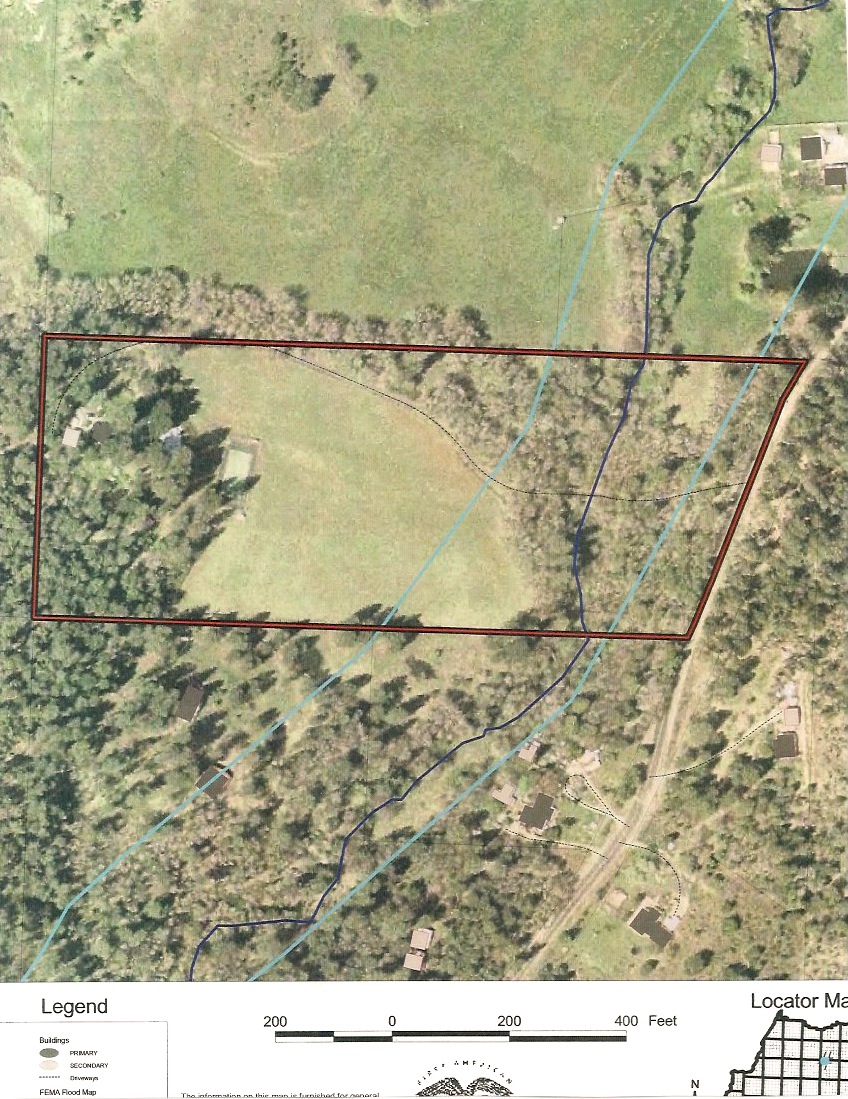
For much of our 13 acres is forest, as the following property map shows.

Assessor's Map 4000 Hugo Road.
Assessor’s Map 4000 Hugo Road.

When we first moved in to the house last October, the most common wild large creatures around were the deer.  The only way one could get close enough to take a photograph was when there wasn’t a dog in sight.  Even then, the slightest sudden sound or movement had a deer dashing into the forest.

Deer very cautiously meets new humans on the block!
Deer very cautiously meets new humans on the block! (Early November 2012)

Yet over the following weeks, the healthy grass made an irresistible Winter meal and the deer settled down to being regular visitors.  But always within a few leaps and bounds of the edge of the trees.

Nevertheless, the deer remained very cautious of feeding during the daytime as they soon became aware that without warning dogs could come rushing out from the house; as happened numerous times!  It seemed clear that having the forest close by enabled them to scatter as soon as the first bark was heard.

Months later, shown by this photograph taken early afternoon just a couple of weeks ago, these four wild deer still grazed close to the forest.

Wild deer feeding on the grass.

So this Autumn/Fall we shall be coming up with a plan to ensure that the forests on our property are reinvigorated to the best of our abilities.

Healing

Always the need for healing.

My posts from Monday and yesterday about the plight of our bees must to many, frequently me as well, engender a level of hopelessness as to where we, as in the peoples of this planet, are heading.  Too many times the news is discouraging; to say the least.

But hold on for just a moment!  Here’s a quotation from this week’s Sabbath Moment from Terry Hershey:

Tears have a purpose.

they are what we carry of the ocean, and

perhaps we must become sea,

give ourselves to it,

if we are to be transformed.

Linda Hogan

What this says to me is that feelings of sadness, of grief, even of despair are an essential part of the process of ‘letting go’; of being able to heal oneself.  Just as dogs and many other animals know when to crawl away and recuperate in some peaceful and quiet place, so too must we humans counter our feelings of pain and anguish with healing.

So with that all in mind, I’m delighted, and very grateful, to Sue of Dreamwalker’s Sanctuary for permission to repost her item on Sound Healing, published last Friday.

oooOOOooo

Friday Facts ~ Sound Healing

by Sue Dreamwalker

Healing music
Healing music

Have you ever wondered why we so enjoy Music? Why various styles seem to either lift our mood or sooth our spirits? Or some grate on our nerve endings?

Sound Healing comes in various forms. I have received healing from various sources: Crystal Singing Bowls, Tuning Forks and the Mighty Gongs. The Gong Bath  in particular shifted something within my being as I physically felt something leave my aura to be replaced with a new found peace within.

Sound Healing isn’t new and if you research back to ancient times many ceremonies were done through sound.

I know in the 90s when I was going through my own major self-healing after listening to some tapes by Deepak Chopra called Magical Mind Magical Body in which he speaks about our vowel sounds. I remember driving to work, and on occasion still do, chanting out Very Loudly the vowel sounds in a chant, each vowel holds its own frequency.  Chanting brings an awareness of our own voice, as we express outwards our feelings, and there are some interesting theories as how certain frequencies are powerfully connected to our body. This includes the frequency of 528hz,referred to as ancient solfeggio frequencies which has been researched for its proposed ability to heal and resonate with human DNA. I did my own research on the net, and came across this site and post Forgotten in Time: The Ancient Solfeggio Frequencies )

Interestingly too the author of that post went on to explain how Deepak Chopra was a big inspiration and listened to the same tapes I did where Deepak Chopra explained saying: “Quantum physics has found that there is no empty space in the human cell, but it is a teeming, electro-magnetic field of possibility or potential.” This made me smile as synchronicity seemed to be playing a role.

Within that same article the author went on to say how music makes waves which produces shapes and patterns and quoted a passage from a book by the first to make that connection, a German scientist, Ernst Chladni who in 1787 detailed his findings in his book “Discoveries Concerning the Theory of Music.” These patterns and figures are called Chladni figures with each note having a corresponding pattern or vibration.

My drum, as I painted it.

My own tool is the Drum and if we look back through time we see how the Drum beat has been used not only in rituals but also within our military as we march to its beat!  The Drum is very powerful and many join Drumming circles.  You, too, can find out how to call Healing from within a Drumming Circle from an article in the magazine Sacred Hoop of 2003 called Healing Power of the Drum Circle

Side view of my drum.

Sound Healing works, because we are all vibration, we all resonate with our own frequencies. For those wishing to learn more the links are below and of course there are many many articles covering this subject on the ‘web’.

For those who have not much time I will leave you with this one note of vibration from a Singing bowl. If you go to the YouTube site you will find more about this One note and how it heals.

… and for those who have 5 minutes to spare this Om Meditation.

Sue~Dreamwalker

Sources:
http://www.holistic-resonance.com/

http://gongsofjoy.com/articles/

http://www.amazon.co.uk/Magical-Body-Mind-Connection-Well-Being/dp/0743530136/ref=sr_1_1?ie=UTF8&qid=1376658622&sr=8-1&keywords=magical+mind+magical+body

http://www.somaenergetics.com/forgotten_in_time.php

http://theworlddrum.com/more.html

http://shamanicdrumming.com/healing_power_of_the_drum_circle.html

oooOOOooo

I thought it would be helpful to include the YouTube notes that were associated with those two videos.

First: 7th Chakra – Reiki Angel Crystal Singing Bowl Sound Healing

Chakra’s are energy centers in your body. There are 7 major Chakra’s. Each Chakra governs specific issues and lessons.By aligning the chakra system you can heal your mental, emotional, spiritual & physical bodies.

7th Chakra= Crown Chakra

Color: Purple

Location: top of head

Element: Superether

Musical note/ sound: B/ silence

Glands/ Organs: Pineal gland, cerebral cortex, central nervous system, right eye

Foods: Fasting

Essential Oils: Frankincense, Myrrh

Stones/ Crystals: amethyst, alexandrite,diamond, sugalite, purple fluorite, quartz, selenite

Purpose: vitalizes upper brain, unification with higher self. Being open to source, accepting our own Divinity, Beauty, healing, Inspiration. Perception beyond space & time, perceives “miracles”.

When Harmonious: Idealism, selfless service, One with divine, spiritual will, unity.

When Disrupted: lack of inspiration, confusion, depression, alienation, hesitation to serve, senility, crisis of faith.

Second: Aum Meditation

Working with Aums will resonate into all objects around you, effectively re-writing all undesirable environmental energy programming. Like a springboard of positivity. Use it to launch your spiritual work to new heights. This is just a small sample of the full meditation.

Dichlorodiphenyltrichloroethane (DDT) all over again?

The terribly worrying bee crisis.

Yesterday, I wrote about the growing awareness of a major crisis affecting bees in a number of countries.  Coincidentally, when researching the various articles for that post, into my email ‘inbox’ came the latest essay from George Monbiot published both in the UK Guardian newspaper and on his own blog.  The title was DDT 2.0.  I emailed Mr. Monbiot requesting permission to republish his essay in full on Learning from Dogs and promptly received his approval to so do.

But for those who for whatever reason, don’t recall clearly the history of DDT, here’s some background.

Wikipedia’s entry opens, thus:

DDT (dichlorodiphenyltrichloroethane) is an organochlorineinsecticide which is a colorless, crystalline solid, tasteless and almost odorless chemical compound. Technical DDT has been formulated in almost every conceivable form including solutions in xylene or petroleum distillates, emulsifiable concentrates, water-wettable powders, granules, aerosols, smoke candles, and charges for vaporisers and lotions.[2]

First synthesized in 1874, DDT’s insecticidal properties were not discovered until 1939, and it was used with great success in the second half of World War II to control malaria and typhus among civilians and troops. The Swiss chemist Paul Hermann Müller was awarded the Nobel Prize in Physiology or Medicine in 1948 “for his discovery of the high efficiency of DDT as a contact poison against several arthropods.”[3] After the war, DDT was made available for use as an agricultural insecticide, and soon its production and use skyrocketed.[4]

Then goes on to mention Rachel Carson (1907 – 1964) and her mind-boggling expose of DDT in the famous book Silent Spring.

The legacy of Rachel Carson.

The Natural Resources Defense Council (NRDC) website explains:

The Story of Silent Spring

How a courageous woman took on the chemical industry and raised important questions about humankind’s impact on nature.

Although their role will probably always be less celebrated than wars, marches, riots or stormy political campaigns, it is books that have at times most powerfully influenced social change in American life. Thomas Paine’s Common Sense galvanized radical sentiment in the early days of the American revolution; Uncle Tom’s Cabin by Harriet Beecher Stowe roused Northern antipathy to slavery in the decade leading up to the Civil War; and Rachel Carson’s Silent Spring, which in 1962 exposed the hazards of the pesticide DDT, eloquently questioned humanity’s faith in technological progress and helped set the stage for the environmental movement.

Carson, a renowned nature author and a former marine biologist with the U.S. Fish and Wildlife Service, was uniquely equipped to create so startling and inflammatory a book. A native of rural Pennsylvania, she had grown up with an enthusiasm for nature matched only by her love of writing and poetry. The educational brochures she wrote for the Fish and Wildlife Service, as well as her published books and magazine articles, were characterized by meticulous research and a poetic evocation of her subject.

You can read the rest of that NRDC article here.

So with all that in mind, here’s the essay from George Monbiot.

oooOOOooo

DDT 2.0

August 13, 2013

We’re just beginning to understand the wider impacts of neonicotinoids.

By George Monbiot, published on the Guardian’s website, 5th August 2013

It’s the new DDT: a class of poisons licensed for widespread use before they had been properly tested, which are now ripping the natural world apart. And it’s another demonstration of the old truth that those who do not learn from history are destined to repeat it.

It is only now, when neonicotinoids are already the world’s most widely deployed insecticides, that we are beginning to understand how extensive their impacts are. Just as the manufacturers did for DDT, the corporations which make these toxins claimed that they were harmless to species other than the pests they targeted. Just as they did for DDT, they have threatened people who have raised concerns, published misleading claims and done all they can to bamboozle the public. And, as if to ensure that the story sticks to the old script, some governments have collaborated in this effort. Among the most culpable is the government of the United Kingdom.

As Professor Dave Goulson shows in his review of the impacts of these pesticides, we still know almost nothing about how most lifeforms are affected. But as the evidence has begun to accumulate, scientists have started discovering impacts across a vast range of wildlife.

Most people who read this newspaper will be aware by now of the evidence fingering neonicotinoids as a major cause of the decline of bees and other pollinators. These pesticides can be applied to the seeds of crops, and they remain in the plant as it grows, killing the insects which eat it. The quantities required to destroy insect life are astonishingly small: by volume these poisons are 10,000 times as powerful as DDT. When honeybees are exposed to just 5 nanogrammes of neonicotinoids, half of them will die. As bees, hoverflies, butterflies, moths, beetles and other pollinators feed from the flowers of treated crops, they are, it seems, able to absorb enough of the pesticide to compromise their survival.

But only a tiny proportion of the neonicotinoids that farmers use enter the pollen or nectar of the flower. Studies conducted so far suggest that only between 1.6 and 20% of the pesticide used for dressing seeds is actually absorbed by the crop: a far lower rate even than when toxins are sprayed onto leaves. Some of the residue blows off as dust, which is likely to wreak havoc among the populations of many species of insects in hedgerows and surrounding habitats. But the great majority – Goulson says “typically more than 90%” – of the pesticide applied to the seeds enters the soil.

In other words, the reality is a world apart from the impression created by the manufacturers, which keep describing the dressing of seeds with pesticides as “precise” and “targeted”.

Neonicotinoids are highly persistent chemicals, lasting (according to the few studies published so far) for up to 19 years in the soil. Because they are persistent, they are likely to accumulate: with every year of application the soil will become more toxic.

What these pesticides do once they are in the soil, no one knows, as sufficient research has not been conducted. But – deadly to all insects and possibly other species at tiny concentrations – they are likely to wipe out a high proportion of the soil fauna. Does this include earthworms? Or the birds and mammals that eat earthworms? Or for that matter, the birds and mammals that eat insects or treated seeds? We don’t yet know enough to say.

This is the story you’ll keep hearing about these pesticides: we have gone into it blind. Our governments have approved their use without the faintest idea of what the consequences are likely to be.

You might have had the impression that neonicotinoids have been banned by the European Union. They have not. The use of a few of these pesticides has been suspended for two years, but only for certain purposes. Listening to the legislators, you could be forgiven for believing that the only animals which might be affected are honeybees, and the only way in which they can be killed is through the flowers of plants whose seeds were dressed.

But neonicotinoids are also sprayed onto the leaves of a wide variety of crop plants. They are also spread over pastures and parks in granules, in order to kill insects that live in the soil and eat the roots of the grass. These applications, and many others, remain legal in the European Union, even though we don’t know how severe the wider impacts are. We do, however, know enough to conclude that they are likely to be  bad.

Of course, not all the neonicotinoids entering the soil stay there indefinitely. You’ll be relieved to hear that some of them are washed out, whereupon … ah yes, they end up in groundwater or in the rivers. What happens there? Who knows? Neonicotinoids are not even listed among the substances that must be monitored under the EU’s water framework directive, so we have no clear picture of what their concentrations are in the water that we and many other species use.

But a study conducted in the Netherlands shows that some of the water leaving horticultural areas is so heavily contaminated with these pesticides that it could be used to treat lice. The same study shows that even at much lower concentrations – no greater than the limits set by the European Union – the neonicotinoids entering river systems wipe out half the invertebrate species you would expect to find in the water. That’s another way of saying erasing much of the foodweb.

I was prompted to write this article by the horrible news from the River Kennet in southern England: a highly protected ecosystem that is listed among the few dozen true chalk streams on earth. Last month someone – farmer or householder, no one yet knows – flushed another kind of pesticide, chlorpyrifos, down their sink. The amount was equivalent – in pure form – to two teaspoonsful. It passed through Marlborough sewage works and wiped out most of the invertebrates in fifteen miles of the river.

The news hit me like a bereavement. The best job I ever had was working, during a summer vacation from university, as temporary waterkeeper on the section of the Kennet owned by the Sutton estate. The incumbent had died suddenly. It was a difficult job and, for the most part, I made a mess of it. But I came to know and love that stretch of river, and to marvel at the astonishing profusion of life the clear water contained. Up to my chest in it for much of the day, I immersed myself in the ecology, and spent far more time than I should have done watching watervoles and kingfishers; giant chub fanning their fins in the shade of the trees; great spotted trout so loyal to their posts that they had brushed white the gravel of the river bed beneath their tails; native crayfish; dragonflies; mayflies; caddis larvae; freshwater shrimps and all the other teeming creatures of the benthos.

In the evenings, wanting company and fascinated in equal measure by the protest and the remarkable people it attracted, I would stop at the peace camp outside the gates of the Greenham Common nuclear base. I’ve told the strange story that unfolded during my visits in another post.

Campaigners seeking to protect the river have described how, after the contamination,the river stank from the carcases of the decaying insects and shrimps. Without insects and shrimps to feed on, the fish, birds and amphibians that use the river are likely to fade away and die.

After absorbing this news, I remembered the Dutch study, and it struck me that neonicotinoid pesticides are likely, in many places, to be reducing the life of the rivers they enter to a similar extent: not once, but for as long as they are deployed on the surrounding land.

Richard Benyon, the minister supposed to be in charge of protecting wildlife and biodiversity, who happens to own the fishing rights on part of the River Kennet, and to represent a constituency through which it passes, expressed his “anger” about the chlorpyrifos poisoning. Should he not also be expressing his anger at the routine poisoning of rivers by neonicotinoids?

Were he to do so, he would find himself in serious trouble with his boss. Just as they are systematically poisoning our ecosystems, neonicotinoids have also poisoned the policies (admittedly pretty toxic already) of the department supposed to be regulating them. In April, Damian Carrington, writing in the Observer, exposed a letter sent by the ministerin charge of the Department for Environment, Food and Rural Affairs (Defra), Owen Paterson, to Syngenta, which manufactures some of these pesticides. Paterson promised the company that his efforts to prevent its products from being banned “will continue and intensify in the coming days”.

And sure enough, the UK refused to support the temporary bans proposed by the commission both in April and last month, despite the massive petitions and the 80,000 emails on the subject that Paterson received. When Paterson and Deathra were faced with a choice between the survival of natural world and the profits of the pesticides companies, there was not much doubt about how they would jump. Fortunately they failed.

Their attempt to justify their votes led to one of the most disgraceful episodes in the sorry record of this government. The government’s new chief scientist, Sir Mark Walport, championed a “study” Deathra had commissioned, which purported to show that neonicotinoids do not kill bees. It was not published in a peer-reviewed journal, nor could it be, as as any self-respecting scientist, let alone the government’s chief scientist, should have been able to see in a moment that it was complete junk. Among many other problems, the controls were hopelessly contaminated with the pesticide whose impacts the trial was supposed to be testing. The “study” was later ripped apart by the European Food Safety Authority.

But Walport did still worse, making wildly misleading statements about the science, and using scare tactics and emotional blackmail to try to prevent the pesticides from being banned, on behalf of his new masters.

It is hard to emphasise sufficiently the importance of this moment or the dangers it contains: the total failure of the government’s primary source of scientific advice, right at the beginning of his tenure. The chief scientist is not meant to be a toadying boot-licker, but someone who stands up for the facts and the principles of science against political pressure. Walport disgraced his post, betrayed the scientific community and sold the natural world down the river, apparently to please his employers.

Last week, as if to remind us of the extent of the capture of this government by the corporations it is supposed to be regulating, the scientist who led the worthless trials that Walport and Paterson cited as their excuse left the government to take up a new post at … Syngenta. It seems to me that she was, in effect, working for them already.

So here we have a department staggering around like a drunkard with a loaded machine gun, assuring us that it’sh perfectly shafe. The people who should be defending the natural world have conspired with the manufacturers of broad-spectrum biocides to permit levels of destruction at which we can only guess. In doing so they appear to be engineering another silent spring.

oooOOOooo

Frankly, there are more and more occasions when I think that if homo sapiens becomes virtually extinct there will be no queries as to why it happened.  Then again, a much more positive muse would be to see the ever-increasing madness going on in today’s world as the crumbling death throws of a materialistic and consumptionist era that is past its time.

Pity the bees; pity us.

A world without bees would be a world without us!

Note: I would like to remind good readers of Learning from Dogs as to what I wrote a week ago; namely:

My daughter, Maija, son-in-law, Marius, and grandson, Morten, aged two, are staying with us over the next couple of weeks, arriving tomorrow.

So being able to offer a daily fresh post on Learning from Dogs will be a challenge. As indeed, it should be: Family should always be the top priority.

However, rather than leaving you with blank pages, I shall be regurgitating some earlier posts, starting tomorrow.

Thus the room for creative writings from yours truly is restrained, if not impossible, until Maija and company leave on Friday morning.

oooo

Guard their future - and ours!
Guard their future – and ours!

For today I want to focus, primarily using materials from elsewhere, on the developing situation regarding our bees: they are in crisis.

This all came to my attention when Jean and I were able to watch a recent BBC Horizon Special: What’s Killing Our Bees?  As the BBC Horizon website explains:

Bill Turnbull investigates one of the biggest mysteries in the British countryside: what is killing our bees. It is a question that generates huge controversy. Changes in the weather, pesticides and even a deadly virus have all been blamed. It is a question that Bill is all too familiar with as a beekeeper himself. He meets the scientists who are fitting minute radar transponders on to bees to try to find answers.

Not sure how long this will remain available on YouTube but here is the first quarter of that BBC Horizon Special.

But the message put out by Bill Turnbull that this was solely a mystery for the British countryside was demolished in TIME Magazine for August 12th, which ran as their lead story:

g9510.20_Bee.indd
Bees making the headlines.

You can thank the Apis mellifera, better known as the Western honeybee, for 1 in every 3 mouthfuls you’ll eat today. Honeybees — which pollinate crops like apples, blueberries and cucumbers — are the “glue that holds our agricultural system together,” as the journalist Hannah Nordhaus put it in her 2011 book The Beekeeper’s Lament. But that glue is failing. Bee hives are dying off or disappearing thanks to a still-unsolved malady called colony collapse disorder (CCD), so much so that commercial beekeepers are being pushed out of the business.

So what’s killing the honeybees? Pesticides — including a new class called neonicotinoids — seem to be harming bees even at what should be safe levels. Biological threats like the Varroa mite are killing off colonies directly and spreading deadly diseases. As our farms become monocultures of commodity crops like wheat and corn — plants that provide little pollen for foraging bees — honeybees are literally starving to death. If we don’t do something, there may not be enough honeybees to meet the pollination demands for valuable crops. But more than that, in a world where up to 100,000 species go extinct each year, the vanishing honeybee could be the herald of a permanently diminished planet.

Forgive me, but just have to repeat that last sentence: “the vanishing honeybee could be the herald of a permanently diminished planet.

Then piling on the pressure was an article on Food Freedom News on the 11th August: 31 Percent of US Honey Bees Wiped Out This Year – Who Will Pollinate Our Crops?

By Michael Snyder
Blacklisted News

If bees keep dying off at this rate, we are going to be facing a horrific agricultural crisis very rapidly in the United States.  Last winter, 31 percent of all U.S. bee colonies were wiped out.  The year before that it was 21 percent.  These colony losses are being described as “catastrophic” by those in the industry, and nobody is quite sure how to fix the problem.  Some are blaming the bee deaths on pesticides, others are blaming parasites and others are blaming cell phones.  But no matter what is causing these deaths, if it doesn’t stop we will all soon notice the effects at the supermarket.  Bees pollinate about a hundred different crops in the United States, and if the bees disappear nobody is quite sure how we will be able to continue to grow many of those crops.  This emerging crisis does not get a lot of attention from the mainstream media, but if we continue to lose 30 percent of our bees every year it is going to have a cataclysmic effect on our food supply.

The frightening thing is that the bee deaths appear to be accelerating and they appear to be even worse in the UK and Canada…

This past winter was one of the worst on record for bees. In the U.S., beekeepers lost 31 percent of their colonies, compared to a loss of 21 percent the previous winter. In Canada, the Canadian Honey Council reports an annual loss of 35 percent of honey bee colonies in the last three years. In Britain, the Bee Farmers’ Association says its members lost roughly half their colonies over the winter.

“It has been absolutely catastrophic,” said Margaret Ginman, who is general secretary of the Bee Farmers’ Association. “This has been one of the worst years in living memory.”

Scientists have been scrambling to figure out what is causing this, and one study that was recently conducted by researchers at the University of Maryland and the U.S. Department of Agriculture may have some answers…

Please read the rest of the report here.

The United States Department of Agriculture (USDA) website is an obvious point of reference although a quick search by me failed to find confirmation of the importance of bee pollination for many crops, as was reported in the TIME Magazine article, namely:

Although many crops are only partially dependent on bee pollination, others, like the almond, cannot get by without it.  According to USDA, one-third of the food in our diet relies to some extent on bee pollination.

Almond: 100%

Apple: 90%

Asparagus: 90%

Avocado: 90%

I’m sure you get the message!

Tomorrow, I will present a recent essay from George Monbiot who offers his view of this major crisis.