As I have mentioned in the past and undoubtedly will do so again in the future, one of the most wonderful aspects of this world of blogging is the way that connections are made. Just a few weeks ago, a connection was made between Learning from Dogs and Dog Leader Mysteries. DLM’s byline is: Saving dogs’ lives and dog lovers’ sanity. Dog Leader Mysteries is written by author Deborah Taylor-French.
Anyway, out of the exchanges that have taken place between Deborah and myself, came a reference to a post about animal happiness that was published on Deborah’s blog in October, 2013. It is very interesting and I am delighted to be given permission to share it with you.
ooOOoo
Neuroscience key to animal happiness
“…research in neuroscience has been showing that emotions drive behavior, and my thirty-five years of experience working with animals have shown me that this is true. Emotions come first. You have to go back to the brain to understand animal welfare.”
Animals Make Us Human : Creating the best life for Animals
by Temple Grandin & Catherine Johnson
Water dogs having a blast in Spring Lake Park.
By Deborah Taylor-French
Those of us who live and/or work with animals know…
animals have emotions.
Temple Grandin has made the understanding, care and handling of farm animals her life’s work. I refer to her book Animals Make Us Human because not only has she studied farm animals, but she also loves and lives with pets. In her books, especial this one, she insists that we must understand how animals brains work, how they see, hear and smell every sensory detail in their surroundings.
Animals emotions drive their behavior.
To make a better life for our pets, for domestic and wild animals we must understand the main emotions that drive behavior. This will help us to turn on their positive emotions and avoid turning on FEAR, RAGE and GRIEF.
Example: Rabbits and horses are prey animals.
Never chase either rabbits or horses.
Teach your pet rabbit or horse to come to you.
Always reward them for recognizing their name and coming when called.
When you chase a prey animal, you make him or her fearful of you!
Emotions are the gifts of our ancestors. We have them and so do other animals. We must never forget this. When it comes to animal welfare we can always do better. Most of the time “good welfare” is not “good enough.”
The Emotional Lives of Animals by Marc Bekoff.
Dogs Depend on us for freedom from fear and safety
Never tie up your dog unless it is in your company in a human training session.
A dog needs to feel he can flee to safety.
Be sensitive to your dog’s fear signals and show him you will protect and calm him.
Increase your dogs positive emotions by interesting, but not overstimulating activities.
Always stop training before your dog gets tired.
Dogs are the only animals that live with us inside of their flight zone.
Dogs depend on us for positive and playful lives
When you help increase an animal’s curiosity, you turn on his or her positive emotions of SEEKING and PLAY.
Example: Dogs love to play.
Find a time and place when both you and your dog seem relaxed.
Invite your dog to play by doing a play bow or picking up his favorite toy.
Use an excited and happy tone of voice to call your dog.
Run away.
When your dog chases you, stop.
Wait for your dog to run then chase.
Always stop before your dog seems fearful or overexcited.
Dogs love this game, which dog lovers know dogs play every chance they get.
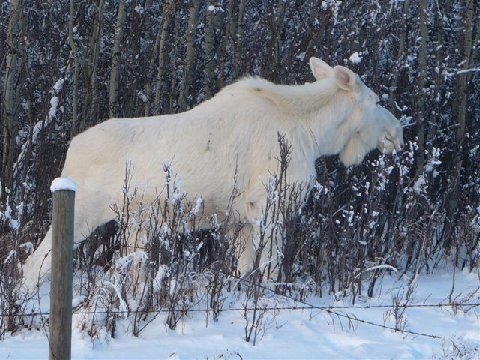
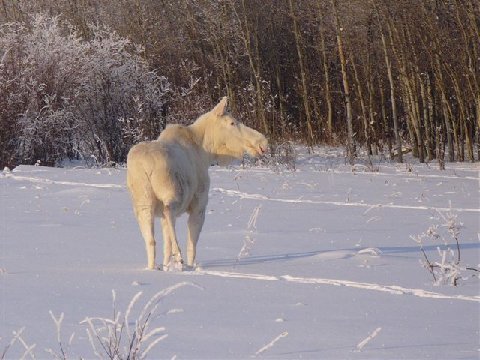
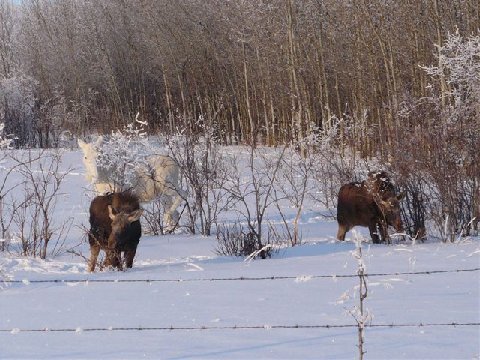
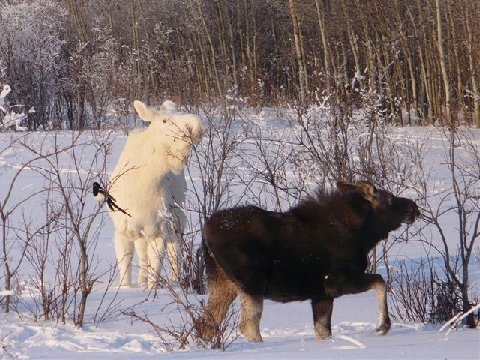
Winter wonderland four, the last of the series. (One was here, two was here, and three was here.)
Background information is after the last photograph.
oooo
oooo
oooo
oooo
oooo
oooo
oooo
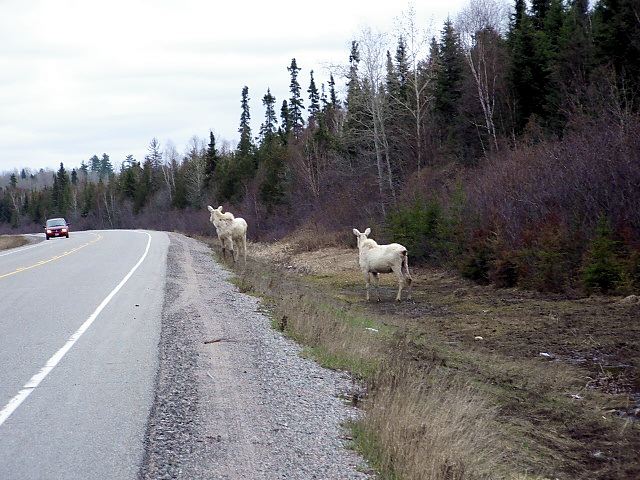
These animals were photographed just north of the Barber Lake on a highway near Mine Center, Ontario, Canada. The odds of seeing an albino moose are astronomically rare; let alone seeing two of them. It really doesn’t matter the colour of their fur; white or dark brown.
Once in a while there is an opportunity to take in a piece of nature that most of us may never see ‘in the wild’.
A huge thank you to Dordie for forwarding all the pictures featured over the last four weeks.
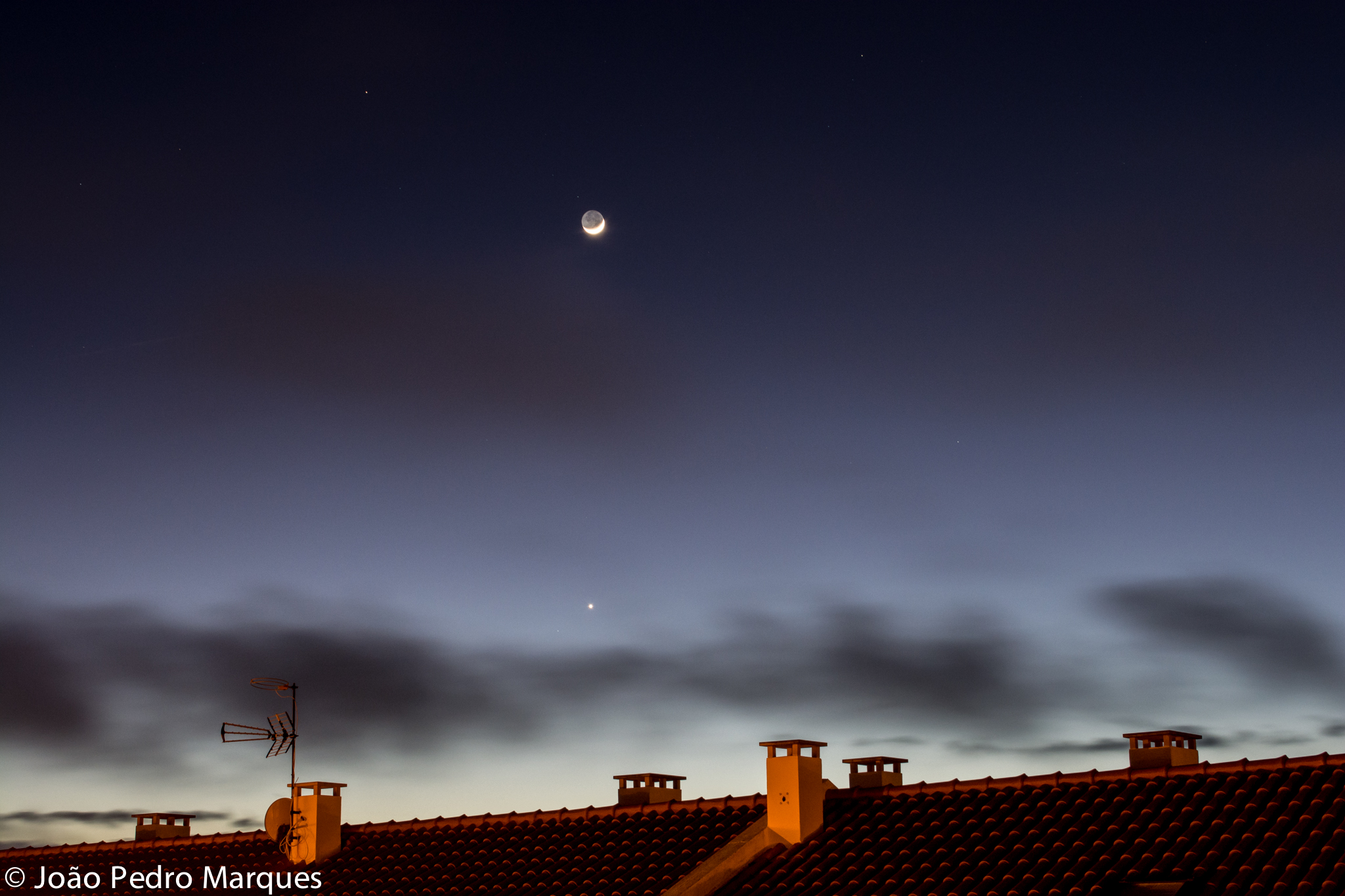
I noticed the other day a series of photographs of the moon and Venus that were included in an item on EarthSky News. All I am going to do is to republish a selection of the photographs so if you would like to read the full item, including all the photographs, then here is the link.
Mohamed Laaïfat Photographies in Normandy, France caught the little planet Mercury, too, along with the moon and Venus, on January 21.
oooo
João Pedro Marques caught bright Venus and the waxing moon on the evening of January 22, 2015, from Portugal. The reddish “star” above and to the left of the moon is Mars.
In the above image, Mars may only be seen by viewing a bigger image here.
One Horse Media in Lolo, Montana wrote: “What a cool moon and view of Venus this evening! I was happy to have just enough time to take a few photos as soon as I got home!”
oooo
Hecktor Barrios in Hermosillo, Mexico wrote: “Venus, Moon and Mercury, the latter barely visible.”
oooo
Planet Venus and young moon on January 21, 2015, as captured by Cathy Emmett Palmer in Panama City Beach, Florida.
Won’t add any more thoughts from me because each and every one of you will have your own feelings and responses to these photographs. Don’t want my ideas to get in the way of your own thoughts.
Just all of you have a wonderful and peaceful weekend.
Trying to make sense of our place in the world – and probably failing!
Yesterday’s post, Making sense of who we are?, was built upon a recent essay from George Monbiot: A Small and Shuffling Life. It is a terrific essay, in the very best tradition of George Monbiot. I really hope you read it in yesterday’s post because today’s introspective jaunt is built on that essay. Two particular paragraphs of his essay really ‘spoke’ to me.
The opening paragraph:
Live free or die: this is the maxim of our age. But the freedoms we celebrate are particular and limited. We fetishise the freedom of business from state control; the freedom not to pay taxes; the freedom to carry guns and speak our minds and worship whom we will. But despite – in some cases because of – this respect for particular freedoms, every day the scope of our lives appears to contract.
Later:
We carry with us the psychological equipment, rich in instinct and emotion, required to navigate that world. But our survival in the modern economy requires the use of few of the mental and physical capacities we possess. Sometimes it feels like a small and shuffling life. Our humdrum, humiliating lives leave us, I believe, ecologically bored.
In that second paragraph I sense something from Mr. Monbiot that is felt by me and Jean and appears to be shared very widely. A sense that something about today’s society is broken. That the last, say fifty years, of increasing living standards, health and prosperity, albeit not universally embraced, have brought us no closer to a golden future. That, as so clearly voiced in the preceding paragraph, “… our survival in the modern economy requires the use of few of the mental and physical capacities we possess.”
My guess is that George Monbiot and Terry Hershey have never met. One might suggest that their backgrounds are as different as two people might be. Take their respective ‘About’ pages on their blogsites. Here are their closing paragraphs.
First, George:
My work is more sedentary than it used to be, so I temper it with plenty of physical activity: sea kayaking, ultimate frisbee, running and some heavy duty gardening: growing my own vegetables and much of my own fruit.
Here are some of the things I love: my family and friends, salt marshes, arguments, chalk streams, Russian literature, kayaking among dolphins, diversity of all kinds, rockpools, heritage apples, woods, fishing, swimming in the sea, gazpacho, ponds and ditches, growing vegetables, insects, pruning, forgotten corners, fossils, goldfinches, etymology, Bill Hicks, ruins, Shakespeare, landscape history, palaeoecology, Gavin and Stacey and Father Ted.
Here are some of the things I try to fight: undemocratic power, corruption, deception of the public, environmental destruction, injustice, inequality and the misallocation of resources, waste, denial, the libertarianism which grants freedom to the powerful at the expense of the powerless, undisclosed interests, complacency.
Here is what I fear: other people’s cowardice.
I still see my life as a slightly unhinged adventure whose perpetuation is something of a mystery. I have no idea where it will take me, and no ambitions other than to keep doing what I do. So far it’s been gripping.
Now, Terry:
I used to ask of myself and others: what have you accomplished? Where are your credentials? What does your job and your bank account say about who you are?
Now, my questions are different: Are there butterflies in your garden? What are the color of loved ones’ eyes, when they are looking at you with hope? And when was the last time your house smelled of paper-white narcissus? Do sunsets make you smile? When was the last time you stood in stocking feet just to stare at the rising moon? Have you ever seen a sunflower bloom? Does the laughter of children do your heart good? At what angle does the sun enter your house?
Do I understand that life is full of complications, obligations and distractions? Yes. I do. My wife and I raise a teenage son. We run two businesses. So, yes, I know a bit about down-to-earth realities.
But this, too, is reality:
I love to watch the hummingbirds dance. I love that my son likes to put on his dancing shoes. I love to join him when we play old-time rock and roll. I love to stretch out on a garden bench on a warm summer day. I love a hot shower and drying with an expensive, oversized cotton towel. I love books, delight in poetry, and find sustenance in writing. I treasure the certainty that grace gives us all many second chances. I value the times I can simplify life by letting go of my need to validate my humanity through productivity. And I love to lose track of time in a garden.
I also know that sharing this with you – offering my practices for pausing, resources for doing less and living more, reflections in my blog —feeds me.
So I invite you, too, to join us — and together we’ll share, remind, and support each other, to “do less, live more.”
Yet, despite the differences in backgrounds, cultures and much more, to me there is a common openness, an honesty shared, and a passion for the truth.
All of which is a very long introduction to this week’s Sabbath Moment from Terry; republished in full.
ooOOoo
Finding sanctuary and grace
January 19, 2015
Today I am sitting in a café (and bar) in Vaison-la-Romaine, in the Provence region of France, nursing my espresso. The old men of the village (actually all of them are about my age) gather. They unload, swap stories, sip pastis, and watch petanque on TV. Some read the newspaper–with stories about Charlie Hebdo and photos of “Somme Nous Charlie“–carrying reminders of hope in our fragile and broken world.
I am glad to be here. Today. In this place. There is an air of familiarity among the men, and comfort in their ritual. I am grateful for reminders and invitations to live well into a place. Not just a physical space, but a tonic and sanctuary to the spirit. The invitation is a permission to settle down. (In the words of Jesus, “to come away and rest awhile.”) A sanctuary is a place that restores us, replenishes us, nourishes us. In this renewal, we are reminded, once again, of what really is important.
I agree that it is easy to sentimentalize. But living into the moment doesn’t smooth the edges of our life. It allows us to pay attention. I like to think that we can name the edges, to welcome and invite them into the sanctuary.
Outside a bicycle club gathers in the village center parking lot, ready for their weekend excursion. Their spirit is eager, their uniform bearing homage to their journey to the top of Mont Ventoux.
Sitting in the café, my thoughts meander, with no agenda or responsibilities to tether them. So I let them wander, a gift to embrace. But my reverie is interrupted with worry … I need a Sabbath Moment. And I don’t have a clue (I tell myself). It’s not easy on vacation. Especially without wi-fi.
I am on my annual trip to Europe with my good friend Bill McNabb to taste wine. He’s a wine writer (and pastor) in the San Francisco area. But mostly, he’s a friend. I’m his aide-de-camp and connoisseur.
We travel to wine regions and are blessed to taste beverages that we cannot afford, but offer us a glimpse of heaven.
Yes I’m biased. But then wine is not a beverage here; it is an experience. Your choice is to savor and take delight.
We visited wineries harvesting grapes from vines 100 years old. These are businesses passed down through the generations, grandfather to father to son (and now thankfully, often to daughter). A world where terroir is king, the personality of the soil. Meaning that this wine is born of a place, a very specific place. Here in the Rhone Valley, I’m honored to be in the company of crafts people. Like being with a great gardener. The men and women I met coddle their vines–they call them trees–lovingly.
Unlike Peter Mayle, I don’t have “A Year in Provence.” I only have a few days. But that’ll do… It is my first visit and I’m sure won’t be my last.
We’re in our gite–a rural rental property in France–we relish the evening light, a layer of bruised purple (pourple) above the slopes in Provence (Cotes du Rhone). Below the hills, vineyards roll through the landscape, the vines–still in winter and pruned–pose as menorah renderings in the dusk light.
Yes, this scene is a tonic. There is something about these moments that carry significance, because they are reminders, and they are sacraments. Partial, yes, but containing the full sustenance of grace.
And I think of the question a friend asks me, “What holds you?”
In other words… What sustains you, and carries you gently through your days?
Ryoken, a Zen master, lived the simplest kind of life in a little hut at the foot of a mountain. One evening a thief visited the hut, only to discover there was nothing in it to steal. Ryoken returned and caught him in the act.
“You may have come a long way to visit me,” he told the disillusioned prowler, “and you should not return empty-handed. Please take my clothes as a gift.”
The thief was bewildered. But he took the clothes and slunk away.
Ryoken sat naked, watching the moon, “Poor fellow,” he mused. “I wish I could have given him this beautiful moon.”
Sometimes I feel like that thief. Standing–in my own home, or in front of an audience, or in a crowd, or all alone–I am looking for something, for whatever ails me or creates a hole or emptiness; but, like that thief, not finding it. “What am I missing?” I ask myself. What am I wanting, yearning for, that I find myself in such a pell-mell-hurry or weighted down… hoping to fix it, or find it, or mend it. So I run and race and call on God, or the sky, or roll the dice with some prayer from my childhood. This will solve it, I tell myself. But the more I push, the more I ask, the more I beseech, the further I move from the center.
Here’s the deal: In my state of distraction, I cannot see that the core of my identity, the place where I stand in this moment (even at times without clarity, or stability, or faith, or answers)… I stand smack dab in the center of an awesome and illogical grace. Smack dab in the center of the sacred present.
If I do have the permission to see that place, I know that I am grounded. I am now able to breathe in and out, and rest in this acceptance.
Last night, above the slopes to the south, a slivered crescent moon rests, the sky a cobalt blue canvas. It is visceral, arresting, piercing. And for whatever reason, reassuring. This snapshot is imprinted, and I know in my heart that it is in some way essential, indispensable. I accept this gift of the moon, even though I don’t yet know why.
I don’t know what to tell you to do, exactly. Only that I too, wish I could give you the gift of that crescent moon.
I know this for certain: when we do not pay tribute, we are like the thief in the Zen story–without even knowing it–and we settle for less. So much less. So it is not just a question of what hold us, but of what holds us back… from being wholehearted, true to our self, fully alive, unafraid of uncertainty, and grateful for the gift of this moment.
Lord knows we look for ways to bottle it and sell it, when I reckon we should just get out of the way.
Our gite sits squarely in a vineyard and a working farm. A perfect setting to replenish. For years I’ve been writing about sanctuary and the need for restoration. And I’m my own worst enemy. There’s not a week that goes by that a Sabbath Moment friend doesn’t remind me to follow my own advice to pause… and let my soul catch up with my body. Gladly, this week I did.
ooOOoo
My penultimate reflection to today’s post is with a short, six-minute video from Professor Dan Gilbert. The video is entitled: The psychology of your future self. I hope you see it as offering a calming perspective to two days of inner psychological ramblings!
Published on Jun 3, 2014
“Human beings are works in progress that mistakenly think they’re finished.” Dan Gilbert shares recent research on a phenomenon he calls the “end of history illusion,” where we somehow imagine that the person we are right now is the person we’ll be for the rest of time. Hint: that’s not the case.
My final reflection is the lesson that dogs teach us; that one about living in the present.
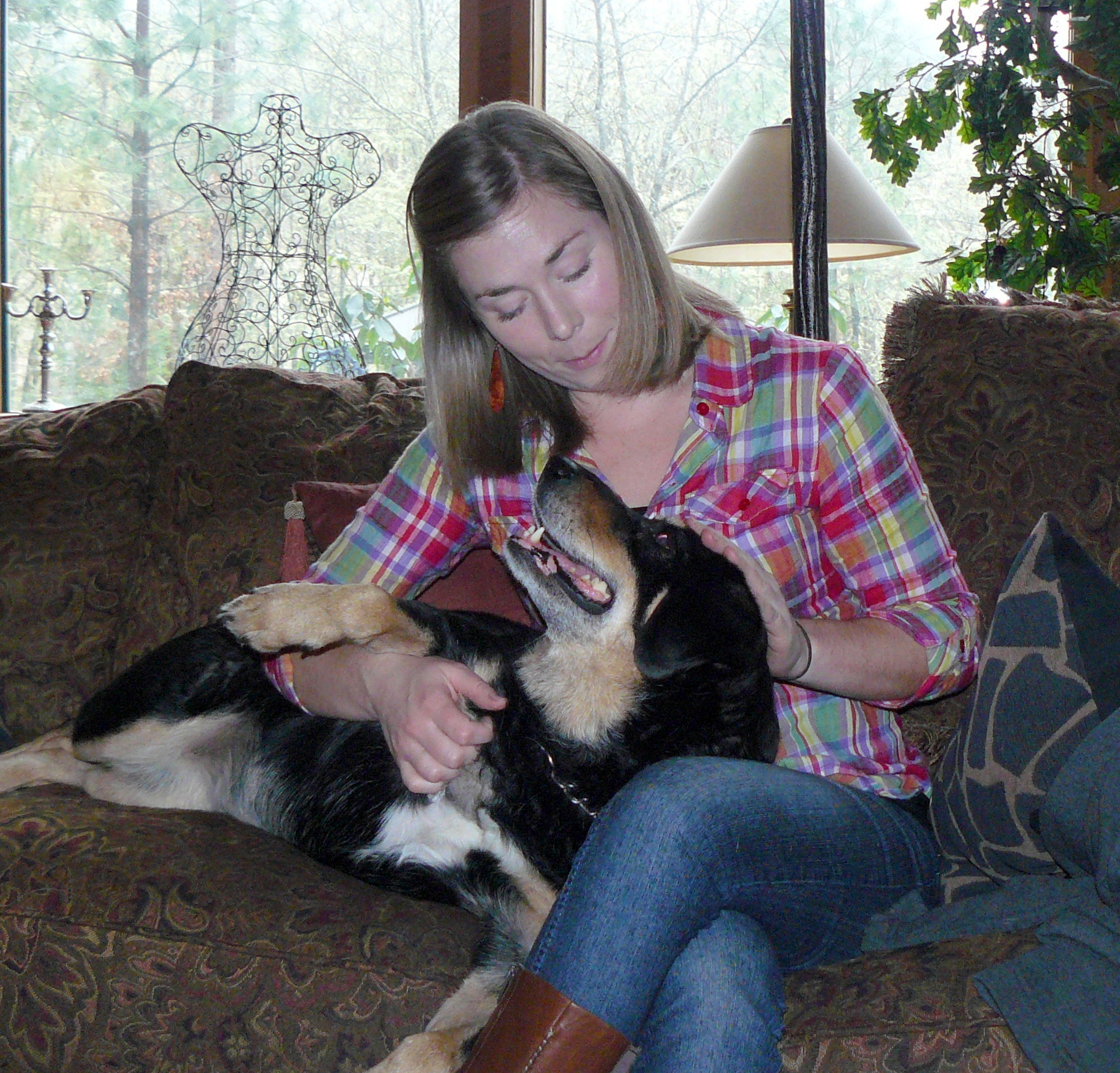
One of the huge differences between humans and our beloved dogs is that dogs live entirely in the present and do not engage in abstract thinking. Indeed, one of the most glorious aspects of owning a dog is being able to lose oneself in those moments of intimacy between yourself and your dog. Here’s a wonderful example of that when Bridget from Oregon Wild visited us recently and enjoyed a moment of bliss with Hazel.
So with that in mind, I am now going to be very un-dog-like and very human by offering an essay that is most abstract in manner. Not my essay, I should hasten to add, but a recent essay from George Monbiot, republished here with his kind permission. Then tomorrow, I want to stay with the abstract theme and include a recent essay from Terry Hershey.
ooOOoo
A Small and Shuffling Life
Why, in this age of freedom, are we so confined? And what can we do to reclaim our lives?
By George Monbiot, published in the New York Times, 19th January 2015
Live free or die: this is the maxim of our age. But the freedoms we celebrate are particular and limited. We fetishise the freedom of business from state control; the freedom not to pay taxes; the freedom to carry guns and speak our minds and worship whom we will. But despite – in some cases because of – this respect for particular freedoms, every day the scope of our lives appears to contract.
Half a century ago, we were promised that rising wealth would mean less work, longer vacations and more choice. But our working hours rise in line with economic growth, and they are now governed by a corporate culture of snooping and quantification, of infantilizing dictats and impossible demands, which smothers autonomy and creativity. Technologies that promised to save time and free us from drudgery (such as email and smartphones) fill our heads with a clatter so persistent it stifles the ability to think.
Public spaces in our cities are reduced to pasteurised piazzas, in which loitering without intent to shop is treated as suspicious. Protest is muted by dozens of constraining laws. Young people, who have no place in this dead-eyed, sanitised landscape, scarcely venture from their bedrooms. Political freedom now means choosing between alternative versions of market fundamentalism.
Even the freedoms we do possess we tend not to exercise. We spend hours every day watching other people doing what we might otherwise be doing: dancing, singing, playing sport, even cooking. We venture outdoors to seek marginally different varieties of stuff we already possess. “Getting and spending, we lay waste our powers / Little we see in Nature that is ours,” wrote William Wordsworth (1), and it is truer today than it was then.
We entertain the illusion that we have chosen our lives. Why, if this is the case, do our apparent choices differ so little from those of other people? Why do we live and work and travel and eat and dress and entertain ourselves in almost identical fashion? It’s no wonder, when we possess and use it so little, that we make a fetish out of freedom.
Perhaps we have forgotten the bitter complaint made by Benjamin Franklin in 1753. “When an Indian Child has been brought up among us, taught our language and habituated to our Customs, yet if he goes to see his relations and make one Indian Ramble with them, there is no perswading him ever to return.”(2) But when European Americans “have been taken prisoners young by the Indians, and lived a while among them, tho’ ransomed by their Friends, and treated with all imaginable tenderness to prevail with them to stay among the English, yet in a Short time they become disgusted with our manner of life … and take the first good Opportunity of escaping again into the Woods, from whence there is no reclaiming them.” In 1785 Hector de Crèvecoeur asked two European refuseniks why they would not come home. “The reasons they gave me would greatly surprise you: the most perfect freedom, the ease of living, the absence of those cares and corroding solicitudes which so often prevail with us.”(3)
We arose in a thrilling, terrible world. The African savannahs on which the first hominims evolved were dominated by sabretooth and false sabretooth cats, giant hyaenas and bear dogs. When human beings arrived in the Americas, 14,000 years ago, they found ground sloths the weight of elephants; a beaver eight feet from nose to tail; armadillos like small cars; giant lions and sabretooths; short-faced bears whose shocking armoury of teeth and claws suggests they drove giant lions and sabretooths off their prey. A bird in Argentina had a wingspan of 26 feet. Fanged salmon nine feet long migrated inland from the Pacific coast.
We carry with us the psychological equipment, rich in instinct and emotion, required to navigate that world. But our survival in the modern economy requires the use of few of the mental and physical capacities we possess. Sometimes it feels like a small and shuffling life. Our humdrum, humiliating lives leave us, I believe, ecologically bored.
At times this sensation has overwhelmed me. It happened in a newly-discovered bone cave in southern England. The walls and floor were encrusted with calcite crystals, that glittered in the torchlight. One of the archaeologists with whom I was exploring it handed me the atlas vertebra of a Bronze Age cow. Then he picked up another bone, this time with both hands: another atlas vertebra, but monstrous. “It’s the same species as the first one. But this is the wild version. The aurochs.” As I turned it over in my hands, feeling its great weight, I experienced what seemed like an electric jolt of recognition. It felt raw, feral, pungent, thrilling. The colour seemed to drain from modern life.
I felt it again when stalking up a tidal channel with a trident, trying to spear flounders. After two hours scanning the sand intently for signs of the fish, I was suddenly transported by the fierce conviction that I had done it a thousand times before. I felt it most keenly when I stumbled across the fresh corpse of a deer in a wood. I hoisted it onto my shoulders. As soon as I felt its warmth on my back, my skin flushed, my hair stood on end and I wanted to roar. Civilisation slid off like a bathrobe. I believe that in these cases I accidentally unlocked a lumber room in the mind, in which vestigial faculties shaped by our evolutionary past are stored. These experiences ignited in me a smouldering longing for a richer and rawer life than the one I lead.
Unless we are prepared to reject civilization altogether and live in the woods, there is no complete answer to this predicament. But I think there is a partial one. Across many rich nations, especially the United States, global competition is causing the abandonment of farming on less fertile land. Rather than trying to tame and hold back the encroaching wilds, I believe we should help to accelerate the process of reclamation, removing redundant roads and fences, helping to re-establish missing species, such as wolves and cougars and bears, building bridges between recovering habitats to create continental-scale wildlife corridors, such as those promoted by the Rewilding Institute(4).
This rewilding of the land permits, if we choose, a partial rewilding of our own lives. It allows us to step into a world that is not ordered and controlled and regulated, to imagine ourselves back into the rawer life from which we came, to discover, perhaps, the ecstasy I experienced when I picked up that deer. We don’t have to give up our washing machines and computers and spectacles and longevity to shed our ecological boredom and recover some measure of the freedom that has been denied to us. Perhaps we do need to remember who we are.
George Monbiot’s book Feral: rewilding the land, the sea and human life is published this month by the University of Chicago Press.
3. J. Hector St. John de Crèvecoeur, 1785. Letters from an American Farmer and Other Essays. Letter 12. Edited by Dennis D. Moore. Harvard University Press.
The appalling attitudes of those who kill wild animals for fun!
You will recall that in yesterday’s post, I referred to the fact that Jean and I are supporters of Oregon Wild. If you drop in on the OW blog, one of the items you will read is A New Year for Oregon’s Wolves. Here’s how it starts:
Jan 12, 2015 | Rob Klavins
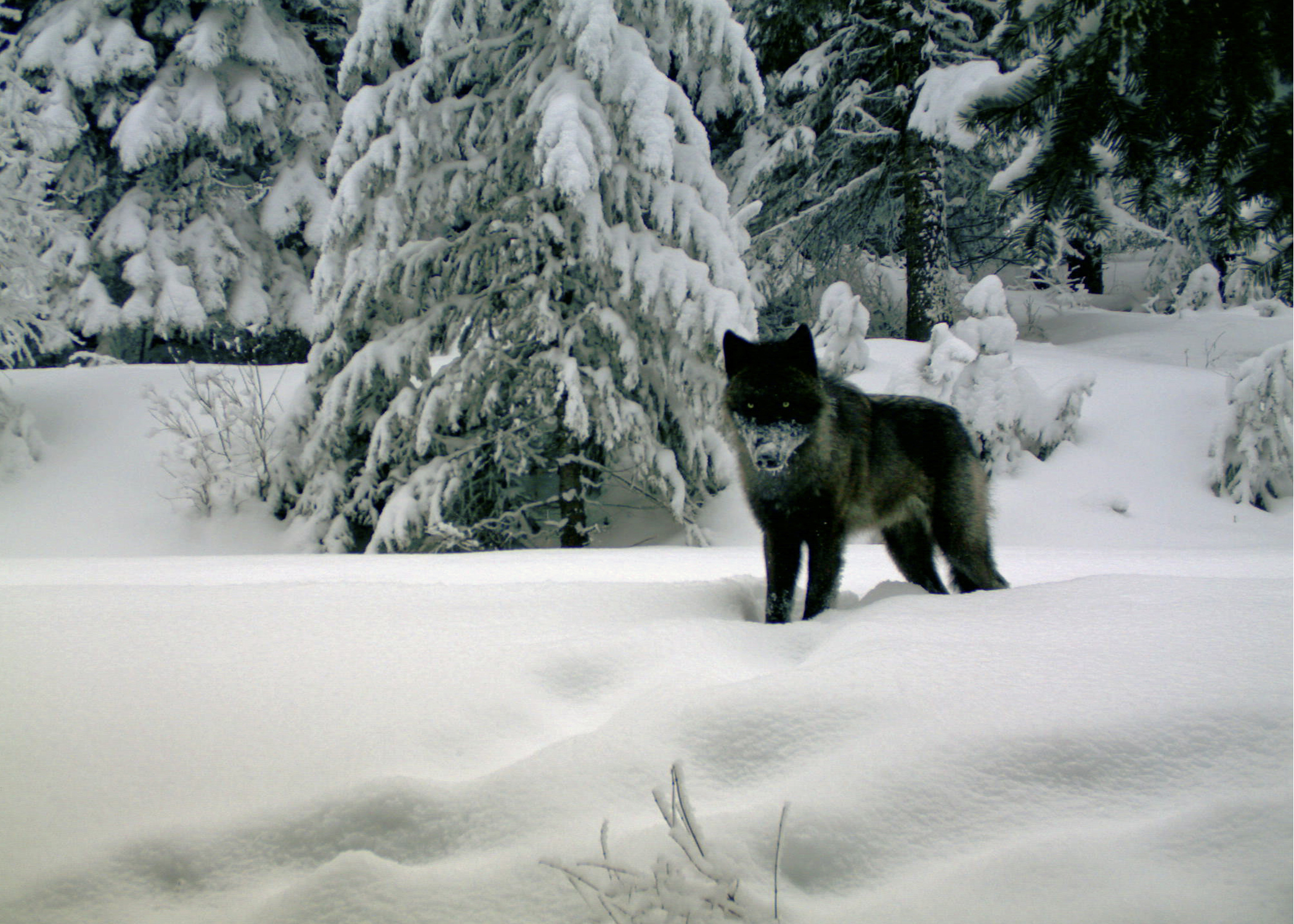
Photo of a young wolf from the Walla Walla Pack taken on Feb 5, 2014. Photo courtesy of ODFW.
A new year provides opportunities for reflection – and prognostication. For wolves in Oregon, 2014 was a good year. Journey finally found his mate and Oregon continued a management paradigm where killing remained an option of last resort. The result was a small but expanding wolf population and a continued decrease in conflict.
However, it’s not an understatement to say that 2015 is poised to be among the most consequential years for Oregon’s wolf recovery since the passage of the Endangered Species Act in 1973.
After a hard-fought legal settlement, Oregon’s fragile wolf recovery is back on track under the most progressive plan in the country. Though the plan is working for all but the most extreme voices, the Oregon Department of Fish & Wildlife (ODFW) is re-igniting old conflicts by caving to political pressure and giving serious consideration to weakening basic protections for wolves.
Moving on but staying in theme; so to speak.
For a few months now, I have been subscribing to a blog called Exposing the Big Game. Here’s a little from their About page.
This blog site is a haven for wildlife and animal advocates, a wildlife refuge of sorts, that’s posted “No Hunting,” as any true sanctuary should be. Just as a refuge is patrolled to keep hunters and poachers from harassing the wildlife, this blog site is monitored to keep hunters from disturbing other people’s quiet enjoyment of the natural world.
It is not a message board or a chat room for those wanting to argue the supposed merits of animal exploitation or to defend the act of hunting or trapping in any way, shape or form. There are plenty of other sites available for that sort of thing.
Hunters and trappers: For your sake, I urge you not to bother wasting your time posting your opinions in the comments section. This blog is moderated, and pro-hunting statements will not be tolerated or approved. Consider this fair warning—if you’re a hunter, sorry but your comments are going straight to the trash can. This is not a public forum for animal exploiters to discuss the pros and cons of hunting.
We’ve heard all the rationalizations for killing wildlife so many times before; there’s no point in wasting everyone’s time with more of that old, tired hunter PR drivel. Any attempt to justify the murder of our fellow animals will hereby be jettisoned into cyberspace…
Well two days ago, Lydia Millet wrote an opinion piece for the New York Times that was republished on Exposing the Big Game. It was about the American Gray Wolf. I asked permission to republish it in full here.
ooOOoo
Opinion: High Noon for the Gray Wolf
By LYDIA MILLET JAN. 18, 2015
In December 2011, a wild gray wolf set foot in California, the first sighting in almost a century. He’d wandered in from Oregon, looking for a mate. In October 2014, for the first time in almost three-quarters of a century, a gray wolf was seen loping along the forested North Rim of the Grand Canyon, in Arizona. She had walked hundreds of miles, probably from Wyoming or Idaho.
The return of these animals to the homes of their ancestors — however fleeting — was a result of their 40-year protection under the Endangered Species Act.
OR-7, or “Journey,” as schoolchildren named the first wolf, had been born to the Imnaha pack, the first one in Oregon for many decades. When he wandered south, his brother, OR-9, wandered east. Shortly after he crossed into Idaho (where wolves are not protected), he was shot dead. OR-7 lived on, after his repeated incursions into California (where wolves are protected), to sire a litter of pups just north of the state line. He became the subject of a documentary — in California, even a wolf can be a star.
The story of the Grand Canyon wolf, though, may be over: Three days after Christmas, it appears, she was shot and killed in Utah by a man media outlets have called a “coyote hunter.” (A DNA test is pending.)
For almost two centuries, American gray wolves, vilified in fact as well as fiction, were the victims of vicious government extermination programs. By the time the Endangered Species Act was passed, in 1973, only a few hundred of these once-great predators were left in the lower 48 states. After numerous generations of people dedicated to killing wolves on the North American continent, one generation devoted itself to letting wolves live. The animals’ number has now risen to almost 5,500, thanks to their legal protection, but they still occupy less than 5 percent of their ancient home range.
Since 1995, the act has guided efforts to raise wolves in captivity, release them, and follow them in the wild. Twenty years ago this month, the first gray wolves were reintroduced to Yellowstone National Park.
But this fragile progress has been undermined. Since 2011, the federal government has moved to remove federal protection for gray wolves in the Northern Rocky Mountains (Idaho, Montana and Wyoming) and in the western Great Lakes (Minnesota, Wisconsin and Michigan), the two population centers. Management of the species was turned over to these states, which responded with a zeal that looks like blood lust.
Relying on the greatly exaggerated excuse that wolves threaten cattle and sheep, the states opened their doors to the killing of wolves. (In some states, bait can be used to lure the animals to their deaths; in Montana, private landowners can each kill 100 wolves each year; in Wisconsin, up to six hunting dogs on a single wolf is considered fair play.) Legions of wolf killers rose to the challenge, and the toll has been devastating: In just three and a half years, at least 3,500 wolves have been mowed down.
There’s been an outcry from conservationists, ecologists and people who simply like wolves, but this has not stopped the killers. Some say wolves are a threat to their livestock investments (despite the existence of generous rancher-compensation programs in all wolf states save Alaska); others invoke fear of wolves; still others appear to revel in killing. Online, you can find pictures of wolf carcasses held up proudly as trophies and men boasting of running over wolves with their cars. Judges have started to step in. In September, a federal court decided that wolf management in Wyoming — which had allowed people to kill as many wolves as they wanted, throughout 84 percent of the state — should be returned to the federal government. In December, also in response to a lawsuit, another federal court reinstated protections for wolves in the western Great Lakes. These decisions should make clear that the states alone simply can’t be entrusted with the future of our wolves.
In Washington, the threats persist. The Fish and Wildlife Service is considering a proposal that would strip federal protection from almost all gray wolves in the lower 48 states, not just the ones in the Rockies and the Midwest. Meanwhile, right-wing Republicans in the new Congress are champing at the bit to remove the wolves from protection under the act — politics trumping science.
President Obama should direct the Fish and Wildlife Service to retain protection for wolves; if it doesn’t, they could be wiped off the face of the American landscape forever. A unified wolf-recovery plan for the nation is required. Not only do wolves play an important role in keeping wilderness wild, but they were here long before we were, and deserve to remain. Not for nothing was the environmentalist Aldo Leopold transformed by the sight of a “fierce green fire” in a dying wolf’s eyes.
I’ve seen wild gray wolves only once, as they trotted across a dirt road in front of my own family car in a New Mexican forest. There were three of them on the road, no doubt a wolf family, and three of us in the car: my husband, my daughter and me. In the back seat, my little girl was engrossed in a picture book and didn’t look up fast enough. I want her to have another chance; I want her to keep living in a world where something beautiful and wild lurks at the edge of sight.
Lydia Millet is the author, most recently, of the novel “Mermaids in Paradise.”
ooOOoo
Going back to that blog post over on Exposing the Big Game, I was inspired by many of the comments. Here are two examples:
I so agree with your comments, Roger. Here we are, staring at the Faces of Extinction, while, so-called “wildlife groups” grovel, hat in hand, to these agencies, and to the ranchers and hunters, offering yet another “collaboration” or “compromise” so we “can all work together.” I am sickened as to how many of these groups make no apology about having hunters/ranchers on their boards and on their staff. An all out War against these special interests, and their agencies does not seem to be on group’s agenda. So much has already been lost. As you stated, so little is left: the massive slaughter of native wild animals & wild habitats since the 1800’s is criminal, yet there seems to be little passion about it.
Thanks for the article. Strange isn’t it – the killing spree for sport against the wolves for their predatory behavior, yet these same people aren’t calling their behavior or the behavior of hunting dogs predatory?
Finally, here’s the trailer to that film about the wolf OR7
Please do all you can to ensure that federal protection for gray wolves in all US states is maintained.
How we treat wild animals defines how we treat the planet – the only one we have!
A few days ago, we had a visit from the Wilderness Campaign Coordinator from Oregon Wild. Bridget, that being her name, took the opportunity of saying ‘hi’ as a consequence of her coming down from Northern Oregon to Ashland. Bridget was giving a presentation in Ashland regarding securing more wilderness areas in Oregon; a very worthy ambition. Jean and I have supported the organisation since we moved up to Oregon.
Anyway, I offered to use Learning from Dogs to support and promote any campaigns from OW that would be of interest to LfD readers. I sorted out some recent posts that would give Bridget and her colleagues an idea of what was published in this place and sent her the links.
One of the links that I forwarded was this post from last October. I just wanted to share it with you all again.
oooo
Embracing the poetry of nature.
The beauty of poetry.
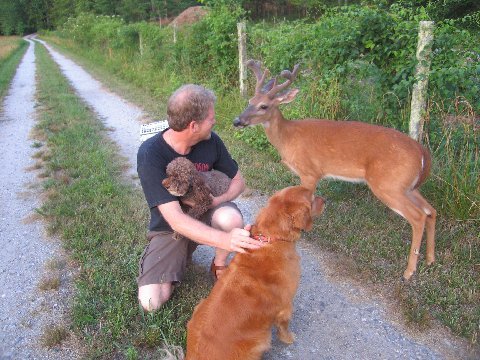
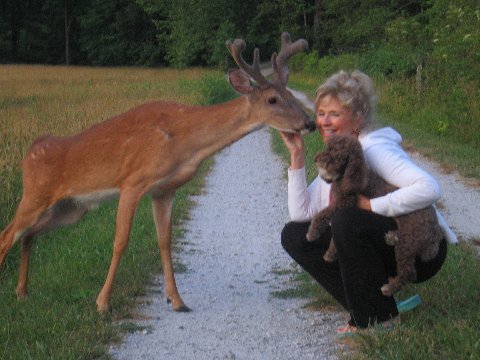
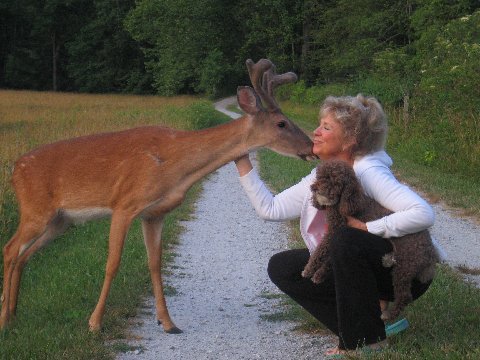
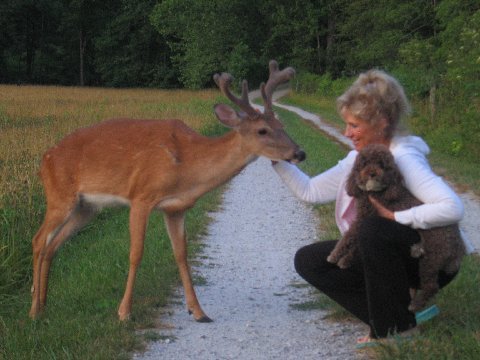
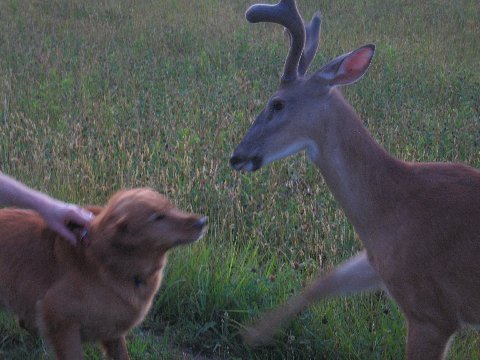
In yesterday’s post, where I wrote about how Jean and I had the wonderful privilege of feeding a wild deer from our hands, I closed it with a p.s. This is what I wrote: “P.S.It is at times like this that we need poetry. So how about it: Sue?Kim? How would you describe in poetry what Jean and I experienced?“
Well, Sue, of Sue Dreamwalker, replied with a link to a poem of hers that she published back in 2012. I will say no more than republish, with permission, Sue’s beautiful words and close with one of the photographs from yesterday.
The republication of a wonderful post about a dog that rides a bus!
I’m in the middle of reading Jean Donaldson’s book The Culture Clash. Here’s a summary of what the book is about from the Dogwise website.
Summary: The book that has shaped modern thinking about canine behavior and the relationship between dogs and humans has been revised. Dogs are not humans. Dogs are clever and complex creatures that humans need to take the time to understand in order to live together successfully. You must read this book… because your dog sure can’t!
Here’s an extract from page 13 of the first chapter: Getting the dog’s perspective.
We crave anecdotes about genius dogs and these abound. Everyone knows a story that illustrates how smart dogs are. But a fundamental question has never been answered by proponents of reasoning in dogs: if dogs are capable of these feats of brain power at all, why are they not performing them all the time? Why never in controlled conditions? What is the most upsetting about these claims is the lack of rigour in evaluating them.
You get the picture of where Jean Donaldson is coming from! (And I’m still only just into the book myself.)
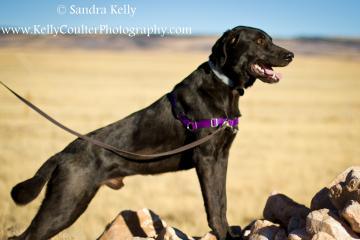
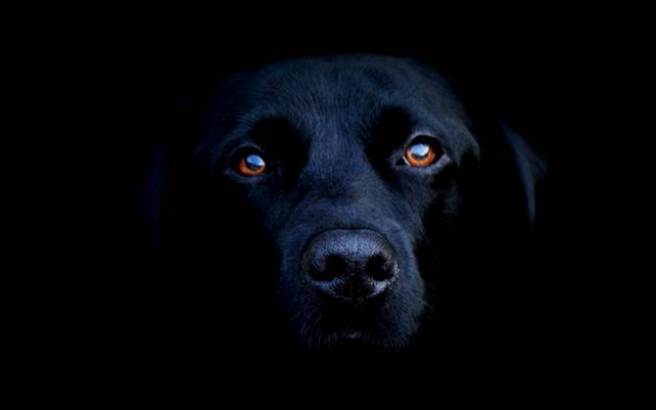
Have you read about this dog? A friend shared a news clipping on this dog’s unusual behavior in Seattle, Washington. Eclipse, as an independent city dog, seems to know to walk only on the sidewalk, get on the bus, take a seat and look out the window, all without assistance from his person. Eclipse even knows, which bus stop to get off at for the dog park. “Bus riders report she hops onto seats next to strangers, and watches out the window for her stop. Says commuter Tiona Rainwater, “All the bus drivers know her … she makes everybody happy.”
A Metro Transit spokesman said the agency loves that a dog appreciates public transit. The City of Seattle representative suggested that it would be safer for Eclipse to wear a leash and be with her human when she rides the bus, but with a dog this smart, is it a problem? I don’t know the answer. Black lab rides bus alone to dog park USA Today Network Associated Press 1:01 p.m. EST January 14, 2015.
What do you think, can dogs take the bus without their human families?
No dogs off leash.
We know that big dogs differ in temperament and dog to dog communication from little lap dogs. But what makes a dog mature and experienced enough to take on full independence in the confusion and untranslated rules of human life? Yes, free-roaming dogs ride trains in organized and peaceful groups in Russia. Yes, often those who live with dogs, like we do, find they understand far more of our human lives than we think possible. After watching dozens of dogs off leash on city streets of Baja California Sur, Mexico. No dog seemed homeless and all but one stayed on the sidewalk.
Do dogs ever become 100% street-smart?
Street smarts or leash required?
What do dogs know? What do dogs remember? We know dogs learn. We know some dogs show exceptional learning abilities, much greater than other dogs. Somewhere I read that the average dog has the intelligence of a human toddler. Now, none of us would let a toddler walk city streets, get on and off a bus alone. But what of special cases? History shows exceptions to rules and to the “average.” Clearly, Eclipse breaks the rule, the average and reshapes our expectations of what dogs can and should be able to do.
“The greatness of a nation can be judged by the way its animals are treated.” Mahatma Gandhi
Have you read Merle’s Door: Lessons from a Freethinking Dog by Ted Kerasote? Of book talks, life and books by Kerasote can be found on his Website his 2014 Pukka’s Promise: The Quest for Longer-Lived Dogs, in paperback, looks to be interesting to those of us who want our dogs to live the longest, healthiest lives possible. Find more about this top creative nonfiction author on his Website Kerasote.com.
True dog story (tearjerker ahead)
A Marin County ethical keeshond breeder shared this true story of their longtime and favorite dog. For years and years, the behavior of their family dog and top champion male looked totally stable. His nature showed pure calm and obedience. They all got into a pattern of allowing this canine patriarch time to lay on the front lawn in their neighborhood circle street. He always remained serene, watching, never chasing, barking or moving.
On afternoon as the kinglike keeshond patriarch lay on his grassy lawn – the unthinkable happened – he ran in front of car. Now fortunately, this big keeshond did not die. But he suffered, ever after with epileptic fits. Makes me wonder if we fool ourselves in imagining that dogs can navigate city streets safely.
Please share, comment and sign up for my blog updates. Thanks, Deborah Taylor-French
ooOOoo
So leave it up to you to assess the brain power of dogs, especially that bus-riding black Labrador dog. To help you make your mind up, take a look at the video.
Published on Jan 14, 2015
Seattle’s public transit system has had a ruff go of things lately, and that has riders smiling.
You see, of the 120 million riders who used the system last year, one of them is actually a dog. Seattle’s KOMO-TV reports the 2-year-old black Labrador mix, named Eclipse, has become a regular fixture on the city’s D-Line after she figured out how to ride the bus alone to the dog park.
“All the bus drivers know her. She sits here just like a person does,” fellow rider Tiona Rainwater told KOMO. “She makes everybody happy. How could you not love this thing?”
The dog’s owner, Jeff Young, lives next to the stop. He said Eclipse sometimes hops on board without him if he’s not yet finished smoking his cigarette when the bus arrives. The pup has become a regular on the route, riding three or four stops before exiting at her destination of choice. “I catch up with her at the dog park,” Young explained.
Miles Montgomery, a Seattle radio host and D-Line commuter, was taken by surprise when Eclipse hopped into the seat next to him on a ride last Friday, looked out the window, then got off at her stop. Montgomery snapped a bemused selfie with the commuting canine, adding the caption, “Bus is full this morning:”
A Metro Transit spokesperson told the AP they’re happy a dog can appreciate public transit, though Eclipse should really be on a leash. King County says dogs are allowed to ride buses at the discretion of the driver, provided the animal isn’t a hazard and doesn’t create a disturbance.
Seattle isn’t alone in having a streetwise dog. Stray dogs in Moscow, Russia, have learned to commute in and out of the city from the suburbs by riding the subway, even watching out for other dogs to make sure they exit at the correct stop.
Get along, little doggies.
oooo
Golly, I have just seen how long I have spent getting this post written. Poor old Shelby must be wondering if I really did want to play with him; should have made my next move simply ages ago!













 Learning from Dogs