On last Thursday morning, at 02:30, in the middle of a huge storm the electricity was lost. So was the telephone and the internet.
The electricity was restored at 04:30 on Friday, the telephone later in the morning but no internet.
Finally, the internet was restored at 21:00 last night, too late to do anything useful.
So that explains the absence of yours truly over the last three days. Hopefully, if it remains on there will be a normal post at midnight tonight. All times are Pacific Time.
The following was sent to me by Chris Gomez, brother of Dan, who I have known for nearly as long as Dan (and that’s a long time)!
The article appeared on ZME Science was published on the 15th January. It contains material that I, for one, didn’t know and I suspect I’m not the only one.
Have a read.
ooOOoo
Why do dogs have whiskers?
Whiskers allow dogs to “see” things that are literally under their noses.
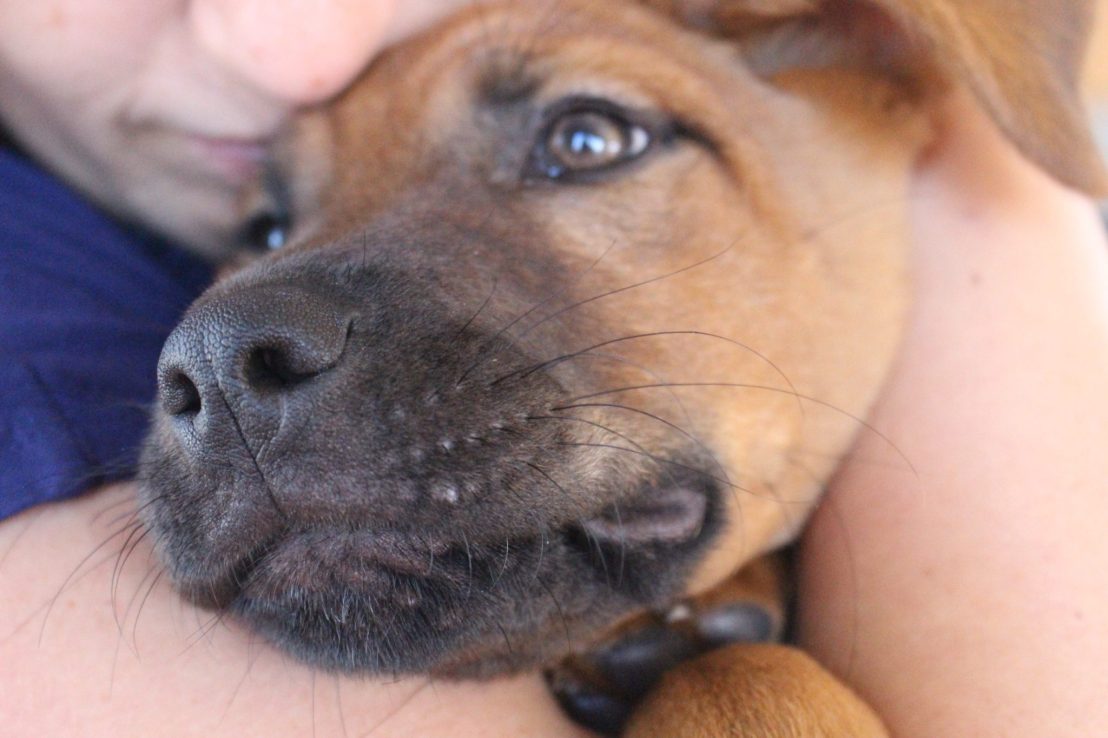
Many mammals, including canines, have whiskers. Some dog owners think these whiskers are just longer unruly hairs that can be groomed and even snipped off entirely — but this would be a huge mistake. The whiskers, technically known as “vibrissae”, serve important specialized functions that help dogs sense the world around them and coordinate their movement.
Humans sense touch through millions of sensory receptors that line the skin and deeper tissue. Unlike humans, the follicles of the coarse hairs protruding from a dog’s muzzle, jaw and above its eyes are also packed with nerves that relay sensory information.
Essentially, these whiskers allow dogs to sense objects and the world around them as humans do with fingers.
What are a canine’s whiskers good for
Credit: Wikimedia Commons.
The tactile sensation is made possible thanks to Merkel cells, which are specialized skin receptors associated with nerve terminals. A dog’s mouth and snout are very rich in Merkel cells, according to a study published in the journal Veterinary Science.
According to researchers, these tactile hairs serve a variety of functions. For instance, the whiskers allow dogs to gather information from subtle changes in air currents about size, shape, and speed of nearby objects. Ultimately, this allows canines to see their surroundings better, even in dark. It’s well known that vision isn’t a dog’s strong point, so their vibrissae greatly assist them — especially when dealing with close objects (dogs are farsighted). Whiskers beneath the chin allow dogs to “see” objects obstructed by their snouts.
Whisker’s positioned immediately above the eyes are particularly important for vision. When an object or strong airflow causes these whiskers to flex, dogs will reflexively blink in order to protect their eyes.
It’s not clear whether dogs use their whiskers for food acquisition. However, if they’re anything like rats, seals, and walruses — all related species that have been shown to use their whiskers to find food — dogs might very well use their sensing hairs for this purpose, too.
A dog’s whiskers can also serve an important role in communication with other canines or other species. Like many other mammals, when a dog is threatened it will automatically flare its whiskers, pointing them in a forward direction. This signals to predators and other aggressive animals that the dog is ready to defend itself and respond with violence.
Dogs may use their whiskers to also disperse pheromones, keep their head upright when swimming, and monitor their environment.
About 40% of a canine’s visual cortex (the part of the brain responsible for processing vision) is devoted to mapping information from whiskers. They’re that important!
What you need to know about your dog’s whiskers
Credit: Pxfuel.
Although they might look similar, vibrissae are distinct from body hair. The main difference is that a dog’s whiskers are directed by the nervous system and contain nerves.
Unlike cats, which have four rows of whiskers on either side of a cat’s face, the placement of a dog’s whiskers is less predictable. Some have a multitude of vibrissae, others may have few or even none. You should find them above the eyes, on both sides of the muzzle, above the upper lip (pointing down) and beneath the dog’s chin.
According to scientists, there are no breed-specific differences in canine whiskers. An exception may involve hairless breeds, which have no whiskers at all.
That being said, you should never trim your dog’s whiskers. Some pet owners believe their dogs’ whiskers should be groomed and snip them for aesthetic purposes.
This practice won’t hurt the dog, because there are no pain receptors found in whiskers. However, given the multitude of functions they serve, a whisker-less dog will become confused, disorientated, and less able to navigate its spatial surroundings. If you cut your dog’s whiskers in the past out of ignorance, know at least that they will grow back naturally.
In summary, dogs use their whiskers as a sort of radar to detect objects that they cannot properly see with their own eyes.
ooOOoo
Apart from the fact that the photographs are gorgeous there is much material that is good to know. For instance, I never knew there were no breed-specific differences in canine whiskers. Just hadn’t thought about it before.
Yesterday and today are days where it’s my turn to do the neighborhood watch patrols. I left for the first patrol a little after 9am yesterday and when I was going up Livingston Drive there was a guy walking his Corgi. Now it’s the second time we have met and I stopped and let the sweet dog come up to my outstretched hand and sniff my fingers. John, not his real name, mentioned that he was slowly adapting to a life of love and affection in stark contrast to the beatings the dog received in his previous life. John was a real hero!
Here’s another example of goodness beyond description. Taken from The Dodo.
ooOOoo
Dog Found On Side Of Road Immediately Snuggles Her Rescuer
Photo Credit: Kris Lenker
Kris Lenker and her husband were driving home from work last week when they spotted something on the road ahead.
They assumed, being out in the country, that the small, tan animal was a baby deer — but as they got closer, they realized their mistake. “We slowed down and realized that it was a dog,” Lenker told The Dodo.
Lenker hopped out of the car and called to the dog, but the nervous pup took off down a pathway. Lenker followed close behind, tempted to turn around. “I couldn’t see her anymore and we almost left,” Lenker said. “I just had a feeling, though.”
Photo Credit: Kris Lenker
Lenker found the dog hiding behind a fence, and after a few minutes of gentle pets, the nervous dog decided to take a chance. “She wrapped her front paws around my neck and let me carry her back to the car,” Lenker said. “She was absolutely terrified, but I could tell she trusted me … It just felt like we were brought together for a reason.”
Shortly after the dog entered the car, her demeanor changed. It was as if she knew she was finally safe. “I just pet her and told her I had her,” Lenker said. “That is when she just collapsed into a ball in my lap. It’s like relief just hit her. She rode the rest of the way home in my lap like that.”
Photo Credit: Kris Lenker
While she decompresses and regains her strength, the dog, whom the couple has named Reba, is hanging out in a warm bathroom. When she’s up to it, she’ll get to meet her new dog siblings, who will show her the rules of the house.
And Reba is still just as affectionate as the first day they found her: “Belly rubs are her favorite, and she doesn’t hesitate to ask for them!” Lenker said. “She rolls on her back and paws at us until we give in.”
Reba was initially resistant to being rescued, but now she doesn’t want to leave — even to go outside for potty training. She demands that her mom carries her outside and back in every time.
Photo Credit: Kris Lenker
“I think she is still afraid she will be left out there,” Lenker said.
It’s only been a few days, but already Reba has been putting on weight and learning what it means to have a real family. “Her energy level is so much better and she is the biggest love bug,” Lenker said. “All she wants to do is snuggle us and give us kisses. It’s her favorite thing to do.”
Lenker believes they were truly meant to have Reba as part of their family. “She wouldn’t let anyone get near her, but she let us take her,” Lenker said. “She trusts us so much and we have fallen in love.”
ooOOoo
“She trusts us so much and we have fallen in love.” What a fabulous end result.
There are so many loving people out there that would do the same. It’s an honour to present this account.
It was published on the Majestic Animals website and I hope republishing it is OK.
ooOOoo
Dog accidentally runs half-marathon after being let out for pee, finishes 7th
Sports are great for the health and running is the best way to keep you in a good shape. But I just can’t imagine to train hard for a 13 miles marathon, only to have a dog beat you. Well, that is exactly what happened with most of the Elkmont Trackless Train Half Marathon runners, in Alabama.
Ludivine, a 2 years old Bloodhound was out for a pee when she spotted all those guys running. And since there wasn’t any rule to say that only humans re allowed to participate, the quick thinker pup joined the marathon. Surprisingly, that wasn’t all as the doggy not just finished the run, but she even got a medal.
The adorable dog who finished seventh in the race, even had some pit stops!
She finished in just over an hour-and-a-half. Her owner April Hamlin said:
“All I did was open the door, and she ran the race on her own accord. My first reaction was that I was embarrassed and worried that she had possibly gotten in the way of the other runners. She’s laid back and friendly, so I can’t believe she ran the whole half marathon because she’s actually really lazy.”
Jim Clemens, who finished fourth in the half marathon said, “Every time I thought she had dropped off to go back home, I would hear her coming back up to me and she would race past me up to the two leaders. She would run off to romp through the streams and into yards to sniff around for a while.”
After the week I’ve had, I so needed this story! Check the video below!



 Learning from Dogs