This, again, is not about our beloved animals; in other words, this is not about our dogs.
But it is about something of supreme importance: The role of innovation. That’s innovation in all aspects of our human lives. Think of it as a process of innovation.
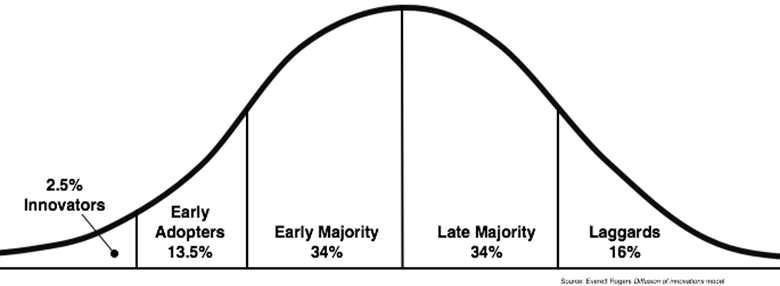
There was the Diffusion of Innovation (DOI) Theory developed by E.M. Rogers in 1962. There is a comprehensive explanation of DOI here, from where I take the following diagram, but before explaining, from that same site, the meanings behind the definitions, I would like to emphasize one important point: “It works better with adoption of behaviors rather than cessation or prevention of behaviors.“.
So here is that diagram:
Here are the meanings of those terms (my emboldening):
Adoption of a new idea, behavior, or product (i.e., “innovation”) does not happen simultaneously in a social system; rather it is a process whereby some people are more apt to adopt the innovation than others.
Researchers have found that people who adopt an innovation early have different characteristics than people who adopt an innovation later. When promoting an innovation to a target population, it is important to understand the characteristics of the target population that will help or hinder adoption of the innovation.
There are five established adopter categories, and while the majority of the general population tends to fall in the middle categories, it is still necessary to understand the characteristics of the target population. When promoting an innovation, there are different strategies used to appeal to the different adopter categories.
Innovators – These are people who want to be the first to try the innovation. They are venturesome and interested in new ideas. These people are very willing to take risks, and are often the first to develop new ideas. Very little, if anything, needs to be done to appeal to this population.
Early Adopters – These are people who represent opinion leaders. They enjoy leadership roles, and embrace change opportunities. They are already aware of the need to change and so are very comfortable adopting new ideas. Strategies to appeal to this population include how-to manuals and information sheets on implementation. They do not need information to convince them to change.
Early Majority – These people are rarely leaders, but they do adopt new ideas before the average person. That said, they typically need to see evidence that the innovation works before they are willing to adopt it. Strategies to appeal to this population include success stories and evidence of the innovation’s effectiveness.
Late Majority – These people are skeptical of change, and will only adopt an innovation after it has been tried by the majority. Strategies to appeal to this population include information on how many other people have tried the innovation and have adopted it successfully.
Laggards – These people are bound by tradition and very conservative. They are very skeptical of change and are the hardest group to bring on board. Strategies to appeal to this population include statistics, fear appeals, and pressure from people in the other adopter groups.
Now there’s a TED Talk that I hadn’t seen, and yet nearly 51 million people had! It came to me as an email from TED and yesterday, while we were sitting up in bed early in the morning, I watched it. It ‘spoke’ to me and I felt that I just had to share it with you.
Because so many of the problems that face our society today are global issues and if humans are to have a future on this planet then we need great leaders who will inspire us.
Now watch the following video, it’s just over 18 minutes long, but it says it all.
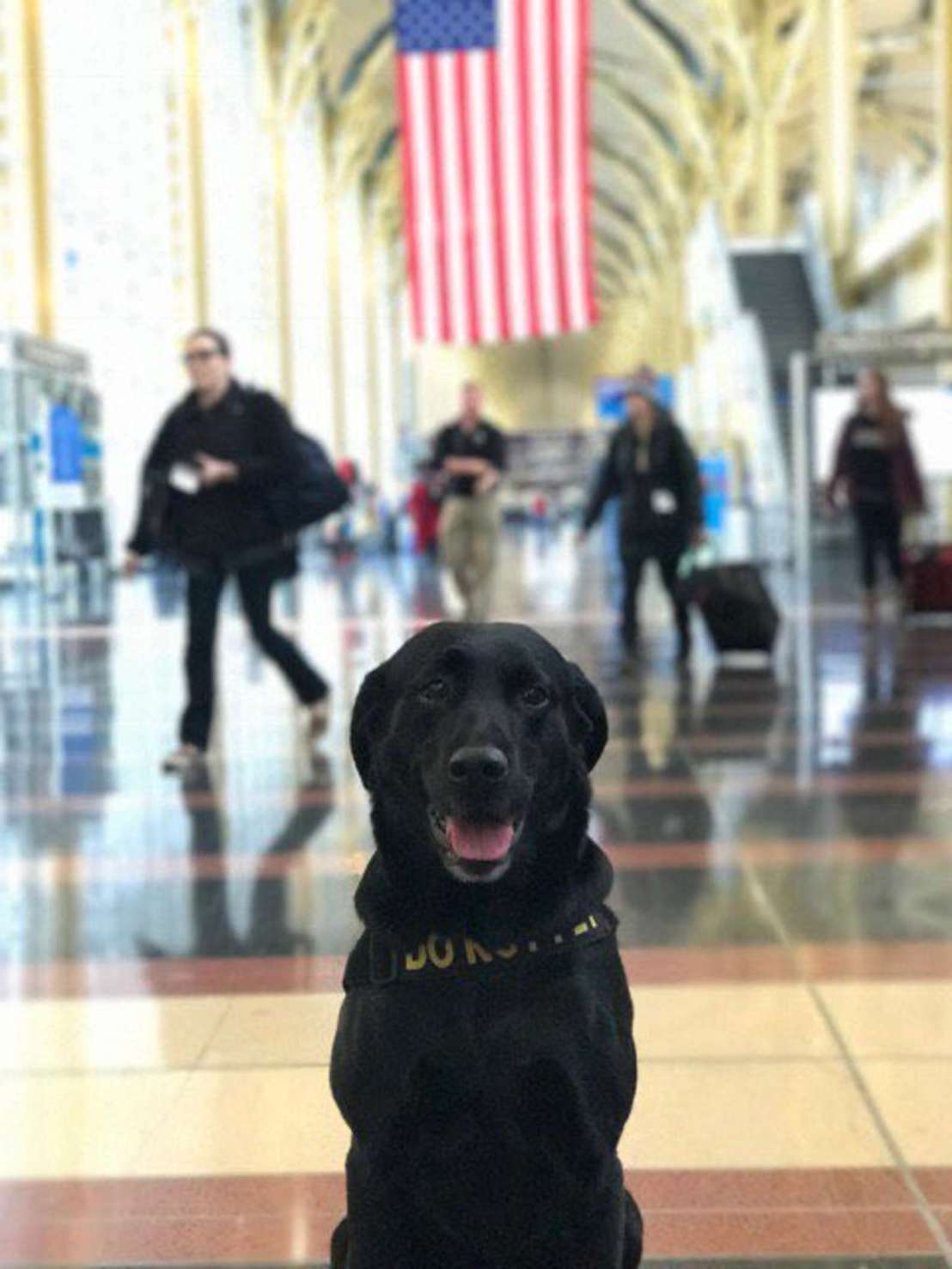
This is another story from The Dodo blogsite. And, yes, about a dog. But not any old dog; he used his sense of smell to protect us humans. He has, in my opinion, an unusual name but it is still his name: TTirado. TTirado was an explosive detection dog at Indianapolis Airport and after eight years of service he was retired.
Here’s the full story!
ooOOoo
TSA Detection Dog Gets A Huge Surprise Before He Retires
As an explosive detection canine, TTirado isn’t always allowed to play with tennis balls like normal pets. Tennis balls — his favorite toy — are used as a reward for a job well done at the Indianapolis Airport.
So when it came time for TTirado to retire after eight long years of service, his handler came up with the perfect way to celebrate — with a massive ball drop.
Keith Gray
“It’s a coveted item during their career,” Keith Gray, TTirado’s handler, told The Dodo. “They know that they have to work for it to get it and that’s what keeps them going and keeps their motivation up.”
Keith Gray
TTirado is top of the class when it comes to detection, and has passed every single evaluation and test. For TTirado, scent detection is a game, and he’s always been happy to go into work with his dad.
“He was the first dog that was assigned to me and the dog I kept my entire career,” Gray said. “He’s a black Lab, so he’s a fantastic, lovable pup. He’s been such a great dog to work with and I’ve learned so much from him over the years.”
Keith Gray
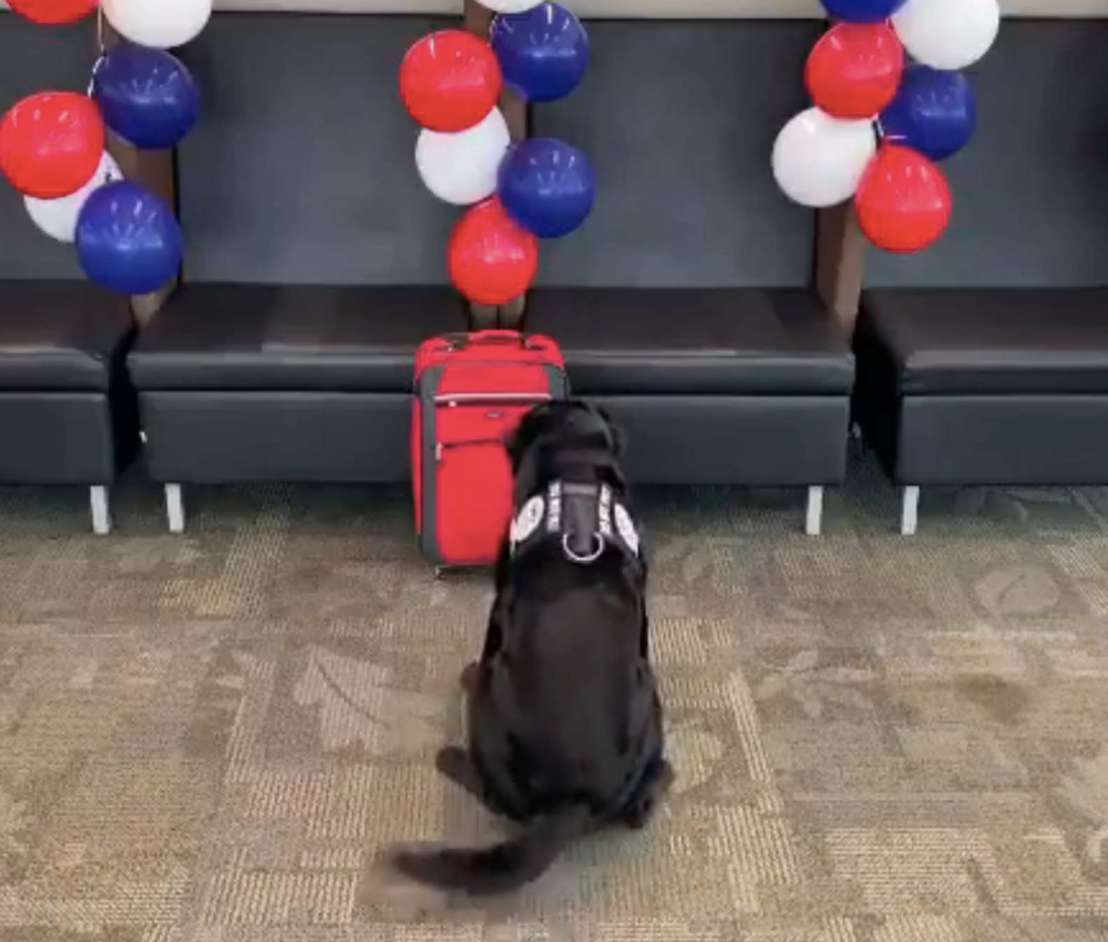
To surprise the pup on his special day, Gray ordered 200 tennis balls online and set up a special final search for him.
“We had a couple of handlers that were behind the scenes ready to drop the balls when he showed up,” Gray said. “The handlers knew what to do when the dog alerts, which is basically him coming around the corner, sniffing that bag like he’s supposed to and dropping his butt to sit down.”
Keith Gray
When TTirado signaled to his dad that he had found something, all 200 tennis balls dropped from the sky. TTirado was in heaven.
TTirado loves to play fetch, and everyone joined in throwing balls for the senior dog to chase.
After putting in countless 40-hour workweeks, TTirado is finally learning to enjoy his retirement. While TTirado was always part of the family, Gray has officially adopted him and plans on taking the pup on lots of fun trips in the future.
But perhaps the biggest change for TTirado is that he gets to hang out on the couch with his favorite toy every single day: “Now that he’s retired, he can have all the toys and tennis balls he wants and play around with them at home,” Gray said.
ooOOoo
It’s a wonderful story about a great dog. TTirado, you have a fantastic retirement and may you live happily for a long time to come!
Here’s an article about a dog that thinks he is a cat!
Dogs are amazing animals. Not only have they been associated with humans for, literally, thousands of years, in the main they bond so very closely with us. I should add that the lucky ones do.
But they are also independent animals and show it.
Here’s an article from The Dodo that shows how Mako demonstrated his own uniqueness of spirit; by thinking he was a cat!
ooOOoo
Rescue Dog Is Totally Convinced He’s One Of The Cats
“Whenever Mako sees the boys on the counters or cabinets he hops up to join them.”
When Bethany Castiller and her family went to a local rescue to adopt a dog, Mako immediately made it very clear that he would be the one going home with them.
“We joke that we didn’t really pick him, he picked us,” Castiller told The Dodo. “When we went to the rescue shelter he had his back against the cage so we started petting him and he looked over his shoulder and gave direct eye contact and we just fell in love with the little guy.”
Bethany Castiller
The family had been hoping to adopt a dog who would get along with their cats at home, Pecan and Gizmo. The shelter assured them that Mako got along with cats really well — and they quickly realized it was probably because Mako totally thinks he’s a cat.
Though they can’t know for sure, everyone thinks that Mako was probably raised with cats, because all of his favorite things to do are classic cat activities. He doesn’t bark, he loves cat treats and he absolutely adores sitting on top of counters and cabinets, just like his cat siblings do.
Bethany Castiller
When they first caught Mako climbing on top of tables and counters, his family thought it was a little weird — but quickly accepted that that’s just who Mako is, and that they’d basically adopted another cat instead of a dog.
Bethany Castiller
“We went online and found a dog toy that looks like a cat one so we go to the backyard and he chases and jumps after it like the cats,” Castiller said. “He also likes to lay on the tables with my cats and look out the window at the birds with them. When he sees one of my cats lay on their backs for a tummy rub he comes over and does the same thing!”
Bethany Castiller
Mako is obsessed with his cat siblings and loves hanging out with them every chance he gets, and his family can’t help but laugh whenever they come into the room and find Mako on top of something right alongside the cats, just one of the gang.
“Whenever Mako sees the boys on the counters or cabinets he hops up to join them,” Castiller said. “He really just wants to be around the cats all the time. If he is not in the room with one of us humans, he’s with the cats.”
Bethany Castiller
Mako is definitely a little different and will always be way more into cat activities than typical dog ones — and his family wouldn’t have him any other way.
ooOOoo
So, what to make of this! Seriously, it goes to show how at one level we really don’t have a clue as to what a dog is thinking of. Yet they are still our very best of companions and the fact that many of you will read this and enjoy it just proves my case.
Now for something completely different.
The International Dark-Sky Association (IDA) held its first annual Capture the Dark photography competition during May 2020. The goal was to portray the meaning of the night for people around the world. Participants were invited to submit images in five categories: Connecting to the Dark, International Dark Sky Places, Impact of Light Pollution, Bright Side of Lighting, and Youth. In two weeks, IDA received nearly 450 submissions from people around the world. An international panel of judges made the final selections. The winning entries in each category are on this page.
I’m not going to show you all the winning entries; you can go onto the website if you wish to see them. But what I am going to share is the winning entry.
Jean-Francois Graffand captured this image at the Pic du Midi International Dark Sky Reserve in France. It’s the winner in the International Dark Sky Places category. The photo is titled Dark Night in Pyrénées Mountains.
We closed the first part of this interview with a look inside one of the rooms where dogs are worked on but not to the extent of requiring surgery.
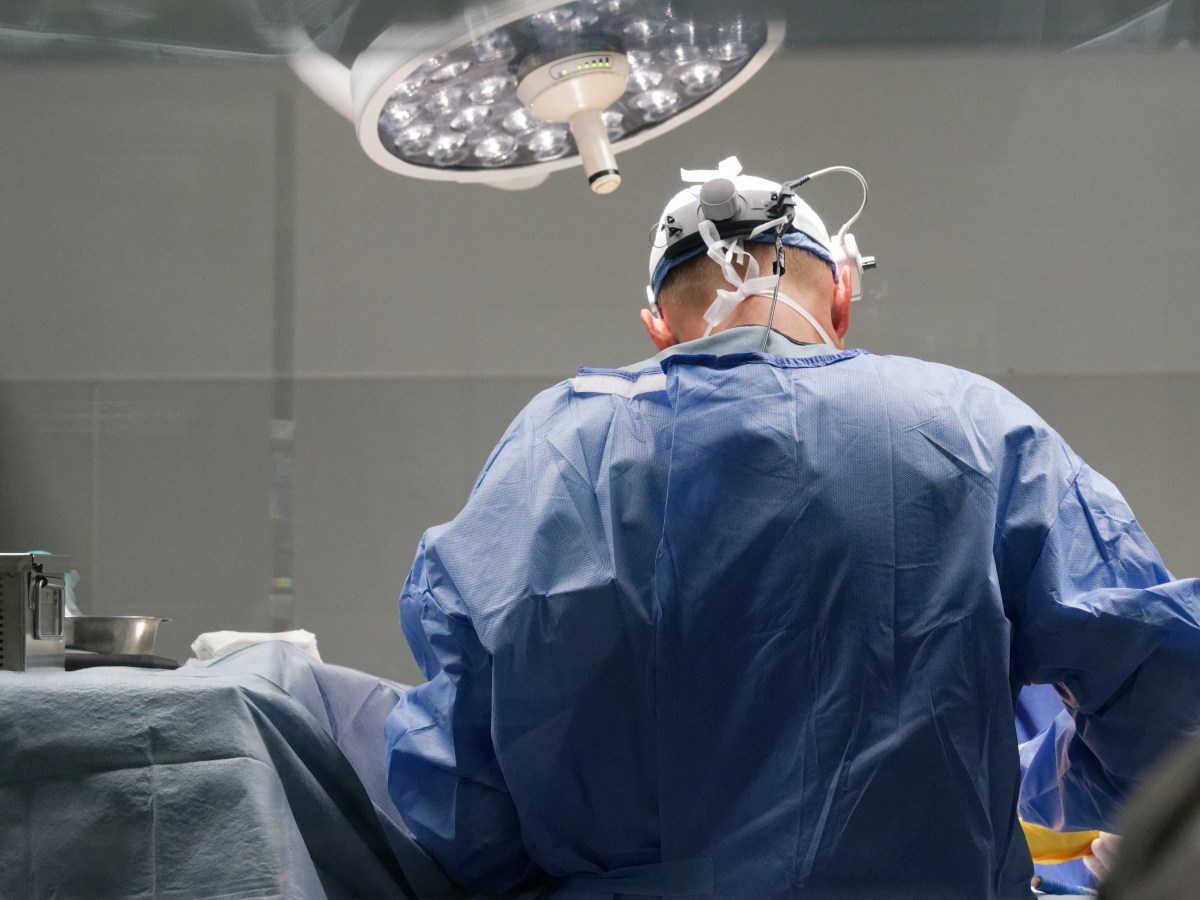
That is carried out in specialist surgical rooms. Here’s a surgeon working on a dog as we passed by outside in the corridor.
Photograph taken looking through the sealed porthole.
It is always busy with the peak being from the end of April through to October. The COVID19 pandemic has seen an enormous influx of new patients with the most critical being those dogs that have an urgent need for care.
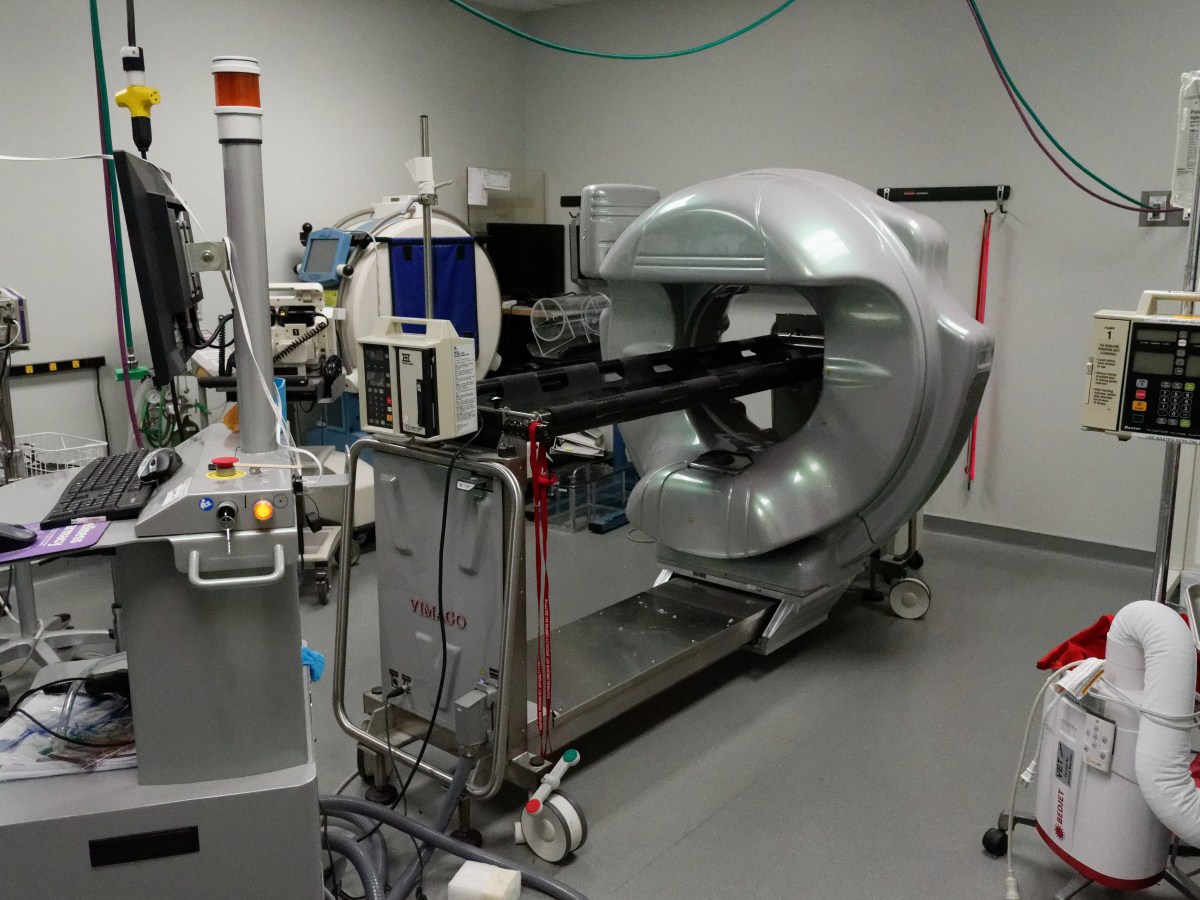
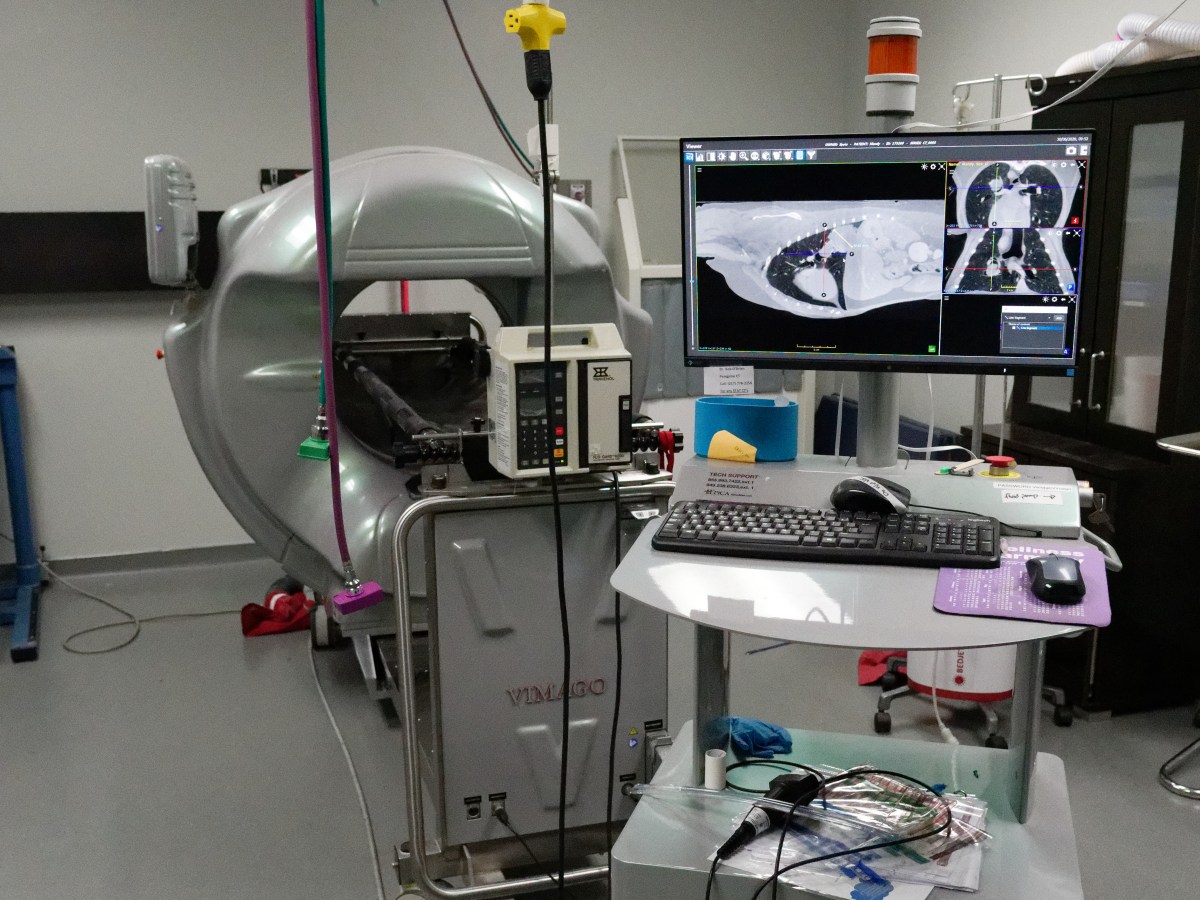
SOVC have also installed an MRI machine and here are two photographs of this incredible piece of equipment.
oooo
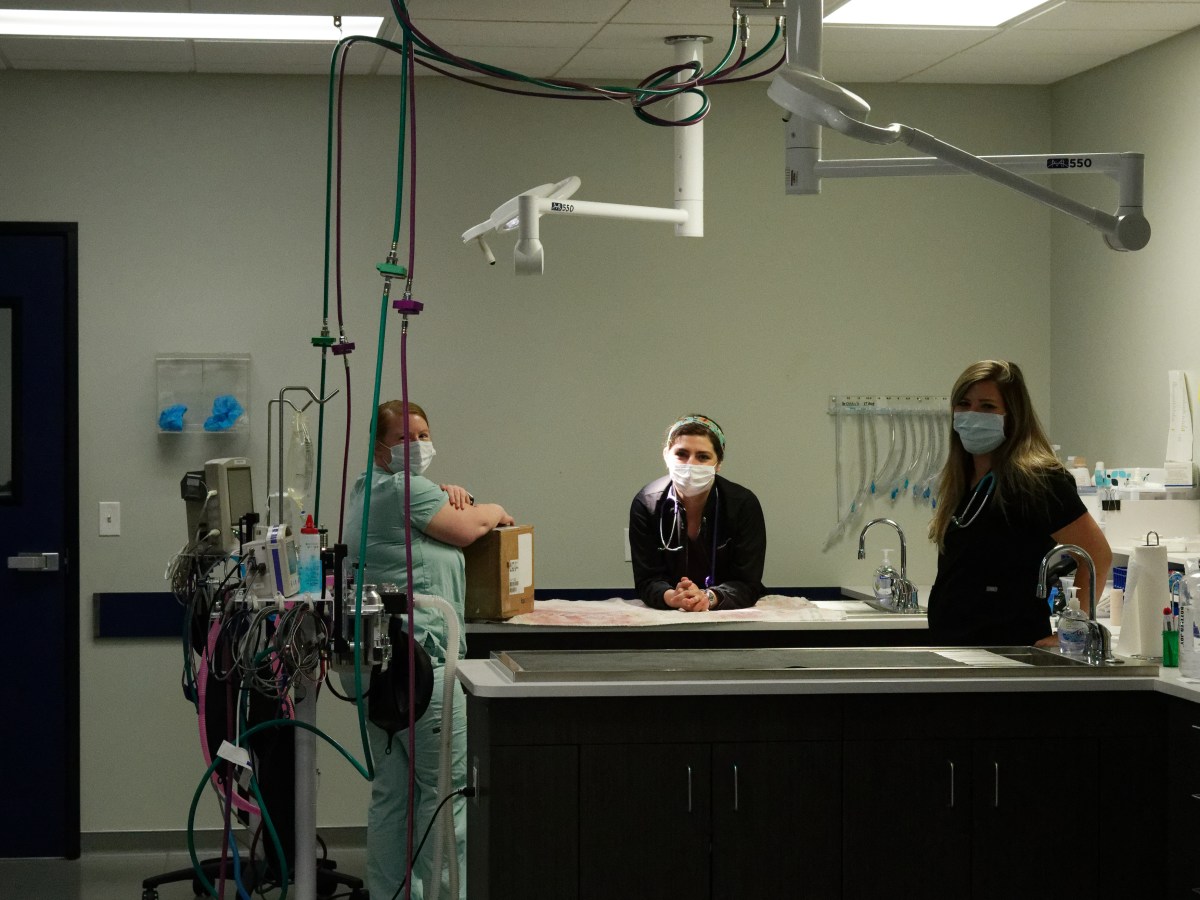
We were allowed to tour much of the inside of the building, under the care of Renee, and here is another photograph of another room with three staff looking back at the camera. (Names unfortunately not obtained.)
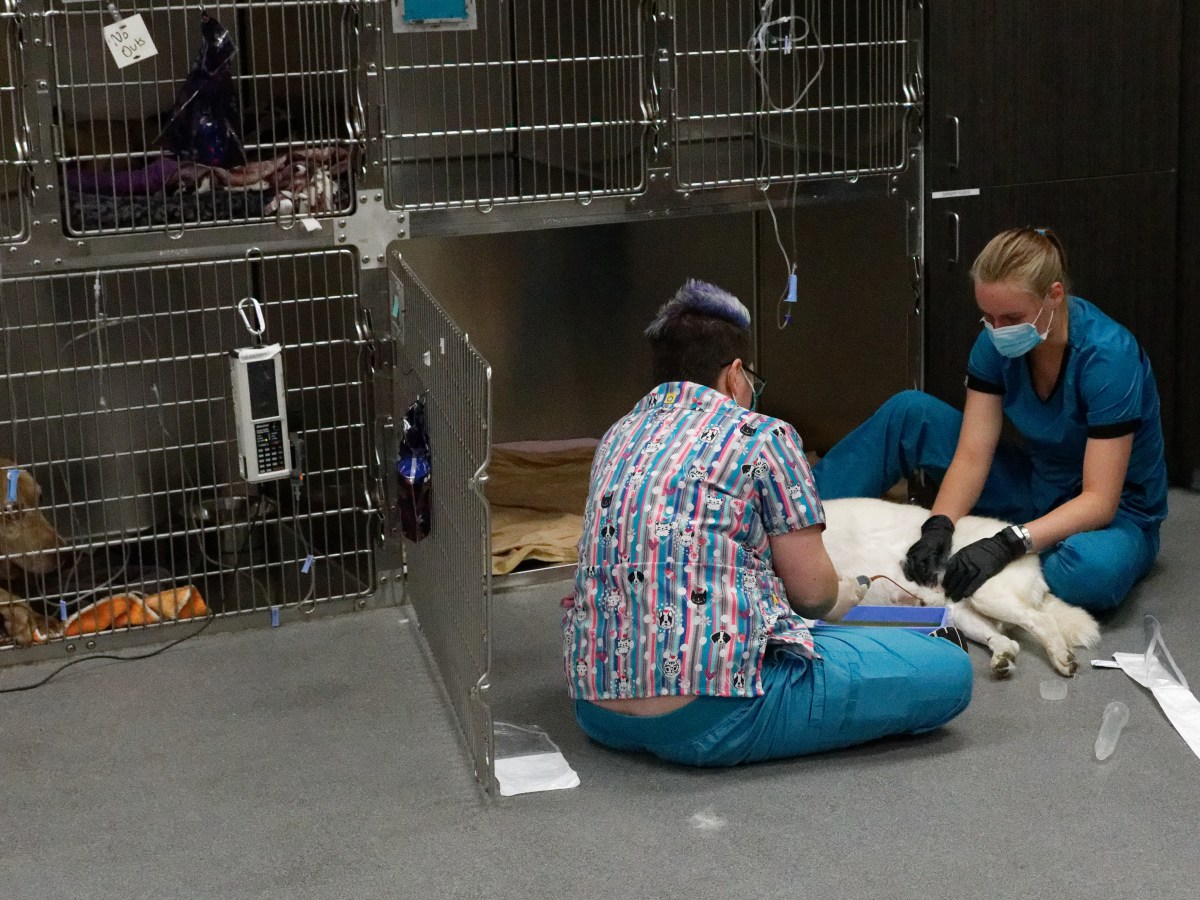
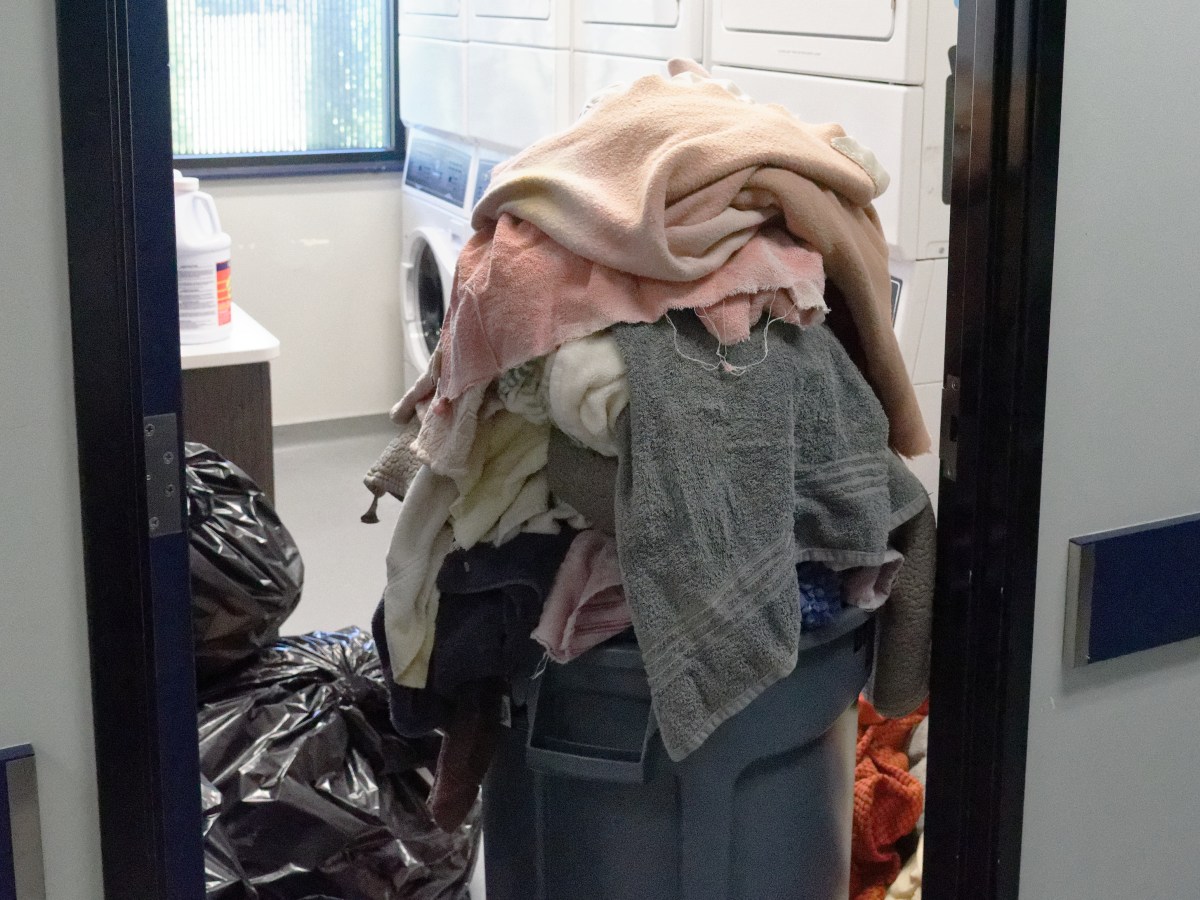
I also want to share the following photographs before rounding off my piece.
Another two staff attending to a dog.
oooo
The one task that no-one seems to get on top of!
I started this post on the 2nd July with a statement that I wanted to explore in a little more detail the difference between dogs and humans, especially those humans who choose to become the veterinarian doctors of this world.
Dogs are pure in mind and most often loving towards us humans. They are intuitive and caring of us humans. I can no better support that statement than share the ‘Welcome’ page of my blog:
Beloved Pharaoh. Born: June 3rd., 2003 – Died: June 19th., 2017. A very special dog that will never be forgotten.
Dogs live in the present – they just are! Dogs make the best of each moment uncluttered by the sorts of complex fears and feelings that we humans have. They don’t judge, they simply take the world around them at face value. Yet they have been part of man’s world for an unimaginable time, at least 30,000 years. That makes the domesticated dog the longest animal companion to man, by far!
As man’s companion, protector and helper, history suggests that dogs were critically important in man achieving success as a hunter-gatherer. Dogs ‘teaching’ man to be so successful a hunter enabled evolution, some 20,000 years later, to farming, thence the long journey to modern man. But in the last, say 100 years, that farming spirit has become corrupted to the point where we see the planet’s plant and mineral resources as infinite. Mankind is close to the edge of extinction, literally and spiritually.
Dogs know better, much better! Time again for man to learn from dogs!
Veterinarian doctors are subject to enormous pressures.
Take this video as an example:
According to the CDC, the number of veterinarians who die by suicide is going up. With rising student debt, increasingly isolated offices, and pet owners with social media, the veterinary field is becoming high-risk. “Not One More Vet” CEO and veterinarian Nicole McArthur joins CBSN AM to explain why vets are struggling and how her company is trying to help vet-to-vet.
SOVC doctors note the end of an animal’s life on a ‘Blue sheet‘; a paper sheet. Renee herself worked one Christmas Day at SOVC and there were 11 Blue sheets that day. Indeed Renee had tears coming to her eyes when she spoke of that Christmas. It is a profession that faces daily challenges full of emotion as the CBS video explains. One can’t be in the profession without being fully committed, both heart and mind, and yet that means that one can’t easily put up defenses against one’s feeling.
I paused in my note taking to recall Pharaoh and couldn’t keep my eyes dry and yet he died 3 years ago and we have others that we care for and love.
I am going to finish by quoting the mission of SOVC, for I think it is very special.
Our Mission
The doctors and staff of Southern Oregon Veterinary Specialty Center recognize that there is a special bond between pets and their human family. (My italics) Our goal is to work as a team, with you and your family veterinarian, to help you make the best decisions for your pet’s medical care. We are dedicated to offering the highest level of medicine, to providing a compassionate environment to those pets entrusted to our care, and to treat each pet as we would our own.






 Learning from Dogs